Month: December 2021 Page 2 of 6

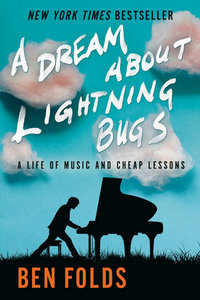
The Friday 56 for 12/24/21: A Dream About Lightning Bugs by Ben Folds

The Friday 56This is a weekly bloghop hosted by Freda’s Voice.

RULES:
The Friday 56 Grab a book, any book.
The Friday 56 Turn to Page 56 or 56% on your ereader. If you have to improvise, that is okay.
The Friday 56 Find a snippet, short and sweet.
The Friday 56 Post it.

from Page 56 of:
A Dream About Lightning Bugs

A Dream About Lightning Bugs: A Life of Music and Cheap Lessons by Ben Folds

A few years ago, I volunteered to be a substitute teacher for my kids’ seventh-grade music class. Just for a day. That’s all I had to do. I knew most of the kids in the class anyway. It should have been a breeze.

It wasn’t.

If I didn’t fully appreciate the public school music teachers of my youth before 11 a.m. that day, by noon I damn well did. As I stood before the class, a lifetime of experience performing in front of people went straight out the window. The forty-five-minute affair was absolutely exhausting. Kids, 1—Folds, 0. Animals, every one of them! I am no music teacher and I bow to each and every man and woman who is. I especially bow to the ones who can see that these children are not animals and recognize which ones could use a push, or a hand, like I did when I was younger.

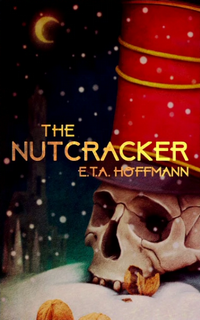
The Nutcracker by E.T.A. Hoffman: A (weird) Classic Christmas Story

The Nutcracker

The Nutcracker

by E.T.A. Hoffman

Hardcover, 69 pg.
Fahrenheit Press, 2021

Read: December 20, 2021

What’s The Nutcracker About?

This is a story about a little girl who gets a nutcracker from her toy-making godfather. But this is no ordinary nutcracker: it’s magical—it’s a prince trapped in a wooden figure until he’s freed (like Belle’s Beast).

At night, this Nutcracker comes to life (like Buzz, Woody, and the rest) to do battle against the mice in the girl’s palace. The war between the Nutcracker and the mice—in particular, the seven-headed Mouse King, goes back to when the Nutcracker was human, and wages on.

And then things get weird…

A Couple of Confessions

I’m part of the probably 5-15% of Western Culture who needed the above, many of you probably rolled your eyes at me including that. But:

1. Until I got the newsletter from Fahrenheit Press talking about this release, I had no idea that this novel existed. Obviously, I knew about the ballet and a handful of the adaptations of it. But a novel started it all? What rock was I living under to have missed that?

2. I have never watched the ballet, or finished any of the various adaptations. I get bored, or distracted, or just decide it’s just a mess of a show. Maybe now that I’ve actually read the novel, I can make persevere to the end.

One Thing I’d Like to Know

Before the text itself, there’s a…it’s not really an epigraph or epigram, it’s too short to be an Author’s Note—well, maybe it’s the right length for that, I guess we should go with that. In it, Hoffman praises his skill and genius, not to mention the value of the book.

Now, I don’t know enough about the guy to know if he’s the world’s most delusional and/or arrogant writer—or is it satire? My gut says the latter, but I don’t know. Maybe he is the Narcissus of Prussian Literature. Do any of you know?

This Particular Edition

For the last two Decembers, Fahrenheit Press has hit pause on their particular brand of noir publishing to publish nice editions of Classic Christmas stories*.

This one came in a very nice hardcover with a great cover that is both on-brand for them and evocative of the story. It’s one of those hardcovers that’s going to last a while and is pretty enough to deserve it. You should absolutely try to get your hands on one while they’re still available.

* They also do some great charity work at this time of year, even as a struggling indie press, an example to us all.

So, what did I think about The Nutcracker?

The fantastical elements of this story were great—and the way it bounced back and forth between fantasy and reality—or make-believe and reality, if you’re Marie’s family—were wonderful. It was likely that Hoffman looked at the rules for story-telling around that, shrugged, and then did whatever he wanted to. The imagination behind it was truly impressive and I can tell why it’s inspired so many people to create works based on it.

The style, too, was fantastic—it’s a great way to tell a story. His word choice (and that of whoever translated this) were delightful. I felt like I was reading a descendant of things like Arabian Nights and The Brothers Grimm and a forerunner of writers like Lewis Carroll and William Goldman (The Princess Bride not Marathon Man). Although I will admit it occasionally left me a little bored—it was like he laid it on too thick from time to time, and I just couldn’t sustain my interest when that happened. Too much of a good thing, I guess.

It was a nice little book. I’m not saying I’m a convert to the story of the prince, the magic toys, and the seven headed-rat or anything. But I can see myself reading it again from time to time–I can definitely see this as a great thing to read this time of year to a kid if I had any around.

Festivus 2021: For the Rest of Us

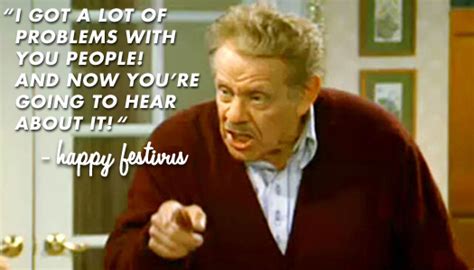
Shunning the commercialization of Christmas*/Hanukkah/Kwanzaa/Santaween/Chrismukkah, we’re again celebrating Festivus (for the rest of us) here at The Irresponsible Reader.

Let’s begin our observance!

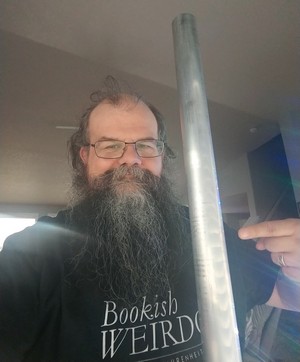
Festivus PoleHere I am with my Festivus pole. I really appreciate the very high strength to weight ratio, it’s a mighty fine pole.

Note the lack of distracting tinsel. It’s very important.

And now, let the Airing of Grievances begin.

Airing of Grievances
Yes, some of these are only slightly revised from previous Festivus posts. Which is to be expected, it’s not like the entire universe fixed itself after I posted one lil’ post. It’s going to take at least three, right?

bullet I’m seriously disappointed that Ace Atkins is leaving the Spenser series. Sure, it’s best for him and his career to go off and work on his own projects, which will undoubtedly be great. But speaking selfishly (which is the point of grievances, right?), I don’t want him to go!

bullet Publishers are starting to use AI readers instead of humans for audiobooks! This is madness—we don’t need to make things easier for our new computer overlords by letting them lull us into letting our defenses down by reading our stories to us. Also, they don’t do a good job of it.

bullet I have a grievance with the book publishing/selling/marketing industry. It’s 2021, why are we still placing stickers on books? If we have to do that, why hasn’t Science come up with a sticker that doesn’t leave a gummy residue behind? C’mon, Science, if you can’t give us a cure for cancer, a pill so people with Celiac disease can eat bread, or an Oreo that will help me lose weight—at least you can give us stickers that don’t leave gunk on our books! Especially, especially when it covers the ISBN number for those of us trying to scan them.

bullet What’s worse than stickers are those things that look like stickers, but aren’t. Just stupid, garish circles that have been printed on the cover and really only serve to obscure the image.

bullet I have a grievance with Movie/TV covers on books. C’mon people, this is stupid. Sure, it maybe helps sell more copies of the books—but has any book been improved by one of these covers? No! Knock it off! And especially, stop it with sticking pictures of actors on books in a series that haven’t been adapted, just because some have (yeah, I’m looking at you, Longmire).

bullet Similarly, what’s up with publishers changing the look of series covers? I like when they match and I resent having to go buy second copies of the old ones to have a nice matching set. (which I generally avoid, but I think about doing it a lot).

bullet It’s another year without the next installment from Rothfuss/Martin. No, my grievance isn’t with them, it’s with the entitled “fan” of the work, whinging at every conceivable moment about how long it’s taking them. Because there’s nothing else around to read? Let ’em get it right and use that energy to support someone whose books could use it.

(still—Martin, Rothfuss, Lynch…c’mon…)

bullet Whether it’s from a mainstream publisher, indie press, or a self-pubbed book, we have the technology and (theoretically??) the education so there’s no reason for there to be missing/extra punctuation or misspelled words in books.

Obviously, this doesn’t apply to book blog posts. No one paid for these.

bullet I have a grievance with the Book Blogging Community. There are way too many good book bloggers out there to keep up with. Some of you need to write less often! Also, you make the rest of us look bad.

bullet I’ve got a grievance with running out of places to put books and bookshelves that aren’t like a bag of holding or TARDIS and can’t take an increasing number of books. So…physics, I guess. Yeah, that’s right, Laws of the Physics, I’m calling you out. Get your act together!

bullet I’ve got a grievance with myself for putting off planning this post so long. I’m having a hard time coming up with Feats of Strength. I really need to start brainstorming earlier in the year…

bullet And what’s more…I lost my train of thought. Still, I managed to get a little off my chest, that felt good.

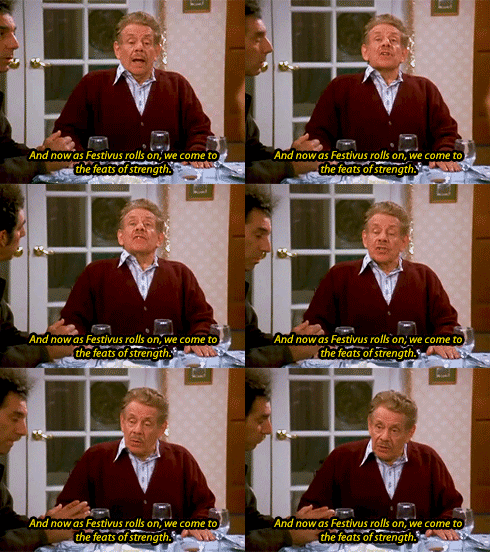
And now, the Feats of Strength

Time for Feats of Strength
In 2019, for my Feat of Strength, I held my TBR above my head, which I thought was pretty impressive. Then last year, I did something even harder—I signed out of Netgalley without requesting a single book. This year…

2021 Feat of Strength
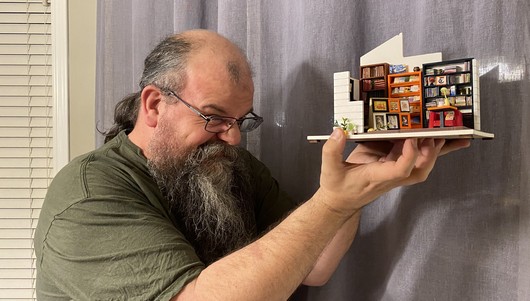
Yes, that’s me lifting an entire bookshop. If that’s not a Feat of Strength, I don’t know what is. Okay, sure, it may be miniature, but it’s really hard to hold that steady without any of those teeny-tiny books falling off the shelf…

Let’s see how the rest of you do with your feats.

* I’ve gotten a little feedback about this—it’s pretty clear I’m a Christian. So why do I do a Festivus post instead of something about Christmas? While I do think that believers have the liberty to celebrate the Nativity if they desire to, I’m ambivalent toward the day, and hesitant to make a big deal out of it. So, I don’t. If you’re curious, I thought this episode of The Heidelcast did a decent job of articulating many of the issues (without getting nasty about it).

On the other hand, Festivus is just silly fun. Hope you don’t mind…

Happy Festivus

WWW Wednesday, December 22, 2021

I’m feeling very distracted this week–I’m having a lot of trouble focusing on anything for more than 15 minutes at a time, thankfully I’m reading a couple of books that are built for short-term-focus (am pretty sure that was the order, it’s entirely possible that they induced it). But the end of the year is nigh, I can take the foot off the gas a little bit, right?

This meme was formerly hosted by MizB at A Daily Rhythm and revived on Taking on a World of Words—and shown to me by Aurore-Anne-Chehoke at Diary-of-a-black-city-girl.

The Three Ws are:

What are you currently reading?
What did you recently finish reading?
What do you think you’ll read next?

Easy enough, right?

What are you currently reading?

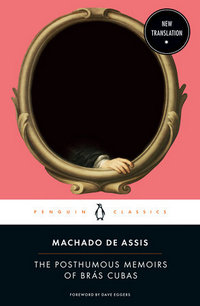
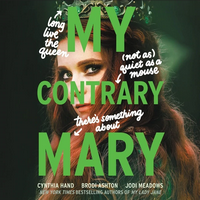
I’m finishing off a reading challenge by reading A Dream About Lightning Bugs: A Life of Music and Cheap Lessons by Ben Folds and The Posthumous Memoirs of Brás Cubas by Joaquim Maria Machado de Assis, translated by Flora Thomson-DeVeaux. I’m listening to My Contrary Mary by Cynthia Hand, Brodi Ashton, Jodi Meadows and narrated by Fiona Hardingham on audiobook, partially inspired by my recent Down theTBR Post.

A Dream About Lightning BugsBlank SpaceThe Posthumous Memoirs of Brás CubasBlank SpaceMy Contrary Mary

What did you recently finish reading?

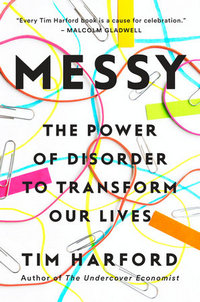
I just finished E.T.A. Hoffmann’s The Nutcracker (in an effort to inject a little holiday cheer) and Messy: The Power of Disorder to Transform Our Lives by Tim Hartford, Nicholas Guy Smith (Narrator) on audio.

The NutcrackerBlank SpaceMessy

What do you think you’ll read next?

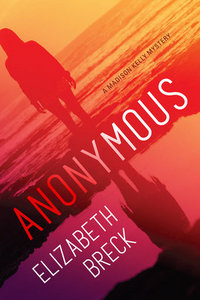
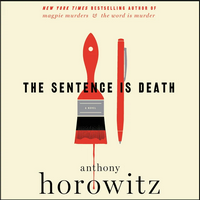
My next book should be Anonymous by Elizabeth Breck (after spending over a month on my “On Deck” list–a testament to shoddy planning) and my next audiobook should be The Sentence Is Death by Anthony Horowitz, Rory Kinnear (Narrator).

AnonymousBlank SpaceThe Sentence Is Death

How are you spending the week?

Down the TBR Hole Revisited (2 of 3)

Down the TBR Hole Revisited

By only cutting one out of ten last week—by dint of reading it—I wondered if this revisiting was really worth the trouble. This week’s results were more encouraging.

This meme was created by Lia @ Lost in a Story—but Jenna at Bookmark Your Thoughts is the one that exposed me to this, and as my Goodreads “Want To Read” shelf is scarily long, I had to do this.

The Rules are simple:

  1. Go to your Goodreads to-read shelf
  2. Order on ascending date added.
  3. Take the first 5 (or 10 if you’re feeling adventurous) books.
  4. Read the synopses of the books.
  5. Decide: keep it or should it go?
  6. Keep track of where you left off so you can pick up there next week! (or whenever)

What distinguishes this series from the Mt. TBR section of my Month-end Retrospectives? Those are books I actually own while Goodreads contains my aspirational TBR (many of which will be Library reads). The Naming of the two is a bit confusing, but…what’re you going to do?

(Click on the cover for an official site or something with more info about the book)

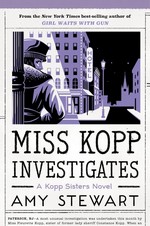
Miss Kopp Investigates Miss Kopp Investigates by Amy Stewart
My Thoughts: My enthusiasm for this series has waned, as evidenced by the fact that I’m not two behind. I’m not sure why I put this on the list—maybe just to nudge my memory that these books exist? I will admit, though, that this sounds more interesting than the sixth book. I guess that’s enough to justify keeping it on the list.
Verdict: A tepid
Thumbs Up
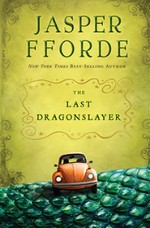
The Last Dragonslayer The Last Dragonslayer by Jasper Fforde
My Thoughts: I really do want to like Fforde, so a YA Fforde book about an employment agency for wizards? Sounds interesting. The agency being run by a 15-year-old who starts receiving visions about protecting the last dragon? Now you’ve really got me intrigued. Throw in a cover featuring a dragon and a VW bug and you make it hard not to judge a book by its cover.
Verdict:
Thumbs Up
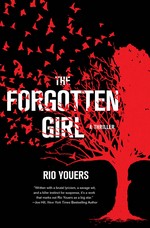
The Forgotten Girl The Forgotten Girl by Rio Youers
Blurb: A 26-year-old street performer is beaten up by thugs looking for his girlfriend. A girlfriend he doesn’t remember. Apparently, she has the “ability to selectively erase a person’s memories—an ability she has used to delete herself from Harvey’s mind. But emotion runs deeper than memory, and Harvey realizes he still feels something for Sally. And so—with the spider threatening—he goes looking for a girl he loves but can’t remember,” and danger ensues.
My Thoughts: I wish I remembered why I put this on the list in the first place, maybe it’d convince me to keep it there.
Verdict:
Thumbs Down
E.B. White on Dogs E.B. White on Dogs by E.B. White
Blurb: A compilation of “the best and funniest of his essays, poems, letters, and sketches depicting over a dozen of White’s various canine companions” put together by White’s granddaughter.
My Thoughts: Do you have to ask?
Verdict:
Thumbs Up
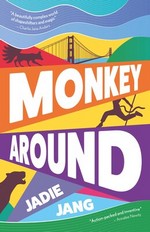
Monkey Around Monkey Around by Jadie Jang
Blurb: “Barista, activist, and were-monkey Maya McQueen was well on her way to figuring herself out. Well, part of the way. 25% of the way. If you squint…”
My Thoughts: When the blurb for an Urban Fantasy starts like this, I stop paying attention, and click the “Want to Read” button. Also, Paul’s Picks had good things to say.
Verdict:
Thumbs Up
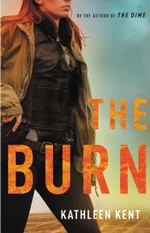
The Burn The Burn by Kathleen Kent
My Thoughts: The Dime was so good, I added the rest of the trilogy without looking at what they were about. I really don’t care, just need to fit them into the queue.
Verdict:
Thumbs Up
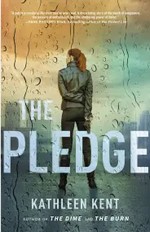
The Pledge The Pledge by Kathleen Kent
My Thoughts: See above.
Verdict:
Thumbs Up
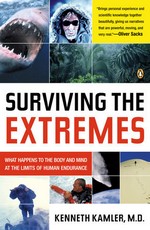
Surviving the Extremes Surviving the Extremes: What Happens to the Body and Mind at the Limits of Human Endurance by Kenneth Kamler
Blurb: “A true-life scientific thriller no reader will forget, Surviving the Extremes takes us to the farthest reaches of the earth as well as into the uncharted territory within the human body, spirit, and brain…Divided into six sections—jungle, high seas, desert, underwater, high altitude, and outer space—this book uses firsthand testimony and documented accounts to investigate the science of what a body goes through and explains why people survive—and why they sometimes don’t.”
My Thoughts: My daughter (or was it her boyfriend) talked about needing to read this for a class—or maybe it was recommended by a professor—and thought it might be fun to read to talk about with them. But then the class didn’t happen or something…I really don’t remember. But they didn’t end up reading it, and I’m not super interested in it.
Verdict:
Thumbs Down
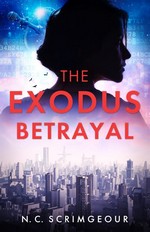
The Exodus Betrayal The Exodus Betrayal by N.C. Scrimgeour
My Thoughts: It’s a cyberpunk-y SF thriller that I’m just not in the mood for. This time, it’s despite the nice things Paul’s Picks had to say. It’s probably pretty good, but I just know I’m not going to get around to it.
Verdict:
Thumbs Down
The Library The Library: A Fragile History by Andrew Pettegree
Blurb: “Perfect for book lovers, this is a fascinating exploration of the history of libraries and the people who built them, from the ancient world to the digital age.”
My Thoughts: A history of libraries? That sounds pretty good. But it also sounds like a lot of work. When I read about this at Witty and Sarcastic Book Club, the idea intrigued me. But lately, the part where Jodi wrote, “There was just no excitement shown in the pages. I felt like the authors weren’t really all that invested in what they were writing. And that sort of rubbed off on me a little bit,” speaks loudly to me.
Verdict:
Thumbs Down

Books Removed in this Post: 4 / 10
Total Books Removed: 5 / 33

Anyone out there read any of these books? Did I make the right call with any of them?


(Image by moritz320 from Pixabay)

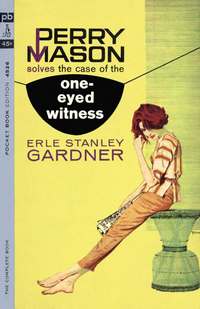
The Case of the One-Eyed Witness by Erle Stanley Gardner: A Dose of Nostalgia Delivered in a Twisty Whodunit.

The Case of the One-Eyed Witness

The Case of the One-Eyed Witness

by Erle Stanley Gardner
Series: Perry Mason, #36

Mass Market Paperback, 210 pg.
Pocket Books, 1963

Read: October 19-20, 2021
Grab a copy from your local indie bookstore!

What’s The Case of the One-Eyed Witness About?

While out for dinner with Della Street, Perry Mason gets a call from an unidentified person wanting to hire him for a job. She’s even arranged for some money for a retainer to be delivered to him at the restaurant—she just needs him to act on some information included with the cash. It’s a matter of life and death, she says, before the call ends.

Trying to earn his (pretty small) retainer, after he gets the delivery, Mason tries to track down his new client—and then he completes his assignment.

In the course of trying to figure out who his client is, Mason comes across a murder, and then another. He finally finds someone who he thinks is the client—and she denies that up until she gets arrested for murder, and then she’s more than ready to hire him.

Mason goes up against the Washington Generals of the legal system, Hamilton Burger and Lt. Tragg, as well as some pretty clever witnesses in his efforts to get to the bottom of this mystery. But while things frequently look grim for his client, it’s a sure bet that Mason will make sure justice is done.

Perry Mason, Micromanager

So Paul Drake is supposedly one of the best P.I.’s around—he’s got a sizeable agency of capable detectives, too. But you wouldn’t know it, the way that Mason ordered him around the investigation. I was taken aback by it, I have to say. It’d be different if this was Drake’s first case for Mason—or at all—but for a guy with his kind of experience? Sorry, Perry, trust the man to do it right.

There’s A Lot of Ugly Here

This was originally published in 1950, and you can tell in many ways. One of which is the casual usage of ethnic slurs about Japanese people. It’s not the first time I’ve read a book from this era (or earlier), I know this stuff is there—and I normally wince and move on. But it seemed a bit heavy in this book. I think—I don’t know, but I think—it’s there purposefully. That doesn’t make it easier to read. But if I’m right, it allows me to want to read more Gardner.

The reason I think the racist language is intentional is that prejudice against Japanese people is at the core of the plot—I’m not saying it’s a hate crime. But this story is only possible in a society where this prejudice is this prevalent.

I don’t know why I’m being cagey with spoilers for a book seven decades ago, but old habits, I guess.

At the end of the day, I can still enjoy this and see the racism as a disturbing cultural relic. And maybe as a sign of how far we’ve come (though, we obviously have further to go).

Nostalgia Trip

As best as I can remember, a few months after I fell in love with the Perry Mason show in syndication, I girded my loins and crossed that line between the “Juvenile” and “Adult” shelves at my library for the first time to see if I could find some books by the guy listed in the credits. They didn’t have a complete set—but boy howdy, they had a lot of them. A few years later, when we moved to a new city, I was disappointed to see that their Gardner collection was smaller—but at least they had a couple I hadn’t read.

For some reason, about the time I left college, I stopped hunting down unread novels and stopped re-reading them, too. I’ve thought about dipping my toes back in, but hadn’t gotten around to it. Until a couple of months ago and I found myself in front of a large selection of used paperbacks—including one that was new to me.

Reading this took me back—from the list of the Cast of Characters through to the end, it was like stepping back into a world I’d forgotten. I remembered the characters (and how they differed from their TV portrayals), the snappy dialogue, and quiet humor. I got a huge hit of nostalgic warm and fuzzies from reading this one.

So, what did I think about The Case of the One-Eyed Witness?

I don’t think this was one of Gardner’s best, but it’s like what they say about pizza. Even if it’s bad, it’s still pretty good. And this wasn’t bad—it just wasn’t great.

I do think the plot was unnecessarily convoluted, but it was necessary to get Mason exposed to everything he needed to lead up to the big gotcha moments in the courtroom, and to Mason solving it. It was a satisfying conclusion, too. Enough that I don’t care about how complicated the trip to the conclusion was.

I had a great time reading this—and I think anyone who loves a good bit of courtroom drama will, too. If you haven’t read a Perry Mason novel before, this might not be the best one to start with. But you should give one of them a shot—I can’t imagine it’ll be another two-and-a-half decades before I try another.


3.5 Stars

This post contains an affiliate link. If you purchase from it, I will get a small commission at no additional cost to you. As always, opinions are my own.

Top 5 Tuesday – Top 5 New Authors of 2021


Tell us all about your favourite new authors. Either debut authors from 2021, or new-to-you this year.

2021 was a good year for new-to-me authors (a pretty good year for old-to-me authors, too), I made the acquaintance of several authors I expect to read for a long time to come. But a Top 5 was a little tricky–four of these names jumped right to me, and then six names competed for that last slot–which means a Top 10 list would’ve been a great thing for me to do today, I guess. When it comes to these five authors, they really stood out to me this year, and I bet I’ll be reading them for years (assuming they keep producing…). Two of them have backlists for me to work off of, too.

In alphabetical order, because I’m not doing that to myself.

1 Stephen Mack Jones Stephen Mack Jones

I read the first book in his series, August Snow, this summer–and I just clicked with it within a couple of pages. The voice was just perfect, his characters felt like good friends already–just ones I needed to get to know better. He also had a real gift for setting–I could see some of the locations clearly, and the food? I’m getting hungry right now. I’ll be returning to Jones and Snow early next year, and I can’t wait.

In case you’re curious about what I said about the book that put him on the list, click here.

2 Nadine Matheson Nadine Matheson

Matheson infuses her fiction with her experience and knowledge–one of the murders takes place near her home, which helps her bring that part of London to life in a way I don’t think I’ve seen before. Also, she’s a Criminal Soliciter, bringing an authenticity to the book that you don’t always get. I’m starting to get carried away and I have 3 other people to talk about so I’m going to shut up.

In case you’re curious about what I said about the book that put her on the list, click here.

3 Chris McDonald Chris McDonald

I’ve only read one of McDonald’s two series to date (I plan on changing that soon), and it certainly appears that the two are pretty different in style and tone. But you can’t read five books in a year by one author without it leaving a pretty strong impression on you. The Stonebridge Mysteries had strong charactes, clever mysteries, and a humourous touch (without being comedies), a consisten source of entertainment throughout 2021.

In case you’re curious about what I said about the series that put him on the list, click here.

4 Fabian Nicieza Fabian Nicieza

In researching this post, I realized I’d actually met Nicieza in 1987 in Psi Force #9 from Marvel Comics. But I’m still counting this because: 1. I’d forgotten about him completely, and 2. I’m going with new-to-me-novelists. He’s written a lot of other comics in the meantime–including creating Deadpool. But now he’s turned to novel writing–his first novel was laugh-out-loud funny, with the kind of tension that seasoned pros struggle with, great characters, and some social commentary, too. Oh, yeah, and a great mystery!

In case you’re curious about what I said about the book that put him/her, click here.

5 Richard Osman Richard Osman

Osman has a long résumé in all sorts of fields–none of which I was exposed to here in the U.S. But his first novel was a great way to be introduced–a great mix of meditation on grief and aging, comedy, and mystery. He writes like a seasoned pro, and I can’t wait to see what he does next.

In case you’re curious about what I said about the books that put him on this list, click here.

Who were some of your new favorites of 2021?

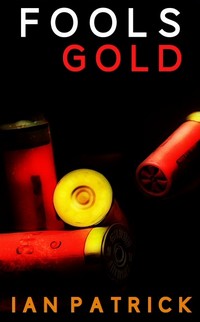
Fools Gold by Ian Patrick: The Batford Trilogy Ends with a Bang

Fools Gold

Fools Gold

by Ian Patrick
Series: Sam Batford, #3

Kindle Edition, 237 pg.
Fahrenheit Press, 2020

Read: August 25-26, 2021
Grab a copy from your local indie bookstore!

I love remote working. It means I can be where I need to be, doing what I need to do, when I need to do it. After that there’s whatever time’s left for police work. I don’t regard myself as a criminal. I’m just a disgruntled public servant supplementing my meagre living. Most criminals I despise but there are a few who break the mould.

I’m one of them, after all.

What’s Fools Gold About?

After recovering from Stoned Love, Batford’s thrown back into the field. This time, he’s answering directly to Klara Winter and she’s got two things on her mind—shutting down an armed robbery team and exposing Batford.

Batford has three missions—stopping the robbery team; finishing cleaning up after his former boss/mentor—including getting what cash he can; and staying clean in front of Winter. Note the qualifier there, clean “in front of” Winter, not clean.

Typical police procedural stuff, right?

The UC work is great—and Batford ends up finding more criminal activity than the police were aware of when the operation started. I don’t want to get into it, because it’s better for you to read it. But like so many of the police actions in Patrick’s works, it screams authenticity.

So, what did I think about Fools Gold?

There was a time the police were viewed as protectors and defenders. In a way that still applies: Terrorists denied their spoils, criminal networks disrupted, drugs and guns seized. I’m part of all that but no longer feel like crew on the good ship, Justice.

I’m pretty sure I’ve said something like this before, but it’s worth repeating. It takes a special skill to make readers get behind a crooked cop—a reader will accept a Bosch or a Rebus bending the rules a bit to get the murderer to confess or get convicted. But that’s not Batford. Well, okay, it is. But that’s not all that Batford does—while he gets results/arrests/stops whatever crime he’s been sent to investigate, he also makes sure he profits off it. And somehow Patrick gets his readers to hope Batford gets away with it. At least a little bit.

It drives me crazy—I want him to succeed and I hope he spends the rest of his life behind bars. You figure that out, I can’t.

Patrick’s prose here is as lean as ever—and once the momentum builds up, it doesn’t stop. There’s a ticking clock on Batford’s investigation, and it carries over to the novel. The action propels you from one scene to the next.

There’s real growth in Patrick’s plotting—with no disrespect intended to his previous work—but this feels so much tighter, he doesn’t waste a moment.

And that ending? I don’t have words for it. It’s both a great launching pad in the (seemingly unlikely) case that there’s a fourth Batford novel, and a great way to conclude the trilogy.

Get them all—this would work okay as a stand-alone, but as the end of a run? It’s great. It’s a trilogy that goes from strength to strength, and you’d be smart to pick it up.


4 Stars

This post contains an affiliate link. If you purchase from it, I will get a small commission at no additional cost to you. As always, opinions are my own.

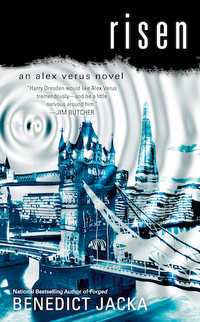
Risen by Benedict Jacka: I Don’t Like to Use “Perfect”, but I Came Close in Describing this Series’ End

Risen

Risen

by Benedict Jacka
Alex Verus, #12

Paperback, 323 pg.
ACE, 2021

Read: December 13-16, 2021
Grab a copy from your local indie bookstore!

As far as most people were concerned, I was one of the bad | guys, and I wasn’t sure they were wrong. The part that really bothered me was that, when I looked back on the decisions that had brought me here, all of them had made sense at the time. There hadn’t been a moment where I’d had a clear choice between good and evil. I’d just had to choose between bad options, over and over again, and things had kept getting worse.

Was there a point at which it had all gone wrong?

This last year, I’ve been listening to the audiobooks to review the series before this. And it’s been a lot of fun. Up until that chapter at about the midpoint in Fallen that really could’ve served as a series finale. Even knowing it was coming, it was a gut-punch. And the book and a half that followed made it clear that a lot was going to happen in this last book, and very little of it promised to be good.

Also, in a real sense, even though I think the story needed to end, it was coming to that point naturally—I really didn’t want to leave this world and these characters.

This brings us to:

What’s Risen About?

It’s time for the final face-off between Alex and his allies (a new, temporary, one is introduced early on here), the Council, Richard Drakh, and Anne and her forces. If Anne (okay, the djinn who controls her) succeeds in their plans, a new, devastating war will break out, and mages throughout the world will be killed in large numbers (and humans will fare much worse). So, the others call a truce to face this threat together.

Naturally, everyone expects the others to betray them as soon as is possible—but in the meantime, they need to work together (the Council solicits Alex’s help in taking Richard out as soon as feasible). Alex goes along with the truce—and the Council’s offer—because it’s the only way to prevent the worst-case scenario and he wants one more shot at saving Anne. Something that Richard and the Council couldn’t care less about.

That’s pretty much what the novel is about—a fight for all the marbles. At the very least, the future of magic society in the U.K. hangs in the balance. At the most, the future of life on Earth will be determined by this confrontation.

Oh, and Alex is pretty sure he only has a few days left to live (not that he’s told anyone this), so he needs to get a move on to save the day, and possibly Anne.

That Meme Moment

You’ve likely seen that meme with photos of Bert from Sesame Street, reading that says, “When a character’s death is so sudden and unexpected that you have to re-read it a few times…” (see also that death from Harry Potter and the Order of the Phoenix). Well, there was one of those, here. You knew X was in a jeopardy-filled situation—everyone in the novel is—you knew all along that there’d be character deaths.

But…wow. “____ killed ____” and that’s it. No fight, no dialogue, no description of it, just “____ killed ____”. I don’t know how many times I reread it, just hoping for more detail, hoping what I read was actually “it looked like ____ killed ____.” I was in shock for a bit. Alex and others were, too (when the danger passed).

As I said, you knew from the beginning (or from the two previous novels) that every character was at risk, but those three words really drove that home.

No one is safe in Risen. No. One.

I absolutely love it, and I’m glad I don’t interact with Jacka online because I won’t have to pretend to be nice to him for the next few weeks while I process things.

The State of Alex

“Are you going to help?”

“And if I say no?”

“I would prefer that you didn’t.”

“Prefer,” Helikaon said cynically. “What happened to that nice mild-mannered apprentice I used to have?”

“Turns out he was never all that nice.”

Helikaon grunted. “Took you long enough to figure that out.”

The novel opens with a pretty big fight scene—bigger than a reader of the first few novels might expect—and Alex is going through enemies like a super-powered action hero. Sure, he’s powered up a lot lately, but it was just so strange to see that. He’s not the character we met in Fated anymore.

Is that a good thing?

That’s the central question of Risen (arguably for the series itself). For years, Alex has insisted he’s not a Dark Mage when the whole world assumed he was one. Sure, he was definitely not a Light Mage but he consistently refused to align himself with the Dark Mages. Alex saw himself as an embodiment of Henley’s Invictus. But when then he was forced into office as a Dark Mage and then when the Light Council turned on him one too many times…he started acting like one. He never really embraced the identity, but he might as well have.

But beyond the title, he really started walking down a Dark Path (with the “dark” connoting the lack of morality that Dark Mage doesn’t). Compromise after compromise, choice after choice after choice—all the defenses and walls that Alex had set up so that he wouldn’t act a certain way came falling down. And maybe, just maybe, it indeed “turns out he was never all that nice”—or moral.

A lot of time is spent with Alex wrestling over this in Risen. Often enough—and in terms similar enough—it might seem redundant. But when you remember how short a time frame this book’s action encompasses, it’s not surprising that he keeps mulling over things in the same terms—he never gets a chance to really resolve the question to himself until the end. Alex isn’t repeating himself, he’s continuing the inner dialogue over a couple of days—with frequent life-threatening interruptions. It’s no wonder he keeps asking the same question of himself.

In the end, for Alex, I’m not sure it matters what kind of person he was. Whether he was a moral person—or just wanted to be (at least for a while). I think the Alex Verus of Fated wouldn’t be crazy about the Alex of Risen, but he might exercise some compassion and understanding toward him (begrudgingly). But it’s the actions at the end, in the closing chapter or two, that really tell the reader (and Alex) what kind of man he was at his core.

Getting to watch him wrestle with these ideas, the moral ambiguities, and clear moral failings was a great part of this series. A character that can honestly examine himself and draw these kinds of conclusions is rare in Urban Fantasy (also, it’s not frequently called for). It’s just one of many reasons to love the series.

A Word About Luna

When we first meet Luna, she’s scared, nervous, as far from confident as is humanly possible, but in befriending Alex (and being befriended by him), she’s realized that there’s some kind of hope of a future for her. She’d never really had that (or if she did, it was so long ago, she’d forgotten it). He pulled her out of her shell, introduced her to a new world, and guided and protected her through it.

She probably ended up idolizing Alex because of this—thought of him in ways he couldn’t live up to. Yes, she was aware enough of his shortcomings and human nature to keep her idea of him from being overidealized, but there was a degree of it. She seamlessly transitions from being his biggest cheerleader to being his conscience. As always, they talk through plans, he assumes (as he should) her assistance in his schemes—but through their planning sessions, Luna keeps calling him back to the Alex he was, reminding him of his morals and the decisions he made to ensure he wasn’t Richard, or Levistus, or any one of a number of mages he wanted to be nothing like. She wasn’t always 100% successful, she sometimes had to repeat herself. But if Alex were a cartoon character, Luna would be the figure in the white robes standing on his shoulder fighting for him to do the right thing.

Beyond being Alex’s Jiminy Cricket, Luna’s really matured. She really doesn’t need him in her life as a mentor—the Arcana Emporium is truly hers now, she’s the one doling out guidance and advice. Luna’s able to stand on her own now—and it’s great to see. Alex might be the central character of this series, but Luna’s the real MVP.

Along the same lines, I need to shoehorn in a comment about Landis. I’ve always liked him and meant to talk about him—this was underlined during my revisiting this year. There’s so much to appreciate about this character—I really hope he’s one we get short stories about in the future. He really shines in Risen—for his actions, as well as for those actions he deliberately doesn’t take. There’s a complexity to him that would be great to dive into.

Risen as a Series Finale

Luna tailed off, a sad look on her face. “We’ve lost so much.”

The simple way that she said it hurt. I wished I could tell her that the worst was over.

With over a hundred pages to go at that point, I wished he could tell her that, too—but no. Not even close.

Before I started reading this, I thought back to the series I’ve read over the last few years that ended (I’m not counting things like trilogies that were never supposed to keep going). Some of them ended well—like The Hollows (until Harrison’s publisher decided it needed to come back); some of them went out on a victorious note—like Kitty Norville; some of them left readers divided and uncertain—like The Iron Druid Chronicles (I change my mind about that ending regularly). I don’t think this will be as divisive as IDC (and it shouldn’t be), but it really reminded me of it.

I think Alex spends a lot of this novel (and the previous one) in a similar headspace to Atticus at the end of Scourged, a lot of what happened to him and those around him was due to choices Alex had made and he saw that—and was prepared to face the consequences (although, he’d find a way out of them or to mitigate them if possible).

But the similarities end there.

This is a great series finale—we get the confrontations we’ve been waiting for since early on. We get resolutions to every major plotline. We get answers to some big questions. There are strong indications for what life is going to look like (at least for the foreseeable future) for those we care about who make it to the end. It doesn’t feel like Jacka pulled any punches, or cheated to give someone a happier ending than the story seemed to suggest.

Everything that happened felt inevitable, like we were waiting for it, and Alex for all his divination should’ve seen it coming (I wonder if Helikaon did). In that opening quotation, he asks, “Was there a point at which it had all gone wrong?” Yeah, pretty much early on in Fated is when his fate was sealed—although it’s probably when he took on Anne and Vari in addition to Luna, when he opened himself up to them, cared about them, and shared his life and dangers with them—and adopted theirs as his. This makes it a lot like The Iron Druid Chronicles again—there’s a straight line between the choices that Atticus makes in that first book and the finale.

All this points to Jacka’s skill—unlike some people claim for their series, I don’t get the impression from what I’ve read/heard from him that he had the series mapped out like this when he started. But it sure felt like it.

Do I want to see more in this world? Of course! And the promised collection of short stories will satisfy that desire. But do I feel cheated? Do I feel like I need more? No. And much more than a few short stories will take some of the luster off of this ending. The story has been told, and as a reader I can move on knowing that’s done.

So, what did I think about Risen?

I shook my head. No easy choices, no easy answers. And now I was keeping company with generals and politicians, the sort of people who make these kinds of choices every day. Pick option one, these people die. Pick option two, it’s some other people instead. Pick option three, and both groups live, but the problem isn’t solved and will come back at some unspecified time in the future, at which point it’ll probably be worse. Make your choice, and don’t take too long, because tomorrow you’ll have to do it all over again.

Maybe this was how you turned into someone like Levistus. Having to fight for your own position while also having to decide between life and death for the people below you every single day. Over time you’d get numb to it, and eventually you’d stop feeling anything at all.

Was I becoming like that? I didn’t know. and that frightened me.

As tempting as it is to focus solely on the end of the series, I wanted to focus on Risen as a novel. It’s one of Jacka’s best. Maybe his best. Probably his best. And I say this as someone who is not a fan of all the choices he made in terms of character or plot. At least not in the moment, I think I’ve come around to them after the fact.

It really works as a novel—from the (typical) in media res opening, the challenges and deals Alex has to make to set up the main action (which takes so much more of the novel than is typical), to the main action—it’s well-paced, never too fast so you feel overwhelmed, but it never really lets up, either. There are moments of lightness to balance the darkness, thoughtfulness/reflection to balance the action.

Not having to worry about the next X many books to come, Jacka can keep things focused. It almost becomes a stand-alone at this point. The goals of the plot and Alex are clear throughout—stop Anne’s djinn’s plan, defeat Richard (hopefully once and for all), try to save Anne, and be ready for the fateweaver to kill Alex.

I wasn’t sure where to put this observation, but I needed to say something about this. After the last chapter—with its very definitive “The End”—there’s an Epilogue. But before that epilogue are a few pages with just a little text each. It’s a brilliant move, and I’d give the book another star if I could just for it. They make the Epilogue the literary equivalent of an MCU mid/post-credits scene, and I didn’t think such a thing would be possible or would work, but it did. Those pages also give the reader a minute to process the impact of that final scene before diving into the Epilogue, and you really need that.

There are great action scenes, some great character moments (many, actually), and fans will find themselves fist-pumping quite often. There are so many powerful scenes. In a few months, I’m going to listen to this audiobook. And I already know a few passages where Jackson’s narration is going to hurt to listen to—mostly ones I went back and re-read and I could hear his narration in my head as I did so.

I want to keep going, I don’t know how to shut up about this, in case you can’t tell. But I think I’ve said all the important things, and probably several of the less-important things. It’s almost like when I hit “Schedule,” I’ll really be done with the series, so if I can keep typing I don’t have to say goodbye.

I’m going to miss Alex and the crew—but I’m glad I got to see it go out this way. And you know, when the promised collection of short stories is out, I’ll be jumping on it. If you’ve read this far, you’ve probably read the whole series and don’t need me to tell you to read it—you already have, or are just waiting with bated breath to do so. If you’ve read this far and haven’t read the series? For cryin’ out loud, fix that.


5 Stars

This post contains an affiliate link. If you purchase from it, I will get a small commission at no additional cost to you. As always, opinions are my own.


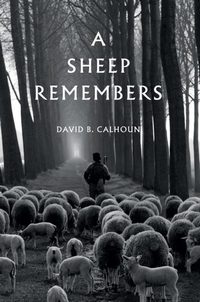
A Sheep Remembers by David B. Calhoun: Remembering Psalm 23

A Sheep Remembers

A Sheep Remembers

by David B. Calhoun

Paperback, 137 pg.
Banner of Truth Trust, 2021

Read: December 12, 2021
Grab a copy from your local indie bookstore!

All the circumstances of the pilgrimage—want, weariness, journeyings, wanderings, perplexities, the shadowed mysteries of the valleys, the thronging enemies, and the infinite beyond—are present; and the singer knows them. They are, however, only mentioned to sing of their negation by the graciousness of the Shepherd. Want is cancelled. For weariness he has green pastures of rest. On journeys he leads by pleasant ways. From wanderings he restores. Through perplexities he guides, and that by right ways. In the valleys of death’s shadow his presence cancels fear. In the presence of enemies he makes a feast, and he is a host royal in bounty.

What’s A Sheep Remembers About?

RIght out of the gate, Calhoun cites Spurgeon: “I cannot say anything new on this text…But I can remind you of old and precious truths,” and that’s pretty much Calhoun’s mission statement, reminding readers about Psalm 23. He’s not trying to shake things up with a new understanding, he’s not going for bold scholarship, or something along those lines. It’s simply an exercise in taking a slow look at what we already know, to remember the old and precious truths.

Each chapter takes a verse (or less) and reflects on it—the chapter starts with a version of the Psalm or a hymn based on it, then there’s a commentary on the phrase(s) examined, something written by a shepherd to help the reader understand (literal) sheep and their ways, illustrations from others to help understand the theme of the chapter and then a part of his own life story. The commentary sections are largely strings of quotations from other writers of various theological persuasions and varying degrees of orthodoxy, with a little addition from Calhoun–mostly to tie them together.

Preparing to Die

Calhoun talks about this in the book a bit—the Puritans had a practice to prepare for death, when terminally ill (or at least when they would suppose they were), they’d meditate on death, and the state of their soul as they neared it. In many ways, that’s what this book was for him.

Calhoun had been battling cancer for years, and he knew his death was imminent—he actually died shortly after delivering the final version of the manuscript to the publishers. You can tell from the latter chapters that he was very aware of the shortness of his time. Which adds some poignancy to this work—particularly the chapters concerning “Yea, though I walk through the valley of the shadow of death” and “And I will dwell in the house of the Lord forever.”

Supplementary Material

I don’t typically talk about this kind of thing—because, why would I? But these merit a mention.

Calhoun includes an Addendum of Additional Versions of Psalm 23—the versions included in the text were good, but I guess that there just weren’t enough chapters for everything he wanted to use. I haven’t seen most of these before and I’m glad I was exposed to them.

The Bibliography is your standard bibliography, but Calhoun includes some personal notes describing the works—that’s a nice touch, and I wish more people would do that.

So, what did I think about A Sheep Remembers?

How could I be joyful when my body was slowly, perhaps not so slowly, dying? I have lost sight in one eye and the other eye is failing, as is my hearing. I have been hospitalized seven or eight times in the last three years with pneumonia. I can no longer swallow food or talk very well. And, most disturbing, my mind is letting me down. How could I be joyful when all this was happening to me? In the valley I learned that joy comes, not from my feelings, nor from my daily experiences, but from the inner conviction that my life is going according to God’s plan. Joy is a gift of God. David wrote, ‘You have put more joy in my heart than they have when their grain and wine abound’ (Psa. 4:7).

This book isn’t just about Psalm 23 in the abstract, it’s about Calhoun’s Shepherd guiding him through his cancer. The latter is what made this book worth reading.

Like the other book I’ve read by Calhoun, In Their Own Words, the bulk of the text seems to be tiny quotations—that quotation I open this post with isn’t Calhoun, it’s G. Campbell Morgan—and it’s one of the longest quotations Calhoun uses, many are a single sentence long. It takes a certain genius to have these various sources on hand and be able to cite them together in such a way to present an argument. But really, Calhoun seems to use these to frame his argument, rather than to support it.

I appreciated the work, I profited from it—but I think it could’ve been stronger. If there was more of Calhoun, and less a medley of other writers—I think it would’ve been.

Still, it’s hard to walk away from time in this Psalm and not be refreshed. And the quotations, sayings, metrical versions, and paraphrases assembled here all help that endeavor. It’s hard to say anything bad about that.


3 Stars

This post contains an affiliate link. If you purchase from it, I will get a small commission at no additional cost to you. As always, opinions are my own.

Page 2 of 6

Powered by WordPress & Theme by Anders Norén