Month: September 2023 Page 5 of 6

WWW Wednesday, September 6, 2023

It took precisely 1 day for my month’s iron-clad TBR (so I can accomplish all the things I have in mind for the next 6 weeks) to go off the rails. Granted, it’s because I read a book faster than I expected to and could do a little mood-reading, but dagnabit—I had a plan!

Still, I’m actually ahead of schedule today, so…yay!!!

This meme was formerly hosted by MizB at A Daily Rhythm and revived on Taking on a World of Words—and shown to me by Aurore-Anne-Chehoke at Diary-of-a-black-city-girl.

The Three Ws are:

What are you currently reading?
What did you recently finish reading?
What do you think you’ll read next?

Easy enough, right?

What are you currently reading?

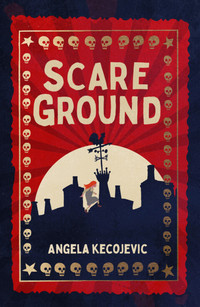
I’m reading the creepy(?) MG novel, Scareground by Angela Kecojevic, and I’m listening to the thoughtful Wannabe: Reckonings with the Pop Culture That Shapes Me by Aisha Harris on audiobook.

ScaregroundBlank SpaceWannabe

What did you recently finish reading?

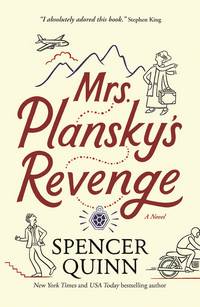
I just finished Spencer Quinn’s Mrs. Plansky’s Revenge—which was much better than I expected (and I expected to enjoy it!) and The Last Ranger by Peter Heller, Mark Deakins (Narrator) on audio, a book I appreciated, but I’m not sure I liked.

Mrs. Plansky's RevengeBlank SpaceThe Last Ranger

What do you think you’ll read next?

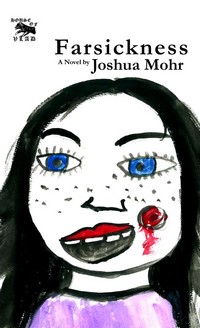
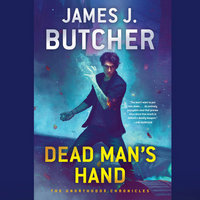
My next book should be Farsickness by Joshua Mohr and my next audiobook should be Dead Man’s Hand by James J. Butcher, James Patrick Cronin (Narrator).

FarsicknessBlank SpaceDead Man's Hand

How are you kicking off September?

A Few Quick Questions With…Rebecca Carey Lyles

Rebecca Carey Lyles keeps popping up here this year—she’s participated in the Q&A about Writing in Idaho and in the series about Self-Publishing, now she’s here to talk about her latest book, Shaow Ranch (which I posted about earlier) and more. Hope you enjoy!


We’ve gone over your writer’s bio before, but I wanted to follow up on a couple of things. First, could you talk about your path to publication and what sparked your desire to write in the first place?
My path to publication was a long and winding road, ha. Like most authors, my desire to write began with reading. An amazing gift from our Creator, reading opens doors in our minds and in our lives. The thrill of holding that first Dick and Jane book in my hands in first grade remains with me to this day.

After reading multiple books in multiple genres and graduating from college with a degree unrelated to journalism or creative writing, I attended a six-week writing class. And got the writing bug.

From there, I enrolled in a how-to-write correspondence course and started writing articles and short stories. Some were terrible and some were published. Then I tackled books, both fiction and nonfiction. With the help of writing teachers, seminars and conferences, how-to books and magazines, and writing groups in Wyoming, Arizona and Idaho, I learned the craft.

But I haven’t stopped educating myself. I listen to writing-related podcasts and read articles, blogs, etc. on how to become a better writer, editor and marketer. I also rely on critique partners, beta readers and proofreaders to help me produce a quality product. Editing other authors’ work has enabled me to spot and address my own writing weaknesses.

Authors have dozens of ideas percolating at once (if not more), what was it about the idea that became Shadow Ranch that made you decide it was the one you wanted to focus on for a few months? Can you remember what nugget started that book? You discuss some of this in your podcast episode, “What Lurks in the Shadow Ranch Shadows” and I encourage people to give that a listen.
I don’t remember what I said on that podcast. Maybe I’m the one who should listen to it, ha. But as I recall my thought process, two things triggered the Shadow Ranch idea. First, I read Wife No. 19 by Ann Eliza Young (1844-1917). She married into a famous polygamous family at a young age and wrote about her personal experiences plus what she observed in other similarly trapped women, including her mother. Those women suffered incredible hardship and abuse, whether physical, emotional, mental, spiritual or financial. Usually, all of the above.

At the same time, friends were telling me about the Sister Wives television series. I haven’t watched the series, but to think a dysfunctional family’s illicit alliance has been glamorized for all the world to see is terribly sad. My personal opinion is that the adults and children in such “families” need our sympathy, not our adulation.

And that’s why I wrote Shadow Ranch. I wanted to show the emotional trauma “sister” wives experience as well as the control needed to ensure they continue to cooperate with the male-centric lifestyle. (It’s called brainwashing.) Today’s polygamists have all the problems their predecessors had way back when and possibly more. Yet, they continue to believe and teach that plural marriage ensures they’ll reach the “celestial kingdom” following death.

Talk to me about the research you did for this—I’d imagine it’d cover contemporary polygamy cults, some sort of trauma research—maybe some domestic abuse research? Possibly even research into some of the industries the compound used to fund themselves? How much time and effort does that part of the writing process does that take?
As I alluded to above, plenty of information is available online in news articles and documentaries. Books written by individuals who escaped polygamy and by authors who study plural marriage are also available. I just did a count and found 10 related books on my cult shelf, and more are out there. I’ve also researched narcissism and domestic abuse as well as cult mentality. Here are a couple of sites: https://psychcentral.com/ & https://www.icsahome.com/home.

Some say child labor and/or forced labor have enabled contractors in certain parts of the West to underbid competitors. Also, insiders say our taxes support thousands of polygamous women who don’t have marriage certificates for their unlawful unions. They receive food stamps, welfare payments, medical assistance, and other governmental benefits for themselves and their many children.

Regarding domestic abuse…all a person has to do is google “Warren Jeffs,” the imprisoned FLDS leader who’s still revered by thousands of followers. If you have the stomach for it, here’s a “true crime” report regarding his conviction. https://www.oxygen.com/crime-news/what-evidence-led-to-flds-leader-warren-jeffs-conviction.

Truth is, I spend way too much time doing research for my stories. Rabbit trails, you know… In all seriousness, I can’t say how many hours research demands, but it probably consumes at least 25% of my writing time.

How difficult is it to write a convincing character like Brewster? And do you have to do something to get out of that frame of mind once you’re done for the day to keep him from taking up residence in your consciousness? How about one/all of the wives?
I hate to admit it, but writing nasty characters comes fairly easily for me. Brewster is an example of unrestrained selfishness. Our basic natures are selfish, mine included. Although my job is to portray a villain’s self-focused behavior, I must restrain my own tendency. Brewster is totally about satisfying his narcissistic self, however possible. If he has to turn on the charm to do so, no problem. His bottom line is not the other person’s well-being; instead, he uses others for his own self-perceived well-being. And, no, he doesn’t haunt my dreams, thank God!

To be honest, after being married almost 50 years, I cannot imagine having another so-called wife or wives in our lives. Maybe another woman could be tasked with changing diapers, cleaning toilets and pulling weeds. 😊 But it wouldn’t be worth the jealousy, the arguments, the broken hearts and hurt feelings. Or knowing my husband was regularly sleeping with other women—or favoring a certain one, maybe a younger one, which happens.

Although I try not to emotionally plumb the depths of polygamous women’s despair, I can imagine myself in their shoes and think how I would feel. Yet, nothing about plural marriage appeals to me. I cannot picture anyone finding happiness or fulfillment in that lifestyle. As a result, I want to warn others away from the fake glamor, intrigue and supposed pathway to heaven touted by groups like the FLDS.

A scripture verse in Ephesians says, “Have nothing to do with the deeds of darkness, but rather expose them.” I trust that’s what I’m doing in all my books, exposing the darkness and warning people away from evil.

In our correspondence, you said Shadow Ranch “kind of a crazy one to start with.” (I probably should’ve asked for a sane one to start with). Why do you say that? How does this differ from a more typical Rebecca Carey Lyles book? (assuming such exists)
Ha, I’m not sure I have a “sane” series! 😊 My first series, The Kate Neilson Series, addresses human trafficking, and the second series, Prisoners of Hope, tackles religious cults. People I talk with at book events seem to be somewhat familiar with trafficking and religious cults. But not many know about modern-day polygamy. Americans tend to think plural marriage was outlawed over a hundred years ago, which it was, and assume it’s no longer practiced.

Online numbers, on the other hand, suggest our country has 30,000-50,000 polygamous families and somewhere between 100,000 and 150,000 individuals involved in those family groups.

This is one of those novels that comes with Discussion Questions at the end—is this typical for you? What’s behind your decision to include them? These are written by Pat Watkins—what can you tell us about her? Does it feel a little strange to read someone distilling your work into some talking points?
Pat Watkins, a retired educator, is amazing—and so are her questions! She “gets” my books better than I do, ha. I could never do what she does with the discussion questions, and I appreciate her willingness to compile them for my books. She came up with the idea to include questions for book clubs. I haven’t received feedback, but I trust the questions stimulate good discussion.

To answer your question about Pat distilling my stories into talking points, I’m fascinated to learn what she gleans from my writing. Every reader has a different take on a story because we have different backgrounds, world views and life experiences. Yet, she comes up with universal questions that any reader or group of readers can ponder.

What is it about storytelling/writing that keeps it fresh for you? Is this a compulsion to keep going, or is it more pleasure? Along those lines, are there genres you are still hoping to try, or are you sticking in the lanes you’ve picked? Are there genres you don’t see ever trying?
A couple things keep storytelling/writing fresh for me (other than the notion a true writer supposedly can’t not write). First, I do a lot of research. Learning about other people groups, historical background, contemporary cultures, locations, flora and fauna, etc. fascinates me.

Also, unlike many authors, I prefer to rewrite a rough draft rather than drag the initial draft out of my head. Maybe that’s why I’m an editor as well as an author. I enjoy fixing awkward or confusing sentences, paragraphs and storylines.

Will I write in other genres? Although I set my novels in the West, I’ll probably never write a true shoot-em-up western. And I doubt I’ll ever pen a murder mystery or fantasy or science fiction, but you never know. A few years back, three other Treasure Valley authors and I compiled a short-story collection titled Passageways. A couple of my stories in that book have fantastical elements to them. So, I can never say never. 😊

What’s next for Rebecca Carey Lyles, author?
The second book in the Children of the Light Series, Crimson Arches, is finished but in super rough form right now. If all goes well, it should be available before the end of the year. The third book in the series (no name yet) is percolating in my brain…

A reminder to readers re. all my books: No matter how grim the subject matter, every story has a happy ending. 😊

Thanks for your time—both now and before—I really appreciate what you’re bringing to this little corner of cyberspace.
Thank you! I always enjoy our visits, HC! 😊



A Few Quick Questions

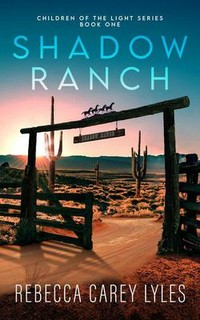
Shadow Ranch by Rebecca Carey Lyles: One of the Vilest Villains You’ll Find This Year

Be sure to check back a little later this morning for a Q&A with the author about this book and her writing in general.


Shadow RanchShadow Ranch

by Rebecca Carey Lyles

DETAILS:
Series: Children of the Light, Book One
Publication Date: April 24, 2022
Format: eBook
Length: 380 pg.
Read Date: August 4-8, 2023
Buy from Bookshop.org Support Indie Bookstores

What’s Shadow Ranch About?

So, I knew going in that this book was about a woman who ended up as part of a polygamous cult—so there’s no way that things are going to go well for Kasenia as we meet her. But even if I didn’t know that, after half of a page of dialogue between her and her romantic interest—you know that this guy is a creep. He might as well be named Redd Flagg, the heir of the vast Crimson Banner Estate (actually, I’m going to call him that for the rest of the post, just because).

Quite possibly because Kasenia has no girlfriends or confidantes to help her see how creepy Redd is, she falls for him. And almost instantly, things get worse—he’s a horrible, controlling husband, but she’s trying to make things worse. Then Redd turns on the charm—why don’t Kasenia and her brother come out to his family’s ranch for the weekend? Kasenia drags her younger brother along (he’s on to Redd—at least to a degree) and they head out for a chance to rekindle their marriage.

Of course, his family consists of multiple other wives (none of whom are happy to see her), enough kids to fill a schoolroom, and a few foster kids (there’s an ethnic and language difference between the foster children and Redd’s own). Between a combination of threats, guards, isolation (geographic and technological), and psychological manipulation, Redd has created a family full of people that are (almost entirely) devoted to him, and work themselves constantly to earn money for him and to earn approval from him.

Kasenia is determined to find a way out for herself and her brother—when she discovers that there’s more to Redd’s debauchery and devilry than she’d realized. The stakes are higher than ever—will she be able to find freedom for those he’s a threat to?

A Little More about Redd Flagg

Now I fully realize that when you’ve got someone with megalomaniacal tendencies like Redd, you’re going to find someone with a lot of messed up qualities. No one who deceives and manipulates a young woman into joining his group of wives—and keeps her as one through threat of violence (that he does follow through with to some extent) is in any sense a good guy. Moreover, I know that Lyles did some research and that there are more people like this in the U.S. than anyone wants to think about.

Still, I couldn’t help but think that Redd was too evil. “Like so evil, that you would say it was E-VEEL.” Every time you think you’ve found the depth of his moral void, there’s a new level of despicableness. Yes, that’s a common thing in fiction (or life), but it just felt like Lyles was laying it on a bit too thick.

Manipulative and abusive is enough—you’ve got yourself a true villain right there. But once she starts adding the other crimes that he’s committed and/or planning to commit? I’m not sure the reader or the story needed that.

I Was Uneasy About…

It’s a risky thing (for storytelling reasons and, more importantly, for the risk of blaspheming) to bring God into a work of fiction as an actor in the story. Multiple times characters who are trying to free themselves from Redd will pray and instantly—or quickly—something will happen that could be interpreted as an answer to that prayer. Is it possible for the reader or someone in the text to interpret these happenings as coincidental? Sure. But not one single character does—they all see the good things happening to them after praying as a direct answer to that prayer.

I absolutely am convinced that prayer works—but I don’t think it works like a bunch of kids praying for help getting away from a gunman and suddenly a mountain lion shows up to frighten off the gunman.

Using prayer like that almost turns God into a genie in the bottle—or at least those praying into Magicians with just the right spells ready to get the heroes out of danger.

I absolutely appreciate and celebrate Lyles taking prayer seriously, demonstrating people acting in faith and trust in the Most High with integrity and not turning them into hypocrites or anything. I also think she doesn’t go over the line to treat God as a genie—but she walks right up to that line. It makes me uneasy (at best) to read on several levels, though.

So, what did I think about Shadow Ranch?

Overall, there’s a lot to commend about this book. It reeks of research into situations like this one, it’s full of distinct and clearly drawn characters. Many of these characters are really well-developed and (largely) well-rounded—a mixture of good and bad qualities, understandable motives, and repulsive actions. The tension and the pacing are enough to keep propelling the reader through the twists and make it hard to put down without knowing what happens next.

According to the Internet—and a book I read in grade school (so I’m more inclined to believe it, but not much)—Abraham Lincoln in trying not to say he didn’t like a book said, “People who like this sort of thing will find this the sort of thing they like.” That’s very much what I want to say about this book. Let me rush to say that I did not dislike the book, but it wasn’t for me. I know there’s an audience out there who really get into this kind of thing (The Lifetime Movie Network alone proves that), but you’re not going to count me as part of it.

In a Q&A Lyles did with me months ago, she mentioned that her novels always have a happy ending. That alone kept me reading, just to see how she pulled it off—and there were a handful of times I considered abandoning the book. The ending could’ve been dark. It could’ve been ambiguous. It could’ve ended up in a pretty twisted and sordid way. But no, Lyles stuck with her pledge and provided a happy ending (that’s not too cheesy).

I do think the touch of romance (that didn’t involve Flagg or anything toxic) was a little out of place, and possibly unbelievable—definitely misguided on the part of the characters. But it feels on brand from what I can tell about Lyles’s work, so ignore me.

Again, there are people who will like this sort of book—and more power to them. If you think you’re likely in that camp in any way—read this. I think you’ll be rewarded. If you’re leery of it? I’m not going to tell you to give it a chance—trust your instinct. There are books that I’d approach differently, and encourage people to take a risk. Shadow Ranch isn’t one of those—it delivers what it promises.


3 Stars

This post contains an affiliate link. If you purchase from it, I will get a small commission at no additional cost to you. As always, the opinions expressed are my own.
20 Books of Summer

GUEST REVIEW: Mars G. Everson on The Death Gate Cycle by Margaret Weis & Tracy Hickman

When Mars G. Everson and I were talking about the Spotlight I did for his book, Thralls of a Tyrant God, we talked about the possibility of a guest post, too–and he suggested writing something about The Death Gate Cycle. I jumped at the idea (and would definitely jump at the other posts he mentions the possibility of).

I hope you enjoy this–and be sure to check out Everson’s works while you’re at it.


Death Gate Cycle Logo

When this blog’s owner mentioned the opportunity to do guest posts, I jumped at the chance to do a review of one of my all-time favorite fantasy series: The Death Gate Cycle by Margaret Weis & Tracy Hickman, mostly known by their hugely influential Dragonlance books. Which is a shame, because I think some of their best works are the non-D&D ones, which include this series as well as Rose of the Prophet and The Darksword Trilogy, which I’ll get into at some later guest post if HC is gracious enough to allow me.

The Death Gate Cycle itself was hugely influential in my own work as a writer and surely influenced many more. It applied sci-fi elements to fantasy from the get-go, as the universe is slowly revealed to be a far-future version of Earth where a battle between two factions of magic users (the Sartan and the Patryn) caused the Earth to be splintered into four elemental worlds, and the Earth’s inhabitants (humans mostly, but also hidden Elves and Dwarves that come back to the forefront after the splintering). In this sense, there are some similarities to The Wheel of Time and to The Shannara Chronicles, but they are surface-level only. There are no immortal souls or chosen heroes. The “heroes” here are all immensely flawed, and the main protagonist of the series only takes center stage in book 2, as we’re exposed to a main character switch from book 1 to book 2 that reminds one of a classic George RR Martin’s bait and switch. The main character turns out to be an antihero who goes from a saboteur and chaos-maker to a freedom fighter and then rebels against his own people’s plans and destiny.

The world-building itself is one of the standouts of the series. The four elemental worlds are well-defined and are revealed in each of the first four books, which act as mostly standalone works tied up by a couple of characters showing up in them. You have an air-based world where humans and elves live in floating coral-like islands and fly on wooden ships with wings; a water-world where a sun circled around, bringing warmth to the underwater settlements; a fire-world where people are living inside the planet, in a kind of hollow sphere with a sun at the center, Dyson-sphere style; and finally a rock-world where lava and poisonous gases are barely held in check by magic to create pockets of breathable atmosphere where people can live. And all these worlds were connected by magic and technology to provide each other with the elements needed to support life until this ancient technology starts failing and each world’s inhabitants face extinction.

The magic system –as we’re used to calling these things now– consists of word and rune-based magic. But it’s all set up so that it’s treated as ancient tech: runes make machines work, or make pillars unbreakable, until the runes are inevitably erased or eroded. There is some degree of human, elven, and dwarven magic and technology, but it’s mostly secondary to the high achievements of the Sartan and the Patryn.

Now, where would this series be categorized today? Would it be “Grimdark”? Sure, there’s some cynical thinking behind the world, with no true “good” characters and some blatant disregard for people’s lives. Would it be “sci-fantasy”? Doubtful. Epic? Mm, if you wiggle around the definition, sure.

But whatever bookshelf you wanna put it in, this is a must-read series for fantasy readers and especially for fantasy writers to sink their teeth into.


Mars G. Everson Author PhotoMars G. Everson is the author of the grimdark trilogy “The God Engine”, the standalone sci-fi novel “The Name of the Shadow” and a collection of short stories.

He writes Sci-fi, Fantasy, and especially likes writing a mix of both. His favorite authors in those realms are Ursula K. Le Guin, Arthur C. Clarke, J.R.R. Tolkien and Brandon Sanderson. He became a writer mainly so he could put his name in the same paragraph as those writers. Mission Accomplished!

He would like to live in a time where technology is indistinguishable from magic. Luckily, reality is turning that way really fast. The bad part: reality is turning that way really fast.

He lives with his wife and superhero sons somewhere in America, when not traveling around this world and others in the multiverse to learn as much as he can about the human experience.

Social Media

Twitter ~ Amazon Author Page

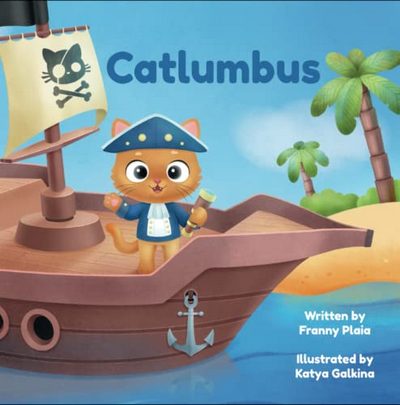
BOOK SPOTLIGHT: Catlumbus by Franny Plaia

I’m very pleased to bring you this spotlight for Franny Plaia’s cheery-looking children’s book, Catlumbus this morning. This is one for parents and grandparents to be sure to check out.

Book Details:

Book Title: Catlumbus by Franny Plaia
Release date: February 7, 2023
Format: Paperback, hardcover, ebook
Length: 32 pages
Catlumbus Cover

About the Book

Meet Catlumbus, a cat who loves to sail on his ship and go on adventures. When Catlumbus discovers a treasure map, he sets sail on a journey to find buried treasure on a tropical island. What will Catlumbus find on this island? Who will he meet along the way? Join Catlumbus on his adventure!

Purchase Links

Amazon ~ Barnes and Noble ~ Books-a-Million ~ Magers and Quinn

About the Author

Franny Plaia Author PhotoFranny Plaia is the author of the children’s book Catlumbus. From a young age, she has always loved reading books and that love of reading has continued into her adult life as well. Franny also enjoys creating stories for children and has always wanted to publish books of her own. As someone who has a degree in early childhood education and has worked with children of many ages, both in a child care center and in schools, she understands that instilling a love of reading in children from an early age is the key to lifelong learning. She hopes to inspire young children to love reading and continue to enjoy reading for the rest of their lives.

Social Media

Goodreads Author Page

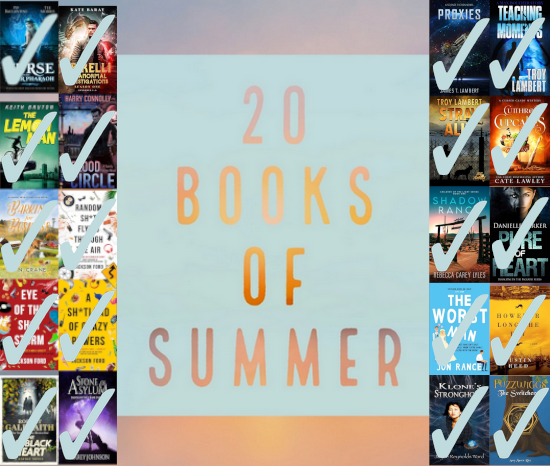
20 Books of Summer 2023: Wrap Up and Other Summer Reading

20 Books of Summer
Summer’s Over, so how did I do at this year’s challenge run by Cathy at 746 Books.

By the skin of my teeth—and using my own (not Cathy’s) dates—Memorial Day through Labor Day, the unofficial US Summer—I made it. I knew back in July when I said I should have a week to spare that I was going to be getting myself into trouble. What I didn’t know was that my library was going to deliver a book to me that was going to take 4 days longer to read than I’d expected (and I’d assumed it’d take me 5 in the first place). Throw in a Book Tour last week, and well, I had to scramble. Thankfully, the last book I had to read was a blast and I tore through it without regard to the deadline (honestly, I’d given up on finishing the challenge and only did it inadvertently), finishing it mid-morning today.

As of this morning, I’ve only posted about 13 of the books—that’s going to take me a bit to finish, especially at the rate I’ve been going lately.

On the whole, I’m glad I picked the books that I did. I might not have fallen head-over-heels for them all, but I’m glad for the experience, glad I scratched a curious itch, and/or glad I cut down the size of my TBR (we’ll ignore how I worked against that this summer for the moment). This might have been my most satisfying 20 Books yet. I had a lot of fun—which is the point, right?

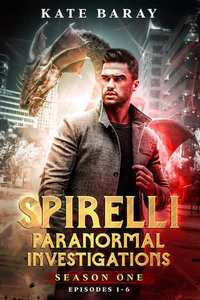
Oh, I almost forgot. I did substitute one read, a totally acceptable thing for the Challenge, but something I typically resist. I’d been saying that I was going to read, Spirelli Paranormal Investigations: Episodes 1-3 by Kate Baray for months (even before I posted my 20 Books). But it turns out that I’d bought and read Spirelli Paranormal Investigations: Season One: Episodes 1-6, which is roughly 300 pages longer. So, yeah, it was a substitution, but a substitution that took 300 more pages to read. So, it really didn’t do me any favors when it came to completing this challenge (although having all six episodes was far more satisfying).

Also, earlier this summer I posted Top Ten Tuesday: Books on My Summer 2023 to-Read List (That Aren’t on My 20 Books Challenge). How’d I do with those? I’ve read seven of those and should be tackling the other three soon. Possibly this month. Hopefully this month.

But for the immediate future, I have two Book Tours in the next week or so, two other review copies that I want to post about really soon—and a couple of NetGalley reads I need to take care of, too. That almost sounds like work, but thankfully, it’s work I want to do (even if I don’t get paid for it. All in all…it’s been a good summer.

✔ 1. The Curse of the Silver Pharaoh by Pip Ballantine and Tee Morris (my post about it)
✔ 2. Spirelli Paranormal Investigations: Season One: Episodes 1-6 by Kate Baray (substitution)
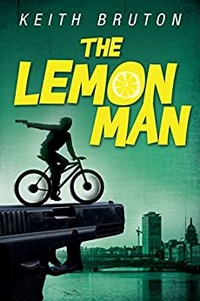
✔ 3. The Lemon Man by Ken Bruton (my post about it)
✔ 4. The Flood Circle by Harry Connolly
✔ 5. Barking for Business by E.N. Crane (my post about it)
✔ 6. Random Sh*t Flying Through the Air by Jackson Ford (my post about it)
✔ 7. Eye of the Sh*t Storm by Jackson Ford (my post about it)
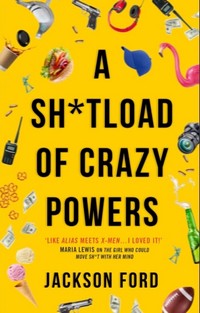
✔ 8. A Sh*tload of Crazy Powers by Jackson Ford
✔ 9. The Ink Black Heart by Robert Galbraith
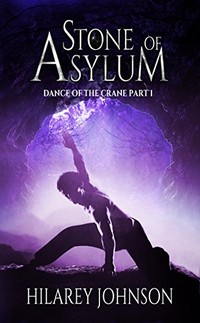
✔ 10. Stone of Asylum by Hilarey Johnson (my post about it)
✔ 11. Proxies by James T. Lambert (my post about it)
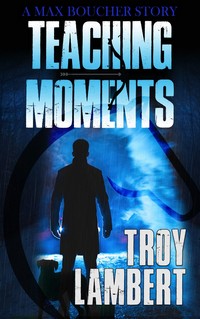
✔ 12. Teaching Moments by Troy Lambert
✔ 13. Stray Ally by Troy Lambert (my post about it)
✔ 14. Cutthroat Cupcakes by Cate Lawley (my post about it)
✔ 15. Shadow Ranch by Rebecca Carey Lyles
✔ 16. Pure of Heart by Danielle Parker (my post about it)
✔ 17. The Worst Man by Jon Rance (my post about it)
✔ 18. However Long the Day by Justin Reed (my post about it)
✔ 19. Klone’s Stronghold by Joyce Reynolds-Ward (my post about it)
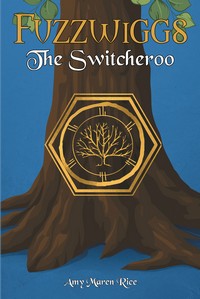
✔ 20. Fuzzwiggs: The Switcheroo by Amy Maren Rice

20 Books of Summer '23 August Check In Chart

August 2023 in Retrospect: What I Read/Listened to/Wrote About

So, a quick rundown of August: I read 25 titles (1 up from last month, 5 down from last August), with an equivalent of 7,384+ pages or the equivalent (362ish up from last month), and gave them an average of 3.7stars (a whopping 0.16 up from last month). Brown’s Light Bringer took more time, effort, and energy to finish than I anticipated–and was absolutely worth it–so things didn’t go quite the way I wanted it to on the reading front.

I felt like I was running on fumes all month and my output seems to indicate it…but, eh, I’ll get back on track soon. Hopefully. Or not. I’m having fun and liking at least half of what I’m posting lately, so I’ll take it.

If that’s the in brief version, here’s the extended dance mix of what happened here in August.
Books/Novels/Novellas Read/Listened to

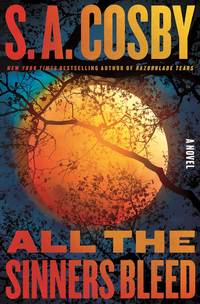
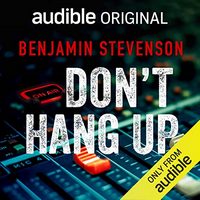
All the Sinners Bleed Don't Hang Up SPI Collection: Season One
5 Stars 3.5 Stars 3 Stars
Stone of Asylum The Lemon Man Rumple Buttercup
3.5 Stars 3 Stars 3 Stars
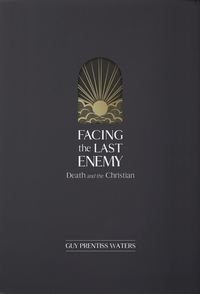
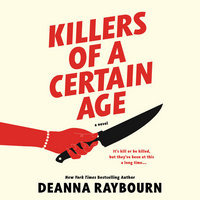
Facing the Last Enemy Shadow Rancy Killers of a Certain Age
3 Stars 3 Stars 3.5 Stars
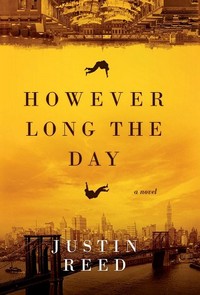
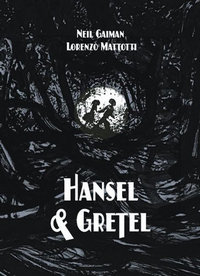
However Long the Day  A Quick End To A Long Beginning Hansel and Gretel
4 Stars 4 Stars 3 Stars
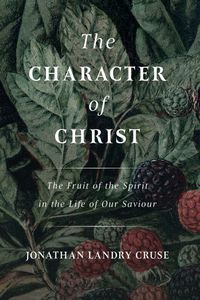
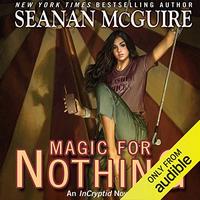
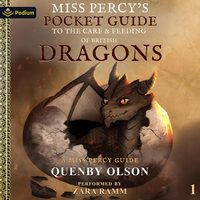
The Character of Christ Magic for Nothing Miss Percy’s Pocket Guide (to the Care and Feeding of British Dragons)
4 Stars 4 1/2 Stars 4 Stars
God to Us The Blonde Identity Light Bringer
5 Stars 3 Stars 5 Stars
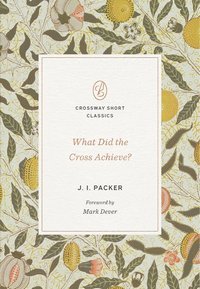
The Camera Man Teaching Moments What Did the Cross Achieve?
4 Stars 3.5 Stars 4 Stars
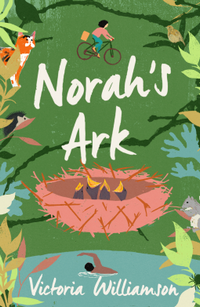
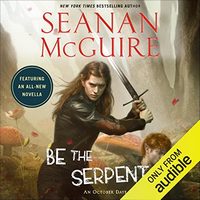
Norah's Ark Be The Serpent A Sh*tload of Crazy Powers
3.5 Stars 3 Stars 4 1/2 Stars
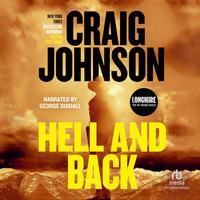
Hell and Back
3 Stars

Still Reading

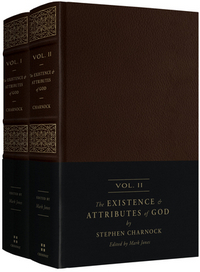
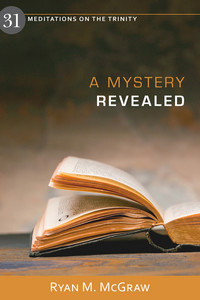
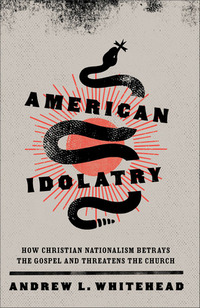
The Existence and Attributes of God A Mystery Revealed: 31 Meditations on the Trinity American Idolatry
Fuzzwiggs: The Switcheroo

Ratings

5 Stars 3 2 1/2 Stars 0
4 1/2 Stars 2 2 Stars 0
4 Stars 6 1 1/2 Stars 0
3.5 Stars 5 1 Star 0
3 Stars 9
Average = 3.7

TBR Stacks/Piles/Heaps

Audio E-book Physical Goodreads
Want-to-Read
End of
2022
5 45 42 143
1st of the
Month
4 50 53 148
Added 5 5 7 3
Read/
Listened
4 5 6 0
Current Total 5 50 54 151

Breakdowns:
“Traditionally” Published: 16
Self-/Independent Published: 9

Genre This Month Year to Date
Children’s 1 (4%) 22 (11%)
Fantasy 2 (8%) 18 (9%)
General Fiction/ Literature 3 (12%) 16 (8%)
Mystery/ Suspense/ Thriller 9 (36%) 60 (30%)
Non-Fiction 0 (0%) 13 (7%)
Science Fiction 3 (12%) 23 (12%)
Theology/ Christian Living 3 (12%) 20 (10%)
Urban Fantasy 3 (12%) 21 (11%)
“Other” (Horror/ Humor/ Steampunk/ Western) 0 (0%) 6 (3%)

Review-ish Things Posted

Other Things I Wrote
Other than the Saturday Miscellanies (5th, 12th Sat, 19th, and 26th), I also wrote:

Enough about me—how Was Your Month?


August Calendar

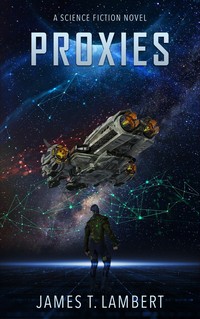
Proxies by James T. Lambert: The Marx Brothers, Interstellar Threats, a Meddling Mother—Proxies Has it All

ProxiesProxies

by James T. Lambert

DETAILS:
Publisher: Bert Books
Publication Date: August 13, 2022
Format: Paperback
Length: 246 pg.
Read Date: July 19-20, 2023

What’s Proxies About?

Jair Howard is a tech working to maintain the Faster-Than-Light network. Lambert doesn’t give us a lot of details about it, so I’m going to give you even less. The pilot he works with during his maintenance runs, Merab, is his girlfriend. Or maybe. Jair’s reluctance to commit to starting a family has put things on the ropes.

A bigger—or more pressing, anyway—concern is that during their last trip, Jair found some disturbing evidence of hacking into the security network. He’s having trouble convincing anyone of it because the evidence is largely gone. Jair keeps digging, though, he knows what he saw and anyone who can do what he saw—and remove all traces of it—is someone to worry about. Then some of the evidence reappears, and it points at Jair. Suddenly everyone who doubted what he said about a security breach believes it and is coming for him.

To keep his freedom for a little while longer—and hopefully to find proof of what’s really going on—he needs to get into space and get access to the network. The only way that’s going to happen is with Merab’s help.

Remember When AI Wasn’t the Enemy?

Jair doesn’t work alone—in fact, he doesn’t do most of the work. He has a team of AIs helping him. Jair’s a classic movie fan. Black and White Movies that we consider classics today—he’s far enough into the future that he has to think of them as practically ancient. He’s such a fan that he’s given his four primary AIs the names and personalities of the Marx Brothers.

He spends a lot of time tweaking their personalities and humor to get them to better match the versions he knows from film—and finding a way to get Harpo to be able to communicate what he needs to while capturing the essence of the silent brother. It’s something for him to fiddle with while waiting during interstellar travel or while a report generates and the like.

It’s a fun bit of whimsy in the book—and it felt very strange to read while being hit with headline after headline after headline about the problems with AIs this summer.

So, what did I think about Proxies?

The heart of this book isn’t the threat posed by the hacking that Jair found and then lost, etc. Nor is it the efforts that he and Merab undertook to expose and maybe stop the threat. It’s in Merab and Jair’s efforts to get their relationship to work. The bulk of that is on Jair, to be sure—but Merab has some work to do, too.

That’s about all I’m willing to say about that, although it deserves more—because Lambert did a great job with that. As much as I enjoyed the relationships that the protagonist of his first book found himself in, they didn’t feel as grounded as this one. They were clearly there to serve a story, create conflict, and so on. Here, the relationship is the story—and that makes all the difference. If he continues to grow as an author this way, I’m going to be happy reading him for a long time.

This is a Space Opera, so the details of space flight and other science-y stuff don’t need to be really well worked out or discussed—which is good, because Lambert doesn’t bother to (whether that’s because of the genre, or he went with the genre so he didn’t have to doesn’t matter). And a lot of the detailed work into the investigation can be waved away with “Groucho and Zeppo did a thing and came back to tell Jair the results.” I both wanted to see more of the science-y/investigation bits and was perfectly satisfied with the lack of them, because that left time for all the people-y stuff. (I’m clearly in the mood to talk in generalities today).

If you’re looking for some light Space Opera with a lot of heart—you’ll want to pick up Proxies. If you’re not looking for that, you still might want to try it, it’s a fun way to spend a few hours.


3 Stars

Irresponsible Reader Pilcrow Icon

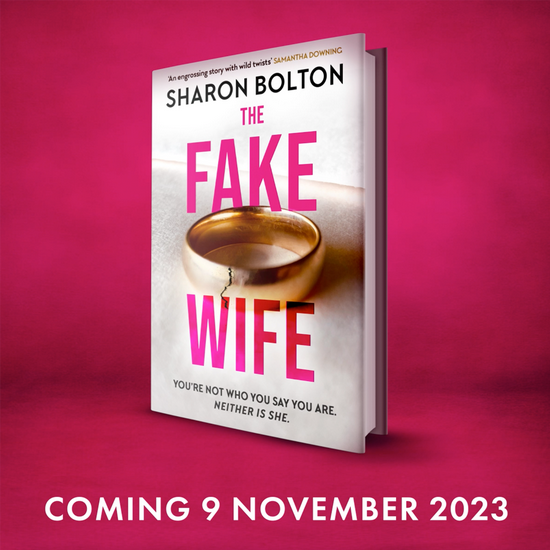
COVER REVEAL: The Fake Wife by Sharon Bolton

I’m excited to welcome the Compulsive Reader’s Cover Reveal for Sharon Bolton’s upcoming novel, The Fake Wife this morning (and I hope I did the math right so this posts when it’s supposed to). This looks like a solid thriller with a great hook, but why read my speculation? Let’s get some details about the book.

Book Details:

Book Title: The Fake Wife by Sharon Bolton
Publisher: Orion Publishing Co.
Release date: November 9, 2023
Format: Hardcover/Ebook/Audiobook
Length: 368 pages

About the Book:

‘You’ll never guess where this book is going’ SAMANTHA DOWNING
‘Totally gripping, with characters who draw you in’ JP DELANEY
‘A thriller that had me desperate for answers. I loved it!’ HARRIET TYCE

Olive Anderson is dining alone at a hotel when a glamourous stranger joins her table, pretending to be her wife. What starts as a thrilling game quickly turns into something dangerous. But as much as the fake wife has her secrets, Olive just might have more…

The Fake Wife is an unputdownable thriller that will shock and surprise you like the best television boxsets. If you enjoyed Netflix shows like Behind Her Eyes, The Stranger, and Obsession you will love The Fake Wife.

Pre-Order the Book:

Multi-Retailer Link

and now…

The Trailer/The Cover

The Fake Wife Cover Reveal

I love that cover. Arresting design.

My thanks to Tracy Fenton and Compulsive Readers for the invitation to participate in this tour and the materials they provided. The opinions expressed by me are honest and my own.

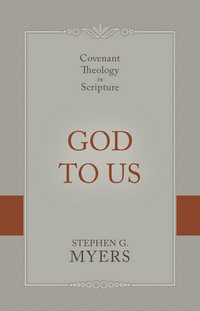
God to Us: Covenant Theology in Scripture by Stephen G. Myers: A Great Introduction to This Vital Idea

God to UsGod to Us:
Covenant Theology in Scripture

by Stephen G. Myers

DETAILS:
Publisher: Reformation Heritage Books
Publication Date: November 27, 2021
Format: Hardcover
Length: 310
Read Date: June 11-August 22, 2023
Buy from Bookshop.org Support Indie Bookstores

Disclaimer

Some friends and I read this book at the same time, getting together to talk about it periodically. So it’s entirely possible, even likely, that some of what I say in this post is a thought borrowed from someone else. This will particularly be true if I say something insightful or interesting.

What’s God to Us About?

This is, pretty simply, an introduction to Covenant Theology. Myers defines covenant in his introduction (with special focus on the words used, and meanings suggested, in the Old Testament, New Testament, and Septuagint). From there, he gives a brief history of the development of Covenant Theology throughout Church History, which is probably worth a book unto itself—but this chapter serves well enough.

From there he looks at the three predominant covenants in Scripture/Theology—the Covenants of Works, the Counsel of Peace, and the Covenant of Grace. He spends two chapters on the Covenant of Grace—one on understanding the covenant and then one on the circumstances surrounding the announcement of the Covenant and what we can learn from that (and this is one of those chapters worth the purchase price of the book alone). He then looks at the developing covenants that make up the Covenant of Grace—the Adamic, Noahic, Abrahamic, Mosaic, Davidic, and New Covenant. Myers then looks at Covenant Theology in the New Testament and then in The Church. The Mosaic Covenant is another Covenant that gets two chapters (the rest all get one)—the second looks at the ways the New Testament writers think about and use the Mosaic Covenant.

Highlights of the Book

I like to focus on one or two chapters that really stand out to me when talking about books like this. Myers made this very difficult for me—I’m tempted to say Chapters 2-12 were highlights, but that seems to be cheating. It’s true, though—there’s something in each of those chapters that made me sit up and pay attention in a way I didn’t expect.

I guess I would have to say that the chapter on the Noahic Covenant was particularly effective—usually, I tend to think (and think I’ve seen authors treat it this way) about the Noahic Covenant being something covered just to check a box between Adam and Abraham—it’s where the word covenant is first used, so we need to look at it, but it’s not that big of a deal. Myers won’t let you think that way, showing how it’s a pivotal step in Redemptive History—and I’ll not make that mistake again.

Chapter Nine, “The Mosaic Covenant in the New Testament,” is so vital and so important that I have to mention it. Not only does Myers help the reader understand what the NT is doing, but he also helps the reader avoid some of the more popular and prevalent errors regarding this understanding today. The same could be said for Chapter Eleven, “The New Covenant.”

And if I’m not careful, I’ll list the other chapters, too—so I’m going to move along.

Things I Wasn’t Crazy About

I’m not going into details, but Myers uses Gen. 6:18 extensively in his arguments about God establishing covenants in Genesis before the word “covenant” was used. He’s not the first to do so—O. Palmer Robertson mentions someone (some people? I don’t remember and am not going to go look it up) doing the same in a footnote in his 1987 book, The Christ of the Covenants. It seems to be a perfectly valid argument—but I wonder if Myers relies on it too much. Yes, he uses a multi-pronged argument, and Gen. 6 is just one of them—but it seems to be called to do more than it maybe can.

Secondly, and I know I didn’t catch this, that’d be one of the others I read it with. Myers uses the early chapters of Hosea to substantiate his position on what the exiles of the Northern and Southern Kingdoms mean for the Davidic Covenant (and the Covenant of Grace as a whole). There’s much to be commended for his position—but a lot of what he says about the early chapters of Hosea seems to differ from what Hosea says later on. Now, if I studied this portion of this book a bit more, I might have an easier time defending Myers’s position—but at first and second glance, he seems to stumble a bit here.

Lastly, and this is a very minor problem, the thirteenth chapter, “Covenant Theology and the Church,” is a bit of a letdown. Your results may (and likely will) vary. But for me, after twelve chapters with insights that impressed me when they didn’t teach me and/or helped me to think about Covenant Theology in a new way, to come across a chapter about the sacraments, Church membership, and related ideas that was as basic and straightforward as this just left me wanting more. I didn’t see any problems in what Myers said, but it all seemed a bit too obvious. He’s been sailing along

So, what did I think about God to Us?

I loved this book. I’ve read more books on Covenant Theology than I can easily count, and if this isn’t the best, it’s so close to it as not to matter. Myers gives his readers a thorough introduction to Covenant Theology as it came to the Protestant Church from the Reformation—particularly the English Reformation and the explanation offered by the Westminster divines and their contemporaries. His introduction is readable, clear, and helpful to the layman willing to put in a little work—but he’s not just repeating what the previous generations gave us, he’s looking at contemporary theology and insights as well.

Is it perfect? Nope. Are there more problems with it than those I mentioned above? Almost certainly. But it’s just so good that the flaws are forgivable. I learned a lot—even if it was just a better way to state what I’d already believed and understood—but I got much more than that from the book. It’s such a helpful work.

More than that—as all good theology should, it led me to doxology. That our Lord would condescend to His people in covenant is mind-blowingly gracious in the first place—that He does so to rebels in order that he could win them to Himself? That should drive us to worship. And the more we understand the gracious and remarkable nature of these covenants, the more we should be driven to it. Myers brings his readers to this point repeatedly—sometimes just by explaining something clearly—sometimes by applying his explanation to the reader to help us understand how it should make us reflect in worship.

I’ve tried to keep this brief and to resist the urge to dive deeply into some of the areas of the book that I would want to if this was the place for deep dives into Theology. But this is about books, so I’m not going to. I cannot say enough good things about God to Us. It’s just great. I’ve given it as a gift already, I will do so in the future as well as recommend it to anyone who asks for a good intro to the topic. Also, I commend it to whoever reads this post.


5 Stars

This post contains an affiliate link. If you purchase from it, I will get a small commission at no additional cost to you. As always, the opinions expressed are my own.
Irresponsible Reader Pilcrow Icon

Page 5 of 6

Powered by WordPress & Theme by Anders Norén