

It was 12 years ago today that I first posted something to The Irresponsible Reader. That’s one of those numbers that both doesn’t large enough, and is entirely too large. I can’t believe that I’ve stuck with it that long (I can’t remember if I said this or not here, but I didn’t tell my wife about it for weeks, until I was sure I was going to stick with it for a while)—even more improbable is that you, reader, are here. Whether you’ve been around for a few weeks or some years—my mind is boggled by it. Thanks for that, truly.
Now, after being shocked at people doing something like “The Best 15 Books I’ve Read in the last 10 years”—how could you possibly choose? It was stuck in the back of my head—and as I was trying to come up something to do for today, that idea resurfaced. But there’s no way I could come up with something that definitive. However, in most Januarys, I posted a list or five of my favorite books of the year (I was surprised to see how many years I didn’t do this). And now, for the first time, I’ve combined them all into one MEGA-LIST
So MEGA that I truly don’t have a count. So MEGA I had to put a “Read More” link in it so it didn’t bog down the main page. Also so large, that I’m doing annoying things like overusing all caps and the word “mega.”
It is a very strange list—authors that have no business next to each other, strange genre leaps, and a couple of books I’d largely forgotten about. Still, these are books that I’ve shouted about before and that I really want to draw your attention to—go read some of these!
This is definitely a work in progress. I’m going to refine this list a bit in the future (not changing any selections—although I might add some from the year or two I didn’t post a “best of”/”favorite” list), just refining it—making it look better, polish some of the comments, and that kind of thing. My goal is to have this in a format I like by the 15th Anniversary—assuming anyone’s actually still reading me then.
A
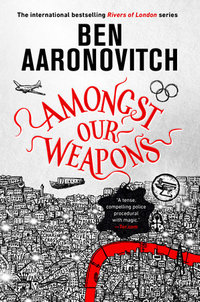 Amongst Our Weapons
My original post
Any installment in this series is a strong contender for a favorite of the year even before I open it, and this one is a great example of why. While telling a pretty strong story, Aaronovitch expands this world and the reader’s understanding of it, a whole new magic system, and seemingly introduces the next major story arc for the series. We get to see almost every major (and more than a few minor) characters, too. For a fan, this book was a heckuva treat.
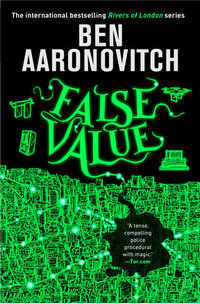 False Value
My original post
After wrapping up the overarching plotline from books 1-7, what do you do for book 8? Something completely different. If you were to draw a Venn diagram with circles for Charles Babbage/Ada Lovelace, Artificial General Intelligence, and Wizardry—the overlap is where you’d False Value. Who wants more? The mix of contemporary cutting-edge technologies and Newtonian magic is just fantastic.
Throw in more Hitchhiker’s Guide to the Galaxy references than is healthy and you’ve got yourself a winner.
 Lies Sleeping
My original post
I’ve read all the comics (at least collected in paperback), listened to all the audiobooks, read the books at least once . . . I’m a Rivers of London/Peter Grant fan. Period. Which means two things—1. I’m in the bag already for this series and 2. When I say that this is the best of the bunch, I know what I’m talking about. Aaronovitch writes fantastic Urban Fantasy and this is his best yet. The series has been building to this for a while, and I honestly don’t know what to expect next. Great fight/action scenes, some genuine laughs, some solid emotional moments . . . this has it all. Everything you’ve come to expect and more.
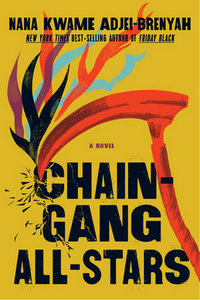 Chain-Gang All-Stars
My original post
If there’s a book I’ve recommended more frequently this year, I can’t think of it. I’ve also bought more copies of it to give away than any other. At the core, this is a satire and critique of the American culture–particularly as it relates to sports, mass entertainment, and (most importantly) the carceral system. Pitting convicted felons against each other in gladiatorial fights-to-death, selling merch featuring them, turning them into Reality TV personalities between bouts…Adjei-Brenyah holds up the worst of the US to look at.
It’s a book about death—violent death at the hands of violent people who only hope to go on so they can kill again—However, in a serious way the book is really about life. It’s a celebration of life, a call to protect it, a call to see it for what it is. It’s a reminder that “where life is precious, life is precious.” It’s impossible to read this without being moved–perhaps to action. But it’s also a visceral and exciting read that can entertain you without forcing you to think deeply about what it wants you to.
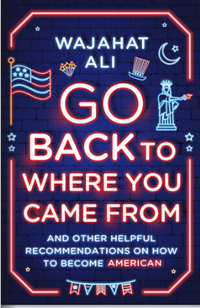 Go Back to Where You Came From: And Other Helpful Recommendations on How to Become American
by Wajahat Ali
My original post
I’m just going to remix some of what I said originally, this book was a great mix of memoir, social commentary, and satire—with a little sprinkling of a more general humor thrown in. The way he shifted between the genres was fairly seamless and quite effective—his own story (and that of his parents) were good illustrations of the societal ills he wanted to point to. Ali’s story is the kind that Americans love to tell and hear about success—even if his telling points to many of the flaws in our society. Through grit, determination, perseverance, and endurance, Ali pushes through all sorts of cultural, societal, legal, medical, and circumstantial challenges to arrive where he is. Because he believes in what we can be as a people, based on our (incredibly inconsistently applied and demonstrated) ideals and aspirations. It’s the kind of story we need to see, hear, and read more of.
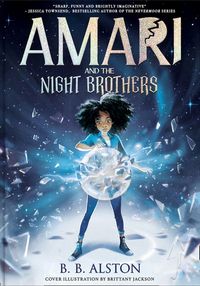 Amari and the Night Brothers
by B. B. Alston
My original post
I’m a tiny bit worried that recency bias got this one on the list. But, I’m not going to lose sleep over it.
This is a delightful story about a young girl from the “wrong” part of Atlanta being recruited by her missing/presumed dead brother into a Hogwarts/MIB mashup, overcoming odds, making friends, saving the day by doing all the sorts of things that young teen protagonists have to do (with a little support from the grown-ups who are supposed to be stopping her), but mostly through grit. The book is written with a sense of joy and hope, while never losing sight of what Amari has to overcome in terms of her own circumstances as well as the specific villainy.
Also, and I can’t stress this enough, there’s a weredragon. What more do you need?
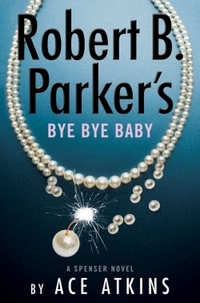 Robert B. Parker’s Bye Bye Baby
by Ace Atkins
My original post
It’s really no surprise that Atkins’ final Spenser novel makes this list—Spenser is one of my all-time favorites, and the decade that Atkins spent at the helm included several of the best novels in this long-running series (this is the 50th novel!!). He also helped legions of fans deal with Parker’s death by doing such a capable job. This book evokes some of Parker’s best early novels while remaining wholly original and compelling—true to both authors. It’s a great way for Atkins to go out.
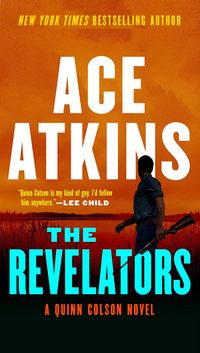 The Revelators
by Ace Atkins
My original post
Here, in book 10, Ace Atkins wraps up storylines he’s been building up for ages, characters move on (some are even still alive when that happens), and what comes next for Quinn Colson and his community is anybody’s guess (although, I’m pretty sure there’ll be a white, corrupt politician behind it, because…well, it’s Tibbehah County). A dynamite novel.
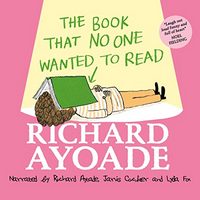 The Book That No One Wanted to Read
by Richard Ayoade
Narrated by Richard Ayoade, Jarvis Cocker, Lydia Fox
My original post The narration was great—Ayoade and Cocker were fantastic, Fox was probably as good, but didn’t get the best lines, so her work doesn’t stand out as much in my memory (although my original post suggests I forgot something great). This is one of those multi-narrator audiobooks where all the narrators are equally good—capturing the spirit and tone of the text and bringing it to life. This is a sweet little story “written by a book” about a lonely book in a large library. It’s goofy and strange, the humor is occasionally dry, it’s imaginative, it’s affirming and encouraging, it wraps you in a blanket of fun and makes you feel good.
B
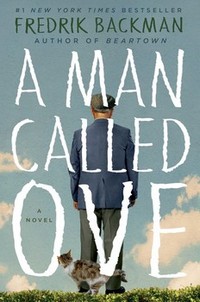 A Man Called Ove
by Fredrik Backman, Henning Koch (Translator)
My original post
I’ve been telling myself every year since 2016 that I was going to read all of Backman’s novels after falling in love with his My Grandmother Asked Me to Tell You She’s Sorry. The closest I got was last year when I read his first novel, A Man Called Ove (and nothing else). It’s enough to make me resolve to read more of them, and soon. The story of an old, grumpy widower befriending (against his will, I should stress) a pretty diverse group of his neighbors. It’s more than that thumbnail, but I’m trying to be brief. The story was fairly predictable, but there’s something about the way that Backman put it together that makes it perfect. And even the things you see coming will get you misty (if not elicit actual tears).
 Bookshops & Bonedust
Of course, audiobook narrator-turned-author Baldree puts together a really strong audiobook. How could he do anything else? This is a sweet and (mostly) cozy little read taking place many years before Baldree’s breakout Legends & Lattes and sets the stage for Viv’s choices when she decides to retire from the mercenary biz. Here at the beginning of her career, she’s laid up for a few months in a small little town where she makes some friends, learns a lot, discovers that she can appreciate reading (when given the right book), and faces of against a deadly foe. It’s a very pleasant experience that will leave you wanting more like it.
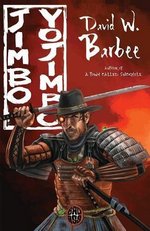 Jimbo Yojimbo
My original post
I don’t have words for this. I really don’t know how to say anything about this book—especially not in a paragraph. Click on the original post and know that even then I fail to do the book justice. It’s strange, gross, funny, exciting and thrilling.
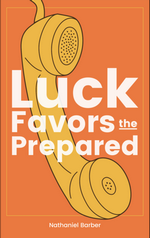 Luck Favors the Prepared
My original post
Nathaniel Barber has a real gift at taking embarrassing (mortifying?), frustrating, and/or inexplicable episodes from his life and turning them into amusing tales. Some of the best descriptive passages I read this year—no matter the genre. I won’t promise you’ll like every story in this collection of short autobiographical pieces, but you’ll like most of ’em—and you will find something in the rest to appreciate. Fun, heartwarming, and disturbing—sometimes all at once.
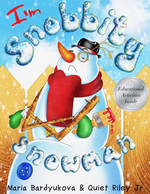 Snobbity Snowman
by Maria Bardyukova, Quiet Riley, Jr.
My original post
Fun art work. Some fantastic use of language (especially when read aloud). A nice little story with a good moral. Ticks off every box.
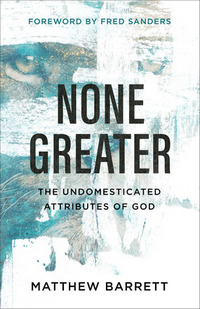 None Greater: The Undomesticated Attributes of God
by Matthew Barrett
I haven’t had a chance to write about this book yet, but it’s great. Barrett provides a wonderful tool to introduce believers of all ages/background to the main attributes of God to shape belief and practice. It’s a corrective, but not scoldy. It’s deep, but not hard to understand. It appreciates mystery and doesn’t try to overexplain anything but it also grapples with what we’re given to understand. I’ll say more in a week or two, but for now, just know it’s one of the best things I read last year.
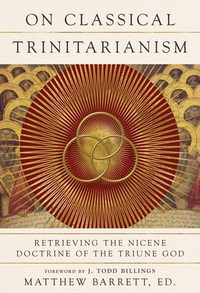 On Classical Trinitarianism: Retrieving the Nicene Doctrine of the Triune God
edited by Matthew Barrett
My original post
This is simply a monumental work that the Western Church desperately needs. (at least from where I’m sitting) Barrett and the all-star group of contributors make the case that we need to remember, if not rediscover, the classical, Nicene doctrine of the Trinity (as well as that which led to it and from it). We ignore it at our own peril and play fast-and-loose with it today to the damage of our preaching, our sanctification (collectively and individually), and our mission. These 800 pages of articles define the essentials, expand upon those definitions, show where we’re falling and failing and point us to recover lost ground.
I read it far, far too quickly to get everything it was trying to do—I’m going to take another run at it soon and will read it slowly, with a notebook in hand.
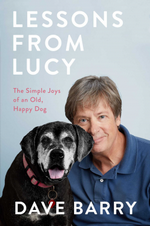 Lessons From Lucy: The Simple Joys of an Old, Happy Dog
by Dave Barry
My original post
So, I figured given the tile and subject that this would be a heavier Dave Barry read, with probably more tears than you anticipate from his books—something along the lines of Marley & Me. I was (thankfully) wrong. It’s sort of self-helpy. It’s a little overly sentimental. I really don’t know if this is Barry’s best—but it’s up there. Lessons From Lucy is, without a doubt, his most mature, thoughtful and touching work (that’s a pretty low bar, I realize—a bar he’s worked hard to keep low, too).
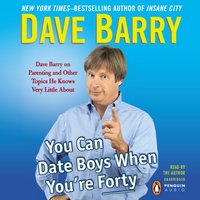 You Can Date Boys When You’re Forty: Dave Barry on Parenting and Other Topics He Knows Very Little About
by Dave Barry
My original post
Barry at his near-best. This reminded me for the first time in a few years why I became a life-long devotee in high school. I could relate to a lot of it, and what I couldn’t was just funny. His reaction to Fifty Shades was a highlight—the chapter about his family’s trip to Israel was fantastic, funny and moving.
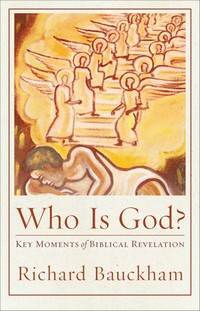 Who Is God?: Key Moments of Biblical Revelation
This is one of those deceptively easy reads that shouldn’t be read easily. Based on lectures that Bauckman has delivered, the book takes a Redemptive Historical approach to God’s revelation of Himself. “Jacob’s dream at Bethel (the revelation of the divine presence), Moses at the burning bush (the revelation of the divine Name), and Moses on Mount Sinai (the revelation of the divine character)…He then shows how the New Testament builds on the Old by exploring three revelatory events in Mark’s Gospel, events that reveal the Trinity: Jesus’s baptism, transfiguration, and crucifixion.” After looking at the particular text, Bauckman then traces that revelation through Scripture showing how the same thought it echoed and expanded throughout.
As these chapters were originally lectures, they’re not full of footnotes—but they’re clearly the product of a lot of scholarship. There’s deep thought here and great spiritual nourishment.
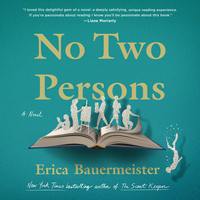 No Two Persons
by Erica Bauermeister, read by a full cast
My original post
For those who don’t know, this is a series of interconnected short stories about a novel. From the struggles the author had getting it written, to it being “discovered” by an overwhelmed reader at an agency, to the audiobook narrator, to readers, booksellers, and others who came into contact with it. We get a look into their lives before and after the novel enters their orbit.
And I loved it. I loved it so much that the day after I finished the audiobook that I borrowed from my library I went and bought the hardcover because I needed it on my shelf just to feel better.
I don’t want to say that I had low expectations going into this, but they certainly weren’t high. But by the end of the first of the interconnected short stories, I was really hooked on it and wasn’t ready to move on. The second story didn’t do much for me…until I was convinced it was far more intersting (and the new narrator was just about perfect), and I didn’t want it to end. A phenomenon I repeated almost every time the story/narrator switched. The cast and Bauermeister’s text together turned me into a raving fan.
I can’t promise anyone else will react to the book the way I did—or that I will react to it when I read it again. But yeah…I loved this thing.
 What is Christianity?
by Herman Bavinck, Gregory Parker, Jr. (Translator)
My original post
These are two short works by the noted Dutch Theologian newly translated into English. Bavink is clear and convincing without being combative in this pair of brief apologetic pieces. Typically for him, he displays a catholicity in his approach—he’s clearly Reformed Protestant, but he doesn’t disparage other views. I don’t know he accomplishes all he does in so few pages—there’s a lot of subtle theological and apologetic work, here. But there’s also a lot that’s just easy to digest, clear and helpful. Bavinck gives his readers a Christ-centered, Christ-focused definition and description of Christianity (you’d think that’d be a given, but…). As Warfield put it, “We cannot imagine how the work could be done better.”
 The Wonderful Works of God
My original post
Bavinck boiled down the material covered in his four-volume Reformed Dogmatics into this “simple explanation of the Christian faith in a book of modest scope.” It’s a pastoral work, a compassionate work, and one that will repeatedly point to the Gospel as well as the Majesty of the Triune God.
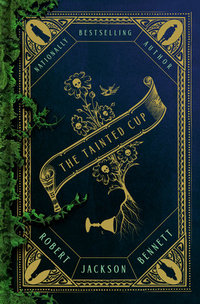 The Tainted Cup
My original post
This was the first (non-beta) novel I read in 2024 and it was also the first book I gave 5 stars to (odd how that worked out). It takes the Nero Wolfe/Archie Goodwin dynamic, changes it up (Wolfe becomes a woman who stays inside for different reasons, gives the “Archie” a different explanation for his memory, etc.), and shoves it into a Fantasy world. And this fantasy world is so different than one I’ve run into before, so full, so well-developed, so intricate and “lived in” that it blew my mind from our introduction to the world through the end of the novel.
The magic, the science, the architecture…all of it was…I’m running out of believable superlatives to use here. And don’t get me started on the wonderful characters—from the detectives to the killer to the suspects to everyone else.
Possiby the best book I read all year—if not, it’s close enough that almost everything else was a let-down.
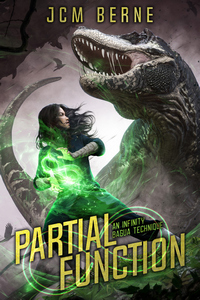 Partial Function
by JCM Berne
My original post
This has none of the socially redeeming characteristics of the above book. But it does have wuxia-inspired magical martial arts, super-powered dinosaur-like monsters, a John Wick/Bryan Mills character if played by Michelle Yeoh, and snappy dialogue. It’s a story about a retired warrior who gets back to work so she can rescue her kidnapped daughters and the wake of destruction that follows (a mighty wake it is, too). And it’s just fun from beginning to end.
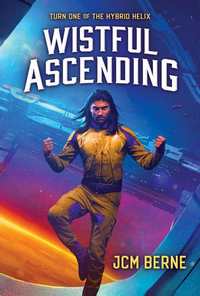 Wistful Ascending
by JCM Berne
My original post
This novel—a Space Opera/Super-Hero mashup—hit just about every button I have and probably installed a couple of new ones (talking space bears, for example). If I try to expand on that I’m not going to shut up anytime soon. Read my original post—or just read the book.
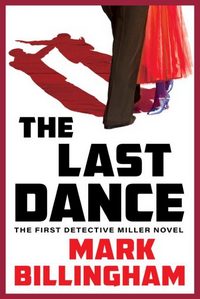 The Last Dance
My original post
Detective Miller comes back to work after the murder of his wife to investigate a pair of murders. There’s no clear—rather, easily discoverable—connection between the two deaths other than proximity and coincidence. Neither explanation is good enough for the police. Miller has to adjust to a new partner, who really doesn’t understand (or appreciate) his eccentricities, his sense of humor, or undisguised antagonism toward their boss. The only thing more appealing to the twisty, multi-layered, mystery in this novel is Miller himself. His sense of humor, his questionable grasp of reality, and his unconventional approach to this (and presumably other) investigations are going to win several fans. This is the first Billingham novel I’ve read (after years of meaning to try), it will not be the last.
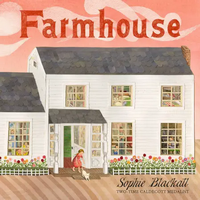 Farmhouse
My original post
It’s not the text of this book (not that there’s anything wrong with it), it’s largely the art that makes this stand out. The combination of the two…the whole experience of this book is what makes this makes this one memorable. I’m not sure what about the book will appeal to the Picture Book crowd, but the adults in their life are going to love spending time with this.
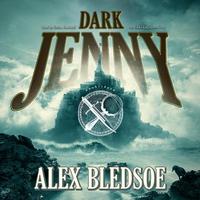 Dark Jenny
by Alex Bledsoe, Stefan Rudnicki (Narrator)
My original post
Stefan Rudnicki brilliantly captures the humor, the confusion, the determination of Eddle LaCrosse and the situation he finds himself in—and then the horror, revulsion, and anger he has when he discovers what’s really going on. Starting with one of Bledsoe’s best books, Rudnicki goes on to bring it to life.
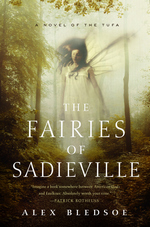 The Fairies of Sadieville
by Alex Bledsoe
My original post
I was very excited about this book when Bledsoe announced it was the last Tufa novel. Then I never wanted it to come out—I didn’t want to say goodbye to this wonderful world he’d created. But if I have to—this is how the series should’ve gone out. It’s the best installment since the first novel—we get almost every question we had about the Tufa answered (including ones you didn’t realize you had), along with a great story. It’s just special and I’m glad I got to read this magical series.
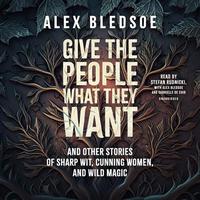 Give the People What They Want and Other Stories of Sharp Wit, Cunning Women, and Wild Magic
by Alex Bledsoe, Narrated by: Stefan Rudnicki, with Alex Bledsoe and Gabrielle de Cuir
This collection of short stories and a novella is just a great time. You start with short pieces in two of my favorite series, an interesting sample of another series, a couple of other things, and then a Zombie story that I really got into (no, really). Rudnicki did his usual bang-up job, de Cuir didn’t get enough to do (but was good with what little she had) and it’s always nice to hear from the author. I don’t know if it’ll work for people who aren’t fans of a series by Bledsoe, but it just might convince the listener to try one or two of them (and I’d heartily encourage that, too).
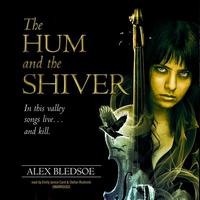 The Hum and the Shiver
by Alex Bledsoe, Emily Janice Card(Narrator), Stefan Rudnicki (Narrator)
This was my third or fourth trip through this book (maybe, fifth, but I don’t think so). I’m not sure if that means it was easy for me to be impressed—or maybe it was really hard because I had high expectations. Regardless, Rudnicki and Card took me to Cloud County and the land of the Tufa. I could believe that these people lived, breathed, and walked around in this world—and yet were otherworldly, as they ought to be. I knew Rudnicki could make me believe in a Fantasy world—it turns out that he can make me believe in this one, too. Card was right there with him.
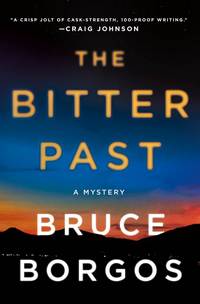 The Bitter Past
by Bruce Borgos
My original post
A great mix of Cold War espionage and modern-day Police Procedural, with a Western twist. Borgos assembled a cast of characters that leap off the page, I felt like I’d been reading about Porter Beck and his deputies for years within just a chapter or two. There’s blood, intrigue, nuclear fall-out, wit, humor, a grisly opening, and a dramatic conclusion—and a whole lot of other stuff along the way. I don’t know if Borgos can do something just like this novel book again, but as long as Porter Beck and his team are around for whatever’s next, I want to see it.
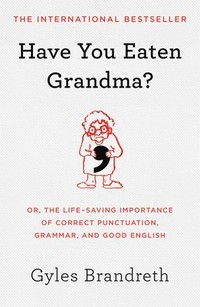 Have You Eaten Grandma?: Or, the Life-Saving Importance of Correct Punctuation, Grammar, and Good English
My original post
I remembered rating this higher, but I’m not going to second-guess myself now. I’ll steal from my original conclusion for this: It’s the kind of thing that my college-bound daughter could use on her dorm bookshelf (and will probably find), and I know more than a few people who find themselves writing reports and the like for work who could use something like that. If you need help, might as well have a good time while you’re at it—and Have You Eaten Grandma is just the thing.
 Dragon Road
I haven’t been able to get a post written about this—I’m not sure why. It’s superior in almost every way to the wonderful Skyfarer—the idea behind the caravan, the scope of the ship and it’s culture are more than you might think anyone has done before. A fantasy novel about wizards and warriors (and warrior wizards) in a SF setting. I had a blast reading this and I think you will, too.
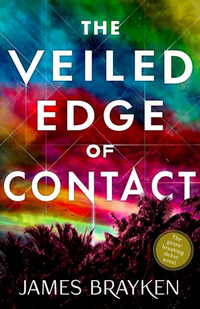 The Veiled Edge of Contact
My original post
Brayken’s debut surprised me more times than I thought was possible. Every time I thought I knew what direction Brayken was taking for the story, the protagonist (or major characters), tone, or even genre—he’d make a sharp turn and make the book better than I thought it was. I have questions and qualms about some aspects of the novel—but this is going down as a highlight of 2022 anyway.
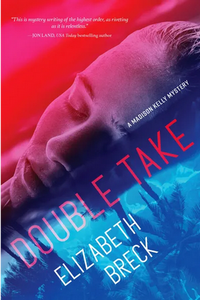 Double Take
My original post
In my original post, I said that it felt like Breck wrote this novel for me—I’m not that delusional, but it resonated with me in so many ways that she might as well have. Madison Kelly was one of my favorite discoveries of 2021 and her sophomore adventure solidified my impression of her. Madison’s tough, smart, lucky (and knows how important that is), and committed. Brisk and assured writing. A nice bit of sleuthing to find a pretty clever crime (committed by some people who really shouldn’t ever get into criminal activity—and some who seem born to it). Featuring the kind of ending where you find yourself leaning forward as you read, because somehow that helps you get to what happens next faster; you don’t hear the music/people/animals around you; and your eyes move just too slowly.
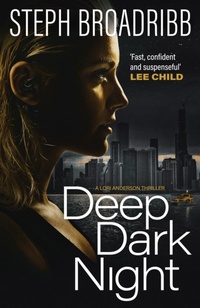 Deep Dark Night
My original post
Lori and JT are finally pressured to do the shady work for the FBI Agent that’s been looming over her head forever, and it goes horribly, horribly wrong. Which is a treat for the reader. You’ve got the JT, Lori, and a whole bunch of unsavory people trapped on the top floor of a Chicago highrise, and the thrills start from there. Strong character development in the middle of some of the tensest action you can imagine. Great ride.
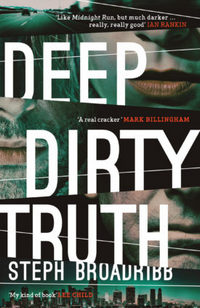 Deep Dirty Truth
My original post
Lori is kidnapped by the same Mob that wants her dead, giving her basically two choices—do a job for them or else they’re coming for JT and Dakota. Nothing about this book went the way I expected (beginning with the premise), it was all better than that. I had a hard time writing anything about this book that I hadn’t said about the first two in the series. Broadribb’s series about this tough, gritty bounty hunter (who is not close to perfect, but she’s persistent, which is easier to believe) started off strong and remains so.
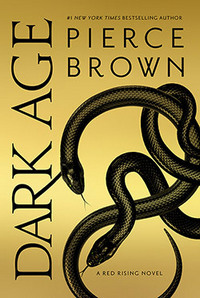 Dark Age
by Pierce Brown
My original post
When I started reading this, I was figuring that Pierce Brown’s Red Rising Saga was on the downward trend. Boy, was I wrong. Dark Age showed me that time after time after time after time . . . Entertaining, occasionally amusing, stress-inducing, heart-wrenching, flat-out captivating. It was brutal and beautiful and I can’t believe I doubted Brown for a minute.
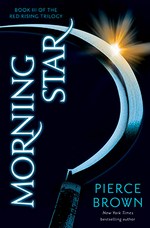 Morning Star
by Pierce Brown
My original post
I was a little surprised (but not really) today to see that every book in the trilogy made my year-end Best-Of list—so it makes sense that this one occupies a space. But it’s more than that, this book was an exciting emotional wringer that ended the trilogy in a perfect way. I can’t recommend this one enough (but only for those who’ve read the first two). When I was informed a month ago that there was going to be a follow-up series? I let out a whoop, thankfully none of my family noticed, so I don’t have to feel too silly.
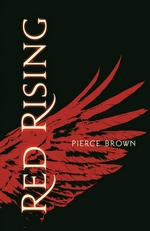 Red Rising
by Pierce Brown
My Review
This was exciting, compelling, devastating, thrilling, and occasionally revolting. I can’t tell you the number of people I’ve recommended this one to this year.
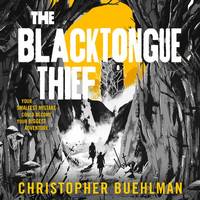 The Blacktongue Thief
My original post
About the time I started the above, I finished this. Clearly 2024 was going to be a good year of Fantasy for me. I talked about the audiobook yesterday, so let me try to focus on the story.
You’ve got an irreverent thief, the kind of guy that other thieves don’t trust (which actually makes sense, honor among thieves has to be the dumbest idea….but I digress), a knight on a (probably) doomed mission, some strange magic and…forget it. You need to do this yourself.
It’s just bonkers. The book is fun, the dialogue is spot-on, the stories are harrowing, tragic, and gripping. It’s the whole package.
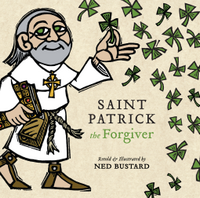 Saint Patrick the Forgiver:
The History and Legends of Ireland’s Bishop
by Ned Bustard
My original post
I kicked off this series with this book, so there’s a little bit of sentiment going for it. I really appreciated the way that Bustard dealt with a lot of history and some pretty serious topics in an age-appropriate way. He avoided moralism, too. All while giving the reader a fun experience, with some eye-catching art. A great introduction to Patrick that will hopefully spur a child’s interest in him for a long time to come.
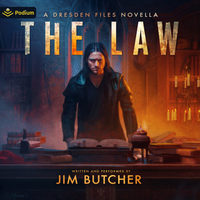 The Law
by Jim Butcher
My original post
Sure, I love Harry Dresden—so it’s almost a given that this novella is going to show up somewhere on my end-of-year lists. The fact that Jim Butcher did the narration himself makes this something special (thankfully, he’s still fully intending on having James Marsters do the series). Butcher’s good at this, he’s not great, but he’s good. Hearing his idea about what the characters that we know and love sound like was a lot of fun. Also, after all the epic and emotional moments that Butcher’s put his fans through lately, having something non-epic or world-changing like this is such a nice breather.
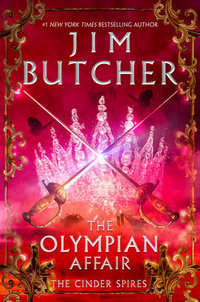 The Olympian Affair
by Jim Butcher
I haven’t written anything about this yet because I’m just too overwhelmed and the words can’t come out right. I loved being back in this world. I was surprised and wonderfully entertained by this story and the way it all played out (even the parts you could see coming). There’s a death that probably needed to happen, and I’ll think about forgiving Butcher for it someday (long before I forgive him for the big one in The Dresden Files).
I like the new characters (at least the ones I should), I loved catching up with our old friends. I enjoyed the whole thing. I know some people aren’t crazy about the space the new characters took compared to some of the old ones, and I get that–but the story was so fun!
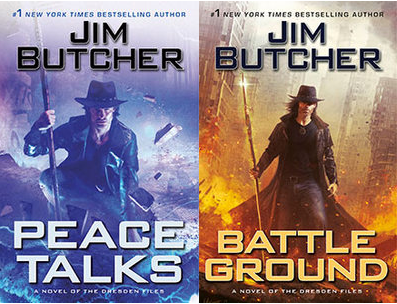 Peace Talks/Battle Ground
by Jim Butcher
My original Peace Talks post
It wouldn’t be fair to either book to just pick one of the two Dresden Files novels published in 2020, and these were originally written as one book, so this isn’t cheating. I laughed, I giggled, I got scared on behalf of fictional beings (and remain that way), I was awed, I was saddened, and I cried more than once. And I’m not going to think about that last bit anymore, because I have things to today.
They aren’t perfect, I know I’ve said I can’t read these books uncritically, but even I can see a problem or two with these books. But I just don’t care. Those problems don’t even amount to one bean in Rick Blaine’s proverbial hill compared to what I loved about the books.
 Skin Game
by Jim Butcher
My Review
It almost feels like a cheat to put this on the list, but I don’t know if any of the books since Changes would’ve made a year end list, so it’s not like Butcher/Dresden owns a spot here. I laughed, I got pretty darn misty a time or two, I’m pretty sure I audibly reacted to a victory also. Best of this series in awhile.
C
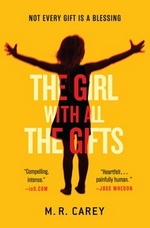 The Girl With All the Gifts
by M.R. Carey
My Review
This probably would’ve gotten 5-star rating from me if it hadn’t had to overcome genre/subject prejudice. Still, freakishly good.
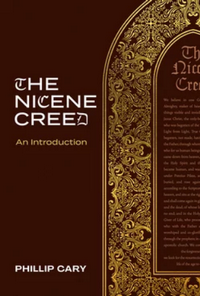 The Nicene Creed: An Introduction
by Phillip Cary
My original post
This is a fantastic introduction to the Nicene Creed and/or some of the doctrines taught by it (technically, the Nicene-Constantinopolitan Creed, but who calls it that outside of technical discussions?). In many cases, it’ll be a review of ideas—but even in those cases, Cary will likely shed a different light on it, or make you think about the idea in a way you’re not used to. This can be a quick and breezy read, but it’s a mistake to let Cary’s simple and straightforward text let you read quickly—because there’s a lot to think about and reflect on here. Even if—especially if, actually—you recite the Creed on a regular or frequent basis every Lord’s Day. This is a great way to stop and meditate on these essential truths of the Christian faith.
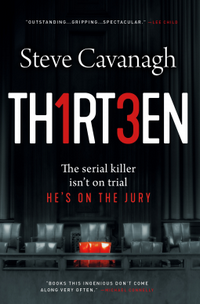 Thirteen
My original post
One of the best serial killer antagonists I can remember reading. A breakneck pace. An intricately plotted novel. An already beloved protagonist. Genuine surprises, shocking twists, and a couple of outstanding reveals make this fourth Eddie Flynn novel a must-read (even if you haven’t read any previous installments).
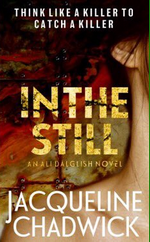 In The Still
by Jacqueline Chadwick
My original post
Chadwick’s first novel is probably the most entertaining serial killer novel I’ve ever read. Without sacrificing creepiness, suspense, horror, blood, guts, general nastiness, and so on—she gives us a story with heart, humor and humanity. The second novel, Briefly Maiden is arguably better, but I liked this one a teensy bit more—and I’m genuinely nervous about what’s going to happen in book 3 (not that I won’t read it as soon as I possibly can).
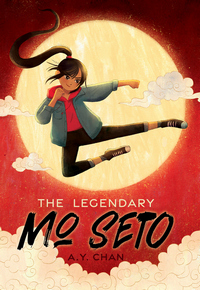 The Legendary Mo Seto
by A. Y. Chan
My original post
Speaking of fun…here’s Mo (Modesty) Seto and her story. In my original post, I said, “I had about as much fun as is permitted by law while reading this.” And I still remember it that way.
You’ve got martial arts, you’ve got a fantastic underdog, you’ve got a funny and caring grandfather/grandfather figure, you’ve got family tension, you’ve got strange history, you’ve got a movie set and tall the nonsense entailed by that, you’ve got a treasure hunt (of sorts), and a great cast of characters.
Chan brought it all to life and actually has me eager to get my hands on the sequel. And I shouldn’t be this excited about a new MG novel, but I am.*
* Not because I’m some sort of snob, or that I look down on MG books. I’m just 4 decades too old to be that excited.
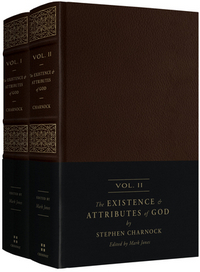 The Existence and Attributes of God: Updated and Unabridged
by Stephen Charnock, edited by Mark Jones
An original post (another is forthcoming)
This isn’t a definitive, exhaustive work on God’s attributes (or existence)—it cannot be (and would be blasphemous to suggest otherwise). But when you’re in the middle of a chapter, it’d be easy to think it is. Not just because of the depth Charnock goes into on each topic, but the angles he approaches it from. In the middle of the Discourse on God’s Knowledge, I was astounded, for example, by how many different ways he found to talk about it. It’s easy to see why this work has stood the test of time and can’t imagine anything in the 21st Century topping it (maybe someone will get their act together in the 22nd).
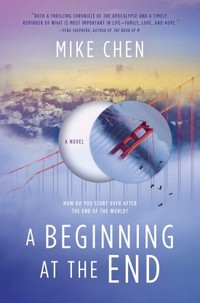 A Beginning At The End
by Mike Chen
My original post
Chen makes his second appearance on this list in two years (and there’s a pretty good reason to think he’ll return). I’m sure he’d rather have not kicked off 2020 by publishing a novel about a global pandemic in hindsight, but it’s too late for that.
Chen’s trademark appears to be writing non-SF stories in SF settings. As society tries to rebuild itself after most of the world’s population was wiped out, we focus on four people trying to establish some sort of life for themselves. It’s about being trapped and defined by our past, and about making choices to change our present, with hope for the future. Told with heart, wit, and skill—Chen’s characters will grab you and won’t let you go.
I’m not sure these two paragraphs were helpful. Go click the link above and read a few more words about it.
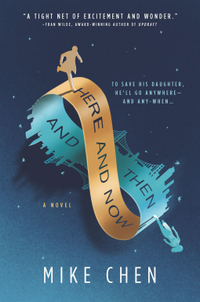 Here and Now and Then
by Mike Chen
My original post
One of the best Time Travel stories I’ve ever read, but it’s so much more—it’s about fatherhood, it’s about love, it’s about friendship. Heart, soul, laughs, and heartbreak—I don’t know what else you want out of a time travel story. Or any story, really. Characters you can like (even when they do things you don’t like), characters you want to know better, characters you want to hang out with after the story (or during it, just not during the major plot point times), and a great plotline.
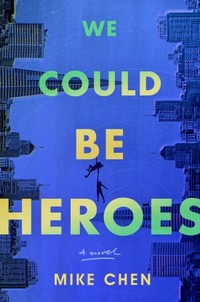 We Could Be Heroes
by Mike Chen
My original post
A super-hero and a super-villain become friends after meeting (as civilians) at a support group meeting and delve into their shared past to figure out how they got their powers and who they used to be. That old story. 🙂 In typical Chen fashion, the SF/super-hero elements are just an excuse to tell a story about friendship, memory, and identity. It’s a story about people, who just happen to be super-powered.
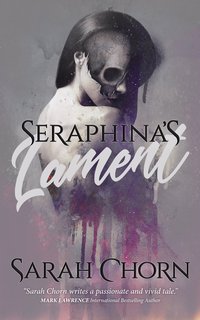 Seraphina’s Lament
by Sarah Chorn
My original post
Chorn’s prose is as beautiful as her world is dark and disturbing. This Fantasy depicts a culture’s collapse and promises the rebirth of a world, but getting there is rough. Time and time again while reading this book, I was struck by how unique, how unusual this experience was. As different as fantasy novels tend to be from each other, by and large, most of them feel the same as you read it (I guess that’s true of all genres). But I kept coming back to how unusual this feels compared to other fantasies I’ve read. The experience of reading Seraphina’s Lament isn’t something I’ll forget any time soon.
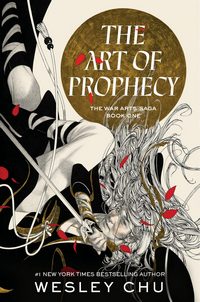 The Art of Prophecy
by Wesley Chu
My original post
In my original post, I said, “I don’t know that I can really express how excited I am about this book. The last time I was this enthusiastic about a Fantasy novel was Kings of the Wyld, and I’ve read some really good Fantasy since then. But this is a whole different level.” It features my favorite new-to-me-character of the year. It’s just a glorious read. I’ve read (and enjoyed) a lot of Chu’s previous work and this is so far beyond those that it’s hard to describe.
 Dash & Lily’s Book of Dares
by Rachel Cohn, David Levithan, Ryan Gesell (Narrator), Tara Sands (Narrator)
My original post
For me, this book came along at the right time—its particular brand of silly and escapist sweetness was exactly what it turned out that I needed. Add in a couple of stellar performances from Ryan Gesell Tara Sands and it’s just a delight. They can make you believe (even temporarily) in the magic of Christmas and young love.
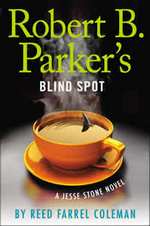 Robert B. Parker’s Blind Spot
by Reed Farrel Coleman
My Review
Coleman knocked this one out of the park, erasing the bad taste that his predecessor had left, and making me look forward to reading this series in a way I hadn’t for years. As good as (better in some ways, worse in others) Parker at his best.
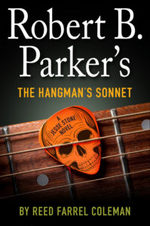 Robert B. Parker’s The Hangman’s Sonnet
How do you possibly follow-up 2016’s Debt to Pay, especially with that ending, without dramatically altering the Jesse Stone flavor? I’m still not sure how Coleman did it, but he did—Jesse’s dealing with Debt to Pay in a typically self-destructive way, but is keeping his head mostly above water so he can get his job done, mostly by inertia rather than by force of will. Reflexes kick in however, and while haunted, Jesse can carry out his duties in a reasonable fashion until some friends and a case can push him into something more.
Coleman’s balancing of long-term story arcs and character development with the classic Jesse Stone-type story is what makes this novel a winner and puts this one on my list.
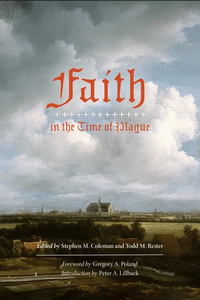 Faith in the Time of Plague
Edited by Stephen M. Coleman and Todd M.Rester
My original post
This is an anthology of “plague writings” from (primarily) Reformation and post-Reformation era pastors and theologians, to show how leaders in the past dealt with times of widespread communicable disease. Those looking for easy answers to “how would the early Church or Reformers” deal with COVID-19 (or the like)”, will be disappointed. There are no quick and easy answers here. But this can remind readers that the Church has been through similar—and worse—times before. She likely will again. There have been careful, pastoral responses to it in the past, and that can be true again. We don’t have to have a snappy, one-size-fits-all approach at the first sign of trouble, but we are called to gracious, Christ-honoring, people-serving responses.
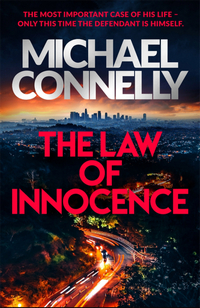 The Law of Innocence
My original post
I was slightly afraid of that when I read the blurb for this—did we really need two books from Connelly in 2020 where the protagonist is suspected of a murder that there’s no chance at all that he committed? By the beginning of Chapter Two, any trepidation had vanished. By the end, this may be my favorite Lincoln Lawyer book yet. The courtroom action was fantastic. I absolutely loved it.
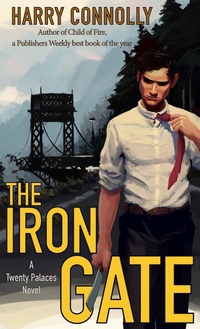 The Iron Gate
My original post
Every Twenty Palaces novel is better than the last—and The Iron Gate is no exception. This novel is a better version of everything Connolly has delivered before. We get character growth in a character I’d have considered pretty unchangeable, a dynamite plot (two, actually), and a disturbing monster to boot. There’s just so much to commend here—both for this novel and what it promises for the future.
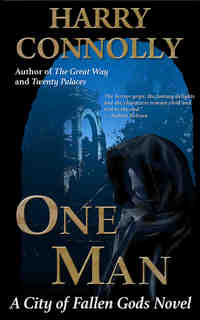 One Man
My original post
A PI story in a Fantasy world is becoming enough of a common thing to stop readers in their tracks by itself. Now, you have to make it a good PI story in a Fantasy world. This one works as a Fantasy and a noir PI novel.
A man haunted by his horrible past, just trying to get by, is pushed into a gang war by being in the wrong place at the wrong time and befriending the right little girl in need of an adult looking after her. Intricate magic, elaborate world building, horrible villains, tarnished (at best) heroes. This is a novel to chew on and relish.
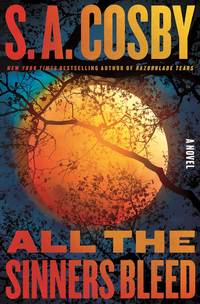 All the Sinners Bleed
by S. A. Cosby
My original post
As the first black Sheriff of Charon County, Virginia, Titus Crown has a lot on his plate. He has to watch his every step to keep the political and social leaders of the small community from removing him from office while holding off demands from the local social activists to turn the tables on behalf of the over-policed minorities and give the white community a taste of that treatment. It’s not going well for him—one horrible day finds Titus investigating a terrible crime and uncovering something that nightmares are made of—serial killers working undetected in Charon County for years. Can Titus stop the killing while keeping Charon County from tearing itself apart?
Sparse, but rich, prose that further disproves the notion that genre can’t be the home of good writing. Cosby tackles hard issues—but really doesn’t try to solve them—he merely puts them on display for readers to acknowledge and wrestle with. It’s also just a cracking thriller that could be read as shallowly as you want and would keep you white-knuckled and racing to the final confrontation. Cosby’s one of the best in action now, and this solidifies that reputation.
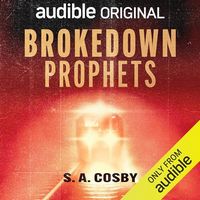 Brokedown Prophets
by S.A. Cosby and a full cast too long to list here
Cosby is a name you should expect to see again before I finish with this look back at ’23 (and likely at least once more this year). The performances that bring the Audible Original to life are fantastic. This is a dark tale of hope, desperation, and the opportunity to make a new life for yourself. It’s also violent, bloody, and likely to end poorly for all involved. The Russian assassin is one of my favorite characters of the year—it’d be easy to have made him a joke, but the performer and Crosby won’t let you write him off like that.
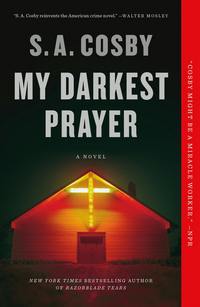 My Darkest Prayer
by S.A. Cosby
Is this as good as Cosby’s later works? No. But it’s dynamite–and you can see (especially looking back) the potential in this gritty and grim work. (and what is as good as his later works, anyway?) Nathan Waymaker is a former Marine and an ex-sheriff’s deputy (his resignation is pretty dramatic). He operates as an unofficial fixer and investigator for various people in the community–when a notable local pastor is killed. His church leadership wants answers that the sheriff’s department doesn’t seem to want to find.
So Nathan starts looking. And finds a lot of things he wishes he didn’t. And the pastor’s attractive daughter (which he’s pretty glad about). But mostly he finds things he doesn’t–hopefully he can find a way out with his life intact.
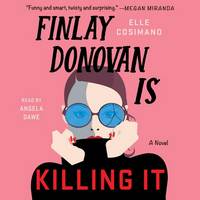 Finlay Donovan Is Killing It
by Elle Cosimano, Angela Dawe (Narration)
My original post
This is on the list because of Dawe’s narration. The text was entertaining enough, sure, but her narration is what made sure I remembered the book during the list-making time. The novel was a tricky balancing act between the various tones and characters, and Dawe makes you believe it. She captured the comedic sense of the novel along with the tension and emotional moments. There were a few accents involved and she did a believable job with them, too.
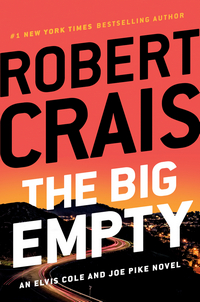 The Big Empty
by Robert Crais
My original post
Sure, there’s a little recency bias going on here (I just read this two-and-a-half weeks ago), but I’m pretty sure it’d end up on this list no matter when I read it. It’s Crais at the top of his game. Pike as an avenging angel and would-be protector of the weak. Elvis making friends and enemies wherever he goes. Chen coming through with the goods when he needs to (while being whiny and offensive). The case doesn’t go where anyone thinks it will. And the prose is so sharp and smooth that you don’t want to finish the book.
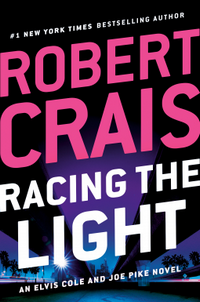 Racing the Light
by Robert Crais
My original post
We leave one of my newest PI obsessions to go back to one of my oldest—Elvis Cole. This is the best use of this character in years, and I loved every second of it. Like the best Cole novels, it starts as a missing persons case before turning into something far more complicated and deadly. But Cole is able to keep his focus on the victim (while finding justice for the wrongs he encounters). Joe Pike doesn’t get as much “screen time” as he has been lately, which makes every second that he’s around so much more effective—he owns one of the best moments of the book (and barely does anything in it). Racing the Light will no doubt be considered one of the pivotal moments in the series and I can’t wait to see what comes after this point.
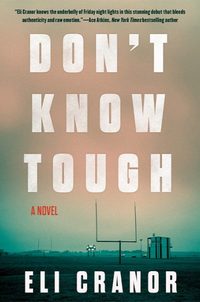 Don’t Know Tough
by Eli Cranor
My original post
I was blown away by this novel. I read it in May and I’m not convinced I’ve wholly recovered. It’s a story about faith, family, and (American) football. I can’t tell you which is more important to any character in this novel at any point (but I’d lean toward the latter for just about all of them). The prose is gorgeous and visceral, the story is intense and heart-breaking–it’s about a high school coach and a star player trying to keep their heads above water in the middle of a murder they’re both connected to. I can easily sound like I’m over-hyping this, so I’m not going to go on the way I want to. I’ll simply say that Cranor’s work is just gut-wrenching, beautiful, and powerful. And not to be missed.
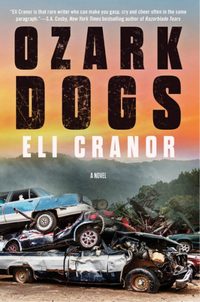 Ozark Dogs
by Eli Cranor
My original post
Like the above, this can be read as a white-knuckle thriller, but it’s more. This is a revenge story, with almost no one involved really understanding what the instigating event really was or meant (this doesn’t stop anyone seeking vengeance, naturally). This is a book about consequences, the sins of the past being visited on the present, and about the price of devotion (to a person, idea, etc.). It’ll knock you out.
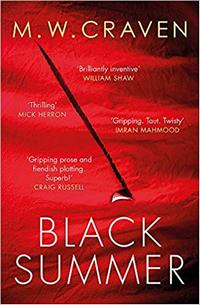 Black Summer
by M. W. Craven
My original post
It’s hard to avoid hyperbole in a Best-Of post like this, it’s harder still when talking about this book. But I just did some math, and Black Summer is in the top 1% of everything I read last year—the writing, the plot, the pacing, the tension, the protagonists, the villain(s), the supporting characters are as close to perfect as you’re going to find. The first note I made about this book was, I’m “glad Craven gave us all of zero pages to get comfy before getting all morbid and creepifying.” It’s pretty relentless from there—right up until the last interview, which might elicit a chuckle or two from a reader enjoying watching a brilliant criminal get outsmarted. It’s dark, it’s twisted, and it’s so much fun to read.
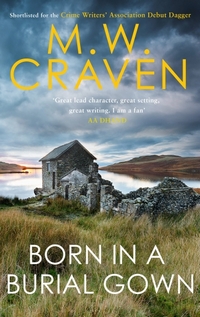 Born in a Burial Gown
by M. W. Craven
My original post
Should I just start calling this list An M. W. Craven Novel and 9 Others I Loved Last Year? This just narrowly beat out the latest Poe/Tilly for this spot. This novel introduces a very damaged detective trying to prove that he deserves to be where he is (and his team does, too). DI Fluke is a great character—well, they all are. The prose just sings, the novel’s well-paced and cleverly put together. The killer, the motive, the victim, the reveals (both in the way they were handled and what was revealed), the fairly satisfying (by design) ending, the sweet and then very satisfying denouement—and anything else I didn’t mention—it’s all just as good as you could hope for.
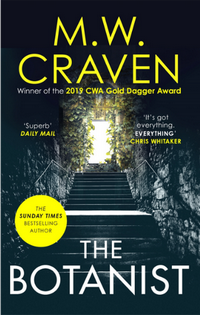 The Botanist
by M.W. Craven
My original post
The last note I made on this novel was, “the last 30 pages made me happier than almost anything else this year.” And thinking back on those pages right now still makes me almost giddy. While Poe and Tilly are vital to the novel—ultimately, this novel is about the secondary characters—victims, suspects, and the killers. The primary case is brilliant on every front—the method of murder, the way that the method is finally discerned by the good guys, and then the way the case is closed? It’s all a thing of beauty (in the dark, warped way that Crime Fiction is to fans of the genre). I’m on the verge of babbling now, so I’m going to leave this and move on to the next novel on the list.
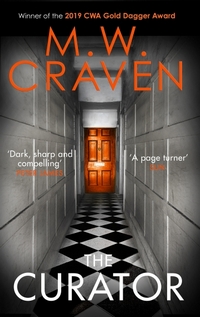 The Curator
by M. W. Craven
My original post
What a great hook. What a fantastic series of twists. What a wonderful concept for a killer and modus operandi. Washington Poe and Tilly Bradshaw are a couple of my favorite characters and they got to shine here. I just want to rave and rave and rave about this book, but I have things to do, so I’d better move on.
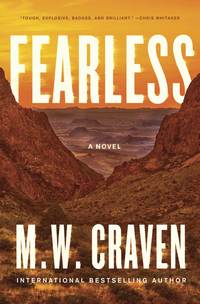 Fearless
by M.W. Craven
My original post
Craven’s new series, featuring a U.S. Marshall who is incapable of feeling fear, is off to a dynamite start. This book just worked on every level—Koenig is a fertile character, well-designed to carry a series for quite a while. His assets are perfect for a Reacher/Peter Ash-type character. His flaws keep him from being invincible, and provide plenty of ways for him to be his own greatest adversary. His quirks (e.g., fixation on chocolate milkshakes, absorption of odd bits of trivia) round him out nicely. The reason he’s off the grid is better than being a Luddite/technophobe. Can he grow—and can the reader grow in their understanding of him? Sure. He can also believably regress and find develop new hindrances and weaknesses to work through or overcome. The action scenes were almost impossibly good.
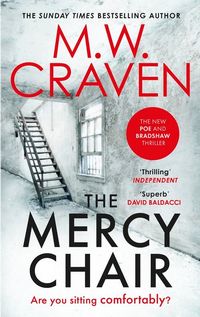 The Mercy Chair
by M.W. Craven
My original post
If I do retire something from this list, it’ll likely be Craven and his Poe and Tilly series. But I don’t see that happening because I love talking about them so much.
This book is dark. Which is saying something for Craven. It’s also sweet. And funny. Buuuuut, mostly it’s dark.
We start off with Poe in a therapy session, of all things. And he starts describing the ins and outs of his latest case–with all the strange twists and turns it takes him along.
There’s also someone shadowing Poe during the investigation as a performance audit (and that doesn’t go well for anyone). Poe determines quickly that the killer he’s has some major baggage–physical and spiritual abuse, likely some sexual abuse. And the way this is all discovered is pretty nasty. The more Poe and Tilly uncover the worse it seems and the need for Poe to get some therapy becomes more and more clear.
But the book never stops being entertaining or suspenseful. The characters are who we’ve come to know and love (or at least enjoy). They may be rough shape and pushed to their limit. But they’re Poe, Tilly, and Estelle.
Craven is the best around, this is just more proof.
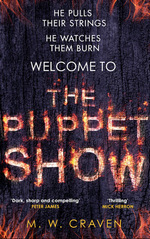 The Puppet Show
by M. W. Craven
My original post
A book with some of the darkest moments I came across last year—and some of the brightest, too. The mystery was great, the character moments (not just between the protagonists) were better—great rounded, human, characters. Even after I saw where Craven was going with things, I refused to believe it—and only gave up when I had no other choice. Two (at least) fantastic reveals in this book, very compelling writing and fantastic characters. What more do you want? Washington Poe and Tilly Bradshaw are two of my favorite new characters and I can’t wait to see where they go next.
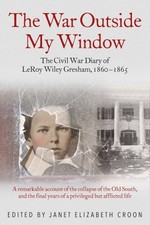 The War Outside My Window: The Civil War Diary of LeRoy Wiley Gresham, 1860-1865
by Janet E. Croon, ed.
My original post
LeRoy Wiley Gresham was 12 when he started keeping a diary. LIttle did he know at that point that he was about to witness the American Civil War (and all the desolation it would bring to Georgia) and that he was dying (he really didn’t figure that out until the very end). Instead you get an almost day-by-day look at his life—what he does, reads, hears about (re: the War) and feels. It’s history in the raw. You have never read anything like this—it will appeal to the armchair historian in you (particularly if you’ve ever dabbled in being a Civil War buff); it’ll appeal to want an idea what everyday life was like 150 years ago; there’s a medical case study, too—this combination of themes is impossible to find anywhere else. This won’t be the easiest read you come across this year (whatever year it is that you come across it), but it’ll be one of the most compelling.
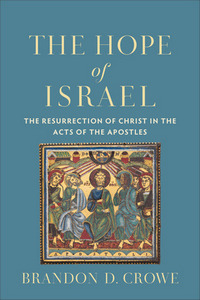 The Hope of Israel: The Resurrection of Christ in the Acts of the Apostles
It makes no sense to me at all that there hasn’t been a book-length look at the theme of Resurrection in Acts until now. It’s so clearly important to the message of Acts that you’d think there’d be dozens. But nope.
Crowe does a masterful job of filling that lacuna. It is all over Acts—more than I’d have guessed, too. First, he focuses on the topic in general, then focuses on the speeches/sermons of Peter, then those of Paul, and then those of everyone else. The exegetical material is just Part One, and it’s worth the purchase price right there.
But then he goes on to examine the topic from four theological perspectives, fleshing out the exegetical material and it gets so much richer.
This isn’t as easy to read as Bauckman, but it’s not too difficult if you’re willing to put in the work. Fascinating topic and helpful reflections.
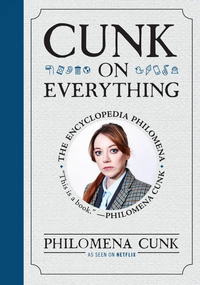 Cunk on Everything: The Encyclopedia Philomena
by Philomena Cunk
My original post
If you’ve ever watched a video clip or a full episode of Philomna Cunk’s various shows/specials, you know just what you’re going to get in this Encyclopedia. If you don’t, finish reading this post and then go find some. Probably pound-for-pound the funniest thing I read this year. Utterly useless outside of that—in case that wasn’t clear. Whether you go from cover to cover, or dip into it here and there (probably for longer than you intend to)—these brief entries are almost certainly going to be a burst of entertainment for you. Not all of them are going to work for every reader—but never fear, just turn the page and you’re probably going to come across one that will.
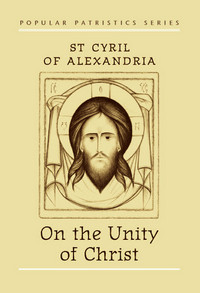 On the Unity of Christ
by Cyril of Alexandria, John Anthony McGuckin (Translator)
My original post
One thing that goes along with our problems with Trinitarian Theology is Christology–particularly the Unity of the Divine and Human natures of Jesus Christ. It’s not an easy thing to grapple with, make no mistake, but it’s not something we should take casually, either. Cyril of Alexandria’s On the Unity of Christ is one of the landmark works in the development/defense of this idea–and reading it you understand why it’s stood the test of time. The translation (and, I assume, Cyril’s original) flows easily, most of it can be understood by 21st Century readers (even those of us relatively unschooled in philosophy or technical theology). The case he’s making is easy to follow and profit from.
Sometimes it’s hard to understand why something is considered a classic outside of its age. On the Union of Christ is not one of those books.
D
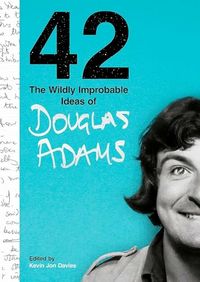 42: The Wildly Improbable Ideas of Douglas Adams
edited by Kevin Jon Davies
My original post
This collection of material from the 60 boxes of personal artefacts, compiled by a longtime collaborator is moving (which I didn’t expect), funny (duh), strange (more duh), and fascinating (of course). I found this to be mind-bogglingly delightful. Which is pretty much what I expected, true. But there’s expecting to appreciate a book and then getting to experience it and discover that you were right. It’s is kind of a doubling of pleasure.
If you’re a fan of Adams, you’re going to find at least one thing here that will interest you more than you anticipated. If you’re a big fan of Adams, you’re in for a treat. He was the hoopiest of hoopy froods, and this book gives you a glimpse into just how hoopy that is.
 Kill the Farm Boy
by Delilah S. Dawson and Kevin Hearne
My original post
Probably the best comedic/parody/satire fantasy since Peter David’s Sir Apropos of Nothing. The characters are fun, well-developed and pretty strange. This is a great fantasy story, it’s a great bunch of laughs, but there’s real humans and real human reactions—it’s not all laughs but enough of it is that you won’t have to work hard to thoroughly enjoy the book.
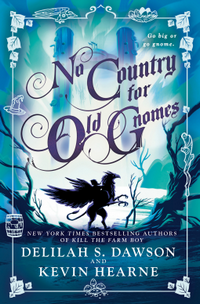 No Country for Old Gnomes
by Delilah S. Dawson and Kevin Hearne
My original post
Having established their off-kilter world, strong voice, and approach to the stories of Pell, Dawson and Hearne have come back to play in it. The result is superior in every way that I can think of. I lost track of how many times I said to myself while reading something along the lines of, “how did they improve things this much?” These books are noted (as I’ve focused on) for their comedy—but they’re about a lot more than comedy. The battle scenes are exciting. The emotional themes and reactions are genuine and unforced. And tragedy hits hard. It’s easy to forget in the middle of inspiring moments or humorous aftermaths of battle that these kind of novels involve death and other forms of loss—and when you do forget, you are open to getting your heart punched.
(but mostly you laugh)
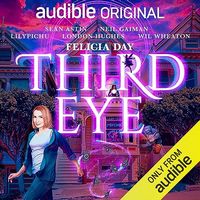 The Third Eye
by Felicia Day, and a full cast including Sean Astin, Felicia Day, Neil Gaiman, LilyPichu, London Hughes, and Wil Wheaton (and many others)
This was simply gobs of fun. Gaiman is just fantastic (no surprise there, I realize), Day plays the adorkable card like only she can, although Astin’s vampire comes close. Wheaton can play a jackwagon like nobody’s business, and…okay, I’m going to go on too long here (I really should’ve written a full post on this by now so I could’ve). You’ve got fun ‘n games with The Chosen One trope, satire and celebration of Urban Fantasy tropes and themes, some good action, and strong friendships. And a cheerful, optimistic feel that makes you just want more time in this world—even if there’s no story to be told (it’s even better during these almost 7 hours, though, because there is one).
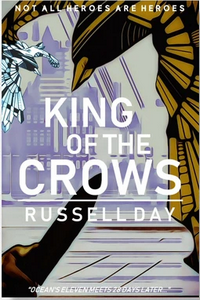 King of the Crows
by Russell Day
My original post
There’s no way I can sum up my appreciation for this book in this post. Set in a world recovering from a pandemic, there’s a straightforward crime story at the heart of this novel—it’s just surrounded by so many layers, that you can miss it—there’s the disease, there’s the horrible social and political context (both mid- and post-Outbreak), there’s what the characters are going through otherwise—and the whole thing is drenched in social commentary about 2020 society, e.g., sexism, economics, medical care. Yeah, it was bad timing that this book came out in 2020 when the last thing that many people want to read is a novel about a disease that’s out of control. But this had been in the works for months before anyone had heard of COVID-19. I’ve wondered what I’d think of this book if I’d read it last Fall. I’d still like it, I’d still be impressed by it—but I don’t know if it would resonate with me the same way. There’s almost nothing about Gondii that’s comparable to COVID-19. But the way that people and governments respond—well, that’s pretty different, too. but if you can’t see what’s going on around us reflected in this novel? You’re not paying attention. That Day appears so prescient says something about his skill and observation (and a lot about Western culture, too).
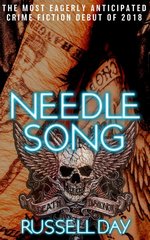 Needle Song
by Russell Day
My original post
I could pretty much copy and paste that above paragraph for this one. It never gets as dark as The Puppet Show, but the depravity displayed is bad enough to unsettle any reader. What makes this story compelling isn’t really the crime, it’s the way the crime impacts the people near it—those who lost a family member (I don’t want to say loved one) and those who are close to the suspects. Yakky and Doc Slidesmith are characters I hope to see again soon, and I want to bask in Day’s prose even more.
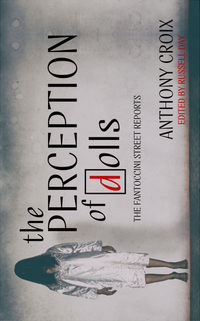 The Perception Of Dolls
by Anthony Croix, Edited by Russell Day
My original post
I did an inadequate job of describing this book and what I was blown away by in 15 paragraphs. There’s no way I’m going to manage it in the 1-2 paragraphs I give myself for this.
I’m dazzled by this book. I was hooked to an extent I’m not used to. I was captivated. I was (at least momentarily) obsessed with it. That’s worn off in the 50 weeks it’s been since I’ve finished, but it would take me no more than 5 pages of a re-read to get back to that. This is a recounting of one investigative reporter’s look into a triple homicide and attempted suicide in a home, the paranormal research that occurred in that home decades later, and the very strange (to put it mildly) things that happened to everyone involved in both of those things.
Russell Day takes you on a ride that you will find difficult to articulate (which is fine, he does a fine job of it on his own) and that will linger in the back of your mind for a long time.
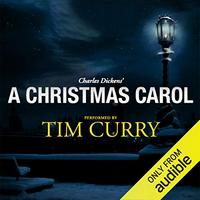 A Christmas Carol: A Signature Performance by Tim Curry
by Charles Dickens, Tim Curry (Narrator)
My original post
I’ve said it before, I’ll say it again: all you need to know about this is: Tim Curry. This wasn’t the performance I expected—I figured I was in for something near to over-the-top, with Curry going to town with the text. Instead, we’re treated to a respectful, restrained performance giving Dickens’ classic just the right emotional weight, sentimentality, personality, and life.
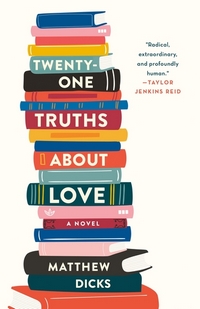 Twenty-one Truths About Love
My original post
It’s an unconventionally told story about a man figuring out how to be a businessman, husband, and father in some extreme circumstances. The lists are the star of the show, but it’s the heart behind them that made this novel a winner.
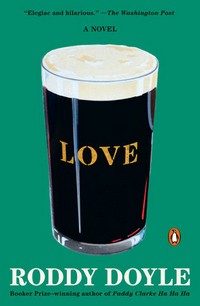 Love
Love
by Roddy Doyle
My original post
This is about as close as you can get to a novel without a plot. You’ve got a pair of old friends, getting together for drinks (many, many drinks) and to catch up on each other’s lives. They end up revisiting their past (as you do), arguing about what really happened then, and seeing how it’s impacted where they are now. There’s more to it, but that’ll do for our purposes. The novel is primarily told through dialogue (although we do get memories and internal commentary from one of the men). As is to be expected from Doyle, that dialogue sings. You can practically hear it jump off of the page–I’m not sure I could conjure up a mental image of anyone in the book, but I know exactly what they’d sound like.
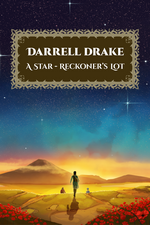 A Star-Reckoner’s Lot
by Darrell Drake
My original post
I’m afraid if I start talking about this one that I’ll spill a few hundred words. Let me just slightly modify something I already wrote and spare us all the effort (that could be better spent actually reading these books). I’m afraid I’ll overuse the word imaginative if I tried to describe what Drake has done here in the depth I want to in this book about pre-Islamic Iran. You haven’t read a fantasy novel like this one before—almost certainly, anyway—but you should.
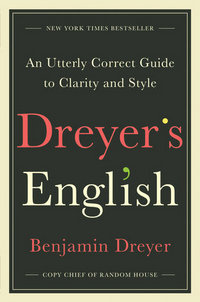 Dreyer’s English: An Utterly Correct Guide to Clarity and Style
I haven’t written a post about this yet, but it’s a great book. I can see why it was so popular this year—so much so that it got its own card game! The only more useful book I read in 2019 was the next one on the list. I’m not sure if I read something that made me laugh more. Fun, smart, incredibly quotable, and a resource you’ll return to time and time again.
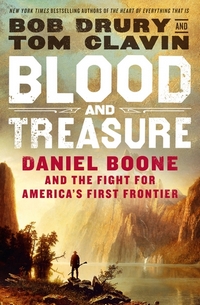 Blood and Treasure: Daniel Boone and the Fight for America’s First Frontier
by Bob Drury and Tom Clavin
My original post
This book de-mythologized—and then re-mythologized (to a point) Daniel Boone, who ended up being more interesting (and more human) than I anticipated. Some of the writing was fantastic and you could forget you were reading history (there were other parts that were so dry it could be nothing else). The book looks at both Boone and the Fight for the Frontier—against Indians, French, and the English. It’s the kind of history book that convinces me that I should read more history—not to better myself, just because it’s worthwhile.
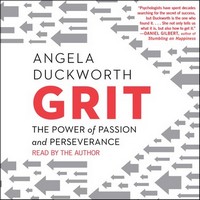 Grit: The Power of Passion and Perseverance
My original post
A fascinating mix of psychological research, case studies, and personal anecdotes. Duckworth structured this in such a way that not only it was informative and educational, it was enjoyable and motivational. The subject was interesting, the approach challenging, and didn’t always give the answers you expected. Duckworth made it clear that with the right mindset and time, it was possible to increase your own grit and find a measure of success. It’s not a one-size-fits-all solution, nor is it a promise of instant success. Just a reassurance that smart work can pay off.
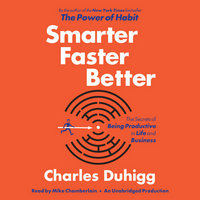 Smarter Faster Better: The Secrets of Being Productive in Life and Business
by Charles Duhigg, Mike Chamberlain (Narrator)
My original post
It’s not a how-to book, it’s not self-improvement, it’s largely about the science/study/understanding of productivity. I found it just as fascinating as previous book and can see where it’d be a useful guidebook for people in some sort of position of authority in an organization. Yet, it’s an improvement over Duhigg’s previous book because there are indications of how one could apply this to themselves/their organizations.
Also, Duhigg shows us his process while illustrating his own application of the book’s lessons—which I really enjoyed. I find his approach to putting together a book very interesting, what and how he includes something is almost as interesting as what he does with it.
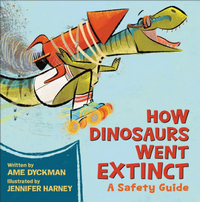 How Dinosaurs Went Extinct: A Safety Guide
by Ame Dyckman, Jennifer Harney (Illustrator)
My original post
It’s silly, the colors are loud, the illustartions practically leap off the page. It’s really impressive just how much Harney squeezed into each drawing. Parents will have a lot of fun reading this one, and I think it’ll be catching.
E
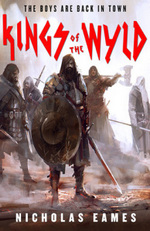 Kings of the Wyld
by Nicholas Eames
Like Dragon Road, I’ve been trying to write a post about this book for months. An epic story about brotherhood, about family, about heroism, about integrity—but at its core, it’s a story about Clay Cooper. Clay’s a good man trying to stay one. He worked really hard to get to where he is, but he has to get back on the road to help his friends’ daughter. It’s a fantastic concept and set up, with an even better follow-through by Eames. Possibly the best book I read last year—and I don’t say that lightly.
 The Water and the Blood: How the Sacraments Shape Christian Identity
by Kevin P. Emmert
My original post
I read this last January, and should probably schedule a re-read soon. It’s one of those books.
It’s is a confessional (from all over the Protestant spectrum) and theological look at the sacraments and their role in teaching Christians about Christ and forming their character and lives in Him. The book starts by talking about the dependence of the Sacraments on the Word, then moves to a look at the nature of the Sacraments and how they function generally to form Christians. The next two chapters look at each Sacrament specifically—what they tell us about those “who have been immersed into Christ and who commune with Him.” The last two chapters apply all this, how the Sacraments form and inform Christian morality and then how they equip and guide believers into the work of ministry in a variety of settings.
The focus of the book is our identity in Christ—the doctrine of Union with Christ—and how the sacraments shape us into better living out that identity. And I just wanted to marinate in that for days. I still do, really.
 Black Nerd Problems:
Essays
by William Evans & Omar Holmon
My original post
There are several strengths to this book—the first is the wide scope of the genres and ages of the pop culture they nerd out about. The second is the variety of the ways they express their appreciation (or lack thereof) for these cultural artifacts. Some of these essays are just silly, some are humorous, some touching, some sober—no two are alike in most ways. I wish I could write like this.
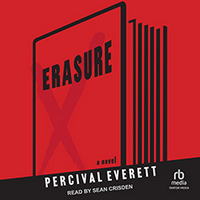 Erasure
by Percival Everett, Sean Crisden (Narrator)
The first half of this blew me away. The second half was almost as good. But Crisden’s narration kept me hooked the whole time. This satirical look at books, critics, academia, and more in the middle of a family story was nothing like I expected and almost never failed to impress.
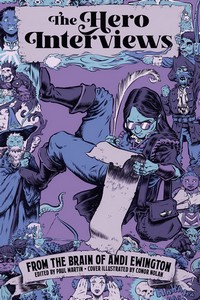 The Hero Interviews
My original post
The child and sibling of heroic adventurers, Elburn Barr, has taken a different path in life—one fit for someone with his particular set of skills (or lack thereof). He is a Loremaster—no spells, weapons, or danger for him, thank you very much. At this point in his life/career, Elburn has set out to understand what makes a hero tick—what is it that drives them, what early influences molded them, how do they keep going on? Does it vary from type to type? Are Barbarians made of different stuff from a Cleric or a Thief? What about a Ranger or a Wizard? In addition to interviewing various leading examples of each type of hero, he talks to non-heroes, too. Like a farmer whose farm was saved(?) by some heroes from a dragon, the curator of a hero museum, people who run/design dungeons, etc.
This is a novel trying to look like a series of comic episodes/scenes/lines. It takes a while to see the plotlines emerge—it really does seem to be a light-hearted look at D&D clichés, stereotypes, tropes, etc. at the beginning—but eventually, you start to see the story arcs emerging and even start to see the protagonist grow and develop. That’s something I didn’t expect to see when I started reading this because I did think it was just a series of comedic bits. It’s hard to tell if Ewington is more interested in telling a story or making his jokes—in the end he gives you enough of both that the question is academic.
F
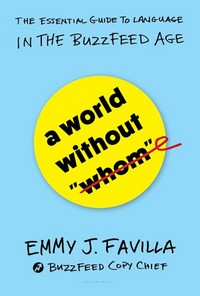 A World Without “Whom”: The Essential Guide to Language in the BuzzFeed Age
My original post
Sure, I disagreed with some of her takes—I’m less enamored with the idea of language as a ruleless entity than she is. But I found it impossible not to enjoy this—even when I thought Favilla was wrong about some particular note of grammar, I appreciated the way she thought about the idea and presented it. Mostly, I enjoyed reading about the process involved in creating and maintaining a style sheet for an entity as big and particular as Buzzfeed. The lists are the kind of thing I could read on a daily basis. As I wrote, “If you’re the kind of person who gets worked up about getting your phrasing juuuuuust right or are bothered when someone doesn’t. If you think reading tributes to commas and em dashes is a good time. Or if you’re curious about why someone would want to eliminate whom or is fine with letting the English subjunctive mood die…this is the book for you.”
(and, yes, I’m still planning on the tattoo inspired by the book)
 Henry and the Hidden Treasure
by B.C.R. Fegan, Lenny Wen (Illustrator)
My original post
Was honestly tempted to put this on my 2018 Best Fiction list—I really loved this one, and wish I knew a kid to buy it for. Great imagination that will likely inspire someone else’s.
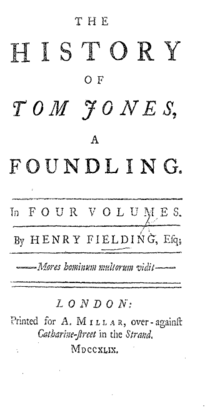 The History of Tom Jones, A Foundling
by Henry Fielding
My wrap-up post for the project
I read most of this in 2020, but didn’t finish it until 2021, so it goes on this list. Just for the (mostly rewarding) time spent on this book, it deserves a spot on this list. It’s not really the kind of book I thought it would be, but it’s so much more interesting. I’ve said enough about this book, I don’t really have it in me for more–it’s a classic, anyway, what can I say that hasn’t been said for hundreds of years?
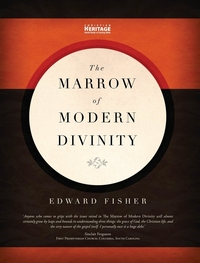 The Marrow of Modern Divinity
by Edward Fisher, Thomas Boston
My original post
This is one of the most famous (or infamous) books in the Scottish Reformed tradition–Edward Fisher’s defense of the Gospel against the errors of legalism and antinomianism with (generally) helpful notes (as short as a phrase or as long as several paragraphs) by Thomas Boston that created a controversy in the Church of Scotland big enough that books are still being written about it.
The Marrow is so clear. It’s so helpful. It’s so full of Gospel truth and assurance. It’s so spot-on in describing the ditches of legalism and antinomianism that are so easy to fall into. And yet, it never gets nasty or harsh in the criticism of the errors, it just points at them and says, “Don’t go there, and here’s why.” So few books along these lines manage that (I’m not saying they’re wrong to show teeth, but Fisher/Boston show you don’t need to).
I cannot recommend this enough.
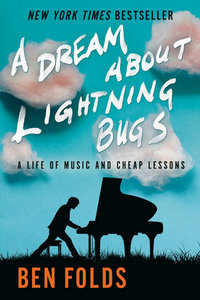 A Dream About Lightning Bugs: A Life of Music and Cheap Lessons
by Ben Folds
I haven’t written a post about this book yet, so it’s hard for me to try to give a thumbnail here. I enjoyed getting to know Folds a bit better—warts and all (and he’s not afraid to bring up some of the warts). Where this book really impressed me was when he talked about music—performing, creating, listening, what it means to a listener/performer. I’ve already returned to some of that material to reread—I’m not a musician, but I appreciate someone that thoughtful about it. It’s inspirational.
Also, his stuff about Shatner is just great.
 Comedy Book: How Comedy Conquered Culture–and the Magic That Makes It Work
This really just feels like you’re sitting down with an acquaintance who knows a lot about comedy and enjoys talking about it. Fox’s delivery–as well as his material–is like cat nip to a comedy nerd. I love hearing stand-ups talking about performing, writing, and reacting to other comedians–this was very similar to it. I mis-read a description of the book before I picked it up and expected it to be something like Ken Jennings’ book on humor. I was a little disappointed when I saw that wasn’t it–but I got over it quickly. This was just a blast to listen to.
I ended this book thinking if Fox doesn’t know something about stand-up comedy, it’s probably not worth knowing. That doesn’t mean I agree with all of his opinions about it, but, wow. It’s like listening to an encyclopedia of stand-up. He talks history, he talks current stars, political humor (and the role of comedic news programs), lowbrow, how minority comics can help their communities–and how those communities can make new comics, he talks about some big names, some big names that fell apart, cancel culture (and how long that’s been a thing. Hint: ages.). He runs the gamut with insight, wit, and some third thing that I can’t think of at the moment, but is impressive.
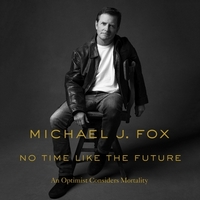 No Time Like the Future: An Optimist Considers Mortality
My original post
I’ve been a fan of Fox’s for as long as I can remember, and have watched most of the projects he discussed here (and many others). Like many, I’ve been impressed with the way he and his family have dealt with his Parkinson’s Disease and how they’ve worked to help everyone with it.
So this book, where he’s frank about the troubles he’s had recently and the way they’ve challenged his natural optimism really struck a chord with me. The book is a balance of struggle and victory, setback and progress—all told with a sharp wit that’s sure to charm.
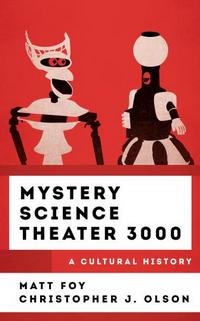 Mystery Science Theater 3000: A Cultural History
by Matt Foy and Christopher J. Olson
My original post
This is the second year in a row that I’ve had a book about MST3K in my favorites. This is the more academic version of the book I featured last year, essentially. It’s geared more toward media studies and the impact the show has had on culture–media culture, in particular, as well as Internet commentary–as it was/is shaped by it.
I felt smarter after reading this, appreciated the show in a new angle or two, and was driven to watch an episode or three. (sure, it’s not a perfect book, it gave me an allergy to the term “intertextuality” for a couple of months)
 Like, Literally, Dude: Arguing for the Good in Bad English
by Valerie Fridland, Narrated by Valerie Fridland, Joniece Abbott-Pratt, Keylor Leigh, Andrew Eiden, Christopher Ryan Grant, Ellen Archer, Eileen Stevens, and Nicky Endres
I’m a sucker for entertaining books about language, grammar, etc. Fridland’s apologetic for “Bad” English drives my inner prescriptivist, up the wall—but she joins the growing number of writers who are sealing up that prescriptivit’s coffin. How good is this book? Her chapter (or maybe it was a section of a chapter) on “Um” and “Uh” was fascinating. If she can pull that rabbit out of a hat, imagine how good she can be when she talks about the use/overuse of “like,” the history of “Dude,” or the figurative use of “literally”—and so much more. I spent most of the time listening to this book just geeking out in a way that made me regret not becoming a sociolinguist myself.
H
 The Appeal
My original post
The reader is on the same level with the characters who are trying to solve things in this epistolary mystery—we get to read the evidence at the same time as the trainee lawyers that we focus on do. That alone makes this an inventive read. Then Hallett adds in a fantastic cast of characters involved in a small town’s local community theater and a crowd-funding effort for a small child’s cancer treatment. You start out knowing something criminal happened, and gradually start to figure out what the crime was and how it involves those characters. It’s a truly inventive way to tell this kind of story and a great story. It’s the kind of book that’s easy to overhype as you talk about it, so I’m shutting up now.
 Not Awkward
My original post
Hanover’s third Wallflowers novel came out last year and shows real growth as a writer, while not losing any of the charm, heart, and likability of his previous novels. Just before his wedding, Scott goes to the funeral for his ex’s father, and somehow ends up spending a few days with the family. Not Awkward is a warm and heart-filled story about revisiting the past, finding healing (whether or not you thought you needed it), and embracing a future that doesn’t look like you expected it would (and is probably better). It’s the kind of book that’ll make you feel a little better about life for a while—and who doesn’t want to read something like that?
 Not Dressed
My original post
This is a dollop of sweetness on the other hand. The protagonist (Jake) we have here is in a stagnant (at best) long-term relationship that’s got a couple of pretty big things to work through; and is in a job situation that needs addressing. Then he makes a new friend who quickly becomes the only positive thing in his life. Jake’s life is basically begging to be shaken up, is Kaylee going to help instigate that?
This book is effortless to read. It’s funny, it’s sweet, it’s infectious, it’s engaging as anything I can remember. I cared about these characters and got invested in their lives faster than I typically do. And thinking about them now, over a year after I read the book, still brings a grin to my face.
 Not Prepared
My original post
Hanover’s fourth novel is the first to have a protagonist outside of their 20s, and the added maturity pays off. While this book is at heart a Rom-Com, the romantic story takes a backseat to the love story between the girl who needs a family and a bachelor who didn’t expect one. There’s still plenty of “rom”, and a good amount of “com” of a handful of stripes (particularly when it comes to a single man being thrust into dealing with a young girl at the cusp of puberty)—but there’s a lot more, too. Told with Hanover’s trademark wit, charm, and grace—prose that moves so smoothly you don’t realize how long you’ve spent sucked into his book. The emotions are real and grounded—both positively and negatively. His depictions of anxiety really impressed me, and there are scenes that got me choked up.
 The Data Detective: Ten Easy Rules to Make Sense of Statistics
by Tim Harford
My original post
This is one of those books I should go back and re-read, taking copious notes to help me internalize the points. We’re subject to people at work, on the news, online, and from the government throwing numbers, statistics, and “studies show” so often that it can be overwhelming. So much so that many people blindly accept everything they’re told from that formula, or doubt it all. Hartford’s point is that we should be skeptical, but to use that skepticism to dig out the real meaning behind the study/statistic and then use it for our advantage as a voter, citizen, employee, or person (or all of the above). Crystal clear writing, easily applicable, and more useful than most books on related subjects.
Actually, I think I just convinced myself to re-read it soon.
 The Last King of California
This is just a gorgeously written novel. The fact that it’s filled with criminals, low-lifes, and people more descipible than that doesn’t change that. Luke Crosswhite drops out of college and returns to his family’s home to live with his aunt and uncle, the closest thing he has to parents since his father is doing time for a murder that Luke saw him commit. Luke’s given up on going straight, he’s essentially resigned to taking up the family business.
He picked a bad time for it, his family is under attack from a bloodthirsty boss who wants to take over their territory and has essentially declared war on all criminals in their part of the state.
And, well, things get worse from there.
 She Rides Shotgun
My original post
The story of a little girl being surrounded by death and destruction, with both looming and threatening her all the time, and her discovering how to be brave. The story of a man trying to be a good father—or just a father. The story of survival. A story of revenge. A story about all kinds of violence. Wonderfully told.
 Assassins Anonymous
by Rob Hart
My original post
Action. Comedy. Heart. This has it. Mark (and his cat) are on a global hunt to find out who sent a Russian hitman into his 12-Step meeting to kill him. It should be noted (as you can guess from the title) that this meeting is of Assassins Anonymous. Not a smart place to try to kill people, it likely won’t go well for you.
Mark has been out of the life for a year or so. Why does someone want him dead? How can he stop them while not killing anyone, maintaining his “sobriety”?
Hart does so many things well in this book, I can’t wait for the promised sequel so I can spend even more with Mark and the rest of his support group.
 Soundtrack of Silence: Love, Loss, and a Playlist for Life
by Matt Hay
WOW, this was fascinating. Both the way he talked about music, referenced music, did his best to pound certain songs and sounds into his brain so that when we went deaf, he’d be able to play them in his brain–such a great idea, you couldn’t help but get inspired by that.
And then when he describes the medical treatments, the agonzing process of ups and downs he went through to work on the tumor/side effects? It got even better–and I couldn’t stop talking about it. Hay describing this in his own voice adds so much to it all.
I’m so, so, so glad I listened to this one. (I don’t remember why I only gave it 3 1/2 Stars, I won’t argue with past me, but present me would rate it higher. Maybe you have to sit with it for awhile.)
 Ink & Sigil
by Kevin Hearne
My original post
Yes, this is an Iron Druid spinoff and clearly exists in that world. But it’s nothing like an Iron Druid novel. You’ve got a cantakerous, aged, protagonist; fantastically designed and a-typical sidekicks/associates, with a magic system that I don’t has a predecessor in UF. If Aloysius MacBharrais isn’t one of your favorite characters in fiction right now, that’s only because you haven’t met him yet.
And it’s funny. Not to the detriment of action and drama, but filled with laughs. I’m not sure what else to say without going on for another 700+ words, so I’ll just leave it at that (and with the link above).
 A Plague of Giants
by Kevin Hearne
This sweeping—yet intimately told—epic fantasy about a continent/several civilizations being invaded by a race nobody knew existed is almost impossible to put into a few words. It’s about people stepping up to do more than they thought possible,more than they thought necessary, just so they and those they love can survive. It’s about heroes being heroic, leaders leading, non-heroes being more heroic, leaders conniving and failing, and regular people finding enough reason to keep going. It’s everything you want in an epic fantasy, and a bunch you didn’t realize you wanted, too (but probably should have).
 Reconstruction
by Mick Herron
My original post
Dead Lions by Herron would’ve been on this list, but I don’t let myself use one author more than once, so the spot goes to Reconstruction. Possibly because I spent far more time with this than I do with most books on a first read. Herron got everything right with this book. None of the primary characters are who you think they are at the beginning—most are far worse people than you think (including the ones you have a bad impression of—they’re even worse than you imagine). Which doesn’t stop them all from being some of the best designed and executed characters you’ll run into. The plot is like an onion (or a parfait, to appease Donkey)—you keep peeling back layer after layer after layer until the very end—and each layer is practically perfect and delicious (making it more like a parfait, now that I use that word). The narration is sneakily hilarious and dark. One of my earliest reads of the year and it set the bar high for the next 11 months.
 Spook Street
by Mick Herron
My original post
What can one say about Mick Herron and the Slough House series that countless others haven’t before–and better? This was harrowing and haunting, with twists I didn’t see coming. And I really can’t do better than that.
 Nasty, Brutish, and Short:
Adventures in Philosophy with My Kids
My original post
This was a great listen—Hershovitz is the kind of lecturer you want to pay attention to (or so imagine based on this). This book succeeded on multiple fronts: it was frequently amusing, if not downright funny; it was educational; it was insightful (even when I disagreed with what he did with the insights); it was thoughtful; it offered (largely by example, not being didactic) good parental advice; and kept this particular listener fully engaged throughout. Just what you want from an audiobook.
 Finding Hope in Hard Things: A Positive Take on Suffering
My original post
The central thesis of the book is: hard things are going to shape us in ways easy things can’t. He develops this thesis through a collection of essays about the death of his father, his anxiety disorder, and his struggles with self-doubt. These case studies are just that, things that his readers can relate to, sympathize with, and find similarities in their lives. After that, Hibbs points to finding Christ and His purposes in the hard things, and that’s where we find hope. This isn’t a book that comes to say “here’s a bunch of things you need to know to deal with suffering,” instead it’s “here’s what I’ve learned while through these trials, maybe you can learn from what I’ve been through, too.”
 In Divine Company: Growing Closer to the God Who Speaks
My original post
A great work on prayer. Grounding our need for it not in our limitations or sense of need. Nor in the command to do so. Instead, Hibbs focuses on the nature of God as a communicative God and us as His image bearers. Hibbs being Hibbs, this is one of the better-written books on this list.
 Struck Down but Not Destroyed: Living Faithfully with Anxiety
Written twelve years after Hibbs was first diagnosed with an anxiety disorder, he takes a different approach to anxiety disorders than you typically see. It’s not about denying the problem, it’s not about overcoming it, and striving to lead an anxiety-free life. Instead, it’s about relying not on our own strength, but on Christ who is sufficient when we are not; it’s about learning to see what God’s purpose in the suffering is, understanding that His hand is guiding all things—including our problems—so how do we in faith (without denying the suffering) rest in faith.
If like me, you don’t suffer from an anxiety disorder, you have your own challenges in your life, ways in which you suffer. It’s easy, thanks to the way Hibbs wrote this, to see how you can apply these principles to your own circumstances.
Very practical, but not at the cost of truth and theological reflection.
 The Stories Behind the Stories: The Remarkable True Tales Behind Your Favorite Kid’s Books
by Danielle Higley, David Miles (Illustrator)
My original post
I don’t know if I read a better-designed book last year (or the year before). It’s a treat for the eyes. But more importantly, the content is as good—if not better. I can see the book appealing to (and being understood) younger readers curious about some of the books they’ve read or seen at a library. It also was entertaining and edifying for a, um, more seasoned reader familiar with almost all of the books. I was surprised by some of what I read, learned something about all but one of the 20+ books covered and walked away with a hankering to go back and read some of these.
 Who Chose the Gospels?: Probing the Great Gospel Conspiracy
by C. E. Hill
My original post
An alternate title for the book could be, how do you solve a problem like Iraneaus? Or, more to the point, how do you ignore his (early date) recognition of only 4 gospels—Matthew, Mark, Luke, and John—despite what we’re told about the state of gospel availability and canonization by so many today. Hill examines some of the time frames, uses, content, and provenance of some of the so-called competitor gospels (i.e., those that never were considered canonical) to compare them to both the canonical gospels and those early figures of the Church we see discussing the gospels. But primarily, Hill is concerned with the use of and testimony regarding the canonical gospels—and the evidence regarding their use by the Church and when it started. What’s more, he discusses (and educates) these ideas while being entertaining (never sacrificing educating for entertaining). Hill is careful and thorough, acknowledging challenges to his position about the emergence of the fourfold Gospel to the place it holds today. But he’s consistent in showing how those challenges don’t have the weight and merit that so many in our culture assume they do.
 Dead Inside
My original post
When I was about halfway through this novel, I wrote, “While I’m loving every second of this book, I’m having a hard time shaking the bleak outlook on life and humanity that seems to be part and parcel of this novel…Seriously, read a few pages of this book and see if you’re not willing to replace humanity as the apex predator with something careful and considerate—like rabid pit bulls or crack-smoking hyenas.” This is not an easy read thanks to the characters and circumstances, later I wrote, “This isn’t the cops dealing with a larger-than-life genius serial killer—rather, it’s the everyday reality for too many. Just this time tinged with a spree killer making a grim circumstance worse for some. It’s a gripping read, a clever whodunit, with characters that might be those you meet every day. As an experience, it’s at once satisfying and disturbing—a great combination for a reader. You won’t read much this year that stacks up against Dead Inside and you’ll join me in eagerly awaiting what’s coming next from Holten.” I can’t put it better than that.
 Dead Secret
My original post
Like Eve Ronin (above), DC Maggie Jamieson, is driving herself to exhaustion. She’s just that driven. This book features Maggie and the rest of the team on the hunt for a killer and trying to find (hopefully in time) their missing DCI, which means no downtime for Maggie or anyone else. You’ve got a pretty grizzly beating death to start off with and then you the police’s natural inclination to focus all resources on the missing DCI. Just those two storylines would be enough. But then Holten throws in a third storyline—a person in desperate need of help, a survivor of (as far as anyone can tell) of domestic violence—a reminder that policing isn’t about arrests, it isn’t about only maintaining social order—it’s about people like this woman who showed at Lucy’s front door, it’s protecting and serving the public. This is the kind of thing that both (fictional and real) civilians and the (fictional and real) police need to be reminded of, and here it elevates the rest of the novel by its presence.
 State of the Union: A Marriage in Ten Parts
by Nick Hornby
My original post
This series of brief conversations held between a married couple just before their marriage counseling sessions. At the end of the day, this is exactly what you want from a Nick Hornby book (except the length—I wanted more, always): funny, heartfelt, charming, (seemingly) effortless, and makes you feel a wide range of emotions without feeling manipulated. I loved it, I think you will, too.
 Magpie Murders
by Anthony Horowitz, narrated by Samantha Bond, Allan Corduner
The death of a hugely best-selling author sends his editor on a hunt for the missing final pages to his final book. Alternatively, if she can figure out who the killer in the book was, they can at least salvage the book. But while she’s at it, she starts to think the author was murdered and maybe she can figure that out, too. A fictional murder and a real life one, that’s a pretty big task for an amatuer sleuth. What a fantastic book! The concept was great, the hook was gripping, the execution was dynamite, the narration was spot-on, the….the…ugh. I’m just listing superlatives at this point. Which is pretty much why I haven’t finished my post about it (despite starting 11 months ago)—words fail me. Just loved this.
 Recovering Our Sanity: How the Fear of God Conquers the Fears that Divide Us
My original post
Horton seeks to address several issues facing contemporary American Christians through the filter of the fear of God—the basic thesis is that if we are maintaining that fear as we ought, it’s easier to maintain a proper perspective on our problems and concerns (as real and as valid as they are). There’s a lot of wisdom in these pages, a lot to chew on (and a handful of things to disagree with).
 Blood of the Earth
by Faith Hunter
My original post
This probably should be a dual entry with Blood of the Earth and Curse on the Land, but that felt like cheating. Between the two, I thought that this was a slightly better work, so it got the spot. While remaining true to the Jane Yellowrock world that this springs from, Hunter has created a fantastic character, new type of magic, and basis of a series. I love these characters already (well, except for those I wasn’t crazy about previously) and can’t wait for a return trip.
 Cold Reign
by Faith Hunter
My original post
Hunter continues to raise the stakes (yeah, sorry, couldn’t resist) for Jane and her crew as the European Vamps’ visit/invasion gets closer. Am not sure what’s more intriguing, the evolution in Jane’s powers or the evolution of the character—eh, why bother choosing? Both are great. The growth in the Younger brothers might be more entertaining—I appreciate the way they’ve become nearly as central to the overall story as Jane. I’m not sure this is the book for new readers to the series, but there are plenty before it to hook someone.
 Dark Queen
by Faith Hunter
My original post
This could have been the series finale and I’d have been satisfied. I’m thrilled that it’s not. Hunter’s been building to this for a few books now—and it absolutely pays off the work she’s been doing. Better yet, there’s something else she’s been building toward that doesn’t get the attention it needed—and it’s devastating. The series will be different from here on out. Hunter’s as good as the genre has, and this book demonstrates it.
 Final Heir
by Faith Hunter
My original post
The fifteenth Jane Yellowrock novel was the series finale and the series went down the way it should—with a lot of heart, a lot of love, a lot of violence, and so many buckets of blood. I’ve been reading these for so long that I really didn’t want to see the series end (but it was time). From the jaw-dropping first chapter to the last lines that genuinely made me misty, Final Heir was a great ride.
 Grace Worth Fighting For: Recapturing the Vision of God’s Grace in the Canons of Dort
My original post
Is a fantastic companion to the previous book. Hyde focuses on the Canons themselves and what they’re getting at, showing how Church History developed those ideas to this point and how the Reformed church built on them. I didn’t expect anything to beat the Godfrey volume in this year where we got multiple books (thanks to the Canons’s anniversary), but this one did. it’s warm, pastoral and approachable. Anyone over 13 should have no problem with it. Sure, some of the topics will leave some scratching their heads and pondering for a while, but that’s because these are weighty, thought-provoking topics, not because of Hyde’s text. I may have read a better theological book this year, but I can’t think of it off the top of my head. This is simply excellent—rich theology, rich application, solid history, smartly writing, occasionally stirring.
I
 Wrecked
by Joe Ide
My original post
Not as entertaining as IQ, but it works as a novel in ways the previous two didn’t. I don’t know if I could put my finger on it, but it’s there. Wrecked is a clear step in evolution for Isaiah, Dodson, and probably Ide. It definitely demonstrates that the three are here to stay as long as Ide wants, and that these characters aren’t satisfied with being inner-city Sherlock/Watson, but they’re going places beyond that. Some good laughs, some good scares, some real “I can’t believe Ide ‘let’ them do that to Isaiah” moments—a great read.
 Bearing God’s Name: Why Sinai Still Matters
I had some real problems with this book—I quibbled with more than a few points, and flat-out disagreed with others (although I think her arguments are interesting and I’d like to see someone who knows what they’re doing dissect them). And I’m not so sure her thesis is all that revolutionary—I’ve heard it in almost every (maybe every) sermon I’ve heard on the Third Commandment in Confessional Presbyterian and Reformed Churches in the last two and a half decades.
That said, it’s a thesis that more people need to hear. The commandment isn’t primarily about our language, it’s about taking the Name of the Lord our God in the sense of “bearing.” When God’s people call themselves that, certain things are expected of them to not bring shame to that name (which will involve treating His name—and the means by which He is revealed—with the due respect).
She starts at Sinai and then traces the idea (a theme in this post, no?) through the rest of Scripture, showing how God’s people have done this—and how they’ve failed at it, too.
It’s a popularized version of a good portion of her dissertation, and is so accessible it’s ridiculous. Thought-provoking and helpful (even when I think she’s wrong about something), it’s a book I can’t help but recommend. My disagreements (and the way she expressed problems that don’t exist with the Reformed understanding of the topics) led to my reduced rating, not anything to do with the way the book was written.
 On the Apostolic Preaching
by Irenaeus of Lyons , John Behr (Translator)
My original post
This is exactly what I want to see out of a 2nd Century writer—because it’s the kind of thing I appreciate in a 21st Century Writer. It’s reassuring to see that the central idea of what Apostolic Preaching ought to be is pretty much the same for both eras—yeah, some of what Irenaeus wrote could use some fine-tuning (and he’d likely say the same of what shows up in one of the Essential Studies in Biblical Theology volumes I’ve discussed). But their modus operandi are so similar, that it’s clear that they’re walking in the same direction. This is a a quick, approachable read—as relatable today as it had to have been centuries ago (although I guess it’d be safe to say that many of his readers might not be ready to hear what he said in the same way I was). I was very encouraged by this and wish I’d read it years ago so I could be on my fifth or sixth reading now.
J
 Burned
by Benedict Jacka
My original post
I’m just going to quote myself here: I’ve seen people call this the Changes of the Alex Verus series—and it absolutely is. I’d also call it the Staked in terms with the protagonists coming to grips with the effects that his being in the lives of his nearest and dearest has on their life, and what that means for his future involvement with them. Which is not to say that Jacka’s latest feels anything like Butcher’s or Hearne’s books—it feels like Verus just turned up half a notch. It’s just such a great read—it grabs you on page 2 and drags you along wherever it wants to take you right up until the “He is not actually doing this” moment—which are followed by a couple more of them.
 An Inheritance of Magic
My original post
Any fears anyone had about Jacka’s post-Alex Verus career should have been assuaged by this book. It’s an introduction to a new kind of magic, a new kind of magic society, and a protagonist who is so different from Verus that you wouldn’t guess that Jacka wrote it if you didn’t have his name all over the place. This is kind of the reverse of the Hanover book—Jacka moves on from a mature character who knows his place in the world to one who is immature, unsure of his own abilities, and a complete beginner to the magical society of England (and, presumably, the rest of the world). And Jacka nails all of it. I couldn’t believe how easily I took to this world and I anticipate getting more immersed in it.
 Risen
Risen
My original post
The twelfth and final book in the Alex Verus series blew me away. It’s one of the best series finales I remember reading. It was hard to say good-bye to this world and these characters, but Jacka did such a satisfying job with this novel that it took some of the sting out of it.
 Good Talk: A Memoir in Conversations
by Mira Jacob
My original post
Okay, this was pretty well designed, too. This graphic memoir really hit me on several levels. The art is simple, but very effective. The story of Jacob’s life is one that needs to be told—for the sake of those who can relate to remember they’re not alone, and for the sake of those who can’t relate at all to help build some empathy. The framing device of trying to explain race in the U.S. to a biracial child trying to understand the world around him is much-needed, and probably more so all the time. This was more powerful than I expected (and had some great moments of lightness, too!)
 Breaking Bread with the Dead: A Reader’s Guide to a More Tranquil Mind
by Alan Jacobs
My original post
Jacobs hits another one out of the park. He asks how can we read and appreciate books from the past plagued by things that would not be tolerated today? Racism; slavery; different expectations for family, male and female roles; and so on. (many of these can apply to books and people who aren’t from previous centuries, but are in the cubicle next to us or around the Thanksgiving table—but Jacobs doesn’t spend time on that, but if you can’t make the application, I don’t think you’re paying attention).
Thoughtful, thought-provoking, erudite, with quiet humor, Jacobs will make you think, aspire to be a better reader, and more widely-read, too. I’m going to have to read this one a couple of more times to mine it for detail, and I’m looking forward to it.
 How to Think: A Survival Guide for a World at Odds
by Alan Jacobs
My original post
As Carl Trueman asked Jacobs, how do you give this book to someone with that title? It’s a shame you can’t give it as a gift without implicitly insulting someone, because this needs to be given to everyone you know—especially everyone who spends any time online. Entertaining, convicting, convincing, challenging. This is as close to a must read as I came across last year (maybe in the last two).
 100 Places to See After You Die: A Travel Guide to the Afterlife
by Ken Jennings
My original post
A fun and informative traveler’s guide through afterlives depicted in Mythology, Religion, Books, Movies, Music and Theater, and from a few other sources. Jennings brushes against irreverancy, but (I think, I’m open to correction) stays on the respectful side. I absolutely had a blast with this—and learned quite a bit, too. It’s one that I’ll return to primarily as a reference, but I will appreciate the perspective and humor as I check my facts. The only problem I have with it is the lack of footnotes/endnotes—I want some source material!
 Planet Funny: How Comedy Took Over Our Culture
by Ken Jennings
My original post
Half of this book is fantastic. The other half is … okay. It’ll make you laugh if nothing else. That might not be a good thing, if you take his point to heart. We’ve gotten to the point now in society that laughter beats honesty, jokes beat insight, and irony is more valued than thoughtful analysis. How did we get here, what does it mean, what do we do about it? The true value of the book may be what it makes you think about after you’re done.
 The Space Between Worlds
My original post
This is, simply, a stunning SF novel. It’s a stunning novel with no genre label necessary. It’s so beautifully written. The worldbuilding and SF-sciency stuff is so good that you wonder why it took until 2021 for someone to use it. I can’t believe it’s a first novel.
I don’t know what else to say. Go read my original post where I at least have some more room to babble. Just go get it.
 The Identity and Attributes of God
The reason I haven’t written anything about this is simple: I don’t know how to start—or how to finish (or anything in between). This is a modern, less-exhaustive version of Charnock’s The Existence and Attributes of God. Full of quotations and lessons from Puritans and others in church history, this is an excellent introduction (and then some) to the classical doctrine of God so often ignored or downplayed today. If we don’t know who He is, how will we know how to worship and serve Him?
It’s convicting. It’s informative and educational. It’s devotional. It’s probably the best thing that Johnson’s written—and that’s saying something.
 The Last Shield
My original post
If I start on this one, I don’t know when I’ll stop. So I’ll just copy some of what I’ve already said.
The Publisher’s description of this novel starts off with, “A gender-flipped Die Hard set in a mysterious castle.” And that’s absolutely what the book is—is that description reductionistic? Yes. Is it apt? Also, yes. But it’s also so much more than that summary. (but what a great elevator, pitch, right?)
It’s is a heckuva thrill-ride. Like its cinematic predecessor, the action in this novel is top-notch. It’s not non-stop, there are moments of reflection, of exhaustion, of trying to figure out how to survive—much less succeed against this force. The set-up to the main action also takes longer than you might think (but you should really just relax and let Johnston do his thing, it’s all important and helps establish what comes later). I was hooked almost immediately—and while I wondered when the “Die Hard” part of the book would kick in, I really didn’t care. I was having a good enough time with Briar, Alaric, and the rest.
But, boy howdy, when the action kicked in? What was a perfectly enjoyable book got so much better. Johnston can write an action scene—whether the action is hand-to-hand, bladed weapon against something else, supernatural-based…you name it, he can handle it with panache and aplomb. It’s well paced—with just enough downtime between fight scenes for you and the characters to be ready for the next. Once the book builds up enough steam, forget it—you’re not going to willingly put it down.
It’s not all about swords, shields, axes, and spells, however. There’s real growth—and real injury (and not just physical)—to be seen in several other characters. No one survives this time unscathed in one way or another.
Just pasting in these paragraphs, I’m ready to set everything aside and re-read it.
 Fate Ball
by Adam W. Jones
My original post
Since the Spring when I read this, I periodically reminded myself to keep this in mind for my Top 10, I was that afraid I’d forget this quiet book. It’s not a perfect novel, there are real problems with it—but it was really effective. I fell for Ava, just the way Able did—not as hard (and only in a way that my wife wouldn’t mind)—but just as truly. This one worked about as well as any author could hope one would.
 A Bad Day for Sunshine
My original post
This is pure, escapist fun. Think Gilmore Girls mixed with Veronica Mars. A single mom is a new sheriff of a quirky little New Mexico town, with a spunky daughter. There’s a kidnapping, an escaped convict, a missing deputy, and cursed cupcakes. Great dialogue, witty repartee, a mother-daughter relationship that will earn Jones many fans. This is as much fun as you can pack into a police procedural without making it a comedy, but still full of grim, grisly, depravity and darkness. It’s a nice serving of literary comfort food. There’s a freshness to this voice that I just loved, but my appreciation for this book (and the series it launches) goes deeper.
 August Snow
My original post
Readers here know that one of my greatest weaknesses is a good P.I. novel, and “discovering” August Snow was just a treat for me. There’s something about this book—one of those ineffable things that just sang to me—that reminded me of the first time I read a Dennis Lehane Kenzie and Gennaro book, or Joe Ide’s I.Q., or Crais’ Elvis Cole. There’s something just so right—so absolutely classic P.I. and incredibly fresh about the voice—that I felt at home.
From an atypical beginning with the prospective client that ends up without anyone being hired, through the morass of financial crimes and murder, to the explosive ending—with the increasing sense of dread and apprehension of an ensuring emotional gut-punch—August Snow is a fantastic series debut, that would be an equally fantastic tenth novel in a series. It’s fantastic, period.
K
 You’re Only Human: How Your Limits Reflect God’s Design and Why That’s Good News
My original post
Kapic seeks to apply the doctrine of Creation to remembering that we are created with limits—and, as such, we need to be dependent on one greater than us to help us when we are pushed beyond those limits. There’s a freedom in this realization—we can’t do it all and need to cut ourselves (and others) some slack. Although Kapic states it better than that. The book is a great combination of careful theology and careful application. It’s challenging and reassuring.
 Blackwater Falls
My original post
A probable racially and religiously motivated murder threatens to push heightened tensions over the edge between immigrant communities and local law enforcement. Enter the Community Response Unit—to hold the police accountable (if necessary), diffuse the situation (if at all possible), and get the answers everyone wants. Khan balances the social, personal, and investigative aspects of this novel with the skill of a seasoned professional. This is a great procedural in the way it embraces the defining traits and pushes them in new ways, it’s a great character study, a good commentary on several issues facing the country—and it’s a pretty solid mystery, too (can’t forget that).
 The Body’s Keepers: A Social History of Kidney Failure and Its Treatments
by Paul L. Kimmel, M.D., read by Lane Hakel
My original post
I have been learning about Kidney Disease, Transplants, Dialysis as an interested observer since my 20 year-old-son was 3 days old. But listening to this book made me feel like I’d never heard of any of it those things before. Granted, Kimmel focuses on other types of Kidney Disease (seemingly every other kind than he had), but still, a lot of what he wrote applies.
Just hearing about the early work on what we now call dialysis made this book worth it. (looking at a dialysis machine in 2024 and thinking about those passages is a little freaky). But then again, so is almost every chapter.
A Social History of medical treatment of many kinds of Kidney Disease doesn’t really sound like a gripping listen. So the fact that it’s showing up here should underscore just how impressed I was with this. Hakel keeps the listening experience accessible and interesting–even when the text seems just to be a list of names and acronyms. He maintains the appropriate tone and seriousness to the subject, but with simple and subtle changes in inflection and so on to help maintain the listener’s engagement, while helping the little flahses of personality that Kimmel shows shine through.
Also, man, I learned so much…I probably annoyed everyone in my family with sharing little bits and pieces over and over. I have referenced this book in my own thoughts, conversations with family, friends, and coworkers so many times since I listened to it that I feel like I owe the author/narrator some royalties, and if I don’t move on to the next book on this list, I’m going to end up writing another 8 paragraphs on this book.
 A Wizard’s Guide to Defensive Baking
by T. Kingfisher, Patricia Santomasso (Narrator)
My original post
I don’t know if I can put my finger on why this made the list, but as I was looking over the list of audiobooks I read in ’22, as soon as I saw this one, I knew it had to make the list.
Between Kingfisher’s text and Santomasso’s narration, this was just a great experience. The story is fun, the characters (particularly as embodied, or emvoiced?, by Santomasso) were endearing—as a whole, it was an immersive and pleasant time—just what you want in an audiobook.
 QualityLand
by Marc-Uwe Kling, Jamie Lee Searle (Translator)
My original post
The most realistic dystopian novel that I can think of. Also the most satiric, which helps you read it without despairing.
The Algorithm runs your life—it gives you what you want and need (even if, especially if, you don’t realize you need/want it), it determines your friends and relationships, it does everything for you but breathe and eat. Please rate it five stars. Or be prepared to suffer the consequences.
And it’s an election year. With an AI-generated candidate facing off against the incumbent. Which proves to be a lot more unpredictable than anyone could guess.
 The Beginning and End of All Things: A Biblical Theology of Creation and New Creation
My original post
Klink starts by saying that a doctrine of creation needs to be about more than what happened in Genesis 1-2, piquing my interest and getting me on his side immediately. His point is that the doctrine needs to concern itself with why God made the Earth—what was His purpose in creating, what’s His goal for the creation, and so on. It’s about the goodness of the creation and how we are to enjoy and preserve it. It’s ultimately about the new creation, what is going to happen on that Last Day when creation is renewed, restored, and recreated. This is a refreshing, warm, and pastoral look at a doctrine we too often limit to a narrow question, missing the big picture.
 Those Who Wish Me Dead
My Review
Not the best Koryta book I’ve ever read, but something about this one has stuck with me since I finished it. Solid suspense, exciting stuff.
 Love & Bullets: Megabomb Edition
My original post
This is technically a violation of my “only new to me” books, Kolakowski took his three Love and Bullets novellas and added a little new material to turn them into a novel. I found the experience different enough reading them as a novel, that I’m going with it. It’s just a blast to read. I had fun with every novel on this list, but for sheer entertainment value, I think this one tops the rest.
Love & Bullets is a fast-moving thrill ride. It’s funny. It has occasional moments of sweetness (very transient). The story and characters are visceral—you can see the action, you can practically hear Bill’s quips and feel Fiona’s patience evaporating at them (while she does love him for them). It will get a much-beloved (or much-disparaged) band’s music stuck in your head during one fight scene. Really, it covers almost all the senses—and given where they spend a lot of time, you’ll be glad it leaves the other two out.
 Endsinger
by Jay Kristoff
My Review
I knew going in that this was going to be a. well-written, b. brutal and c. a good conclusion to the series (well, I expected that last one, expected tinged with hope.). It didn’t let me down. I admit, I shed a tear or two, felt like I got punched in the gut a couple of times and didn’t breathe as often as I should’ve while reading. Such a great series.
L
 Station Eternity
by Mur Lafferty
My original post
A Murder Mystery set on a living Space Station with only three human characters surrounded by some of the strangest alien species you’ve seen (those three humans are pretty odd, too). This novel is one for mystery fans open to aliens walking around, SF fans interested in a different kind of story, and readers who like good things. Social commentary, a twisty narrative, a clever mystery, and more chuckles than I expected to get from this. An inventive read that’ll leave you wanting more.
 What Happens When We Worship
My original post
This is not a manual for the “how-to” aspects of worship, nor does it wade into the “style” debates and conflicts, he doesn’t look into the “why” we do certain things in worship (although he brushes against the idea). This is about the supernatural aspect to the ordinary, weekly event. It’s about what God does to and for His people in worship, what’s happening as we worship. Edifying, educational, orthodox, and even devotional—this book will introduce you to the vital topic or will gently remind you of the things you’ve been taken for granted.
 The In Between
by Michael Landweber, Brittany Pressley (Narrator), Mark Boyett (Narrator)
My original post
This is the story of what happens to a family when a young child goes missing during a teleportation trip that his parents make successfully (to put it too succinctly) It’s a gripping listen and wonderfully performed. As you may have guessed Brittany Pressley narrates the chapters from the mother’s point of view, and Mark Boyett takes the father’s. I don’t think I’d heard anything by either of them before—but I’ll keep my eyes peeled for their names when I browse for audiobooks in the future. They truly did wonderful jobs. They got the emotion of the moment, the tension—and occasional moments of fun, joy, or relief—as well as giving a real sense of the characters. It didn’t happen often, but even when a character usually only seen in a Lillian chapter showed up in a Jackson, you could recognize them (and vice versa)—which was nice. Landweber wrote a great story but Boyett and Pressley brought it to life.
 Deception Cove
My original post
I heard someone describe this as Laukkanen writing fan-fic about his dog Lucy. Which is funny, and pretty much true. From the setup to the execution and all points in between, Deception Cove delivers the goods. Anyone who read just one of his Stevens and Windermere books knows that Laukkanen can write a compelling thriller with great characters. In these pages, he shows that in spades—you take a couple of characters that could easily be cardboard cutouts and instead makes them three-dimensional people with depth, flaws, and a relatability—and throw them into a great thriller. What more could anyone want? A wonderful dog. Guess what? He’s got one of those, too. Leaving the reader wanting little more than a sequel.
 The Day My Fart Followed Me To Hockey
by Sam Lawrence & Ben Jackson, Danko Herrera (Illustrator)
My original post
Anthropomorphic flatulence—what little kid isn’t going to pay attention to this? Adorable art, cute story.
 Mrs. Covington’s
My original post
The thing with Cozy Fantasy is that the plot comes second (if not tertiary) to things like character and atmosphere. Mrs. Covington’s shines here–it’s such a pleasant, comfy atmosphere that it trumps everything else. A treasure hunt with the staff of the friendliest bar this side of Cheers! might be the plot of this cozy fantasy novel. But the book’s core is kindness, community, optimism, and helping. Also, Nachos. Brought to you in a great fantasy world with a light and engaging voice, Mrs. Covington’s will leave you snug and content.
 The Swallows
by Lisa Lutz
My original post
This is not my favorite Lutz novel, but I think it’s her best. It has a very different kind of humor than we got in The Spellman Files, but it’s probably as funny as Lutz has been since the third book in that series—but deadly serious, nonetheless. Lutz puts on a clinic for naturally shifting tone and using that to highlight the important stories she’s telling. From the funny and dark beginning to the perfect and bitingly ominous last three paragraphs The Swallows is a winner. Timely and appropriate, but using tropes and themes that are familiar to readers everywhere, Lutz has given us a thrilling novel for our day—provocative, entertaining, and haunting. This is one of those books that probably hews really close to things that could or have happened and you’re better off hoping are fictional.
 Flood and Fury: Old Testament Violence and the Shalom of God
I read this book back in March, and have yet to write a post about it because I’m still wrestling with some of Lynch’s positions and arguments. The biggest area that I was working through and on was his treatment of the relation of the Flood to the Covenant in the Garden and the Noahaic covenant to that covenant as well. The next book on this list helped me tremendously (mostly to Lynch’s detriment). But that’s not to say that I didn’t get anything from that portion of the book, it just made me think a lot—so much that I couldn’t write anything about the book as a whole. The portions of the book on Divine Violence in general (how to think of it, how not to think of it or avoid the idea, either) and about the conquest of Canaan are strong and very helpful.
 The Republic of Thieves
by Scott Lynch
My Review is forthcoming
Can’t believe I haven’t finished this review yet—it’s 80% done, I just can’t figure out how to tie the paragraphs together in a way to make it coherent and (I hope) interesting. A lot of this book is a prequel to The Lies of Locke Lamora and yet there was genuine suspense about those parts. Lynch had a big challenge introducing us to a character here that had achieved near-mythic status, and she ended up living up to expectations. Just a gem of a book.
M
 Things Unseen: A Systematic Introduction to the Christian Faith and Reformed Theology
My original post
These are transcripts of weekly radio addresses Machen made presenting a systematic approach to Christian teaching. Flying in the face of the mode of the day, Machen gives a strong presentation of Reformed distinctives, as well as a whole-hearted belief in a supernatural Christianity. He’s succinct, pastoral, accessible, and even witty. These are not talks for scholars, or dumbed-down–they’re straightforward presentations of the topics for everyone. This is one of the most rewarding books I’ve read in a few years. Even when Machen is merely restating what generations before him taught, there’s a freshness to his presentations that really are appealing.
(I’m thumbing my nose at my “only new to me” rule here–I’ve read these talks in other collections several years ago–but not organized like this in one volume)
 Hacked
My original post
Duncan MacMaster is a new (for me) go-to author if I need someone to break me out of a gloomy mood because of books like this. Clever, well-plotted, and filled with more laughs than some “Humor” books I read this year. It also features what’s probably the best secondary character from 2019. Take out the humor (for the sake of argument here, don’t you dare do that really) and this is still a smartly-plotted and well-executed mystery novel. Adding in the humor makes this a must-read.
 A Mint Condition Corpse
My original post
I put off reading this for reasons I really don’t understand and haven’t forgiven myself for yet. But the important thing is that I read it—it took me a chapter or two to really get into it, but once I did, I was in hook, like and sinker. In my original post I said this is “a joy to read; full of characters you’ll want to spend days with, that you’ll want to have over for Thanksgiving dinner just to lighten things up and distract you from Aunt Martha’s overcooked yams and dry turkey; a completely fun time that’s very likely most I’ve enjoyed a book in 2018. It is escapist. It is silly. It is clever.” I also said, “Probably the 5-Star-est 5-Stars I’ve given this year.” There are a couple of books that could compete for that line, but I’m not sure they’d win.
 The Subtle Art of Not Giving a F*ck: A Counterintuitive Approach to Living a Good Life
by Mark Manson, Roger Wayne (Narrator)
My original post
This is an enjoyable, amusing, call to re-examine your priorities and goals. It’s not about ceasing to care about everything (not giving a fck), but about being careful what you care about (giving the right fcks). Manson’s more impressed with himself than he should be, but he’s a clear and clever writer displaying a lot of common sense. Get the audiobook (I almost never say that)—the narration is worth a star by itself (maybe more).
 My Little Eye
My original post
Fantastic, fantastic premise. Great hook. Another great pair of protagonists (although most of their work is independent of each other). A True Crime blogger and a DI racing to uncover a serial killer, while battling dark secrets, dark pasts, and outside pressures that threaten to derail them at every turn. Marland surprised me more often and in more ways than just about any author this year. I was floored by some of them, too. A great puzzle, a great mish-mash of amateur detective and police procedural.
 Her Last Move
by John Marrs
My original post
I didn’t realize what I was getting myself into when I said yes to this Book Tour request. I’m not sure I could have—no offense to Mr. Marrs, but I don’t think I’d heard of him before. He’s definitely on my radar now. This was brutal, devastating, shocking, and just about every other adjective reviewers (professional and otherwise) overuse when describing a thriller. Marrs did so many things I didn’t think he would do. He didn’t do a lot that I thought he would (and seemed to mock the idea that he’d so some of what I wanted him to do). I spent a lot of time while reading this book not liking him very much, but so grateful I was getting to read the book. I’m still upset by some of it, but in awe of the experience.
 Reacher Said Nothing: Lee Child and the Making of Make Me
by Andy Martin
You know how many times I’ve tried to write about this book? I read it back in January and am still enthused about it. Part literary criticism, part author biography, part fan letter—Martin follows Lee Child through the writing of Make Me, and delivers one of the most enjoyable reads from last year—easy. It’s like the one of your favorite DVDs with a fantastic set of commentaries and special features, but somehow better (for one thing, it’s not like Martin’s drowning out the best scenes with his blather). It reminds me of talking about Child/Reacher with a good friend (which I do pretty frequently)—but Martin’s more erudite than either of us. Just so much fun.
 All Our Wrong Todays
by Elan Mastai
My original post
My all-time favorite time-travel novel, just a fun read, too. I will over-hype this one if I’m not careful. So, so good.
 The Jigsaw Man
My original post
DI Anjelica Henley is your typical detective so focused on the job that everything else in their life is a tertiary concern at best, she makes horrible choices in her personal life, and seems to make enemies wherever she goes. One such enemy is a serial killer she put away some time ago, but then new bodies start showing up that look like the work of that killer. Did she put the wrong man away? Is this a copycat? Or something worse? The Jigsaw Man is a dark, unsettling read—there are two pages toward the end that may be the most disturbing pages I’ve ever read. And yet…there’s something very appealing about the novel—it’s gripping and compelling, it’s also entertaining. The pacing was perfect. The characters were well-drawn and felt fresh. It’s the kind of book that makes you ignore responsibilities–and possibly food and hygiene–or at least want to until you finish.
 The Kill List
After a little stumble in book 2 of this series, Matheson comes back on fire with this entry.
25 years ago, one of Anjelica Henley’s friends was killed by a serial killer, who was arrested by the man who became her mentor when she joined the police. Then the convictions were overturned, her mentor was found to have corrupted evidence, and the killings have started up again.
It’s up to Henley and her team to stop them and get the right person arrested this time.
There’s heart-breaking character moments–related to and separate from–this case. The mystery is beyond twisty. Matheson handles all of it with confidence and ease. It was just a pleasure from start to finish.
 Greenlights
My original post
When Chris Hardwick interviewed McConaughey recently he described the audiobook as McConaughey playing McConaughey, which is a great way to put it, and I wish he’d posted this before I wrote about the book so I could’ve borrowed it then. But that’s it exactly, Yes, it’s his stories, but yeah, he’s performing. It feels like you’re sitting around the campfire or a table in a bar, listening to a great storyteller at work.
 Funny, You Don’t Look Autistic
My original post
McCreary shows a side of ASD that many people probably don’t realize exists. And even if they do, hearing about it from someone with it, helps you understand it better. McCreary gives us his perspective on things in a way that’s easy to digest. His humor (mostly pointed at himself and autism) provides some lightness to something that’s usually not treated that way.
 On the Savage Side
My original post
This was just a brutal read. Every time you get a glimmer of hope, a glimmer of a feeling that things might be okay for some of these characters—something snuffs it out. But there’s another source right around the corner. But there’s beauty in the darkness. And a drive to keep persevering shared by the reader and the characters. I wondered more than once why some of them kept trying—but they did. There’s a serial killer on the loose, and a good deal of the plot is about that. But this isn’t about the hunt for the killer or anything like that. It’s a novel about the women who may be his target and their fears about it. It’s also about the rest of their lives—how they got to the point where the killer might be hunting them and what might happen if they get out of there.
Like always, Tiffany McDaniels delivered a book that’s going to stay in my subconscious for a while—lurking there, making me rethink what I read from time to time. It’ll probably stay there until her next novel comes along (Betty‘s been there for a couple of years, and really only was dislodged by this one—and The Summer that Melted Everything is still there all these years later). It’s somber, it’s sober, and it’s difficult to read. But it’s so worth it in ways I cannot adequately explain. It’ll make you think. It’ll make you feel.
 The Summer that Melted Everything
by Tiffany McDaniel
My original post
I’m not sure what I can say about this book that others haven’t—this trip into a magical realism version of the 1980’s Mid-West will get you on every level—it’s entertaining, it’s thought-provoking, the language is gorgeous, the characters are flawed in all the right ways. I wish this was getting the attention (and sales!) that it deserves—I really hope its audience finds it.
 The Curious Dispatch of Daniel Costello
My original post
(really this spot belongs to all Series: The Stonebridge Mysteries, but we’ll use this as a synecdoche (or did I mean metonym? I’m can’t remember)). I’ve been calling this a Cozy for People Who Don’t Like Cozies. It’s about a pair of guys in their twenties, trying to figure out their lives. They’ve spent too much time watching Sherlock and the like, and when one of them discovers a dead body at a wedding they’re attending, they take it upon themselves to solve the murder. Which leads to them doing that again in a few months—and again, and again. They really don’t have any business doing this kind of thing, but it turns out that they have a knack for it. This novella (and those that follow) is a quick burst of fun—a witty whodunit with a couple of unlikely amateurs on the case.
 Beneath the Sugar Sky
My original post
As much as I appreciate McGuire’s Toby Daye, Indexing and InCryptid series, her Wayward Children books are possibly the best things she’d done. This allows us to spend time with characters I didn’t think we’d see again and the family—and world—of my favorite character in the series. It’s like McGuire wrote this one specifically for me. But it’s okay for you to read it, too. I’m generous like that.
 Every Heart a Doorway
by Seanan McGuire
My original post
Here’s a book that doesn’t have to worry about attention or audience, it has one—and it’s probably growing. It deserves it. Short, sweet (and not-sweet) and to the point. I may have to buy a two copies of the sequel so I don’t have to fight my daughter for it when it’s released.
 A Killing Frost
My original post
The number of on-going arcs that are resolved/permanently altered/kicked off in this one novel is mind-boggling. Particularly since at least one of them I didn’t expect to be really explored until McGuire kicked off her end-game for this series (so, clearly, I know nothing). She drops one of the (probably the) biggest bombs in the series—and keeps on going so much so that it’s not the climax of the novel!
It was a fun, thrilling, emotional ride even ignoring everything I just said. McGuire’s a writing monster, it’s just fun to watch her at work.
 Once Broken Faith
by Seanan McGuire
My original post
Poor planning on my part (in 2016) resulted in me reading two Toby Daye books this year, both just excellent, but this one worked a little bit better for me. Oodles and oodles of Fae royalty and nobility in one spot to decide what they’re going to do with this elf-shot cure leading to a sort-of closed room mystery (it’s just a really big, magical room) with peril on all side for Toby and her found family.
 The Unkindest Tide
by Seanan McGuire, Mary Robinette Kowal (Narrator)
This novel was the payoff (as far as we know so far, I wouldn’t put it past McGuire to turn it upside down later) to a storyline that had been lingering and building for years, I remember being stunned when reading it—just that aspect of The Unkindest Tide brought a great combination of anticipation, grief, suspense, and surprise. The story of the novel—the trip to the Duchy of Ships, the intrigue around Dianda, etc. was as solid as it gets, too. I remembered all this going in, so it was all teed up for Kowal—and she nailed it, it almost felt like I hadn’t read the book before and was discovering it fresh. A narrator who can do that is tops in my book.
 When Sorrows Come
My original post
If (and that feels like a big “if”) October Day is going to get a Happily Ever After, it’s going to be years down the road. Thankfully, she got a “Happy Right Now” by marrying Tybalt. That’s pretty much what this novel is–a big dollop of happiness (with Toby putting down a palace coup along the way). It was so nice seeing that.
 The Winter Long
by Seanan McGuire
My Review is forthcoming
Again, I’m not sure how I haven’t finished this review yet. McGuire takes a lot of what Toby’s “known” since we met her (all of which is what we’ve “known,” too) and turns it upside down and shakes the truth out. Every other book in the series has been affected by these revelations—which is just so cool. There’s also some nice warm fuzzies in this book, which isn’t that typical for the series. McGuire’s outdone herself.
 Marvel: What If . . . Wanda Maximoff and Peter Parker Were Siblings
by Seanan McGuire, read by Allyson Voller
A Spider-Man story written by McGuire? Take my money, please. Sure, I’ll put up with some Wanda Maximoff stuff (I never really dug her outside of the movies/show, but I never disliked her, either). But in the hands of Voller and McGuire I became a fan. There wasn’t enough Spider-Man for my taste, but I didn’t miss him. And the Doctor Strange content was a great bonus. There’s a case to be made for this being my favorite version of the Web-head, actually. Peter with a sister is a great spin on the character–and this version of Wanda is pretty cool, too. Voller sold me on the heart of the story in a way I may not have been sold had I read this on paper.
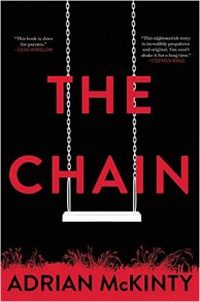 The Chain
My original post
There was enough hype around this that I can see where some of my blogger acquaintances were let down with the reality. But McKinty’s breakout novel absolutely worked for me. The tension is dialed up to 11, the pacing is relentless, the stakes are high enough that the reader should make sure their blood pressure prescriptions are filled. The Chain is as compelling and engrossing as you could want. It’s a near-perfect thriller that doesn’t let up. Winslow calls it “Jaws for parents.” He’s right—I can’t imagine there’s not a parent alive who can read this without worrying about their kids, and reconsidering how closely to track their movements and activities.
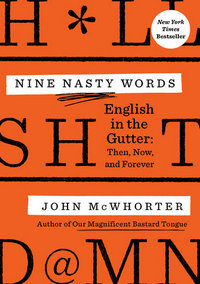 Nine Nasty Words: English in the Gutter: Then, Now, and Forever
My original post
I’m a sucker for an entertaining look at language, and that’s what McWhorter delivered here. While I try to eschew the use of profanity, we’re surrounded by it so much more than we likely realize, so I might as well learn more about it, right? This was a solid look at the background and development of these “Big 9” words—in particular, I enjoyed McWhorter’s demonstration of how the words function as various parts of speech, as well as the varying nuances of meaning.
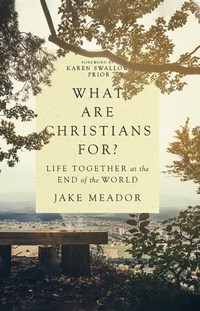 What Are Christians For?: Life Together at the End of the World
by Jake Meador
My original post
Meador wants to address American (specifically) and Western (generally) politics from a confessional and Natural Law perspective. He challenges positions and foundations of the Right and the Left calling us all to something deeper and better. And more Biblical. This is a careful book, one that I’m not convinced I completely understood on a first read, but I really appreciated what I did glean from it.
 Working Stiff: Two Years, 262 Bodies, and the Making of a Medical Examiner
by Judy Melinek, MD, & TJ Mitchell, Tanya Eby (Narrator)
My original post
This is Melinek’s account of her training to be a forensic pathologist in NYC—a great place to train, because what won’t you see there? She talks about the deaths that are the result of crimes, the kind of thing we see on every crime show in the world. But that’s not primarily the job and that’s not the focus of the book—mostly it’s the result of an accident, long-term disease, and so on. Which is actually frequently more interesting than the criminal stuff.
What makes this already compelling book all the better (as a book, not as an actual life) is that September 11, 2001, was a few weeks after her residency began. Her description of dealing with the aftermath (both in terms of the dead and the events that followed) is just sobering, and a reminder of the unspeakable reality of that day.
 Namaste Mart Confidential
My original post
Who hasn’t read too many noir novels about amateur PIs who are also grocery store clerks trying to make it in stand-up or writing to investigate the disappearance of a lingerie store employee? You might as well try one more.
What doesn’t this book have, really? First off—and it’s easy to forget this, but you shouldn’t—it’s noir. Then you have a slice of L.A. life in 2013, and boy does it feel like it. There’s some comedy. There’s some satire. There’s commentary on the rise (and growing acceptance, it seems) of polygamous LDS groups. There’s some drama. There’s some over-the-top action movie-style gunfights. There’s a splash of politics. There’s more than a little commentary on the nature of celebrity. There’s some actual sweetness through one of the smaller arcs. You’ve got Armenian mobsters. Ex-actors turned business executives. Ex-actors turned artists. Grocery store clerks and very odd customers (just that part of the novel alone could be turned into a decent sitcom). A strange Scientology-esque group.
But the important thing to know going in—it all works. This jumble of seemingly incompatible ideas/topics that Miller brings to the table fit together in a way that feels natural. It’s like one of those cooking competition shows where the contestants are handed a bunch of ingredients that no one in their right mind should put together and they make something that gets that gets the approval of experienced chefs and restauranteurs. Miller ain’t getting chopped for this meal.
 Beyond Authority and Submission: Women and Men in Marriage, Church, and Society
My original post
This book made me re-examine a lot—and will probably continue to do so as I mull on what she has to say (and I’ll probably find a lot to disagree with ultimately, and a lot to agree with—as it ought to be). How much of what I think about how women and men should interact with each other (in the home, Church and society) comes from Scripture and how much from the culture? How much of what I think it means to be a man or what it means to be a woman has more to do with Ancient Greek culture or the Victorians? (more than it should). The core of the message should be heard and weighed, and hopefully, after the hubbub around its publication has died down a bit, we can start to deal with it.
 Exodus Old and New: A Biblical Theology of Redemption
“Morales examines the key elements of three major redemption movements in Scripture: the exodus out of Egypt, the second exodus foretold by the prophets, and the new exodus accomplished by Jesus Christ.” Like so many others I read this year this takes a Redemptive Historical approach seeing the way these ideas play out throughout Scripture, are echoed and expanded in successive eras.
The exodus from Egypt is the template (not the best word, but the only one that comes to mind at the moment) for redemption in general, and we see this figure used time and time again in Scripture. Morales is a helpful guide through this progression.
 The Imputation of Adam’s Sin
by John Murray
My original post
This is a very brief work—but as is typical for John Murray, he doesn’t need a lot of words to make his point. He focuses his arguments for the Imputation of Sin on a careful look at Romans 5:12-19. This book is typical Murray—crisp, clear, concise, and convincing. Sure, there’s the drawback that his prose is dry and empty of all personality. The book doesn’t need them (and I’d think it strange to read Murray with it). It’s easy to see why it’s still so heavily used this many years after publication.
 God to Us: Covenant Theology in Scripture
My original post
I’ve read more books on Covenant Theology than I can easily count, and if this isn’t the best, it’s so close to it as not to matter. Myers gives his readers a thorough introduction to Covenant Theology as it came to the Protestant Church from the Reformation—particularly the English Reformation and the explanation offered by the Westminster divines and their contemporaries. His introduction is readable, clear, and helpful to the layman willing to put in a little work—but he’s not just repeating what the previous generations gave us, he’s looking at contemporary theology and insights as well.
That our Lord would condescend to His people in covenant is mind-blowingly gracious in the first place—that He does so to rebels in order that he could win them to Himself? That should drive us to worship. And the more we understand the gracious and remarkable nature of these covenants, the more we should be driven to it. Myers brings his readers to this point repeatedly—sometimes just by explaining something clearly—sometimes by applying his explanation to the reader to help us understand how it should make us reflect in worship.
N
 A Monster Calls
by Patrick Ness
My original post
There were so many ways this could’ve been hacky, overly-sentimentalized, brow-beating, or after-school special-y and Ness avoids them all to deliver a heart-wrenching story about grief, death, love, and the power of stories—at once horrifying, creepy and hopeful.
 We Had a Little Real Estate Problem: The Unheralded Story of Native Americans and Comedy
My original post
As I was trimming down the list of audiobooks I listened to last year for this list, I didn’t expect that this would stay on the list. A history of Native Americans in Comedy, really? But I kept not deleting it…so I started thinking of it—there’s a social history, an entertainment history, with individual profiles mixed it—it has it all. What’s more, despite a pretty dry (but never boring) narration, and not using clips of original performances, the comedy of these individuals comes through. In the midst of hardship, suffering, prejudice, and hard breaks, there are some solid laughs. It’s hard not to keep thinking about that.
 The Self-Made Widow
My original post
The premise of this sequel is fantastic—what’s a detective to do when they know who the killer is, but they’re not sure how or why the murder was committed. In fact, in the beginning, Andi’s the only one sure the victim was murdered at all. Kenny takes some time out from the documentary he’s making about the events of the previous novel to help Andi out (and hopefully to get another book, documentary, whatever out of it all). Andi’s up against someone as smart as her this time, and it’s going to take more than just Kenny’s help to crack the case. Told in Nicieza’s fantastic style this is a sure-fire winner.
 Suburban Dicks
My original post
A disgraced journalist struggling to find some sort of professional redemption (not to mention a better paycheck) and a pregnant mother of four (who gave up her lifelong dream of being an FBI profiler to raise a family) pair up to investigate their suburb’s first murder in decades because the police department just isn’t up for it (assuming they’re not too crooked to do the job right). You get a great mix of dark comedy, social commentary, and clever mystery as the pair unearth secrets that have been buried for generations on their way to solve the murder of a gas station attendant. From the great opening scene to the fantastic last line (probably the best I read last year), and all points between, this was easily one of my top reads of the year.
 You Are Not Your Own: Belonging to God in an Inhuman World
by Alan Noble
My original post
American Christians are too prone to think of themselves as their own, Noble seeks to remind us that (in the words of the Heidelberg Catechism), “I am not my own, but belong with body and soul, both in life and in death, to my faithful Saviour Jesus Christ.” Noble points the believer to recalibrate their understanding of human nature—particularly redeemed human nature—to begin to understand what being the possession of Christ means to our life, our future, our identity. Noble’s writing flows—he’s engaging, compassionate, and relatable. It’s easy to understand even the more complex points he’s making, and his illustrations give the reader plenty to hang on to. Noble’s diagnosis and advice were sound—they seemed to match up with the world around us and the problems we see. More importantly, he points to the One whose grace, mercy, and care offer any true hope and help in this broken and dying world.
 Black Moss
by David Nolan
My original post
This is one of those books that the adjective “atmospheric” was invented for. There’s an atmosphere, a mood, an undercurrent running through this book. Hopelessness surrounds the so many of these characters. Wretched also works to describe the feeling. You really don’t notice the time you spend in this book, it swallows your attention whole and you keep reading, practically impervious to distractions. Yes, you feel the harsh and desolate atmosphere, but not in a way that puts you off the book. The mystery part of this book is just what you want—it’s complex, it’ll keep you guessing and there are enough red herrings to trip up most readers. As far as the final reveal goes, it’s fantastic—I didn’t see the whole thing until just a couple of pages before Nolan gave it to us. But afterward you’re only left with the feeling of, “well, of course—what else could it have been?” And then you read the motivation behind the killing—and I don’t remember reading anything that left me as frozen as this did in years. There’s evil and then there’s this. This is a stark, desolate book (in mood, not quality) that easily could’ve been borrowed (or stolen) straight from the news. Nolan’s first novel delivers everything it promises and more.
 Charm City Rocks
My original post
It’s a love story. It’s a story about a father and a son. A son and his mother. It’s a story about music and its power. It’s a story about second (and third and fourth) chances. It’s a tribute to Baltimore.
It’s charmingly told. It’s sweet (but not overly). It will make all but the most jaded smile. Actually, I noted earlier that “I think the best way to sum up my reaction to the book is that I noticed that every time I put the book down for some reason, I was grinning. Not because I set the book down, but it just made me happy.”
O
 Red Dead’s History: A Video Game, an Obsession, and America’s Violent Past
My original post
Fantastic idea for a class. Fantastic idea for a book. Taking a look at the historical setting and historical accuracy of a game that had the reputation of realism is so smart. It’s not a critique (generally), it’s an exploration of all the things that are shown, giving the background, showing all the things it got right (and would’ve got righter if they’d changed the year). Showing the ways that the real history was even worse–and occasionally better–than the game depicts.
It does so in an engaging way, too. American History buffs and/or video game aficionados should give this a read. Or people who get the appeal of either, but don’t have the energy for them (like me).
 According to Mark
by H. B. O’Neill
Unlike the first 8 books on this list, I haven’t written anything about this until now. The pitch I was given about the book was, “It’s about a love affair gone wrong and a guy who’s obsessed with Mark Twain who becomes a voice in his head that eventually leads to Twain pushing the fella towards suicide.” I don’t know if this makes it sound appealing to you or not. So let me say this: If Chain-Gang All-Stars is the book I’ve recommended most this year, then According to Mark is in 3rd or 4th place. Given that I read it at the end of November, that tells you how much I’ve been talking about it lately. It’s comic. It’s dark. It’s disturbing (on more levels and in more ways than I can describe). There’s a fantastic and real love story in the center of it. It’s heartbreakingly sad. If you’ve read anything like this before now, I’d be surprised (and I want to know what it is!), but you’re going to want to read this when it’s published soon.
There’s more I should say, but I’m going to do it in a longer format.
 Theological Retrieval for Evangelicals: Why We Need Our Past to Have a Future
My original post
A fantastic mix of theory and practice—showing why and how Evangelicals should mine the treasures of the past to shape the theology of today and tomorrow.
 Crossing in Time
by D. L. Orton, Noah Michael Levine (Narrator), Erin deWard (Narrator)
My original post
Typically, when I post about an Audiobook, I close with a discussion about the narrator(s). But I started with it when I posted about this novel because Levine and deWard did such a great job, they’re the highlight of the experience for me. Typically, when there is a male narrator and a female narrator—the female will read all the narration and dialogue in the female character POV chapters, and the male will read all the narration and dialogue in the male character POV chapters. But here, deWard reads all the female dialogue, no matter the narrator (and vice versa). That’s a nice touch, and once I got used to it, I really appreciated it. Particularly, it helped the conversations between characters feel like conversations—there was a little bit of talking over each other, and so on. And when the two laughed together? That was either fantastic work by the narrators or by the editor (or both).
I’m not that sure how much I’d have enjoyed this book in print, but the way these two embodied the book made it one of the highlights of the year.
 The Bullet That Missed
My original post
This third book in The Thursday Murder Club series is about two things—the new case the Club decides to look into (mostly so Joyce can meet some local TV personalities) and fallout from the last book–on multiple fronts. As much as I enjoy this series for the lightness and joy it brings—the looming danger that arises as a side effect of their recent success was great. By all means, let’s let things get serious. Elizabeth’s husband, Stephen, steals this novel, however. He shines brighter than ever—and is in worse shape than ever before. This series is ultimately about grief and living in its shadow—that shadow seems larger than ever, and it’s just going to get bigger.
 The Last Devil to Die
My original post
Anyone who’s read me over the last couple of years had to expect that Osman would show up in this list—and here he is. The latest in the Thursday Murder Club series demonstrates all of the strengths of the previous novels at the same time—the humor, the heart, the cleverness of the characters, a twisty investigation, and humanity at its worst and best.
 The Thursday Murder Club
My original post
What can I possibly say about this that hasn’t been said before? This book is just great—it’s about a group of friends in a retirement community who spend a few hours a week looking over police cold cases (one of the group is a retired police officer, and these are her files) and then a murder happens in their community. They trade in their cold cases for this very warm one right away. I can’t think of a thing about this novel I didn’t like—it was touching, amusing, honest about the circumstances that these characters found themselves in, but life-affirming, too. There’s a lot of profundity mixed in with the amusement—and a clever mystery, to boot! This is not one to pass up.
 We Solve Murders
This was just so good, really. At this point, it’s not quite as good as Osman’s other work—primarily because nothing had the emotional weight that the gang at Cooper’s Chase seems to find in their adventures. But the potential is there for this series to equal it. And, really, considering the tone of this one, that kind of punch might have felt out of place or contrived.
It might not have had the emotional weight, but the comedy was stronger (and more obvious). I’m not going to complain about that.
Osman is on a heckuva streak. I hope it continues.
P
 Wonder
by R. J. Palacio
My Review
Heart-breaking, inspiring, saved from being cliché by the interesting narrative choices Palacio made. Yeah, it’s After School Special-y. So what? Really well done. I have no shame saying this kids’ book made me tear up (even thinking about it know, I’m getting bit misty-eyed).
 Far from the Tree
by Rob Parker, Warren Brown (Narrator)
My original post
This was an Audible Original, so the Audiobook experience is a big part of it. Brown was a great choice of narrator—he’s the perfect voice for this material. He captured and shaped the tone as he needed to, and gave the right performances for each character.
I can’t help feeling like I need to say more, but I just don’t know what else to say. If I had problems with the performance, I’d probably be able to go on longer, but when a narrator gets it right, like Brown does here, what else is there to say? It was a brutal, brutal experience, with more twists than I can count, and a plot so complex I’m not able to talk about it in this small space.
 The Only Truly Dead
by Rob Parker, Warren Brown (Narrator)
My original post
So Warren Brown is just a fantastic narrator and fits the material perfectly—one of the best matches of voice and text I can remember. Parker’s text was everything I could’ve hoped for—everything he’s been building up over the previous two books gets paid off in a dramatic and compelling fashion. It’s a mix of hope and darkness, and a reminder that both have lasting effects.
 Headphones and Heartaches
My original post
Percy’s a teen who gets put into Foster Care after his mother’s latest OD. While she’s in a treatment program, Percy comes to trust and love his foster mother–a woman with a huge heart, who takes in this boy and gives him a safe place to be for the first time in his life. This is a sweet book, a touching book—an occasionally hilarious book (with some truly cringe-worthy beats)—I guess it’s best summed up as a very human book. Parker got me to feel all sorts of things for these characters, to a degree I didn’t expect or was prepared for.
 How the Wired Weep
by Ian Patrick
My original post
There are two protagonists here—one is a small-time criminal, the other is a London Detective Sergeant who recruits and handles informants—excuse me, Covert Human Intelligence Sources. The criminal is fresh out of prison and is being used to get information on an up-and-coming local gang leader. There’s plenty of moral ambiguity to go around here, which is probably pretty realistic for this line of work (on both sides of the law). Patrick gives a more intimate, more powerful novel than he has with his Sam Batford series with this fascinating look into a side of policing most novels don’t.
 Stoned Love
by Ian Patrick
My original post
Sam Batford, undercover cop, is back in a sequel that shows real growth from a very impressive debut. Batford is in incredibly murky ethical and legal waters—and that’s not counting what his undercover op is. Any misstep could ruin his career, end his life, land him in prison—or all three. Actually, those options hold true even if he doesn’t make any missteps. There are so many balls in the air with this one that it’d be easy to lose track of one or more. But Patrick doesn’t seem to struggle with that at all—and he writes in such a way that a reader doesn’t either. That’s a gift not to be overlooked. I liked the overall story more than it’s predecessor and think that Patrick’s writing was better here. This is a series—and a character—that you really need to get to know.
 The Secret Lives of Booksellers and Librarians:
Their Stories Are Better Than the Bestsellers
by James Patterson and Matt Eversmann; Read by: Tom Force, Nancy Peterson, Jenn Lee, Jennifer Pickens, Amy Jensen, Deanna Anthony, Jane Oppenheimer, Susan Hanfield, Marni Penning, Daniel Henning, Rob Reider
My original post
Is this an overly-romanticized look at bookselling/being a librarian? Yes. Do I care? Not one whit.
This is an inspiring and entertaining look at the people who connect others with the books they want or need—whether they realize they want or need them or not. For a booklover, this is great to hear. They sound like what you want them to sound like.
The big problem with this book is that you’re going to fight the impulse to quit your job and go get your MLS or start working as a clerk in a bookstore as soon as you finish (or by the mid-point). As downsides go, it’s a pretty tame one, but it’s there.
 Pure
Pure
by Jo Perry
My original post
(sure, you could make the case that this is Crime Fiction, but I don’t buy it) After Ascher gets quarantined in her late aunt’s retirement condo during the early days of COVID. She sneaks around volunteering for a Jewish Burial Society, and then becomes convinced that one of the women she helped with was the victim of foul play. So Ascher tries to figure out what happened and who is responsible–again, while sneaking around the retirement community’s quarantine. This is a mystery novel about something—it’s more than a whodunit (assuming there was something for a “who” to have “dun”). It, like pretty much everything Perry writes, is about death and how we deal with it as humans (and one neurotic and grieving Mini-Pinscher). THere’s more to chew on, too, but that’d be telling…
This is one that’s going to stay with me for a while.
 Friends, Lovers, and the Big Terrible Thing
by Matthew Perry
I haven’t found time to write about this book yet, so I’m having trouble boiling things down into a concise paragraph. I’ve been a huge fan of Perry’s since episode 2 of Friends (and was a decently-sized fan based on the pilot), so I was drawn to this right away, but really wanted a break from celebrity memoirs and put off getting it until I read that the book focused so much on the “Big Terrible Thing.” There’s some stuff about his acting career—highs and lows, the usual behind-the-scenes, stuff. But this book is primarily about his mental health problems, his addictions, and the many, many ways he’s hurting himself and those around him. I wouldn’t call this a “warts and all” kind of portrayal of Perry, more of a “warts (and some other things)” look at him. There’s some hope and optimism, too, but it’s tempered.
 Nothing Is Wrong and Here Is Why
My original post
If this was a straight-forward collection of essays about politics and cultural issues, I’d probably not recommend it. I don’t know if I’d have finished it (although, with Jacob’s help (see above), maybe I could’ve). But the fact that it’s a collection of humorous essays/columns? Oh yeah, sign me up.
Even when I think she’s wrong about a topic, she made me grin and/or laugh. Usually made me think. I was always impressed with her creativity.
 Dear Mr Pop Star
My original post
If you read only one book off this list, it should probably be the next one. But if you pick this one, you’ll be happier. This is a collection of correspondence to pop musicians/lyricists picking apart the lyrics, quibbling over the concepts, and generally missing the point. Then we get to read the responses from the musician/act—some play with the joke, some beat it. Sometimes the Philpott portion of the exchange is better, frequently they’re the straight man to someone else. Even if you don’t know the song being discussed, there’s enough to enjoy. Probably one of my Top 3 of the year.
 Guards! Guards!
by Terry Pratchett
I spent some time earlier this fall asking for recommendations to get me to give Discworld another shot—and overwhelmingly, this book was recommended to me. Everyone who did that was utterly correct. It’s one of the best mixes of story and comedy that I can recall reading and I can see after a re-read or two (which it’ll almost certainly get from me) that at least one book in this series within the Discworld series is going to end up in my pantheon of comedic greats. I’m working hard to ensure I get to the rest of these in 2024 because now that I understand what I was missing with Pratchett, I don’t want to miss out any longer.
 Cultural Sanctification: Engaging the World Like the Early Church
My original post
While many look at the increasinly post-Christian world we seem to be living in and come up with plans for waging a Culture War of one form or another, Presley asks why not look to the Early Church, the pre-Constantinian believers who were in a situation very similar, but a pre-Christendom. How did they go about interacting with the culture? This book explores that idea by looking at the way Christians believed, taught, and acted (generally speaking, recognizing outliers and sins along the way) in the spheres of: Identity, Citizenship, Intellectual Life, Public Life, and Hope.
His position is, to over-simplify: through a focus on catechesis (or, if you prefer, discipleship) and liturgy (or, if you prefer, worship) the Church was able to build identity and community, able to live out the lives they were called to and to impact—slowly and organically—the culture around them.
It’s not a perfect book, but it’s so helpful that it’s easy to overlook what few problems/quibbles I might have had with the writing/examples. It’s a reminder that the Church ought to be the Church (see the book by Strange below), and focus on that.
This could/should be read in conjunction with the books by Williams and Gupta on this list, they describe some of the same time period in overlapping but distinct ways.
Oh, yeah, it hasone of the best indexes I encountered last year, too.
Q
 Mrs. Plansky’s Revenge
My original post
I’m a huge fan of Quinn’s long-running series, but every time he steps away for a stand-alone, I find myself increasingly impressed with him. This is an implausible, but great story about an elderly woman who is duped by a Bail Scam, losing almost everything. But she has enough money—and more than enough nerve and moxie to fly to Romania to try and find the scammers and get her money back. It’s a revenge fantasy that many people will have had, taken on by a relatable character that you can’t help but root for. There’s plenty of heart to go around, and it’ll just leave you feeling good (as long as you don’t put it down while she’s being ripped off).
 Of Mutts and Men
My original post
I’ve been a fan of this series since chapter 3 or so of the first book. Here in the tenth novel, Quinn is better than ever. There are some really strong emotional moments in the novel, some character growth (not in Chet, our animal narrator, never fear), and a mystery even more complex readers are used to from Chet and Bernie. Still, this is a series about a down-on-his-luck PI and his canine partner—a mix of goofy fun and solid PI fiction, fun, fun, stuff.
R
 Black and Blue
by Ian Rankin
My original post
Rankin kicked everything into a higher gear here—there are so many intricately intertwining stories here it’s hard to describe the book in brief. But you have Rebus running from himself into mystery after mystery, drink after drink, career-endangering move after career-endangering move. Unrelenting is the best word I can come up with for this book/character/plot—which makes for a terrific read.
 Exit Music
by Ian Rankin
My original post
I’ve spent enough time with John Rebus over the last couple of years that I knew one of the books had to end up here, I just wasn’t sure which one. Exit Music ended up on the Top 10 not so much for the main mysteries (although they put the book in contention), but for all rest of the things that the novel was about—Rebus’ moving on (not knowing how to or to where), Siobhan moving on (and not sure she wants to), and the dozen or so little things surrounding the two of them and their work. Even Big Ger was kind of moving on here—and that’s just strange to read about. Exit Music would’ve been a great way to say farewell to John Rebus, I’m just glad it wasn’t that.
 Percy Jackson’s Greek Gods
by Rick Riordan, Jesse Bernstein (Narrator)
I started working on a post last year about contemporary myth retellings (and I intend on finishing it before my unconceived grandkids are ready to read it), and listened to this as part of that. In many ways, the book and the information didn’t fare well compared to things like Gaiman and Fry have recently produced. But this is here and they’re not—because as an audiobook this is a great experience. Bernstein is Percy Jackson here, and it felt like something ol’ Percy was sitting down and relating to future Camp Halfblood residents. It inspired me to listen to the original Percy Jackson series again just so I can listen to Bernstein perform this character.
 Christ of the Consummation: A New Testament Biblical Theology Volume 1: The Testimony of the Four Gospels
My original post
This is the first of a three-part exercise in applying the method of Biblical Theolgy for the New Testament as outlined by Vos. This volume focuses on the Gospels (obviously) and is a treasure from beginning to end. It’s not “here’s a whole new way to read/think about the Gospels”—and Robertson would be the last to want something like that. Instead, this is a “here’s a way to profitably consider the way these things were revealed” and “here’s how the Gospels build upon one another and build up each other.” It’s one of those books that mid-way through, you’re already trying to figure out when you can schedule a re-read.
 Family Business
by S. J. Rozan
My original post
This was the first novel I read in 2022, and it stuck with me throughout the year. I was shocked—and very pleased—by the actions of a long-term character. The narration was as good as Rozan has ever given us. Once again, Rozan takes us into the depths of Chinatown’s Organized Crime and does so in a way that no one expects. Lydia’s at her cleverest when it comes to solving the crime here—even if she might not be that wise when she reveals it. The relationship between Lydia and Bill has taken on new depths, and remains one of the best relationships in detective fiction. Family Business just made me happy from beginning to end.
 The World Record Book
of Racist Stories
by Amber Ruffin & Lacey Lamar
My original post
Back at race again…this time looking at subtle and not-so-subtle, clueless and intentional, probably well-meaning and just mean, ways that one family has to deal with racism on a day-to-day basis. There’s enough silliness to make this book endurable because there are some anecdotes here that are stunningly awful. A strong follow-up to last year’s book.
 You’ll Never Believe What Happened to Lacey: Crazy Stories about Racism
by Amber Ruffin, Lacey Lamar
My original post
I talked about this in my favorite audiobook post, too, never fear—this’ll be the last time I bring it up this week.
Early on, Ruffin writes:
Twice a week, I get a text from my sister that says, “Can you talk?” It’s my favorite because I know I’m about to be transported to a place that exists in real life and fantasy: the place where coworkers will put their whole hand in your hair, talking ’bout “It’s fluffy like a dog.” I realize this sounds terrible, but it’s like watching Dateline. You can’t believe it was the GIRLFRIEND who killed the HUSBAND! It’s the edge of reality. Technically, it happens, but it is barely plausible. Excited, I steal away to the elevator banks at work and listen to Lacey tell me a new horror story. It’s fantastic. As I stand there, mouth agape, listening to some new fresh hell, I am always struck by the fact that these stories will only exist in this phone call. Some will go on to become stories once the topic turns to “racist people at work” one night when Lacey is hanging out with her friends, but she’ll forget most of them because of the sheer volume. The. Sheer. Volume.
That’s what this book is, a distillation of that volume. A compilation of the best/worst of those stories. They are tragic. They are sobering. They are frequently pretty funny. But only in the way they’re told. Lamar and Ruffin share these stories with an air of “you have to laugh or you’ll cry.” The kind of resigned laughter when you realize that your situation isn’t going to get better any time soon, so you might as well find the pleasure in it. A lot of this is hard to listen to/read—but it’s usually worth it. There’s also a decent level of “a spoonful of sugar helps the medicine go down” running throughout this.
 Moonlighting: An Oral History
by Scott Ryan
My original post
It’s probably the most fun I’ve had with a book this year. Somehow, Ryan’s able to capture a little bit of the flavor of the show while getting into the history. Moonlighting was a revolutionary show, and he is able to talk to just about every significant figure involved in the creation and production of it for this history. He chronicles the ups, downs, and all-around zaniness. There are deep-dives on important episodes and or tricky scenes, as well as broader looks at themes, storylines, characters, etc. It’s easy to forget just how magical this show was, but spending some time with Ryan will remind viewers of a certain age of just what a ground-breaking, oft-controversial, and entertaining series it was.
S
 The Holy Spirit: An Introduction
by Fred Sanders
My original post
A very capable, useful, and timely introduction to Pneumatology. Sanders doesn’t allow himself to get drawn into the flashy and controversial aspects of the doctrine of the Spirit (not that he shies away, either)—he sticks to the basics and essentials (and a good understanding of those will eliminate the need to discuss some of the controversial areas). Sanders’s tone is certainly engaging—he never loses sight of the importance of what he’s talking about, and the necessary reverence. But he’s okay with being chatty and a little witty with the reader. He’s able to break down some complicated and technical points in a way that the reader can find them understandable and compelling. It’s just so helpful, and so good, that I can’t help but recommend this one.
 Them: Why We Hate Each Other – and How to Hea
by Ben Sasse
My original post
My favorite US Senator tackles the questions of division in our country—and political divisions aren’t the most important, or even the root of the problem. Which is good, because while he might be my favorite, I’m not sure I’d agree with his political solutions. But his examination of the problems we all can see, we all can sense and we all end up exacerbating—and many of his solutions—will ring true. And even when you disagree with him, you’ll appreciate the effort and insight.
 The Kaiju Preservation Society
by John Scalzi
My original post
This book delivers all the ridiculous fun that the title (and premise) promises. Scalzi calls it a pop song, I tend to compare it to a popcorn movie. It’s not meant to provoke thought, to be pondered over, or analyzed. It’s meant to be enjoyed, it’s meant to be light and entertaining. Consider this me writing on the literary equivalent of a bathroom stall, “For a good time…”
 How to Be Perfect:
The Correct Answer to
Every Moral Question
by Michael Schur (Writer, Narrator)
with: Michael Schur, Kristen Bell, D’Arcy Carden, Ted Danson, William Jackson Harper, Manny Jacinto, Marc Evan Jackson, Jameela Jamil, and Todd May
My original post
This is a solid introduction to ethics and some of the major schools of thought behind contemporary approaches (with historical precedents). The kind of thing you might get in a 100-level course in college. But told in a very approachable way that will no doubt bring a smile to the reader’s/listener’s face occasionally. It’s not perfect, but it’s good. It’s thoughtful, but accessible. And it can—should?—act as a launching pad for further reading and study for those who want to dig in.
 Movies (And Other Things)
by Shea Serrano, Mario Toscano (Narrator)
My original post
There’s a little bit of the seriousness of Black Nerd Problems in this collection of essays about Movies (and things like it), but Serrano doesn’t spend that much time with it. Serrano’s approach to movies is a wonderful hybrid of fanboy and educated critic that can appeal to people all over that spectrum. This results in a book that’s a great combination of movie knowledge/insight, social commentary, and humor mixed throughout each of these. Even when it came to movies I’ve never seen, have no interest in seeing, or saw ages ago and don’t remember well, Serrano kept me pretty engaged and entertained. Toscano’s narration is so good, so convincing that you have to remind yourself that he’s reading Serrano’s words and isn’t speaking from the heart.
 In Ten Years
by Ian Shane
My original post
A contemporary When Harry Met Sally that makes me just as happy as the movie ever did. Tried and true plotlines that felt fresh thanks to Shane’s light touch and ear for dialogue. It contains what’s probably my favorite chapter of 2021–and more than a couple of my favorite lines. I wanted to race through it to see how it ended, and I wanted to slow down to savor it (the impulse control side lost–what do you expect from someone who tagged himself “Irresponsible”?).
 Postgraduate
by Ian Shane
My original post
This has the general feel of Hornby, Tropper, Norman, Weiner, Russo (in his lighter moments), Perrotta, etc. The writing is engaging, catchy, welcoming. Shane writes in a way that you like reading his prose—no matter what’s happening. It’s pleasant and charming with moments of not-quite-brilliance, but close enough. Shane’s style doesn’t draw attention to itself, if anything, it deflects it. It’s not flashy, but it’s good. The protagonist feels like an old friend, the world is comfortable and relaxing to be in (I should stress about 87.3 percent of what I know about radio comes from this book, so it’s not that). This belongs in the same discussion with the best of Hornby and Tropper—it’s exactly the kind of thing I hope to read when I’m not reading a “genre” novel (I hate that phrase, but I don’t know what else to put there).
 Sundry Notes of Music: an Almost Memoir
by Ian Shane
My original post
Given how much I like Shane’s novels, it’s probably to be expected that I enjoyed getting some insight into the novelist. And as most of his novels are centered around music/people obsessed with music, it’s fitting that this memoir focuses on songs. There are parts of this book that are very funny—some bittersweet, some tragic, some simply thoughtful. Multiple essays will hit all of those points and more. They’re all engaging in various ways. Not one track on this playlist is going to leave you looking for the skip button.
 Henry: A Polish Swimmer’s True Story of Friendship from Auschwitz to America
by Katrina Shawver
My original post
Unlike the Jacobs book, I do know how to give this to people—and I have. The writing could be sharper—but the story? It’ll reshape the way you think about the Holocaust—not by lessening the horror, but by broadening your view. This story of survival is one that will stay with you.
 The Worst We Can Find: MST3K, RiffTrax, and the History of Heckling at the Movies
by Dale Sherman
My original post
Sherman is a man who knows about riffing on movies and helps the readers get a better knowledge of it, too. Yes, the focus is on Mystery Science Theater 3000‘s original run (runs?), but he talks about the show’s predecessors and the various projects that have sprung from it, too. Even if you know a lot about the show, its performers, etc., you’re probably going to learn something. And if you don’t? You’re going to enjoy the dashes of perspective that Sherman gives about movies in general and MST3K specifically. Everyone who did what they could to keep circulating the tapes in the 90s is going to eat this book up. Fans of more recent vintage likely will, too.
 Sourdough
by Robin Sloan
My original post
This delightful story of a programmer turned baker turned . . . who knows what, in a Bay Area Underground of creative, artisanal types who will reshape the world one day. Or not. It’s magical realism, but more like magical science. However you want to describe it, there’s something about Sloan’s prose that makes you want to live in his books.
Do not read if you’re on a low carb/carb-free diet. Stick with Sloan’s other novel in that case.
 Scratching the Flint
by Vern Smith
My original post
This is a gritty novel exploring the “the lowest common denominators of policing.” Our protagonists are detectives who seem intent on making their cases, on making arrests. But when push comes to shove, I’m not entirely convinced it’s about enforcing the law all the time with them—it’s getting a win, coming out on top over some of them. Taking place in early 2001, this book evokes the feel of the time—the sentiments toward reform in policing as well as in the treatment of women and minorities are clearly of their time (they’re also pretty relevant today, but we’d discuss them a little differently). This is a visceral, powerhouse read that will stay with you.
 Back to Reality
by Mark Stay & Mark Oliver, Kim Bretton (Narrator)
My original post
This is sort of a Fringe-inspired take on a Back to the Future/Freaky Friday mashup, and it’s as odd, and fun as that description makes it sound.
I’ll frequently (maybe too frequently?) talk about an audiobook narrator bringing the text to life. And Kim Bretton does that. But she does more than that—she fills it with life. Dynamic, energetic, vibrant…are just some of the adjectives that spring to mind. I was very happy when I just looked over her other audiobook credits and saw a couple of titles I was already thinking about—if she’s doing them, I’m giving them a try. (although, if I never hear her do another American male accent, I’d be more than okay).
Funny, sweet, amusing, heartfelt, laugh-inducing, touching, comic, imaginative—and did I mention humorous? This is 606 minutes of pure entertainment. I really encourage you to put this in your ear-holes. It’d probably work almost as well in print—Bretton’s great, but she has to have something to work with—but in audio? It’s close to a must-listen.
 Lady Cop Makes Trouble
by Amy Stewart
My original post
Stewart took the really good historical crime novel she wrote last year and built on that foundation one that’s far more entertaining without sacrificing anything that had come before. We’ll be reading about the Kopp sisters for a while, I think.
 Making It So
My original post
First off, any audiobook narrated by Patrick Stewart is worth your time. And then some. That’s a given, right?
When it’s him recounting events from his life–especially when he makes it clear that he was in the wrong, or foolish, or less-than-ideal in some way? It makes it even better.
I was captivated, I hung on every word (as much as I could while working/driving). I annoyed my family (only some of who are fans of some of his work, the others don’t really care one way or the other) by retelling the stories. Oddly, none of them found them as entertaining as I did. Not that it stopped me…
If you’re a fan of any one of Stewart’s roles, it’s worth the listen just to hear him talk about that role. If you like multiple roles, you’ll have even more fun. If you listen to the whole thing, you’ll be a fan of the man, not just the actor.
 Empowered Witness: Politics, Culture, and the Spiritual Mission of the Church
by Alan D. Strange
My original post
This is an introduction to and defense of the Presbyterian doctrine of the Spirituality of the Church (essentially that the Church has a ministerial, not majesterial/legislative, calling). The book accomplishes its task primarily
by looking at the way Charles Hodge and some of this Southern Presbyterian opponents–who all held to this doctrine–dealt with the issue of slavery/The Civil War in the middle of the 19th Century.
It might seem like a strange approach, but it really works–keeping it from contemporary arguments, Strange is able to talk about these things without bringing in too many prejudices or getting distracted by trying to comment on contemporary issues.
There are few books (of any genre) that I’ve spent as much time talking about over the last year as I have this one. It’ll spark conversation for you, if nothing else. But you’ll profit from it greatly.
 The Imputation of the Active Obedience of Christ in the Westminster Standards
I was sure I’d written a post about this book, and was embarrassed to discover that I hadn’t—I somehow let this not be included in the November Retrospective, too. This is why I don’t get paid for this blog, folks.
Anyway, Strange packs a lot into this 176 page tome. It is dense. But somehow, it’s also an easy read. He explores the historical debate—particularly around the Westminster Assembly—around this doctrine and explains why the Standards express things the way they do. Then he applies it to contemporary debate in a straightforward manner. Pound for pound, possibly the most helpful book I’ve read this year.
 I Hope This Finds You Well
by Natalie Sue, read by Nasim Pedrad
I haven’t written anything about this yet, which really bugs me. Was the story predictable? Almost completely. Was the “hook” hard to believe? Yes. Did I enjoy this more than I expected to, even with only moderate expectations? YES.
Nasim Pedrad gets a lot of credit for that (I just now looked her up, and realized I’m a fan of her acting work, no surprise she pulled this off so well). No two ways about it. But Sue’s text, characters, and the way she told the predictable story provided Pedrad the material necessary to get that credit.
Sue’s pacing wasn’t at all what I expected, reaveals happened earlier than I thought they would, the complications were handled in ways I didn’t necessarily see coming, and the resolution wasn’t nearly as tidy as I predicted. And Pedrad had me beliving I was listening to/reading each person.
I thought this would be a nice diversion, and would’ve been satisfied with it. But I got invested pretty easily and didn’t check out until it was over. This also features one of my favorite protagonists of the year. I wish we could hang out sometime.
 Theft of Swords
My original post
Multiple people over the years have told me to read this book (some multiple times). I finally did, and regret not paying attention to them earlier. It’s more “traditional” Fantasy than the others on this list, there’s almost nothing that someone who’s read/watched a handful of fantasy series hasn’t been exposed to before. It’s the way that Sullivan has assembled these tried and true elements that is going to make you happy. The sword fights are fantastic. The imagination showed in the magic system, the magical creatures, and the politics—between races, within the remnants of the human empire, and the ecclesiastical politics—are really well conceived and effectively portrayed. I can’t wait to dive into the rest of the trilogy.
 The Art of War: A New Translation
by Sun Tzu, James Trapp (Translator)
My original post
The classic text about military strategy—a great combination of psychology and management. It’s simple and profound, and approachable enough that there’s no excuse for not reading it.
 Vera Wong’s Unsolicited Advice for Murderers
My original post
I need to think about this book a little to wash away the feeling of revisiting the last one off of me. There’s just so much to commend about this book—and so little to quibble with—that I still get excited about it months later. Vera Wong, the proprietor of a little-visited tea shop finds a dead man on her floor one day. Desperate for a change of pace, she decides that she’ll “help” the police with their investigation—eventually starting her own. How hard can it be? She’s watched plenty of procedurals, is smart, and (unlike Sherlock Holmes) is a suspicious Chinese mother. The murderer doesn’t stand a chance.
But then she turns her lead suspects into a found family of sorts. You don’t want any of these suspects to be guilty because the victim was a horrible guy and you want the suspects to become your new best friends. There’s a lot of sunshine and rainbows throughout this book, offsetting the murder, other crimes, loneliness, and despair. The murder mystery at the core of the novel is clever enough and worth the time—but this found family and the growth prompted in each member of it (including Vera) is what will make you a fan of it.
 The Trinity: An Introduction
My original post
This is an introduction to the classical Christian doctrine of The Trinity. He’s not trying to re-invent the wheel, he’s definitely not trying to innovate, but to provide a concise jumping-off point into deeper studies by providing a solid foundation. While Swain never seems to be leaving out details or avoiding the complicated ideas (although he obviously has to), he keeps things short and sweet.
This is one of those books where my notes keep saying “Chapter X is likely the highlight of the book,” “the section on X is likely the most valuable in the book.” It appears 60-70% of the book is a highlight—and I may not have written all of those parts down. Which is to say, there’s a lot of gold here. Helpful, insightful, and useful—it also achieves its end for leading on to further study for me. It’s accessible, but not easy, reading. At the same time, it’s a challenging, but not difficult, text.
 The Trinity and the Bible: On Theological Interpretation
My original post
Rather than one overarching topic, this is a collection of previously published papers that seek to show both how the Bible reveals the Trinity and how the Trinity shapes our reading of the Bible. This is not an easy read, but it was worth the effort, every bit of it. Like a lot of the more scholarly theological books I read, I was reminded frequently while reading that I’m not an academic and this is above my weight class. But it wasn’t inaccessible, just difficult and required a little commitment. Like all good academic theology, there were moments of the most doxological writing—or doxology-inspiring writing (or a mix). There are paragraphs and paragraphs that I wish I could commit to memory, so I could use them at the drop of my hat in conversation and in prayer.
T
 We Are Legion (We Are Bob)
by Dennis E. Taylor, Ray Porter (Narrator)
My original post
Stumbling across this series is one of the highlights of 2022 for me. Ray Porter doing the narration is what pushed me to give this story a shot, and I’d be happy I did if only for his narration. I can think of a handful of narrators that could’ve got this gig (based on their other work, etc.) and I’m not sure how many of them would’ve got me to come back so quickly—nothing against Taylor’s text, but it’s Porter’s skill and warmth that elevates this book (and the rest of the series) into something I can see myself revisiting often.
It’s not all about Porter, I should make clear—Taylor has a gift for SF comedy. Throw in Bob’s snark and optimism and the great premise that pretty much opens the door for Taylor to do just about anything he wants in the series for as long as he wants to, and you’ve got yourself a real winner.
 The Hate U Give
by Angie Thomas, Bahni Turpin (Narrator)
My original post
This was a great audiobook—and I can’t imagine that the text version was as great, I just didn’t have time for it. It’s the story about the aftermath—socially, personally, locally, nationally—of a police shooting of an unarmed black male as seen through the eyes of a close friend who was inches away from him at the time.
I think I’d have read a book about Starr Carter at any point in her life, honestly, she’s a great character. Her family feels real—it’s not perfect, but it’s not the kind of dysfunctional that we normally see instead of perfect, it’s healthy and loving and as supportive as it can be. The book will make you smile, weep, chuckle and get angry. It’s political, and it’s not. It’s fun and horrifying. It’s . . . just read the thing. Whatever you might think of it based on what you’ve read (including what I’ve posted) isn’t the whole package, just read the thing (or, listen to it, Turpin’s a good narrator).
 Foundations of Covenant Theology: A Biblical-Theological Study of Genesis 1–3
by Lane G. Tipton
My original post
I’ve read several introductions to Covenant Theology in the last couple of decades. This is a different way of covering these concepts and it’s a very effective one. It’s also a different way of looking at Genesis 1-3. Almost every time I’ve seen these chapters explained and exegeted, it had to do with the doctrine of Creation, the Fall and the Promise of the Seed in Genesis 3, and so on. But Tipton’s approach—while addressing all that—focuses on the Big Picture, looking at the purposes behind Creation, the protoevangelium, the Covenants of Work and Grace, and how those are worked out in history (particularly in the last two chapters about Christ as the Promised Seed and the Second Adam).
It’s a self-described “brief and non-technical” book, building on the work of Geerhardus Vos and Meredith G. Kline. Maybe a bit too brief, a little more expansion would be beneficial, but a fascinating and helpful read.
 The Hobbit, or
There and Back Again
by J.R.R. Tolkien, Andy Serkis (Narrator)
My original post
As soon as I read that Serkis was doing audiobook versions of The Hobbit and The Lord of the Rings, I knew I had to listen to them—what could be better? I mean, for the scene between Bilbo and Gollum alone, you know that The Hobbit is going to be worth the time and expense. And it was.
The rest of the book is great, too, make no mistake. Serkis knows what he’s doing with his voice—because of the nature of a lot of his acting jobs, his voice has to carry the performance that his (own and natural) face can’t. It’s a great skill that he brings to bear on an audiobook’s narration. This is just a joy to listen to.
 The Answer Is . . .: Reflections on My Life
by Alex Trebek, Narrated by: Ken Jennings, Alex Trebek
My original post
Jennings was a great choice of narrator, since his time on Jeopardy!, the two are linked in the collective consciousness, and they clearly have a good relationship. He sounds like a natural when it comes to narration. But his work is overshadowed by the few chapters he didn’t read.
Trebek read a few chapters himself—the one about why he swears so often (it surprised me, too), the one talking about notable Jeopardy! contestants (like Jennings), the one about his wife (Trebek didn’t like the idea of someone else talking about his wife that way), and the last chapter, where he discussed his cancer and coming to terms with his impending death. I understand why he couldn’t do the entire book himself, but I’d have preferred it (nothing against Jennings—I’d have been content with Jennings doing the whole thing). But I’m so glad he did those chapters, you could hear the sincerity in his praise for Jennings, Eddie Timanus, Cindy Stowell, and others; his love for his wife; and the resolution and contemplation he’d put into his final days
 Trouble is a Friend of Mine
by Stephanie Tromly, Kathleen McInerney (Narrator)
My original post
If not for Kirby Baxter (above), I could say this was the most fun I had with a Mystery novel this year (not to take anything away from the sequels on that front). This is just the right mix of high school hijinks, teen drama, quirky characters and writing with panache. Zoe and Digby are a great combo of smarts, recklessness and responsibility as they work their way through puzzles surrounding missing kids, drug dealing doctors, and some strange cult-like group. You can feel the chemistry between them—like Remington Steele and Laura Holt, David Addison and Maddy Hays, Cumberbatch’s Sherlock and Freeman’s Watson. Throw in their friends and frenemies and you’ve got a recipe for fun and suspense. I listened to this on audiobook (and bought the paperback for my daughter before I got to the end, I should add) and McInerney’s narration was perfect—she captured the spirit of the book and made the characters come alive.
 With All Your Heart: Orienting Your Mind, Desires, and Will Toward Christ
Troxel begins by fleshing out a Biblical understanding of the heart (short version: the governing center of life). That understood, he then moves on to show how we’re to use that heart to fulfill Christ’s commands—how we keep it pure, how we protect it, how we keep it obedient. Most of all, how we respond when we fail (and fail, and fail).
One of the most humbling—yet helpful—books I’ve read in years. Troxel pierces the heart in the best way, so that we can see our need for repentance.
U
 Genrenauts: The Complete Season One Collection
by Michael R. Underwood
My original post
Yeah, here I am again, flogging Underwood’s Genrenaut stories—whether in individual novellas, audiobooks, or in this collection—you need to get your hands on this series about story specialists who travel to alternate dimensions where stories are real and what happens in them impacts our world—Underwood has a special alchemy of Leverage + The Librarians + Quantum Leap + Thursday Next going on here, and I love it.
V
 The Ghosts of Sherwood/The Heirs of Locksley
My original posts are here and here
Like the Butcher books, I couldn’t see mentioning one of this duology (which needs expanding!) without the other, making my Top 10 a Top 14. I have a degree in Liberal Arts you can’t bind me with your mathematics!
These stories about Robin and Marian’s three teen-aged kids just filled me with joy. Vaughn gave us a present in these stories—what happens after Robin and the rest win and then settle down to have a normal life? What becomes of a legend after his work is done?
More interestingly, what’s life like for the kids of a legend? What do you believe about your father (who downplays everything)? What do you do with your life to try to live up to the standard?
 Grace and Glory: Sermons Preached in the Chapel of Princeton Theological Seminary
My original post
This is exactly what a collection of sermons ought to be—the language is clear, precise and almost lyrical. You can almost hear them as you read them. Solid theology, warm application and gospel-centered. My only problem with this collection is that it was so short.
 Grace and Glory
My original post
Another version of this book made this list a couple of years ago, but this version has more sermons. It’s easily the best collection of sermons I’ve ever read. Yes, there’s rich theology behind these sermons, but they’re primarily expositions and applications of the texts for the hearers. And, yes, the audiences of these sermons were students at Princeton Theological Seminary (before the downgrade that led to the creation of Westminster Theological Seminary), but these were not airy, academic addresses. Sure, as the initial hearers were largely future ministers, there are portions that are more applicable to preachers than to laity. But there’s not a lot of that, and even in the midst of one of those sections, there’s still a lot of gold to be mined.
 Redemptive History & Biblical Interpretation: The Shorter Writings of Geerhardus Vos
by Geerhardus Vos, edited by Richard B. Gaffin, Jr.
My original post
Like the Gaffin collection (above), this is a collection of much of Vos’ shorter works, largely focused on Biblical Theology. We get 270 pages of 20 +/- page articles, then several shorter works and addresses, and then a handful of Book Reviews (that provide as much as, if not more, to chew on than the shorter works).
This collection just knocked my socks off. I read an article a week and it was one of the highlights of the week for me to do so.
I learned a lot. Not just about Vos and his brand of theology, but about the Scriptures and the Lord who gave them to His Church so she would see Him and His glory in them.
The writing is fantastic. The thinking is even better. I had to think about a lot of this, to ponder and wrestle with it, and got to revel in it, too.
I can’t think of a reason to not read this book—it’ll reward careful reading (and casual reading, too—just not as richly). It’s just great stuff.
 Reformed Dogmatics, Volume 1: Theology Proper
by Geerhardus Vos, Richard B. Gaffin, Jr. (Translator and Editor)
My original post
Yeah, it’s only a picture of one of the volumes (but they all pretty much look alike). This set concisely, yet comprehensively, discusses the major theological loci in a way that’s scholarly and yet warm and practical.
 The Teaching of Jesus Concerning the Kingdom of God and the Church
This work “surveys the teaching of Jesus concerning the kingdom of God. It covers the kingdom in the Old Testament, the meaning of the biblical words for kingdom and kingship, the present and future aspects of the kingdom, the essence of the kingdom, the relationship between the kingdom and the church, and finally the saving benefits of entering the kingdom…Vos exposited an inaugurated kingdom with a future consummation long before G. E. Ladd popularized it.”
This is a slim, dense volume. Vos demands care and close attention to his work—but it’s so worth it (and after a while, you don’t notice how much you’re working to read). Fascinating and still helpful a century later.
W
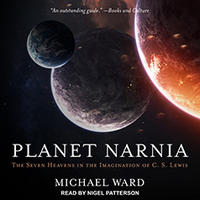 Planet Narnia: The Seven Heavens in the Imagination of C. S. Lewis
by Michael Ward, read by Nigel Patterson
I honestly don’t know if a week has gone by since last January that I haven’t thought about this book (probably, but not many). One of my reading goals for the year is due to it (more on that soon). I don’t know that I accept Ward’s thesis (which I won’t restate here, go click on the links above). I do know that I can’t discount it. I also know I’m not smart enough to go further than that, I also don’t know Lewis well enough to argue one way or the other.
I discovered new depths to the beloved series here, regardless of what I think of Ward’s argument. It inspired me to think about this series more. I also clearly need to re-read the first two-thirds of his Space Trilogy (and to actually read the last third) as well as some of Lewis’ other work.
It’s dense. It’s thorough (at least it seems to be). It’s provocative. It’s absolutely worth your time, and I probably should’ve given it more stars just because of the space it’s taken in my brain since.
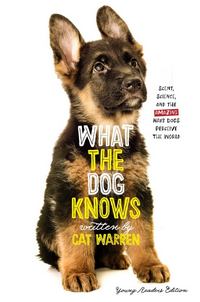 What the Dog Knows Young Readers Edition: Scent, Science, and the Amazing Ways Dogs Perceive the World
by Cat Warren, Patricia J. Wynne (Illustrator)
My original post
I loved the “adult” version of this a couple of years ago, and this is just as good—but edited so that middle-grade readers can tackle this exploration of the life of Working Dogs and their handlers.
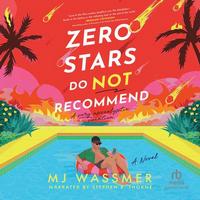 Zero Stars Do Not Recommend
by MJ Wassmer, read by Stephen R. Thorne
I really don’t know if I’d have stuck with this if I read it in print. But the combination of Thorne and Wassmer kept me going–and I’m so glad I did.
It is funny–both in highbrow and lowbrow ways (well, maybe midbrow and lowbrow). The action is great. The satire is insightful and pointed in just the right ways. The emotional beats were just spot-on. The protagonist is…I don’t even know what to say. I listened to an interview with Brett Goldstein about casting Jason Segal in Shrinking because you need someone you can love even when he does horrible things. Well, if they make a movie based on this book, Segal had better be the first call they make. Or Thorne–because he pulled it off. I was pulling for Dan Foster the whole while, even when he was being a whining jerk (or worse)
This was simply pure entertainment from beginning to end–and it easily couldn’t have been.
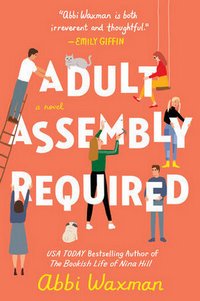 Adult Assembly Required
by Abbi Waxman
My original post
This novel starts in the same bookstore that Nina Hill works in, and she’s around a lot—but this isn’t her book. It’s the story of a woman who moved across the country to start her life over, and the results aren’t what she expected. Adult Assembly Required is funny, it’s sweet, it’s heartwarming, and will make you feel good all over. It’s full of the Waxman magic.
 The Bookish Life of Nina Hill
by Abbi Waxman
My original post
This is a novel filled with readers, book nerds and the people who like (and love) them. There’s a nice story of a woman learning to overcome her anxieties to embrace new people in her life and heart with a sweet love story tagged on to it. Your mileage may vary, obviously, but I can’t imagine a world where anyone who reads my blog not enjoying this novel and protagonist. It’s charming, witty, funny, touching, heart-string-tugging, and generally entertaining. This is the only book on this particular list that I know would’ve found a place on a top ten that included Crime Novels as well, few things made me as happy in 2019 as this book did for a few hours (and in fleeting moments since then as I reflect on it).
 Christa Comes Out of Her Shell
by Abbi Waxman
My original post
One of the worst-kept secrets on this here blog over the last few years is that I’ve become an Abbi Waxman fan, I’m almost guaranteed to rave about her books. And of the four I’ve read, three deserve (and the other was a really strong read, if not rave-worthy). So of course, she’s going to show up here.
The first 87 pages of this book might have been my favorite 87 pages this year. That trend might have continued, but I wrote that note then. Everything just worked.
Christa is more abrasive than your typical Waxman protagonist, which was a nice change. But the rest are just about who you’d find peopleing her other works.
A couple of scenes between a couple could’ve faded to black a little earlier for my prudish taste. But outside of that, I was in hog heaven as I read this.
 The Martian
by Andy Weir
My Review
Very science-y (but you don’t have to understand it to enjoy the book); very exciting; very, very funny. Only book I’ve recommended to more people than Red Rising—I think I’ve made everyone over 12 in my house read it (to universal acclaim). Not sure why I haven’t made my 12-year old, yet.
 Project: Hail Mary
by Andy Weir
Why didn’t I read this the day the hardcover arrived in my mailbox like I’d intended to? I’ll never know. I’ll regret it for quite a while, though. I spent a lot of time castigating myself for that choice as I read this.
But the important thing is that I read this. Yes, Ryland Grace is like a friendlier, less-sweary Mark Watney. But who cares? I’ll live in Watney’s head again. The jumping around in the timeline nature of this book made it different enough to keep it from being The Martian-but-different. The type of calamity that put Ryland out in space by himself is so far removed from a mission to Mars that it’s hard to compare it to.
The stuff on Earth was tense—even as we know how it’ll end (or at least that it’ll result in Ryland in space), you’re gripped. And then once he’s there? It’s just so great.
I won’t even talk about the way the ending hit. It’s just too much for a paragraph. I admit I loved The Martian more, but that’s solely because I read it first, so PHM had to compete with it. Were the situation reversed, I’d be saying that Watney is almost as great as Ryland.
It’s a must-read for SF readers or not. (unless you didn’t enjoy Weir’s other work. Then you’d better stay away.)
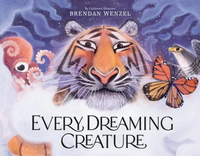 Every Dreaming Creature
My original post
This book about a child’s dream looks and feels like one. It’s comfy, it’s cozy, it’ll help an adult and (hopefully!) a child calm down and think about drifting off to their own dreamland. I cannot say enough about this art.
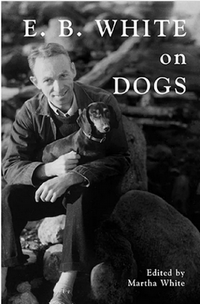 E. B. White on Dogs
edited by Martha White
This is another one I haven’t had time to write about yet. I went in assuming this would be a good read—and got that. This is a collection of essays, shorter pieces, and letters written by White about (or mentioning) dogs. There are some solid gems here—honest laughs, amusing thoughts, and devotion to these animals that humans are so strongly drawn to. Readers of this blog know that I love good writing about dogs, and that’s exactly what we get here. There are a handful of things I’m not sure were worthy of including in this book other than for the sake of completeness, but I’m not going to complain.
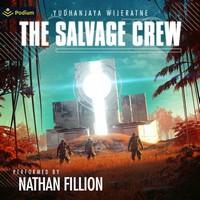 The Salvage Crew
by Yudhanjaya Wijeratne, Nathan Fillion (Narrator)
My original post
This is a very strange SF story about a sentient AI (based on the memories and personality of an engineer). I think I’d have enjoyed the story had I read the novel, but it’s Nathan Fillion that brought it to life. That same charm that makes you like Caleb, Mal, Castle, and Nolan shines forth and makes you believe in this malfunctioning (at least eccentrically-functioning) AI and get invested in the AI’s survival and that of his ragtag crew.
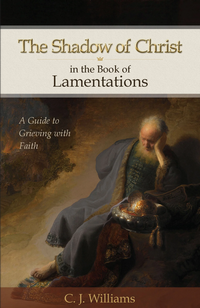 The Shadow of Christ in the Book of Lamentations: A Guide to Grieving with Faith
My original post
I didn’t expect this to come up as an option for this year’s list, I thought I read this a year or two ago, not 11 months ago. But I was glad to look over my notes and post about it again for this post. This is a very accessible and thorough—without trying to be exhausting—look at the book of Lamentations and how it reveals Christ to the reader for his assurance and comfort in trial.
 Cultural Christians in the Early Church: A Historical and Practical Introduction to Christians in the Greco-Roman World
My original post
For Williams, Cultural Christians are “individuals who self-identify as Christians, but whose outward behavior, and, to the extent that we can tell, inward thoughts and motivations are largely influenced by the surrounding culture rather than by their Christian faith and teachings of Jesus.”
There are three driving concerns behind this book. The first is to combat the idea that the Early Church was too spiritual and correct to have to deal with these individuals—and because of that we can have some problematic ideas about the Church today. Secondly, because of our historical ignorance, we can fail to see how the Early Church was influenced by the culture around them. Third, if we see how the Early Church is susceptible to this, and that we are, too—we can more easily see the need to push beyond Cultural Christianity to the genuine article.
Williams does discuss some of the major theologians of the first few centuries of The Church (until around the time of Constantine), but her focus is on everyday believers. To get a real flavor of what life was like we don’t just need the theological tracts and creeds, we need to know what people ate, wore, did for a living, and so on.
We have the same feet of clay as our forefathers did—and the same challenges to overcome. Thankfully, we have the same Savior. This book helps us to remember that—and I encourage everyone to pick this up (and not just so you don’t have to hear me do it in person, as many of my friends have).
This could/should be read in conjunction with the books by Gupta and Presley on this list, they describe some of the same time period in overlapping but distinct ways.
 The Song of Songs
My original post
Yeah, I gave this one only 3 1/2 Stars, but it’s on this list because it stuck with me. It’s been since April and I’ve thought about this book a few times (definitely during the two times this year I’ve read the Song of Songs). Williamson’s wisdom and carefully Christ-centered approach to the book makes these sermons really valuable.
 Sophie and the Heidelberg Cat
by Andrew Wilson, Helena Perez Garcia (Illustrator)
My original post
Very possibly the best and clearest (definitely most succicinct) presentation of the Gospel and the assurance that is promised to those who have been bought by Christ I read this year. It’s an explanation of the first question and answer of the Heidelberg Catechism, which helps a lot. A nice bit of imagination, a dash of whimsy, good art, and a fantastic message. My wife and I have given away so many copies of this so far, it’s kind of mind-boggling.
 City on Fire
by Don Winslow
Don Winslow starts the trilogy that marks his retirement by giving us a retelling of The Iliad set in warring mob families in Providence, RI in 1986. As one does.
I was sucked into this so much that I forgot it was The Iliad and couldn’t understand why one group fell for such an obvious trap (and boy, did I feel dumb when it clicked for me). That’s part of the magic of this book, you don’t realize it’s a story you know that well because Winslow is just that good.
This broke my heart, it made me angry, and it got me talking back to the characters who were doing reckless, impetuous things driven by hubris and misplaced loyalty. And I wanted more. (It’s a good thing there are two more books in the series I should’ve read by now)
Stunningly good work.
 The Force
by Don Winslow
My original post
There may be better Crime Fiction writers at the moment than Don Winslow, but that number is small, and I can’t think of anyone in it. In this fantastic book, Winslow tells the story of the last days of a corrupt, but effective (in their own corrupt and horrible way), NYPD Task Force. Denny Malone is a cop’s cop, on The Wire he’s be “real police”—but at some point he started cutting corners, lining his pockets (and justifying it to himself), eventually crossing the line so that he’s more “robber” than “cop.” Mostly. And though you know from page 1 that he’s dirty and going down, you can’t help get wrapped up in his story, hoping he finds redemption, and maybe even gets away with it.
But the book is more than that. In my original post I said: “This book feels like the love child of Tom Wolfe’s The Bonfire of the Vanities and Nicholas Pileggi’s Wiseguy. You really feel like you understand how the city of New York is run—at least parts of it: the police, elements of the criminal world, and parts of the criminal justice system. Not how they’re supposed to run, but the way it really is. [Winslow] achieves this through a series of set pieces and didactic pericopes.”
A police story, a crime thriller, a book about New York—oh, yeah, possibly the best thing I read last year.
 Free Billy
by Don Winslow, Ed Harris (Narrator)
My original post
Speaking of actors who can do a lot with their voice, here’s Ed Harris. There’s something so natural about his delivery of this short story that I have to wonder why he hasn’t been making audiobooks for years. It’s like Winslow’s words were written solely for him (I’ve heard three of these Audible Originals from this pair and could listen to another 20 this year). This book is a sequel to The Dawn Patrol—one of my All-Time Desert Island books. You get Ed Harris to do the narration on that, and you know I’m going to love it. People who aren’t me are likely going to enjoy it a lot, too.
(sure, there’s part of me that wishes Ray Porter had been used—his work on the audiobook for The Dawn Patrol was stellar, but why be greedy?)
 The Power of the Dog / The Cartel
by Don Winslow
My original post about The Power of the Dog, The Cartel should be up soon.
There’s simply no way I can talk about one of these without the other, so I won’t. This is a fantastic story about a DEA Agent’s obsessive drive to take down one of the most powerful, deadly and successful Mexican Drug Cartels around, as well as a devastating indictment of the U.S.’s War on Drugs. Despite the scope and intricacy of the plot, these are not difficult reads. Despite the horrors depicted, they’re not overwhelming. In fact, there are moments of happiness and some pretty clever lines. Which is not to say there’s a light-hand, or that he ever treats this as anything but life-and-death seriousness. They’re not easy, breezy reads— but they’re very approachable. I don’t know if there’s a moment that reads as fiction, either—if this was revealed to be non-fiction, I would believe it without difficulty. I will not say that he transcends his genre to be “Literature,” or that he elevates his work or anything—but I can say that Winslow demonstrates the inanity of pushing Crime Fiction into some shadowy corner as not worthy of the attention of “serious” readers.
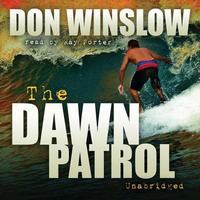 Dawn Patrol
by Don Winslow, Ray Porter (Narrator)
Wow. Despite this being my first and favorite Winslow novel, I wasn’t inclined to grab the audiobook. But then it was on sale and a fellow Winslow-fan recommended Porter’s take on the book. I didn’t know that Porter did audiobooks before this, but he’s on my list to watch for now.
I don’t know how to describe this—I was blown away. I’ve read the book two or three times, but Porter made it feel like it was all new. I was gripped. I was entertained. I was heartbroken. It’s as good as you can ask for an audiobook to be.
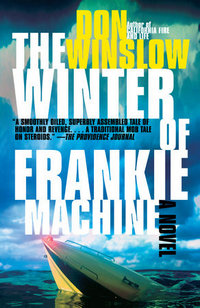 The Winter of Frankie Machine
by Don Winslow
This is typical Winslow—stylish, winning, clever, and frequently violent. Frankie Machine is a retired hitman who finds himself as the target for a new generation of hitmen over something that happened years before. Frankie Machianno has to put his businesses on hold and return to his old life to keep his family safe—and to keep himself alive—while finding out exactly why someone wants him dead and convincing them (using whatever necessary means) to leave them all alone once and for all. It’s such a strong, fast-moving, ride that the pages melt away while you read.
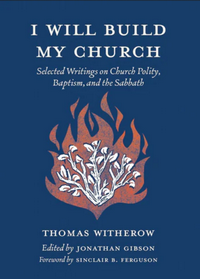 I Will Build My Church: Selected Writings on Church Polity, Baptism, and the Sabbath
by Thomas Witherow, Edited by Jonathan Gibson
My original post
Yes, this is kind of a cheat—because I have read one of the three works (plus a lengthy biographical essay) in this collection. But it’s a self-imposed rule, so I’m not going to be that precious about it (this once). Also, reading it in the midst of all this other material gave The Apostolic Church: Which Is It? a different vibe (for lack of a better term). It’s not just a defense of Presbyterian Church Polity, but it’s part of an apologetic for Presbyterian Distinctives as a whole.
And that’s what Winslow’s mission was—to present Presbyterianism as not just another flavor for Irish Protestants to pick, but one that has a message, a conviction about their distinctives, and Biblical reasoning—not just whim or tradition—behind them. Sure, some of it will feel dated to contemporary readers. And it should—but that doesn’t make any of it bad. Nor does it disprove any of Winslow’s arguments (in fact, some of our contemporary situations would lead the reader to say, “he was right, if we do X, Y will follow.”)
Z
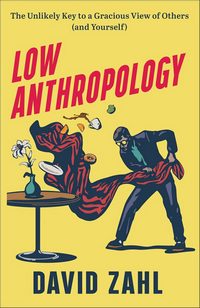 Low Anthropology: The Unlikely Key to a Gracious View of Others (and Yourself)
by David Zahl
My original post
Zahl’s concern is the way we think about human nature—our anthropology—not in some academic sense (or just that), but how, individually, what we believe about human nature impacts the way we live and think. A Low Anthropology remembers that we are dust, we are broken, we suffer, in short—we aren’t perfect. This is an engaging, frequently humorous, and grace-filled look at human frailty and how remembering we are that way (and that others are, too).
Carol
Whew! Fabulous list! What a perfect way to celebrate 12 blogging years! I love the idea of having a favorite and best reads list in one place! Congrats on your milestone blogging achievement! Here’s to 12 more! 🥂
We have 4 definite places our reading tastes overlap! No Two Persons (due for a reread); A Man Called Ove (by the master of characterizations!); The Answer is…(because I’m a die hard Jeopardy fan!); and PHM (loved it more than Martian because of the themes of friendship and sacrifice…and less swearing! And I read it first 🤷♀️… the audio format is fabulous if you ever attempt a reread….eager for the movie)
HCNewton
Is that all? Huh, would’ve thought there was a bit more overlap.
I think Weir made a smart move in keeping the PHM protagonists from swearing–it really prevented him from being Watney 2.0 (and it was amusing to read his substitutes)
Carol
I read a Weir interview where he said that when he realized so many high school age kids were reading the Martin, he decided to dial down the profanity in PHM.
HCNewton
LOL. Great story. I thought it was just a smart character move. I like the fact that it was both.
wittysarcasticbookclub
Wow, what a list! And what an accomplishment! MEGA congratulations on twelve years! Yours was one of the first blogs I followed and it’s still one of my very favorite blogs.
HCNewton
Awwwwwwwww. Literally blush when I read this.
KWHR
Congratulations on consistently blogging for 12 years!
HCNewton
Consistency is hopefully the key to quality one day.
Gina
Congrats! What a fabulous post to celebrate your milestone.