Author: HCNewton Page 101 of 609

LITERARY LOCALS: A Q&A About Writing in Idaho with Christi Nogle

Literary Locals logo
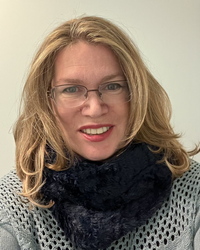
Christi Nogle is another one of those writers who took me introducing myself with “I’m probably not going to like your [mostly horror] stuff” with a smile. I think if I read horror, I’d have a blast going through her backlist. She’s got some events coming up in the next couple of weeks (dates are listed below). Local readers should make a point of going to meet her.


Before we get into things, why don’t you give the reader a brief introduction to you and your work.
Hi! I’m a fiction writer, focusing on horror and horror-adjacent work. You can follow my writing journey at christinogle.com and at linktr.ee/christinogle

My first novel, Beulah from Cemetery Gates Media, won the 2022 Bram Stoker Award® for Superior Achievement in a First Novel and was one of five Shirley Jackson nominees in the Novel category for that year. The book has also been translated to Spanish by Dilatando Mentes Editorial. Beulah is a ghost story set in a fictional town of Beulah, Idaho. I’ve written two more novels also set in Idaho, which I hope will be available soon.  

I‘ve had almost a hundred short stories published in a variety of magazines, anthologies, and my fiction collections from Flame Tree Press: The Best of Our Past, the Worst of Our Future, which is a current 2023 nominee in the Bram Stoker Awards®, Promise: A Collection of Weird Science Fiction Short Stories, and One Eye Opened in That Other Place.  

I’ve co-edited two anthologies of horror, science fiction, and fantasy stories: Mother: Tales of Love and Terror with Willow Dawn Becker and Wilted Pages: An Anthology of Dark Academia with Ai Jiang, and I work as an Associate Editor for the horror fiction podcast PseudoPod.

Are you a native Idahoan? What is it about Idaho that keeps you here?
I moved to Idaho at the age of ten and have lived here ever since. Previously, my family moved around the country a lot.

I’ve stayed in Idaho because my family lived here, and now that my family members have passed, I have wanted to move closer to the ocean, but suppose I stay here because this still feels like my only home.

“Feels like my only home.” Is possibly the best answer I’ve received to this question.

Are you tied into some sort of local author/bookish group/culture? If so, tell us about it and how it helps you as an author. If you’re not, is there a reason for it?
Yes, I have a wonderful writing group here in Boise, the Sawtooth Alliance of Women Writers. [That name is a great way to say you’re an Idaho-based group without using the word Idaho. Also, I dig the initials.] I’ve known some of the members since college in the nineties and have been colleagues with others for almost that long, so it is a very comfortable and supportive group. The members of this group were among those who first encouraged me to send my work out for publication, and it has been wonderful to share my writing news and celebrate theirs each week. I’ve been meaning to check out the creative writing group at my local library, too, but so far I haven’t happened to be free during their monthly meeting time.

What kind of events in the area do you attend—either to sell/promote your books or to network with authors? Are there any outside of this area that you hit regularly and wish we had something like it here?
Just lately I have begun appearing at local events such as library book fairs, the library’s ComicCon event, readings, signings at Rediscovered Books and Barnes & Noble, and the like. One of the most successful events for me was a reading at the Star library hosted by Tina Johnson—the attendees were so receptive and kind! Krampus Con Bizarre Bazaar at ABU Games in Boise was fantastic as well. The well-attended event featured comics, art, books, games, and cosplay, and as you would imagine there were a good number of people open to talking about horror. On June 15, I will be signing at Rediscovered Books 11:00-12:30. June 29, I have plans to do a signing at local author Brian McBee’s store, Kuna’s Book Habit from 12-2:00.

I desperately wish there were more of a local horror community here and am always envious when I see that fellow horror writers can go to regular horror events in New England, the Pacific Northwest, and California. I’ve wanted to start a local group for some time, and I ran a workshop through The Cabin called “The Art of Dread: Crafting Contemporary Horror” in hopes of meeting and cultivating some horror friendships here in Idaho. I then began looking for other Idaho horror writers on Facebook in hopes of starting an Idaho Horror Writers Association (HWA) chapter. There simply weren’t enough people, but just recently, the Wyoming-based horror writer Josh Hanson and I were able to open a chapter of the HWA for the “Inland North States” region including Idaho, Montana, Wyoming, and North and South Dakota, so I hope that will lead to more regional opportunities as well as more local and semi-local friendships. The HWA has been the most important organization of the several I belong to, as it offers opportunities to mentor and be mentored, other fascinating volunteering opportunities, and has put me in contact with some of my favorite writers. If any local writers reading this are thinking of joining the HWA, please reach out to me through my website contact form or through any social media and I’ll be happy to help you join our chapter.

What’s the breakdown of your audience—do you have a strong local base, or are your readers from other parts of the world? 
My local friends read my work, and I’m trying to meet more readers locally, but most of my readers are from other parts of the U.S. and the U.K. Due to the translation of Beulah, I am also happy to have some readers and reviewers in Spain. I don’t read Spanish, but I can read their comments and reviews due to online translation, and it’s wonderful to see the response to the book.

Do you think there are particular challenges or advantages to being a writer in the Treasure Valley? (possibly both)
It’s been a bit challenging for me to be based here instead of in one of the places mentioned above that have a greater number of horror writers and readers. That said, there are some generous organizations in the area that have helped me, such as our local literary center The Cabin and the Alexa Rose Foundation—I’ll be in the Alexa Rose residency at The Common Well starting in November, and I hope to be offering a new workshop though The Cabin soon. We have a great library system here, and we have the wonderful independent bookstore Rediscovered Books.
With the Inland North States chapter, you’re on the front line of addressing one of the biggest challenges. I’ve had a few other authors talk about “maybe” starting something or wanting something that meets their genre/subgenre/specialty—it’s good to see that someone making progress in that direction, too.

Do you bring Idaho (or some sort of Idaho-sensibility, assuming one exists) to your work? Whether or not anyone else sees it, can you look at some aspect of your writing and think “That’s Idaho” or “I would do ____ differently if I was a Kentuckian or from Illinois?”
Yes, I think you would recognize a lot of the natural features of Idaho in my work, such as climate, the plants that grow here, the landscape. My settings are often rural or semi-rural and are drawn from the small towns where I’ve lived in Idaho as well as the country settings in Illinois and Indiana where I lived as a child.

One final question, is there a book (or two…or 18, if you get really carried away), that embodies Idaho/the Idaho spirit to you to recommend to my readers? 
There’s no one book that expresses everything that would need expressing about the state, but Educated: A Memoir by Tara Westover comes to mind. Westover’s work with theme of isolation really spoke to me.
Great pick.

Thanks for doing this–I hope you enjoyed it!


Literary Locals logo

MUSIC MONDAY: Beautiful World by Colin Hay

Music Monday

Music Monday's originated at The Tattooed Book Geek's fantastic blog and has shown up hither, thither, and yon since then.

Irresponsible Reader Pilcrow Icon

The Secret Lives of Booksellers and Librarians (Audiobook) by James Patterson and Matt Eversmann: BTS of the Book Connecting Scene

The Secret Lives of Booksellers and LibrariansThe Secret Lives of Booksellers and Librarians:
Their Stories Are Better Than the Bestsellers

by James Patterson and Matt Eversmann; Read by: Tom Force, Nancy Peterson, Jenn Lee, Jennifer Pickens, Amy Jensen, Deanna Anthony, Jane Oppenheimer, Susan Hanfield, Marni Penning, Daniel Henning, Rob Reider

DETAILS:
Publisher: Hachette Audio
Publication Date: April 8, 2024
Format: Unabridged Audiobook
Length: 7 hrs., 55 min. 
Read Date: April 14-16, 2024
Buy from Bookshop.org Support Indie Bookstores

My favorite thing is helping people. Handing someone a book with the power to change their lives is magical because, oftentimes, it does.

What’s The Secret Lives of Booksellers and Librarians About?

Typically, when I just use the Publisher’s Description, it’s because I’ve floundered around and can’t come up with a description that I like or because I just don’t care enough about the book to put the effort into it. this time, however, it’s because I really like the way that this copywriter put it (and maybe I’m a little worried that I’d end up plagarizing it a bit if I tried):

To be a bookseller or librarian…

You have to play detective.

Be a treasure hunter. A matchmaker. An advocate. A visionary.

A person who creates “book joy” by pulling a book from a shelf, handing it to someone and saying, “You’ve got to read this. You’re going to love it.”

Step inside The Secret Lives of Booksellers and Librarians and enter a world where you can feed your curiosities, discover new voices, find whatever you want or require. This place has the magic of rainbows and unicorns, but it’s also a business. The book business.

Meet the smart and talented people who live between the pages—and who can’t wait to help you find your next favorite book.

Overly-Romanticized?

Yes, I think so. Now, were you to ask me if I cared, I’d give you a big fat “no.”

Many librarians—public or school—in the book were involved in the recent efforts to restrict access to certain books. Something that’s important, to be true. And some of them had suffered because of it—but listening to this felt sanitized.

The booksellers, on the other hand, particularly those who owned/worked in independent stores didn’t seem to suffer or have many hardships. I mean, the bookstore in The Bookish Life of Nina Hill had a harder go of it than most of these. I know the point of this book isn’t to be a no-flinching look at the hard times involved in bookselling (you can look at things like Shaun Bythell’s or Oliver Darkshire’s books for the grimmer-side).

This book is designed to be a celebration of those people who’ve devoted their professional lives to connecting people with books—for a variety of reasons. So, sure, it doesn’t tell the whole story, just the good parts. And frankly, that’s entertaining enough—and given a lot of the dark tales that could be told about librarians and booksellers right now, I’m willing to settle for just the good bits while we can.

How Was the Narration?

It was really well done—if you just take a glance at the credits of the narrators, you can understand why. I’m not sure which narrator did which part of the book, nor am I sure how often I heard the same narrator reading different chapters—I honestly couldn’t tell. I call that a win in my book—they convincingly embued each bookseller or librarian with just the right amount of personality that I might as well have been listening to recorded interviews with the individuals behind the stories.

So, what did I think about The Secret Lives of Booksellers and Librarians?

I figured this would be a pleasant book, but I didn’t expect much beyond that. I’m pleased to have been wrong.

This is an inspiring and entertaining look at the people who connect others with the books they want or need—whether they realize they want or need them or not. For a booklover, this is great to hear. They sound like what you want them to sound like.

The big problem with this book is that you’re going to fight the impulse to quit your job and go get your MLS or start working as a clerk in a bookstore as soon as you finish (or by the mid-point). As downsides go, it’s a pretty tame one, but it’s there.

You’ll have a fun time with this, give it a shot.


4 Stars

This post contains an affiliate link. If you purchase from it, I will get a small commission at no additional cost to you. As always, the opinions expressed are my own.

Irresponsible Reader Pilcrow Icon

Strange Religion by Nijay K. Gupta: People Say I’m Strange, Does It Make Me A Stranger…

Strange ReligionStrange Religion:
How the First Christians Were Weird, Dangerous, and Compelling

by Nijay K. Gupta

DETAILS:
Publisher: Brazos Press    
Publication Date: February 27, 2024
Format: Paperback
Length: 216 pg.
Read Date: May 12-19, 2024
Buy from Bookshop.org Support Indie Bookstores

I set out to spend a few years studying ancient religions in general and Roman religion in particular, and I came to a clear conclusion: by and large, early Christians were weird and were dangerous to many, and yet clearly some found this religion attractive and compelling.

This book is not a handbook for how to be Christian today or how to create a “weird” church. Largely, I see the work I have done as descriptive—these are the first Christians, warts and all. They were not bucking conventions and pop religion to be special or different. In their best and most genuine moments, they were simply following Jesus, like mice blindly chasing after the pied piper. As they did so, they deviated from the norm of religion, and, whether they were intend. ing to or not, they stood out in society. This deviation from the norm is one way of defining what it means to be “weird. Another way is simply to say that “weird” things belong in another category. l am hoping that an extended investigation of the belies, practices, and ethos of the early Christians will clarify their origins and foundations, and provide insight into authentic Christianity today.

What’s Strange Religion About?

Gupta’s observation/conclusion is that early Christians were strange or weird when compared to others in their culture—thanks to their beliefs, ways of acting, and ways they wouldn’t act (for starters). They didn’t set out to be strange, to rebel against the culture, or anything like that. Actually, their goals involved being good citizens and living quiet lives—but their religious convictions set them outside the norm, and they stayed there for a good long time.

While Gupta doesn’t shy away from the occasional application to the contemporary Western (particularly American) Church, by and large, this is a descriptive book. He just talks about Roman culture in certain areas and then talks about how Christians were oddballs in the midst of all that. As he says above—this isn’t an attempt to make Christianity weird again, or anything like that—just to remind us how out of touch with the culture we were at one point.

Some of the areas he covers are: how the Romans of the first couple of centuries saw Christianity as a superstition; some early Christian beliefs—like believing they were possessed by God’s Spirit, their reckoning of the meaning of Time, and wanting to be associated with a horrible criminal in the first place (only the worst of the worst were crucified, who’d want to be associated with someone like that?); worship practices; family practices; and the way they treated others.

Belief

Romans sometimes argued about the gods—not over personal “beliefs” but over what they thought was true of the gods, But the Christians took their views to a whole other level, “believing” things that seemed absurd, disturbing, and even impossible. This may be one reason that Christians originally referred to themselves as “believers.” Today, we take for granted that religion is all about “faith” and “belief.” We have “faith” statements, “faith” traditions, and “interfaith” dialogue. But in the ancient world, there wasn’t this natural association between religion and faith language.

This is one of the biggest differences—one that shapes a lot of the rest. The book as a whole comes from Gupta’s students asking, why early Christians called themselves “believers,” what did the other followers of other religions call themselves? And well, one of Gupta’s findings was that Christians were more than a little strange by focusing on faith and belief. It was just foreign to the status quo.

The priests of public Roman religion were not chosen for their piety. They were expected to be experts in performing rituals. In fact, they had to be masters of religious arts so as to maintain the pax deorum*. It was a bit like being a professional bomb-disposal expert. It really doesn’t matter what you believe about government, law enforcement, or justice as long as you are good at defusing bombs. French historian and archaeologist Robert Turcan refers to Roman ritual worship as “Taylorism”—a form of scientific management. Frederick Winslow Taylor (1856-1915) developed a theory of management that was meant to produce efficient and effective workflow. Taylor offered a kind of mathematical formula to get the most out of human and industrial resources. Turcan argues that this was the mentality of the Romans—efficient and “successful” ritual performance to keep the gods content and happy. Roman priests and other cultic personnel had to provide meticulous observance of time-honored rituals.

He goes further:

There was a pervasive Roman understanding that persona beliefs, best intentions, and heartfelt emotion did not enhance religion. What mattered was what the gods actually called for—sacrifice and compliance. The early Christians had ther own practices and rituals, of course…But one thing we learn when we read the New Testament is that these Jesus people were absolutely obsessed with belief.

Now, Gupta spends twenty pages making that case, I just gave a brief overview—but even here, you can get an idea of how he goes about talking about each topic addressed.

* “Keeping Peace with the Gods.” Gupta describes the function of the sacrifices and rituals as maintaining this peace. It’s most of the content of the first chapter, and the basis for most of the rest of the book.

Pobody’s Nerfect

The last chapter* is entitled “The Christians Were Not Perfect”—some of this covers similar ideas as Nadya Williams’ book, Cultural Christians in the Early Church, but not all of it.

I really appreciated this chapter for a couple of reasons: 1. It’d be easy to take Gupta’s material and walk away with the idea that the early Christians had it all together (something that Williams and Gupta really wanted to counter), and 2. Gupta hits on some things that a lot of people don’t cover along these lines.

That said, it’s not a perfect chapter—and maybe it’s the most obviously imperfect chapter—I’m not sure I’m willing to buy into all of his examples from the Scriptures showing those imperfections (actually, there are some I’m sure I don’t buy).

But the chapter as a whole is a nice, refreshing reminder about the feet of clay that even the best of us possess.

* There is a conclusion following it, but it’s not long enough (or something) to be considered a chapter—at least not a numbered one. I wanted to stress that because I’ve complained recently about too many books not having a conclusion.

So, what did I think about Strange Religion?

One thing I haven’t talked about yet is that one of the things that Gupta focuses on is that despite—or maybe because of—the strangeness of Christianity to the Romans of the first and second centuries is that it was attractive to them. The “freaks” kept drawing more and more people to them, converting them to the weirdness. Again—not because they were strange, but because following Jesus Christ made them that way.

As a reader, not only did I appreciate the material, but the way that Gupta presented it. He built his arguments carefully and clearly (and one assumes accurately). Throughout all of this Gupta’s sense of humor shines through—keeping the text engaging as it educates. I’m always going to say good things about a book that does that (as long as the humor doesn’t detract from the serious material), and Gupta got this part right.

This is really one of the better books that I’ve read this year. From the thesis to the conclusion, and most points in between, Gupta painted a much-needed picture of early Christianity and Christians and how they related to the culture around them. It’s encouraging to remember that’s the natural state of the Church and one that we shouldn’t find ourselves overly-worried to be in again. I encourage Christians and those curious about our early history to give it a read.

I know that my wife has another book by Gupta on her shelves, I’m probably going to have to borrow it soon.


4 Stars

This post contains an affiliate link. If you purchase from it, I will get a small commission at no additional cost to you. As always, the opinions expressed are my own.

Irresponsible Reader Pilcrow Icon

Saturday Miscellany—6/8/24

I’m still trying to figure out my energy levels and how to manage them during my recovery, so I slept through most of my typical social media hours this week (and more of my reading/blogging hours than I’m comfortable with). This resulted in a skimpy list this week. But the show must go on, I hear. (and what I do list is worth your time, I think)

Odds ‘n ends about books and reading that caught my eye this week. You’ve probably seen some/most/all of them, but just in case:
bullet It’s Time We Added Full Credit Pages to Books: Maris Kreizman on the Importance of Acknowledging the Labor That Goes in a Single Title—I’d be down for that.
bullet Five Years On: Reflecting on Dead Inside—Noelle Holten looks back on her debut’s anniversary. (it was such a good read, if you haven’t tried it yet, you really should)
bullet Disabled and Neurodivergent Books out in 2024—a handy list for those who’d be interested
bullet My Problem With Audiobooks—I absolutely get this.
bullet On Mimesis and Stories—another batch of good thoughts from Peat Long
bullet On My Radar: May 2024—Literary Escape’s Monthly Wrap-up of posts and reviews we all should’ve read last month.

To help talk about backlist titles (and just for fun), What Was I Talking About 10 Years Ago Week? (and a fun week it was)
bullet No Colder Place by S.J. Rozan—the fourth Lydia Chin/Bill Smith
bullet The Lives of Tao by Wesley Chu—it was that long ago I read this?
bullet Kill Fee by Owen Laukkanen—I miss this series…
bullet Robert B. Parker’s Cheap Shot by Ace Atkins—Parker. Atkins. ’nuff said.
bullet Night Broken by Patricia Briggs—Mercy Thompson’s 8th adventure
bullet I also spent some time talking about some Puritan works Heaven on Earth by Thomas Brooks—an all-time fave—and The Christian’s Great Enemy: A Practical Exposition of 1 Peter 5:8-11 by John Brown
bullet I mentioned the release of strong>Those Who Wish Me Dead by Michael Koryta and the fun compilation, strong>FaceOff edited by David Baldacci

This Week’s New Releases that I’m Excited About and/or You’ll Probably See Here Soon:
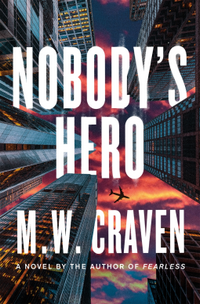
bullet The Mercy Chair by M.W. Craven—the 6th Poe and Tilly novel, reportedly the darkest. No small feat there. Life is preventing me from getting to it at the moment, so I’m bit cross with life. (apparently available in the U.S. in September for those who aren’t addicted enough to order from overseas.)
bullet Traditions of Courage by Jeffrey H. Haskell—the 7th in the Grimm’s War series, and I’m not going to read anything about it, because I’m now 3 behind. Ugh.

Superimposed on a picture of full bookshelves, 'The Odd thing about people that have Lots of Books is that they always want More.'

BOOK SPOTLIGHT: The Legendary Mo Seto by A. Y. Chan

I’m very pleased today to welcome The Write Reads Spotlight Blitz for this nifty-looking MG novel by A. Y. Chan, The Legendary Mo Seto! It came out this week, so you have no excuse not to run out and grab it so you have something to read this weekend!

Book Details:

Title: The Legendary Mo Seto
Publisher: Aladdin
Format: Hardcover/Ebook
Length: 320 pages
Publication Date: June 4, 2024
The Legendary Mo Seto Cover

About the Book:

Mo Seto, martial arts movie star! Has a nice ring to it doesn’t it? If only there wasn’t a height restriction to audition. But 12-year-old Modesty (Mo) Seto has never let her height get in the way before, not when she became a black belt, or when she fought the meanest boy in her class, and she’s not going to let it stop her this time! Now if only she can figure out a way to grow five inches and fool everyone at the auditions… Join Mo on an adventure (and audition) of a lifetime and find out if powerful things really do come in small packages!

Why I wrote this book – A. Y. Chan

I started training in taekwondo when I was six and, growing up, I longed to read books about kick-butt girls doing kick-butt things, but there really weren’t as many as I had hoped for. The idea for this book has been percolating in my head ever since. I wish to inspire kids not only to be brave and never give up, but also to be proud of who they are.

My inspiration for my story came from a real city-wide competition, where, like Mo, my protagonist, I faced off against a bigger, stronger boy during the final match. At that time, pairings were determined by belt-level and age, not by weight class. I ended up losing. I remember feeling so crushed by my second-place finish, and I kept replaying the fight in my head, wondering what I could have done differently.

I was also inspired by martial arts movies—especially the stunt actors and body doubles, and the thugs in the background serving as punching bags for the protagonist. As an introvert, I never wanted to be the main character…but to get beat up by the main character? That seemed awesome. After achieving my black belt in Taekwondo, I explored other types of martial arts and came away with an appreciation for the similarities and differences in the different forms, and how each has a unique philosophy linking the physical to the mental (and spiritual). Martial arts is about discipline and practice, but it’s also about respect (for oneself and for others) and integrity. And, of course, indomitable spirit, the all-encompassing light within us all that shines with determination and hope and an unshakable optimism for a brighter tomorrow.

Best,
A.Y.

Book Links:

Amazon Canada ~ Amazon US ~ Amazon UK ~ Simon & Schuster ~ Goodreads ~ Publishers Weekly review ~ Kirkus Reviews review ~ The Children’s Book Review

Mo Seto Action Pose

About the Author:

A. Y. ChanA.Y. Chan is the author of The Legendary Mo Seto, a story about a 12-year-old female martial artist who auditions for a movie role opposite her favorite martial arts movie hero—only to find out she’s too small for the role. Growing up in Canada’s Greater Toronto Area, A.Y. read all the middle grade and young adult books she could get her hands on. To this day, those remain her favorite genres. After achieving her black belt in Taekwondo, she explored a range of other types of martial arts, and she draws upon her experiences in learning new techniques and philosophies to inspire her writing. These days, she continues her martial arts training some mornings, writes in the afternoons, takes long walks to muddle out plot points, and falls asleep reading.

Author Links:

Twitter/X ~ Instagram ~ Facebook ~ Website ~ The Children’s Book Review Interview

Mo Seto Director Chair
My thanks to The Write Reads for the invitation to participate in this tour and the materials they provided.

Moonbound by Robin Sloan: The White Stripes Save the World (but not really)

MoonboundMoonbound

by Robin Sloan

DETAILS:
Publisher: MCD
Publication Date: June 11, 2024
Format: eARC
Length: 432 pg.
Read Date: May 21-27, 2024
Buy from Bookshop.org Support Indie Bookstores

Let’s Get This Out of the Way Right Now

This is not like the Robin Sloan books you may have read. This is not Mr. Penumbra’s 24-Hour Bookstore (even if everything I’ve seen from the publisher says it’s part of the Penumbraverse) and this isn’t Sourdough. If you’re looking for something like that, I can’t help you by talking about this book.

And yet…some of the same themes, the same kind of ideas, the same oddball ways of thinking, the same characters that will fascinate and (sometimes) frustrate you, the same quality of writing are present. So it is like the Robin Sloan books you may have read. But not really.

What’s Moonbound About?

Maaaannnn….I don’t know, I really don’t know. In case those semi-contradictory paragraphs above didn’t give you a clue. Also, to really talk about it would involve a few pages on my part and several spoilers.

Let’s start with this: the events of the book begin in the year 13777. The number of things that the human race has gone through—cultural, technological, societal, scientific, and political changes (revolutions, really) are impossible to describe. Civilizations have come and gone—the planet Earth looks little like it does now, and humanity isn’t much like it is now (except humans are going to be human—it’s like Doctor Who‘s far future episodes that way—just without the space travel). Even the Moon—the Moon, for crying out loud—isn’t the same.

In William Goldman’s The Princess Bride (and the movie does something very similar), Goldman talks about his father coming in while he’s sick to read him a book by S. Morgenstern.

“Does it have any sports in it?”

“Fencing. Fighting. Torture. Poison. True Love. Hate. Revenge. Giants. Hunters. Bad men. Good men. Beautifulest Ladies. Snakes. Spiders. Beasts of all natures and descriptions. Pain. Death. Brave men. Coward men. Strongest men. Chases. Escapes. Lies. Truths. Passion. Miracles.”

“Sounds okay,” I said and I kind of closed my eyes.

Similarly, let me tell you a little about what Moonbound contains:
Knights. Brothers. Talking swords. Dragons. Friendship. Robots. Bogs (which are very different than swamps). Raiders. Wizards. Bees that give direction. Gleaning coffee shops. Climate Warrior Beavers. Constructive debates (literally). Genetic engineering. Legendary warriors. Forty-three million dimensions.* Pizza rolls. Trash-pickers.

* Not really like Marvel’s Multiverse, more like the mathematical concept of three-dimensional or four-dimensional space, but much, much more expanded.

I’m not sure that’s helpful, but it’s something.

We begin when our protagonist, a boy named Ariel de la Sauvage, finds the remains of one of the greatest warriors in human history. This discovery ends up starting a chain of events that will lead to Ariel being on the run from the Wizard who rules the valley Ariel and his brother have grown up in—not just grown up in, but have never left. They have no knowledge of anything outside this valley—if anything exists beyond it, really. But to overthrow the Wizard and save his brother, Ariel will have to go into the wider world and learn about it. He needs experiences that his valley cannot give him. Equipped with this education and experience, Ariel should be able to confront the wizard and rescue his brother and the rest of the people he grew up surrounded by.

Oh, and he’s guided throughout this by an AI who has the accumulated knowledge of most of human history and is currently residing in a microorganism that has implanted itself in Ariel’s body.

Clear as mud, right?

Story

More than anything else—and there’s a lot of “anything else”—this is a novel about Story. The power of story to shape reality, to shape our expectations, the way we go about our lives, and the way we need others to go about their lives. The stories we tell ourselves about ourselves. The stories we tell others about ourselves. The stories that others tell us about themselves—and us. The stories that societies, governments, and other groups tell us and others about themselves and us.

Lastly, and maybe most importantly, Moonbound about the way we can re-write our stories, the way we can take control of them (once we realize the story being told) and change things.

So, what did I think about Moonbound?

That’s a great question, and one I’ve been chewing on for more than a week now. I want to read this at least two more times before I think I’ll be ready to answer that. Maybe the fact that I want to read this at least two more times in the next year or so gives you and me both a hint about what I think about it.

I haven’t been able to stop thinking about this book since I started reading it two weeks ago. Part of that is to think about what I read and decide what Sloan was doing and what I thought about it. Another part of that thinking is just reveling in just how strange and wonderful it was.

While reading, when I was able to stop thinking things like, “what is going on here?” or “What is Sloan trying to accomplish?” and just enjoy it and get caught up in the story—I was able to lose myself in the book. And that got easier the further into the book I got. But I also spent an awful amount of time just trying to suss things out and overthinking things.

I don’t think that’s a bug when it comes to this book—it’s a feature. Sloan has given the reader so much to take in, that if you’re not chewing on almost every idea, you’re doing the book and yourself a disservice. But it’s also the kind of book you can relax with and enjoy. At a certain point in the book, Ariel learns to lay back and float in water—which is both one of those things that takes effort and can be incredibly relaxing at the same time. Like him, the reader has to learn how to “float” in this book. And when you do, you’ll be rewarded. How greatly you’ll be rewarded, I’m not sure—but you will be.

I’m not going to give this a star rating—sorry if that’s what you’re looking for. I just don’t know (in case I haven’t used that phrase enough yet in this post)—I can both defend every rating from 3-5 Stars, and I can wage a better argument against each of those. I encourage readers who find anything I’ve rambled about above intriguing, fans of Sloan, or people who read what the Publisher’s site says to give it a shot. And then let’s get together and talk about it, because I’d love to bounce some spoilery ideas off of someone.

Disclaimer: I received a copy of this book from Farrar, Straus and Giroux via NetGalley—thanks to both for this.

This post contains an affiliate link. If you purchase from it, I will get a small commission at no additional cost to you. As always, the opinions expressed are my own.

Irresponsible Reader Pilcrow Icon

WWW Wednesday, June 5, 2024

Yesterday, I told some people that anything I posted this week was a result of me being unable to get anything written about Robin Sloan’s Moonbound, and while this is a regular post for me—it’s still true. I’m taking time away from staring at an empty text file to put this together. Hopefully, there’s another post today, I really need to get something out there about this.

This meme was formerly hosted by MizB at A Daily Rhythm and revived on Taking on a World of Words—and shown to me by Aurore-Anne-Chehoke at Diary-of-a-black-city-girl.

The Three Ws are:
What are you currently reading?
What did you recently finish reading?
What do you think you’ll read next?

Seems easy enough, right? Let’s take a peek at this week’s answers:

What are you currently reading?

I’m reading Bad Actors by Mark Pepper and am listening to The Ink Black Heart by Robert Galbraith, read by Robert Glenister on audiobook.

Bad ActorsBlank SpaceThe Ink Black Heart

What did you recently finish reading?

I just finished Craig Johnson’s First Frost and the last audiobook I finished was Dark Days by Derek Landy, read by Rupert Degas.

First FrostBlank SpaceDark Days

What do you think you’ll read next?

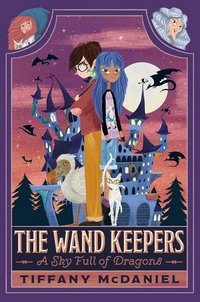
My next book should be the new Poe and Tilly novel, The Mercy Chair by M.W. Craven. It’s probably my most anticipated read of the year, and I cannot wait to open it up. My next audiobook should be I’m Afraid You’ve Got Dragons by Peter S. Beagle, read by Shaun Taylor-Corbett.

The Mercy ChairBlank SpaceI'm Afraid You've Got Dragons

Catch-Up Quick Takes: Some Recent Non-Fiction Listens

It’s (beyond) time for another batch of Quick Takes—this time focusing on non-fiction audiobooks that I’ve enjoyed so far this year. As always, the point of these quick takes posts is to catch up on my “To Write About” stack—emphasizing pithiness, not thoroughness.


The Other Family DoctorThe Other Family Doctor:
A Veterinarian Explores What Animals Can Teach Us About Love, Life, and Mortality

by Karen Fine

DETAILS:
Publisher: Random House Audio 
Publication Date: March 14, 2023
Format: Unabridged Audiobook
Length: 9 hrs., 2 min. 
Read Date: February 5-9, 2024
Buy from Bookshop.org!

(the official blurb)
In my experience, your typical Veterinarian memoir focuses on their patients and weaves in a little about the Vet themselves—their education/training (for sure) and then some other material from their lives. This goes the other way—it’s primarily about Fine and her life—her training, her family (going back to her grandfather), her background, her pets, her spouse, her health, and so on—and how that impacts/shapes how she treats her patients and deals with their families. It’s just a matter of emphasis. The subtitle would be better “A Veterinarian Explores What Animals Have Taught Her…” Still interesting, just a different emphasis to the book than you’d think from the title/subject.

Fine does a good job on the narration front, you really wouldn’t know her day job isn’t as a performer/narrator.
3 Stars

Raw DogRaw Dog:
The Naked Truth About Hot Dogs

by Jamie Loftus

DETAILS:
Publisher: Macmillan Audio 
Publication Date: May 23, 2023
Format: Unabridged Audiobook
Length:  9 hrs., 38 min. 
Read Date: April 12-15, 2024
Buy from Bookshop.org!

(the official blurb)
The description of a COVID-era road trip taken by a writer and her significant other (until they broke up toward the end) touring through as many states as they could, tasting and experiencing the most notable Hot Dogs for each state along the way. Interspersed with the description of her/their trip and the hot dogs they encounter along the way are looks at the history of the hot dog, its culinary and cultural predecessors, the way they’re made (both pre and post-Upton Sinclair), how the companies behind them treat their employees, the myth and truth of the Costco Dog pricing, competitive eating (with a focus, obviously on hot dog eating competitions) and more.

Informative, entertaining—frequently funny, also frequently a little more “blue” than you’d expect (but perhaps shouldn’t based on the title)—eye-opening, and will make you crave a handful of that most American of foods. This is a blast. Loftus nails the narration.
3 Stars

SupercommunicatorsSupercommunicators:
How to Unlock the Secret Language of Connection

by Charles Duhigg

DETAILS:
Publisher: Random House Audio 
Publication Date: February 20, 2024
Format: Unabridged Audiobook
Length: 7 hrs., 28 min. 
Read Date: March 21-26, 2024
Buy from Bookshop.org!

(the official blurb)
On the one hand, this is the least interesting book that Duhigg has written, unusually for him, the anecdotes along the way didn’t capture me like they usually do. Maybe that says more about me and my headspace in late March of 2024 than it does Duhigg (it likely does).

That said, it’s the most easily applicable of all his work. I really felt like I should be taking notes (my coworkers, family, and friends would quickly agree that I should’ve)—and I probably need to go back and listen a few more times, and maybe work through a hard copy.

When I say least interesting of his—it should be stressed that his topics and stories are usually very thought-provoking, so “less interesting” is still more than worth your time. It’s an engaging listen (Duhigg knows what he’s doing behind a microphone), full of practical information and strong advice and it’s a rewarding book.
3.5 Stars

Making It SoMaking It So

by Patrick Stewart

DETAILS:
Publisher: Simon & Schuster Audio 
Publication Date: October 3, 2023
Format: Unabridged Audiobook
Length: 18 hrs., 50 min. 
Read Date: April 19-24, 2024
Buy from Bookshop.org!

(the official blurb)
It’s almost 19 hours of Patrick Stewart telling you stories about his life—how do you think this is? Need I say more?

He seems very open about his flaws and mistakes. Moreover, he seems to enjoy laughing at himself. So we get plenty of stories where he doesn’t come out looking too good. In fact, he comes across like the bad guy in some of his personal stories.

This is a great mix of personal stories and behind-the-scenes material about the projects we know and love him for.

And again, It’s almost 19 hours of Patrick Stewart telling you stories about his life. What else do you need to convince you? (the paper version is probably pretty good, too—but you’d miss that voice)
4 Stars

This post contains affiliate links. If you purchase from any of them, I will get a small commission at no additional cost to you. As always, opinions are my own.

The Secret & Hunting Virgins: Two Short Stories by Wayne Hawk: I Read It So You Don’t Have To

The Secret & Hunting VirginThe Secret & Hunting Virgins:
Two Short Stories

by Wayne Hawk

DETAILS: 
Publisher: Page Publishing
Publication Date: September 10, 2020
Format: Paperback
Length: 80 pg.
Read Date: May 9, 2024

What’s The Secret & Hunting Virgin About?

These are two short stories, sort of linked by protagonists purporting to possess some unique spiritual role/status. They’re thrillers best described as a mix of realism and SF/Fantasy. That’s really all I can think of to link them.

The Secret

This story follows a man who cannot keep a secret as he takes a road trip to visit his father one last time before he dies. At his father’s deathbed, he learns a secret that will change the world. Somehow surviving a hail of bullets that don’t prevent him from learning this secret, he’s instead imprisoned on trumped-up charges and put into solitary confinement (while never explaining why the government doesn’t use one more bullet once there’s a clear shot). Will he be able to outwit the guards and other prison officials to broadcast this secret?

Hunting Virgins

This is both an experiment into how often—and in how many ways—the word “virgin” can be used in a 33-page story as well as the story of a team of hard-partying hazardous-tree removal experts. At some point, their leader has a religious conversion and leaves this profession to start a church on the other side of the U.S.

A decade later, he returns with an offer too good to be true (literally). He recruits his old team—plus his beautiful and virtuous daughter who shouldn’t be anywhere near these louts—to go with him to a portion of Siberia to clear part of a forest heretofore untouched by logging in exchange for a small fortune. Why Russian loggers are incapable of doing this for far less, we’re not told. Nor why any company thinks that logging in an area so difficult to get to makes any sense at all, especially when the expenses incurred to do that are so large.

But maybe their dangerous profession and the well-known hardships of the Siberian climate aren’t the most deadly things that lay in wait for them…

So, what did I think about The Secret & Hunting Virgin?

I honestly can’t tell you which story made me angrier—the plots were disappointing, unoriginal, and somehow nonsensically inexplicable at the same time. The characters were utterly unlikeable at best and contemptible (in an uninteresting way) most of the time. The writing was dry and uncompelling—and the ineptness of the prose was only challenged by its lack of clarity for the least appealing part of it.

The ways that Christian—or pseudo-Christian and near gnostic—ideas are scattered throughout these two stories are just as off-putting as the rest of the elements of this writing. I can’t tell if Hawk is really trying to tell stories with Christian themes* or if he’s just using the trappings of those themes the way that Pierce Brown uses the trappings of the Roman Empire to tell his stories. Either way, he fails.

* I’m using Christian in the broadest and most watered-down possible sense here.

“The Secret” features a couple of people with delusions of grandeur comparing themselves to Apostles to bring the world one of the tiredest ideas this side of Whitley Strieber. I wondered a few times if I’d have liked it more if Hawk hadn’t tried to compress the events into such a short space, but had developed them fully and let them breathe. But I just don’t see any evidence that he’s capable of doing that. He spent more time on this than he should’ve.

“Hunting Virgins” is even worse—these tree-removal experts have the maturity of the main characters of the 80s Porky’s films* and should be trusted with power tools to the same extent. There’s nothing about them that says megacorporations should shower them with money to do anything—and when things start to go wrong for them, there’s nothing about the situation to make the reader care.

* I can’t believe that I remembered these things existed, either. Or that anyone ever used the word “film” to describe them with a straight face.

Why did I finish? I was curious—and the book is crazy short. Also, I spent enough money on this volume that I couldn’t let myself just walk away. I regret the whole thing and hope I’ve convinced you to avoid this experience.


1 Star

Literary Locals logo

Page 101 of 609

Powered by WordPress & Theme by Anders Norén