
Music Monday's originated at The Tattooed Book Geek's fantastic blog and has shown up hither, thither, and yon since then.
Honestly, this is something I’m working on…thought the song did a pretty good job of reminding me of that.


Music Monday's originated at The Tattooed Book Geek's fantastic blog and has shown up hither, thither, and yon since then.
Honestly, this is something I’m working on…thought the song did a pretty good job of reminding me of that.
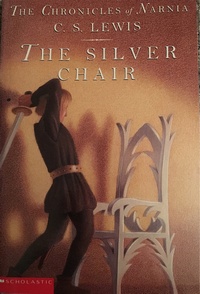 The Silver Chair
by C. S. Lewis , illustrated by Pauline Baynes
DETAILS:
Series: The Chronicles of Narnia, #4
Publication Date: July 01, 1994
Format: Paperback
Length: 243 pg.
Read Date: December 10-11, 2025

If you need to know what this book is about, or anything about this series…seriously, just stop what you’re doing and pick up this book. I don’t mean to be a snob, or maybe I do, but something was missing from your childhood, and now is your time to fix it. I realize that there are many legitimate reasons for people not to have read this (more for some of the later books), and I’m not questioning the choices you or your parents made (actually, I guess I am). But I’m not going to try to talk about this book like I do most others.
If only because everything worth saying has been said by other, better, writers. Probably several times.
I’ve also read this too many times to count as a child—even through my college years, and at least once a decade since. I’ll probably pick up the pace of re-reading them so I can talk to the grandcritters about them, too.
But I feel the need to say something now, so here are a few things that jumped out at me during this read:
 Awww, even Eustace gets rejuvinated by the Narnian air. He really changed from the whiney twerp.
Outside of Reepicheep, is there a more fully-drawn charcter in the Chronicles than Puddleglum? It’s also just a great name, summing him up in a nutshell. The other Marsh-wiggles finding him adventurous and devil-may-care is hilarious. As are his encouragements to the children to be more like him–upbeat and happy.
Describing Rilian as “altogether looked a little bit like Hamlet,” is one of the oddest lines in the series.
Everything that the Queen is up to is wrong, that’s a given. But the whole Prince/Queen mother-pseudo son thing is strange–when you add in the wedding plans? Ew, ew, ew, ew, and ew.
That’s an unexpected–and odd–lesson in Centaur anatomy and diets. (one stomach human, one stomach equine and needs to feed both appropriate food). Is this common to other Fantasy uses of Centaurs?
I just didn’t like Aslan this time out–disciplining Jill and wreaking havoc on the entire mission for something simple and understandable?
Even stranger–sending Caspian and an unusually-still-Narnian-garbed Eustace to rough up some human bullies at the end back on Earth. That just doesn’t match with the Aslan we’ve been getting to know.
Take our Lion out of things, and this was a pretty enjoyable adventure.
This post contains an affiliate link. If you purchase from it, I will get a small commission at no additional cost to you. As always, the opinions expressed are my own.
The sheer number of basic html errors this week that I’ve made (and thankfully caught) is enough to make my head spin. Including in this largely copy-and-paste post. I figured by this point, I’d have come up with a punch-line or something to follow up that opening observation, but inspiration seems to be striking someone else. So, I’ll just leave this here as another sign that the ol’ gray matter isn’t quite 100% this week. Thankfully, here are a handful of examples of people that should be publicly posting:
Odds ‘n ends about books and reading that caught my eye this week. You’ve probably seen some/most/all of them, but just in case:
“Reading is a subversive act”: Shenandoah interviews Virginia’s Lieutenant Governor–Elect Ghazala Hashmi—Shared for the ideas nothing else. Politics aside (I know nothing about hers), this is what I want in an office holder. As Sam Seaborn says, “I look for anything. I look for a mind at work.”
Reintroduction of Federal Right to Read Act Aims to Bolster Literacy, School Libraries The New York Public Library’s Most Checked Out Books in 2025
Why stay so narrowly focused, though? LibraryThing (and others) have a cool graphic showing The Most Popular Books in US Public Libraries for 2025.
How Translation Works, Book Title Edition
The Art of Buying Books for Other People
Ways You Can Help Your Fellow Book Bloggers This Holiday Season—it would be classless of me to suggest that you can take care of #4 on Jo’s list by using the Bookshop.org button to the right. So I won’t.
Where Do You Promote Your Book Blog in 2026?—This is something I’ve never worked that hard on (and it shows). Some of the comments to the post have inspired a thought or two. Will I take advantage of that? Who knows…but I should. (or, better, I should hire one of my underemployed kids to do it for me)
Curating a Library for a Young One—good stuff here.
Books that made a bigger impression over time—oooh, I like this idea. And a couple of these books have been on my “eh, maybe” list for a bit. Given their impact, I’m a little more inclined to get them.
It’s time for a few more Best Of ’25 lists, so hold on to your wallets.
 CrimeReads gave us: The Best Books of 2025: Traditional Mysteries and The Best Books of 2025: Noir Fiction
Public Books’ Public Picks 2025
Tom Bookbeard’s Top Reads of 2025
Favorite Books Read in 2025—from Pages Unbound’s Krysta
C. J. Daley’s Top Reads of 2025
746 Books has three lists (it’s not just me that has to break them down!) My Favourite Books of the Year: Part One – The 746!. Part Two – The Irish!, and Part Three – New!
and this only sorta fits here, like last week, The Hard Word’s Top Twenty-Five for First Twenty-Five Years (20-16)
And then we have people looking ahead to 2026 (good grief, I’m barely planning the next 11 days! (yes, I’m jealous of their level of organization))
Wolfmantula’s The Unofficial 2026 TBR—the amount of effort behind this post’s graphics alone…
A Jam’s list to 2026 releases – Part 1
Get Ready! Readers’ Most Anticipated Books of 2026—
A Book-ish Related Podcast episode (or two) you might want to give a listen to:
Book Berne-ing #22 Breaking Into Booktube!
To help talk about backlist titles (and just for fun), What Was I Talking About 10 Years Ago This Week?
My Grandmother Asked Me to Tell You She’s Sorry by Fredrik Backman
An Unwelcome Quest by Scott Meyer
Indexing: Reflections, Episode Ten: Untold Truths by Seanan McGuire
Santa 365 by Spencer Quinn
Winter and Night by S. J. Rozan
And I mentioned the release of Bryant & May and the Burning Man by Christopher Fowler
This Week’s New Release that I’m Excited About and/or You’ll Probably See Here Soon:
Dogged by Michael R. Fletcher—”In the final days of the Demon Empire a lone wardog goes in search of the answer to the only question she cares about: Who murdered her mate? Utterly unqualified to solve a mystery, Dogged Determination has but one advantage: She never, ever gives up.” The cover alone grabs my attention (it’s almost like that’s the point), the premise sounds cool, and the hype from early reviews around this is palpable. It’s the next novel I’m tackling.

Book Blogger Hop
This prompt was submitted by Billy @ Coffee Addicted Writer:
That’s an interesting question. I’m not completely certain that it’s something I considered until I joined Storygraph and they started asking. I resist the distinction—it takes characters to drive a plot, and it takes a plot (or three) to drive characters.
And yet…
And yet…
It’s Character-driven novels. By a mile. Yes, there are some books where the characters aren’t that important—just the machinations of the plot (I’d offer a couple of Reacher novels or other thrillers as nominees—but would we care as much without ol’ Jack at the center?). And sometimes, even books featuring characters one likes/loves will sacrifice them because of plot (there are dozen of examples on the metaphorical tip of my metaphorical tongue, but they’re not making it past that point). I’m not talking sacrifice in terms of death there, just “there’s no way that X would do something like Y in a million years.”
But I’m far more willing to put up with an aimless, unfocused, or otherwise meandering novel if I like the characters than I am putting up with an intricate and well-paced plot with dull, flat, or unlikeable characters. I’ve read them both, I’ve enjoyed both. But the former will get me to come back to the author more eagerly.
 Strange Practice
by Vivian Shaw
DETAILS:
Series: Dr. Greta Helsing, #1
Publisher: Orbit
Publication Date: July 25, 2017
Format: Paperback
Length: 353 pg.
Read Date: December 8-9. 2025
“But,” Cranswell had said, “what about the killing people thing? In all the books and movies?”
“Well, really,” Ruthven had told him, looking rather tired, “don’t you think it’d sort of attract public attention, all these random individuals dropping dead of sudden blood loss? Any vampire who kills when he or she feeds is a vampire with some rather significant impulse-control problems, plus I’m not even sure it would be comfortably possible to down that many pints of the stuff in one go. Even if you don’t have access to blood from a bank, it’s much easier and wiser to take a small amount from several individuals than drain one person to the point of death, and far less likely to get you noticed by people with the pitchfork-and-torch mentality.”
Cranswell had blinked at him. “That…actually kind of makes sense.”
“Exactly, which is why nobody suspects it.”
Greta Helsing is a doctor with a very particular specialty. Yes, she’s one of those Helsings–somewhere along the line they dropped the “Van.” Like her father before her, Greta treats the supernatural denizens of London from all sorts of ills–colds, chest congestion, infants with ear infections, drinking poisoned blood, keeping mummies’ bodies together, stuff like that. Routine–but strange, too.
Then a serial killer starts terrorizing the city, eventually attacking a vampyre–viciously. And it wasn’t just one, but it was a group dressed in monks’ robes. Greta has to work hard to keep him “undead.” The nature of the attack and the injuries make it clear to Greta and a vampire* that her patient sought help from that this was a deliberate strike at a supernatural being. And an organized group with weapons targeting her patients? Greta has to look into that–and maybe see if she can do something about that.
* Yes, there are apparently differences between the sanguivores spelled with an “i” and with a “y.” Also, I love the term sanguivore.
Having determined that this is something I want to talk about, I realize that I’m having a hard time explaining it. But here’s what I can come up with.
The voice here isn’t typical of UF—it’s not cozy by any means, but it’s warm. It’s snark-free, but not overly serious. The characters largely treat each other like old friends—functionally family—and that atmosphere permeates the novel.
You could almost make the case for this being cozy—but what the villains of the piece do break every rule of cozy—whether we’re talking cozy fantasy or cozy murder mystery. This coziness doesn’t carry over to the acts of violence perpetrated by the monks, nothing is softened here—but the humanity of the response (whether it be a human, vampire/vampyre, or other doing the responding) comes through.
The subtle use of a Monty Python bit took me by surprise and made me chuckle audibly. Several things in the book struck me similarly (but not that audibly).
Something one of the sanguivores says made me curious, so I went to Duck Duck Go, and yup…they were a literary character. As was nearly every named character in the book*—or, like Greta, a descendant of one.
I rather enjoyed this—and were I someone at all interested in Victorian horror, this book would provide a nice little reading list. Now, I am curious to compare Shaw’s depictions of these characters with the originals—but I’m not that curious (yet?). But I can think of a few friends who would be, I’m hoping they do after I get them to read this one so they can save me the time/effort.
* I really should’ve looked up the others—I guess I’ll have to do that while reading Book 2, Dreadful Company.
“You are not human,” she said at last, “but you are people. All of you. The ghouls, the mummies, the sanguivores, the weres, the banshees, the wights, the bogeys, everyone who comes to me for help, everyone who trusts me to provide it. You are all people, and you all deserve medical care, no matter what you do or have done, and you deserve to be able to seek and receive that care without putting yourselves in jeopardy. What I do is necessary, and while it isn’t in the slightest bit easy, it is also the thing I want to do more than anything else in the world.”
I was a little taken aback initially—somewhere between being hand-sold this book (14 months ago) and starting it, I’d gotten the idea that it took place in the late 1800s. When I opened it and was confronted with a very 21st Century setting on the first page, that both threw me (and relieved me, I wasn’t that sure I was up for that setting, really). I was a little disoriented for the first chapter or so, but Shaw got me settled quickly and engaged me in the tale a lot quicker than I anticipated.
That engagement didn’t falter—it only grew. I devoured the book and was very happy about it throughout—okay, I wasn’t at all happy about what happened to a couple of characters, places, etc. at the end. But by that time it was too late, I’d already added Book 2 to my “To Buy” list and was invested in the outcome of Strange Practice, and more invested in a character or two than I’d expect for only having spent less than one novel with them.. The plot is pretty straightforward, but we’re given a couple of good twists to keep the reader on their toes—and one inevitable move proved very not-inevitable.
This is a great world that Shaw has given us, populated with the kind of characters you want to see. The fact that our protagonist—and her allies—are focused on healing, improving, the safety and well-being of everyone they come across* gives this book (and will give future books) a different feel than your typical PI/fighter/instrument of justice Urban Fantasy alone. It’s a nice change, and I look forward to seeing where the series goes.
If you’re looking for a fun and atypical Urban Fantasy with a nice classic horror twist, you’re going to want to give this a shot. You’ll be glad you did.
* If you assume that a vampire/vampyre can feed off a human without impinging on their well-being.
This post contains an affiliate link. If you purchase from it, I will get a small commission at no additional cost to you. As always, the opinions expressed are my own.
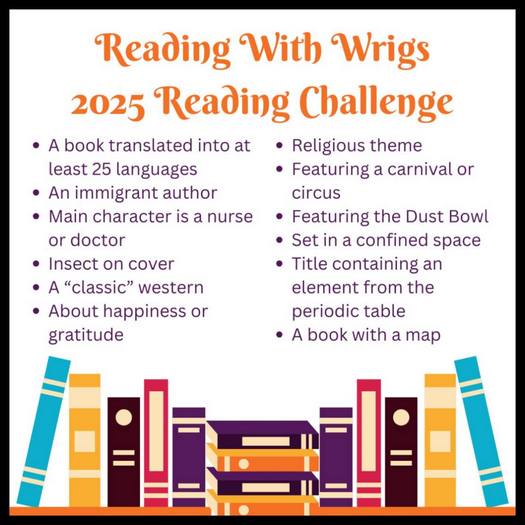
Rising from the ashes of the While I Was Reading Challenge, came Reading with Wrigs. Last year, I didn’t do good with the challenge, and then this year, I actually finihsed it about a week ago and then forgot to make note of it. Ooops. Go figure–last year, I didn’t finish it; this year, I finish with breathing room and forget to note it.
Anyway, here we go:
I attended a work-adjacent social activity yesterday* . I’ve got two social gatherings tomorrow** . And one the next day.*** I don’t know myself anymore. So I’m going to rush back to my comfort-space of books for a bit now.
* And enjoyed it.
** I’m anticipating enjoying both.
*** I’ll likely have fun here, too.

This meme was formerly hosted by MizB at A Daily Rhythm and revived on Taking on a World of Words—and shown to me by Aurore-Anne-Chehoke at Diary-of-a-black-city-girl.
The Three Ws are:
What are you currently reading?
What did you recently finish reading?
What do you think you’ll read next?
Seems easy enough, right? Let’s take a peek at this week’s answers:
 |
 |
| The Horse and His Boy by C.S. Lewis |
Cold Days by Jim Butcher, read by James Marsters |
Wow, you can remember the problems with the fifth Narnia novel, and then there’s re-reading it. I can appreciate it for what it is, but Lewis doesn’t make it easy, you know?
While I don’t love the plot developments that led to Cold Days (I don’t hate them either), I’m enjoying this more than I did Ghost Story (although I did like it more this time through).
 |
 |
| Zoe’s Tale by John Scalzi |
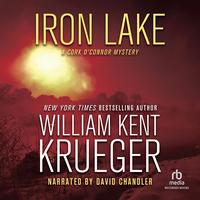
Iron Lake by William Kent Krueger, read by David Chandler |
Zoe’s Tale was so much more fun than I expected once I realized what I was going to be reading. It could be my favorite of the series (although I’ve said that with every book in the series, so take that with a grain of salt).
Iron Lake itself was fine. But I think I made a mistake by going with an audiobook. It’s a very Joe Pickett-ish kind of plot and setting, which is fine. But when you have Joe Pickett’s narrator reading that to you…the word “distracting” is an understatement.
 |
 |
| The Christmas Tree Killer by Chris Frost |
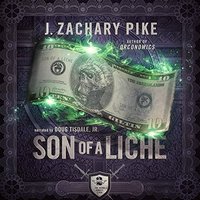
Son of a Liche by J. Zachary Pike, read by Doug Tisdale Jr. |
This seems like a good time for Chris Frost’s latest.
I grabbed Son of a Liche right after I listened to Orconomics, but forgot that I had it, until one or more of the people on SFF Addicts Ep. 183: Our Favorite Reads of 2025 LIVE. Whoops.

It’s time for my third crack at this tag–I did it in ’23 and ’24, too. Book’d Out was nice enough to create a tag that’s easy and fun to return to. Thanks to Jodie over at Witty and Sarcastic Book Club for tagging me in her version (and reminding me that this exists), I didn’t steal any of her responses (although I might have been tempted).
Typically, my daughter and I spend an hour or so brainstorming answers to this–mostly with responses that I’ll never admit to trying. This year, I did this on my own–with her deciding between two options for one. I’ve gotta say, it’s much more entertaining for me to do it with her, and I’m going to make a bigger effort on that part for the 2026 version.
In the meantime, you have to settle for an all me version, hopefully it’s up to par 🙂
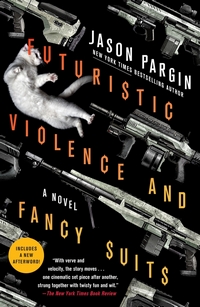
2025 was the year of… Futuristic Violence and Fancy Suits by Jason Pargin
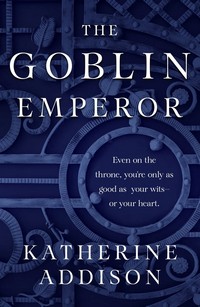
In 2025, I wanted to be… The Goblin Emperor by Katherine Addison
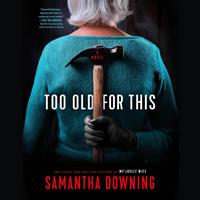
In 2025, I was… Too Old For This by Samantha Downing
 |
 |
 |
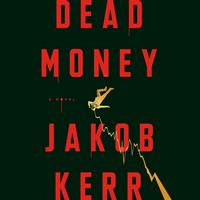
In 2025, I gained… Dead Money by Jakob Kerr
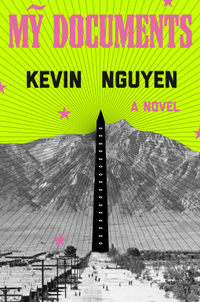
In 2025, I lost… My Documents by Kevin Nguyen
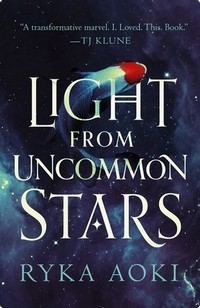
In 2025, I loved… Light From Uncommon Stars by Ryka Aoki
 |
 |
 |
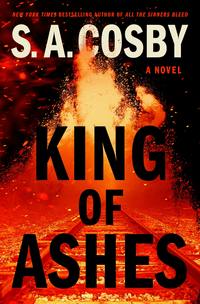
In 2025, I hated… (the) King of Ashes by S.A. Cosby
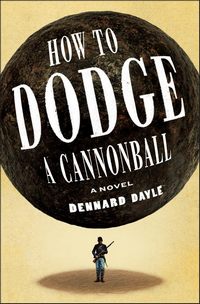
In 2025, I learned… How to Dodge a Cannonball by Dennard Dayle
In 2025, I was surprised by… Where the Bones Lie by Nick Kolakowski
 |
 |
|
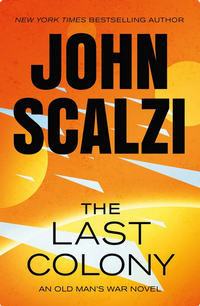
In 2025, I went… (to) The Last Colony by John Scalzi
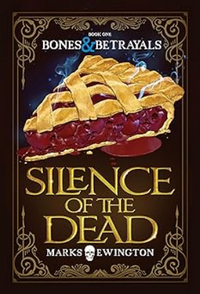
In 2025, I missed out on… (the) Silence of the Dead by Andi Ewington/Erica Marks
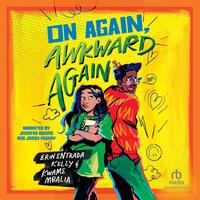
In 2025, my family were… On Again, Awkward Again by Erin Entrada Kelly & Kwame Mbalia
 |
 |
 |
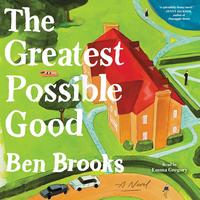
In 2026, I hope it will be… The Greatest Possible Good by Ben Brooks, read by Emma Gregory
 |
 |
|
As usual, I’m not tagging anyone in this—but I’d like to see what you all have to come up with.
Music Monday's originated at The Tattooed Book Geek's fantastic blog and has shown up hither, thither, and yon since then.
Honestly, this is something I’m working on…thought the song did a pretty good job of reminding me of that.
 The Faithful Executioner:
by Joel F. Harrington, read by James Gillies
DETAILS:
Publisher: Novel Audio
Publication Date: October 24, 2017
Format: Unabridged Audiobook
Length: 9 hrs., 39 min.
Read Date: December 4-8, 2025

Based on the rare and until now overlooked journal of a Renaissance-era executioner, the noted historian Joel F. Harrington’s The Faithful Executioner takes us deep inside the alien world and thinking of Meister Frantz Schmidt of Nuremberg, who, during forty-five years as a professional executioner, personally put to death 394 individuals and tortured, flogged, or disfigured many hundreds more. But the picture that emerges of Schmidt from his personal papers is not that of a monster. Could a man who routinely practiced such cruelty also be insightful, compassionate—even progressive?
In The Faithful Executioner, Harrington vividly re-creates a life filled with stark contrasts, from the young apprentice’s rigorous training under his executioner father to the adult Meister Frantz’s juggling of familial duties with his work in the torture chamber and at the scaffold. With him we encounter brutal highwaymen, charming swindlers, and tragic unwed mothers accused of infanticide, as well as patrician senators, godly chaplains, and corrupt prison guards. Harrington teases out the hidden meanings and drama of Schmidt’s journal, uncovering a touching tale of inherited shame and attempted redemption for the social pariah and his children.
The Faithful Executioner offers not just the compelling firsthand perspective of a professional torturer and killer, but testimony of one man’s lifelong struggle to reconcile his bloody craft with his deep religious faith. The biography of an ordinary man struggling for his soul, this groundbreaking book also offers an unparalleled panoramic view of Europe on the cusp of modernity, a society riven by violent conflict at all levels and encumbered by paranoia, superstition, and abuses of power. Thanks to an extraordinary historical source and its gifted interpreter, we recognize far more of ourselves than we might have expected in this intimate portrait of a professional killer from a faraway world.
Gillies was fine. I did wonder a bit about why a British narrator was used, especially when Harrington brings up his own U.S. citizenship at least once. It’s not a big deal.
He also didn’t pronounce the Lutheran theologian Philip Melanchthon’s name in a way I’ve never heard before—and that threw me out of things for a moment.
Other than that, I had no substantive complaints. I don’t know that he wowed me, but he didn’t detract from the material.
One thing that should be remembered that the description doesn’t mention is that Executioners in that day were also healers—as a result of their training and experience in their primary profession, they understood human anatomy to a degree that most people didn’t, so they augmented their income by helping heal others.
It’s interesting little tid-bits like that that’ll keep you reading. But not for trivia, for the history.
Okay, this didn’t resonate with me the way it did with my friends who read this. I didn’t get as invested in Frantz’s story as Lawrence did.
That said, I was fascinated by this. The history of the era. The cultural/political shifts going on—and how that impacted his life/profession were my focus. I could’ve read a lot more about the “criminal justice system” (as much as there was one) described. Well, I like to think I could’ve—but I really needed it tied to Frantz’s story for me to actually stick with it.
And honestly, that’s basically it—I was only mildly interested in Frantz. It was the changing context around him that got me. I do find that strange—I really would’ve thought I cared about the guy and his poor family (don’t get me wrong, it’s not like I didn’t care—but not much—also, I found what the author said about the life of two of his children at the end strangely heartening). But the history—culture, penology, politics, health care, criminology? That material was just great.
The story of one man is gripping (and really, the stuff of novels), as is the look at humans at the time—if you’re looking for either (possibly both), you’re going to relish this book and are going to be so glad that Harrington stumbled onto these journals to bring them to us.
This post contains an affiliate link. If you purchase from it, I will get a small commission at no additional cost to you. As always, the opinions expressed are my own.
Powered by WordPress & Theme by Anders Norén