Author: HCNewton Page 147 of 623

Chaos Terminal by Mur Lafferty: Not the Sequel I Expected, but the Sequel we Needed

Chaos TerminalChaos Terminal

by Mur Lafferty

DETAILS:
Series: The Midsolar Murders, #2
Publisher: Penguin Publishing Group
Publication Date: November 7, 2023
Format: eARC
Length: 384 pg.
Read Date: November 3-9, 2023
Buy from Bookshop.org Support Indie Bookstores

What’s Chaos Terminal About?

A contingent of humans is about to arrive on Eternity—a mix of scholars wanting to interact with all the alien races on board, a couple of tourists, a couple of spies, the detective who had Mallory in his sights for years, and the new ambassador to Eternity. Sadly, they arrive at a bad time—Mrs. Brown, the new host for the sentient space station has left for some training on how to be a better host, leaving Eternity functional, but not optimally so. Mallory has been left as the primary contact for Eternity (which only Mrs. Brown and Eternity seem to think was the right choice)—but she’s not quite herself once these humans arrive.

Now, as is wont to happen around Mallory, one of this group is murdered. Something is going on with the Sundry that no one can quite understand. The Gneiss outside of Eternity aren’t happy with what Tina and Stephanie did in the concluding chapters of the last book—and just might attack the station to express their displeasure. Oh, and among the newly-arrived humans are two people Mallory has had zero contact with for years—her High School BFF, Amy, and Amy’s brother, Parker. Parker is Mallory’s long-lost unrequited love, and it’s pretty clear that he’s never really put the torch he carries for her down anywhere.

Adrian

After what happened to him in Station Eternity (and what he did before that), I really thought we were done with the former ambassador, Adrian. Alas, I was wrong—he’s still around. For a guy who’s not a villain or a real antagonist, he’s really unpleasant as a character. I really wish he was something other than “the annoying human on the station.”

He’s toned down a little bit after his recent experiences, but at his heart, he’s still an arrogant twit who doesn’t contribute much of worth to anyone. At least that I can tell. I really hope that now that his replacement is on board he decides to head back to earth.

(or, fine, Lafferty does something really interesting with him in the next book would be preferable to losing him—she really didn’t this time out—but it’d have to be quite interesting not to get on my nerves)

The Killer

I want to start out by saying that I really don’t have sympathy for the killer and think things wrapped up justly for them (that’s a fairly spoiler-free way to put it, I think).

But once it was revealed what led up to the murder—and how things spiraled out of control afterward—I kind of felt bad for them. They were unknowingly wrapped up in things and fell victim to bad assumptions because of that. Yes, their reactions were utterly wrong—but I can understand how they got to the point where murder seemed like a solution. That understanding lasted until they started taking the next steps to cover up the crime and everything that ensued.

I do appreciate that Lafferty set things up that way for the killer—the alien cultures, the intrigue around the killer and the trip to Eternity, and the least-sympathetic murder victim I remember reading this year—help the reader to be ambivalent about the killer’s actions (at least initially). Not enough writers do that.

So, what did I think about Chaos Terminal?

The one thing I wish Lafferty had done differently was the humor in this book. Not that Station Eternity was a yuk-fest by any means, but there was a fairly steady stream of humor throughout—either in character moments, misunderstandings between the aliens and humans, or just the preposterous nature of Mallory’s abilities and what she did with them. The humor in Chaos Eternity was almost entirely centered on Tina. She was a walking, talking (and/or yelling) embodiment of chaos and slapstick. So much so that it started to be too much a few times (but Tina and Lafferty won me over each time I was tempted to give up).

I do wish Xan had a little more to do, too. But he was integral to so much of the plot, but not in an overt way—I remember him playing a bigger role in Station Eternity than he did here. He was almost as important as Mallory before, and he was demoted to the fourth-most integral character. Here’s hoping that’s not a permanent thing.

While I was engaged, very curious, and entertained throughout—I wasn’t having as much fun as I did with Station Eternity and I will admit I wondered if I misjudged the other book. Then two things happened—1. Mallory and Parker had a good conversation where they both communicated* and 2. The killer was revealed. After that (or in the midst of that) everything clicked into place and almost everything that had me on the fence about this book went away.

* There was nothing wrong with the scenes earlier where they failed to actually communicate, both were distracted, unsure if they could trust the other, getting over baggage, and thinking they could delay the conversation.

I did say “almost everything” there. I’m not wholly on-board with everything Lafferty was doing. I really haven’t had as much time to think about this book as I wanted to between the time I finished and the time I wrote this post—I assume that if I had, a lot of what I’m uncertain about would make sense to me. I really don’t understand some of the relationships in this book, why some of the interpersonal conflicts existed, and just why Lafferty decided to take up so much space with all that. However, most of that provided a couple of red herrings—or at least things that distracted Mallory from what she needed to focus on—which was likely a large part of the point. It could be as simple as Lafferty was using everything possible to add to the titular chaos.

None of this detracts from everything that (eventually) worked about the novel, but it keeps me from raving about it. It’s not really what I expected from this sequel—and that’s such a good thing. What happens in the last few chapters ensures that Book 3 won’t be anything like this or Station Eternity. I’m not sure what’s going to happen—nor am I going to bother trying to guess (although it’s probably safe to assume that a new group of humans will visit Eternity and one of them will be murdered). I will trust Lafferty to come through with a satisfying conclusion however.

And, boy howdy, did this conclusion satisfy. Everything was wrapped up fairly nicely—those things that weren’t really only served to set things in motion for Book 3.

As the dust settled with the book’s events—and as the dust settles in my mind about those events and Lafferty’s plotting—I’m left satisfied and impressed with the way it all went down. I had my doubts, but they were quelled and assuaged, leaving me able to say that those who enjoyed Station Eternity would do well to pick this up—more importantly, those who like a good mystery in an even better SF setting, in the years soon following First Contact should grab both books in this series and prepare for something great next year (or so).

Disclaimer: I received this eARC from Berkley Publishing Group via NetGalley in exchange for this post—thanks to both for this.


4 Stars
This post contains an affiliate link. If you purchase from it, I will get a small commission at no additional cost to you. As always, the opinions expressed are my own.

Irresponsible Reader Pilcrow Icon

Unfolding Redemption by Camden M. Bucey & Lange G. Tipton: I’ve Looked at Salvation from Both Sides Now

Unfolding RedemptionUnfolding Redemption:
Exploring the History and Order of Salvation

by Camden M. Bucey & Lane G. Tipton

DETAILS:
Publisher: Reformed Forum
Publication Date: October, 2023
Format: Booklet
Length: 52 pg.
Read Date: November 5, 2023

Many well-meaning Christians view salvation in Christ exclusively through a personal and subjective lens. They perceive salvation as an intimate process of divine intervention, manifesting in transformative experiences, feelings, and changes in our lives. While salvation certainly includes a personal experience, the Bible teaches an objective and historical foundation for such salvation in the person and work of Jesus Christ. Accordingly, before we can speak meaningfully about our individual salvation experience, we must first understand that salvation, at its heart, is an accomplished reality. It is rooted in real, historical events that took place long before our personal experience of salvation. This accomplishment of salvation, carried out by God through Jesus Christ in the unfolding of covenant history, sets the stage for the personal application of salvation in our lives.

Essentially, before salvation can be applied to us subjectively, it must be accomplished objectively. It is this accomplished work of God, historically embodied in the life, death, and resurrection of Jesus Christ, that is the basis for the salvation we experience. Jesus Christ himself is the wellspring from which flows all the benefits of our salvation: justification, adoption, sanctification, and eventual glorification. To understand truly the richness and depth of our personal salvation experience, we must first grapple with the historical accomplishment of salvation—the foundation upon which our subjective experiences are built.

What’s Unfolding Redemption About?

This booklet is essentially an unpacking of that opening quotation. Following the Introduction which will introduce the thesis of the book, introduce and define some terms, and so on, the opening chapter examines the historic, objective work “historically embodied in the life, death, and resurrection of Jesus Christ,” what the authors (and many others) would summarize as the historia salutis.

The second chapter looks at the subjective application of that work to us and our lives—the ordo salutis.

The Significance of Pentecost

Rather than beginning with Genesis, the Prophets, or even the Gospel accounts to look at the historia salutis, Bucey and Tipton start at Pentecost—from this vantage point they can look back at Genesis-Malachi as well as the Gospels for a look at that work of Christ and how it was foretold/foreshadowed and what he accomplished in His life, death, resurrection and ascension—leading to the outpouring of the Spirit at Pentecost as part of what they term “the Irreversible Progress of Redemption.”

Union with Christ

As we’re united with (or in) Christ, those elements of the work He accomplished can be applied to our hearts and souls, our minds, and our lives. They’re applied through justification, adoption, sanctification, forensic and redemptive benefits, and finally through glorification.

The individual aspects here are all touched on with a degree of depth, but they’re very brief (the booklet itself is 52 pages long, everything is brief). But you don’t feel short-changed, which is pretty impressive for 1-4 page discussions.

So, what did I think about Unfolding Redemption?

Understanding what has transpired in Christ breathes life into our understanding of our individual spiritual journeys. Recognizing our faith within the progressive and organic climax of redemptive history in the person, work, and kingdom of Jesus Christ helps us understand our place within his grand design and enhances our communion with Christ. In this context, our salvation becomes not just a personal experience but part of history of special revelation that finds its center and substance—its goal and telos—in the crucified and glorified Son of God—the church’s “hope of glory” (Col. 1:27).

I really appreciate the emphasis on the two ways of looking at redemption—accomplishment and application. What was done on our behalf and how it changes us. It’s too often overlooked and/or confused by the American Church today, and we need to get it straightened out.

Overall, I liked Unfolding Redemption—I wasn’t blown away by it (partially, because I’ve read everything they point readers to for more depth), but it’s asking a lot for a booklet of this length to blow anyone away.

I did think that this is a handy thing to hand out to people who are new to Reformed soteriology—or who are curious about it, and can think of a handful of people I wish I had copies for right now. The whole point of this booklet is to be a starting point—one that points in a direction for further inquiry/study. And it does a great job of doing that.

On those terms, I feel like I’m short-changing it on stars. On the other hand, these are about my reactions–which were I liked it. So, I’m sticking with that. Although, I halfway expect those I had in mind to hand it to will react far more positively. Basically, your results may vary, and probably will.


3 Stars

Irresponsible Reader Pilcrow Icon

Saturday Miscellany—11/11/23

We’ve got a bumper-crop of new books this week, and a few other things that show me more than my memory does how little time I spent online this week.

Odds ‘n ends about books and reading that caught my eye this week. You’ve probably seen some/most/all of them, but just in case:
bullet Book bans backfiring? Study reveals increased readership for prohibited books
bullet Is Traditional Fiction Publishing Broken?
bullet What’s the Future of Books? Amid historic disruption in the publishing industry, big questions are—rightfully—being asked. Here, experts weigh in on how books (and the ways we discover them) are going to change.
bullet No, I Don’t Want to Join Your Book Club—some non-traditional book clubs
bullet Has It Ever Been Harder to Make a Living As An Author?
bullet Book Thieves Take the Story and Run with It
bullet #R3COMM3ND3D2023 continues to look at favorites from 2023:
bullet …with Nicki Mags of Secret Library Book Blog
bullet …with Karen Kingston of KarenKisreading
bullet …with Author Rachel Sargeant
bullet …Gill of A Good Book ‘n a Brew
bullet …with Joanne of Portobello Book Blog
bullet …with Carol of Reading Ladies
bullet …with Davida Chazan of The Chocolate Lady’s Book Review Blog
bullet Witty and Sarcastic Book Club’s Dragon Week wrapped up this week, so you can read all of the goodness there now.
bullet To celebrate the publication of Femme Fae-Tales anthology, Peat Long conducted Femme Fae-Tales Interviews with all of the authors, like this one.
bullet An Important Reminder from Chuck Wendig

This Week’s New Releases that I’m Excited About and/or You’ll Probably See Here Soon:
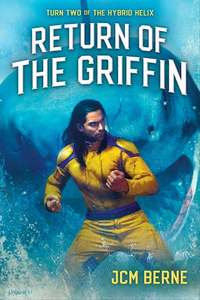
bullet Partial Function by JCM Berne—”If Taken starred Michelle Yeoh and was set on a Jurassic Park-inspired Cradle.” As I said recently, I had a lot of fun with this concept and its execution
bullet Resurrection Walk by Michael Connelly—Mickey Haller + Bosch. I’m sure there’s more to say, but who cares beyond that?
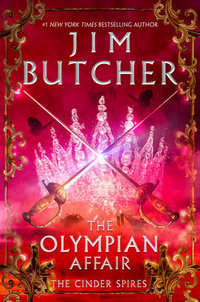
bullet The Olympian Affair by Jim Butcher—Yes, it took Butcher an eon to give us the second Cinder Spires book, but something tells me most readers will forgive him for that once we get to dive in.
bullet Noodle Conquers Comfy Mountain by Jonathan Graziano, illustrated by Dan Tavis—this follow-up to Noodle and the No Bones Day is aDORable. I’ll have more to say about it soon (mostly consisting of rephrasing of that sentence).
bullet Calico by Lee Goldberg—a murder mystery and a Western in modern California. That’s really all I know so far, but I can’t wait to learn more.
bullet Chaos Terminal by Mur Lafferty—a murder among a new batch of human visitors to the sentient space station, a conflict between alien races, and an attack from without? Things don’t get boring in this Midsolar Murder sequel.
bullet Bookshops & Bonedust by Travis Baldree—this prequel to Legends & Lattes contains all the warm fuzzies of its predecessor, a dash of action, and a more overt romantic arc.
bullet A Curse of Krakens by Kevin Hearne—the much-anticipated conclusion to the Seven Kennings trilogy is out, which means it’s time for me to read the second volume any day now.
bullet Blood Betrayal by Ausma Zehanat Khan—Detective Inaya Rahman investigates a pair of officer-involved killings. I’m guessing neither of these will turn out to be what they seem at first glance.

I love to read. That doesn't mean I don't have a life. It doesn't mean I'm a nerd. I only love the feeling that...even when you're back in reality you still feel like you're in a different world. - S.A.

A Quick Check-In and a Final Plea for Help with Author Interviews (for writers, bloggers/podcasters, and readers)

Okay, what I said the other day about over-committing is getting the best of me. I’m going to have “real” posts any day now (hopefully tomorrow, for example). I have four posts about particular books half-finished, but I need time to think about them and complete them. I have 5 Literary Local Q&As in the middle of Qing and Aing. And a couple of other things in-progress, too. But for today? I’ve got zip, zilch, and a whole lot of nada.

So, I’m going to ask one more time for some input about Interviews/Q&As. At this point, I’ve pretty much decided what I’m going to say about them, but I could use a little more fodder for examples/illustrations. So…if you’re an Author, or a Blogger/Vlogger/Podcaster, or someone who likes to read/listen to Author Interviews—would you please click one of those links and answer a few things for me? If you fit multiple categories there (and, don’t we all contain multitudes, even if it’s just a few?)—feel free to chime in repeatedly.

Thanks!

And now for something completely different:

Irresponsible Reader Pilcrow Icon

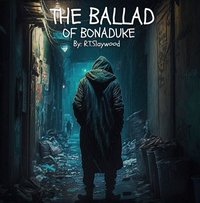
The Ballad of Bonaduke—Episode 38: Operator by R. T. Slaywood: An Overall Lack of Bedside Manner


The Ballad of BonadukeThe Ballad of Bonaduke—
Episode 38: Operator

by R.T. Slaywood

DETAILS:
Series: The Ballad of Bonaduke, #38
Format: Kindle Vella Story
Read Date: November 9, 2023

The Story So Far…

A drunken Michael Bonaduke decides to use a grift (with maybe some sort of magic/magic-like “help”) to win on a scratch-off lottery ticket so he has money to buy more to drink. He pulls off whatever he did, gets his money and some booze and stumbles off into the darkness to drink himself into oblivion so he can start again the next day. He’s hit by dark memories (probably what’s driving him to the drinking) of fire, pleading, and screaming. There’s going to be a price to pay for his grift, and he’s trying to be ready.

He’s abducted by some representatives of a mysterious group who subject him to a test—if he passes, everything will be explained to him (and hopefully the reader, too). He passes—and is brought somewhere for answers, or maybe training, or maybe another test. Time will tell (or things are going to get really annoying). Answers aren’t quick to come—but the mysteries and questions keep piling up.

Things get hairy and Bonaduke leaves and finds himself back in the neighborhood he started from. He takes refuge in a homeless encampment shortly before a police raid. He’s apprehended and finds himself an interrogation room and shortly escapes after using his grift (but with results he didn’t quite intend). He finds himself by a group of squatters who seem to have strapped a woman to a chair for reasons that can’t be good. He attempts to rescue her before he even realizes what he’s doing, and seems to have succeeded—well, the two of them got away from the group anyway—breathing but bruised. They make their way to a fast-food taco joint and Bonaduke really needs to refuel to keep going. He tries, but fails to get food because he keeps passing out. Thankfully, the clerk is the same guy from the liquor store and he both recognizes him and gives him first aid. The woman (Zero) wakes up and shows some abilities of her on as she helps them escape from her captors who’ve tracked her down. One thing leads to another—Zero and Bonaduke’s magics don’t mix well (at least until they understand what each other can do?), and they end up in a video-game race against the squatters in a tricked-out version of Eric (the clerk’s) car. Note, I said video-game race, not a video-game-style race. They’re actually in one. When dumped back into reality, he’s surrounded by bruised and broken bodies (of people and cars). And then he gets into a supernatural fight and survives…just.

What’s Operator About?

Bonaduke is in rough shape when they get him back to the apartment, collapsing before he can really do much at all. The others rush to his aid, but since doesn’t realize how much he’s injured he struggles against it. He more than struggles–he lashes out (effectively, it should be noted) when the treatment/examination hurts as much as the injuries do, or inflames them.

The others struggle to restrain him and largely have success until Myrrh enters the room, and his rage toward her fuels him to attack her with magic unlike he’s been able to before–and when that fight is over, everything fades to black.

If it weren’t for the fact that there are dozens of episodes left (with more to come), you could make the case that this was a cliffhanger. But the suspense around Michael’s continuing existence is low. The real question is…what’s the situation going to be like when he comes to?

So, what did I think about Operator?

Too often in fiction (on page or on screen) I can’t help get frustrated by the lack of communication–honestly, if someone had taken a moment to talk to Bonaduke–or to listen to him–here, things might have gone better for all involved. Maybe not, but it would’ve been nice to see some effort.

There’s a point or two that would’ve been helped with a dialogue tag, honestly. The other part that would’ve been nice is to refer to some of these old faces with more than a name–something to help those of us who haven’t thought of them in 20 episodes or so to remember who they were. None of these are significant issues, and might say more about my memory than anything.

Overall, it was good to dip my toe back into the water here–and hopefully, I get back into regular reading of it. And, most importantly, I want to see what the next episode holds.


3 Stars

WWW Wednesday, November 8, 2023

So apparently, November is my month of over-committing—and boy howdy, is it catching up to me the last week or so. There’ve been 2 days since my last WWW where I’ve read for less than 20 minutes, which is not doing my psyche a lot of favors, either. But, this isn’t time for my therapy, it’s time for a WWW, so let’s move along to it.

This meme was formerly hosted by MizB at A Daily Rhythm and revived on Taking on a World of Words—and shown to me by Aurore-Anne-Chehoke at Diary-of-a-black-city-girl.

The Three Ws are:

What are you currently reading?
What did you recently finish reading?
What do you think you’ll read next?

Easy enough, right?

What are you currently reading?

I’m reading (and hopefully finishing tomorrow) Chaos Terminal by Mur Lafferty, which isn’t the sequel I was expecting—and is maybe better for it. I finished an audiobook this afternoon, and not starting another until tomorrow, so I’ve got nothing in this spot.

Chaos Terminal

What did you recently finish reading?

I just finished Seanan McGuire’s The Innocent Sleep and Grand Theft Astro by Scott Meyer, Elizabeth Evans (Narrator) on audio. I didn’t know it was legal for a Scott Meyer novel to be recorded by anyone other than Luke Daniels, but it worked.

The Innocent SleepBlank SpaceGrand Theft Astro

What do you think you’ll read next?

My next book should be Starter Villain by John Scalzi and my next audiobook should be Bookshops & Bonedust by Travis Baldree (Narrator).

Starter VillainBlank SpaceBookshops & Bonedust

Are you reading anything good?

PUB DAY REPOST: Partial Function by JCM Berne: A Mom With A Particular Set of Skills

Partial FunctionPartial Function

by JCM Berne

DETAILS:
Publication Date: November 7, 2023
Format: eARC
Length: 361 pgs.
Read Date: October 9-10, 2023

The First Chapter

Don’t worry, I’m not about to go through this book chapter-by-chapter talking about each one—there are thirty chapters, and while I know I can go on and on about books that I like…

No, I’m going to focus on the first chapter for a moment for one reason—your reaction to the first chapter is going to tell you everything you need to know about this book. If you read that chapter (and everyone who’s stumbled onto this post should do at least that) and you think “Yeah, I can see myself enjoying this book.” You almost certainly will. If you read it and think, “Oh yeah! Give me more of that!!” You definitely need to read on. If you read this chapter and aren’t that interested in going on—trust that instinct and move on with your life. Also, I feel bad for you. (but I say that without judgment, even if it doesn’t sound like it).

This chapter isn’t quite the novel in microcosm, but it comes close—it has the spirit, the humor, the action, the supernaturally-charged martial arts, and the panache that will characterize the rest of the book. Anddddd, best of all, it features a very good dog. The book will bring in more characters than just Akina Azure and her dog (frustratingly named Dog*), which is the biggest reason I can’t say this chapter is a microcosm.

* It’s not just this that Akina has in common with Walt Longmire—I actually could write a post comparing the two—but this is my biggest complaint with both of them. You two have great canine companions, they deserve a great name.

So, What’s Partial Function About, Anyway?

I don’t know that I can do better than the description I was given for the cover reveal a couple of weeks ago—I’ve tried, and I keep unintentionally borrowing elements from it, so let’s just use it:

If Taken starred Michelle Yeoh and was set on a Jurassic Park-inspired Cradle.

Monster hunter Akina Azure inherited the most powerful weapon in the martial world before retiring to a peaceful life raising her twin girls.

The Reaver has them kidnapped, thinking Akina will trade that weapon for their safe return.

Will she? Or will she use it to wreak a terrible retribution on the men who took her girls?

You get one guess.

I’ll expand a bit on that, though.

Akina was part of a legendary band of adventurers, The Five Fangs, and then she and her husband Petrick (also one of the band) retired to go live far away and start a family. None of their friends have seen—or heard—from them or of them in years. Long enough for them to raise twins into their teens before Petrick died of blood plague (I don’t know what that is, but the name alone…).

Now, Akina tracks down one of the Fangs, Remy, to help her. She needs his connections to put her in touch with the people she needs to put her rescue plan into action. It wouldn’t hurt to have one of the few people alive that she trusts to have her back, either.

Remy isn’t crazy about the idea, but he can’t say no to Akina. These two past-their-prime warriors are soon joined by a much younger fighter (who is not quite in her prime and has a lot to learn first) that they can’t entirely trust, but can certainly use. Three people and a dog against the most powerful, feared, and twisted warrior (and his army) living. That’s if they can dodge the kaiju-esque monsters along the way.

It’s really not a fair fight.

Fantasy’s Answer to Sam Axe

I predict that most people talking about this book are going to focus on Akina—as they should. And I’m tempted to spend a lot of time talking about Dog, because he’s such a good boy.

But I want to hone in on Remy for a bit. He’s so essential to the way this book works, and I think he’s so easy to overlook. Sure, Akina and Zhu have some good, snappy, dialogue, and Dog being dog is amusing. Remy’s easily the funniest character in the novel and can be seen as only comic relief. That’s an error.

A couple of days ago, in an earlier draft of this post, I made a joke about him essentially being Sam Axe from Burn Notice. I haven’t been able to get that comparison out of my mind. It’s so on the nose. Remy serves as Akina’s Devil’s Advocate, voice of reason, conscience, and confessor. He’s the only one she fully trusts anymore. He knows someone (or knows someone who knows someone) everywhere they go and can get them whatever resources they need. In a fight, he’s almost as good as Akina and saves her on more than one occasion.

He covers all this with a commitment to doing nothing but drinking, womanizing, and lazing about all day—which is pretty much what he’s been doing since Petrick took Akina off to who-knows-where. When called upon, he steps into action, griping the entire time about how it’s cutting into his drinking. Again—Sam Axe.

If you’ve ever wondered what a wuxia-adjacent Bruce Campbell would be like, this is the book for you.

Okay, setting that all aside—at the end of the day, you’re going to like Remy and trust him to do the right thing more than pretty much anyone else in the book (see the next section for a hint of that). His agenda is pretty clear—do the right thing by his friend, do the right thing in general, and then leave everyone to their business so he can get back to pickling his liver. He may not understand the nuances of everything going on—but he’s honest, he’s clever, and he’s tough. Just the kind of guy you want to have around.

The Central Question of the Book

Most—possibly all—of the “bad guys” in this novel wouldn’t describe themselves that way. They think they’re doing the right thing to save the world, or at least civilization. Not just the right thing—the only thing that will save humanity.

But they’re so focused on the ends that they cross all sorts of lines when it comes to means. They do things to increase their power that are repugnant to the reader and just about every character in the novel. Honestly, kidnapping Akina’s twins in order to compel her to surrender her weapon is pretty much the mildest thing the “villains” like the Reaver do to secure the ability they think will help them.

It’d be easy to write them off here—ends don’t justify the means and all that, right?

But when you stop and think about the steps that Akina takes to enable her to rescue the twins? It’s hard to think of her as a hero (and she doesn’t pretend to be one, in fact, she outright denies it).

The novel focuses on Akina; she’s nice (generally) to Remy, Zhu, and her dog as they travel; she’s funny; she defends young women from creeps and slavers…and so on. So you reflexively think of her as a “good guy” a “hero.”

As we read Partial Function, we’re thinking about things like Taken. So let’s start there—are the actions that Bryan Mills takes to rescue Kim, the right thing to do? Sure some of them—but all of them? How about John Wick—think of the death and destruction that comes from him getting his vengeance? We’re inclined to think of Mills* and Wick as the heroes—but are they? I’d ask the same thing about Akina.

* Who am I kidding? None of us think of him as Mills, we think “Liam Neeson”—or “Liam Neesons,” maybe. No one thinks of him as Bryan Mills.

Now, that isn’t a criticism of her as a character. I loved Akina. I wanted to see her win, her whole plan was brilliant, I enjoyed watching her fight, banter, be corrected, and wreak vengeance. Maybe even more than I enjoyed Neeson or Wick doing the same.

I’m just not sure I should.

So, what did I think about Partial Function?

I have a couple of pages of notes that I can’t get to. There are so many quotable moments—because of heart or laughs. Berne’s got a way with words that I’m tempted to call Butcher-esque, and I just want more of it. But I need to get moving, so let’s just say that I had so, so, so much fun with this. Between this, Chu’s The War Arts Saga, and talking a little to Tao Wong this summer, I’ve decided I need to make more room in my reading for wuxia-inspired works.

The world-building deserves a paragraph or five to celebrate it (but it’s taken me 2 weeks to get this much written, I’m not risking putting this off any longer). For example, I should talk about the kaiju-ish creatures, but beyond saying they’re dinosaurish animals with powers that love snacking on humans (when they’re not stomping on them), I don’t know what to say. The political/clan system serves the whole thing well and I’d enjoy seeing more of it in a future installment.

Partial Function is a fast, enjoyable, action-packed read with a lot of heart and just enough humor to help you deal with the stakes and destruction. And these characters? I loved getting to know them and spending time with them. There’s a lot to chew on in these pages if you’re in a thoughtful mood, and if you’re not? You don’t need to, you can just enjoy the ride.

This was intended as a stand-alone, but the door is open for another adventure or so for the survivors. If we get a sequel, I’ll be first in line for it. If we don’t? This is going down as one of my favorite fantasy stand-alones. Either way—I’m encouraging you to read the first chapter and apply what I opened with. I’m sure there will be those who don’t get into this, but I can’t understand why.

Disclaimer: I received this eARC from the author—after repeated requests—in exchange for this post and my honest opinion.


5 Stars

 
Irresponsible Reader Pilcrow Icon

A Few Quick Questions With…JCM Berne

It’s Publication Day for Partial Function by JCM Berne and what better way to commemorate it than with a Q&A with the author his own bad self?


Give us a quick origin story—how old were you when you caught the Writing Bug? What made you decide “I’m going to get serious about it now” (whenever that happened to be)? etc.
I wrote what we’d call fanfic (I had never heard the term) in elementary school, but I didn’t try to write an actual story until just after dropping out of grad school. I was inspired by RA Salvatore – The Cleric Quintet – and I wanted to write fantasy stories about dwarves. Something about his dwarves really struck a chord in my imagination. This was around 1998.

I wrote a couple of novels, went nowhere with them, and tried again in 2006. Self-publishing as we know it didn’t really exist back then, so I basically gave up. In 2019 I got the bug again – I had a little bit of time, and Invincible gave me the same writing itch that I’d gotten from Salvatore – and I wrote Wistful Ascending in one big burst, promising myself that I’d put it on Amazon even if it sucked. Which I did! (for the record, he ended up putting it on Amazon without it sucking)

What came first—the desire to take a break from The Hybrid Helix or this story? How important was it for you to take this break?
I didn’t exactly want to take a break. I wanted to write something more marketable – HH is a very tough sell, commercially (it’s a superhero story that doesn’t include superhero conventions like an origin story or supervillains, and it’s VERY hard to describe – count the reviews that say, “this isn’t what I expected!” – it’s a lot of reviews.) A lot of my target readers are much more into fantasy. And I really, really wanted to do better in SPFBO, which is totally an ego thing and not rational in any sense. AND I wanted something with less pressure. Every HH book gets harder, because I have to keep in mind the series-level story and the book-level story simultaneously. With a standalone I can drop all of that pressure.

So I decided to start from a killer pitch, instead of the weirdness that is Wistful Ascending, and write a straight fantasy (instead of superhero/sci-fi) with a straightforward narrative and see what happened. And I failed, because of course I did. I should have made Akina an Elven Ranger and set the story in a setting that could pass for an amateur D&D campaign. But I love fisticuffs and dinosaurs more than I love archery, and I had the worldbuilding basically done (it’s the same universe as HH, broadly speaking), and I didn’t want to take six extra months to do it.

Another aspect of doing something new was trying to write something cheaper. The HH books – with the cover artist, narrator, and editor I’m committed to – are huge money pits. I wanted the chance to release something that wouldn’t cost an arm and a leg. And I failed again, though Partial Function cost me a lot less than a HH book, it didn’t end up being anywhere near as bare-bones as I intended.

I’ve heard authors say that they learn something while writing each book. What did Partial Function teach you that The Hybrid Helix hasn’t? How was the experience different in this new world?
I learned that, once again, my sense for what other people will enjoy is not very good. I had very little confidence in this book. I mean, I knew I loved it, and I knew it did what I wanted it to do from a craft perspective, but I didn’t really think other people would like it. And so far, the reception has been really positive. People aren’t hung up on the weird stuff in the book as much as I thought.

It’s a nice feeling, but also disturbing, because it’s good to have people like your art, but it’s also a bummer to know I’m not good at judging my audience. I suppose I might as well just go on writing what I love and hoping.

You’ve described yourself as a “kitchen sink writer,” I used more words to describe it, and greatly prefer your pared-down version—what do you mean by that? Is that just who you are, or did you make decision along the way to become one? (I never expected to ask a nature vs. nurture question)
I have a lot of interests, in fiction and outside it, and I like to throw stuff from all of that into my books. Infinity bagua is actually a really interesting martial arts idea – bagua is a real martial art in which training is focused on walking in circles (I’m oversimplifying), and infinity walks are a real training tool used by some very serious coaches, so combining them isn’t actually as random and silly as it sounds. I’ve read a lot of manga and American comics and watched a LOT of martial arts movies, so I threw a lot of pieces from them into this.

It was never really a decision. If I try to write something more straightforward, without a lot of weird things thrown in – if I had tried to make this “Taken, but set in Shannara” – I get bored. This isn’t my day job: if the writing gets boring, I’ll quit. I have no idea what would change if this WERE my day job and I really had to write something commercial, but that’s a question for another lifetime.

I want to ask a couple of questions about Partial Function characters. I have a handful about Zhu, but…I can’t think of a way to ask them without spoiling something. So, what would you want a prospective reader to know about her? (basically, say whatever you want about Zhu)
I included Zhu because I was too lazy to draw a map. In fantasy novels, travel is a big thing – you have to have a map, measure distances, calculate the average distance a wagon can travel over rough terrain in a day, etc. etc. etc. I had no enthusiasm for that. So I gave everybody teleportation magic and let them hop around to my heart’s content.

Once I put Zhu on the team, she had to do more than just be a human taxi. She’s a teenager, so I made her snarky, because the day I write a non-snarky teenager is the day they can pull the plug on my life support. It’s low hanging fruit, basically. But I didn’t want to make her too obnoxious, or rebellious for its own sake, because those traits annoy me, so I tempered that out a bit.

The other piece of it is allowing us to see a little bit of Akina-as-a-mom. That part was mostly accidental, but I felt like it raised the stakes to see that side of her. I’ve seen the “I’ve got to rescue my kids because I was a negligent parent and it’s my way to work out my guilt” trope in other stories and I hate it. Akina was a good mom, in her own opinion, and she wanted her girls back because she loved them. Full stop.

After that, Zhu just became fun. Once I have a character’s voice in my head, it’s joy to give them their own dialogue, their own jokes, with their own timing and approach. Good jokes are character-specific (I learned that from Howard Tayler).

I talked a little bit about Remy in my original post about the book, and you told me he was important to you. Can you unpack that a bit?
I love all the main characters, but I feel like Remy is the least sexy. Sort of. People are desperate for action moms in fantasy – it’s something I’ve heard repeated – and people love competent younger characters coming into their own. And come on, everybody loves animal companions, especially when they’re adorable. But big guys who are good at fighting aren’t in short supply.

To me, Remy was important because of what he wasn’t, in some ways. He loves Akina with zero romantic or sexual intent, and vice versa. They’re genuine friends, and he’ll do anything for her, exactly the same way he’d have done anything for Petrik. And I like that kind of relationship. I feel like the expectation is that we find out halfway through that he would have had some spark for Akina and been pining after her for years, and I just wanted to pull the plug on that. He doesn’t want to have sex with Akina, at all, period. He just loves her, and she loves him, and that’s that.

Who are some of the bigger influences you have in your writing—this book and others—whether or not readers can see them, you know they’re there?
I’m 52 and I’ve been a compulsive consumer of media for about 42 of those years, so there’s an awful lot.

For writing style I have to say some RA Salvatore (who I forget to mention as often as I should) and Jim Butcher. But I was writing like this before Storm Front was published, so maybe that’s not quite right. Maybe my influences were more Glen Cook (PI Garrett Cook, not Black Company Cook, in terms of style) and Steven Brust.

I also take a lot from comics, too many to remember. Brubaker, Starlin, Chaykin . . . I wouldn’t know where to stop. Ellis. Moench. I had a bad habit when I was younger of buying comics and not paying attention to the creative team, so I didn’t even know who was influencing me, but they were.

And for this book in particular, I use a lot of movie influences. Taken, John Wick, Crouching Tiger, Hidden Dragon. Jurassic Park! And a lot of anime and manga. Those influences are big in HH, but maybe even bigger in Partial Function. I never wanted to see Wistful Ascending adapted to film (I mean, I wouldn’t say no, but it was never a thing I cared about) but I’d LOVE to see a series made of PF.

What’s next for JCM Berne, author? I’ve seen some things you’ve posted on social media sites, but I can’t tell how serious you’re being—and either way, I’m very intrigued.
I have a bad habit of getting excited about something, planning it, writing a chapter, then realizing the voice doesn’t work for me. Well, that’s not the bad habit, but posting about it on twitter IS. My progression fantasy about tiny dragons is a solid idea but I just didn’t enjoy writing it as much as I thought.
Right now I have three ongoing project. I’m going to continue the Hybrid Helix, because I haven’t even gotten to the point yet. I have no idea how long that will be, but I can’t imagine fitting the story I want to tell into ten or fewer books. 12? 17? We’ll see.
I wrote Partial Function as a standalone, and I didn’t deliberately throw anything in there that was meant to seed a sequel (unlike Wistful Ascending, which I wrote from the start as the entry point to a series). The story is over, and any sequel has to have a new story. I didn’t really have a good idea for that sequel until a couple of weeks ago, but now I think I have one. I might write that in December, or the next HH, I haven’t decided yet.
The third project is The Grimdwarf, a story about an immortal, cursed Dwarf who keeps trying to die in battle. It’s sort of an homage to Gotrek and Felix, except Felix is a woman and they have a dog. I’m playing with the structure, writing it almost like a manga. Some chapters are standalones, some are tied together into arcs, but I’m not building it into novel-length pieces – some arcs might be novel-length, but some might be much shorter, and I’m allowing that deliberately.
I have no idea what to do with this. It’s a story I love, personally, but I don’t know if other people will want to read it. Lots of punching, lots of banter, some worldbuilding, a touch of pathos. I might just give it away (say, a chapter a week) to patreon patrons or people who get my newsletter or just toss it onto Royal Road and say, “here you go!” A lot depends on reception. I will see how much I can get done this month – sort of a fake NanoWriMo (since it’s not really a novel) – and maybe get some alpha/beta readers to tell me if I should trunk it or not.

Thanks for your time—and thanks for Partial Function—I had such a blast with this and hope it finds the audience it deserves!
Thank you so much, HC! Positive critical reception is a huge part of why I’m still writing. I’m very glad you gave this book a chance.

Partial Function is out NOWgo grab yourself a copy.


A Few Quick Questions

Archie Goodwin on Voting

It’s Election Day in the U.S. tomorrow, so I thought I’d share this little bit from Archie Goodwin to commemorate it.

Archie GoodwinThe most interesting incident Tuesday morning was my walking to a building on Thirty-fourth Street to enter a booth and push levers on a voting machine. I have never understood why anybody passes up that bargain. It doesn’t cost a cent, and for that couple of minutes, you’re the star of the show, with top billing. It’s the only way that really counts for you to say I’m it, I’m the one that decides what’s going to happen and who’s going to make it happen. It’s the only time I really feel important and know I have a right to. Wonderful. Sometimes the feeling lasts all the way home if somebody doesn’t bump me.

–Archie Goodwin
from A Family Affair

The Atonement: An Introduction by Jeremy Treat: A Wider Vision than is Typical for this Doctrine

The AtonementThe Atonement: An Introduction

by Jeremy Treat

DETAILS:
Series: Short Studies in Systematic Theology
Publisher: Crossway
Publication Date: August 22, 2023
Format: Paperback
Length: 158 pg.
Read Date: September 24-October 1, 2023
Buy from Bookshop.org Support Indie Bookstores

Here is my approach to the atonement in a nutshell: The death of Christ is a multidimensional accomplishment within the story that begins in the garden and culminates in the kingdom. While the achievements of the cross (forgiveness, victory, adoption, and so on) are unending, the heart of the cross, out of which everything flows and finds its coherence, is Christ dying in our place for our sins. The atoning work of Christ not only reconciles sinners to God but also to one another, calling us into a life of taking up our crosses as we follow our King. In other words, we need a kingdom-framed, substitution-centered, multidimensional, integrated, communal, life-changing approach to the doctrine of atonement.

A Quick Confession

I really wasn’t that interested in this volume. I got it because I’m a completionist—the rest of the topics in this series so far (and those I’ve heard are coming) intrigued me. This seemed too narrow a topic, honestly, maybe one that would fit better under a larger topic like the Work of Christ—a companion piece to The Person of Christ: An Introduction.

It took me very little time to realize that I really appreciated Treat’s approach to and Treatment of the subject and that I was very glad I’d bought this. It’s easily one of my favorites in the series (something I’ll be repeating soon when I talk about The Holy Spirit: An Introduction, I have to admit).

Now that I’ve set the bar low for the rest of this, how about we move on to:

What’s The Atonement: An Introduction About?

Atonement theology, especially at the popular level, has been plagued by reductionism. Whether limiting Christ’s work to a purely spiritual salvation or only focusing on one of the dimensions of his work, many have truncated the breadth of Christ’s atoning death. A kingdom framework gives a comprehensive view of salvation, encompassing the renewal of heaven and earth while embracing the many dimensions of the atonement.

Treat definitely doesn’t take a reductionistic approach to his subject—but he doesn’t try to spread it too far, either. What he does do is take a panoramic look at the subject—trying to take in the scope of the doctrine, even if this introduction can’t get into the nitty-gritty details. I feel silly putting it this way, but the book really is a systematic/dogmatic introduction to the Doctrine of the Atonement—exploring what it is and why it matters.

Treat quickly points out that he has no desire to promote any of the various and popular theories regarding the Atonement so popular over the last century or so. He doesn’t care to deal with theories when it comes to this, he wants to focus on what we do know about the doctrine—and sure, as he admits, what he’s saying sounds a lot like the Penal Substitutionary Theory, but it also sounds like the Moral Influence Theory and Governmental Theories—because he’s trying to make sure his doctrine of the Atonement takes in and accounts for all the data.*

* I’d note that every Reformed expositor/defender of the Penal Substitutionary Theory that I’ve encountered over the last couple of decades would have the same understanding of Governmental and Moral Influence, So it’s not revolutionary—as much as Treat’s disdain for the ideal of “theories” may be unfamiliar.

He attempts to keep things focused on the eschaton, and the Atonement’s role in it, as well as a Kingdom-wide understanding—so that the reign of Christ is seen in view of his Atoning work. The last couple of chapters focus on the effects of the Atonement on the Church and believers.

An Added Bonus

Treat cites—at least in the epigraphs of each chapter, but generally more frequently—”majority world scholars.” “[S]ince the atonement is a global accomplishment, it will be best understood from a global perspective.”

That’s probably true of most of the topics in this series on Systematics—if not more of Christian dogma. But I appreciate Treat focusing on this and bringing in teachers/writers from all over the globe into his presentation in this book.

Trinitarian Focus

Early on in the book, Treat quotes Hans Urs von Balthasar, “The events of the cross can only be interpreted against the background of the Trinity.” This forms a substantial part of his position, and it’s something he covers well and thoroughly.

While the doctrine of atonement is centered on Christ, we cannot think of Jesus as an independent individual but as the Son of the Father who is empowered by the Spirit. Atonement is a work of the triune God through and through. On the cross, Father, Son, and Holy Spirit were at work together for the salvation of sinners.

Failure to acknowledge or stress this is part of the reductionism that Treat tries to battle throughout the book. While I applaud this battle each time he engages in it—but his stress on the Trinitarian nature of the Atonement is perhaps my favorite part of the book. It’s so often overlooked or skimmed past—but Treat doesn’t allow the reader to do that—and we’re rewarded by that.

So, what did I think about The Atonement: An Introduction?

While early Christians were mocked for their belief in the cross, Christians today have often domesticated the cross to make it more palatable for a modern society. Whether placed on a calendar in a Christian bookstore, tattooed on an arm, or elevated above a city skyline, we have tamed the cross and turned it into a decorative pleasantry. But only when we see the horror of the cross will we be ready to understand the glory of the cross.

I already gave that away, didn’t I? This really impressed me, changed my mind about the use of a book like it, and helped me refocus my understanding of the doctrine’s place—it also helped me be able to reframe things around the various “theories” of the atonement.

It’s not the easiest read in this series—but it’s by no means difficult. Treat writes in a compellingly clear way, but not one that doesn’t require thought to interact with. I found his style engaging and careful—a great combination when you’re considering the essential doctrines of the Faith.

This isn’t a book that spends any time on things like the “extent” of the Atonement—it’s about the purpose, means, and end of Christ’s great work. Sure, that has implications for questions about the extent, but that’s not what Treat wants to focus on here.

I won’t say the book is perfect—but I can’t think of any substantial problems at this point, and didn’t make any notes expressing concerns. I’m sure I—and most readers—would find a point or three to quibble with or push back against. But those are going to be so minor as to make no real difference in the overall estimation of the book.

Careful, challenging, encouraging, and centered on the great storyline of the Bible, with a focus on the eschatological promises and glories—exactly what we need more of. The Atonement: An Introduction is definitely one I recommend.


4 1/2 Stars

This post contains an affiliate link. If you purchase from it, I will get a small commission at no additional cost to you. As always, the opinions expressed are my own.

Irresponsible Reader Pilcrow Icon

Page 147 of 623

Powered by WordPress & Theme by Anders Norén