Author: HCNewton Page 240 of 610

Bullet Points about Troubled Blood by Robert Galbraith: A Clever Mystery Hidden in a Bloated and Problematic Novel

Troubled BloodTroubled Blood

by Robert Galbraith

DETAILS:
Series: Cormoran Strike, #5
Publisher: Mulholland Books
Publication Date: September 14, 2020
Format: Hardcover
Length: 927 pg.
Read Date: February 23-March 2, 2022
Support Independent Bookstores - Visit IndieBound.org


I’ve jumped on each book in this series, but this book sat on my shelf for 16 months after its release. Now that I’ve finally tackled it, I’m afraid that it’ll take me 16 months to write this up the way I normally would.

So, I’m just going to offer some brief thoughts about the book. But first, let’s start with:

The Offical Description

Private Detective Cormoran Strike is visiting his family in Cornwall when he is approached by a woman asking for help finding her mother, Margot Bamborough – who went missing in mysterious circumstances in 1974.

Strike has never tackled a cold case before, let alone one forty years old. But despite the slim chance of success, he is intrigued and takes it on; adding to the long list of cases that he and his partner in the agency, Robin Ellacott, are currently working on. And Robin herself is also juggling a messy divorce and unwanted male attention, as well as battling her own feelings about Strike.

As Strike and Robin investigate Margot’s disappearance, they come up against a fiendishly complex case with leads that include tarot cards, a psychopathic serial killer and witnesses who cannot all be trusted. And they learn that even cases decades old can prove to be deadly . . .

Things I’m Not Going to Develop into Paragraphs:

bullet The Acknowledgments start with, “My thanks, as ever, to my superb editor David Shelley…” Why? What did Shelley do? I cannot be expected to believe that anything was cut, trimmed, or compressed. 900 pages is too long for a P.I. novel.

There’s very little that I can think of that Shelley or Galbraith should’ve cut, but that’s not my job, I’m just the reader. Those two get paid to eliminate the wasteful portions of this book.

bullet Two things that I think could’ve been slimmed down, if not eliminated were: the cases non-Bamborough cases that Strike, Robin, and their contractors were on. We could’ve just used passing references to them, we didn’t need all the space devoted to them.

bullet There’s a storyline involving Robin and a contractor that took too long, and I get why Galbraith included it…but I have to keep arguing myself into accepting it.

bullet A lot has been made of the way that the serial killer suspected of Bamborough’s killing sometimes disguised himself as a woman. Given the public stances that Galbraith’s alter-ego has taken lately, this aspect of the character has come under fire. Which is understandable, and likely justified.

However, had Rowling not been embroiled in this controversy, or had anyone else written this character, I don’t think this character’s practice would’ve been controversial—it really comes across as his way of muddling witnesses and gaining the trust of a victim.

But she is the one who wrote this, and she is the one out there making those statements, and it’s hard to believe there’s no connection.

bullet I learned about a new philia while reading this book, and I really wish I hadn’t. It’s part of one of Strike and Robin’s other cases. I hope I don’t come across another reference to this in fiction or reality anytime soon so I’ll forget about it.

bullet Troubled Blood contains the only Matthew storyline that I liked in this series And it took until the end of it (or maybe Robin’s thoughts about it after the end of it) for me to reach that conclusion. He’s really one of the worst characters I’ve endured in the last decade.

bullet Similarly, we got another Charlotte Campbell story. I could barely put up with that story. I did like Strike’s actions at the end of it (I’m only now seeing the parallel, which makes me realize that I hadn’t organized my thoughts too well before this), but I wish Strike had gotten there a book or two ago. Or that Galbraith had used less space for it here.

bullet On the other hand, the story about Strike’s family (not his father and half-siblings, the family he was raised with) was fantastic.

bullet Outside of a few scenes in each previous novel, this was the best display and development of the friendship between Robin and Strike. It’s also the most extended, which helps (this is actually not a reference to the length of the book).

bullet The Bamborough mystery was just great. The strengths and weaknesses it showed in both Strike and Robin were worth the effort getting through it all. Seeing them make mistakes and recovering from them—and seeing them make breakthroughs—this is the kind of thing that attracted me to the series in the first place, they’re both works-in-progress and it’s great to see them grow as investigators.

You cut out everything else in the book and just give us this? I’m raving about it. Period.

bullet Yeah, yeah, yeah, I know…you need subplots, character growth, etc. But really…

bullet Did I mention this was too long?

bullet This ultimately worked for me. But there are so many qualifications, disclaimers, bet-hedging, allowances, and so on to that evaluation, I’m not sure it’s worth much. Die-hard fans of the series will find reasons to like this. I don’t think this would bring on new fans—it’s definitely not a place for people to jump on to this series.

bullet I said it last time, I’ll say it again, I hope the next book is leaner. But I doubt it will be.


3.5 Stars

This post contains an affiliate link. If you purchase from it, I will get a small commission at no additional cost to you. As always, opinions are my own.

March 11, 1952 – The Birth of One Hoopy Frood

Douglas Adams

Far out in the uncharted backwaters of the unfashionable end of the western spiral arm of the Galaxy lies a small unregarded yellow sun. Orbiting this at a distance of roughly ninety-two million miles is an utterly insignificant little blue-green planet where seventy years ago today, Douglas Adams was born.

When the Towel Day Facebook page posted about this anniversary this week, I thought about doing a big tribute post today. But I really didn’t have the time to do a decent job of it.

Instead, I’m going to do something uncharacteristic of me—I’m going to keep it brief. Douglas Adams was a formative writer for me. It’d take very little time at all to see how formative, he’s probably in the Top 5 authors I’ve mentioned on this site. His humor, his imagination, his point of view, his style was a gift that has been influencing writers and readers for decades, and likely will continue to.

In honor of this anniversary, tonight I’m going to have a gin and tonic* in his honor, read a few sections from his books (likely a little more than that), and be grateful we got his creative output.

* see The Restaurant at the End of the Universe‘s discussion about the beverage.

The Jackals by Adam Shaw: Maybe You Can Go Home Again, But Should You?

The JackalsThe Jackals

by Adam Shaw

DETAILS:
Publisher: Moonshine Books
Publication Date: January 11, 2022
Format: Kindle Edition
Length: 288 pg.
Read Date: January 28-31, 2022
Support Independent Bookstores - Visit IndieBound.org

What’s The Jackals About?

Years ago, Jack was in a band with his brother and two close friends from school. They were playing regularly, and had a big event coming up. A major fight occurs between Jack and Mark, his best friend since childhood and bandmate. Jack leaves town, the band falls apart, and they don’t speak for seven years.

Now Jack’s living in a new town, has a career on the verge of going somewhere, a girlfriend out of his league, and a dog that the author doesn’t spend enough time on.* Which is when he gets the news that Mark was killed.

Robbed of the chance to make amends, Jack joins his brother and another bandmate to help clean out Mark’s house and attend the funeral. Hopefully giving him the opportunity to mend fences with everyone still living.

It does not go according to plan.

* It’s been a while since I got to geek out over a dog, and I thought for a minute that this would be my chance.

Proportional Response

Around the time that Jack left town, Mark’s life took a turn. The next several years were marked by a series of poor choices and their ramifications (I’ll keep it vague on that point). Many/some of those close to Mark blamed Jack for this direction in his life. When presented with the opportunity to pay Jack back for this, they do so.

But it’s not a proportional response—what’s done to Jack is over the line, and will have long-reaching consequences for Jack’s life.

I found Jack’s response to this both hard to believe and disappointing. The more I think about this part of the novel, the less I like it. No matter what Jack’s ultimate response to everything that happens may be, no matter what personal development may be triggered by this—ultimately for the good (quite possibly)—I just don’t buy this part of the book.

So, what did I think about The Jackals?

I’m not 100% that the official description is correct, and I wonder if the novel was revised a bit after it was written. But that’s okay, the things that didn’t quite match up were better this way.

The ending wasn’t what I expected from this story—both from the way the novel was moving and from the kind of story Shaw was telling. It was a little unsatisfying in the moment, but the more I thought about it, the more I appreciated what Shaw did. He went against expectations provided the kind of ending that was most fitting for Jack.

The best takeaway from this novel was what it had to say about friendship—the real, enduring kind. Both the friendships that were forged in childhood/adolescence and how they morph into something different in adulthood—whether or not there’s frequent contact.

It had comedic moments, but could’ve been funnier. It had some good drama, but could’ve used some more depth. I thought the characters were well-thought-out, but we needed a little more from each one. I liked the story, but I wasn’t sure it was resolved right. Essentially, on just about every front I can think of the novel missed the promise it shows. Just by a hair. I wanted to love this, but in the end, I could only like it.

However underwhelmed I was with the book as a whole, and whatever issues I might have with parts of the plot—I did enjoy the book and am glad I read it. I’m curious to see what Shaw will do next, and I’ll definitely grab it. Your results may vary, of course, and I can easily see readers enjoying this more than I did (and I did like it!).

This post contains an affiliate link. If you purchase from it, I will get a small commission at no additional cost to you. As always, opinions are my own.

One for All by Lillie Lainoff: An Entertaining YA Dumas-inspired Adventure

One for AllOne for All

by Lillie Lainoff

DETAILS:
Publisher: Farrar, Straus and Giroux (BYR)
Publication Date: March 8, 2022
Format: eARC
Length: 336 pgs.
Read Date: March 5-6, 2022
Support Independent Bookstores - Visit IndieBound.org

The Publisher’s Description

I keep stumbling over coming up with my own synopsis, it’s either too long, too spoiler-filled (although I wonder if I’d have said as much as this does), or too brief to be worth it. So, here’s what the publisher has to say:

Tania de Batz is most herself with a sword in her hand. Everyone thinks her near-constant dizziness makes her weak, nothing but “a sick girl.” But Tania wants to be strong, independent, a fencer like her father—a former Musketeer and her greatest champion. Then Papa is brutally, mysteriously murdered. His dying wish? For Tania to attend finishing school. But L’Académie des Mariées, Tania realizes, is no finishing school. It’s a secret training ground for new Musketeers: women who are socialites on the surface, but strap daggers under their skirts, seduce men into giving up dangerous secrets, and protect France from downfall. And they don’t shy away from a sword fight.

With her newfound sisters at her side, Tania feels that she has a purpose, that she belongs. But then she meets Étienne, her target in uncovering a potential assassination plot. He’s kind, charming—and might have information about what really happened to her father. Torn between duty and dizzying emotion, Tania will have to decide where her loyalties lie…or risk losing everything she’s ever wanted.

POTS

The main characters of this novel are Tania and her fellow musketeers, the head of L’Académie des Mariées, the bad guys, and Postural Orthostatic Tachycardia Syndrome. The description talks says, “Everyone thinks her near-constant dizziness makes her weak, nothing but ‘a sick girl.'” Which introduces that character.

Obviously, no one has actually diagnosed Tania with POTS, and most of the characters don’t know the extent of the Syndrome’s impact on her (not just because she hides it as much as possible). But that’s what she has—I know that not just because the symptoms are recognizable to those who can, nor because it’s in all the marketing materials I’ve seen—but because there’s a great note at the back describing the author’s own experience with it (and, as I understand it, the same applies to the audiobook narrator).

It’s depicted, discussed, and addressed in period-appropriate ways, which is great. This is a really good way to raise awareness and understanding of POTS. I, for one, needed that—and I’m pretty sure I’m not alone in that.

I’d never heard of POTS until a few months ago—or if I had, it didn’t take root in my consciousness—but a family member was diagnosed with it. I’ve read websites, heard them discuss it, and so on, so I had a decent understanding. But after reading this novel, I think I have a richer understanding. Lainoff helped me walk a mile in the shoes of someone with the Syndrome in a way I hadn’t been able to before. The book is going to have a special place for me because of that.

I want to stress that I’d have enjoyed it anyway and would’ve appreciated “the look behind the curtain” of POTS without the personal connection, and I’m certainly not recommending it only because of the depiction of POTS. But it was a personal highlight.

YA-ness

Every so often when I’m reading a YA/MG book, I feel like a grumpy old man. The things that make a book fitting for the target audience jump out at me, they usually don’t make me like a book less (maybe they help me cut the book some slack). So what I’m saying here—just because I mention something, it doesn’t mean I’m critiquing/criticizing/complaining about it, it’s just something that jumped out at me.

Also, I know some readers of this blog have a YA allergy (or at least sensitivity), and I want to provide them with enough information to make an informed choice.

One for All is a very much YA book. If you bear in mind that it is one, the excesses/lack of subtlety/predictability of the book can be understood/expected.

Would I have preferred a little more nuance? A little more complexity? Sure. But Lainoff’s plot and characters were good enough to make up for it.

I also think it’s the YA-ness of the book that makes the transplanting of progressive 21st Century attitudes, expectations, and behaviors on the part of some of the characters in this 17th Century setting work. Were this written with older readers in mind, there’d be more internal conflict (amongst Tania’s group, and likely within some of the individuals) against bucking the cultural norms to the degree that they do.

Tous Pour Un

Big themes that one might expect to be addressed in a book like this would be romance, maybe family, likely even found family. And that’s not really what happens here. (well sort of found family, but it feels different to me, your results may vary)

Instead, it’s about camaraderie. It’s about a team. A group working together in a very Star Treky “the needs of the many outweigh the needs of the few…Or the one” kind of way. The four Mousquetaires have different political, social, and personal agendas—which are respected, understood, and shared to varying degrees—that they put aside for the needs of each other.

Time and time again, they tell each other “we won’t let you fall.” Mistakes will be made, errors will occur—hugely stupid choices will be made—but these four rally together to form a bond that is truly all for one and one for all.

I love seeing things like this—and I don’t see it often enough. And when I do see it, it’s largely an unstated thing. Sometimes it will be discussed with an outsider, but rarely within the group. And I get that, and there’s a certain beauty and nobility about not having to say it. At the same time, there’s a beauty in saying it. It’s great having examples of people reassuring each other, “I’ve got your back, I’m on your six, and I will help when needed” is a wonderful thing. How many of us need to hear that ourselves? So seeing it in a group of characters? I absolutely loved it and it’s likely my favorite thing about this book.

Use of French

Lainoff will frequently drop in a word, phrase, or sentence in French in the middle of dialogue or the narration. It’s almost always immediately translated or given enough context clues that a translation is unnecessary (generally she still provides one even when it’s unnecessary).

It was a nice way to brush up on my high-school French, for sure, but I really can’t tell you why it was used 97% of the time. And even that 3% I could guess about, I’m not certain that it was necessary or useful.

It was a nice bit of seasoning—little dashes of spice to add flavor—but nothing the recipe needed.*

* See the section head above for an accidental example of what I’m saying.

So, what did I think about One for All?

I really had fun with this book. I think I liked it in a “the whole is greater than the sum of its parts” kind of way. I do think if I focused on story X or Y; character W or Z; or theme A, B, or C; I might end up quibbling with the book. But the experience as a whole really worked for me and gave me almost everything I wanted in this book. (a little more humor or panache would’ve been nice—but now that the four have established themselves, that’s possible in a sequel)

It’s a familiar premise, well-executed—with just enough distinctiveness about it to make this stand out. Good characters acting in largely relatable and believable ways. Solid action that’s well used (although I’d like the volume turned up just a little bit on those scenes). It’s very much an origin story kind of thing and does a good job of introducing and creating a world as well as populating it.

If there’s a sequel, I will read it. If this is a stand-alone, I’m satisfied with it. Which is a great spot to be in, and not one I find myself in a lot lately. Particularly when you bear in mind the target audience, this is an enjoyable and satisfying read that I’m pleased to recommend.

Disclaimer: I received this eARC from Macmillan Children’s Publishing Group via NetGalley in exchange for this post—thanks to both for this. Although I’m sorry that this posted the day after publication, I tried, really.


4 Stars

This post contains an affiliate link. If you purchase from it, I will get a small commission at no additional cost to you. As always, opinions are my own.

WWW Wednesday, March 9, 2022

After a couple of atypical weeks, this is starting to feel like a normal one (at least on the reading front). Which makes this WWW Wednesday a little more interesting than the last two, for me, anyway.

This meme was formerly hosted by MizB at A Daily Rhythm and revived on Taking on a World of Words—and shown to me by Aurore-Anne-Chehoke at Diary-of-a-black-city-girl.

The Three Ws are:

What are you currently reading?
What did you recently finish reading?
What do you think you’ll read next?

Easy enough, right?

What are you currently reading?

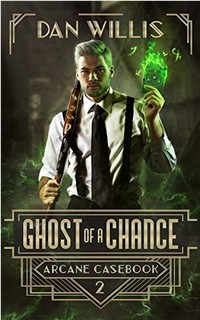
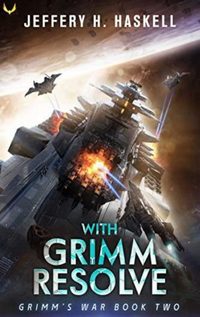
I’m reading Lives Laid Away by Stephen Mack Jones—I’m a little apprehensive, I loved the first in the series so much—and am listening to Demon Magic and a Martini by Annette Marie, Cris Dukehart (Narrator) on audiobook.

Lives Laid AwayBlank SpaceDemon Magic and a Martini

What did you recently finish reading?

I just finished David Ahern’s Madam Tulip and the Rainbow’s End and Percy Jackson’s Greek Heroes by Rick Riordan, Jesse Bernstein (Narrator) on audio.

Madam Tulip and the Rainbow’s EndBlank SpacePercy Jackson's Greek Heroes

What do you think you’ll read next?

My next book should be The Part About the Dragon Was (Mostly) True by Sean Gibson and my next audiobook should be Hard Reboot by Django Wexler, Morgan Hallett (Narrator).

The Part About the Dragon Was (Mostly) TrueBlank SpaceHard Reboot

Hit me with your Three W’s in the comments!

GUEST POST: 7 Tips for Creating a Home Library

Every so often, the good people at Siege Media send me a nice infographic to share. It’s legitimately one of my favorite things to find in my Inbox. I think you’ll enjoy this one, and the nice introduction that they sent to go with it.


7 Tips for Creating a Home Library by Jennifer Anderson

Ever seen those picture-perfect home libraries and wish you had your own?

Adding a home library, or the specific place in the home for storing all of one’s favorite reads, is a bookworm’s dream for a reason. The beautifully organized shelving offers both a decorative touch to any space and a peaceful respite for the avid reader. You may have your favorite digital or audiobooks, but nothing beats an extensive library of physical books.

In this guide, we explain how to make a home library by starting with seven simple tips. Keep reading to learn everything you need to begin creating your own personal collection.

1. Analyze Your Collection
The first step to creating a home library is to gather all the books you currently own and sort them by category. You might find that you already have enough books to fill up your personal collection. If not, you’ll want to determine which kinds of books you want to add to your library.

Taking note of how many books you have will help you determine how much space you need for your home library.

2. Find the Space
Once you’ve determined how many books you have, you’ll need to find a space in your home that can accommodate your collection. It’s best to avoid spaces on outside walls, since their temperature can change frequently.

In addition, steer clear of areas where you eat and drink to avoid pests. Instead, opt for spaces you don’t use as much, like under beds or in corner nooks.

3. Determine Your Budget
Next, you’ll need to figure out a budget for your home library renovation. Take note of any costs that come with the storage and accessories you want, such as shelving, seating, and cushions.

If you don’t have enough books to fill your space, factor in any additional costs for book purchases. Check out compilations in your desired genre, like some of the best nonfiction books, and determine the price of those additions.

4. Choose Your Shelving
There are two main types of shelving used in home libraries: built-in and freestanding. Built-in shelving refers to permanent fixtures built into the walls of the home. Alternatively, freestanding shelving is a movable fixture, such as a bookcase.

The type you choose will depend on the kind of look you want, as well as whether you want your library to be temporary or permanent.

5. Think About Lighting
Since your home library is where you’ll do the most reading, it’s critical to have ideal lighting. To do so, you’ll want to make sure the natural and artificial light in the room meet your needs.

Try to choose a room with a window that lets in a lot of natural light during the day. From there, add lamps for accent lighting that highlights your home library and makes it easier to read at night.

6. Add Lots of Color
Many home libraries make great use of color, in the form of both books and extra elements. To give your space your desired color palette, consider painting your shelving, putting on wallpaper, or adding colorful trinkets on your shelves.

Whichever colors you choose, just make sure to match your home library’s color scheme with the rest of the room.

7. Pick an Organization Style
Your home library is your own personal collection, so it’s important to decide on an organization style that makes the most sense for you. Popular styles include chronological, alphabetical, by color, or by genre.

For those who have kids, place their favorites like the Harry Potter series on lower shelves so they’re within reach.

Making a home library can seem like a daunting task, but it’s actually easier than you think. Simply by following these seven tips, you can start creating the home library of your dreams.

For even more information and tips about creating a home library, take a look at the infographic below.


Just a Spoonful of Sugar—Non-Fiction to Smile With and Learn From

(Updated and Revised 3/7/22)
Just a Spoonful of Sugar—Non-Fiction to Smile With and Learn FromI stumbled onto my notes from Funny, You Don’t Look Autistic: A Comedian’s Guide to Life on the Spectrum a while back (and yeah, I forgot almost all of them in my post about the book). But it got me thinking about McCreary’s approach—taking a hard-to-talk about subject and adding a touch of humor (or at least a light-hearted voice) to it to make it palatable. It’s a great way to get someone to look at the subtleties of what the Autism Spectrum Disorder can be, how individuals can fall somewhere on that spectrum (and therefore have many things in common), and yet be very different from one another.

Now, I realize that some would point to our cultural inability to discuss difficult subjects with the sobriety and seriousness they deserve as a significant problem. And there’s something to that. More than something, probably. Still, I don’t like to think I enjoy these books and their approach because I’m shallow, but I guess I shouldn’t rule that out.

Shallowness aside, there’s something to the approach—whether it’s technical issues, trauma, socially awkward topics, disease, disorders, or other things people try to avoid discussing—doing so in a light-hearted manner or with plenty of laughs, tends to make the audience receptive. It takes a lot of skill to blend the difficult topic into an entertaining package. But it’s a great way to gain a new perspective, a deeper understanding, or learn something.

Here’s a list of the books that I’ve read/posted about in the last few years that entertain while informing/giving insight:

bullet Go Back Where You Came From: And Other Helpful Recommendations on How to Become American by Wajahat Ali—Ali’s memoir of growing up as the child of immigrants from Pakistan. While telling his own story, he shines a light on the kinds of things that people that look like him and/or come from similar backgrounds have to deal with in school and society (both within the Muslim community and without). Of special focus are the days and years post-9/11 and how that’s changed things for better or worse (mostly worse). His telling shows a good sense of humor, and sometimes will spend a good deal of time on humor, but that’s not the focus.
bullet Wishful Drinking by Carrie Fisher—Fisher addresses her addictions and mental health problems (and the extreme solutions) in this frequently laugh-out-loud memoir
bullet Everything is Normal by Sergey Grechishkin—Grechishkin’s memoir of growing up in 1980’s-era Soviet Russia brings the grins (and a chuckle or two) while not letting us forget how hard and terrifying it could be.
bullet Kasher in the Rye: The True Tale of a White Boy from Oakland Who Became a Drug Addict, Criminal, Mental Patient, and Then Turned 16 by Mose Kasher—Kasher’s account will make you smile, break your heart, and help you understand addiction
bullet We Had a Little Real Estate Problem by Kliph Nesteroff—This is the story of Native Americans/Indigenous people in Entertainment–particularly comedy, but there’s a little spill over to other areas, too. Unlike the rest of this list, the prose is straightforward and no-nonsense. But Nesteroff’s subject is comedy and he quotes frequently from those he tells the story of–and their humor shines forth while this dark, yet hopeful, story is told.
bullet Gluten Is My Bitch: Rants, Recipes, and Ridiculousness for the Gluten-Free by April Peveteaux—on the one hand, this seems the slightest of the issues addressed. Ask any person with Celiac Disease how hard it can be to find food that doesn’t make you violently ill—and just how violent that illness can be. But Peveteaux will make you laugh, while offering hope and help..
bullet Henry by Katrina Shawver—even in a Nazi work/death camp, friendship helps, people can find some release.
bullet Funny, You Don’t Look Autistic: A Comedian’s Guide to Life on the Spectrum by Michael McCreary—I realize I started this post talking about the book, but when I revised things, it felt like a bad list if it wasn’t on it. This Comedian talks about growing up with Autism Spectrum Disorder and how he became a comedian—he works to dispel some myths, and offer some real insight while entertaining.
bullet You’ll Never Believe What Happened to Lacey by Amber Ruffin, Lacey Lamar:—Amber Ruffin and her sister, Lacey, recount various racist things that people have said (or done) to Lacy on an almost daily basis in her professional and personal life. It may not sound that funny, but it frequently is.
bullet And Then You’re Dead: What Really Happens If You Get Swallowed by a Whale, Are Shot from a Cannon, or Go Barreling Over Niagara by Cody Cassidy and Paul Doherty—the publisher describes this as, a “gleefully gruesome look at the actual science behind the most outlandish, cartoonish, and impossible deaths you can imagine.”

Help me expand this list—what are some other works along these lines that I should read?

How Not to Be an *SS by Andrew J. Bauman: Essays on Important Topics, That Fall a Little Short

How Not to Be an *SSHow Not to Be an *SS:
Essays on Becoming a Good & Safe Man

by Andrew J. Bauman

DETAILS:
Publisher: Brave Books
Publication Date: December 31, 2021
Format: Kindle Edition
Length: 192 pg.
Read Date: February 20, 2022
Support Independent Bookstores - Visit IndieBound.org

What’s How Not to Be an *SS About?

This is a collection of essays* built around the idea that men who are an *ss (the asterisk is courtesy of Bauman, not me) can change and become a good and safe men.

* Plus a couple of poems. Entirely skippable poems (your results may vary).

Bauman calls men to an authentic, Biblical masculinity—one built on humility, kindness, and service. While offering concrete ways to set aside patterns of abuse and neglect.

Good and Safe Men

Bauman’s description of Good and Safe men is maybe filled with a few too many buzzwords. But when you get past that, I really appreciated what he had to say, and I wish I heard more things like that coming from Reformed and Evangelical men.

His definition of “*ss”

A lot of the time he’s talking about an *ss, he’s talking about something worse. Something like a felon (perhaps not a convicted felon, but someone who should be charged, at least). Most of what he describes as an *ss are abusers. I think we should call them what they are.

Even if you take his *ss as a range—from “The Unaware Fool” (although by definition, some of those he considers unaware, are aware) to “The Narcissistic Coward”—he spends most of his time on “The Narcissistic Coward” when it’s the Fool that would be more open to the help and guidance.

Shortcoming

There are two that seem the most prominent. First, this is an essay collection, not a sustained argument. As a result, it’s a bit scatter-shot and hard to draw any firm conclusions about some of the material. Also, it makes some of the material too surface-level.

Secondly, it’s focused too much on the abusive man, on ways to he can improve. But earlier on, it seemed to be a book for those who weren’t abusive, but are wanting to be better, safer men. Now, don’t get me wrong—I’m all for the former. But I got the impression when I bought the book (and in the early essays) that it was about the latter.

So, what did I think about How Not to Be an *SS?

I’m not sure that what I’ve said here is that helpful without digging in deep into his arguments and suggestions—and to do that is beyond what I have time for here. But hopefully, there’s something useful here.

There’s a lot of good here, a lot of important resources. The theological language is a little imprecise for my taste, but none of it is a deal-breaker for me. The gold outweighs the chaff.

It’s not the book I thought I was getting, but I’m glad that I read it. I wanted more, sure, but I liked what I got.


3 Stars

This post contains an affiliate link. If you purchase from it, I will get a small commission at no additional cost to you. As always, opinions are my own.

Saturday Miscellany—3/5/22

I’m preparing this Wednesday night, so we’ll be brief. Hope your week was good, will catch up soon—after I resume my typical Hobbit-ish ways.

Odds ‘n ends about books and reading that caught my eye this week. You’ve probably seen some/most/all of them, but just in case:
bullet At least 7 state legislatures are proposing ‘book ban’ legislation, prompting concern from civil liberty advocatesm
bullet A. Lee Martinez on creating Constance Verity—Martinez is one of my favorite writers to read about writing (in addition to a favorite author period). Here he talks about creating an unreaslistic hero for his Constance Verity trilogy.
bullet I’m Dying Up Here: What a Decade of Stand-Up Taught Me About Fear and Thrillers—I’ve got to say this is not a perspective on thrillers I’d have expected to see
bullet Publishing Predictions That Never Came True

A Book-ish Related Podcast episode (or two) you might want to give a listen to:
bullet Barbican Station – Reconstruction by Mick Herron – Episode 13—Jeff Quest and I talk about this great Herron novel (this is the last time I talk about this podcast, really)

This Week’s New Releases that I’m Excited About and/or You’ll Probably See Here Soon:
bullet Death in the Sunshine by Steph Broadribb—The first in a new series, Retired Detectives Club. Think Richard Osman + police procedural. (I’m guessing)
bullet Spelunking Through Hell: A Visitor’s Guide to the Underworld by Seanan McGuire—The newest InCryptid novel features Alice Price making a big push to find her husband. I can’t wait to jump in.

Lastly, I’d like to say hi and extend a warm welcome to Lashaan Balasingam @ Roars and Echoes who followed the blog this week. Sure, he’s been following for a while, but he’s got a new blog now, and I thought I’d share the link for it.

Spelling the Month in Books: March

Spelling the Month in Books: March
I kept the focus this month on books I haven’t read in a decade or more. I sort of stumbled onto that idea mid-way through the January post and at this point I’m glad I did that–it’s fun strolling down Memory Lane with them. More than the previous two months, this month’s list made me want to hit “pause” on everything else I’m doing to re-read these.

M Must Kill TV

Must Kill TV

Ken Levine’s one of those writers that I enjoyed for years without realizing–you too, probably (check out his imdb pabe)–and his blog is one of the more consistently entertaining. So back in 2013 when his novel came out, I jumped on it. The story of a TV exec doing whatever it takes to keep his network’s biggest star happy (or at least keep him showing up to work) is a fun Hollywood-satire/crime story, and it makes you wish he’d write a few more.

A Agatha H. and the Airship City

Agatha H. and the Airship City

Phil Foglio & Kaja Foglio’s novelization of the first arc of their webcomic is just a blast. I remember some random weekend years ago, when someone tipped me off to the Girl Genius comics and I spent hours pouring through them–and didn’t even come close to catching up. I couldn’t do another dive like that again, and never quite caught up. A couple of months later, this novel came out and it was even better than the comics (although, I’m glad I read them, so I could visualize some of the gizmos). This steampunk/gaslamp/whatever=genre-you-want-to-tag-it-with adventure is just fun. There’s action, romance, comedy, and a whole bunch of strong and smart female characters–and told with a flair that makes it a delight to read.

R Redshirts

Redshirts

John Scalzi’s novel starts out as a pretty obvious Star Trek parody, and then shifts into a comic-SF story and the shifts into a nice meta-fiction. I remember being perfectly satisfied with the novel as it was before reading the codas that followed it, I remeber them elevating the book into something even more effective and affecting.

C Catl's Claw

Cat’s Claw

This is the second in Amber Benson’s series about Death’s Daugher, Calliope Reaper-Jones. A perfectly “normal” twenty-something struggling to make her way in the world, who has to take over her father’s job when he goes missing. This book finds her dealing with ancienet Egyptian forces, Purgatory and Vegas. You know, typical Urban Fantasy fare. The book is a nice combination of fantasy action and coming-of-age story, told with a decent dosage of snark.

I was suprised to find that I’d rated this 2 Stars back when I read it–I’ve often suspected that I used to be stingier with my stars than I am now. I rated three of the five books in the series with two stars, the other two got three from me–and I still read all five! There’s no way I do that today. But if i hadn’t looked up what I rated this on Goodreads, I’d have told you 3+ for the whole series.

H The Highly Effective Detective

The Highly Effective Detective

I talked about Rick Yancey’s YA series last month, so I pretty much had to talk about this one now. My son and I discovered Yancey at about the same time, and this was my introduction to him. Teddy Ruzak is a night watchman who comes into a little money when his mother dies and puts it all into starting a P.I. business. It’s not necessarily the best move for him, I’m not sure he’s right for it (Teddy might agree, almost everyone else in the book does). There’s a quiet humor to these books, as well as some nice PI action, and a sweetness throughout that the genre doesn’t frequently display.

Page 240 of 610

Powered by WordPress & Theme by Anders Norén