Category: Uncategorized Page 1 of 10

HC Chats with JCM Berne about Self-Publishing in 2026 and some other stuff

Self-Published Author Appreciation Week Banner has a gray bird on a black disk. Around the disk are the words, 'Self Published Authors Appreciation Week.' In the top left corner, it says, 'July 20-27, 2026.' In the bottom right corner it says, '#SPAAW'
Each year–at least each year that I remember–one of the things I try to talk about is the Publishing side of Self-Published Authors Appreciation. The Authoring bit gets all of the attention–and it’s easy to understand why. But–as I say in the videos this week–it’s the Publishing side that makes me admire and appreciate these authors more. This week I’ve been able to convince 4 (maybe 5–we’ll see how the week goes) authors to sit down with me and talk about their approach to the parts where they take their creative efforts and get them into the hands of the readers.

Today, I welcome JCM Berne back to the chatroom, I talked to him about Self-Publishing last year, too–this year we got into some different areas–getting into the audiobook market, finding the right editors (I don’t necessarily condone all his strategies, although they seem to have worked for him), how the market is doing this year, and other odds and ends. Honestly, I could do one of these a month (at least) with him, I have a lot of fun with this. I hope you enjoy this at least half as much as I did.

Visit the SPAAW 2026 Hub to see what other Self-Published Appreciation Posts are out there.

Self-Published Authors Appreciation Week circle logo and the Irresponsible Reader Pilcrow in front of an open book

Image by OpenIcons from Pixabay
The 2026 Self-Published Authors Appreciation Week Logo was made by Witty and Sarcastic Book Club

HC Chats with Michael R. Fletcher about Self-Publishing and some other stuff

Self-Published Author Appreciation Week Banner has a gray bird on a black disk. Around the disk are the words, 'Self Published Authors Appreciation Week.' In the top left corner, it says, 'July 20-27, 2026.' In the bottom right corner it says, '#SPAAW'
Each year–at least each year that I remember–one of the things I try to talk about is the Publishing side of Self-Published Authors Appreciation. The Authoring bit gets all of the attention–and it’s easy to understand why. But–as I say in the videos this week–it’s the Publishing side that makes me admire and appreciate these authors more. This week I’ve been able to convince 4 (maybe 5–we’ll see how the week goes) authors to sit down with me and talk about their approach to the parts where they take their creative efforts and get them into the hands of the readers.

This evening, I’m chatting with Michael R. Fletcher, man of many genres, multiple series, and quite the experience in Self-Publishing. I enjoyed the conversation a lot and I appreciate his depth of experience. I hope you enjoy this chat almost as much as I did:

Visit the SPAAW 2026 Hub to see what other Self-Published Appreciation Posts are out there.

Self-Published Authors Appreciation Week circle logo and the Irresponsible Reader Pilcrow in front of an open book

Image by OpenIcons from Pixabay
The 2026 Self-Published Authors Appreciation Week Logo was made by Witty and Sarcastic Book Club

HC Chats with DB Rook about Self-Publishing and some other stuff

Self-Published Author Appreciation Week Banner has a gray bird on a black disk. Around the disk are the words, 'Self Published Authors Appreciation Week.' In the top left corner, it says, 'July 20-27, 2026.' In the bottom right corner it says, '#SPAAW'
Each year–at least each year that I remember–one of the things I try to talk about is the Publishing side of Self-Published Authors Appreciation. The Authoring bit gets all of the attention–and it’s easy to understand why. But–as I say in the videos this week–it’s the Publishing side that makes me admire and appreciate these authors more. This week I’ve been able to convince 4 (maybe 5–we’ll see how the week goes) authors to sit down with me and talk about their approach to the parts where they take their creative efforts and get them into the hands of the readers.

This evening, I’m chatting with DB Rook (and if I’m not mistaken, one of my dogs puts in a loud appearance…sorry about that). We talk about how he’s learning his way in self-publishing, differences in the audiences for his books, and just a smidgen about The Book of Spores. I had a great time, and it was absolutely worth not sleeping in on a holiday so we could manage the 7 hour difference. Hope you enjoy this chat about his processes:

Visit the SPAAW 2026 Hub to see what other Self-Published Appreciation Posts are out there.

Self-Published Authors Appreciation Week circle logo and the Irresponsible Reader Pilcrow in front of an open book

Image by OpenIcons from Pixabay
The 2026 Self-Published Authors Appreciation Week Logo was made by Witty and Sarcastic Book Club

HC Chats with Adam Holcombe about Self-Publishing and some other stuff

Self-Published Author Appreciation Week Banner has a gray bird on a black disk. Around the disk are the words, 'Self Published Authors Appreciation Week.' In the top left corner, it says, 'July 20-27, 2026.' In the bottom right corner it says, '#SPAAW'
Each year–at least each year that I remember–one of the things I try to talk about is the Publishing side of Self-Published Authors Appreciation. The Authoring bit gets all of the attention–and it’s easy to understand why. But–as I say in the videos this week–it’s the Publishing side that makes me admire and appreciate these authors more. This week I’ve been able to convince 4 (maybe 5–we’ll see how the week goes) authors to sit down with me and talk about their approach to the parts where they take their creative efforts and get them into the hands of the readers.

We’re going to start with Adam Holcombe. Honestly, we recorded this long enough ago that I don’t remember the details too well. (I should’ve written this post that evening). I remember having a great time with him, and hope we can do this again sometime when we can focus on one–or both–of his series. In the meantime, I hope you enjoy this look behind the curtain:

Visit the SPAAW 2026 Hub to see what other Self-Published Appreciation Posts are out there.

Self-Published Authors Appreciation Week circle logo and the Irresponsible Reader Pilcrow in front of an open book

Image by OpenIcons from Pixabay
The 2026 Self-Published Authors Appreciation Week Logo was made by Witty and Sarcastic Book Club

True Color by Kory Stamper: The Struggle to Define Blue (and other colors)

Cover of True Color by Kory StamperTrue Color: The Strange and Spectacular Quest to Define Color—from Azure to Zinc Pink

by Kory Stamper

DETAILS:
Publisher: Knopf
Publication Date: March 31, 2026
Format: e-ARC
Length: 320 pg.
Read Date: March 21-25, 2026
Buy from Bookshop.org Support Indie Bookstores

What’s True Color About?

Have you ever had trouble describing a color to someone? Strange sea creatures, sunsets, a (hopefully) food stain on a shirt, paint on a wall? It’s not easy. For some of us more than others, I’m sure (I’m at the weak end)—but it’s not that easy.

Now, try to imagine doing it not for a friend or paint clerk—but for the thousands or more that might read your description (read: definition) in a dictionary or other reference work.

Stamper points to two significant markers in the development of these definitions. The first is that prior to the First World War, Germany was the world’s biggest source of commercial dyes. During the War, two things happened—first, those plants became weapons factories (and learning how easy that was is a bit disconcerting), and second, places like the U.S. had to start producing their own. And if, say, two different suppliers understood a tint of green differently—the camouflage they provided to the Army in Europe could have significant consequences.

The other is a little less dramatic, but no less impactful. When people in the U.S. started making oleomargarine in the 1800s, dairies were upset about them coloring it to look like butter—this resulted in legal battles, and eventually, the U.S. Congress weighed in.

These two things began efforts in the U.S. to codify colors, dyes, hues, and whatnot into some sort of standard.

Fast-forward to when Kory Stamper is editing Merriam-Webster’s website (and from her description, this is not an easy job), when she came across some odd color definitions. The wording was odd, the definitions themselves were puzzling—where did these come from?

Thus begins this story about the attempts to define colors—in a way that satisfies diverse audiences like artists, scientists, and general readers—during the development of their Second and Third Unabridged Dictionaries. Stamper tells the story of putting these dictionaries together, some of the editors who worked on them—and worked with outside consultants like I. H. Godlove (and his wife and colleagues) and others to craft these definitions.

It’s a book of human drama, academic politics, technological limitations, and the limits of human language and understanding.

Why did I pick this up? Why did I keep reading?

I picked this up because I enjoyed Stamper’s earlier book Word by Word: The Secret Life of Dictionaries and because I was intrigued by the question—how do you define a color? I also hoped to pick up some tips to help me with that. Spoiler: I did not. But I don’t care. This was better. It’s also encouraging to know that even professional definers struggle.

Why did I keep reading? There’s just so much trivia—especially in the beginning, so many strange little facts you pick up along the way—for example (taken from the publisher’s description, because I hate to ruin stuff like this) “did you know that the word ‘puke’ used to refer to a fashionable shade of reddish-brown before it was associated with vomit?”

But more importantly, I was just fascinated by the way these editors and experts went about putting together these dictionaries—the differences in approach between the two—and so on. Stamper can make what one might think is dry and dusty history come alive and fill it with humanity.

Readers of Nero Wolfe will learn that he wasn’t the only one who had problems with the Third Unabridged Dictionary—although most derided it in reviews or newspaper articles, rather than burning it page by page in their fireplace.

So, what did I think about True Color?

I was, again, fascinated by the people she focused on to tell her story. I wanted to talk to people about them—I’d like to learn more about them and their work.* Her following up with the Godlove family’s living relatives so we could get more insight into the people behind the work was a wonderful touch.

Like her previous book, True Color will disabuse many of what they imagine the behind-the-scenes of Dictionary production is like. You will read about one of the worst bosses around, for example. Stress, overwork, burnout, crazy turnover, rampant misogyny (okay, you might have guessed that given the time periods), tiny budgets, and more. It turns out that Dictionaries are put together by human beings, not beings of pure intellect.

Also, I cannot say enough about Stamper’s use of language. It will not come as a surprise that someone who works on dictionaries has a way with words—she has ready access to all the best ones, after al—but to see it in action is something else. Stamper’s rich vocabulary is on full display here, and she crafts it beautifully.

* I will not—particularly about their work, I wouldn’t understand it. But I wanted to.

Disclaimer: I received this eARC from Knopf via NetGalley in exchange for this post, which contains my honest opinion—thanks to both for this.

This post contains an affiliate link. If you purchase from it, I will get a small commission at no additional cost to you. As always, the opinions expressed are my own.
Irresponsible Reader Pilcrow Icon

The Lantern and the Night Moths, Edited and Translated by Yilin Wang: A Remarkable Reading Experience

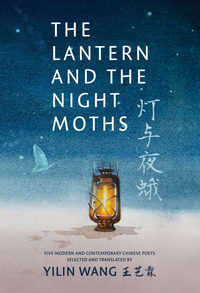
Cover of The Lantern and the Night Moths by Yilin WangThe Lantern and the Night Moths

edited and translated by Yilin Wang

DETAILS:
Publisher: Invisible Publishing
Publication Date: April 2, 2024
Format: Paperback
Length: 101 pg.
Read Date: November 21, 2025
Buy from Bookshop.org Support Indie Bookstores

What’s the Publisher’s Description of The Lantern and the Night Moths?

“the lantern light seems to have written a poem;
they feel lonesome since i won’t read them.”

—“lantern” by Fei Ming

The work of Tang Dynasty Classical Chinese poets such as Li Bai, Du Fu, and Wang Wei has long been celebrated in both China and internationally, and various English translations and mistranslations of their work played a pivotal yet often unacknowledged role in shaping the emergence and evolution of modern Anglophone poetry.

In The Lantern and the Night Moths, Chinese diaspora poet-translator Yilin Wang has selected and translated poems by five of China’s most innovative modern and contemporary poets: Qiu Jin, Fei Ming, Dai Wangshu, Zhang Qiaohui, and Xiao Xi. Expanding on and subverting the long lineage of Classical Chinese poetry that precedes them, their work can be read collectively as a series of ars poeticas for modern Sinophone poetry.

Wang’s translations are featured alongside the original Chinese texts, and accompanied by Wang’s personal essays reflecting on the art, craft, and labour of poetry translation. Together, these poems and essays chart the development of a myriad of modernist poetry traditions in China that parallel, diverge from, and sometimes intersect with their Anglophone and Western counterparts.

The Poetry

There’s 28 poems (I think, I counted quickly) in this collection. Five of them I resonated with and really enjoyed—well, maybe four of them. But I “got” five. The rest of them? Not so much.

That’s not to say they were bad—most of them I thought were great for 50-66% of the stanzas, and then the rest just felt like a different poem. Many of the other half/third were pretty good, too. I just didn’t get what they have to do with the other stanza(s). I have to say that I found that incredibly frustrating.

Chinese poetry shouldn’t work like Western poetry—I wouldn’t want it to. I want it to seem strange—and these succeeded in that. But (beyond the bits I didn’t get), the collection and individual poems felt more “other” than I anticipated, which struck me as a positive and a negative.

The Essays

The first couple of these were a lot more personal than I assumed they’d be, given the description of the book. I found that a little off-putting, to be honest. The first essay, in fact, made me wonder how much Wang was translating and how much she was trying to do something else—maybe even paraphrasing.

But the latter essays clicked with me, and I really appreciated Wang describing some of her choices, some alternative ways she could’ve translated something, and why she opted for the direction she did. I learned a lot and appreciated the practically-impossible task she took on by translating these poems.

So, what did I think about The Lantern and the Night Moths?

This is not going to go down as one of my favorite poetry collections, period. I do think I would return to four of these poems (and yes, I have a list for future use).

That said, this was simply fascinating as an experience—to read a poem (and to look at the Chinese original and boggle at how those characters become the English versions) and then to read about the impact they made on this poet/translator and some of the choices made to get it into a format that English readers can appreciate. It’s something I know I’m not going to see often (if ever).

People more in tune with translation, poetry, or Chinese culture will appreciate and enjoy this more than I did. But I’m so glad that I read this—and that Shannon Knight recommended it to me. The reading of this book is an experience that I relished.

This post contains an affiliate link. If you purchase from it, I will get a small commission at no additional cost to you. As always, the opinions expressed are my own.
Irresponsible Reader Pilcrow Icon

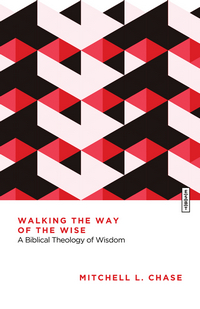
Walking the Way of the Wise by Mitchell L. Chase: The Walk of Life

Cover of Walking the Way of the Wise by Mitchell L. ChaseWalking the Way of the Wise:
A Biblical Theology of Wisdom

by Mitchell L. Chase

DETAILS:
Series: Essential Studies in Biblical Theology
Publisher: IVP Academic
Publication Date: June 3, 2025
Format: Paperback
Length: 162 pg,
Read Date: June 15-22, 2025

Buy from Bookshop.org Support Indie Bookstores

Wisdom in the biblical sense is more than street smarts. It is more than cleverness on a particular field, Biblical wisdom is the result of living in glad submission to God’s Word in God’s world. Biblical wisdom is believing what God has revealed and seeking to live in light of it.

What’s Walking the Way of the Wise About?

This is an attempt to show a biblical theology of wisdom—focusing on how the various genres “showcase” or tell (as well as show) an understanding of the concept.

This will incorporate various elements of the revelation throughout Scripture, showing how they contribute to an understanding along a salvation-historical trajectory.

It’ll be easier to let Chase describe this:

Chapter 1 roots us in the early chapters of Scripture, where the seeds—and even a tree—of wisdom are found. Chapter 2 discusses the story and person of Job, since I think his life was very early in biblical history. With chapters 3 and 4, we follow the stories and steps of Abraham and his descendants—the Israelites. In chapter 5 we see the rise of David and we hear his songs, his psalms. The shadow of Solomon looms over chapters 6,7, and 8, as we reflect on his life and on the books of Proverbs, the Song of Songs, and Ecclesiastes. Our exploration of wisdom in the Old Testament concludes with chapter 9, where we follow the Israelites into exile, which is where folly takes its disciples. Chapter 10 directs our attention to the incarnation and ministry of Jesus, the true and greater Solomon. In chapter 11 we consider the importance of walking wisely as Christ’s people, for the days are evil. And finally, in chapter 12, we cast our eyes toward the end of the wise road—the way that leads to life and blessing, the life we were made and saved for.

This salvation-historical trajectory will help us situate Scriptures teaching about wisdom in light of the big story of Scripture itself. With a canonical perspective on wisdom, we will see the various ways that the biblical authors instruct us about this topic. And we will more fully appreciate how they summon us to join the blessed and joyful saints who are walking the way of the wise.

Proverbs/Ecclesiastes

An interpretive danger to avoid when reading through Proverbs expecting earthly fulfillment of these promises in an absolutizing sense, as if life were not complicated and inexplicable things did not happen. Do the righteous not suffer? Do the wicked not sometimes prosper? Do people who walk with integrity not still face obstacles? Do the wise not sometimes die young? Do the wicked sometimes not seem to get away with their schemes and escape consequences? Consider the earthly ministry of Jesus. The wicked came against him with conspiracy and intrigue. He, the holy and righteous one, was killed. His vindication occurred through his bodily resurrection—a kind of resurrection that comprises our hope when Jesus returns.

We can affirm two things: the book of Proverbs is true, and life is complicated. The proverbs are statements about how life typically works.

The book of Ecclesiastes does not exactly feel like a warm hug. It is more like a splash of cold water to the face. But if you are being lulled to sleep when you need to be alert and sober-minded, a splash of cold water can be a pift, a lifesaver.

If we are going to be wise, we have to welcome uncomfortable truths, We have to be willing to sit with difficult realities, such as unanswered questions, the futility of work, and the inevitability of death. One manifestation of folly is the resistance to dealing with reality. Foolishness does not want to acknowledge the way things are. So, when the writer is helping readers grow wise, he gives a heavy dose of what life is like in a fallen world.

It’s probably cheating to find some of the best material in this book to be from Chase’s discussion of the OT Wisdom Books, but it’s also not surprising that he’d be able to get much of his material from Proverbs and Ecclesiastes (as well as other books in the genre).

Many people—including people I typically think of as worth paying attention to, will take Proverbs and apply it without nuance or real understanding of life being complicated. This not only does a disservice to the reality we all see every day, but it also fails to understand the book properly. Obviously, in the few pages Chase can give to the book, we’re not going to be able to get a full understanding of the book—or of what it tells us about wisdom/wise living. That said, what he does help the reader to understand will help the reader to tackle the book on their own—at least to know better than trying to see the book as a straightforward look at life.

The same can be said for Ecclesiastes—not that nearly as many people will try to take a reductionistic approach to the book—and those who do will typically see it as a dark, mysterious, and maybe cynical/hopeless look at the world. Chase shows that the answer is not as simple as that.

Other Highlights

I truly appreciated the way he discussed the whole of Job—obviously not in a lot of depth, he only had 11 pages for it. But he starts off by showing that the book is not just about Job’s suffering in faith—but that the crux of the book is a discussion of wisdom and its source being God.

Another highlight for me was seeing the Pentateuch—particularly Deuteronomy—serving as the background for so much of the book of Proverbs. It’s easy to see the book as a semi-random collection of couplets and droplets of good advice. But if you see it as the work of a father carrying out the instructions in Deuteronomy to explain and apply the Pentateuch to his children (for example, but not limited to that)—it takes on a new life and vitality.

But the biggest highlight for me—and there were many—is Chapter Eleven, “Walking Wisely in Evil Days.” This chapter covers the Christian Life (essentially), drawing on the Pauline and General Epistles. The second section of that chapter, “Growing in Wisdom in Christ,” contains the best two pages of the book. Obviously, you need more of the book to get everything he’s saying there—but if you only read two pages of the book, those should be it.

So, what did I think about Walking the Way of the Wise?

Wisdom is not merely hearing. Wisdom is hearing with a readiness to obey. The Lord lavs out a myriad of commands while the nation gathers at the base of Mount Sinai, and the wise response is the embrace of and submission to these commands. There is a relationship between wisdom and God’s law. God’s commands are for the good of his people as he directs them in true worship and holy living. Wisdom, like God’s laws, is for our good. Wisdom orients our lives toward God and neighbor in ways that are honorable. While it may be too simplistic to say that God’s laws and wisdom are identical, we can certainly affirm that God’s laws are an example of wisdom. His laws are wise and direct his people wisely.

I’m glad to see this series back, with a new editor* and second-phase in its focus. If nothing else, both of those promise more volumes to come—and they’ll likely to be as valuable as their initial counterparts.

It’s frequently the case, but it seems to be more the case with this book than usual. The footnotes could serve as a TBR for several months’ reading. I’ve added a few books to my list (and could’ve easily doubled that number).

I personally benefited from Chase’s definition of “wisdom” and how to find it in Scripture. I really appreciated his unwillingness to make Proverbs, Ecclesiastes, Song of Songs, and James the epicenter of his discussion, but to look for it throughout the Scriptures (see above). Tackling the topic of wisdom from a Redemptive Historical point of view rather than a Systematic perspective (which is what I’m used to, as I expect most are), really helped me to see the breadth of it—and even to help with my Systematic understanding of it (as it should).

All in all, this is a truly helpful and insightful read, and I commend it to you.

* I have no complaints about Dr. Gladd’s time on the series, was just noting the new general editor.


4 Stars

This post contains an affiliate link. If you purchase from it, I will get a small commission at no additional cost to you. As always, the opinions expressed are my own.

Irresponsible Reader Pilcrow Icon

Why Haven’t I Replied to Your Comment(s)?/Why Do I Take Days/Weeks to do So?

That’s a fantastic question–and one I ask myself often. Particularly on Wednesdays and Saturdays when I receive the most comments.

The reasons are multi-faceted, but rooted in distraction. (actually, my daughter has been trying to convince me that I have some sort of undiagnosed Attention-Deficit Disorder, and there might be something to it)

    1. I thought I did.
    2. I started to and a metaphorical squirrel popped-up in front of me (a dog, a grandchild, my wife saying something, an email/text)
    3. I forgot to check the comments.
    4. Poor time management (when I’m not at work)
    5. Worse organization skills (ditto)
    6. I’m super-busy and or tired, and things like being polite and attentive to readers falls off my radar.
    7. There is NOOOOO reason 7.
    8. I desperately want to, but I’m trapped under something heavy.

I do actually read them all within minutes of getting a notification (even when I tell myself I should wait until I have time to respond), and I generally mentally compose a response that I can’t make until later in the day. This is a significant problem leading to Number 1 above. I really do think I did respond in a timely fashion. Then I realize I didn’t when I’m back in a situation where I can’t. And then the guilt ferrets come.

I’m not saying I’ll do better–but I’m trying. But now you might understand.

Irresponsible Reader Pilcrow Icon

The Ten Commandments by Cornelius Van Til: A Brief Look at the Law

Cover of The Ten Commandments by Cornelius Van Til The Ten Commandments

by Cornelius Van Til

DETAILS:
Publisher: Cantaro Publications
Publication Date: January 1, 2024
Format: Paperback
Length: 204 pg.
Read Date: February 9, 2025
Buy from Bookshop.org Support Indie Bookstores

What’s The Ten Commandments About?

Well, as the title suggests, it’s about The Ten Commandments–it’s an exposition of them, and a brief explanation of what the Moral Law is and how it functions by Cornelius Van Til, who taught the course on Christian Ethics at Westminster Theological Seminary in its early days.

Like many of his works, until this edition, it was unpublished. It’s the curriculum from that class, really. It’s as close to attending Van Til’s course as we’re going to get.

We get one chapter on the nature and use of the Law in the Christian life (and throughout Scripture) and then a (generally) brief chapter on each commandment.

Miscellaneous Observations

There are a handful of things that an academic reviewer would spend time on, or if I wanted to get into his arguments, I would devote paragraphs to. But I’m not, so I’m just going to list off thoughts I had along the way:

bullet When it comes to the First Commandment (leading to a discussion of God’s existence and atheism) and the Third Commandment (God’s self-revelation via His name and other means), Van Til the apologist comes to the fore. He spends a disproportionate amount of time on these two–I’m not complaining, I’m simply noting. Any students who took his Ethics class before Apologetics (assuming that was possible) probably had a leg up on those who went right into Apologetics.
bullet His discussion of the 4th (Sabbath) didn’t lead to as many specific practical applications as I was hoping (if only for curiosity’s sake, I wanted to see his take on some things). But pound-for-pound one of the best brief discussions on the day change, external vs. internal/spiritual observance of the day.
bullet I really appreciated his discussion of the Sixth Commandment (Human Life), we need more like it.
bullet It boggled my mind that he saw the necessity of labor unions and protests–in a fallen world, such things are necessary for protection against the fallibility of our fellow man. (I think I agree with him, just didn’t expect it from him)
bullet His discussion of the 9th Commandment (Truth) didn’t get take the apologetic turn that I expected (although it’s there), and was helpful–but I could’ve used more.
bullet The chapter on the 10th Commandment (Contentment) was too brief, but what was there was excellent.

So, what did I think about The Ten Commandments?

It wasn’t bad–it was pretty good, actually. I had hoped for a little more depth–and I got it occasionally, but not as often as I’d hoped.

It’s also pretty clear and easy to understand–this is a great bonus. Van Til enjoys (even among his most ardent of supporters/students) the reputation for not being a very clear writer. But I didn’t get a trace of that here.

This is a slightly uneven, but helpful and sound introduction to and overview of the Ten Commandments and their use in the Christian life. It’s in line with what you’d find in Calvin, Turretin, Hodge, and the like. Maybe a little more accessible because it was written in the early 20th Century.


3.5 Stars
This post contains an affiliate link. If you purchase from it, I will get a small commission at no additional cost to you. As always, the opinions expressed are my own.

Irresponsible Reader Pilcrow Icon

Programming Note/Reminder & Encouragement

This is one of those rare Saturdays where I don’t know when I can assemble the Miscellany for the day, but it is coming.

One of the reasons that I’ll be away from my keyboard is that it’s the last Saturday in April–known to many of us as Independent Bookstore Day. This is the 12th of these events, and I’m willing to bet that one near you is celebrating (it’s one of the bigger sales days for them–so I think they’ll be celebrating in more than one sense).
2025 Independent Bookstore Day Logo

If you can’t make it outside (which is understandable and relatable)–head over to bookshop.org, where a portion of the sales go to a bookstore of your choice. I typically suggest using my affilate site, but today, I urge you to pick your favorite local store (or, you can go with Shared Stories if you wanted to help mine if you don’t have one). Also, they apparently have free shipping this weekend!

Irresponsible Reader Pilcrow Icon

Page 1 of 10

Powered by WordPress & Theme by Anders Norén