Author: HCNewton Page 261 of 610

WWW Wednesday, November 10, 2021

Maybe it’s the whole end of DST thing, but my sleep has been out of whack for a couple of days, which is making it difficult to post anything. I’d intended to spend my lunch hour cleaning up a post for today, but I got my eyes dilated this morning, and they’re not focusing very well yet. So much for that idea. At least I’d already assembled this for WWW Wednesday, right?

This meme was formerly hosted by MizB at A Daily Rhythm and revived on Taking on a World of Words—and shown to me by Aurore-Anne-Chehoke at Diary-of-a-black-city-girl.

The Three Ws are:

What are you currently reading?
What did you recently finish reading?
What do you think you’ll read next?

Easy enough, right?

What are you currently reading?

I’m reading the incredibly fun Love & Bullets: Megabomb Edition by Nick Kolakowski and am listening to Master of Formalities by Scott Meyer, Luke Daniels (Narrator) on audiobook (which is likely to be as fun, I’m not that far into it yet, so I don’t know).

Love & Bullets: Megabomb EditionBlank SpaceMaster of Formalities

What did you recently finish reading?

I just finished Richard Osman’s The Man Who Died Twice—which was spectacular—and the entertaining The Unfortunate Decisions of Dahlia Moss by Max Wirestone, Lauren Fortgang (Narrator) on audio.

The Man Who Died TwiceBlank SpaceThe Unfortunate Decisions of Dahlia Moss

What do you think you’ll read next?

I’m looking forward to seeing what Renee Ballard is up to in my next read, The Dark Hours by Michael Connelly. My next audiobook should be The Astonishing Mistakes of Dahlia Moss by Max Wirestone, Lauren Fortgang (Narrator).

The Dark HoursBlank SpaceThe Astonishing Mistakes of Dahlia Moss

Hit me with your Three W’s in the comments! (no, really, do it!)

The Mermaid’s Pool by David Nolan: Nolan Delivers Another Dose of Manc Noir

The Mermaid's Pool

The Mermaid’s Pool

by David Nolan
Series: Manc Noir Book 2

Kindle Edition, 192 pg.
Fahrenheit Press, 2020

Read: August 20-23, 2021
Grab a copy from your local indie bookstore!

‘Wow,’ the young man deadpanned. ‘Nazi cops. Absolute shocker.’

‘Is that how you see it?’ Smithdown asked.

‘Yes, I do. And it appears that I’m entirely right.’

‘This is the bit when I tell you about a few bad apples isn’t it? About what a great lot we all are – on the whole; just good people doing a tough job as best we can? But under the circumstances, I’m going to say nowt. I don’t know what I know anymore. Or who.’ Smithdown looked around the darkening landscape. ‘I’m a bit lost, to be honest.’

What’s The Mermaid’s Pool About?

The predecessor to this novel, Black Moss, took place in two different timelines—the first was April of 1990. This book takes place two years earlier, and involves (to one degree or another) two of the characters from Black Moss, and shows them starting on the path that leads them to where they were in the second storyline of 2016.

Which is a long-winded way of saying it’s a prequel.

There are (essentially) two separate storylines.

Storyline A

The first involves a missing mother—Naomi’s daughter has been put in children’s care home after her boyfriend slapped her. Soon after this, Naomi’s hand is found by a man walking his dog. Smithdown focuses on the boyfriend as the culprit, but needs to know if Naomi’s still alive, too.

This case takes him to a nearby town where another grizzly discovery has been made—near a lake (subject of many urban legends), a mutilated body has been found.

Storyline B

Immigrants from Bangladesh and Pakistan are being attacked in the night, creating—practically overnight—a spike in racial tensions between the two communities.

As Smithdown and other detectives try to put a stop to these attacks, he starts to believe that there’s something going on that is trying to take advantage of—and is perhaps stoking—this tension as it mounts to near-riotous levels.

So, what did I think about The Mermaid’s Pool?

Of course, it’s not just the two storylines at work—they’re intermingled and there are a couple of more personal subplots involving Smithdown and his family. But let’s keep things simple and pretend that the storylines are hermetically sealed from one another.

In my imaginary world, if you could excise Storyline B; tweak A so it’s not dependent on B; or create an easier-to-believe B, and keep the personal subplots—you’d have yourself a winner. Most of B is great—but at a certain point, it just jumps too far and I can’t buy it. I’ve seen similar things tried by other authors—Robert B. Parker and Rob Parker jump to mind.*

* I’m at a loss for other examples at the moment, but Nolan’s not the first non-Parker to try.

That said, while I had checked out on that story working for me as soon as I saw where Nolan was going—I was gripped by it. How was he going to pull off a satisfying resolution while balancing the smaller story of one presumed-dead woman in the middle of this? I was on the edge of my seat and rolling my eyes simultaneously.

And it’s a shame I felt this way because, underneath all of this, Nolan was painting a gripping picture about hate—hate in many varied forms—and how that hate can shape and harm a community, how it can corrupt noble institutions, and twist individuals of all backgrounds. And I was too distracted to be able to spend as much time musing on that as I think I should have.

Is there some light in all of the hate? Some hope? Yes, some. But as with Black Moss, Nolan makes you hunt for it. Maybe so you value it more.


4 Stars

This post contains an affiliate link. If you purchase from it, I will get a small commission at no additional cost to you. As always, opinions are my own.


The Appeal by Janice Hallett: You Have Not Read a Mystery Like This Before.

The Appeal

The Appeal

by Janice Hallett

eARC, 448 pg.
Atria Books, 2022

Read: October 30-November 4, 2021
Grab a copy from your local indie bookstore!

What’s The Appeal About?

The setup is basically this: a pair of law students have been given a stack of documents—emails, texts, voicemail transcripts, letters, and so on. They’re to read through this stack and be prepared to work out what crime(s) happened in what’s documented and who did what (and maybe why).

The correspondence focuses on a period of March-July in the lives of people in The Fairway Players or their associates. The Fairway Players are a local amateur theater group from a small community. As the group starts to plan their next play, the director makes a horrible announcement: his granddaughter, Poppy, has just been diagnosed with a rare form of brain cancer. He’s going to have to step back for a while, and Poppy’s uncle will be stepping up to direct, etc. There’s an experimental drug from the U.S. that’s her best shot at a cure, but it’s expensive and the family’s trying to crowdfund the treatment.

The Players are galvanized into action—individually and as a whole. People do charity runs, have a fundraising gala, a raffle, direct contributions, and so on—and, of course, all the proceeds from The Fairway Players’ next play will go to the Fund.

The stack of documents chronicles the messages about this fundraising appeal, the emails of support, and a lot of the behind-the-scenes work at the appeal and the play, and assorted tangential matters. There’s a lot of gossip, backstabbing, emotional manipulation, and…well, you start to get the idea that not everything is on the up-and-up with the appeal, the treatment, and some of the people involved. The more you start to piece together the picture these emails, etc. are painting, the more you’re pretty sure you’re missing something big. Maybe a few somethings. A crime has been committed, one or two may be in progress, and there may be more on the way.

The only way to find out is to see what the next email has to say.

Isabel Beck

When it comes to sheer word count, we hear more from Isabel Beck than any of the other characters. This doesn’t necessarily mean that we know more about her than some of the others—we just get more input from her about what’s going on. Or at least what she says is going on.

Issy is clearly a lonely person. Until she recruits a couple of new colleagues, she’s the newest member of The Fairway Players and isn’t really liked by most (and, in fact, the people she brings in are quickly more welcome than she is). She’s described as “mousy,” “drippy,” who “latches on to” people—and some things not as complimentary. Between her emails and what others say about her, you really start to pity Issy.

And that feeling just grows—like just about every person in the book, she does some truly lousy things. But unlike just about every person in the book, I only felt bad for her. I really hoped for a heaping dose of comeuppance to be given to everyone else but kept hoping something good would happen for Issy.

If I liked nothing else about The Appeal, Isabel Beck would be enough for me to tell you to go read this book. I’m so glad I met this character, one of the best of 2021.

The Stroke of Genius

The law students, Femi and Charlotte, communicate with each other via WhatsApp about these documents as they read—as you read, too. They get exactly the same information as the reader does when the reader does. As they write back and forth, it’s like you’re a part of the conversation with them. Instead of texting/messaging your friend(s) as you read the same novel, in this case, you’re reading along with a couple of the characters.

In mysteries, as the reader, you’re always looking back at things, seeing what happened. Even if the narration is in the present tense, it’s going through things that have already happened. Which is the case here, too. But you’re with Femi and Charlotte in the trenches—it feels very “now”—while you and those two are looking towards the future, what documents are going to be coming? As they start to put things together, you do, too (sometimes faster than them, sometimes a beat or two behind them). It’s a fun—and brilliant—layer on top of what’s already a great book that kicks it up a notch or two of cleverness.

Lingering Questions

One of the downsides/advantages (depending on your point of view) of this type of storytelling is that you don’t have an omniscient narrator—or even a first person—to tie up all the loose ends.

I have several lingering questions about some of the events of the book, many of which can’t even make a decent guess about the answer for. If Connelly, Rankin, Holten, Goldberg, or anyone else had left this much hanging—you can believe I’d be jumping up and down shouting my objections to the heavens. But I’m oddly at peace with this. I have been and am going to be spending some time chewing on my questions, make no mistake, but I’m fine with Hallett not tieing everything up in a nice bow.

I should stress that all the important questions, the ones that keep the reader turning pages for, are answered in definitive ways.

So, what did I think about The Appeal?

I ordered this book as soon as I read Noelle Holten’s post about it in July. Then listening to Hallet on The Blood Brothers Podcast just made me anticipate it more. So when I saw this on NetGalley, I had to jump—who wants to wait until January for the US release?

I am so glad that I didn’t wait.

As I read this, I kept saying to myself things like, “oh, this is clever;” “this is great;” “oohh, impressive;” and so on. And then 30-60 minutes later, I’d say the same thing again, but mean it more. And then again 30-minutes later. Right up to the final paragraphs, this kept getting better and better—and it started off great.

Now that I’ve said such grandiose things that no book can possibly live up to them, I’m not sure there’s a whole lot left to say.

The Appeal is a funny, thought-provoking, and suspenseful novel full of great, believable characters—not a whole lot of likable characters, but believable and interesting, sure—with a multi-layered plot that will keep you guessing and thinking as it pushes you to keep going; all presented in a format that you’ve seen rarely (if ever) in a mystery novel. If the execution isn’t flawless, it’s close enough that you won’t notice.

One of the best of the year. Period.


5 Stars

Disclaimer: I received this eARC from Atria via NetGalley in exchange for this post and my honest opinion—thanks to both for this.

This post contains an affiliate link. If you purchase from it, I will get a small commission at no additional cost to you. As always, opinions are my own.

The Glorious Feast of the Gospel by Richard Sibbes: An Entirely Okay Collection of Sermons

The Glorious Feast of the Gospel

The Glorious Feast of the Gospel

by Richard Sibbes

Paperback, 166 pg.
The Banner of Truth Trust, 2021

Read: October 31, 2021
Grab a copy from your local indie bookstore!

What’s The Glorious Feast of the Gospel About?

The subtitle to this when originally published was “or Christ’s Gracious Invitation and Royal Entertainment of Believers,” it’s a series of nine sermons on Isaiah 25:6-9.

Banner of Truth reprinted the original title page, which does a better job of summarizing the book than I could. It states that among other things, “these Comfortable doctrines” are addressed in the book:

1. The Marriage Feast between Christ and his Church.
2. The vaile of Ignorance and Vnbeliefe removed.
3. Christ’s Conquest over death.
4. The wiping away of teares from the faces of Gods people.
5. The taking away of their Reproaches.
6. The precious Promises of God, and their certaine performance.
7. The Divine Authority of the Holy Scriptures.
8. The Duty and comfort of waiting upon God.

So, what did I think about The Glorious Feast of the Gospel?

I was genuinely excited when I saw that the Banner would be publishing a new Sibbes book, but it didn’t live up to my hopes. I’m going to go with the assumption that this wasn’t the right time for me to read this book. I just didn’t connect with it—I’m not saying it was bad, it just left me with a feeling of “meh.”

Sermons 5, 6, and 9 did grab me—proving that I’m not totally dead inside. Sermon 5, in particular, on the comforts of the Gospel as seen through “And all tears shall be wiped away from all faces” (v. 8), made the experience of the book worthwhile.

Once upon a time, Richard Sibbes was my “go-to” Puritan, so I do find it surprising when I don’t connect that well with a book by him. So, my assumption is that when I read this again in 2023-5, my reaction will be different. But for today, this was an okay book, but not a must-read.

3 Stars

This post contains an affiliate link. If you purchase from it, I will get a small commission at no additional cost to you. As always, opinions are my own.

Saturday Miscellany—11/6/21

Odds n ends about books and reading that caught my eye this week. You’ve probably seen some/most/all of them, but just in case:
bullet Justice Department Sues to Block Penguin Random House Acquisition of S&S
bullet Self-published? No thanks.: Why do readers value ‘real’ publishing more than self publishing?—a look at the other end of the spectrum
bullet Three Publishers Get Real About Independent Publishing: What does it take to make indie publishing work?
bullet Redemption for Doctor Watson: Olivia Rutigliano reads the detective duo as a brilliant double-act, designed by Watson himself.—absolutely.
bullet Twitter Is The Worst Reader—I disagree with a lot of Lee’s tweets (none cited here, I think, but other things I’ve seen), but this kind of thing is just horrible.
bullet Why Don’t Books Have A Credits Page?—fantastic idea.
bullet Why Cliché Is My Safe Place? Familiarity.
bullet Fantasy Subgenres: A Plethora of Choices—An updated guide to the mini-genres in Fantasy by Witty & Sarcastic Book Club
bullet Hopepunk, Optimism, Purity, and Futures of Hard Work by Ada Palmer—I keep seeing the label “hopepunk,” but have been too lazy to track down what it referred to–but who doesn’t want to read something hopeful? So I was very glad to see this piece this week on my feeds. An answer I didn’t have to work for! Now to I need to start reading some of this stuff, it sounds great.
bullet 5 Hopefully Not Deadly Sins of Book Blogging: It’s High Time To Confess
bullet Damp Pebbles’ #R3COMM3ND3D is back. This yearly celebration of the best of the year is off to a great start with contributions from:
bullet Blogger Nicki Richards
bullet Blogger Lisa from ReadandRated
bullet Blogger Yvonne – The Coycaterpiller Reads
bullet Blogger Sharon Rimmelzwaan
bullet Author Anne Coates

Lastly I’d like to say hi and extend a warm welcome to Prog.Gaming and Stephanie who followed the blog this week. Don’t be a stranger!

Pug Actually by Matt Dunn: A Rescue Dog Tries to Return the Favor

Pug Actually

Pug Actually

by Matt Dunn

Paperback, 313 pg.
Mira Books, 2021

Read: October 5-6, 2021
Grab a copy from your local indie bookstore!

What’s Pug Actually About?

Julie is in a bad relationship, for the last few years she’s been seeing a married man. You know the type—after a few months, he reveals that fact and keeps promising to leave his wife, but… Oh, he’s also her boss. Even if he wasn’t married, he doesn’t treat her well (and is definitely not a dog person). There’s just nothing good to say about Luke.

But Julie really doesn’t see that. Her dad. Jim, and her best friend, Pryia, do—but they can only say so much. But her other best friend, Doug, decides he’s going to do something about it. He starts looking for suitable matches—he doesn’t understand human attractiveness, so he knows he’s at a disadvantage. Early on, he tries to arrange a “meet cute” by knocking over someone’s coffee in the park, but has to abandon that method.

Then Julie is introduced to a recent divorce, Tom. Doug likes him right away (as does Julie’s dad)—even if he is a (gasp) veterinarian. Doug fakes a limp to get taken to Tom’s office, puts up with dog exercise classes in the part, and generally does everything he can to keep the two meeting up. He also steps up his antagonism toward Luke, to try to make it clear to Julie who he prefers.

Doug is a pug who was rescued by Julie and her dad after the death of Julie’s mom. He decides that rescuing can work both ways—and determines that he’s going to find Julie a better guy than Luke.

Without realizing that’s what they’re doing, Jim and Priya help out—discouraging time with Luke and playing up Tom (or anyone else), Jim even is partially responsible for introducing Tom to her.

Slowly something maybe starts between Julie and Tom, and things definitely (and largely independently from the Tom story) get worse between Julie and Luke. And Doug’s along all the while doing his best to help.

The Very Sweet Subplot

When Jim and Doug take their walks, Jim has a habit of stopping by a coffee shop run by a woman named Dot. Dot’s interest in Jim is about as obvious as Doug being a dog. But Jim’s not ready to see anyone after his wife, so is either oblivious or chooses to be. Tom is actually Dot’s son.

About the time that Tom meets Julie, Jim finally opens himself up to the idea of seeing someone. Watching Dot and Jim’s relationship start is possibly the best part of the book (it certainly comes with less drama and more fun).

Doug as Narrator

Going back to Debora and James Howe’s Harold and up through Spencer Quinn’s Chet, I’ve been a sucker for dog narrators. It’s a weakness, and not one I’m in any rush to lose. Doug is one more in a line of dog narrators that has charmed his way into my heart.

Doug’s rather erudite and educated for a canine writer. Sure, there are human things he doesn’t understand, and a few things that a small pug can’t see. But he’s not as easily distracted as Chet, for example. He’s capable of rattling off a Chinese proverb in Chinese—perhaps because he is a pug, because he doesn’t show an affinity for other languages.

He’s also like every dog I’ve ever met, but especially like the pug sitting next to me, and is always hungry—and a little pudgy (hence the need for the exercise class). And while everyone will talk about his need to lose weight, he’s really good at getting them to give him a treat (or finding some on his own).

I really enjoy everyone spelling V-E-T every time they mention Tom’s profession, although as Doug notes, he can spell. The reliable “Big Stretch!” said by everyone who isn’t Luke when Doug stretches brought a grin to my face (and has made me a bit self-conscious when I do the same to my canine companions).

So, what did I think about Pug Actually?

This is a sweet, cute book. Pug Actually is a pretty standard rom-com, you can see most of the story beats coming, but Dunn writes them in an effective way, so who cares? Adding Doug to the mix adds a layer of charm and humor that help make this more than standard.

There’s a moment near the end that really doesn’t seem necessary to add one last hurdle to the Tom and Julie romance. It soured my wife a bit on the book, but me less so. I see where it was necessary—or at least helpful—to give Doug a couple of more shining moments. But the ending was nice enough to make up for whatever stumble that plot point made.

When he was on the Author Stories podcast, Dunn suggested that there might be a sequel in the works. If one appears, I’ll jump on it.

If you’re in the mood for a pleasant, light read, I recommend this. Even better if you’re in the mood for a rom-com. If you’re a dog lover, it’ll help, but even cat people should find plenty to love here.


3.5 Stars

This post contains an affiliate link. If you purchase from it, I will get a small commission at no additional cost to you. As always, opinions are my own.

The Friday 56 for 11/5/21: The Man Who Died Twice by Richard Osman

The Friday 56This is a weekly bloghop hosted by Freda’s Voice.

RULES:
The Friday 56 Grab a book, any book.
The Friday 56 Turn to Page 56 or 56% on your ereader. If you have to improvise, that is okay.
The Friday 56 Find a snippet, short and sweet.
The Friday 56 Post it

from Page 56 of:
The Man Who Died Twice

The Man Who Died Twice by Richard Osman

A nurse walks into the room to fill Ibrahim’s water jug, and the friends fall silent and nod their thanks. She leaves.

“I am conventionally handsome,” says Ibrahim.

“Not at the moment you’re not,” says Ron.

“So you need us to look out for him?” asks Joyce. “Like bodyguards?”

“Hardly bodyguards, Joyce,” says Elizabeth.

“We’re guarding his body,” says Ron.

“All right, bodyguards then, Ron, as you wish.” Ron nods.

“Yep, I do wish.”

A Few Quick Questions with…K.R.R. Lockhaven

Earlier today, I posted my thoughts about K.R.R. Lockhaven’s novel, The Conjuring of Zoth-Avarex: The Self-Proclaimed Greatest Dragon in the Multiverse, a book I strongly recommend. The author was gracious enough to spend some time responding to some Qs that I posed, I hope you enjoy his As as much as I did.


I typically ask about what led someone to being a writer, but you talked about a little in your recent guest post here. So instead—what led to you being a firefighter? Other than giving you more of an income than novelist will likely provide, how does it affect your writing? Is Jake you putting yourself in the novel?
That’s a tough question, since my memory is patchy at best. But I think the seed of the idea was planted when I read The Sirens of Titan by Kurt Vonnegut. There’s a line in that book; “I can think of no more stirring symbol of man’s humanity to man than a fire engine.” Reading that awakened something in me, and eventually led to me try to become a firefighter. It was probably a little of that, and a little of wanting a job that was considered “cool,” because I felt/feel very uncool.

Jake, a firefighter character from my book, is actually modeled after one of my coworkers who is this big, fun-loving guy who is nice to everyone and loves to pull pranks. I am much closer in personality to the main character, Harris, who is meeker and much more unsure of himself.

All authors have more ideas running around in their head than they can possibly develop—what was it about this idea that made you commit to it?
The fire department I work for is at a nuclear site in eastern Washington State. It’s a place that suffers from…bureaucracy issues. As a writer, I have long wanted to satirize the entire site in some way, but I could never find an angle I liked. Early on in my writing “career” I wasn’t writing fantasy, but I always felt a pull to start writing it. Then one day it just hit me—what if, instead of being a nuclear site that once made atomic bombs, there was a magical site, hidden away by the government, that tried to conjure a dragon? I was immediately taken with the notion, and the ideas really started flowing. There was no turning back from that point.

There’s a tricky element to the tone—keeping it fun and funny while maintaining the threat represented by Zoth-Avarex intact. Did that come naturally, was that something you had to work on over multiple drafts to make sure it worked?
Tone is a very tricky thing! I have to admit that it wasn’t something I thought of when writing the first draft, but I have learned a lot about it since then. My brother was the first to point out to me some of the initial inconsistencies with the tone. I went back through everything with that in mind, and tweaked it to what it is now. I think the fact that Silvia, the woman the dragon captures, is made to feel as comfortable as a prisoner can feel (like “a guest without leaving privileges”), helps to give it enough immediacy to be compelling (hopefully), but not a life-or-death, this-isn’t-fun-anymore, feel.

It’s hard to pick just one or two things to focus on to ask about that don’t involve spoiling the whole book…but I want to talk about Eddie for a minute. Where did that character come from? How do you keep yourself from letting a character as fun as that from taking over the novel?
I’m glad you liked him! He was loosely based on an old curmudgeon of a firefighter I worked with early in my career. Sometimes I feel like an imposter when I get credit for dreaming up a character like that, when I really had an inspirational embarrassment of riches at my job. He is a larger-than-life kind of guy who I was lucky enough to get to hang out with for a while.

I love a novel with comic footnotes. Can you talk a little about the choice to use that technique—in general, and how you decide when to use a footnote to deliver the joke rather than keeping it in the text?
I love footnotes, too! I recently read Jonathan Strange and Mr. Norrell by Susanna Clarke, and I thought the footnotes really expanded on the world of the book.

I wish I could explain the decisions, but it was mostly done by feel. I thought footnotes could be used to expand the world of the Site, too, and to get a into Zoth-Avarex’s history and psyche. In the end, I deleted a ton of footnotes. Many just weren’t funny, and having too many of them distracted from the story too much. Some of my favorite parts of the book are in the footnotes, though. Like the thing with the rise and fall of an entire civilization that went on for almost two pages. That was fun to write.

What was the biggest surprise about the writing of The Conjuring of Zoth-Avarex itself? Either, “I can’t believe X is so easy!” or “If I had known Y was going to be so hard, I’d have skipped this and watched more TV.”
The biggest surprise I found when writing the book is that I could actually write comedy. I wasn’t sure if I had it in me, to tell the truth. Among my group of friends, I’m probably the least funny of the bunch, but on the page, I have to admit that I have at least some comic ability. I was very hesitant to admit that, though. I mean, I made myself laugh with my goofball shit, but I didn’t know how others would receive it. It has taken a lot of positive feedback and some good reviews to convince me that maybe I don’t completely suck.

Let’s play “Online Bookstore Algorithm” (a game I made up for these Q&As). What are 3-5 books whose readers may like The Conjuring of Zoth-Avarex?
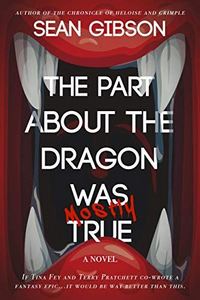
Another tough one! I know every author thinks their book is so unique, but I do have a hard time coming up with comparable titles. I am no Terry Pratchett, or Douglas Adams, but I do think that people who enjoyed The Hitchhiker’s Guide to the Galaxy or anything by Pratchett might get a kick out of my book. Also anyone who grew up reading Tolkien, or just fantasy in general, and would like to see the genre lovingly skewered. One recent, semi-comparable title is The Part About the Dragon Was (Mostly) True by Sean Gibson.

What’s next for K.R.R. Lockhaven, author?
I was lucky enough to recently sign a three book deal with Shadow Spark Publishing, and they are going to publish my humorous hopepunk nautical fantasy trilogy. Book one, tentatively titled Marauders, Daughters, and Dragons, is slated to come out in the summer of 2022. The series will take place on another world, but will still be within the Zoth-Avarex multiverse (wink wink). My writing has made a slight shift toward the more heartfelt and serious, but there is still a lot of foul-mouthed fun, like a shit-talking bird companion, a reanimated skeleton with confidence issues, and a group of failed pirates who just want to sing and have adventures.

Thanks for your time—and thanks for The Conjuring of Zoth-Avarex, I had a blast with it and I hope you have plenty of success with it.
Thank you very much! I’m so glad you enjoyed my book. This interview was really fun! The questions were tough, and unique, and you really made me think. I loved it.


The Conjuring of Zoth-Avarex: The Self-Proclaimed Greatest Dragon in the Multiverse by K.R.R. Lockhaven: So Preoccupied with Whether They Could, They Didn’t Stop to Think If They Should…

The Conjuring of Zoth-Avarex

The Conjuring of Zoth-Avarex:
The Self-Proclaimed Greatest
Dragon in the Multiverse

by K.R.R. Lockhaven

Kindle Edition, 306 pg.
BookBaby, 2021

Read: October 23-25, 2021
Grab a copy from your local indie bookstore!

“We’ve had years and years of preparations to ensure everything will run smooth. We have learned from the mistakes of the past and will use that knowledge to make better mistakes in the future. Er. . . to avoid those mistakes altogether.”

What’s The Conjuring of Zoth-Avarex About?

Harris Reed is fresh out of magical training school and arrives at the Site to begin his career as a conjurer—he couldn’t be more excited about it. He’d grown up on fantasy literature and movies, and in college finds out that so much of what he’d dreamed about is actually true. Not only that, he can be part of the incredibly secret world.

What he discovers is a corporate culture that basically mimics that which is in the mundane world (Harris would use the adjective “Muggle,” he’s that kind of nerd). Petty rivalries, careerists focused on climbing the ladder, budget issues, inter-department squabbles, and a devotion to bureaucracy over the well-being of the employees—or common sense.

Harris and his fellow graduates have been brought to the Site to add some last-minute power to a long-term project set to launch on their second day of work, which sounds exciting to them all.

What they don’t know is that the project is summoning a dragon into this world from another universe. To you and I, this might sound as dumb as John Hammond’s plan for a park full of dinosaurs, but the managers of the Site (and the U. S. Military, which expects to be the eventual recipient of said dragon) don’t see it that way. It turns out that, in comparison, Hammond looks like a safety-conscious genius—it takes less than one sentence for the dragon to show that the humans have no control over him. He kills one staff member, snatches a woman that Harris knew from school, and flies off.

Zoth-Avarex takes Silvia to the top of the Space Needle and makes it his base. He brought Silvia along because he needs a princess in addition to his treasure. There’s no threat implied to her (as long as she doesn’t try to escape)—he basically wants to keep her safe and pamper her. It doesn’t keep this from being a horrible experience for her, but it sure could be much worse.

On their first day, Harris has befriended (or tried to) Siliva, her fiancé, and her sister. The three of them quickly realize that Management and the military are going to be of little use in getting Silvia back, and decide to take matters into their own hands in the tradition of fantasy protagonists everywhere. They get support and a little guidance from Silvia and Harris’s direct supervisor, as well as a long-term employee who’s got his heart set on retirement.

Eddie

One of the first people that Harris meets on campus is a conjurer just days away from retirement. He’s named Eddie, but might as well be named Dr. Perry Cox. Eddie’s a legend on the Site for some heroics back in the ’70s but is now an iconoclastic grump. The kind of guy every office has one or two of—they’ve been around forever and understand the way things work in ways that management doesn’t. They also don’t care about anything anymore and aren’t afraid to show it. He gives the new hires a hard time but actually gives good advice and assistance.

I personally love to get to know those figures and try to learn as much as I can from them (and have likely taken on that role a time or two), maybe that’s why Eddie resonated with me so much. He was hands-down my favorite character—he’s one of those supporting characters that could overshadow the protagonists if used too much, but Lockhaven doesn’t let that happen. Which is probably good, too much of him could’ve hurt the novel.

Footnotes

I am a sucker for a good (generally comedic) use of footnotes in novels—it’s not something I see often, but when I do, there’s a high correlation between their presence and a novel I enjoy.* Lockhaven nails the practice—they give him an added vehicle for jokes and help add to the reader’s understanding of the world and some characters. He also includes one note that’s so long could be a Steinbeck-ian intercalary chapter. It takes a certain audacity to try that, and it paid off.

* See Lisa Lutz, Thomas Lennon, Josh Bazell.

Satire

The book is primarily a fantasy adventure, but throughout—sometimes more pronounced than others—it’s also a workplace satire. As such it’s a winner—even if the fantasy storylines and broader comic bits didn’t work, I’d be pretty positive about this book for the workplace satire alone.

Like Harris, Lockhaven is pretty clearly someone who has drunk deeply from Fantasy fiction. At once he celebrates tropes, themes, and ideas from all sorts of Fantasy—and pokes fun at them. If he just ridiculed them (as several tropes and themes deserve), it’d likely come across as mean-spirited and wouldn’t be that entertaining. If all he did was unleash his favorite tropes to use in telling his story, it’s be unoriginal and clichéd. Mixing avoids the pitfalls and makes for an entertaining read.

So, what did I think about The Conjuring of Zoth-Avarex?

“Well, Bill, I know the answer to life is simply to live with love. Well, actually it’s forty- two, but you humans can’t comprehend that.” The dragon paused wistfully. “I know the best things in life are free. But the birds and bees can have all of that. I need gold! Gold! And to hang here with my beautiful maiden. That’s all I want in this crazy mixed-up world.”

It’s de rigueur when talking about a humorous work of Fantasy or SF to invoke Pratchett, Adams, and Asprin, and it’s de rigueur when I talk about that kind of fiction that I go out of my way to not do that. It’s easy this time because I find them completely inapplicable. On the other hand, TCoZA:TSPGDitM brought to mind: John Scalzi (I’m thinking Agent to the Stars and The Android’s Dream), Scott Meyer (Magic 2.0 series), Joe Zieja (Epic Failure Trilogy), and Eoin Colfer (Highfire). You put those works in a blender and pulse for 30 seconds and you’re going to get something akin to this book.

* Actually, does anyone Asprin anymore? I probably need to update my references.

This would be an easy book for me to go on too long about—I’d love to spend a few paragraphs on Zoth-Avarex alone. But it’s best experienced rather than being told about.

Most of the Independently published Humorous/Light Fantasy that I’ve come across hasn’t worked for me—at least not as much as I wanted it to. Either on the humor front or the story front. But Lockhaven nailed it, I’m happy to say. I laughed—audibly and hard—a couple of times, I chuckled and grinned a lot. I thought the relationships between the characters worked well, and I enjoyed the characters you’re supposed to enjoy and was annoyed by the ones that are supposed to bother you. This is largely one of those novels whose journey is more important than the destination—but I enjoyed the way Lockhaven wrapped things up, too.

In short, I had a lot of fun with this and expect that you will, too. Give this one a try.


4 Stars

This post contains an affiliate link. If you purchase from it, I will get a small commission at no additional cost to you. As always, opinions are my own.

WWW Wednesday, November 3, 2021

Here we go, the first WWW of November.

This meme was formerly hosted by MizB at A Daily Rhythm and revived on Taking on a World of Words—and shown to me by Aurore-Anne-Chehoke at Diary-of-a-black-city-girl.

The Three Ws are:

What are you currently reading?
What did you recently finish reading?
What do you think you’ll read next?

Easy enough, right?

What are you currently reading?

I’m reading The Appeal by Janice Hallett, it is unlike any crime novel that I’ve ever read. I’m listening to Shadow Writes by Faith Hunter, Khristine Hvam (Narrator) on audiobook for my monthly check-in with Jane Yellowrock.

The AppealBlank SpaceShadow Rites

What did you recently finish reading?

I just finished Chuck Wendig’s creepy and goofy Dust & Grim and The Case of the Missing Marquess by Nancy Springer, Katherine Kellgren (Narrator) on audio–which was fun but left me wanting a bit more.

Dust & GrimBlank SpaceThe Case of the Missing Marquess

What do you think you’ll read next?

My next book should be another dose of septuagenarian fun with The Man Who Died Twice by Richard Osman and I have no idea what my next audiobook will be, I’m not feeling incredibly inspired by anything I”m seeing.

The Man Who Died TwiceBlank Space???

Hit me with your Three W’s in the comments!

Page 261 of 610

Powered by WordPress & Theme by Anders Norén