Author: HCNewton Page 301 of 610

Flashback Friday—I’m Curious: What Was the First Book That . . .

While I was looking around at the February 2016 posts, this title caught my eye. I figured I’d throw this up while I was at it–hopefully this generates some comments, I’m feeling curious today (as I was then–I also see I had a similar problem with producing actual content on February 24, 2016. Plus ça change, plus c’est la même chose…


I hate these kind of days — I try to get something up at least 6 days a week. But some days a combination of my job, parenting, husbanding and need for sleep — IOW, the stuff that happens when I’m not reading or blogging — has to take precedence. Today’s such a day.

I did accomplish some things today for the blog, but it’s all behind the scenes stuff and/or things I can’t post quite yet.

Anyway. . .

This was asked a couple of weeks ago on some Facebook group I belong to and I thought the answers were interesting enough, I’d ask you:

If you can remember, what was the first book that destroyed you?

For me, it was either: Where the Red Fern Grows (which I read most of several times, and all of a couple of times); The High King by Lloyd Alexander between the deaths and goodbyes, I still can’t do it dry-eyed; or Bridge to Terabithia — I can’t tell you anything about the plot (there were 2 kids, 1 girl and 1 boy, right?), the characters or anything, and I read it 2-4 times — all I can remember is emotional devastation.

Looking forward to hearing from you. Share the emotional scars we all know you have. 🙂

Flashback Friday—Some Assembly Required by Kevin Smith, Phil Hester and Jonathan Lau

Whoops, I got distracted reading last night and by the time I realized what time it was, it was too late to finish a post. I tried, but it was…vague and scattered. So, I decided to look at what I posted 5 years ago, just for giggles. This was technically posted 5 years and 2 days ago (the post exactly 5 years ago isn’t one I really want to revisit). I’ve been in a Facebook discussion about the TV series this was based on this week, so this one jumped out at me.


Some Assembly RequiredThe Bionic Man, Vol 1: Some Assembly Required

by Kevin Smith, Phil Hester and Jonathan Lau (Artist)

Trade Paperback, 248 pg.
Dynamite Comics, 2012

Read: February 16, 2016


I was a big fan of The Six Million Dollar Man as a kid, and when I got a little older I stumbled onto — and devoured (repeatedly) — Martin Caidin’s Cyborg. Throw in a strong appreciation for Smith’s work? And I’m clearly the target audience for this (so why did it take me 3+ years to read it? Good question).

The main story hasn’t changed: Steve Austin is a test-pilot, horrifically injured — almost killed — when a test flight goes wrong. A team of experts save his life, rebuild him with bionics, and set him loose fighting for truth, justice, and the American way and so on.

The story was nothing special — good, solid action/adventure story. There were a couple of nice twists on the TV show’s story/characters. Just enough to keep it updated and fresh. I’d have appreciated something closer to Cyborg, but I understand why they made the choices they made. Austin goes up against his bionic predecessor, who has gone rogue and now is running around attacking and raiding technology companies. The battle scenes may have been a bit too big and epic — but they fit in with the current cinema trends, so, I guess they worked.

I was sure I’d seen Jonathan Lau’s art somewhere before, but from what I can tell, I haven’t. Which is a shame — it’s great. I’m not going to say that it’s my favorite comic art — but it’s exactly what I want comic art to look like. Which seems like a contradiction, but let’s move on. Yeah, some of the gestures are over-done, and a couple of the men are just too huge. But otherwise, dynamic, easy to tell character-from-character, nice detail, overall very attractive. I’d be willing to give a book a second look just because of his art in the future.

There are some nice references — visual and verbal — to the TV series that are pretty seamlessly worked in. Which I appreciated — looks like the next volume will be less subtle about it (which is not necessarily bad). I’m not going to say this was a great comic that leaves me chomping at the bit for the next, but it was worth the time and entertaining. Not much more to ask for.

—–

3 Stars

A Few Quick Questions with…Matthew Iden

I posted about the eighth Marty Singer novel, Chasing the Pain earlier this morning, and now I have a Q&A with the author, Matthew Iden to share with you. I had a harder time than I’m used to coming up with spoiler-free questions for this book, but think I pulled it off. I enjoyed this, hope you do, too.


Help us get to know you a bit—could you sketch out your path to publication and where the Marty Singer series came from?

After several frustrating years scaling the walls of traditional publishing only to be pushed off the parapet, I turned to self-publishing when it was still just a gleam in Jeff Bezos’s eye, about 2010 or so. I was lucky enough to have some immediate success with sales, but more importantly I realized what the important stuff was: connecting with readers, getting feedback, telling my story. It was empowering to see people who were not my mother actually appreciate my writing—this is the core piece of advice I give writers on the fence about self-publishing: as corny as it sounds, reaching readers is its own reward.

After three or four years, I’d done well enough to catch the eye of Thomas & Mercer—Amazon Publishing’s mystery and thriller imprint. They picked up all of my Marty Singer books (six at the time) and contracted for two standalone thrillers, which became THE WINTER OVER and BIRTHDAY GIRL.

The blush eventually came off the romance, but we parted amicably. I regained the rights to my Marty Singer series and self-published them, then added two more to the pile (THE BITTER FIELDS and CHASING THE PAIN).

The idea for Marty as a character came from my desire to write about a “real” individual. I love the Jack Reachers of the literary world, but I have a very hard time writing about them. I identify much more with Henning Mankell’s Kurt Wallander: solid, unvarnished, relatable.

I imagine that bringing back a character from a previous novel (at least one not designed to be a recurring character) is a tricky proposition—what came first, the desire to write more about Karl and this storyline lent itself to that, or the idea to do something with the “rehab industry” and he was a convenient way into that?

I really wanted to return to Karl. I make a few passing comparisons to him in CHASING THE PAIN as a King Pellinore-type figure: an aging, knight-errant who can’t seem to catch up with his own reason for being. Presenting him as someone with a substance abuse problem helped me solidify that framework; showing him dealing with his vices and corresponding fallout gave his story more substance.

I like to ask about supporting characters, and have at least a dozen things I’d enjoy asking about Madame Cormier (starting with: when can we expect a spin-off?), but something tells me that we can’t do that without ruining something for the readers. So, let’s go with Don D’Amelio instead. Where did he come from? He has certain, shall we say, sanguinary impulse that a lot of writers wouldn’t have given him—was that a little fun to write?

Watching Don come to life was a hoot. He started out fictional life as a sad-sack wasting his golden years sipping espresso and reading the sports page. Originally, his only function was to give Marty some more info about the rehab industry—what we call a “spear carrier” in the writing biz. But when I realized I needed a side-kick for my side-kick, I just went all-in and couldn’t stop laughing at how, uh, sanguinary I could make him.

Regarding Madame: you’re like the fourth person who’s wanted more. I think I might take the hint! I had a great time watching him come to life.

You’ve written in a handful of genres—are there any you wouldn’t want to try? What is it about Crime Fiction that brings you back to it?

I don’t have an interest in writing romance. Not because it isn’t a “real” genre, because the romance writers I know are some of the sharpest, hardest-working writers in the business, but just from a simple interest perspective: the stories don’t click with me and I can’t write what I don’t read.

Actually, my first love is fantasy, then science fiction, then crime fiction, but the world-building required of F/SF can be quite intimidating; my first attempts were dismal. Now that I have some writing experience under my belt, I have plans to go back and try my hand at a trilogy or three, but I’ve also come to love what I can do with crime fiction and won’t be abandoning it.

Let’s play “Online Bookstore Algorithm” (a game I’ve recently invented). What are 3-5 books whose readers may like Chasing the Pain?

I’d be lying if I said I wouldn’t want CHASING THE PAIN sitting next to Elmore Leonard’s GOLD COAST on someone’s bookshelf. CTP is not as caper-ish as Gold Coast, but I think there’s a similar flavor and not just in the setting.

Robert B. Parker’s Spenser is really the ur-private investigator so many of us try to emulate, not just for the tough guy persona, but the humor. LOOKING FOR RACHEL WALLACE would probably please the same kind of reader.

And, as long as I’m getting too big for my writing britches, I might as well throw in James Lee Burke’s BLACK CHERRY BLUES and James Crumley’s THE LAST GOOD KISS.

What’s next for Matthew Iden?

I’m about two-thirds done with a standalone spy novel (working title: SCIMITAR) set in modern-day Paris that occurred to me during a vacation there. I’ve struggled with it for almost two years now while I’ve written other things, but it’s time to get this one done. I’m pretty excited to see how it wraps up…because then I’ll feel free to write Marty #9 or Madame #1.

Thanks to Matthew Iden for his time and these answers!


Chasing the Pain by Matthew Iden: A Missing Addict (or two), a Missing Friend, and the Ex-Cop Out to Find Them

Come back in the next hour for a Q&A with the author!


Chasing the Pain

Chasing the Pain

by Matthew Iden
Series: Marty Singer, #8

eARC, 274 pg.
Life Sentence Publishing LLC, 2021

Read: February 3-4, 2021

The Set-Up

Once upon a time, it seemed like at least 40% of the P.I. novels/TV shows I read started out with an old friend (usually that the reader/viewer had never heard of) coming to the P.I. for help—or getting word to him that they were in trouble. It was a quick and effective way for the P.I. to get involved in the case without all the bother of interviewing a prospective client and worrying about money and whatnot. Obviously, it was better if it was someone the reader/viewer knew so we’d be invested, too.

And that’s what we have here, Marty Singer gets a visit from the ex-wife of a man he’d worked with not that long ago (Book 6, Once Was Lost, for the reader). He’s gone missing, leaving a note for his ex that reads:

If you’re reading this, then you haven’t heard from me in three weeks, maybe more. If that’s the case, call Marty Singer. He’ll know what to do.

Marty, a former DC Homicide detective, really has no choice (not that he wants one). He needs to find the retired US Marshall, Karl Schovasa, and bring him home—and helping Karl out however he needs to in order to get him able to come home.

The Protagonist

So, I’m coming into this series late (this is Book 8), but here’s what I picked up about Marty. He’s a retired detective and a cancer survivor. He now does favors for people, acting like a P.I. without a license (for undoubtedly a good reason). Think Matthew Scudder without the alcoholism.* He’s got a great girlfriend and there’s a young woman in their life that might as well be an adoptive daughter**. Drawing on his experience and contacts, he seems to be fairly successful at what he does.

* This is just my impression at this point, I could be way off.

** Think Spenser and Paul Giacomin.

I didn’t get to spend a lot of time with his girlfriend or daughter-figure, but they seemed like the kind of characters you’d want to spend more time with, and the interaction between the three of them served to make the reader like Marty.

The Victim

Karl Schovasa ran into Marty when they were on opposite sides of a case a couple of years back—but at some point, they realized they weren’t really on opposite sides and combined their efforts, forging a friendship. In the meantime, Karl’s addictions became worse—although Marty sees signs of him sobering up (and signs that the sobering didn’t last).

It looks like Karl befriended a young woman in a treatment group and decided she was in trouble. She’d ended up in a treatment center in Palm Beach, and it looks like Karl followed her there. Then he disappeared.

So, it’s off to Palm Beach for Marty to look for Karl—and probably the girl, too—and then the trouble really starts. And I’m going to leave it there.

A Refreshing Take on Violence

Like any good P.I. (or P.I. adjacent) novel, there’s a little violence—really 4 incidents of it. There’s nothing all that dramatic or over-the-top with them, they’re pretty straightforward. The biggest one—in terms of importance, and I think word count—is a fistfight. This is about as far as you can get from a Jack Reacher kind of fight. It’s nasty, brutish, and short.

Usually, in fiction—even among the more “realistic” works—a fistfight is something that the protagonist/their allies can shake off pretty quickly. Not this one. It really wasn’t that entertaining (the way that a Reacher or Spenser fistfight typically is), but it comes across as how things actually go down when someone is attacked from behind by someone swinging a piece of lumber against their head.

I loved that. I need to see more of that.

I Demand a Spin-Off!

Being a fish out of water as he is in Palm Beach, Marty needs to make some allies—and he does that with a little help from an old contact. I really liked all the allies we meet, Iden knows how to quickly get you to like a supporting character (he does it 3-4 times effortlessly). There are some characters that you encounter in various novels that basically steal every scene that they’re in. In this book, that character is Madame Cormier. I can’t say anything more than that without diminishing your experience in meeting Madame (but, boy howdy, I want to). All I can say is that I didn’t get enough, and I’m certain the character is worth a novel—if not a series—without Singer or the rest around.

Iden talks a little about this in the Q&A I had with him. (which will post a little later today)

The Real-Life Crime

Like so many Crime Writers do, Iden took the central idea for the crimes at the center of this novel from the news. I’d never heard of the way that these unscrupulous addiction treatment centers were gaming the system using the Internet and Insurance Payments to make a ridiculous kind of money. Iden provides links to his sources (at least some of them) at the end of the book—they made my blood boil and almost took away from the pleasant experience I had with the book.

I mention this just to say, while you read Chasing the Pain and you think, “this is preposterous, no one can get away with this…” Just know that it’s not. John Rogers would frequently say they had to tone down the crimes they based Leverage‘s crooks on because no one would believe what had actually happened. Something tells me Iden did something similar.

Also, I mention this all to say: if you’re someone who gets mad when they read news stories? Maybe skip the research at the end.

So, what did I think about Chasing the Pain?

First off, this book has a nostalgic feel for me—this feels like the Crime Fiction that I cut my teeth on back in Junior High/High School (both in books and on TV). Both the way Iden tells the story and the character of Marty Singer just takes me back to that time. So I like it for that alone.

But the story he’s telling isn’t really the kind of thing that anyone was telling in the 1980s (and not just because of the technology involved). And that is just as appealing to me, if not more so.

There’s something about this book that was just fun to read–I sat down to read about 10% on the first night, just to get the book started and get a feel for it. Before I knew what had happened, I was about one-third of the way in. I just didn’t want to stop reading—I could’ve easily finished it in that sitting, if I didn’t have a list of things to get to. It was still early in the book, so I hadn’t got hooked by the story or anything yet. It was just a pleasant read—I’m not sure I can put it into words, but everyone reading this knows what I’m talking about. A book like that gets me to come back to the series.

I liked this enough that I’ve purchased the first Marty Singer book, A Reason to Live, and am looking forward to catching up with this series. I bet I’m not the only one who reacts that way to this book.

This is a fast, easy read with characters you’ll like and believable conflicts for Marty to resolve. Marty himself has a strong, engaging voice that’s a pleasure to read. I recommend this novel and expect I’ll recommend the rest.

Disclaimer: I received this book from the author in exchange for this post and my honest opinion. I appreciate the opportunity, but, as always, my opinions are my own.


3.5 Stars

GUEST POST: 12 Books Every Home Owning Bookworm Needs

It’s been quite a while since I’ve had one of these to share, but long-time readers know that I love a good infographic. The friendly people over at Siege Media dropped by the other day with a post and an infographic for me to share with you that’s timely for me as Mrs. Reader and I are settling into our new digs and taking on a few home improvement/maintenance projects. Check out the nice intro they provided and then follow the links to their longer piece and the full infographic (I’ve provided a snippet of it below).


How many books can you say really changed your life? A handful, maybe? While mysteries and science fiction novels may be a great way to pass the time, they are likely only a few on your bookshelves you’ll return to time and time again.

One genre you can’t really say that about is non-fiction hobby books. Books that break down a complicated topic for you and help you master it, including categories like home improvement projects and organization hacks. And if you are a homeowner, or you’re a renter who doesn’t like your landlord, you may be looking to learn how to fix your home yourself.

The following books are catered to those looking to get into new hobbies at home, to pass the time, or improve their day-to-day lives. You can learn how to garden, become a plant parent, organize your stuffed pantry or decorate your messy bedroom all while getting to participate in your favorite hobby: reading. What can be better than that?

Check out the infographic on best books for the home from the team at Hippo below.

Books for New Homeowners Snippet


Once again, the link to the full graphic.

WWW Wednesday, February 17, 2021

A three-day weekend left me scrambling to get together a WWW Wednesday before I was really mentally prepared for it. I don’t know about you, but I took advantage of that bonus day to read more than I expected to, which made the day all the nicer.

This meme was formerly hosted by MizB at A Daily Rhythm and revived on Taking on a World of Words—and shown to me by Aurore-Anne-Chehoke at Diary-of-a-black-city-girl.

The Three Ws are:

What are you currently reading?
What did you recently finish reading?
What do you think you’ll read next?

Easy enough, right?

What are you currently reading?

I’m reading Latent Damage by Ian Robinson, a new police procedural, and am listening to the last Eddie LaCrosse novel—He Drank, and Saw the Spider by Alex Bledsoe, Stefan Rudnicki (Narrator) on audiobook.

Latent DamageBlank SpaceHe Drank, and Saw the Spider

What did you recently finish reading?

I just finished Sara Gran’s Claire DeWitt and the City of the Dead, an unusual P.I. novel, and Blood Trail by C.J. Box, David Chandler (Narrator) on audio—possibly the best in the series.

Claire DeWitt and the City of the DeadBlank SpaceBlood Trail

What do you think you’ll read next?

My next book should be Oh, That Shotgun Sky by Sarah Chorn (which will probably be beautiful and depressing, because that seems to be her wheelhouse) and an audiobook to be determined.

Oh, That Shotgun SkyBlank SpaceQuestion Mark

Hit me with your Three W’s in the comments! (no, really, do it!)

Down the TBR Hole (20 of 24+)

Down the TBR Hole
I did not cut a lot off of this list—2 of the cuts were only by technicalities, too. On the other hand, some of these look really good, and I was reminded why I wanted to read these in the first place and should result in me reading a couple pretty soon. Which is almost as good, right?

This meme was created by Lia @ Lost in a Story—but Jenna at Bookmark Your Thoughts is the one that exposed me to this, and as my Goodreads “Want To Read” shelf is scarily long, I had to do this.

The Rules are simple:

  1. Go to your Goodreads to-read shelf
  2. Order on ascending date added.
  3. Take the first 5 (or 10 if you’re feeling adventurous) books.
  4. Read the synopses of the books.
  5. Decide: keep it or should it go?
  6. Keep track of where you left off so you can pick up there next week! (or whenever)

What distinguishes this series from the Mt. TBR section of my Month-end Retrospectives? Those are books I actually own while Goodreads contains my aspirational TBR (many of which will be Library reads). The Naming of the two is a bit confusing, but…what’re you going to do?

(Click on the cover for an official site or something with more info about the book)

Better Grammar in 30 Minutes a Day Better Grammar in 30 Minutes a Day by Constance Immel
My Thoughts: I’m not sure what drove me to add this to the list, I dig books about language and grammar and so on. But a workbook? Yeah, that’s really not what I need. (it looks like a decent one, don’t get me wrong, if you’re looking to brush up on it)
Verdict:
Thumbs Down
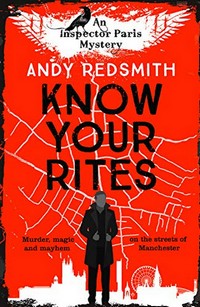
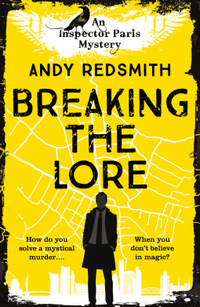
Know Your Rites Know Your Rites by Andy Redsmith
Blurb: The second in the series, this time Inspector Nick Paris is on the hunt for a killer—with a rapping dwarf as the lead suspect.
My Thoughts: I really dug the first in this series—I ordered this months ahead of publication. And got too busy to read it then. I’m absolutely reading this. Even if I hadn’t spent the money…a dwarf who raps. You don’t say no to that.
Verdict:
Thumbs Up
Hey Grandude! Hey Grandude! by Paul McCartney
My Thoughts: It’s a picture book by McCartney. That’s a no brainer.
Verdict:
Thumbs Up
Divorce is Murer Divorce Is Murder by Elka Ray
Blurb: “Shortly after returning to her sleepy hometown on Vancouver Island, Chinese-Canadian divorce lawyer Toby Wong runs into Josh Barton, who broke her heart as a teen at summer camp. Now a wealthy entrepreneur, Josh wants to divorce Tonya, the mean girl who made Toby’s life hell all those years ago. Not long after Toby takes Josh’s case, Tonya is found murdered. Josh is the prime suspect. Together with her fortune-teller mom and her pregnant best friend, Toby sets out to clear Josh, whom she still has a guilty crush on.”
My Thoughts: I’ve read some pieces by Ray that were pretty good. But I’m just not feeling this.
Verdict:
Thumbs Down
A Little Hatred A Little Hatred by Joe Abercrombie
Blurb: The First Law: The Next Generation. Glokta’s daughter and Luthar’s son star in the first volume of the The Age of Madness Trilogy, “where the age of the machine dawns, but the age of magic refuses to die.”
My Thoughts: I really need to get to this.
Verdict:
Thumbs Up
Kopp Sisters on the March Kopp Sisters on the March by Amy Stewart
Blurb: “It’s the spring of 1917 and change is in the air. American women have done something remarkable: they’ve banded together to create military-style training camps for women who want to serve. These so-called National Service Schools prove irresistible to the Kopp sisters, who leave their farm in New Jersey to join up.” After an accident sidelines the Camp Matron Contance takes over and ends up actually training the women to do something.
My Thoughts: I listened to the audiobook last fall, and just now noticed that I haven’t written about it. Technically, that means I can remove it from the list.
Verdict:
Thumbs Down
A Dastardly Plot A Dastardly Plot by Chrisopher Healy
My Thoughts: I had a lot of fun with Healy’s The League of Princes series, and can’t imagine that this steampunk-ish tale wouldn’t be just as fun. It’s sticking around. I have no idea when I’ll get to it, but the idea of a reading a book that’s nothing but fun is something I can’t cut.
Verdict:
Thumbs Up
No Man's Land No Man’s Land by Neil Broadfoot
Blurb: “A mutilated body is found dumped at Cowane’s Hospital in the heart of historic Stirling. For DCI Malcolm Ford it’s like nothing he’s ever seen before, the savagery of the crime makes him want to catch the murderer before he strikes again. For reporter Donna Blake it’s a shot at the big time, a chance to get her career back on track and prove all the doubters wrong. But for close protection specialist Connor Fraser it’s merely a grisly distraction from the day job.”
My Thoughts: I think I heard an interview with Broadfoot about this book, I know Raven Crime Reads talked about it. Both of them made an impression on me. Looks good.
Verdict:
Thumbs Up
Nothing to See Here Nothing to See Here by Kevin Wilson
Blurb: “Madison’s twin stepkids are moving in with her family and she wants Lillian [an old boarding school friend] to be their caretaker. However, there’s a catch: the twins spontaneously combust when they get agitated, flames igniting from their skin in a startling but beautiful way. Lillian is convinced Madison is pulling her leg, but it’s the truth…Over the course of one humid, demanding summer, Lillian and the twins learn to trust each other—and stay cool—while also staying out of the way of Madison’s buttoned-up politician husband.”
My Thoughts: I don’t remember much about Wilson’s The Family Fang (it was nine years ago, and before the blog). I remember it was strange. It was heartfelt. And it was good. I imagine this will be the same. It’s gotta stick.
Verdict:
Thumbs Up
Last Couple Standing Last Couple Standing by Matthew Norman
Blurb: “The Core Four have been friends since college: four men, four women, four couples. They got married around the same time, had kids around the same time, and now, fifteen years later, they’ve started getting divorced around the same time, too. With three of the Core Four unions crumbling to dust around them, Jessica and Mitch Butler take a long, hard look at their own marriage. Can it be saved? Or is divorce, like some fortysomething zombie virus, simply inescapable?” So the Butler’s cook up the dumbest plan ever to save their marriage—and then stuff happens.
My Thoughts: I read this back in May of last year. It’s one of those that I have so many things I want to say about that I still haven’t figured out how to write about it. It was so good. And so, so problematic. Either way, can X it off of this list.
Verdict:
Thumbs Down

Books Removed in this Post: 4 / 10
Total Books Removed: 111 / 240

Anyone out there read any of these books? Did I make the right call with any of them?


(Image by moritz320 from Pixabay)

A Two-Fer: Twenty Palaces and Child of Fire (Audiobooks) by Harry Connolly and Daniel Thomas May

Twenty Palaces

Twenty Palaces

by Harry Connolly, Daniel Thomas May (Narrator)
Series: Twenty Palaces, #0
Unabridged Audiobook, 8 hrs., 14 min.
Tantor Audio, 2020
Read: July 29-30, 2020
4 Stars

Child of Fire

Child of Fire

by Harry Connolly, Daniel Thomas May (Narrator)
Series: Twenty Palaces, #1
Unabridged Audiobook, 10 hrs., and 9 min.
Tantor Audio, 2020
Read: September 8-10, 2020
4 Stars

What is The Twenty Palaces Series?

The Twenty Palace Society is a secretive and ancient group that has devoted itself to the regulation of magic in this world for the benefit of humanity. Those who use magic outside of the Palaces control have a tendency to unleash disaster—and by disaster, I mean things with the potential to destroy the world—and the Society stops them with extreme prejudice (and if collateral damage happens, so be it—we’re talking about the survival of the human race here).

Most of these threats come by way of unleashing Predators—beings from the “Empty Places” between dimensions. Their main drive seems to be coming into this (or any) reality and snacking on whatever life forms they can find. They typically begin by seeming to obey and/or help the humans who summoned them. But eventually, they turn on their summoners and exact a horrible price.

The Society’s methods, structure, and personnel largely lie in darkness, but we know a little bit—there are peers (magic users of impressive strength, but not as strong as others in the Society), investigators (whose purpose is to look for magical/Predatory activity), and wooden men. Wooden Men are cannon fodder. They’re the designated redshirts whose purpose is to draw the attention of the humans or Predators the Society is attacking so their peer can come in and eliminate the threat while they’re focused on the Wooden Man. It’s obviously not a place to be if you’re all that concerned with living a long and quiet life.

Our protagonist, Ray Lilly, is a Wooden Man (or becomes one in TP). In that book, he stumbles upon some unauthorized magic use, casts one spell himself (which would be enough to kill him over, but he proves useful to Annalise so she delays that), and then stumbles upon a group of predators and helps Annalise stop them from turning Seattle into a home base to bring in others of their kind and then to destroy humanity.

In Child of Fire, the two find themselves in a small town, where a man/company (it’s hard to tell at first) seemingly has made a deal with a Predator for some benefit to the town, but at the cost of the children of the town—and it happens in such a way that the memories of parents are affected enough that they don’t remember their children ever existed.

Publication/Listening Order

While I do think a good prequel can be fun, by nature they are wholly unnecessary. If you don’t have everything you need in the books/movies/whatever as they were published, the author/creators failed. Also, you probably don’t get something successful enough to generate a prequel.

Again, they’re fun. It can be entertaining to get an explanation for something in the original work (“Oh, so that’s why there’s a lampstand in the middle of the wood”), occasionally it gives you a new perspective on the series, that kind of thing. I was more than happy to read Twenty Palaces when the series had been mothballed, but I wasn’t clamoring for it.

But last year, when Tantor started putting out the whole series in audiobook form (the first book had been already, but the rest hadn’t been), I went with the order that Tantor published—Twenty Palaces first and then moving on to the rest.

I was surprised at how well it flowed. There’s very little time between Twenty Palaces and Child of Fire and it really felt like CoF was a sequel. There were just so many throwaway details in CoF that were there to make it seem like Ray had a past (not that we learned much about it), that there was a little bit of history with Ray and Annalise (but not much of one). As you read it (assuming you read in publication order), there’s a mysterious, violent past—one that it’s good to know Ray has, but we don’t need to know it.

Connolly did a great job of taking those details and building events in Twenty Palaces around them. I’m not saying this is the best way to listen to the books—but it makes them a lot more approachable. I can see why Tantor went the way they did.

Ray Lily

Yes, Ray Lilly is an ex-con with a violent streak. But he sincerely wants to live a straight life—while he admits to himself that he enjoys the rush of violence. He also likes the fact that his work for the Society matters. He tries to be a good, law-abiding citizen as much as possible. He works hard to prevent injury to those who have nothing to do with the Predators.

He’s incredibly loyal to Annalise—which is not a little twisted because Annalise has told him repeatedly that she will kill him.

He’s essentially what you expect in a male UF protagonist—but he’s as close to powerless as you can be in this world and yet survive. Which definitely marks him out as different. He also has a real talent for getting people (many people, anyway) to trust him and is better at inspiring bystanders to action than most UF protagonists (although most of them don’t need to recruit help, and Ray does). There’s a very human quality to Ray that makes you like him.

Annalise Powliss

Annalise is old (well over one hundred years old), but looks younger than Ray. She has a high voice and looks like she hasn’t had a decent meal in ages. But that’s deceptive—she’s supernaturally strong and magically powerful. While she doesn’t relish the prospect of collateral damage/fatalities—she’s familiar enough with the treat posed by Predators that she’s more than willing to let a town’s worth of citizens die to prevent all of humanity from being consumed. Still, she’s largely willing to indulge Ray’s compassion—up to a point.

Annalise has all the powers of your typical UF protagonist—maybe even more. But none of the wit, sarcasm, or optimism. For her, this is a duty, not one she particularly enjoys, but it’s something that has to be done.

Daniel Thomas May

I admit that I was worried about Daniel Thomas May as the narrator for these audiobooks. All I know him from is the Venators series, and this is about as far from a YA Portal Fantasy as you can get. But my worries proved groundless and he does a bang-up job portraying Ray Lilly and the horrors that this world holds.

More than that, I’m glad I listened to these if only for Annalise’s voice. It’s both exactly what Connolly says it sounds like—and is about 3.4 million miles away from what I’d imagined.

So, What Did I Think about these Audiobooks?

They’re just great—I thoroughly enjoyed being back in this world and I still don’t understand why the books weren’t bigger sellers. I hope they find a new audience in audiobook. I don’t know if I’ve ever talked about the series on this blog without using the phrase “criminally underselling,” (or words to that effect). It comes to mind once again, I just don’t get why readers didn’t get behind this.

They’re dark, they’re grim, they’re on the violent end of the UF spectrum (but I can easily find darker, grimmer, and more violent series)—but there’s a glimmer of hope throughout them all. Not just from Ray’s undaunted trust in humanity, but that’s where most of it comes from. Even with all the death and destruction, they’re entertaining reads and you get immersed enough in the world that you don’t want to come out of it.

You really should get these in your earbuds or in front of your eyes.

Smoke by Joe Ide: What Happens When Isaiah Quintabe Leaves LA?

Smoke

Smoke

by Joe Ide
Series: IQ, #5

eARC, 336 pg.
Mulholland Books, 2021

Read: February 8-12, 2021
Grab a copy from your local indie bookstore!


Not that any of the previous IQ novels have been cookie cutters of the rest, but this really feels less like an IQ novel than I was ready for. In fact, it felt* like this was more of a Juanell Dodson novel for most of it. When Isaiah left town at the end of Hi Five, he left his friends behind. But their problems didn’t leave with him, they all have to step up and take care of things now without him. But the way they go about taking care of these problems is heavily influenced by Isaiah—he might not be playing an active role in most of the storylines in this book, but this is still his book.

* Yes, I said “felt like,” I could be wrong. This isn’t the kind of blog where you’re going to find me doing word counts to prove things like this.

The LA Stories

Grace is trying to get over Isaiah and focus on her art. She’s got a show coming up and needs to get some more paintings ready—that’s all that matters.

But while she and Isaiah know they’re over—most people don’t (and some of those who do know, believe it’s temporary). When someone that Isaiah helped put away gets back to town and is looking for a little payback, he only hears that Grace is Isaiah’s girl. Which puts her right in the cross-hairs.

Deronda’s life is going great—she’s getting some media attention for her success (which is only serving to build that success), her food trucks are doing great, and her son is fantastic (just ask Deronda, she’ll tell you). But then someone comes along to help himself to a share of that success and uses Janeel as his tool. Deronda goes nuclear and tries everything she can think of to stop this.

Grace tries to help—and gets one of Isaiah’s former clients involved, too. And even Dodson gets in on it. There’s nothing about what they try or the solutions they come up with that Isaiah would have done. In fact, I’m pretty sure he’d have seen some of the problems with her theories and stopped Deronda before she tried to act on them. But for fear of repeating myself, without Isaiah’s influence on the three of them, none of them would’ve tried anything like they did.

Cherise has had enough of Dodson’s bouncing around from opportunity to opportunity, trying to make some money, but with no stability. He needs to grow up and get a real job, and to help with that, she’s arranged for an internship at a local advertising agency. Dodson isn’t interested at all in this, but she’s not negotiating.

So he shows up for the first day, and something clicks. He thinks about the way Isaiah had approached goals in his life and applies it in his way to this situation. It wasn’t quite a “What Would Isaiah Do?” thing, more of a “How Would Isaiah Do This?”

Now there is zero percent of the Dodson storyline that is Crime Fiction. It’s about character development, character growth—it’s a transition point for Dodson. Yet this is my favorite part of this Crime Novel. Because it’s Dodson going through all this. Also, as Dodson pops up in their storylines to help Grace and Deronda, he gets plenty of Crime Fiction action.

There’s a fun part of this storyline where Dodson, who started as Isaiah’s Dr. John Watson, now becomes an Eliza Doolittle figure. Cherise’s mother, Gloria, who tries to equip him into someone who could make it in the Corporate World. On the one hand, I felt bad for poor Dodson—this wasn’t easy for him—but man, it was funny. We also got Dodson’s commentary on Pop Music and TV—which is not to be missed.

The LA stories interweave, Grace helps Dodson, Dodson helps Grace, Dodson chips in with Deronda…and so on. IQ is mentioned, he’s talked about and he even converses with some of them—but not about the challenges they’re dealing with (and vice versa) in this novel. He’s as removed from their stories as possible. Yet, without him, without his influence in their lives—none of this would’ve happened. So it absolutely was still part of an IQ novel, even if it was for all intents and purposes IQ free.

Isaiah’s Story

Isaiah’s trying to be IQ-free, too. He’s pulled up stakes to get away from the enemies he made in Hi-Five, and away from everything else, too. He’s decided he wants a new life. He wants nothing to do with the violence, the depravity, the danger that has so characterized the last few years of his life.

Which, of course, means that despite his best efforts—and really by dumb chance—he’s brought into a hunt for a serial killer by one of the least likely, least credible people we’ve encountered in this series.

While I did say this felt like Dodson’s book most of the time, at one point the Isaiah/Serial Killer story took over—and we see heroism and depravity on display (not quite in equal parts, but we get an excess of both). As much as Isaiah has said he wants away from this life—when the chips are down, he finds a way to try to stop another murder, at great risk to himself.

The final confrontation can be seen as darkly comic or as intensely human and maybe even realistic to an extent you don’t usually see. There’s a visceral desperation to it—everyone involved seems to believe on some level that they’re doomed, but they press on anyway. It’s harrowing really.

So, what did I think about Smoke?

This really feels like a transition novel—probably for the series as a whole, and definitely for all these characters. In a book or two, it’ll be easier to see (not that it’s difficult now) exactly what role this is going to play in things, but choices are made, steps are taken that insure wherever Isaiah ends up, he’s going to be a different man than he was in Hi-Five, ditto for everyone else. I’m particularly looking forward to seeing where Dodson is. Hopefully, he’s still going in the direction he started to move in here.

But that’s for 2023. What about the 2021 novel? While Ide seemed to be writing with an eye to the 2022 and 2023 novels, he also produces a fine read in Smoke. There are a lot of balls in the air, a lot of Point of View characters (those we know and those we only meet here). There are blasts from the past and new characters that we could be seeing in the future.

And while we get some very strong resolution to just about everything in the novel, there’s a cliffhanger at the end that makes it difficult for me to say most of what I want to say. It’s a complete novel, this isn’t just a book that you read so that you have to read the next. But I tell you what, when you finish you want that next IQ novel now.

I think it says a lot about the kind of world that Ide has created that his main character can only show up in 50±% of a novel/its stories and the novel to still be as strong as any of the others. The series isn’t about Isaiah (and other characters) now. It’s about Isaiah, Grace, Dodson, and Deronda—and their families, no matter what the series is called. I love that evolution, that development.

I think existing fans will find their enthusiasm for this series rewarded. I think new readers are going to want to grab the earlier novels to fill in how the characters got to where they are. Either way, people who pick up Smoke are in for a treat.

Disclaimer: I received this eARC from Mulholland Books via NetGalley in exchange for this post—thanks to both for this.


4 Stars

This post contains an affiliate link. If you purchase from it, I will get a small commission at no additional cost to you. As always, opinions are my own.


Saturday Miscellany—2/13/21

We got a lot of snow dumped on us yesterday—this weekend could possibly bring more snow to the area than we’ve seen in four years (and I really don’t want to talk about what happened then). I slept through most of it, and then was distracted by work for the rest. But this morning, I can watch it fall through the window I’m sitting across from. It’s oddly relaxing. I’m not the kind of guy who sits and watches anything outside my window, but today it’s working for me.

Until, that is, I have to let a dog out. Then the snow will be the source of a wet, furry, mess. I’d better stock up on the relaxation while I can, right?

Anyway…
Odds n ends about books and reading that caught my eye this week. You’ve probably seen some/most/all of them, but just in case:

bullet 19 Tips For Reading More This Year—This is far different (and yet not) from the typical posts like this I share, it’s built from reader feedback about how the Pandemic/Lockdows/etc have changed reading habits.
bullet Indie Bookstores Embrace E-Commerce… and It Pays Off
bullet Lecter’s Fangs: Why the Ending of ‘Hannibal’ is a Secret Masterpiece—Friend of the Blog, Nick Kolakowski, attempts to defend and laud (fairly successfully, I begrudgling admit) the ending of Hannibal. He very well may be right. He probably is. I still don’t like it.
bullet ‘I think I’ve written more Sherlock Holmes than even Conan Doyle’: the ongoing fight to reimagine Holmes—I’ll confess to not reading all of Doyle’s Holmes (have owned a complete set since junior high), have never read one by anyone else. I’m fascinated by all the variety. Am I missing out on some good ones?
bullet How a Former LAPD Detective Became the ‘Godfather’ to L.A. Crime Writers—I love reading things like this
bullet One Word Book Reviews: Because I’m Lazy Like That—Given the graphics involved, I’m not sure “lazy” is the right word. I love this idea. And clearly, could never pull it off.

A Book-ish Related Podcast Episode (or two) you might want to give a listen to:
bullet Author Stories Podcast Episode 1051: Mike Chen Returns With We Could Be Heroes—Garner and Chen talk about the new book, which is good. The highlight for me was the discussion of Chen’s pandemic book being released a few weeks before the world went upside down last year, and his thoughts about the COVID-inspired books coming in a few years.

This Week's New Releases That I’m Excited About and/or You’ll Probably See Here Soon:
bullet Dreyer’s English (Adapted for Young Readers): Good Advice for Good Writing by Benjamin Dreyer—I’ve been looking forward to getting my hands on this one since I heard about it. I loved the “adult” version and want to see how he translates that into advice for kids (also, I can see this being easier to pass on to non-language nerd friends/family who need the help)

Page 301 of 610

Powered by WordPress & Theme by Anders Norén