Author: HCNewton Page 312 of 610

BOOK SPOTLIGHT: What the World Needs Now – Trees! by Cheryl Rosebush, Zuzana Svobodová

Today I’m pleased to welcome the Book tour for the children’s book, What the World Needs Now – Trees! by Cheryl Rosebush. After this post, I’ll be giving my take on the book here in a little bit.


Book Details:

Book Title: What the World Needs Now – Trees! by Cheryl Rosebush, Zuzana Svobodová (Illustrator)
Publisher: YPD Books
Format: Ebook/Paperback

Book Blurb:

In the tropical rainforests of Indonesia lives an orangutan named Jefri. There are lots of reasons Jefri needs trees. And it turns out, people need trees just as much as Jefri for many of the same reasons. What the World Needs Now: Trees! explores the universal connection people, plants, insects and animals share with life-giving trees.

About the Series:

What the World Needs Now is an environmental children’s book series for ages 4-8 that aims to connect the world’s youngest book lovers to the importance of nature, and our place in it.

Each book in the series follows a friendly animal through its habitat, helping kids learn about one thing the world needs now, be it more trees or bees or less plastic, to maintain a healthy planet.

The series is designed to help parents and educators lay the foundation for future learning on the world’s most pressing environmental challenges. But for our littlest kids, the connection starts at a much simpler point: their first job is to fall in love with nature – because you don’t protect what you don’t love.

The books support engaging with our kids on how we can better respect and care for the only planet we have.

About the Author:

Cheryl RosebushI was born and raised in Southern Ontario, Canada in the cities of Burlington and St. Catharines. Long before the internet and mobile phones (now I’m aging myself!), my childhood was spent in forests and parks, on bike rides, and playing hide and seek until the streetlights came on. My family did comical Griswold-style road trips in wood-paneled station wagons. We spent summers swimming in friends’ backyards. These are my very fortunate roots.

I knew from an early age that my destiny would take me far from Southern Ontario. I graduated high school and moved to Montreal to study international politics at McGill University. The subject fascinated me, but as graduation approached, I realized I didn’t know what I wanted to do with a degree in international politics. I didn’t want to become a lawyer. I didn’t want to become a politician or civil servant. The media industry, on the other hand, intrigued me.

The West Coast of Canada also intrigued me. So, after graduating McGill, I packed up again, moved to Vancouver and took the first media job I could get at a local Top 40 radio station (Z.95.3) in Vancouver. Best job. Great bosses. I learned so much. But after a couple of years there, the winds of change came calling again.

September 11, 2001. In a heartbeat, Z95.3 went from playing Britney Spears to reporting up-to-the-minute information on the local, national and international fallout of the terrorist attacks in New York and Washington. In that moment, I knew I had found my calling. I wanted to do something that was needed on a good day, and needed even more on a bad day. I wanted to become a full-time journalist.

So, I packed my bags again (a running theme in my life), and moved to Ottawa, Ontario to do my Masters of Journalism. Another incredible two years culminated in me getting a research internship with the Canadian Broadcast Corporation (CBC) in London, England. That position helped me land back in Montreal for a second chapter there as local news reporter for the CBC. While I was there, I wore just about every hat you could in CBC’s radio and TV newsrooms. Depending on the day, I was a researcher, producer, reporter, or online writer. I even filled in for the weather reports every once in a while.

https://www.cherylrosebush.com/

Purchase Links

YPD Books

My thanks to Love Books Group for the invitation to participate in this tour and the materials (including the book) they provided.

Love Books Group

What the World Needs Now – Trees! By Cheryl Rosebush, Zuzana Svobodová: Orangutans and Rainforests for Kids


What the World Needs Now - Trees!

What the World Needs Now – Trees!

by Cheryl Rosebush, Zuzana Svobodová (Illustrator)
Series: What the World Needs Now

PDF, 34 pg.
2020

Read: November 21, 2020

What’s What the World Needs Now – Trees! About?
This is a cute little book about an orangutan named Jefri, his home in the Sumatran rainforest, deforestation; and what can and should be done about to prevent it.

Okay, so only some of it is cute—it’s hard to make deforestation (in general) and the elimination of rainforests (in particular) adorable.

In addition to the main information, there are little boxes with additional/supplemental information, ideal for whatever adult is reading to/with the child to give more information or to launch a discussion.

How were the Illustrations?

The art is wonderful. Svobodová balances accuracy with an attractive, cartoonish style. The illustrations are full of small little touches to keep the attention of the youngest readers as they come back again and again.

So, what did I think about What the World Needs Now – Trees!?

I wanted a little more from the text—either something to hook the reader a bit more, or another detail or two. It’s hard to put my finger exactly on it—but I thought something was missing. That aside, I thought it was a good introduction to the issue without being alarmist and suggests common-sense solutions.

It’s good, important information delivered in an attractive package. A great way to kick-off this series for young readers.


3 Stars

My thanks to Love Books Group for the invitation to participate in this tour and the materials (including the book) they provided.

Love Books Group

Saturday Miscellany—11/21/20

I actually sat down 4 nights this week to post about something, and only ended up with one thing usable. That’s bugging me, but I do sort of feel like a blogger again—I just can’t prove it to anyone yet. Let’s see what next week brings, shall we?

In the meantime:
Odds n ends about books and reading that caught my eye this week. You’ve probably seen some/most/all of them, but just in case:

bullet Your Favorite Bookstores Are Dying. They Told Us How We Can Help.
bullet #DisneyMustPay Alan Dean Foster—This is just wrong on so many levels.
bullet How Steve Martin and illustrator Harry Bliss ended up working on the ‘upbeat book’ we all need right now—this sounds like a great idea
bullet Recipes Inspired by Books/Book Series—I saw this linked in a Jim Butcher Newsletter, but there are plenty of great looking recipies on The Gluttonous Geek for other fandoms as well. Someone could have a lot of fun here.
bullet John Wisniewski interviews Nick Kolakowski
bullet The Most Unusual Murder Weapons in Crime Fiction: A leg of lamb, an exploding cow, and an enormous bottle of champagne…—I’ve read the exploding cow, the rest of these seem equally inventive.
bullet 5 Ways to Find Magic in Reading

A Book-ish Related Podcast Episode (or two) you might want to give a listen to:

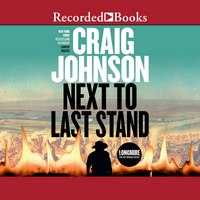
bullet Author Stories Podcast Episode 1000(!!!): Craig Johnson Helps Us Celebrate 1000 With Next to Last Stand—Always enjoy listening to Johnson on this podcast and hearing a bit more about his year’s Longmire novel was a treat.

This Week's New Releases That I’m Excited About and/or You’ll Probably See Here Soon:

bullet A Wealth of Pigeons: A Cartoon Collection by Harry Bliss & Steve Martin—I like the idea (see above), I like the samples I’ve seen online. I need to get this—I used to be better about reading cartoon collections and miss it.

EXCERPT from The Man in Milan by Vito Racanelli

Earlier this morning, I talked about the book, and now I get to give you a little taste—the opening paragraphs, I hope it hooks you the way it did me.


from Chapter 1 of The Man in Milan by Vito Racanelli (available from Polis Books)

Friday

In the gutter lay a man, face up, between two parked SUVs on Sutton Street. He wore a pale gray suit with impossibly thin pinstripes. It was Zegna, because I’d seen one on my partner, Detective Hamilton P. Turner. The suit was still in good shape, a testament to its workmanship, but the man was not.

I squatted and looked at him in the evening of an April day. I put on my latex and turned him gently. Our fashionable boy wore no tie and his pink shirt had a large red-brown blotch right where his heart used to beat. His suit was ruined in the back, an exit hole right through the trapezius. That’s what the coroner’s report would probably say.

He was about six feet, one inch. Skinny, with fine brown hair, blue- gray eyes. glauco, they say in Italian, which is what the body turned out to be. My grandfather was called Glauco for his eyes. This guy was good looking. Once. No sign of a struggle. Two wounds: a dime-sized hole punched through the back of the head and one more straight into the chest—probably the second shot as he lay prone—to make sure he stayed all the way dead. Below, burrowed halfway into the asphalt, was a slug.

The blues who’d found him already radioed for the NYPD photogs and CSU.

I walked back to my car to call my partner, who’d hadn’t told me why he couldn’t come along to the party. “I’m good,” I said to Turner. “You’re missing a beautiful spring evening in New York City, marred only by one dead body.”

His voice crackled over the radio: “Just the one? Gonna rain later. Meet you back at the precinct, Paolino,” Turner said.

I tossed the receiver back into our Crown Vic’s front seat and walked back to the body. Turner liked to call me little Paul because I was taller than him.


The photogs showed up and cordoned off the area around the body.

“Any other bodies, Detective Rossi?” the photographer asked me.

“I told you, one. Why does everyone think there’s more than one?” I said.

“Yeah, but you know, sometimes you think there’s one and then other bodies just start showing up when you look around. They’re like rabbits.”

I smiled at our photographer, Joe Rinn. He had a nice sideline doing weddings. “You never tell those brides what you do, do you? That you flash dead bodies all day. That your work graces medical school books about fatal wounds?”

“Nah,” he said, smiling back at me, then turning to the job at hand. “I tell ’em I’m an artist.”

I stood back and let the artist work. I tugged my right ear, tilted my head to get another look at this guy, and wondered what this poor fucker had done to deserve a dog’s death.

Rinn circled the body like a vulture. “The geeks’ll be here in a minute. And hey, a Post guy is comin’, too. He asked me to keep the bodies fresh.”

“A body. One body. We’ll try to oblige, but if the fourth estate doesn’t show in time, tough,” I said.

After they took the first set of photos, the CSU geeks began. Hair, blood, and nail samples. They scraped his jacket, pants, and shirts with tape to pick up foreign elements, like someone else’s hair or blood.

I looked around to figure some possible MOs. There was a small service alcove down a few steps and a few feet away. Our hunter knew his rabbit’s habits. Maybe tailed him for a few days. He waited in the alcove and calmly skipped up to the victim as he walked between a Range Rover and an Escalade. That gave the shooter some tall cover, and then he did him. Bang. Bang. Or rather Ping, Ping, with a silencer. The killer had probably taken care after the first shot to lay the body down, so that they were partially obscured, on Sutton near 51st. And that’s when he—or they—popped him a second time. His head, inches from the curb, was near enough that his blood had drained into the sewer nearby. Just when you think you’ve seen it all.

The body came conveniently with docs, a small black address book and an Italian identity card wrapped in a soft, dark brown leather case— Gaitano Muro, forty-six years old and a Milan address, so immediately I thought Mafia. Even the stupidest perp knows not to leave docs in a fixit job. The killer must have been spooked immediately and had to run. This was a botched execution. Two kill shots to rob someone? Not likely.

The address book had names and phone numbers but little else. No addresses. The ID was diplomatic, Capo Servizio something or other, Consolato Generale della Repubblica Italiana, it said, with an embossed little star inside an olive branch and a mechanical gear wheel. My Italian wasn’t bad thanks to my grandfather. Muro was a diplo and Signore Muro from Milan came all the way to New York City and found unexpectedly that this late April evening would be the least lucky night he was ever to have, and he was dropped in the gutter on Sutton St. I suppose there are worse streets to die on.

I’d bet it wasn’t the way he thought it would go. Nobody ever does.

.

Excerpted The Man in Milan Copyright © 2020 by Vito Racanelli Reprinted with permission from the author. All rights reserved


Read the rest in The Man in Milan by Vito Racanelli to see what happens from here.

Thanks to Polis Books, Vito Racanelli and Saichek Publicity for this excerpt!

The Man in Milan by Vito Racanelli: A Hunt for the Truth on the Streets of New York and Milan

The Man in Milan

The Man in Milan

by Vito Racanelli

eARC, 336pg.
Polis Books, 2020

Read: November 9-14, 2020
Grab a copy from your local indie bookstore!

What’s The Man in Milan About?

NYPD detective Rossi is called to the scene of a homicide. It looks like a mugging gone bad, but there’s something wrong with the scene that Rossi can’t accept the first impression. Soon, he and his partner discover that this man is attached to the Italian embassy (although it’s initially denied). The deeper they get into the investigation, the murkier things get and the deadlier things get, too.

While they try to deny it, try to avoid the conclusion, the detectives have to admit that the evidence is pointing to a solution in Italy. They’re able to follow the evidence to the victim’s homeland, leading to an explosive conclusion.

The Police

Probably the strongest part of this book—and it’s key to the success of a police procedural are the characters—particularly the police characters*. From practically the instant we meet Detectives Paul Rossi and Hamilton P. Turner, I felt I knew them. Racanelli nailed these characters. They’re at once characters we’ve seen before, and know well—but made them feel fresh.

* There are a few other strong characters that I don’t have the space to talk about, for example: a newspaper journalist who’s almost as strong and developed as Rossi and Turner, that we don’t get quite enough of; and Rossi’s ex-wife and daughter, who I’d like to see again, too.

Rossi is divorced, in AA, more than a little jaded, but driven by the work that’s the only thing he has left in the world aside from the daughter he doesn’t get to see as often as he wants. He has strong ties to his Italian heritage—can speak and read it fluently (which comes in handy)—without being a stereotype. He has a medical condition that crops up to make life inconvenient, if there’s a sequel or two in the future, I’d like to learn more about this.

Turner is a solid cop, but he has ambitions beyond the NYPD, he wants to get into city politics—ultimately that mayor-ship. And he’s open about it. But more, he’s a poet, who regularly presents at events throughout the city, he can’t seem to go anywhere without finding a woman to seduce, dresses better than most detectives (shades of Connelly’s Jerry Edgar?), and has been described as a “black beatnik.” Some authors would take these traits and give us a character that’s just a collection of quirks, but Racanelli uses them to turn Turner into a well-rounded character.

The deceased’s sister, Tenente Laura Muro, is a policewoman from Italy. She arrives to claim the body and return it to be buried. But she’s also interested in helping the investigation and brings a knowledge of both Muro as a person, his past and his home that prove invaluable to Rossi and Turner. That she’s attractive and intelligent just makes her presence all the more welcome to the partners.

Rossi and Turner have a Lieutenant who has no interest in the case until it becomes something the mayor is taking an interest in, and actually wants them to drop it almost immediately. He’s the kind of petty bureaucrat that you hope doesn’t exist outside fictional police departments (but sure seem to show up in all sorts of police procedurals). He’s a solid character, but not one you’ll enjoy (and aren’t supposed to).

What Really Worked

The initial chapters following Rossi and Turner as they look into Muro’s death, talking to the Italian ambassador, Muro’s estranged wife and so on. Once others associated with Muro are killed, there’s a lot of political pressure put on them to make an arrest. Once it becomes clear that someone wants to add their deaths to the list, the external pressures to make an arrest outweigh all the politics.

When the evidence begins to point to an Italian group that seems more Urban Legend than reality, things take off plot-wise and the stakes get higher. Racanelli handles this skillfully, both the reticence of the detectives to follow the evidence and the way they come around when they have to.

What Wasn’t as Strong

Once it became clear to me that the case was going to take the detectives to Italy*, I worried a little about things. And sadly, those worries were valid. But maybe it’s just me.

* It’d been a few weeks since I read the pitch for the book, so I’d forgotten all of it.

Whether it’s Michael Connelly (Nine Dragons) or Neil Lancaster (Tom Novak series)—and probably other examples I can’t think of at the moment, anytime when you take police detectives and put them into a foreign context (especially when it becomes less police procedural and more international thriller), I think the book loses something. This one didn’t lose a lot, but I think it stumbled a little bit—Racanelli handled the switch in flavors as well as anyone, though, I want to stress that this is a me-thing, not a Racanelli-thing.

The Setting

There are plenty of reasons for this to be set in 2002 for the plot to work—beyond that, it’s a great setting for this kind of book. The characters can use cell phones and the internet, but smart phones aren’t ubiquitous and what characters can do with phones/internet is still limited enough that the detectives have to work for their information, not everything is captured on phones, and so on. It may have been a practical choice to set the book when he did, but the benefits make it a great choice.

So, what did I think about The Man in Milan?

From the voice, the style, the characters and the nature of the story—this is a solid, entertaining story. The persons responsible for the murder are dark and mysterious, but it’s not overplayed. The motive behind the (initial) killing, and its method make sense and are just chilling. The escalation in terms of violence and scale feels natural, it felt like this could be based on real events.

Racanelli’s take on Italian culture isn’t one that I think I’ve seen before and it’s one I’d like to learn more about, too.

The more action-thriller parts of the novel are as tense and compelling as you’d want, the procedural material is as good as you’ll find anywhere. The Man in Milan is a great way for Vito Racanelli to introduce himself to Crime Fiction readers, and I look forward to seeing what he produces next.

Disclaimer: I received this book from the author via Saichek Publicity in exchange for this post and my honest opinion—thanks to both for this.


4 Stars

This post contains an affiliate link. If you purchase from it, I will get a small commission at no additional cost to you. As always, opinions are my own.

Saturday Miscellany—11/14/20

Odds n ends about books and reading that caught my eye this week. You’ve probably seen some/most/all of them, but just in case:
bullet 6 Reasons to Shop Your Local, Independent Bookstore—some of these stats are chilling
bullet How Books Designed for Soldiers’ Pockets Changed Publishing Forever
bullet Bookshops are a precious shelter from the storms of life
bullet The Mermaid’s Pool – A Q&A with author David Nolan—Nolan discusses his latest novel, the role of the North West of England. Great stuff.
bullet The Evolution of Jack Reacher: Lee Child’s biographer on the creation of an iconic figure, from the first draft to the published novel.
bullet His Dark Materials gave Lin-Manuel Miranda ‘new perspective’ on adapting Kingkiller Chronicle—huh. Hard to adapt, hard to finish the trilogy.
bullet Why the funniest books are also the most serious—from BBC
bullet The 100 Must-Read Books of 2020Time Magazine sounds off. Haven’t heard of almost all of these. Guess I have some catching up to do.
bullet What the size of your book collection says about you—I frankly object to the 500+ description…
bullet Books Are Awesome—Ryan Howse talks about judging books for what they are, not for what they are not.
bullet Reviewing and self-doubt—The Tattooed Book Geek has some nice, encouraging words.
bullet The 7 Deadly Reading Sins…—Guilty of a few of these

This Week's New Releases That I’m Excited About and/or You’ll Probably See Here Soon:
bullet The Law of Innocence by Michael Connelly—Mickey Haller defends himself against murder charges. You’ve gotta read this one, as I said recently
bullet The Mermaid’s Pool by David Nolan—Nolan’s Black Moss still haunts me, I cannot wait to read this sequel.
bullet Answers in the Form of Questions by Claire McNear—McNear probably would’ve preferred the news not providing so much attention to the book’s topic, but, what are you going to do? I’ve heard nothing but good about this book and have to get it right away.

Shelfies! (an Irresponsible Reader first!) Also, Looking for Some Advice

Shelfies are a pretty common thing for Book Bloggers to post, I’ve never shown any of my shelves for one simple reason—for the last few years, my shelves have been a disastrous, disordered mess, comprehensible to me and me alone (my wife would frequently have to get my help to find her own books!).

But now, I’ve managed to get my library in some sort of order—the best it’s looked in ages—and I can’t wait to show you the pictures:

Fiction
Non-Fiction

Sure, I’ve got a little work to do on the presentation, but I think I’m off to a good start.* It’s going to take me a little bit to get through the 33+ cubic feet of Fiction and 31+ cubic feet of Non-Fiction and get them set up decently and in good order, but I’m looking forward to it.

* Or, you know, not off to any kind of start at all.

While I’m at it, I think I should finally get around to cataloging/inventorying my collection. It looks like the best two options are LibraryThing and Libib, does anyone have any experience using them for cataloging? I’ve used LibraryThing a little bit for reviews, but not for adding a lot of books all at once. Does someone have another/better option?

WWW Wednesday, November 11, 2020

Trying to get back in the saddle a bit, might as well try a WWW Wednesday, right? Even if I’d have let myself take the time, this would’ve been a really dull series lately. I’ve read–no kidding here–4 books since the end of September. Four. Thankfully, the audiobooks have proceeded on about the same pace as usual, but that should give you an idea how weird things have been at home. But let’s focus on this Wednesday, okay?

This meme was formerly hosted by MizB at A Daily Rhythm and revived on Taking on a World of Words—and shown to me by Aurore-Anne-Chehoke at Diary-of-a-black-city-girl.

The Three Ws are:

What are you currently reading?
What did you recently finish reading?
What do you think you’ll read next?

Easy enough, right?

What are you currently reading?

I’m reading the thriller, The Man in Milan by Vito Racanelli and am listening to Undeading Bells by Drew Hayes, Kirby Heyborne (Narrator) on audiobook—it’s the latest in the series, and I’m not sure how I’m going to cope without having one of these to fall back on.

The Man in MilanBlank SpaceUndeading Bells

What did you recently finish reading?

I just finished J. T. Bird’S The City that Barks and Roars (the dark Zootopia-like cop thriller) and the Andy Carptenter spin-off, The K Team by David Rosenfelt, Fred Berman (Narrator) on audio.

The City that Barks and RoarsBlank SpaceThe K Team

What do you think you’ll read next?

My next book is probably going to be the follow-up to 2018’s Flight of the Fox, Madness of the Q by Gary Basnight, because I’m obliged to do it. But what I really want to read is Battle Ground by Jim Butcher—it came out the day I got word about my move, and I haven’t had time for it yet (which is driving me cray-hay-hay-hay-hazy)*. I have no idea what audiobook is coming next, I’ve got a couple of days to decide (or a library hold to become available) before I need one.

Madness of the QBattle Ground

* That sounded just like Dr. Perry Cox in my head.

Hit me with your Three W’s in the comments! (no, really, do it!)

BOOK BLITZ: The Strange Book of Jacob Boyce by Tom Gillespie

I’m pleased to host a Book Blitz for Tom Gillespie’s The Strange Book of Jacob Boyce today, a book that defies a snappy one-sentence synopsis.

Book Details:

Book Title: The Strange Book of Jacob Boyce by Tom Gillespie
Publisher: Vine Leaves Press
Release date: July 21, 2020
Format: Ebook/Paperback
Length: 298 pages
Purchase Link: Amazon UK/Amazon US

Book Blurb:

A spiralling obsession. A missing wife. A terrifying secret. Will he find her before it’s too late?

When Dr Jacob Boyce’s wife goes missing, the police put it down to a simple marital dispute. Jacob, however, fears something darker. Following her trail to Spain, he becomes convinced that Ella’s disappearance is tied to a mysterious painting whose hidden geometric and numerical riddles he’s been obsessively trying to solve for months. Obscure, hallucinogenic clues, and bizarre, larger-than-life characters, guide an increasingly unhinged Jacob through a nightmarish Spanish landscape to an art forger’s studio in Madrid, where he comes face-to-face with a centuries-old horror, and the terrifying, mind-bending, truth about his wife.

About the Author:

Tom Gillespie grew up in a small town just outside Glasgow. After completing a Masters in English at Glasgow University, he spent the next ten years pursuing a musical career as a singer/songwriter, playing, recording and touring the UK and Europe with his band. He now lives in Bath with his wife, daughter and hyper-neurotic cat, where he works at the university as an English lecturer. Tom writes long and short stories. His stories have appeared in many magazines, journals and e-zines. He is co-author of Glass Work Humans-an anthology of stories and poems, published by Valley Press. Visit Tom at tom-gillespie.com.

My thanks to Love Books Group for the invitation to participate in this tour.

Love Books Group

PUB DAY REPOST: The Law of Innocence by Michael Connelly: To Prove He Didn’t Do It, Haller has to Prove Who Did

The Law of Innocence

The Law of Innocence

by Michael Connelly
Series: Mickey Haller, #7

eARC, 416 pg.
Orion, 2020

Read: September 26-27, 2020
Grab a copy from your local indie bookstore!

What’s The Law of Innocence About?

On his way home from celebrating a win in court—a precious finding of “NG” (Not Guilty), Mickey Haller is pulled over in a traffic stop that quickly goes south and Haller finds himself in the back of the patrol car while the officer opens his trunk to discover a dead body—it turns out to be a former client of Haller’s who happens to owe his former defense lawyer a hefty amount of money.

It’s clearly a frame-up. There’s no reader who will buy Haller committing the crime in this way—sure, it’s possible that Haller would be driven to murder by something (for the sake of argument), but he wouldn’t do it this way. He’s too slick, too clever for that. Thinking like that is well and good for readers of Crime Fiction, it’s not how the police think. If you get all the evidence pointing at someone, they’re likely to be guilty, especially if there’s no evidence pointing in another direction.

Which is what happens here. So from his cell in the Twin Towers Correctional Facility, Haller has to plan his own defense. Sure, he knows all the conventional wisdom and jokes about defending yourself, but defending people in court is what has defined Mickey Haller for his adult life and there’s no way he can let someone else take the lead on this. It’s the fight of his life—literally a fight for his life—and Haller has to be the one doing the fighting.

Haller can’t count on a “reasonable doubt” defense. It won’t be enough to get a “Not Guilty” verdict, not if he wants to be a defense lawyer ever again, he can’t go into court with the world thinking he got off on a technicality. Haller has to prove he’s innocent, and the only way he can do that is by finding out who’s guilty, and proving that in court.

The prosecuting attorney is no slouch—frequently in legal fiction, you get someone who’s clearly there to play Washington Generals to the series protagonist’s Harlem Globetrotters, putting up a token case for the defense attorney to use as a way to show off all his tricks. But Dana Berg, star prosecutor for the Major Crimes Unit is hard, smart, and utterly convinced that Haller is guilty. So convinced that she’s not above using as many tricks and sneaky moves as Haller. She’s a worthy opponent which makes it all the better.

Hail, Hail, the Gang’s All Here

Mickey’s friends and family won’t believe this accusation—he’s not a killer. They know this and show up to help—many of them probably would if they had some doubt about his guilt, but we all know that Haller’s half-brother. Harry Bosch, wouldn’t have anything to do with him if Bosch thought there was a chance he was a killer. But Bosch is as involved as Cisco, Haller’s own investigator is. Lorna’s there, as well as Jennifer Aronson. I wasn’t terribly impressed with Aronson the last time we saw her in The Gods of Guilt, but she’s come a long way since then and is key to Haller’s defense.

It keeps going, Maggie “McFirece” McPherson, his ex-wife, and his daughter, Haley, are stalwart supporters, too—and Maddie Bosch even pops in. I’ve always liked Haley and enjoyed her a lot here. You’ll never see me say anything against Maggie’s character, either. Connelly created a great family for Haller back in The Lincoln Lawyer and they continue to pay off here.

While it’s great to see everyone show up to support and help—and Haller needs all that he can get—it’s his novel, it’s his fight, it’s his life in the balance and the novel’s focus is solely on him. With a character like Bosch, he’s a constant threat to steal the reader’s (and likely the writer’s) attention—but he doesn’t even come close. It’s all about Mickey Haller.

Isn’t this just like Fair Warning?

I was slightly afraid of that when I read the blurb for this—do we really need two books from Connelly in 2020 where the protagonist is suspected of a murder that there’s no chance at all that he committed? I figured Connelly would pull it off, but, yeah, there was a degree of trepidation on my part going into it.

Here’s where they were different—in Fair Warning, McEvoy being suspected is just his way into the mystery, and the shadow of suspicion may linger over him, but it’s never really much more than that. But here, Haller being the suspect is the whole novel—he’s only the suspect for a couple of days (which we don’t even see), he’s the accused for all but the first chapter. That makes all the difference, there’s no way to compare the experiences of McEvoy and Haller.

Current Events

This book takes place at the close of 2019 and over the first few months of 2020, and through news reports in the background and some conversations between characters we get glimpses of what’s going on in American culture at the time—specifically, the impeachment and reelection bid of Donald Trump and the early days of the spread of COVID-19. Neither makes a significant impact on the plot, but they act as part of the background, nailing the events of the novel to a specific moment.

I wondered for a while if this would make the novel dated in years to come, making it too “of the moment” to last. But the more I think about it, the more I think adds some flavor, some perspective to the novel, and the way that Connelly uses the current events to ground the novel. I ended up really liking the way he did it. Sure, Haller’s very few and quick comments about the President may put off some readers, if they couldn’t have guessed Haller’s political leanings, they haven’t been paying attention.

So, what did I think about The Law of Innocence?

If I hadn’t been approached to be on this tour, what would’ve likely happened is this: I’d buy The Law of Innocence on release day and had been really excited about it, but would’ve set it aside so I could catch up on some backlog—and it would’ve ended up languishing away on my shelf unnoticed. I’d have probably have made it my last book of 2020 or first of 2021 as a little treat to myself. And I would’ve been mad at myself for that once I got to about the 20% mark (if not earlier). For this to be available and unread would be just wrong.

There’s a one page (or so) introduction/foreward that’s just dynamite, followed by a really strong first chapter, and then starting in chapter 2, we’re off to the races. It’s just unrelentingly good, gripping, fast-paced, smart, and tension-filled from that point through to the jaw-dropping end. Sure, you may be confident that Haller would prevail, but you can never be sure for a moment how that might come to pass—and any time you start to think you know? You quickly discover that was hubris.

Connelly is one of the best in the business, but he’s not satisfied with coasting on his reputation or his laurels, he’s constantly striving to prove that he’s one of the best around—and usually succeeds at it. The Law of Innocence has him doing just that. The prose is lean and tight, the characterizations are spot on, the pacing is perfect and you just can’t put this down. I had a lot going on last week when I read this and several things I needed to accomplish—and I ignored almost every single one of them just so I could finish this. I gave myself five days to read this and finished it in two. Between the story, the characters, and the way Connelly put this together, I had no choice.

A lot of the legal thrillers I’ve read over the last couple of years save some of their best moments for things the lawyers get into outside of the courtroom, The Law of Innocence doesn’t do that. Yes, there are some good moments with Haller and the team investigating things, or while Haller is incarcerated. But the best moments of the novel take place in the arena that Haller comes most to life—in the courtroom, facing off against a good prosecutor, in front of a smart judge and a jury that he can only hope to persuade. Haller’s good at putting the pieces of a puzzle together (especially when Bosch and Cisco give him the right pieces), he can get a witness to give up just the right information, but he shines when he’s using the rules of the court, rules of evidence and the laws of California to further his own ends.

If you’ve been through the wringer with Haller before, you have an idea of what to expect—and you won’t be disappointed. If you’ve never spent time with the Lincoln Lawyer before this, you’re in for a treat. Either way—The Law of Innocence is one of the best thrillers of 2020 and you need to get your hands on it.


4 1/2 Stars

Disclaimer: I received this eARC from Orion via NetGalley and Compulsive Readers in exchange for this post—thanks to all for this, but the opinions offered above are solely mine.

This post contains an affiliate link. If you purchase from it, I will get a small commission at no additional cost to you.


My thanks to Tracy Fenton and Compulsive Readers for the invitation to participate in this tour and the materials (including a copy of the novel) provided.

Page 312 of 610

Powered by WordPress & Theme by Anders Norén