Author: HCNewton Page 321 of 610

WWW Wednesday, August 26, 2020

It’s the last Wednesday of the month…time’s flying. So, it’s time for WWW Wednesday! (a special “Try to Wrap up the 20 Books of Summer” edition, it seems)

This meme was formerly hosted by MizB at A Daily Rhythm and revived on Taking on a World of Words—and shown to me by Aurore-Anne-Chehoke at Diary-of-a-black-city-girl.

The Three Ws are:

What are you currently reading?
What did you recently finish reading?
What do you think you’ll read next?

Easy enough, right?

What are you currently reading?

I’m reading The Last Smile in Sunder City by Luke Arnold and am listening to The World’s Strongest Librarian by Josh Hanagarne, Stephen R. Thorne (Narrator).

The Last Smile in Sunder CityBlank SpaceThe World’s Strongest Librarian

What did you recently finish reading?

I just finished Judith O’Reilly’s Curse the Day and Skeleton Key by Anthony Horowitz, Simon Prebble (Narrator) on audio.

Curse the DayBlank SpaceSkeleton Key

What do you think you’ll read next?

My next book should be Rather Be the Devil by Ian Rankin and My Calamity Jane by Cynthia Hand, Brodi Ashton, and Jodi Meadows with narration by Sophie Amoss on audiobook.

Rather Be the DevilBlank SpaceMy Calamity Jane

Hit me with your Three W’s in the comments! (you know, for kicks!)

Down the TBR Hole (12 of 24+)

Down the TBR Hole

Just taking a quick glance at the authors for this batch let me know I wasn’t going to be cutting a whole lot. Annnnnd, I didn’t.

This meme was created by Lia @ Lost in a Story—but Jenna at Bookmark Your Thoughts is the one that exposed me to this, and as my Goodreads “Want To Read” shelf is scarily long, I had to do this.

The Rules are simple:

  1. Go to your Goodreads to-read shelf
  2. Order on ascending date added.
  3. Take the first 5 (or 10 if you’re feeling adventurous) books.
  4. Read the synopses of the books.
  5. Decide: keep it or should it go?
  6. Keep track of where you left off so you can pick up there next week! (or whenever)

What distinguishes this series from the Mt. TBR section of my Month-end Retrospectives? Those are books I actually own while Goodreads contains my aspirational TBR (many of which will be Library reads). The Naming of the two is a bit confusing, but…what’re you going to do?

(Click on the cover for an official site or something with more info about the book)

The List The List by Patricia Forde
Blurb: “In the city of Ark, speech is constrained to five hundred sanctioned words. Speak outside the approved lexicon and face banishment. The exceptions are the Wordsmith and his apprentice Letta, the keepers and archivists of all language in their post-apocalyptic, neo-medieval world.​On the death of her master, Letta is suddenly promoted to Wordsmith, charged with collecting and saving words. But when she uncovers a sinister plan to suppress language and rob Ark’s citizens of their power of speech, she realizes that it’s up to her to save not only words, but culture itself.”
My Thoughts: I remember thinking this MG dystopian fantasy looked great, but was still about to cut it until I read the synopsis…and, I just can’t.
Verdict:
Thumbs Up
The Cold Cold Ground The Cold Cold Ground by Adrian McKinty
Blurb: The first in McKinty’s mystery series set during The Troubles.
My Thoughts: I’ve never heart anything but praise for this series. Also, I have a friend who has threatened me if I don’t read it.
Verdict: Thumbs Up
Redemption Street Redemption Street by Reed Farrel Coleman
Blurb: “Ex-NYPD officer and freshly minted PI Moe Prager travels up to a decaying Boscht Belt hotel to uncover the truth behind a decades old fire that killed seventeen people, including his high school crush. Away from his beloved Brooklyn and out of his element, Moe finds that the locals aren’t as eager to dredge up the painful past or to stir up the embers of that long dead fire as he seems to be.”
Verdict: It’s Coleman. Duh.
Thumbs Up
Norse Mythology Norse Mythology by Neil Gaiman
My Thoughts: I’m sure there’s a good reason that I haven’t read Gaiman’s retelling of Norse myths…okay, that’s a lie. Such a reason couldn’t exist.
Verdict:
Thumbs Up
Deathstroke, Vol. 1 Deathstroke, Vol. 1: The Professional by Christopher J. Priest, Mark Morales, Joe Bennett, Jason Paz, Carlo Pagulayan, Belardino Brabo
Blurb: Confronted by his own troubled past and challenged to reinvent himself before he loses everything and everyone in his life, Slade Wilson, a.k.a. Deathstroke, finds himself and those he values most in the crosshairs—stalked by an unseen enemy.
My Thoughts: Been a fan of Wilson for forever, how do I not read this? (especially because my library has it?)
Verdict:
Thumbs Up
Dreaming the Beatles Dreaming the Beatles: The Love Story of One Band and the Whole World by Rob Sheffield
Blurb: “Dreaming the Beatles is not another biography of the Beatles, or a song-by-song analysis of the best of John and Paul. It isn’t another exposé about how they broke up. It isn’t a history of their gigs or their gear. It is a collection of essays telling the story of what this ubiquitous band means to a generation who grew up with the Beatles music on their parents’ stereos and their faces on T-shirts. What do the Beatles mean today? Why are they more famous and beloved now than ever? And why do they still matter so much to us, nearly fifty years after they broke up?”
Verdict:
Thumbs Up
The Lock Artist The Lock Artist by Steve Hamilton
Blurb: “Marked by tragedy, traumatized at the age of eight, Michael, now eighteen, is no ordinary young man. Besides not uttering a single word in ten years, he discovers the one thing he can somehow do better than anyone else. Whether it’s a locked door without a key, a padlock with no combination, or even an eight-hundred pound safe … he can open them all.

It’s an unforgivable talent. A talent that will make young Michael a hot commodity with the wrong people and, whether he likes it or not, push him ever close to a life of crime. Until he finally sees his chance to escape, and with one desperate gamble risks everything to come back home to the only person he ever loved, and to unlock the secret that has kept him silent for so long.”
My Thoughts: Great hook, Hamilton’s writing. How can it not be a heckuva ride?
Verdict:
Thumbs Up

Drifting in the Push Drifting in the Push by Daniel Garrison
Blurb: “…a fast-paced, comical romp that takes the reader on a journey through the unintentional adventures of one man’s reality. From the Rocky Mountains to the Pacific Ocean, from Mexico to Alaska, missteps, stubborn obstacles, and fate are his constant companions, along with an offbeat assortment of entertaining characters.”
Verdict:
Thumbs Down
The Punch Escrow The Punch Escrow by Tal M. Klein
Blurb: “Joel Byram, our smartass protagonist, is an everyday twenty-second century guy. He spends his days training artificial intelligence engines to act more human, jamming out to 1980’s new wave—an extremely obscure genre, and trying to salvage his deteriorating marriage. Joel is pretty much an everyday guy with everyday problems—until he’s accidentally duplicated while teleporting.

Now Joel must outsmart the shadowy organization that controls teleportation, outrun the religious sect out to destroy it, and find a way to get back to the woman he loves in a world that now has two of him.”
My Thoughts: I have no memory at all of this book. Which is a shame, I should have read it.
Verdict:
Thumbs Up

The Secret History of Jane Eyre The Secret History of Jane Eyre: How Charlotte Brontë Wrote Her Masterpiece by John Pfordresher
Blurb: “In this perceptive book, John Pfordresher shares the enthralling story of how Charlotte Brontë wrote her masterpiece and why she tried so vehemently to disown it. What few people knew then—and even fewer know today—was that as she tended her invalid father and held the family together, Brontë was re-imagining her experiences as a governess, her fears for her dissolute brother and her devastating passion for a married man into an immersive, brilliant novel. By aligning the details of Brontë’s life with the timeless characters and plot of Jane Eyre, Pfordresher reveals the remarkable parallels between one of literature’s most beloved heroines and its vulnerable and deeply human creator and why Brontë didn’t want those parallels exposed.”
My Thoughts: You have to ask?
Verdict:
Thumbs Up

Books Removed in this Post: 1 / 10
Total Books Removed: 68 / 240

Anyone out there read any of these books? Did I make the right call with any of them?


(Image by moritz320 from Pixabay)

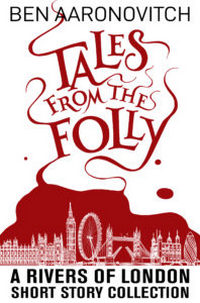
Tales from the Folly by Ben Aaronovitch: Entertaining Quick Dips into the Rivers of London

Tales from the Folly

Tales from the Folly: A Rivers of London Short Story Collection

by Ben Aaronovitch
Series: The Rivers of London

Kindle Edition, 139 pg.
JABberwocky Literary Agency, Inc., 2020

Read: August 1-3, 2020


If asked, I’d have thought I posted about this book weeks ago, so imagine my surprise this past weekend when I saw this title still on my “To Be Written” list when I was checking for something else. Better late than never…

What are the Tales from the Folly?

The subtitle pretty much gives it away, really. These are shorter works set in the Rivers of London series. The Folly is the unofficial name for the recognized British magical organization, following in the first formal study of magic made by Sir Isaac Newton (no known relation, but that doesn’t stop me from claiming him as an uncle), it’s currently formally organized as the Special Assessment Unit of the Metropolitan Police. The Folly is also the nickname for their headquarters. Either use works for this collection.

There are seven short stores (or one novella and six short stories) told from Peter Grant’s perspective—just like the series. Then there are four stories from the point of view of other characters in the series and three “moments” (Aaronovitch’s term for “something that is more of a mood than a story, something that will last a page or two and conjure an atmosphere).

Peter Grant Stories

Obviously, this is Peter’s series (at least so far…), so he gets the bulk of the space. Most of these take place around the time of the first few books in the series, but at different stages of Peter’s development. I enjoyed them all and most of them are good enough to justify the purchase price on their own.

I can’t put my finger on why, exactly, but the first story “The Home Crowd Advantage” is my favorite. It’s about a French practitioner who got up to no good during the 1948 London Games who revisits the scene of the crime in 2012 when rookie apprentice Peter Grant is the only one around to deal with him.

The last entry in this section is the novella, A Rare Book of Cunning Device that I talked about when it was released as an Audible Original in 2017. It’s rare for me to go from hearing a work to reading it, so it was interesting that way. I enjoyed it just as much this time around, but I think Holdbrook-Smith’s voice is a better one for this series than whatever is echoing around in my skull.

Everyone Else

The fact that Aaronovitch is able to tell stories outside of Peter’s perspective shows the strength of the series in my book, he’s built the world and the characters out enough that they can carry the weight of a narrative for at least a little bit.

We get a story from the perspective of one of the Rivers, one from Abigail’s perspective that will warm the cockles of your heart (and maybe make you a little sad for a bit), a nice one featuring Vanessa Sommer from Germany (making me hope we get back to Germany for another novel soon), the answer about what happened to the River Lugg after Foxglove Summer. Then there are the moments, one featuring Nightengale, one with Reynolds and one with Sommer’s pal Tobias Winter years before The October Man

So, what did I think about Tales from the Folly?

That’s easy, I thought it was great. I’d buy volume 2 tomorrow, and volume 3 next month. If Aaronovitch wrote that quickly, anyway. They’re like the comic series in a way—a nice way to spend some time in this universe without having to put in the time of a novel.

The collection covered the gamut of emotions and types of story typical of the series with Aaronovitch’s evident charm and skill. It’s a must for every Rivers of London fan.


4 Stars

The Ninja Daughter by Tori Eldridge: The Norwegian-Chinese Ninja Hero You Never Realized You Needed in Your Life

The Ninja Daughter

The Ninja Daughter

by Tori Eldridge
Series: Lily Wong, #1

Paperback, 300 pg.
Agora Books, 2019

Read: August 21-22, 2020
Grab a copy from your local indie bookstore!

What’s The Ninja Daughter About?

Lily Wong’s nickname is Dumpling, and like that food, there’s a lot hidden underneath the surface.

For starters, there’s the fact that she trained extensively in martial arts—more than her parents realized—growing up. Then there’s the fact that she (in her mind, at least) let her sister down the night that her sister was sexually assaulted and murdered. Which fuels the last hidden part of her life—she uses her guilt and need for vengeance to fuel her utilization of those martial arts skills to be a kunoichi—a female ninja—to help women and children who are the victims of abuse while she hunts for her sister’s killer. Her parents only know she does IT work from home.

When the book opens she’s trying to help a Ukrainian immigrant woman and her son get away from her abusive husband (who brags about his criminal connections), but that’s not going too well. To distract her self from the lack of success there, she takes up the cause of a waitress who’d been attacked in her home by a customer. The judge tossed the case based on insufficient evidence following weeks of the waitress being victim shamed through the media (traditional and social).

Lily decides that this waitress needs a big sister to look out for her and appoints herself to fill that role. She does this by doing what she can to keep Mia safe and then to investigate the guy she pressed charges against. This leads her into a murky world of government contracts, real estate, organized crime, and murder.

You Know Who Lily Reminds Me Of?

Part of it’s the city of L.A., part of it’s the female action-hero vibe, the one woman against the world kind of thing. Part of it is ineffable. But I couldn’t help but think of Cas Russell (of Zero Sum Game and Null Set) and Teagan Frost (of The Girl Who Could Move Sh*t with Her Mind) as I read this book.

Sure, Lily’s more grounded than either of them, she has no real powers other than those that are the result of years of training and practice. Theoretically, everything that Lily does in this book Tori Eldridge is (or at least was at one point) capable of doing herself—and a lot of what Cas and Teagan do are purely the stuff of fiction. Still, I’m probably going to lump the three of them together in my mind for some time to come.

The biggest difference between them is that Lily knows just who she is and where she comes from—her family is strong, affectionate (in their way), and supportive. She may have friends to augment that core support, but they’re not everything she has. This makes her a bit more stable and capable of dealing with challenges that come than the others.

(and, yeah, I thought of Lydia Chin and her mother every time Lily and her Ma interacted, but that’s a whole other can of worms).

The Food

There’s food all over this book. Lily’s father owns and runs a Chinese restaurant in Chinatown. The woman that runs the shelter she works with cooks amazing sounding soul food. The meals she eats with her family and on her own sound amazing. Spenser and Elvis Cole may know their way around a kitchen, but Lily Wong knows her way around some fantastic restaurants in L.A. She’s so far ahead of the game than Kinsey Milhone’s lousy sandwiches and Hungarian food that it’s hard to believe they’re in the same genre.

Do not read this book if you’re peckish. Keep yourself fed well, or you’re going to be snacking far too much.

Lily’s Heritage

It’s that family makes Lily who she is. In these three hundred pages, we hear more about Lily’s grandparents and parents than I’m used to hearing about a protagonist’s family over several books. Particularly when we’re talking about an action hero.

Eldridge has given Lily the same heritage that she has—a Norwegian father from North Dakota and a Chinese mother. So Eldridge knows the special kind of alchemy that the mixture of the two cultures produces.

The Important Word in the Title

Obviously, it’s Ninja that draws your attention and is the memorable takeaway, but as you can tell, it’s Daughter that colors the whole book. It’s Lily’s interactions with her parents, her application of the way they raised her and still care for her, the way she draws on what they teach and tell her that defines her and proves to be the key to figuring out what’s going on in the book.

So, what did I think about The Ninja Daughter?

If you want to ignore the deeper stuff and enjoy a book about a determined young woman out for vengeance (presumptive and by proxy, as it often is) on the streets of Los Angeles, this book will do the trick.

If you want a rounded, complex, female character trying to figure out how to deal with personal guilt, and trauma while helping out women and children by any means necessary, this book will do the trick, too. The idea that she may be starting to figure out a way past the guilt and move into healing and happiness* makes that all the better.

* Sure, I realize that within the first fifty pages of the sequel, all that can go away. The important thing is that it was there

You could make the case that Philip Marlowe was Chandler’s attempt at telling the story of a knight errant in early-twentieth-century L.A. Lily’s in the same vein—just a little more modern (and, ironically enough, using an older kind of warrior). Eldridge’s L.A. has slightly nicer mean streets, but they’re just as deadly and are in just as much need for a hero. I hope we get to see her at work for quite some time.


4 Stars

20 Books of Summer

This post contains an affiliate link. If you purchase from it, I will get a small commission at no additional cost to you. As always, opinions are my own.

BOOK BLITZ: Familiar by T.J. Blake

Today I’m pleased to welcome the Book Blitz for the Familiar by T. J. Blake. This one looks good, folks, be sure to check it out.


Book Details:

Book Title: Familiar by T.J. Blake
Release date: August 17, 2020
Length: 234 pages

Book Blurb:

For the living, it’s closure. For the departed, it’s the last chance to expose the truth.

For as long as she can remember, Arabella has communicated with those who exist only in memory.

Being the centre of attention growing up was uncomfortable, and now, as a renowned psychic medium, it is becoming more of a struggle. Arabella’s ability and reputation always made it impossible to hold onto lasting relationships, but with those who no longer walk this earth, that’s not the case.

Arabella returns to where it all began fifteen-years before – on the very same stage. After an evening reconnecting loved ones and exposing untold stories, Arabella can’t help but wonder about the one unclaimed ‘friend’, and their cryptic message.

In an unexpected turn of events, Arabella finds herself the subject of morning headlines and at the centre of Detective Barnes’ investigation.

Can Arabella use her ability to prove her innocence and uncover the truth about the past?

Purchase Link

https://amzn.to/3lcBjzg

About the Author:

T.J. BlakeLiving in Surrey, UK, some say that T. J. Blake has many split personalities – by day he’s a content marketing specialist, by night he could be any one of his deceptively complex characters.

His latest persona is Arabella, a psychic medium in “Familiar”.

He has a BA with Honours from Kingston University in Creative Writing with English Language & Communications and is author of the five-star psychological thriller, ‘DECEPTION – A Love of Lies’.

My thanks to Love Books Group for the invitation to participate in this tour and the materials (including the novel) they provided.

Love Books Group

Pub Day Repost: Ink & Sigil by Kevin Hearne: This Atypical UF is full of Action and Laughs (and Deadly Raisins)

Ink & Sigil

Ink & Sigil

by Kevin Hearne
Series: Ink & Sigil, #1

eARC, 336 pg.
Del Rey , 2020

Read: August 12-14, 2020
Grab a copy from your local indie bookstore!


The biggest challenge to writing about this book is choosing what not to talk about, I really feel like I could go on and on and on about it. Then the pendulum swings to the point I don’t say much at all…

What’s Ink & Sigil About?

Aloysius MacBharrais is a Sigil Agent—one of five on the Earth. They’re tasked with preserving the various treaties that supernatural creatures had set up throughout the world to keep the peace and govern the activities of the various pantheons on the mortal plane. They’ve been equipped with the barest magical tools necessary to get the job done—largely by Brighid of the Tuatha Dé Dannan to make up for the work that her Druid wasn’t doing when he was hiding for centuries on end.* Thre’s more to it, but that’ll work for starters.

* See everything that Atticus O’Sullivan was doing before the first of the Iron Druid Chronicles.

Al has horrible luck when it comes to apprentices, they keep falling prey to accidental death. The most recent is Gordie, who died after choking on a raisin scone. Before I get into things, can I say how wonderful it is to have a magic-user—even an apprentice—die by such mundane means (and you have never, I mean ever, come across this many jokes about raisins or scones in your life)? As Al goes to Gordie’s house to clean up all traces of his magic tools, he discovers that Gordie’s been up to some pretty dark and criminal stuff right under his nose.

This book takes Al and his associates around Scotland and even to the U.S. finding out just what Gordie was into and trying to set it right.

A New Kind of UF

There are outliers, but largely, Urban Fantasy series deal in variations on a theme—I’m not complaining, I’m into most of them. But basically, you’ve got a wizard (or something like that), a vampire, and/or a werewolf doing a P.I./Private Security/Hunter thing. There are different kinds of magic users, or vampire types, or were-species, but really, that’s about it. Lately, some variations have come from using different kinds of protagonists, like whatever Nell Ingram is or…(I had another example when I started this paragraph), but you get the point.

Here our variation comes in the type of mage—he uses sigils, particular designs in particular (and strange) inks which give a temporary effect to the bearer or beholder. Also, Al’s an elderly Scot who wears a derby and has an immaculately-styled mustache. He’s about as far from the grizzled hero in a leather jacket/trenchcoat as you can get. Outside of supporting characters or Marley Jacobs from A Key, an Egg, an Unfortunate Remark, you don’t see that (outside of characters who are supernaturally old, but appear young) .

Al’s associates aren’t standard either, but I’m going to resist using 3-4 paragraphs talking about them. I’m just going to say I enjoyed them all and can’t wait to spend more time with them.

Iron Druid Tie-in

As indicated above, this takes place in the same universe as The Iron Druid Chronicles, sometime after Scourged and contains references to some of the series’ events and characters. Al himself shows up in a short story in Besieged as a minor character.

There’s a brief appearance by Atticus and Oberon, and a longer one with Brighid. Both were a lot of fun, and the Atticus one was pretty sweet. I enjoyed seeing Brighid from someone else’s point of view. The door is open for more IDC characters to show up, but it’s not necessary, which I appreciate.

You do not have to have read the IDC to get into this, and not catching all the allusions/references/cross-overs will not diminish anything for you. It’s a spin-off, but isn’t dependent on the original.

Did Hearne Regret this Choice?

Al’s a Glaswegian and most of the book takes place in and around Glasgow. Hearne made the choice to write all the dialogue (and even Al’s first-person narration) in the dialect. Most authors wouldn’t have gone this far, and I have to wonder how often Hearne questioned this choice as he wrote—talk about making things hard on yourself. I enjoyed it—and it really helped me “hear” Al and everyone.

So, what did I think about Ink & Sigil?

While the IDC contained more than it’s share of laughs (and even The Seven Kennings had amusing moments), this seemed like a better merging of jokes and story. It feels like a natural outgrowth of The Tales of Pell (but not as humor-focused as those). For sheer enjoyment value, this was fantastic.

The story was pretty strong, too. But a lot of space was devoted to introducing us to this particular corner of the world and the cast of characters. I’d like to see what Hearne does with a novel where he doesn’t have to do that.

The world is familiar, yet Hearne’s doing something new in it. The characters are just not what you’re used to seeing in the genre. The plot was great—and speaks clearly to our current situation. And I laughed a lot. There’s little to complain about here and a lot to commend. I had a blast and I think most readers will, too. I can’t wait for the sequel.

Disclaimer: I received this eARC from Random House Publishing Group – Ballantine via NetGalley in exchange for this post—thanks to both for this.


4 1/2 Stars

20 Books of Summer

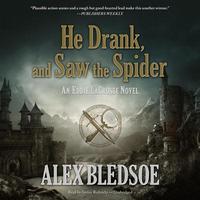
Dark Jenny (Audiobook) by Alex Bledsoe, Stefan Rudnicki: Eddie LaCrosse Meets a Legend

Dark Jenny

Dark Jenny

by Alex Bledsoe, Stefan Rudnicki (Narrator)
Series: Eddie LaCrosse, #3

Unabridged Audiobook, 8 hrs., 45 min.
Blackstone Audio, 2012

Read: July 24-28, 2020
Grab a copy from your local indie bookstore!

What did I say about Dark Jenny the first time I read it?

I have only the vaguest of memory of what actually happened in the first Eddie LaCrosse novel (The Sword-Edged Blonde), and only somewhat better recall about the second (Burn Me Deadly). That’s a reflection on the amount of stuff I’ve read in that time, and is in no way a reflection on Bledsoe. I do have a very clear recollection about what both books told me about Alex Bledsoe’s talent and that I enjoyed them a lot. I’m equally certain that Dark Jenny won’t suffer from that same fading from memory/excuse to reread them. This one is gonna stay with me for a while.

Essentially, this book is a variation of an Arthurian story—ideal king, queen rumored to be less than ideal, noble knight corps with a few rotten apples thrown in, a wizard figure, wicked half-sister, and a whole lotta intrigue—with a few unique twists of Bledsoe’s own thrown in for good measure. Not a sour note to be found here—some notes that were hard to listen to, sure, but…okay, there’s a metaphor that went awry. I was trying to say that yes, there were things that were less pleasant than others—this book goes to some dark, nasty places–but it all worked well.

We get this Arthurian tale via an extended flashback—in the middle of a nasty winter storm, with nothing else to occupy the attention of his neighbors, Eddie receives an interesting package. One so interesting, there has to be a great tale that goes along with it—which he ends up telling to the crowd at his favorite tavern (with only the tiniest of breaks to remind us that this is all in Eddie’s past). By making this all an extended flashback, Bledsoe is able to give us a slightly different version of Eddie—one on the way to being the guy we’ve seen in the last two books. It also gives him the excuse to have a great femme fatale to grab Eddie’s attention without having to write around his lovely lady.

A great, riveting fantasy noir. Can’t wait for the next one already. A decent jumping on point for those new to the series, and a great third installment for those who’ve been around for awhile.

Thoughts this time through

In the nine years or so since I read Dark Jenny I held on to a vague recollection of the plot, I remembered it was a clever twist on an Authurian Legend, and that it knocked me for a loop. But that’s really all I remembered.

So when I started it on my Eddie LaCrosse re-listen, I was excited. And spent a lot of time pretty disappointed. I couldn’t see why it knocked me for a loop.

It was a very clever way to tell an Authurian story while critiquing the Authorian stories. Bledsoe got the best of both worlds there, he got the utopia, the glory, the all the trappings. And he got to show the inherent problems with them, how short lived the utopia was (and if that’s the case, just how “eu” was the topia?)

And it was a fun story about a younger Eddie LaCrosse, sword jockey at large. I wasn’t blown away, but I was having a good time.

And then I got to the part that I must’ve been thinking about when I wrote my original post about it years ago. It’s not long after we learn why the book is called Dark Jenny, if you’re curious. And then I remembered exactly what I felt in 2011 and why the impression lingered even if the details had faded.

What about Dark Jenny as an audiobook?

Once again, Stefan Rudnicki, isn’t who I’d have guessed was a good fit for LaCrosse. But I’d have been wrong, he’s a great voice for this series and I can’t imagine anyone else doing it now. I can’t put my finger on why, but I think this novel works better in print than in audio (which is not a reflection on Rudnicki, it’s something about the story)—but I have no complaints about this as an audiobook.

So, what did I think about Dark Jenny?

I guess I kind of gave it away earlier. At this point in the series, Bledsoe has locked it in. He knows who Eddie is and how to tell his stories. There’s the right mix of fantasy elements (including the Arthurian material) and hard-boiled PI elements; humor and grit; violence and sympathy.

I don’t know if this is that much better than it’s predecessors—but it is somewhat, at least. And it resonates on an emotional level for me far more than they did. I’m completely sold on it.


4 Stars

This post contains an affiliate link. If you purchase from it, I will get a small commission at no additional cost to you. As always, opinions are my own.

Pub Day Post: As the Stars Fall by Steve N. Lee: A Girl and Her Dog. A Dog and His Girl.

As the Stars Fall

As the Stars Fall

by Steve N. Lee

Kindle Edition, 300 pg.
Blue Zoo, 2020

Read: August 19-20, 2020

What’s As The Stars Fall About?

This is told from the perspective of a young homeless dog, struggling to survive on the streets of some town. He scavanges to get by and has learned that dogs who aren’t his mother and siblings and people aren’t to be trusted. He can’t find his pack and isn’t doing a great job of feeding himself when he’s found by a young girl who convinces her Daddy to bring him home.

Slowly, he learns to trust Mia and her Daddy. Soon, Mia is everything to her dog, Kai, who learns that if he just waits long enough (and it’s hard to do), she’ll come home from school.

We spend a few quick years with the two, watching Mia grow up and some other things happen. But no matter what happens, Kai waits.

What Can You Safely Say About the Ending?

This is a classic “Dog Book,” in the vein of Old Yeller, Where the Red Fern Grows, Marley and Me, and so on. Which should tell you everything you need to know about what the ending of the book involves, so you go in fully warned.

That said, this is a different kind of read than those and will approach it in a different way.

What’s the intended audience?

I’m guessing this is aimed at kids—old enough to handle hard things (both those that happen to people and dogs), but it can be enjoyed by teens and adults, too (as long as they can handle the opening chapters coming from the point of view of a very juvenile narrator).

But all the promotional materials invoke A Dog’s Purpose, The Art of Racing in the Rain, Marley and Me, and One Good Dog, none of which are fitting for a kid. So I don’t know what to make of that. I guess I’d call this an All-Ages book (with the provisos I listed above).

So, what did I think about As The Stars Fall?

It was a sweet little story about the love of a dog for his girl, and a girl for her dog. Yes, it gets hard to read because this sweet little story involves some loss, too. But that only makes the high points better.

Actually, I should add that the story about the love of a father and daughter for each other was just as sweet and just as heart-wrenching.

I chuckled frequently—not just at Kai’s antics, but at the way he thinks about his people. I “awwwwed” more than once at Mia’s treatment of her pup.

This is a very nice book (I’m wanting to overuse the word sweet and am having a hard time coming up with an adequate replacement) that I enjoyed, heartily recommend, and can see myself re-reading regularly.

Disclaimer: I received this book from the author in exchange for my honest opinion and this post. I thank him for it.


3.5 Stars

The Rome of Fall by Chad Alan Gibbs: 90s Rock and High School Football Combine for a Shakespearean Tale

The Rome of Fall

The Rome of Fall

by Chad Alan Gibbs

Paperback, 260 pg.
Borne Back Books, 2020

Read: August 15-17, 2020
Grab a copy from your local indie bookstore!

During the tenth month of the year of our Lord nineteen hundred and ninety-four, as foretold in the book of Garth, the gods unleashed a plague upon Rome. Not a plague of frogs, or lice, or locusts—those would have been fine. The Coosa River did not run red with blood—that would have been okay, too. No, the gods were not messing around that October, and they blighted our fair town with a pestilence of heel, toe, do-se-dos that seemingly afflicted everyone in school but Jackson and me. Like a zit, Dixie Dancehall & Taxidermy materialized overnight, filling the void of Main Street cruising with, perhaps, the worse recreational activity in the history of human recreation: Country. Line. Dancing.

What’s The Rome of Fall About?

If you’ve ever asked yourself what would a Julius Caesar fanfic told through the prism of High School Football and 90s Rock look like, have I got a book for you…

Marcus Brinks spent the first semester of his senior year as a new student in Rome, Alabama before moving back to Texas with his father. To say that that semester was radically life-changing is to misunderstand both terms. Twenty-three years later, he returns to Rome to care for his dying mother, and to teach English at his old High School. In the intervening years, Brinks had fronted a very successful 90s indie band (for one album and an aborted tour, anyway), graduated from Harvard, and then spent sixteen years living on a beach in Jamaica, coasting on the fading fumes of his fame.

In 1994, Brinks had been befriended by Jackson and Silas. Jackson was a third-string QB with delusions of grandeur and a gift of gab (and brag, come to think of it). Silas was a white kid obsessed with gangsta rap who dreamed of coaching football—he couldn’t play, as he was on crutches due to Muscular Dystrophy—but he understood the game better than Jackson (or many others) ever could and with a passion that surpassed theirs, too. All of them were the victim of bullying by Deacon, the first string QB, who was as arrogant as only starting football stars can be. Jackson and Silas had a plan to bring Deacon down and disgrace him, but Brinks didn’t want to go along with it—until Deacon beats him up for the crime of being friends with Deacon’s girlfriend, Becca.

* And, we might as well be honest, Brinks wants to be a lot more than friends with her.

In 2017, Becca teaches at the middle school, Jackson’s the High School Football coach, and is pretty much the town’s biggest celebrity. Silas is now wheelchair-bound, and is his offensive coordinator. Something happened between Jackson and Brinks and they haven’t spoken in decades, and Brinks has no intention of breaking that streak. Deacon is a pretty successful local businessman, jealous of Jackson’s status, and is determined to bring him down (and wants Brinks to help). Oh, and adult Brinks can’t help himself and is determined to be a lot more than friends with Becca this time.

We bounce back and forth between the timelines, seeing both how Jackson, Silas, and Brinks plot against Deacon—and what drove them all to it. While eventually, we figure out what drove the rift between Jackson and Brinks, why Deacon and Brinks almost get along, and why they (and others) are plotting against Jackson. Mix in some high school fun, some good times with friends, a budding and rocky romance (in both timelines), some good 90s music nostalgia, a little teaching humor, and a whole lot of heart—and this becomes a novel that’s almost impossible to put down and that’ll hit you on several emotional levels at once.

All the characters are familiar at once, yet feel like Gibbs was one of the first to write about High School sports and those who aren’t part of the Team. Their adult versions all feel like genuine extensions and evolutions from who they were in High School. I’d have enjoyed hanging out with everyone but Deacon in High School and in 2017, I think I could’ve had fun with Brinks, Silas, and Becca. And at times the book almost makes you feel like that’s what you were doing. The relationship between Brinks and his mother was one of the best parts of this book, providing mirth and pathos. I’d likely recommend the book based only on the strength of it—and really, it’s not that important to the book overall.

Talking about the Julius Caesar of it All

On the one hand, Gibbs isn’t even a little bit subtle about the novel being a cover* of Shakespeare’s Julius Caesar, occasionally, maybe even going over the top with it. That said, there were a couple of references that I didn’t pick up on right away, and then felt really dense a few pages/chapters later when I stopped myself to flip back and re-read a little bit.

* Given the general rock music vibe that permeates this novel, I figure I should stick with music terminology whenever I can.
I grant you, it’s been decades since I last read the play (I think it’s one of the two Shakespeare plays I’ve read recreationally and for school), but I think Gibbs nailed it. He got all the major and many of the minor details right while keeping the whole thing feeling fresh and new. Frequently I thought the way he worked things in was pretty clever and unexpected.

What if you’ve never read/watched the play, will you be lost? Nope. It won’t matter at all to you. But if you have, you’ll appreciate the whole thing on another level.

The Little Things…

As with so many areas of life, it’s the little things that move a book from good to memorably entertaining. Yes, there are a lot of funny scenes, moments, and characters in The Rome of Fall, but Gibbs nails the little things in the narration. Things that don’t move the plot forward, or even really reveal much about Brinks or anyone else—but they add just the right bit of flavor to the book.


A non-exhaustive list of examples includes the aforementioned Line Dancing (it gets better from there) scenes, a nice bit about an overcooked steak, Brinks’s theories about things invented by bored teens in Rome, a line about armed teachers, and almost every conversation between Brinks and his mother that doesn’t advance the plot.

So, what did I think about The Rome of Fall?

“Okay, maybe I wasted some of my life, but people do still talk about our band. If we’d followed up with a bunch of shitty albums, no one would care anymore. But we didn’t, and they do. Not doing anything for the last twenty years wasn’t the worst career move.”

If Dear Brutus had been a real thing, I’d have left college before their album was released, and I might not have paid attention to them. But I’m close enough to the right age to remember the feel of that era of music and what those bands—especially of the indie/college rock variety—meant to their fans (yeah, it’s similar today, but with Spotify/Youtube, etc., it’s a little easier to connect with a band/their music than it was in the days of CDs and cassettes). A week or so before I read this book, a one-and-done band from about the same time that I loved launched a Kickstarter for a live album (recorded in the 90s). You wouldn’t believe how fast I contributed—me, and enough people to fully fund within a day—because of what emotions and memories that tapped into.

The Rome of Fall anchors itself in that feeling and then capitalizes on that to tell its stories. Really, the novel has nothing to do with the music of Dear Brutus. At the same time, it’s all about it. It’s about the ideas, the emotions—and the girl—that prompted Brinks to go all-in with his music, it’s about what the band’s dissolution did to him, and then what might lead to more of that music. I can’t say enough about that aspect of the novel.

Beyond that? Strip away the Shakespeare and music, and you have a charming and earnest story about High School and the way it shapes our lives, loves, friendships, and attitudes for the rest of our lives—and just what it takes to (maybe) shake them off. Failing that, how adults can channel the lingering effects of High School into both positive and destructive changes to their lives. It’s a strong novel that’s just a whole lot of fun (that sneakily works in some deeper material). Highly recommended.

N.B.: I won a copy of this book from the author in a giveaway on Witty and Sarcastic Bookclub and just wanted to take the opportunity to say thanks to both! You should probably also check out the post about the book on the site, it’s a good one.


4 Stars

20 Books of Summer

This post contains an affiliate link. If you purchase from it, I will get a small commission at no additional cost to you. As always, opinions are my own.

Grit: The Power of Passion and Perseverance (Audiobook) by Angela Duckworth: The Key is Passion and Perseverance, not Talent

Grit

Grit: The Power of Passion and Perseverance

by Angela Duckworth

Unabridged Audiobook, 9 hrs., 22 mins.
Simon & Schuster Audio, 2016

Read: August 18-21, 2020
Grab a copy from your local indie bookstore!

…as much as talent counts, effort counts twice.

What’s Grit About?

I’m afraid I’d get lost in minuate or that I’d overcorrect and not give an adequate idea if I tried to give a thumbnail, so let me borrow from Duckworth’s website:

pioneering psychologist Angela Duckworth shows anyone striving to succeed—be it parents, students, educators, athletes, or business people—that the secret to outstanding achievement is not talent but a special blend of passion and persistence she calls “grit.”
Why do some people succeed and others fail? Sharing new insights from her landmark research, Angela explains why talent is hardly a guarantor of success.

Angela has found that grit—a combination of passion and perseverance for a singularly important goal—is the hallmark of high achievers in every domain. She’s also found scientific evidence that grit can grow.

Angela gives a first-person account of her research with teachers working in some of the toughest schools, cadets struggling through their first days at West Point, and young finalists in the National Spelling Bee. She also mines fascinating insights from history and shows what can be gleaned from modern experiments in peak performance. Finally, she shares what she’s learned from interviewing dozens of high achievers—from JP Morgan Chase CEO Jamie Dimon to Seattle Seahawks Coach Pete Carroll.

It’s a fascinating mix of psychological research, case studies, and personal anecdotes. Duckworth structured this in such a way that not only it was informative and educational, it was enjoyable and motivational.

How about the narration?

I thought Duckworth herself was a great choice for narrators—she gives an energetic reading, that feels all the more authentic because it’s based on her research and experiences*. She talks at one point about the work she put in to make her TED Talk more successful and probably carried over that work to this. In the end, it was one of the more compelling non-fiction narrations I can remember.

* Not that another narrator would’ve felt inauthentic…

So, what did I think about Grit?

I loved this—I was entertained, educated, and a little inspired. The subject was interesting, the approach challenging, and didn’t always give the answers you expected. Duckworth made it clear that with the right mindset and time, it was possible to increase your own grit and find a measure of success. It’s not a one-size-fits-all solution, nor is it a promise of instant success. Just a reassurance that smart work can pay off.

I couldn’t stop thinking of different friends/family members that I wanted to share insights from this with—I think one son, in particular, should be very happy that he was busy with school while I was listening to this so I didn’t force him to listen along (it probably would have done him some good, but he probably wouldn’t have appreciated it in the moment).

The associated PDF was a nice supplement to the audiobook (so I can see charts/graphs and whatnot). Still, I think I’m going to have to get a hold of the hard copy for easy reference (it’s just easier to flip through to find something, or to use the index, than skipping through an audio file) and probably give out a copy or three.


4 1/2 Stars

2020 Library Love Challenge

This post contains an affiliate link. If you purchase from it, I will get a small commission at no additional cost to you. As always, opinions are my own.

Page 321 of 610

Powered by WordPress & Theme by Anders Norén