|


In 2018, I read my first book by Nick Kolokowski, Boise Longpig Hunting Club, which is pretty much everything you think it is from the title. In the two years and change since then, I’ve read five other books by Kolokowski—well, six now. That alone should be an indication of what I think about his stuff.
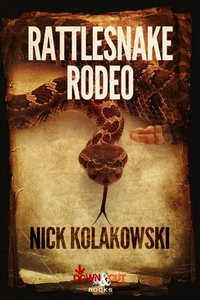
What’s Rattlesnake Rodeo About?
This is the sequel to Boise Longpig Hunting Club, taking up minutes after it. Spoilerly talk about BLHC—bounty hunter, Jake; his sister, Frankie (a gun smuggler); and ex-wife/fiancé, Janine (who has nothing to do with criminals); are kidnapped by a group of super-wealthy people, and set loose in an Idaho forest while they’re being hunted. Jake and Frankie are a lot more resourceful than anyone expected—and Janine has depth that no one expected—and they end up killing all the hunters.
We rejoin them in this book headed back to Boise. They have a number of emotions and thoughts running through their minds at this time—as they should—the most prominent of them is: how are we going to get away with this? There’s no way that they didn’t leave all sorts of DNA, fingerprints and other sorts of evidence behind that’ll make forensic techs happy. And there will be scores of techs, investigators, agents and what have you at the crime scene—very rich, very important people died up there and someone is going to have to pay for that. Oh, and Frankie wants fries. You work up an appetite fighting for your life.
Karen
They quickly learn about one person who not only has links to the Longpig Hunters, evidence about Jake and Frankie’s involvement, and a reputation to make people quake in their boots. Like Prince, Madonna, or Hawk (to bring it back to crime fiction), she’s known by one name: Karen.
Quick aside: I wonder if in early drafts, she was called something like Margo or Helen, but given, well, all of 2020, Kolakowski decided to go back and change it. Or did he have enough foresight months ago to go with that?
Back to the book: Karen offers them a deal, they do one incredibly horrible task for her, or she ruins the lives and reputations of Jake, Frankie, and Janine. They have no choice…they have to find an Option C.
Gunfights, treachery, and (obviously) rattlesnakes ensue.
Frankie and Her Troops
In almost every novel I’d normally read, Frankie and her employees would be the targets of the protagonist, not their ally. But I’ve gotta say, for a bunch of gun-running criminals, benefiting from the miseries of others (and being a means to innocents being killed at the hands of their customers), they’re a lot of fun. There’s a fun sense of camaraderie and some good banter among them. They’re a pretty effective squad, too. Kolakowski could write a pretty entertaining series featuring these guys. And not just because they’re led by a man who always wears a rubber gorilla mask.
Which is fitting, considering how cool their boss is. Spenser has Hawk, Kenzie and Gennaro have Bubba, Elvis Cole has Joe Pike, Walt Longmire has Henry Standing Bear, Joe Pickett has Nate Romanowski, Sunny Randall has Spike, and Jake has Frankie. The “not-bound by the same laws and ethics that the series protagonist is” so that the protagonist can keep his/her nose clean and still get the job done. They’ll cut the corners, they’ll take and make the shots that no one else will, they’ll be the ones to use lethal force when their friend just can’t bring themselves to do it—and they won’t feel guilt (at least not enough to interfere with their ability to get things done).
Frankie is, as far as I know, the only female lethal sidekick, in crime fiction. Through grit, determination, skill, and panache—Frankie is what ultimately keeps her brother and sister-in-law breathing. It’s just fun to see a female in this role, particularly one that fits. I could never see Sunny Randall go toe-to-toe with some of the dudes she needs to without Spike (or Jesse, or Richie, or Richie’s family)—but I can see Frankie (like Lori Anderson or Charlie Fox) do it without blinking.
The Setting
I’ve talked a little about this in the other book, but it’s fun for me to see the region I’ve lived my whole life in depicted so well in these pages. I enjoy anyone finding a way to bring a crime novel to life outside of Boston, NYC, New Jersey, Chicago, Miami or LA—Elmore Leonard, Jason Miller, Craig Johnson, C. J. Box, Darynda Jones, and G. M. Ford have/continue to do a good job of that, but there needs to be more*. Kolakowski brings my corner of the world into that fold (Jayne Faith did it in Urban Fantasy, and Wesley Chu set a Tao book near where the climax of this novel took place). It’s nice not having to use my imagination much when picturing a scene, at the same time—if I’d never been anywhere near this place, Kolakowski depicts it well enough that someone from Michigan, Mississippi, or New Mexico would have no problem seeing what he’s going for.
* I don’t pretend that’s an exhaustive list, still feel free to add others I should get to know.
So, what did I think about Rattlesnake Rodeo?
You could feel the dread coming off of Jake and Frankie as they thought about the police and (probably) feds coming for them after surviving the last novel, you could feel their hatred (for Karen) and revulsion for their task for her, and you could sense the chaos, smell the smoke, and taste the air from the big scenes at the end of the novel. There are significant portions of this novel you experience as much as you read. You’ve gotta love that.
There was one death that totally caught me unprepared and left me stunned. The violence felt a little more grounded than the genre demands, but Kolakowski knows when to loosen the reins and let things go a little over the top. Which is just fun.
At the same time, there’s a great sense of enjoyment to this novel—to the characters, what they do, and how they go about it. It’s the kind of action novel that gets your fists pumping as much as anything else.
Just the fact that the novel starts with the trio worried about all the evidence they left behind made this a winner—how many characters in novels worry about that sort of thing? Add in the characters—from the oddity of Monkey Man, to the implausibly competent Frankie, to the quiet strength of Janine, to the terror that is Karen—and the great balance of tones, and you’ll see why Kolakowski is my favorite US indie Crime Novelist.
I strongly recommend Rattlesnake Rodeo, whether or not you read BLHC first, it’s a fun ride.
Disclaimer: I received this eARC from the author in exchange for this post and my honest opinion, I appreciate the opportunity.


So…things are going to be quiet around here for the next 4 weeks (at least). But we learned this week that we have to move. So, when I’m not at work, I’ve been looking for a new place and starting to pack. I’m trying to look at this as a chance to do a thorough reorganization of my bookshelves (and everything else in the house).
So not only have I not written a whole lot this week–most of what was posted was prepared weeks ago (the post Friday was the result of 4 nights of plugging away a bit at a time), I didn’t even have the time and energy to get the September report out, short version: 26 books, I think I liked all of them). I’ve read even less. This week I’ve read 3 essays, 3 short stories, and the same page of an ARC for 4 straight nights as I fell asleep. That’s a bad day’s worth of reading. For a week, that’s unthinkable. I got my copy of Battle Ground on Tuesday and haven’t read the first line. I may not stay sane for long at this rate (not just over Dresden, all of it).
I have 1 book tour this month (and one at the beginning of November), 3 books an author has asked me to talk about (1 read, 2 unread)—and I’m going to try my best to get those posted, and anything else I can manage to squeeze in. We’ll see.
I did manage to steal a couple of minutes here and there this week to look at my feeds to find a thing or two for this. So, 25 hours after I started this, I can now post it. Yeah, gonna be one of those months.
 that caught my eye this week. You’ve probably seen some/most/all of them, but just in case: that caught my eye this week. You’ve probably seen some/most/all of them, but just in case:
 American classics among most ‘challenged’ books of the decade in US: Huckleberry Finn and To Kill a Mockingbird among works protesters have tried to get removed from schools and libraries—yeah, this is the end of Banned Book Week, and the article was written for the beginning of it. Still… American classics among most ‘challenged’ books of the decade in US: Huckleberry Finn and To Kill a Mockingbird among works protesters have tried to get removed from schools and libraries—yeah, this is the end of Banned Book Week, and the article was written for the beginning of it. Still…
How to Determine the Personal Value of a Book in a Few Simple Steps: What to Do When You Have Too Many Books—too many books? I guess it could happen. No one let Mrs. Irresponsible Reader see this for the next couple of months, okay?
Author Interview: Nancy Pearl and Jeff Schwager on The Writer’s Library—from LibraryThing
INTERVIEW: Ian Rankin on turning 60, not being able to hug his son in lockdown and why Rebus is finally venturing out of Edinburgh
12 Book Bloggers Share How They Find Time to Read—some good ideas here
Goodbye 5 Star Rating System. Hello Book Vagabond Badges.—here’s an interesting alternative.
RATING SYSTEM—Book in Hand has a new rating system, too
Being Objective About Some of My Favourite Books—The Orangutan Librarian talks about some problems with some of her favorite reads
What am I even doing?—The Fantasy Inn’s Kopratic talks about book reviewing
Comfort in books
 That I’m Excited About and/or You’ll Probably See Here Soon: That I’m Excited About and/or You’ll Probably See Here Soon:
Battle Ground by Jim Butcher—Peace Talks set the stage for something huge. It’s now here.
Just Like You by Nick Hornby—Hornby tackles the tale of a 42-year-old mother falling for a 22-year-old.
A Deadly Education by Naomi Novik—the beginning of a series about a sentient school for young magic users, featuring a dark magic practiitionner who has enough power to kill every other student. Or Something. I think I’m going to have to read it to come up with a better summary.
 I’d like to say hi and extend a warm welcome toChar, I.F, and BookerTalk who followed the blog this week. Keep coming back, there’ll be new stuff, eventually! I’d like to say hi and extend a warm welcome toChar, I.F, and BookerTalk who followed the blog this week. Keep coming back, there’ll be new stuff, eventually!
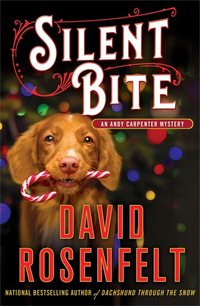
Wow. Andy Carpenter #22. That’s hard to believe. It doesn’t seem that long ago that I started reading these (I think back in the single digits). But all-in-all, it’s been a fun ride. How’s this one stack up?
What’s Silent Bite About?
When Andy and his family return from a holiday cruise (a novella describing that in more detail than we got here would quickly become a fan favorite, no doubt), he’s got a bunch of messages from Willie Miller. A friend, and former cellmate, of Willie’s has been arrested for murder. Both Willie and his friend, Tony Birch, want Andy to take the case and clear him. Andy wants nothing to do with a problematic looking case*, but Willie’s a friend—and Andy’s son, Ricky, has pointed out that Willie does stuff for Andy all the time. Also, Tony has a dog that’s miserable without him around.
* or any case, really.
The murder victim is one of the witnesses against Birch for the manslaughter charge that put him in prison with Willie years ago. At the trial, Tony threatened to kill him (and a few others) for turning on him, after years in a gang together. But upon his release from prison, years before this new murder, Tony had turned his life around—he owned and operated a fairly successful auto repair garage, and had no interest in criminal activity again. So why seek vengeance now?
And why be as utterly stupid with the murder weapon as the prosecution wants people to believe?
But then another witness against Tony in the original case turns up dead, and things start looking really bad for him. So it’s up to Andy and his team to save the day.
Zoey, the Nova Scotia Duck Tolling Retriever
I really don’t have much to say about Zoey, Tony’s dog, but I’ve never heard of her breed before—and I don’t feel too bad about that Andy hadn’t seen one before. If your day could use a little lift, take a minute or two to scroll through some pictures online. Cute dogs.*
* That’s a tautology, I realize.
The New Associate
In most of his cases, Andy Carpenter utilizes an associate to do the ugly detailed work, filing motions, looking up pertinent case law, and so on, while Andy goes around visiting people, investigating, getting saved from certain peril by Marcus Clerk, and being snarky and clever in court. He started with Kevin Randall, who owned a laundromat and gave legal advice to those who couldn’t afford it. He eventually moved on and Hike Lynch moved in—largely, I think because Hike is a more entertaining character than Kevin. Well, Hike isn’t around for this one and he suggests Eddie Dowd step in.
Eddie used to play for the Giants, but a knee injury ended that career, so he went to law school. He speaks almost entirely in sports phrases (spike the ball, put me in, pitch in, and so on). It’s fairly ridiculous, but when done right, it’s pretty funny. He’s a nice change from the Eeyore-like character that Hike had been. I’m not sure if he’ll be back, or if Hike will return—I’ll be glad to see him if he is, even if it seems like the joke about his figures of speech will get old. I have faith in Rosenfelt. I’d have thought that Hike’s extreme pessimism or Kevin’s hypochondria would.
So, what did I think about Silent Bite?
I thought the identity of the killer was pretty obvious, but Rosenfelt’s execution of the reveal and of keeping Andy from seeing the solution all along sold me. I can’t be more descriptive of that because I don’t want to tip anything. It was a great conclusion to a really solid legal thriller, that comes with all the canine affection, snappy dialogue, some clever courtroom action, and a solid plot. Pretty much what the doctor ordered.
Once we got The K Team this year, with Muzzled as well, I didn’t figure we’d have a Holiday Andy Carpenter book. Then when I saw this was coming, I worried it wouldn’t live up to the other Holiday books in this series. I kept being wrong about this book—we got it and it wasn’t a let-down. Rosenfelt managed to give us three strong novels in 2020 (hey, look, 2020 didn’t wind up in a disaster on one front!)—that right there, folks, is a sign of a professional.
Whether you’re new to the world of this would-be retired criminal defense lawyer and are in the mood for a witty and sharp legal thriller, or if you’re familiar with Andy and his associates—this will entertain you. You’d do well to give this a shot.
Disclaimer: I received this eARC from St. Martin’s Press via NetGalley in exchange for this post—thanks to both for this.
This post contains an affiliate link. If you purchase from it, I will get a small commission at no additional cost to you. As always, opinions are my own.
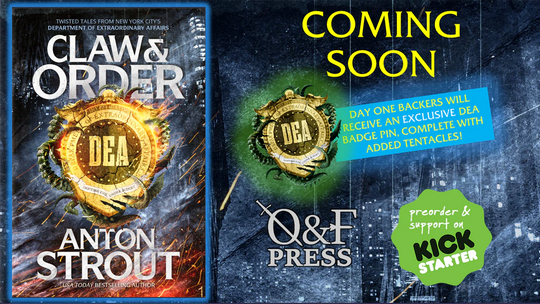
After teasing fans for years with kickstarting a project, Anton Strout is coming to Kickstarter next week with Claw & Order, “a collection of stories that tie into the worlds of my Simon Canderous and Spellmason Chronicles book series.”
Am a big fan of both series–and I cannot wait. Click here (or on the graphic above) to be taken to the pre-launce page so you get notified when it goes live. Day one backers get an exclusive Dept of Extraordinary Affairs badge pin—and the feeling of satisfaction that comes from supporting a heckuva writer.
If you don’t know who Strout is, or what his series are about. Head on over to https://www.theonceandfuturepodcast.com to check out his podcast, The Once and Future Podcast, or either series—The Simon Canderous Novels or The Spellmason Chronicles. You’ll be glad you did.
Just kick the start first.
I’ve spent the afternoon composing September’s Down the TBR posts and there have just been so many books in the last four posts that I have no memory of ever seeing, much less wanting to read. At the same time, I almost feel like I just found a whole bunch of great books I want to read (even if I really put them on the “Want to Read” shelf two years ago).
This meme was created by Lia @ Lost in a Story—but Jenna at Bookmark Your Thoughts is the one that exposed me to this, and as my Goodreads “Want To Read” shelf is scarily long, I had to do this.
The Rules are simple:
- Go to your Goodreads to-read shelf
- Order on ascending date added.
- Take the first 5 (or 10 if you’re feeling adventurous) books.
- Read the synopses of the books.
- Decide: keep it or should it go?
- Keep track of where you left off so you can pick up there next week! (or whenever)
What distinguishes this series from the Mt. TBR section of my Month-end Retrospectives? Those are books I actually own while Goodreads contains my aspirational TBR (many of which will be Library reads). The Naming of the two is a bit confusing, but…what’re you going to do?
(Click on the cover for an official site or something with more info about the book)
 |
Penelope Lemon: Game On! by Inman Majors
Blurb:
My Thoughts: I wish I knew how this fell on my radar. I also wish I knew why I haven’t read it yet. I’m not going to try to recap the blurb without reading this comic novel, I’d probably do a bad job of it. Just click the link above.
Verdict:
 |
 |
The Lonely Witness by William Boyle
Blurb: When a young woman with a sordid past witnesses a murder, she finds herself fascinated by the killer and decides to track him down herself.
My Thoughts: Once again, I wish I knew how this fell on my radar, because then maybe I’d remember why I thought this would be something I’d enjoy. Don’t get me wrong, it looks gripping and well-written, but it also doesn’t look like my cup of tea.
Verdict:
 |
 |
First Watch by Dale Lucas
My Thoughts: A police procedural in a Fantasy world, like DeCandido’s Precinct books. Probably a different approach beyond that, though. Looks pretty good.
Verdict:
|
 |
Middlegame by Seanan McGuire
My Thoughts: I can’t believe I’m not interested in a McGuire novel. But despite all the acclaim (and there are mountatins of it), this one just doesn’t appeal to me.
Verdict:
|
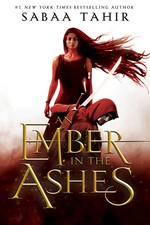 |
An Ember in the Ashes by Sabaa Tahir
My Thoughts: This looks like a great fantasy novel, but I know Im not going to find the time for it.
Verdict:
|
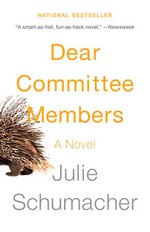 |
Dear Committee Members by Julie Schumacher
Blurb: “Finally a novel that puts the ‘pissed’ back into ‘epistolary.’…the vehicle this droll and inventive novel uses to tell that tale is a series of hilarious letters of recommendation that [beleaguered creative writing professor] Fitger is endlessly called upon by his students and colleagues to produce, each one of which is a small masterpiece of high dudgeon, low spirits, and passive-aggressive strategies.”
My Thoughts: Looks like a bit of fun à la Straight Man
Verdict:
|
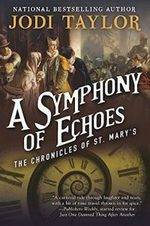 |
A Symphony of Echoes by Jodi Taylor
My Thoughts: The second in the Chronicles of St Mary’s features the historians facing off with Jack the Ripper (among with other time travel hijinks).
Verdict:
|
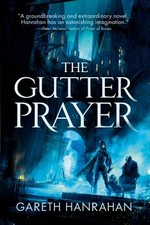 |
The Gutter Prayer by Gareth Ryder-Hanrahan
Blurb: “When three thieves – an orphan, a ghoul, and a cursed man – are betrayed by the master of the thieves guild, their quest for revenge uncovers dark truths about their city and exposes a dangerous conspiracy, the seeds of which were sown long before they were born.”
My Thoughts: I’ve yet to see anything bad about this book, it looks so good. I’ve come close to buying it a couple of times, but I’ve been intimidated by the size and density of the text. (how lame does that sound?)
Verdict:
|
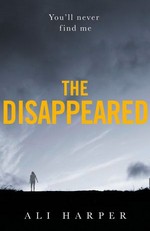 |
The Disappeared by Ali Harper
Blurb: A couple of newbie PI’s on a hunt for a missing college student when the case turns out to be a lot more than they bargained for.
My Thoughts: This looks like it could be a good one, but I’m probably not going to find the time.
Verdict:
|
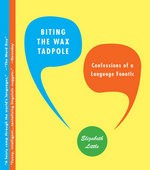 |
Biting the Wax Tadpole: Confessions of a Language Fanatic by Elizabeth Little
Blurb: “Language, like travel, is always stranger than we expect and often more beautiful than we imagine. In Biting the Wax Tadpole Elizabeth Little takes a decidedly unstuffy and accessible tour of grammar via the languages of the world—from Lithuanian noun declensions and imperfective Russian verbs to Ancient Greek and Navajo. And in one of the most courageous acts in the history of popular grammar books, she attempts to provide an explanation of verbal aspect that people might actually understand.”
My Thoughts: I always enjoy reading about how English is messed up, might be nice to see how other languages are strange.
Verdict:
|
Books Removed in this Post: 5 / 10
Total Books Removed: 88 / 240
Anyone out there read any of these books? Did I make the right call with any of them?
(Image by moritz320 from Pixabay)
A Sequel to The Dispatcher?
I think the last thing on my mind as I finished The Dispatcher was that there’d be a sequel. It seemed fairly stand-alone (but, I guess, I can see that the door was open). But now that I’ve heard this? It seems only natural that there’d be a follow-up to The Dispatcher and the door is open for more.
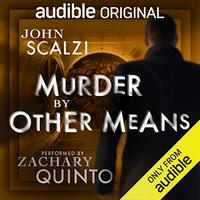
What’s Murder by Other Means About?
So, in this world 99.9% of the time, if you’re murdered, you come back to life in your home/somewhere you feel safe. If you die of natural causes, in an accident, from suicide—you stay dead. But if someone intends you harm and you die, you’re most likely safe. This started a few years before this book is set, and no one knows why.
But that doesn’t stop people from taking advantage of it. There’s a new industry, our protagonist/narrator is part of it, Dispatching. Licensed killers who shoot people when death is all but certain to give them another chance at life. In the time since The Dispatcher, it seems that some new and creative uses for them have become common. Most of them straddle the line between legal/illegal or moral/immoral.
Tony Valdez starts this book hurting for money, and takes one of those not technically illegal jobs. Soon after, people around him—loosely connected, but not really friends or colleagues—start dying from unnatural causes. Not murders, obviously, because they stay dead. But as the bodies start to accumulate, the police have to look at the one common denominator—Tony. Tony starts investigating himself—if only because he figures it’s going to be long before he’s one of the dead that doesn’t come back.
How was the Narration?
Quinto makes Tony come to life, and is able to humanize this licensed executioner enough that you don’t think of him as a killer for hire, you think of him a beleaguered private contractor on hard times. Quinto’s great at the rest of the job, too—I’d absolutely listen to more audiobooks he narrates.
So, what did I think about Murder by Other Means?
I was less than enthusiastic about The Dispatcher back in 2016—which I didn’t remember until I just glanced at my post. I’m not over the moon about this, but I enjoyed it, and hope there’s more to come (I’m not sure I want to wait four more years, however). If there is? I’m jumping on it eagerly.
It was clever, it is honest about the human condition and the ways we find to hurt and destroy (and comes up with a few that are custom-made for this no-murder reality), yet remains a very human, very real thriller. It’s a good way to spend a couple of hours.

|