Author: HCNewton Page 341 of 613

WWW Wednesday, May 13, 2020

It’s the middle of the week—that special day named for my favorite member of the Addams Family—which means it’s time for WWW Wednesday!

This meme was formerly hosted by MizB at A Daily Rhythm and revived on Taking on a World of Words—and shown to me by Aurore-Anne-Chehoke at Diary-of-a-black-city-girl.

The Three Ws are:

What are you currently reading?
What did you recently finish reading?
What do you think you’ll read next?

Easy enough, right?

What are you currently reading?
I’m reading Burning Bright by Nick Petrie and am listening to Blood Storm Magic by Jayne Faith, Amy Landon (Narrator).

Burning Bright Blood Storm Magic

What did you recently finish reading?
I just finished Russell Day’s King of the Crows (which I’m trying not to write 5 posts about) and First Degree by David Rosenfelt, Grover Gardner (Narrator) on audio.

King of the Crows First Degree

What do you think you’ll read next?
My next book should be Trophy Hunt by C. J. Box and Timeless by Gail Carriger, Emily Gray (Narrator) on audiobook.

Trophy Hunt Timeless

Hit me with your Three W’s in the comments! (no, really, do it!)

Down the TBR Hole (5 of 24+)

Down the TBR Hole

Round 5 of this series…there were a couple I bounced back and forth on (to the good of one and the ill of another). There’s a couple of these that I’d really like to read, but I know I’m not going into it. At this point, I’ve looked at 50 books so far and have now cut about 10% of the total list, I’d hoped for more, but it’s a decent start.

This meme was created by Lia @ Lost in a Story—but Jenna at Bookmark Your Thoughts is the one that exposed me to this, and as my Goodreads “Want To Read” shelf is scarily long, I had to do this.

The Rules are simple:

  1. Go to your Goodreads to-read shelf
  2. Order on ascending date added.
  3. Take the first 5 (or 10 if you’re feeling adventurous) books.
  4. Read the synopses of the books.
  5. Decide: keep it or should it go?
  6. Keep track of where you left off so you can pick up there next week! (or whenever)

What distinguishes this series from the Mt. TBR section of my Month-end Retrospectives? Those are books I actually own while Goodreads contains my aspirational TBR (many of which will be Library reads). The Naming of the two is a bit confusing, but…what’re you going to do?

(Click on the cover for an official site or something with more info about the book)

Chump Change Chump Change by G.M. Ford
Blurb: “Hearing a dying stranger call you by name would leave anyone full of questions. When it happens to private eye Leo Waterman, the more he learns about the late lottery winner’s rags-to-riches-to-ruination life, the more he wants not just answers but justice. That means a road trip to Idaho to find out how a good-hearted young man with millions got skinned–in more ways than one.”
My Thoughts: Why haven’t I read it yet? Honestly, this is the only one in the series my library doesn’t own, and when it came time for me to read this one, I was in a book-buying freeze. I’ll fix that soon.
Verdict: Nunc hoc in marmore non est incisum
Thumbs Up
The Prince of Venice Beach The Prince of Venice Beach by Blake Nelson
Blurb: A homeless teen runaway teams with a PI to help find a missing teen.
My Thoughts: Don’t remember how this ended up on my radar…just not seeing the appeal.
Verdict:
Thumbs Down
Nice Dragons Finish Last Nice Dragons Finish Last by Rachel Aaron
Blurb: “As the smallest dragon in the Heartstriker clan, Julius survives by a simple code: keep quiet, don’t cause trouble, and stay out of the way of bigger dragons. But this meek behavior doesn’t fly in a family of ambitious magical predators, and his mother, Bethesda the Heartstriker, has finally reached the end of her patience. Now, sealed in human form and banished to the DFZ – a vertical metropolis built on the ruins of Old Detroit – Julius has one month to prove he can be a ruthless dragon or kiss his true shape goodbye forever. But in a city of modern mages and vengeful spirits where dragons are considered monsters to be exterminated, he’s going to need some serious help to survive this test. He only hopes humans are more trustworthy than dragons….”
My Thoughts: I got the audiobook forever ago in an Audible sale. It’s the only audiobook I own that I haven’t listened to. Has to be done (if only to flatline that part of my Mt. TBR chart)
Verdict:
Thumbs Up
Bad Move Bad Move by Linwood Barclay
Blurb: “Bad Move introduces Linwood’s reluctant hero, Zack Walker, a science fiction writer and perpetually worried father who moves his family from the dangerous city to the peaceful suburbs, and runs headlong into the law of unintended consequence. The Walker family’s change of scene doesn’t bring about tranquility, but it does introduce them to political corruption, a marijuana-growing operation, the neighborhood dominatrix, and murder.”
My Thoughts: This sounds like a lot of fun. I’d probably be easily convinced to add this back to the list. But for now…don’t have time.
Verdict:
Thumbs Down
What Might Have Been What Might Have Been by Matt Dunn
Blurb: “…romantic comedy about two people in love. Though one of them needs a little convincing…”
My Thoughts: Have enjoyed Dunn’s work before, and am trying to read more of this kind of thing–books where no one is killing people make me feel a little better about life (not that I’m planning on stopping the other stuff anytime soon)
Verdict:
Thumbs Up
The Question of Canon The Question of Canon: Challenging the Status Quo in the New Testament Debate by Michael J. Kruger
Blurb: “Unlike many books written on the emergence of the New Testament canon that ask “when?” or “how?” Kruger focuses this work on the “why?”―exposing weaknesses in the five major tenets of the extrinsic model as he goes. While The Question of Canon scrutinizes today’s popular scholastic view, it also offers an alternative concept to lay a better empirical foundation for biblical canon studies.”
My Thoughts: I’m a giant fan of Kruger’s work (at least the stuff that’s affordable and approachable for non-scholars), gotta get around to this one.
Verdict:
Thumbs Up
Only The Good Die Young Only The Good Die Young by Chris Marie Green
Blurb: An urban fantasy focusing on a ghost PI
My Thoughts: I oringally added this one to make sure my (then) planned ghost novel didn’t get too close to it. But then I never got around to drafting that, and well…yeah. That’s that.
Verdict:
Thumbs Down
Canary Canary by Duane Swierczynski
Blurb: A college student forced to become a Confidential Informant for a cop too eager to make a bust becomes a target for killers and crooked cops.
Verdict:
Thumbs Down
The Extra Ordinary Life of Frank Derrick, Age 81 The Extra Ordinary Life of Frank Derrick, Age 81 by J.B. Morrison
Blurb: A home help caregiver helps an elderly man learn how to enjoy life again.
My Thoughts: It just seems like I’ve read too many books along these lines lately (which may contradict what I said earlier about the Dunn book–and probably does).
Verdict:
Thumbs Down
Bleed Like Me Bleed Like Me by Cath Staincliffe
Blurb: The second Scott and Bailey novel. Really don’t need to know more.
My Thoughts: This is a no-brainer. Just gotta find the time.
Verdict:
Thumbs up

Books Removed in this Post: 5 / 10
Total Books Removed: 23 / 240

Anyone out there read any of these books? Did I make the right call with any of them?


(Image by moritz320 from Pixabay)

The Sword-Edged Blonde (Audiobook) by Alex Bledsoe, Stefan Rudnicki: This Hard-Boiled Fantasy Mixes the Best of Both Genres

The Sword-Edged Blonde

The Sword-Edged Blonde

by Alex Bledsoe, Stefan Rudnicki (Narrator)
Series: Eddie LaCrosse, #1

Unabridged Audiobook, 8 hrs., 28 min.
Blackstone Audio, 2012

Read: April 22-24, 2020
Grab a copy from your local indie bookstore!


I’ve read this novel at least twice (13 and 11 years ago), and apparently have forgotten almost all of it. In fact, what I did remember as the climactic scene must belong to the second novel in the series, Burn Me Deadly. I can do better with the rest of the series (and not just because I actually wrote something about them—but I’m looking forward to taking another look at them in the coming months.

But I’m getting ahead of myself, I should introduce you to Eddie LaCrosse and his world. It’s your basic Fantasy world—swords, rumors of sorcery, small kingdoms, and so on. Eddie’s an ex-soldier, ex-mercenary, now “sword jockey” (basically a private cop). He’s got a little more on his résumé, but you’ll learn more about that as you dive in yourself. He’s been hired by an old friend, the King of a neighboring country to clear his wife of the horrific murder of her son. She doesn’t remember him, but when he meets her, Eddie realizes that he knew the Queen long before the King did.

Eddie’s investigation takes him through multiple kingdoms, into the remains of a cult, and into a criminal network that rivals anything that Varys put together for efficacy or ruthlessness. At the same time he does this, Eddie takes a trip through his personal history, reliving the time he knew the Queen (and events leading up to that). The two storylines are interwoven to help Eddie solve what seems like a perfect crime.

Both in the narration, LaCrosse’s character and the kinds of people we meet along the way, Bledsoe channels Chandler. LaCrosse is casually violent in a way that Marlowe indulged in a bit too often for me, and the (for lack of a better word) grotesque (in physical appearance and morality) criminals Eddie deals with in the latter parts of the book felt particularly Chandler-esque to me.

There’s some things that happen at the end that point to Eddie coming to terms with parts of his past that he’s been unable/unwilling to acknowledge existed. The character won’t change as a result of this (at least not much), but I think it opens the door for some of his rougher edges to be rounded out. How well that actually happens, I’ll have to see (I don’t trust my memory enough right now)—but at the very least, Bledsoe made it possible for the character to grow and evolve here.

Rudnicki’s narration didn’t really work for me initially—there was a quality to his voice that just didn’t click with me. But, I kept going because I liked the novel. Before the halfway mark, however, he’d won me over. I can’t put my finger on it (either good or bad), but he sold the emotional moments, the humor, and Eddie’s general attitude. Which is good enough for me.

It’s hard for me to rate this one on its own terms—I remember liking it. I remember what Bledsoe does with the characters. And those things color my rating, leading me to probably giving this another half-to-whole star more than I would otherwise. But also, for the world. The merging of Fantasy and Hard-boiled genres in a way that’s seamless and well-executed. I recommend this one and will be back for more soon.

Bookstooge posted about this book yesterday. It’s probably worth a read (I’ll read it later today, I didn’t want his voice in my head as I wrote this).


4 Stars

This post contains an affiliate link. If you purchase from it, I will get a small commission at no additional cost to you. As always, opinions are my own.


Every Day Matters: A Biblical Approach to Productivity by Brandon D. Crowe: Biblical Foundation, Sage Advice, and Helpful Examples

Every Day Matters

Every Day Matters: A Biblical Approach to Productivity

by Brandon D. Crowe

Paperback, 129 pg.
Lexham Press, 2020

Read: February 2-23, 2020
Grab a copy from your local indie bookstore!


I should begin by stating upfront that my take on this book is very different than the other Christian Productivity book I read back in 2015. It’s entirely possible that this makes me a hypocrite. I don’t think so, but I’m not going to go back and re-read the other one. I remember the starting point of that one being different than this, and it makes all the difference to me.

* N.B.: Crowe cites it positively at one point. Do with that what you will.

In Part I, Crowe outlines the need for believers to think about their personal productivity. Then he uses Proverbs and Ecclesiastes to show the foundation of Biblical productivity. Then he further expands on that material by looking at Paul’s teaching about focus, diligence, and self-control. This was my favorite section, and I could’ve easily read something twice as long had Crowe decided to expand on these points.

Part II focuses on Principles. He builds on the Biblical material with a mixture of experience, research into productivity, and application of Christian teaching to help the reader concentrate on responsibility, goal setting, the role of family, the importance of rest and health.

The rubber meets the road in Part III, “Practices.” He discusses spiritual disciplines, organization methods and some pitfalls to avoid. He gives a lot of tips here, illustrated from his own experience (but he also discusses some things he doesn’t personally use). There’s a lot of “this worked for me, give it a shot” kind of writing here. There’s also a handy little appendix on the strategic use of email.

I think Crowe’s use of both the Wisdom Literature and Pauline texts are incredibly helpful; his principles section demonstrates both wisdom and insight; and his application his helpful. Best of all is the general approach, essentially: This is what I’ve learned, you should be able to learn something from it. The important thing is that you think about this kind of thing and find the most effective way for you to serve God and your fellow man (starting with your family). It’s not a one-size-fits-all approach.

That’s exactly the kind of thing I needed to read.

Sure, it’s “only” a 3 1/2 Star book. I know some people see that as a bad thing. The majority of what I read and like is 3 Star. But I’m not the kind of guy who is ever going to give more than that to a productivity book (unless it really makes me laugh or something—it’ll be the writing, not the method that wins me over). I liked this, it provoked some thought and reflection and I’ve applied some of what Crowe has said—and am looking for ways to do more of that. I think that says good things about the book.


3.5 Stars

This post contains an affiliate link. If you purchase from it, I will get a small commission at no additional cost to you. As always, opinions are my own.

Saturday Miscellany—5/9/20

I actually left the house this week, for a whole 20 minutes. Thankfully, I do remember how to drive. You all doing okay?

I didn’t see anything about supporting Indie Bookstores this week—the first time since the COVID-19 shutdowns began. So…no article/blogpost/etc this week just me urging you to support your local (or someone’s local—I’m partial to Rediscovered Books) Indie Bookstore. Use: IndieBound.org, Bookshop.org, or Libro.fm (for Audiobooks) to help you find one or order online.

Odds n ends about books and reading that caught my eye this week. You’ve probably seen some/most/all of them, but just in case:
bullet Lockdown diaries: the indie publisher—Orenda Books’s Karen Sullivan talks about her COVID-19 experience, and looks at how it’s affecting the publishing world (particularly the independent publishing world).
bullet Small presses fear being ‘wiped out’ by autumn—This focuses on UK & Irish presses, but am willing to bet that things look similar in the US.
bullet The world turns on stories…—It’s an Indie Book Blog talks about how great Indie Presses are, how much trouble they’re in and calls for us to keep buying from them (directly, when possible). I should take the time to write things like this, I know. But I’ll just point you to this one instead.
bullet DEAD GIRL BLUES-How My New Novel Came About and Why I’m Publishing It Myself—the famed, inestimable, and prolific Lawrence Block talks about the process of writing his upcoming novel and why he chose to self-publish it.
bullet Book Pirates Don’t Think They’re Stealing: In the pandemic age, a fight about e-books tests the limits of free information—…and they’re wrong. It’s clear-cut and indefensible, in my not at all humble opinion.
bullet My First Thriller: Michael Connelly—”How the creator of Harry Bosch discovered Chandler, forged a career, overcame rejection, and got his first book published”
bullet The Great Fantasy Debate Video Series Tackles Fantasy’s Greatest “What Ifs?”—This looks like it could be a brilliant series.
bullet Bosch covers re-imagined—Graphic Designer Rusell Walks merges Titus Welliver with Bosch’s love for jazz to come up with new covers for all the novels. Love this.
bullet Five fantasy series that are great for beginners —for Wyrd and Wonder, Mug Full of Books provides this handy guide.
bullet Women in Fantasy: the good, the bad, and the hardcore—Witty and Sarcastic Book Club kicks off their Wyrd and Wonder month with this.
bullet The Standard Post About Reading Slumps—a few thoughts on the dreaded Reading Slump from The Fantasy Inn’s Kopratic
bullet Never judge a book by its cover?! – Part One: Musings—Bookends and Bagends kicks off a series focusing book covers
bullet ARC Overload?! – My Ity Opinion—something I battle with all-too-frequently (and keep opening myself to)

This Week's New Releases That I’m Excited About and/or You’ll Probably See Here Soon:
bullet Why Don’t Sheep Shrink? by M. W. Craven—a Poe & Tilly short story exclusively on The Crime Vault.

Lastly I’d like to say hi and extend a warm welcome toSakari Lacross, The Apocalypse Daddy, and Stine Writing for following the blog this week. Don’t be a stranger, and use that comment box, would you?

The History of Tom Jones, a Foundling by Henry Fielding: BOOK VI., ix.-xii.

Fridays with the Foundling
Tom Jones Original CoverWe left Sophia and Tom all but declaring their love for one another in the sweetest chapter thus far, and we rejoin the novel with a chapter called “Being of a much more tempestuous Kind than the former.” Which doesn’t bode well.

So Sophia’s aunt spills the beans to her father—it’s not just that she doesn’t care for Blifil, she’s in love with Tom—and, well:

The idea of a marriage between Jones and his daughter, had never once entered into the squire’s head, either in the warmest minutes of his affection towards that young man, or from suspicion, or on any other occasion. He did indeed consider a parity of fortune and circumstances to be physically as necessary an ingredient in marriage, as difference of sexes, or any other essential; and had no more apprehension of his daughter’s falling in love with a poor man, than with any animal of a different species.

He became, therefore, like one thunderstruck at his sister’s relation. He was, at first, incapable of making any answer, having been almost deprived of his breath by the violence of the surprize. This, however, soon returned, and, as is usual in other cases after an intermission, with redoubled force and fury.

He storms off to come give the pair a piece of his mind, but Sophia’s overcome by fear at the ruckus he makes along the way and faints. The first thing her father sees is her unconscious and he focuses on her well being, forgetting everything else. Until she’s carried away to be cared for, and then like a switch he’s back to being enraged and has to be physically restrained from Tom. It’s suggested by the Parson restraining Mr. Western that Tom get going, and he’s quick enough to agree.

The next day, Allworthy gets done listening to Blifil’s account of how well things went—because Allworthy cares about her character, not her (or her father’s) wealth, he’s pleased. When Western bursts in with a very different story. He gets Allworthy up to speed, swears up and down in a dozen ways that his “Sophy” will be cut off and left destitute if she continues to pursue Tom, threatens violence against Tom, and assures Blifil that he won’t let Sophia marry anyone else before he rushes back home to try to instill some order there.

When Allworthy and Blifil were again left together, a long silence ensued between them; all which interval the young gentleman filled up with sighs, which proceeded partly from disappointment, but more from hatred; for the success of Jones was much more grievous to him than the loss of Sophia.

Blifil takes this occasion to slander Tom, accusing him of drunken carousing while Allworthy was ill and then assaulting both Blifil and Thwackum unprovoked. Thwackum is called as a witness, who backs up that no-good, vindictive twerp (why should I pretend to be unbiased toward the creep?)

Allworthy confronts Tom and Tom agrees to the bare facts, without addressing the motivation for the fight, etc. At which point, Allworthy gives Tom a check to help him get established and kicks him out—vowing to never speak to him again. He closes the speech by saying:

there is no part of your conduct which I resent more than your ill-treatment of that good young man (meaning Blifil) who hath behaved with so much tenderness and honour towards you.”

These last words were a dose almost too bitter to be swallowed. A flood of tears now gushed from the eyes of Jones, and every faculty of speech and motion seemed to have deserted him. It was some time before he was able to obey Allworthy’s peremptory commands of departing; which he at length did, having first kissed his hands with a passion difficult to be affected, and as difficult to be described.

The reader must be very weak, if, when he considers the light in which Jones then appeared to Mr Allworthy, he should blame the rigour of his sentence. And yet all the neighbourhood, either from this weakness, or from some worse motive, condemned this justice and severity as the highest cruelty. Nay, the very persons who had before censured the good man for the kindness and tenderness shown to a bastard (his own, according to the general opinion), now cried out as loudly against turning his own child out of doors. The women especially were unanimous in taking the part of Jones, and raised more stories on the occasion than I have room, in this chapter, to set down.

One thing must not be omitted, that, in their censures on this occasion, none ever mentioned the sum contained in the paper which Allworthy gave Jones, which was no less than five hundred pounds; but all agreed that he was sent away penniless, and some said naked, from the house of his inhuman father.

Yeah, that quotation went on a bit, but I couldn’t help myself.

So, Tom (in a fit of anguish) loses his belongings (including the money), writes a farewell letter to Sophia (not wanting to drag her down with him) and gets his ol’ pal Black George to get that letter to her (via her maid). We learn that George found the money and everything else, but neglected to tell Tom that. Sophia sends a return letter warning Tom from seeing her father and vowing, “that nothing but the last violence shall ever give my hand or heart where you would be sorry to see them bestowed.”

Wow. That’s a lot of plot in a very few pages. A decent amount of fun and sets us up for the next part—which can’t be nearly as exciting, but I’m eager to see what happens.

N.B.: I went a little quote happy with this one, and wasn’t in the mood to do all the typing. So I went with a text file from Project Gutenberg–which doesn’t follow the atypical (for our eyes) capitalization that the book I use does. Makes it a little easier to read, but a little more drab.

WWW Wednesday, May 6, 2020

Hey, it’s the middle of the week. Time for WWW Wednesday!

This meme was formerly hosted by MizB at A Daily Rhythm and revived on Taking on a World of Words—and shown to me by Aurore-Anne-Chehoke at Diary-of-a-black-city-girl.

The Three Ws are:

What are you currently reading?
What did you recently finish reading?
What do you think you’ll read next?

Easy enough, right?
What are you currently reading?
I’m reading King of the Crows by Russell Day (which is just so good, guys) and am listening to Cursor’s Fury by Jim Butcher, Kate Reading (Narrator).

King of the Crows Cursor's Fury

What did you recently finish reading?
I just finished Jon Richter’s Auxiliary: London 2039 and Stormbreaker by Anthony Horowitz, Nathaniel Parker (Narrator) on audio (I can’t hear “Nathaniel Parker” without thinking of Nero Wolfe’s attorneymy reflexive joy at hearing the name is kind of sad)

Auxiliary: London 2039 Stormbreaker

What do you think you’ll read next?
My next book should be Burning Bright by Nick Petrie (which, yeah, I said 2 weeks ago, but then I got hit with a couple of surpise ARCs) and some sort of unknown audiobook.

Burning Bright

Hit me with your Three W’s in the comments! (no, really, do it!)

Apex Predator by M.R. Miller: Nothing goes According to These Plans

Apex Predator

Apex Predator

by M. T. Miller
Series: The Culling, Book 2

Kindle Edition, 238 pg.
2020

Read: April 17-20, 2020
Grab a copy from your local indie bookstore!

“Nothing ever goes according to plan,” Shast said. That was why contingencies existed. Layers upon layers of them.

That’s from Chapter 4. By the time the book ends 11 chapters later, Shast is going to a whole new understanding of that.

But I’m getting ahead of myself there’s some sort of monster infestation in a city—forces have been sent to take care of it–two different waves, actually. But they didn’t work. So now, The Culling–the organization that handles these kinds of things, has sent a full Hand to clear it out. A Hand is a team of five hunters, each with a different specialty. With those combined talents, they should be able to handle anything.

Only Shast and the most senior member of the Hand have worked together before, the other three are experienced, but not that much. It’s a diverse group of people who usually work along and there’s a good deal of bickering and being at loggerheads on the way to the city. Once there, once the hunt gets underway, that gets compartmentalized and the Hand gets to work.

For a completely foreign world—that we still don’t really know that much about (but we’re learning)—it’s a testimony to Miller’s story-telling that the reader is able to plug into their activities, get an idea what’s at stake and why they’re doing what they’re doing.

It doesn’t take long for every theory they have to be proven wrong, everything they try to not have any success. And before long, it’s clear that what they’re facing is something most of them had never heard of—or if they had, they thought was a myth. It’s not a myth, and soon the hunters are the hunted.

Interspersed with that story are flashbacks to a hunt from early in Shast’s career, and enduring that was pivotal in his development into the hunter that he is. He gained the perspective, the cold-heartedness that he requires to survive the hunt that’s the focus of this novel. I don’t remember Miller doing anything like this before, he pulls it off pretty well. There are times when you get a story like this that you really wonder what the flashback storyline has to do with anything, but I gave Miller the benefit of the doubt and was rewarded for it.

Last time out, I praised Miller’s design of monsters. This time, I need to do the same. I don’t remember reading monsters like this before—while they were completely original, I had no trouble getting a clear idea how these things looked or acted. They were disturbing, powerful and you have little trouble understanding why the Hand wants to destroy them.

Even better is his character design—each member of the Hand is a fully realized character–and we learn their backstory, culture, specialties, and the rest without ever feeling like we endured an info drop. Through them, we get a better idea how this world works and how the Culling developed. I’m still trying to get a handle on this world, not that it bothers me much, I know what I need to know—but I’m intrigued, I’m curious. I appreciate getting a little more information about this place.

Now in the first book of the series, Shast and his companions face off with a large and unprecedented force of monsters, but it’s something they can get a handle on, something they can understand and adapt to. This time, the Hand is completely blindsided and maybe outclassed. How he moves on from this point to book 3, I have no idea—I assume Miller has a few tricks up his sleeve and I’m looking forward to seeing what they are. In the meantime, I’d encourage you all to go pick this one up.


4 Stars

Note: I received a copy of this book from the author in exchange for this post and my honest opinion. I thank him for that.

This post contains an affiliate link. If you purchase from it, I will get a small commission at no additional cost to you. As always, opinions are my own.
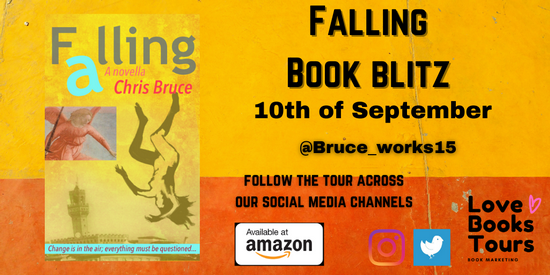
Pub Day Repost: Robert B. Parker’s Grudge Match by Mike Lupica: Sunny Randall’s Forced to Work for an Enemy as Lupica Settles into the Series

Grudge Match

Robert B. Parker’s Grudge Match

by Mike Lupica
Series: Sunny Randall, #8

eARC, 210 pg.
G.P. Putnam’s Sons, 2020

Read: April 21-22, 2020
Grab a copy from your local indie bookstore!


As I said last year when Lupica debuted his continuation of the Sunny Randall books with Blood Feud, I’ve had a complicated relationship with Sunny and was ambivalent with the series re-starting. However, I enjoyed Blood Feud (although comments on my post said I came across as lukewarm, I didn’t mean to) and really thought that Lupica had a good take on the character.

Thankfully, we don’t have a sophomore slump here, I think Lupica’s feeling more comfortable in these shoes and delivered something a little more ambitious. Tony Marcus begins this book by describing the best way to hold a grudge—and then goes on to point out all the reasons Sunny has recently given him to hold one against her. If nothing else is clear from this, you do not want Marcus harboring anything for you. He does this just to impress upon Sunny that his offer of employment is something she should strongly consider.

Tony’s lover, confidante, right hand, and former employee has left him. Without warning, without notice—and Tony wants her back. He’s not that concerned for her safety, he’s a little concerned that she defected to some new competition for his turf, but mostly he just wants to know what happened and how he can win her back. Sunny (and this reader) is fairly convinced by Marcus—she doesn’t think Marcus wants to hurt her, he just wants her back. Sunny hems and haws, but agrees to take on the case—for her own safety and because she’s able to convince herself that she’s actually working for Lisa Morneau, not Marcus.

This puts her on a path to explore the world of prostitution in Boston—this isn’t the first time Sunny’s done something like this, but this time she’s working for Marcus, which opens a few more doors. She meets with Lisa’s closest friend, someone she helped get out of the life, as well as former colleagues. Sunny also has several run-ins with Marcus’s new competitor, who seems like he’s wanting to start a war with him.

At some point, the trail leads to Paradise—leading to Sunny meeting up with Jesse Stone. The two banter and flirt a bit, and Jesse offers some help on the Paradise front. It was nice to see them together again (I’ve often thought the best use of the Sunny character was as Stone’s associate).

Now, it’s not long before the search for Lisa results in murder—and Lisa herself is frightened, sure that she’s next. Which drives Sunny to start to look into why would someone want to threaten her. What does Lisa know that makes her dangerous? And can Sunny use this knowledge to save Lisa and prevent the gang war on the verge of erupting?

While that’s going on Richie’s (other) ex-wife moves back to Boston with their son, Richard, and now wants Richie to play the role in Richard’s life that she’d previously blocked him from. Richie responds as any father worthy of the title would—he’s overjoyed and turns his life upside down to accommodate that without a second thought. Sunny recognizes that this is the way he should react, but can’t quite get on board with it herself in the same way—for a combination of reasons, some petty, some understandable (maybe some fit under both columns). It’s a dicey story for all characters involved and Lupica deals with it well.

Lupica goes out of his way to make sure it’s obvious that this takes place in the Parker-verse outside of Paradise. Of course, Sunny sees her therapist, Susan Silverman; Sunny consults Lee Farrell a few times (nice to see him again) and they talk about Frank Belson once or twice (the new captain, too); Vinne Morris pops in briefly; there’s a mention of Patricia Utley, and something Tony Marcus says places this at the same time as Angel Eyes. That’s nice and pretty fun, but he’s almost name-dropping enough to make him seem desperate to prove his legitimacy as a Parker fan. “No, really, I’m qualified to write these books, let me show you how familiar I am with all the series.” I think Atkins came close to this in his first two Spenser books, Coleman in his first Jesse Stone, so it’s not unique to Lupica. Also, he doesn’t get to the point of desperation, but he’s close—if he can just dial that back a bit now, he’s proved himself.

Feel free to skip this paragraph, I dance right down the border of The Spoiler Zone (and might put a couple of toes into it). My gut reaction to the way things were left with the Richie/Richard storyline is pretty negative. It’s hard to get into without spoiling things, but…Richie reacted irrationally to things given his family and who he knows Sunny is, and Sunny took the easy way out with things (Susan Silverman would not approve—if she let herself approve/disapprove of Sunny’s actions). Now, this doesn’t mean that Lupica fell down in the writing—he’s actually writing the characters the way they were created, flaws and all. I’d like to see some growth in the characters and we didn’t get that yet—but that could be because he’s setting things up for future books. Or, he could be letting these two stagnate where they are (see Parker’s treatment of Stone in the later books).

Sunny has a good deal of internal discussion about how she’s finding herself in the situations she’s facing because of decisions men have reached, and not herself—she’s reacting too much to men’s choices. She resolves not to be the threatened, but to be the one threatening. I think there’s a lot of merit to these lines of thinking—but she seems to go through this (or something pretty close to it) in every book (by Lupica or Parker). At some point, it’d be nice to see her move past this—or add some nuance or wisdom to this consideration.

Lupica keeps things moving throughout—even when Sunny’s investigation starts going in circles, the plot keeps going. He writes confidently and with just enough flair to make this fit in the Parker-verse. There’s a joke or two that he returns to too often, but it feels in-character for Sunny’s narration to do that, so I’m not complaining.

The last line…I’m not going to say anything about it, but I could fill an entire post with what I like about it, what it makes me fear, and how I should’ve seen it as inevitable. But… I’m not going to say anything about it because I don’t play that way. Feel free to talk about it in the comments after the book comes out, though.

So, I have a lot to say about this, it turns out—but it boils down to this: Grudge Match was a fast, easy read—the plot and the prose were as smooth as you could want. Lupica has captured the voice of the Sunny Randall books and has made it his own. While I was bothered by a couple of the character beats toward the end—they didn’t take away from my enjoyment of the book. If you’re a Sunny fan, you’ll be entertained. This actually would work as a pretty decent entry point to the series, too—it’s pretty accessible (including the ongoing arcs, Lupica makes sure that people who are new to the series or haven’t read them since the last Parker in ’07 have enough information to tap into them).

Disclaimer: I received this eARC from Putnam Books via NetGalley in exchange for this post—thanks to both for this.


3.5 Stars

This post contains an affiliate link. If you purchase from it, I will get a small commission at no additional cost to you. As always, opinions are my own.
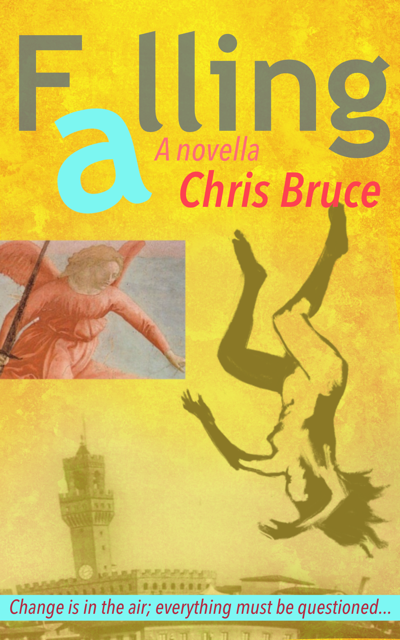
Auxiliary: London 2039 by Jon Richter: A Gripping Hardboiled Cyberpunk Read

Auxiliary: London 2039

Auxiliary: London 2039

by Jon Richter

Kindle Edition, 224 pg.
TCK Publishing, 2020

Read: May 1-4, 2020

Grab a copy from your local indie bookstore!

TIM stood for “The Imagination Machine.”It hadn’t seemed like a game-changer when it had been quietly released by the Imagination Corporation twelve years previous, at least not to Dremmler. It was simply a logical next step, a “one stop shop”that brought together office applications, email, social media, an enhanced personal organiser that was, as the company’s marketing eloquently put it, “like Alexa on steroids.”Video gaming, on-demand television, information searches, holiday bookings, shopping, dating, movies, music: TIM was a single interface for the entire online, AR/VR experience…

TIM had become ubiquitous; the go-to OS for almost everything. It flew the planes. It drove the cars. It answered your queries when you contacted customer services. It controlled the robotic surgeons that performed life-saving operations. It filed your tax returns. It delivered your food. It selected your music. It read your children bedtime stories.

And it ran the AltWorld. Whatever you wanted to see, or be, or do, or feel, or [expletive]. Real life had been made obsolete.

In the obsolete “real life,” Carl Dremmler is one of the remaining detectives in the London Police Force (which doesn’t seem to be much of a presence). His days are largely filled with cookie-cutter investigations verifying that people has wasted away while immersed in Augmented Reality to the point they couldn’t notice their physical health had deteriorated—although he gets to break it up occasionally by something like a civilian attacking a postbot.

What brings Dremmler to our focus is a very different kind of case—maybe an impossible case. A woman has been killed—horrifically, I should add. Her boyfriend, the prime suspect, has been caught (very literally) red-handed, but insists that he tried to stop it from happening, but his cybernetic arm acted independently from him.

The problem with this is that the software that controls the arm is unhackable. There is no way for this to have been anything but the accused. Unless the impossible is a lot more possible.

Dremmler finds himself fighting pressure from above to close this case and his increasing conviction that the boyfriend is innocent. He just can’t explain how. The London of 2039 is a cyberpunk future—but not one so advanced that people living in it can’t remember what life was life before TIM was ubiquitous. Dremmler has a strong preference for, well, now—which makes him the perfect person to want to believe there is a problem in a perfect OS.

I’ve always found that the best cyberpunk, seemingly paradoxically, shared a lot of characteristics with early 20th-century noir. This novel is a shining example of that—it’s actually been a long time since I’ve read a cyberpunk novel that’s embraced the noir-ness as much (or as well) as Auxiliary: London 2039 does. Dremmler is as hard-boiled a character as you could want (haunted by tragedy, alcoholic, driven) and I was reminded of Nathaniel West’s work several times by the secondary characters and mores throughout the book.

At the same time, there’s a Golden Age of Science Fiction feel to a lot of the work—especially as it relates to AIs, the place of technology in culture (and how it interacts with humans), the role of escaping from Standard Reality into Alternate Reality, and so on. As often as I was reminded of West or Chandler, I was reminded of Asimov or Clarke (Richter is more pleasant to read).

I had a blast with this. It’s just the kind of mix of genres that appeals to me and Richter executed it all perfectly. Great, twisty plot; compelling characters; a fantastic setting; and enough implications to ponder to satisfy any reader. I strongly recommend Auxiliary: London 2039 to you.


4 Stars

My thanks to Overview Media for the invitation to participate in this tour and the materials (including a copy of the novel) they provided.

Page 341 of 613

Powered by WordPress & Theme by Anders Norén