Author: HCNewton Page 382 of 624

A Couple of Thoughts on the 40th Anniversary of The Hitchhiker’s Guide to the Galaxy

The first Hitchhiker’s Guide to the Galaxy book was published 40 years ago on October 12, 1979.

Just a couple of thoughts in response to this…I don’t want to blather on. (if you want to see me blather on about the series, click here).

bullet 40 Years? Wow. Sure, a lot of it is dated, but most of it feels so fresh that he could’ve written it within the last year or two.
bullet Yeah, that’s the original cover—that’s a long way from the smiling planet logo I’m used to seeing (and have tattooed on my arm).
bullet On a related note, someone—multiple someones, actually—thought that cover was a good idea.
bullet 40 years later, it’s still the benchmark. How many works from that era are still that important? (maybe some cinema)
bullet Okay, that’s actually all I’ve got—it’s just cool to note big anniversaries like this. So, now we have.

Have you read this series? Got any thoughts/memories to share?

Saturday Miscellany—10/12/19

Yeah, I’ve been quiet this week, I’ve been running on fumes for most of it, I’m not sure why. Given the number of Book Tour Stops I’ve got scheduled for next week, I’ll be a little noisier (or, I’ll have a few tour organizers and authors not speaking to me).

But that’s for another day (at least Tuesday). For now, here are the odds ‘n ends over the week about books and reading that caught my eye. You’ve probably seen some/most/all of them, but just in case:

    A Book-ish Related Podcast Episode you might want to give a listen to:

  • Once & Future Podcast, Ep. 200: Felicia Day—Anton Strout celebrates his 200th episode with this great chat with Felicia Day (I’ve got to make time for this book)

    This Week’s New Releases include one book I’ve already read and three that sound like they’d be up my alley, but I don’t know if I’ll manage to get to (make sure you click the links to get the full blurbs on these):

  • The Princess Beard by Kevin Hearne, Delilah S. Dawson—high seas adventure, hijinks, many jokes, many elf butts and personal growth are featured in this concluding Tale of Pell. My original post is here.
  • Look Both Ways:
    A Tale Told in Ten Blocks
    by Jayson Reynolds—a novel told in ten stories about what happens after the school bell rings and people walk home. There’s also a bus falling from the sky that no one notices.
  • How Rory Thorne Destroyed the Multiverse by K. Eason—a mix of Fairy-Tale and Space Opera
  • Tuesday Mooney Talks to Ghosts by Kate Racculia—a dying billionaire sends one woman and a cast of dreamers and rivals on a treasure hunt.

Lastly, yesterday I posted a couple of things with a new bullet style (in case you’re one of the 2% that noticed), today, I’m back to ol’ reliable. What do you think—are those others too much for a post like this? Would it just make things too noisy?

Universal Monster Book Tag


Witty and Sarcastic Book Club tagged me in her little creation—a tag based on Universal’s Classic Movie Monsters. There’s a lot of recency bias in my pics, but oh well—I liked the list. I really need to do more things like this, it was fun.

While trying to come up with the last couple of entries for this, I took a Facebook break and read a couple of posts on a Nero Wolfe fan group, and realized I could fill my blanks from that Corpus. Then it occurred to me that I could do one of these with entries only from the Nero Wolfe series. Or, the Spenser series. Huh. (I’d have trouble with some other series depending how you define “sequel” below). Watch me control the impulse.

bullet Dracula: a book with a charismatic villain
The Silence of the Lambs
My Pick: Gotta go with Hannibal Lecter in The Silence of the Lambs, every other charismatic villain I can think of pales in comparison.
Bonus Nero Wolfe Pick: (yeah, so much for restraint—this was a fun additional challenge) Paul Chapin in The League of Frightened Men (my post about the book)
Bonus Spenser Pick: The Gray Man in Small Vices

bullet The Invisible Man: A book that has more going on than meets the eye
The Last Adventure of Constance Verity
My Pick: The Last Adventure of Constance Verity by A. Lee Martinez (my post about the book)
Bonus Nero Wolfe Pick: Even in the Best Families
Bonus Spenser Pick: Early Autumn

bullet Wolf-Man: A complicated character
Needle Song
My Pick: Doc Slidesmith in Needle Song (my post about the book)
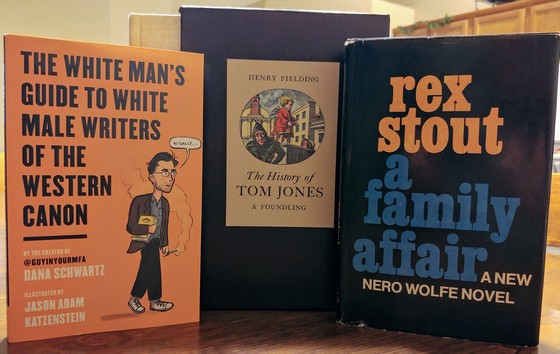
Bonus Nero Wolfe Pick: Can I just use Nero Wolfe? Eh, Orrie Cather in A Family Affair
Bonus Spenser Pick: Patricia Utley in Mortal Stakes

bullet Frankenstein: A book with a misunderstood character
The Unkindest Tide
My Pick: The Luidaeg in The Unkindest Tide by Seanan McGuire (my post about the book)
Bonus Nero Wolfe Pick: Over My Dead Body (my post about the book)
Bonus Spenser Pick: Hawk, A Promised Land

bullet The Bride of Frankenstein: A sequel you enjoyed more than the first book
Stoned Love
My Pick: Stoned Love by Ian Patrick (my post about the book)
Bonus Nero Wolfe Pick: The League of Frightened Men (yeah, that’s the second time this shows up, but it’s the sequel…) (my post about the book)
Bonus Spenser Pick: God Bless the Child

bullet Creature from the Black Lagoon: An incredibly unique book
A Star-Reckoner's Lot

(there’s a better cover now, but this is the first)

My Pick: A Star-Reckoner’s Lot by Darrell Drake (my post about the book)
Bonus Nero Wolfe Pick: Some Buried Ceasar (my post about the book)
Bonus Spenser Pick: A Savage Place

bullet The Mummy: A book that wraps up nicely (see what I did there?)
Every Heart a Doorway
My Pick: Every Heart a Doorway by Seanan McGuire (my post about the book)
Bonus Nero Wolfe Pick: This applies to almost every one of them, I’m going to go with The Doorbell Rang
Bonus Spenser Pick: The Judas Goat

I’m not going to tag anyone, but I’d encourage any reader to give it a shot. I’d like to see your lists.

Also, I’ve been thinking for awhile I needed to do a re-read of the Spenser series. This post has convinced me I really need to get on that.

Have You Eaten Grandma? by Gyles Brandreth: A Funny and Accessible Guide to English Usage

Have You Eaten Grandma?

Have You Eaten Grandma?: Or, the Life-Saving Importance of Correct Punctuation, Grammar, and Good English

by Gyles Brandreth

Hardcover, 285 pg.
Atria Books, 2018

Read: September 12, 2019

…you don’t need to understand all the intricacies of English grammar to be able to communicate well. I use a computer, but I have no idea how it works. I have a wife, but I have no idea why she stays. I take statins, and while the doctor did explain that they inhibit the HMG-CoA reductase—that rate-limiting enzyme of the mevalonate pathway—all I need to know is that they should help lower my bad cholesterol and reduce the risk of a heart attack.

This book can change your life. For the better. Enjoy.

I’ve tried a few times to post about this, and it’s always come out as a mess. So, as I usually do in these circumstances, I’m just going to start with the official blurb:

For anyone who wants to make fewer (not less) grammar mistakes, a lively, effective, and witty guide to all the ins and outs of the English language, reminiscent of the New York Times bestseller Eats, Shoots & Leaves.

Our language is changing, literary levels are declining, and our grasp of grammar is at a crisis point. From commas to colons, apostrophes to adverbs, there are countless ways we can make mistakes when writing or speaking. But do not despair! Great Britain’s most popular grammar guru has created the ultimate modern manual for English speakers on both sides of the Atlantic.

In this brilliantly funny and accessible guide to proper punctuation and so much more, Gyles Brandreth explores the linguistic horrors of our times, tells us what we’ve been doing wrong and shows us how, in the future, we can get it right every time. Covering everything from dangling participles to transitive verbs, from age-old conundrums like “lay” vs. “lie,” to the confounding influences of social media on our everyday language, Have You Eaten Grandma? is an endlessly useful and entertaining resource for all.

That’s just what you get—a funny and accessible guide to grammar, punctuation, and the English language in general (at least in its present form). That’s a distinctively British English, it should be noted, but even those of us who’ve abandoned vestigial “u”s thanks to Noah Webster can profit from it.

A few highlights:
bullet The entire section on the semi-colon is pretty entertaining (and helpful); the entire section covering punctuation makes the entire book worth the purchase price (or library checkout) and the read.
bullet The joke opening his section on the colon is both painful, of questionable taste, and laugh-inducing.
bullet His summary history of the Exclamation Point does in one paragraph, what Shady Characters would do in a page (not saying one approach is better than the other, I enjoyed both books. That paragraph, in particular, made me think of Houston’s book).
bullet Brandreth gives a stirring defense for the correct use of the much-abused apostrophe, culminating with:

Give up on the apostrophe, and you’re giving in to chaos. Without the apostrophe, there’s linguistic anarchy. The apostrophe is the symbol of our cause—the mark we need emblazoned on our banners. If we go weak or wobbly in our defense of the apostrophe, we are on the slippery slope to incomprehensibility and confusion.

bullet Brandreth begins his section on the usage of brackets/parenthesis with:

What the British call “brackets,” the Americans call “parentheses”—when they are round brackets, that is. What the Americans call “brackets” are what the British call “square brackets.” It doesn’t cause as much confusion as the meaning of the word “fanny” on either side of the Atlantic, but it serves to underline the truth of the observation made by Oscar Wilde more than 130 years ago: “We have really everything in common with America nowadays, except, of course, language.”

Which points to one of the great distinctives of this book—Brandreth spends a lot of time explaining/illustrating the differences in the English used on both sides of the Atlantic. He later devotes an entire chapter to British vs. American English (part of which found its way to a Saturday Miscellany post in August). It includes a wonderful table for finding equivalent words/phrases/spellings.

The Brandreth Rule is: when in Rome, do as the Romans do—speak English. And if you’re British, do so with a British accent and spell your English the British way. That isn’t always easy—particularly if you haven’t worked out how to opt out of American English autocorrect when using Microsoft Word.

(there are a handful of Brandreth Rules scattered throughout the book, but this is my favorite)
bullet I appreciated that more than once he got to the point where he had to say (paraphrasing), “I don’t know why this is why it works this way, but it does, just live with it.” Once he said to use the rule or you’ll “look an ignorant oik.” Which might be my favorite phrase of 2019, “oik” is likely my favorite new vocabulary word. I have to work it into more conversation/writing.
bullet The Scrabble help might be the most turned-to part of the book for most readers.
bullet The tips for increasing word power are fantastic.

I actually could keep going, but I’ve gone on longer than I thought I would when I started.

I had a blast while reading this—I honestly don’t expect everyone will, though. If you’re not a language-nerd, aspiring grammar Nazi, or an old-school English teacher, you probably won’t enjoy it as much as me. However, if you enjoy quality humor and could use some help with your writing—you will appreciate it. It’s handy, it’s helpful, it’s entertaining—and how many grammar guides can say that? It’s the kind of thing that my college-bound daughter could use on her dorm bookshelf (and will probably find), and I know more than a few people who find themselves writing reports and the like for work who could use something like that. If you need help, might as well have a good time while you’re at it—and Have You Eaten Grandma is just the thing.


3.5 Stars
2019 Library Love Challenge

WWW Wednesday, 10-October-2019

Welcome to WWW Wednesday! I haven’t been able to get as much finished as I’ve wanted to since Thursday, so why not try something simple?

This meme was formerly hosted by MizB at A Daily Rhythm and revived on Taking on a World of Words — and shown to me by Aurore-Anne-Chehoke at Diary-of-a-black-city-girl.

The Three Ws are:

What are you currently reading?
What did you recently finish reading?
What do you think you’ll read next?

Easy enough, right?

What are you currently reading?

The current thing I’ve got going is listening to the audiobook of This is Where I Leave You by Jonathan Tropper, Ramon De Ocampo (narrator).

What did you recently finish reading?

I just finished Don’t Get Involved by F. J. Curlew and will be posting both my take on the book and a Q&A with the author next week.

What do you think you’ll read next?

My next book will probably be The Dead of Winter by A.B. Gibson, an Appalachian Trail Murder Mystery.

Hit me with your Three W’s in the comments!

Pub-Day Repost: The Princess Beard by Kevin Hearne, Delilah S. Dawson: An Adventure on the High (and Joke-Filled) Seas of Pell

The Princess Beard

The Princess Beard

by Delilah S. Dawson and Kevin Hearne
Series: The Tales of Pell, #3

eARC, 384 pg.
Dell Rey Books, 2019

Read: September 16-21, 2019

Readers of Kill the Farm Boy (the first installment in the Tales of Pell trilogy) may have been wondering about what happened to Princess Aurora/Snow White-esque figure, Princess Harkovitra*. Well, she wakes up, and finds herself in the position she’s always wanted—a chance to start over. She leaves her name and home behind, hitching a ride with our old acquaintance Morvin on his way to start a new life himself.

*Then again, maybe you’re like me, and figured she was like Worstely and that her only purpose was to kick-start the novel and hadn’t thought of her since.

They’re not the only ones looking for a new start. We also meet a swole centaur prone to over-compensation, seeks to reach a mystic temple that will heal him of (what he considers) his emasculating magical abilities. A pariah elf is looking for the opportunity to do something more meaningful than swindle tourists. And we also pick up with one of the newly liberated dryads from No Country for Old Gnomes, who needs a way to get to her chosen law school, Bogtorts.

All of these new starts require the characters to travel somewhere inaccessible to foot/horse/carriage traffic. Enter the Clean Pirate Luc (a.k.a. Filthy Lucre), who happens to be a one-eyed talking parrot. He needs new crew members and is willing to let these travel to their intended destinations in exchange for labor. Even if the result is something incongruous, like a centaur swabbing the decks (thankfully, that’s a funny image—a great thing for a comedic fantasy). Except for Morvin, who has other plans that involve less of the high seas.

The pirate ship ends up being just the thing to take our characters from quick adventure to quick adventure, creating opportunities for bonding and character growth. It’s different enough from the land-based pilgrimages of the past two novels to keep things feeling fresh, while allowing the same kind of vibe to permeate the book. I’m not the biggest fan of pirate/ship-based adventures, but when they’re done well, they are a lot of fun. And who doesn’t like a good Melville-based joke (or several)?

Not just Melville-based jokes, but there’s more than a couple of The Princess Bride riffs (in case the title didn’t tip you off). Which seems timely, given the resurgence in interest in William Goldman’s classic thanks to some nonsense about remaking the movie. I could be wrong, but this seems to be the jokiest of the three (I’m pretty sure my notes/list of great lines is longer than normal). Not that the others were joke-light, but this seems more focused on them and less focused on the story. Which makes it less successful as a novel in my opinion. But that’s in comparison to two really strong and effective novels, so I’m not saying it’s not a good read—it’s just a not-as-good-as-I-wanted read. If this was the first Pell book I’d read, I’d rush out to get the others (particularly, if a charming and insightful blogger had said the others were better than this one). I started chuckling within a page and didn’t finish until the end. Sometimes I did more than chuckle.

I’m not complaining a bit about the number of jokes, the character names alone are hilarious and make the book worth reading. It just takes away some of the impact of the story and the characters—or it distracted the authors from making them as compelling as they could have been. It’s kind of a chicken vs. egg thing.

Each of these characters gets an opportunity to find themselves, find their inner-strength, true desires, real self—whatever you want to call it. It turns out that some of them were right all along, and others just needed the fresh perspective that extreme circumstances can bring.

I didn’t connect with this one as much as I did the ones before, ditto for any of the characters. But I expect that my experience isn’t typical—The Princess Beard will resonate with some more than the others did. Either way, the reader will enjoy the ride. It’s exciting, it’s affirming, it’s a hoot.

I’m going to miss Pell, and hope the authors decide to dip their collective toes back into the land from time to time in the future. If not, at least we get the beginnings for these beautiful friendships.

Disclaimer: I received this eARC from Random House Publishing Group – Ballantine via NetGalley in exchange for this post—thanks to both for this entertaining romp.


3.5 Stars

Ghosts of You by Cathy Ulrich: The thing about murder victims is . . .

Ghosts of You

Ghosts of You

by Cathy Ulrich

eARC, 150 pg.
Okay Donkey Press, 2019

Read: September 23-30, 2019


This collection of 31 pieces of flash fiction shouldn’t work. This is probably not the sentence that the author and her publicist want me to start with, but hear me out. It shouldn’t, but it does.

Why shouldn’t it work? For starters, each story has essentially the same title. “Being the Murdered _____.” Earle Stanley Gardner got away with it, as did Lilian Jackson Braun—but I can’t see how anyone else does. Add Ulrich to the list.

Secondly, each story starts with the same sentence:

The thing about being the murdered [word/phrase from title] is you set the plot in motion.

Outside of “Once Upon a Time,” that should not be done (it’s arguable that it shouldn’t be done there, either). But it does work.

From these nearly identical launching pads, Ulrich spins 31 incredibly distinctive tales about what happens after various women are murdered. I should probably clarify a bit, about what I mean about the various women (and the blanks above). These stories focus on people like the murdered Girl, Wife, Lover, Homecoming Queen, Babysitter, Mother, Extra, Jogger—mostly the kinds of women you read about/see in the beginning of a murder mystery. Ulrich also goes for some unexpected types, e.g.: Politician, Mermaid, Muse, Chanteuse (she probably deserves extra points for using that word in the Twenty-First Century), and Taxidermist.

Their murders change the lives of those around them, those who knew them, knew of them, investigated their deaths both immediately and for years to come.

Now, as the word “plot” in the topic sentences indicates, these are primarily reactions to/depictions of/commentaries on the way that the homicides of fictional women are portrayed in Crime Fiction (or even “Literary” Fiction), TV, Movies, etc. I think it has a lot to say about those depictions, but I think there are a lot of weaknesses to Ulrich’s approach, too. Too often, her critiques are overgeneralized, inflammatory and outdated—while retaining a kernel worth chewing on.

Thankfully, the book is about more than that (or I’m not sure I’d have bothered to finish it). I frequently felt like my reaction to the stories was not what it was intended to be. When she’s telling a story (as abbreviated as they are), describing human reactions to situations that “tragic” doesn’t quite begin to apply to—these pieces shine. For someone who shuns self-help books, I’ve read a lot about grief in the last couple of years—these stories contain some of the best portrayals of it in all its varied expressions—that I can remember. If your heart doesn’t break a little at least twice while going through this collection, you need to go listen to some community singing in Whoville, so they can help yours grow.

Beyond that, there’s the obvious strength of the economy of words here—these stories are lean, without a wasted word, and are pound-for-pound some of the most effective stories I’ve read this year.

As with any collection, there are stronger pieces and weaker pieces—some that will satisfy some and other readers will be stupefied by or indifferent to the same ones. I do think there’s a better hit to miss ratio in this collection than I’m used to. For what it’s worth, “Being the Murdered Bride”, “Being the Murdered Student” and “Being the Murdered Mama” were the high-points for me.

While these are all very different (Ulrich almost never plays the same note twice), I don’t recommend reading too many in one sitting (I limited myself to three at a time, for example)—beyond that, you risk robbing them of their impact.

I heartily recommend this collection that works far better than it should. It’ll cause you to stop and think, stop and feel, and hopefully change your perspective on a few things.

Disclaimer: I received this eARC from the author via Lori @ TNBBC Publicity in exchange for this post—thanks to both for this.


4 Stars
LetsReadIndie Reading Challenge

Opening Lines—System Failure by Joe Zieja

Head & Shoulders used to tell us that, “You never get a second chance to make a first impression.” That’s true for wearing dark shirts, and it’s especially true for books. Sometimes the characters will hook the reader, sometimes the premise, sometimes it’s just knowing the author—but nothing beats a great opening for getting a reader to commit. This is one of the better openings I’ve read recently. I’m sure we can all relate to it.

Lucinda Hiri was pretty sure taking over the galaxy hadn’t been in the job description when she was offered this intern position six months ago. Then again, it wasn’t impossible. The Snaggardir corporation’s paperwork was notoriously long and detailed, vetted by droves of lawyers at every level of approval to make sure that the language had all the right loopholes in all the right places. Lucinda supposed that somewhere on page 356 there could have been a small asterisk that said “in the event a nascent people rise up after two hundred years of secret collusion, you will be required to take detailed notes at their strategy meetings.”

It had seemed like a dream come true at the time. Sal Snaggardir and his family’s company were arguably the most powerful economic force in the galaxy. The possibilities for her career as a businesswoman were endless. Not liking interning at some space technology company on Urp, where she would likely move laterally for the entirety of her disappointing, coffee-supported life. Snaggardir’s was the place to make it big.

In retrospect, though Lucinda should have noticed that Mr. Snaggardir was trying to conceal just how big his company had gotten. Subsidiary corporations literally thousands of banks all across the galaxy holding funds under different names, and that nondisclosure agreement she signed threatening to eradicate her family line if she ever told anyone anything about the company. The legal department said that was boilerplate, and, really, what did she know? She was just a thirty-year-old unpaid intern with three advanced degrees in business arts.

from System Failure by Joe Zieja

Saturday Miscellany—10/5/19

A brief one this week—but such is the joy of being miscellaneous, right? Here are the odds ‘n ends over the week about books and reading that caught my eye. You’ve probably seen some/most/all of them, but just in case:

Lastly, I’d like to say hi and extend a warm welcome to Mohit Malviya, jackiesreadingcorner, and Patrick Lynn for following the blog this week. Don’t be a stranger, and use that comment box, would you?

Justice Gone by N. Lombardi Jr: Timely and Compelling

Justice Gone

Justice Gone

by N. Lombardi Jr

Kindle Edition, 336 pg.
Roundfire Books, 2019

Read: September 27-30, 2019


I’ve mentioned before here that after I decide to read a book I forget what its about (if I even know) to keep myself coming from being disappointed by preconceived notions. It worked this time, I really had no idea what it was about when I opened it on my Kindle last week.

Which made the opening pages, featuring the killing of an innocent and compliant veteran by the police, as shocking as they could’ve been. But they also led me to believe I was in for a grim, adult version of The Hate U Give. So when that story took a hard turn a few chapters later with the murder of some of those police officers, I was reeling as much as Lombardi could’ve hoped for.

That sensation kept repeating at each new phase of the action in Justice Gone—”Oh, so this is what the book is about.” Until I finally got that the book was about all of these things—not just one or two themes. It was actually pretty effective in that way, more than I might have thought possible in the abstract. It’s difficult to enumerate them without revealing too much, so I’ll be vague here—the central question is about the place of (and possibility of) seeing justice in our current politicized climate given the high level of suspicion of the police (and their suspicion of the general public) coloring everything, and apparent interference by government officials (especially those elected to office) on criminal investigations and prosecutions.

Sadly, in the mix of all those themes and ideas, the incident that set all of the rest in motion is forgotten about when not overshadowed by the events that spiraled from it. I wish Lombardi had been able to keep the focus on it while telling the other story, because that really is something tat needs to be told. Not that the rest doesn’t, don’t misunderstand. It’s just we’ve all seen several variations of the rest of the novel, and haven’t seen nearly enough of that.

One thing I really appreciated was the focus on the jury’s deliberation toward the end of the novel. Lombardi’s not afraid to introduce new characters—twelve of them, in fact—as the book wraps up. Occasionally, a legal thriller will take a peak inside the Jury Room, but never to this extent. Now I wonder why not.

Lombardi does slip into melodrama more than a few times. He gets out of it pretty quickly and easily, but it’s there. His characters could all use a little more work to not be so forced, and be a little more believable—except for the accused, I never had a problem with him. But Lombardi’s a good enough story teller that the problems with the writing and characters are swept under the carpet and ignored as long as you can focus on the story unfolding.

It’s a book that feels timely and important—the kind of thing that will spark reflection on the part of the reader, and hopefully discussion. Justice Gone is the kind of compelling novel we need more of.


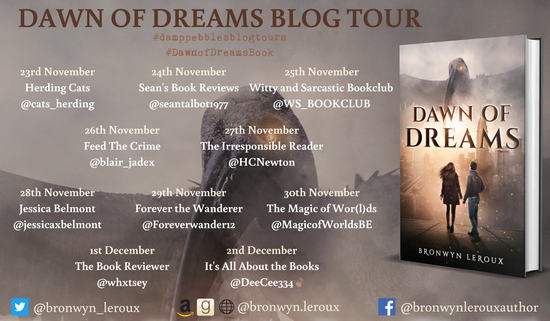
My thanks to damppebbles blog tours for the invitation to participate in this tour and the materials (including a copy of the novel) they provided.

Page 382 of 624

Powered by WordPress & Theme by Anders Norén