Author: HCNewton Page 383 of 632

Thieves by Steven Max Russo: 2 Crooks, 1 Realtor, 1 Housekeeper and a Whole Lot of Thievery

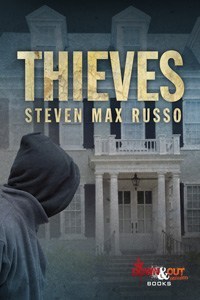
Thieves

Thieves

by Steven Max Russo

Kindle Edition, 280 pg.
Down & Out Books, 2018

Read: November 11-15, 2019

Last month, I posted my thoughts on Steven Max Russo’s second novel, The Dead Don’t Sleep, and now I get to focus on his first book.

Skooley (I kid you not), is a small-time criminal with aspirations of greater things (and, let’s be honest, delusions of at least a bit more grandeur than he actually possess). He runs afoul of actual bad guys in Florida and makes himself scarce, hiding out in New Jersey for awhile. He gets a job in a restaurant and meets Ray. Ray isn’t as an accomplished thief as Skooley, but he’d like to be. And he knows where to start: their fellow co-worker Esmeralda had an idea.

You see, she’s got aspirations and dreams of her own. Hers are on the legal side, it’s nice to say. She’s a housekeeper, a restaurant hostess at night, and does some grunt work at a hair salon when she’s not working as either of those. She’s trying to save money for beauty school while taking care of her mother and younger siblings. She’s making progress, but it’s slow and she could really use a little boost.

Esmerelda tells Ray about the owners of a house that she cleans who take off for a month or so every year at this time. They’re the kind of people who leave cash and expensive things around with no one to check on them. Ray tells Skooley.

So Ray and Skooley break and enter, with the idea of spending a couple of days carefully and thoroughly pillaging this house. Almost immediately, things don’t go according to plan and the three conspirators are mired in distrust, frustration, and assorted moments of larceny.

There’s a subplot involving a real estate agent named Loretta. She blows off a little steam one night after work by having a little too much to drink. Somewhere between being one and three sheets to the wind, she runs into Skooley on a break from his plundering. In case there was any doubt at this point for the reader, what happens next definitely qualifies Skooley as a villain. Other than that, it wasn’t until the very end of the book that I saw anything redeeming about this storyline. Once I did, it all made sense. But man, I spent a long time wondering just what Russo was trying to accomplish with it.

I wouldn’t call this fast-paced, it’s more of a slow-build. More than that, it’s steady and always tantalizing about what’s coming next. Steady enough that you won’t want to put it down.

This is really an Elmore Leonard-esque plot and batch of characters, but it has none of Leonard’s style. Which is not a complaint—I’m trying to describe, not challenge—if he’d tried, I’d spend a few paragraphs describing the ways that someone who isn’t Elmore Leonard shouldn’t try to ape his style. Instead, you get the same types of characters in tight situations, which is good enough.

There are really two conclusions to this novel—and both are a lot more satisfying than anything I thought the novel might be leading to. And the last line is a killer, make no mistake.

All in all, a solid Crime novel featuring lowlifes, misguided people, and a few hardcore bad guys. It’s also enough evidence for myself that I’m going to grab the next Russo novel in a heartbeat. I dug this one, I think you will, too.

Disclaimer: I received a copy of this novel from the author in exchange for my honest opinion. I am grateful for that, but not so grateful that I changed my opinion.

3 Stars

LetsReadIndie Reading Challenge2019 Cloak & Dagger Challenge

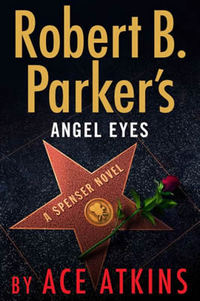
Angel Eyes by Ace Atkins: Spenser’s 47th Novel Finds him in L.A. and Feels as Fresh as Ever

Angel Eyes

Robert B. Parker’s Angel Eyes

by Ace Atkins
Series: Spenser, #7

Hardcover, 305 pg.
G.P. Putnam’s Sons, 2019

Read: November 20-21, 2019

In the passing light, I noticed the welts on her wrists, chapped and bloody.

She’d been tied up for a long time.

Chollo noticed them, too.

“Should we kill him?” he said.

“Too easy.”

“You will never change, amigo,” he said. When will you learn? Some people live without rules. And sometimes killing a bad man is the only way.”

“I have other ideas for [him].”

Chollo nodded. “And I am listening”

The day that Hawk, Chollo (and a few others) stop trying to convince Spenser to just kill the bad guy and be done with it—or the day that he listens to them—is the day we’ll all know the series has run its course. Which will hopefully be around the time my future grandchildren start reading the series.

But far before we get to that point, we should probably start at the beginning.

A friend of Susan’s is worried about her daughter, who lives in L.A. and has gone missing. She’s beside herself, so Spenser flies out to find her with Zebulon Sixkill’s help. The book opens with Spenser and Z being let into Gabby’s apartment by her ex-boyfriend and still-agent, Eric Collinson. Collinson is typically the kind of twerp that Spenser would enjoy messing with, but he’s on his best behavior (probably to keep Collinson talking).

Collinson keeps insisting there’s nothing to worry about, that Gabby’s probably just off on a quick Mexican vacation or something. Still, he surreptitiously leaves her laptop behind for Spenser to “find.” Between what Z’s tech-wizard friend finds on the laptop, what Z and Spenser get from the LAPD (in the person of our old acquaintance Samuelson) and Gabby friends/former boss, there are two avenues of investigation for them to dive into. A powerful studio executive and a multi-level personal development group that’s somewhere in-between Scientology and NXIVM (far closer to the latter). But before they can dig too far into things, some heavies representing a third party show up and the lead starts flying.

And I ate it all up.

It’s dangerous enough that Z isn’t enough to help Spenser out. Chollo (now a small-businessman), Bobby Horse and Mr. del Rio put in appearances and render assistance in varying amounts.

I could easily keep going along these lines for 6-10 more paragraphs, but I’d better show some restraint and leave things there and move onto other parts of the book.

In addition to the hunt for Gabby, we get a little bit of Spenser’s jaded view of the entertainment industry (largely in the same vein as we saw in A Savage Place and Stardust, just up-to-date); a lot of references to movies and stars that are so irrelevant to contemporary Hollywood that most of the characters don’t get them; and a very jaded (but likely accurate) look at “The Industry” post-#MeToo.

Also, we get a hint or two at what Z’s been up to since he left Boston and Atkins has completely left the possibility open for someone to start a Sixkill series, already populated with a cast of characters to carry a book or two. I’m ready to buy at least 5 of them in hardcover right now.

The last little things that I’ll mention are that we get a nice update on Mattie Sullivan, but we need to see more of her soon. Plus, there’s a cameo that filled my heart with joy here—that’s all I’m going to say about it.

Atkins is in fine form, which comes as no surprise to anyone. I didn’t spend too much time comparing him to Parker as I read it, but you can’t help but do it. It’s a fast, breezy style, but there are depths to be plumbed (unlike several of Parker’s latter Spensers). It’s just a pleasure to bask in the language, dialogue, and characters.

At this point, when it comes to an Atkins Spenser novel, it’s really just a question of how much I’m going to like it, it’d be impossible (I wager) for him to deliver something that I won’t like. I liked this one plenty. A fine story, a setting the character hasn’t been in for a while, a chance to catch up with old friends . . . Angel Eyes is as satisfying as you could ask for. Could you start with it? Sure. You wouldn’t get all of the references, but none of them would impact your appreciation of the story. The only danger in starting with Angel Eyes is that you’d probably feel compelled to go back and read the previous 46. Which actually sounds like a lot of fun to me.

I hemmed and hawed over the stars on this one. If I had a 4 1/4 graphic, I probably would’ve employed it. My initial impulse was 4 Stars, but when I stop and think about: there was one page where I laughed out loud (at least a chuckle) multiple times (I really want to talk about it in detail, but don’t want to ruin anything); the way Atkins pulled in every L.A. reference possible (plus some other Spenser-canon references) without making it feel like checking off a list; and the feeling of dread and worry Atkins was able to elicit (which really doesn’t happen all that often in long-running series)…I’ve gotta give it that extra bump (and now that I’ve actually written that list, I’m thinking of bumping it up another).


4 1/2 Stars

2019 Cloak & Dagger Challenge

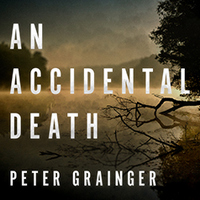
An Accidental Death (Audiobook) by Peter Grainger, Gildart Jackson: A Bit of Routine Paperwork with Anything but Routine Results

An Accidental Death

An Accidental Death

by Peter Grainger, Gildart Jackson (Narrator)
Series: A DC Smith Investigation, #1

Unabridged Audiobook, 6 hrs., 52 min.
Tantor Audio, 2016

Read: November 18-19, 2019

‘When you’re in front of a promotion board, one of the favourite questions is ‘So what motivates you in your daily work, Chris?’

‘Promotion? I’ll be relieved if I get through my six months. So what’s the correct answer?’

‘Oh, there are lots, you can buy them in books. But you could think about this,’ and Smith nodded towards the little group still standing at the graveside. ‘I’m just not sure how you put it into words.’

‘Revenge? Justice?’

‘For the victim – for Wayne Fletcher? Not how I see it, he’s beyond all that. Death’s the end of all. But look at the misery we’ve seen today. And it’s endless, it goes on rippling back and forwards through all these lives forever. I don’t know about justice. I’ve never seen myself on a white charger, righting wrongs – but we have to catch people so that they can’t create all this again. And so that other people get the message – you will be caught, you will pay. We never know how many selfish acts we prevent when we show people the consequences, but we have to keep showing them the consequences. These are the consequences.’

Smith had raised a hand, palm open towards the new grave.

Here we meet Detective Sergeant D. C. Smith—which isn’t At. All. confusing when listening to an audiobook, “I thought he was a DS, why is everyone calling him DC?” (thankfully, Grainger explains it after a bit). He’s a still-grieving widower, a long-serving detective, who has some sort of Intelligence experience in his past, has been of a higher rank, and has broken at least one near-legendary case years before. You wouldn’t think this résumé would be a type, but I’ve read about three Detective Sergeants this year that fit that description. That’s not a criticism, it’s just odd. DC Smith is my favorite exemplar of this type.

DC Smith is fresh off a brief leave in the aftermath of some case that was clearly divisive in the detective squad—and we never learn the details about it (which is frustrating, yet oddly compelling, and I almost hope we never learn the details about it), and is assigned to a new DI. Alison Reeve used to be a protégé of Smith’s, making things a bit awkward, but she also trusts him a lot more than other superiors seem to. He doesn’t have a team at the moment but gets to train a fresh DC, Chris Waters. Waters is an excellent device to get readers to see how Smith thinks/acts, because he has to keep explaining to Waters why he’s doing what he does.

For his first few days back, Reeve hands Smith some busy work including an anti-drugs presentation at some schools (quick aside—I loved his presentation, reminiscent of Bill Hick’s bit about the “this is your brain on drugs”) and a final sign-off on the paperwork about an accidental death. There’s a note on the autopsy that niggles at Smith and he starts looking into the accident. The initial investigation and paperwork were done just right, but . . .

Smith remembers a former colleague saying:

If you’re going to start turning over stones, you’ve got to turn them all over, every bloody one, even the littlest pebble…

Nevertheless, Smith starts turning over stones. And then more stones and more. Before he knows it, Smith and Waters find themselves mixed up in something nobody could’ve predicted—international intrigue, military secrets, family secrets, political pressure, and so on.

All leading to a great conclusion/face-off that will show off new sides of Smith (and show Waters’ mettle), with a postscript that seems predictable (but I’m not sure it was supposed to be)—but ties off the novel so nicely that I don’t care.

I’ve listened to one other book narrated by Gildart Jackson (Fated by Benedict Jacka), and while I thought he did fine with that one, he really seemed to connect with the character and the way he handled the narration and character voice seemed to fit the words/tone perfectly. I almost think I couldn’t read a future book in this series in print, I might have to come back for more.

There’s something about this one that got under my skin more than a typical procedural does—it’s maybe DC Smith, it’s maybe Grainger’s style (there’s a lot of subtle humor in a dark text)—it’s a Gestalt thing, I think. I really dug it.

Early on, Smith tells a couple of Fletcher’s friends:

‘As much as we might like this just to be about the facts, it never is. It never can be because people are always more complicated than facts.

Not only is that a catchy little bon mot, having a character who bases his work on it is about as good as “Everyone Counts or Nobody Counts” for his readers. An Accidental Death is a compelling read exploring an event that is more complicated than just facts and that’ll leave you wanting to come back for more.

This is checking off the “A book recommended by someone you trust.” box from the While I Was Reading Challenge, so I should probably mention that my friend, Micah, has been telling me to read these books (he additionally recommended the audiobooks, which is why I went audio with this one) since December 2017 (according to Goodreads). I really should’ve listened to him long before this. Not only does he have great taste, he’s a great photographer, take a moment to stop by his spiffy website and see.


4 Stars

✔ A book recommended by someone you trust.

LetsReadIndie Reading Challenge2019 Cloak & Dagger Challenge

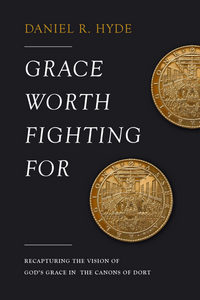
Grace Worth Fighting For by Daniel R. Hyde: An Accessible and Inspirational Look at a Vital Reformation Document

 Grace Worth Fighting For

Grace Worth Fighting For: Recapturing the Vision of God’s Grace in the Canons of Dort

by Daniel R. Hyde

Paperback, 378 pg.
The Davenant Press, 2019

Read: September 1-29, 2019

We need the canons in our fight to preserve and propagate a pristine doctrine of God’s grace in the salvation of sinners like you and me. Here we are plunged to the depths of depravity then raised to behold the eternal love of God. Here we are taken to the cross where we bow before the satisfaction made for us but then arise because it is so sufficient that we must promiscuously publish its news to all tribes, in every nation, on every continent. Here we experience the uncontrollable power of the Holy Spirit (John 3) efficaciously applying the infinite merit of the Son of God to the hearts of sinners like us. Here we feel the pain and struggle that comes with being Christian, loved by the Father but struggling to love, buried with Christ but constantly digging up our sins, filled with the Holy Spirit but being led astray by our own passions. Yet God the triune God is powerful to preserve us in his loving arms and to bring us to the Celestial City.

He goes on from this point for five more paragraphs but to have included it all would’ve been overkill (and possibly copyright infringement), but it’s hard to imagine a more inspiring rally-cry to a book about a 400-year-old document.

It’s always with the books that I take the most notes on that I have the hardest time writing about—I just have too much to sift through to come up with a post. That’s definitely the case here. It’s taken me about a month to come up with a post I can live with (although I’ll probably be mentally re-writing it until February).

In this 400th anniversary of the Synod of Dort which produced the subject of this book, the Canons of Dort, I’ve read three books about the Canons. I apparently saved the best for last (although I started strong, too). This combines the best parts of the other two and builds on them. We get the depth and pastoral insight of Godfrey and the approach of deYoung.

After a great chapter giving the historical background and explaining why the Canons were needed—then and now (see above)—Hyde gives a commentary on each Head of Doctrine, both the positive position and the rejection of errors (the rejections are pretty short, Hyde focuses on what is affirmed).

I don’t have the time to write, and you likely don’t have time to read, a good overview of the book as a whole, so I’m going to use Chapter 7, which covers the Fifth Head of Doctrine “The Perseverance of the Saint.” Sixty-three pages on fifteen paragraphs might seem like overkill, but it almost feels like it’s not (I don’t mean to suggest that Hyde skimped on anything, but you can’t help but feel there’s more to say about all of this). The details will vary, but this’ll give you a taste.

He starts off explaining the Remonstrant position, aka the stuff the Canons are responding to, acknowledging that parts of their position are correct, before highlighting the major problems and then showing how large segments of contemporary Evangelicalism agree with the Remonstrants. Following this Hyde looks at the development of this doctrine throughout Church History, focusing on the contributions of Augustine and Aquinas. Then he summarized the Reformed position. With the context established, Hyde goes through—paragraph by paragraph—the text of the Canons, explaining Scriptural references, focusing on and teasing out particular phrases. He not only explains the position but shows how it’s relevant to the reader’s life and interacts with contemporary critics. A particular strength of this chapter was Hyde’s focus on the Trinitarian nature of God’s preserving His people and tying that to the assurance of faith.

This is an intimidating looking book—over 400 pages if you include the appendices and bibliography—and there’s something daunting about that cover. But no one should be intimidated by it. It’s not a breezy read by any means—but it’s warm, pastoral and approachable. Anyone over 13 should have no problem with it. Sure, some of the topics will leave some scratching their heads and pondering for a while, but that’s because these are weighty, thought-provoking topics, not because of Hyde’s text.

There’s so much more that I want to say, but I’m going to call it quits here. I may have read a better theological book this year, but I can’t think of it off the top of my head. This is simply excellent—rich theology, rich application, solid history, smartly writing, occasionally stirring. I can’t recommend it highly enough.


5 Stars

Saturday Miscellany—11/23/19

Phew. It’s been another week where I’m surprised that I’ve surfed around enough to have any fodder for this post. Clearly I need to work on self-awareness. There’s some good stuff here, chums.

Here are the odds ‘n ends over the week about books and reading that caught my eye. You’ve probably seen some/most/all of them, but just in case:

    This Week’s New Releases I’m Excited About and/or You’ll Probably See Here Soon — a couple of these helped me have a great reading week:

  • Robert B. Parker’s Angel Eyes by Ace Atkins—Spenser returns to L.A. and gets to work with Sixkill again. And, yeah, everything you remember from Spenser and the City of Angels is discussed and old friends/allies are visited. I’ve read it and will be saying some very positive things about it soon.
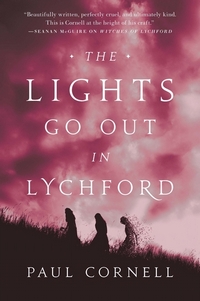
  • The Lights Go Out in Lychford by Paul Cornell—The fourth Lychford novella is a high-point of the series, as I talked about this week
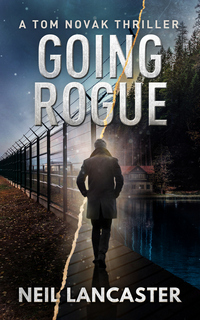
  • Going Rogue by Neil Lancaster—the follow up to Going Dark is a fast-paced mix of procedural and action-hero thriller. I said a little more about it here.
  • The Dead Don’t Sleep by Steven Max Russo—Another great thrill-ride. I talked about this last month. By the way, I have a Q&A coming early next week with Russo that you should definitely check out.
  • Twenty-one Truths About Love by Matthew Dicks—It’s been a few years since I’ve read a Dicks novel (nothing against him, I just haven’t gotten to them), this looks good enough that I’m going to dip back in.
  • Firefly: The Sting by Delilah S. Dawson and a pack of artists—Yo-Saf-Bridge teams up with River, Zoë, Kaylee and Inara? Say no more.
  • Sabbath by Nick Mamatas—An 11th Century warrior in modern Manhattan to save the world? What could go wrong?

Lastly, I’d like to say hi and extend a warm welcome to tracy cole, lidija.biskup, Notes Kecil, Beth Tabler, and R. for following the blog this week. Don’t be a stranger, and use that comment box, would you?

Pub Day Repost: Going Rogue by Neil Lancaster: Tom Novak and His Own Brand of Justice are Back!

Going Rogue

Going Rogue

by Neil Lancaster
Series: Tom Novak Thriller, #2

Kindle Edition, 322 pg.
Burning Chair Publishing, 2019

Read: November 12-14, 2019

I’m a little afraid that this doesn’t sound positive. It should because I enjoyed the book. I shelved the post for a day and tweaked it to help. But, if anything, I think I sound less positive than I did before. So here’s what this post is supposed to say: Great first part, really strong second part, with a couple of hiccups. Hopefully, that’s what you get out of it.

Following his exploits in Going Dark, DS Tom Novak has got himself a new assignment. He’s part of a task force investigating corrupt public figures—politicians, police, military, judiciary and whatnot. This is a much better fit for him than his old job, with a supervisor that he won’t have to battle with (much)—as this series progresses, I really look forward to spending more time with this group.

When a new domestic terrorist group begins attacking Muslim targets, the nation goes on high alert. It’s clear that the terrorists aren’t amatuers—they likely have military training and it’s possible they have assistance from someone in the government or police as well. Enter Novak’s group (every officer in London is looking to get into the hunt for the terrorists, but this team has a legitmate interest).

The man who carried out the first mission is in prison and he’s really the only lead anyone has into the Aryan Defence Front. Novak enters the prison as a Slovenian veteran under suspicion for the murder of a Muslim to gain his trust and hopefully an invitation to enlist. I really can’t describe more of the plot than that, as much as I want to—you need to see what happens from there.

The ADF is a small, but very well organized (and funded) group looking to create and increase divisions between Muslims and Non-Muslims in England—leading to Whites vs. Everyone Else with public riots, mayhem and the rest until supposed Right Thinking and Superior Whites kick everyone else off the island. Something about this group seems easier to believe than similar groups in other novels that I’ve read in the last couple of years—I can’t put my finger on why that is, I’ll just run with it and enjoy it.

There are basically two parts to this book (oversimplification warning) as there was to Going Dark—the undercover work and then what Novak has to do unofficially, using very un-approved methods. The undercover work portion of the book is just great. Yeah, he has to work a little faster than he did in Going Dark, but the short time-frame to get implanted with the group felt legitimate enough (I really hate it when UC officers are put into an inner circle within days of starting). In fact, this part being fast-paced really added to the tension and heightened the drama. Sadly (speaking for the characters’ viewpoint, not the readers’), as effective as the police are—they’re not enough, so Novak ends up Going Rouge to mop up with a little help from his friends that helped him so much last time.

I really have no complaints at all about the part where Novak “goes rogue” to get his man. However, the parts of the book focusing on his undercover work were much more interesting—they’re gripping, taught and seem more realistic. Given that, watching Novak and his allies take the rogue/extraordinary steps to get the job done—it is so hard to talk about this without ruining anything—was a blast. I did (and do) wince at what happens to one of his allies, it’s a relatively minor form of torture, but it literally curls my toes to think about. But aside from that

My biggest complaint is in the dialogue—and it’s not that big of a complaint, I should stress. There were two or three occasions where it seemed to me like that a character essentially repeated themselves. I’m not sure that I was clear there. An example (using the dullest dialogue ever):
George: I watched this TV show last night.
Liza: Good to know.
George: After my evening meal, I viewed a television program.
Sure, people do this all the time in real life, but 1. They are dull to talk to; and 2. I want fictional dialogue to be better than real life (if for no other reason than: editing). Also, some of the threats made by the bad guys toward the end seemed a little lifeless. This is their chance to shine, put some oomph into it.

Then again, if you’re reading a thriller for the sparkling dialogue, you’re probably looking in the wrong place.

Again, nothing against Tom Novak, Action Hero; but Tom Novak, Good Policeman is more up my alley. But either Tom Novak is a real pleasure to read—Going Rogue is filled with great action, a strong protagonist with some good supporting characters, and villains you really want to see thwarted and punished. This is just what you want in a thriller.

I do think that Going Dark was a slightly more effective and polished work, but I won’t hesitate to recommend this one—and I’m already eager to see what Novak is Going to do next.

Disclaimer: I received a copy of this from the author in exchange for this post and my honest opinion. I sincerely thank him for this.


3.5 Stars

LetsReadIndie Reading Challenge2019 Cloak & Dagger Challenge

The Lights Go Out in Lychford by Paul Cornell: The Stakes and Tension are High in the Penultimate Lychford Novella

The Lights Go Out in Lychford

The Lights Go Out in Lychford

by Paul Cornell
Series: Witches of Lychford, #4

Kindle Edition, 144 pg.
Tor/Forge, 2019

Read: November 19, 2019


Oh, man…I was so glad to be back in this world. Lychford, a tiny little English town that acts as the border between this world and realities beyond our understanding, is a wonderfully conceived and executed setting—just getting to spend time here again was a blast.

I’ve tried three times now to describe this, and I just can’t without letting something slip. So, what’s the publisher say?

The borders of Lychford are crumbling. Other realities threaten to seep into the otherwise quiet village, and the resident wise woman is struggling to remain wise. The local magic shop owner and the local priest are having troubles of their own.
And a mysterious stranger is on hand to offer a solution to everyone’s problems. No cost, no strings (she says).
But as everyone knows, free wishes from strangers rarely come without a price . . .

Judith’s struggle with the effects of aging on her mind—and the way that her use of magic has accelerated them—is wonderfully depicted. Of course, it’s not just Judith dealing with her fading capabilities—her apprentice, her friend and her son also go through a lot trying to help her. This might be the best part of the book.

Autumn is working herself to exhaustion—not to mention loneliness and poverty—trying to rush her preparation for taking over for Judith. She’s also driven by the grave errors of the last book that have really put Lychford in danger.

Something about this one had me on tenterhooks throughout. There’ve been threats to Lynchford and/or the trio of protagonists before, but it all seemed much more likely this time.

The conclusion was simply fantastic and heart-wrenching—with a last line that will drive you to the online bookstore of your choice to try to order the conclusion immediately.

Can you read this without having read the previous entries in the series? Yeah, I guess you could. Cornell provides enough backstory to muddle through. Should you? Nope. I don’t think you’d appreciate everything the way it should be appreciated. Should you read the previous 3 novellas? Yes, and then read this and join me in waiting for the fifth and final one next year.


4 Stars

A Two-Fer: Back of Beyond and The Highway (Audiobooks) by CJ Box, Holter Graham: Thrills and Chills along the Highways & Byways (and wilderness) of Wyoming

Trying something new here—one post about two books. Basically, I got so hooked by the first in this series that I listened to the second before I could write about it. Now I can’t think of them separately, so…

Back of Beyond

Back of Beyond

by C. J. Box, Holter Graham (Narrator)
Series: The Highway Quartet, #1
Unabridged Audiobook, 11 hrs., and 3 mins.
Macmillan Audio, 2011
Read: October 16-17, 2019
3.5 Stars

The Highway

The Highway

by C. J. Box, Holter Graham (Narrator)
Series: The Highway Quartet, #2
Unabridged Audiobook, 9 hrs., and 49 mins
Macmillan Audio, 2013
Read: October 24-25, 2019
3 Stars


Cody Hoyt is your typical brilliant, but troubled, maverick cop. But he’s gone a little further than most—his alcoholism has cost him a job, his marriage, and son. He’s managed to find a job as a Sheriff’s Investigator in Montana, and has two months of sobriety. He’s called out to the scene of an apparently accidental fire that resulted in a death.

Sadly, the body is Cody’s AA Sponsor. Cody refuses to believe that he got drunk and accidentally caused a fire. With a fellow investigator, he starts putting the pieces together while trying to prevent the Coroner and Sheriff from rushing to declare it an accidental death.

Meanwhile, we meet Gracie Sullivan, a bookish fourteen-year-old and her older, appearance-obsessed sister Danielle. In an attempt to bond with his daughters during the short time he has custody, he drags them along on a Yellowstone wilderness trip.

This seems like an odd combination of storylines to combine—but Box does it. While unclear about why Hank was killed, the investigators decide the killer is on a Yellowstone Wilderness Trip (yup, that’s the one!). To add to the tension, Cody’s son is also on that trip—he’s with the man his mother is planning to marry, also in an attempt to bond. The idea of his son stuck with a killer is too much for Cody. So he sets off to find the tour while his colleague continues to investigate.

I’m not sure why so many adults want to bond with teens for a week in Yellowstone on the back of a horse, but maybe it’s something I should try. Then again, given the body count on this trip…

Bouncing back and forth between Gracie and Cody (and, occasionally, other points of view), we get to see what’s going on with the tour while we feel the tension from Cody’s hunt. No one on the tour is aware there’s any kind of problem, but things start going wrong and people start disappearing. The tour group is an interesting, and pretty believable mix of characters, and when things go wrong for them, it matters. I absolutely loved the contrast between the experienced, yet worried, Cody and the increasingly aware and innocent Gracie (I would’ve been more impressed with this if I hadn’t moved on to Box’s Open Season next where he’d done something very similar years before this).

Despite his many flaws—or probably because of the way that Box combined them and used them—I really liked Cody and was rooting for him. But Gracie? Gracie was fantastic. She’s smart, insightful, clever and determined—and she keeps her head in a dangerous situation.

There’s a lot of good twists (and even the one that you see coming from miles away, you only see part of it—and the motive will catch you off guard). All coming together in a good, solid, satisfying ending.

Then a few years later, in The Highway, we meet Cody again. In the meantime, things have gone really well for him, we can tell. And then things fall apart as we join him—he falls off the wagon, jeopardizing career and family.

Danielle is driving her sister Gracie from their home in Colorado to their father’s for Thanksgiving. Danielle makes a spur-of-the-moment choice to detour to see Cody’s son, Justin. Ever the horrible-teenage-driver, she’s texting him continually through their trip.

Suddenly, the texts stop and hours click by with no contact. Justin enlists his drunken father and a new investigator he’s training to search for them. Cassie Dewall is a driven, single mother, widowed when her husband was killed in Afghanistan. She’s younger and has a lot to learn (and to prove), but has the making of a good detective.

The girls have been kidnapped by, well, it’s in the official blurb so I can say this—a serial killer. Who does a lot more than kill his exclusively female victims. I think that says enough.

The perspectives jump between Cody, Cassie, Gracie and the killer keeping the tension high throughout the hunt. I almost stopped at several points, however. The looming threat to Danielle and Gracie was a lot to take, and hearing about what the other victims had gone through and endured was horrible. It was just a little too real and not at all entertaining for me.

I stuck with it, though. I wanted to see just how the hunt resolved and assumed (rightly or wrongly) that some sort of justice would be meted out. Also, I had to know what would happen to the girls. In the end, I’m glad I did, but it almost wasn’t worth it. A little more evil and it wouldn’t have been.

That said. I’ll be back for number three. Soon.

2019 Library Love Challenge2019 Cloak & Dagger Challenge

WWW Wednesday, 20-November-2019

Welcome to WWW Wednesday!

This meme was formerly hosted by MizB at A Daily Rhythm and revived on Taking on a World of Words — and shown to me by Aurore-Anne-Chehoke at Diary-of-a-black-city-girl.

The Three Ws are:

What are you currently reading?
What did you recently finish reading?
What do you think you’ll read next?

Easy enough, right?

What are you currently reading?

I’m working reading Paul Cornell’s The Lights Go Out in Lychford (it’s a blast), and An Accidental Death by Peter Grainger, Gildart Jackson (Narrator).

What did you recently finish reading?

I just finished Robert B. Parker’s Angel Eyes by Ace Atkins and Artemis by Andy Weir, Rosario Dawson (Narrator) on audio.

What do you think you’ll read next?

My next book will either be Not So Common People by T Gamache or Dawn of Dreams by Bronwyn Leroux. I have no idea what audiobook is next for me…scrambling for ideas atm.

Hit me with your Three W’s in the comments! (no, really, do it!)

A Few Quick Questions With…Dr. Heather L. Beal

Earlier, I posted my quick take on Hurricane Vacation, I’ve now read and written about three of Dr. Beal’s books, it’s about time I asked her a few questions, right? I really am impressed with the idea behind this series of books and hope that they find their way into the lives of many children. (while being very glad I live in Idaho, where most of them aren’t applicable). Here’s some more information about the author and her books—I hope you enjoy.

Tell us about your road to publication—you talk about it a little on your website, but how did you make the decision to apply your education in writing books for children? Having made that decision, how did you implement it? How steep was that learning curve behind the first book?
Great questions. First, I tried to explain a tornado watch to my daughter one rainy, stormy, evening when I feared the watch might become a warning. Needless to say, I failed horribly and ended up scaring her. It was then that I realized that not only had I chosen the wrong time to talk with her (right before or during the event).

I started researching what was available and while I found a lot of ‘science of’ types of books, nothing was out there that could teach my daughter what to do ‘just in case’ in an age-appropriate way. Once I realized there was a gap, I decided I wanted to do something about it. I starting learning about book design, formatting, and structure. I had already dabbled in fiction books, but I had never looked at writing children’s books. As a linguist I realized that writing a children’s book was simply talking ‘child’ and the children in my books wanted their voices heard in their own special ways.

The steepest part of the learning curve had to be not so much the writing, the story developed as I wrote, but in how to balance the message, keep the story interesting, make sure children could learn how to be safe, and do it in as few words as possible. I would say that the struggle was, and continues to be, balancing that word count against everything I, and my beta-readers (mostly emergency managers like myself), think should be in the books that teach little ones how to stay safe.

I don’t want to ask “where do you get your ideas?” But how tricky is it to figure out how to present the topic to your readers? What’s been the hardest (or, if it’s a better story, the most surprisingly easy) of the topics so far to tackle?
When I started, I had a variety of topics I wanted to cover, and I still do. Before starting my third book, Lions, Leopards and Storm, Oh My, I took it to my followers, the 1,000 or so subscribers of my newsletter and asked them – where should the focus be? Hurricanes, volcanoes, severe weather, etc. The consensus was severe weather, followed by hurricanes, so that was where I got my ‘marching orders’ for the 3rd and 4th books.

The trick, or the hardest thing I feel I have to do, is figure out how to introduce all the topics, various disasters, without making my kiddos look like the unluckiest children on earth to experience everything – lol! I find that while some of the experiences can naturally occur within a classroom environment, as it might happen in day-to-day experiences such as the tornado in Elephant Wind, the storm in Lions, Leopards, and Storms, Oh My or the training for earthquakes in Tummy Rumble Quake, not everything would. For this latest book, Hurricane Vacation, the kids are visiting their cousin and we start to explore how a family prepares for a disaster. It’s important that my readers can relate this events to their own lives and different environments.

After a few of these under your belt, do you have an impulse to step out of the natural disaster realm and do something silly or fantasy-based like a rhyming book about unicorns sliding down rainbows?
While I am a huge fan of mermaids, unicorns, and the like, I have to be careful that my characters stay within the realm of what children need to do, and can do, to stay safe. Creatures with special powers or skills wouldn’t necessarily be seen by the children as having to act the same way they would.

That being said I would love to start a series of board books that more playfully look at what to do and not do as during various scenarios, sort of a question – answer short book that allows children to express themselves and laugh at the silly things the character thinks to do. I teach earthquake safety in childcare and use Tummy Rumble Quake as part of that, but my favorite part is asking the kids about how to drop, cover and hold on through a series of questions where I do it wrong. For example, I ask “do I cover here” and alternate covering my head, framing my chin, covering my ears, or my face – which gets them to laugh as the “teach me” how to do it properly. I think that could be a great series of books that would entertain as well as teach even younger kiddos what to do to stay safe.

I’m fascinated by the process of putting together a book like this—and seeing how different children’s book authors answer this. What’s the process like between you and the illustrator behind the scenes? Does it vary a little from illustrator to illustrator?
It’s a very educative one. I have been lucky to work with two different illustrators and have learned a lot about creative license. I provide a page by page guidance document if you will of my vision for the cover and page illustrations, but sometimes I get stuck on what exactly I want to depict and there is a great collaboration with my illustrators on ideas about how to best approach the desired image. There is variance between illustrators, but that too has taught me a lot. For example, my first illustrator brought my vision of different children to life, but her cultural background was different from my own and it was a really fun discussion about how kiddos here are different than where she grew up and it helped me realize the importance of not assuming my writer’s vision would be the same as my illustrator’s vision.
What kind of feedback are you getting from kids, parents/guardians, teachers? Are there one or two items that really stand-out to you?
I do get a lot of feedback from parents, and childcare providers. If I had to pick what was most talked about, it would have to be the songs and the resources and questions in the back if the book. I remember the Berenstain Bears from when I was a kid and that was where I got the idea to have the questions that parents and providers could talk with kiddos about to see if they understood the topics, or just have available to answer their more detailed questions. On my list of ‘hot’ items to do is getting a recording of the songs on my website to compliments the free downloadable certificates of training and song posters that can be used to help kids remember what to do in these scenarios.
Can you talk about your next project yet?
I have a couple of things in the works, but the very next project is the sequel if you will to Hurricane Vacation. When we end Hurricane Vacation the family is on the way to the shelter. Coming up next has to be what happens there. My goal is to help demystify a shelter and make it a less-scary idea. A lot of work has been happening within emergency management and sheltering operations to help create safe, child-friendly spaces within shelters and I want to highlight to positives of shelters. Again, like all disaster situations, there are negatives, but the goal of these books is to focus on the positives and help empower children to be safer and better prepared for what often times cannot be prevented.
Thanks for your time—and thanks for Hurricane Vacation. I enjoyed it, and hope it finds its way into the hands of many kids who could use it.

Page 383 of 632

Powered by WordPress & Theme by Anders Norén