Author: HCNewton Page 435 of 633

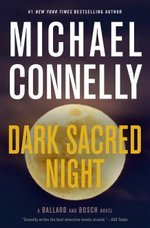
Dark Sacred Night by Michael Connelly: Bosch and Ballard Team Up in one of Connelly’s best

Dark Sacred NightDark Sacred Night

by Michael Connelly
Harry Bosch, #20/Renée Ballard, #2

Hardcover, 433 pg.
Little, Brown and Company, 2018
Read: October 31 – November 1, 2018

In a series that’s over twenty books long, there’s a lot of character development, recurring faces and names, and the like — there just has to be. But on the whole, there’s not a lot of connective tissue between the books, most of what happens in one book stays in that novel, and the next very likely won’t even mention those events. Which is really kind of odd, when you think of it. But that’s not the case here — this picks up the action from Two Kinds of Truth a few months later and the central case of this novel is one that Harry had reopened in it. This really is a sequel to Two Kinds of Truth in a way that Connelly really hasn’t given us since The Poet/The Narrows.

LAPD politics has moved Lucia Soto off from the case that Harry asked her to pick up — a murder of a fifteen year-old prostitute, Daisy Clayton — so she can devote time to something more pressing, but Harry doesn’t have to play that game. His own work on that cold case brings him back to the Hollywood Station, where he tries to look at some old files (without anyone knowing what he was up to). He’s caught by our new friend, Renée Ballard. Renée being the curious type quickly figures out what he’s looking into and pushes her way into the investigation — unlike Soto, she has time; unlike Harry, she has standing; it’s really the best thing that could happen for the case.

While she’s poking into this cold case and developing some sort of relationship with Harry Bosch — Renée has her own active cases, and regular Late Show duties to perform. I really like the way we get several little cases along the way with her in these two books — sure, there’s the big murder mysteries, but there’s also a robbery, a rape allegation, and other crimes that she has to deal with. This adds variety to the book (as it did in The Late Show), a touch of realism, and gives the readers multiple ways to see her in action.

Harry also has an official investigation to pursue — a cold case in San Fernando is heating up thanks to Harry’s work uncovering a witness. His prime suspect is now a high-ranking member of a pretty serious gang and the consequences for this witness are potentially huge — and things go quickly wrong with this case. So wrong that Harry’s future with SFPD — and his own safety — are in jeopardy.

There are so many balls in the air in this novel that it’s a testament to Connelly’s skill that they never get confused, he devotes time to each as he should, in a way that does justice to each storyline and the book never feels over-populated. If Dark Sacred Night had nothing else going for it, just the construction would be enough to commend it. But there’s so much more to commend the novel, too. There’s a little levity, a lot of darkness, a lot of solid procedural material, a couple of bent rules, and some satisfying story telling — just to name a few of the commendable things. I’m leaving a lot off that list, if only for reasons of space and time.

There’s one criminal here — I’m trying not to spoil anything — who spouts off about his victims not being anyone, of not counting. He’s the philosophical opposite of Harry’s “Everyone counts” mission. It’s an excellent way to highlight just what makes Harry — and maybe Renée — tick and what separates them and some of the gray areas they walk in from those on the other side of the law. We have multiple murderers in this book for whom their victims are just tools, just objects, things go be used. While for Harry, Renée, and those like them — these are people with hopes, dreams, pain and suffering that need to be protected, defended and avenged.

A downside for me was how little non-case work time we got with Renée. Harry had time with Maddie, Cisco and Elizabeth in addition to all the police. Renée got almost no time with Lola, nothing with her grandmother, and only a little time with anyone outside of the Hollywood Station that wasn’t involved in a crime she was investigating. I liked her non-police world just as much as I like Harry’s and wish we’d have gotten time in it.

Like many, I knew that Bosch and Ballard would team-up eventually. But no one expected it so soon. Before reading this, I’d said that I would’ve liked another book or two just to get to know Renée a bit more before bringing Harry in. However, having read this — I’m glad it happened now (still, wouldn’t have minded the other). Having the two of them together emphasizes the non-Bosch-ness of Renée, which is good. Also, it gives her someone she can count on, not overly-influenced by her history, department politics, or any of the nonsense that will follow her for the rest of her career. This also gives Harry a way away from cold cases and San Fernando. Altogether, it’s a smart move on Connelly’s part. Now I guess we just wait on the inevitable involvement of Mickey.

Between the merging of the two worlds, the strong emotional tie Harry has to Daisy and her mother, the upheaval the other case brings to his life, and the continued development of Renée Ballard as a character — there’s just so many positives to this book that it’s hard to enumerate them all. I think this is the best book that Connelly has done — in any of his series — in years. It’s been ages (if ever) that he’s had a clunker of a novel, but this one seems more effective, more entertaining than most. It’s just so well done. This is a must-read for Bosch fans, Renée Ballard fans, Connelly fans or anyone who likes seeing one of the masters of the genre at the top of his game.

—–

4 1/2 Stars

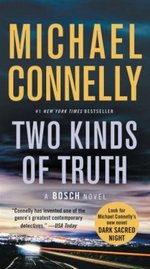
Two Kinds of Truth by Michael Connelly: Bosch Enters New Territory and Revisits some Old in Two Very Different cases

Two Kinds of TruthTwo Kinds of Truth

by Michael Connelly
Harry Bosch, #20

Paperback, 402 pg.
Grand Central Publishing, 2018
Read: October 12 – 13, 2018

…he had never planted evidence against any suspect or adversary in his life. And this knowledge gave Bosch an affirming jolt of adrenaline and purpose. He knew there were two kinds of truth in this world. The truth that was the unalterable bedrock of one’s life and mission. And the other, malleable truth of politicians, charlatans, corrupt lawyers, and their clients, bent and molded to serve whatever purpose was at hand.

Harry Bosch continues to work as a volunteer San Fernando cold case detective until a very hot case comes in — a murder. Harry steps in to guide the full-time detectives through this investigation at a family-owned pharmacy. Quickly, they determine that there’s a tie between this killing and a criminal enterprise involving prescription drugs (opioids, to be specific). Soon, Harry’s doing something he’s never really done before to find some answers and hopefully bring the killers to justice. It’s a great setup to a story. There’s a blast from Harry’s past involved in the prescription drug side of the investigation, and I never thought I’d see this character again. It was a nice surprise.

That’s not only blast from the past in this novel. An old case of Harry’s is being re-opened (by “old” I mean pre-Black Echo, I think) — supposedly some new evidence has come to light exonerating the man Harry and his old partner arrested. Harry’s last LAPD partner, Lucia Soto, is one of the detectives being used by the DA in the re-opening of the case — but that doesn’t mean Harry’s getting much of a break. The position of the LAPD and the DA’s office is that Harry and his partner put away the wrong man — framed an innocent man — and it’s just a matter of time until he’s released and Harry will be sued for his role. Harry does the smart thing right away and gets Mickey Haller involved, he’s going to need legal help — and emotional support — to get through this.

The resolution to the Drugs/Murder story was a bit too easy, a bit too rushed for my taste — which is a shame, because I thought there was a lot more that Connelly could’ve done with it, and I was really enjoying it. That said, other than the resolution to it — I thought it was a great story, and if it even skews toward the truth when it comes to how these pills are procured/distributed, it’s one of the more disturbing stories that Connelly has ever told.

On the other hand, the resolution of the False Conviction story was never in doubt — Connelly’s not going to do that to Harry. The only question was how he was going to be cleared/how the murderer was going to be proven guilty again. The way it involved the work of Harry, Cisco, and Mickey together — especially with some wily moves on Mickey’s part was a whole lot of fun. I do think Harry’s reaction to his half-brother’s craftiness reeked of hypocrisy — he’s not above some of the same kind of moves (just not in a courtroom). The difference laying (in Harry’s eyes) in that he’s a cop, seeking justice and that Mickey’s a lawyer, seeking a win. Honestly, that reaction annoyed me a lot — which is one of the best parts of this series, I frequently am annoyed by Harry Bosch — he’s arrogant, hypocritical, and blind to his own faults. In other words, he’s human. He’s also dedicated, determined and generally honorable — qualities you can’t help but admire.

I know that this novel is one of the books that’s going to be the basis of the next season of Amazon’s Bosch, and I couldn’t help wondering throughout — how? Both storylines depend on an older Bosch than Welliver (the wrongful conviction story less-so), and one of them involves Mickey Haller, and I don’t see how they could use that character (but it could be done without him, if necessary). There are probably umpteen articles easily found online about how they’ll do it, but I’ll just wait to watch it. Still, the thought nagged at me throughout reading.

This is typical Connelly/Bosch — a strong, well=constructed story with compelling characters, a good pace and some twists that you won’t see coming. If this was written by anyone else, I’d have likely given it more stars. Maybe that’s wrong of me, but . . . something tells me Connelly will be fine no matter what I say. It’s a strong book, it’s an entertaining book — there’s a lot of good moments, but it could’ve been better.

—–
3.5 Stars

Saturday Miscellany – 11/3/18

Odds ‘n ends over the week about books and reading that caught my eye. You’ve probably seen some/most/all of them, but just in case:

    A Book-ish Related Podcast Episode you might want to give a listen to:

  • Reed Farrell Coleman – Robert B Parker’s Colorblind — I think this Stephen Usery interview is the fourth podcast interview I’ve heard with Coleman about this book, and I still learned something new. A good listen, as usual.

    This Week’s New Releases I’m Excited About and/or You’ll Probably See Here Soon is a short list this week — but it’s a good one:

  • Dark Sacred Night by Michael Connelly — Bosch and Ballard team up. ‘Nuff said. Well, okay, a little more — this is the best thing Connelly’s done in years, I’m hoping to post on it early next week, but there’s the super-quick version.
  • Just the Clothes on My Back by Naked Blue — an album of songs about Jack Reacher, made in collaboration with Lee Child. I’ve got my (signed) CD sitting next to me. Just need some time to listen to it.

Lastly, I’d like to say hi and extend a warm welcome to mithilamohan0123 and Redeemed Three for following the blog this week.

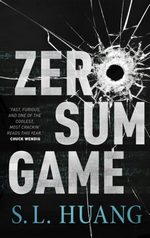
Zero Sum Game by S.L. Huang: A Healthy Dose of SF Peanut Butter in this Thriller’s Chocolate Results in a Very Tasty Book

Zero Sum GameZero Sum Game

by S.L. Huang
Series: Cas Russell, #1

Hardcover, 334 pg.
Tor Books, 2018
Read: October 22 – 26, 2018

           “I’m really good at math,” I said. Too good. “That’s all.”

I’m not sure how many times I stopped reading this book to ask, “What did I just read?” Not because I’m too dense to comprehend the words on the pages, but Huang’s work was so audacious, so confident, so imaginative that i couldn’t believe it.

Cas Russell retrieves things — all sorts of things. We don’t get details, but it’s safe to say that things like legalities, procedures and technicalities don’t enter into her Cas’ thinking. When this book opens, she’s retrieving a person — which is not typical for her, nor that easy. But Cas does it, but before she returns that person to her family, she goes the extra mile to keep the retrieved person safe (she doesn’t want to have to get her again).

This ends up plunging Cas into a world of deceit, conspiracies, secret organizations, and some of the most mind-bending situations I can remember reading.

Here’s what separates Cas from most of the action/suspense heroes we have today — that line above about being good at math. She’s some sort of genius — maybe beyond that — at math. She looks at a situation — say, getting punched in the face — and while the fist is coming at her, calculates things (velocity, force, angles) rapidly enough to know how to adjust herself to lessen the blow and the injury to herself minimal and how best to counter the attack in such a way to put down her opponent. The same goes for shooting someone, using a knife, jumping into a building, etc., etc. The math is everywhere — but Huang deals with it in such a way that even an English major like myself can see it, appreciate it, and not get put off by it.

I’m not sure that makes sense. Let me try this — I don’t know if you watched the recent Luc Besson movie, Lucy, where Scarlett Johansson plays some sort of hyper-intelligent woman who is a near-unstoppable one-woman army, it’s kind of like that — but more successful. Or maybe think Bradley Cooper in Limitless, but without the pills.

Throw that kind of thing into a gritty, twisty world of damaged PI’s, hackers, dubious government agencies and drug cartels — and you’ve got an idea about what this book holds. It’s a little SF, it’s a lot of Thriller — an action-packed winner. I don’t want to talk more about it — the characters other than Cas are fascinating. I’d be more than happy to spend more time with all of them — there’s a very mysterious figure named Rio that I really want to know a whole lot more about, but I think I prefer not knowing — he works so well wrapped in mystery. This would’ve been a fantastic stand-alone, but I’m excited to see that this is listed as the first in a series. Sign me up for a handful of these right now.

I thoroughly enjoyed this book — it all worked wonderfully. There was one thing I cracked up at (it was funny, character revealing and oh-so-original) and when I made a note about it, I noticed that I was on page 69. I’ve never tried the Page 69 Challenge, where you decide whether to read a new book based on reading that page first, because that just seems annoying. But if I’d tried it with Zero Sum Game, it’d have worked for me.

For a first-time novelist (especially one with a math degree), Huang delivers a fantastic, assured read that’s almost sure to please. Give it a shot and you’ll see why I struggled to explain why you want to read this, while thinking that you really should.

—–
4 Stars

2018 Library Love Challenge

October 2018 Report

A lot of highs, a couple of lows — and a decent amount of stuff in between. I’d hoped to get more written — but, I’m not beating myself up over it (or so I keep telling myself). I made some decent progress on the reading challenges I’m tackling. All in all, a pretty good month, I think.

Here’s what happened here in October.

Books/Novels/Novellas Read/Listened to:

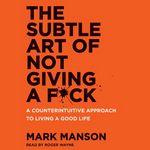
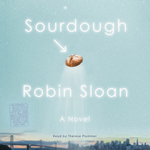
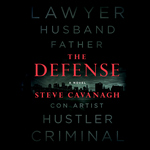
Voyage of the Dogs The Subtle Art of Not Giving a F*ck (Audiobook) Sourdough (Audiobook)
3.5 Stars 4 Stars 4 Stars
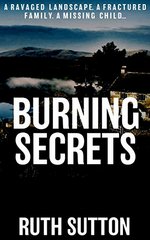
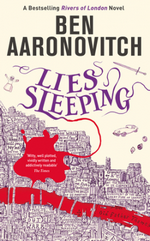
Burning Secrets Lies Sleeping Blood Fued
4 Stars 5 Stars 3.5 Stars
Changes (Audiobook) Without Rules Two Kinds of Truth
5 Stars
5 Stars
1 Star 3.5 Stars
Still Protesting Video Killed the Radio Star The Defense (Audiobook)
3.5 Stars 4 1/2 Stars 3.5 Stars
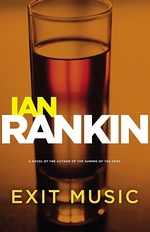
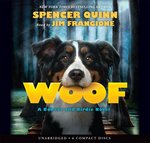
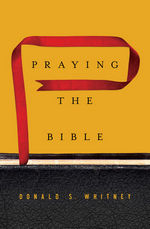
Exit Music Woof (Audiobook) Praying the Bible
5 Stars 3 Stars 3 Stars
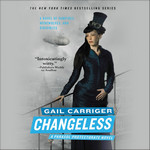
Wrecked Changeless (Audiobook) Zero Sum Game
5 Stars 3 Stars 4 Stars
Black Widow: Forever Red The Golden Orphans Time's Up, Afton
3 Stars 3.5 Stars 4 Stars
So Let It Be Written Dog On It (Audiobook)      
2 Stars 4 Stars      

Still Reading:

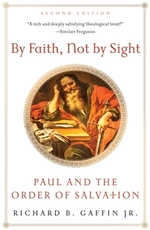
John Owen vol 4 By Faith, Not By Sight: Paul and the Order of Salvation Dark Sacred Night

Reviews Posted:

Book Challenge Progress:

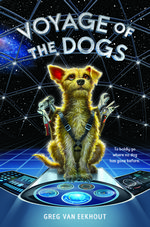
Angel's Guilty Pleasures Voyage of the Dogs by Greg van Eekhout
The Subtle Art of Not Giving a F*ck (Audiobook) by Mark Manson, Roger Wayne
Sourdough (Audiobook) by Robin Sloan, Therese Plummer
The Defense by Steve Cavanagh, Adam Sims
Exit Music by Ian Rankin
Woof by Spencer Quinn, James Frangione
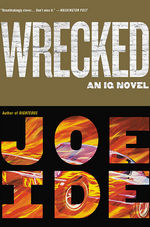
Wrecked by Joe Ide
Zero Sum Game by S.L. Huang
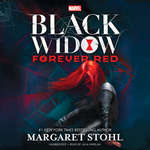
Black Widow: Forever Red by Margaret Stohl, Julia Whelan
So Let It Be Written by Mark Eglinton

Burning Secrets by Ruth Sutton
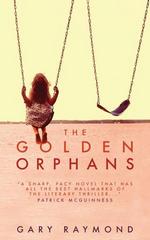
The Golden Orphans by Gary Raymond
Zero Sum Game by S.L. Huang
Black Widow: Forever Red by Margaret Stohl, Julia Whelan
So Let It Be Written by Mark Eglinton
Blood Feud by Mike Lupica
Without Rules by Andrew Field
Voyage of the Dogs by Greg van Eekhout
The Subtle Art of Not Giving a F*ck (Audiobook) by Mark Manson, Roger Wayne

Burning Secrets by Ruth Sutton
The Golden Orphans by Gary Raymond
Time’s Up, Afton by Brent Jones
Without Rules by Andrew Field
Video Killed the Radio Star by Duncan MacMaster

✔ Read a memoir or biography of a musician you like: So Let It Be Written by Mark Eglinton
✔ Read a book with your favorite food in the title.: Sourdough (Audiobook) by Robin Sloan, Therese Plummer

How was your month?

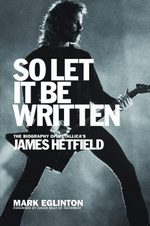
So Let It Be Written by Mark Eglinton: A Disappointingly Delivered Account of a Rock Star’s Career

So Let It Be WrittenSo Let It Be Written: The Biography of Metallica’s James Hetfield

by Mark Eglinton

Paperback, 219 pg.
Lesser Gods, 2017
Read: October 29 – 30, 2018
Here’s the Publisher’s synopsis:

           The first and only biography of one of the best front men of the modern era.

With James Hetfield at the helm, Metallica went from being thrash pioneers to heavy metal gods. He overcame adolescent upheaval and personal demons—including his parents’ divorce, his mother’s untimely death and severe alcoholism—to become metal’s biggest star.

So Let It Be Written does justice to the many hats Hetfield has worn, with his strong leadership, signature vocal style, powerful guitar-playing and masterful songwriting. Author Mark Eglinton uses exclusive, firsthand interviews—with prominent rock stars and key figures in Hetfield’s life—to construct the definitive account of Hetfield.

There are many problems with this book. If it is a definitive account of Hetfield, it’s because there’s not a lot of competition. The firsthand interviews seem to be with people who knew Hetfield in school or shortly thereafter — or friends of former bandmates. For insights from people closer to him, Eglinton seems to rely on interviews published in magazines or done on TV or in a documentary. I could be wrong about that — there might be more original research performed by him, but given the utter lack of citation, it’s hard to say for sure.

This book is primarily about Hetfield’s professional life, following the account of Hetfield’s mother’s death, we maybe get two full paragraphs (scattered over chapters) about Hetfield’s family (but repeated statements that family is the most important thing to Hetfield), and his friendships outside the band aren’t given much more space.

Rather than a biography of James Hetfield, this comes across as the story of Metallica with a focus on the input, influence, and antics of Hetfield. With a special emphasis on glorying in the music and lyrics of the albums leading up to Metallica/The Black Album, and in denigrating everything from Load through the build-up for the release of Hardwired… to Self-Destruct, which wasn’t released in time for him to come up with a strong opinion about (with some okay words directed to the documentaries and films produced in that time).

It’s clear that Eglinton was a fan of early Metallica, and has a wide appreciation for and knowledge of the metal scene. He has the knowledge base and the passion to produce a strong book about the band — but he seems to lack the ability to focus on the life of one man. Somehow, the author wrote a similar looking book, James Hetfield: The Wolf at Metallica’s Door, seven years earlier than this — and it was longer. I’m not sure how he pulled that off — my guess is more analysis of the contents of albums and/or his estimation of their worth. I’m curious about the differences between the two, but not enough to put up with reading it to compare.

James Hetfield is a deeply flawed, incredibly talented, and interesting figure. A biography of him should be intrinsically and automatically fascinating, and it takes a certain kind of author to take that potential and turn it into a disappointment. Sadly, Eglinton is just that kind of author.

Don’t bother.

—–
2 Stars
2018 Library Love Challenge

✔ Read a memoir or biography of a musician you like.

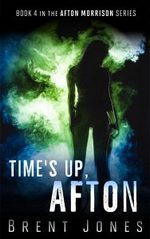
Time’s Up, Afton by Brent Jones: Jones Wraps Things Up with a Suspenseful and Successful Conclusion

Time's Up, AftonTime’s Up, Afton

by Brent Jones
Series: Afton Morrison, Book 4

Kindle Edition, 142 pg.
2018

Read: October 29, 2018

She tugged at the edges of her apron, giving me a facetious and halfhearted curtsy. “We all wear masks, Afton. Sometimes it’s worth finding out what’s hiding underneath.”

Tia’s words to her unexpected friend encapsulate the core of this book — we find out what’s underneath several masks. But first we’ve got to tie up some plotlines, see the fall-out and repercussions of the third installment (well, all of them, but the third particularly), and deal with a a few more grisly deaths.

This picks up right after Nice Try, Afton where we see Afton try to come up with an explanation that anyone will believe for the bloodbath surrounding her. From there, she has to design and implement her endgame to — once and for all — stop her tormentor before she leaves town.

This volume is really Afton pulling back the mask little by little to those around her — library patrons, her brother, friends, and even herself. While that occurs, she learns a lot about her brother, friends, and her enemies. A lot makes sense that didn’t before — even if you didn’t realize it needed the explanation until you got it.

I was less than satisfied with what was hidden under one mask — but not enough that it ruined things for me. And, hey it leaves a door open (at least a crack) for Jones to use if he wants to return to Afton’s world. So I’m really not going to complain.

I’m going to keep this short because I’m afraid I’ll spill something if I keep going. This ends up nowhere near where I thought it was going when I finished Go Home, Afton some four months ago — it’s far better. I really encourage you all to pick these novellas up. Some interesting characters, some very compelling action scenes, and a story that will take you places you don’t expect.

—–
4 Stars

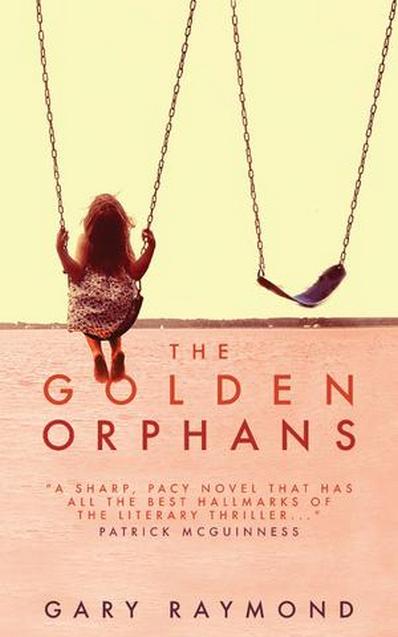
The Golden Orphans by Gary Raymond: An Artist, A Mysterious Russian and an Enigmatic Island

The Golden OrphansThe Golden Orphans

by Gary Raymond

Kindle Edition, 280 pg.
Parthian Books, 2018
Read: October 23 – 28, 2018

I thought for a moment. “I think I am about to do something stupid.”

“In Cyprus you only need ask yourself one question,” Tara said, deadly serious. “Is it out of desperation?”

I keep running into artists in the novels I read — like in Tom Rachman’s The Italian Teacher, Russo’s Bridge of Sighs, or even Hawley’s Before the Fall — there are other examples, I’m sure — but they’re not coming to me right now. I’ve never understood the appeal, really, but I hold out hope that one day I’ll get it. And I shouldn’t be running out of opportunity anytime soon — it’s a vocation that draws authors like flies to honey.

Gary Raymond’s artist protagonist is a little different than the typical depiction. He’s a successful artist — to some extent, anyway — but not a genius (misunderstood or not), he’s not a superstar. In fact, his best days are probably behind him, and he knows it. But he’s still plugging away at it, while pursuing an otherwise self-destructive lifestyle. He’s invited to a funeral in Cyprus at just the right time — his finances are in shambles and his relationship is in a similar state, the largest question being which will fall apart first.

Not only is he invited, but his trip is paid for — so he can go. Francis Benthem is the deceased, and at one point in time he was a teacher, a mentor for the narrator (I should say that Raymond didn’t name him, I’m not being negligent) — he was like a father to him, really. So he goes to the funeral, and for most of it, is the only one present besides the priest. Eventually, Mr. Prostakov (Benthem’s employer, who paid for everything) and a few other people show up and leave quickly. Their appearance both confuses and intrigues the narrator.

Actually, that describes just about everything about Cyprus — it confuses and intrigues him. So he spends time getting to know the island, the people on it and, when given the opportunity, Mr. Prostakov. Illie Prostakov is an enigma wrapped in a riddle, wrapped in a hint of a stereotypical wealthy Russian with a murky past and revenue stream. He presents the narrator with a business proposition — take up residence in his home and replace Benthem. He’s a little vague as to the artistic duties required, so I will be, too. But the money’s good enough to take care of problems back home, so the narrator takes the job — not realizing the trouble and mystery that he’s put himself in the way of.

Unlike Bentham, the narrator won’t just take things at face value — he asks questions, and when he doesn’t get answers, he tries to find them (he might not be great at it, but he tries). Who is Prostakov? What’s he doing? Who are the people he surrounds himself with? Asking these questions isn’t the safest thing he could do — getting answers is probably worse.

The island of Cyprus isn’t just the setting of the novel, it’s practically a character. While the narrator is trying to understand his employer and his employer’s aims, most people are more concerned with getting him to understand Cyprus. Everyone’s description (I don’t have a hard count, but I’d guess at least a dozen are given) is different, but combined you begin to get an idea what life on the island is like. In the end, I think we get a fuller understanding of Cyprus than we do anything that the narrator is looking into.

Which is not to say that he doesn’t get any answers. He does, as does the reader. Raymond doesn’t leave you frustrated like that.

There’s a feel to this book that makes you think it’ll be one thing, but it’s not. The characters seem to be certain types, and most are — but they don’t act the way you think they will. The conclusion seems surely to be headed in one direction, but it ends up giving you a different ending. Everywhere you look, Raymond doesn’t do what you expect — which is both refreshing and annoying (you’d like to be right occasionally).

I’m not that convinced this is really a thriller — but it’s being marketed as one. As a thriller, I think it’s missing a sense of urgency, of real danger. But I think things moved too quickly, and without the depth called for in a literary book. A little more time after the narrator took the job and trying to accomplish it before the plot moves forward, more time spent on the painting (and talking about the process) would’ve helped. A greater sense of hazard, of peril from Viktor or Illie would’ve helped a lot on the thriller front. In the end, the book wasn’t quite sure it knew what it wanted to be — and a mix of the two genres would’ve worked, but it needed to be a bit more of one of them (or both) to really be effective. It was just always lukewarm.

That said — it never, not for a minute, failed to hold my interest. I may not have been very invested in the outcome or characters, but I was glued to it. Frankly, I think the narrator was the same way — he wasn’t invested in his relationship back in London, his career (really), or anything that was happening around him on Cyprus — but he couldn’t stop himself from sticking a toe in here and there, from involving himself just a little bit in everything. As he was confused — so was I. As he was intrigued — so was I. Raymond did a very effective job in getting the reader (or at least this reader) to see things from his protagonist’s eyes.

Raymond’s given us something unique here. I’ve talked before about books that I can respect and admire more than enjoy. This is one of those — the writing and approach of this novel exceeds any affection or excitement I might have for it. It’s not the kind of thriller you can finish and move on from easily — I’m going to be thinking about this for a while. The characters will linger in my imagination, but the reality he depicts will stay around longer. This isn’t a novel that lends itself to a rating any more than it lends itself to a genre-classification, so take it with a grain of salt.

—–

3.5 Stars

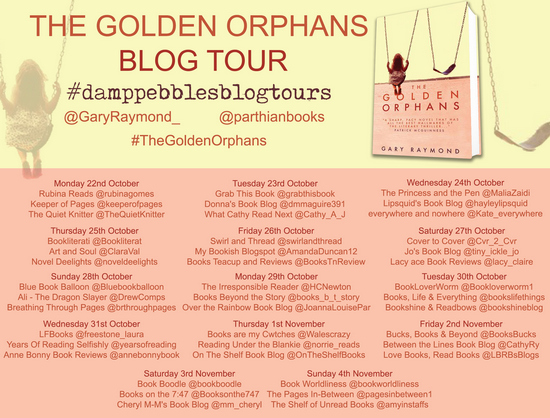
My thanks to damppebbles blog tours for the invitation to participate in this tour and the materials they provided, including a copy of this book — which didn’t influence the above post, beyond giving me something to post about.

BOOK SPOTLIGHT: The Golden Orphans by Gary Raymond

Today I welcome the Book Tour for the literary thriller The Golden Orphans by Gary Raymond. Along with this spotlight post, I’ll be giving my take on the novel here in a bit.

Book Details:

Book Title: The Golden Orphans by Gary Raymond
Publisher: Parthian Books
Release date: July 19, 2018
Format: Paperback/ebook
Length: 280 pages

Book Blurb:

Within the dark heart of an abandoned city, on an island once torn by betrayal and war, lies a terrible secret…

Francis Benthem is a successful artist; he’s created a new life on an island in the sun. He works all night, painting the dreams of his mysterious Russian benefactor, Illy Prostakov. He writes letters to old friends and students back in cold, far away London. But now Francis Benthem is found dead. The funeral is planned and his old friend from art school arrives to finish what Benthem had started. The painting of dreams on a faraway island. But you can also paint nightmares and Illy has secrets of his own that are not ready for the light. Of promises made and broken, betrayal and murder…

The Golden Orphans offers a new twist on the literary thriller.

About Gary Raymond:

Gary RaymondGary Raymond is a novelist, critic, editor and broadcaster. He is the presenter of BBC Radio Wales’, The Review Show, and is one of the founding editors of Wales Arts Review. He is the author of two novels, The Golden Orphans (Parthian, 2018) and For Those Who Come After (Parthian, 2015). He is a widely published critic and cultural commentator.

Gary Raymond’s Social Media:

Twitter ~ Facebook ~ Amazon Author Page

Purchase Links for The Golden Orphans:

Amazon UK ~ Amazon US ~ Waterstones ~ Book Depository ~ NOOK ~ Kobo


My thanks to damppebbles blog tours for the invitation to participate in this tour and the materials they provided.

Saturday Miscellany – 10/27/18

Not much this week — which is typical for the end of the month, but there were a few dds ‘n ends about books and reading that caught my eye. You’ve probably seen some/most/all of them, but just in case:

Lastly, I’d like to say hi and extend a warm welcome to SindrElf for following the blog this week.

Page 435 of 633

Powered by WordPress & Theme by Anders Norén