Author: HCNewton Page 466 of 625

Clemency…

I just removed 32 books from my “To Blog About” List. 32. Most of these were re-reads, and a good number of them were audiobooks. For the most part, with the audiobooks, I’ve written something on the text version and have nothing really to add other than a comment or two on the narration — and there are only so many ways I can say that George Guidall has really grown on me (and I can’t imagine anyone else doing the Walt Longmire books now), or Kobna Holdbrook-Smith is the perfect match for Peter Grant, or that Lorelei King and Luke Daniels just blew me away with their work.

Another example would be my re-read of The Rook by Daniel O’Malley — I took pages of notes on my re-read of that in preparation for the release of the sequel, Stiletto. Then my life got busy and not only did I not get around to taking those notes and making them into a longer-than-normal post, Stiletto sits on my shelf, unread. That’s driving me crazy.

There were a couple of non-re-reads on that shelf, too — but I never figured out how to take my one or two thoughts on the books and turn them into something interesting to read/write, and enough time has passed that I have to admit that it’s just not going to happen.

I still have too many books on that list, but I’ve gotta tell you, the (totally self-imposed) burden being lifted feels great.

A Die Hard Christmas by Doogie Horner, JJ Harrison

A Die Hard ChristmasA Die Hard Christmas: The Illustrated Holiday Classic

by Doogie Horner, JJ Harrison (Illustrator)

Hardcover, 32 pg.
Insight Editions, 2017

Read: October 25, 2017


This is going to be short and sweet. The premise: Take Die Hard one of the greatest action films ever made, one of the greatest Christmas movies ever made, and an all-around pop culture touchstone and turn it into a (NOT for kids) rhyming picture book.

I’m not sure I really need to say more, do I?

Horner does an admirable job with taking the flick and turning it into a series of rhymes — it doesn’t feel like a gimmick. A lot of what he doesn’t grab, Harrison takes care of in the illustrations. It’s not perfect, things are left out, but with only 32 pages — you pretty much have to. Only 1 four-letter word, too (technically, 12 letters, but you get the point).

The art is great — although you could make the case that Harrison gave McClane too much hair. The art is dynamic, you can feel the action, the characters all look just right. Some samples of the illustrations are here on Harrison’s site.

One complaint? No Argyle. Which I guess makes sense given the limited space, but man . . .

This is a hoot — yeah, a novelty book, but well executed and well worth a read. Something to bring out every December (if you’re the type to do that).

—–

5 Stars

The Hanging Garden by Ian Rankin

The Hanging GardenThe Hanging Garden

by Ian Rankin
Series: John Rebus, #9

Hardcover, 335 pg.
St. Martin’s Press, 1998

Read: October 4 – 6, 2017

Rebus couldn’t get so excited. The whole enterprise had shown him a simple truth: no vacuum. Where you had society, you had criminals. No belly without an underbelly.

It’s just that kind of chipper optimism that keeps readers coming back to the Rebus books, isn’t it? The events in The Hanging Garden sure aren’t going to change his mind. There are three investigations at the core of this book (although another is referred to repeatedly) — but far more than 3 crimes.

The first is an investigation into an older gentleman who is suspected to be a former Nazi officer who was involved in the slaughter of an entire town in the waning days of WWII. Because of Rebus’ penchant for taking historical deep-dives when most police officers wouldn’t, he’s assigned to investigate this man. There are individuals from various organizations, governmental entities, and the press who are pressuring the accused and Rebus on this front.

The second involves an up and coming gangster — Tommy Telford’s smarter, quicker, and crueler than Rebus and the rest are used to dealing with — he’s also a genuine rival to Big Ger Cafferty (especially since Cafferty’s in prison). There’s a prostitute, a victim of human trafficking, that Rebus focuses on, trying to get her out of Telford’s control while using her to take him down. This becomes laden with some personal baggage (see below) and Rebus takes some risky moves that have some devastating consequences.

Lastly, Rebus’ daughter, Sammy is struck by a car in a hit and run and spends days in a coma. Based on a witness’ statement, Rebus becomes convinced that she was targeted thanks to her involvement with the prostitute and/or being his daughter. Either way, Rebus is out for blood — if only he knew who he was after. He strikes a deal to get criminals looking for the perpetrator while he’s helping/prodding the official police investigation. It really doesn’t matter which side of the law finds the driver, as far as he’s concerned, the end is the only important thing.

I’m not sure we needed the Nazi storyline — which by the way, is based on a real atrocity — but it serves to muddy the waters for Rebus and distract him. So it did play its part, and was good enough that I’m not complaining. Telford is a wonderful (fictional) criminal — I don’t want this guy walking around in my world, but in a novel? Love him. And the Sammy story — obviously, this is the emotional core to the book and is really well done.

When you have that many plates spinning, it’s hard to keep them going — and to do so in a way that balances the story telling to keep the reader engaged and not confused. Throwing in the personal aspects make it all the harder for Rankin — Clarke and Templar are involved with the police actions, and Jack Morton plays a significant role, too (and I finally liked him). Plus you have Sammy (mostly seen in flashbacks), Rhona (her mother) who comes to look after her comatose daughter. Patience Aitken is around as well — what she ever sees in Rebus, I’ll never know, it’s clearly a horrible match.

The way that Rankin has put this one together made it very difficult for me to talk about (I’ve tried to get this post written at least a dozen times). But that doesn’t mean it was hard to read — once I was in 10 pages or so in, there was no stopping. It’s a heckuva read, and I really can’t express more than that.

Rebus — mostly sober throughout, for a change — has some strong moments of self-assessment and self-examination, and is able to see/express things about himself and his approach to his work that many readers probably have intuited but it’s nice to have the man himself realize. Including one insight into himself that enabled me to finally figure out what makes Rebus and Harry Bosch different — something I’ll hopefully return to soon.

I didn’t expect that this would live up to Black and Blue, and it didn’t. But it wasn’t a let-down in any sense — it was a different kind of story, a different kind of crime, and different motivations for John Rebus. Still, the essentials are there: Rebus, his outlook, his tenacity, his humor, and his demons. Crime fiction doesn’t get much better than this.

—–

4 Stars

2017 Library Love Challenge

An Unexpected Afterlife by Dan Sofer

An Unexpected AfterlifeAn Unexpected Afterlife

by Dan Sofer
Series: The Dry Bones Society, Book One

Kindle Edition, 285 pg.
2017

Read: October 23, 2017


Moshe Karlin wakes up after his birthday party got out of hand — so out of hand that he doesn’t remember drinking as much as he clearly did, he doesn’t remember what happened to his clothes, or why he’s in the cemetery on the Mount of Olives. He makes it home, crawls into bed and finds another man in his bed with his wife. The man (his best friend and business partner, Avi) and his wife are pretty freaked out — as is Moshe. Moshe because that’s the last thing he expected to find in his bed, and the other two are freaked out because Moshe has been dead for 2 years.

Moshe might be alive again, but his life is gone — his business is a wreck, his daughter doesn’t recognize h im, and his wife won’t talk to him. But his neighbor a rabbi will listen to him, and talks to him about the believes around the Resurrection. They soon discover another person claiming to be resurrected — she has no memory about anything, not her name, cause of death, anything. The two bond quickly and begin working together to provide for their new lives, to understand them, and to try to get Moshe’s family back. Along the way, they bring in more of the Resurrected to help out. It’s not a large, general resurrection at work, or even a stream of them — but it is a decent trickle.

Their rabbi friend tries to get them in front of the religions leaders in the culture, but are rebuffed. Next thing they’re fighting to survive. They have no legal standing, a need for money and shelter, jobs, and some way to make people pay attention to their claims.

There’s a prophet running around, too. An accident put shim in the hospital and takes him off the chessboard for most of the game, but he’s aware of Moshe and his friends as well as knowing what that means for the world. If only the medical establishment would let him get to work. His character is plenty interesting and I found myself grinning at the situations he found himself in.

The writing is crisp, nothing too flashy, but it’s more enough to keep you reading. Sofer imbues his characters with a good deal of humanity, of hope. There’s a splash of humor that helps a lot, too. I’m not sure why Moshe is so taken with his wife, but he is — and you have to admire his dedication to her (and if we had some more time with her, I’d probably agree with him). The reaction he has to his daughter not recognizing him is hard to take. All of the resurrected are having difficulty fitting back in to the world — especially when they try to fit in to their old lives — and that’s a very interesting thing to see play out.

I’m really uncomfortable about the subject matter — it’s one thing for McGuire or Hearne to pillage myths of the Tuatha Dé Danann or Riordan to pillage the Greek/Roman/Egyptian/Norse stories. But it’s something very different for someone to utilize figures and beliefs of a religion like Judaism — especially when it’s not just beliefs, but utilizing actual figures from the religion for your own means seems to cross a line to me (and yes, I’d say the same about Christian fiction, for example). I’m not saying Sofer’s wrong to do this, or that he does so with any measure of discernible disrespect, but I figured I have to throw up a warning.

If you can get past the use of the religious characters/events, I’d expect that you could like this one. I’m not sure I can get behind it, but it’s good, I can tell you that.

Disclaimer: I received this book from the author in exchange for this post and my honest opinion — my thanks to him for this.

—–

3 Stars

Happy Birthday, Archie!

My annual tribute to one of my favorite fictional characters (if not my all-time favorite).

On Oct 23 in Chillicothe, Ohio, Archie Goodwin entered this world–no doubt with a smile for the pretty nurses–and American detective literature was never the same.

I’m toasting him in one of the ways I think he’d appreciate most–by raising a glass of milk in his honor.

Who was Archie? Archie summed up his life thusly:

Born in Ohio. Public high school, pretty good at geometry and football, graduated with honor but no honors. Went to college two weeks, decided it was childish, came to New York and got a job guarding a pier, shot and killed two men and was fired, was recommended to Nero Wolfe for a chore he wanted done, did it, was offered a full-time job by Mr. Wolfe, took it, still have it.” (Fourth of July Picnic)

Long may he keep it. Just what was he employed by Wolfe to do? In The Black Mountain he answers the statement, “I thought you was a private eye” with:

I don’t like the way you say it, but I am. Also I am an accountant, an amanuensis, and a cocklebur. Eight to five you never heard the word amanuensis and you never saw a cocklebur.

In The Red Box, he says

I know pretty well what my field is. Aside from my primary function as the thorn in the seat of Wolfe’s chair to keep him from going to sleep and waking up only for meals, I’m chiefly cut out for two things: to jump and grab something before the other guy can get his paws on it, and to collect pieces of the puzzle for Wolfe to work on.

In Black Orchids, he reacts to an insult:

…her cheap crack about me being a ten-cent Clark Gable, which was ridiculous. He simpers, to begin with, and to end with no one can say I resemble a movie actor, and if they did it would be more apt to be Gary Cooper than Clark Gable.

I’m not the only Archie fan out there:

  • A few months back, someone pointed me at this post, The Wit and Wisdom of Archie Goodwin. There’s some really good stuff here that I was tempted to steal, instead, I’ll just point you at it.
  • Robert Crais himself when writing an introduction to a Before Midnight reprint, devoted it to paying tribute to Archie. — one of the few pieces of anything written that I can say I agree with jot and tittle.

In case you’re wondering if this post was simply an excuse to go through some collections of Archie Goodwin quotations, you wouldn’t be totally wrong…he’s one of the fictional characters I like spending time with most in this world–he’s the literary equivalent of comfort food. So just a couple more great lines I’ve quoted here before:

I would appreciate it if they would call a halt on all their devoted efforts to find a way to abolish war or eliminate disease or run trains with atoms or extend the span of human life to a couple of centuries, and everybody concentrate for a while on how to wake me up in the morning without my resenting it. It may be that a bevy of beautiful maidens in pure silk yellow very sheer gowns, barefooted, singing “Oh, What a Beautiful Morning” and scattering rose petals over me would do the trick, but I’d have to try it.

I looked at the wall clock. It said two minutes to four. I looked at my wrist watch. It said one minute to four. In spite of the discrepancy it seemed safe to conclude that it would soon be four o’clock.

She turned back to me, graceful as a big cat, and stood there straight and proud, not quite smiling, her warm dark eyes as curious as if she had never seen a man before. I knew damn well I ought to say something, but what? The only thing to say was ‘Will you marry me?’ but that wouldn’t do because the idea of her washing dishes or darning socks was preposterous.)

“Indeed,” I said. That was Nero Wolfe’s word, and I never used it except in moments of stress, and it severely annoyed me when I caught myself using it, because when I look in a mirror I prefer to see me as is, with no skin grafted from anybody else’s hide, even Nero Wolfe’s.

If you like Anglo-Saxon, I belched. If you fancy Latin, I eructed. No matter which, I had known that Wolfe and Inspector Cramer would have to put up with it that evening, because that is always a part of my reaction to sauerkraut. I don’t glory in it or go for a record, but neither do I fight it back. I want to be liked just for myself.

When a hippopotamus is peevish it’s a lot of peeve.

It helps a lot, with two people as much together as he and I were, if they understand each other. He understood that I was too strong-minded to add another word unless he told me to, and I understood that he was too pigheaded to tell me to.

I always belong wherever I am.

The Dark Prophecy by Rick Riordan, Robbie Daymond

The Dark ProphecyThe Dark Prophecy

by Rick Riordan, Robbie Daymond
Series: Trials of Apollo, #2

Undabridged Audiobook, 12 hrs, and 31 min.
Listening Library, 2017

Read: October 5 – 11, 2017


I’m not sure how to give a plot synopsis here — basically, it’s the continuation of the Trials of Apollo. He has another task to accomplish — another of the new emperors to take down before the third one, in the next book. It’s the same ol’ set up that has served Riordan so well — and will continue to do so for years to come.

Basically, Apollo/Lester has to go and find another Oracle. To do so, really, he has to face a lot of people that he’s hurt/disappointed over the millennia. He learns a lot about himself, matures a bit. That part was good — and the whole thing was entertaining. But it felt stale. I liked The Hidden Oracle a lot and was excited to see where this series went. Now, I’m not so sure. I’ll finish the series, but with greatly diminished expectations.

Not that it got into details, but there was a lot more intimated/flat-out said Apollo’s sexual history than I’m comfortable with for a MG book. The previous books in the Percy-verse suggested sexual orientation and activity, there was some romance, but this went much further than any of those. Honestly, it went a step too far. If this wasn’t a part of the Percy-verse, or was clearly marketed toward older readers, it wouldn’t have been that bad and I wouldn’t have said anything about it. But that’s not the case here.

As far as the audiobook goes, it was rough. Robbie Daymond was very aware that he was reading amusing material and he read it like each line was a punchline. It was the vocal equivalent of mugging for the camera, if you will. Now, there were a couple of serious and poignant moments, and Daymond pulled those off well, but otherwise it was tough to listen to.

I didn’t like the narration, and didn’t think the story/writing was as crisp as the first book in the series. But it was still entertaining enough. This isn’t the one to start reading Riordan. But it’ll do for his older readers.

—–

3 Stars

Saturday Miscellany – 10/20/17

Odds ‘n ends over the week about books and reading that caught my eye. You’ve probably seen some/most/all of them, but just in case:

    A Book-ish Related Podcast Episode you might want to give a listen:

  • Mysterypod with Reed Farrel Coleman — Coleman talks to Stephen Usery about his latest Jesse Stone novel, and a little about Gus Murphy, his book with Michael Mann and more.

    This Week’s New Releases I’m Excited About and/or You’ll Probably See Here Soon:

  • A Plague of Giants by Kevin Hearne — Hearne trades the Urban in for Epic in this fantasy novel. I started this 2 days ago and am making incredibly slow progress (my fault, not the book’s), but it’s just gorgeous. I am going to have many, many good things to say about this next week.
  • Righteous by Joe Ide — Isaiah Quintabe is on the hunt for his brother’s killer and trying to keep a DJ safe from various criminals.
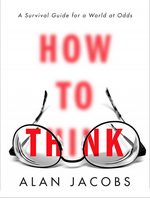
  • How to Think by Alan Jacobs — building on recent works about the science of thinking, Jacobs focuses o the art of it. I had a little tosay about it.

Lastly, I’d like to say hi and welcome to whatsnonfiction for following the blog this week.

Ghost Hero by S. J. Rozan

Ghost HeroGhost Hero

by SJ Rozan
Series: Lydia Chin & Bill Smith, #11

Hardcover, 325 pg.
Minotaur Books, 2011

Read: October 13 – 16, 2017


So, Lydia Chin is approached by a potential client who is clearly lying about his identity about some paintings that are rumored to be in New York, and potentially on sale soon. This client really wants to establish a name for himself in Contemporary Chinese Art, and owning these paintings — preferably before they go on sale — will go a long way toward that. Here’s the trick, no one knows if they really do exist, or where they might be. Still the rumors persist, and in the “where there’s smoke, there’s fire” kind of thinking, they’ve got to exist. The trick is that the artist was killed in the Tiananmen Square protests of 1989. The client wants her to find them, prove they’re real (ideally), and help him get the leg up on the competition.

Like I said, Lydia doesn’t trust the man, and doesn’t understand why he picked her, but his cash is good and she’s curious (about him, the paintings, why he might want the paintings). So she takes the case, but doesn’t know where to start. Luckily, her partner, Bill Smith knows just the guy to talk to — another Chinese PI. Second generation ABC, from the Midwest, Jack Lee has an art degree and mostly looks into stolen and questionable art. Really, he’s the ideal PI to look for these paintings — and it turns out that someone else thought so, too and already hired him to do that. The three decide to work together on this, each playing to their own strengths.

From there, they dive deep into the New York Art Scene — at least those that brush up against Chinese Art — there are people who care about art, people who care about influence and money, and those who really, really care about art. Some care so much that Jack Lee gets shot at more than once. There are other threats as well — the idea that Chau might still be alive is a pretty hot political topic, and various governmental entities seem interested in what Lydia is up to.

The case is pretty interesting — and the various people that the trio interacts with are so interesting, so colorful, occasionally so despicable. The solution that Lydia cooks up is worthy of Blackadder’s Baldrick, but I kind of liked it. It works as a solution in a novel (I hope nothing like this would happen in real life). The ultimate reveal was a bit too obvious, but I still enjoyed it — and the rest of the mystery made up for it.

I’ve said time and time again, I love reading the back-and-forth between Lydia and Bill — adding Jack to that seems like a gamble. Thankfully, it worked wonderfully, he fits in with the two of them so wonderfully well that you wish he’d been around for a couple of novels previously to this. It almost doesn’t matter if the plot behind the book was entertaining, just get the three of these guys around a beverage or two and it’s worth it.

On the one hand, I’m kind of with Lydia in not understanding why someone would come to her to look for this — art isn’t her thing. On the other hand, she dealt with art dealers in China Trade, Chinese heirlooms in Reflecting the Sky, missing jewels in The Shanghai Moon (which yeah, is sort of precious minerals, but the art aspect of the Moon seems as/more important than the gems). So it’s not like she’s an utter novice. Sure, going to Bill Smith or Matt Scudder would seem like a bad move — but Lydia’s a good choice for this case (not as obvious a choice as Jack Lee, I grant you). And how could I not think of another PI in New York?

There was one thing I was disappointed in: I was truly hoping/expecting that this book would contain a clue (if not more) about why this was the last book to be published in the series — and given the 6 years that have passed since then, it seems pretty likely that this was it for the series. I’m assuming that it wasn’t planned, but can’t find any information about it (which means that someone’s going to come along in half an hour with a link to 15,000 words about the reason for this.) Update: A few hours after posting this, Rozan assured me that the series is not over, which is great to hear

A fun, fast-paced read that is enjoyable, engaging and all around entertaining — which is pretty much a great way to describe any novel from Lydia Chin’s point of view. Give this one a shot and then pick up the others (or pick up the others, and then this one — either way).

—–

4 Stars

2017 Library Love Challenge

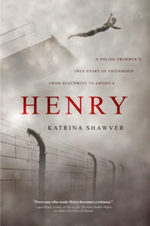
Henry by Katrina Shawver

Henry: A Polish Swimmer's True Story of Friendship from Auschwitz to AmericaHenry: A Polish Swimmer’s True Story of Friendship from Auschwitz to America

by Katrina Shawver
eARC, 381 pg.
Koehler Books, 2017
Read: October 11 – 13, 2017

Looking for something for her Arizona Republic column, Katrina Shawver found and interviewed Henry Zguda, a octogenarian, who’d been a competitive swimmer in Poland who’d spent three years in Auschwitz and Buchenwald. The interview struck a chord with her and she soon returned to his home to propose they write a book about his experiences.

This book is the result of a series of interviews Shawver conducted with Henry, her own research (including trips to the original sites), and some letters, photographs, etc. that Henry provided (some of which Henry pilfered from Auscwitz’ records some time after the war!). We get an idea what life was like in Poland before Hitler invaded and began to destroy the nation and its citizens — then we get several chapters detailing his life in the camps. Following that, we get a brief look at his life in Poland after the war and when the Communists took over, followed by his life in America after that — meeting his wife and living a life that many of us would envy. The bulk of the book is told using transcripts (with a little editing) of interview tapes with Henry, so the reader can “hear” his voice telling his stories. Shawver will stitch together the memories with details and pictures, as well as with bits of her trip to Poland and the camps there. We are also treated to a glance at the friendship that develops between Henry, Shawver and Henry’s wife through the production of the book.

More than once while reading it, I thought about how much I was enjoying the read — and then I felt guilty and wrong for doing so. This was a book about someone who lived through Auschwitz and Buchenwald, how dare I find it charming and want to read more (not for information, or to have a better idea what atrocities were committed). I’ve watched (and read the transcript) Claude Lanzmann’s Shoah (for one example), and never once thought about cracking a smile. I certainly never wanted to spend more time with the subjects. This is all because of the way that Shawver told Henry’s story, and Henry’s own voice. I did learn a lot — I should stress. For example, there was mail back and forth between the prisoners and family (for those that were willing to give the Nazis an address for their family), Henry at one point looks at some letters from prisoners online, checking not for names, but numbers he recognizes. Or the idea that there were light periods in the labor duty — not out of mercy, compassion or anything, but because the guards got time off, and there was no one to make the prisoners work.

The subtitle does tell us that it’s a story of friendship — several friendships, actually. Without his friends, Henry’s story would have likely been much shorter, with very different ending. It’s easy to assume that others could say that because of Henry, as well. There’s also the story of the brief friendship of Henry and Shawvver, without her, we wouldn’t have this book. There were some moments early on that I thought that Shawvver might be giving us too much about her in the book, but I got used to it and understood why she chose that. In the end her “presence” in the book’s unfolding helps the reader learn to appreciate Henry the man,not just Henry the historical figure.

This is a deceptively easy read, the conversational tone of Henry’s segments, particularly, are engaging and you’re hearing someone tell you great stories of his youth. Until you stop and listen to what he’s talking about, then you’re horrified (and relieved, sickened, inspired, and more). Shawver should be commended for the way she kept the disparate elements in this book balanced while never undercutting the horrible reality that Henry survived.

This is something that everyone should read — it’s too easy to hear about the Holocaust, about the concentration camps, and everything else and think of them as historical events, statistics. But reading this (or books like it), helps you to see that this happened to people — not just people who suffered there — but people who had lives before and after this horror. If we can remember that it was about people hurting people, nothing more abstract, maybe there’s hope we won’t repeat this kind of thing.

Disclaimer: I received a copy of this book from the author in exchange for my honest opinion.

—–

4 Stars

Pub Day Repost: How to Think by Alan Jacobs

How to Think: A Survival Guide for a World at OddsHow to Think: A Survival Guide for a World at Odds

by Alan Jacobs
Uncorrected Proof, 156 pg.
Convergent Books, 2017

Read: October 3, 2017

I haven’t read any of them, but over the last few years I’ve seen a pretty good number of books about human thinking processes — how it works, how it can/can’t be changed, and how this can/may/should change the way we approach decision-making, etc. (it’s not that I’m uninterested, there’s only so much time). Unlike me, Alan Jacobs has read many of these — and one thing he notes, that while these books are great on the science of human cognition, there’s also an art to it. Enter this book.

The sub-title is “A Survival Guide for a World at Odds.” Now, while it’s clear that our society is quite divided, I honestly don’t think that the world is really all that much more divided than we’ve been before — even in this society. However, I think it’s safe to say that we’re much more open and aggressive about the divisions that exists, and far less inclined to listen to the other side(s). Jacobs’ writing can help his readers bridge some of the divisions with those they interact with (not every one will want to, I’m sure, but they could try if they want to). I almost think that this book could be called How to Disagree instead, because so much of the book (but not all of it) is about how to disagree with others like civil, empathetic, adults, looking to change minds (or have our own be changed); not simply to attack someone or win an argument.

Jacobs begins by showing what strategies, devices, etc. we all already use in our thinking (taken largely from common sense/experience or all the science-y books mentioned above), and then as we’re aware of these, he shows how we can improve them. Building on ideas from one chapter to the next and showing how something we learned already can inform what he’s discussing now, these are not individual essays, but a cumulative case. I find it difficult to give examples for just that reason — his is a carefully laid out argument, and summarizing some of my favorite components would do little justice to those parts and not work that well out of context. So, I’ll keep it vague. He addresses how the idea of “thinking for oneself” is impossible, how it’s problematic to have an “open mind” always, the importance of waiting, of not having to address everything, and how it’s vital to keep a diverse selection of thoughtful people in your life.

Jacobs doesn’t only draw from social sciences and philosophers (but he does, and frequently — in an accessible way), he cites and draws from Robin Sloan, Walter White, C. S. Lewis, George Orwell and many others. He does so in a way that illustrates his points, strengthens and furthers his arguments. (I point this out, because I just finished a book that seemed only to do this kind of thing to lengthen chapters — no light was added, just space taken up). While readers from High School on up can feel as if the ideas are stretching their minds, the writing will not — Jacobs (as always) is good at convincing the reader they can handle bigger ideas.

Frankly, I wish this book (or one much like it) was required reading for anyone wanting a social media account — I’ve been telling all sorts of people to read it for a few days now, and I probably won’t stop anytime soon. How to Think is helpful, insightful, entertaining, wise, and — dare I say? — thought-provoking. Go get it.

Disclaimer: I received this copy from a Goodreads Giveaway.

—–

4 Stars

Page 466 of 625

Powered by WordPress & Theme by Anders Norén