Author: HCNewton Page 494 of 625

Hungry Heart (Audiobook) by Jennifer Weiner

Hungry Heart (Audiobook) Hungry Heart: Adventures in Life, Love, and Writing

by Jennifer Weiner , Jennifer Weiner (Narrator)

Unabridged Audiobook, 13 hrs, 15 min.
Simon & Schuster Audio, 2016
Read: February 6 – 14, 2017


I’m not the biggest Jennifer Weiner fan in the world, nor am I in her target demographic in any way, shape, or form — but I’ve enjoyed (in some cases more) those books of hers that I’ve read. So I figured there was a better than even chance that I’d appreciate this collection of essays about her life, career, love life, dogs, social media and more. It’s also read by Weiner herself, which is almost always a winning characteristic for me.

Sadly, this audiobook was better in theory than it was in real life.

There’s a scene in the last season of Gilmore Girls where Logan points out to Rory that despite her prejudices, attitudes and belief, she’s actually part of the same privileged class that he is — which she doesn’t take too well (understandably). I kept thinking about that as I listened to some of Weiner’s tales of woe about her childhood and college life. I’m not saying that she didn’t have problems in her childhood, that she didn’t have trials that no one should have to go through, or overcome a lot in her professional life. But man…the self-pity was overblown — she got an Ivy League education, came out of it with less debt than many people I know who went to less prestigious schools, took a high school trip to Israel, and a largely pleasant childhood.

It doesn’t get much better when she starts talking about her adult life, either. She assumes sexism — and has faced, continues to face, and will probably face a good deal of it in the future — but seems to have some fairly strong gender biases herself. She will frequently say something like “As a woman, I know I’m supposed to be X in this situation.” Almost every time she said something like that I thought, actually a man in the same situation would be expected to behave the same way — it may not be honest, healthy, or “authentic” in the contemporary understanding — but it’s what how an adult person in polite Western culture should act.

Oddly, for someone who lamented her own inability to be a stay-at-home mom/writer, the scorn she displays for stay-at-home moms later in the book seems out of character. Actually, she is dismissive of people with other beliefs and convictions than hers. I’m not suggesting for a moment that she shouldn’t be an opinionated person (of any sex), but it’s hard to respect anyone who can’t reason with their opponents with out dismissing or vilifying them.

I actually had a few more things in my notes along those things, but seeing this on the screen makes me want to stop before this becomes a diatribe against the book. Because, believe it or not, I enjoyed this book — when she tells a narrative or goes for a laugh, I really got into the book and wanted to hear more. It’s when she gets on her soapbox or when she doles out advice that wouldn’t work for women less-well-off than she is, I couldn’t enjoy it.

If anything, this book makes me like her fiction more — because the flawed people she writes about are a lot more relatable than she presents herself as. But listening (I think reading would be better — see below) to Weiner describe her problems with overeating, or the journey to get her first book published (and the real life experiences that shaped the book), her mother’s reactions to her book tours, getting the movie In Her Shoes made, stories about her dogs, and so on — man, I really liked that and would’ve gladly consumed more of that kind of thing.

As an audiobook, this was a disappointment. I found the little sound effect/chime thing between chapters grating. Weiner’s reading was too slow and her cadence demonstrates that she reads a lot to her kids. Which would be fine if the prose matched, but it didn’t.

I can’t rate this too low — it was well-written I laughed, I felt for her and some of the other people she talked about in a way that I can’t justify rating below a 3. But man, I want to.

—–

3 Stars

Storm Clouds Gathering by Gibson Michaels

Storm Clouds GatheringStorm Clouds Gathering

by Gibson Michaels
Series: The Sentience Trilogy, #1

Kindle Edition, 366 pg.
Arc Flash Publishing, 2014

Read: January 28 – 30, 2017


There’s a sentient, autonomous AI running around the computers that run (essentially) the State and Defense Department for the United Stellar Alliance. It’s trying to learn how to act more like humans while carrying out its duties — both official and unofficial. The unofficial duties include caring for (and learning from) the descendant of its creator — someone who wouldn’t be allowed access to the AI by anyone other the AI. There are some officers in the Intelligence wings of the Fleet who think that there might be something going on with the AI running FALCON, and set out to find it (if such is a thing).

Meanwhile, long-term stresses and problems within the United Stellar Alliance are coming to a head and the planets that make up the alliance are on the verge of declaring war on each other. The moves that the various entities make — and the politics behind the moves — fed into my political and historical interests (and other readers will resonate with them, too, I expect).

But here’s the best part — as interesting as all these things are — it’s not the main story. The main story involves an alien race, the Raknii. The Raknii are a warrior/hunter society, one who conquers pretty much everything they encounter — without mercy, without pity, without consideration for anything other than victory. But many of the leaders of this race are questioning this — and fear that the culture has gone astray. About this time, they discover a new race in the galaxy — one that will prove to be the ultimate test for the Raknii, which may help their culture get back on track. That race, of course, is humanity.

Each storyline worked for me in just the right way — the Civil War story was good, the parallels to the US Civil War were maybe overplayed, but they were used well enough that I’m not going to complain too loudly. The story of the AI learning about human cultures was nothing but fun — ditto for the efforts of Fleet Intelligence to get to the bottom of things. All this going on with a large-scale alien invasion looming unbeknownst to any human was a great touch — any of these would keep me reading, mixing them the way that Gibson did was icing on the cake.

The cast of characters in this is so extensive that I can’t really comment on them all — let’s just say that I liked just about ever character — no matte how they threaten the fate of humanity. About the only people I didn’t like were those from the Consortium (a group of businessmen that have more of an impact on the USA’s government than anyone appreciates) — and there’s just nothing redeemable about them (or frightfully interesting outside of their role as antagonists).

Michaels writes with heart, humor, hope and a pretty good attention to detail. There are plenty of infodumps throughout — especially concerning the Raknii, but also getting the reader brought up to speed with humanity’s politics/technology — but these are almost always woven in well with character moments and the over all narrative. I just had a blast reading this.

This is the first entry of a trilogy, and is one of those that doesn’t come to any real resolution as such. It’s more of a pause in the action before jumping into the next volume. I’m not crazy about those kind of books, but I get the thinking — the point is to move on to the next two books. Besides, I enjoyed this enough that all I want to do is move on, I can live without that temporary resolution. I’m giving this a 3-Star Rating, but do so in the expectation that the following entries will be ranked higher.

Disclaimer: I received this novel from the author in exchange for this post — thanks Mr. Michaels.

—–

3 Stars

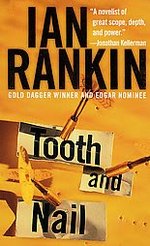
Knots & Crosses by Ian Rankin

Knots & CrossesKnots & Crosses

by Ian Rankin
Series: John Rebus, #1

Hardcover, 256 pg.
Minotaur Books, 1987

Read: February 1 – 4, 2016

Yet there had to be clues. There had to be. Rebus drank his coffee and felt his head spin. He was feeling like a detective in a cheap thriller, and wished that he could turn to the last page and stop all his confusion, all the death and the madness and the spinning in his ears.

After 21 novels and 30 years of being in print, I finally decided to give DS John Rebus and his author Ian Rankin a shot, it looks like they might stick around for a bit. Seriously, I’ve seen the names a lot over the last few years, and despite being unimpressed with his appearance in the Face/Off collection a couple of years ago (I’m sure I’ll change my opinion once I get to know Rebus a bit), when I needed a new mystery series to sink my teeth into, this looked like a good candidate.

In Knots & Crosses we meet DS John Rebus, a former SAS officer, now a Detective Sergeant in Edinburgh. He’s scraping by, he has an ex-wife and daughter; a small, dusty apartment; stacks of books; a pretty successful brother that he really has no relationship with; a large capacity for drinking; a surly attitude; and a not-that-successful program to limit his smoking. On the whole, that sounds a lot like many other fictional detectives (police and otherwise) — but there’s something about him that doesn’t seem that cookie-cutter when you read him. Maybe it’s just Rankin’s writing, maybe there’s something else — I’m not sure yet, I’ll have a better idea in a book or two (which will also give Rankin the time to distinguish Rebus). There is one other thing that separates him, but that’s the crux of this book, so I won’t get into it.

There’s a serial killer at loose in Edinburgh, killing girls and sending little notes to Rebus, taunting him about it. Sadly, Rebus doesn’t realize that for quite some time. Whoops. Not that there’s any reason for him to have seen the link, really — the killer was really more clever than he needed to be on that front. Rebus is part of the army of police working on his case, while dealing with some personal demons of his own — hopefully, the latter doesn’t prevent him from doing his part to help with the former.

The best part of the book for me was Rankin’s writing — the book is full of great sentences. Not so much that it distracts from the characters or story, but enough that you can admire his prose while enjoying the rest. This book wasn’t intended to be the beginning of a series, and doesn’t really feel like one — it’s a character study (probably a couple of characters, really), but one that’s rich enough that Rankin could come back to Rebus and build. There’s no way that future cases will be solved the way that this one was, this isn’t a prototype for Rebus’ methods, but an introduction to the detective and his world.

I liked Rebus — well, not “liked,” really. But as a character, he’s someone I want to spend more time with. Like Harry Bosch, he doesn’t seem to be a likable person, but frequently, those are the kind of guys you like reading about. I also liked that he wasn’t some sort of super cop. At one point, he’s described as not “a very good” cop, merely “a good one” (or something quite like that, I don’t have the book on me to get the exact wording). I imagine that over another 20 novels, he’ll get better — and I look forward to seeing that growth.

I really wish I’d known what “Noughts and Crosses” was before the killer mentioned it late in the book, sending me to google. I’m not sure it would’ve improved the book much for me, but I’d have appreciated aspects more and when I should’ve. Stupid “two countries separated by the same language”-thing….

Anyway, a solid beginning to the series, and more importantly, a good read for those who like police procedurals. I’ve already got the sequel on my shelf and will be getting to it in a week or so.

—–

3 Stars

2017 Library Love Challenge

Saturday Miscellany – 2/11/17

Odds ‘n ends over the week about books and reading that caught my eye. You’ve probably seen some/most/all of them, but just in case:

Lastly, I’d like to say hi and welcome to iosappdevelopmentcompanyinbangaloreblog for following the blog this week.

Serengeti by J.B. Rockwell

SerengetiSerengeti

by J.B. Rockwell
Series: Serengeti, #1

Kindle Edition, 288 pg.
Severed Press, 2016

Read: February 7 – 8, 2016


Serengeti is the AI that runs/inhabits a Valkyrie class warship. She and the rest of the fleet of the Meridian Alliance are hunting for ships belonging to the Dark Star Revolution. Sadly, the hunt finds them — but the DSR ships were waiting for them. The ensuing battle doesn’t go well for the Alliance — and Serengeti barely survives, and the crew aboard her is decimated.

They escape the scene of the battle, but don’t end up where they’re supposed to be — and so Serengeti begins her trek to return to the fleet, limping along while hoping her remaining crew in the lifeboat will make it. She and a couple of repair robots make the long, limping journey alone — relying only on each other, some surprising ingenuity and hope to make it.

To help her — both for companionship and because she needs some better help, Serengeti upgrades a robot friend and the two quickly learn to rely on each other for moral support, encouragement and basic needs. It’s a pretty cool story in that way, and not one I can remember seeing anything like before. It’s like the Firefly episode, “Out of Gas,” starring a non-bickering C3-PO and R2-D2. But not at all, really.

There’s some humor, a lot of heart, and some good SF action to be found in these pages. I’m not sure what else to say without spoiling it, so I’ll keep this brief. This is a solid SF adventure with some surprisingly sympathetic AI protagonists. It’s the first of a duology — and I fully intended on getting my hands on part two pronto.

Disclaimer: I received this book from the author in exchange for this post — I appreciate it.

—–

3 Stars

Say Nothing by Brad Parks

Say NothingSay Nothing

by Brad Parks

eARC, 448 pg.
Dutton Books, 2017

Read: January 19 – 21, 2016


Since his debut novel, Faces of the Gone in 2009, I’ve considered myself a Brad Parks fan — but when I heard that he was going to step away from his series for a stand-alone, I got a little nervous. Maybe I wasn’t a Brad Parks fan — maybe I was just a Carter Ross fan. Honestly, the parts of the Carter Ross novels that he doesn’t narrate aren’t my favorite. Also, we all know all too well that for every Suspect or Mystic River, series writers can give us a The Two Minute Rule or Shutter Island — maybe grabbing this book was going to be a mistake.

Thankfully, it wasn’t.

While working on this post, I saw this from Sue Grafton talking about Say Nothing: “Terrific book. Truly terrific. Tension throughout and tears at the end. What could be better than that?” I’m a little annoyed by this, honestly. That’s pretty much how I was going to sum up things for this post. Frankly, I wish Grafton would focus her efforts on finding another 5 letters between X and Z rather than preemptively stealing my lines.

We meet Judge Scott Sampson a few minutes after the biggest crisis of his life has started — and a few minutes before he leans about it. Once you get to learn Sampson a little, you’ll see that the bar for biggest crisis for him is set a little higher than for most. He’s informed that his twin children have been kidnapped and is provided some pretty compelling reasons to believe that he’s under surveillance (and will soon be given even more reason to believe that). Basically, the message he gets is this: if you want to see you children alive and well, you will do what we tell you to with a case. There are a few tests he has to pass to demonstrate his compliance — tests that may do lasting damage to his career. But Sampson is eager to prove that he will do whatever he’s asked for his children, consequences notwithstanding.

This isn’t going to be an overnight escapade — in fact, for Sampson and his wife (how have I failed to mention Allison?), this is an ordeal of indefinite duration. The stress, the worry, the intense reaction to this situation begins taking its toll almost immediately. These pressures test their individual ethics, bring secrets to light, expose and exacerbate problems in their marriage, and generally bring them both to the breaking point. They are also both driven to discover their inner-Liam Neeson in order to get their daughter (and son) back — neither, really possess a particular set of skills fitting this goal, sadly. These attempts just make their personal and interpersonal woes worse — and their lives continue spinning out of their control.

There is a relentlessness to the pace that’s a pleasure — and a drain. Jack Reacher gets a good night’s sleep and enjoys coffee (and the less than occasional romantic interlude), Harry Bosch has jazz to relax him, Elvis Cole has that cat and Tai Chi — as intense as things may get, by and large these guys get a break. But for Scott and Allison — their children don’t stop being kidnapped, and whatever solace they might find in alcohol, sleep or family — it’s a temporary band-aid at best.

This doesn’t mean that it’s not an enjoyable read — Scott is a charming character and you will like him as you learn more about his life and family. You will not approve of every move he makes here (I guess you might, but I hope you don’t), but on the whole you will understand why he makes them and won’t judge him too harshly. Whoops, I was talking about tone here — I had fun with this, even as I was feeling a shadow of the pressure Scott and Allison are under, I even laughed once. There’s a real sense of peril when the narration focuses on the children — but it never feels exploitative.

Like most readers will, I had a couple of pretty compelling theories about who was behind everything (and why), and focused on the correct one pretty early on. Which didn’t stop me from being taken aback when it Parks revealed it — he really handled that well. Another weakness comes in the last couple of pages where Parks ties up a few loose ends, and a couple of them feel too tidy. But it’s instantly forgivable, and you want these characters to have something tidy after all they’ve gone through. On the whole, however, the characters and situations are complex and real (if heightened) — Parks nailed this whole thing. I think this will hold up to at least one repeat reading — the second read might even be more rewarding since you can appreciate what Parks is doing without being distracted by wondering what’ll happen.

The tears that Grafton mentioned? Yeah, she got that part right, too.

This is a thriller filled with real people and situations that you can believe. You’ll run the emotional gamut a time or two while reading this and will wish you could read faster just so you can make sure these kids make it home. I think I like the Carter Ross books more than this, but it’s in Say Nothing that Parks finds his stride as a crime fiction writer. Really well done.

By the way, It turns out that I am a fan of Brad Parks. Phew.

Disclaimer: I received this eARC from Dutton via NetGalley in exchange for this post — thanks to both for this, although my Primary Care Physician probably isn’t crazy about what it did to my blood pressure.

—–

4 1/2 Stars

Pub Day Repost: What You Break by Reed Farrel Coleman

This is one of those I spent a couple of days futzing around with — not sure I made it better (or worse) by doing so — I re-arranged a lot, that’s the best I can say. Both Murphy novels are tough to talk about in the abstract, which I think is a pretty good thing. There’s not a lot of fat on them — just good lean prose.

What You BreakWhat You Break

by Reed Farrel Coleman
Series: Gus Murphy, #2
eARC, 368 pg.
G.P. Putnam’s Sons, 2017
Read: December 1 – 5, 2016

Why? It’s three letters that permeate this novel. We’re all familiar with the need for an answer to that question. From the time that a toddler starts ever so persistently asking that question until the end, we keep wondering, “why?” Few need the answer as much as someone who has to deal with the unexpected death of a younger family member. In Where It Hurts, we saw just what the lack of an answer did to Gus Murphy and his life. So when a grandfather comes to Gus for help finding out why his granddaughter was brutally murdered, there’s no way that he can turn his back on the request. Especially given the inducements being offered.

He wasn’t recruited to solve the murder — the police have a man awaiting sentencing for the crime. But he won’t tell anyone anything about the crime or his relationship (or lack thereof) to the victim. The grandfather, Micah Spears, rubs Gus wrong from the get-go — if it weren’t for Father Bill’s endorsement, and his understanding of Spears’ deep need to know, Gus would’ve walked. It probably would’ve been better for him if he had. Almost no one — especially her family, the police (many of whom are still angry for what Gus turned up in the last book) — wants him to pursue this. The more Gus learns about Linh Trang (she preferred “LT”), the more he becomes convinced that there’s no reason for the killer to want her dead, which just makes the “Why?” even more pressing.

Before he can really start to work for Spears, Gus has a few other why’s to answer — why did his friend/co-worker, Slava, just drive off with the mysterious new guest at the hotel? Why did a Russian gangster get assassinated before Gus’ eyes shortly after Slava and the guest talk to him? Why is there a very formidable Russian running around Long Island looking for Slava? The focus of the novel is on the Spears case, but this storyline casts a shadow over everything. I didn’t really spend too much time in Where It Hurts worried about what would happen to anyone, and the Spears case is more of a puzzle than anything — but there’s peril to this Russian story, and the reader will become convinced that whatever happens in it, will have a large impact on Gus (and not just because of Slava’s involvement).

Gus has grown a bit, made some steps toward health since we last saw him, but he has a lot of work to do. Things with his ex- are about where they were previously, but with less anger (mutually), his romance is progressing with Maggie, and so on. Basically, Gus is becoming someone different from just the ex-cop with a dead son. That sill the core of his being, but there’s something more to it than that — maybe even some room for happiness. It’s hard to discuss briefly, but simply: Gus was better off by the end of Where it Hurts than he was at the beginning, and at the start of this novel, he was better off yet. As for the ending of this book? Well, read it and decide for yourself.

This book deals with some pretty potent things — as Coleman did when we met Gus — there’s love, friendship, loss, grief, confusion and resentment, to name a few of the ingredients in the emotional cauldron everything in the novel is steeping in. Not just from Gus, Slava and Spears — but everyone in the book is dealing with things that no one should have to, but most of us do. I’d like (but cannot expect) to circle back around and see how LT’s friends are doing in a couple of years, ditto for her sister and ex-step-grandmother. I’d like a lot more time with a judge that Gus interviews, as well as Gus’ lawyer. I expect the latter, at least, will be granted to me.

Spears and Gus do get some answers as to why LT was killed — but, as is so often the case, really those answers don’t satisfy much and lead to further questions. No tidy bows here for anything — which isn’t to say the concluding scenes of the novel won’t satisfy the reader, just that there’s no pat endings or rides off into the sunset. Just survivors (not saying how many of them there’ll be) moving on. The Epilogue will stay with you. That’s really all I can say.

This book put me through the wringer — not as much as Gus and Slava were, but still — Coleman has really topped himself from Where it Hurts, we know these people better now, so he can push them further. I lost sleep with this one, which isn’t that unusual, but I lost more sleep staying up to get through this than I have in a long time. There’s a darkness, an emptiness throughout that wasn’t there in our first encounter with Gus — or if it was, it’s changed in source and intensity. I’m not sure many readers will like where Gus is by the time we get to book 3 or 4 (including me) — but I’ll understand it. Coleman’s making sure his writing and characterization is honest, as real as fiction can get.

Once again, he delivers a crime novel that could be mistaken for a non-genre novel (as if such a thing exists), suitable for thoughtful crime readers or those who don’t mind crime to show up in a novel about a parent redefining himself after the death of a child.

Disclaimer: I received this eARC from G.P. Putnam’s Sons via NetGalley in exchange for this post — thanks to both for this. It didn’t change my opinions on the book, I was simply able to form them a couple of months early.

—–

4 1/2 Stars

Pub Day Repost: All Our Wrong Todays by Elan Mastai

All Our Wrong TodaysAll Our Wrong Todays

by Elan Mastai
eARC, 384 pg.
Dutton, 2017

Read: November 21 – 23, 2016

Avery Brooks famously asked, “Where are the flying cars? I was promised flying cars! I don’t see any flying cars! Why? Why? Why?” Elan Mastai’s book finally provides the answer. Simply put: we had it — flying cars, routine space flights, robots/other tech dressing us, feeding us, doing the everyday jobs that need to be done so that humans can focus on working in labs to make the world an even better place, to make the next technological leap forward. Essentially, everything that Science Fiction of the 1950’s told us to expect, we lived in George Jetson’s world.

Until July 11, 2016 when the first time machine was turned on and things went wrong, resulting in 40 years of history being rewritten and one man — Tom Barren — was the only one to know that we are now living in a dystopia. It’s a dystopia for everyone on Earth, but Tom, that is — his life in the 2016 that we know is much better than it was in the “original” 2016. So now Tom has to decide, does he try to restore the timeline (if he can even figure out how to do so), or does he keep things the way they are?

That’s less than you can see on Goodreads/Mastai’s site/Web retailers — and yet I think I gave away too much. But really, that’s barely scratching the surface.

There’s a great mix of detail to the science (at least the ideas and theories behind it), yet keeping it at the level where we don’t get bogged down in technicalities (and kept Mastai from having to work them out) — he gets away with it by comparing it to the way that we don’t really understand how hydroelectric dams or incandescent light bulbs work.

There’s the literary equivalent to that scene from The Wire‘s 4th episode — it’s a mixture of genius and profanity and poetry. Mostly profanity.

We’re going to be talking about Elan Mastai the way we recently talked about Ernest Cline or Andy Weir next year (assuming I can predict anything) — and he deserves it. The voice grabs you right away from the humor, the honesty — the trouble with time travel grammar. I really wish that Jonathan Tropper’s endorsement of the book wasn’t right there on the front cover, because it feels like a cheat to compare Mastai to him now, but I want to. He’s got the same mix of humor, heart, drama, inspiration as Tropper, he just blends science fiction themes in with those.

Tom Barren’s a great character (a questionable person, but a great character) that you’ll love spending time with. There are really a lot of great characters here, but he’s the only one I feel safe discussing. There are characters with warts, strengths, weaknesses, courage, bravery, humanity in all shapes and sizes — some noble, some despicable, some pathetic. As is frequently the case, seeing multiple versions of the same characters in the various timelines tells you a lot about the people and/or worlds they live in.

Tom’s father, the one who developed the time machine — has some fantastic theories about time travel — it’s not just about time, it’s about space (between the earth’s rotation, movement through space, etc.), and for time travel to be really possible, both have to be addressed. Not only does it clear the TARDIS from every critique of time travelers/machines mentioned in the book, but it’s a really, really good point.

It’s one of those magic books that you don’t want to end, because you’ll have to leave the characters and world — but that you can’t get through fast enough because you just have to know how it turns out.
Is it flawless? No, I’m sure it’s not, but unlike ever other book I’ve read this year (including the ones I’ve loved), I can’t think of a single problem. That says a lot to me.

I have not been able to stop talking about this book for a week now — I think my wife and kids have started ignoring me when I bring it up. All Our Wrong Todays is a book that practically demands over-hyping — it’s only a huge amount of restraint that keeps me from spilling everything. I have a list of people I want to buy this for (started compiling it when I was about 10% finished), and the list is currently long enough now that I wouldn’t be able to buy any books for myself until June 2017 — so, sorry everyone, buy your own.

I don’t know if I’ll be able to watch/read more time travel again — especially time travel involving love stories — but man, it’s absolutely worth it if this was my last. Pre-order this one now so that you can dive into it as soon as possible.

—–

5 Stars

Disclaimer: I received this eARC from Dutton via NetGalley in exchange for this post — thanks to both for this.

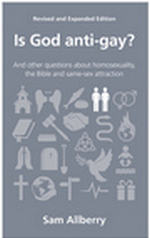
God’s Word Alone: The Authority of Scripture by Matthew Barrett

God's Word AloneGod’s Word Alone—The Authority of Scripture: What the Reformers Taught…and Why It Still Matters

by Matthew Barrett
Series: The 5 Solas Series

Paperback, 374 pg.
Zondervan, 2016
Read: January 8 – 22, 2016

For this installment in The 5 Solas Series focuses on the material principle of the Reformation, Sola Scriptura. Despite being almost 200 pages longer than VanDrunen’s entry in this series (the benefit of being the series editor is that you get more space?), this book is too short for what it tries to accomplish. Which is really the long way around for me to say that this book tries to do too much — and ends up giving shallow presentations to things that deserve more.

Part 1 is an exploration of the understanding of — and challenges to — Biblical Authority around the time of the Reformation and through history since then. While Barrett gives a strong and competent explanation of these themes, I couldn’t help feeling that I’ve read them before — frequently — by other authors.

Part 2, an exploration of the doctrine of Scripture/The Word of God throughout Redemptive History, I thought was very promising. This could be the backbone of a very compelling study, and I hope someone takes Barrett’s work here and builds on, expands and deepens it (if someone has already written this book — please tell me!). It’s probably here most of all, that I noticed how much space forced Barrett to stick to the surface of this subject rather than exploring it in the depth it asks for.

Part 3 was a more polemical/apologetic focus — discussing challenges to the Authority of God’s Word. This was probably the strongest part of the book — in particular, I thought his chapter on Innerrancy was pure gold. Nothing new or particularly insightful was offered in this section, but there seemed to be a bit more passion, a bit more energy to this Part.

This is the second in The 5 Solas Series that I’ve read, and the second that I was underwhelmed by. It’s good, but does little to commend it above many other titles on the subject. Barrett knows the subject, explains it well, but doesn’t inspire the reader to anything. I don’t mean to suggest by my frequent notes that “there was nothing new” that I need novelty — I prefer a lack of novelty to my theology. But I do want something about a book to stand out in the way it discusses things before I can really get excited about/impressed with a book.

—–
3 Stars

Saturday Miscellany – 2/4/17
Odds ‘n ends over the week about books and reading that caught my eye. You’ve probably seen some/most/all of them, but just in case:

Lastly, I’d like to say hi and welcome to tripleblacktri, SnoopyDoo, discobarbizar for following the blog this week.

Page 494 of 625

Powered by WordPress & Theme by Anders Norén