Author: HCNewton Page 522 of 625

United States of Books – Lonesome Dove by Larry McMurtry

Lonesome Dove Lonesome Dove

by Larry McMurtry

Author: C.H. Armstrong at C.H. Armstrong Books & Blog

When I learned I would have the pleasure of reviewing Larry McMurtry’s Lonesome Dove, I quite literally did a fist pump of victory. Simply stated, this is one of my all-time favorite novels, and one of the very few I would consider reading more than once. For that reason, I’ll not beat around the bush: I enthusiastically give this novel a full 5-star review. If I could give it more than 5-stars, I most certainly would.

So what’s it about?

I asked this question of those who originally recommended it to me, and the answer I received didn’t inspire enthusiastic thoughts: It’s the story about a bunch of old cowboys who go on a cattle drive.

Huh? How is that even remotely interesting? Why would I want to read about a cattle drive?

The answer is this: Just do it. I promise: You won’t be sorry.

Lonesome Dove is about a cattle drive, but it’s more than that. It’s about the strong ties of friendship between two former Texas Rangers, Captain August “Gus” McCrae and Captain Woodrow F. Call, two men who couldn’t be more different. While Call is stoic and serious, McCrae is often seen as more laid back and carefree. But the truth is that the two men, for all of their differences, are like yen and yang or two sides of the same coin. It’s almost a love story without the romance element. They complement each other and, while they seem to have nothing at all in common, they are simply not the same without the other.

Besides the main characters is a series of supporting cast members who round out the story…a 17 year old boy, the son of a prostitute, who suspects that Call might be his father; a young prostitute, Lorie, who just wants to get out of town; and the reprehensible coward, Jake Spoon, who abandons her and leaves her defenseless against the elements and those who would do her harm.

In truth, I sat down to read this book because I wanted to silence someone who insisted I read it…and so I talked my best friend (700 miles away) into reading it with me, just so I would have some company in what I thought would be a grueling read. To my surprise, it was action-packed, funny, heartbreaking, and truly one of the best books I’ve ever read.

Trust me – you don’t want to miss this book. If you read nothing else this year, pick up a copy of Lonesome Dove. You won’t be sorry!

Saturday Miscellany – 6/25/16

Odds ‘n ends over the week about books and reading that caught my eye. You’ve probably seen some/most/all of them, but just in case:

    This Week’s New Releases I’m Excited About and/or You’ll Probably See Here Soon:

  • The Pursuit by Janet Evanovich & Lee Goldberg — The 5th installment in the Fox and O’Hare series. It’s one of the most entertaining series going, and I can’t imagine that this is anything but good.
  • Play Nice by Michael Guillebeau — how do you not want to read something described as “an Elmore Leonard-style Nancy Drew story”?
  • Waypoint Kangaroo by Curtis C. Chen — a thriller with SF elements and a sense of humor. Sounds Perfect.
  • New Pompeii by Daniel Godfrey — killer concept.

Lastly, I’d like to say hi and thanks to bensbitterblog and Karen for the feedback — I really appreciate that.

Hexed (Audiobook) by Kevin Hearne, Luke Daniels

HexedHexed (Audiobook)

by Kevin Hearne, Luke Daniels (Narrator)
Series: The Iron Druid Chronicles, #2

Unabridged Audiobook, 8 hours and 52 minutes
Brilliance Audio, 2011

Read: June 21 – 22, 2016

This takes place just 3 weeks after Hounded and the dust is still settling. The target on Atticus is bigger than before — funny what a reputation as a god-killer will do to a guy, from attacks to pleas for help, more people than ever want to know where he is.

Last time, I summed up the book with this:

Atticus finds himself in even more trouble–this time there’s a very nasty coven that wants to come in and take over the Tempe area–and their first step will be eliminating all other magic practitioners.

So our hero has to suck up his prejudice against witches and team up with the very same group that threatened him last time out to defend the home turf and maybe even clean up some long unfinished business.

which pretty much holds up.

The couple of additions I’d make are that I loved Coyote, and had totally forgotten that he appeared so early in the series. I miss Mr. Semerdjian — and while I understand why Hearne took the steps he did to prevent us from getting the nosy neighbor in every book, I sort of regret it after getting reacquainted with the character. Another thing that I’d forgotten about, but really enjoyed (probably more than I should’ve) is the scene where Atticus has to go all Three Stooges with the policemen and his camouflaging of his sword, some baseball bats and himself. Seriously funny, while juvenile, stuff.

Speaking of funny, it’s dangerous to listen to these at work — there were at least two times that Oberon’s commentary made me laugh out loud. Thankfully, none of the people who work next to me were at their desks either time, or I’d have gotten a few looks. Just a warning to anyone thinking of it — you may look silly.

Luke Daniels delivers again — he’s so good at this that I’m thinking of shopping for something by him just to hear him read. The only complaint I have is that his Mr. Semerdjian sounds too much like a high-pitched Oberon. Which is just weird, and probably not something that either character would enjoy. Daniels’ Coyote, and the speech patterns Atticus adopts while talking with him are fantastic.

A great edition of a solid sequel.

—–
4 Stars

Yes, Please (Audiobook) by Amy Poehler

Yes PleaseYes, Please

by Amy Poehler (Writer, Narrator),
with Carol Burnett, Seth Meyers, Mike Schur, Eileen Poehler, William Poehler, Patrick Stewart, Kathleen Turner

Unabridged Audiobook, 7 hrs and 31 mins
HarperAudio, 2014

Read: May 19 – 20, 2016


Amy Poehler’s memoir-ish, Yes Please has been on my “get around to it” to it list for quite a while, but I never seemed to until I started this whole audiobook at work experiment. I picked such a good one to start with, I’m actually glad I didn’t read it first.

Poehler interweaves comedy bits with the story of her life and career, starting with her early experiences in comedy and childhood friends, moving onto her start in improv and then on to SNL and Parks and Rec. Even when she’s being serious, she can’t help but be funny — while talking about her divorce, death, Haitian orphans, etc. you want that. She talks a lot about her two sons and sounds like a loving and devoted mother (if a bit twisted).

In addition to this, she talks a good deal about how to deal with the inner voice telling young(er) women (and, I assume, older) that they’re not perfect, that their physical appearance needs to be different or they’re not that worthwhile. As I listened to this, I wanted to play it for my daughter. When she talked about sex and drugs (not that much on the former, but enough), I lost a bit of that desire, but I still might.

It’s not just Poehler’s authorial voice that makes this work so well — it’s her actual voice, too. Poehler saying these wise words, confessing the details, sharing the stories herself, and not just some hired gun (as capable as they might be) elevates the project. Bringing in Patrick Stewart to read silly poems, Kathleen Turner to do the occasional line, her parents, Meyers to reminisce, Schur to read a list of alternate candidates for Leslie Knope’s name and talk about Parks and Recreation in general — were great moves, and a blast to listen to. I’m curious what those sections are like if you just read them, but probably not enough to go try. The last chapter is a recording of a live reading she did, the audience reaction and her playing to them added just the right touch.

I can’t believe I’m saying this, but don’t read the book. Listen to the audio. It’s just that good. Heartfelt, funny, and inspirational (and did I mention funny?) — it’s everything you want from Amy Poehler (shy of another season of Parks and Rec).

—–
4 Stars

We’re All Damaged by Matthew Norman

We're All DamagedWe’re All Damaged

by Matthew Norman

Paperback, 268 pg.
Little A, 2016

Read: June 8 – 9, 2016

It’s a cruel fact that if your wife cheats on you, the guy will have a name like Tyler. Something cool–something your parents never would have had the guts to name you.

This particular Tyler is involved in Andy Carter’s wife leaving him (he’s not the cause, as Harry Burns’ buddy, Jess, would remind us, “Marriages don’t break up on account of infidelity. It’s just a symptom that something else is wrong.”). Karen uses the symptom as an excuse to dump Andy at an Applebee’s in the funniest and most tragic first chapter since Tropper’s This Is Where I Leave You.

Actually, there are several similarities between this book and This Is Where I Leave You — which is not to say that Norman’s ripping Tropper off or anything (although, it’d be a good book to steal from). It deals with some similar themes in a similar tone with similar heart. A few times Norman made me think of Tropper (I bet next time that the next time I re-read Tropper’s book, I’ll think of Norman’s).

Following the Applebee’s disaster, Andy sort of fell apart, I’ll spare you the details because Norman does a much more entertaining job of relating them than I could. But long story short, he quits his nice job and moves to from Omaha to New York and becomes a bartender, and is sort of adopted by a stray cat named Jeter (as has been well established, I’m not a cat person, but I liked Andy’s relationship — for lack of a better term — with Jeter). While licking his wounds — or whatever — he pretty much cuts off communication with his family and friends. Not out of spite or anything, but it just seems to take too much energy.

For a while now, I’ve had to keep reminding myself that I’m a nice person. Like, nice nice. Midwestern nice. Half the people who signed my high school yearbook told me so–it’s documented. A few of them even mentioned that I should never change, never ever. I once helped a blind lady walk across a grocery store parking lot in the rain. I used to run 5Ks on Saturday mornings to fight cancer and juvenile diabetes and all of that horrible shit.

Time moves on, as it tends to outside of SF novels, anyway. Before he knows it, Andy’s being stood up for a blind date and he gets a call that his grandfather is about to die. A grandfather that Andy’s pretty much ignored for over a year. So Andy goes home, after promising his boss/friend that he won’t have anything to do with Karen.

Want to bet he keeps that promise? Yeah, me neither.

He doesn’t recognize his parents, the kind of house they live in, or the notoriety his mother (a conservative radio talk show host) is enjoying. His grandfather, suffering from dementia (amongst many other things), doesn’t recognize him, either. Andy is recognized by his former best-friend/ex-brother-in-law, his brother, his parents, his ex-father-in-law, a few people he’s never met. Including someone claiming to be his sister. Oh, and Tyler.

She calls herself Daisy, “smeller of books and a marker-upper of books,” and actually has a pretty good reason to calling herself his sister. But she has other plans for him — inspired by the stories his grandfather’s been telling her, Daisy has decided to fix Andy. She sports multiple tattoos, has no discernible source of income, and marks up books. Really, not the kind of person a respectable young man should be associated with — even a formerly respectable young man. But man, I really, really liked Daisy (marking up books notwithstanding), I can almost guarantee you will, too.

You’ll probably like Andy, his grandfather, father, niece and ex-friend, too. Forget about liking Tyler, just not going to happen. I’m not sure where you’ll come down on Mom. I’m not sure where I come down on mom, either.

I’m not sure you’re supposed to have a firm opinion about her, either. My one complaint with the book has to do with Mom. The novel takes place in the weeks leading up to the
Obergefell v. Hodge
decision, and since Mom’s a conservative talk show host on the verge of nationwide fame, the case is mentioned a lot. No one, on either side of the issue, deals with it in a substantive manner — it’s all sound-bites and bumperstickers. Frankly, something so important should’ve been dealt with gravitas, not in sloganeering and cartoonish representatives. Sadly, by and large that’s all that the Internet, TV and radio gave us — so that really Mom (and her vocal opponents) were realistic representations of a lot of our country. Not the best part of it, sadly, just a large part. I can’t fault Norman for focusing on them just because they were realistic just because I wish they weren’t.

So, while maybe coming out of the ruins he’s made of his life and personality, Andy mends some fences, further ruins some more, connects with his father in a way he hadn’t in a long time, and maybe even gets a little closure. He also makes a fool out of himself, gets punched, and has to attend his grandfather’s funeral. Thanks to Daisy’s pushing, he may not be living a good life — but it’s one a lot more interesting than just wallowing in the past.

At a certain point, you pretty much figure out exactly how things are going to go in the book — and you’ll be right (except for the once or twice where you’ll be really wrong). But it doesn’t matter, because things work out the way they should, and Norman works them out in a pleasant, engaging style.

I liked Andy’s ambivalent relationship to technology — the imaginary conversations he has with Siri made me grin. And then there’s his first brush in months with Facebook.

I’ve given it some thought, and, seriously, there’s just no way Facebook can be good for you. I’m sure there have been studies, so this probably isn’t some brilliant revelation, but I’ll say it anyway. On the surface, it’s harmless enough, I guess. How bad can it really be with its endless baby posts, food pictures, and beachy foot selfies? But it’s not that simple. Mixed in with all of its silly bullshit, Facebook is the literal manifestation of all our regrets, looping and looping, for free, on our computers and phones. People who should be gone and safely out of forever are there again, one cryptic little glimpse at a time, reminding us of all the things we should or shouldn’t have done.

Seriously, Norman deserves some sort of literary prize for the “literal manifestation of all our regrets” line, right?

There’s also a cameo in here that was such a nice touch.

This was a very amusing book — frequently funny. This was also a touching book — I might have gotten misty once or twice. More than anything else, this was engaging — I was right there with Andy the whole time, cringing when he was being stupid, grinning when he was being charming or mature. I enjoyed this one so much that I can’t quite figure out how to say it. Norman belongs up there with Nick Hornby, Jonathan Tropper, Rainbow Rowell and Jennifer Weiner — he can make you laugh, make you cry, make you feel, all while telling a pretty good story. I should go back and re-read his other novel, just to be able to prove this. But until I do, just take my word for it and give this a shot.

—–
5 Stars

Reread Project: So Long, and Thanks For All The Fish by Douglas Adams

So Long, and Thanks For All The FishSo Long, and Thanks For All The Fish

by Douglas Adams
Series: The Hitchhiker’s Guide to the Galaxy Trilogy, #4

Mass Market Paperback, 214 pg.
Del Rey, 1999
Read: June 14, 2016

Arthur had a swordfish steak and said it made him angry. He grabbed a passing waitress by the arm and berated her.

“Why’s this fish so bloody good?” he demanded, angrily.

“Please excuse my friend,” said Fenchurch to the startled waitress. “I think he’s having a nice day at last.”

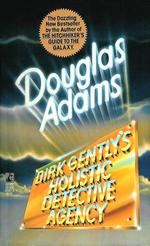
I’ve said it before, I’ll say it again: this is my favorite Douglas Adams novel. Sure, The Hitchhiker’s Guide is fantastic and I love it and you can make a strong case that at least one of the Dirk Gently novels is his best (I expect I’ll be doing so in a couple of months) — but this is the one that does it for me.

Unlike the previous three, there is an actual narrative here — it’s not a collection of scenes, jokes, and vignettes loosely tied together. Arthur Dent arrives on Earth (no, really) after traipsing from one end of the galaxy to the next; from the end of the universe, to the beginnings of life on Earth; basically all throughout time and space (sadly, without the blue box). And now he’s trying to re-acclimate to life at home. Which has somehow not been destroyed, neither has his house. In fact, everything’s pretty much like it was before.

Just with everyone convinced that the Vogon Constructor Fleet was a CIA-induced Mass Hallucination. Not everyone believes it, but most do. Two people who don’t believe that are a man named Wonko the Sane and Fenchurch. Both of whom are pretty cool characters.

I’ll skip Wonko, because the name says everything. Fenchurch, on the other hand, is perfect. She’s everything that Trillian never got the chance to be (except in the semi-disastrous final chapters of Life, the Universe, and Everything. She’s funny, smart, sexy — just what Arthur needs. I’d happily read a book just about her.

There’s a mention of Zaphod — briefly — but that’s it. So the zaniness fell into Ford’s capable lap. I’ve always liked Ford better, anyway. And he’s able (as always) to pull off the zaniness, the comedy, the . . . everything without being quite the obnoxious twit that Zaphod is.

Ford’s his usual delusional, clueless, charming, drunken self.

Here was something that Ford felt he could speak about with authority.

“Life,” he said, “is like a grapefruit.”

“Er, how so?”

Well, it’s sort of orangy-yellow and dimpled on the outside, wet and squidgy the middle. It’s got pips inside, too. Oh, and some people have half a one for breakfast.”

“Is there anyone else out there I can talk to?”

Arthur comes out of this one looking pretty good, too. He’s not whining, he’s not just getting pulled around by his dressing gown wherever whim strikes Ford (or Zaphod). He’s mature, capable, witty. He sees a problem or two and solves them (even if one of those problems is just “who was that girl I almost met the other day”?). He’s almost a wholly different guy when he’s home. Which makes him a lot like the rest of us — which is sort of the point of Arthur since we first met him.

One of the highlights of the last book was the section about flying, I’m pretty sure I said that. The section here about flying is better — Arthur teaching Fenchurch, Arthur remembering how to do it in the first place — and then the two of them flying around. It’s just about perfect.

And, of course, there are little bits like:

Of course, one never has the slightest notion what size or shape different species are going to turn out to be, but if you were to take the findings of the latest Mid-Galactic Census report as any kind of accurate guide to statistical averages you would probably guess that the craft would hold about six people, and you would be right.

You’d probably guessed that anyway. The Census report, like most such surveys, had cost an awful lot of money and told nobody anything they didn’t already know — except that every single person in the Galaxy had 2.4 legs and owned a hyena. Since this was clearly not true the whole thing eventually had to be scrapped.

    There’s a few things I’d love to go on and on about, but no one wants to read me gushing and gushing and gushing, so here are the assorted highlights:

  • The zig at the end of the Prologue.
  • Arthur’s biscuit/train station story. Seriously, I just love this.
  • Rob Mckenna
  • Wonko the Sane naming the world The Asylum and his house Outside the Asylum.
  • Wonko the Sane’s name.
  • All the California jokes. Clearly, he’d been vacationing there too much.
  • The whole thing about the lizard government and democracy is both funny and relevant.
  • Chapter 25 is just dandy.

The last chapter or two are a little weak, pretty close to the older books in tone and style. But they work, they are tied into the narrative and star Marvin. So who’s going to complain? Not me.

Really, I’ve got nothing but positive things to say about this. I love it. One of the easiest 5-star ratings I’ve ever given.

—–
5 Stars

Coming Attraction: Let There Be Linda by Rich Leder

Coming July 28th:


Laugh Riot Press is bringing the Book Tour for Rich Leder‘s Let There Be Linda to our humble patch of cyberspace.

This black comedy is a hoot, you’ll want to be sure to stop by to learn more about this book and author (and maybe even pick up a free book). Frankly, I have no idea how I can talk about this book without ruining everything — but it’ll be fun trying to figure that out, and possibly a disaster if I can’t.

United States of Books – To Kill a Mockingbird by Harper Lee

It’s just not fair (and probably fixed) that the organizer of this little project got to read To Kill a Mockingbird, easily one of my favorite 2 novels of all time. I just checked, and over 3% of the posts here reference Harper Lee in some way — given the number of authors I’ve mentioned at least in passing, that’s saying something. So to have someone else write the first full-length post on this book here bothers me (and makes me wonder just what I’ve been doing the last few years that I haven’t posted about it yet). But anyway, enough of the jealous ranting — on to Laura’s post!
Welcome to the halfway point of the United States of Books! We have now reached review number twenty-five and six months of reviews. I can’t thank the team of reviewers enough and our fantastic readers. To say thanks to you all, we are giving away a $25.00 Amazon gift card for 1st place and then a copy of any of the US of Books books (winners choice) Kindle or physical copy (INT) as long as Book Depository delivers, for 2nd place.

Click here to enter

To Kill a MockingbirdTo Kill a Mockingbird

by Harper Lee

Author: Laura at 125Pages.com

4 1/2 Stars

Synopsis

Harper Lee’s Pulitzer prize-winning masterwork of honor and injustice in the deep south—and the heroism of one man in the face of blind and violent hatred.

One of the best-loved stories of all time, To Kill a Mockingbird has been translated into more than forty languages, sold more than thirty million copies worldwide, served as the basis for an enormously popular motion picture, and was voted one of the best novels of the twentieth century by librarians across the country. A gripping, heart-wrenching, and wholly remarkable tale of coming-of-age in a South poisoned by virulent prejudice, it views a world of great beauty and savage inequities through the eyes of a young girl, as her father-a crusading local lawyer-risks everything to defend a black man unjustly accused of a terrible crime.

Review

This week takes us to Alabama with To Kill A Mockingbird by Harper Lee. EW says – “Forget the dubious sequel. Lee’s exceptional work is a perfectly contained miracle about the struggle for justice in a system built to destroy it. From Birmingham to Tuskegee, Alabama was a burning center of racial conflict, and this novel takes place right on the outskirts of that crucible.”

To Kill A Mockingbird by Harper Lee is one of the first “grown-up” books I remember reading. It was the summer before 7th grade and I was a precocious twelve-year-old. I loved that the person telling the story was a smart young girl and that she was so very different from other book narrators that I had been exposed to. I read it at least once a year and loved when it was on the book list in sophomore year, as it made the book report easy to do. As I got older, I stopped reading it as often, and as I picked it up this time realized it had been at least ten years since I had last picked it up. As I cracked the cover on my old worn copy, it was like stepping back in time to a period in my life that had long since passed.

I wanted you to see what real courage is, instead of getting the idea that courage is a man with a gun in his hand. It’s when you know you’re licked before you begin, but you begin anyway and see it through no matter what.

To Kill A Mockingbird is a complex story of a young girl, six-year-old Jean Louise Finch (Scout), who lives with her lawyer and widower father Atticus and her older brother Jem. Scout and Jem, together with the neighbor boy Dill, are fascinated with their reclusive neighbor “Boo” Radley, a recluse that is never seen. They begin to spin tales about him and try to entice him outside. Meanwhile their father is assigned a case defending a black man, Tom Robinson, who has been accused of raping a young white woman. The two stories weave together in a powerful tale of race relations in a small southern town coming out of the Depression. Harper Lee crafted a tale of morality and family that still resonates today.

As you grow older, you’ll see white men cheat black men every day of your life, but let me tell you something and don’t you forget it—whenever a white man does that to a black man, no matter who he is, how rich he is, or how fine a family he comes from, that white man is trash.

Love and murder, racism and redemption, all combine to make To Kill A Mockingbird a classic that will remain read for years to come. The way that Harper Lee combined wide-eyed youthful curiosity with the recollections of a grown woman make this a very interesting read. The style of the story telling is unique and matches the very detailed plot. The world created and described by Scout is vivid and real, and I could picture the scenes unfolding quite clearly.

Now that I have rediscovered Lee and Mockingbird, I regret ever leaving her world. A Pulitzer Prize winner, To Kill A Mockingbird is a book that well deserves its accolades as well as its criticisms. It does feature many difficult topics and language that in today’s world is considered unacceptable. I believe stories such as this still need to be told as we need to remember what used to be commonplace. I will now try to plan an annual re-read to return to this fascinating world. And, as said so well by Scout, “Until I feared I would lose it, I never loved to read. One does not love breathing.”

Unshakable by K. Scott Oliphint and Rod Mays

UnshakableUnshakable: Standing Firm in a Shifting Culture

by K. Scott Oliphint and Rod Mays

eARC, 160 pg.
P & R Publishing, 2016
Read: June 12, 2016

In the preface, after a brief sketch of Newton’s life and his career as a hymn-writer, the authors talk about how they’re going to use one of his hymns as a framework for their discussions. Because older hymns help us remember that we’re not the first believers to have to deal with certain aspects of life — and they help us remember those things that are important and distinguish them from those that are fleeting. Now, why of all the Newton hymns one could choose, they picked “Glorious Things of Thee are Spoken,” I don’t know. I looked, and realize I may have missed their explanation (and will feel pretty embarrassed when it’s pointed out to me). I don’t think it’s a bad choice, I just don’t understand why this one.

Don’t get me wrong, this is not an interpretation of or meditation upon Newton’s words. But each chapter draws on the themes of the verses of the song, and shows some of the ways you could talk about those issues and themes today. I guess you could label this an application of Newton.

Thanks to the framework of the hymn, the book covers a range of issues – the foundation of knowledge/understanding, the nature of authority, technology’s effect on our thinking, cutting, God’s promises, sin — and from time to time, I stopped reading and wondered how they started at X and ended up at Y, but the transitions were all so seamless that the text flowed easily from one to the other — and honestly, it turns out that X was related to Y, after all. Not only do they address a wide range of topics, they do so using the whole of Scripture, so you get a range of Biblical perspectives.

The authors use illustrations that should be familiar to many — you don’t have to be steeped in Evangelicalism to follow their arguments — A Christmas Carol, Neil Postman, Shakespeare, The Man Who Wasn’t There, for example. Chapter 4’s discussion of redemption begins with an extended look at a portion of Lewis’ The Lion, the Witch, and the Wardrobe. I’m not sure I needed the close reading of the White Witch’s plot to kill Aslan in exchange of Edmund, I’m not sure anyone over the age of 6 needs it to see how it applies to Christian redemption. But that’s a minor complaint.

It is really a deceptively easy read. The prose is smooth enough that you can get through the text without noticing the deep thoughts you’re encountering. I remember looking down and wondering how I could be 25% with a Oliphint book so quickly. It has to be Mays’ influence.* But when you read closely (as you really ought), Mays and Oliphint are dealing with important topics that everyone needs to think about, and they don’t do so in a cavalier or surface-level manner. An easy-to-read manner, yes, but not surface-y.

I even liked the discussion questions – I almost never like them and wonder why authors/publishers bother. But, these were helpful and I think would be great fodder for discussion groups.

Unshakable is a very useful, thought-provoking work that’s pretty accessible for a wide-ranging of readers: believer, unbeliever, student, older-than-typical student. I heartily recommend it.

Disclaimer: In exchange for my honest thoughts, I received this book via NetGalley and P&R Publishing. Thanks very much!

*that’s not a criticism of Oliphint, just underlining how easy a read it was. My only criticism of Oliphint’s work is that there are so few of them.

—–

3.5 Stars

Saturday Miscellany – 6/18/16

Only a few odds ‘n ends over the week about books and reading that caught my eye. You’ve probably seen some/most/all of them, but just in case:

    This Week’s New Releases I’m Excited About and/or You’ll Probably See Here Soon:

  • The Ghost Rebellion by Pip Ballantine & Tee Morris — Yay! The 5th Ministry of Peculiar Occurrences novel is here. I enjoyed this one, I think you will, too. (I posted about it last week)
  • The Last Adventure of Constance Verity by A. Lee Martinez — Martinez is writing a series, which is enough to get me interested. Add in the hero who’s been saving the world for about 30 years, and just wants to be normal, and I’m beyond interested.
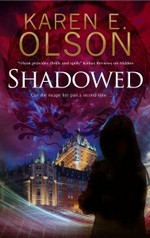
  • Shadowed by Karen E. Olson — so, Nicole Jones’ attempt to lie low on Block Island failed. What do you want to bet her Canadian location works out better? Yeah, me neither.
  • Stiletto by Daniel O’Malley — This is sitting on my TBR shelf (literally), and it’s driving me crazy that I can’t fit it in for a couple of weeks.
  • Man On A Rock by Grant Sutherland — Fahrenheit Press’ first novella looks like the kind of thriller summers are designed for. (you know, if summers were designed for people who read)
  • Escapology by Ren Warom — looks like a classic cyberpunk novel, just brand spankin’ new.
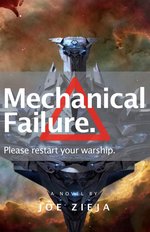
  • Mechanical Failure by Joe Zieja — SF with action and humor. I’m reading comparisons to Scalzi and Adams. Even without those, this looks fun.

Lastly, I’d like to say hi and welcome to Alois Larc and greatestcatpics for following the blog this week.

Page 522 of 625

Powered by WordPress & Theme by Anders Norén