Author: HCNewton Page 534 of 625

Got Luck Launch Day!

Got LuckYesterday, I blogged about the book, Got Luck by Michael Darling — which I really enjoyed, and today is the release day.

The publisher, Future House Publishing, has this to say:

Police-officer-turned-private-investigator Goethe “Got” Luck is known for rolling with the punches and never taking anything too seriously. When he picks up a seemingly dead-end murder case, his life begins to take a crazy turn. Shot at, chased by people he has never met, and attacked by an invisible liondog, Got quickly learns that there is more to this world than meets the eye.

He discovers the Fae. The Eternals. They who dwell in the Behindbeyond. Once, they ruled over ancient realms, but over the centuries, their power dwindled. Now someone wants to restore their rule and subjugate humankind. All it will cost is thousands of human lives.

The clock is ticking. Getting the world out of this one will take a couple friends, more than a few well-placed insults, and a whole lot of Luck.

To kick-off the release, Future House has a few things you should take note of:

  1. Got Luck is on sale for just $0.99 until March 30th at Amazon. (Not that $4.99 is a bad price for it after the sale)
  2. They’re sponsoring a Goodreads giveaway beginning on the 27th.
  3. They also have a drawing going on for an autographed copy of Got Luck. Check out details on that here.

There are more details about the book, the giveaways, and all that on the book’s Launch Page — be sure to check it out.

Got Luck by Michael Darling

Got LuckGot Luck

by Michael Darling

Kindle Edition, 327 pg.
Future House Publishing, 2016

Read: March 15 – 19, 2016


When we meet Goethe “Got” Luck, he’s one part Harry Bosch (at least they both have unfortunate, yet cool, first names), two parts Elvis Cole. Seriously, he’s a barely disguised Elvis pastiche — his partner, Nat is about as close to Joe Pike as you could want (if you wanted to argue he’s Hawk and Henry Cimoli rolled into one to go with Luck’s Spenser, I wouldn’t argue…much). If that’s all that Luck was — a wise-cracking, private eye in the Spenser/Elvis Cole mold — I’d probably have been rather content. Darling appears to have the chops to have pulled off a compelling telling of the investigation into the death of Barry Mallondyke on behalf of his widow.

But wait, there’s more — before he gets too far into the investigation, some things begin to happen to Got that he really can’t wrap his head around. And then — he finds himself doing some things he can’t explain, and before you can say An Taobh Thiar Agus Níos Faide he finds himself in The Behindbeyond, the land of the Fae. A land of magic, magic beings and many things beyond belief. Those he meets in the Behindbeyond are not the only supernatural beings around — Luck is, too.

So, we get the origin story of a new Urban Fantasy hero — he continues to investigate the murder, while learning about his new magic abilities and the new reality that he’s now aware of. A pretty fun combination, if you ask me. He’s not quite as reliant on his magic as say, Harry Dresden or Atticus O’Sullivan; but it’s there, for him to use the way that most P.I.’s would use a pistol.

There’s a promising set of supporting characters in both realities (hard to believe that I haven’t even mentioned Erin, the drop-dead gorgeous medical examiner), a compelling killer, and a little boy who keeps showing up in just the right place. Even a lot of the “lesser” criminals that Luck and Nat have to contend with are pretty entertaining.

I didn’t even finished the first chapter before I decided that Luck and I were going to be pretty good friends. And from about the mid-way point, on, I stopped reading the book because I was doing so because the publisher sent it to me, I really wasn’t even reading it to post about it. I was reading it for the pure pleasure — as a fan. That doesn’t happen too often.

This is pretty clearly a first novel — or at least one written early in a career — so Darling’s got room to grow in his craft. Got Luck could’ve been better, but — man, oh, man, this hit all my buttons — the characters, the world, the narrative voice, the magic — and that ending. I hope this is the first of many. If we’re lucky, it will be.

(ugh, sorry — I don’t know what came over me, that last line was shameless.)

Disclaimer: I received my copy of Got Luck from the friendly folks at Future House Publishing in exchange for an unbiased review.

—–

4 Stars

A Few Quick Questions With…Hagit Oron

Earlier, I posted a piece about Elphie and Dad go on an Epic Adventure by Hagit R. Oron and Or Oron. Hagit was nice enough to take part in a Q&A with me. I kept it short and sweet, because I’d rather she work on her next book than take too much time with me, y’know? Hagit gave some great answers, hope you enjoy this — and be sure to check out her books!

Good depictions of Fathers are pretty hard to come by, so I wanted to say thanks for that. What made you decide to tell as story about a Dad and his kid rather than the typical Mom?
Well, I love stories about fathers and sons. “Out Stealing Horses” by Per Petterson is one of my favorite books and it is truly an inspiration.

I was also inspired by the relationship between my Dad and his Dad. My grandpa was a strict uptight guy. As he grew older he left all that behind and became this soft mellow sweet person, somewhat like Elphie’s father at the end of the story.

By the way, the next book features Elphie’s Mom, but I guess she isn’t the typical picture book Mom as well. I like my characters to be different and unique.

Why elephants? Is there something deep going on — something symbolic maybe. Are they just fun to draw?
I was fortunate enough to view elephants in their natural habitat at Africa, and I fell in love with them. They are so complex. I mean, on one hand they are these huge heavy animals, but on the other hand they are delicate and sensitive. You expect to hear an elephant’s footsteps at the savanna, but you don’t hear a thing. They are so grace and walk very lightly. I knew I was going to write something about elephants after my visit to Africa, but I didn’t have anything concrete until I saw this episode of “the myth busters” a few years ago. They were trying to check if elephants are afraid of mice, (which was confirmed), and boom! I got the idea for the entire series of Elphie’s books.

My daughter, Or, who is the illustrator says that they are also fun to draw. J

Are you drawing on your own experiences for these stories? I see that Goodreads has this listed as the beginning of a series — how many do you have planned?
I guess a writer always writes about her own experience, one way or another. . .
There are currently 4 stories on Elphie’s books. All of them feature the same characters: Elphie, Dad or Mom, Elpie’s somewhat wild friend Phante, and Bravo – Elphie’s pet mouse which is introduced on the next book.

Each book tells a different story, which is told through Elphie’s eyes in first person.
These are all sweet little stories about a child daily experiences, but I do hope adults readers would enjoy them too. It’s like a kidlit with a wink.

Can you talk about your process a bit? What comes first — the words or the pictures? Is it more of a simultaneous thing?
I always start with the words. For some parts of the story it is a simultaneous. For this story, the pages about Elphie and his Dad return from the shop and fight a dragon, rescue a princess etc were simultaneous, because I wanted the illustrations to tell the story together with the words. So I wrote instructions for the illustrations as well.
In the writing of Elphie and Dad go on an Epic Adventure, what was the biggest surprise about the writing itself? Either, “I can’t believe X is so easy!” or “If I had known Y was going to be so hard, I’d have skipped this and watched more TV”.
The biggest surprise about this book was writing it. J

Usually, I plot a story in my head and I think about it for weeks before I write the first word, but this came out as a whole in one sitting completely unprepared.

“Elphie and Dad Go On an Epic Adventure” was actually the third book I wrote in this series. We were already working on illustrations for “Bravo Elphie”, but we liked this story so much and decided to make it our debut.

Elphie and Dad go on an Epic Adventure by Hagit R. Oron, Or Oron

Elphie and Dad go on an Epic Adventure Elphie and Dad go on an Epic Adventure

by Hagit R. Oron, Or Oron (Illustrator)
Series: Elphie’s Books, #1

Kindle Edition
, 25 pg.
Orons, 2016
Read: March 15, 2016


Picture books are not the usual fare around here, true. But Hagit Oron asked, and I figured, why not? Now, can I get this post up without using more words than the book did?

Elphie is a little elephant accompanying his dad on an errand — but his dad is one of the good ones, and instead of dragging Elphie along — he entices the child by promising an “epic adventure”. Wearing a cape and carrying a wooden sword, the two set out for a walk to the store.

Along the way, Elphie does battle with imaginary foes, and has one very close call that wasn’t imaginary enough. With some guidance from Dad, a great imagination, and a helpful store clerk — Elphie has an epic adventure indeed.

I really appreciated Dad — he’s not perfect (he gets distracted in a very real and relatable way), but he’s trying — and he recovers from a mistake well. A good guy, not a buffoon, not a super-hero. There’s not enough dads like that in books.

The art is great. The colors are vibrant, the drawings pop just right. It’s not fantastic, which I honestly get annoyed by in kids’ books. It’s friendly and eye-catching, very accessible, and engaging — enough so that you get drawn into it, but not so much that it detracts from the words. The art serves the story — and will keep the attention of those who can’t yet read.

It’s been a few years (almost ten) since I’ve read picture books on a regular basis. This is just the kind of thing I’d have liked then, and would’ve read — and then have been “compelled” to read again (and again and again). For those with kids — or grandkids — or who might have a kid nearby your Kindle, pick it up.

Disclaimer: I was provided with a copy of this book by the author in exchange for this post.

—–

3 Stars

United States of Books – A Prayer for Owen Meany by John Irving

A Prayer for Owen MeanyA Prayer for Owen Meany

by John Irving

Hardcover, 543 pg.
William Morrow & Co., 1989
Read: March 4 – 10, 2016

[Marilyn Monroe] was just like our whole country — not quite young anymore, but not old either; a little breathless, very beautiful, maybe a little stupid, maybe a lot smarter than she seemed, and she was looking for something . . . She was never quite happy, she was always a little overweight. She was just like our whole country.

I’m not sure why I picked that quotation from this book, but there’s something that appealed to me about it (even if I don’t necessarily agree). You’ll note that there are both upper and lower case letters there — Owen Meany’s dialogue is always given to us in all caps. Which is annoying (it’s supposed to be), and difficult to read in extended speeches (Owen’s voice is hard to listen to), and makes you wish he’d shut up (duplicating the experience of most people who heard him).

A medical explanation for this is given, eventually. But the only explanation that Owen needs is that God gave him his voice. The same for his diminutive stature (about 5′ 0″ as an adult) — God made him that way, for His own reason.

But I’m getting ahead of myself — John Irving’s probably best known for The World According to Garp, which was one of the bigger disappointments of my college reading, so I wasn’t really looking forward to spending more time with him. You add in the fact that this is a 500+ page book with only nine chapters, and it’s downright intimidating. I’m not going to say that you shouldn’t be intimidated and that it’s a pretty easy read — it’s a challenge, it’s frequently a slog — but in the end, it’s rewarding.

When the book starts, Johnny Wheelwright (the narrator) doesn’t seem particularly fond of Owen Meany — in fact, you get the impression that he’s just one of those kids he happens to know, and he’s not that happy about it. But before long, it’s clear that he and Owen are really close — even though (because?) Owen’s responsible for the greatest tragedy of Johnny’s childhood.

John finds himself as an observer to Owen’s life, as his defender, his advocate, his way to the greater world. While Owen is constantly trying to help his friend — help him to achieve, help him to think, help him to believe. It’s a great friendship — and without the other, each was diminished. Owen less so, but in important ways.

The narrative is rambling — John starts to tell us about something, the plot moves forward a bit, but then he goes back in history to give context. Sometimes weeks, sometimes years and far more detail than you think is necessary. Eventually, you see that this is sort of the approach that the overall narrative is taking — John has something he needs to tell the reader, but he doesn’t want to. So he tells you many other things, anecdotes, vignettes, details you don’t need — anything to delay what he wants to say. He does get to it. And by that time, you’re not sure you want him to.

The story is told from the perspective of forty-something John, now a teacher at a Private School in Toronto — he spends his days reading the news about the United States, and ranting (or trying not to) to anyone near him about what President Reagan is doing. I’m not sure why we spend so much time dwelling on him in the present, we don’t need it — it adds almost nothing to the narrative. If anything, I think it might lessen the impact of the rest. The adult John telling the story about his childhood, about Owen, about their growing up together, and so on is essential — we need his perspective, his distance. What we don’t need is to hear John’s rants about Reagan, the poor reading/study habits of teenage girls.

I’m not sure that I get a whole lot of understanding of New Hampshire from this book — Owen’s family working in the granite industry doesn’t tell us much, New Hampshire is The Granite State — everyone who survived 4th grade knows that. If anything, Irving was wanting to talk about America — as an ideal, and as something that falls short of that ideal. Monroe was one example, John Kennedy’s moral failings another, Vietnam a recurring theme, and, of course, the Iran-Contra Scandal. Each of these, as either a representative individual, or representative act, demonstrates how far (in John’s/Owen’s view, at least) the United States has fallen short of the ideals it should strive for — if not achieve.

Ultimately, when I enjoyed this book, it felt like it was in spite of what I was reading. But I laughed, I cared, I kept reading — and then when I was finished, I appreciated the work as a whole, and felt a lot more affection for it than I expected. It’s hard to explain, but I liked this one and heartily recommend it.

—–

4 Stars

Saturday Miscellany – 3/19/16

Getting a little more adjusted to the new schedule (but not so much that I’ve been able to watch a single episode of Bosch Season 2), I’ve got 3 posts ready for next week — and 2 more about there. We’re getting close to restoring normalcy here.

Meanwhile, here are the odds ‘n ends from over the week about books and reading that caught my eye. You’ve probably seen some/most/all of them, but just in case:

    This Week’s New Releases I’m Excited About and/or You’ll Probably See Here Soon:

  • The Watcher in the Wall by Owen Laukkanen — Stevens. Windermere. Nuff said.
  • An Unattractive Vampire by Jim McDoniel — “A darkly comic urban fantasy of ancient horrors in suburban cities.” works for me.Read a few promising reviews, too.
  • Snakewood by Adrian Selby — a fantasy novel I’ll fall head-over-heels for or hate. Pretty sure it’s not a “find a middle ground” kind of book.

Lastly, I’d like to say thanks for the audiobook suggestions (via email, Facebook, here, or BookLIkes), I’m enjoying the suggestions — keep ’em coming!

Audiobook recommendations?

Have a 20-ish hour road trip coming up next week — looking for Audiobook recommendations. Light-ish/Quirky Urban Fantasy would be preferred — but I’m open for anything.

Oh, if possible, something that a 17-year-old wouldn’t mind hearing in front of his parents 🙂

A Few Quick Questions With…M. T. Miller

I posted about M. T. Millers’s Risen: First Book of the Nameless Chronicle yesterday (if you didn’t read it, take a moment now — or skip what I said and go get the book). Miller was kind enough to participate in a Q&A with me. I asked some Risen-specific questions and then a couple less-so. I kept it short and sweet, because I’d rather he work on his next book than take too much time with me, y’know?

What got you into writing? Who are some of your major influences? (whether or not you think those influences can be seen in your work — you know they’re there)
Misfortune got me into writing. Due to an unforeseen death, me and my SO found ourselves severely lacking in currency, so I took a ghostwriting gig to plug the leak and save the ship. After some time, having seen quite a bit of the more popular stuff first hand, I decided I was just as good. Time will tell if I was right.

As for my major influences, I’d say those would be George R. R. Martin, Scott Lynch, and on a less conventional note, whoever it is that did the story for the Nier/Drakengard series of games. I think his name is Yoko Taro. I see their presence quite clearly in my work. Martin taught me how to swing the axe, but to do it effectively as opposed to liberally. Lynch helped me with the same thing, but did so with the wit and style I can only hope to match some day. As for Yoko Taro, well. . . he taught me how to handle unhinged characters in a way that works.

How many stories do you have in mind for this? I assume you know what’s going on with Nameless — who he is, where he’s from, what kind of supernatural being he is and so on — how hard is it to give your readers bits and pieces of this information here and there? How long before he figures it all out? Sister Chastity seemed to know — did she? (feel free to not answer those last two — or to make your answer as teasing as you want)
The whole story is planned to run for some six installments, each longer and more complex than the last. For instance, book two will be roughly twice the size of the first one. Of course, I might increase or decrease the number in the future by splitting or fusing story arcs. We’ll see.

I’ve found it much easier than expected, and more fun for that matter, to spread little clues about. I’m not a very subtle person; I go straight for the throat, and I feared that the whole mystery thing would suffer for it. Luckily, I seem to have gotten it under control. At least for now.

Several big reveals will happen sooner than you might think, but answers always come with more questions.

The Sister has seen her fair share of weirdness, but her relation to the Nameless was more defined by his charity than what she knew or didn’t know.

In the writing of Risen, what was the biggest surprise about the writing itself? Either, “I can’t believe X is so easy!” or “If I had known Y was going to be so hard, I’d have skipped this and watched more TV”.
I never expected the epilogue to come out as good as it did. I wrote it in one sitting, and it came out absolutely perfect. It still gives me the chills.
“Horace” is a great name, but not a common one — is there a story behind your selection of it?
There’s a story behind every name, even the lack of one. For me, the name “Horace” invokes the Old West, the American Civil War, and the like. Given that the Nameless Chronicle is more or less “Old West meets apocalyptic fantasy,” it just felt right.

Dead is Better by Jo Perry

Dead is BetterDead is Better

by Jo Perry
Series: Charlie & Rose Investigate, #1

Kindle, 282 pg.
Fahrenheit Press, 2016

Read: March 12 – 14, 2016

In its young life, Fahrenheit Press has put out some great looking titles, not your typical mystery fare. I’ve only read 2 (bought 1 other), so far — but they’ve shared the off-kilter flavor that the Press’ twitter feed/publicity displays (and descriptions for the other books indicate). I don’t typically talk about publishers when I’m talking about books, but there’s something about Fahrenheit’s project — and the books they put out — that draws your attention. Dead is Better is typical of FP — a mix of darkness and light, unlikely protagonists, unlikely crime-solvers, and atypical crimes (at least as far as crime fiction goes).

Charles Stone is our protagonist, but he’s not really the character that will grab your imagination. That’d be Rose — but we’ll get to her in a moment. Charles is dead — very dead, shot several times. His ghost carries the wounds, as well as the clothing, even the hospital ID bracelet, from the time he died. He can’t remember the shooting however, and can’t think of a reason why he’d be shot. He’s (to his reckoning) no one important, and it doesn’t seem anyone around him even cares enough to kill him/arrange for his killing. After a little bit, he starts to come up with a possible motive or two. But his murder doesn’t seem to be the thing he’s most curious about. What he’d really like to know is, why does he have a constant companion?

Rose is a dog. Well, technically, she was a dog, now she’s the ghost of one. We don’t know why she’s alongside Charles, but she’s been with him the entire time he’s been a ghost. It seems that she had a really unpleasant life; and at last, in Charles, has someone caring for her. Rose is not going to challenge Crais’ Maggie, Quinn’s Chet, or Hearne’s Oberon anytime soon as the greatest dog in fiction — which is not a dig. Rose is great, she’s just not legendary. Rose does have one thing going for her that the other’s don’t — she’s pretty realistic (not that the others don’t have their moments — but even Maggie gets Point-of-View chapters), she can only communicate through suggestion — and even then, the people around her have to guess. Sometimes, they guess wrong.

The two begin investigating Charles’ murder — with the occasional glance at his family and former life. But before long, Charles becomes convinced he’s not around to look into his death, but something else. Rose, somehow, seems to know more about what’s going on than Charles, but he’s the one who needs to do the work. The pair do uncover some answers — and others uncover some others (I’m not convinced that all the answers the readers/Charles are given about anything beyond the main crime are correct, but . . . ).

More importantly, Charles finds a measure of redemption — sure, it might be too late, but nevertheless, there is some. You get the idea that if he maybe had a dog while living, he might’ve turned out to be a better person. Sure, that describes most of humanity to me, so I responded to that, but I think Perry sells it well enough that just about anyone would.

I’ve often thought of trying to do an Urban Fantasy for NaNoWriMo featuring a ghost, but I’ve never figured how to bridge the communication gap between the living and the dead without it feeling like a cheat. I liked Perry’s solution to this (I worry about the sequel repeating it — but that’s not my problem, is it?). I’m not convinced that the police could’ve/would’ve used the information that Charles got to them, but in the moment — you don’t care, you’re just glad that someone did something.

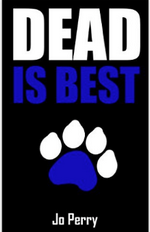
This is a fast and lean read — Perry doesn’t waste a word (actually leaves a couple of them out, but nothing too distracting). You’ll grow to like Charles, you’ll want to adopt Rose, and you’ll want to finds out what happens to them next. Thankfully, their story will continue in Dead is Best.

—–

4 Stars

Risen by M. T. Miller

RisenRisen: First Book of the Nameless Chronicle

by M. T. Miller
Series: The Nameless Chronicle, #1

Kindle, 87 pg.
2016

Read: March 11, 2016


This kicks off with one of my favorite first chapters in months. Sure, it only takes a second or two to know what’s going on in it, but it’s really well done, even if it isn’t a mystery (I’m not sure it was supposed to be, but it seemed that way). Risen grabbed me right off and didn’t let go until the end.

Our protagonist is suffering some sort of amnesia — he doesn’t know who he is, where he is — even when he is. He finds himself in a city that’s definitely seen better days. It’s pretty much the poster child for dystopian ruins — Chicago in Divergent, for example. But with fewer people (maybe).

He enlists the assistance of a homeless man to guide him through both the culture and geography of this city and the surrounding. They encounter a street gang that seems to run just about all the city, a severely under-staffed church that seems to be just about the only place in town not run by the gang, and an extended family (of sorts) that lives outside the city.

And by “encounter,” on the whole, I’m speaking of the violent type. Nameless remembers very little, but he seems to remember how to fight. Each fight does tell us a little more about the world and Nameless, so they’re not just fun bits of gratuitous violence.

There’s some supernatural stuff going on (not just in this city, but on the other side of the country), possibly Spiritual forces (in the religious sense), and . . . who knows what all, really?

All this is told with grim humor and a strong narrative voice that keeps the reader engaged in the story and characters — not just in the “I wonder what’s going on in this strange world” kind of way. Even knowing practically nothing about Nameless (making me a lot like him), I liked him as a character and want to read more about him.

My one complaint is length — just about everything is too short. The story is too short, most of the scenes are, too. But I’m pretty sure that’s just my wanting more for myself — to give us longer scenes would ruin the pacing, would mess with the way Miller’s constructing the series. And really, when you get down to it “I wanted more!” is more of a compliment than a complaint — but I’m calling it one nonetheless.

A fast, gripping read that’ll leave you wanting more. A perfect little palate-cleanser between heavy reads. I’m eagerly waiting for further adventures of Nameless and finding out more about him and his world.

Disclaimer: I was provided a copy of Risen by the author in exchange for an honest (and, it turns out, over a month overdue) review.

—–
3.5 Stars

Page 534 of 625

Powered by WordPress & Theme by Anders Norén