Author: HCNewton Page 541 of 625

An Unwelcome Quest by Scott Meyer

An Unwelcome QuestAn Unwelcome Quest

by Scott Meyer
Series: Magic 2.0, #3
Kindle Edition, 434 pg.
47North, 2015
Read: December 3 – 4, 2015

On this dry, stony outcropping, there was a castle so Gothic it might as well have been wearing black eyeliner.

Beneath the shadow of that Phillip and three of his friends/fellow wizards have learned that they’re part of a real life video game, with real life stakes.

How’d they get there? Well, one of the first things that every wizard is told when they come back to Medieval England is that if they become a threat to the wizards way of life, they’ll be stripped of their powers and returned to their own time. In Spell or High Water, we saw one wizard find a work-around for that. Turns out, he inspired another one, Todd, to do the same. Todd’s careful, and he bides his time before revealing to anyone he’s come back so that he can cook up an elaborate revenge scheme against those that he primarily blames for his exile. They have to survive a lethal video game for a chance to battle Todd face to face.

Since Todd was sent away before Martin and Roy arrived, Todd ignored them, leaving Marvin free to go grab Brit (the Younger) and Gwen to help. Their experience in the game is a little different than the others’ — for one, Todd doesn’t realize they’re there, so what happens to them is just part of the program, there’s no interaction between Todd and them, so there’s no obstacles or challenges designed with them in mind.

Once the setup was explained, I figured there’d be a lot of satire of video games, or this would end up being a parody of some. Not at all — sure, this isn’t a particularly well-designed game, so there’s some critiquing of the game, but that’s about it. Meyer finds his humor elsewhere (phew!). Mostly, the game is pretty easy — sure, there’s some disgusting bits, some dangerous parts, but on the whole, the “players” spend a whole lot of time without much peril. Parts of the experience were almost nice:

The men also agreed that the woods were quite nice and that hiking through them might be rather pleasant if they had a choice, but they did not. Unfortunately, human nature dictated that anything, no matter how pleasant it is, can become hateful if you feel you must do it. Just ask anyone who’s ever entered a pie-eating contest.

As is the norm by now, this book is filled with Meyer’s particular brand of humor — some word play, some situational humor, some sarcasm, some character-driven humor. There’s some friendship, some romance, a little villainy, and some stupid pranks. All told in a charming, engaging way.

I do think it’s time for this series to end, but I’m going to miss these characters and their banter, this world. This book made me laugh out loud, which I don’t do often enough while reading. I’m pretty sure this was the first time I’ve chuckled at a waterboarding joke (don’t worry, it’s not offensive in context — really) — any book that can pull off that feat is worth a read.

Seeing that on the screen, that last sentence seems to be damning with faint and objectionable praise — really, it sounded good in my head.

—–

3.5 Stars

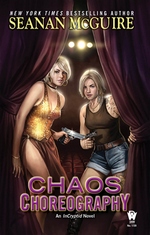
Indexing: Reflections, Episode Ten: Untold Truths by Seanan McGuire

Indexing: ReflectionsIndexing: Reflections, Episode Ten: Untold Truth

by Seanan McGuire
Series: Indexing, #2.10

Kindle
47North, 2015
Read: December 15, 2015

We’ve all read enough/watched enough Body Swap stories to know how this goes down. Henry wakes up in a body that’s not hers, makes her way to the Bureau, to try to get her team back.

She has to convince more than a few people that’s she who she claims to be. The fact that there are people who work there who have the ability to tell if she’s telling the truth, should make things easier — and probably does.

McGuire doesn’t let things get too bogged down with this identity test. Between humor, one seriously creepy version of Moaning Myrtle, and the sense of impending doom, things keep moving well.

The plot didn’t advance a lot, but what little bit that happened was much needed and a positive sign for the next installment. Except for the last few paragraphs, which will hopefully be the first thing addressed in episode 11, because that’s just not okay.

—–

3.5 Stars

Santa 365 by Spencer Quinn

Santa 365Santa 365

by Spencer Quinn
Series: Chet and Bernie
Kindle Edition, 47 pg.
Atria Books, 2015

Read: December 15, 2015


There’s not a whole lot to say about this short story, but I’ll give it a whirl. Taking place sometime before The Dog Who Knew Too Much (the duo’s adventures involving a wilderness camp), this is the story of Bernie trying to throw a Christmas party for his friends and, more importantly, his son, Charlie. Naturally, because it’s a Chet and Bernie story, crime ensues, and Bernie’s able to set things right (and take care of another problem at the same time). Sure, given that most of Bernie’s social circle are either cops or perps that he and Chet have busted, there should be a lot more crime in Bernie’s life.

Suzie, and we, get to meet Bernie’s mother, Minerva. Something Bernie’s not too excited about (well, I don’t think he cares about us meeting her, Suzie, on the other hand . . . ). She was amusing, but I think Minerva could become too much very quickly. If she returns in a novel, I hope her appearance has about the same number of words.

I trust it’s because of the size of this story, but wow, this was a shallow and rushed thing. Still, it’s a pleasant read, fun to see Chet’s reaction to a Christmas tree and what not. There are a couple of lines from this story that belong in Quinn’s Top 20 All Time lines (a contested field, I realize), so I’m glad I read it, but I was left wanting a bit more.

—–

3 Stars

Winter and Night by S. J. Rozan

Winter and NightWinter and Night

by S. J. Rozan
Series: Lydia Chin & Bill Smith, #8

Hardcover, 338 pg.
Minotaur Books, 2002
Read: December 11 – 14, 2015

On the whole, I enjoy the Lydia Chin novels in this series more than the Bill Smith ones, while I’d say the Bill Smith novels are better novels. Winter and Night was the best of both worlds — it was probably the best written in the series, and I really enjoyed it.

Bill gets a call in the middle of the night to come help a teen that the NYPD has taken into custody. He does brings the kid, Gary, home with him and hears a vague sob story about how Gary’s just trying to help, trying to do the right thing. And then he runs away. Bill gets Lydia to start looking for Gary in NYC while he goes to check out the kid’s hometown.

There’s more wrong in the small town Gary ran from than just a missing kid. This little town is football-crazy, I’m talking Texas football crazy, the kind of thing you think King of the Hill and Friday Night Lights is making too much of, but start to wonder if they’re not. Then there’s a dead high schooler. And seemingly every person in the town is telling Bill not to think that this had anything to do with a rape and murder over 20 years ago. Which, just gets him wondering, naturally.

This case gets under Bill’s skin, hitting close to home, and worse. Lydia compares him to a patched-up furnace that’s about to explode. He gets pretty close a couple of times, actually. Making this a rougher, more raw, more violent story (not that Bill’s books are absent violence). Because this is so close to him, he makes some really dumb mistakes — Bill, Lydia and the police spend a few chapters trying to prevent a crime that’s just not going to happen, and I spent far too much time annoyed with them from not seeing things are clearly as I could.

How does Rozan do it? Seriously, you get the same two characters in two different novels or four different always know each taking the lead and is like it’s two different series. You know, there’s a certain feel when you read a Robert Crais book — Elvis Cole book or a Joe Pike book, the books are different, and the two protagonists/narrative voiced are different. But you can tell they’re by the same writer. Not the case here — at all — it’s not even close. If you told me the two different people writing the series I’d absolutely believe you.

For my money, this is the best in the series (so far). Thoughtful, suspenseful, moody . . . everything you want in a P. I. novel.

—–

4 1/2 Stars

Messy Grace by Caleb Kaltenbach

Messy GraceMessy Grace: How a Pastor with Gay Parents Learned to Love Others Without Sacrificing Conviction

by Caleb Kaltenbach
Trade Paperback, 203 pg.
WaterBrook Press, 2015
Read: December 6, 2015

Straight off, I could tell Mr. Kaltenbach and I approach things very differently. There is a looseness to his language that I can’t tolerate on theological matters — I, like the noted Richard Rogers, serve a precise God*, and it gives me hives to read people who don’t — though I readily acknowledge (and lament) that he’s speaking in the Evangelical Vernacular. By page 5, I was grimacing at his phraseology. Particularly his use of “messy” and it’s connection to grace, and his insistence that there’s a “tension” between grace and truth — but I’ll return to that in a bit.

The first few chapters outline the problems between the perceived (and, sadly, sometimes real) destructive attitudes of Christians towards LGBT people and the perceived (and, sadly, sometimes real) combative stances and attitudes of LGBT people towards Christians. Kaltenbach illustrated this with episodes from his own childhood and what he’s seen in the pastorate. Sadly, he’s too impressed with generalizing from his autobiography (it’s not a totally improper strategy, but Kaltenbach doesn’t bring in anything to buttress his arguments). He also displays an over-reliance on platitudes and catch-phrases. Worst of all, he’s good at using stereotypes and generalizations when calling for those he’s stereotyping/generalizing to stop stereotyping and using generalizations about LGBT people.

I admit I was thoroughly annoyed with him by the time I got to chapter 6, when he (largely and temporarily) put aside the anecdotes and actually got around to explaining the Scriptural view on the topic at hand by brief glances at various texts, responses to critics, and so on. Could this chapter have been better? His explanations less open to criticism by theological opponents? Yes. That said, it was pretty good — and a very good introduction to the ideas he offered (his “More Reading” list at the end of the book contains much that would do a better job on this point).

I have several reservations and problems with Kaltenbach doctrinally and theologically. Actually, despite frequent use of the word “grace,” I’m not sure what he means by the term, but I’m pretty sure it’s not what the biblical writers mean by χαρις. In a fallen world, plagued by sin (a term Kaltenbach avoids), the favor of God, the goodwill of God towards undeserving sinners because of Christ’s work on their behalf (my quick and dirty definition of grace) will be messy, it will be found in messy situations with messy people — because there are no other kinds of people. Calling grace “messy” is like saying it’s “undeserved.” There is no other kind. Kaltenbach also spends a good deal of time talking about a tension between grace and truth, and I don’t see that where he locates it in the Scriptural witness, or anywhere else. In fact, throughout the Old and New Testaments, the two go hand in hand.

Both his dependence upon the Pericope Adulterae (John 7:53-8:11) for his approach to those who differ from him and his indictment of Imprecatory Psalms make me worry about his view of scripture. I can’t help but wonder, built on such an unstable foundation, how much of Kaltenbach’s arguments can stand.

That said, from Chapter 6 on, there is little I flat-out disagreed with — the differences ranged from minor quibbles to exceptions — but he said nothing that I’d say was entirely wrong or baseless, and I could appreciate what he said and where he was coming from. Both his understanding of the biblical teaching on sex, and the way that Christians should interact with, think about, and treat those with whom they disagree on sensitive issues is commendable and spot-on. As this is the point of the book, however sloppily he goes about it, I have to like that.

It’s a good 101 book (maybe a 080?), but one should grab his “More Reading” list and work through it — Champagne Butterfield’s book would be the best to start with if you like the memoir aspect of this book.

* If you’re unfamiliar with the story, see DeYoung’s quotation of Packer here.

—–

I received this book from the ever-so-nice people at Blogging for Books for this review.

—–

3 Stars

Saturday Miscellany – 12/12/15

Odds ‘n ends over the week about books and reading that caught my eye. You’ve probably seen some/most/all of them, but just in case:

    Only stumbled across on New Release this week that caught my eye, should be a good one though,.

  • The Relic Master by Christopher Buckley — One of the best satiric novelists around (maybe the best) brings a tale about a 16th century attempt to fake the Shroud of Turin. A slight departure from the rest of his work (which is primarily set in or around Washington, D. C.)

Lastly, I’d like to say hi and welcome to Hooked on Books for following the blog this week. Thanks to Casey Owen for the comment and email — really appreciate it.

Stepdog by Nicole Galland

Stepdog Stepdog

by Nicole Galland
Trade Paperback, 386 pg.

William Morrow Paperbacks, 2015

Read: December 9 – 10, 2015

I’m going to cut to the chase, if you want to read a blurb for the book, click on the cover or title above and it’ll take you to the proper website.

Let’s start with the positives, shall we? Galland can really put together a sentence. I found much of this charming and entertaining. And I’ll never not appreciate a Roddy Doyle reference (or two).

I wanted to like Cody. She’s a dog, I always want to love the dog. But she wasn’t so much a character as she was a furry obstacle to Rory’s desired lifestyle. I kept thinking about her like Skyler White or Carmela Soprano. But Skyler and Carmela were unjustly disliked by significant portions of the audience because they served as an obstacle to their criminal husbands (which was actually commendable) while being actual characters with their own interests and points of view. Cody actually did nothing but serve as an obstacle to Rory’s selfish interest.

I wanted to like Sarah, too. But see above (except for the canine part).

Maybe it’s too much of a stretch to paint them as the anti-Skyler/Carmela, but that’s where my mind went.

Jay goes from this guy to a supervillain in a novel that didn’t seem to be about that kind of thing at all in a heartbeat. Changing this from a slightly overwritten love story to an underwhelming crime story. The climactic action was way too overblown, the denouement was too quick and tidy.

Stepdog was close to being a perfectly charming read, and settled for being a minor disappointment.

—–

2 Stars

Move Along, Nothing to See Here


I’ve got too many things on my plate today (and maybe tomorrow) to get anything up — alas. Am somewhere between 10%-60% finished with a number of posts, so hopefully I can chip away at that. Anyway, thanks for stopping by, go spend a few extra seconds with your current read.

The Naturals by Jennifer Lynn Barnes

The NaturalsThe Naturals

by Jennifer Lynn Barnes
Series: The Naturals, #1

Hardcover, 308 pg.

Disney-Hyperion, 2013
Read: December 8, 2015


We’ve all heard of Quantico, VA, the small town that is home to the FBI Academy, Laboratory, NCIS, and so on. What most of us don’t know is that it’s also home to a secret training ground for teenagers who are so intuitively good at profiling and other forensically-inclined psychological skills that they’re described as “Natural.” Two FBI agents and one retired Marine run this program and house, using the teens to crack cold cases. Sharpening their skills in a safe environment, so that when the time is ripe, they’ll be Super Agents.

The Naturals opens with Cassie — being raised by her grandmother while her father’s off somewhere with the Armed Services. She’s seventeen and can read people like a Richard Scarry book, which makes her a great small diner waitress. Until she’s given the chance to join program and she jumps at it, becoming the fifth member of the team.

Cassie jumps into the training, and picks things up quickly. I really enjoyed reading those scenes — she and Dean, the other profiler, sound so much like Will Graham from NBC’s Hannibal that I really got into it. Outside Quantico, things are afoot that will keep this from being all training and cold cases — and I bet, for those who survive, the next books will also pretty fresh cases, too.

Walking into a two-guy, two-gal house — and, apparently, being more attractive than she’s aware — Cassie complicates things. Soon she’s part of at least one Romantic Polygon. It’s not too painful at the moment, but I could see it overtaking things in a book or two. It’s marketed as YA, so it was likely anyway — still, you should know it’s out there.

None of the characters — including Cassie — are much more than groupings of characteristics and tics at this point, but I’d be willing to guess that they could be within another book or two. For now, they’re good enough for what the book is. It really is a fun read

A fast, fun read with just enough suspense to keep you moving, but not as much as you’d get in a Thomas Harris or Val McDermid psychological thriller — a great way to cut your teeth on the subgenre. I’ll come back for more — and I’ll pass it off to my daughter, who will likely eat it up.

Thanks to DanySpike for the blogpost that convinced me to give this one a try. I owe ya one.

—–

3 Stars

The Case of the Missing Servant by Tarquin Hall

The Case of the Missing ServantThe Case of the Missing Servant: From the Files of Vish Puri, Most Private Investigator

by Tarquin Hall
Series: Vish Puri, #1
Trade Paperback, 295 pg.
Simon & Schuster, 2010
Read: December 2, 2015

Vish Puri is 50ish, pudgy (if not worse), culturally conservative, and easily impressed with himself. And, seemingly, a pretty decent Private Investigator. Unlike most P.I.’s in fiction, he’s not a lone wolf — and he doesn’t have one hyperviolent friend to back him up. He has a team — working for him, doing footwork, the tech stuff — that sort of thing. I wish we saw more of this in these kind of novels.

Anyway, Puri (known to his friends and family as “Chubby,” his employees as “Boss”) has two clients in this particular book — neither of which seems to appreciate the fact that he’s not the agency’s sole focus. One client — a retired army general of some prominence, wants a background check on his granddaughter’s fiancé — the wedding is weeks away and the general is sure something’s wrong with him.

The second client has a trickier case — he’s a lawyer with a track record of helping the lower classes and exploited, with an eye to environmental issues. A servant girl who had been working a few months for his family took off unexpectedly (with money owed her), but they didn’t really give it any thought. Months later, he’s being investigated (and, minor spoiler, but fairly obvious), and eventually charged with, her murder.

I know next to nothing about the Indian legal system, police workings, but a little more about the culture (let me stress the “little” there) — so this was all interesting and foreign to me. The widespread expectation — and acceptance — of corruption, bribery, and so on was pretty surprising. I realize that’s par for the course in some parts of the world, but for some reason, I didn’t think India would be one of those parts. The food, the economics, the convictions and conventions related to marriage, that sort of thing — yeah, I was prepared for that, just not the widespread bribery. Makes the Favor Bank in The Bonfire of the Vanities look like daycare.

There’s nothing for the reader to do with the background check case other than watch the way that the agency works — and the allies they utilize. There’s nothing really for the reader to pick up on to “solve” with the detective. But we do get to see the stealthy, quiet, un-hurried approach they take — despite the client’s expectations. Thankfully (for the way my brain works, anyway), there was plenty to chew on with the missing servant — and it was a pretty easy solution. But the way that Puri went about solving it, and the red herrings that were thrown in the way were well done and unique to this series and setting. I really appreciated the way this was constructed.

The narration has some fun at Puri’s expense — both directly, and though the thoughts of his employees and mother. He needs to diet, he’s prone to self-aggrandizement — but he’s good at his job, and that’s allowed to show forth, too. Beyond Puri, we don’t get to know anyone as a character really — little flashes of personality and backstory here and there, but nothing like a fully fleshed out character. But I don’t think that’s the kind of story that Hall is looking to tell here.

Amusing, clever, moved along nicely and was an interesting take on a culture I know nowhere near enough about — I’ll be back for another.

—–

3 Stars

Page 541 of 625

Powered by WordPress & Theme by Anders Norén