Author: HCNewton Page 554 of 625

Uprooted by Naomi Novik

UprootedUprooted

by Naomi Novik

Hardcover, 435 pg.
Del Rey, 2015
Read: June 22 – 27, 2015
I hate, hate, hate when I don’t know how to talk about a book. It just drives me crazy. Uprooted is one of those books. It really needs to be experienced, rather than described. It’s completely familiar, but doesn’t do what you expect. It’s traditional, yet subversive. It deals with timeless stories, but feels contemporary. Utterly fantastic, but so often, feels real.

In short, Uprooted is magical.

I saw someone describe the protagonist and narrator, Agnieszka, as a mix of Katniss Everdeen and Jane Eyre. I like that — not only is it catchy, but it’s pretty accurate. She also reminds me a bit of Belle (especially the Disney version) and Julia from Grossman’s The Magicians.

Uprooted doesn’t grab you like a suspense novel, where you’re glued to the action, the adrenaline. It’s actually more effective and thorough — it draws you in and won’t let you go through the depth of storytelling, Agnieszka’s voice, the people and the world. You just want to live in those words.

On the one hand, I want to gush about this one. But it feels like this one needs to toot its own horn. Read the description, if it appeals to you at all, get your hands on it. It’ll be one of your favorite reads of the year.

—–

5 Stars

Saturday Miscellany – 7/4/15

Not too many odds ‘n ends over this week about books and reading that caught my eye — a combination of the end of the month and the holiday weekend, I think. You’ve probably seen some/most/all of them, but just in case:

    This Week’s New Releases I’m Excited About and/or You’ll Probably See Here Soon:

  • The Dragons of Heaven by Alyc Helms — It’s described as “a superhero novel, a pulp fantasy novel, with lashings of kung fu, immense kick-ass dragons and an unfailingly sympathetic heroine.” What more do you want?
  • Ghost Fleet by P.W. Singer and August Cole — sounds fascinating, but, I’m not sure I’ll be able to sleep again if I read it. Here’s The Big Idea from Whatever.
  • Linesman by S. K. Dunstall — nifty looking SF. We’ve got another The Big Idea post for this one, too.


Lois Lane: Fallout by Gwenda Bond

Lois Lane FalloutLois Lane: Fallout

by Gwenda Bond
Series: Lois Lane, #1

Hardcover, 303 pg.

Switch Press, 2015

Read: June 27, 2015I’d love to be able to talk about this book as a YA adventure tale on its own. But I can’t. It’s Lois Lane, fer cryin’ out loud. Lois the intrepid, fiery, determined journalist. Not the ditz, not the comic relief, not the damsel in distress (except for the distress she finds herself in because she plunged into danger, not as a victim). Sure, she’s sixteen and a rookie when it comes to reporting things — but she’s gotta start somewhere.

Not only is this Lois Lane, but it’s teenaged Lois. So you have to think about this in terms of Smallville, well I have to, anyway. Bond’s Lois isn’t Smallville‘s — she’s closer to Chloe Sullivan (just with less tech savvy). Actually, if we’re talking WB shows, Bond’s Lois is Veronica Mars without the cool dad. But she’s not just smart and tenacious. She also gets people — she may have no social skills (or not enough of them), but she can read a person. Early on, Lois sees what’s going on with the other girl in the news staff pining after one of the guys. There were other examples, but putting that one where it was — and the way Lois saw it — makes you believe her “reads” of other people.

After spending her life bouncing around the world, from base to base, and seeing the negative effect it’s having on his daughter. General Lane gets himself a permanent assignment to Metropolis (the exact nature of which isn’t clear — but what teenager cares that much about what their parent does?). Lois is going to put down roots here, too, and not get in trouble at school — a resolution that doesn’t last through first period. But, this draws Perry White’s attention as he visits the school, and he invites her to join a new student news project. From there, Lois and her new colleagues uncover a story that involves a strange mix of cyberbullying, VR gaming, and group psychology.

Sure, the story she uncovers is about outlandish, a little hopefully) hard for us to believe. But, hey, this is a book based on comics. So yeah, outlandish works. It also allows Bond to make some subtle (maybe overly subtle) remarks about group-think, the dangers of our online society, and so on.

The use of Gen. Lane, Lucy, Perry White and the Daily Planet were inventive, but were consistent with the source material. Which was both a relief, and a key for the book working as well as it did.

Her friends aren’t that developed — but there’s enough of them to be more than cardboard cutouts of high school stereotypes. I look forward to learning more about them all — I think Maddie’s the most entertaining and interesting, but I’d gladly see more of the others as well. Which goes for East Metropolis High as a whole, really. I hope in future installments that Lois can find someone other than the school secretary to dupe to accomplish her ends.

She doesn’t do much with him, but I enjoyed Bond’s treatment of Lois’ online friend, SmallvilleGuy. Someone she met online after posting about seeing something inexplicable in the middle of Kansas. Bond doesn’t try to hide from the reader who this guy is, or play games with us — the nickname is a dead giveaway. Still, it would’ve been easy for Bond to pretend for a couple of books that this stranger was someone new to the canon. Instead, she plays it straight — sure, she has some fun because we all know a whole lot more than Lois does about this guy, and what their future will hold. But she doesn’t do it at the expense of either character.

Fallout was engaging, fun, and an inventive contemporary take on a timeless character. Recommended for comic book types who don’t mind a different look at canon and/or people who like CW dramas.

—–

3.5 Stars

June 2015 Report

So, here’s what happened here in June.

Books Read:

Three Parts Dead I Am Princess X The Fold
4 1/2 Stars 4 1/2 Stars 4 Stars
How to Start a Fire Paw and Order Premonitions
4 Stars 3 Stars 4 Stars
Crossed Blades Splintered Long Black Curl
3.5 Stars 4 Stars 5 Stars
A Neglected Grace The Rebirths of Tao The True Doctrine of the Sabbath
3 Stars 4 1/2 Stars 5 Stars
Shame Interrupted The Dark Horse Uprooted
2 Stars 3.5 Stars 5 Stars
Lois Lane Fallout Top Secret Twenty-One Mormonism 101
3.5 Stars 3 Stars 3 Stars
Rejoicing in Christ
4 Stars

Still Reading:

The Christian In Complete Armour Thank You, Goodnight

Reviews Posted:

How was your month?

Splintered by Jamie Schultz

SplinteredSplintered

by Jamie Schultz
Series: Arcane Underworld, #2

Mass Market Paperback, 336 pg.

Roc, 2015

Read: June 9 – 10, 2015 Last year’s Premonitions stuck with me more than many Urban Fantasies I’d consider equal to or better than it. For example: Seanan McGuire’s The Winter Long blew me away, but when I finished it, I thought about it for a couple of days and then moved on. But Schultz’ debut (which I thoroughly enjoyed) stuck around the back of my mind, and every so often I’d speculate about Karyn’s future, Genevieve’s motives, etc. Part of it was that is that McGuire’s got 7 novels of history in her series, I have (some) idea what she’ll be putting Toby et al. through in the future and had a solid idea about what had happened in The Winter Long. But Schultz is a question mark, who knew what he had up his sleeve for the future, and there were still some questions about what I’d read hanging in the back of my mind. But it was more than that — something about the book as a whole — the world as a whole — that lingered.

So, yeah, I was more than ready for Splintered by the time I got my hands on it. Thankfully, I can report that Schultz stepped up his game a bit.

It’s been a few weeks since the events of Premonitions, most wounds and injuries have healed, Karyn’s still overcome by an onslaught of visions and is unable to care for herself, Anna’s dividing her time between caring for her and running around for Enoch Sobell (while suffering emotional damage from Premonitions), Sobell’s just about finished piecing his organization back together, and everything else is returning to normal. Now, Anna and the team aren’t exactly sure what Sobell’s got them running around doing — but they’re not crazy about it.

Then things get serious — Sobell “asks” the team to do something for him that’s another level of criminality than they’ve engaged in before — with yet another inevitably following. This involves a handful of magic users in a class beyond what they’re used to. In the middle of all this, the FBI raids Sobell’s headquarters (making it difficult for him to keep the team on task). Oh, and someone’s looking for a Karyn. Someone Anna’s never heard of, and isn’t so sure about. Things get complicated, twisted, and disturbing from here — hopeful steps and/or events, are tarnished by failure or corruption; every victory looks Pyrrhic, and defeat seems inevitable.

Which is not to say that this book is all doom and gloom, a read only fit for the masochistic or self-loathing. On the contrary, there’s a lot of life in these characters, hope, gumption and devotion. You want to know what’s happening to them, you want to see them prevail in some small way (at least). This world may not be filled with blue skies, but there are patches of blue in the smog.

There’s something about the L.A. of these books that make me think Schultz is depicting a near-future dystopian city. But I’m so glad that Nail’s around so we get references to 9/11 and the Iraq War, and I can be reminded that this is taking place roughly now and that what I consider to by a dystopian future is simply a dystopian present for far too many people.

I don’t typically spend enough time thinking about titles, it’s one of those things I keep meaning to do. In this case, however, it doesn’t take a lot of effort to see the title’s applicability. At some point — if not several points — every character in this book is on their own, splintered off from the rest and looking out for their own interest with no attention or care about any one else. Occasionally, it’s in opposition to anyone else (even those they’re supposed to be aligned with). This cuts across all the various relationships depicted; from the purely financial, to the heartfelt, to the creepy and cultic. Each individual makes a deal with someone along the way — almost always for short-term gain (shorter than many expect, it should be added) and potentially long-term loss (longer than many expect). Sometimes, the characters can think that there might not actually be consequences to the deal, but they feel dirty just thinking about making it. Even those characters who start out at least partially altruistic or team/family/friend-centered in their approach to a problem, end up cutting a deal with someone. Anna, for example, primarily makes deals to help — or at least give her a chance at helping — Karyn. That act of caring doesn’t shield either one from the price to be paid for it.

Throughout Splintered (but not a stranger to Premonitions) is the deep sense that there are always consequences for one’s actions. Most serialized fiction will deal with consequences for “the big stuff” — X killed Y, so in 3 books, Y’s family will come for revenge. Or some seemingly insignificant event will turn out 5 books from now to have significant effects on the world/characters/etc. But here, every single time someone does anything magical, there are consequences, potentially (probably?) eternal consequences. This alone sets the Arcane Underworld books apart from the crowd. But it’s not just the magical actions; it’s conversations, it’s the past, it’s these deals, it’s being in the wrong place at the wrong time. What these characters do matters. Sometimes it matters for them, sometimes it matters for their loved ones, sometimes it’s their enemies. Horrifically (and realistically), sometimes, it’s complete and utter strangers. I’m not suggesting that Butcher, or Hearne, or Harrison don’t have Harry, Atticus or Rachel deal with repercussions of their actions — but somehow, Schultz is able to permeate the atmosphere with this idea. Some of his characters see the consequences and shrug them off before acting, others see the consequences and accept them, others figure they can find a way to get out of them (or have someone else rescue them).

But at the end of the day — if not before noon — no one comes out unscathed. Well, okay, some tertiary (or quaternary) characters do — but most of even them don’t. I don’t think there’s a single thing that remains the same from beginning of the book to the end — health, relationship, financial status, legal situation, family, soul — I think every character takes a hit on at least two of those, if not all. Not many authors can achieve that in 350 pages.

Lastly, I like the fact that the FBI is aware enough that strange things are happening in the world to have the Non-Standard Investigations Branch. Primarily, because it reminded me of the Chicago Police Department’s Special Investigations division in the early Dresden Files, but I also liked that the FBI is clever enough to see the need for something like that in a world where magic actually exists (see almost every other UF series for worlds where the authorities aren’t that insightful). It sure looks like they’re going to be around for a while, making life difficult for everyone. I’m looking forward to getting to see Special Agent Elliot and the rest in action.

What keeps this from getting a 5-star rating? I’m not sure I’m always engaged as I should be in either the action or with the characters. Some of that could be my subconscious refusing to get to tied to these people so that it’s easier to take when they meet the supernatural equivalent of Vic Vega/Mr. Blonde in a warehouse with a straight razor. Maybe it’s because these characters are the kind that we usually root against. Or maybe it’s just that I’m not reading it right.

Can you read this without reading the previous novel? Yeah. But I don’t recommend it, too much of this is a reaction to it.

With Premonitions, Jamie Schultz promised something new to the genre. Splintered shows us that he’s keeping that promise. I have no idea what book three of the Arcane Underworld is going to bring, but I can’t wait for it.

—–

Note: I was provided a copy of this novel by the author, which didn’t alter my opinion of the work — I can be bought, but not that cheaply.

—–

4 Stars

Top Secret Twenty-One by Janet Evanovich

Top Secret Twenty-OneTop Secret Twenty-One

by Janet Evanovich
Series: Stephanie Plum, #21

Mass Market Paperback, 326 pg.

Bantam, 2015

Read: June 27, 2015

What to say, what to say . . . I mean seriously, these are like 80’s sitcoms at this point. A big reset to the status quo at the end of the novel, most of the jokes are variations on previous novels. Which makes it hard to talk about them. Let’s break this one down quickly:

  • The Good: Vinnie didn’t appear. Joyce Barnhardt only appeared as an allusion. The pacing was a bit different, I thought. Stephanie’s main target was taken care of pretty early, freeing her up to help Ranger.
  • The Bad: The main target for Stephanie was so close to the guy in Takedown Twenty that I briefly wondered if I’d already read this one.
  • The Surprising: The other big case for this book — Ranger’s case, was a lot more serious (grading on a Plum curve here) than we’re used to. Involving a bit more peril than one expects. Grandma was used well, and Evanovich showed a little restraint with her and her antics.
  • The Funny: There was the standard amount of general amusement. But, and this is important, (at least until Evanovich figures it out and drives it into the ground), Bob + Ranger = Comedy Gold. Who knew? I actually laughed out loud. That whole scene lifted this from a 2-2.5 star rating to a three. It’s been a long time since I actually laughed at one of these.

On the whole, once I settled into it, I enjoyed myself. I’m glad I read it — would I prefer that Evnovich reintroduce a real sense of serialization, let things progress with one of the two romantic leads, let Stephanie get better at her job, introducing real stakes would also improve the humor. Otherwise, this remains fairly reliable, decent, disposable reading material.

—–

3 Stars

Saturday Miscellany – 6/27/15

Been one of those weeks where it doesn’t look like I’m doing much here, but really, it’s just a few posts that were harder than I expected. Still, should’ve scheduled the Longmire post for later in the week to spread things out. I expect next week to go better (still, am hoping for a couple of good, but simple, books to blog about).

Here are the odds ‘n ends from this week about books and reading that caught my eye. You’ve probably seen some/most/all of them, but just in case:

    This Week’s New Releases I’m Excited About and/or You’ll Probably See Here Soon:

  • The Cartel by Don Winslow — I haven’t read The Power of the Dog, but man…this sequel sounds great.
  • Tin Men by Christopher Golden — Looks like this military SF novel is full of action and style.
  • The Leveller by Julia Durango — just a killer premise, not sure the novel itself would be my cup of tea, but the setup sounds fantastic.


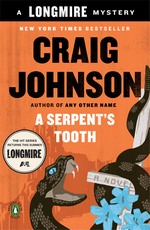
The Dark Horse by Craig Johnson

The Dark HorseThe Dark Horse

by Craig Johnson
Series: Walt Longmire, #5

Hardcover, 318 pg.
Viking Adult, 2009

Read: June 22 – 23, 2015

. . . we walked into the middle of the rutted and powdery two-track that stretched to the horizon; the only other road curled off to the right and disappeared into the distance as well.

I thought about how we tilled and cultivated the land, planted trees on it, fenced it, built houses on it, and did everything we could to hold off the eternity of distance–anything to give the landscape some sort of human scale. No matter what we did to try and form the West, however, the West inevitably formed us instead.

One thing I particularly appreciate about the Longmire books is the effort that Johnson puts into making them distinct from each other — one of the hazards of mystery series is that books can blend in with each other, but that’s not the case (so far) with these. There are two distinct features to this book — 1. Narratively: Walt tries (and kind of succeeds) to go undercover to investigate a murder in a nearby county; 2. Mechanically: the narration keeps jumping back and forth from “the present,” where Walt’s been investigating for a couple of weeks, and then to the point a few weeks earlier where Walt starts to becoming involved in the investigation.

I guess it’s also noteworthy that there’s really no Indian spirituality to speak of — practically no Henry, for that matter (although he makes his presence felt when he’s around).

Anyway, a Sheriff of a neighboring county gets Walt to hold a prisoner for trial for him — a woman who confessed to murdering her louse of a husband. Repeatedly confessed, no less. Given the confession (and some other evidence), he can’t investigate things further — as much as he thinks it might be needed. Still, he knows ol’ Walt won’t worry about the politics or difficulties involved if he sniffs something rotten in Wyoming. Walt falls into the not-so-cleverly-lain trap and starts finding the problems with the confession. Which leads to him assuming the identity of an insurance investigator and doing a little investigating.

He’s almost comically bad at it, but he’s enough of a stranger that it doesn’t matter — he can just be Walt, talking history, drinking beer and nosing around. Add in some horses, some fisticuffs, a spunky kid and a little gunplay — and you’ve got yourself a solid mystery novel.

One of the episodes of the show Longmire was loosely based on this novel, but by “loosely” I mean there are horses, a fire, Walt, and a married couple. That’s pretty much it. So, those who’ve seen the episode can feel free to read the book without any fear of knowing whodunit (and vice versa).

There’s a little movement on the character development front — people recovering from wounds, some other recurring characters moving in the background, and some development on various romantic fronts, too. The serialized component isn’t a major factor in this series, but it’s there — mostly downplayed this time, but still, present. Oh, the election that’s been lurking in the background for forever? Taken care of so quickly, your head’ll spin — what the results mean for things going forward, time will tell. I think I like that approach to it — just blink and you’ll miss it.

Yet again, Johnson delivers a great read — and Sheriff Longmire and Absaroka County prove they can be just as interesting as Det. Bosch and L.A., Spenser and Boston, or Det. Hatcher and NYC.

—–

3.5 Stars

The Rebirths of Tao by Wesley Chu

The Rebirths of TaoThe Rebirths of Tao

by Wesley Chu
Series: Tao Trilogy, #3

Mass Market Paperback, 506 pg.
Angry Robot Books, 2015
Read: June 15 – 20, 2015That was satisfying.

Really, that’s about all I have to say about this one. But let’s see if I can’t expand a bit. Overall, I enjoyed The Lives more than this, and this one engaged me more throughout than The Deaths did, but The Rebirths brought the Tao Trilogy to a satisfying conclusion, wrapping up what needed to be wrapped up, dealing with all the arcs that needed to be concluded and generally leaving things in a place where we can say goodbye to these characters (not that we necessarily want to, but we can) — oh, and was a solid SF adventure in its own right.

One personal note, a large part of the action takes place in Ontario, Oregon. Most people reading this book aren’t going to think much about that at all, but I grew up about 10 minutes away from Ontario — so I thought that was pretty cool. On the other hand, now I know how Bostonians feel when reading Robert B. Parker or Dennis Lehane, or a life-long Chicago resident when reading Jim Butcher. The geography is bad, and if you wanted to buy a nicer car, you wouldn’t bother driving to Boise, you’d get the same car (probably cheaper) in Ontario.

But that matters so little to the book as a whole, that those four sentences are at least two too many.

So, anyway, this book (like The Deaths) takes place a few years after we’d left Roen and the rest. His son, Cameron, is a teenager — with all the stubbornness, rebellion, and hormone-addled fun that entails. Of course, his rebellion takes the form of wanting to join in the war against the Genjix, while his parents do all they can to steer him away.

It’s safe to say that very few (if any) of the Quasing are happy with Jill’s little revelation at the end of The Deaths — Genjix or Prophus — which puts them in the same boat as humanity. Governments all over the world are attempting to hunt down any and all Quasing. Which hasn’t done any favors for the Prophus, but at least seems to have hurt the Genjix effort more.

Which is not to say they’re down for the count by any means. Enzo, the Adonis, is still out there strutting like a peacock and working to bring about the end of humanity. We finally get to see the Genjix plan in full, and I’ve got to say, reading about their plan for re-making Earth makes me really glad that this is fiction.

Right?

So, we’ve got the Ontario storyline — which looks like a pretty routine mission for Roen and Marcos (yeah, not quite Felix & Oscar, but close enough), until it gets bad. And then worse. There’s a conflict in the leadership of the Genjix (so nice to see that even some of them don’t like Enzo). And then there’s a major breach in security which leaves the rest of our Prophus friends on the run — our focus is on Cameron, but not exclusively here. I was a little surprised how Chu concluded the Ontario storyline — which is what made it effective, really. These three threads, ultimately, naturally, converged into one big battle — like the two books before.

Once again, what Chu did with Roen between the books isn’t exactly what one expects, but it fits his character. Ditto for Jill. We didn’t know Cameron enough for me to say. Tao? Sure — Tao’s the same, being centuries old helps him stay consistent. When it comes to the machinery of the Genjix, Prophus and the US Government (and/or everyone else) — things didn’t go the way I figured they would following The Deaths — but I think I liked it more that way. It’s because of the fallout from Jill’s revelation that most of the character changes happened the way they did. Chu really was effective here.

There are some great fight scenes, if that’s your kind of thing (and if it’s not, why are you reading these books?). The final scene is as epic — yet personal — as you want from the end of a third book in a trilogy. Part of that battle are back-to-back hand-to-hand combat scenes featuring an Adonis vessel and people near and dear to us. By this point, I had no idea what Chu was going to give us and I was hanging on every hit. I’m so glad that Chu sprinkles so much humor through these books — after these fights were over, I needed the joke that followed.

It may not work for everyone, but I really liked where everything was left off. Particularly for Enzo.

A really solid novel, a satisfying conclusion — making the Tao trilogy a keeper. I’m very much looking forward to what Chu’s got in store next.

—–

4 1/2 Stars

Saturday Miscellany – 6/20/15

Odds ‘n ends over the week about books and reading that caught my eye. You’ve probably seen some/most/all of them, but just in case:

    This Week’s New Releases I’m Excited About and/or You’ll Probably See Here Soon:

  • Marry, Kiss, Kill by Anne Flett-Giordano — TV comedy writer turns to mystery novels, looks promising.
  • Modern Romance by Aziz Ansari — a combination of research into modern relationships and Ansari’s humor, I’ve been hearing about this one for awhile.
  • The Library at Mount Char by Scott Hawkins — his take on a magic library sounds… fascinating and disturbing. Here’s his Big Idea post.
  • Sick in the Head: Conversations About Life and Comedy by Judd Apatow — a series of conversations between Apatow and some of the funniest people in contemporary comedy


Page 554 of 625

Powered by WordPress & Theme by Anders Norén