Author: HCNewton Page 590 of 625

Twenty Palaces by Harry Connolly

Twenty Palaces
Twenty Palaces

by Harry Connolly
Series: Twenty Palaces, #.5


E-book, 250 pages
Radar Avenue Press, 2011

I’m not usually one for prequels — if the author/filmmakers have done their job, we know what we need to know already. Sure, it allows the creator to fill in some blanks, make the in-joke — but on the whole, they just seem to serve as red meat for fans*, while offering little new.

But a well-done prequel can be a lot of fun — and in the end, if you’re not reading genre fiction for fun — what’s the point?

Between the rest of the books in this criminally-underselling series, we’re given a decent idea what happened between Ray and Annalise before Child of Fire, how Ray got his Knife (one of the coolest tools I can remember reading about), and about Wally getting Ray into this mess. So, I put off reading this one longer than I’d intended to. Glad I finally got around to it — this was a blast.

Ray Lilly is a messed up, broken, not-so-good guy trying to live straight — to become a “seat belt person,” as he puts it. He’s fresh from prison, but he knows he hasn’t finished paying his debt to society (his policeman uncle helps drive this home) and really wants to get on with his new life.

Naturally, his old life — particularly his old friends, are there to drag him off his new path. But this isn’t your garden-variety recidivism at work. There’s some otherworldly magic using his friends — and almost everyone around him — for ends that even a guy of Ray’s questionable morality can’t abide.

The new reality that Ray steps into here is unlike anything you’ve seen before — dark, scary, amoral, and uncaring — a lot like our world seems too often. The magic system that Connolly has created in this series is something special — I so, so wish we’d gotten to see more of it following Circle of Enemies.

This was fun, very satisfying — and most of all, it made me want to re-read the rest of the books, I’d forgotten just how addicting these books were.

If you’ve read the Twenty Palaces series, this is a nice little cherry on top — if you haven’t? Skip this for now, and run to your indie bookstore (or internet retailer, I guess) and grab them.

—–

* Not that I’m against red meat for fans — as a fan of many things, including red meat, I like when creators entertain me.

—–

4 Stars

The Affair by Lee Child

The Affair
The Affair

by Lee Child
Series: Jack Reacher, #16

Hardcover, 405 pg.
Delacorte Press, 2011

“You want me to impersonate a civilian?” [Reacher said]

“It’s not that hard. we’re all members of the same species, more our less. You’ll figure it out.”

Thus begins the sixteenth Jack Reacher novel. Taking place in 1997, he’s still an MP, and is being sent undercover into a small town near an army base, while another investigator is being sent into the base it self to investigate a murder possibly tied to base personnel.

His undercover disguise looks pretty much like the post-discharge Jack Reacher we know — no job, good pair of boots, a toothbrush and one shirt. He wanders into town, finds an ally or two and gets to work.

It takes very little time for Reacher to find himself at odds with some locals (I didn’t think this storyline was all that satisfying, but it gave Reacher a chance to bash in a few heads). Not that he’s ever short of ego, but he seems cockier than I’m used to — I’m assuming that comes from the inherent authority of an MP as opposed to a loan wanderer. Regardless, it was a kick to read his encounters, with this extended family:

He said, “Is there a reason I don’t get out of this truck and kick your butt?”

I said, “Two hundred and six reasons.”

He said, “What?”

“That’s how many bones you got in your body. I could break them all before you put a glove on me.”

Which got his buddy going. Hist instinct was to stick up for his friend and face down a challenge. He leaned further out his own window and said, “You think?”

I said, “Often all day long. It’s a good habit to have.”

The local county sheriff is a former Marine MP, and it takes her no time at all to suss out Reacher’s purpose and to recruit him to help her investigation into this — and related — murders. Yes, her — that particular plotline is self-evident (although this is a bit . . . more explicit than Child’s norm).

There’s little suspense in this — 1. It takes place before Killing Floor, so you know Reacher’s not killed, 2. how seriously worried are you ever that Reacher will survive? Sure, you wonder what will happen to those around him — what the collateral damage is going to be, but that’s about it. Nevertheless — the final hundred pages or so of this is an edge of your seat ride. Which is par for the course for Child, doesn’t make it any less fun.

Beyond the murder investigation — or more properly, around it — are politics (federal, local and military), discussion of the role (and shape) of the military, the future of the U. S. Army (contrasted with some other branches). In the end, the identity of the murder is pretty obvious — but the twisty path that Reacher and the others travel to find it, what obstacles they overcome, and the fallout — that’s what makes this a very satisfying read.

—–

4 1/2 Stars

Dusted Off: Old Man’s War by John Scalzi

Old Man's War (Old Man's War, #1)Old Man’s War

by John Scalzi
Mass Market Paperback, 362 pg.
Tor Books, 2007

I have to admit, I came to this with a degree of trepidation. I’ve really enjoyed Scalzi’s “lighter” works and wasn’t sure I was going to be able to get into his more serious SF. Boy, was I wrong. This was a blast–sure, not as funny as Agent to the Stars or The Android’s Dream, but it wasn’t supposed to be, it was still a rollicking good time–action, hard SF, and heart (even a couple of laughs)–everything you could ask for.

It starts out as sort of an inverse Ender’s Game, instead of kids being recruited to fight far-off aliens, we get senior citizens enlisting. Humanity’s colonies are spreading through the galaxy and running into all sorts of other species who are trying to do the same, and conflicts ensue. I can’t think of much more to say here without major spoilers.

Great cast of characters, believable future tech, creepy aliens, intense battles…fun, solid read, really looking forward to the sequel.

—–

4 Stars

Saturday Miscellany — 11/16

Odds ‘n ends over the week about books and reading that caught my eye. You’ve probably seen some/most/all of them, but just in case:

  • Four Series That Could Be the Next Big Thing in Paranormal Fantasy — Paul Goat Allen talks about 4 series that can step into the spots left by/being left by Sookie Stackhouse, Rachel Morgan and others. One of which I’m on board with, 1 of which I don’t get the appeal of, and 2 I’m clueless about. You have a take on it?
  • Spying Concerns Driving Writers To Self-Censor — A disturbing note: “A newly released finds that a number of American writers avoid or are considering avoiding controversial topics for fear of government surveillance”
  • This Tweet from Jim Butcher could possibly be the best thing I’ve read in weeks.
    This Week’s New Releases I’m Excited About and/or You’ll Probably See Here Soon:

  • Fiddlehead by Cherie Priest — so bittersweet — a new Clockwork Century novel — yay! the last Clockwork Century novel — boo!. Priest talks about the release.
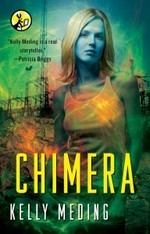
  • Chimera by Kelly Meding — Meding’s MetaWars series is one of my favorites in the last couple of years, I’m so eager to sink my teeth into this one.
  • The Theory of Opposites by Allison Winn Scotch — Don’t know anything about this (honestly, haven’t even read that link) all I know is that Scotch is going to deliver a good read, full of charm and heart.

Categories: Books, News/Misc.
Tags:

The Black Box by Michael Connelly

The Black Box
The Black Box

by Michael Connelly
Series: Harry Bosch, #18

Paperback, 480 pg.
Grand Central Publishing, 2013

There are few mystery series as satisfying as the Harry Bosch novels (those who’ve read the last couple of “Saturday Miscellany” posts have probably noticed my geeking out about the Bosch pilot for Amazon). Whenever a new paperback comes out, I grab it as soon as I can, and post a “Go Away, I’m Reading” sign*. I can’t get enough of this guy.

A while back, Connelly moved Harry to the Open-Unsolved Unit, which was a very smart move that’s paid off in variety of cases and gives an extra edge to Harry’s cases — he’s always been obsessive about giving resolution to the victim’s families and loved ones, but now it’s also about justice delayed, about being able to start getting past years — decades even — of pain.

Harry’s got a personal connection to the cold case he’s focusing on this time — during the riots that broke out after the Rodney King verdict, Harry and his partner were called out on a series of homicides. One in particular was a white woman in an alley, shot execution-style. Before being forced to go to the next victim, they were only able to spend about half an hour looking over the crime scene and finding practically no evidence that wasn’t contaminated. As with many other homicides over those few days, this one remained unsolved. But for the 20th anniversary of the riots, all these cases are being looked at again, in hopes of garnering some good PR for the LAPD.

Naturally, the only case that Harry (or pretty much anyone else) finds the most traction on involves a white woman — and Harry starts being pressured by his lieutenant and some even higher to hold off on the investigation for a few months. Naturally, Harry doesn’t take well to that and does what he can to solve this case once and for all. There’s a lot of luck involved in Harry uncovering what he needs here — but that’s the beauty of routine and thorough investigative work — you end up creating your own luck.

Meanwhile, Harry has to deal with a politically-motivated Professional Standards Bureau (Internal Affairs) investigation into a perfectly legitimate activity. The good news for Harry is that the investigator assigned to the case is as driven and thorough as he is. The bad news is that means she’ll be a persistent interference in his life until she uncovers the truth — and that’s the last thing Harry can tolerate.

Of course, there’s a good storyline featuring Harry’s daughter, Maddie. He’s still new to the “Dad” scene, and makes more mistakes with her than he can tolerate — it’s tough enough being a father to a teenage girl, but when the girl is dropped on you because her mother was murdered and you have to be a parent for the first time? You’ve already got 2 strikes on you. As almost superhuman as he is as a cop, as a father? Harry’s very human. It’s good to see.

And if he’s human as a father, as a romantic interest? You have to feel sorry for Hannah Stone, his current main squeeze. Harry’s practically inept. Still, it’s a good storyline, and I’m glad to see that Harry hasn’t blow it (yet) with Hannah.

If you’ve never read Connelly before — the guy can make a trip to a food truck to grab some tacos into a thriller. So he has no problem making a 20 year-old unsolved murder into an edge-of-your-seat experience. You don’t need to have read the previous 15 books in this series to appreciate this one — jump in, the water’s more than fine.

—–

*Not literally, but my kids can attest that my expression conveys that message effectively.

—–

4 Stars

Autumn Bones by Jacqueline Carey

Autumn Bones
Autumn Bones

by Jacqueline Carey
Hardcover, 424 pg
Roc Hardcover, 2013

I quite enjoyed Carey’s UF debut, the first Agent of Hel book last year, Dark Currents, and was glad to see the sequel pop on my radar this fall. I’m not sure I enjoyed this as much as Dark Currents, but it was close enough, to not spend much time comparing the two.

Half-human/half-incubus, Daisy Johanssen has grown a bit more comfortable in her role as Hel’s Agent on earth — a liaison between human and eldritch communities most of the time, occasional supernatural cop. She’s also grown more comfortable with herself i general, even dating someone regularly — a normal human being, Sinclair Palmer — the Jamaican immigrant we met last time, when he was busy getting various fairies to assist in his tourist bus business.

Except he’s not all that normal. His family, Obeah practitioners, have decided it’s time for him to come home — without taking a millisecond to consult him. He resists this summons — with the assistance of Daisy and most of the local magic practitioners. Mom and sister don’t take this too kindly and proceed to let a restless spirit loose in the town to wreak whatever havoc it can until Sinclair decides to come home.

And havoc is wreaked — so Daisy has to work on both tracking down and trapping this spirit, preventing much more of the town being destroyed, saving Sinclair, and how yeah — figuring out who the guys buying up more and more of the city is.

Meanwhile, Daisy’s working with the Outcast (ghouls) to better understand and use whatever supernatural abilities she has. Not only was it good to see Daisy grow to do more than just wave that magic dagger around, this provided a good opportunity to better understand the Outcast has a group and as individuals. This may have been my favorite part of the book.

There’s a subplot involving the vampire group in town and Daisy’s best friend’s family, carried over from the last book. I liked this a lot more than I expected to when it was reintroduced, and look forward to the exploration of this a bit more in the next novel.

I really could’ve lived without quite as much detail about the sex lives of Daisy (and others), but given this is the author of the Kushiel books* — this is pretty decent. Also, one reference to her friends becoming her Scoobies à la Buffy the Vampire Slayer is enough — I think we got 3 or more here. C’mon, Carey — if we’re reading this, there’s a better than average chance we know the show and have already noticed what’s going on with Daisy’s friends. When you beat the horse like this, it’s just not that sporting.

A well-told story, good characters, actual character development and lots of potential for the series as a while — better than more than a few UF novels I’ve read this year.

—–

* This observation is based solely on impressions I have of the various books by that name, no first hand knoweldge — I could be totally out to lunch.

—–

3 Stars

Steelheart by Brandon Sanderson

Steelheart
Steelheart

by Brandon Sanderson
Hardcover, 386 pg.
Delacorte Press, 2013
Series: The Reckoners, #1

This blurb was enough to get me excited about this book:

Ten years ago, Calamity came. It was a burst in the sky that gave ordinary men and women extraordinary powers. The awed public started calling them Epics.

But Epics are no friend of man. With incredible gifts came the desire to rule. And to rule man you must crush his will.

Nobody fights the Epics . . . nobody but the Reckoners. A shadowy group of ordinary humans, they spend their lives studying Epics, finding their weaknesses, and then assassinating them.

If the book description doesn’t sell this book, I can’t imagine anything I say will. But the story of young David Charleston, orphaned during the takeover of this world by the Epics, fueled by a thirst for vengeance and justice, is one you’d do well to read.*

I wish I could remember what podcast I was listening to recently where they started discussing the difference between DC and Marvel heroes — but I thought of it when I was reading Steelheart. DC heroes, they claimed, jumped at the chance to use their powers to fight evil. Marvel heroes, on the other hand, were reluctant heroes — they have no other choice to do what they do with their powers. In Sanderson’s world, on the other hand, no one with powers wants to do anything for anyone but themselves. Basically, Steelheart is the embodiment of Lord Acton’s maxim, “Power tends to corrupt and absolute power corrupts absolutely.”

This is the YA thriller done right — a lot of action, a hint of romance (no triangle, for which we all owe you thanks, Mr. Sanderson), a solid group of characters, a very bleak looking world, and a central character that doesn’t really fit in — but is driven, more capable than anyone thinks, and in the right place at the right time.

This band of rebels David finds himself working with isn’t as rag-tag as you’d expect — which is an interesting way to approach it. But the Reckoners are rag-tag enough, that even if they weren’t going up against nigh-invulnerable people, you’d still see them as the underdogs. Which you have to see them as, or you won’t be able to root for them. It also helps that we don’t get a good look at the Epics as anything but “The Other” or “The Enemy.” We don’t get the chance to sympathize, to understand, to care about them.

One quibble — some of David’s humor, his references, don’t feel quite right — they don’t seem like the kind of thing a kid who’s been living the kind of life he’s been living for ten years. Actually, most of the humor in the book feels out of place coming from the Reckoners.

That said — David’s wit (as bumbling as it is), Cody’s self-aware eccentricity, the voice this story is told in is what moves this book from “engaging super-hero distopia” to “zowie!” It doesn’t ring true, but it doesn’t matter — Sanderson sells it while you’re reading.

I’m eager to see what Sanderson has for us in this series — where did these powers come from? What are the other groups of Reckoners like? Are we going to see [redacted] again? Is David ever going to figure out how to use figurative language?

—–

*Unless you don’t like super-hero stories, YA adventure, distopian novels, or books that rock, if that’s the case, I can’t help you.

—–

5 Stars

S is for Silence by Sue Grafton

S is for Silence
S is for Silence

by Sue Grafton
Series: Kinsey Millhone, #19

Hardcover, 374 pg.
G.P. Putnam’s Sons, 2005

Grafton’s clearly stretching her craft in these last few books, which is commendable — and, on the whole, pretty successful. Like in Q is for Quarry, Kinsey’s working a cold case, this time she’s not even sure if it’s a missing person or a murder that she’s been hired for.

There’s an interesting pattern to these chapters — one or two in Kinsey’s present, and then a chapter from the Point of View of one of the people that knew the subject of her investigation a couple of decades before. Not only is this a stylistic leap for Grafton, it’s pretty interesting for her to be giving the reader that much more insight into the characters. But overall, I wasn’t crazy about seeing how every one’s a liar, before or after they talk to Kinsey. I’d rather watch Kinsey discover the lie, or see that they’re lying, rather than we readers knowing that and Kinsey being lost.

As we move along, we are given a more complex look at our victim than Grafton’s usually able to provide. We get to know her better and better each time we’re given a look at the past. We see how various people saw her through their perspectives and end up caring a lot more about her when we learn what happened to her than we normally would.

I’m not convinced that the case itself was that interesting, but the way that Grafton told it was very interesting and raised the level of the book. Making this satisfying in a way that Kinsey stories usually aren’t.

Grafton essentially ignores the ongoing family and romance stories she’s been pursuing lately — a nice break, but hopefully she returns to them soon — as much growth as the books have displayed lately, it’d be nice if Kinsey could catch up.

Grafton took a chance this time, and it paid off. Hope she keeps stretching herself as eh move on towards Z.

—–

3.5 Stars

Dusted Off: The Riddle of the Wren by Charles de Lint

The Riddle of the WrenThe Riddle of the Wren

by Charles de Lint

This was not the best fantasy I’ve read lately, and I know (well, strongly believe) I’m going to read at least one this year that will dwarf its quality by a magnitude I can’t calculate. BUT…

there pretty much has to be a but here, right?

BUT…this character, this world (better, these worlds), the supporting characters…there’s something about them all that just works. More than works, charms you and wins you over.

de Lint does a great job of introducing the incremental changes happening to Minda as she journeys to and through worlds she didn’t know did or could exist until she’s thrown into them. Not only the changes that are happening to her that she’s unaware of, but the ones she sees–and decides to make in herself–as she travels. It’s absolutely believable, utterly winning.

—–

4 Stars

Saturday Miscellany – 11/9

Odds ‘n ends over the week about books and reading that caught my eye. You’ve probably seen some/most/all of them, but just in case:

    This Week’s New Releases I’m Excited About and/or You’ll Probably See Here Soon:

  • Fortune’s Pawn by Rachel Bach — can always use a good SF read
  • Katya’s War by Jonathan L. Howard — I thought the first volume in this series was good read, in an interesting SF world. Looking forward to seeing where he goes with this

Page 590 of 625

Powered by WordPress & Theme by Anders Norén