Author: HCNewton Page 618 of 625

Dusted Off: Hey, you sass that hoopy Douglas Adams? There’s a frood who really knows where his towel is.

I may not have gone where I intended to go,
but I think I have ended up where I needed to be.
– Douglas Adams

Douglas Adams
(1952 – 2001)

What’s Towel Day? Wired has a handy article.

(thanks to Travis Avery for the banner)

Dusted Off: The Ides of April

which means it’s time for me to post this quote again.

A man condemning the income tax because of the annoyance it gives him or the expense it puts him to is merely a dog baring its teeth, and he forfeits the privileges of civilized discourse. But it is permissible to criticize it on other and impersonal grounds. A government, like an individual, spends money for any or all of three reasons: because it needs to, because it wants to, or simply because it has it to spend. The last is much the shabbiest. It is arguable, if not manifest, that a substantial proportion of this great spring flood of billions pouring into the Treasury will in effect get spent for that last shabby reason.

–Nero Wolfe

Dusted Off: In nomine pizza domine!

a quick peak into my geekery:

*

Thanks to the virtual signing hosted by Dog Eared Books last week, I received my signed copy of the new Dresden Files novel, Turn Coat this weekend. This being the, I think, 6th signed book in my meager library,** this one is obviously being added to my “do not loan” list–honestly, not sure I’m going to let myself read it.

——

*The inscription, “In nomine pizza domine!” is the battle cry of Toot-Toot and his dewdrop faerie friends, as they attack the Summer Court in Summer Knight.

**I fully expect certain readers, like TLomL, will dispute the use of the word “meager.” On this, however, she is uncharacteristically wrong.

Dusted Off: Batman: Cacophony

Kevin Smith returned to comics with a 3-part Batman mini, which, believe it or not, actually came out within 3 months of the first issue going on sale (am betting DC didn’t announce the project ’til they had 3 scripts out of the criminally tardy writer).

Onomatopoeia, created by Smith in his heralded Green Arrow story, comes to Gotham and frees the Joker from Arkham Asylum (creating a little havoc along the way). Naturally, Batman leads the search for the Joker, who’s essentially being used by his liberator as bait. Along the way, we get some interesting b-stories (one involving a designer drug made with the Joker’s poison), and some great dialogue (Alfred, in particular, was pitch-perfect).

The final confrontation between the Batman and Joker here is one of the better I’ve read–far better than the conversation in The Killing Joke.

All in all, a good story. Nothing fantastic, but a good solid story. Emblematic of what comics should be–and all too often aren’t. Smith didn’t stretch a 3-issue tale over 6 issues to make a better trade paperback, he didn’t “permanently” alter a character or anything. Character, plot, resolution–thanks for coming, have a nice day.

Smith delivered a story, not an event. Now, unlike Joe Quesada, I’m not against character growth, character development and change–but I am weary of the world-changing, character dying (temporarily), “we’re gonna change the face of [insert comic company name here] forever” events. DC currently has 2 such events going on that are naturally opposed to each other–one is posited on the idea that Batman, Superman, and Wonder Woman are so integral to the make-up of reality that without them the nature of the world is permanently altered. The other has Batman dead and a battle to replace him as Gotham’s protector waging. Which is it boys? Pick one!

Just tell good stories, and when you decide to have something epoch-changing happen–let it happen and move on, telling stories that come from that. Leave Barry Allen dead, leave Jason Todd dead (why, why, DC, ruin 2 of the best moments of the 80’s?), leave Peter Parker married (and outed, since you made that stupid move), leave Steve Rogers in the ground. I swear, if Sue Dibney lives again I will blow something up (and I really liked Sue).

Ooops, seem to have gotten off on a rant there, time to bring it home…Cacophony‘s a great example of what comics should be. I just hope someone out there in a corporate office remembers that one day.

Dusted Off: The Little Sleep

Paul Tremblay‘s debut novel, The Little Sleep, not only sports a eye-catching title, but a premise that’s just as intriguing.

Obviously, the title’s supposed to get the reader thinking of noir classic, The Big Sleep by Raymond Chandler–so one expects the lone-wolf, tougher than nails, sardonically witty gumshoe typified by Philip Marlowe. But Tremblay’s protagonist, Mark Genevich, has one challenge his predecessors in the genre doesn’t have…he’s a narcoleptic. So he’s falling asleep, hallucinating and losing control of his body and the most inconvenient times (for Genevich, anyway…the occasionally seem a convenient deus ex machina to get Tremblay out of a scene).

Initially, the book didn’t do much for me–had a hard time caring for Genevich or his problem, his client, and the early chapters seemed a little too erratic. But I hung in there, and eventually, Genevich explains his disorder enough that you can accept the bouncing-around nature of the first chapters. I’m still not sure how sympathetic Tremblay ever makes him, but you do at least start to want him to figure out what’s going on–which is close enough.

I remember when I started working the graveyard shift (I guess 3rd shift is the term we’re supposed to use now), I had a lot of days where I couldn’t be sure that I wouldn’t fall asleep w/o warning–in a theater, during a slow after-dinner conversation, on the road(!)–and I recognized the embarrassment, anger and confusion Genevich displayed. No matter what precautions he took, the very real danger of waking in a different place or his body not acting like he intended always loomed large. I’m assuming Tremblay has no first-hand knowledge of the disorder, but he sure acts like he does.

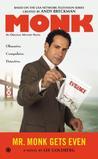
Genevich’s path to solving this particular case follows many of the typical hardboiled paths, but he cannot travel those paths like his forefathers because of his disorder. Unlike with Monk, Genvich’s problem is never fodder for humor–unlike Monk’s OCD, which would’ve been very easy, and probably very entertaining. Tremblay sticks to the high road, however, resulting in a deeper, probably more satisfyingk, read.

Dusted Off: Belgium, Belgium, Belgium! (sorry for the profanity)

Not sure why I’ve let this layer of dust accumulate over things lately, meant to post a thing or two last week, but things got away from me I guess.

Nothing personal, I assure you–well, most of you anyway.

So what got me riled up enough to break my silence?

This monstrosity:

That’s right, author Eoin Colfer has been commissioned to write the sixth volume of Douglas Adams’ Hitchhiker’s Guide trilogy.

SciFi Wire reports:

And Another Thing…, which will be released Oct. 12 to coincide with the 30th anniversary of the publication of the first book in the series by the late Douglas Adams, is a sequel commissioned by the publisher from Eoin Colfer. Colfer is the author of the best-selling Artemis Fowl series.

While Penguin will publish the latest book, Pan Macmillan, which was Adams’ paperback publisher, will repackage his backlist, adding new introductions to the books, which will be released monthly leading up to the release of the new title.

Why, oh why, is this being done? Was the world begging for a follow-up to Mostly Harmless? Did another story just need to be told? NO!

Did Adams’ leave notes, instructions for another? No.

Does Arthur Dent really need to get kicked around some more? No.

Wouldn’t it be easier to insult the Douglas Adams’ memory by digging up his bones and throwing rocks at them? Or you could just put out the recent movie on Blu-Ray, that’d do it, too.

This is wrong, wrong, wrong, wrong, wrong. A travesty. A disgrace. A literary crime.

Oh, who am I kidding? I’ll be there on 10/21, cash in hand, just waiting for the book–probably with baited breath. Just hope it’ll be slightly better than a collection of poetry by Paula Nancy Millstone Jennings of Greenbridge, Essex, England.

Dusted Off: The Stepsister Scheme by Jim C. Hines

There are really only so many reactions a father can have when, thanks to his young daughter, his home and life are invaded by the Disney Princesses. Through DVDs, toys, costumes, books, clothing these characters can thoroughly infiltrate a family’s collective consciousness. A dad can run to such things as home improvement projects, sports, denial, or attempts to turn their daughter into a Tom-boy; but once these girls take the beachhead of your home, they don’t give an inch of it back for years.

Jim C. Hines took a different tack–the author of the satirical Jig the Goblin fantasy series started writing. The result “is a cross between the old (pre-Disney) fairy tales and Charlie’s Angels.”

The book opens with one of Cinderella’s (Danielle) stepsisters trying to assassinate the new princess a few months after the whole glass slipper incident. Danielle, some of her animal friends and another princess in disguise put a stop to that, but discover that Danielle’s husband has been kidnapped. Thankfully, the Queen is the head of a covert operations team (or the fairy tale equivalent thereof) made up of princesses who rarely qualify as damsels in distress.

The book works pretty well as a light, fun fantasy adventure. When you throw in Hines’ reworking of the original fairy tales–well, that’s icing on the cake (thick, rich and creamy icing). Happily ever after isn’t everything we tend to think it is.

“Are all the tales like this?” Danielle asked. “Did Jack Giantslayer fall into despair and poverty? Was Red Riding Hood murdered by wolves seeking revenge for the death of their kin?”

Talia snorted. “No, Red survived. But that kind of thing changes a woman.”

“Changes her how?”

“The Lady of the Red Hood is one of the most feared assassins this side of Akenkar.”

Looking forward to the next two installments of this series.

Dusted Off: Attack of the Spoilers

So, the instant I heard that Joe Torre had a book coming out about his time with the Yankees, I ordered it (even if he technically wrote nothing). Now I’m wondering if I wasted my money. The book comes out today, and it’s already been making news thanks to a copy that a couple of NY journalists got their hands on a week or so early.

The leaked portion of the book couldn’t be more than a few paragraphs, and yet hours of TV/radio time, gallons of ink, GB of internet traffic has been devoted to it. Now that the book is out, and we’ll get more than an isolated comment about A-Rod or a description of Cashman’s treatment of Torre toward the end. I can’t imagine that we’ll see less reporting.

Now, I’ll try to avoid as much of that as I can, but it won’t be enough. If I’m not careful, I’ll end up reading/hearing the whole book before my copy arrives on Thursday, and I really won’t have time to dig in to it until Saturday.

I understand our media culture is all about getting the story out before anyone else. But when it comes getting the details of a book–memoir or best-selling novel (how many leaks about the ending of Deathly Hallows were there?)–movie, TV series finale, etc. what’s the rush? Can’t we wait for the intended audience to get a crack at it before rushing to print? What’s the benefit to spilling the details/ending/spoilers?

Internet fan sites and whatnot have the decency to warn readers about spoilers, so we can avoid them. Can’t legitimate news groups (or reasonable facsimiles thereof) do the same?

just a little griping, I guess.

Dusted Off: Exactly what I’d Write if I was Erudite

Terry Teachout’s blogpost today, “Forty years with Nero Wolfe” is one of those posts I really wish I could’ve written.

Give it a read, hopefully Teachout can convince you to pick up Wolfe. Outside The Bible, a handful of Reformed and Puritan writers, Stout’s the only author I’d recommend to every person I know w/o a disclaimer or a second thought.

Dusted Off: Wishful Drinking by Carrie Fisher

This is by no means the best written book I’ve read this year–which is a shame, because Carrie Fisher is a skillful writer. It is, however, probably the funniest thing I’ve read since I Love You, Beth Cooper.

Adapted from her one-woman show, Wishful Thinking is an autobiography by anecdote–a series of recollections from her star-studded childhood, through her early addictions while starting in film, through her later addictions and failed marriages, and to her hospitalization in a mental health facility and electroshock therapy–and a bunch of stuff in between.

Sounds like a blast, doesn’t it? Well, here’s the opening paragraphs, where she explains that.

I have to start by telling you that my entire existence could be summed up in one phrase. And that is: If my life wasn’t funny it would just be true, and that is unacceptable.

What that really means, other than what it sounds like, is, let’s say something happens and from a certain slant maybe it’s tragic, even a little bit shocking. Then time passes and you go to the funny slant, and now that very same thing can no longer do you any harm.

So what we’re really talking about then is: location, location, location.

Fisher’s clearly at the point where this material can do her no harm, what it can do is entertain. You can hear her voice reading the book–I’ve got to remember to see if she reads the audiobook, gotta grab it–I can only imagine how fun seeing the show would be.

Yes, there are cheap shots at Republicans, Sarah Palin, President Bush, and several other things that will offend many. But Fisher is so refreshingly honest and frank in telling her story that you really just don’t care.

Page 618 of 625

Powered by WordPress & Theme by Anders Norén