Author: HCNewton Page 619 of 625

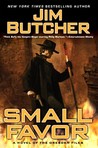
Dusted Off: Backup by Jim Butcher

Well, that was a fun, 45 minutes (give or take).

Just knocked off Jim Butcher’s Backup: A Story of the Dresden Files. Weighing in at about 12K words, it’s almost as meaty as the 4-issue mini-series comic book Welcome to the Jungle (recently collected and published in hardcover form).

This is a different way of telling a Harry Dresden story, coming at it from the POV of his brother, Thomas. Not only does this give us a new way of seeing Harry, it gives us a better appreciation for Thomas. (In many ways, it reminded me of Crais’ The Watchman from last year.)

Quick read; decent story–resolution came a bit too soon, but given the length, such was unavoidable; probably paid too much for it, given my budget; hope some of the backstory spills over into the regular Dresden File novels. Something any fan should pick up.

Dusted Off: Happy Birthday, Archie!

On Oct 23 in Chillicothe, Ohio, Archie Goodwin entered this world–no doubt with a smile for the pretty nurses–and American detective literature was never the same.

I’m toasting him in one of the ways I think he’d appreciate most–by raising a glass of milk in his honor.

Who was Archie? Archie summed up his life thusly:

Born in Ohio. Public high school, pretty good at geometry and football, graduated with honor but no honors. Went to college two weeks, decided it was childish, came to New York and got a job guarding a pier, shot and killed two men and was fired, was recommended to Nero Wolfe for a chore he wanted done, did it, was offered a full-time job by Mr. Wolfe, took it, still have it.” (Fourth of July Picinic)

Long may he keep it. Just what was he employed by Wolfe to do? In The Black Mountain he answers the statement, “I thought you was a private eye” with:

I don’t like the way you say it, but I am. Also I am an accountant, an amanuensis, and a cocklebur. Eight to five you never heard the word amanuensis and you never saw a cocklebur.

In The Red Box, he says

I know pretty well what my field is. Aside from my primary function as the thorn in the seat of Wolfe’s chair to keep him from going to sleep and waking up only for meals, I’m chiefly cut out for two things: to jump and grab something before the other guy can get his paws on it, and to collect pieces of the puzzle for Wolfe to work on.

In case you’re wondering if this post was simply an excuse to go through some collections of Archie Goodwin quotations, you wouldn’t be totally wrong…he’s one of the fictional characters I like spending time with most in this world–he’s the literary equivalent of comfort food. So just one more great line I’ve quoted here before:

I would appreciate it if they would call a halt on all their devoted efforts to find a way to abolish war or eliminate disease or run trains with atoms or extend the span of human life to a couple of centuries, and everybody concentrate for a while on how to wake me up in the morning without my resenting it. It may be that a bevy of beautiful maidens in pure silk yellow very sheer gowns, barefooted, singing “Oh, What a Beautiful Morning” and scattering rose petals over me would do the trick, but I’d have to try it.

Dusted Off: Superpowers: A Novel by David J. Schwartz

If one’s going to write about superheroes there’s really only so much you can do–A. Write a prose equivalent of a comic book or B. Go out of your way to make sure that no once can describe your work as an example of “A.” Typically, the “A” books are shoddy, and wouldn’t be accepted as a script by a decent comic publisher; and the “B” books are so caught up in not being “A”s that they lose something–they might do well exploring the nature of “heroes” or satirizing/politicizing the genre or whatever, but they don’t work as novels.

I’ve had my fill of the “B”s lately, and think I’ve finished only one out of the handful I’ve started in the last couple of years–Tom De Haven’s It’s Superman, which really did work as a novel. Schwartz’ Superpowers: A Novel, stands as an example of how to do an “A” right.

Superpowers is the origin story of a super-hero team from Madison, Wisconsin, of all places. A group of college students one day find themselves with superpowers (super-strenghth/invulnerability; super-speed; invisibility; telepathy; and power of flight), and it doesn’t take too long before they decide to don costumes and fight crime as the All-Stars, despite the very clear absence of any super villainy. A solid, “A” start–and if Schwartz kept at it at this level, I’d probably really have enjoyed the read.

He did a great job of focusing on each of the five heroes in turn, never focusing on one for too long, essential to any good team book (unlike the Justice League, which all to0 frequently turns into Superman and some other guys (or Batman and…;or Wonder Woman and…; or…). The early chapters are told with a solid amount of humor–think the early parts of the Spider-Man movie, where Peter’s learning about his powers. And like I said, if he’d kept it there, Schwartz would’ve produced a fun read.

But he didn’t, and he made it a better read.

There’s a cost to these powers for each character–personal, vocational, mental, physical, familial and/or academic. Each one had a full life before tacking on crime-fighting. And life keeps going on–new changes, challenges, and developments–it’s possible that a decent story could’ve been told about these five and their associates without the powers. So they’re having to grow as people, as well as nascent heroes.

Then a few short months after receiving their powers, well–don’t want to give it away, but something happens hundreds of miles away from them that their powers can’t help. The public as a whole isn’t sure what to make of anyone being a super-hero (particularly the police). This is worsened when they make a couple of mistakes that wreak havoc on civilians.

The book is really about how people react to these powers, the costs, and the events surrounding them. The plot doesn’t depend on a super villain or three for conflict–conflict and drama come from living–lLaughter, love, anger, pain, ambition, parent-child relationships (of varying degrees of health/disfunction), hatred, fear, revenge…

These are not paragons of virtue, Schwartz depicts them as people. That’s what makes the book worth the time. While I was reading it, I kept saying to myself “If Robert Kirkman or Brian Michael Bendis wrote a novel, it would read like this.” Come to think of it, for my comic reading friends, that’s probably all I had to say in this post (a much more economical way to say everything I just did). If you’re not one of my comic-reading friends, and you want to be–read this book, and if you like it, go pick up the trade paperbacks of Ultimate Spider-Man and Invincible.

You can thank me later.

Dusted Off: Chasing Darkness by Robert Crais

I was able to steal 10 minutes here and there, and was able to finish Elvis Cole’s latest adventure. This is the best Cole in years (The Watchman, technically a Joe Pike novel, doesn’t count).

Pike is Pike (Hawk to the 3rd power); Elvis is still the less-funny, more-broody of the later novels; the nameless cat is still the nameless cat, and the regular supporting cast is at least mentioned.

The status remains quo with Elvis’ relationships with Carol and Lucy. Elvis won’t let go of Lucy, who is trying to distance herself from him (with a degree of success). Carol’s still hung up on Elvis, but seems in more control of her emotions. I’ve liked Starkey in every one of her appearances, this time, perhaps more than others.

Crais was near the top of his game when it came to plotting–I suspected the culprit early on, but it was still well plotted. What appealed to me most about this was that what drew Elvis into the case wasn’t something in his personal history, a friend’s past, Pike’s past, etc. Yes, there was a historical draw–but it was professional, making this a case of Elvis finishing a job, not exploring what made him who he is today, etc.

The ending was also pleasantly small. There was no apocalyptic battle between Elvis, Pike and several gunmen, or whatever. A simple, solid resolution. Yes, something that resonated, something that read well and contained the requisite suspense…just not an ‘end of the world’ scenario.

Sadly, have to wait another year for the next installment–but am sure it’ll be worth it.

Dusted Off: Not Gomer Pyle’s Catchphrase

I know not all of you read comics, but for the few of you who do regularly/occasionally, let me heartily recommend Billy Batson and the Magic of Shazam! #1. The splash page rightly credits Mike Kunkel with “pictures, words & heart”–this looks and feels like a labor of love.

From the great animation-style drawings, to the clever plot, to the horribly-detailed and annoying coded-intro pages, to the use of the old “Solomon=Wisom, Hercules=strength…. acronym; this was a fun, clever, well-written book.

It seems to be marketed like a DCKids title, but it’s produced better than the rest of that line–and it’s technically not one; but it is for “all ages” (something far to rare in comics these days, even from The Big Two). I enjoyed it, and am sure the Offspring will, too.

Dusted Off: Mr. Monk in Outer Space

If I had more energy, I’d go through the archives and see how many of Lee Goldberg’s Monk novels I’ve talked about, but I’m pretty sure my take on all of them is pretty much the same: theyyyyy’re grrreaaat! The latest, just released in paperback (making it cheap enough for Frodo to give it to me for Father’s Day) is no exception.

Essentially, the novel centers on the death of the creator of a Star Trek-like show at a con. Monk has a hard time understading the obsessive nature of the fans and is convinced these adults walking around in costumes are tripping on acid. Hilarity ensues. Goldberg is able to spoof fandom, TV reimaginings, not to mention TV in general. He doesn’t do so meanly, there’s respect, affection, and understanding. Which is a pleasant change–normally fanboys are painted with the broadest brush in these circumstances and played for only cheap laughs, Goldberg resists this impulse (generally), which results in better jokes.

Outer Space‘s mystery holds up a little better than it’s fore-runners, but as with the show, the mystery is secondary to watching Monk navigate through society–particularly one as strange as SciFi fandom. I laughed out loud a lot at this one–but it was more than just a comedic romp. There were some good, more serious, moments that really get ya in the cockles—-as they do in the TV episodes featuring Ambrose (oh, did I forget to mention that Ambrose makes his first appearance in the books? Silly me). They, along with Monk’s final appraisal of fandom, really elevate the book.

Another solid outing for Goldberg–his best yet, actually. Can’t wait for the next installment.

Dusted Off: Towel Day 2008 (observed)

We observed Towel Day on Monday, once again celebrating the author who permanently skewed my mind back in Junior High. Couldn’t get things organized enough for a group shot this year, but I was able to snag some individual shots:

oh, yeah, and a little gift from The Love of my Life…

(will try to get a better shot of that soon)

Dusted Off: Really only posting this to keep up my quota

Watched The Water Horse, this weekend with the family, which garnered very mixed reviews. TLomL called it “cute” and “a fun little movie.” The rest of us couldn’t disagree more. Whyfore the difference? The rest of us read the book last year before it opened in theaters, (one of our nigh unto unbreakable House Rules is “read the book first”) and the experience coupled with the trailers we’d been enjoying switched it from the “Get thee to a Multiplex” list to “Eh, maybe on video.” And we almost didn’t do that, but in the end, Frodo’s desire to compare the two and the Princess’ curiosity overcame Sam’s apathy.

I fully realize that you sometimes have to alter, tweak, or change elements of a book to get the thing into a movie. Sometimes I wonder why choices are made, but I can understand it. But this wasn’t on the level of leaving Hermione’s founding S.P.E.W. out of the flick, or something on that level. This was a wholesale re-write.

Dick King-Smith’s perfectly charming kid’s book is about two kids Kirstie and Angus living in Scotland in the 1930’s with their mother and her father (their father is a merchant marine gone for months at a time). They go to the shore frequently to look for firewood, kelp (to put on their grandfather’s garden), and miscellany. One day, Angus and Kirstie find a giant “mermaid’s purse“, which our protagonist, Kirstie, decides to sneak home because she’s so curious about it. That mermaid’s purse turns out to be an egg sack for the Water Horse. The rest of the book is about the family’s struggle to feed and care for the beastie while keeping him secret. He’s moved from body of water to body of water ’til he ends up in Loch Ness, where a certain picture is taken of him in 1934. Along the way, silly Angus grows up a bit, grandfather (named ‘Grumble’ because of his personality) cheers up, Kirstie becomes more mature.

In the movie, we’re still in Scotland, but it’s in the middle of WWII, and Angus is the focus…he’s drawn to the water, yet terrified of it (for reasons to be semi-explained later). One day at the beach where he’s supposed to be playing, he finds this strange rock, which he takes home–which is a large estate, his mother is the Head Housekeeper there. The rock turns out to be an egg, from which hatches the Water Horse. The next day, a regiment (or so) of soldiers arrives to be housed at the estate while they guard the nearby Loch from German Subs. Angus recruits the help of Kirstie and the new handyman with the mysterious past (taking the job of Angus’ father) to help him keep the creature a secret. Which brings them into confrontation with the soldiers, helps Angus deal with the loss of his father and his fear of water.

Which would’ve been a fine little flick, if it didn’t claim to be based on the book. Trust the source. You thought the novel was good enough to buy the rights to…don’t mess with it. Why is this so hard for people to understand?

So, basically, if you and yours haven’t read the book–it’s a cute movie to watch with the kids. Otherwise…find something else.

By the way, I have to wonder…just what history books do the people at Walden Media read? Apparently, aside from one/both parents being separated from their kids, WWII’s a pretty magical time (maybe just in the UK). The Pevensies are whisked away to Narnia, the MacMorrow kids get a magical pet…

Dusted Off: Big City, Bad Blood by Sean Chercover

Somewhere, maybe it was a Robert Crais discussion list, I saw the debut novel of Sean Chercover mentioned in the same breath as Michael Koryta, so I instantly got it put on hold for me at the library. Kortya’s debut (and two follow-ups) was one of the best reads I had last year and I relished the idea of having a similar experience with another first novel.

I almost did, but not quite.

Don’t get me wrong–Big City, Bad Blood rocked. A really good–maybe great–first novel. I just didn’t connect with Ray Dudgeon and his friends and clients the way I did with Lincoln Perry and his crew.

Big City is the story of a movie location manager stumbling into an Organized Crime operation–one that seems pretty minor at the beginning, but doesn’t stay that way for long. He comes to former journalist, now P.I. Dudgeon for protection. After some slow establishing chapters, the action picks up and doesn’t slow down until the end. I don’t think Chercover missed a beat or hit one false note–it’s a great read, leaving me checking his website for details on his next book.

Dusted Off: Bringin’ Da Funny

I read and watch a lot of things considered comedic, humorous, funny, etc. but it’s not often that I’ll find something that his worth more than a handful of laughs–recently, I’ve stumbled onto a few things that are laugh out loud funny from beginning to end. Been meaning to talk about them for awhile, might as well get to it now, 3 books that I still laugh at weeks after finishing

Books:

    • The Rabbit Factory by Marshall Karp – This is the first installment of what I hope is many in the adventures of two LA Homicide Detectives, Mike Lomax and Terry Biggs. The detective story is solid–a serial killer(killers?) is attacking people associated with a Disney-like company (complete with theme park), leading the detectives through both the messy world of the animation industry and its even messier history. At the same time, Lomax is dealing with the recent death of his wife and some other family issues. BUT the story is told with flair, heart and a lot of laughs. This isn’t one of those books where the serious or violent aspects of the events are played for laughs. It’s like Harry Bosch having a great day (‘tho I don’t know if Harry could handle such an eventuality). Better yet, it’s like those ‘comic relief’ episodes of The Closer where Detectives Flynn and Provenza get themselves in the middle of some silly situation (like “To Protect & To Serve” or “Saving Face“)–the murder stuff is serious, but everything around it is hilarious. It was touching, it was hysterically funny, with a dead-on mystery. Probably the best book I’ve read this year.
  • Bloodthirsty by Marshall Karp Naturally, after The Rabbit Factory I rushed out to get the next Lomax and Biggs case. Thankfully, it was almost as good as the first. The humor still crackled, the insider’s view of Hollywood again felt genuine, the crimes…well, they were more violent, more gruesome. Sadly, I could see the solution to the mystery a few miles away, but that didn’t detract from my enjoyment watching the heroes get there themselves. Honestly, I can’t really see the events of the first book happening in the real world–but this one? I’m surprised we don’t hear about that kind of thing every day. A solid sequel that leaves you wanting more, I can’t wait for the next thing Karp brings out.

I Love You, Beth Cooper by Larry Doyle

      Take the ultimate Teen Movie in the vein of

Better Off Dead

      ,

Say Anything

      , or

Can’t Buy Me Love

    , make it funnier yet more heartfelt, and then commit it to print rather than film, and you’ve got this novel. Denis Cooverman, alpha-geek, uses his valedictorian speech at graduation to announce to the world–including Beth Cooper–his love for the titular character, the requisite gorgeous, rich, blonde cheerleader. There are a few problems with this…1. Beth is barely aware Denis exists; 2. Beth has a boyfriend with a nasty jealous streak; 3. Boyfriend is an Army soldier–with Special Forces training–on leave. Hilarity ensues. The novel is a chronicle of the day that follows graduation, that one last night of revelry. Well, revelry, violence, and young love. I wasn’t reading it long before Samwise started saying, “you’re about to start laughing” when I’d pick up the book (he was right).

Page 619 of 625

Powered by WordPress & Theme by Anders Norén