Author: HCNewton Page 98 of 609

Saturday Miscellany—6/29/24

Odds ‘n ends about books and reading that caught my eye this week. You’ve probably seen some/most/all of them, but just in case:
bullet Kinky Friedman, Alt-Country Musician and Celebrated Humorist, Dies at 79—from his mysteries to his music and beyond, Friedman was a unique voice (that should’ve been heard by more)
bullet How the ‘Owner’s Guide’ Became a Rare Book
bullet How to Tell a Great Campfire Story
bullet The Literary Power of Hobbits: How JRR Tolkien Shaped Modern Fantasy
bullet Rob Hart on ‘Assassins Anonymous’ and the Dark Appeal of the Assassin Genre—Nick Kolakowski chats with Hart about his latest book, the genre, and the sequel (squee!!!!)
bullet The Joy of Reading Books You Don’t Entirely Understand: It really should be acceptable and normal to say “I don’t entirely understand what I just read, but I loved it.”—There’s a few books I’ve read in the last few years that fall under this category. Glad to see I’m not alone (and I know that I really should read more things like this, but do enjoy the comfort of understanding things)
bullet Traditional publishing vs. Self-publishing: Should There Be A Conflict?—I haven’t finished this yet, but there’s some good stuff to chew on in this conversation
bullet 2000th Post and 6 Years Blogiversary Q&A—Sifa Elizabeth Reads celebrates two landmarks with a Q&A (and some decent advice)
bullet Bookmark Chat: Organization
bullet Idle Thoughts on Fantasy Stereotypes: The Big Man—a good follow up to the Idle Thoughts on The Mentor

To help talk about backlist titles (and just for fun), What Was I Talking About 10 Years Ago Week?
bullet Little Tiny Teeth by Aaron Elkins—Gideon Oliver and John Lau enjoy an Amazon River cruise (until the obligatory dead body shows up)
bullet The Hero’s Guide to Storming the Castle by Christopher Healy—the second in this very fun MG Fantasy series
bullet Dead Connection by Alafair Burke—I remember really liking this first Ellie Hatcher book (and, sadly, almost nothing else about it).
bullet I also noted the release of The Silkworm by Robert Galbraith

This Week’s New Releases that I’m Excited About and/or You’ll Probably See Here Soon:
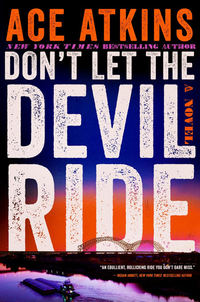
bullet Don’t Let the Devil Ride by Ace Atkins—”A Memphis woman hires a PI to find her missing husband, only to discover that he is involved in a dangerous web of international intrigue–and she and her children are now at risk.” I think the promo line, “S.A. Cosby meets Don Winslow,” is a bit odd (kinda seems like using too many words to say “Ace Atkins”), but eh…it is catchy.
bullet The Daughters’ War by Christopher Buehlman—Galva’s backstory in “set during the war-torn, goblin-infested years just before The Blacktongue Thief.” The prequel nature of this really doesn’t intereste me. But I do like the concept, I really enjoyed my first exposure to Buehlman early this year, and that podcast I featured last week did pique my curiouslty. Which is me using too many words to explain why I’ll be listening to this soon (probably explaining to myself more than anyone…)
bullet Love Letters to a Serial Killer by Tasha Coryell—”An aimless young woman starts writing to an accused serial killer while he awaits trial and then, once he’s acquitted, decides to move in with him and take the investigation into her own hands.” If this wasn’t described as a black comedy, I’d stay far away from it (while understanding why others race to it). But I gotta admit, I’m intrigued…

'Reading a book is like binge watching words.' - Miguel, 9 years old @LiveFromSnackTime

The Ballad of Bonaduke—Episode 53: Connection by R. T. Slaywood: Things That Make You Go “Hmm…”

Been a bit (okay, a month and a half) since I dipped my toe in these waters…


The Ballad of BonadukeThe Ballad of Bonaduke—
Episode 53: Connection

by R.T. Slaywood

DETAILS:
Series: The Ballad of Bonaduke, #53
Format: Kindle Vella Story
Read Date: June 28, 2024

The Story So Far…

A drunken Michael Bonaduke decides to use a grift (with maybe some sort of magic/magic-like “help”) to win on a scratch-off lottery ticket so he has money to buy more to drink. He pulls off whatever he did, gets his money and some booze and stumbles off into the darkness to drink himself into oblivion so he can start again the next day. He’s hit by dark memories (probably what’s driving him to the drinking) of fire, pleading, and screaming. There’s going to be a price to pay for his grift, and he’s trying to be ready.

He’s abducted by some representatives of a mysterious group who subject him to a test—if he passes, everything will be explained to him (and hopefully the reader, too). He passes—and is brought somewhere for answers, or maybe training, or maybe another test. Time will tell (or things are going to get really annoying). Answers aren’t quick to come—but the mysteries and questions keep piling up.

Things get hairy and Bonaduke leaves and finds himself back in the neighborhood he started from. He takes refuge in a homeless encampment shortly before a police raid. He’s apprehended and finds himself an interrogation room and shortly escapes after using his grift (but with results he didn’t quite intend). He finds himself by a group of squatters who seem to have strapped a woman to a chair for reasons that can’t be good. He attempts to rescue her before he even realizes what he’s doing, and seems to have succeeded—well, the two of them got away from the group anyway—breathing but bruised. They make their way to a fast-food taco joint and Bonaduke really needs to refuel to keep going. He tries, but fails to get food because he keeps passing out. Thankfully, the clerk is the same guy from the liquor store and he both recognizes him and gives him first aid. The woman (Zero) wakes up and shows some abilities of her on as she helps them escape from her captors who’ve tracked her down. One thing leads to another—Zero and Bonaduke’s magics don’t mix well (at least until they understand what each other can do?), and they end up in a video-game race against the squatters in a tricked-out version of Eric (the clerk’s) car. Note, I said video-game race, not a video-game-style race. They’re actually in one. When dumped back into reality, he’s surrounded by bruised and broken bodies (of people and cars). And then he gets into a supernatural fight and survives…just.

Or maybe not. But he gets better. And then his new…friends? Acquaintances? People who keep popping up in his life?…start explaining exactly what’s going on to him while they set up a new HQ and try to teach him about his abilities (and everyone tries to understand them) while they try to fund their further work.

What’s Connection About?

There are two parts of this episode really. In the first, Bonaduke chews on some of what he’s learning and applies it to the circumstances around his family’s death, his childhood, and more. He’s starting to make some connections and then is interrupted by his compatriots and the need to free Om.

Bonaduke asserts himself more than he usually does—and everyone responds to it (at least they allow it). Om might not be free—or even closer to free*—by the end of this episode, but we’re starting to get a clearer idea about the powers that this motley crew are tangling with.

Whatever is (mostly) in control of Om tempts Bonaduke to cast his lot in with them. But, at a cost, he refuses and employs a gambit he’d been cooking for a while. It seems to work but before Bonaduke can enjoy the taste of victory, he’s told that was only step one to freeing Om.

* Have an earworm for free with this post.

So, what did I think about Connection?

I’d have been closer to satisfied if each part of this episode had received a full one (or three) to fully develop. But that’s not what we got, so…

I wish circumstances, his patience, other things going on had allowed Bonaduke to spend more time thinking about and thinking through the first half of things. I just really want these answers, and am intrigued by the possibilities.

On the other hand, I’m also intrigued by what’s brought up at the end. This could be pretty cool. I’m concerned that Slaywood is going to fall back on his half-baked and vague “here’s an explanation, but not really” and convoluted hand-waving in the general direction of answers before going off in some other direction. I’m hoping to be proven wrong.


)
3 Stars

This Weekend Sees Re-release of Boise Longpig Hunting Club by Nick Kolokowski: A Gritty, Violent Visit to Idaho

Cover to Boise Longpig Hunting Club by Nick Kolakowski'Boise Longpig Hunting Club

by Nick Kolakowski’

DETAILS:
Series: Jake Halligan, #1
Publisher: Rock & a Hard Place Press
Publication Date: June 30, 2024
Format: eBook
Length: 210 pg.

A Second Edition?

On June 30, Rock & a Hard Place Press will be putting out the second edition of one of those books I haven’t been able to stop thinking of in almost six years. This will be followed by the republication of the sequel, Rattlesnake Rodeo later this year, and the third in the series, Righteous Trash, next year.

I was very excited to read about this—not only is this a heckuva read that I’m hoping finds more readers, I’m eager to read more about Jake and Frankie. Kolakowski has been nothing but generous with his time (and books) since then and it’s great to see good things happening for him.

I’ve read this book twice (and am tempted to do it again this weekend) and it’s just a blast. Also, I have to say that Kolakowski’s fictionalized Boise/Southwestern Idaho/Eastern Oregon is closer to reality than any I’ve come across. And since most of those others are from people who live here, for a New Yorker to get the geography and populace so accurately is really impressive.

For more—check out this interview Rock and a Hard Place conducted with Kolakowski.

What Did I Say About Boise Longpig Hunting Club Back When It Was First Released?

Jake Halligan is a bounty hunter—more in the Lori Anderson/JT mold, than a Stephanie Plum-type—in Boise, Idaho, and the immediate environs. He’s got a kid, an interesting relationship with his daughter’s mother, and a sister that . . . well, you just have to meet her. But think Bubba Rogowski without the size and clinical diagnosis.

Jake’s a Vet, having served in some of the worst conditions Iraq has to offer. He’s smart, he’s careful—he has people he cares about, so he has to be—and he has a conscience. It doesn’t stop him from doing his job, but it can stop him from enjoying it. Early on in the novel, we find Jake after a rough week at work—and a less-than-friendly exchange with the local police—on the whole, his life is looking pretty good, even if Janine (his ex-wife, fiancé, and mother of his child) made him pay a social call on some neighbors. When they get home, Jake finds a dead woman in his gun safe. This plunges Jake into a hunt for a killer—as well as an explanation. He’ll find both—and probably wish he didn’t. It’s a violent, nasty hunt full of crazy characters, drug dealers, Aryan assassins, corrupt police—and people who are even worse than them.

Along for the ride is Janine—I can’t say enough about Janine as a character. From her attitude towards a house without books, to her hidden strength and anxieties—and all points in between. Then there’s Frankie, his sister—she’s cocky, funny, and vicious—she’s the biggest gun dealer in Idaho, not even close to legal, and the law can’t touch her. The law can’t even find her. She’s surrounded by associates/employees who are almost as colorful as she is (some even more so)—and is definitely the person you want at your side (or back) in a firefight.

Which is good—because they’re going to find themselves in a few.

Kolakowski has a great way with his characters—they’re real, they’re human—and they’re larger than life in a way that you’ll absolutely buy, as well as enjoy. When the action starts, it is gripping and exciting—you’ll keep turning pages. When there’s a lull in the action, you can bask in the character moments. I’m not really sure what else can I say beyond that. This is the whole package, you get to spend time with interesting people being interesting, and when they take a break from that, it’s because fists or bullets are flying—or maybe something explodes.

My one gripe—and it’s not much of one before we get back to me saying nice things. The ending is abrupt. I’m not sure if I can think of a well-known book/movie to compare it to. You’re just reading along, hoping that Jake, Frankie, Janine, and the rest survive this mess, and then before you really realize what happened, it’s over. You know who survives—and who doesn’t—and the book ends with very little wrap-up (actually the wrap-up happens before the ending—that remark will make sense when you read it). Kolakowski had a story to tell and he didn’t drag out the ending, much like his protagonist would approach things, I expect. He got the job done and moved on. I would’ve preferred a little more time after the main events are over—there are things I want to know about the immediate aftermath. There aren’t loose ends left untied, I’d just like to see what they look like after they’re taken care of. You can make a strong case that this is the way to end a book—when things are done.

It’s not often that I can evaluate an author’s use of geography—I know that Robert B. Parker and Dennis Lehane have tweaked Boston, I understand that Butcher goofs re: Chicago’s neighborhoods, etc. but I don’t know that reading the books, I learn that later. It’s rare when I’ve been somewhere a book has been set—a little bit with the Mercy Thompson books (but I’m better at noting pronunciation on the audiobooks that no resident would recognize), I noted that Wesley Chu fumbled a smidge Eastern Oregon in the third Tao book, and that Marilynne Robinson’s Housekeeping was creative with the facts, etc. But by and large, this book takes place in the area I’ve lived in most of my life, so I feel that I can actually comment—and Kolakowski nailed it. Not just the details, but he’s got the feel, he’s got the atmosphere, the attitude toward change, and the out-of-state money that’s bringing the change. he’s changed business names and whatnot, but I can still recognize them—I love seeing this kind of detail brought to life. I’m trusting that his depiction of local crime is hyperbolic, however.

I’m a little worried that it’s as accurate as the rest, actually . . . but we’ll move on.

There’s a visceral feel to this novel and these characters—people in places most don’t think about showing skills, interests, and circumstances that you don’t normally associate with that area. Just a guy trying to make a decent life for his family and himself, who finds himself in dangerous situations. I couldn’t help but think of Jason Miller’s Slim in Little Egypt series while reading his. Jake’s far more capable than Slim, and is far less likely to end up on the wrong end of a beating. But there’s a very similar ethos in the books, and fans of one should grab the other right away.

I’m not going to belabor the point anymore, I think it’s clear that I enjoyed the heck out of this—it’s fast, it’s energetic, it’s fun. Go grab a copy of it.

Basically, Get Your Hands On The New Edition


4 Stars

Irresponsible Reader Pilcrow Icon

IN MEDIAS RES—The Book of Perilous Dishes by Doina Rusti, James Christian Brown (Translator): The Arts of Occult Cuisine

The Book of Perilous Dishes Tour Banner
As the title implies, I’m in the middle of this book (59%), so this is not a full post, just some thoughts mid-way through. There were some challenges getting me a copy that my eyes could read, so I didn’t get the chance to finish the book on time. Many thanks to Dave at The Write Reads Tours for trying so valiantly to help.


The Book of Perilous DishesThe Book of Perilous Dishes

by Doina Rusti, James Christian Brown (Translator)

DETAILS:
Publisher:  Neem Tree Press
Publication Date: May 21, 2024
Format: e-Book
Length: 272 pgs.
Buy from Bookshop.org Support Indie Bookstores

What’s The Book of Perilous Dishes About?

This novel takes place in two distinct times, the majority of which starts in 1798 when fourteen-year-old Pâtca is forced to flee the only home she really knows because the city guards are raiding it to take in her grandmother (and anyone else they find there) for crimes imagined (and possibly real). She runs to Bucharest, the city she was born in, where her family had lived for a long time, and where her parents died when she was young.

She was told to track down her “little uncle,” Cuviosu Zăval, who could bring her to her parents’ home as well as provide for her. But Zăval is dead when she arrives—murdered, actually—and things get worse from there. Her meager possessions are stolen, she’s captured by criminals (possibly to be sold as a slave), accused of crimes and imprisoned, taken under the care of someone that she—and readers—cannot be sure she should trust, and…so much more (including several things I haven’t read yet).

Pâtca, Zăval, her grandmother, and who knows how many other members of her family, follow occult practices of various types. Some time back, Pâtca, compiled several recipes that are will bespell the eater into a collection called “The Book of Perilous Dishes.”

At the same time, the city is in turmoil. The current prince is about to be deposed (it doesn’t seem likely that he’ll be able to stop the fomenting rebellion). This prince recently took a slave, Silică, from a prominent citizen (the woman who will later assume Pâtca’s guardianship)—he’s a chef of a caliber that would get an invitation from the Chairman to take on Iron Chef in another time. Soon after she arrives in the city, Pâtca becomes convinced that Silică bought “The Book of Perilous Dishes” from her uncle, and is (unwittingly?) about to unleash chaos on the city unless she stops him.

(there’s a few other things afoot, but let’s stick with the story that the book gets its title from)

The other time is 1829, a.k.a. “The Present” is the perspective the 1789 story is being told from. We get snippets of what’s going on in Pâtca’s life there throughout the book—and the Table of Contents tells me that the last chapter will take place there. I’m really unsure beyond that what to say about it. I mean, obviously, Pâtca survives the tight places and dangers she faces (although that’s generally implied in first-person narration, but with the amount of ghosts/possible ghosts and other weirdness going on here, I’m not convinced that’d be guaranteed in this book)

That Opening

I can think of at least 4 books I’ve read in the last two years that have started like this*—guards/police/authorities/angry crowds, etc. coming for the protagonist/protagonist and their family and they have to flee their home to hide/take on a new persona/find a new home. I don’t bring this up to complain about the lack of originality or anything, it’s just something that occurred to me as Pâtca was being rushed out the door by her grandmother, Maxima.

Not only is it an exciting way to open a book—far better than a description of the weather or something—it almost guarantees that the reader will be hooked for at least a chapter or two, but it also tells the reader a lot about the novel and what to expect just from the opening pages. Odds are, not all of those who flee are going to make it—or someone is going to stay behind in an act of self-sacrifice, so you’ve got some tragedy right out of the gate. You’re also going to see your protagonist with a thirst for revenge, justice, or a resolve to carry on with whatever brought whoever to their door.

It’s an efficient and effective bit of writing and storytelling strategy. And Rusti pulls it off well.

* …and who knows how many in the last 40 years.

Rusti’s Writing

A good deal of the appeal to this book is Rusti’s descriptions and depiction of life in Bucharest. The way she describes certain people and Silică’s food, for example, just about justified what I paid for the book. For example:

If I tell you he was handsome, you will understand nothing. He was a man so luminous that you’d be drawn like a magnet to him from any distance. You couldn’t see his eyes. You couldn’t describe any of the features of his face. He was quite simply a soul that soaked into your flesh and blood. He was like water. He was a spark struck from the heart of a coal. He was the very breath of that noontide, fixed over the city.

That woman had a way of looking that was impossible to forget. She didn’t smile, but her face lit up as if she had drunk up all the events that she gazed at.

Beyond that, there’s just her language and way of telling the story. Largely this has to be Rusti’s culture and heritage shining through—the result is something that feels a lot less like our world than a lot of Fantasy/SF that’s supposed to be in worlds that have no relation to Earth. Tatooine, Qo’noS, and Krynn are a lot more like the U.S./U.K. than the world of this book—which is actually in Europe. This really shines forth brightly in this novel and adds a richness to the experience.

There’s a circuitous style to the way that Rusti moves the plot forward that’s both charming and frustrating. I’m not sure if I can describe it but I’ll try. She’ll begin a section at Step 10 (although you won’t realize that right away) and then slip to Step 2 (or 1) and proceed in order to Step 6 or 7, and maybe make you guess at/assume 8 and 9 while resuming at Step 10. Occasionally, she’ll throw a flashback into the middle of that.

I do wonder about some of the language used—there’s a formality to some of the writing and vocabulary that seems out of place to the pacing and atmosphere (and possibly, characters, I’m not sure about that yet). It’s not in every sentence or paragraph (which, I guess is why I said “some”), but it pops up often enough that I can’t help but take note of it. This is at least partially attributable to James Christian Brown, particularly when it comes to word choices—and what not to translate*. I don’t know how much of Rusti’s vocabulary is as formal as Brown’s, but for my purposes, I have to assume that if Rusti wrote this in English, it’d read this way.

* There is a handy-dandy glossary in the back of the book, I discovered too late, because why read the Table of Contents?

So, what do I think about The Book of Perilous Dishes so far?

I like it. I’m confused and/or uncertain about many things going on—I’m not even sure how much I like/trust/care about Pâtca, much less anyone else. But I’m intrigued and very curious about where this all is going.

It’s definitely one of those books that I’m going to have to read the last couple of pages of before I know what I think of the whole thing—I largely think that the journey is as rewarding as the destination when it comes to books—and certainly, the trip I’m on is pretty interesting. But this is going to be one of those books that I’ll have to look back at the journey once I arrive to decide if it was all worth it, pretty scenery notwithstanding.

At this point, I can say that this is a fascinating world, filled with riveting characters, and a story that’ll keep you wondering and guessing throughout (I’m willing to bet until the last ten pages). But I feel confident in saying that it’s worth a shot.


This post contains an affiliate link. If you purchase from it, I will get a small commission at no additional cost to you. As always, the opinions expressed are my own.


My thanks to The Write Reads for the invitation to participate in this tour and the materials they provided.

BOOK SPOTLIGHT: The Book of Perilous Dishes by Doina Rusti

This morning, I’m very pleased to welcome The Write Reads Blog Tour for Donia Rusti’s novel, The Book of Perilous Dishes. In addition to this Spotlight, my first post about the book will be coming along a little later. The Tour started yesterday and will be going on for a few more days, and there are going to be plenty of interesting things said about the book. So check out https://twitter.com/WriteReadsTours (see also the snazzy image below) to catch other people’s perspective. But for now, let’s learn a little bit about the book, shall we?

The Book of Perilous Dishes Tour Banner

Book Details:

Title: The Book of Perilous Dishes by Donia Rusti, translated by: James Christian Brown
Genre: Historical Fiction, Romanian Literature
Release date: February 2017, March 3, 2022 (Neem Tree Press edition), May 21, 2024 (U.S.)
Length: 272 pages
Publisher: Neem Tree Press
Cover for The Book of Perilous Dishes by Donia Rusti

About the Book:

1798: A magical, dark adventure. Fourteen-year-old Pâtca, initiated in the occult arts, comes to Bucharest, to her uncle, Cuviosu Zăval, to retrieve the Book of Perilous Dishes. The recipes in this magical book can bring about damaging sincerity, forgetfulness, the gift of prediction, or hysterical laughter. She finds her uncle murdered and the book missing. All that Zăval has left her is a strange map she must decipher. Traveling from Romania to France and on to Germany to do so, Patca’s family’s true past and powers are revealed, as is her connection to the famous and sublime chef, Silica.

Book Trailer:

Book Links:

Amazon UK ~ Amazon US ~ Neem Tree Press ~ Goodreads

About the Author:

Donia RustiDOINA RUŞTI, important contemporary Romanian novelist, is unanimously appreciated for epic force, for originality and erudition of her novels. She received all major Romanian awards, including the Romanian Academy Prize, and was translated into many languages (even in Chinese).

She wrote ten novels, including: Fantoma din moară (The Phantom in the Mill, 2008), Lizoanca (2009), Zogru (2006).

The novels Manuscrisul fanariot (The Phanariot Manuscript, 2015), Mâța Vinerii (The Book of Perilous Dishes, 2017) and “Homeric” (2019) can be a Phanariotic Trilogy (18th century). The most recent novel: Paturi oculte (Occult beds), 2020.

Good international reviews in: La Stampa, Stato Quotidiano, Il Venerdì di Repubblica. Il Libero, Neue Zürcher Zeitung, Magyar Nemzet, La Opinion, Turia. Il Mercurio etc.

My thanks to The Write Reads for the invitation to participate in this tour and the materials they provided.

WWW Wednesday, June 26, 2024

This meme was formerly hosted by MizB at A Daily Rhythm and revived on Taking on a World of Words—and shown to me by Aurore-Anne-Chehoke at Diary-of-a-black-city-girl.

The Three Ws are:
What are you currently reading?
What did you recently finish reading?
What do you think you’ll read next?

Seems easy enough, right? Let’s take a peek at this week’s answers:

What are you currently reading?

I’m reading The Book of Perilous Dishes by Doina Rusti, translated by James Christian Brown, and am listening to Labyrinth by Kat Richardson, read by Mia Barron on audiobook.

Cover to The Book of Perilous Dishes by Doina RustiBlank SpaceCover for Labyrinth by Kat Richardson

What did you recently finish reading?

Yesterday I finished Wesley Parker’s Detours and Do-overs and Robert Germaux’s Grammar Sex and Other Stuff: A Collection of (mostly humorous) Essays. I most recently finished The Kaiju Preservation Society by John Scalzi, read by Wil Wheaton on audiobook, and at least temporarily set aside One in the Chamber by Robin Peguero, read by Zion Jang because it just wasn’t working for me (but I can see why it would for many people).

Cover for Detours and Do-Overs by Wesley ParkerBlank SpaceCover for Grammar Sex by Robert GermauxBlank SpaceCover for The Kaiju Preservation Society by John ScalziBlank SpaceCover for the audiobook of One in the Chamber by Robin Pegeuro>

What do you think you’ll read next?

My next book should be the ARC of Shades of Mercy by Bruce Borgos—I think this series has legs, and I’m eager to be proven correct. My next audiobook should be A Door in the Dark by Scott Reintgen, read by Jesse Vilinsky, assuming the friend who is currently listening to our library’s copy (and recommended it to me) finishes before I finish Labryinth.

Cover for Shades of Mercy by Bruce BorgosBlank SpaceCover for A Door in the Dark by Scott Reintgen

Tell me what you’ve been reading lately—or what neat thing is coming up on your TBR.

Cover Re-Reveal: Domestication by Shannon Knight

I got a nasty shock yesterday when I saw fellow bloggers posting this cover a day early, but a quick of my email showed that I put the wrong date in my calendar. So, welcome the Cover Re-Reveal, or Cover Confirmation, for Shannon Knight’s horror novel Domestication this morning! Artist Savanna Mayer (who will be showing up on this site in a Q&A with Shannon and me soon) brought the creepy. But I’ll share that in a minute. First, let’s learn a bit about the book.

Book Details:

Book Title: Domestication by Shannon Knight
Cover Illustrator: Savanna Mayer
Publisher: Winter Moon Press
ISBN (eBook): 979-8-9876393-9-9
Genre: Horror, Thriller
Paperback page count: 298
Release date: July 23, 2024

About the Book:

In an eat-or-be-eaten world, domestication is a death sentence.

When Janie chose the isolated sheep farm, she knew her husband would hunt her down. What she didn’t expect was Rob and Howard. Rob rules the farm with the same domination tactics she uses to train dogs, while Howard believes only human supremacists think humans should be treated any differently than other animals. Janie inadvertently jumps out of the frying pan and into the fire. She wishes to leave her old self behind. She wants to transform. Will she devolve into meat, metamorphose into a monster, or transcend beyond her domesticated limitations?
E-Book Pre-order price: $2.99
E-Book Retail price: $4.99
Pre-order link: https://books2read.com/Domestication
ARC request for book reviewers: https://shannonknight.net/Domestication-ARC/

About the Author:

Shannon KnightShannon Knight wrote Domestication while living on an Icelandic sheep farm in the Pacific Northwest. There are no skulls on her roof, but there are a suspicious quantity of bones kicking around the farm. Shannon graduated summa cum laude with a Bachelor’s in English. She is the author of Grave ColdInsiders, and Wish Givers.

Author Links:

Website ~ Instagram ~ Bluesky ~ Twitter

and now…

The Cover

Cover for Domestication by Shannon Knight

Here’s what the paperback’ll look like if you prefer that:
Paperback Cover Wrap for Domestication by Shannon Knight

Credit goes to Savanna Mayer for that little creepifying image you’ll see in your sleep tonight. I don’t know how many times I’ve looked at it since Shannon sent it to me, and I’m not sure I’ve spotted everything going on there…

Keep your eyes peeled for this book, folks. It’ll be out in a little less than a month and will be worth the wait!
Irresponsible Reader Pilcrow Icon

Top 5 Tuesday – Top 5 books of 2024… so far!


This week’s topic is, “Top 5 books of 2024… so far!…What does your top 5 list look like at our halfway point??” I haven’t done one of these in a minute, this seemed like a good time to get back to it. Whittling down my list to a Top 10 was a piece of cake at this point (a pleasant surprise)–but trimming that to a Top 5 took some work. I think I’m satisfied with the result. Although beyond that this post could’ve been easier, if I’d only finished my posts on three of these by now.

In alphabetical order by author:

1 Cover for The Tainted Cup by Robert Jackson Bennett
The Tainted Cup by Robert Jackson Bennett

This Fantasy-Mystery hybrid (with a decent amount of other-worldly science thrown in) was my first five-star read of the year, and it’s one I’m still thinking about. The world was great, the characters were complex and well-executed, the story and atmosphere were stunning. I could go on and on about this one, but am going to force myself to be pithy here.

My full take on the book can be found here.

2 Cover of The Olympian Affair by Jim Butcher
The Olympian Affair by Jim Butcher

Yes, part of the appeal of this novel was that we finally got something new in this series after years of silence. But I’d have had a blast with this no matter when it was released. Butcher very carefully gave his fans more of just about everything they enjoyed in the first book without duplicating it in any sense. He also deepened and expanded our knowledge and understanding of this world, its magic and politics, and all of the major characters (white hats, gray hats, and black hats). At least two of the new characters had better be back. There’s a character death that I’ll eventually forgive Butcher for, but I’m not there yet. This one just ticked every box for me.

3 The Cover of The Mercy Chair by M.W. Craven
The Mercy Chair by M.W. Craven

This is the darkest M.W. Craven novel–well, I haven’t read his second book yet, so I should qualify this as the darkest Poe and Tilly novel. And that’s no mean feat. The two are called in to help investigate the death of a cult leader and end up discovering much more–murders that no one realized had happened, torture sessions disguised as education/treatment, some twisted emotional and spiritual abuse–and more. Both Poe and Tilly are at there best here–and the rest of regular characters are as well. This will stick with readers for a while.

4 The Cover of Smoke Kings by Jahmal Mayfield
Smoke Kings by Jahmal Mayfield

Speaking of dark…Smoke Kings tells the story of a group of friends who decide to take social justice into their own hands and become vigilantes acting out against those who’ve benefited from lynchings or other racially-motivated crimes their families participated in decades ago. Internal and external pressures start to overwhelm the group and then things get deadly. There’s a whole lot of evil done in the name of righteousness here (by people that others would deny were anything but righteous). The number of heroes–or at least people who were actually accomplishing good things–are far outweighed by those using others. If you’re not disturbed as you’re gripped by this, you’ve missed something.

5 The Cover of Christa Comes Out of Her Shell by Abbi Waxman
Christa Comes Out of Her Shell by Abbi Waxman

The first 87 pages of this book might have been my favorite 87 pages this year. The rest of them were pretty good, too. The central premise was a little out there, but Waxman pulled it off–and the rest of the book was so good you didn’t mind anyway. I laughed, I was moved, my heart was warmed—all the typical reactions to Abbi Waxman. I loved being in this world, surrounded by Waxman’s words and I cannot wait for the next excuse I have to do it again.

My full take on the book can be found here.

LITERARY LOCALS: A Q&A About Writing in Idaho with Arnold Ytreeide

Literary Locals logo
Arnold Ytreeide made me chuckle more than I expected to reading his responses–so, obviously, I went and bought all his books immediately. Not really–but it wouldn’t have surprised me if I did.


Before we get into things, why don’t you give the reader a brief introduction to you and your work.
I come from Seattle where I was a police officer, television producer, and business man for many years. I moved to Idaho in 1988 and here found my true love. We married, and I wrote a little Christmas story for our kids. Somehow an editor at a publishing house heard about it (we never did figure out how) and asked to see it. I sent it, they called back and said they wanted to publish it, and suddenly I was a published author. That was in 1995, and the book was Jotham’s Journey.

A year after that first book came out, the publisher wanted another, then another. I just turned in the manuscript for #8 in the series, and we’re taking it to 10. Also when it was first published, New Line Cinema called me up, very excited to make Jotham into a movie. But then their company got sold, and the new owners decided – much to their disgrace and humiliation – to make a movie about a different kind of lord and some kind of ring or something. Obviously a bad move.

I also have a self-published adventure series for pre-teens, and several novels. All of my books are, at their heart if not on their shirt sleeves, Christian, though my real goal is to reach a wider market with just good stories – which I thought I had done when New Line called.

I was a university professor for 20 years, and wrote when I could, but I’m retired now and it seems like I’m always fighting a deadline. Which is a good thing – it keeps me young.

We keep up a website at JothamsJourney.com, but other than that I am shamefully little involved in social media.
I’m sure the bean-counters at New Line have spent a lot of time second-guessing that choice…

Are you a native Idahoan? What brought you to Idaho in the first place? (answer whichever question applies) What is it about Idaho that keeps you here?
School initially brought me to Idaho, but only for three years, I told everyone. I’d get my degree, and then be returning to Seattle.

Then the women who I instantly decided would be my wife walked in the door one day, and, well, here we are. She was a widow with two small children and, for their sake, we decided to make this our home.

Are you tied into some sort of local author/bookish group/culture? If so, tell us about it and how it helps you as an author. If you’re not, is there a reason for it?
I’m not, really. I enjoy meeting with other authors, but am so busy (with a lot of things, not just writing) that I can’t seem to make a long-term connection.

What kind of events in the area do you attend—either to sell/promote your books or to network with authors? Are there any outside of this area that you hit regularly and wish we had something like it here?
I’ve done a couple book fairs at libraries, but that’s about it. But with the advent of Zoom and the like, I also do a lot of talks to school children around the world about writing and about my books. I think my record is a high school in South Africa. Those are a lot of fun, and maybe are a way that local authors could reach out to schools and groups in the more remote parts of Idaho, or even the not-remote parts. It’s easy, and takes very little prep and no travel time.

What’s the breakdown of your audience—do you have a strong local base, or are your readers from other parts of the world?
My Jotham series is world-wide, and that is certainly the bulk of my sales. But my self-published series (Mike Danford Adventure Series) also gets strong sales in Canda, the UK, Australia, and parts of Europe. By far, though, the biggest percentage of sales come from the U.S.

I have no way of knowing for sure, but just from the emails and comments we get, I believe I have a pretty big footprint in the HomeSchool market.

Do you think there are particular challenges or advantages to being a writer in the Treasure Valley? (possibly both)
Well, since Doerr lives and writes from here (or at least did) I’m guessing the challenges are minimal😊 I’ve been writing for forty years, and I would say that, in the past, location did actually have an impact on success. But with the internet, that has completely changed – as I said, I spoke face-to-face(ish) to high schoolers in South Africa. In the last few months I’ve taken many online meetings with publishers and movie producers, including a publisher in London. No one cared where I was. And if they want a face-to-face meeting – which is always nice and usually preferred – we can always make that happen. In January a group of three producers came to meet with us, and we actually met in a meeting room at the Nampa Library. So we seem to always work it out.

Certainly we don’t have the direct access to in-person events that we might have in large cities, but that’s about the only drawback I can see. My wife and I often meet with fans at a local Starbucks when asked, but by far these days the most contacts are through Zoom and other social media.

Do you bring Idaho (or some sort of Idaho-sensibility, assuming one exists) to your work? Whether or not anyone else sees it, can you look at some aspect of your writing and think “That’s Idaho” or “I would do ____ differently if I was a Kentuckian or from Illinois?”
Yes, especially in my Jotham series, which takes place in Israel. I’ve been to the Holy Land, and draw much inspiration from those memories, but the wilderness of Idaho looks a lot like the wilderness of the Holy Land, so as we drive around I’m always looking for interesting places in which I can set scenes.

In fact, when New Line was all gung-ho to make Jotham, we scouted the entire south end of Idaho and mapped out shooting locations.

My Danford series is set in a fictional small town on the ocean, but much of the inspiration for that town comes from right here in Idaho. My protags are seventeen and smart, but they also have small-town ethics, and a sense of right and wrong. All of that came from right here. They do not, however, talk a lot about potatoes😊

One final question, is there a book (or two…or 18, if you get really carried away), that embodies Idaho/the Idaho spirit to you to recommend to my readers?
Oddly enough, I’d have to say anything Zane Grey. Though the writing style is antiquated, the stories certainly are not. I read to my wife every night – an eclectic collection of most anything – and a while back we tried a Zane novel. It reminded us both of Idaho!
I’m not sure how odd that is–makes perfect sense to me.

Thanks for your time and participation! Hope you enjoyed it! (I sure did)


Literary Locals logo

MUSIC MONDAY: The Underdog by Spoon

The Irresponsible Reader Music Monday Logo

Music Monday's originated at The Tattooed Book Geek's fantastic blog and has shown up hither, thither, and yon since then.

Irresponsible Reader Pilcrow Icon

Page 98 of 609

Powered by WordPress & Theme by Anders Norén