Author: HCNewton Page 99 of 609

Dog Day Afternoon by David Rosenfelt: Understanding Marcus

Cover for Dog Day Afternoon by David RosenfeltDog Day Afternoon

by David Rosenfelt

DETAILS:
Series: Andy Carpenter, #29
Publisher: Minotaur Books
Publication Date: July 2, 2024
Format: eARC
Length: 304 pg.
Read Date: June 20-21, 2024
Buy from Bookshop.org Support Indie Bookstores

What’s Dog Day Afternoon About?

Overall, I’m not sure that the body count in this book is that much higher than in other books in this series—but the way it opens is very different. The instigating crime feels like something straight out of a mass-shooter video your HR people make you watch annually (assuming your workplace is similar to mine, I guess)—it’s cold, calculated, with a casual disregard for human life we don’t often see in this series. (Andy says something similar at one or two points).

So you’re left wondering—how does Andy get roped into representing the accused? (although many readers are going to read that scene and pick out the places the defense is going to take advantage of). This is where Marcus comes in.

Andy learned about this earlier, but we readers learn about this now—Marcus mentors young people in his neighborhood who have had a rough time of it and have run afoul of the law in the past. They need some help, some guidance, and some favors—Marcus provides this.

He also helps a couple of those he mentors to adopt a dog from the Tara Foundation. One of these two is accused of the crime—Marcus comes to Andy for help, and he gets it. That Willie also vouches for the accused helps—there’s no chance that Willie agrees to let one of their dogs go to someone capable of this crime.

That’s not evidence he can introduce in court, but it’s compelling for Andy. Now he just needs to find something that will be compelling in court.

Marcus

Marcus can’t become too well-rounded of a character—we need him in the shadows, doing things that defy belief. But we can learn more about him than we have prior to this.

We see that he can have attachments to people other than Laurie (and by extension, Andy). We see just how far he’s willing to go to help someone.

I was interested in this book because I’ve enjoyed almost every one of its predecessors enough that I don’t bother to see what they’re about before I add them to the TBR list. But once I noted that this one featured Marcus like that—my excitement grew. I love watching the character at work, and to see him in a different situation than we’re used to made my day. Also, we got just what the doctor ordered from a Marcus-centric book.

So, what did I think about Dog Day Afternoon?

I cannot believe that I’ve read 29 books in this series (plus a few in a spin-off). Twenty-nine. That’s just insane. Now, am I going to say that they’re all as fresh as they were in 2002 when Open and Shut came out? Of course not. But they have their moments when they feel that way.

* According to my logs, I read it in 2011—I’ve been with these characters for 13 years. Mind-boggling.

So, Rosenfelt has his work cut out for him to do something to keep the audience engaged. Over the last few books, he’s worked on deepening the relationship between Andy and Marcus, which has been nice. This book takes a big step forward in that. I don’t know that we’re going to see much more than this anytime soon—you need to preserve some of Marcus’ mystique to keep him nearly-superhuman in Andy’s (and the reader’s) eyes. Similarly, we readers can know Hawk a little better than when Spenser first ran into him in Promised Land—but not too much.

So, we’d better enjoy what we get here, right?

And naturally, that’s really easy. Other fun bonuses—Andy getting along with the prosecutor. Cory clearly being annoyed with Sam Willis wanting to get in on the action. Even some of the Andy and Tara interactions felt a little different (not unusually so, and not negatively). There was also the attempt of a law firm to hire the most reluctant lawyer in the world—that did bring a smile to my face.

There’s a good mix of the tried and true Andy bits, fun material with our old friends, a clever mystery, a new side of Marcus, and Rosenfelt’s trademark zippy prose. It’s easy to see why this series has gone on as long as it has—and may it continue to do so.

Can you hop on here? Absolutely—and you’ll have the fun bonus of a healthy backlist to work your way through once you get done with this one.

Disclaimer: I received a copy of this book from St. Martin’s Press via NetGalley—thanks to both for this.


4 Stars

This post contains an affiliate link. If you purchase from it, I will get a small commission at no additional cost to you. As always, the opinions expressed are my own.
Irresponsible Reader Pilcrow Icon

REPOSTING JUST ‘CUZ: Theological Retrieval for Evangelicals by Gavin Ortlund: An Accessible Call for 21st Century Christians to Learn from the Past

I ended up having more time in the day to write this post than I normally do, and as a result ended up a bit more rambling and less-focused than intended. Hopefully it’s worth the read, despite my laxness.

Theological Retrieval for Evangelicals

Theological Retrieval for Evangelicals: Why We Need Our Past to Have a Future

by Gavin Ortlund

eARC, 224 pg.
Crossway, 2019

Read: October 5-12, 2019


This is another one of those theological works that I feel really unqualified to discuss. There’s part of me that thinks I should stop requesting them from NetGalley, or buying them and deciding that I want to post about them, but I probably won’t. So, know that this is from the perspective of an opinionated and semi-(formally)educated reader and occasional armchair theologian. Not the reflections of an ordained minister or professional theologian.

I’m glad Ortlund talks about this right out of the gate—but the case he lays out for Theological Retrieval here, strikes me as very similar to Michael Allen and Scott R. Swain’s Reformed Catholicity: The Promise of Retrieval for Theology and Biblical Interpretation and Kevin J. Vanhoozer’s Biblical Authority after Babel: Retrieving the Solas in the Spirit of Mere Protestant Christianity. Ortlund says they’re aiming for the same target, but those works are more oriented toward the Reformed, where he’s focused on Evangelicalism. I’d say that they’re all wanting the same thing, but his work is more accessible (by design) and less-inclined to advertise his scholarly awareness (particularly with the former).

One problem that you encounter right away is a nebulousness about the term “Evangelical.” If Ortlund defined his usage, I missed it. He seems to use it to apply to Bible-believing Protestants who aren’t Reformed or Lutheran. Which is fair enough, I guess, it’s just not an easily defined term anymore. Frankly, I’m with Carl Trueman and others, and consider the label “evangelicalism” meaningless as it can be applied to “everyone from Joel Osteen to Brian McLaren to John MacArthur.”

Ortlund doesn’t give a strict definition of Theological Retrieval—in fact, he avoids it, preferring to see it as a mindset or attitude toward the pre-Reformation Church and Theology, drawing from its strengths, seeing its weaknesses in our own, and putting the contemporary (and Reformation) Church in context of a developing understanding from the end of Acts to Second Coming. Given that, we should be more aware of, and interact more with, the Patristic and Medieval Church. He uses Turretin, in particular, to great benefit in showing that this was the mindset of the Protestant Reformation, and calls us back to it. Along the way, he uses Warfield (and the rest of Old Princeton) as emblematic of Evangelicalism’s departure from this thinking. I’m not sure that’s the best reading of Warfield, but it’s not worth arguing, because his overall point is so right.

The first Part of the book—roughly 60 pages in three chapters—sets the agenda, it’s “A Manifesto for Theological Retrieval.” He begins by asking if Evangelicals can Retrieve Patristic and Medieval Theology, before moving to asking why they need it, and then sketching out both the benefits and perils of it. All of which is profitable and well-worth reading.

But what makes this book different than so many, is that Ortlund doesn’t focus on the project, the theory behind it, or the method. He gives the rest of the book—120 pages or so—to examples of what he’s calling for people to do. Case-studies in theological retrieval—which is some of the best theological reading I’ve done this year, maybe the last couple of years.

The first is a chapter called “Explorations in a Theological Metaphor: Boethius, Calvin, and Torrance on the Creator/ Creation Distinction.” A nice mouthful, to be sure. To illustrate the Creator/Creature Distinction, he compares Tolkein’s relationship to The Lord of the Rings to God’s relationship to his creation, in terms of Boethius’ understanding, and how Calvin’s view would differ, before wrapping up with Torrance. Now, I have little use for what he tries to do with Tolkein—I think this sort of thing is almost as bad as trying to teach the Trinity by analogy (which always quickly lands the teacher in heresy). I know enough people do this sort of thing in teaching and writing, and I should try to pay more attention, but my eyes just glazed over. Most readers will get more out of this than I did. I did appreciate what he said about Boethius and Torrance in distinction from Calvin and feel like I understand the three a little better (not that I’m all that familiar with Boethius and Torrance), and think I got something from the chapter overall, but I know my own prejudices kept me from a full appreciation.

Things improve with “God Is Not a Thing: Divine Simplicity in Patristic and Medieval Perspective.” Rather than going head-on for contemporary critics of the doctrine, he takes a look at historic formulations (not limited to Aquinas’) of the doctrine and seeing how that should actually deepen Evangelical’s commitment to Simplicity as well as broaden our understanding of it. He interacts a good deal with James Dolezal’s wonderful All That Is in God and God without Parts here and reminds me that I need to re-read the former and read the latter. A better blogger (one also focused on theology, not the book) would camp out here for a few paragraphs, but I won’t. It’s just a great chapter and the kind of thing we need to see more of.

My favorite case study is the third, “Substitution as Both Satisfaction and Recapitulation: Atonement Themes in Convergence in Irenaeus, Anselm, and Athanasius.” I would read a book-length version of this tomorrow. Well, not tomorrow. I would start a book-length version of this tomorrow, and have a lot of fun over the following days. Ortlund shows the overlapping concerns of Irenaeus and Anselm (who are so often pitted against each other), how the Christus Victor and Substitutionary Atonement models are interdependent, not rivals (while not giving an inch to contemporary critics of Substitutionary Atonement, it should be pointed out). From there, he moves onto some of Athanasius’ work on the Incarnation, demonstrating that these works have a good deal to say about the Atonement, as well. If I got nothing else out of this book, I’d consider the time I spent reading it well-spent just for this chapter. I could’ve lived without the use of Aslan and the Stone Table portion of the study, but (contra the Tolkein), it proved to be a useful illustration.

“Cultivating Skill in the “Art of Arts”: Pastoral Balance in Gregory the Great’s The Book of Pastoral Rule” is the last case study. I remember reading healthy portions of this work by Gregory in a Church History class for much the same reason that Ortlund uses it. There’s a lot of wisdom for pastors of every age in this very old work—he also shows how manuals like Baxter’s or Spurgeon’s will say similar things. Timeless truths and advice put in ways that others wouldn’t. I really don’t have much to say about this, but it’s almost as good as the previous two.

This is one of the most-easily outlined books I’ve read this year (possibly the most), that’s a fantastic aid for referring back to it in the future or for going back and taking thorough notes. I’d go crazy if I read too many books like this, I prefer the more organic feeling approach. But when this is done right, it’s a handy bonus. Beyond that, as I said before, it’s very accessible. Sure, there are parts that are demanding, but nothing’s out of reach for the committed and attentive reader—and most of the time you don’t have to be that committed.

Like their counterparts from the previous century, Twenty-First Century Christians don’t know enough historical doctrine, and certainly don’t know how to treat what little they do know. Too often, Protestants will cede everything prior to 1517 to Rome (maybe Rome and the East), focusing only on the last 500 years—if they’ll even pay attention to anything prior to Fanny J. Crosby. Ortlund’s work is a great call for the everyday Christian to familiarize themselves with the past and learn from them as we ought the rest of the Church Militant. I strongly recommend this.

Disclaimer: I received this eARC from Crossway via NetGalley in exchange for this post—thanks to both for this stimulating read.


4 Stars

Saturday Miscellany—6/22/24

Odds ‘n ends about books and reading that caught my eye this week. You’ve probably seen some/most/all of them, but just in case:
bullet Tom Gauld on the human-AI collaborative novel Robot Apocalypse 2030—let’s start off this week with a quick Gauld cartoon, shall we?
bullet 94-Year-Old Grandmother Kept Meticulous Book Log for 80 Years—I’m both impressed and jealous
bullet An Update About Disappointing Things, and Things That Did Not Disappoint—Harry Connolly’s latest update
bullet Do You Love YA Paranormal Books, too?
bullet Four Books That Are Gateways to Science Fiction Sub-Genres—Beth Tabler surveys the sub-genres: Cyberpunk, Science Fiction Humor, Hard Science Fiction, and Space Opera; and gives some great recommendations
bullet When Is An Author “Milking” Their World?
bullet Idle Thoughts on Fantasy Archetypes: The Mentor

A Book-ish Related Podcast episode (or two) you might want to give a listen to:
SFF Addicts Ep. 109: Christopher Buehlman talks The Daughter’s War, Atmosphere, Voice & More—a great convo

To help talk about backlist titles (and just for fun), What Was I Talking About 10 Years Ago Week?
bullet The Severed Streets by Paul Cornell—the 2nd of the Shadow Police Novels (if only there were several more)
bullet I talked about the release of Shattered by Kevin Hearne, All Fall Down by Jennifer Weiner, Top Secret Twenty-One by Janet Evanovich, and Heirs of Grace by Tim Pratt.

This Week’s New Releases that I’m Excited About and/or You’ll Probably See Here Soon:
bullet Winter Lost by Patricia Briggs—Mercy, Adam, and Mercy’s brother are in Montana hopefully not destroying the world.
bullet The Last Decade of Cinema 25 Films from the Nineties by Scott Ryan—Ryan writes about 25 of the most iconic films of the 90s.

Material Safety Data Sheet (MSDS) Iocane Powder Summary: In its powdered form, locane is colorless, odorless, dissolves instantly in liquid, and is one of the more deadly poisons known to man. General Usage: Mix thoroughly with wine or other beverage. Commonly used in a battle of wits, 'to the death' in order to determine: A) who is right B) who is dead Safety Precautions: 1) never get involved in a land-war in Asia 2) never go in against a Sicilian when death is on the line First Aid: None.

REPOSTING JUST CUZ: The Kaiju Preservation Society by John Scalzi: Delivers Everything the Title Promises

Things are afoot at Irresponsible Reader HQ that made posting today impossible. However, I started the audiobook for this just for something to do. I remember thinking it was great, but I’d forgotten just how ridiculously fun this book is. Incidentally, Wil Wheaton is a fantastic choice to read this.


Kaiju Preservation SocietyThe Kaiju Preservation Society

by John Scalzi

DETAILS:
Publisher: Tor Books
Publication Date: March 14, 2022
Format: Hardcover
Length: 258 pg.
Read Date: April 1-4, 2022
Support Independent Bookstores - Visit IndieBound.org

You have no idea how difficult it was for me to not say, ‘Welcome to Jurassic Park!’ to all of you just now.”

Jurassic Park didn’t end well for anyone in it,” I pointed out. “Book or movie.”

“Well, they were sloppy,” Tom said. “We’re not sloppy. And, they were fictional. This is real.”

What’s The Kaiju Preservation Society About?

Jamie Gray drops out of his Ph.D. program (writing a dissertation on utopian and dystopian literature) thanks to a quarter-life crisis that gets him to want to make a lot of money. So he goes to work for a tech startup, starts to make decent money, and gets fired just as COVID lockdowns start. He starts scraping by on his savings and meager work for a food-delivery app.

Until he delivers shawarma to Tom one day—the two were acquaintances in college, and they have a brief conversation where a couple of things come out—Jamie hates delivering food, and the NGO that Tom works for has an immediate need of someone on his team. He doesn’t give Tom a lot of information, but that the work involves travel and large animals. His team is set to depart soon, and they can’t without a full team. They just need someone who can, and is willing to, lift things. Tom points out his nice condo as proof that they pay well. Jamie signs on.

A few days later, Jamie and a few other new people on the team find out what the initials in KPS stand for—after it’s too late for them to back out. They’ve traveled to a parallel Earth populated by Kaiju for a six-month stint at one of the human bases.

Obviously, like the book and movie referenced above, things go wrong. They just have to for the sake of a novel, right? (but up until then, I think I could’ve made a case for this being an entire novel without that—it exists as one for longer than I expected—and I would’ve liked it just as much as the one Scalzi delivered).

The Science Fiction-y bits

Given Tom’s work, and Jamie’s, Scalzi’s able to gloss over a lot of the how-they-eat-and-breathe (and other science facts…la! la! la!) stuff, but he does reference things like the square-cube law when it comes to enormously big creatures. Jamie’s new friends include scientists who can deliver some of the biology, chemistry, etc. that are needed for the story—but when it’s needed, they’re always explaining it to the liberal arts guy on their team, so the reader doesn’t have to wade through the heady stuff (something Michael Crichton could’ve used, for example).

It’s not a perfect way to deal with these things, but it sure works well, and Scalzi feeds it to the reader in his usual charming way, so I embraced it.

Pop*.* Fiction

In his Author’s Note, Scalzi states:

KPS is not, and I say this with absolutely no slight intended, a brooding symphony of a novel. It’s a pop song. It’s meant to be light and catchy, with three minutes of hooks and choruses for you to sing along with, and then you’re done and you go on with your day, hopefully with a smile on your face. I had fun writing this, and I needed to have fun writing this. We all need a pop song from time to time, particularly after a stretch of darkness.

I’d been describing it as a popcorn movie in a book. He says pop song. It’s pop-something.

It’s the movie you escape to in the middle of a heatwave and forget about the oppressive weather, the sun, and everything else to enjoy the heat and some pure entertainment. It’s the song you find yourself overplaying because it’s just so catchy until you get sick of it (although you can’t help singing along) and abandon it for years until it comes up on some random mix and you become obsessed with it again for a couple of weeks.

What I found striking about Scalzi saying that is that it reminds me of Seanan McGuire’s comments about the last Toby Daye novel—she needed to write something like that (and I enjoyed it for similar reasons to this one). Are we going to see more books like this from other authors soon? Did 2020/2021 gift us a slew of authors writing happy books as a way to shake it off? (I wonder if Winslow’s Free Billy fits here).

Frankly, I hope so.

So, what did I think about The Kaiju Preservation Society?

“Why isn’t he eating us?” I asked. We were now close enough to Edward that this was not an entirely irrelevant question.

“He’s asleep,” Satie said.

I glanced over at him. “Asleep?”

“They sleep, yup.”

“How can you tell when he’s asleep?”

“He’s not eating us, for one,” Satie said. “You can’t see his eyes, for another.”

I love popcorn movies, I love pop songs like that…and well, you can probably see where that’s going. I’m not the world’s largest Kaiju fan (don’t actively dislike them, either), but it really doesn’t matter, this book skips all that and jumps right to the pleasure center of the brain the same way a catchy tune can.

Reading The Kaiju Preservation Society reminded me of the first time I read Ready Player One (before the movie, distance, and the sequel made me take a second/third/fourth look at it). Or Snow Crash (a wise reference for Scalzi to make early on). It sort of reminded me of the first time I read High Fidelity, too. The catchy, irreverent narrative; the snappy dialogue; the first-person narrator you click with right away*…it just took me a few pages to know that I was going to find nothing but joy in these pages.

*or probably never.

And really, I don’t have a lot to say about the book beyond this. It brought me joy for a couple of days. Thinking about it now is doing the same thing. Go get your hands on this text-based dopamine hit in your preferred medium (I bet Wheaton’s audiobook narration is perfect), sit back, and enjoy yourself.


5 Stars

This post contains an affiliate link. If you purchase from it, I will get a small commission at no additional cost to you. As always, opinions are my own.

Opening Lines: One In the Chamber by Robin Peguero

Head & Shoulders used to tell us that, “You never get a second chance to make a first impression.” That’s true for wearing dark shirts, and it’s especially true for books. Sometimes the characters will hook the reader, sometimes the premise, sometimes it’s just knowing the author—but nothing beats a great opening for getting a reader to commit.

You aren’t born a killer. You don’t gradually become one, either. One minute, you’re not, and the next, you just are. Like your first time having sex. Just as thrilling. Just as awkward. Nothing much changes but the label. you’re still you. But now, you’re a quote-unquote murderer. You played God and took a human life.

It’s entirely natural, but it still shocks people. Some people want other people dead. We visualize our goals, and we achieve them. Shouldn’t that be celebrated?

You swish someone wanted you dead. Not that you have a death wish. You’re too self-involved for that, and suicide is so gauche. you just wish you were that important to someone. It’s a compliment really: to have given another person’s endpoint more than a passing thought. To decide for them that today is enough. And not just today, but at this very minute, their contribution to history should meet its unceremonious finish. High Flattery.

You’re welcome.

from One In the Chamber by Robin Peguero
Cover to One in the Chamber
I’m not sure what happens over the next 369 pages (in a sense). I just want almost 400 pages like this.

Opening Lines Logo

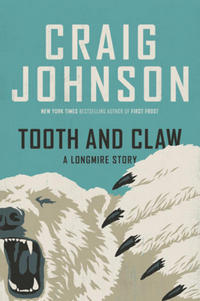
First Frost by Craig Johnson: Walt and Henry Get Their Kicks…

Cover to First Frost by Craig JohnsonFirst Frost

by Craig Johnson

DETAILS:
Series: Walt Longmire, #20
Publisher: Viking
Publication Date: May 28, 2024
Format: Hardcover
Length: 317 pg.
Read Date: June 3-4, 2024
Buy from Bookshop.org Support Indie Bookstores

What’s First Frost About?

This is a dual-timeline novel—which isn’t altogether new for the Longmire books. In the present time, the shootings that ended The Longmire Defense* are being looked at, and Walt’s possibly facing criminal charges.

* I don’t think it’s much of a spoiler to say that. Most Longmire books end with one.

In the other timeline—which gets most of the ink—we watch Walt and Henry try to drive cross-country after graduating college in California so they can report for Basic Training on the East Coast. A road mishap and a bit of bad navigation on Walt’s part result in them getting stuck in a small Arizona town for a few days, where they find some trouble.

Now

On the one hand, I get the antagonism that Walt and Vic show toward the proceedings because it’s instinctual to get defensive when someone’s questioning your actions (and, well, Vic’s antagonistic about a lot). But it seems excessive—Walt’s enough of a believer in doing things The Right Way (in contrast to his grandfather or Lucian, for example), that he should be in favor of this exercise.

That said…it’s clearly motivated by politics and big-money-fueled corruption. So maybe it’s justifiable for them to push back against this. I’m not entirely convinced that the way this stage of the investigation ends is really less corrupt than the way it starts.

Then

It’s 1964 and the first thing we see is Walt and Henry surfing one last time before taking off on their drive to Oklahoma for Henry to see some family and then to their respective bases. Everything that happens in California is vintage Johnson and if he’d maintained that quality, I’d have been very happy.

But once Walt breaks something in their truck when he breaks to avoid a dog in the road (coyote, Henry insists), I think the whole thing goes to pot. Walt thinks something’s hinky in the tiny and sparsely populated town they find themselves in. Rather than just waiting for the truck to get fixed so they can hit the road, he starts asking questions and annoying all the wrong people.

Meanwhile, Henry plays tourist, checking out the abandoned Japanese Internment Camp nearby (which, of course, ends up playing a role in what Walt’s stirring up) and flirting with a local young woman.

It’s not long before people are starting to end up dead and Walt’s life becomes endangered.

So, what did I think about First Frost?

If I think about this as Johnson’s tribute to Route 66 (and, boy howdy, was it one) and a way for him to talk about Japanese Internment Camps, I like this more. If I think about this as a Longmire novel, my regard diminishes. I do frequently enjoy Johnson multitasking—talking about Van Gogh’s murder, the Sturgis rally, Native American Women going missing, and so on, while telling a Longmire story—so that’s not it. I just don’t think the stories were executed as well as Johnson usually does.

Both stories wrapped up too easily—a little too _____ ex machina (I can’t tell you what non-deus entities were involved). At the same time, the 1964 story took a little too long to come to its resolution. I’m not sure how that’s not contradictory, but it’s not (at least in my mind).

I believe the major function of the present storyline was to set-up a future novel or two (see also: the first time Walt and Henry watched Lolo Long’s niece, Jayla, play basketball)—so I could come around to appreciate what Johnson was doing here. But what we saw in First Frost left me wanting.

The 1964 story ultimately suffered from what a lot of prequels do—it’s hard to believe that the Walt and Henry who just finished college act so much like Walt and Henry with their respective military trainings and decades of experience do. I had no problem when we looked at Walt as an MP (in whatever book that was), I think Johnson got it right there, ditto for rookie Walt in The Western Star.

I’m actually not entirely wild about the portrayal of the Cheyenne Nation in the 1964 Story, actually. Almost all of it seemed off—but I think it’s a good thing, it shows that life, experience, and maturation changed Henry.

Obviously, time and re-reads/listens might change what I think about it, but on the whole, this one gets a “not bad” from me. I am curious about the stories I think were set up and think we could be in for some fun there (and a potentially good way to get Walt out of Absaroka County to keep the body count from rising).

Long-time fans will find enough to satisfy them, people curious about the series should start elsewhere.


3.5 Stars

This post contains an affiliate link. If you purchase from it, I will get a small commission at no additional cost to you. As always, the opinions expressed are my own.
Irresponsible Reader Pilcrow Icon

WWW Wednesday, June 19, 2024

I’m having a hard time lately putting the book(s) I’m reading down and picking the laptop up to write something. Which is both wonderful and frustrating. Hopefully having today off will allow me to post this and something else. We’ll see how long that honey-do list ends up being, eh?

This post contains 1 book from my 20 Books of Summer list and 2 from my Books on My Summer 2024 to-Read List (That Aren’t on My 20 Books Challenge). This feels rather promising when it comes to accomplishing my goals.

This meme was formerly hosted by MizB at A Daily Rhythm and revived on Taking on a World of Words—and shown to me by Aurore-Anne-Chehoke at Diary-of-a-black-city-girl.

The Three Ws are:
What are you currently reading?
What did you recently finish reading?
What do you think you’ll read next?

Seems easy enough, right? Let’s take a peek at this week’s answers:

What are you currently reading?

Today I’ll start The Teachings of Shirelle: Life Lessons from a Divine Knucklehead by Douglas Green. Last week, I’d said it was going to be my last book, but then I consulted a calendar and shuffled things a bit. I’m currently listening to Erasure by Percival Everett, read by Sean Crisden on audiobook—the first half of this is so good, but I’m worried that it’ll fall apart in the end.

Cover image for The Teachings of Shirelle by Douglas GreenBlank SpaceCover of the audiobook for Erasure by Percival Everett

What did you recently finish reading?

A few hours ago I finished Robert Galbraith’s The Running Grave, the fastest-moving Strike novel in a while. The Bitter Past by Bruce Borgos, read by James Babson is the last audiobook I finished.

Cover of The Running Grave by Robert GalbraithBlank SpaceCover for the audiobook of The Bitter Past by Bruce Borgos

What do you think you’ll read next?

My next book should be Dog Day Afternoon by David Rosenfelt, I’m practically guaranteed good time with a new Andy Carpenter. For my next audiobook, I think I’m going to try One in the Chamber by Robin Peguero, read by Zion Jang.

Cover for Dog Day Afternoon by David RosenfeltBlank SpaceCover for the audiobook of One in the Chamber by Robin Pegeuro

We’re approaching the middle of the year—how’s your 2024 reading looking? Or, how’s this week shaping up for you?

Top Ten Tuesday: Books on My Summer 2024 to-Read List (That Aren’t on My 20 Books Challenge)

Top Ten Tuesday Logo
The topic for this week’s Top Ten Tuesdays is the Books on My Summer 2024 To-Read List, given that I’ve already named the books in my 20 of Summer challenge, I figured I’d look at some of the other books I hope to tackle. Most of these are ARCs, and those are most likely to be finished–it’s entirely possible that I’ll get the rest. This is a very heavy “Traditionally” published list–the Top 20 is pretty Indie-centric, so I think that evens things out.

Books on My Summer 2024 to-Read List (That Aren't on my 20 Books Challenge)
In alphabetical order, with descriptions copied and pasted from the publishers’ websites.

1 Cover to Amari and the Despicable Wonders by BB Alston
Amari and the Despicable Wonders by B. B. Alston

War has come to the supernatural world, and Amari’s two worst enemies are leading the charge.

Elaine Harlowe has manipulated her way into becoming prime minister, using her mind control ability to force the Bureau to take up her vicious grudge against magiciankind. Meanwhile, Dylan Van Helsing, the newly crowned leader of the League of Magicians—and Amari’s former partner—is after a destructive new power that would not only ensure the magicians’ victory . . . it would make him invincible.

With neither the Bureau nor the League safe for Amari, and her newly returned brother, Quinton, determined to keep her out of the fray, she and her friends decide to find a way to end the war on their own.

So when they learn that the only way to stop Dylan is to find powerful magical inventions known as Wonders, they go after them. But wielding these items comes at a terrible cost, and Amari will have to decide just how much she’s willing to sacrifice . . . because the Despicable Wonders will demand everything.

There’s a lot for Alston to accomplish in this third volume—I’m looking forward to seeing if he can pull it off.

2 Cover to Don't Let the Devil Ride by Ace Atkinds
Don’t Let the Devil Ride by Ace Atkins

Addison McKellar isn’t clueless—she knows she and her husband Dean don’t have the perfect marriage—but she’s still shocked when he completely vanishes from her life. At first Addison is annoyed, but as days stretch into a week and she’s repeatedly stonewalled by Dean’s friends and associates, her frustration turns into genuine alarm. When even the police seem dismissive of her concerns, Addison turns to her father’s old friend, legendary Memphis PI Porter Hayes.

Porter and Addison begin to dig deeper into Dean’s affairs and quickly discover that he was never the hardworking business owner and family man he pretended to be. As they piece together the connections between a hook-handed mercenary, one of Elvis’s former leading ladies, and a man posing as an FBI agent, it becomes clear that Dean was deeply enmeshed in a high-stakes web of international intrigue, and Porter and Addison aren’t the only ones looking for him.

Dean angered some very dangerous people before he disappeared—people who have already killed to get what they want—and they won’t hesitate to come after his family to even the score.

Been a long time since I read an Atkins novel that wasn’t featuring Spenser or Quinn Colson, it’ll be a good change of pace.

3 Cover of Winter Lost by Patricia Briggs
Witer Lost by Patricia Briggs

In the supernatural realms, there are creatures who belong to winter. I am not one of them. But like the coyote I can become at will, I am adaptable.

My name is Mercy Thompson Hauptman, and my mate, Adam, is the werewolf who leads the Columbia Basin Pack, the pack charged with keeping the people who live and work in the Tri-Cities of Washington State safe. It’s a hard job, and it doesn’t leave much room for side quests. Which is why when I needed to travel to Montana to help my brother, I intended to go by myself.

But I’m not alone anymore.

Together, Adam and I find ourselves trapped with strangers in a lodge in the heart of the wilderness, in the teeth of a storm of legendary power, only to discover my brother’s issues are a tiny part of a problem much bigger than we could have imagined. Arcane and ancient magics are at work that could, unless we are very careful, bring about the end of the world. . . .

It’s been two years since we’ve got the chance to check in on Mercy and the rest, that’s too long.

4 Cover of Shades of Mercy by Bruce Borgos
Shades of Mercy by Bruce Borgos

This has nothing to do with the last one…no werewolves or fae or anything. Just Sheriff Porter Beck back for his second novel.

Porter Beck is the sheriff in the high desert of Nevada, doing the same lawman's job his father once did now that he's returned home after decades away. With his twelve person department, they cover a large area that is usually very quiet, but not of late. One childhood friend is the latest to succumb to a new wave of particularly strong illegal opioids, another childhood friend—now an enormously successful rancher—is targeted by a military drone, hacked and commandeered by an unknown source. The hacker is apparently local—local enough to call out Beck by name—and that means they are Beck's problem.

Beck's investigation leads him to Mercy Vaughn, the one known hacker in the area. The problem is that she's a teenager, locked up with no computer access at the secure juvenile detention center. But there's something Mercy that doesn't sit quite right with Beck. But when Mercy disappears, Beck understands that she's in danger and time is running out for all of them.
5 Cover to Broiler by Eli Cranor
Broiler by Eli Cranor

Gabriela Menchaca and Edwin Saucedo are hardworking, undocumented employees at the Detmer Foods chicken plant in Springdale, Arkansas, just a stone’s throw from the trailer park where they’ve lived together for seven years. While dealing with personal tragedies of their own, the young couple endures the brutal, dehumanizing conditions at the plant in exchange for barebones pay.

When the plant manager, Luke Jackson, fires Edwin to set an example for the rest of the workers—and to show the higherups that he’s ready for a major promotion—Edwin is determined to get revenge on Luke and his wife, Mimi, a new mother who stays at home with her six-month-old son. Edwin’s impulsive action sets in motion a devastating chain of events that illuminates the deeply entrenched power dynamics between those who revel at the top and those who toil at the bottom.

It’s back to Arkansas for more noir from Cranor.

6 Cover to The Teachings of Shirelle by Douglas Green
The Teachings of Shirelle: Life Lessons from a Divine Knucklehead
by Douglas Green

“Relish the day. If you’re not in awe, you’re just not paying attention.”

She hadn’t even been in the crowded pound a week, but she’d already developed a nickname, “Knucklehead.” As a puppy she destroyed property and precious clothes; as an adult she injured her owner, ruined romances… and changed the world-views of those around her.

Have you ever watched an animal and wondered how it thinks, how it sees the world, how it views you? And have you ever wondered what wisdom you might learn if you could see things as that animal does?

This unique book is many things: an amusing and moving memoir about a memorable dog, a poetic ode to a human-animal connection, and a serious philosophical, psychological, and spiritual inquiry into the lessons a man gleaned from the simple-minded brilliance of a teacher, a lover, a liver of life to the fullest… a Knucklehead.

There has never before been a book like “The Teachings of Shirelle.” Take a walk with this pooch, and you might never look at life, love, or yourself the same again.
7 Cover of The Last Shield by Cameron Johnston
The Last Shield by Cameron Johnston

The ancient forest realm of Sunweald is bordered on two sides by far mightier nations – a precarious situation. At its centre, the Sunweald Palace is home to the Lord Regent and the heir to the throne, together with numerous precious and powerful artefacts. The Palace is protected by the realm’s elite Shields, dedicated to guarding the royal line against all foes.

A group of vicious brigands called the Wildwood Reivers have been stealing arcane artefacts and smuggling them across the borders, out of Sunweald. And the objects they most desire are stored in the mystical Wyrm Vault, hidden away deep in the bones of the earth, within the walls of the Palace itself.

As political and religious tensions mount, Sunweald’s druids prepare to enact rituals for the Summer Solstice – but the Wildwood Reivers and their treacherous allies have other plans. It falls to Briar, the commander of the Shields, to defend the ancient corridors and secret tunnels of the Palace. The odds may be against her, but she’ll see every enemy head adorning a spike or she’ll die trying…

The tagline for this is what caught my attention, “A gender-flipped Die Hard set in a mysterious castle…” the rest of the description was just gravy

8 Cover for A Farewell to Arfs by Spencer Quinn
A Farewell to Arfs by Russell W. Johnson

Chet the dog, "the most lovable narrator in all of crime fiction" (Boston Globe) and his human partner PI Bernie Little are on to a new case, and this time they're entangled in a web of crime unlike anything they've ever seen before.

Their elderly next door neighbor, Mr. Parsons, thought he was doing the right thing by loaning his ne'er do well son, Billy, some money to help get himself settled. But soon, Mr. Parsons discovers that his entire life savings is gone. A run-of-the-mill scam? Bernie isn’t so sure that the case is that simple, but it's Chet who senses what they're really up against.

Only Billy knows the truth, but he's disappeared. Can Chet and Bernie track him down before it's too late? Someone else is also in the hunt, an enemy with a mysterious, cutting-edge power who will test Chet and Bernie to their limit—or maybe beyond. Even poker, not the kind of game they're good at, plays a role.

It’s Chet and Bernie…’nuff said.

9 Cover for Dog Day Afternoon by David Rosenfelt
Dog Day Afternoon by David Rosenfelt

Retired lawyer Andy Carpenter has run the Tara Foundation—the dog rescue organization named after his beloved golden retriever—for years. It's always been his calling, even as Andy's pulled into representing clients in court. His investigator, Marcus Clark, has been at Andy's side for a long time. Even though they've known each other for years, Marcus keeps his personal life a mystery.

So it’s a shock when Marcus arrives at the Tara Foundation with two strangers in tow. Turns out Marcus takes disadvantaged young men under his wing, gets them jobs, a place to live, and a chance at a different life. And they want a dog. Andy’s specialty. One of the young men, Nick Williams, instantly falls in love with one of the dogs, Daisy.

When there’s a mass shooting at Nick’s work, leaving six dead, all signs point to Nick. Marcus, who's never asked Andy for anything, asks Andy for help. Despite Nick's troubled background, Andy trusts his friend and takes the case.

A Marcus-centric (at least at the beginning) Andy Carpenter book? Yes, please.

10 Cover for How to Become the Dark Lord and Die Trying by Django Wexler
The Worst We Can Find: MST3K, RiffTrax, and the History of Heckling at the Movies
by Dale Sherman

Davi has done this all before. She’s tried to be the hero and take down the all-powerful Dark Lord. A hundred times she’s rallied humanity and made the final charge. But the time loop always gets her in the end. Sometimes she’s killed quickly. Sometimes it takes a while. But she’s been defeated every time.

This time? She’s done being the hero and done being stuck in this endless time loop. If the Dark Lord always wins, then maybe that’s who she needs to be. It’s Davi’s turn to play on the winning side.

The title’s enough to make you think about picking this up, right? Or is that just me? The blurb makes me want to take it home.

LITERARY LOCALS: A Q&A About Writing in Idaho with Sarah Hill

Literary Locals logo
When I met Sarah Hill, I told her that I’d probably never read her stuff–I’m not her audience, and she probably wouldn’t appreciate the 2 Stars that I’d probably give her book. We still had a nice conversation, thankfully—and she was kind enough to take part in this. If you read her first answer and say, “I like books that can be described that way,” I encourage you to check out her stuff. You’d be paying a very nice person money when you buy her books.


Before we get into things, why don’t you give the reader a brief introduction to you and your work.
Hello! My name is Sarah Hill and I am the author of five heart-warming, small-town romances set in Idaho. I started out as a fade to black only, but after seeing that intimacy on the page can be beautiful and doesn’t mean erotica, I opened those doors in my last two books. All are available on Amazon and Kindle Unlimited, with my first two, Call of the Blue Heron & Hanging Stars on Big Willow Creek being on audio as well. You can find all my books via this link – https://linktr.ee/SarahRylie7

Are you a native Idahoan? What is it about Idaho that keeps you here?
I am not a true native. My parents moved here when I was almost two. I’ve been here over forty years, so I do consider myself all Idahoan because it’s the only life I remember having. I love Idaho, it’s four seasons, especially fall, and all it has to offer. Idaho is home and I don’t see myself ever leaving.

Are you tied into some sort of local author/bookish group/culture? If so, tell us about it and how it helps you as an author. If you’re not, is there a reason for it?
I have met several local authors and exchanged knowledge and experiences with them. I consider many of them friends! Though I don’t “belong” to one group in particular I do have an author tribe of women who I love getting together with whenever possible. It is filled with three from Idaho and five from Utah and they are the heart of my writing. We’ve done a retreat together and learned so much from one another. I do believe it is SO important to have close friendships with other authors. And I love having camaraderie with other authors. So much so I went to my local library and helped set up the Middleton Public Libraries Author Palooza, which is filled with so many local authors!

I tried to make it to that event—it looked nice. Tell us a little about it (or is it them, there were a couple of them, right?) Will there be another one?
There were two last year. One in May and one in October. We tested two different times to see what worked best and found October to be the winner. There will be more in coming years in October! And it was so much fun with all the authors and so many activities for the kids. We also had food trucks and coffee. I’m so proud to be a part of it.
I’ll keep an eye out in October!

What kind of events in the area do you attend—either to sell/promote your books or to network with authors? Are there any outside of this area that you hit regularly and wish we had something like it here?
I have been to a few library events in Middleton, Nampa and Ontario. I’ve gone to the Boy’s & Girls Club, attended a private event at an author’s parent’s home and done a signing at Barnes & Noble. I’ve also traveled out of Idaho to the Tremonton Library Summer Kickoff in Utah. It was my very first event and where I got to meet many of my tribe! I plan to attend it every year!

What’s the breakdown of your audience—do you have a strong local base, or are your readers from other parts of the world?
I do have a good local support system, but I think a majority of my readers are from all over the US, Canada, the UK and Australia. The first time someone across the pond read and reviewed my book I was floored! But so thankful!

Do you do anything in particular in terms of marketing to reach out beyond the local area? I’m curious about how people get the word out.
I get it out to greater areas using Instagram and talking to bookstagrammers, helping me reach far beyond Idaho. I also run Amazon Ads every so often and maybe once or twice a month post on TikTok.

Do you think there are particular challenges or advantages to being a writer in the Treasure Valley? (possibly both)
Both, but not just for authors in the Treasure Valley. I think being an indie author anywhere is challenging because the majority of readers hear “indie” and think “not a real author”. And I get it, I do, but there are so many indie authors who deserve the accolades that those in big publishing houses get and many missout on their talent simply because they are independently published. To those who are scared of the word “indie” give us a chance, there really is some outstanding talent among us! But it can – also be rewarding to be an indie in a smaller community like the ever-growing Treasure Valley because many of our libraries, book stores and other events embrace and welcome us.

Do you bring Idaho (or some sort of Idaho-sensibility, assuming one exists) to your work? Whether or not anyone else sees it, can you look at some aspect of your writing and think “That’s Idaho” or “I would do ____ differently if I was a Kentuckian or from Illinois?”
I believe I do, My books are all set amongst the beauty that is Idaho and I think they all contain the small-town spirit many around here have, the beauty of our state and the heart and pride of all Idahoans.

One final question, is there a book (or two…or 18, if you get really carried away), that embodies Idaho/the Idaho spirit to you to recommend to my readers?
All five of mine! But outside of mine the first that comes to mind is The Last Letter by Rebecca Yarros. It’s not set in Idaho but the small-town feel is there, the beautiful wooded areas, the lakes, the simplicity and a strong sense of pride for our military, which I feel many Idahoans have, is encased within those pages. It isn’t for the faint of heart though because it WILL make you cry. It will gut you and shred your heart, but it will make you FEEL like no other book has. It’s a book I will never forget.

I love how when we recommend books, we think it’s positive to say “it will gut you and shred your heart.” (and, yes, I did go look at this book on Goodreads as soon as I read this sentence…because something that effective deserves at least a glance…).

Thanks for your time and participation in this—hope you enjoyed it!


Literary Locals logo

MUSIC MONDAY: From Above by Ben Folds/Nick Hornby

The Irresponsible Reader Music Monday Logo

Music Monday's originated at The Tattooed Book Geek's fantastic blog and has shown up hither, thither, and yon since then.

Irresponsible Reader Pilcrow Icon

Page 99 of 609

Powered by WordPress & Theme by Anders Norén