Category: A-B Page 5 of 22

Authors A-B

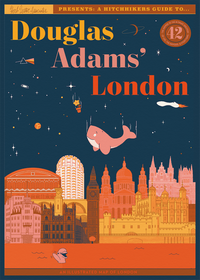
Douglas Adams’ London by Yvette Keller: The Map of London I Never Knew I Needed

Douglas Adams’ London Douglas Adams’ London

by Yvette Keller

DETAILS:
Publisher: Herb Lester Associates
Publication Date: April 15, 2023
Length: 2 pgs.
Read Date: May 6, 2023


What’s Douglas Adams’ London?

This is a map of important locations (42 of them, of course) in London for Douglas Adams, the Dirk Gently series, and/or the Hitchhiker’s Guide series.

The reverse side explains why the locations were selected and gives some biographical information about Adams’ relation to each spot. I loved learning something about Hotblack Desiato, Fenchurch’s apartment, the pizza place Dirk Gently talked about, and so on.

The Design/Art

The map itself has some nice little bits of art scattered throughout—cartoonish little sketches of things like a dolphin, a sperm whale, and a certain depressed android. Just fantastic illustrations that made an already interesting map into something you want to come back to time and again.

The people at Herb Lester Associates who put this together did a simply wonderful job.

So, what did I think about Douglas Adams’ London?

I’ve already given up on my dream of wandering around London—but, boy, howdy, this makes me want to go even more.

Keller is described as “the planet earth authority on Douglas Adams literary tourism,” and will soon publish a travel guide to London. Who better to put something like this together?

Douglas Adams’ London is a gem—even if you never get the chance to put this information into action, it’s great to have.

This post contains an affiliate link. If you purchase from it, I will get a small commission at no additional cost to you. As always, the opinions expressed are my own.

Towel Day ’23: Do You Know Where Your Towel Is?

(updated and revised this 5/25/23)

The Hitchhiker’s Guide to the Galaxy has a few things to say on the subject of towels.

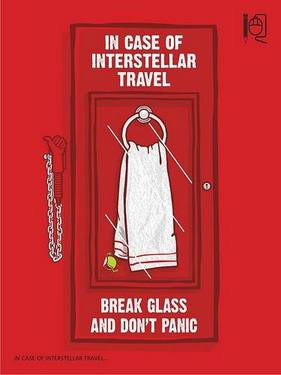
A towel, it says, is about the most massively useful thing an interstellar hitchhiker can have. Partly it has great practical value. You can wrap it around you for warmth as you bound across the cold moons of Jaglan Beta; you can lie on it on the brilliant marble-sanded beaches of Santraginus V, inhaling the heady sea vapors; you can sleep under it beneath the stars which shine so redly on the desert world of Kakrafoon; use it to sail a miniraft down the slow heavy River Moth; wet it for use in hand-to-hand-combat; wrap it round your head to ward off noxious fumes or avoid the gaze of the Ravenous Bugblatter Beast of Traal (such a mind-bogglingly stupid animal, it assumes that if you can’t see it, it can’t see you); you can wave your towel in emergencies as a distress signal, and of course dry yourself off with it if it still seems to be clean enough.

More importantly, a towel has immense psychological value. For some reason, if a strag (strag: non-hitch hiker) discovers that a hitch hiker has his towel with him, he will automatically assume that he is also in possession of a toothbrush, face flannel, soap, tin of biscuits, flask, compass, map, ball of string, gnat spray, wet weather gear, space suit etc., etc. Furthermore, the strag will then happily lend the hitch hiker any of these or a dozen other items that the hitch hiker might accidentally have “lost”. What the strag will think is that any man who can hitch the length and breadth of the galaxy, rough it, slum it, struggle against terrible odds, win through, and still knows where his towel is is clearly a man to be reckoned with.

Hence a phrase that has passed into hitchhiking slang, as in “Hey, you sass that hoopy Ford Prefect? There’s a frood who really knows where his towel is.” (Sass: know, be aware of, meet, have sex with; hoopy: really together guy; frood: really amazingly together guy.)

Towel Day, for the few who don’t know, is the annual celebration of Douglas Adams’ life and work. It was first held two weeks after his death, fans were to carry a towel with them for the day to use as a talking point to encourage those who have never read HHGTTG to do so, or to just converse with someone about Adams. Adams is one of that handful of authors that I can’t imagine I’d be the same without having encountered/read/re-read/re-re-re-re-read, and so I do my best to pay a little tribute to him each year, even if it’s just carrying around a towel.

In commemoration of this date, here’s most of what I’ve written about Adams. I’ve struggled to come up with new material to share for Towel Day over the years, mostly sticking with updating and revising existing posts. But I do have a couple of new things coming today. But let’s start with the old material. A few years back, I did a re-read of all of Adams’ (completed) fiction. For reasons beyond my ken (or recollection), I didn’t get around to blogging about the Dirk Gently books, but I did do the Hitchhiker’s Trilogy:
bullet The Hitchhiker’s Guide to the Galaxy
bullet The Restaurant at the End of the Universe
bullet Life, The Universe and Everything
bullet So Long, and Thanks For All The Fish
bullet Mostly Harmless
bullet I had a thing or two to say about the 40th Anniversary of The Hitchhiker’s Guide to the Galaxy
bullet I took a look at the 42nd Anniversary Illustrated Edition of The Hitchhiker’s Guide to the Galaxy

Also, I should mention the one book Adams/Hitchhiker’s aficionado needs to read is Don’t Panic by Neil Gaiman, David K. Dickson and MJ Simpson. If you’re more in the mood for a podcast, I’d suggest The Waterstones Podcast How We Made: The Hitchhiker’s Guide to the Galaxy—I’ve listened to several podcast episodes about this book, and generally roll my eyes at them. But this is just fantastic. Were it available, I’d listen to a Peter Jackson-length version of the episode.

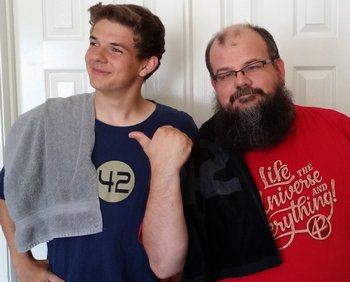
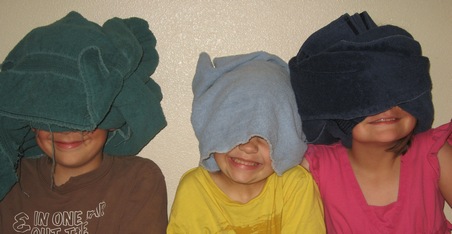
I’ve only been able to get one of my sons into Adams, he’s the taller, thinner one in the picture from a few years ago.
(although I did get he and his younger siblings to use their towels to make themselves safe from the Ravenous Bugblatter Beast of Traal a few years earlier:)

You really need to check out this comic from Sheldon Comics—part of the Anatomy of Authors series: The Anatomy of Douglas Adams.

Lit in a Nutshell gives this quick explanation of The Hitchiiker’s Guide:

TowelDay.org is the best collection of resources on the day. One of my favorite posts there is this pretty cool video, shot on the ISS by astronaut Samantha Cristoforetti.

Even better—here’s an appearance by Douglas Adams himself from the old Letterman show—I’m so glad someone preserved this:

Love the anecdote (Also, I want this tie.)

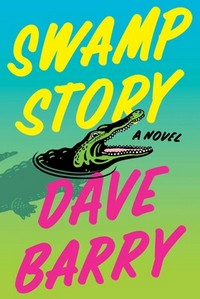
Swamp Story by Dave Barry: Florida. Just say it’s Florida.

Swamp StorySwamp Story

by Dave Barry

DETAILS:
Publisher: Simon & Schuster
Publication Date: May 2, 2023
Format: eARC
Length: 320 pg.
Read Date: April 19-21, 2023


What’s Swamp Story About?

This is hard to summarize, really. Which is part of the beauty of the book.

Most of the characters in this book aren’t what you’d call likable. They’re not really villains or antagonists, they’re just…people you don’t want to spend time with in real life, people with more greed/ambition than common sense (or decency). There are a couple of guys living in a cabin in the Everglades trying to assemble enough footage for a reality show pilot (basically, the good-looking one of the pair walking around shirtless interacting with native wildlife). Their weed dealer owns a failing convenience store/bait shop and has a “so stupid it just might work” plan to put his family’s store on the map. There’s a would-be talent agent (or just anything to ride the coattails of his buddy who happens to make a little money). Oh, and there’s a lawyer and a cabinet secretary/presidential aspirant, too—can’t forget them.

On the villainous side, there’s the weed dealer’s supplier—a former football player who is still large enough to intimidate active linemen who will not tolerate missed deadlines. Two ex-con brothers who are the textbook definition of nasty are also running around. There’s also an Eastern European gangster and some of his employees from the old country who should make everyone quake with fear.

On the likable side, you have the shirtless would-be star’s girlfriend and mother of his child (who really regrets ever giving him the time of day, no matter how pretty he is). The weed dealer’s brother who really needs something to motivate him to do more than play games on his phone, might have found that motivation in her. You’ve also got a couple of aides to the secretary, who really need a better job. An alcoholic ex-reporter desperate to make a buck is just what the weed dealer wants for his idea. I can’t forget either the aging TV reporter desperate to cling to her former relevance or the champion snake hunter.

Put all these characters in a small geographic region, throw in a large amount of buried Confederate gold and a couple of viral videos, shake well, and serve. Swamp Story is the result.

This Book Could’ve Been Shorter

Around the 70% mark (I’m keeping it vague because I don’t know how it’ll go in the final edition), a couple of the characters have an exchange that essentially goes along these lines:

Character A: I hope nothing else happens.
Character B: What else could happen?
Character A: …

and then there’s a map showing the immediate vicinity and some of the major buildings/landmarks of the story, making it very obvious that, based on what we know, all the characters are really near each other and that the likelihood of them running into each other in the very near future is pretty high. The reader will not be able to look at this map and not start imagining how all that running into each other is going to go.

I made a note at this point, that Barry could’ve ended the novel at that point—that exchange, the map, and the reader’s imagination—and it’d have been a fun and satisfying read.

However, odds are, your imagination isn’t as good as Barry’s is (mine sure isn’t), and as zany as I thought things were going to get from this point, the truth was far zanier. His conclusion to the novel (not just the immediate every character and storyline coming together in one spot, but everything that followed) was better than any of the ideas I came up with (and I liked most of my ideas a lot).

Still, there’s part of me that wishes he’d left things with that line and the map. I’d have laughed hard at that.

So, what did I think about Swamp Story?

I really enjoy reading Barry’s novels, and Swamp Story is no exception. It’s a different kind of humor (largely) than Barry’s columns or books, but it’s just as satisfying. I’d want to say that it’s more subtle, but that’s not true at all. There’s more character-based humor, and some of it’s the dialogue—which strikes you differently than the straight humor pieces he’s best known for.

Now, that said, there’s a scene at the beginning—involving a rich child’s birthday party, a couple of costumed performers, and a difficult-to-crack piñata, that absolutely cracked me up and I’ve been replaying it in my head since I read it—it’s perfect slapstick.

Putting aside the humor, all the story arcs worked really well and I can see toned-down versions of all the arcs working well together in a grim version of this story. I’ve argued recently that a good test of a comedic novel is if the plots would work without the laughs—in this case they largely wood. But they’re so much juicer and more enjoyable in this comic and heightened versions.

There are genuine bad guys, some actual threats, several characters in search of a good idea,* and a couple of people you hope catch a lucky break and escape from everything they’re surrounded by relatively intact. Throw in some good laughs, and some clever writing, and you’ve got yourself a fun few hours of reading. That’s likely what the reader looks for in a Dave Barry novel, and that’s what Swamp Story delivers. Strongly recommended.

* Apologies to Pirandello.


4 Stars

Disclaimer: I received this eARC from Simon & Schuster via NetGalley in exchange for this post—thanks to both for this.

This post contains an affiliate link. If you purchase from it, I will get a small commission at no additional cost to you. As always, the opinions expressed are my own.

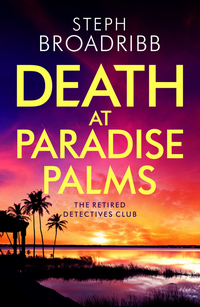
Death at Paradise Palms by Steph Broadribb: The Detectives Show Their Fallibility In This Strong Follow-up

Death at Paradise PalmsDeath at Paradise Palms

by Steph Broadribb

DETAILS:
Series: The Retired Detectives Club, #2
Publisher: Thomas & Mercer
Publication Date: October 11, 2022
Format: eBook
Length: 303 pgs.
Read Date: March 16-17, 2023

What’s Death at Paradise Palms About?

After they solved a murder a few months earlier, the Retired Detectives Club has gained a certain amount of notoriety around the Homestead Retirement Community, so it’s not terribly surprising that when a resident has some concerns they call them for help. Particularly when that resident has had bad experiences with the police previously.

This particular resident is a retired movie star, Olivia Hamilton Ziegler. Her husband is missing, and she suspects foul play. They’re having no problems and it’s not like him to just not come home, not call, not pick up his phone, etc.

The Club jumps in, more than willing to help—they find a handful of decent suspects and start to dig into the background of each when a ransom demand shows up. Now they have a pressing deadline and more than a wife’s intuition. It’s time for these retired detectives to get to work.

Distracted Detectives

I’m not sure if this says something about Broadribb’s view of Americans, but in Death in the Sunshine we see that the three British retirees have things from their past that are hovering over them. I like that dynamic, but it’s good that not everyone has some deep, dark secret. Rick, our DEA retiree, seems to be baggage-free and easygoing. Maybe that just means we haven’t seen his baggage, or maybe Broadribb just thinks Americans are shallow.*

* I’m kidding. Probably.

With our British friends, however, things have happened to push these problems from hanging over their heads to being front-and-center in their minds. Normally this would be good, they’re working on the issues, dealing with the issues. However, when this club is the only one working on this kidnapping—the only outsiders aware of it—dealing with personal stuff becomes a distraction. Potentially a fatal one.

All three of these people make huge mistakes in the course of this investigation, easily observable mistakes (especially to the reader). And it’s not because they’re older, it’s not because their minds are slower, or their bodies aren’t up to what they used to be able to do—it’s because their heads aren’t in the game.

This makes for compelling storytelling, it’s great to see flawed characters battling with their flaws—but it’s a good thing they’re all retired because this is the kind of thing that should hurt a career.

The Series Arc

Ultimately, I think this series going to be telling the story of the shenanigans at the top of the Homestead Retirement Community. In Death in the Sunshine we see pretty clearly that TPTB filter the news and do what they can to prevent anything negative from getting out to the public or into the residents. And if it does show up, it’s quickly erased.

This takes work on the Social Media, old-school media, and possibly even law enforcement fronts—there’s no way that it’s all coincidental, unintentional, or any other excusable motivation. So the questions that need to be answered are why is this being done, who profits, who is hurt by this, and what actions are being taken/pressures applied, to get these various and sundry groups to quash the information.

Some of the residents see that this is going on—but (if you ask me) not enough seem that concerned—Moira sure is and is doing something about it. She’s working with a local reporter, although she has reason to believe that this is not the safest path for either of them to be taking. But that doesn’t seem to deter her.

I really hope that she’s able to get more of the Club on board with this soon—not that I want them distracted from their next big case. But she’s going to need some backup.

So, what did I think about Death at Paradise Palms?

I remember enjoying Death in the Sunshine, but I’d largely forgotten why. It was good to be reminded—this isn’t your typical elderly amateur detective series—this is a grittier take on that trend, full of people who are only amateur now, it wasn’t that long ago they were professionals, and they’ve still got the goods.

I did clock the Main Bad Guy instantly, and can only excuse the Club for not doing the same because of all their distractions (and because they’re not aware that they’re fictional characters, a lot of what tipped me off came from being a reader). So for me, the tension came from wanting to know how long it would take them to get around to discovering the truth—and how they’d use what they learned from the false trails to get there. That was enough for me—the good in this series doesn’t come from the whodunit—but from how they’re caught.

This, like all of Broadribb’s work, is a fast and fun read—it hooks you early and doesn’t let go until it’s good and ready to. Just buckle in and enjoy the ride. I can’t imagine I’ll let the next one of these sit ignored on my Kindle as I did this one.


3.5 Stars

This post contains an affiliate link. If you purchase from it, I will get a small commission at no additional cost to you. As always, the opinions expressed are my own.

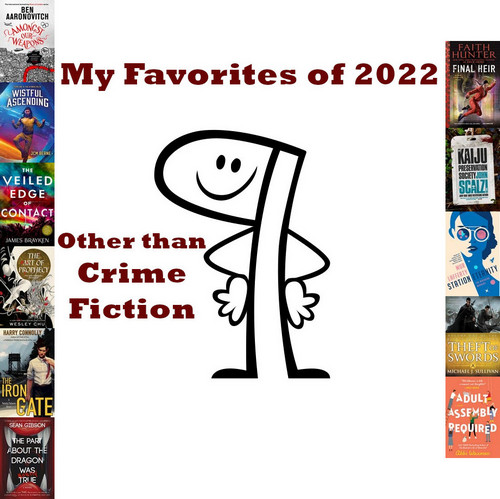
My Favorite Non-Crime Fiction of 2022

2023 Favorite Non-Crime
Back when I started this site, I knew the content would be largely “genre”-oriented. I’d have wagered the content would be roughly 1/3 Mystery/Detective fiction, 1/3 Urban Fantasy, and slightly less than 1/3 SFF, with “non-genre” fiction, humor, and non-fiction being enough to make my one-thirds just an approximation (honestly, if you asked me what I read regularly, that’s pretty much how I’d describe it today). Actual numbers show that’s wrong—it’s almost 40% Crime/Thriller Fiction, the rest of fiction is around 30% combined. Which is just a long-winded way to get to these two points: because Crime Fiction takes such a big chunk of my reading, it gets its own “Favorite” list, but none of the others really garner enough numbers for their own.

When it comes to this list of favorites, I had to choose—top five or top eleven. There are six I just couldn’t choose between—but hey, it’s my list, so here are my favorite 11 non-Crime Fiction Novels of 2022. It took me very little time to regret trying to write anything new about these books—I’m supposed to cover these in a measly paragraph? I borrow from my original posts, and really say less than I wanted to (or this post would be about 5 times as long as it is).

As always, re-reads don’t count—only the works that were new to me.

(in alphabetical order by author)

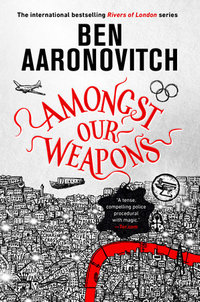
Amongst Our WeaponsAmongst Our Weapons

by Ben Aaronovitch

My original post
Any installment in this series is a strong contender for a favorite of the year even before I open it, and this one is a great example of why. While telling a pretty strong story, Aaronovitch expands this world and the reader’s understanding of it, a whole new magic system, and seemingly introduces the next major story arc for the series. We get to see almost every major (and more than a few minor) characters, too. For a fan, this book was a heckuva treat.

4 1/2 Stars

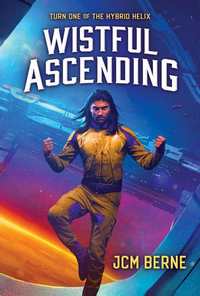
Wistful AscendingWistful Ascending

by JCM Berne

My original post
This novel—a Space Opera/Super-Hero mashup—hit just about every button I have and probably installed a couple of new ones (talking space bears, for example). If I try to expand on that I’m not going to shut up anytime soon. Read my original post—or just read the book.

4 1/2 Stars

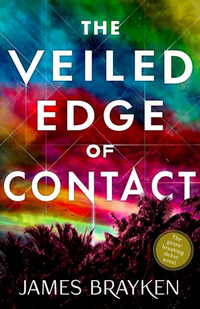
The Veiled Edge of ContactThe Veiled Edge of Contact

by James Brayken

My original post
Brayken’s debut surprised me more times than I thought was possible. Every time I thought I knew what direction Brayken was taking for the story, the protagonist (or major characters), tone, or even genre—he’d make a sharp turn and make the book better than I thought it was. I have questions and qualms about some aspects of the novel—but this is going down as a highlight of 2022 anyway.

4 Stars

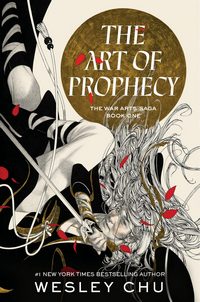
The Art of ProphecyThe Art of Prophecy

by Wesley Chu

My original post
In my original post, I said, “I don’t know that I can really express how excited I am about this book. The last time I was this enthusiastic about a Fantasy novel was Kings of the Wyld, and I’ve read some really good Fantasy since then. But this is a whole different level.” It features my favorite new-to-me-character of the year. It’s just a glorious read. I’ve read (and enjoyed) a lot of Chu’s previous work and this is so far beyond those that it’s hard to describe.

5 Stars

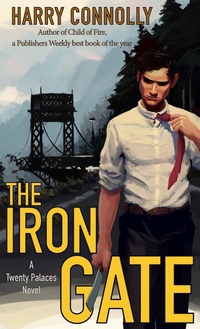
The Iron GateThe Iron Gate

by Harry Connolly

My original post
Every Twenty Palaces novel is better than the last—and The Iron Gate is no exception. This novel is a better version of everything Connolly has delivered before. We get character growth in a character I’d have considered pretty unchangeable, a dynamite plot (two, actually), and a disturbing monster to boot. There’s just so much to commend here—both for this novel and what it promises for the future.

4 1/2 Stars

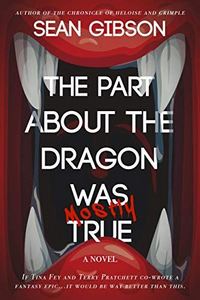
The Part About the Dragon Was (Mostly) TrueThe Part About the Dragon Was (Mostly) True

by Sean Gibson

My original post
This is not a book to read if you’re in a “find out what happened and get to the end of the story” frame of mind. This is a “enjoy the trip, not the destination”/”stop and smell the roses” kind of book. The destination/what happens is fully satisfying, but the getting-there is so much better. This Fantasy/Comedy sends up and celebrates so many Fantasy mainstays that fans (and detractors) of the genre will have a blast on that front alone. The cast of characters is a blast and the protagonist, the bard Heloise, is even better.

4 Stars

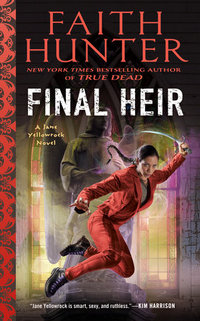
Final HeirFinal Heir

by Faith Hunter

My original post
The fifteenth Jane Yellowrock novel was the series finale and the series went down the way it should—with a lot of heart, a lot of love, a lot of violence, and so many buckets of blood. I’ve been reading these for so long that I really didn’t want to see the series end (but it was time). From the jaw-dropping first chapter to the last lines that genuinely made me misty, Final Heir was a great ride.

5 Stars

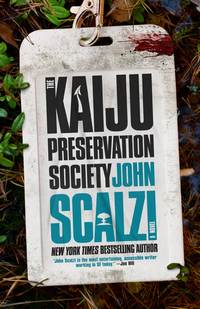
Kaiju Preservation SocietyThe Kaiju Preservation Society

by John Scalzi

My original post
This book delivers all the ridiculous fun that the title (and premise) promises. Scalzi calls it a pop song, I tend to compare it to a popcorn movie. It’s not meant to provoke thought, to be pondered over, or analyzed. It’s meant to be enjoyed, it’s meant to be light and entertaining. Consider this me writing on the literary equivalent of a bathroom stall, “For a good time…”

5 Stars

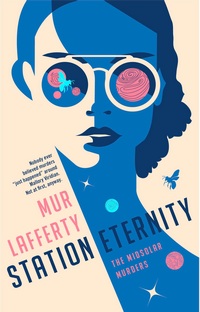
Station EternityStation Eternity

by Mur Lafferty

My original post
A Murder Mystery set on a living Space Station with only three human characters surrounded by some of the strangest alien species you’ve seen (those three humans are pretty odd, too). This novel is one for mystery fans open to aliens walking around, SF fans interested in a different kind of story, and readers who like good things. Social commentary, a twisty narrative, a clever mystery, and more chuckles than I expected to get from this. An inventive read that’ll leave you wanting more.

4 Stars

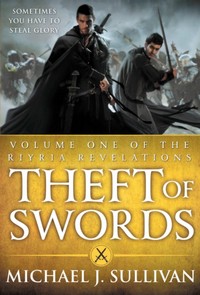
Theft of SwordsTheft of Swords

by Michael J. Sullivan

My original post
Multiple people over the years have told me to read this book (some multiple times). I finally did, and regret not paying attention to them earlier. It’s more “traditional” Fantasy than the others on this list, there’s almost nothing that someone who’s read/watched a handful of fantasy series hasn’t been exposed to before. It’s the way that Sullivan has assembled these tried and true elements that is going to make you happy. The sword fights are fantastic. The imagination showed in the magic system, the magical creatures, and the politics—between races, within the remnants of the human empire, and the ecclesiastical politics—are really well conceived and effectively portrayed. I can’t wait to dive into the rest of the trilogy.

4 1/2 Stars

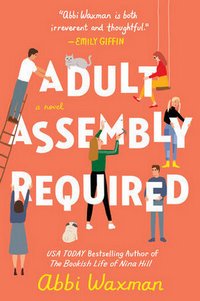
Adult Assembly RequiredAdult Assembly Required

by Abbi Waxman

My original post
This novel starts in the same bookstore that Nina Hill works in, and she’s around a lot—but this isn’t her book. It’s the story of a woman who moved across the country to start her life over, and the results aren’t what she expected. Adult Assembly Required is funny, it’s sweet, it’s heartwarming, and will make you feel good all over. It’s full of the Waxman magic.
5 Stars

I Have Far Too Many Things to Say about Wistful Ascending by JCM Berne (But I Try)

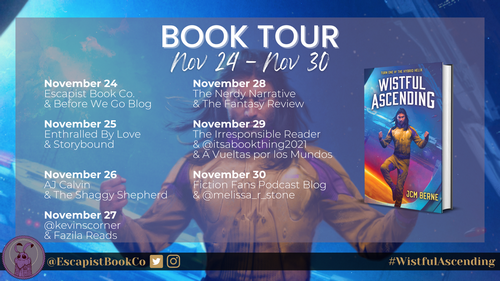
Wistful Ascending Tour Banner

Wistful AscendingWistful Ascending

by JCM Berne

DETAILS:
Series: Hybrid Helix, #1
Publisher: The Gnost House
Publication Date: September 5, 2020
Format: eBook
Length: 395 pg.
Read Date: November 24-28, 2022

Support Independent Bookstores - Visit IndieBound.org

A Word About this Post

If I approached this novel the way I typically would, you wouldn’t read it. I wouldn’t blame you, because I wouldn’t either. It would just be too long to bother with. There’s just too much that I want to talk about here. So I’m going to do this differently, I’ll provide a little setup, give a couple of pros and cons in bullet points (many of these bullet points would be 2-3 paragraphs otherwise), and then a wrap-up thought.

There’s still a good chance that this is going to be too long, but I tried.

What’s Wistful Ascending About?

For some time, Rohan was one of the most feared warriors in the il’Drach Fleet. As a human/il’Drach Hybrid, he had powers and abilities beyond what most are capable of—flight, super strength, speed, stamina, healing, etc. He tires of that way of life and retires to the space-station Wistful, just outside the empire, and gets a fairly menial job. Work, a couple of beers, and sleep—before starting it again the next day. That’s the kind of life he wants.

And it works for a while. Then a previously dormant wormhole opens up and refugees from the other side of the galaxy (or further) show up. Then scientists from the Empire arrive to study that wormhole. Dangers, soldiers, spies, and assassins are suddenly all over Wistful and Rohan is called upon to defend his home, his friends, and himself.

The Cons

This is going to be a short list:
bullet The Title. Yeah, it’s fitting. But it’s not really an eye-catcher, is it?
bullet The Prologue is one of those action-packed intros that stops just before something major happens before giving us “X Hours Earlier,” “Y Days Before,” etc. Twelve Days, in this particular case. I don’t get the appeal of this kind of introduction, and while I can’t say that I’ve never seen it done well, the percentage is pretty low. I don’t understand why writers keep going back to that device, someone must like it.

The Pros

Basically everything else.

However accurate, that’s probably not that helpful. So let me share some highlights.
bullet In the tradition of William Munny, John Rambo, John Wick, Clay Cooper, and countless others, you have a man of war, a man of violence who has made a conscious decision to leave that to pursue a quiet life, a peaceful life—a life of no notoriety. Then circumstances compel them to return (hopefully temporarily) to that life they had forsaken. Who doesn’t like this kind of story?
bullet Before he joined the il’Drach Fleet, Rohan was a super-hero on earth—or tried to be, he apparently didn’t get much attention due to being on the weaker side. Which is just a great idea for an origin. If nothing else, it makes Rohan instantly accessible to the reader—we get his humor, his references, and have heard stories like his before. Also, by “weaker” think Invincible/Mark Grayson compared to Omni-Man/Nolan Grayson. So technically weaker, but not a major downgrade. Also, hold on to that Invincible comparison—we’ll be coming back to it.
bullet So his father was an alien, but his mother was from India and she relocated to Canada when he was very young. That’s a lot of cultures to draw from, it explains his tastes in food—and it keeps Rohan from being a Clark Kent/Mark Grayson/etc. clone.
bullet Not only does Rohan have nifty superpowers (as do some of his opponents)—the way that Berne describes their use is just fantastic—really. If it’s not the best description of super-powers in prose that I’ve read in the decades I’ve been reading them, it’s so close as to be negligible (and I’m too lazy to dig up the couple of contenders that I’m thinking of to do the comparison).
bullet Beyond that—his explanation for the source of the powers in the metaphysical sense? Think of the Force in episodes 4-6, and then do a better job of explaining it.
bullet (there’s a later explanation of how those abilities manifest themselves in the Hybrids that’s pretty clever, too)
bullet There are kaiju. Or kaiju-esque creatures.
bullet Wistful, the space station Rohan lives on and works for, is the kind of multi-species hive of activity and commerce that’s catnip for Space Opera/SF junkies. And the alien races/cultures that are represented there are well-designed and interesting. Really, if Berne gave us an illustrated guide to his aliens, I’d snap it up.
bullet Wistful is a sentient space station (I’m on a roll with these lately), who actually has legal jurisdiction over the solar system she occupies. Can be a party to treaties, etc. How cool is that?
bullet It’s not just space stations, either. Ships of a certain size are sentient, too. They grow and develop. They have wills and desires of their own—for example, there’s a ship that got tired of being a troop transport and changed themselves (with the appropriate approvals, etc., I’m sure) into a science vessel because they wanted to learn and explore. I’d take a novel just about that ship.
bullet The explanation behind the way the ships/stations act and have sentience, etc. in contradistinction to those of other cultures is interesting and fits in with the world that Berne created so well.
bullet I don’t know how I’ve made it this long in this list (which is longer than I anticipated and makes me all the more certain I shouldn’t have tried a traditional post) without mentioning the humor. Think Jim Butcher. Think Invincible. Think Peter Parker at his best. Think MCU’s Guardians of the Galaxy. Think Nicholas Eames. You get that humor throughout the novel and it’s shown through all the characters in some way (at least those not trying to kill someone at the moment), but it’s particularly expressed in Rohan’s point of view and the way he talks to himself.
bullet But more particularly Rohan’s banter with just about everyone—it’s almost at the level of the Giffen/DeMatteis Justice League
bullet Most of the characters—from Wistful’s security chief to the staff at Rohan’s favorite place to get breakfast are so well-developed and distinctive, with such interesting points of view and characteristics that you almost want every scene to be twice as long just to spend time with them.
bullet This is related to the depiction of super-abilities. But these fight scenes are dynamite. One of the problems a lot of writers have with Superman, for example, is when someone like him lets loose and say punches a guy—bad things happen. I remember an old DC role-playing game when I was a kid—no one wanted to be Supes because it was too easy to kill someone. Now, people like Robert Kirkman embraced that, and the pages of Invincible (I told you to hang on to that) are dripping with blood, gore, bits of bone, and the debris of buildings/mountains everywhere. We get the same kind of power on display here with the same kind of consequences (also, several displays of Rohan not letting that happen).
bullet Related to those fights. Seriously. Don’t make Rohan angry. You wouldn’t like him when he’s angry (he sure doesn’t—see the first bullet point in this list)
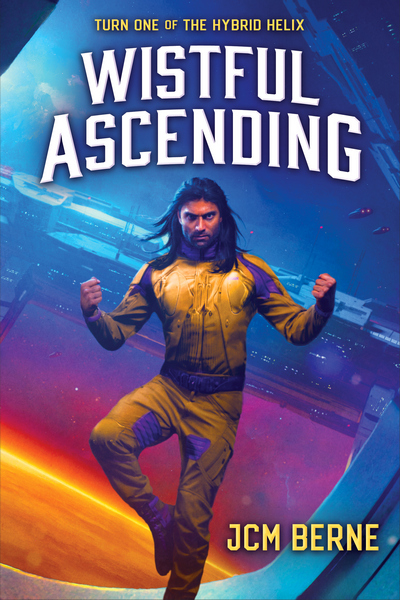
bullet One more Invincible note—doesn’t that cover kind of look like Chris McGrath did a take on a Ryan Ottley cover? I don’t know who the cover artist was, but I loved it.
bullet Lastly, aside from the Prologue issue (which is my personal taste, but it’s my blog so I get to call it an issue), the way Berne plotted this thing, constructed the story, doled out information, and everything else along those lines was so well done, so impressive that you have to believe that he’s been at this a long time.

Okay, I lied. I have one more point:
bullet Talking bears in space. Well, an alien species that happens to look like sentient, talking bears, who have the strength of large bears, and enjoy catching/eating fish. So….close enough. I’ll say it again: talking bears in space.

So, it’s pretty clear already, but what did I think about Wistful Ascending?

I want to say more—believe it or not. I don’t think I’ve captured how excited I was reading this and am now while trying to talk about it.

I was talking to a friend about Wistful Ascending the other day, or maybe I was just trying to—like with this post, I struggled. I said, “It’s like he’s doing “Scenes from a Hat” from Who’s Line is it Anyway?, but instead of transitioning from one idea to the next, it’s like Berne takes each idea as it’s pulled out and adds it to the story. He says ‘Yes, And’ to everything.—’Sentient Space Station? Okay. Golden-Age Super-Hero Sidekicks who’ve become old scientists? Fine. Kaiju? Sure thing!'” I’d honestly love to know what he thought wouldn’t work in this novel.

And the maddening thing, the thing I can’t wrap my brain around is that it somehow all works. Because that was my friend’s first reaction—”oh, that’s just way too much for one book, the guy needs to edit.” I had to say no, it somehow all comes together just fine, “I don’t understand how, but it’s working great. I’m loving it. I want to become his new best friend.”

And readers, I was at the 52% point when we had that chat. I still didn’t know everything he could do with the book. I wasn’t kidding when I listed two things as cons to this book. I couldn’t think of anything else that I didn’t like.

I’m not saying this is the best thing I’ve read this year (but it might be). I’m definitely not suggesting everyone’s going to relish it the way I did. But, boy howdy, this hit all the right spots for me. I couldn’t get enough of this. And yeah, I want to be JCM Berne’s new friend.

Nevertheless, it’s getting 4.5 stars from me because of the Prologue, because I round up for Goodreads and Amazon, and because I like to give an author room to get more stars as a series progresses and they get better at their craft. And if that half a star dissuades anyone from reading the book, they weren’t paying attention to anything I said above.


4 1/2 Stars

This post contains an affiliate link. If you purchase from it, I will get a small commission at no additional cost to you. As always, the opinions expressed are my own.


My thanks to Escapist Book Tours for the invitation to participate in this tour and the materials (including the novel) they provided. The opinions expressed by me are honest and my own.

Escapist Book Tours

BOOK SPOTLIGHT & GIVEAWAY: Wistful Ascending by JCM Berne

I’m very pleased to welcome the Escapist Book Tour for JCM Berne’s Wistful Ascending to The Irresponsible Reader this morning! In addition to this little spotlight post, my take on the novel will be coming along in a bit. Be sure you scroll down to the bottom of this post for the Giveaway! But first, let’s start by learning a little about this book, okay?

Wistful Ascending Tour Banner

Book Details:

Book Title: Wistful Ascending by JCM Berne
Series: Hybrid Helix
Publisher: The Gnost House
Release date: September 5, 2020
Format: Hardcover/Paperback/Ebook/Audiobook
Length: 395 pages
Genre: Science-Fantasy/Superhero/Space Opera
Intended Age Group: Adult
Wistful Ascending Cover

About the Book

Retired from a career as a weapon of mass destruction for the Imperial Fleet, Rohan wants little more than decent coffee, a chance for romance, and a career that doesn’t result in half a galaxy shuddering at the mention of his name.

When a long-dormant wormhole opens near his employer, the sentient space station Wistful, the Empire takes renewed interest in the system. As scientists and spies converge, Rohan struggles to protect his friends and his peaceful life without again becoming the type of monster that can’t have either.

See Also:

If Harry Dresden and Thor Had a BabyThe Only Tollywood Inspired Superhero Book You’ve Considered This YearDragonball Z with 100% Less Constipation

Book Links

Amazon ~ Goodreads

About the Author

JCM BerneJCM Berne has reached middle age without outgrowing the notion that superheroes are cool. Code monkey by day, by night he slaves over a hot keyboard to prove that superhero stories can be engaging and funny without being dark or silly.

Linktree ~ Author Website ~ Twitter ~ Instagram ~ Facebook ~ Free short story

Giveaway

Prize: An eBook, Audiobook, or Paperback Copy of Wistful Ascending!
Starts: November 24, 2022 at 12:00am EST
Ends: November 30, 2022 at 11:59pm EST
a Rafflecopter giveaway

Direct link: http://www.rafflecopter.com/rafl/display/79e197ac70/


My thanks to Escapist Book Tours for the invitation to participate in this tour and the materials (including the novel) they provided. The opinions expressed by me are honest and my own.

Escapist Book Tours

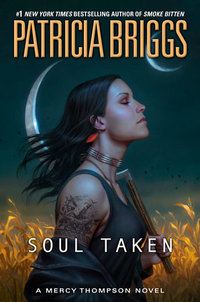
Soul Taken by Patricia Briggs: Mercy May Find Herself Up Against a Horror Movie Character

Soul TakenSoul Taken

by Patricia Briggs

DETAILS:
Series: Mercy Thompson, #13
Publisher: Ace
Publication Date: August 22, 2022
Format: Hardcover
Length: 388 pg.
Read Date: August 29-30, 2022
Support Independent Bookstores - Visit IndieBound.org

“The thing that we thought might end up with Adam dead looks like it will work out okay,” I told her dryly as her feet hit the ground again. “We have another situation to replace it that might end up with Adam dead. Or me dead. Or maybe the whole pack. But at least we solved one deadly situation before we picked up another one.”

“Business as usual,” said Tad.

What’s Soul Taken About?

Wulfe continues to act strangely—for him, that is—as he was last time. Then he goes missing. And Marsilia tasks Mercy with finding him, or she and the Pack will face the consequences (not life and death consequences, either—something worse).

But it’s not just Wulfe who’s missing—there are others, too. The paths seem to lead to a Fae artifact believed to have been destroyed and a local Urban Legend/subject of a new Horror movie.

Sure, this isn’t as strange as the miniature zombie goats, but it’s close. And slightly less cute.

Sherwood Post

“I’ll call Samuel and bug him.”

“Why not ask Sherwood?” Adam said.

“Did he sound like someone who was going to spill the beans to you?” I queried. “He talks more, but he doesn’t say more. He hasn’t changed that much.” I found that reassuring.

After a lot of speculation, we finally get to know Sherwood Post’s actual identity. And, um. Wow. As she clearly intended, the answer Briggs gave us only leads to more questions.

Several more questions.

For example: was this identity her plan when she first introduced the character? (likely, but I can see a scenario where it wasn’t) Given how this changes what we know about the world, when did she decide to shake things up to this extent? Lastly, when do we start seeing the ripple effects from this revelation? Okay, maybe one more: how many other things has she been lying to us about? (okay, that last one is a joke. Pretty much)

Unintended Consequences

Mercy (and therefore, we) are aware of a decent segment of the supernatural/paranatural population of the Tri-Cities area (although I think I remember her being surprised by some early on in the series)—she knows all the werewolves, many of the Fae, the goblins, vampires, etc.

But we learn along the way in this book that because of Mercy’s declaration a few books back that the area is under the Pack’s protection many “lower powered” supernatural beings have moved into the area for that protection. Mercy and the Pack were unaware of this until they met some in the midst of their investigation. Briggs didn’t spend much time on the idea, but it laid the groundwork for potentially several future storylines.

Even aside from that, I thought it was a great idea—and really seems likely to have happened given Mercy’s action.

So, what did I think about Soul Taken?

I’m never going to complain about getting to spend time with Mercy and the crowd. But I felt let down with this novel. The premise was promising, maybe even more than that; I thought the threats brought by Marsilia and how that played out were intriguing; I was glad to see who the Big Bad behind it all was; and the future ramifications for the seethe are promising. But the stuff in between the premise and the defeat of the Big Bad? Eh. Even the big fight scene wasn’t that good—nor am I that invested in the means by which they were defeated (dancing around a spoiler there).

Really the things that interested me the most about the book were the ongoing arcs and development—the stuff about Sherwood, the lesser powers, some internal Pack matters, and Zee (there was a lot of great material with Zee here). When the subplots and the things the novel isn’t about are what grab me, there’s a problem with the book. The solution was too rushed, it was all too easy, really. If Briggs had taken another hundred pages or so to really dig into the premise and the hunt for the Big Bad, maybe that would’ve worked (but that’d make the book super-sized by her standards).

I just wanted more, I guess. It was fun enough to justify the time and I’ll be back for more—but I expect more from Briggs. I do think long-time fans will enjoy Soul Taken—and despite what it might sound like, I did—but it will leave you wanting.


3.5 Stars

This post contains an affiliate link. If you purchase from it, I will get a small commission at no additional cost to you. As always, the opinions expressed are my own.

Breaking Point (Audiobook) by C.J. Box, David Chandler: Joe Finds Himself Between Some Rocks and a Hot Place

Breaking PointBreaking Point

by C. J. Box, David Chandler (Narrator)

DETAILS:
Series: Joe Pickett, #13
Publisher: Recorded Books
Publication Date: August 17, 2015
Format: Unabridged Audiobook
Length: 10 hrs., 37 min.
Read Date: July 13-15, 2022
Support Independent Bookstores - Visit IndieBound.org

What’s Breaking Point About?

Acquaintance and father of one of Lucy’s best friends, Butch Roberson, is in trouble—he’s been being harassed by some EPA agents and they’ve turned up dead. Joe was the last person to see him before he became a prime suspect in their murder and a subject of a manhunt. Which, in the perverse way that only bureaucrats can think, gets him in hot water.

Joe’s now tasked with helping some contractors track Butch through the wilderness—he really doesn’t want to do it, and almost quits over it. But the way these guys are acting, Joe figures that he’s the only one who can ensure that Butch is brought in alive and with a shot at a fair trial (especially if he can get him into local custody).

Joe’s been in hazardous wilderness conditions before—regularly, from the reader’s point of view—but I think it’s safe to say that these are the most dangerous he’s been in. And the humans (officially and unofficially) hunting for Butch are just making things worse.

Meanwhile, Marybeth is doing a little investigative work on the side for Joe while helping Butch’s wife and daughter through this time. She even sends up a flare hoping to get some help from Nate Romanowski.

There’s a whole lot of moving pieces in this novel, and hopefully, the Picketts and Robersons come out of things alive.

Federal Agencies

Outside of some FBI Agents (maybe only one), people who work for the Federal Government don’t come across well in these books. And Breaking Point is no exception

I don’t know—and really don’t care—how much of Box’s own politics are reflected in these books, but he does a great job of portraying the attitudes of people in Wyoming and Idaho (not that he does a lot of Idaho work, but there’s some). Federal Agents are inherently suspect and will wield their power to damage the way of life of citizens. Sure, there are exceptions, but on the whole, you can’t trust them to do the right thing.

It’s never comfortable reading these depictions of the Federal Government, but if nothing else, it’s good to be reminded of/exposed to the way hunters/ranchers/etc.out here think of them—and why they do.

The Sub-plots

The new head of Game and Fish, Lisa Greene-Dempsey (LGD) is a more interesting foil for Joe than the previous officious penny-pinchers. She’s trying to reshape the Agency in a way that Joe’s not comfortable with, and she’s clearly playing politics with him/his job. But the way she’s going about it—with good intentions, I think—makes her a better character and gives us more interesting reactions from Joe. It’s always better to have competing good intentions than having one side just out to hurt the other/improve themself alone. The whole arc there is one of the best Joe vs. The System stories Box has given us.

I don’t get the Marybeth story, it fizzled on all fronts for me. If it’s to underline the financial hardships the family has gone through, he’s done it more effectively before. If it’s laying the groundwork for something else, on the other hand, great—but I want to see it soon. Generally, Marybeth’s stories are a highlight of these novels but this one fell flat for me.

While Sheridan had a pivotal part to play here, it sort of seems to me that Box doesn’t know what to do with her anymore (ditto for her sisters, but Sheridan’s always shown the brightest among them, so it seems worse). I really hope he does something interesting with her soon, I’m not sure how long I’d have stuck with the series if not for her early on, and I don’t want to not enjoy her in the future.

That Death…

There’s a significant character death that shocked me—both in the manner, the function in the story, and the fact that it happened at all. Box treated the whole thing perfectly.

I’m not going to get into details, but it was a smart, gutsy move.

How’s the Narration?

Chandler has the characterizations down pat—every time he says something as McLanahan (and how great is it to see how things went for him between Force of Nature and this book?) I want to punch the guy in his nose. Which is more violent than I typically get, but that voice is perfectly grating—a wonderful match for McLanahan’s personality.

He’s great even when he doesn’t irritate me—Chandler has brought this series to life, and continues that work here. Really don’t have much else to say.

So, what did I think about Breaking Point?

There’s a great call-back to Savage Run, reminding the reader just how far Joe’s come, and some of the things he’s pulled off in his career.

Box delivers a great thriller here, as we’re used to—with some important character work for Joe—including a move that’ll change his professional life forever.

It’s the thirteenth book in a series, and it’s really difficult to come up with something to say. The storytelling isn’t getting stale, the characters are developing nicely, the premise of the novel rings true, and Box executes it well. It’s an incredibly consistent series, really—not getting much better (nor does it need to), it’s definitely not getting worse.

There’s not much more to say—if you’ve liked most of the previous twelve novels (like I have), you’ll like this one. If you’re intrigued by the idea of a Game Warden getting involved in criminal investigations while dealing with wilderness adventures, you’ll likely enjoy this one, even without the backstory.

Box knows what he’s doing at this point, and even with my quibbles, I figure he’s going to do something in the future to remove them. Give this one a try.


4 Stars

This post contains an affiliate link. If you purchase from it, I will get a small commission at no additional cost to you. As always, the opinions expressed are my own.

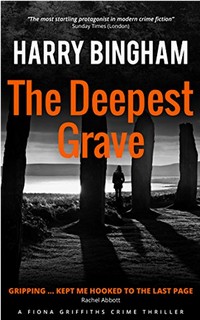
The Deepest Grave by Harry Bingham: Shotguns and vellum. Churches and saints.

Self-Published Authors Appreciation Week

The Deepest GraveThe Deepest Grave

by Harry Bingham

DETAILS:
Series: Fiona Griffiths, #6
Publisher: Sheep Street Books
Publication Date: June 14, 2017
Format: Kindle Edition
Length: 488 pg.
Read Date: July 22-25, 2022

‘Suspicious circumstances, sir? I mean, what? An open window, something missing, that kind of thing?’

‘Well, I don’t know about the windows. That part hasn’t been reported to me. But the uniformed officer currently attending the scene did say that this woman appears to have been beheaded. I daresay there’ll need to be some further forensic work needed before we can be certain, but it appears that the weapon of choice was an antique broadsword. It’s obviously early days, but I’m going to stick my neck out and say that no, Gaynor Charteris probably did not slip on any stairs.’

What’s The Deepest Grave About?

It’s been 453 days since Fiona’s investigated anything to do with a murder, and she’s getting impatient for something interesting to do. She’s aware that’s a lousy way for a police detective to think, and really can’t find it in herself to care. The crime scene she’s sent to (along with a new DI who is going to make life difficult for her—and she’ll repay in kind) will likely make up for that. I’ll quickly note that this opening scene just might be the most entertaining opening in the series—and definitely one of the more entertaining I’ve read this year.

You don’t get much more interesting in the 21st century than finding a woman decapitated with three spearpoints thrust into her heart. It makes a bit more sense when they learn their victim is an archeologist and professor, specializing in ancient Wales—but only a little bit.

Her new DI wants to focus on “highly disturbed” locals, but Fiona knows that’s wasted time (she wastes it on command, but still). She finds some other crimes in nearby jurisdictions that involve the thefts of largely (monetarily) worthless historical artifacts and documents from about the same era as the dig that their victim was working. Fi doesn’t understand the link or ultimate target of the criminals, but she’s convinced there’s a link. Interrupting an armed individual in the midst of a similar crime only hardens her view.

Her DI isn’t yet convinced but gives her enough rope to hang herself.

And, well, what ensues is both unlike much of what you’ve read before yet exactly what you should expect from a Fiona Griffiths case.

Arthur

One thing that frequently bothers me when I read Crime Fiction is when a significant scientific breakthrough happens—like when Gideon Oliver is part of the discovery of something that alters the foundations of anthropology when Joe Pickett discovers a species hasn’t gone extinct after all, or when Robert Langdon does whatever it is that he does to get to the “real history” of something. When Fiona started messing around with Welsh burial sites and people digging around the legend of Arthur, well, that made me nervous.

However, what Bingham does with this setup is ingenious—we get all the research and history surrounding the legend that the above authors (and others) give. But the book isn’t about Arthur, it’s about looking into him, the artifacts surrounding him—and most importantly, those who are doing the research*.

* This group includes a vicar who is a simply delightful character. A better or more thorough blogger (or just one with better time management skills) would spend some time describing him. I’m going to pretend that I don’t so that you get all the joy of disCovery yourself. I’ll just say that he starts off being a kick and gets better.

A Different Encounter with Death

Was there a moment? I always wonder that. Is there ever an exact moment of death? One microsecond you’re there, the next you’re definitely not? People, even doctors, always talk as though that partition exists, but personally I doubt it. I suspect that death creeps over us more gradually than that: an ever- dimming sunset, not a sudden rush into night.

Readers of this series know that Fi has…an interesting perspective on death. This leads to a strange attachment that she develops to the murder victims in her cases. While investigating this particular murder, she befriends a woman with a degenerative and likely terminal illness.

Fiona reacts to this in a way that probably deserves a few paragraphs of analysis from better writers. It felt genuine and troubling—maybe frightening. Which led to some rewarding reflection on Fi’s part. In turn, this resulted in some choices on her part that show that Fi’s desire to be part of Planet Normal is within reach. It’s some of the best character development we’ve seen from her for a while.

The Author’s Note

There’s a great, great note after the novel about things like choosing to center so much of this on Arthur as well as describing the kind of mystery novel that Bingham is writing, and what kind of character Fi is, compared to others in the genre over the last century or so.

For those looking to really dig into the character of Fiona Griffiths, this is something you need to read (even if it’s the kind of thing you tend to skip).

So, what did I think about The Deepest Grave?

In addition to the main story, we get some resolution (some that is encouraging, some that isn’t) about some old cases and people throughout this book. Some of Fi’s relationships are changing and she’s changing with them.

This is both a very clever crime and the way that Fiona counters it is equally clever. There’s nothing about this part of the novel that I didn’t like (although there was one red herring that I’d have preferred some more resolution). When Bingham’s on his game, he’s really on it—and this book shows it.

It’s been a few years since this came out, which makes me worry that we’re not going to see another entry in the series—despite what the material at the end of the book suggests. If so, this is a fitting way to see the series end and it will go out on a high note. If Bingham returns to these, I’ll be more than ready—I’m not prepared to say goodbye to Fi just yet if I don’t have to.


4 Stars

20 Books of Summer

Page 5 of 22

Powered by WordPress & Theme by Anders Norén