Category: C-E Page 14 of 22

Authors C-E

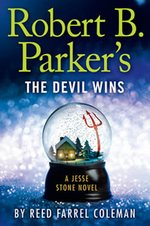
The Devil Wins by Reed Farrel Coleman

The Devil WinsRobert B. Parker’s The Devil Wins

by Reed Farrel Coleman
Series: Jesse Stone, #14
Hardcover, 342 pg.

G.P. Putnam’s Sons, 2015

Read: September 11, 2015


There’s no good reason for me to have difficulty writing about Coleman’s Jesse Stone, but I twice in a row now, I have. It looks like it’ll take me less than a month to get this up, so that’s something I guess (but it should’ve taken me less than a day!) But man, I love these books!

In this one, on page 3 there was a line I wanted to read to my wife, on page 4 I was grinning. It was so good to be back in Paradise, MA. Chapter 2 served as a a reminder this wasn’t Parker’s Stone, this was Coleman’s. Which is not necessarily better or worse, just different — it’s still the same world, populated with the same people, it’s just told differently. The Devil Wins started strong and stayed that way.

One of the things that distinguished this series from the Spenser series (and later, Randall — which felt like Spenser) was the atmosphere — this was a gray world (so well captured in the movies). Not just morally (and that could be argued, I think), but weather, mood, outlook on life of the characters — economy of the community, even. Later, Parker seemed to pull back on that — either deliberately, or for the same reason that Spenser’s backstory changed. Coleman has returned to the gray, and amped it up a bit, his style brings that into focus. His dialogue might not be as snappy (and it’s not), but it’s thoughtful, as is the narrative and his descriptions. You can almost feel this world as much as see it.

Every town has its dark secrets, the events people don’t like to remember, or discuss, or admit they happened. Paradise has a few of those, I’d wager — one of them was that about twenty-five years ago, two high school girls disappeared without a trace. While most presumed (maybe hoped) that they’d been killed, there were no suspects, no motive, no evidence. Eventually, time moved on and the town collectively repressed the events. A fresh homicide investigation leads to the discovery of two much older bodies — everyone assumes (and it’s quickly confirmed) that it’s these two girls. Now Jesse has to deal with two investigations — one fairly low-priority, and one that is bringing back ghosts for everyone in Paradise (and is attracting plenty of attention from the rest of the world).

After putting his own mark on Jesse in Blind Spot, Coleman moves on to Suitcase Simpson and Molly. Don’t get me wrong, this is still Jesse’s book, and his presence dominates the narrative. But it’s in these pages that Coleman plants his flag on Suit and Molly. Suit is possibly at his most self-aware here, almost dying can do that to a person (making Coleman’s tweak totally justified), we don’t get as much time with him as we do with Molly, but what we do is golden. More importantly, Jesse has to be honest with himself about Suit — and that clarity will drive their relationship going forward. If Coleman hadn’t delivered with the rest of the book, but had with this? It’d have been worth it.

Parker, Coleman (and Brandman) hadn’t given us too many details about Molly outside of her outstanding work as Jesse’s conscience, aide, and friend. We got the little fling with Crow, and some references to her family, and that’s it. Which is exactly the way that Officer Crane wants it. But sometimes, you can’t keep that wall between your personal and professional as high as you want to — sometimes the past comes back to haunt you — and it does in spades for poor Molly. In the end, we don’t learn that much about her that we didn’t know, but it’s easy to see how what Coleman shows us helped shape her into the woman she is. (Minor spoiler ahead, skip to the next paragraph if you want) One of the two girls was Molly’s best friend, and by all rights, she should’ve been with her the night they disappeared. The discovery of the bodies, what they learn during the investigation, shake the seemingly unflappable Officer Crane to her core.

One more reason for her boss to take care of business. Not that he really needs it. Especially when more bodies start to show up.

Best part of this book for me? There’s no Gino Fish. There’s no deus ex mafia providing the solution for Jesse. It’s procedure, dogged determination and criminal stupidity — plus a little dumb luck that helps Jesse conclude what happened twenty-five years ago and today.

In addition to the great character work with our old friends, we get to focus on three new friends of Jesse’s in this book — two of whom are long-time residents of Paradise that we haven’t encountered yet, one is new to town. Jesse enlists the assistance of the editor of Paradise’s newspaper with the historical elements of his case (the police files were not up to snuff) in exchange for exclusives on a story starting to get some national attention. An insurance agent/city councilman who has been Jesse’s biggest supporter in Paradise’s government encourages him to keep on track and solve the crimes in a hurry (and when that fails, turns to threats). There’s a new Medical Examiner in the area (whose departure from NYC is similar to a certain LAPD detective’s) who befriends Jesse — she’s smart, attractive, and interested in more — but for now they decide on friendship.

I guess I should quickly mention the other women in Jesse’s life, having talked about Tamara Elkins. She’s talked about a couple of times, but we don’t get to see the new character from the Blind Spot, Diana Evans, which is a shame. I hope that changes soon, Coleman certainly leaves the door open for it, although Coleman’s going to have to start using surnames that don’t sound so similar. I thought Jen was around juuuuuust enough for my taste (I also appreciated the talk about Sunny Randall).

I find it amusing how many people I’ve seen complain about Jesse’s drinking being talked about so much. His battle with the bottle was a focus from Day 1 — sometimes more successful, sometimes less so — but always, always a presence, often discussed no matter if he was drinking or not. It’s there, it’s looming, Stone battles it as he does the rest of his demons (the “it could have been” of baseball, and Jen) — while doing what he can for these girls and the community.

Once again, Coleman strikes the right atmosphere and mood, captures the essence of the characters — while not keeping them frozen in amber, tells a very Parker-esque story in his own manner, and makes me seriously consider moving to a fictional Massachusetts town, despite the troubling homicide rate. It wasn’t as good as his first foray into this world, but I’m not sure it could’ve been, and it was close enough to justify reading it a few times anyway. Please, sir, I want some more.

—–

4 1/2 Stars

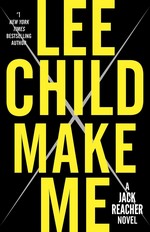
Make Me by Lee Child

Make MeMake Me

by Lee Child
Series: Jack Reacher, #20
Hardcover, 402 pg.

Delacorte Press, 2015

Read: September 22 – 23, 2015

“We should get a cup of coffee.”
Chang said, “I don’t understand how you drink so much coffee.”
“Law of gravity,” Reacher said. “If you tip it up, it comes right out. You can’t help but drink it.”
“Your heart must be thumping all the time.”
“Better than the alternative.”

I’ve got to get that embroidered on a pillow or something…

I’ve said it before, I’ll very likely say it again — it’s really hard to write about Jack Reacher books after a certain point. What can you say? Reacher comes into a town/city/locale, finds himself in the middle of a mess (or sees a mess and puts himself in the middle of it), beats some people up, probably shoots some others, makes sure the bad guys are punished (in one way or another), tries to save as many of the good guys as possible, probably has a brief affair, and then moves on. Same ol’, same ol’ — told in a tight, fast-paced, almost always exciting way. Lather, Rinse, Repeat as needed.

Every now and then you get something a little different — he’s hired to right a wrong/prevent a wrong, we get a flashback to his time in the military, or whatever. But by and large the books follow that pattern. And for the first 200+ pages, that’s exactly what Make Me gave us.

Curious about the name of the town, Mother’s Rest, and full of theories, Reacher rides in on a train to poke around for a couple of days and indulge his curiosity. It’s not like he has anything else to do. He’s briefly mistaken for a retired FBI agent turned private investigator, Keever, who has gone missing. A colleague, Michelle Chang, is also in Mother’s Rest looking for Keever (who she’s never seen in person, obviously). Now Reacher’s curious about a couple of things, and he starts working with Chang to find Keever. The locals don’t like this and threaten violence (naturally, they need to do so en masse for it to work). Par for the course, right?

But then when they start to learn what prompted Keever to be in Mother’s Rest, things get darker than usual. Don’t get me wrong — there’s a lot of real evil to be found in your typical Lee Child villain. But on the whole, they’re nothing that you can’t find in many mystery/thriller novels/tv shows/etc. Every now and then, however, you get something worse. While it takes a really long time to find out what’s worse about the villains in this novel, once the pieces start to come together — scratch that, when you start to see the pieces, you can tell there’s something twisted and vile going on here. That hunch gets more and more intense each chapter. Until all is revealed and you start to wonder if you left Lee Child behind and wandered into a Thomas Harris or Val McDermid novel.

There will be extended descriptions in a Reacher novel that are this strange mix of repugnant and fascinating — whether he’s describing the mechanism of a particular gun firing, the way a certain punch will affect both the puncher and the punchee, how a particular bone will break, or what have you. But the symposium on suicide methods and Internet culture around them just might have set a new high (or is it low?). Riveting and horrifying.

This book also contains something I’ve never seen in a Reacher novel before. I can’t get into it, but that Child would put Reacher in a situation like this impressed me almost as much as it surprised me.

I’m not 100% convinced this is a 5-star book, but if any Reacher novel is worth it, it’s this one. There are so many of the typical Reacher elements that are tweaked, played with, or broken here — all while telling a heckuva tale, remaining consistent with the character and world. Long time fans will really enjoy this. New readers will want to get their hands on as many of the rest as they can. And all of us will get really frustrated that we have to wait 12 or so months for Jack Reacher #21.

—–

5 Stars

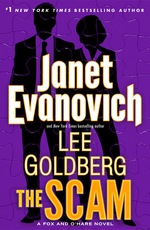
The Scam by Janet Evanovich and Lee Goldberg

The ScamThe Scam

by Janet Evanovich and Lee Goldberg
Series: Fox and O’Hare, #4
Hardcover, 286 pg.

Bantam, 2015

Read: September 24 – 24, 2015

“You can never have too many weapons,” Jake said.
“Does that mean you brought your rocket launcher?”
“It’s in the trunk of my car in case of a roadside emergency.”
“What kind of roadside emergency would require a rocket launcher?” she asked.
“You don’t want to find out and not have one hand,” Jake said. “It’s also why you should always have a paper clip in your pocket. You can do just about anything with a paper clip.”

I was prepared — even half-way expected — for this to underwhelm me. There wasn’t anything driving me to that expectation, maybe it was just my mood. Thankfully, this surpassed my expectations/fears — not for one second. This was another breezy, fun, adventure for Nick, Kate and the crew.

From page 1, The Scam was firing on all cylinders. The main mission was a lot of fun, with a believable target, just dangerous enough. The side missions were interesting and did a good job pushing the plot forward, not just being B stories.

There was even some tie-ins to previous cases — up to and including a recurring character that’s not part of the team.

Boyd is pretty much the most annoying character in the series, but this time, they struck the right one with him. He was insufferable as always, but he didn’t get on my nerves at all. Which means the book probably deserves a bonus 1/2 star rating just for that. The rest of the team was used only minimally — just little tastes of them all. I don’t think I’d want that all the time, but it worked here. Kate and Nick were…well, Kate and Nick. I think Kate was a bit more honest with herself about her motivations — both professional and personal — than we’re used to seeing her. Maybe the same could be said for Nick, too.

The ending (always the trickiest part of a con story) worked — Kate’s improvised weaponry was just great. Even if we didn’t get to see either the roadside emergency rocket launcher or pocket paper clip (which doesn’t mean it wasn’t a great line), sorry Chekhov.

There were a couple of things in the closing pages that floored me. I didn’t think Evanovich would do either of them, just doesn’t seem her style. I like the fact that she can surprise me (maybe it’s Goldberg’s influence — maybe not, but I like the guy, let’s give him the credit). Anyway, there were things in these pages I never expected that I’d get out of Fox and O’Hare. Bravo.

Book five needs to arrive soon. I realize my saying so isn’t going to make it happen. But just in case I’m wrong about that, I should get it on the record.

—–

4 Stars

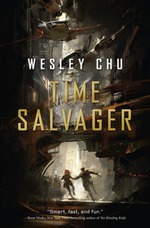
Time Salvager by Wesley Chu

Time SalvagerTime Salvager

by Wesley Chu
Series: Time Salvager, #1
Hardcover, 380 pg.

Tor Books, 2015

Read: September 12 – 15, 2015


Guess I should start with this: there’s nothing in these pages that’ll remind you of Chu’s Tao books. They could be written by completely different authors. Which is a combination of good news and bad news. The good news is that the reader doesn’t get a deja vu feeling reading, Chu’s ability as a writer and worldbuilder is displayed, and we get to see that he’s not a one-trick pony. The bad news is, the Tao books were better.

Not that this is bad, it’s just not Tao.

Chu is really smart about the way that he introduces us to the world, to the concept of Time Laws, and ChronoCom and all the rest of the things that you can read about in the jacket copy (or at the link above). Maybe it shows that I read too much bad SF as a kid, but I’m still really impressed by SF writers who are able to blend things into dialogue and story rather than just resorting to info dumps.

This is a Time Travel story where the Time Travel’s not really all that important. It’s just a tool. Like a cell phone — something that people use, but don’t really understand. No one (well, one person) here understands how it works, but they can use it. Ditto for all the nifty future-gadgets. So it makes it easy for us to not worry about it, too, and just go with the flow.

When you clear away all the bells and whistles this is a pretty straight-forward story about corporate greed, ecological/societal collapse, and a few people trying to do the right thing with the cards stacked against them (even if that pits them against each other). The bells and whistles turn this into a SF/Time Travel/Dystopian Love Story.

Not the best thing I’ve ever read by Chu, but interesting enough to make me glad I read it, and I’ll be back for #2. Maybe with is he can do something to make the series something I can get excited about.

—–

3 Stars

Witches of Lychford by Paul Cornell

Witches of LychfordWitches of Lychford

by Paul Cornell
Series: Witches of Lychford, #1


Kindle Edition, 144 pg.
Tor.com, 2015
Read: September 8, 2015

You ever get nervous about starting a new work by an author? Sure, in retrospect, it may seem silly to doubt, but for every Jesse Stone, there’s a Sunny Randall. As much as I like his Shadow Police series, I wasn’t sure I was up for something else by Paul Cornell. Thankfully, my apprehension was silly, because whether he’s writing about London or a small town, Cornell knows what he’s doing.

The town of Lychford is on the verge of dealing with a major assault by evil forces and for reasons you should discover for yourself, that is not something that can be allowed, because if they are allowed to invade, these supernatural forces will carry the day. So they must be stopped before they can begin in earnest.

These forces are, naturally, a large supermarket chain. What else? They’re called Sovo, and I’m sure they resemble no actual chain (or that Cornell has really good lawyers). But it seems that there’s more to them than low prices and a knack for ruining the lives of small business owners.

Now, your middle class activist types might get riled up by this, but there’s only so much that their petitions and flyers can do against the supernatural (not that they realize they’re going up against powers beyond their ken). Even when the supernatural are primarily using things like empty promises, bribes, and the allure of new jobs, there’s only so much that well-off Muggles can do (to borrow a term from some other series).

It’s going to take people able to see the otherworldly aspects of the PR Campaign that Sovo is waging to win the hearts and minds of the citizenry to thwart them. Now, typically, this is where we’d get someone like Rachel Morgan, Harry Dresden, or Peter Grant to come in and kick a little supernatural butt. Instead, we get such obvious heroes as a crackpot old lady and vicar who’s on the verge of losing her faith. Thankfully, the crackpot is actually a witch of sorts, so they’ve got a fighting chance.

For something a mere 144 pages long, this is an incredibly rich and well-developed world. The magic system seems pretty thought-out and realistic (for lack of a better word). The characters (those mentioned and a couple of others) are sharply defined and could probably carry a story by themselves.

Really, really impressive work — I’d love it if the work were longer, but honestly, I’m not sure if it’d have been as effective if it had another 1-200 more pages to develop everything. I think this ensures Cornell’s place on my “grab anything you see by” list without really caring what the subject matter is.

I was about to hit “Publish” on this when I had this thought — this reads just like one of Bledsoe’s Tufa novels would if set in England. For my money, that’s a pretty high mark.

—–

3.5 Stars

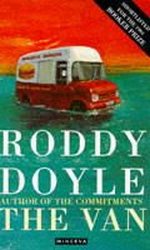
Reread Project: The Van by Roddy Doyle

The VanThe Van

by Roddy Doyle
Series: The Barrytown Trilogy, #3

Trade Paperback, 311 pg.
Minerva, 1991
Read: August 25 – , 2015
Jimmy Rabbitte, Sr. started off as a supporting character in The Commitments, moved up to co-star in The Snapper, and finally moves to the forefront in The Van, which is more about him than the other two were about any one person. Which isn’t to say that Jimmy, Jr., Sharon, Veronica, Darren and the twins aren’t here, they’re just in the background — as are most of Jimmy, Sr.’s friends (actually, I think Jr.’s in this far more than he was The Snapper).

Not only is the focus more narrow, the final installment in the trilogy is different in other ways — it’s almost 100 pages longer (depending on the printing) than The Snapper which was about 50 pages longer than The Commitments. Which gives Doyle more space to do things he hadn’t really before. It’s still primarily told through heavily stylized In the first 90 pages, I estimated I’d read more (significantly more) narration than I did in the first two volumes of the trilogy.

It’s not been clear before what Jimmy did for a living, but whatever it was, it was pretty clear the bills were barely paid. They stretched what they had pretty far, but they seemed to manage. Somewhere along the line, pretty sure it was post-Snapper, but I’m not sure, Jimmy lost his job. Unemployment isn’t setting well with him — he can’t support his family, he’s bored, he can’t even go down to the pub to have a few pints with his friends.

Jimmy’s trying to grow — he’s reading the classics. Thinking of taking some classes. But it’s not enough. At some point his friend, Bimbo, also gets laid off. The two spend a lot of time together — having a companion in his unemployment makes the whole thing tolerable for Jimmy — almost like summer vacation from school. Bimbo isn’t quite as accepting of this new reality — he almost applies to work at McDonald’s, but is shamed out of it by Jimmy. Bimbo’s wife is even less satisfied with his job status. Which leads to a reckless move on Bimbo’s part — reckless, yet maybe inspired — he uses some of his last dollars on a Chip Van (minus an engine). In the midst of the U.S.’ current Food Truck craze, this might not seem so risky, but in the early 90s? (then again, what do I know of early 90’s Dublin, other than what I’ve picked up from Doyle’s novels and the movies based on them?)

They’ve just a few weeks until the World Cup games start when they hope they can cash in on the post-game crowds. So Jimmy and Bimbo rush to clean the, learn to cook, design a menu, etc. And now you’ve got yourself a plot — can these two make a go of this? Can they remain friends and co-workers? Will they start a grease fire that destroys the whole of Barrytown?

There was, it seemed to me, a maturing of Jimmy that started back in The Snapper. Not that he wasn’t a good father before, but he kicked it into a higher gear with Sharon during her pregnancy. Here, that seems to manifest itself in a paternal pride — Junior’s having some sort of success out there, is getting married; his other son, Darren, is doing very well in school (better than anyone else in the family, that’s sure). Part of Jimmy’s reaction to it is finding pleasure in someone else’s success for what it means to them. I’m not convinced that the Jimmy of The Commitments or the first part of The Snapper could do that.

That’s not to say that he’s Man of the Year material or anything. There are some real (human) flaws to him. He’s petty, he’s jealous, he’s proud — there’s some sort of mid-life crisis that he’s got a half-hearted interest in involving Other Women. As in all good fiction, these just make him someone you can like, someone you can relate to, someone you can get annoyed with — even pity.

There’s some great, great stuff about sports fans here — national pride around The World Cup, the joy in sports, the very real camaraderie that can exist for a few moments around a shared experience. That’s not my typical milieu, but I’ve tasted it a time or two — and I can’t imagine many capture it better than Doyle did here. Even if I didn’t like the rest of the book, I think that part would’ve been worth it.

In the end, this is Doyle’s best work (to date), not the most enjoyable, but the best. It’s impossible after reading this, to ignore Jimmy, Sr.’s brief appearances in The Commitments, to not pull for him earlier than you should in The Snapper, and really to forget him. Just a great character in a world you really don’t want to leave.

—–

4 Stars

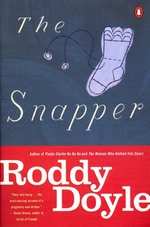
Reread Project: The Snapper by Roddy Doyle

The SnapperThe Snapper

by Roddy Doyle
Series: The Barrytown Trilogy, #2

Paperback, 212 pg.

Penguin, 1992

Read: May 20 – 21, 2015Naturally, after one of the best rock band novels ever — one fully of music, laughs, and style — Doyle follows it up with a heartfelt story of a young woman who gets pregnant after a one-night stand. Who wouldn’t?

Now, Sharon (the young woman in question) is the sister of Jimmy Rabbitte — The Commitments’ manager. So there is a tie — and we saw a little of their father and the rest of the family last time. Still, this feels so different, it’s hard to conceive of them being part of a trilogy. Oh well — it works — so who cares?. Carried along by Doyle’s inimitable style, this story — which could easily have been maudlin, overly sentimental, or sappy; comes across as genuine and heartfelt instead.
Where The Commitments was full of laughs, raunch, and style; The Snapper is full of laughs, family and heart. It’s not just about one member of the family this time — it’s all of them. The focus is on Sharon and her father, Jimmy, Sr.

Sharon finds herself “up the pole,” much to her distress. She knows who the father is, a one-night stand (something far less meaningful, actually) she wishes had never happened. Unwilling to let anyone know the father’s real identity, she makes one up (which also relieves her of the need to let the real guy have anything to do with the kid). Initially, she’s in sort of a denial — she knows the baby will change everything. But that’s months away — right now, she and her friends can still hit the pub after she gets off working at the supermarket and pretend that everything’s just like it was a couple of weeks ago. Eventually, she starts to make the changes necessary, but only when she has to. There’s personal growth here for Sharon, when she has no choice. But honestly — other than questionable taste in men, and an utter lack of awareness about Fetal Alcohol Syndrome — she seems like she’s got her head screwed on right already.

Jimmy, Sr. seems like the kind of guy you’d like to hang out in a pub with occasionally — I think he (and his friends) would get old quickly if you hung out with them all the time. Generous, funny, and gregarious. Maybe not the most responsible guy around — but he’s making ends meet (mostly), and doing (almost) his best for his kids. Eventually, he seems to get his act together for Sharon — or at least he tries. Which just makes you like him more — even as (because?) he just doesn’t make it some times.

While these two are on the forefront of Doyle’s attention, we do get some time with Sharon’s siblings (even Jimmy, Jr. — a little bit — who’s still trying to make it in the music business) and long-suffering mother. We watch the family stumble along through financial woes, various school clubs, a bicycle club or two, and being the subject of neighborhood gossip. These all might not be as well-rounded as Sharon and her father are, but they’re close enough that you think you know them.

Back in college, I read The Commitments a lot — but I think I read The Snapper more. It’s not as fun as its predecessor, but it’s a better novel — populated with actual people, actual growth, and something that looks a lot like actual life for many people. The Rabbites could be your neighbors, and you’d be happy to have them, which makes getting to spend time with them between the covers of a book just that pleasant.

—–

4 1/2 Stars

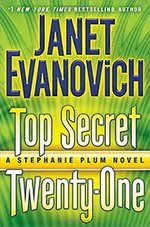
Top Secret Twenty-One by Janet Evanovich

Top Secret Twenty-OneTop Secret Twenty-One

by Janet Evanovich
Series: Stephanie Plum, #21

Mass Market Paperback, 326 pg.

Bantam, 2015

Read: June 27, 2015

What to say, what to say . . . I mean seriously, these are like 80’s sitcoms at this point. A big reset to the status quo at the end of the novel, most of the jokes are variations on previous novels. Which makes it hard to talk about them. Let’s break this one down quickly:

  • The Good: Vinnie didn’t appear. Joyce Barnhardt only appeared as an allusion. The pacing was a bit different, I thought. Stephanie’s main target was taken care of pretty early, freeing her up to help Ranger.
  • The Bad: The main target for Stephanie was so close to the guy in Takedown Twenty that I briefly wondered if I’d already read this one.
  • The Surprising: The other big case for this book — Ranger’s case, was a lot more serious (grading on a Plum curve here) than we’re used to. Involving a bit more peril than one expects. Grandma was used well, and Evanovich showed a little restraint with her and her antics.
  • The Funny: There was the standard amount of general amusement. But, and this is important, (at least until Evanovich figures it out and drives it into the ground), Bob + Ranger = Comedy Gold. Who knew? I actually laughed out loud. That whole scene lifted this from a 2-2.5 star rating to a three. It’s been a long time since I actually laughed at one of these.

On the whole, once I settled into it, I enjoyed myself. I’m glad I read it — would I prefer that Evnovich reintroduce a real sense of serialization, let things progress with one of the two romantic leads, let Stephanie get better at her job, introducing real stakes would also improve the humor. Otherwise, this remains fairly reliable, decent, disposable reading material.

—–

3 Stars

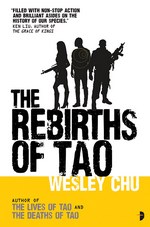
The Rebirths of Tao by Wesley Chu

The Rebirths of TaoThe Rebirths of Tao

by Wesley Chu
Series: Tao Trilogy, #3

Mass Market Paperback, 506 pg.
Angry Robot Books, 2015
Read: June 15 – 20, 2015That was satisfying.

Really, that’s about all I have to say about this one. But let’s see if I can’t expand a bit. Overall, I enjoyed The Lives more than this, and this one engaged me more throughout than The Deaths did, but The Rebirths brought the Tao Trilogy to a satisfying conclusion, wrapping up what needed to be wrapped up, dealing with all the arcs that needed to be concluded and generally leaving things in a place where we can say goodbye to these characters (not that we necessarily want to, but we can) — oh, and was a solid SF adventure in its own right.

One personal note, a large part of the action takes place in Ontario, Oregon. Most people reading this book aren’t going to think much about that at all, but I grew up about 10 minutes away from Ontario — so I thought that was pretty cool. On the other hand, now I know how Bostonians feel when reading Robert B. Parker or Dennis Lehane, or a life-long Chicago resident when reading Jim Butcher. The geography is bad, and if you wanted to buy a nicer car, you wouldn’t bother driving to Boise, you’d get the same car (probably cheaper) in Ontario.

But that matters so little to the book as a whole, that those four sentences are at least two too many.

So, anyway, this book (like The Deaths) takes place a few years after we’d left Roen and the rest. His son, Cameron, is a teenager — with all the stubbornness, rebellion, and hormone-addled fun that entails. Of course, his rebellion takes the form of wanting to join in the war against the Genjix, while his parents do all they can to steer him away.

It’s safe to say that very few (if any) of the Quasing are happy with Jill’s little revelation at the end of The Deaths — Genjix or Prophus — which puts them in the same boat as humanity. Governments all over the world are attempting to hunt down any and all Quasing. Which hasn’t done any favors for the Prophus, but at least seems to have hurt the Genjix effort more.

Which is not to say they’re down for the count by any means. Enzo, the Adonis, is still out there strutting like a peacock and working to bring about the end of humanity. We finally get to see the Genjix plan in full, and I’ve got to say, reading about their plan for re-making Earth makes me really glad that this is fiction.

Right?

So, we’ve got the Ontario storyline — which looks like a pretty routine mission for Roen and Marcos (yeah, not quite Felix & Oscar, but close enough), until it gets bad. And then worse. There’s a conflict in the leadership of the Genjix (so nice to see that even some of them don’t like Enzo). And then there’s a major breach in security which leaves the rest of our Prophus friends on the run — our focus is on Cameron, but not exclusively here. I was a little surprised how Chu concluded the Ontario storyline — which is what made it effective, really. These three threads, ultimately, naturally, converged into one big battle — like the two books before.

Once again, what Chu did with Roen between the books isn’t exactly what one expects, but it fits his character. Ditto for Jill. We didn’t know Cameron enough for me to say. Tao? Sure — Tao’s the same, being centuries old helps him stay consistent. When it comes to the machinery of the Genjix, Prophus and the US Government (and/or everyone else) — things didn’t go the way I figured they would following The Deaths — but I think I liked it more that way. It’s because of the fallout from Jill’s revelation that most of the character changes happened the way they did. Chu really was effective here.

There are some great fight scenes, if that’s your kind of thing (and if it’s not, why are you reading these books?). The final scene is as epic — yet personal — as you want from the end of a third book in a trilogy. Part of that battle are back-to-back hand-to-hand combat scenes featuring an Adonis vessel and people near and dear to us. By this point, I had no idea what Chu was going to give us and I was hanging on every hit. I’m so glad that Chu sprinkles so much humor through these books — after these fights were over, I needed the joke that followed.

It may not work for everyone, but I really liked where everything was left off. Particularly for Enzo.

A really solid novel, a satisfying conclusion — making the Tao trilogy a keeper. I’m very much looking forward to what Chu’s got in store next.

—–

4 1/2 Stars

Reread Project: The Commitments by Roddy Doyle

The CommitmentsThe Commitments

by Roddy Doyle
Series: The Barrytown Trilogy, #1

Paperback, 165 pg.
Vintage Contemporaries, 1987
Read: April 15, 2015

Will yeh please put your workin’ class hands together for your heroes. The Saviours o’ Soul, The Hardest Workin’ Band in the World, —Yes, Yes, Yes, Yes —The Commitments.

This is a tough one for me to talk about — I’m a long-time fan, I’ve read it a dozen or so times, it’s all I can do to not turn total fan-boy and just gush. eh, I might not try too hard.

My college roommates and I became fans of the music video for “Try a Little Tenderness” from the soundtrack for the movie adaptation, and we waited for what seemed like a interminable amount of time before the movie came to the art-house theater in town. I loved it from the opening sequence on and tracked down the novel the next day. It blew my mind (for reasons I’ll get into in a bit), and I read it a dozen or so times over the few years until I loaned it (and the rest of the trilogy) to someone at work. Naturally, I never saw him again (I ended up with a copy of Gaines’ A Lesson Before Dying and another book in the transaction). I finally let myself buy a replacement copy a few years ago (found a used copy with the same cover), and have now read it twice. And, if anything, my appreciation grows each time.

It’s the late 80’s and three young Dubliners (from the poorest part of Dublin) have formed a band — sort of. Not everyone in it are musicians yet, but they’re working on it. Thanks to the direction of their keyboard (defined in the loosest possible way) player, they’re going to play synth-pop and go by the name “And And! And” (and, yes, I got the exclamation point in the right place). Their first order of business (while learning how to play) is to hire a manager. Jimmy Rabbitte is the guy from their school/neighborhood who’s the area’s music/music industry expert. As evidenced by the fact that he’s the first one anybody knew of that was aware of Frankie Goes to Hollywood — and, even greater — he’s the first to realize how bad they were. Jimmie gets things going immediately by dropping the name (especially that !) and the keyboard player.

Instead, they’re going to play American soul music — and then put an Irish twist on it — local slang, geographic references, and so on. Jimmie puts an ad in the paper to recruit some musicians, hits up a coworker he heard at a company party, and so on. As a result, he collects a very strange crew of musicians — including a trumpet player decades older than the rest of them, with plenty of professional experience (the trumpet in “All You Need is Love,” for example). The rest, as they say, is history.

The story of The Commitments is told through a very unconventional prose and dialogue style. It’s like Doyle took Leonard’s 10 Rules to the furthest point possible (other than #7, which he violates in every line). You can hear these characters talk, you can feel the energy in the room — heck, this book comes closer to capturing musical performances better than anything this side of Memorex or vinyl. Couldn’t tell you what anyone looks like (well, The Commitmentettes are pretty attractive — especially Imelda), what their homes are like, the weather, or anything of that other stuff that tends to fill the pages of novels. But I can tell you what happened, to whom, and how all related reacted. Which is good enough for me.

This isn’t one of those books that gives you diminishing returns upon re-reading. It’s fresh (while dated — no idea how Doyle pulls that off), funny, and full of soul. Dublin soul, of course. Just like the rag-tag musicians that come to life in its pages.

Oh, if you can get your hands on the soundtrack albums (or find them streaming somewhere) to listen to while reading, it makes it all better (even though there’s almost no overlap between songs).

—–

5 Stars

Page 14 of 22

Powered by WordPress & Theme by Anders Norén