Category: C-E Page 13 of 22

Authors C-E

The Lost Child of Lychford by Paul Cornell

The Lost Child of LychfordThe Lost Child of Lychford

by Paul Cornell
Series: Witches of Lychford, #2

Kindle Edition, 144 pg.
Tor.com, 2016

Read: November 2 – 3, 2016


It’s been a few months since Reverend Lizzie Blackmore, Judith (the elderly witch), and Autumn (now her apprentice and her employer) fought off the supernaturally corrupt megastore (and probably mundanely corrupt, too, come to think of it) and life has moved on in a relatively normal way. The three have forged some sort of alliance — easy for Autumn and Lizzie, already close, but learning new things about each other; not so easy for Judith to be accepted and to accept them, I don’t think. Autumn’s learning from Judith, while getting some help in her shop (which seems like a small town version of Atticus O’Sullivan’s and Alex Verus’ shops combined). Judith’s got something to do, a way to pass on her knowledge, and Lizzie is super-busy with pre-Christmas activities in the church.

But given everything we learned about Lychford, it’s not terribly surprising that things won’t stay that way, it’s just a question of what kind of other-worldly strangeness will come calling first.

In this case, it’s a ghost — or ghost-like apparition — that came to Lizzie at church. A small child looking frightened and worse for wear, with a simple request of: “No hurting.” Now, our trio can’t all agree on what the apparition is, but they can all get behind the idea of “No hurting.” They just have to figure out if that’s something they can stop — and then they’ll worry about the how. Neither piece of that plan works the way that it’s supposed to, but it seems these three are pretty good at improvising. Autumn, in particular, seems particularly adept at that.

I appreciated the fact that each of these women make one significant mistake (and probably some smaller ones) — two that come from inexperience, one that proves that experience doesn’t equal infallibility. They’re all believable, they do more than just advance the plot, they are honest with the characters and situation. Too often in novels you’re left wondering why a protagonist would be so stupid as to do X — when really it comes down to they have to do X or the really cool Y thing can’t happen at the end. That doesn’t happen here — sure, the attentive reader might be able to see the blunder coming around the corner, but there’s no reason to think that our protagonists should until it’s too late. Because while these three are fictional characters, Cornell imbues them with a genuineness, a substantial-ness that’s fitting for a real person (sadly, not always present with them, however).

Man, I had to use DuckDuckGo a lot to get all the cultural details in these pages — I know next to nothing about Anglican Christmas festivities, and less about British Christmas Pop Music. I’m not sure how much I’ll benefit long-term from this research, but it was interesting. I might have been better off not knowing anything about Greg Lake and his song, though.

If there was such a thing as magic, it wouldn’t look like anything from Harry Potter, Harry Dresden or some other fantasy series starring a Harry. It’d look like this, I wager. Quiet; shadowy; right out in the open, yet somehow unseen. All substance, no flash. Oh, yeah, and creepy — can’t forget creepy and inexplicable. Which is pretty much everything that happened in this book — up to and including most of the things the trio does to prevent things from getting really out of hand. It’s hard to talk about realism in a fantasy novel, but Cornell’s one of those that make you do that.

The Witches of Lychford was thoroughly entertaining and did a great job of establishing this world. This novella took full advantage of that to tell a more compelling story. I don’t think it’s absolutely necessary to read Witches first, but it’d help a lot. “I Believe in Father Christmas,” notwithstanding, I thought The Lost Child of Lychford lived up to its predecessor and left me eager to return to this little village.

—–

4 Stars

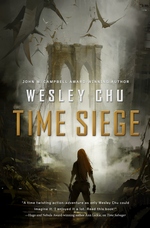
Time Siege by Wesley Chu

Time SiegeTime Siege

by Wesley Chu
Series: Time Salvager, #2

Hardcover, 341 pg.
Tor Books, 2016

Read: August 15 – 16, 2016


This is, in a sense, one of the most pointless posts I’ve done. If you’ve read Time Salvager, then I can’t imagine you needing to be convinced to read Time Siege, maybe you need convincing to move it up on your TBR, or just a reminder that this is out there. If you haven’t read Time Salvager, you shouldn’t read Time Siege yet because it won’t make all that much sense. But I’ll try to say a little about the book.

This book really could just be the next chapters of Salvager. It’s just taking the story to the next step — yes, there are distinct plot and character arcs, but on the whole, it’s just what should come next. Making it hard for me to know what to say. Some things that I thought were pretty well resolved in Siege are dealt with again, and hopefully resolved (or closer to it) now. Some characters come back in ways that I couldn’t have expected, some in ways that were exactly what I expected.

One thing that’s crystal clear now — and has been evident all along, really — is that Wesley Chu can write a fight scene. Whether it’s single combat or larger forces, he delivers. The scenes are suspenseful, intense, and believable. He captures what I imagine both the chaos and order of a battle would be like for those involved and those behind the lines.

Somewhere along the line, I got the impression that this was a duology, not a trilogy. So I spent most of the book thinking that this could be a dark, yet satisfying ending. Definitely not an “Everybody Lives happily every after” ending, but one that wraps things up well. Then the satisfying part became untenable (possible, but not likely) . . . and thankfully, it quickly became clear that it was going to be a trilogy. That said, everything is hanging in the balance here at the end of Time Siege, and it’s going to take a lot of heroics for there to be even a chance for an ending that doesn’t involve the doom of humanity. Even with a lot of heroics, that’s a distinct possibility — part of me wants that to happen, just to see how Chu pulls it off.

I remember liking Salvager more than I did, but whatever — the sequel did everything it needed to do to push the story forward into the third book, with heightened action, more investment in the characters and what happens to them. Chu accomplished everything he needed to here and more. I could really use a time machine now to get my hands on the concluding volume.

—–

4 Stars

This Damned Band by Paul Cornell and Tony Parker

This Damned BandThis Damned Band

by Paul Cornell, Tony Parker (Artist)

Trade Paperback, 160 pg.
Dark Horse, 2016

Read: October 12, 2016


I’ve struggled for a couple of days now trying to figure out what I can say about this. It’s all about the premise when it comes to this book (a collection of issues from a limited-run series).

This is a comic about one of the biggest bands of 1974, Motherfather, on what could be their last world tour — complete with a documentary crew, a gaggle of groupies, and a manager who could be the hybrid of Wilson Fisk and Colonel Tom Parker. Like many rock artists of the time, Motherfather makes a big deal about worshiping the devil as part of their stage persona. While on this tour (possibly with some psychopharmacological help), they discover they’ve actually been worshiping the devil.

Oops.

Things don’t go all that well from there.

If you like that hook, you’ll like this book. Otherwise, just skip it.

Paul Cornell wrote this, so right off that tells you this is going to be well-written. A little humor, some real people and real emotions, and some seriously messed up supernatural elements. Cornell delivers on the promise of the premise — and a little more. It’s exactly what you want to read given the hook.

As for Tony Parker? I don’t think I’ve seen his stuff before — but I’m going to keep an eye out for it. I honestly can’t think of anyone who could’ve matched the style and story of this book like he did — either in the film sections, the visions/hallucinations, or the rest. Really great work.

I should throw in a quick note here, if it’s not obvious from the subject matter, this is not for kids.

It’s not for everyone, but it’s pretty entertaining. If the concept strikes you as up your alley, it probably is — give this one a shot.

—–

3 Stars

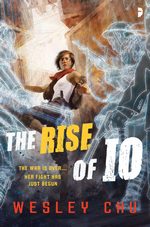
The Rise of Io by Wesley Chu

The Rise of IoThe Rise of Io

by Wesley ChuA
Series: Io, #1

eARC, 352 pg.
Angry Robot, 2016

Read: September 27 – 29, 2016

“Stick with me, kid ,” he said. “We’ll introduce you to a bigger world with all sorts of new people who will want to kill you.”

Let me start by saying that while this is a sequel to the Tao Trilogy (taking place a couple of decades after The Rebirths), you don’t have to have read them to enjoy this. You’ll miss some nuances, not understand some references and will spoil events in books that you’ll end up wanting to have read. But, it’s not essential — and this would be a great jumping-on point. If you’ve read the Tao Trilogy, let me assure you that this is a worthy successor, just as fun — a part of the same series, but it feels fresh enough that you don’t feel like you’ve read this book before.

Ella Patel lives in an Indian slum — in part of the world hardest hit by the war between the Quasing factions and their human allies (while I feel bad for these fictional Indians, I’m so glad to see alien combat not centered in the U.S.). She lives on her own, orphaned by circumstance and a Gengix attack — between her small size, quick wit and almost all-consuming greed she lives life on her own terms, two steps ahead of the law and one step ahead of criminals she’s wronged. I could’ve read at least 100 pages more of her antics before we introduced a single Quasing from either side and been entirely content (not a complaint about when we got Quasings, however), Ella’s just instantly likeable in a way that no one in these series has been (with the possible exception of Cameron).

Io’s host is in India doing some off-the-books investigating into one of the Gengix’s most ambitious projects yet. That investigation doesn’t go so well and suddenly Io needs a new host — there’s the impetuous woman who tried to help her host nearby (and a much better option than anyone else), so Io makes a choice and the Queen of the streets becomes so much more. Their relationship defines rocky initially (see Tao and Roen, but worse).

It should be obvious (but isn’t) that not every Quasing will have had as illustrious existence as Tao — Io’s haven’t developed a martial art, conquered legendary kingdoms, etc. Which isn’t to say that Io didn’t leave her mark on history — for example, I trust the name “The Maginot Line” rings a bell.

As the minutes ticked by, Io clarified some of the dreams of her glorious career inhabiting humans. If anything, it comforted Ella that the Quasing weren’t all-knowing and powerful, that they were just as culpable and mistake-prone as any human.

Nevertheless, just by having existed for a few millennia on earth, Io’s got a lot of wisdom and experience to pass on to her new host. Slowly — and with several appeals to her mercenary streak — Io convinces Ella to begin training to become a Prophus agent. Eventually, Ella begins to make a sort of peace with her new life partner and something approaching friendship begins to develop.

Incidentally, Ella’s not the only one comforted by a not-all-that-perfect Quasing.

Meanwhile, a couple of Gengix Adonis agents are vying for control over India — with the citizenry of the slum (and the nation, really) acting as pawns. Shula is one of the more lethal women you’ll come across — both politically and physically. She’s not one you want to cross in almost any situation — but that doesn’t stop many.

At some point, Prophus agents come to town and everything gets turned upside down — Ella finds a desire to help the Prophus, Shula seized the opportunity for personal power, and Io has her chance at doing something that’ll leave her mark on history.

The fight scenes (training and otherwise) are up to Chu’s pretty high standards, the humor is crisp, the characters (including a couple of old friends) are just right, and the plots are among his best — I just don’t know how else to put this. The book was a solid winner and had me eager for the next installment, and then Chu hits us with one of the best Epilogues that I can remember, making me more than eager for whatever’s next (not really sure what the word for “more than eager” is, eager squared?).

Great characters, twists, suspense and grins — I dug this one so much. He keeps the magic of the Tao books, reinvigorates it and expands it. I expected Chu to deliver just what fans wanted without it being a case of “second verse, same as the first,” I just didn’t expect it’d be this good. Get on this one, folks.

Disclaimer: I received this eARC from Angry Robot via NetGalley in exchange for this post — thanks to both for this.
N.B.: As this was an ARC, any quotations above may be changed in the published work — I will endeavor to verify them as soon as possible.

—–

4 Stars

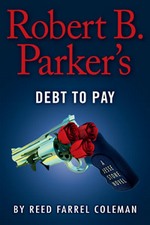
Debt to Pay by Reed Farrel Coleman

Debt to PayRobert B. Parker’s Debt to Pay

by Reed Farrel Coleman
Series: Jesse Stone, #15

eARC, 352 pg.
G.P. Putnam’s Sons, 2016

Read: August 20 – 22, 2016

Since the closing pages of Blind Spot, I’ve been waiting for the other shoe to fall victim to gravity. Jesse Stone has been, too. Well, after a more typical Stone novel, the wait is over — Mr. Peepers, the sadistic hitman that almost killed Suitcase Simpson and evaded Jesse, is back.

Just in time for just in time for Jesse’s ex, Jen’s wedding.

Before I forget, isn’t that a great move? Build suspense by ignoring the cliffhanger-esque ending for a whole book? In the wrong hands, that’d be annoying, but done right? Very effective.

Jesse and his lady-love, Diana (the FBI agent turned private security consultant) are off to Texas to meet Jen’s fiance, maybe get a little closure, and covertly protect Jen from the special mix of psychological and physical torture that Peepers subjects his victims to before killing them. While Jesse seems to be several steps behind, Peepers seems to be calling all the shots — he’s got all the power and is making Jesse jump through whatever hoops he wants him to.

Meanwhile, changes are afoot with the Paradise Police Department, State Homicide and Suit’s life (and a few other places) — just so we don’t all get too wrapped up in Pepper’s quest for vengeance.

As he has in the previous two novels in this series, Coleman keeps things moving at a great pace, the suspense keeps getting ratcheted up — interspersed by heartwarming, amusing, and troubling moments, so it’s not suspense overkill. There are some great character moments — especially with Diana and Jesse, Suit and a few people, Jesse and a bottle. There’s no mystery here — we all know who the villain of the piece is, the only question is how Peppers will attack and who will remain standing at the end of the book.

In his other major series, Parker introduced a paid assassin, The Gray Man, who almost killed Spenser and plagued him for a while afterwards. Mr. Peepers is far creepier, deadlier, and interesting than the Gray Man ever was. I really didn’t like being in that dude’s head as much as we were — which means that Coleman succeeded in making him a terrible person — I felt like washing my brain out with soap to get over some of the Peepers chapters.

Ace Atkins has returned Spenser to his roots (moved things forward, don’t get me wrong, it’s not just a nostalgia trip), but Coleman has taken Jesse and the rest and shaken things up — he’s stayed true to the characters, the series, the feel — but he’s pushed things ahead and has probably made more real changes to the series than Parker did since book 2 (but making things feel risky and inventive feels like the roots of this series). Actually, he’s not just changed this series — he’s done things that affect the whole of the Parker-verse. Just look at Suit — everything we need to know about what Coleman’s doing to the series is embodied there. I know Coleman’s take is not that popular with some long-time fans, but I couldn’t be happier — either with the series as it is right now, or with this book.

This was riveting, literally never a dull moment — not relentless, you can relax occasionally, even grin. But I had to force myself to put it down to do the responsible adult thing a couple of times. I expect most fans of Jesse and the PPD folks will have similar experiences with Debt to Pay.

Disclaimer: I received this eARC from G.P. Putnam’s Sons via NetGalley in exchange for this post — thanks to both for this.

—–

4 1/2 Stars

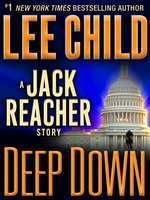
Deep Down (Audiobook) by Lee Child, Dick Hill

Deep Down Deep Down

by Lee Child, Dick Hill (Narrator)
Series: Jack Reacher, #16.5

Unabridged Audiobook, 1 hr, 43 min.
Random House Audio, 2013

Read: August 4, 2016


Ahh, this is more like it — I was afraid that I was going to have to give up on these shorts to preserve my appreciation for the novels. But Lee Child and Dick Hill pulled it off.

Its the mid-80s, Reacher’s a Captain in the Army and is called to Washington to go undercover as an Army sniper. Someone is leaking information from a Congressional investigation into whether the Army and Marines need a new, super-cutting-edge sniper rifle. The Army’s got it narrowed down to 4 suspects, they want him to narrow it down. Reacher is repeatedly assured that this will just be talking and that there is “no danger.” So, yeah, things are going to get dicey.

The suspects are four women on the fast track to the top of the Army — if not Commander-in-Chief (Child apparently likes the idea of women on the Fast-Track in the Army) — we get to spend a little time getting to know them with Reacher. His handler wants Reacher to try to use his masculine wiles with one or all of them. Reacher has a pretty good idea who is target is, and then plunges in, pretty sure he’ll have to come up with something better than attempting to seduce superior officers.

Interspersed with the early portions of this story are snippets of two different individuals heading toward the center of D.C. — it’s not immediately clear what’s going on with either of them, but you get plenty of opportunities to guess. They do a decent job of increasing the tension, though.

Reacher does get enough clues (naturally) to identify the leak — not only that, he’s able to uncover a whole lot more. Best yet, the book includes a fantastic Reacher fight scene (don’t get me wrong, I love it when he uses his brain, but the last two short stories I listened to didn’t have a lot of action.).

Some of Hill’s female voices leave a little to be desired. But I have no other complaints — good stuff (he has sort of a Stan Lee quality to his voice from time to time — if Child ever made him say “true believers,” I’d flip).

Good, strong story. Capable narration — a great way to spend 100 minutes.

—–

4 Stars

Second Son (Audiobook) by Lee Child, Dick Hill

Second Son Second Son

by Lee Child, Dick Hill (Narrator)
Series: Jack Reacher, #15.5

Unabridged Audiobook, 1 hr, 27 min.
Random House Audio, 2013

Read: July 5, 2016


Okinawa, 1974: the Reacher family is assigned to a miliatry base there and is going through their well-established routine of moving into their new home. Reacher’s brother, Joe, isn’t dealing well with the idea that he’ll have to take a placement test to get into school; Reacher is dealing with a neighborhood bully; their mother is in France as her father dies; and his father is in the middle of a crisis of his own.

It’s a short story (40 pages in text), but it contains all the hallmarks of a standard Reacher tale, just on a smaller scale. It’s sort of cheating, taking a well-established character like Reacher and imagining the mini-version of him. But you know what? This was so fun, I didn’t care.

Dick Hill gives a pretty good performance, but his little Reacher and Joe voices are unintentionally amusing and cartoonish. I bet he’d be fun listening to with a full Reacher novel (particularly if it didn’t feature kids).

Not a great story, but satisfying. Not a great performance, but satisfying. Gets the job done.

—–

3.5 Stars

Small Wars (Audiobook) by Lee Child, Dick Hill

Small Wars Small Wars

by Lee Child, Dick Hill (Narrator)
Series: Jack Reacher, #19.5

Unabridged Audiobook, 1 hr, 30 min.
Random House Audio, 2015

Read: July 5, 2016


Reacher is still in the army for this one, and is pulled from his assignment to take over for an injured MP. Major Reacher’s first job at his new post is to investigate the murder of one of the Pentagon’s fastest rising stars.

To help him out (and to help train his underlings) Reacher gets Frances Neagly assigned to him. This story turns out to be a great spotlight for Neagly, actually. She even gets the big fight! This case hits close to home and ends up revealing a lot more about the Pentagon and the victim than anyone expected.

Dick Hill’s performance was fine — there wasn’t a lot for him to do here, but what he did worked.

This one didn’t work all that well for me — the solution was unsatisfying, and Reacher’s reaction to it might even be worse.

—–

2 Stars

The Burning Room by Michael Connelly

The Burning RoomThe Burning Room

by Michael Connelly
Series: Harry Bosch, #17

Mass Market Paperback, 459 pg.
Vision, 2015

Read: November 16 – 18, 2015

Harry Bosch is in the last few months of his career with the LAPD — he’s about to be forced to retire again, and there’ll be no coming back from this one. He’s at peace with this — as much as he can be. It helps that he’s training rookie Detective Lucia Soto. Soto wants to learn from him (which distinguishes her from a lot of his former partners) and seems to want to do things the way Bosch does — it’s about results, not politics; shoe leather, not (just) computer work — everyone matters. If Harry can replace himself with someone like her, he’ll go happily.

There are two cases that Bosch is focusing on this time out — one officially so, the other on his own. The official case has a lot of press, a lot of attention from inside and outside the LAPD from the Chief all the way down. It’s an odd cold case, too. The victim just died, from complications of a bullet lodged in his back almost a decade ago. From the initial findings to the end, nothing turns out to be anything like it was assumed in the initial investigation when he was shot. Great, twisty case.

Connelly spends more effort on the other case, which ends up giving the novel its title. It dates back to about the same time, but isn’t actually assigned to Bosch and Soto initially. It’s been a long time Hobby Case of Soto’s, though and she recruits Bosch to help — which he does, to keep her out of trouble and to continue her development. The case is an old arson investigation, the building that was set on fire was an old apartment building that also housed an unlicensed day care. Nine children died in the fire, and it’s haunted the neighborhood since. A much more complicated case — made the moreso by the two working it off-book.

Harry’s not fighting corruption in the ranks or City Hall this time — his targets may be close to power (and some are about as far from it as you can get), but that’s it. As much as I enjoyed the forever long feud with Irving, I’m glad to see some variety. No corruption to fight — just bureaucratic timetables and peevishness. That’s bad enough for anyone.

Whether we’re talking Iggy Ferras, David Chu, Kiz Rider, Jerry Edgar or any of the other partners Harry’s worked with, it’s safe to say, most of them haven’t been great matches. Kiz came close (Edgar did, too, in a way — they knew how to work together, mostly). This is probably the best relationship Harry’s had with a partner — not his equal, but with almost the same drive. And she knows she needs Harry’s lectures (which most of the others didn’t need or want), she wants to hear them — she even asks for his feedback and critique. Even without this, Soto’s got it going on, her strengths supplement and/or complement Harry’s. I wish they had more time together — although Harry’s lessons might start to grate on her if they spent more than several months together, see the above list of ex-partners.

While the partner/partner dynamic hasn’t always been idyllic, you can usually count on a healthy father-daughter interaction — or at least attempts on both of their parts at it. There wasn’t that much Harry and Maddie material in this one — but what was there was . . . okay. I wonder if Connelly is preparing for a spin-off series starring Maddie, or if he’ll hand that off to someone else to do.

I’m not entirely satisfied — nor are we supposed to be — with the way both cases resolved, but they did so in a way that Harry can be proud of. Much more he has a legacy to pass down –both to Maddie and to Det. Soto. You also know that Harry’ll be one of those retired cops who’ll be quick to return a call from someone in the future looking for help on an old case.

A good Bosch, not great, but solid and satisfying. Killer last scene, even if it made me think of Sutton Foster playing Harry in a very special episode of Bosch. Good ’nuff for me.

—–

3.5 Stars

The Promise by Robert Crais

The PromiseThe Promise

by Robert Crais
Series: Elvis Cole, #14 / Joe Pike, #5
Hardcover, 402 pg.

G.P. Putnam’s Sons, 2015

Read: November 10 – 11, 2015


Elvis has been hired to find Amy Breslyn, from her pictures he says, “She looked like a sad version of someone’s marshmallow aunt: a kindly woman, slightly out-of-date, who wore sensible shoes and minded her own business.” But his client paints a picture of a woman who has been making some very unwise life choices lately, and she’s worried. Once Elvis scratches beneath the surface of Amy’s life, her recent lifestyle is far worse than “unwise.” Can the World’s Greatest Detective help her?

You strip away all the bells, whistles, multi-perspectives, co-mingling of series, and whatnot and you’ve got yourself a classic, prototypical Elvis Cole story. There’s a missing person that he’s hired to find, he goes through a bunch of stuff to find that person — ticking off a police department and a criminal enterprise in the process. At some point, he finds the person, but also discovers this person is in a world of hurt from the government/the criminals she’s crossed paths with, which he will try to extricate them from. Excitement, deception and bullets ensue. Pike does his thing. Elvis does his. Happy ending — or as close as you can get in this world we live in.

It’s with the bells and whistles that this one stands apart from your usual Elvis Cole book — which is both a good and a bad thing for the book.

Good, because we got to see so many characters that we enjoy and/or love interacting and teaming up.

But . . .

For the first few chapters it didn’t feel right — as an Elvis Cole book, it worked as a suspense novel — there was just too much bouncing around between the various point-of-view characters. By chapter 6 or 7, things settled down and back to what it should be. Still, The Promise probably stretches the limit of acceptable point-of-view characters: Mr. Rollins (the criminal we meet in the opening pages), Elvis, Joe, Jon Stone, Scott, and even Maggie — we’re an imp, a bastard and a khaleesi short of George R. R. Martin epic.*

It’s in trying to serve all these characters that the novel struggles — for example, I could’ve used more Pike. Sure, he’s effective when he’s around — but he’s barely around. After bringing in Jon Stone, Pike’s more of a backup than anything else — okay, fine, this was Stone’s kind of work. But still, if it’s listed as a Joe Pike novel we should see Joe do some Pike-level stuff. I don’t even think that Elvis said anything about him twitching the corner of his mouth in response to a joke! That might even disqualify it as an Elvis Cole.

Now, the Jon Stone material — especially his POV chapters — was great, and if it hadn’t been at the expense of Pike, I would write a healthy paragraph praising it.

The Maggie and Scott story might have been the most compelling part of the book. Scratch that, for me (at least, your mileage may vary) the Maggie and Scott story was the most compelling part of the book. It was fairly predictable, but executed so well that you just don’t care. This is a problem when they’re not the central figures in the book. I think the novel suffered from Spider-Man 3 Syndrome** — just too many characters running around to do a good job with.

I got enough of the Maggie and Scott material, same for the Jon Stone (except for the bit that you’re designed to want more of). But I needed more Joe being Joe, I wanted more Joe/Elvis interaction, more Elvis/Scott, more Elvis investigating, more — well, more Elvis, I guess is what I’m saying. Every time it seemed that the story was picking up steam and we were on track, we got someone else’s POV and had to start building momentum again.

Don’t get me wrong, I talked so much about the problems I had to fully explain them — I really enjoyed it, I just didn’t love it. After waiting so long, you’d hoped that this would’ve been dazzlingly great, instead The Promise will have to settle for being very enjoyable. Like I said at the outset, it’s a classic Elvis Cole story — and there are few things I’d rather read. I’m looking forward to re-reading this in a year or so, and I may put up a more favorable post when I do.


Okay, now that I’m thinking about it, who wouldn’t love to see Joe Pike smack Joffrey around a little bit?
8
I’d call it Batman Forever or Batman and Robin Syndrome, but those two had much worse problems than a plethora of characters

—–

4 Stars

Page 13 of 22

Powered by WordPress & Theme by Anders Norén