Category: C-E Page 7 of 22

Authors C-E

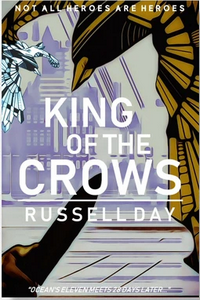
The King of the Crows by Russell Day: Prescient. Gripping. Haunting. Unpredictable. What stories should be.

King of the Crows

King of the Crows

by Russell Day

Kindle Edition, 456 pg.
Fahrenheit Press, 2020

Read: April 28-May 9, 2020

… for me at least, the first week of the Lockdown was the worst.

Knowing it had happened to me. I hadn’t escaped, I wasn’t one of the lucky ones. Lucky to be safe or lucky to be dead. Take your pick. I was neither.

That right there gives you a pretty good idea what kind of light and fluffy read this is going to be.

There are two timelines in this story—the primary focuses on a post-pandemic London, while the other shows what happened to a couple of the characters mid-pandemic (with plenty of material describing what the pandemic was like for others). In the primary timeline, Europe is a disaster—a “wasteland”—and eight years after the Outbreak, it’s beginning to put itself back together. But it’s going to take a long, long time to recover from this. Don’t let the fact that “eight years after” this fictional outbreak is 2028 bother you at all.*

* Good luck with that. I’ll get back to this in a bit.

I’m not going to try to list all the various ways that Day uses to tell this story: I’m certainly going to forget several. So here’s a partial list: here’s a third-person 2028 narrator describing a police investigation, a first-person perspective on the same investigation; a first-person account of that same detective’s life during the Outbreak; selections from a screenplay made about a group of Londoners during the Outbreak; selections from the Outbreak-memoir of one of those Londoners; and third-person narration of the same (N.B.: these three will vary in telling ways); redacted 2028 prison correspondence about the Outbreak; excerpts from scholarly works on aspects of the Outbreak (including a very illuminating work on the slang of the time); graffiti from 2021; internet message boards. Day weaves these together to tell his story, build the world, and help you to understand it. Frequently, I read something from the 2028 timeline, and understood it—only to find a new depth to it several pages later after getting another piece of the puzzle from 2020/2021. It’s hard to juggle that many narrative forms/voices/perspectives/calendars as a reader or a writer—Day pulled it off better than I did (any problems I had following things I attribute to myself, and it was pretty easy to clear out my misunderstanding with a minimum of backtracking*). It definitely helps paint the picture of the scope and variety of effects the sickness had on the world more efficiently than a consistent first- or third-person narrative would be able to.

* This would be easier in hardcopy than on an e-reader in my opinion. But that’s just a guess.

There are times (several of them) when I felt that the characters were getting lost amongst the plot and worldbuilding and sickness. But when I stopped and thought about it—and eventually got to the point where I didn’t have to—I realized I had a pretty solid idea about who these people were and was more invested in them than I expected. I thought there was so much going on that the people were getting hidden, but really, Day’s work was subtle—working in the characters into my subconscious like you give a dog its medicine. Normally, this isn’t something I require (or would like)—and it’s not Day’s usual M. O. (quite the opposite), but I think this approach really fit the novel and the story/world.

“They weren’t zombies,” he says, softly. “Don’t call them zombies.”

No one who was involved in the Outbreak for real uses the zee word.

So exactly what was the sickness?

I remember reading a couple of years ago about these ants that would succumb to a fungus which would short-circuit their brain and make them do certain things before killing them—or something like that, vague memories here. Then there were stories about parasites controlling the host’s actions—both of these stories had their 15 seconds of fame on social media around the same time (I may be messing the details up a little bit, but I’m not writing history here).

In Day’s world, one of these kinds of parasites will reside—asymptomatically, I should stress—in cats, who would pass it on to humans. Skipping the details, the humans would get very sick and then, survivors would maybe succumb to a psychosis that would make them violent. This sickness, HV-Tg (Human Variant-Toxo gondii), in a little more than a year would kill more than 20 million in Europe (at least 33% of France’s population) Et voilà!—an easy to believe pandemic that results in Zombie-like people wandering around.

Now, if one of those who’d “switched” and become violent infected you during an assault, well, you were likely to succumb. There were enough of these (“psychos” or “Gonzos”), and the sickness was so widespread, that the police and military couldn’t keep up, that civilians were forced to take action and defend themselves, their family and neighbors. People quickly forming into gang-like associations for mutual protection. It was a literal kill-or-be-infected (and likely killed) situation.

One such association became known as The Crows or The Kings of the Crows. They developed a legendary status mid-and post-Outbreak—and are the subjects of the memoir and film mentioned above. One of their number who happened to survive (and gain notoriety enough to get a publishing deal for a memoir) is the subject of the 2028 investigation. They survived the worst of the worst in one of the hardest-hit cities. They did so via means and methods that many (including their own) would find deplorable, but under circumstances that not only permitted, but required, those actions.

We also see what happens to an American in Paris for work when the Outbreak reaches the point that International travel is canceled (particularly to the U.S.). Her allies will never be considered the Kings of anything, and the contrast between how she survives to what the Crows do is pretty striking.

In 2028…eh…you know what? You should read that for yourself. I’m going to say something I’ll regret.

The biggest killer in those days wasn’t the disease or the psychos, it was stupidity.

However, it has been pointed out by many historians, logic was one of the first casualties of the Outbreak.

Some of the best moments of this book have nothing to do with advancing the plot, they’re little bits showing what the world of the Gondii-pandemic looks like. The man telling the story about taking his girlfriend to the ER because of a burn—how they were treated, and how she became infected. The soldiers coming back from a Middle East deployment being completely unprepared for what had happened to their home country. The mother and son who traveled with the Crows for awhile.

Ultimately, it’s not the story you think you’re getting…or is it? The marketing tag line is, “Ocean’s Eleven meets 28 Days Later.” It is, all things considered, a good, catchy line. I’m not sure it’s all that accurate a description of the novel (but it’s not inaccurate). What it is, really slides up on you—and when you see it it feels like it was obvious all along (even if you wouldn’t have said that 20 pages earlier). There’s a straightforward crime story at the heart of this novel—it’s just surrounded by so many layers, that you can miss it—there’s the sickness, there’s the horrible social and political context (both mid- and post-Outbreak), there’s what the characters are going through otherwise—and the whole thing is drenched in social commentary about 2020 society, e.g., sexism, economics, medical care.

And that’s not even touching the context we’re reading it in now. I truly wonder what I’d think of this book if I’d read it last Fall. I’d still like it, I’d still be impressed by it—but I don’t know if it would resonate with me the same way. There’s almost nothing about Gondii that’s comparable to COVID-19. But the way that people and governments respond—well, that’s pretty different, too. but if you can’t see what’s going on around us reflected in this novel? You’re not paying attention. That Day appears so prescient says something about his skill and observation (and a lot about Western culture, too).

I can see why people cling to the idea that the Gonzos were trying to tell us something. Something’s out there trying to get a message through: there’s a plan. Compared to the idea that it was all just chance, it’s a comfort of a type. Chance doesn’t care and can’t be appeased and can’t be reasoned with. Chance means it could all happen again.



5 Stars

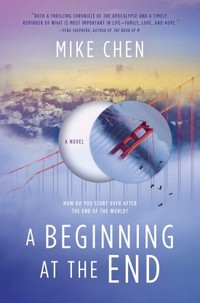
A Beginning At The End by Mike Chen: Love, Uh, Finds a Way in this Optimistic Dystopian Novel

A Beginning At The End

A Beginning At The End

by Mike Chen

Hardcover, 391 pg.
Mira Books, 2020

Read: January 28-February 4, 2020
Grab a copy from your local indie bookstore!

“Mommy’s not coming home.”

“No! Mama now! Want Mama!” Desperation had taken over the child’s face, eyes pooling With the Whiplash turn of raw emotions. She tossed the plastic spoon across the prison-cell-turned-living-space, her voice ramping up in volume and intensity. His arms wrapped around his daughter, even though she punched at his thigh in frustration; he held her as if she was the last thing in the world.

Rob blinked as the realization came to him. She was.

His home, his old life was gone. His parents and brother, killed by MGS. Their friends, their community, scattered and ravaged. And now Elena gone too.

Sunny was all he had left.

Well, I really painted myself into a corner with my In Medias Res post about this book a couple of weeks ago. I’m not sure what else there is to say! Oops.

I was more right than I was wrong about where Chen was taking some of the story—but while I had the destination correct the route he took totally caught me off-guard (and it was so good!). The parts of the story I was wrong about, however. I could not have been further off the mark if I’d tried. Both of those results are so satisfying to me, Chen nailed the nuts and bolts bits of plotting—conclusions that seem right and expected (and earned) while being very unexpected.

While Chen knows how to plot a book, characters are his strength (see also Here and Now and Then).
I could absolutely see where Moira was coming from and understood (and applauded) what she did to change her life. I felt like I got Krista’s pain and the way she reacted to her mother and uncle made sense to me (I’m not sure she was fair to her college boyfriend, even if he should’ve known better than to do what he did). And Sunny should win over even the most jaded reader. But Rob? The way Chen wrote him made me empathize with Rob to a degree that I wasn’t prepared for. That sentence I quoted above, “She was,” just about broke me.

I assume that other readers will gravitate to other characters (and Moira is probably my favorite in the novel), and they should. But Rob is going to stick around in my subconscious for a while.

All of this happens against the backdrop of a world trying to recover from a global pandemic that wiped out an unimaginable number of people. Sure, other apocalyptic scenarios seem worse (zombies, whatever lead to Panem, the First-through-Fifth Waves, etc.)—but what makes this scenario chilling is just how possible it really seems. And I’m not just saying that with one of my sister’s kids dealing with being quarantined in Asia around the time I read this.

Nevertheless, Chen’s novel is optimistic. Human beings, human society, human families prevail. Like Dr. Ian Malcolm famously said, “Life, Uh, Finds a Way.” So does humanity in Chen’s world.

Like all good Science Fiction, this is more about our present than it is our future. In a survivor’s group, Rob has a lot to say about living in fear with the source of the past hanging over is and letting the two dictate our lives. Without trying I could think of a dozen ways that could be applied to pre-apocalyptic Americans (who knows how large the number would be with some effort).

There’s more I feel like I should say, if only just to flesh out some of what I’ve put down—but at this point, I think I’ve said enough about this book over the two posts, so I’m going to stop here (so much for that corner I painted myself into). I want to do 400-600 words on the title alone (many of which would be devoted to the indefinite article).

A Beginning at The End is the kind of SF that should appeal to SF readers. It’s the kind of SF that should make non-SF readers (including those antagonistic to genre fiction) think there’s something to the genre after all. Because this isn’t “just” a SF novel. It’s a novel about humans being very human, with hopes, fears, loves, joys, sorrows, failures, and successes—it just happens to be set in a post-apocalyptic future. Chen’s first novel was among the best I read in 2019. I fully expect that this will be among the best I read in 2020. I’m going to jump on whatever Chen has coming in 2021 without bothering to note the title or even skim the blurb. He’s earned an auto-read from me for at least the next two novels.


4 1/2 Stars

2020 Library Love Challenge

This post contains an affiliate link. If you purchase from it, I will get a small commission at no additional cost to you. As always, opinions are my own.

In Medias Res: A Beginning At The End by Mike Chen

As the title implies, I’m in the middle of this book, so this is not a review, just some thoughts mid-way through.

—–

A Beginning At The End

by Mike Chen

Book Blurb:

Six years after a global pandemic wiped out most of the planet’s population, the survivors are rebuilding the country, split between self-governing cities, hippie communes and wasteland gangs.

In postapocalyptic San Francisco, former pop star Moira has created a new identity to finally escape her past—until her domineering father launches a sweeping public search to track her down. Desperate for a fresh start herself, jaded event planner Krista navigates the world on behalf of those too traumatized to go outside, determined to help everyone move on—even if they don’t want to. Rob survived the catastrophe with his daughter, Sunny, but lost his wife. When strict government rules threaten to separate parent and child, Rob needs to prove himself worthy in the city’s eyes by connecting with people again.

Krista, Moira, Rob and Sunny are brought together by circumstance, and their lives begin to twine together. But when reports of another outbreak throw the fragile society into panic, the friends are forced to finally face everything that came before—and everything they still stand to lose. Because sometimes having one person is enough to keep the world going.

I’m a couple of chapters shy of the halfway point, but I’m pretty excited about this book and want to get something out there about it—also, I have to take a break because I forgot about a book tour I have next week, and I really should read that book first.

So, like last year’s Here and Now and Then, Chen uses SF trappings to tell the kind of story that you don’t normally associate with Science Fiction (especially if you’re an anti-genre fiction snob).

I’m a chapter or two past a Speed Dating scene. On the one hand, it’s like every other Speed Dating scene you’ve seen from TV or the movies and/or read before. On the other hand, this is after most of the population of the earth is gone and people are trying to rebuild a facsimile of their lives in the midst of tragedy, so you’ve got the awkwardness, the insanity of the whole speed dating thing, and people dealing with unspeakable trauma at the same time. Chen makes this feel incredibly familiar and incredibly alien (yet relatable) at the same time, mildly humorous and miserable, tinged with hope and despair. And that’s just one scene. The book is full of stuff like this.

At its core (I think), this is a novel about how our past defines us, even after the apocalypse. Two characters here want to redefine themselves from the pre-pandemic lives, and somehow still can’t (at least not totally). Two characters need to redefine themselves from their post-pandemic past, and can’t seem to find the will to. It’ll take no time at all before you’re invested in these characters—you’ll want what the former two want, and hope that the latter two can somehow make things work.

Also, you’ll find you have some pretty strong feelings about Moira’s father. And they won’t be at all positive. But that’s all I’m going to say about that.

I have a few ideas where the stories are going/may end up, yet I’m reasonably certain that Chen’s ideas are better. Regardless, these are all building toward a satisfying pay-off or three. Maybe late next week I’ll have a chance to talk about this more, but for now, let me say I’m digging this and expect that about 80% of the people who read this blog on a semi-regular basis will, too.

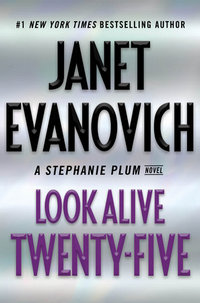
Look Alive Twenty-Five by Janet Evanovich: A local rock star with ambition, a shoplifter, and a mysterious deli fill Stephanie Plum’s 25th novel.

Look Alive Twenty-Five

Look Alive Twenty-Five

by Janet Evanovich
Series: Stephanie Plum, #25

Mass Market Paperback, 306 pg.
G.P. Putnam’s Sons, 2019

Read: December 25, 2019


Someone that Vincent Plum Bail Bonds had put up the bail for skipped town, and he’d put up his deli as collateral. Vincent’s father-in-law (the owner of the Bail Bonds) has decided he wants to diversify, so he’s hanging onto it. The catch is, the last several managers have disappeared while working. So Vinnie’s decided that 1. Stephanie is the new manager; 2. She needs to find out what’s going on to get the other manager’s kidnapped/killed/whatever; 3. She can take care of her bond enforcement job during the off hours.

That’s pretty much all you need to know. Stephanie’s running a strange little deli with Lulu as the assistant manager/sandwich guru. There are three other employees there who really know what they’re doing (mostly doing drugs while toiling away at a minimum wage job). Hijinks ensue—her car is stolen, she tracks down a couple of skips, she looks into the disappearances (with help from Joe Morelli and Ranger), and things get weird at the deli (particularly due to Lulu, who becomes a social media sensation of the moment).

I must say that Stephanie seems more competent at this gig than a lot of the other jobs she’s held over the course of this series—either in an undercover assignment or because she was trying to do something other than bond enforcement. If it wasn’t for the distraction of the investigation (and Lulu), she probably could’ve made a decent go of it and changed the series for good. It was pleasant to see her not horrible at something.

We get a little bit of another of Stephanie’s supernatural acquaintances, Gerwulf Grimoire (Wulf), here, but in such a small amount that I’m really not sure why Evanovich bothered. That said, if she was determined to use Wulf, this is precisely as much as she should.

I still don’t get what Stephanie sees in Joe, or what Ranger sees in Stephanie, or why Joe or Ranger let this stupid triangle continue. But I’m at peace with that—I’ll never get it, and Evanovich will never change it, why fight it?

If this had been part of any other story, I’d say the solution stretches credulity too far. But as it’s a Plum novel, I really don’t think I can. Honestly, it was only as I was gathering wool a couple of days later that I gave it any thought.

One last thing: I’d read the blurb for Twisted Twenty-Six a few weeks earlier, and was looking forward to reading it more than I have since the mid-teens (I’m guessing). So, it turns out that I was already primed for the near cliff-hanger last couple of pages. I don’t feel too bad saying that because it really doesn’t have much to do with this novel (although events in it do tie-in), but it’s something I have to talk about because I don’t remember Evanovich doing this in the previous twenty-four novels.* Evanovich doing anything new at this point is something to note and celebrate.

* Feel free to correct me in the comments.

This wasn’t anything special, but there wasn’t anything annoying about it, either. Which sets it apart from the last handful. Evanovich ticked all the boxes she needed to; got Stephanie into a new situation and had her handle it in a non-disastrous way; and capped the book off with something new. I can’t imagine Evanovich will return to the comedic heights of the early series—and I imagine even less that she feels any compulsion to do so. I just hope for a reliable level of moderate entertainment, and that’s what she delivered. It’s a decent time, but if you’re new to Plum—go back to One for the Money and immerse yourself in the first dozen or so of these before taking the plunge into the higher numbers.


3 Stars

2019 Cloak & Dagger Challenge

Why Book Bloggers Blog… #Hug/FistBumpABookBloggerToday #SupportYourLocalBookNerd

“There’s a bookstore here somewhere,” Lula said. “I’ve never been in it, but I saw it advertised. Maybe she would like a book.”

“She has four kids,” I said. “She hasn’t got time to read.”

“That’s a shame,” Lula said. “Everyone should read.”

“Do you read?”

“No. But I think about it sometimes. Problem is, I go to a bookstore and there’s so many books I get confused. So, I get coffee. I know what I’m doing when I order a coffee.”

—Janet Evanovich
from Look Alive Twenty-Five

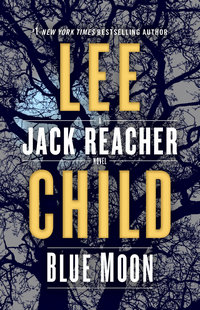
Blue Moon by Lee Child: A Very Timely Novel Puts Reacher in One of the Most Dangerous Positions He’s Been In

Blue Moon

Blue Moon

by Lee Child
Series: Jack Reacher, #24

Hardcover, 356 pg.
Delacorte Press, 2019

Read: December 2-3, 2019

Grab a copy from your local indie bookstore!

“We should be magnanimous in victory. Someone said that.”

“Full disclosure,” Reacher said. “I told you before. I’m a certain kind of person. Is the guy in the trunk still breathing?”

“I don’t know,” Abby said.

“But there’s a possibility.”

“Yes, there’s a possibility.”

“That’s me being magnanimous in victory. Normally I kill them, kill their families, and piss on their ancestors’ graves.”

“I never know when you’re kidding me.”

“I guess that’s true.”

“Are you saying you’re not kidding me now?”

“I’m saying in my case magnanimity is in short supply.”

“You’re taking food to an old couple in the middle of the night.”

“That’s a different word than magnanimous.”

“Still a nice gesture.”

“Because one day I could be them. But I’ll never be the guy in the trunk.”

“So it’s purely tribal,” Abby said. “Your kind of people, or the other kind.”

“My kind of people, or the wrong kind.”

“Who’s in your tribe?”

“Almost nobody,” Reacher said. “I live a lonely life.”

Reacher is on a bus bound for somewhere. He sees an older man being targeted for a mugging (both he and the would-be thief have noticed a fat envelope that seems to be holding cash). When the man and his predator get off at some city, Reacher abandons his planned trip to follow along.

Obviously, he foils the mugging, but the older man is injured, so Reacher appoints himself a guardian and assistant until he can get the man home. He learns that this man and his wife are in debt to a Ukrainian loan shark, and it’s not looking good. They got in this state due to some incredibly believable bad luck, and Reacher decides to take it upon himself to get them out of it. Maybe not permanently, but at least for the foreseeable future. He has essentially one week to extricate them from their current predicament, and Reacher is hopefully going to beat that clock and get back on the road.

We’re not told what city this takes place in, it doesn’t matter—it’s a small-to-medium sized city with two competing crime syndicates. One is a Ukranian mob, the other is an Albanian mob. They each control half the city, with a very clear line of demarcation. They’re currently enjoying an uneasy peace, and are nervous about a new police commissioner coming soon—neither group has been able to find a way to manipulate or bribe him and they’re in his sights. Before I forget, I want to say that I love that both groups speak/write in unbroken English—I get why other authors use broken English for these kinds of characters, but it feels less cartoonish this way.

Once Reacher starts doing his thing, a little comedy happens. Reacher is trying to do X. The Ukrainians see the effects and assume the Albanians are doing Y. The Albanians see the effects and assume the Ukrainians are up to Z. The clear messages Reacher is sure he’s sending aren’t being received by anyone. Before long the two factions are on the brink of war—which is the last thing that anyone wants.

While he’s trying to help out this older couple, Reacher befriends a waitress, Abby. Soon, she leads him to some other allies—a couple of musicians (one a former Marine) and a security consultant who used to be a Company Commander in an Armored Division in Europe during the Cold War. There’s some good-natured chest-thumping between the three veterans which helps lighten to tension.

Abby is tough and smart. She reminded me a lot of Patty from Past Tense—she adapts to the dangerous situation she finds herself in pretty well. She’s not crazy about it, she’s pretty freaked out, honestly. But she pulls herself together enough to help Reacher as well as being his conscience occasionally (she’s less willing than he is to leave a trail of bodies in their wake). Like Patty, once things get rolling, Abby starts analyzing her situation and what’s going on with the Ukrainians/Albanians in a very Reacher-esque way.

What makes this one distinctive from others in the series? It feels very ripped-from-the-headlines. Not in the sense that Law & Order based stories on actual events, but in that it addresses a handful of things that are in the news practically every day lately. Sure, Reacher frequently deals with real issues, but this seems the most timely since Gone Tomorrow a decade ago (I could be wrong about that, but that’s the one that jumps to mind without taking time to review the details of each of the 23 previous novels). I don’t think Child could/should keep that up, but doing something so fresh-feeling every now and then would be a great idea.

Also, Reacher seems a bit different—still Reacher, I’m not saying that Child’s changing him, but he’s not quite his usual self. For starters, he seems more inclined to a “kill ’em all” approach to the various criminals (especially later in the novel). Now, this could be because he wants to ensure the safety of this older couple who really can’t defend themselves, so he’s getting the defense in pre-emptively. The other possibility I can think of is that he assumes there’s only one language both organizations will understand.

The other difference is Reacher seems more mortal, at least more aware of his mortality. He tells Mrs. Shevick that he knows he will be beaten one day—but today isn’t that day. He’s also more obviously lonely (not just because of the semi-joking material quoted above). It’s like being that lone wandering warrior is taking its toll on Reacher. We’ve seen this before from time to time, but it seems to be growing lately. I remember reading in Martin’s Reacher Said Nothing that Child had considered retiring the series around The Midnight Line, I can’t help but wonder if this is a sign of that becoming imminent.

A stronger cast of non-“Bad Guy” characters than we’re used to seeing from this series, a winning female lead, some tragic victims, a bunch of ruthless criminals, a lot of bullets flying and Reacher at his toughest. There’s so little to not like here. One of my favorites lately.


4 1/2 Stars

2019 Library Love Challenge2019 Cloak & Dagger Challenge

This post contains an affiliate link. If you purchase from it, I will get a small commission at no additional cost to you. As always, opinions are my own.

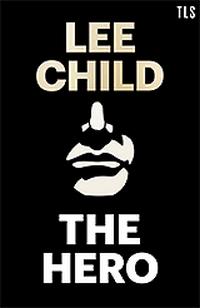
The Hero by Lee Child: Lee Child Traces the Development and Use of “The Hero”

The Hero

The Hero

by Lee Child

Hardcover, 77 pg.
TLS Books, 2019

Read: November 28, 2019

Grab a copy from your local indie bookstore!

There are only two real people in fiction—the storyteller and the listener. The story proceeds based on the teller’s aims and the listener’s needs. If the listener needs light entertainment, and the teller aims to be loved, then light entertainment is what the listener will get. But if the listener needs reassurance of some kind, or consolation, and the teller aims to better equip her family for future trials, then the story will likely be suspenseful in nature, replete with dangers and perils, over which a memorable character will eventually triumph in a decisive manner, such that the listener finishes the tale with a tight and determined smile, with moist eyes fixed on the distant horizon.

Child’s first Non-Fiction look is an essay exploring the concept of the hero through human history. On the one hand, I had no idea what to expect from Child doing Non-Fiction. But if anyone has something interesting to say about the idea of Hero, it’s gotta be Child, right?

I’m glad I came into it with almost zero expectations because I wouldn’t have guessed this.

Child starts off with a brief discussion of the history of opium, right up to the point where heroin needed to be named.

Then he treats us to a theory of the concept of hero, using a combination of evolutionary theory and speculation, history, and a little more speculation. He begins this look with Neanderthals, so there’s a lot of ground to speed through in a work so brief. Finally, on page 60, we come full circle and get back to heroin before getting to the good stuff.

Child has three definitions of “Hero,” all with separate uses. He then discusses them for a few pages. It’s these last 17 pages or so that we get to the meat of the subject—you could think of the first part of the book as a prolonged introduction (and you’d be a little right).

We get a brief look at The Iliad and The Odessey and their heroes, and even briefer assertion that Dr. No and a work by Ovid about Theseus are the same. I’m not that familiar with Ovid, but given the way we recycle stories now. It’s not too difficult to think that our narrative culture is the only one to be that redundant.

The best part of the book is the several paragraphs looking at the character of Robin Hood. Child looks at how the Outlaw was originally depicted, and then how that grows and changes through time—as well as how the story of Robin Hood added characters and perspectives. By this point, I was starting to hope that the book had just been a few examples like this.

Finally, he talks a little bit about his own understanding and application of the concept and why our contemporary narratives need Heroes.

What is the purpose of fiction? I think it can be summed up in a simple phrase: To give people what they don’t get in real life.

While I did think this was an interesting little book, with a couple of great points and insights. But I’m really looking forward to the next Reacher book—because unlike this dose of real life, it’ll be tightly organized, compelling and a joy to read.

Still, I’d recommend the book—it’s intriguing, thought-provoking, and gives a good look at the way Child thinks. Serious fans would appreciate this for the insight into Child. People interested in the development of Hero might be a bit disappointed overall but will appreciate the last part of the book (maybe I’m the only one who isn’t grabbed by the buildup).


3 Stars

This post contains an affiliate link. If you purchase from it, I will get a small commission at no additional cost to you. As always, opinions are my own.

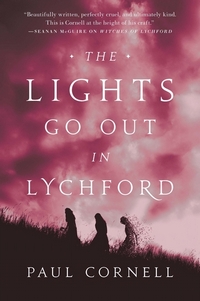
The Lights Go Out in Lychford by Paul Cornell: The Stakes and Tension are High in the Penultimate Lychford Novella

The Lights Go Out in Lychford

The Lights Go Out in Lychford

by Paul Cornell
Series: Witches of Lychford, #4

Kindle Edition, 144 pg.
Tor/Forge, 2019

Read: November 19, 2019


Oh, man…I was so glad to be back in this world. Lychford, a tiny little English town that acts as the border between this world and realities beyond our understanding, is a wonderfully conceived and executed setting—just getting to spend time here again was a blast.

I’ve tried three times now to describe this, and I just can’t without letting something slip. So, what’s the publisher say?

The borders of Lychford are crumbling. Other realities threaten to seep into the otherwise quiet village, and the resident wise woman is struggling to remain wise. The local magic shop owner and the local priest are having troubles of their own.
And a mysterious stranger is on hand to offer a solution to everyone’s problems. No cost, no strings (she says).
But as everyone knows, free wishes from strangers rarely come without a price . . .

Judith’s struggle with the effects of aging on her mind—and the way that her use of magic has accelerated them—is wonderfully depicted. Of course, it’s not just Judith dealing with her fading capabilities—her apprentice, her friend and her son also go through a lot trying to help her. This might be the best part of the book.

Autumn is working herself to exhaustion—not to mention loneliness and poverty—trying to rush her preparation for taking over for Judith. She’s also driven by the grave errors of the last book that have really put Lychford in danger.

Something about this one had me on tenterhooks throughout. There’ve been threats to Lynchford and/or the trio of protagonists before, but it all seemed much more likely this time.

The conclusion was simply fantastic and heart-wrenching—with a last line that will drive you to the online bookstore of your choice to try to order the conclusion immediately.

Can you read this without having read the previous entries in the series? Yeah, I guess you could. Cornell provides enough backstory to muddle through. Should you? Nope. I don’t think you’d appreciate everything the way it should be appreciated. Should you read the previous 3 novellas? Yes, and then read this and join me in waiting for the fifth and final one next year.


4 Stars

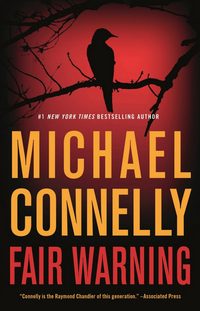
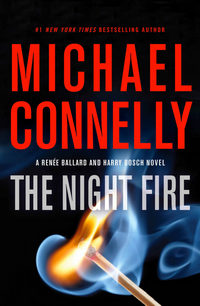
The Night Fire by Michael Connelly: A Superfluity of Cases Hampers Connelly’s Latest

The Night Fire

The Night Fire

by Michael Connelly
Series: Harry Bosch, #22/Renée Ballard, #3

Hardcover, 405 pg.
Little, Brown and Company, 2019

Read: November 1-4, 2019

…I’m not sure how much I can be involved.”

“You’re dumping this case on me. You changed my radio station and dumped the case on me.”

“No, I want to help and I will help. John Jack mentored me. He taught me the rule, you know?”

“What rule?”

“To take every case personally.”

“What?”

“Take every case personally and you get angry. It builds a fire. It gives you the edge you need to go the distance every time out.”

Ballard thought about that. She understood what he was saying but knew it was a dangerous way to live and work.

“He said ‘every case’?” she asked.

“‘Every case,'” Bosch said.

In The Night Fire Michael Connelly gives one more piece of evidence that yes, you can occasionally have too much of a good thing. We’ve got a little bit of a Mickey Haller case, something that Bosch works mostly on his own, something that Bosch and Ballard work together, a case that Ballard works mostly on her own, and then a hint of something else that Bosch primarily does solo. Plus there’s something about Bosch’s personal life and a dash of Maddie’s life. Which is all a lot to ask out of 405 pages.

It’s plenty to ask out of 650 pages, come to think of it. But anyway, let’s take a look, shall we?

Haller was drafted to defend an indigent man accused of murdering a judge, and is doing okay in the trial, but not well enough with things coming to an end. Bosch watched a little bit of the trial, waiting to talk to his half-brother and something strikes him wrong. So he takes a look at the files and gives Haller to think about. But it’s clear to Bosch that the LAPD isn’t going to act on anything they turn up, they’ve got their man. So if anyone’s going to expose the judge’s killer, it’s going to be Bosch. While it’s to be expected that the detectives that arrested Haller’s client would resent Bosch’s involvement with the defense—but Ballard is antagonistic toward the idea as well. Just because these two respect each other and can work with each other, they’re not clones, they don’t agree on a lot.

Ballard’s called to the scene of a homeless camp, where someone had burned to death in a tent fire. She’s just there as a precaution, in case the LAFD decides it’s arson (and therefore homicide) instead of an accident. Having been brushed off—and afraid that the LAFD will do the same to the case—she takes a little time to turn up enough evidence to justify treating the case as a homicide. Then she was promptly removed from the case, so her old team at RHD could work it. Naturally, like every character Connelly has ever created, Ballard walks away, right? Yeah, I can’t type that with a straight face—she cuts a corner or two and works the case herself, making better progress than anyone else does, too. This brings her into contact with her old antagonist, now-Captain Olivas. He’s close to retirement, and it’ll be interesting to see what happens to her career after that.

But what gets the majority of the attention of the novel is the case that the Ballard and Bosch work together—Harry’s mentor (and father figure) has died and left him a murder book from 1990 that he’d, um, “borrowed” when he retired. John Jack wasn’t assigned to the case in 1990, it’s unclear that he did anything in 2000 when he took the file home. Bosch has no idea why he had it, but convinces Ballard to read it over and look into the case. They start working it, bringing them into contact with retired and not-retired gang members, digging up the past, and the question about why John Jack had taken the file.

Watching Connelly balance these mysteries/storylines is a treat—he does a great job of moving forward with each of them while bouncing back and forth between. I do think each case could’ve used 10-20% time than he gave them. But I could be wrong. They all wrap up satisfactorily, and There’s not a lot of time given for anything that isn’t case related, but we get a little bit. Both the personal material for Bosch (which is what he was waiting in court to talk to Haller about) and what we learn about Maddie make me really wonder what’s around their corners—and it appears we won’t learn anything in 2020 (unless we get a bit of an update in the Haller novel next year). Ballard’s material is always about her work primarily, but we do learn a little more about her life between her father’s death and her time with LAPD. I’m glad that Connelly hasn’t given us her whole biography, but man…what we have been given just makes me want more. Clearly, he’s making sure that fans of all three characters are going to have to come back for more as soon as he produces it.

I appreciated the discussion Bosch and Ballard had about some actions at the end of Dark Sacred Night, I have a friend who will rant at the drop of a hat about Ballard’s choices there (and I trust my email/text messages will get another one when he reads this post). I don’t think this conversation will satisfy him, but it’s good to see the pair acknowledge mistakes they made. While I don’t think either of them do anything quite as misguided in this book, but they both make a couple of reckless moves. Bosch’s always had a little bit of dirt on/leverage with superiors (even some history) to give him some coverage when he gets reckless. Ballard doesn’t. So when she goes maverick, it’s more nerve-wracking than it is when Bosch did/does it. A nice little bit of character work, and a good distinction between the two characters.

There’s a moment in every Michael Connelly novel, no matter how good it is, where something just clicks and suddenly I’m more invested in it than I am in almost any other book. I think I’ve talked about it before, but when That Moment hits—there’s nothing better. I get that with a lot of Thrillers/Mysteries (and even some books in other genres), but never as consistently as I do with Connelly. I knew that moment had hit when my phone told me it was time to put the book down and go into my office and I audibly groaned. How was I supposed to focus on anything else when Bosch and Ballard were on the hunt?

Lastly, and this is very likely going to be only a problem I had. Several right-hand pages in my copy that have very faint—practically missing—letters. It’s like it’d been left in the sun too long, or like when an inkjet printer is running out of ink. Please tell me that Little, Brown has better equipment than I do.

This isn’t the best Connelly can do, but man…it’s so good. Solidly put together, we get to spend time with all our favorites and it hits every button it’s supposed to. Connelly is one of the best around—The Night Fire shows why.


4 Stars

2019 Cloak & Dagger Challenge

Quick Fire Fantasy Book Tag


I saw this over at Bookstooge’s Reviews on the Road, and it seemed like a fun way to revisit some Fantasy Favorites, and indulge in a bit of nostalgia while I was at it.

Play along, will ya?

Rules:

  • Thank the person who tagged you and link back to their post
  • Link to the creator’s blog (thebookwormdreamer.wordpress.com) in your post
  • Answer the prompts below – all fantasy books!
  • Tag 5 others to take part
  • Enjoy!


5 star book

The Lies of Locke LamoraThe Lies of Locke Lamora
I’ve read this at least 4 times and love it more each time. A Con Novel, a Heist Novel, a story of Found Family and vengence gone wrong (and, right, if you think that’s possible). I can’t get enough of Book I of the Gentleman Bastard Sequence. It’s fun, it’s suspenseful, good fight scenes, and characters you want to spend more time with.

Oh, and the fantasy world is pretty cool, too 🙂

(I have a very short post about it here)


Always going to recommend

The Chronicles of PrydainThe Chronicles of Prydain

The Chronicles of Narnia made me a Lewis fan. The Chronicls of Prydain turned me into a Fantasy fan (which is why I had to use the covers I owned as a kid). Yeah, it’s written for what we’d call today a Middle Grade audience, but when I listened to the audiobooks a year or two ago (or when I read them to my kids a decade ago), I thought it was just about as effective as you could hope. A little bit of fun, a dash of romance, a hero quest straight out of Campbell, a decent amount of magic (but not too much), a good mythic basis—and a oracular pig! It’s also probably the series that taught me that you’ll end up having emotional attachments to characters to the extent you may get teary about when they die and/or say good-bye to each other (and, yeah, did as an adult).

(my posts about the audiobook series)


Own it but haven’t read it yet

Bloody RoseBloody Rose

I tried to read this last year, and failed. I’m hoping to read it this year, and am likely to fail. I less-than-three’d Kings of the Wyld (in print and audio) so much, I don’t know why I haven’t made the time for the sequel.


Would read again

The Brothers ThreeThe Brothers Three

The first of The Blackwood Saga is everything I loved about portal fantasies as a kid—but it’s written for adults. Some good characters, a good amount of growth (especially in the later books in the series), good fight scenes and a pretty cool world to explore. This worked for me in ways I didn’t expect—and the sequels have done a good job building on this one. I’ve yet to read the newest in the series, but this one feels like a good comfort-read if I needed one.

(my post about this one)


In another world

The Warlock in Spite of HimselfThe Warlock in Spite of Himself

(I probably would’ve gone with Brooks’ The Magic Kingdom for Sale, but Bookstooge beat me to it in his post).

I honestly remember very little about this novel, despite having read it several times. But the last time was probably in 1990-91. I was able to find a couple of the later novels in the series, too—just not enough for me at the time (I probably could now—yay, Internet). Still, somehow this is what sprang to mind when I thought of a fantasy on another world. A cool combination of SF and fantasy, as I recall.


Back on Earth

The Hum and the ShiverThe Hum and the Shiver

(and the rest of the series, too, but this is good enough—as good as many series hope to be in itself)

A magical people with amazing musical talent in the Smoky Mountains, dealing with modernization, an Iraqi war vet, and a feud going back generations. I’m not a believer in magic, but Bledsoe makes me want to with these books—this is the best of a great series, and thinking about it now has got me thinking it might be time for read #4 of this one.


As for the tagging . . . nah, I’ll just leave this open to all my readers, I’d love to see what you all would put here. (W&S Book Club, here’s another chance to talk about The Dragonlance Chronicles—you’re welcome)

Page 7 of 22

Powered by WordPress & Theme by Anders Norén