Category: P-U Page 17 of 37

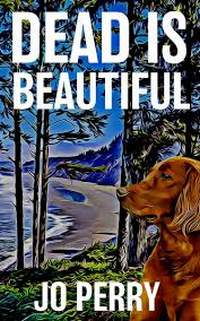
Dead is Beautiful by Jo Perry: Another Winner for this Supernatural Duo

Dead is BeautifulDead is Beautiful

by Jo Perry

Series: Charlie & Rose Investigate, #3

Kindle Edition, 268 pg.
Fahrenheit Press, 2019
Read: February 15 – 18, 2019

I can’t explain how death works––I can’t explain cruelty or love––and I don’t know anything for certain except that I failed at life.

Well, I refuse to fuck up my death any more than I already have––

And whatever it means or requires––I won’t fail Rose.

And failing Rose actually seems to be something that can happen here — we’ve seen Charlie and Rose interact with other ghosts before, but not for long — somehow, this time there’s a ghost that they have prolonged — and repeated — interaction with. This other ghost has threatened Rose — despite seemingly being unable to do anything to her, the intent and tone of voice used, scares Rose. And the one thing that’s definitely changed about Charlie post-death is his commitment to this dog, his ability to care for her.

But before we meet this ghost — and see the gruesome, horrific way they become one — we see another killing. The killing of a protected tree. What’s worse, this tree is home to an Spotted Owl and her owlet. While the tree is being (illegally) removed from a plot of land, the owlet falls out and is injured. It was these events that brought Rose, and therefore Charlie, to this area. Coming to the defense of the tree and the owls is a very naked and tattooed woman. She brings in the authorities, and sets off a chain of events that I won’t try to summarize, because you wouldn’t believe me and Perry does a better job than I would in a sentence or two.

This woman, it turns out is named Eleanor Starfeather (really). She’s a doula (birth and death, which is a thing that I just learned exists) and a house sitter — among other things. The house she’s currently sitting belongs to Charlie’s brother and his wife. Charlie’s brother, we already know, is not anyone you want to know. Greedy, superficial, arrogant, vain and uncaring — and his wife is worse. The bulk of the book’s action revolves around these three as they deal with the fall-out from the removal of this tree, the removal of the owlet and the mother owl’s reaction to both being gone. But it also involved a development company — which is developing the land next to Charlie’s brother and a property where Charlie used to live — not that you can tell that anymore.

Charlie and Rose witness a murder near that second property and are pushed into trying to figure out who was behind that murder. Our ghostly pair are hovering around the areas of overlap between the Venn diagram describing these people, company and properties. And slowly, a full picture emerges allowing them to figure out who was behind the murder. Along the way, we (via Charlie and Rose) get to watch the fall-out — involving city politics, real estate development, lawyers, a vengeance-seeking bird, a séance, a mini-Cooper driving Scotsman, and a natural disaster — oh, yeah, and Charlie’s brother having several of the worst days of his life in a row.

This all primarily takes place, where else could it, in Beverly Hills. A place that Charlie clearly has strong opinions about:

Leave it to the City of Beverly Fucking Hills to have “Beverly Hills” engraved twice on its police badges just to emphasize that their black necktied, highly trained, buff, and attractive Beverly Fucking Hills peace officers protect and serve the plastic surgery-altered, chemically peeled, hairlines suture-tightened, Botox-injected, Viagra-aroused, personally trained, lifestyle-coached, professionally organized, blow-dried, sixteen-thousand-dollar blinged-out handbag cultists and their Orc boyfriends and husbands here in this omphalos of malignant narcissism, this authentic-human-emotion-sucking manicured vortex with its fluffy cashmere clouds scudding across the Tiffany-blue vacancy that hangs above the abomination known the world over as Beverly Fucking Hills.

Which adds a different feel to the book than we’ve had in the series. We’ve bounced around from place to place in this series, but I don’t knows that I’ve had such a strong sense location before (I’m not suggesting the earlier books were missing anything, but this has added something). We do spend some time in Charlie’s old neighborhood, but not that much.

It’s possible that Charlie refers to the city with the two words that most people use, but I think it’s always his special elongated form. Ditto for his older sibling, or as he seemingly always refers to him, “my shit brother.” Maybe one reason that Charlie and Rose are still hanging around is that Charlie still holds such determined thoughts and passionate feelings about things like his brother and this city.

In Dead is Good, we got to witness Charlie realize how much someone meant to him, in ways hadn’t really seen in life. In Dead is Beautiful, we get to witness Charlie smitten with a woman — of course, it’ll be unrequited (and would’ve likely been if he was flesh and blood, too), but he is fixated on Eleanor. It’s a side of him that’s nice to see. It’s also helpful for there to be people he actually likes involved with everything he’s witnessing, so he can be positive about some of what happens. By the end of the novel, Charlie does realize a few things about his brother and the way he thinks about him — I’m not sure there’s growth there, but there’s self-awareness, which is almost as good.

We also get a few more clues about the nature of the afterlife and how things work for the souls of the deceased (man or beast…at least dog), but no real answers. I’m okay with that, I don’t think I want answers, I like not getting this afterlife, as long as Charlie and Rose are figuring out what the living are up to.

Last week, when I reposted what I’d written about the first three books, I felt awkward about my frequent references to “funny.” When I think back on these books, I don’t think about funny — I think about the crimes, the victims, the reflections on society and death that these books focus on. But I felt vindicated reading this, because it’s a very funny book. There’s slapstick all over the place — even when the events depicted aren’t that funny, they’re told in a way that clearly tells the reader to smile and chuckle. Just that description of Beverly Hills above demonstrates the oft-comedic voice.

But it’s not all funny — there’s a reverence toward death, toward life, toward the relationship between people and dogs. The fate and well-being of the tree and owls are treated seriously and with care. The comedy comes in Charlie’s observations of and reactions to the events he witnesses. His first exposure to Alexa, for example, made me laugh out loud.

As Charlie (ever so gradually) evolves (Charlie of the first two books doesn’t treat the other ghost the way this Charlie does), as we spend more time in this world, Perry keeps improving — this is one of those series that improves as it goes on. These unique protagonists get us to look at life and events in a different kind of way, while reading very different kind of mysteries. I hope I get to keep spending time with them for a long time to come — and I strongly encourage you to join in the fun.

—–

4 Stars

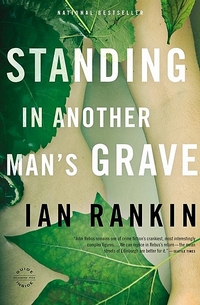
Standing in Another Man’s Grave by Ian Rankin: Back in the saddle again, Out where Cafferty is a friend?

Standing in Another Man's GraveStanding in Another Man’s Grave

by Ian Rankin

Series: John Rebus, #18

Paperback, 432 pg.
Back Bay Books, 2013
Read: February 1 – 4, 2019

           Rebus had lost count of the number of cases he’d worked, cases often as complex as this one, requiring interview after interview, statement after statement. He thought of the material in the boxes, now being pared over by those around him–paperwork generated in order to show effort rather than with any great hope of achieving a result. Yes, he’d been on cases like that, and others where he’d despaired of all the doors knocked on, the blank faces of the questioned. But sometimes a due or a lead emerged, or two people came forward to furnish the same name. Suspects were whittled down. Alibis and stories unraveling after the third or fourth retelling. Pressure was sustained, enough evidence garnered to present to the Procurator Fiscal.

And then there were the lucky breaks–the things that just happened. Nothing to do with dogged perseverance or shrewd deduction: just sheer bloody happenstance. Was the end result any less of a victory? Yes, always. It was possible that there was something he had missed in the files, some connection or thread. Watching the team at work, he couldn’t decide if he would want them to find it or not. It would make him look stupid, lazy, out of touch. On the other hand, they needed a break, even at the expense of his vanity.

The book opens with Rebus at the funeral for another retired cop — it’s a strong reminder that there’s not much else in his future. A few more drinks, another handful of cigarettes, a few more unfinished books and then death. He’s got to find away to keep himself going. Having taken to retirement like a duck to the Sahara, Rebus has found work as a civilian in a cold-case unit. It doesn’t seem to be the most effective or active unit, but it’s something. True to form, he spends a lot of time butting heads with the head of the unit — who is actually a serving detective, unlike the rest of the civilians. There’s a chance when the book opens that Rebus could get re-hired as a detective, and he’s looking for anything to help that. When someone comes to visit the man who started this unit — who is now very retired and unavailable — Rebus sees his chance. He meets with this woman who claims that the recent disappearance of a young woman matches the circumstances of her daughter over a decade ago. Not just her daughter’s disappearance, but some others in the intervening years. If Rebus can demonstrate there’s a tie to these disappearances — and find out what’s happened to them and who’s responsible (preferably while the latest victim is still alive), that would go a long way to ensuring him a way back from retirement.

It doesn’t hurt that before coming to him, this distraught mother spoke to someone about the new missing person — DI Siobhan Clarke. Now, Clarke (and her boss) aren’t instantly convinced that Rebus has anything other than the desperate rantings of this woman, but she’s willing to give him enough rope to get started. Which is all Rebus needs to throw himself into things.

The latest woman to go missing has some tenuous connections to organized crime figures in Edinburgh, which may have made her a target — and also may give Rebus resources to find her that other victims’ families can’t give. He’s not shy about exploiting either option there. He also starts diving into the files and lives of the other missing women. What he finds isn’t encouraging, but it’s enough to keep investigation going. Rebus being Rebus, it’s not long before he starts finding enough strings to pull to get at least a few things unraveling. And once that starts, the rest of the case is vintage Rebus — asking questions, annoying the right (and the wrong) people, and finally putting everything together. The mystery is solved in a satisfactory way, but a lot of things were uncovered along the way that some would’ve preferred not being uncovered, relationships damaged, people hurt and lives changed. Even the positive outcomes were largely muddied, and the grays probably outnumbered the blacks and the whites.

Naturally, there’s a lot going on in this book beside the case(s). In this book, this primarily focused on three people in Rebus’ life (whether he wants them there or not).

One thing that’s new in Rebus’ retirement is that he’s picked up a new drinking buddy. Big Ger Cafferty has decided that he owes his life to Rebus (something that Rebus isn’t incredibly comfortable with). So Cafferty will take Rebus out for drinks on a regular basis. Rebus’ impression of Big Ger hasn’t changed at all, but free drinks are free drinks. so he lets Cafferty buy. The two of them being seen in public regularly together is proof to his detractors that all the rumors were true, however. This isn’t really making his case for him.

Having Rebus around is a challenge for his old friend and former mentee, Siobhan Clarke. She knows that Rebus is capable of pulling more than his fair share of rabbits from hats, and with a case/cases as messy as this, she’ll take his brand of results over nothing. But, he undercuts her leadership, he distracts her people from their tasks, and frankly, makes her look bad in front of her bosses. If she can’t control this civilian interloper, maybe she’s not the leader they thought she was. Maybe it’s just me, but I don’t think Siobhan of Exit Music and before wants to think she’d turn into the kind of DI she has, either. And Rebus makes her take stock of how much she may have “sold out” just by being around. Not that she’s become 100% by the book and in blind lockstep with the chain of command, but she’s a lot closer to it than she had been.

And, of course, we don’t say goodbye to our new friend, Malcolm Fox. We just get to see him in a new light. He’s now cast as an antagonist to Rebus. He’s not a villain, don’t get me wrong — but he’s working against Rebus, and definitely making his life harder. Of course, the way things were headed for much of this book, Siobhan might soon find herself as an antagonist to Rebus, too. It’s difficult seeing Fox in these terms, but thankfully we know we can like and trust him from his own two books, because there’s very little in these pages to commend him. But we know that Fox is a straight-shooter and he’s only got Rebus in his sights because he thinks he deserves it. Well, and maybe he got his nose bent out of shape by the man when he was in CID with him. But primarily it’s Rebus’ lifestyle — the smoking, the drinking, the going off on his own to investigate — Fox sees Rebus as a relic, the old model of detective that the service is trying to get away from. The kind of bad influence that could tank Clarke’s promising career. And then there’s his public drinking with Cafferty (not to mention all the rumors about the two of them). We know Fox is wrong — about the serious stuff anyway. But we also know he’s not totally wrong about Rebus. The only question is, will Rebus be able to win Fox over, or will he be able to work around him?

I like the Fox-Rebus dynamic, in the short-term. But I think it could get really old, really fast.

It looks like the next book will have Rebus back in CID, which is a shame. In a sense. Now, let me explain myself before Paul (and maybe others) fills my inbox/comments with objections. I’m not opposed to Rebus becoming a detective again. But I like Rebus doing cold case work. When he’s worked cold cases before — whether out of curiosity or because they’ve been reopened — he’s done really well, and the resulting books were really good. Fox did pretty good with a cold case, too, let’s not forget. In other words, Ian Rankin can write a very effective novel with his protagonists working cold cases, and I’d like to see Rebus doing nothing else for a while (especially as a civilian). Then again, we got a handful of Bosch novels doing that, why get greedy?

I enjoyed the Fox books, but this felt like coming home. It was only a few lines into the book before I think I “felt” the difference, we were back where we were supposed to be. I’m not sure how accurate that was then, but the book as a whole felt different than the Fox books did. Rankin kept a lot of plates spinning, balls in the air, or whatever cliché you want to use, here — he brought back Rebus, shook up his life a bit more, showed that Clarke was doing fine on her own, brought Fox in, showed what post-Big Ger Edinburgh was like, set up the next stage of Rebus’ career, and managed to tell a heckuva twisty murder/missing persons story. He probably accomplished a few other things, too, but that list is enough. Standing in Another Man’s Grave is just another bit of proof that Rankin is among the genre’s crème de la crème.

—–

4 Stars
2019 Library Love Challenge

A Few Quick Questions With…Jo Perry

One of the first things I did when I decided to participate in Fahrenbruary was to see if Jo Perry would participate in one of these Q&As (and thankfully she displayed poor judgment and agreed). I decided to post this today to commemorate the publication of the fourth book in her fantastic series, Dead Is Beautiful. It’ll be the next book I start and I’m hoping to have my post up about the book itself on Monday. I know the positive reviews are already popping up out there on teh IntraWebz. In the meantime, I hope you enjoy this.

What was your path to publication? What did you do to prepare yourself to this career in fiction?
I don’t believe anything prepares a person for writing fiction except writing and reading. My father’s formal education ended at fourth grade. He educated himself by reading and became a comedy writer. My mother had been a teacher. Both read relentlessly. Words, especially jokes were serious business: One wrong word and the joke’s punch evaporates.

I always wrote—mostly poetry, studied literature in college, got a Ph.D. in English, taught literature and writing, wrote episodic television and some other stuff. But despite all that I am very late bloomer when it comes to fiction. My first novel, Dead Is Better was published in 2015.

As for a “career in fiction,” I’m not there yet, but I’m very lucky that my husband, novelist Thomas Perry demonstrated how that’s done. This year he published his 26th novel, The Burglar.

Whatever one might think about Charlie (your protagonist we know best), there’s no denying that Rose is what most of your readers connect to. You recently posted something brief to Facebook about Rose’s origin — can you talk a little more about that?
During the scorching summer of 2008, I came upon a dusty, thirsty, exhausted, frightened dog that someone dumped in crowded home improvement store parking lot. I drove her home (she fell asleep immediately on the front seat of the car) and––after some listless attempts to find a home for her because we were strictly cat people––we were hers and we named her Lucy.

From the first moment she met me, Lucy upended my life, revealed new worlds and introduced me to people who have become deep, cherished, important friends. Lucy’s constancy, her sweetness despite being neglected and abused, her patience with me, a total dog-novice idiot, her sense of humor, her wisdom and her benevolence changed me completely. I experienced the bottomless, endless goodness dogs give us, and witnessed the casual and not so casual cruelties which human beings visit upon dogs hourly and daily.

The experience of knowing/experiencing Lucy, and Lola, the second dog who appeared to us, is the basis for Dead Is Better and the other books in the series—so yes, in general ways, Lucy is the model for Rose.

Outside some pretty extreme — and rare — circumstances, Charlie and Rose do little more than watch events unfold in front of them. What was the reasoning behind that choice? What are the special challenges behind that kind of protagonist for the writer?
I wanted my protagonists dead, which means that they would be ghosts. But I wanted none of the traditional ghostly machinery, telekinetic movement, special effects or general creakiness. So I set up some rules: In the afterlife the dead can touch each other, see each other and of course hear each other.

But in living world only the dead can see the dead.  They cannot be heard or felt or seen. The dead cannot affect anything directly.

The challenges are huge but fun and in some ways a relief from guns, computers, traditional violence, cell phones of crime fiction.  And ghosts are perfect voyeurs. They can spy all they want. They can float through walls. Through people. They can go anywhere at any time. And they are fearless because they cannot be killed.

Most of the time these limitations are liberating and inspiring. Other times they are a pain.

Is there a genre that you particularly enjoy reading, but could never write? Or are you primarily a mystery/suspense/thriller reader?
I love nonfiction. I don’t think I could write it well. Nonfiction demands meticulous, massive research and an ability to organize all of it into a compelling, graceful narrative.

I have become mystery/suspense/thriller reader now and love it.

What’s the one (or two) book/movie/show in the last 5 years that made you say, “I wish I’d written that.”?
TV: I wish I’d written Fauda, and The Method.

Books (short list) I wish I’d written Nikki Dolson’s All Things Violent, Grant Nicol’s A Place To Bury Strangers, Denial by Paddy McGrane, James Craig’s A Slow Death and A Shot At Salvation, Timothy Hallinan’s Pulped, For The Dead and Crashed, Saira Viola’s Jukebox, Fidelis Morgan’s The Murder Quadrille, Seth Lynch’s Salazar novels, Thomas Perry’s novels, esp. the Butcher’s Boy novels, the Jane Whitefield novels, and Strip; Derek Farrel’s Danny Bird mysteries, David Keenan’s This Is Memorial Device.

This one’s not about you directly, but what is it about Fahrenheit Press that seems to generate the devotion and team spirit that it does (or at least appears to)? I don’t know that I’ve seen as many authors from the same publisher talk about/read each other’s books — or talk about the publisher — as much as you guys seem to. Is it simply contractual obligation, or is there more?
In no way do F13Noir/Fahrenheit Press require their authors to, as they might say, flog their publishing house. The truth is that their writers and readers rave about them because they love them. They’re funny, they’re honest, they’re daring, and they take risks.

Too often publishers avoid risk entirely and busy themselves with policing genre boundaries to make the selling of books easier, i.e. so they can say, “This luminous thriller is Girl On A Train meets [insert name of best seller here].  Any book that violates genre norms or bends genres or or that is too weird is a no-no. An example: A publisher liked Dead Is Better except for one small thing—the dog. I was told that I couldn’t have a “dog detective.” That a dog protagonist in a mystery was not permitted. Was a rule breaker. That if I removed the dog, they’d look at the book again. Which means either that they didn’t like the dog, which is fine, or that they didn’t know how to sell the dog because a dead dog protagonist was too different, too weird, maybe too upsetting for some.

Fahrenheit Press/F13Noir don’t play that game or any games––which is extraordinary. They look for crime fiction that (and I cannot speak for them, but I infer this from their list) makes the reader feel something, that’s exciting, daring, fresh, brave. They look for powerful voices. They don’t try to tame crime fiction, they like it wild, unapologetic, unadulterated. In fact, they kind of dare writers to produce the most courageous books they are capable of writing.

That is miracle and I am endlessly grateful to them because of it.

Thanks for your time — and thanks for Charlie and Rose. I hope you enjoy continued success with them (and not just because that would guarantee me more of them to read).

Fahrenbruary Repost: Dead is Good by Jo Perry

One more Charlie and Rose book for you this week — and it’s a doozy. I hope you’re enjoying this stroll through these books as much as I am — I’m enjoying them so much, that for the last two days I’ve forgotten to mention something incredibly important — the fourth book in this series, Dead Is Beautiful comes out tomorrow — Fahrenbruary 14th! Go — click and buy. Then come back tomorrow for a special treat.
—

Dead is GoodDead is Good

by Jo Perry
Series: Charlie & Rose Investigate, #3

Kindle Edition, 282 pg.
Fahrenheit Press, 2017
Read: August 3, 2017

Oh, and after all this time I learned something else about being dead.

Death is failure.

Death is loss.

Everything—who you are, what you know—goes.

Whoever you thought you were, you weren’t and you’re not.

When he was alive, Charlie Stone was married multiple times to pretty horrible women (if we’re to believe him — and we might as well, he seems pretty upfront and honest about this kind of thing), not that he was any catch, either. But he really only loved one person, Grace Morgan. Grace broke things off with Charlie and moved on with her life, but apparently after hearing about his murder, she was moved to change her approach to art — deciding to challenge the audience, forcing them to realize how close to death they are.

Yeah, it sounds pretty silly and pretentious to me, but hey…that’s not the important part of the story. Maybe if we got more examples of her art, I’d care more and maybe even understand. What is important about Grace, for our purposes, is that her life is in danger, it’s because of this danger that Charlie and Rose have been brought from their afterlife-limbo back to Earth.

The book opens with one of the more blatant suicide-by-cop scenes you’ve ever read, which is intended to serve as protection for Grace. It doesn’t work out, or the book would be really short. Powerless to do anything but watch and hope things turn out okay, Charlie and Rose travel around L.A. discovering for themselves what it was that endangered Grace in the first place — which brings them into a world of drugs, sweatshop workers, deceptive piñatas, and smuggled birds.

This is a very tangled story, it takes Charlie quite a while to put the pieces together — Rose has her own priorities in this mess and spends some time away from Charlie, unwilling to turn her focus on his behalf. The way that this criminal enterprise is eventually revealed to work not only seems like something that really exists, but is revealed in a way that is narratively satisfying.

Charlie will tell his readers over and over that there’s no character growth in death — that’s nonsense. Post-mortem Charlie is a much more emotionally mature and self-sacrificing kind of guy than pre-mortem Charlie was. In this book we see him come to — or at least acknowledge — a greater and deeper understanding of what love is, and what he allowed his previous relationship to become. It may not do him any good in the afterlife, but Charlie is better for it, and in someway we can hope that Grace is better off having gone through all this, so that whatever life has in store for her can be tackled face-on.

I love these characters — even while we readers don’t fully understand their circumstances, how they know where to go, what brings them to this world at certain times. Even while they don’t have much better of an idea than we do (at least Charlie doesn’t). I love how while they can’t interact with their environment, the people they see and events they watch unfold, they are driven to find answers, driven to care about what’s happening. There’s something about that compulsion — and success they have in figuring things out — that matters more than when Bosch or Spenser or Chin and Smith put all the pieces together to thwart someone.

This wasn’t as amusing as previous installments, but it was just as satisfying — maybe more so. For a good mystery with oddly compelling characters, once again, look no further than Jo Perry.

The L.A. County Department of Medical Examiner-Coroner has a gift shop?? Why isn’t anyone investigating this? It may be real, it may be popular and legal. But surely that’s a crime against tact, right?

—–

4 Stars

Fahrenbruary Repost: Dead is Best by Jo Perry

I like this post better than I liked my post on the first of the Charlie and Rose books (that we saw yesterday), but I still think I could’ve done better. Nevertheless, I agree with almost everything I said back in 2016 — especially the main point: get this book.

Dead is BestDead is Best

by Jo Perry
Series: Charlie & Rose Investigate, #2

Kindle Edition, 296 pg.
Fahrenheit Press, 2016

Read: May 2, 2016

You’d think that having given up the ghost I’d be beyond the grasp of my ex-stepdaughter, the parasite.

Sure, Charlie’s less-than-charitable assessment, doesn’t make it sound like death has mellowed him at all — or that we really want to spend a novel looking into the trials and tribulations of his ex-stepdaughter, Cali. (a quick aside: I loved Charlie’s rant about the pretentious names given to Cali and her peers, “Truth, Canyon, Druid, Turquoise, Vanilla and Road. Don’t tell me those are names–– they’re brands. “) But last time we learned that 1. Charlie has actually mellowed a bit, we just need more time to see it; 2. He’s generally right about his family; and it won’t take long before the reader will actually care about Cali. As difficult as she’ll make it.

Textbooks will tell you that Cali is a “troubled teen.” Which is a pretty vague, and a likely outdated, term. She’s a drinker, a drug user, defiant daughter (although once you meet her mother and current stepfather, you kind of get that) in trouble with the law. But it doesn’t take long once Charlie and Rose start to follow her for her to end up in more trouble than she — or anyone — deserves.

Once again, there’s very little that Charlie and Rose can do other than watch what’s happening and put two and two together in the almost vain hope that Charlie can do something about it. Rest assured, they do, and it doesn’t involve another near death experience (I was a little afraid they’d just be hanging around Surgical Centers waiting for the next opportunity to talk to another ghost). It’s hard to believe that a mystery series where no one knows that the main characters did anything works. But this does.

What can I say about Rose? She’s at once one of the most realistic dog characters I can remember reading lately (she doesn’t talk, narrate, have a point of view chapter, or communicate telepathically), and yet, as a ghost, is the hardest to believe. She’s such a good influence on Charlie, I’m glad whatever or Whoever brought them together after their deaths.

Charlie said something in the last book about death not being about learning anything or insight or growth, that he stays the same. I don’t believe it, he’s not the same guy. But it’s probably a good sign that he doesn’t realize it.

Something I should’ve mentioned when I talked about the previous novel, these chapter epigraphs are great. They represent a truly impressive collection of quotations about death, some funny, some thoughtful, just about all of them keepers. The book is worth the effort just to read these (but you should really focus on the rest of the book).

Perry’s freakishly short chapters make you think Robert Parker was prone to be long-winded and rambling, but they work. You could probably make the case that they’re a commentary on the transient nature of human life or something (if you wanted to, and I don’t). They keep things moving, really keep anything from dragging, and help you get how Charlie and Rose can jump from place to place with ease.

Funny, poignant, all-around good story-telling. Plus there’s a dog. You really can’t ask for more than that. It’s easy to see why people as diverse as Cat Warren and Eric Idle commend these books. I strongly recommend this one (and the predecessor).

—–

4 Stars

Fahrenbruary Repost: Dead is Better by Jo Perry

We continue our trip down memory lane in Fahrenbruary with the first of Jo Perry’s books about Charlie and Rose. Looking back, I’m not sure I like my take on the book. I don’t dislike it, but I could’ve done better. Still, it’s a good book and these are the thoughts I had about it.
—

Dead is BetterDead is Better

by Jo Perry
Series: Charlie & Rose Investigate, #1

Kindle, 282 pg.
Fahrenheit Press, 2016
Read: March 12 – 14, 2016

In its young life, Fahrenheit Press has put out some great looking titles, not your typical mystery fare. I’ve only read 2 (bought 1 other), so far — but they’ve shared the off-kilter flavor that the Press’ twitter feed/publicity displays (and descriptions for the other books indicate). I don’t typically talk about publishers when I’m talking about books, but there’s something about Fahrenheit’s project — and the books they put out — that draws your attention. Dead is Better is typical of FP — a mix of darkness and light, unlikely protagonists, unlikely crime-solvers, and atypical crimes (at least as far as crime fiction goes).

Charles Stone is our protagonist, but he’s not really the character that will grab your imagination. That’d be Rose — but we’ll get to her in a moment. Charles is dead — very dead, shot several times. His ghost carries the wounds, as well as the clothing, even the hospital ID bracelet, from the time he died. He can’t remember the shooting however, and can’t think of a reason why he’d be shot. He’s (to his reckoning) no one important, and it doesn’t seem anyone around him even cares enough to kill him/arrange for his killing. After a little bit, he starts to come up with a possible motive or two. But his murder doesn’t seem to be the thing he’s most curious about. What he’d really like to know is, why does he have a constant companion?

Rose is a dog. Well, technically, she was a dog, now she’s the ghost of one. We don’t know why she’s alongside Charles, but she’s been with him the entire time he’s been a ghost. It seems that she had a really unpleasant life; and at last, in Charles, has someone caring for her. Rose is not going to challenge Crais’ Maggie, Quinn’s Chet, or Hearne’s Oberon anytime soon as the greatest dog in fiction — which is not a dig. Rose is great, she’s just not legendary. Rose does have one thing going for her that the other’s don’t — she’s pretty realistic (not that the others don’t have their moments — but even Maggie gets Point-of-View chapters), she can only communicate through suggestion — and even then, the people around her have to guess. Sometimes, they guess wrong.

The two begin investigating Charles’ murder — with the occasional glance at his family and former life. But before long, Charles becomes convinced he’s not around to look into his death, but something else. Rose, somehow, seems to know more about what’s going on than Charles, but he’s the one who needs to do the work. The pair do uncover some answers — and others uncover some others (I’m not convinced that all the answers the readers/Charles are given about anything beyond the main crime are correct, but . . . ).

More importantly, Charles finds a measure of redemption — sure, it might be too late, but nevertheless, there is some. You get the idea that if he maybe had a dog while living, he might’ve turned out to be a better person. Sure, that describes most of humanity to me, so I responded to that, but I think Perry sells it well enough that just about anyone would.

I’ve often thought of trying to do an Urban Fantasy for NaNoWriMo featuring a ghost, but I’ve never figured how to bridge the communication gap between the living and the dead without it feeling like a cheat. I liked Perry’s solution to this (I worry about the sequel repeating it — but that’s not my problem, is it?). I’m not convinced that the police could’ve/would’ve used the information that Charles got to them, but in the moment — you don’t care, you’re just glad that someone did something.

This is a fast and lean read — Perry doesn’t waste a word (actually leaves a couple of them out, but nothing too distracting). You’ll grow to like Charles, you’ll want to adopt Rose, and you’ll want to finds out what happens to them next. Thankfully, their story will continue in Dead is Best.

—–

4 Stars

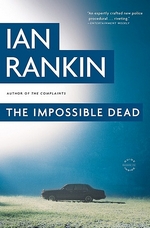
The Impossible Dead by Ian Rankin: Malcolm Fox Uncovers Corruption both Past and Present

The Impossible DeadThe Impossible Dead

by Ian Rankin
Series: Malcolm Fox, #2

Hardcover, 391 pg.
Reagan Arthur Books, 2018
Read: December 24 – 26, 2018

Detective Paul Carter has been found guilty of some pretty clear-cut criminal activity. Fox and his team have been brought into investigate a neighboring force, Carter’s own, to see who might have been involved with him — or at the least covered up for him. They weren’t involved with the original investigation, but that doesn’t keep anyone from hating them as they come in for the follow-up.

Not too surprisingly, they’re getting nowhere fast. So they go fishing — not talking to the detectives they’re looking into, but witnesses and others. One of them ends up dead not long after Fox talks to him. There’s enough hinky in the crime scene, what the witness had told Fox — and the fact the detectives in charge are the same ones that Fox and his team are looking into, that Fox determines he needs to look into things.

There’s a tie between this murder and an old cold case involving a firebrand politician tied to the more militant wing of Scottish Nationalism. Fox is convinced that the two crimes are linked and he sets about proving who killed one man as a way to finding the killer of the other. This two-pronged focus of the book keeps Fox, his partners, and the readers on their toes.

Despite all the differences between the two characters (which will become even more obvious, it seems in the next Rebus book), they ultimately operate best in the same way, as lone wolves. But when Rebus goes off on his own and causes trouble, it’s just par for the course. When Fox does it, it’s out character — he’s a team player (at least he wants to be), so there’s a lot of mechanics involved in getting him off on his own. In The Complaints it took a conspiracy to isolate Fox, here, it takes one detective Fox crossed to take advantage of his tenuous link to a crime.

But on his own, Fox will do more to uncover the facts not just of the murder he’s wanting to investigate, the investigation he’s supposed to be running, and a very cold case. Yes, he does work with his friends who are still on the inside, to confirm or deepen his knowledge (and he does feed information back to them), but he’s very much on his own.

There’s a good amount of family drama again for Fox — grounding Fox and giving a dimension to the character that is good to see (even if it doesn’t always bring out the best in him).

I very much enjoyed watching Fox work — and try to stay near the system, if he can’t stay in it. The solutions to the crimes are well done — by both Fox and Rankin. We even get a little bit of a cameo-like appearance of good ol’ Rebus. Nothing about this really blew me away, but I was gripped throughout, and entertained by the whole thing. Rankin’s good enough that he doesn’t have to dazzle you as a reader to be very aware that you’re in the hands of a master. Fox would be worth following on his own, and I’m glad we got to see him for a couple of books before he comes park of the greater universe surrounding Rebus.

—–

4 Stars
2018 Library Love Challenge

My Favorite Crime/Mystery/Detective/Thriller Fiction of 2018

Once I settled on dividing this chunk of my reading out for its own list, I knew instantly half of the books that’d make it before I looked at just what I’d read in 2018. After going through that list, I had 15 more candidates for the other 5 spots. Whittling those down was hard, but I’m pretty comfortable with this list. That doesn’t mean the other 90 or so books I read in this family of genres were bad — most were great (I can think of maybe 5 I could’ve missed). But these are the crème de la crème.

Man, I wanted to write the crème de la crime there. But I’m better than that.

Not all of these were published in 2018 — but my first exposure to them was. As always, I don’t count re-reads, or almost no one could stand up to Stout, early Parker, etc. and my year-end lists would get old fast.

Now that I’m done with this, I can focus on 2019.

(in alphabetical order by author)

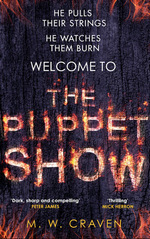
The Puppet ShowThe Puppet Show

by M. W. Craven

My original post
A book with some of the darkest moments I came across last year — and some of the brightest, too. The mystery was great, the character moments (not just between the protagonists) were better — great rounded, human, characters. Even after I saw where Craven was going with things, I refused to believe it — and only gave up when I had no other choice. Two (at least) fantastic reveals in this book, very compelling writing and fantastic characters. What more do you want? Washington Poe and Tilly Bradshaw are two of my favorite new characters and I can’t wait to see where they go next.

5 Stars

Needle SongNeedle Song

by Russell Day

My original post
I could pretty much copy and paste that above paragraph for this one. It never gets as dark as The Puppet Show, but the depravity displayed is bad enough to unsettle any reader. What makes this story compelling isn’t really the crime, it’s the way the crime impacts the people near it — those who lost a family member (I don’t want to say loved one) and those who are close to the suspects. Yakky and Doc Slidesmith are characters I hope to see again soon, and I want to bask in Day’s prose even more.

5 Stars

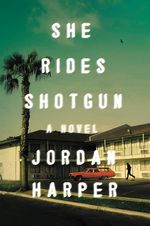
She Rides ShotgunShe Rides Shotgun

by Jordan Harper

My original post
The story of a little girl being surrounded by death and destruction, with both looming and threatening her all the time, and her discovering how to be brave. The story of a man trying to be a good father — or just a father. The story of survival. A story of revenge. A story about all kinds of violence. Wonderfully told.

4 Stars

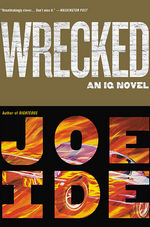
WreckedWrecked

by Joe Ide

My original post
Not as entertaining as IQ, but it works as a novel in ways the previous two didn’t. I don’t know if I could put my finger on it, but it’s there. Wrecked is a clear step in evolution for Isaiah, Dodson, and probably Ide. It definitely demonstrates that the three are here to stay as long as Ide wants, and that these characters aren’t satisfied with being inner-city Sherlock/Watson, but they’re going places beyond that. Some good laughs, some good scares, some real “I can’t believe Ide ‘let’ them do that to Isaiah” moments — a great read.

5 Stars

A Mint Condition CorpseA Mint Condition Corpse

by Duncan MacMaster

My original post
I put off reading this for reasons I really don’t understand and haven’t forgiven myself for yet. But the important thing is that I read it — it took me a chapter or two to really get into it, but once I did, I was in hook, like and sinker. In my original post I said this is “a joy to read; full of characters you’ll want to spend days with, that you’ll want to have over for Thanksgiving dinner just to lighten things up and distract you from Aunt Martha’s overcooked yams and dry turkey; a completely fun time that’s very likely most I’ve enjoyed a book in 2018. It is escapist. It is silly. It is clever.” I also said, “Probably the 5-Star-est 5-Stars I’ve given this year.” There are a couple of books that could compete for that line, but I’m not sure they’d win.

5 Stars

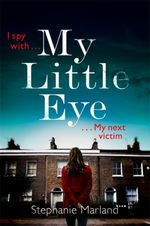
My Little EyeMy Little Eye

by Stephanie Marland

My original post
Fantastic, fantastic premise. Great hook. Another great pair of protagonists (although most of their work is independent of each other). A True Crime blogger and a DI racing to uncover a serial killer, while battling dark secrets, dark pasts, and outside pressures that threaten to derail them at every turn. Marland surprised me more often and in more ways than just about any author this year. I was floored by some of them, too. A great puzzle, a great mish-mash of amateur detective and police procedural.

4 1/2 Stars

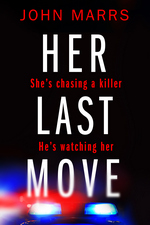
Her Last MoveHer Last Move

by John Marrs

My original post
I didn’t realize what I was getting myself into when I said yes to this Book Tour request. I’m not sure I could have — no offense to Mr. Marrs, but I don’t think I’d heard of him before. He’s definitely on my radar now. This was brutal, devastating, shocking, and just about every other adjective reviewers (professional and otherwise) overuse when describing a thriller. Marrs did so many things I didn’t think he would do. He didn’t do a lot that I thought he would (and seemed to mock the idea that he’d so some of what I wanted him to do). I spent a lot of time while reading this book not liking him very much, but so grateful I was getting to read the book. I’m still upset by some of it, but in awe of the experience.

5 Stars

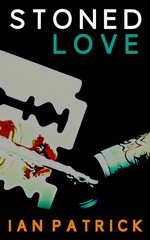
Stoned LoveStoned Love

by Ian Patrick

My original post
Sam Batford, undercover cop, is back in a sequel that shows real growth from a very impressive debut. Batford is in incredibly murky ethical and legal waters — and that’s not counting what his undercover op is. Any misstep could ruin his career, end his life, land him in prison — or all three. Actually, those options hold true even if he doesn’t make any missteps. There are so many balls in the air with this one that it’d be easy to lose track of one or more. But Patrick doesn’t seem to struggle with that at all — and he writes in such a way that a reader doesn’t either. That’s a gift not to be overlooked. I liked the overall story more than it’s predecessor and think that Patrick’s writing was better here. This is a series — and a character — that you really need to get to know.

4 1/2 Stars (I remember liking it more than that…I’m sure I had a reason at the time)

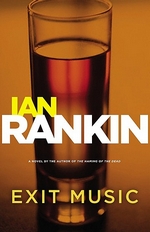
Exit MusicExit Music

by Ian Rankin

My original post
I’ve spent enough time with John Rebus over the last couple of years that I knew one of the books had to end p here, I just wasn’t sure which one. Exit Music ended up on the Top 10 not so much for the main mysteries (although they put the book in contention), but for all rest of the things that the novel was about — Rebus’ moving on (not knowing how to or to where), Siobhan moving on (and not sure she wants to), and the dozen or so little things surrounding the two of them and their work. Even Big Ger was kind of moving on here — and that’s just strange to read about. Exit Music would’ve been a great way to say farewell to John Rebus, I’m just glad it wasn’t that.

5 Stars

Trouble is a Friend of MineTrouble is a Friend of Mine

by Stephanie Tromly, Kathleen McInerney (Narrator)

My original post
If not for Kirby Baxter (above), I could say this was the most fun I had with a Mystery novel this year (not to take anything away from the sequels on that front). This is just the right mix of high school hijinks, teen drama, quirky characters and writing with panache. Zoe and Digby are a great combo of smarts, recklessness and responsibility as they work their way through puzzles surrounding missing kids, drug dealing doctors, and some strange cult-like group. You can feel the chemistry between them — like Remington Steele and Laura Holt, David Addison and Maddy Hays, Cumberbatch’s Sherlock and Freeman’s Watson. Throw in their friends and frenemies and you’ve got a recipe for fun and suspense. I listened to this on audiobook (and bought the paperback for my daughter before I got to the end, I should add) and McInerney’s narration was perfect — she captured the spirit of the book and made the characters come alive.

4 Stars

My Favorite 2018 (Fictional) Dogs

In one of the lightest moments of Robert B. Parker’s Valediction (just before one of the darker), Spenser describes his reservation about the first two Star Wars movies: “No horses . . . I don’t like a movie without horses.” After watching Return of the Jedi, he comments that it was a silly movie, but “Horses would have saved it.” Which makes me wonder what he’d have thought about The Last Jedi. Horses aren’t my thing, it’s dogs. I’m not quite as bad as Spenser is about them — I like books without dogs. But occasionally a good dog would save a book for me — or make a good book even better. I got to thinking about this a few weeks back when I realized just how many books I’d read last year that featured great dogs — and then I counted those books and couldn’t believe it. I tried to stick to 10 (because that’s de rigueur), but I failed. I also tried to leave it with books that I read for the first time in 2018 — but I couldn’t cut two of my re-reads.

So, here are my favorite dogs from 2018 — they added something to their novels that made me like them more, usually they played big roles in the books (but not always).

(in alphabetical order by author)

  • Edgar from The Puppet Show by M. W. Craven (my post about the book) — Edgar has a pretty small role in the book, really. But there’s something about him that made me like Washington Poe a little more — and he made Tilly Bradshaw pretty happy, and that makes Edgar a winner in my book.
  • Kenji from Smoke Eaters by Sean Grigsby (my post about the book) — The moment that Grigsby introduced Kenji to the novel, it locked in my appreciation for it. I’m not sure I can explain it, but the added detail of robot dogs — at once a trivial notion, and yet it says so much about the culture Cole Brannigan lives in. Also, he was a pretty fun dog.
  • Rutherford from The TV Detective by Simon Hall (my post about the book) — Dan Groves’ German Shepherd is a great character. He provides Dan with companionship, a sounding board, a reason to leave the house — a way to bond with the ladies. Dan just felt more like a real person with Rutherford in his life. Yeah, he’s never integral to the plot (at least in the first two books of the series), but the books wouldn’t work quite as well without him.
  • Oberon from Scourged by Kevin Hearne (my post about the book) — Everyone’s favorite Irish Wolfhound doesn’t get to do much in this book, because Atticus is so focused on keeping him safe (as he should be). But when he’s “on screen,” he makes it count. He brings almost all of the laughs and has one of the best ideas in the novel.
  • Mouse from Brief Cases by Jim Butcher (my post about the book) — From the moment we read, “My name is Mouse and I am a Good Dog. Everyone says so,” a good novella becomes a great one. As the series has progressed, Mouse consistently (and increasingly) steals scenes from his friend, Harry Dresden, and anyone else who might be around. But here where we get a story (in part) from his perspective, Mouse takes the scene stealing to a whole new level. He’s brave, he’s wise, he’s scary, he’s loyal — he’s a very good dog.
  • Ruffin from Wrecked by Joe Ide (my post about the book) — Without Isaiah Quintabe’s dog opening up conversation between IQ and Grace, most of this book wouldn’t have happened — so it’s good for Grace’s sake that Ruffin was around. And that case is made even more from the way that Ruffin is a support for Grace. He also is a fantastic guard dog and saves lives. His presence is a great addition to this book.
  • Dog from An Obvious Fact by Craig Johnson (my post about the book) — I might have been able to talk myself into ignoring re-reads if I hadn’t listened to this audiobook (or any of the series, come to think of it) last year — or if Dog had been around in last year’s novel. Dog’s a looming presence, sometimes comic relief (or at least a mood-lightener), sometimes a force of nature. Dog probably gets to do more for Walt in this book — he helps Walt capture some, he attacks others, just being around acts as a deterrent for many who’d want to make things rough on Walt. Walt couldn’t ask for a better partner.
  • Trogdor from The Frame-Up by Meghan Scott Molin (my post about the book) — Honestly, Trogdor probably has the least impact on the book than any of the dogs on this list. But, come on, a Corgi names Trodgor? The idea is cute enough to justify inclusion here. He’s a good pet, a fitting companion for MG — not unlike Dan’s Rutherford. He just adds a little something to the mix that helps ground and flesh-out his human companion.
  • Mingus from The Drifter by Nicholas Petrie (my post about the book) — Like Trogdor, a great name. Like Mouse and Dog, a great weapon. He’s really a combination of the two of them (just lacking Mouse’s magical nature). He’s vital in many different ways to the plot and the safety of those we readers care about. Petrie made a good move when he added this beast of a dog to the novel.
  • Chet from Dog On It by Spencer Quinn (my posts about Chet) — If I couldn’t cut Dog, I couldn’t cut Chet. Listening to this audiobook (my 4th or 5th time through the novel, I believe) reminded me how much I love and miss Chet — and how eager I am for his return this year. This Police Academy reject is almost as good a detective as his partner, Bernie, is. Chet will make you laugh, he’ll warm your heart, he’ll make you want a dog of your own (actually, all of these dogs will)
  • Zoey from Deck the Hounds by David Rosenfelt (my post about the book) — how do I not invoke Tara when discussing an Andy Carpenter book? Good question. It’s Zoey that brings Andy into the story, it’s Zoey that helps Don to cope with his own issues, it’s Zoey that defends Don and saves him (in many ways). Sure, Tara’s the best dog in New Jersey, but Zoey comes close to challenging her status in this book.
  • Lopside from Voyage of the Dogs by Greg van Eekhout (my post about the book) — It almost feels like cheating to bring in a dog from a novel about dogs — conversely, it’s hard to limit it to just one dog from this book. But Lopside the Barkonaut would demand a place here if he was the only dog among a bunch of humans — or if he was surrounded by more dogs. He’s brave, he’s self-sacrificing, he’s a hero. He’ll charm you and get you to rooting for these abandoned canines in record time.

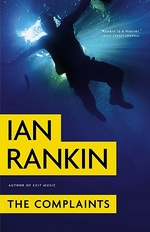
The Complaints by Ian Rankin: Introducing the anti-Rebus, Malcolm Fox

The ComplaintsThe Complaints

by Ian Rankin

Series: Malcolm Fox, #1

Hardcover, 438 pg.
Little, Brown and Co., 2011

Read: November 20 – 22, 2018

I left the last Rankin book thinking, “If I didn’t know that there were more Rebus books coming, I’d be really depressed.” There are advantages to being this far behind a series. Thanks to a podcast interview I heard with Rankin around the time I started to plan my Rebus reading (I think it was this A Stab in the Dark episode), I knew that at some point, he pushed “Pause” on Rebus to introduce a new character — initially, I think, to replace Rebus. But it didn’t work out that way. Still, I wanted to read them in chronological order, so I could appreciate it when the new guy was merged into the Rebus books.

And that’s where we are now, with the introduction of The New Guy: Malcolm Fox, of the Complaints and Conduct division (aka “The Complaints”) — essentially, Internal Affairs (aka “The Rat Squad”). It’s almost like Rankin came up with a list of Rebus’ characteristics and put a “not-” in front of every one of them to create him. He doesn’t drink (because he’ll end up like Rebus does, or worse), he follows the rules (generally speaking), he gets along with and respects/trusts his superiors, he’s close with his family . . . et cetera, et cetera, et cetera. He’s a lot more likeable than Rebus, too — as a person and as a fictional character. He’s not as well-developed — this is his first book and Rebus had 17 at that point, so that makes sense. Although, typically, IAB/Complaints type characters are usually dramatic obstacles to the series protagonists and are therefore little-liked, so that was strange.

The novel starts with Fox riding high — he’s just closed a major investigation, and is doing clean up on that when he’s given a new assignment. He’ll be helping out another division — I suddenly forgot their name, but essentially, they’re the equivalent of the Special Victims Unit. So right away you know this is not going to be a fun book — a detective who polices the police investigating sex crimes. There’s just no way to paint a “fun-loving romp” face on that premise.

But before we can get too far down that road, a pretty big complication arises. (Minor Spoiler warning) The abusive boyfriend of Fox’s sister is found murdered. And guess who is the first suspect? That’s right. Better yet: guess who is one of the investigating officers? If you guessed the target of Fox’s new investigation, give yourself a pat on the back.

So Fox has to investigate a detective without him knowing about it, while being investigated by that same detective — and to keep it from looking like payback. Which is a pretty cool setup for a novel, you’ve got to admit. Better yet, it’s Rankin behind the wheel, so you know he can (and does) deliver on the setup.

The bulk of the novel is about Fox doing his best to find the killer — for his sister’s sake (primarily) — and keep himself out of the cross-hairs of the investigators. This will lead him to some very not-regulation investigative techniques, some of which might remind people of the Rankin creation that Fox isn’t. The mystery itself and the way it’s told is classic-Rankin. Lots of twists, a couple of good turns, very satisfying throughout.

Meanwhile, we get a pretty good character study/introduction to this new character through this — and through a friendship he develops with another detective during this. I really enjoyed the novel, and Rankin gave his new character a serious challenge to start with, a very cleverly constructed mystery to untangle. Fox is a worthy entry into the world of Rebus and Rankin.

I’ll leave with this — if after 2007’s Exit Music I’d have been nervous about what was to come next, I’d have been relieved after 2009’s The Complaints. Now, I’m just eager to see the two detectives on the same page.

—–

4 Stars
2018 Library Love Challenge

Page 17 of 37

Powered by WordPress & Theme by Anders Norén