
Category: P-U Page 18 of 37

Pub Day Repost: Blood Feud by Mike Lupica: Sunny Randall’s Back in this Promising Reintroduction

Blood FuedRobert B. Parker’s Blood Feud

by Mike Lupica
Series: Sunny Randall, #7
eARC, 352 pg.
G. P. Putnam’s Sons, 2018
Read: October 5 – 9, 2018

I have a complicated relationship with Sunny Randall. Readers of this site have been frequently exposed to my love for Robert B. Parker’s Spenser and Jesse Stone novels, both by Parker and the continuations by Ace Atkins and Reed Farrel Coleman (let’s overlook Michael Brandman’s contributions for the moment). I enjoyed his stand-alone works, and I thought the first couple of Virgil Cole & Everett Hitch books were fun (I haven’t tried the Robert Knott continuations). Which leaves us with Sunny.

Sunny Randall, the story goes, was written to be adapted into a film series for Parker’s chum, Helen Hunt (incidentally, I’ve never been able to envision Helen Hunt in a single Sunny scene, but that’s just me). She’s a private investigator; a former cop; part-time painter (art, not house); emotionally entangled with her ex-husband, but can’t live with him; lives in Boston; and enjoys good food. But she’s totally not a female Spenser — she doesn’t like baseball, see? I’ve read all the books — some multiple times — and while I enjoyed them, I’ve never clicked with Sunny the way I have with others. Including every other Parker protagonist. Most of her novels are mashups and remixes of various Spenser novels, entertaining to see things in a different light — but that’s about it. Frankly, the most I ever liked Sunny was in the three Jesse Stone novels late in Parker’s run (but both characters are better off without each other).

So when it was announced that Mike Lupica would be taking up the reins of this series I was intrigued but not incredibly enthused. I only know Lupica from having bought a few of his books for my sons when they were younger. I didn’t get around to reading any of them, so he’s really a new author for me. And sure, I was a little worried about a YA/MG author taking the reins of a “grown-up” series. But not much — if you can write a novel, you can write a novel, it’s just adjusting your voice and language to be appropriate for the audience.

Enough blather — let’s talk about Blood Feud. Since we saw her last, Sunny has had to move, Richie (her ex-) has gotten another divorce (giving them the chance to date or whatever you want to call it) and has replaced her late dog, Rosie, with another Rosie. Other than that, things are basically where they were after the end of Spare Change 11 years ago (for us, anyway, I’m not sure how long for her, but less time has passed you can bet).

By the way — does anyone other than Robert B. Parker, Spenser and Sunny really do this? Your dog dies, so you go and get another one of the same breed and call him/her the same name? Is this really a thing?

Then one night — Richie is shot. It’s not fatal, but was done in such a way that no one doubts for a moment that it could have been had the assailant wanted it to be. For those who don’t know (or don’t remember), Richie is the son of an Irish mob boss, although he has nothing to do with the family business. He’s given a message for his father — his shooter is coming for him, but wants him to suffer first. This kicks off a race for the shooter — Sunny, the Burke family and the police (led by Sgt. Frank Belson) are vying to be the one to find the shooter.

Before long, the violence spreads to other people the Burkes employ — both property and persons are targeted by this stranger. It’s clear that whoever is doing this has a grudge going back years. So Sunny dives into the Burke family history as much as she can, so she can get an answer before her ex-father-in-law is killed. Not just the family history — but the family’s present, too. As much as the roots of the violence are in the past, Sunny’s convinced what the Burkes are up to now is just as important to the shooter.

Richie’s father, Desmond, isn’t happy about Sunny sticking her nose into things. Not just because of the crimes she might uncover — but he really wants to leave the past in the past. But as long as someone might come take another shot at Richie, Sunny won’t stop. This brings her into contact with several criminal figures in Boston (like Parker-verse constants Tony Marcus and Vinnie Morris) as well as some we’ve only met in Sunny books.

There are a couple of new characters in these pages, but most of them we’ve met before — Lupica is re-establishing this universe and doesn’t have time to bring in many outsiders, but really just reminds us who the players are. Other than the new Rosie, I can’t point at a character and say “that’s different.” He’s done a pretty good job of stepping into Parker’s shoes. Not the pre-Catskill Eagle Parker like Atkins, but the Parker of Sunny Randall books, which is what it should feel like (( wouldn’t have objected to a Coleman-esque true to the character, just told in a different way). I think some of the jokes were overused (her Sox-apathy, for one), but it wasn’t too bad. Lupica did make some interesting choices, particularly toward the end, which should set up some interesting situations for future installments.

The mystery was decent enough, and fit both the situations and the characters — I spent a lot of the novel far ahead of Sunny (but it’s easier on this side of the page). I enjoyed the book — it’s not the best thing I’ve read this year, but it’s a good entry novel for Lupica in this series, a good reintroduction for the characters/world, and an entertaining read in general. If you’re new to this series, this would be as good a place to hop on as it was for Lupica.

I want better for Parker’s creation (but I think I’d have said that for most of Parker’s run with the series), and Lupica’s set things up in a way that we could get that in the near-future. He’s demonstrated that he has a good handle on the character he inherited, the question is, what can he do with her from here? I was ambivalent about this series coming back, but I can honestly say that I’m eager to see what happens to it next.

Disclaimer: I received this eARC from Putnam Books via NetGalley in exchange for this post — thanks to both for this.

—–

3.5 Stars

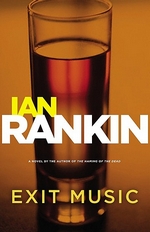
Exit Music by Ian Rankin: Rebus has one more shot at Big Ger before he retires

I got off-track with these books when I took my trip out of state for my son’s transplant (I was due to go to the library to pick this up the day we got the call), and it took me a bit to get back on top of things. I’m so, so glad I was able to return to this world. I missed it.
—

Exit MusicExit Music

by Ian Rankin
Series: John Rebus, #17

Hardcover, 421 pg.
Little Brown and Company, 2007
Read: October 17 – 18, 2018

Before I get into this, last week my son was playing some EASports game — FIFA something, I think. Anyway, I notice that he’s playing Hiberian, and my first thought is, “Hey, that’s Siobhan’s team.” That’s a sign that I’m probably reading too many Rebus novels, right? Anyway, on with this post…

           “No sign of any abandoned cars in the multistory?”

“Good point, Shiv, I’ll have someone check. Talk to you later.” The phone went dead, and she managed a little smile, hadn’t heard Rebus so fired up in several months. Not for the first time, she wondered what the hell he would do with himself when the work was done.

Answer: bug her, most likely–phone calls daily, wanting to know everything about her caseload.

I think many readers, like DS Clarke, have wondered just what Rebus will do after retirement — which is looming as this book begins. Actually, it’s more than looming — it’s 10 days away. Ten days of Rebus trying to squeeze in any last-second mentoring he can, ten days of him trying to get Clarke invested in cold cases he can’t let go of, ten days of Rebus trying to stay relevant, active . . . ten days of John Rebus trying to remain John Rebus.

John Rebus has no family left, few friends, only a handful of colleagues that trust him, no plans for retirement at all. He’s going to have to come up with something, he knows, but he can’t really contemplate that reality, much less plan for it.

But first, there’s a murder — a man without any identification on him has been found by a few pedestrians out for a late-night walk, apparently beaten to death. A literately-inclined morgue worker recognized him as a Russian exile and poet of note. Plunging Rebus and Clarke (named to lead the investigation, only because of Rebus’ impending retirement *wink*) into an investigation with international implications.

Funnily enough, a contingent of Russian businessmen is in Edinburgh looking for investment opportunities, all of which are welcomed and encouraged by members of Scottish Parliament — especially by those MSPs seeking independence. None of the MSPs have any interest in their Russian friends being hassled by detectives over a pesky little thing by murder. Even if the victim was drinking in the hotel they were staying at shortly before the murder.

But once Di Rebus finds not only a link between the victim and their hotel bar, but a link between the poet and Gerald Cafferty, and links between Cafferty and the Russian delegation? All bets are off. The clock is ticking on his career — and the ticking is getting really loud — but here’s Cafferty with some sort of connection to a murder victim? There’s no way that John Rebus can let this go (not that Siobhan Clarke is that interested in letting this opportunity pass by, either).

The investigation isn’t making too much progress, but maybe is getting far enough, when someone else connected to the case is killed. And the investigation looks like it’s dealing with a web of drugs, prostitution, blackmail, international interests, politics, a large national bank a poet, and Cafferty. Which would be a lot to deal with even without Rebus’ deadline.

While preparing for Rebus’ departure, Clarke takes a uniformed PC under her wing — he has talent and ambition — he was one of the two initial officers at the site of the original murder and wants to be a detective soon. Clarke brings him along with her to many interviews and visits to various places in the investigation, as him run errands and even do some of the grunt work (scouring through hours of audio recordings that may or may not hold relevant information). He’s an interesting character — he adds some emotional weight to some scenes, and comic relief in others.

It’s possible that Rebus is at his most introspective in these pages — he knows his career is finished and that in no time at all he’ll be forgotten by just about everyone. What’s been the point of it all?

           Outside in the car park he unlocked his Saab, but then stood there, hand on the door handle, staring into space. For a while now, he’d known the truth–that it wasn’t so much the underworld you had to fear as the overworld. Maybe that explained why Cafferty had, to all purposes and appearances, gone legit. A few friends in the right places and deals got done, fates decided. Never in his life had Rebus felt like an insider. From time to time he’d tried–during his years in the army and his first few months as a cop. But the less he felt he belonged, the more he came to mistrust the others around him with their games of golf and their “quiet words,” their stitch-ups and handshakes, palm greasing and scratching of backs.

Still, he perseveres, he gets into hot water with his superiors, with Clarke, with government officials, and — of course — Cafferty. In the end, despite the large number of detectives eventually working on the murders, Rebus is the only one to focus on the important facts (it helps that he’s not worried about what happens after the arrest, like everyone else is) and makes the important conclusions so that the cases can be closed in time for him to leave the force. It’s really a nice bit of storytelling by Rankin here, and I’d be very happy reading it even without all the hubbub around Rebus’ retirement. And then Rankin ends it with a jaw-dropping final chapter and a last line that just about floored me.

I’m so glad that I’m discovering these books now — when I know that there’s a future for Rebus (even if I’m not really sure what it is, but there are 5 books to come, at least). It can’t have been easy for Rebus fans to close this book not knowing what Rankin was going to do next.

At the same time, this remains a decent entry-book — like every other book in this series. Sure, you get more of the emotional weight if you’ve been reading about the DI for several books, but Rankin writes them in a way that the weight can be seen regardless.

I think if this were any other Rebus book, I’d rate it 4 stars for the case work, the internal squabbles with the hierarchy and the politics — but when you add in Rebus counting down the last ten days of his career, the hope of this case leading him to one more shot at Cafferty, the reflections on what he’s done and why he’s done it and what it cost . . . essentially, all the intangible things, the parts of a novel that are hard to pin down, much less describe. All that combined with a strong story, some excellent non-Rebus/Clarke/Cafferty character development (not that theirs isn’t strong as usual, but this is a new characters) — and it’s easy. Rebus retires with a 5.

—–

5 Stars

2018 Library Love Challenge

Pub Day Repost: Deck the Hounds by David Rosenfelt: Another Christmas Tale (Tail?) for Andy Carpenter, Another Win for Rosenfelt

Deck the HoundsDeck the Hounds

by David Rosenfelt
Series: Andy Carpenter, #18
eARC, 368 pg.
Minotaur Books, 2018
Read: September 11 – 13, 2018

Andy Carpenter sees a homeless man with a dog on the street, gives the man some money and a gift card for dog food (naturally, the dog gets more than the man, because it’s Andy Carpenter) and has a brief conversation with him. Not long after that, that same man is on the news — he’d been attacked by a stranger and his dog defended him. Which resulted in the dog being put in the pound. Laurie’s filled with pre-Christmas spirit and insists that Andy help out. So he uses his rescue foundation to get custody of the dog and moves the pair into the apartment over his garage.

How heartwarming is this? Clearly, this is fodder for a Christmas/holiday story. But it’s also an Andy Carpenter story, so naturally, after Andy does a newspaper interview about the man — giving his name — he’s arrested for murder. No one was more surprised by this move than Andy’s guest, Don. Not only has Don never heard of the victim, he was unaware that he was wanted by the police. Laurie’s pre-Christmas spirit is still strong, so she talks him into defending the man. It helps that he’s innocent, a dog lover, and an educated, articulate vet with PTSD. The PTSD aspect of the story was told with sensitivity and tact. It didn’t feel tacked on to make the character more sympathetic, but it grounded him in reality and may help to inform some readers about the prices that too many vets are paying.

There is another storyline — seemingly unrelated — running through the novel. Obviously, it’s going to tie into Andy’s case, but it takes a long time for that to happen. This gives the reader multiple opportunities to guess how the two are connected (and multiple opportunities to be wrong. I guessed what was happening in that story pretty easily, and I think most people who read a lot of legal thrillers will. But how it connects to the main story will likely leave most readers as surprised as I was (surprised, and then filled with a strong sense of, “well, naturally, what else could it be?”).

The usual gang is back and in their prime form — Hike is back to his full-time dour self; Ricky is a cute kid; Laurie provides the moral center; Pete is a good cop who continually underestimates Andy’s clients; Sam is a wizard with computers in a way that probably defies reality Marcus is his super-hero best here, and possibly faces his biggest challenge yet (I thoroughly enjoyed this scene). What better way to spend a holiday (or at least a book set around one) than with a bunch of friends like these have become over the years?

Andy spent more time in the courtroom in this book than he has lately — it seemed to me, anyway, I didn’t do a page count. His courtroom antics and cross-examinations are what drew me to the character in the first place, so this is the stuff in these books I most look forward to. Rosenfelt brought his A-game to the courtroom events here, and I loved it. As far as mysteries go, this in one of the most satisfying cases that Rosenfelt has brought us in years.

In my post about the previous “holiday special” I said that I really don’t like it when long-running series do a holiday special — yet, The Twelve Dogs of Christmas and Deck the Hounds have been my favorite installments in the last couple of years in this series. Maybe that means this Grinch’s heart is growing a couple of sizes, or maybe it’s that Rosenfelt is inspired to work harder in these. My guess? It’s the clients — the Andy Carpenter books are at their best when they focus on the client, not on some large conspiracy. These holiday books have the kind of clients you spend time on, that the reader gets invested in — and therefore, Andy gets to shine in defending them.

Whatever the reason, this is a sure-fire win for Andy Carpenter fans. Particularly if you don’t mind a little Christmas celebration (or, if you’re like Laurie, and insist on commemorating the holiday for months).

Disclaimer: I received this eARC from St. Martin’s Press via NetGalley in exchange for this post — thanks to both for this.

—–

4 Stars

Blood Feud by Mike Lupica: Sunny Randall’s Back in this Promising Reintroduction

Blood FuedRobert B. Parker’s Blood Feud

by Mike Lupica
Series: Sunny Randall, #7
eARC, 352 pg.
G. P. Putnam’s Sons, 2018
Read: October 5 – 9, 2018

I have a complicated relationship with Sunny Randall. Readers of this site have been frequently exposed to my love for Robert B. Parker’s Spenser and Jesse Stone novels, both by Parker and the continuations by Ace Atkins and Reed Farrel Coleman (let’s overlook Michael Brandman’s contributions for the moment). I enjoyed his stand-alone works, and I thought the first couple of Virgil Cole & Everett Hitch books were fun (I haven’t tried the Robert Knott continuations). Which leaves us with Sunny.

Sunny Randall, the story goes, was written to be adapted into a film series for Parker’s chum, Helen Hunt (incidentally, I’ve never been able to envision Helen Hunt in a single Sunny scene, but that’s just me). She’s a private investigator; a former cop; part-time painter (art, not house); emotionally entangled with her ex-husband, but can’t live with him; lives in Boston; and enjoys good food. But she’s totally not a female Spenser — she doesn’t like baseball, see? I’ve read all the books — some multiple times — and while I enjoyed them, I’ve never clicked with Sunny the way I have with others. Including every other Parker protagonist. Most of her novels are mashups and remixes of various Spenser novels, entertaining to see things in a different light — but that’s about it. Frankly, the most I ever liked Sunny was in the three Jesse Stone novels late in Parker’s run (but both characters are better off without each other).

So when it was announced that Mike Lupica would be taking up the reins of this series I was intrigued but not incredibly enthused. I only know Lupica from having bought a few of his books for my sons when they were younger. I didn’t get around to reading any of them, so he’s really a new author for me. And sure, I was a little worried about a YA/MG author taking the reins of a “grown-up” series. But not much — if you can write a novel, you can write a novel, it’s just adjusting your voice and language to be appropriate for the audience.

Enough blather — let’s talk about Blood Feud. Since we saw her last, Sunny has had to move, Richie (her ex-) has gotten another divorce (giving them the chance to date or whatever you want to call it) and has replaced her late dog, Rosie, with another Rosie. Other than that, things are basically where they were after the end of Spare Change 11 years ago (for us, anyway, I’m not sure how long for her, but less time has passed you can bet).

By the way — does anyone other than Robert B. Parker, Spenser and Sunny really do this? Your dog dies, so you go and get another one of the same breed and call him/her the same name? Is this really a thing?

Then one night — Richie is shot. It’s not fatal, but was done in such a way that no one doubts for a moment that it could have been had the assailant wanted it to be. For those who don’t know (or don’t remember), Richie is the son of an Irish mob boss, although he has nothing to do with the family business. He’s given a message for his father — his shooter is coming for him, but wants him to suffer first. This kicks off a race for the shooter — Sunny, the Burke family and the police (led by Sgt. Frank Belson) are vying to be the one to find the shooter.

Before long, the violence spreads to other people the Burkes employ — both property and persons are targeted by this stranger. It’s clear that whoever is doing this has a grudge going back years. So Sunny dives into the Burke family history as much as she can, so she can get an answer before her ex-father-in-law is killed. Not just the family history — but the family’s present, too. As much as the roots of the violence are in the past, Sunny’s convinced what the Burkes are up to now is just as important to the shooter.

Richie’s father, Desmond, isn’t happy about Sunny sticking her nose into things. Not just because of the crimes she might uncover — but he really wants to leave the past in the past. But as long as someone might come take another shot at Richie, Sunny won’t stop. This brings her into contact with several criminal figures in Boston (like Parker-verse constants Tony Marcus and Vinnie Morris) as well as some we’ve only met in Sunny books.

There are a couple of new characters in these pages, but most of them we’ve met before — Lupica is re-establishing this universe and doesn’t have time to bring in many outsiders, but really just reminds us who the players are. Other than the new Rosie, I can’t point at a character and say “that’s different.” He’s done a pretty good job of stepping into Parker’s shoes. Not the pre-Catskill Eagle Parker like Atkins, but the Parker of Sunny Randall books, which is what it should feel like (I wouldn’t have objected to a Coleman-esque true to the character, just told in a different way). I think some of the jokes were overused (her Sox-apathy, for one), but it wasn’t too bad. Lupica did make some interesting choices, particularly toward the end, which should set up some interesting situations for future installments.

The mystery was decent enough, and fit both the situations and the characters — I spent a lot of the novel far ahead of Sunny (but it’s easier on this side of the page). I enjoyed the book — it’s not the best thing I’ve read this year, but it’s a good entry novel for Lupica in this series, a good reintroduction for the characters/world, and an entertaining read in general. If you’re new to this series, this would be as good a place to hop on as it was for Lupica.

I want better for Parker’s creation (but I think I’d have said that for most of Parker’s run with the series), and Lupica’s set things up in a way that we could get that in the near-future. He’s demonstrated that he has a good handle on the character he inherited, the question is, what can he do with her from here? I was ambivalent about this series coming back, but I can honestly say that I’m eager to see what happens to it next.

Disclaimer: I received this eARC from Putnam Books via NetGalley in exchange for this post — thanks to both for this.

—–
3.5 Stars

Stoned Love by Ian Patrick: No Sophomore Slump in Sight with this Thriller.

Stoned LoveStoned Love

by Ian Patrick
Series: Sam Batford, #2

Kindle Edition, 246 pg.
Fahrenheit Press, 2018
Read: September 14 – 15, 2018

I need to blend in where I shouldn’t belong. The best undercover officers have no air of ego or the appearance of a police mannequin. After all, one sniff of pig and your ass is bacon. I’ve no intention of being served up at any criminal’s barbecue.

How do you follow up 2017’s Rubicon, the twisty, morally ambiguous (at best) tale of an undercover cop? Well, if you’re Ian Patrick, you do it by bringing that shady cop back and putting him in a tighter spot with threats (physical, legal and career) on all sides.

Sam Batford has had a little time off to recuperate and get his head on straight after Rubicon — hopefully giving the heat on him a little time to cool down, and maybe give Big H time to move on from the setback Batford dealt him.

The Met has a new assignment for him — working with the same DCI as he did last time, DCI Klara Winter. During the last assignment, she wasn’t sure she could trust Batford — now she’s convinced that she can’t. In fact, while she wouldn’t mind taking down the criminals that Batford infiltrates, her main objective is to arrest Batford and his Superintendent Mike Hall, a pair she’s convinced are dirty. She’s right, of course, but that’s beside the point.

Ostensibly, Batford’s assignment is to infiltrate a group that’s supposedly planning a major armed robbery and will need a driver of some sorts. But the clock is ticking so he doesn’t have time to do this carefully. Winter has someone already embedded with the crew giving her information, and their primary purpose is to get dirt on Batford and Hall. Which sounds good, but when you get a couple of guys as cagey and wily as this pair, that’s no easy task.

At the same time, Hall’s told Batford that between family and work stresses, this is his last hurrah. Now, he’d like to start his retirement with a sizeable bankroll, and trusts that Batford will find a way to make the both of them some money from just whatever it is that this crew is up to. The crew’s leader, who goes by the cuddly moniker of Razor, is a long-time “unauthorized informant” of Hall’s. And now, he’s sending Batford in to get him arrested. Which seems odd, but it does give Hall enough of an inside track to help Batford.

So, essentially, Batford needs to find a way to get rich off these criminals, hopefully get enough evidence for some arrests, stop them from pulling off whatever they’re trying to — and avoid getting arrested himself (not that he knows he’s being targeted for that). Oh, yeah, and Big H hasn’t moved on, forgotten or forgiven him — in fact, he has an active contract out for Batford’s life, and there are people trying to collect on that. Sounds like a pretty rough time for him.

In Rubicon, there was a question (at least for me) throughout — just how bent is Batford? Will he actually do law enforcement, or is he just out for himself? What are the limits for him? Will he have any success in either his criminal or police activities? In Stoned Love, the questions are different — we know he’s bent pretty far. So it’s just will Batford survive? Will Winter arrest him? Will Hall use him to save his own skin? Will Razor do something to him? Will Big H’s killers eliminate him?

This changed the dynamic of the book for me, and made it a lot easier for me to enjoy this novel and cheer on Batford. There’s no moral or legal gray area any more. Like Michael Corleone or Hannibal Lechter, Sam Batford is a despicable character that the reader wants to find success. Thankfully, he’s nervy enough and clever enough, that there’s a pretty good chance that he will. At least for a while.

Winter is manipulative, deceptive and devoted more to her career than anything else. But she’s, technically, the good guy here. Everyone else is the kind of criminal that the police are supposed to stop, not become. But because we’re in Batford’s head, and Winter’s primarily seen as an obstacle for him to overcome, the reader roots for him and against her — knowing the whole time that it should be the other way around.

There’s frequent and repeated commentary on the effects of Brexit, budget cuts, personnel cuts and other moves by the British government that are impacting the police services throughout the novel. Patrick is a former police officer and if these aren’t his actual views coming forth through Batford, he’s a better author than I think. If Batford’s diagnosis of what’s going on with the police in Britain is accurate, it sounds pretty frightening.

It’s a minor thing — I only noticed this as I started to write this post, and I’ve recently had a bad experience with reading a novel that couldn’t pick a verb tense, so I was primed — but Patrick’s use of the present tense for these books is a subtle, and incredibly effective way of cranking up the tension, propelling the action forward, and pushing the reader to keep up with the pace of the book. I should’ve picked up on it with Rubicon, and am a little annoyed with myself for taking this long to notice.

I enjoyed Rubicon, but I appreciated what Patrick was doing and how he was doing it more. With Stoned Love, I still admired and appreciated his skill and aims, but I enjoyed the story more — I resented things like work and family for preventing me from finishing this as quickly as I wanted to, and absolutely relished an airline flight that meant I had uninterrupted reading time*. I think Stoned Love is an all-around better effort (which is saying something) and makes me very excited to see what comes from Ian Patrick next.

Not everyone enjoys reading books where the police are just as dirty as those they’re supposed to be stopping — and I understand that — but if you’re someone who can embrace a tarnished knight, someone who seems to be law enforcement malgré lui, you don’t want to waste any more time, get your hands on Rubicon and Stoned Love and prepare to be impressed.

—
* I also really appreciated having this to focus on rather than the fact that I was in a giant metal tube that has no business being that far off the ground, but that’s another story.

—–

4 1/2 Stars

Deck the Hounds by David Rosenfelt: Another Christmas Tale (Tail?) for Andy Carpenter, Another Win for Rosenfelt

Deck the HoundsDeck the Hounds

by David Rosenfelt
Series: Andy Carpenter, #18

eARC, 368 pg.
Minotaur Books, 2018
Read: September 11 – 13, 2018

Andy Carpenter sees a homeless man with a dog on the street, gives the man some money and a gift card for dog food (naturally, the dog gets more than the man, because it’s Andy Carpenter) and has a brief conversation with him. Not long after that, that same man is on the news — he’d been attacked by a stranger and his dog defended him. Which resulted in the dog being put in the pound. Laurie’s filled with pre-Christmas spirit and insists that Andy help out. So he uses his rescue foundation to get custody of the dog and moves the pair into the apartment over his garage.

How heartwarming is this? Clearly, this is fodder for a Christmas/holiday story. But it’s also an Andy Carpenter story, so naturally, after Andy does a newspaper interview about the man — giving his name — he’s arrested for murder. No one was more surprised by this move than Andy’s guest, Don. Not only has Don never heard of the victim, he was unaware that he was wanted by the police. Laurie’s pre-Christmas spirit is still strong, so she talks him into defending the man. It helps that he’s innocent, a dog lover, and an educated, articulate vet with PTSD. The PTSD aspect of the story was told with sensitivity and tact. It didn’t feel tacked on to make the character more sympathetic, but it grounded him in reality and may help to inform some readers about the prices that too many vets are paying.

There is another storyline — seemingly unrelated — running through the novel. Obviously, it’s going to tie into Andy’s case, but it takes a long time for that to happen. This gives the reader multiple opportunities to guess how the two are connected (and multiple opportunities to be wrong. I guessed what was happening in that story pretty easily, and I think most people who read a lot of legal thrillers will. But how it connects to the main story will likely leave most readers as surprised as I was (surprised, and then filled with a strong sense of, “well, naturally, what else could it be?”).

The usual gang is back and in their prime form — Hike is back to his full-time dour self; Ricky is a cute kid; Laurie provides the moral center; Pete is a good cop who continually underestimates Andy’s clients; Sam is a wizard with computers in a way that probably defies reality Marcus is his super-hero best here, and possibly faces his biggest challenge yet (I thoroughly enjoyed this scene). What better way to spend a holiday (or at least a book set around one) than with a bunch of friends like these have become over the years?

Andy spent more time in the courtroom in this book than he has lately — it seemed to me, anyway, I didn’t do a page count. His courtroom antics and cross-examinations are what drew me to the character in the first place, so this is the stuff in these books I most look forward to. Rosenfelt brought his A-game to the courtroom events here, and I loved it. As far as mysteries go, this in one of the most satisfying cases that Rosenfelt has brought us in years.

In my post about the previous “holiday special” I said that I really don’t like it when long-running series do a holiday special — yet, The Twelve Dogs of Christmas and Deck the Hounds have been my favorite installments in the last couple of years in this series. Maybe that means this Grinch’s heart is growing a couple of sizes, or maybe it’s that Rosenfelt is inspired to work harder in these. My guess? It’s the clients — the Andy Carpenter books are at their best when they focus on the client, not on some large conspiracy. These holiday books have the kind of clients you spend time on, that the reader gets invested in — and therefore, Andy gets to shine in defending them.

Whatever the reason, this is a sure-fire win for Andy Carpenter fans. Particularly if you don’t mind a little Christmas celebration (or, if you’re like Laurie, and insist on commemorating the holiday for months).

Disclaimer: I received this eARC from St. Martin’s Press via NetGalley in exchange for this post — thanks to both for this.

—–

4 Stars

When Archie Met Lily

80 years ago today, Archie Goodwin — one of my top 5 All-Time Favorite Characters — met the only woman who could keep his attention for more than a few months, Lily Rowan. Lily shows up several times in the series and threatens to steal every scene she appears in (and frequently succeeds). Check out this post from Today in Mystery Fiction for the details — one of my favorite scenes, from one of my favorite books in possibly my favorite series — (I think I have 3 or 4 copies of it), so I had to say something.

How they met 80 years ago, when Archie’s only in his mid-30’s, is beyond me. But Math was never my strong suit, I’m sure it makes sense, surely Charlie Epps (or Larry or Amita) could explain it to me.

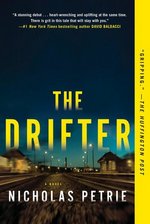
The Drifter by Nicholas Petrie: A Near-Perfect Thriller Debut that You Won’t Want to Miss

The DrifterThe Drifter

by Nicholas Petrie
Series: Peter Ash, #1

Trade Paperback, 371 pg.
G. P. Putnam’s Sons, 2015

Read: August 16 – 17, 2018

Peter pushed the truck hard toward downtown, the city roads rough with potholes, trying to get to Lake Capital begot they closed the doors for the day.

One eye on the rearview, watching for the black Ford. But it would be easy to miss in heavy traffic. And Peter’s truck would be easy to follow. Unless he was willing to rent a beige sedan, he couldn’t do anything about it.

He didn’t have a plan for Lake Capital. But the principle wasn’t complicated. It was the same principle he’d operated under for years.

Poke a stick into something and see what happened.

This approach to problem solving isn’t new — Philip Marlowe employed it, Spenser loves it, Harry Dresden has invoked it — and I’m pretty sure a certain homeless former MP has mentioned it a time or two. It may be tried and true — but that’s only because it works really well (at least in fiction). Peter Ash is one of the leading candidates for “the next Jack Reacher,” so he might as well employ it, too. It’s a very effective stick in this instance, I should add.

Now Reacher, as you probably know, was a career Army MP, the son of a career Marine officer — he’d spent his entire life living on military bases until his discharge following the Army’s downsizing after the fall of the Berlin Wall. In reaction to that kind of living, he’s taken to walking all over the US, getting to know the country. Peter Ash is a recently discharged Marine Lieutenant, with a couple of degrees in economics, who is wandering around the country a little bit. His reason for it differs from Reacher’s, since coming back to the States after tours in Iraq and Afghanistan, Peter has panic attacks anytime he’s indoors — he calls it “white static.”

This has led to him essentially living in the woods for the past few months, until he heard that his former sergeant and friend, Jimmy Johnson, has killed himself. Peter quickly came to Milwaukee to visit Jimmy’s wife, Dinah. He wasn’t around to help his friend, but maybe he can assuage his guilt by helping out with some much needed home repairs on his behalf.

He starts with the front porch — and while he’s working on it, discovers a hidden suitcase filled with money, and four bricks of plastic explosive. This seems strange, Peter hides the bricks, and gives the money to Dinah. Around the same time, a mysterious figure comes by looking for something (probably the suitcase, but he never mentions is). The two of these together gets Peter’s curiosity piqued — and he sets out to find out what his friend was up to before he died. He barely beings this before someone tries to kill him.

Peter survives, and becomes even more certain that something is going on — Jimmy was on to something just before he died. Peter has to find out what — to honor Jimmy’s memory, protect Dinah and her two sons, and maybe get a little peace for himself — maybe find some forgiveness for failing to help Jimmy.

This isn’t just guy wanders into town, finds trouble and starts hitting/shooting things and people until the problem is solved. Peter has to think, he has to investigate, he takes wrong paths, he really needs to find a shower and a way to clean a very large dog — which isn’t saying anything about the investigation, it’s just another thing he has to do along the way (still, harder problems than you might expect when you throw in his white static). There’s plenty of hitting and shooting, but it’s not the focus.

Yes, Peter is very much in the Reacher mold — but he’s different in very significant ways. The ways in which he’s not Reacher make him a fascinating character on his own. He has a sense of humor, he’s lonely, he’s a bit more self-reflective — he knows that he didn’t come back from the wars whole and intact, and is seeking to fix that. Maybe. He’s got a different kind of education, and a different way of looking at the world. The ways he’s similar to Reacher (good with weapons, devastating to hand-to-hand combat opponents, fast thinking, strategic, etc.) simply ensure that he’s fun to read about. Both of these sides together give us a Thriller protagonist that’s a sheer pleasure to read.

So Peter has “White Static”, Jimmy clearly had problems adjusting to being back home, but they’re not treated as the only ones — there are many others seen and talked about in this book. It’s not done exploitatively, it’s done to highlight the problems and the many, various ways they can be addressed successfully. Nor are they talked about in a way that suggests everyone who comes back from combat service comes back damaged. Nothing is universalized or generalized. I’m certainly not speaking from any kind of first, or even second-hand, experience here — but it appears to me that Petrie dealt with these psyches in just the right way — compassionate, understanding, and accepting.

As there is an element of mystery to the story, I’m not going to talk about the villains much. But they are just as good as the rest of the book — wide-ranging motivations, differing levels of commitment to the enterprise, they’re not all cookie-cutter types. They are not cartoonish, they are not super-villains. They are straight-from-the-headlines evil though. I could absolutely see something like this happening and it working.

I could have spent more time with just about every other supporting character — not in a “hey, you could’ve developed them better” way, but in a “I liked them and enjoyed Peter’s interactions with them” kind of way. Sure, that would’ve involved more character development, but not because they were lacking anything, it just would have worked out that way. Dinah’s an ER nurse with a lot of grit, and isn’t sure what to think of her late husband — but is dedicated to being the best mom she can to their kids. Charlie, their oldest, has learned a lot from his dad and is trying his pre-teen best to live like he should and be “the man of the house.” There’s a woman from the Veteran’s group that tried to help Jimmy who is a wonderful character, too. I could say more about her and the other supporting characters, but you should meet them yourself.

The last advantage that this one has over any of the Jack Reacher novels — and frankly, most Thrillers, is Mingus. He’s a very large dog that Ash finds living under the porch at his friend’s house (that porch led to the discovery of a lot) — he’s a bigger, nastier version of Walt Longmire’s Dog. Just as friendly, too — toward people not being threatening, anyway.

Okay, I obviously found this fantastic. The tension was high throughout; the pacing was fantastic; the actions scenes were fast, furious and believable; the story was clever and yet sensitive to current events, and the people represented by the characters; the stakes were real and believable; Peter’s code and the code(s) of those around him are wonderful to think about, examine and possibly try to adopt. They don’t get much closer to perfect than this — I’m definitely picking up the next two in the series as soon as I can, and I can’t wait to talk about them without nearly so many references to Jack Whatshisname.

—–

4 1/2 Stars

Pub Day Repost: Rescued by David Rosenfelt: A tale of self-defense, an old flame and a truckfull of dogs

RescuedRescued

by David Rosenfelt
Series: Andy Carpenter, #17
eARC, 304 pg.
Minotaur Books, 2018
Read: May 4, 2018

At an early age, Andy Carpenter discovered that he couldn’t hit a curve-ball and therefore had to give up on his dreams of playing in the majors and fall back to following in his father’s footsteps and becoming a lawyer. His father, a lifelong prosecuting attorney, probably wished for something else, but for the many people that he’s defended in court, they wouldn’t have it another way.

This is the seventeenth novel in this series — I’ve talked here about nine of the previous sixteen. There’s part of me wondering just what I could possibly have to say about this one that I haven’t said at least once before.

Andy Carpenter is called to a nearby rest area — a truck containing sixty-one dogs was discovered with the driver shot. Andy and Willie were called out to help the police retrieve the dogs and care for them. The police are really not happy to see him there — Andy Carpenter at a crime scene? Not a welcome sight. But then he’s called away, there’s a prospective new client waiting for him at home.

Not that surprisingly, the potential client was also at that rest area earlier in the day. He actually tells Andy that he shot the driver — in self-defense, mind you. Sure, there’s a history between the two — Kramer (the client) had assaulted the victim and threatened to kill him, in fact. But that was years ago, and he had no current reason to. He just needs some help with the inevitable arrest. Andy believes him — he has to. Kramer is Laurie’s ex and she vouches for him — so much so that Andy pretty much has to take the case for her sake.

Honestly, Andy really isn’t that interested in helping tall, hunky and dangerous Kramer — ex-Military, ex-police, ex-licensed investigator. But it’s not long before he starts to believe that there’s something more afoot. And what was the deal with all the dogs?

All the regulars are along for this ride — Pete Stanton brings the law and order, we get a little more about the fun side of Hike that was introduced in the last book, Sam and his hacking crew dig up plenty of information, Marcus is his typical imposing self, Tara is as loyal as ever — and Andy gets a lot of courtroom time in. There’s a new prosecuting attorney for him to face off against — I liked her, and would like to see her against Andy again.

I don’t think it’s much of a spoiler here, because it’s pretty much the default in this series, but there’s a conspiracy behind the murder and they men behind it have decided to frame Kramer. This is one of the better — or at least one of the more grounded — conspiracies featured in these books. Up to a point, some of it was pretty hard to swallow — it just went a little over the top for my taste (but many of them do in this series). Also, this one features the best code names this side of Reservoir Dogs. Still, it was one of the more clever solutions that we’ve been treated to lately.

A thought about the series as a whole at this point: I would appreciate it if Rosenfelt would shake things up a little bit — I’m not talking about killing Hike or splitting up with Laurie or anything — just dial down the super-criminals a bit, maybe spend some more time with the client again. But there’s little reason for him to do that — the series moves like clockwork and is reliably entertaining. I only say this because I’m a fan — Rosenfelt is in danger of becoming a parody of himself (at worst) or just putting out cookie-cutter books (at best), I don’t want Andy Carpenter to become a Stephanie Plum.

This is not to say that I didn’t enjoy the book — because I did. Andy, Sam, Pete, Vince, Laurie, Tara and the rest are old friends that I enjoy getting together with every few months. Rosenfelt’s latest demonstrates what’s been true for years — this series is at the point where you can reliably count on each book for an entertaining read, a puzzling mystery, some good comic moments, a nice dog or two and maybe even a tug on the heart strings. They’re still charming enough to win over a new reader (and any of the books serve just fine as entry points) as well as satisfying the long-term reader. Rescued delivered just what I expected and left me satisfied — satisfied and ready to read number 18.

Disclaimer: I received this eARC from St. Martin’s Press via NetGalley in exchange for this post — thanks to both for this, it was a real pleasure.

—–

3.5 Stars

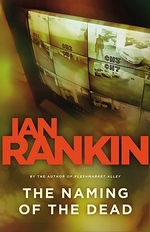
The Naming of the Dead by Ian Rankin: Rebus and Clarke find themselves in (well, next to) the middle of Global Politics.

The Naming of the DeadThe Naming of the Dead

by Ian RankinSeries: John Rebus, #16

Hardcover, 464 pg.
Little, Brown and Company, 2006
Read: June 22 – 25, 2018

           “Know what I think? I think all of this is because there’s a bit of the anarchist in you. You’re on their side, and it annoys you that you’ve somehow ended up working for The Man.”

Rebus snorted a laugh. “Where did you get that from?”

She laughed with him. “I’m right though, aren’t I? You’ve always seen yourself as being on the outside–” She broke off as their coffees arrived, dug her spoon into her cappuccino and scooped foam into her mouth.

“I do my best work on the margins,” Rebus said thoughtfully.

Rebus is on the verge of retirement — really, he’s about to be forced out, he’s at the stage of his career where many detectives would be just coming into the office and doing nothing — if not outright retiring already. And, truth be told, that’s precisely what everyone in the force seems to want (except for a few allies/friends), particularly the top brass. None of which Rebus has an interest in. He’s going to have to be pulled out, kicking and screaming — probably with someone barring the door after he’s out.

So when the G8 comes to Edinburgh in 2005, the police have their hands full with security, protests, riot preparations, and whatnot. They’re importing help from all over Scotland and even England. Everyone has plenty of assignments to deal with, everyone but John Rebus, that is. So when a clue comes up that might turn into something interesting on months-old murder case, he’s ready and raring to go. That evidence seems to point at multiple victims, too — so Siobhan Clarke is put in charge of that investigation, just please keep it quiet until all the important people have gone home (and yes, everyone is fully aware of the insult of putting the DS in charge of the DI on this one). Thankfully, there’s a suspicious-looking suicide that’s related to the G8 for Rebus to focus on.

At least one of the victims in Clarke’s case has an obvious connection to Big Ger Cafferty, too. Because why not make this all interesting? Big Ger’s the target of a local politician who happens to be making a lot of waves thanks to being in all the right places during the G8 protests, sticking up for his constituents and the cause of civility in the face of civil unrest. Rebus and Cafferty do their usual thing — Cafferty wants information so he can get his form of justice taken out of the murderer, Rebus needs information from Cafferty so he can prevent that. But at the end of the day here, Siobhan spends more time with Cafferty, despite everything Rebus tries to do.

Which is the crux of this novel, really. Rebus is at his career’s end, he knows it. The closest thing he has to a legacy is DS Clarke — and he wants it to be a good legacy. He wants to keep her from Cafferty’s clutches, from the dirt that’s dogged him for years due to guilt-by-association — as well as his actual influence. At the same time, he wants her to maintain that “work on the margins” attitude, while staying in good graces with TPTB. He wants Clarke to be everything he is, just without all the bad that comes from it. (I think she wants that, too, actually). Bringing me back to the point that this novel features Rebus fighting all involved for Siobhan’s soul.

In an interesting parallel, Siobhan’s actual parents are in town to take part in the G8 protests. There’s a young woman hanging out with them, almost like a temporary daughter (which really gets under her skin). She’s determined to spend some time with them, to show herself that she can have some sort of personal life — a family — and still be a good cop. To not be Rebus. At the same time, she so wants her parents to see her as a capable detective, not just someone in the midst of a defiant reaction to her parent’s lifestyle and beliefs.

Eric Bains shows up in a light I don’t think anyone expected, and I’m hoping that things turn around for him soon. I like the guy. He’s not Brian Holmes, but he’s a nice character to have around. There’s a reporter, Marie Henderson, involved in all of this, too (that’s her opining in the opening quotation) — I really liked her, and hope we see her again. Rebus seems to actually enjoy her company and intelligence — at the same time, as the co-writer of Cafferty’s biography, she represents everything that Rebus fears for Clarke.

I’ve not spent a lot of time talking about the cases — which are interesting enough, and watching Rebus not be careful around Very Important People from all over the world is fun. But on the whole, the cases felt familiar. Like we’ve been down these roads before — not exactly, and both held plenty of surprises, but they seemed like familiar Rebus/Clarke investigations. I might have been tempted to give his a 3-Star rating and move on.

BUT, Rankin won’t let me — because putting all of this right smack in the middle of the G8 conference — and the hullabaloo surrounding it (protests, concerts, marches) — the Bush bicycling incident, the London bombings, and the announcement of the Olympics coming to London — added so much to the novel. It grounded it in reality, it presented so many obstacles to the investigations (as well as distractions from the investigations) — as well as unexpected sources of help (police officers from other jurisdictions that had just the right kind of information). Plus all the “keep Siobhan from becoming Rebus” elements of the novel just captivated me.

Another winner. What else is there to say?

—–

4 Stars2018 Library Love Challenge

Page 18 of 37

Powered by WordPress & Theme by Anders Norén