Category: P-U Page 27 of 37

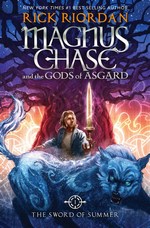
The Sword of Summer by Rick Riordan

The Sword of SummerThe Sword of Summer

by Rick Riordan
Series: Magnus Chase and the Gods of Asgard, #1

Hardcover, 491 pg.
Disney – Hyperion Books, 2015
Read: November 6 – 7, 2015

Maybe you’re thinking, Oh, Magnus, you didn’t really die. Otherwise you couldn’t be narrating this story. You just came close. Then you were miraculously rescued, blah, blah, blah.

Nope. I actually died. One hundred percent: guts impaled, vital organs burned, head smacked into a frozen river from forty feet up, every bone in my body broken, lungs filled with ice water.

The medical term for that is dead.

Gee, Magnus, what did it feel like?

It hurt. A lot. Thanks for asking.

Welcome to Rick Riordan’s latest tale of the offspring of mythological deities and the humans silly enough to fall for them. We’ve done the Greek pantheon, spent some time with the Egyptians, and came back for another round with the Greeks — this time with their Roman counterparts, but now we’re in for something new: Norse mythology. A whole new kettle of fish. This involves a new type of central character, a new kind of setting, new challenges. Which gives us the best thing from Riordan since the Percy Jackson & the Olympians series.

Magnus Chase is a homeless teen, orphaned a couple of years back when his mother was killed. Since then, he’s lived on the streets of Boston, spending his days in museums and libraries, learning as much as he can about whatever, and establishing relationships with generous restaurant employees and fellow homeless people. Two of whom track him down one day to let him know that there are people looking for him. It turns out that this is his sixteenth birthday and life just got a lot more dangerous for him. The people seeking him are family and they’re sure that he’s about to be hunted by beings he doesn’t believe exist.

The quotation above shows how well that being hunted works out for Magnus.

But he goes down fighting — to save himself, bystanders, and a couple of friends. So a Valkyrie (who happens to be Muslim, a combination that fascinates me) takes him to Valhalla — where he makes some more interesting friends, and enjoys a quality of (after-)life that’s far better than the streets. But then, someone casts doubt on the worthiness of his selection, which puts that Valkyrie in hot water.

So now Magnus has to take things into his own hands, prove that he’s worthy, defend the Valkyrie, and prevent Ragnarok from starting — or, if things go wrong, kick it off. It could go either way, really. One of the best pieces of advice he gets — the thing that inspires him is:

The thing about fate, Magnus: even if we can’t change the big picture, our choices can alter the details. That’s how we rebel against destiny, how we make our mark.

Now it’s just a question of what kind of mark he leaves.

Love, love the voice/attitude, I’ve seen some criticisms of it from parents, but I think it’s fun, and it’s just the kind of thing to feed into his audience (both the target and those who’ve grown up reading Riordan and still read him despite no longer being age-appropriate). It’s the clearest, crispest, funniest narrative voice since the Percy books — and might end up surpassing them by the end of this series.

I really don’t know that much about Norse mythology — world tree, Ratatoskr, Asgard, Valhalla, Odin, ravens, Hel, etc. I’ve got, but the details are really fuzzy. Most of what I know about Norse myth comes from Kevin Hearne’s Iron Druid Chronicles and Jacqueline Carey’s Daisy Johanssen/Agent of Hel Urban Fantasy books. So I’m learning a lot — and I assume younger readers will, too. The few pages of supplemental materials in back of the book are such a nice help! I really enjoy Riordan’s take on these mythological figures — both those I know and those I’m new to. I think the Thor you meet in these pages is fantastic. Yeah, Hearne’s Thor is a better character, but Riordan’s Thor induced more chuckles.

There are some great chapter titles here — I tend to ignore them (anything beyond a number is a distraction), which is short-sighted, I realize, but that’s what I do. In this book? It’d be really dumb to skip them. Every now and then I’d stop to go back and read the last few that I’d missed. If they’re not the funniest (and most creative) lines in the book — they’re in the top 2%.

The tie-in to the Percy Jackson books is obvious (and I felt really stupid having to have it spelled out for me in the opening chapters rather than sussing it out much earlier) and unexpected, but I can’t wait to see how that develops. But even more entertaining are the jokes about aspects of the Percy-verse — flat-out funny, and nice bit of fan service, too. Oh, and they won’t make a lick of difference to the Riordan-novice.

I just realized that I haven’t even addressed the titular sword. I don’t know what to say about it without ruining anything, but if I was eleven years old? It’d be my favorite sword ever — better than Excalibur or anything that Tolkien could offer (as someone much older than 11, I don’t think that, but I wouldn’t argue with my younger self).

One other thing — I read a review from one review site that I respect that dampened by enthusiasm for getting this — but I decided that Riordan had earned my trust (and I was curious), so I gave this a shot. That review complained about the sarcasm — I don’t get that, but apparently that’s a thing for some parents. And they complained about the addition of cussing — now maybe I missed it, but outside of the taking the names of Norse gods in vain (and that could be argued), the only cussing I saw was in dialogue tags. As in “…,’ he cussed.” Seriously? If we have to shield our middle graders from the concept of cussing, they’re not going to survive the middle grades. There were a few other complains that were about as baseless as these — I kept waiting to see these problems as I read and missed every single one.

Which isn’t to say this is a perfect book — but man, it’s the best he’s done in quite a while. The problems I have are really not worth getting into, they don’t ruin the experience, and if you’ve read Riordan before, you’ll be expecting them (they’re less problematic in this book than the last 2-3). The Sword of Summer is funny, exciting, with real heart — just the thing for middle grade readers (or those who don’t mind reading below their fighting weight).

—–

4 Stars

From the Mailbag: Reading the Wolfe Books for the First Time

I received this email in response to my Happy Birthday, Archie! post last week.

Soooooo, each year you post this, each year I say I’m going to start…just put a request in for Fer-de-Lance, the first of the Nero Wolfe books, right?

Thanks for the question! This is a tricky one for me, and one that I’ve thought too long about already. I’m going to write for the person already interested in the series, and not to convince you to read them — this is practical advice only, no incitement.

Short answer: Maybe.

Longer answer (which I’ll still try to keep under control, because I tend to be hard to stop on this subject, and some of this is adapted from other things I’ve written. Also, because if I start fact-checking some of this, I’ll find myself spending hours, even days, on this, so I might make some minor errors)*:
Rex Stout’s Fer-de-Lance is the first of 40+ books (novels or short story collections) featuring the exploits of private investigator Archie Goodwin (2 parts Huck Finn, 1 part Philip Marlowe) and his eccentric employer, Nero Wolfe (1 part Sherlock Holmes, 1 part Mycroft Holmes)–yes, I am one of those who think that Archie’s the main character in the mis-nomered Nero Wolfe Mysteries. It makes perfect sense to start with Fer-de-Lance and read chronologically. I did it myself a couple of years back for the first time (I’ve been reading these books for about 30 years now, and its odd that it took me so long), and I picked up subtle nuances, little callbacks and references that I’d missed before. There are almost no story or character arcs that go beyond a book (exceptions are noted below), and (most of) those that do, are easy enough to pick up and don’t spoil too much. Yes, there are introductions of new characters, a character death or two, but by and large you can dip in anywhere and not notice.

    Two quick semi-parenthetical notes on the reading this chronologically before I continue.

  • Yes, read the short story collections when you come across them in the chronology. Even if you’re not a short fiction reader, do it. There are some utter gems tucked away in those (and I spent too much time ignoring them).
  • The short story collection Death Times Three was published posthumously, but I’m pretty sure they were published in magazines, etc. before the last novel, A Family Affair. Read the collection after Please Pass the Guilt and before A Family Affair. A Family Affair works so, so well as a series finale that it should be treated as one whether or not Stout wrote it as one. It’s oft-debated, but I’m convinced that if Stout lived another year, we’d have had another novel. But he didn’t. So, again, A Family Affair should be the last you read — even if you don’t read chronologically.


In reading about Rex Stout/Nero Wolfe (either by fans or professionals), there’s an oft-quoted line from Walter D. Edmonds that you simply cannot avoid seeing, “I shall never forget my excitement on reading Fer-de-Lance, sprung like Athena perfect form the Jovian brow, fresh and new and at the same time with enough plain familiar things in scene and setting to put any reader at his ease.” Aside from Oliver Wendell Holmes’ margin note (“This fellow is the best of them all.”), there’s nothing that sums up Fer-de-Lance better, sprung like Athena indeed.

It really doesn’t matter how many times you’ve read it, but upon re-reading (and probably even initial reading if this isn’t your first encounter with Wolfe and Archie) you can’t help be struck by how much Fer-de-Lance fits the model of a mature Wolfe novel–almost all the elements are there. These characters are introduced in practically their final format — a little tweak here and there over the course of the first few novels will get them in their final form. The addition of a few other characters will be necessary, but the cast of characters is already over 90% complete. In the first chapter alone we already have Wolfe, Archie, Fritz, Theodore, Fred and Saul presented in a manner fully recognizable to the familiar reader. The story follows a fairly typical route (although the identity of the murderer is revealed far earlier than is the norm), and the essential environmental elements are there — the beer, Wolfe’s eccentric schedule, the orchids, a relapse, the food, a cocky scheme to land a client, an outrageous stratagem for getting that last essential piece of evidence (not that Wolfe needs it to solve the crime, merely to prove he was correct) — the only thing missing is the gathering of the witnesses/suspects/clients for Wolfe to reveal everything in his characteristically dramatic fashion. One recurring thought I had while reading it the last time was that Fer-de-Lance could just as easily have been the fifteenth installment in the series as the first.

If you didn’t understand half of what I wrote above because you’re new to the corpus, well, you’ll get it soon enough. There’s a formula of sorts to Wolfe/Archie novels — violated all the time, despite what we purists like to think, these variations on the theme are some of our favorite moments. You’ll pick the formula up quickly, and find it as comfortable as Wolfe’s nigh-inviolable daily schedule.

So while there is glacial development, the order is almost negligible. I do endorse and suggest a chronological read — but it’s not essential. In fact, I typically recommend The Golden Spiders (#22) or Before Midnight (#25) to newbies before plunging into Fer-de-Lance, they’re among my favorites, and are pretty representative of the fully-developed Wolfe/Archie. A&E used The Golden Spiders as the pilot to their recent series, so I’m not alone in thinking it serves as a good introduction. If you like them in their final form, you’ll have an easier time appreciating Wolfe/Archie in their almost-final form in the early books. Think of the development of Bugs Bunny over the first few shorts as a rough analogue.

Therefore, if your library/used bookstore isn’t sufficiently stocked to do the chronological read, you shouldn’t avoid the series and can dip in wherever you can. It’s like old episodes of Law & Order that you come across on cable. But there are a few things you should read in a certain order for full understanding/emotional impact, and a few others you should read after you’ve acclimated to the world/series a bit, you’ll enjoy/appreciate them more than in they’re in the first five:

  • The Doorbell Rang (#41)
  • Too Many Women (#12) — a lot of people think Archie comes off like a cad here, it’s never bothered me, however. Still, if you already like him, you’ll forgive him this.
  • And Be a Villain (#13), The Second Confession (#15), and In the Best Families (#17) — just seeing the numbers now, surprises me — I’d have thought these were in the 30’s. If Stout had been planning out a 40+ book series, he’d have put them later. Not only should you read them with experience in the series, these three need to be read in this order. There is an omnibus edition in many libraries with these three called Triple Zeck.
  • The Black Mountain (#24) would be best read after Over My Dead Body (#7), and after you’re acclimated to the world.

A couple of other suggestions:

  • Some Buried Caesar (#6) — should be read early (but not first) and often.
  • A Right to Die (#40) should be read only after Too Many Cooks (#5), it’s one of the only times that a non-regular character shows up again. There’s some racially-tinged language in Too Many Cooks that Archie’d grow out of almost immediately. Remember it was originally published in 1938 and cut him a little slack — mostly, be happy that he grows out of it.
  • And again, A Family Affair should be read pretty much when there’s nothing left.

Granted, these are all only suggestions. But ones made by a passionate fan. Still, at the end of the day, just read these books, you’ll enjoy them.

Maybe sometime I’ll get into the official continuations by Robert Goldsborough in a post like this.

—
* Okay, I lied — I pulled up the goodreads page for the series so I could get the numbers on them just to help. But that’s it.

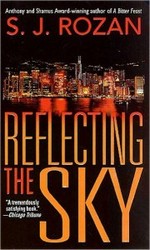
Reflecting the Sky by S. J. Rozan

Reflecting the SkyReflecting the Sky

by S. J. Rozan
Series: Lydia Chin & Bill Smith, #7

Hardcover, 312 pg.
Thomas Dunne Books, 2001

Read: October 24 – 26, 2015


I love reading the conversations that Lydia and Bill have — especially those that have little-to-nothing to do with their work. In the opening pages of this book, where Lydia explains to Bill what Grandfather Gao wants them to do, and where he wants them to do it, we get one of their better conversations. Bill has a lot of fun with the idea that the venerated Grandfather Gao wants him to do anything for him, much less travel to the other side of the planet for him.

Grandfather Gao, who looms large over Chinatown in general and Lydia’s life in particular, wants the two of them to make a couple of deliveries to Hong Kong: the ashes of an old friend, and a package for that friend to be delivered to his brother.

Of course this simple errand doesn’t go as planned — it’d be a very short book if it did. As entertaining as it might be to read about these two playing tourist in Hong Kong, that’s not the type of book Rozan wrrites. Soon, this errand plunges the partners into at least one kidnapping plot, a murder, and all sorts of other crimes. How much of this was predicted by Grandfather Gao is a question on everyone’s mind.

The best part of this book is seeing Lydia in a strange land — in NYC, the accent is on the “Chinese” in Chinese-American, by the way she was raised, where she lives (both neighborhood and with her mother), her family, and her appearance. But here? The accent is on “American.” She gets a bit more of the culture and customs than your typical tourist, and a lot more of the language, but at the end of the day, she’s a foreigner even where Bill’s the one who looks different than most people she’s around.

Now, no American detective (or pair) can wander around a foreign city, stirring up trouble and solving crimes without one ally. Lydia and Bill are helped out by Mark Quan, a detective raised in the American South who moved to Hong Kong later and became a police officer there. He, of course, has his own connection to Grandfather Gao — which, at least, means that he can be trusted. At the end of the day, we’re reminded more than once, that a cop is a cop no matter where you are, so even if he can be trusted, he’s not that open to P.I. help (especially American P.I. help). I really enjoyed him as a character, and hope that he gets sent to NYC in the future to help with something in a Rush Hour/Red Heat-type move.

Bill, as usual, comes across as a better guy than he does in the books from his perspective. I appreciate that dynamic, he comes across as more heroic (if semi-annoyingly interested in Lydia — from her perspective), and she comes across a bit more clever and resourceful in his books. He didn’t get nearly enough to do, in my opinion, but I know he’ll get his turn soon enough.

Not the best in this series, but man, it was entertaining. Loved seeing these two as fish out of water, yet still doing their thing. Bring on the next!

—–

3.5 Stars

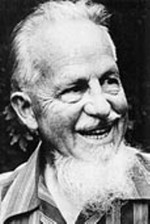
October 27, 1975: The Death of Rex Stout

Rex Stout

Forty years ago today, Rex Stout died at the age of 88. It doesn’t take much effort looking around here to know that he had a pretty big impact on my life — even if I didn’t “meet” him until over a decade later — so I didn’t realize how significant the date was at the time (hey, I was only 2 at the time). Outside of Scripture and various preachers/theologians, there’s a trifecta of authors who’ve left indelible fingerprints on my mind — Robert B. Parker, Douglas Adams, and Rex Stout.

John McAleer, in Rex Stout: A Biography, tells us:

On the ABC Evening News, Harry Reasoner told the nationwide television audience:

The news today was as usual full of politicians and other movers and shakers. But the odds are overwhelming that when historians look at the bright blue late October of 1975 the only thing that will keep about the 27th is that it was the day Rex Stout died and the 28th was the day the death was reported. Rex Stout was a lot of things during his eighty-eight years, but the main thing he was was the writer of forty-six mystery novels about Nero Wolfe and Archie Goodwin. A lot of more pretentious writers have less claim on our culture and our allegiance.

That same day the latest issue of Time appeared on the newsstands. It carried a review of A Family Affair, which lauded Rex’s “elastic, contemporary mind” and his capacity “to confound the actuarial tables.”

Reasoner might have overstated Stout’s impact on history a but, but I appreciate the sentiment.

The man lived quite a life — for a taste, you could read McAleer’s 532 page biography, or check out this obituary from The Congressional Record(!!) (thanks to NeroWolfe.org for this, and a few other obituaries at the link).

Happy Birthday, Archie!

My annual tribute to one of my favorite fictional characters (if not my all-time favorite). Revised and expanded this year! Revising it mostly just reminded me that it’s been too long since I read any of these. Must fix that.

On Oct 23 in Chillicothe, Ohio, Archie Goodwin entered this world–no doubt with a smile for the pretty nurses–and American detective literature was never the same.

I’m toasting him in one of the ways I think he’d appreciate most–by raising a glass of milk in his honor.

Who was Archie? Archie summed up his life thusly:

Born in Ohio. Public high school, pretty good at geometry and football, graduated with honor but no honors. Went to college two weeks, decided it was childish, came to New York and got a job guarding a pier, shot and killed two men and was fired, was recommended to Nero Wolfe for a chore he wanted done, did it, was offered a full-time job by Mr. Wolfe, took it, still have it.” (Fourth of July Picnic)

Long may he keep it. Just what was he employed by Wolfe to do? In The Black Mountain he answers the statement, “I thought you was a private eye” with:

I don’t like the way you say it, but I am. Also I am an accountant, an amanuensis, and a cocklebur. Eight to five you never heard the word amanuensis and you never saw a cocklebur.

In The Red Box, he says

I know pretty well what my field is. Aside from my primary function as the thorn in the seat of Wolfe’s chair to keep him from going to sleep and waking up only for meals, I’m chiefly cut out for two things: to jump and grab something before the other guy can get his paws on it, and to collect pieces of the puzzle for Wolfe to work on.

In Black Orchids, he reacts to an insult:

…her cheap crack about me being a ten-cent Clark Gable, which was ridiculous. He simpers, to begin with, and to end with no one can say I resemble a movie actor, and if they did it would be more apt to be Gary Cooper than Clark Gable.

I’m not the only Archie fan out there:

  • A few months back, someone pointed me at this post, The Wit and Wisdom of Archie Goodwin. There’s some really good stuff here that I was tempted to steal, instead, I’ll just point you at it.
  • Robert Crais himself when writing an introduction to a Before Midnight reprint, devoted it to paying tribute to Archie. — one of the few pieces of anything written that I can say I agree with jot and tittle.

In case you’re wondering if this post was simply an excuse to go through some collections of Archie Goodwin quotations, you wouldn’t be totally wrong…he’s one of the fictional characters I like spending time with most in this world–he’s the literary equivalent of comfort food. So just a couple more great lines I’ve quoted here before:

I would appreciate it if they would call a halt on all their devoted efforts to find a way to abolish war or eliminate disease or run trains with atoms or extend the span of human life to a couple of centuries, and everybody concentrate for a while on how to wake me up in the morning without my resenting it. It may be that a bevy of beautiful maidens in pure silk yellow very sheer gowns, barefooted, singing “Oh, What a Beautiful Morning” and scattering rose petals over me would do the trick, but I’d have to try it.

I looked at the wall clock. It said two minutes to four. I looked at my wrist watch. It said one minute to four. In spite of the discrepancy it seemed safe to conclude that it would soon be four o’clock.

“Indeed,” I said. That was Nero Wolfe’s word, and I never used it except in moments of stress, and it severely annoyed me when I caught myself using it, because when I look in a mirror I prefer to see me as is, with no skin grafted from anybody else’s hide, even Nero Wolfe’s.

If you like Anglo-Saxon, I belched. If you fancy Latin, I eructed. No matter which, I had known that Wolfe and Inspector Cramer would have to put up with it that evening, because that is always a part of my reaction to sauerkraut. I don’t glory in it or go for a record, but neither do I fight it back. I want to be liked just for myself.

When a hippopotamus is peevish it’s a lot of peeve.

It helps a lot, with two people as much together as he and I were, if they understand each other. He understood that I was too strong-minded to add another word unless he told me to, and I understood that he was too pigheaded to tell me to.

I always belong wherever I am.

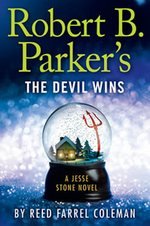
The Devil Wins by Reed Farrel Coleman

The Devil WinsRobert B. Parker’s The Devil Wins

by Reed Farrel Coleman
Series: Jesse Stone, #14
Hardcover, 342 pg.

G.P. Putnam’s Sons, 2015

Read: September 11, 2015


There’s no good reason for me to have difficulty writing about Coleman’s Jesse Stone, but I twice in a row now, I have. It looks like it’ll take me less than a month to get this up, so that’s something I guess (but it should’ve taken me less than a day!) But man, I love these books!

In this one, on page 3 there was a line I wanted to read to my wife, on page 4 I was grinning. It was so good to be back in Paradise, MA. Chapter 2 served as a a reminder this wasn’t Parker’s Stone, this was Coleman’s. Which is not necessarily better or worse, just different — it’s still the same world, populated with the same people, it’s just told differently. The Devil Wins started strong and stayed that way.

One of the things that distinguished this series from the Spenser series (and later, Randall — which felt like Spenser) was the atmosphere — this was a gray world (so well captured in the movies). Not just morally (and that could be argued, I think), but weather, mood, outlook on life of the characters — economy of the community, even. Later, Parker seemed to pull back on that — either deliberately, or for the same reason that Spenser’s backstory changed. Coleman has returned to the gray, and amped it up a bit, his style brings that into focus. His dialogue might not be as snappy (and it’s not), but it’s thoughtful, as is the narrative and his descriptions. You can almost feel this world as much as see it.

Every town has its dark secrets, the events people don’t like to remember, or discuss, or admit they happened. Paradise has a few of those, I’d wager — one of them was that about twenty-five years ago, two high school girls disappeared without a trace. While most presumed (maybe hoped) that they’d been killed, there were no suspects, no motive, no evidence. Eventually, time moved on and the town collectively repressed the events. A fresh homicide investigation leads to the discovery of two much older bodies — everyone assumes (and it’s quickly confirmed) that it’s these two girls. Now Jesse has to deal with two investigations — one fairly low-priority, and one that is bringing back ghosts for everyone in Paradise (and is attracting plenty of attention from the rest of the world).

After putting his own mark on Jesse in Blind Spot, Coleman moves on to Suitcase Simpson and Molly. Don’t get me wrong, this is still Jesse’s book, and his presence dominates the narrative. But it’s in these pages that Coleman plants his flag on Suit and Molly. Suit is possibly at his most self-aware here, almost dying can do that to a person (making Coleman’s tweak totally justified), we don’t get as much time with him as we do with Molly, but what we do is golden. More importantly, Jesse has to be honest with himself about Suit — and that clarity will drive their relationship going forward. If Coleman hadn’t delivered with the rest of the book, but had with this? It’d have been worth it.

Parker, Coleman (and Brandman) hadn’t given us too many details about Molly outside of her outstanding work as Jesse’s conscience, aide, and friend. We got the little fling with Crow, and some references to her family, and that’s it. Which is exactly the way that Officer Crane wants it. But sometimes, you can’t keep that wall between your personal and professional as high as you want to — sometimes the past comes back to haunt you — and it does in spades for poor Molly. In the end, we don’t learn that much about her that we didn’t know, but it’s easy to see how what Coleman shows us helped shape her into the woman she is. (Minor spoiler ahead, skip to the next paragraph if you want) One of the two girls was Molly’s best friend, and by all rights, she should’ve been with her the night they disappeared. The discovery of the bodies, what they learn during the investigation, shake the seemingly unflappable Officer Crane to her core.

One more reason for her boss to take care of business. Not that he really needs it. Especially when more bodies start to show up.

Best part of this book for me? There’s no Gino Fish. There’s no deus ex mafia providing the solution for Jesse. It’s procedure, dogged determination and criminal stupidity — plus a little dumb luck that helps Jesse conclude what happened twenty-five years ago and today.

In addition to the great character work with our old friends, we get to focus on three new friends of Jesse’s in this book — two of whom are long-time residents of Paradise that we haven’t encountered yet, one is new to town. Jesse enlists the assistance of the editor of Paradise’s newspaper with the historical elements of his case (the police files were not up to snuff) in exchange for exclusives on a story starting to get some national attention. An insurance agent/city councilman who has been Jesse’s biggest supporter in Paradise’s government encourages him to keep on track and solve the crimes in a hurry (and when that fails, turns to threats). There’s a new Medical Examiner in the area (whose departure from NYC is similar to a certain LAPD detective’s) who befriends Jesse — she’s smart, attractive, and interested in more — but for now they decide on friendship.

I guess I should quickly mention the other women in Jesse’s life, having talked about Tamara Elkins. She’s talked about a couple of times, but we don’t get to see the new character from the Blind Spot, Diana Evans, which is a shame. I hope that changes soon, Coleman certainly leaves the door open for it, although Coleman’s going to have to start using surnames that don’t sound so similar. I thought Jen was around juuuuuust enough for my taste (I also appreciated the talk about Sunny Randall).

I find it amusing how many people I’ve seen complain about Jesse’s drinking being talked about so much. His battle with the bottle was a focus from Day 1 — sometimes more successful, sometimes less so — but always, always a presence, often discussed no matter if he was drinking or not. It’s there, it’s looming, Stone battles it as he does the rest of his demons (the “it could have been” of baseball, and Jen) — while doing what he can for these girls and the community.

Once again, Coleman strikes the right atmosphere and mood, captures the essence of the characters — while not keeping them frozen in amber, tells a very Parker-esque story in his own manner, and makes me seriously consider moving to a fictional Massachusetts town, despite the troubling homicide rate. It wasn’t as good as his first foray into this world, but I’m not sure it could’ve been, and it was close enough to justify reading it a few times anyway. Please, sir, I want some more.

—–

4 1/2 Stars

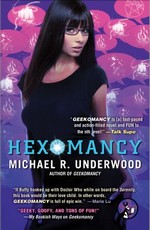
Hexomancy by Michael R. Underwood

Hexomancy Hexomancy

by Michael R. Underwood
Series: Ree Reyes, #3

eBook, 258 pg.

Pocket Star, 2015

Read: September 25, 2015


So, here we are with the third Ree Reyes novel, the 4th adventure for her, and the end of her first character arc (although the only way really know this now is that Underwood keeps saying it — I doubt I’d have been confident enough to say that until the beginning of her next novel/novella), and what a ride we’ve been on so far. Geekomancy was just ridiculously fun — the style, the voice, the magic system pushed just about every one of my buttons. In retrospect, it wasn’t a great novel, but it was so fun that all the weaknesses can be easily overlooked. Celebromancy was a better novel — as far as construction, character, etc. goes, but wasn’t nearly as fun and entertaining. Attack the Geek was action-packed, pretty fun, but (as it was designed to be) not much else. Hexomancy combines all the pluses from the first three, and smashes them together into the best novel Underwood’s given us so far.

In retaliation for the defeat of their sister in Attack, and the resulting consequences that begin this novel — three Strega are coming to town to get their vengeance on. Their target is primarily Eastwood, who is mentor, unnecessary father-figure, and foil (depending on the day) to our new UF hero, but since Ree was integral to Lucretia’s defeat, she’s not exactly safe either. They’ll be coming to town at regular intervals, each one more powerful and deadlier than the last. Like bosses at the end of levels on a video game. You can argue that this part is either hokey, or perfectly fitting to this world, but that’s the way it’s set up (the latter is the correct answer).

And, these Strega are no joke — nasty, powerful and brutal. Eastwood, Drake and Ree (and the occasional other ally) are pushed to their limits when they take them on — physical, creative and moral — like their videogame counterparts (as I understand it, mostly from watching my sons).

Between these boss battles, Ree and the rest recover, level up, and whatnot (I can only pay so much attention to what my sons do, can’t keep the metaphor going). Ree spends time with her friends, in the rebuilt Grognard’s, and in a little romance.

Drake is one of those characters that I think deserves his own post, if I could only find the time. Better yet, he deserves his own stories — either prequels off in his own world, or some running concurrently to this series. His humor, his bravery, his nobility, his heart — not to mention his cool steampunk tools and weapons, — basically he’s the whole package. Really, most people would consider building a series around him, not have him as a sidekick. But he works well in the role.

We didn’t get nearly enough of Ree’s dad this time — her chats with him were a highlight of the last two novels (although, to be honest, when she did talk to him I had one of those “Oh, right, she does this” moments).

Ree and her friends have to be about the most healthy and well-adjusted groups of fictional characters I’ve ever encountered — people like this may exist in Real Life, but not in fiction. It’s like they’ve spent years in group therapy before this. Which is not a bad thing — in fact, it’s pretty refreshing. But that doesn’t keep it from being weird when they react in mature, reasonable manners to various and sundry challenges presented in this novel. If I wasn’t afraid it’d make me seem like a cad, I’d say the magic is easier to believe than they are.*

What about Ree herself? She’s grown into her roll protecting her city, scratching by, keeping her sanity intact (mostly). She’s grown plenty over these four adventures and you can see the results everywhere — thankfully, she’s still as full of snark and verve now as she was when we first meet her. Just a bit wiser, packing a few more XP, and more sure of herself. She barely references her writing now, which is a shame — but hey, her plate’s pretty full.

In his Acknowledgments, Underwood states, “If you keep reading them, I’ll keep writing them”. Sounds like a good deal. I’m in. Keep ’em coming, Mike!

—
* And I’d say that if it was a group of 4 guys, too, for the record.

—–

4 Stars

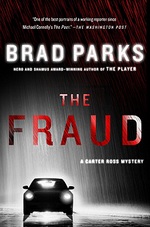
The Fraud by Brad Parks

The FraudThe Fraud

by Brad Parks

Series: Carter Ross, #6

Hardcover, 342 pg.
Minotaur Books, 2015
Read: September 9, 2015

The ethical dilemma posited aside, I hated the first chapter. If I’d never read a Brad Parks book before, it might have caused me to move on to the next thing on my reading list. The cheap “in 43 hours, X, Y, and Z are going to happen…” ploy irritates me. Just get me invested with setting, plot, or character. Present one or all of these in an interesting manner and I’ll get invested. Don’t force the investment. Don’t jam it down my throat. Also, there was a perfect point 300 or so pages later that it would’ve fit.

Thankfully, Chapter 2 was much better, as was the rest of the book. This was the typical Parks mix of darkness and light, grim stories told with a light touch. A newspaper reporter trying to live up to the tradition of the great investigative journalists of the past in the midst of an industry that’s dying and doesn’t care about that tradition.

Carter seems to be off his game a little here, making a couple of blunders that seem out of character — but given that he spends the whole novel waiting for That Call from his pregnant girlfriend, it’s understandable. It also helps move the novel along nicely, so, it’s easier to swallow (especially while reading).

There’s a string of carjackings in Newark, and a couple have proved deadly. Naturally, the one that makes people pay attention is a well-off middle-aged white man. Carter just can’t write about him though, he seeks out another carjacking that resulted in a murder, this time of a less well-off black man. It doesn’t take long before Carter’s sure it was the same carjackers, and that there’s something else going on besides Grand Theft Auto.

There’s not much (beyond the strange relationship between Carter and Tina) that really seems to be the same from novel to novel in this series. The cases don’t overlap really, which is refreshing. Carter can’t rely on the same sources of information all the time — which doesn’t preclude some returning supporting characters, but also keeps things fresh on that front. The corner bodega shop owner in The Fraud was entertaining, and I hope we see him again down the line. Other characters here — friends and family of the victims, sources of information, and so on — were well-drawn and engaging as usual.

Easily one of the more entertaining aspects of the Carter Ross books are the interns — from savvy to naive, hapless to ruthlessly efficient, these characters make you fear for the state of journalism (or give you great hope). This books’ intern, Chillax, annoyed me greatly in the first couple of pages we spent with him. He clearly rubbed Carter the wrong way, too. Which did provide a grin or three. Case in point, we first meet him like this:

“Hey, what’s up, brah?”

I am unsure what youthful genius decided that the word “bro”–which is already an effective truncation of the word “brother” – – needed to be further morphed so it was pronounced like a woman’s undergarment. But it was my hope this linguistic pioneer developed some affliction that was similarly annoying. Like a permanent hangnail.

In the end, Chillax proved to be a little bit more than comic relief, but when we see past interns in this book, we see how little.

The comedic elements, as always, separate this from the pack, they season, but don’t overwhelm the mystery. There was one big joke moment (maybe two, actually) that any reader is going to see coming 5 miles off — but Parks is such a pro that even they work. The more elaborate of them (you’ll know when you read it) is cringe-worthy, totally expected and totally chuckle inducing. The Fletch joke was nice. This summer we’ve had jokes about the movie from Parks and Kuhn, one more and we’ve got a trend.

Parks threw a couple of curve balls that I whiffed on. There’s one shadowy figure that I had pegged to be character type X. Not only was he not X, Y or Z, he was more like D. I was that far off. I also did not see the ending coming (well, the solution to the criminals’ identities I saw because I knew more than Carter), but the rest? Didn’t expect that from a Carter Ross book.

There’s one thing that doesn’t make any sense to me, one character’s motivation and actions that made sense with one interpretation of the facts, are just irrational when looked at in the light of the way Carter finally puts the pieces together. The way that Parks wrapped up the action and provided glimpses into what happened with the major players didn’t allow for him to get into details about the red herrings he chased, but this one was big enough that an explanation would’ve helped.

Good characters, entertaining plot; actually, the mystery itself might be pretty weak, the more I think about it, but it was fun watching Carter figure it out, which is the point. The Fraud, solidifies the Carter Ross series as a reliable mystery series.

—–

3.5 Stars

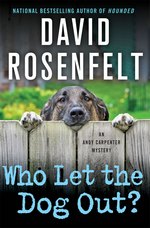
Who Let The Dog Out? by David Rosenfelt

Who Let The Dog Out?Who Let The Dog Out?

by David Rosenfelt
Series: Andy Carpenter, #13
Hardcover, 324 pg.
Minotaur Books, 2015
Read: September 4 – 5, 2015

As Michael Corleone said in The Godfather, Part Ill, “Just when I thought I was out, they pull me back in.” The fact that it was the worst movie in the history of movies does not take away from the truth of that statement, as it relates to my legal career.

Poor, beleaguered Andy Carpenter. Dragged, kicking and screaming back into the courtroom to defend someone he really doesn’t care about, but by doing so he gets to investigate a crime he’s really concerned with.

As we all expect, that crime involves a dog.

The Tara Foundation, the dog rescue shelter that Andy runs with his former client, Willie, is broken into. The thief does a very professional job and takes off with one dog. Professional or not, the thief didn’t take into account how devoted Andy and Willie are to these animals and how obsessive they can be about them. It doesn’t take them long at all to track down the dog…and the corpse he’s next to.

Andy wants to know more about the dog, and the dog’s owner who turns out to be a fugitive, suspected of murder. The only way he can keep his foot in this case is to defend the man accused of the killing. He eventually does figure out who kills the thief, but it’s almost accidental — it’s certainly incidental to anything else going on. Just one of the little bits of pleasure this provided was that “ah ha” moment.

During the trial — the stage of many of this series’ highlights — Andy treats us to an amusing clinic on all the ways that a couple of lawyers (and people in other professions) can use the word “frankly,” including all the shades of meaning that word can provide. Like so many of Andy’s lessons, this was worth the ticket price.

Rosenfelt brings us yet another storylines that could summed up as: It looks like a simple crime, but is actually the linchpin to uncovering a major terrorist plot/international crime syndicate (minor spoiler that if you read more than a couple of chapters you’d see for yourself). I’m getting a little sick of these. The terrorist plot, by the way, makes me reconsider the plausibility of a similar plan in Robert B. Parker’s Night Passage. I’d always thought that the weakest part of an otherwise compelling read, seeing it now in light of this book makes me think there was something there. Still, for crying out loud, Mr. Rosenfelt, let major criminal enterprises and terrorist organizations figure out that a trip through Patterson, NJ is asking for trouble. Local conspiracies, okay. But major international conspiracies? You’ve got to stop going to that well so often. Or period.

My other worry about this is Ricky. If you haven’t read this far in the series, you may want to skip the rest of this paragraph. About half of the material around Ricky was cute and fun — just like it was in Hounded. The other half (mostly involving stale sit-com like bits about kids’ sports) teetered on painful. I fear that this series might be like the older comedies who felt compelled to add the cute little kid late in the run (Andy on Family Ties, Cousin Oliver on The Brady Bunch, Olivia on The Cosby Show, Chrissy on Growing Pains, etc., etc., etc.). If that’s the case, I worry about the future of the series.

Don’t get me wrong — I enjoyed this overall. I can suspend my beefs with this series as it goes on and enjoy Andy’s laziness, his awe of Marcus, Marcus’ awe-inducing self, the hacking seniors, and all the rest. I don’t open up an Andy Carpenter novel expecting to be hanging in suspense, to be chilled, to be challenged in any way; I expect to spend a couple of hours in some pleasant company and sometimes to get a fun puzzle. In that sense Who Let the Dog Out? delivered enough.

—–

3 Stars

John Scalzi and Shane Kuhn in Boise

If you’d asked me, I would’ve said I’ve written and posted this already. Apparently not. Whoops! Thanks for letting me know, Paul. So, I’ll take a quick break from packing up all my white clothes and get this up now. Better late than never, I guess. . . .
At the end of August, the best bookstore in Boise, Rediscovered Books, brought two authors to town for Readings/Signings. Back in college, I went to readings fairly frequently*, but since then I could count the number on one hand.

Shame on me. I need to do better at this. A good reading is one of the best forms of entertainment around. A less-good reading is pretty bad, but hey, at least you’re supporting the arts.

Anyway, the first author was John Scalzi. Perhaps you’ve heard of him — SF author extraordinaire, blogger, tweeter, etc., etc. Back on August 20, Rediscovered Books brought him to the auditorium of the Boise Public Library! (yes, the exclamation point is necessary). I wondered if that wasn’t overkill for SF in Boise. Not surprisingly, I was wrong and the people that do this stuff for a living were right. If they’d brought him to the bookstore, there’s no way we all could’ve fit, the audience packed the auditorium.

After a little chit-chat, he read a little from his upcoming novella The Dispatcher, his first foray into Urban Fantasy. He asked not to provide any details, as the only people getting this preview were those who came to this book tour. He did give us permission to — maybe even encouraged — gloat about hearing it. So, here we go: neener neener my wife and I got to hear the first chapter of The Dispatcher and most of you didn’t. It was pretty good, and I’ll be grabbing it as soon as I can.

He then read a couple of short humor pieces he wrote for AOL.com back in the 90’s that were appropriate for the Back to School season, and a pretty popular (and funny) blog post, Standard Responses to Online Stupidity. He then he spent 20 minutes or so doing Q&A — he was polite and friendly to the people asking questions, turned even awkward questions into something interesting in his answers (he’s been doing this for awhile).

What didn’t he read? Anything from the book that the tour was promoting — The End of All Things — which I found odd, but I was okay with because I’m way behind on that series. Very entertaining evening — the dude’s a pro.

During the signing, he was again friendly and pleasant and didn’t seem to mind people fanboying/fangirling all over him (which didn’t happen too much or without restraint on the part of the fans). When it was my turn, he laughed at my attempt at humor (which I’m going to believe was because I was moderately funny and not just because he’s sooper polite), gave me a nice, personalized autograph in my copy of The Android’s Dream that went with my joke.

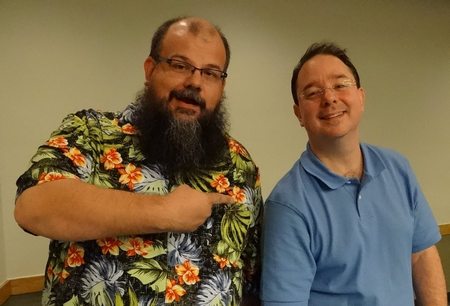
And here’s photographic proof that I met John Scalzi:

A week later, things were a bit different for Shane Kuhn, a favorite around these parts, but largely unknown. Now, Rediscovered Books has been pushing Kuhn lately — he’s a Staff Pick, one of their book clubs read The Intern’s Handbook recently, etc. But a whopping 4 people showed up. Which, sure, provided a nice, intimate setting — but 4? Oh, wait, there were 2 bookstore employees there, too.

That had to be discouraging, but he went on with the show. After taking a poll of who’d read what of his (my wife hadn’t read anything yet, 2 were in various stages of Hostile Takeover, and I’d finished it earlier in the week), he read an early section of Hostile Takeover — the wedding — quitting at just the right spot — it was a good tease, you wanted to know what happened next; and I think the next part would’ve been very, very tricky to read aloud. He then took some questions, it was more of a chat, really. He had this annoying tendency to answer questions I wanted to ask in the middle of another answer, so I ended up not saying anything. Highlights included him talking a little bit about his next book, more of a mainstream thriller; and the process of getting The Intern’s Handbook to the Big Screen. He read another bit from the beginning of The Intern’s Handbook (after teasing my wife about reading the ending), where Alice and John first met.

Despite the low turnout, he didn’t (that I could tell) cut corners or half-ass his way through the reading, and was more than friendly to those of us who were there. If he comes back, we’ll do a better job strong-arming friends and family to come so that his audience will be bigger.

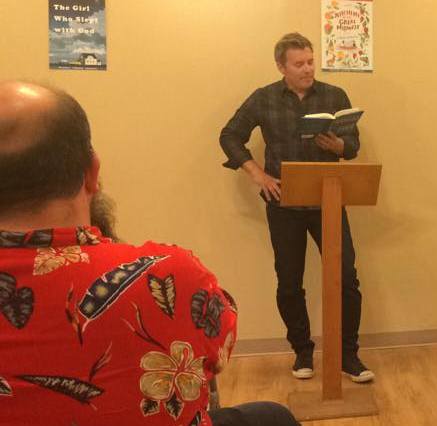
Here’s photographic proof that I saw Shane Kuhn (better angle on me than the other). If you go to Rediscovered’s Facebook page and see the photograph I appropriated, you can see 75% of the audience for the reading)

* And not just for the extra credit either. Although that probably kept me at some until the end.

Page 27 of 37

Powered by WordPress & Theme by Anders Norén