Category: P-U Page 28 of 36

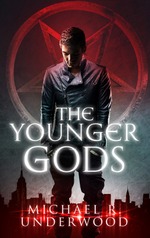
The Younger Gods by Michael R. Underwood

yyyyyeeeeesh, almost, but not quite 6 months late. What is wrong with me? Let’s see if I can remember enough to make this work:

The Younger GodsThe Younger Gods

by Michael R. Underwood
Series:The Younger Gods, #1


ebook, 280 pg.
Pocket Star, 2014
Read: November 20 – 22, 2014

Are you quite sure you don’t want to even try to seek cover?” I asked.
“Cover is what stands between me and stabbing things,” [Carter] said by way of response.
Let it not be said to my resident assistant that I constrained my roommate. He was his own man. Even if that man was insane at times.

One of Michael R. Underwood’s most impressive traits is his versatility. We’ve got the fun Urban Fantasy adventures of Ree Reyes, the strange superheroes of Audec-Hal, and now, this darker UF about a cult’s white sheep trying to stop the apocalypse.

Jacob Greene — of those Greenes (apparently) — has come to New York to attend university — and get away from his family and their demon-worshiping apocalyptic cultish practices that will usher in The End of the World as We Know It. He’s had enough of all of it, and is trying to get beyond their teachings, their practices, their . . . murderous ways. It’s more difficult than he expects, especially when his sister comes to town in order to usher in Doomsday.

Jacob finds himself surrounded with a motley crew of allies — mostly in the mold of the-enemy-of-my-enemy — trying to keep his sister from accomplishing her Ultimate To-Do list. Let me tell you, this particular UF version of NYC is full of quite the assortment of magical cultures/subcultures. The rules governing them, the way they interact with each other are one of the strengths of this novel — a nice little bit of world-building that was revealed, not dumped on the reader.

Jacob, understandably, spends a good deal of the book sorting out his identity in light of his family — as well as his feelings for/about them. There are no easy answers waiting for him. It’s here, not his running away from his family, not his attempts to stop his sister, that Jacob finds that bit of humanity that he’s been missing.

Was it still love if the people that loved you were monsters? Did their actions taint everything they did, or was there some humanity in the family? Had they ever really loved one another, or was it a mask, a role that each Greene has played to further the goals of the Bold and awaken the unborn? There was a film, some film, that matched this feeling. I’d heard someone talk about it in class.

Jacob’s ending gambit had me groaning, “Underwood’s not going to do that, is he?” Turns out 1. He did; and 2. It totally worked. I couldn’t believe it. I was expecting a cheesy car wreck, but he nailed it. Note to self: don’t doubt Michael R. Underwood again.

My biggest gripe was Jacob’s language. He starts off with the most formal, stilted dialogue this side of an Austen novel; slang was a foreign language he was trying to adopt. By the end of the novel, however, a lot of that was gone. Now, it’s possible, I just got used to his language — but I don’t think so. Mostly, it was his use of slang that improved dramatically. Now, if it had happened slower — over a book or two, I wouldn’t have noticed — or, more likely, I’d have given Underwood props for it. But . . .this book covers events of a few days, far too quickly for Jacob to pull that off. Still, as far as gripes go . . . that’s pretty small.

It’s not Underwood’s best — but it’s a good start, and I can eventually see me saying something different about the series as a whole. Great magic system, a situation I’ve never encountered in any of the UF I’ve read, a solid group of characters to build from — I can honestly say that I have almost no idea what’s up next for Jacob Greene et al. But I’m looking forward to finding out.

—–

3.5 Stars

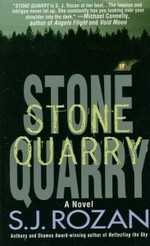
Stone Quarry by S. J. Rozan

Stone QuarryStone Quarry

by S. J. Rozan
Series: Lydia Chin & Bill Smith, #6

Hardcover, 276 pg.
Minotaur Books, 1999
Read: March 3, 2015I feel a little awkward about this one, because I haven’t found (read: made) the time to review the previous book in the series, but I just finished this one and didn’t want to put it off, in case I forgot the experience. So far, the Bill Smith novels in this series haven’t thrilled me — they’re interesting, they deliver what they promise, it’s fun to see these two from a different perspective, etc. But I just don’t like them as much as the Lydia Chin novels.

Until now. (you saw that coming, didn’t you?)

And honestly, reading the book jacket copy saying that Rozan had won two pretty prestigious awards, both for Bill Smith books befuddled and annoyed me. But I think I’m over that now.

Like the other Bill novels, Rozan tends to get a bit more writer-y, more noir-ish, a bit more moody than the Lydia novels which tend to be more plot and character-driven.

We’re not in New York City this time — Bill’s been hired to work for someone upstate near the fishing cabin he retreats to from time to time. So we’re plunged into a new world — a world Bill is familiar with, but a stranger to. The case he’s investigating is quickly overshadowed by other events that concern people Bill’s semi-close to, and it’s not long before the bodies start to pile up, the secrets and lies start to get exposed, and Bill is repeatedly assaulted. Small town politics, police corruption, corporate — and garden variety — criminals are everywhere, and a few (relatively) innocent people are caught up in it all.

There’s been some progress/advancement/development/insert your own word in both the professional and personal relationships between Bill and Lydia, that’s obvious. But it’s all happening between the books — which is an interesting way to go about it, keeps the books focused on the mysteries and from changing into something else. Not that I’d necessarily mind what it changed into (and still may), but I appreciate the approach.

Something about Stone Quarry — and, no, I can’t tell you what, I wish I could — struck home with me — the ambiance, the characters, Bill’s reactions, the story, the strong sense of place (and the tie between the characters and the place) — in a way that nothing else in this series has. In reading breaks between the last few chapters, for some reason my mind when to the experience of reading Lehane’s A Drink before the War and Parker’s A Savage Place. Neither one of those books, or this one, have much in common at all — but they all left me feeling the same way. There’s a bit of melancholy, a sense of dissatisfaction (with the events — not the book), yet knowing that the author put you right where he/she wanted you the whole time and brought you to those feelings. Now, I don’t think this book is as good as those two (which is not a criticism, almost nothing can touch those two for me), but this was really satisfying.

—–

4 Stars

Review Catch Up: Beautiful Redemption; Breach Zone; Chasing the Prophecy; Fiddlehead

I’ve got a backlog of 40-plus reviews I’ve been meaning to write — some of them, I just have to admit aren’t going to get done. But I’m going to try my level best. The four books I’ve decided to tackle in one fell swoop are the concluding novels from series I enjoy, and yet I’ve had trouble reviewing them. On the whole, there’s no reason for it — I should’ve had at least a few paragraphs of material on these, but I can’t seem to muster it (especially given how much time has gone by).

But I do want to clear these off my to-do list, so, without further ado, a few words on these series finales:

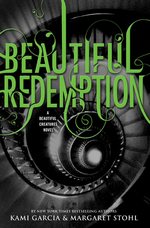
Beautiful RedemptionBeautiful Redemption

by Kami Garcia and Margaret Stohl

Paperback, 451 pg.
Penguin Books, 2012
Read: November 19 – 20, 2013

On the one hand, this was not at all like the rest of the series — and yet it was a very fitting conclusion. Garcia and Stohl wrapped up everything that needed wrapped up, answered every lingering question (not always as I expected), and generally, did so in an emotionally satisfying way. I wouldn’t have thought that this book would lead to a spin-off series, but it fits.

If you’re into Paranormal YA, this was a very satisfying conclusion, and probably the best of that genre I’ve read.

4 Stars

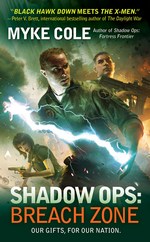
Breach ZoneBreach Zone

by Myke Cole

eBook, 384 pg.
Ace, 2014
Read: January 31 – February 04, 2014

I really, really liked all of Myke Cole’s Shadow Ops series — a gritty, believable mix of Contemporary Military and Fantasy, and yet, I’ve never reviewed one of his books. Don’t ask me why.

This, the conclusion to the trilogy, is just outstanding. You know how at the end of (pretty much) every fantasy novel, there’s this big, epic battle that takes up most of the last ¼ – ⅓ of the novel? That’s pretty much this entire book. Okay, not really — there’s plenty of backstory, character development and wrapping up the trilogy. But while reading, it sure felt like it was an epic fantasy battle on the streets and in the waters of New York. Somewhere in there, Cole looks gain at questions of patriotism, duty, ethics and morality — and how people of integrity can try to harmonize them all (and, more often, how those with integrity can’t harmonize them all). Seriously, awesome stuff.
4 Stars

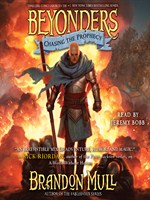
Chasing the ProphecyChasing the Prophecy

by Brandon Mull

Hardcover, 512 pg.
Aladdi, 2013
Read: December 2 – 5, 2013

Wow — Mull concluded his Beyonder’s trilogy in a fantastic fashion. Given the target audience, I couldn’t believe how many deaths there were in this book. But, not in a gory or exploitative way. Just a huge body count. But, the core of this book remained the same: these two Beyonders, Rachel and Jason, risking everything for the sake of Lyrian. There’s sacrifice, honor, loyalty, and courage — all the necessary elements of a tale full of heroes — natives and Beyonders, warriors and children, those with many lives and those with only one to lose. Which is not to say it’s not fun — there’s a lot of fun to be had by the characters and the readers. Great way to go out.
4 Stars

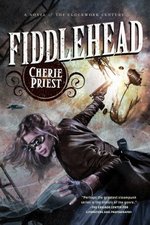
FiddleheadFiddlehead

by Cherie Priest

Paperback, 368 pg.
Tom Doherty Associates, 2013
Read: November 12 – 14, 2013

Nice looking book — love the cover, the layout and the graphics are great. I miss the brown ink — what gives, Tor? Sure, the content is the important thing, it’s just nice when the package it’s wrapped in is nice to look at. Speaking of content — this (like the rest of this group) is a fitting — and thrilling — conclusion to the series. Lincoln (wheelchair-bound following the unsuccessful assassination attempt at Ford’s Theater) and President Grant working together near the end of the Civil War to protect a freeman scientist who built an early computer — the eponymous Fiddlehead. Fiddlehead is the best chance to end the War without making everything worse. The presidents, with the assistance of Pinkerton agent Maria Boyd and intelligence from — well, everywhere else this series has focused — in order to begin to deal with the Rotters. I think it’s possible that Boyd is my favorite character in the series — in the Top 3, anyway.

I just didn’t want this series to end, I understand it needed to, but man…just didn’t want that.

4 1/2 Stars

The Best Novels I Read in 2014

I somehow failed at this exercise last year, but I managed to pull it off for 2014. Phew, starting the year off with one in the Win column! Before we get to The Best of, if you’re really curious, here’s a list of every book I read in 2014.

While compiling the best, I started with what I’d rated 5 stars — just 11 novels. I could take just the best 10 of those — piece of cake, right? Wrong. There were titles I expected to see there that weren’t, and a couple that I was surprised to see listed. So I looked at the 4 and 4½ books — and had a similar reaction.

Now, I stand by my initial ratings — for honesty’s sake as much as laziness. But I did put some of my lower rated books in the best, knocking some 5-star books out. They might have been impressive workds, doing everything I wanted — but some of these others stuck with me in ways the 5’s didn’t — emotional impact, remembering details/stories in more vivid detail, that sort of thing.

Eh, it’s all subjective anyway, so why not? I did try to account for recency bias in this — and pretty sure I succeeded, but I may owe an apology or two.

Later today, I’ll post the Honorable Mentions list and the Worst of List — as well as what I’m looking forward to most in 2015. The Day of Lists, apparently. With one exception, I limited these lists to things I hadn’t read before (it shows up in the Honorable Mention post). Enough jibber-jabber, on to the Best Novels I read in 2014:

(in alphabetical order)

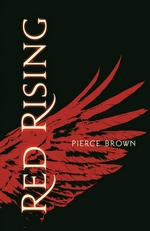
Red Rising (Red Rising Trilogy, #1)Red Rising

by Pierce Brown
My Review
This was exciting, compelling, devastating, thrilling, and occasionally revolting. I can’t tell you the number of people I’ve recommended this one to this year.
5 Stars

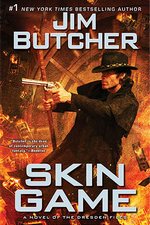
Skin Game (The Dresden Files, #15)Skin Game

by Jim Butcher
My Review
It almost feels like a cheat to put this on the list, but I don’t know if any of the books since Changes would’ve made a year end list, so it’s not like Butcher/Dresden owns a spot here. I laughed, I got pretty darn misty a time or two, I’m pretty sure I audibly reacted to a victory also. Best of this series in awhile.
5 Stars

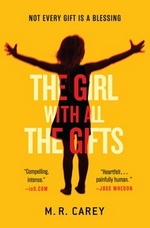
The Girl With All the GiftsThe Girl With All the Gifts

by M.R. Carey
My Review
This probably would’ve gotten 5-star rating from me if it hadn’t had to overcome genre/subject prejudice. Still, freakishly good.
4 1/2 Stars

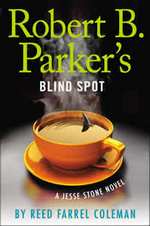
Robert B. Parker's Blind SpotRobert B. Parker’s Blind Spot

by Reed Farrel Coleman
My Review
Coleman knocked this one out of the park, erasing the bad taste that his predecessor had left, and making me look forward to reading this series in a way I hadn’t for years. As good as (better in some ways, worse in others) Parker at his best.
5 Stars

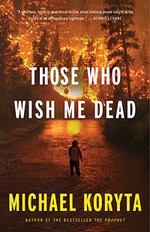
Those Who Wish Me DeadThose Who Wish Me Dead

by Michael Koryta

My Review
Not the best Koryta book I’ve ever read, but something about this one has stuck with me since I finished it. Solid suspense, exciting stuff.
4 Stars

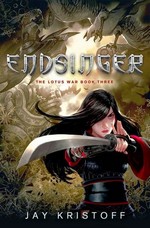
Endsinger (The Lotus War, #3)Endsinger

by Jay Kristoff
My Review
I knew going in that this was going to be a. well-written, b. brutal and c. a good conclusion to the series (well, I expected that last one, expected tinged with hope.). It didn’t let me down. I admit, I shed a tear or two, felt like I got punched in the gut a couple of times and didn’t breathe as often as I should’ve while reading. Such a great series.
5 Stars

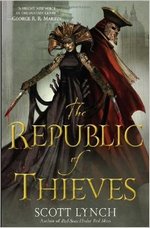
The Republic of ThievesThe Republic of Thieves

by Scott Lynch
My Review is forthcoming
Can’t believe I haven’t finished this review yet — it’s 80% done, I just can’t figure out how to tie the paragraphs together in a way to make it coherent and (I hope) interesting. A lot of this book is a prequel to The Lies of Locke Lamora and yet there was genuine suspense about those parts. Lynch had a big challenge introducing us to a character here that had achieved near-mythic status, and she ended up living up to expectations. Just a gem of a book.
5 Stars

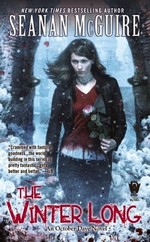
The Winter LongThe Winter Long

by Seanan McGuire
My Review is forthcoming
Again, I’m not sure how I haven’t finished this review yet. McGuire takes a lot of what Toby’s “known” since we met her (all of which is what we’ve “known,” too) and turns it upside down and shakes the truth out. Every other book in the series has been affected by these revelations — which is just so cool. There’s also some nice warm fuzzies in this book, which isn’t that typical for the series. McGuire’s outdone herself.
5 Stars

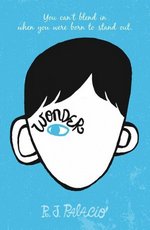
WonderWonder

by R. J. Palacio
My Review
Heart-breaking, inspiring, saved from being cliché by the interesting narrative choices Palacio made. Yeah, it’s After School Special-y. So what? Really well done. I have no shame saying this kids’ book made me tear up (even thinking about it know, I’m getting bit misty-eyed).
5 Stars

The MartianThe Martian

by Andy Weir

My Review
Very science-y (but you don’t have to understand it to enjoy the book); very exciting; very, very funny. Only book I’ve recommended to more people than Red Rising — I think I’ve made everyone over 12 in my house read it (to universal acclaim). Not sure why I haven’t made my 12-year old, yet.
5 Stars

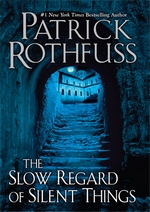
The Slow Regard of Silent Things by Patrick Rothfuss

The Slow Regard of Silent Things (Tales from Temerant)The Slow Regard of Silent Things

by Patrick Rothfuss

Hardcover, 159 pg.
DAW Books, 2014
Read: October 30 – 31, 2014You know what? I’ll be honest here. It’s been so long since I’ve read The Wise Man’s Fear that I’ve forgotten everyone’s name except Kvothe and Bast (although I frequently think Bash). So when I heard that this little book would be focusing on Auri, I thought Denna instead. A couple pages in I knew I was wrong, so I took a quick trip to http://kingkiller.wikia.com/ and got my names straight. Finally having the right character associated with the name, I was probably more excited than ever about this book, more time with the mysterious and strange Auri? Yes, please.

There’s no real plot-line, no story — it’s more of a slice-of-life kind of thing. How does Auri spend a week — in what seems a representative, yet atypical, sample. It’s truly rewarding to see how Auri’s mind works — and to get an inkling of an idea how she fits in (or, at least, fit in) to The University.

The voice isn’t that of Kvothe, it’s nothing like Kvothe’s voice — which is a huge relief for many who wondered if Rothfuss could sound any other way. No, it’s just how Auri should sound. He (not at all surprisingly) captured her essence so well. For someone we know so little about, it’s astounding to me how often I read a line or paragraph or whatever and said, “Yes, this is her exactly.”

It’s tough for me to know how to say anything about this (in case you hadn’t noticed), so let me just stop trying: The Slow Regard of Silent Things is a nice read. A light, sad, whimsical read — with bit of darkness in the background (it only shows up in the vaguest sense). Just a pleasure.

I don’t know if Rothfuss has more things like this planned, or if the next things we’ll see out of him is the end of the Kingkiller Chronicles. While hoping for the latter, I’ll take either after reading this.

—–

4 1/2 Stars

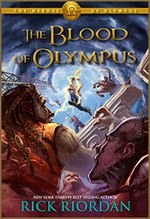
The Blood of Olympus by Rick Riordan

The Blood of Olympus (The Heroes of Olympus, #5)The Blood of Olympus

by Rick Riordan

Hardcover, 516 pg.
Disney-Hyperion, 2014
Read: October 25 – 28, 2014
Well, after ten novels, it’s time to say good-bye to Percy, Annabeth, Grover, and the other residents of Camp Half-Blood — not to mention their new-found allies and friends (when they’re not trying to wipe them out) from Camp Jupiter. But first they have to stop Gaea and her army of giants from wiping out the gods, humanity, and all life as we know it.

Just another day for these demi-gods, really.

As is the norm for Riordan’s books, our heroes are faced with a series of tasks which build up to a major confrontation — this time, a couple of them. It’s amusing as usual to see these kids outwit various minor gods, titans, etc. Good teacher that he is, Riordan gives his readers plenty of education about the Greek and Roman pantheons under the thin disguise of plot development.

The big epic battles that he’s been building for since the beginning of this series — well, they were epic. They were tension filled. And still managed to be funny. And will likely be read with breaths caught, and lumps in throats. Possibly the funniest visual in Riordan’s works appears in the midst of one of these battles, and for a second I was torn between enjoying it and turning the page to find out what happened next.

My one quibble was that the resolution to the Gaea story was a little too easy, a little too quick after all this build up. Still, the way he wrapped up the other story lines and conflicts was sufficient, so I was able to move past it easily. Riordan continues dabbling in themes I’d prefer not to see in MG books, but I know I’m in the minority on that.

At the end of the day, especially at this point in these series, it’s the characters that readers care about. I read this ahead of my son (who started these back when there were only three in the original series, and is now a good deal older than the target audience) and made a joke about something bad happening to Grover — and the glare he gave me probably took a year off my life. It’d that kind of dedication that Riordan instills in his fans. As such, there’s plenty of development and resolution given to these characters — Riordan doesn’t spell out their futures the way that Rowling did at the end of her series, but he gives us enough to be able to say good-bye.

Riordan does right by his characters — Reyna, Jason, and Frank particularly. Annabeth and Piper shine like neither has before. And Leo Valdez is even more of a star than he was before (if I’m going to talk about my son’s soft spot for Grover, I’d better be honest about my Leo-centric focus). I’m not saying they all survive, or are otherwise unscathed, but Riordan treats his characters with respect and keeps his readers turning the pages.

It’ll be odd not getting a new adventure with these characters next year, but I’m looking forward to seeing what Riordan does with the Norse pantheon (and learning about them, too).

—–

4 Stars

A Less Happy Anniversary – Rex Stout (December 1, 1886 – October 27, 1975)

Don’t worry, this is not going to become the Rex Stout/Nero Wolfe Almanac. But the Rex Stout Facebook page just posted something about this being the 39th anniversary of Rex Stout’s death at the age of 88. I was barely reading at the time — certainly not murder mysteries — so the event meant practically nothing to me. I certainly couldn’t have known then that he’d make a bigger impact on me than just about any other writer.

He’d have led a fascinating life if he’d never started writing novels. What he was able to do because he started writing — particularly writing the Nero Wolfe/Archie Goodwin series — is beyond the hopes of most people. Yeah, a lot of what he labored for politically would be the sort of thing that I’d be opposed to (but not all of it). Nevertheless, he showed the kind of civic activity that’s admirable.

As I write this, John McAleer’s 600+ page Rex Stout: A Biography, is literally an arm’s reach from me. I’m going to resist the urge to pull it off the shelf and start relating some of my favorite bits. Instead, I’ll just point you to this pdf version of the obituary The New York Times ran on the front page the day after he died.

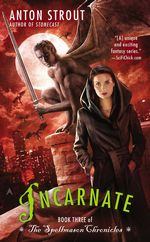
Incarnate by Anton Strout

Incarnate (The Spellmason Chronicles, #3)Incarnate

by Anton Strout

Mass Market Paperback, 320 pg.
Ace, 2014
Read: October 11 – 15, 2014
And here we are at the end of The Spellmason Chronicles (following Alchemystic and Stonecast). So the big question for me going into this (aside from how would Lexis and Stanis clean up that mess from Stonecast?) was: could Strout stick the landing — his other series was just canceled, leaving things open (and I’m still curious about it), this was a planned conclusion, so how’d he manage it? I’m not at all surprised to say, pretty well.

First off, Strout really expands his world here — there’s a lot more magic, magic users and the like than he’d shown before (it was there before, but we hadn’t seen it as much). There’s some new characters I’d like to spend more time with — Fletcher seems really interesting, and the NYPD detectives Maron and Rowland need to run into Simon Canderous and Connor Christos.

Lexi’s a lot more confident in her abilities — which have grown since we saw her last — and driven in a very Peter Parker-y way. She’s a lot more than the would-be artist we meant a couple of books ago. Similarly, her pals Rory and Marshall have grown a good deal — I like the development of them both. Marshall’s is on the one hand surprising (as Lexi’s and Rory’s reactions attest), but on the other is a lot more believable than Rory’s. But with Rory, her continued growth into Lexi’s go-to fighter is pretty fun, and as long as we’re buying the whole Spellmason thing, we might as well buy into Rory the super-hero.

Stanis has his hands full trying to track down stray grotesques like himself, help them understand what’s going on with them and give them a place of safety and refuge — particularly as the threat of a group of grotesques who are out to use their strength, abilities and invulnerabilities against humanity. The more we learn about the leader of the other group, the worse it gets. I don’t want to get into spoilers here, but the Big Bad in Incarnate here is probably the worst villain that Strout’s come up with yet.

Throw in interference from the magic community (who aren’t happy at all that muggles are seeing flying statues in the Big Apple), notice of — and pursuit by — the NYPD, and Lexi and her gang have more than their hands full. Which makes for a good time for the readers.

That said, Strout stumbles a couple times with this. In the opening chapters, the dialogue is a little stilted, a little awkward. Which is really unusual — this is typically Strout’s strong point. But to me, a lot of the dialogue was very thinly veiled exposition. Not quite as bad as, “Hey Rory, my blue-haired best friend since childhood, dance student and resident ass-kicker, could you please pass me my great-great-great-grandfather’s spell book, the one I just inherited a couple of months ago when I started manifesting the abilities of a Spellmason?” But it felt close. By chapter 4 or 5, that mostly disappears, and if not for the notes I’d taken I’d probably have forgotten it.

There was a lot more blood than I expected here — not that this was really gory at all, and all of the nasty stuff happened off-screen (if you will), and our heroes either came across it after the fact or in photographs. So there’s a lot of blood and some dismemberment — but even the more squeamish readers should have no problem with it.

And, like Stonecast, this is a little too short. I could’ve used more Rory and Marshall (together or on their own). We hit the big “Boss Battle” a bit abruptly, I thought. Also, the last chapter is rushed. It felt like one of the alternate endings to Wayne’s World (there’s a relevant pop culture reference, for ya) — a series of conclusions for each character one after the other, bam, bam, bam. Given everything he tried to accomplish in those last few pages, the importance and scope involved, I just think it could’ve used a bit more breathing room.

I realize my negatives are longer than my positives — but that’s because I can talk about them with a bit more detail than all the cool stuff that happens, which pretty much involves spoilers. The good far outweighs the nits I may want to pick. All things considered, it’s a solid conclusion to a pretty good series. Good character development throughout, leaving most of the characters in places that will please and satisfy fans (I, honestly, would’ve preferred something a little less happy and a little more incarceration-y for Caleb). I don’t know if Strout has plans in this direction, but he leaves things in a place that he could come back and tell more stories in this world, and with these characters with no problem. Or he could leave them alone with no problem. Which is a nice place to leave a series.

Whatever Strout has planned next, I’m looking forward to it.

—–

4 Stars

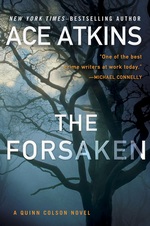
The Forsaken by Ace Atkins

How did I get so far behind that I haven’t written anything on The Forsaken yet? Ugh. When I get behind, I get behind.

—–

The Forsaken (Quinn Colson, #4)The Forsaken

by Ace Atkins
Series: Quinn Colson, #4
</br
Hardcover, 384 pg.
Putnam Adult, 2014
July 29 – 30, 2014

Atkins is at the point now where these Quinn Colson books seem automatic. Don’t mistake me — these are well-crafted, carefully plotted, richly detailed — Atkins’ labor is more than evident. But there’s something inevitable about the result of that effort. You don’t even have to wonder what you’re going to get anymore. If it’s Quinn Colson, it’s going to be good.

This also tends to make it hard to review these books, but I’ll give it a shot.

This time out Colson and Virgil are asked to investigate a cold case from a year or two before Colson was born, and when his less than ethical Uncle was Sheriff. Two teen girls walking home from Fourth of July festivities in Jericho were raped and one was murdered. Two days later, a black man, bearing no resemblance whatsoever to the perpetrator was lynched for the crime. Decades later, one father’s guilt and the mature strength of the survivor ask the now honest (at least when it comes to his job) Sheriff to find the man truly responsible. To say that this makes anyone involved unpopular in Jericho would be an understatement of the first degree.

Which is a shame, because right now, both Deputy and Sherriff could use some popularity. Colson’s feud with Johnny Stagg is getting hotter, a new election is on the horizon, and Stagg’s framing of Virgil for murder is looking stronger and stronger every day. On the other hand, one of the few men in this world that Stagg fears is about to be paroled and is likely to return to Jericho and rekindle their rivalry. Maybe Stagg could use a determined and honorable man in office after all.

Surrounding this is the town and people of Jericho, and their recovery from the recent devastating tornado. Colson’s sister, Caddy, has really seemed to find herself in her leadership in this area. It’s hard to recognize the woman from the first two books in what we see now. Even Colson’s having to admit that there might be something to his sister’s current state of sobriety and responsibility. Their father’s name came up in the course of his investigation, and for the first time in a very long while, Quinn Colson’s being forced to think about the man who abandoned his mother, sister and himself so long ago. Naturally, this is where the real heart of the novel is — the rest of it is merely the life around Quinn, this is Quinn’s inner life, his identity.

Not only are all of these strings in one way or another being woven together now, we begin to see that there might be ways in which they were tied together before and around that fateful Independence Day.

We don’t get a lot of resolution and closure to things in this novel — not unlike life in that regard, but we get to see some trajectories on most fronts, and that’s good enough. Character, setting, story, mood — all of it is just right for this story and this series. Atkins may be getting attention and sales from his Spenser novels, but his strength is here with Colson and the rest.

—–

4 Stars

Hounded by David Rosenfelt

HoundedHounded

by David Rosenfelt
Series: Andy Carpenter, #12

Hardcover, 320 pages
Published July 22nd 2014 by Minotaur Books
Read: August 22 – 23, 2014

First things first: is this not the cutest cover image ever?

Secondly, I’m not a Today watcher, but my wife is when she’s home sick from work. This mini-rant from Andy was exactly what I’ve been thinking.

I am a creature of habit, and by this time I am always in the den, watching the CBS Morning News. I used to watch the Today Show, until they came up with something called “The Orange Room.” Basically, they go there to tell us what people are tweeting to the Today Show Orange Room. People who would take the time to tweet to the Today Show Orange Room are among the people in the world whose opinions interest me least, so I stopped watching it.*

On to the book itself, which is what I’m supposed to be talking about —

By this time it’s pretty much assumed that Andy will be taking in a dog for the duration of whatever case he takes up (after being forced/tricked into it by this point), and he does so this time — a six year-old Basset Hound named Sebastian. However, this one comes with an accessory Andy’s not used to — an eight year old boy named Ricky.

You see, Andy’s friend Pete Collins was pretty good friends with Ricky’s dad, Danny Diza, and an Uncle-figure to Ricky. And Ricky’s was just murdered, so until the system is able to place Ricky in a permanent home, Pete asks Laurie and Andy to take him in. Why doesn’t Pete do that? Well, he’s going to be arrested for Danny’s murder. Never mind that Pete Collins is about the best that the local Police Department has. Thankfully, he does have super-defense attorney as his best friend.

The number of people in Andy’s social circle who haven’t charged with murder is getting pretty slim at this point. He’s either going to have to make other friends, or do some marketing. Hate to have to see Andy defend Marcus.

Ricky’s presence brings out a side in Laurie we had heretofore not seen, but should’ve known were there. Similar sides in Edna (of all people) and Marcus (!) are brought out as well. Very fun to see the latter two, and heartwarming to see the former. The Ricky-factor alone elevates this particular Carpenter novel.

This case involves a conspiracy, as is almost always the case lately. But this time, it’s on a smaller scale — no worldwide terrorist networks or anything. Just one murder leading to a few others that are trying to be kept quiet by some mysterious and nefarious people. It’s definitely in Andy Carpenter’s wheelhouse, and just the thing his readers are looking for.

Here’s the thing that bugs me, and is a minor spoiler — very minor since I’m describing something that didn’t happen: At no point in time did Andy or Laurie — or some psychologist/counselor they hire — talk to Ricky about the events of the night his father was killed. He was upstairs when it happened. I’m not saying it wouldn’t have been tough, it likely wouldn’t have given Andy much to work with in the defense (I know that because I read Rosenfelt’s narration, Andy didn’t), but still, you’ve got to do it to save Pete’s neck, right?

Other than that, the only beef I have is that I talked myself out of the solution at one point. I was pretty annoyed with myself when Andy figured it out.

Despite the ongoing drought of song-talking between Andy and Sam, this is one of the better entries in the series, and was a lot of fun to read. It featured the typical courtroom antics, banter between Andy and the gang, adoration of Tara, and so on. Not to mention the laugh-out-loudest Marcus joke ever, some welcome character arcs developments, and the most “awww”-inducing closing paragraph that I’ve read in ages.

—–

* To be fair, my wife thinks about as much of The Orange Room as Andy and I do, she just likes the rest of the show’s format.

—–

4 Stars

Page 28 of 36

Powered by WordPress & Theme by Anders Norén