Category: Authors Page 82 of 123

Pub Day Repost: The Operator by Kim Harrison

The OperatorThe Operator

by Kim Harrison
Series: The Peri Reed Chronicles, #2
ARC, 468 pg.
Pocket Book, 2016
Read: October 17 – 20, 2016

I loved Peri Reed’s debut in The Drafter last year — it was one of my 10 favorites of 2015, so to say I was eager to read this is somewhat of an understatement. Sure, I was a little apprehensive, too — could Harrison pull it off again? Thankfully, yes she could. You may be able to jump in to the series with this point, but I really wouldn’t recommend it at all. Go read The Drafter.

The Operator picks up with Peri in a much better place (mentally, at least) than we left her in — she’s living out of the business, she runs a coffee shop that’s marketed towards the elite of Detroit — the moneyed, those wanting the most secure networks while sipping their morning caffeine fix, and those willing to spend an exorbitant amount on coffee.

She’s working really hard to convince herself that this is the life she wants when her past catches up with her. And before she knows it, she’s got the remnants of Opti trying to bring her back in — and the government’s version of a “clean” Opti doing their best to recruit her (and honestly, they’re taking more of a “stick” approach than a “carrot” approach).

Faces from her past — those she trusts, but not enough; those she trusts, but doesn’t want to; and those she’ll never trust — compete (on both sides) with people she doesn’t know and doesn’t trust. And, as always, Peri doesn’t even know if she can trust herself — but she’s very clear on what she wants: out. Out of the life, out of the spy business, out of everything that defines her. To get there, she’s going to have to rely on everything that she’s trying to get away from, but that’s a price she’s willing to pay. It may be Quixotic, but it’s all she’s got (other than her cat).

It is difficult to talk about the plot without giving too much away, so that’s as specific as I can get.

If there was a problem with The Drafter was that it was sometimes as confusing for the reader as it was for Peri to know what was going on (I’m not saying, it was poorly written — but as things were filtered through Peri’s perception, which were pretty in flux . . .). In The Operator, we don’t have that problem — Peri’s sometimes not sure what she’s doing, or that she’s doing it for the reasons she thinks that she is — but she’s very clear about what’s going on. Actually, sometimes, I think she’s the only one who sees the whole board and understands what’s going on. Which makes everything much easier for the reader to follow.

She had a clear objective, clear obstacles to overcome, and the gumption and skills to get the jobs done. The only question is: can she accomplish all she’s set out to accomplish before she’s killed or has her mind wiped?

Characters — again, this is tough. I’d like to say X at first seemed like a good antagonist — if not enemy — but then Y happens and X does Z and reveals that they can be a trusted ally and possible friend. But if I’m going to do that, I might as well reveal half the plot. There are some great new character, I’ll say instead, and every one that Peri ends the book trusting/befriending, I’d like to spend a lot more time with. A couple of decent new enemies/antagonists — I think we get enough of them. The people who survived The Drafter and made it to these pages, we learn more about them and pretty much cement our appraisals of from last time out. As always, Harrison gets almost every character note right, I think I’d have an easier time noting where she fumbles on that front.

If for whatever (very wrong) reason you ignore the story, this book is worth reading just for on a tiny little details that Harrison has filled this with to make a slightly futuristic future in this world. You can recognize it as our world, but it’s future-enough to be a totally new world so you don’t recognize everything. I’m not sure those sentences make sense, but you probably get my gist. I could do a post just on the future tech, culture, economics, etc. I’m not going to do that — just not enough time on my hands — but I could, because the world Harrison has surrounded Peri with is just that developed and detailed. And almost none of the details like that have any bearing on the plot beyond grounding the characters. I love that.

This may not be as well executed as its predecessor, but Harrison spent so much of The Drafter setting up the world while telling the story — where this time, she just gets to play in the world and tell the story. I think I enjoyed this one more, while I didn’t admire it as much. I have a few ideas what Peri and the rest will be up to in The Agent, but I’m more than prepared for Harrison to do something better than those. All I know for sure is that it’s too long before it’s released. The Operator is a slick, sleek, SF adventure novel that’s sure to satisfy on several levels.

Disclaimer: I received an ARC of this book from Pocket Books, and I thank them very much.

—–

4 1/2 Stars

‏Eleanor & Park (Audiobook) by Rainbow Rowell, Rebecca Lowman, Sunil Malhotra

Eleanor & ParkEleanor & Park

by Rainbow Rowell, Rebecca Lowman & Sunil Malhotra (Narrators)

Unabridged Audiobook, 8 hrs., 57 min.
Listening Library (Audio), 2013
Read: May 31 – June 1, 2016


Okay, so yesterday I talked about a book that was hurt by the audio narration — this is one that’s helped by it (but not much, because it really doesn’t need much). I read this back when it came out, and gave it 4 Stars — which boggles my mind, was I a harsher grader back then? I remembered liking it more than that, though. Anyway, this audiobook is the perfect example of what the medium can be.

It perfectly captured the flavor, the emotion and the detail of the original. Now, it didn’t become all about the performance, the narrators brought the words to life, but not at the expense of the text.

Lowman and Malhotra were spectacular — they were Eleanore and Park. You fall for them while the characters were falling for each other, and when they expressed emotion, you certainly felt it. Well, I don’t know about “you,” but definitely me.

I’m really not sure what else I can say. This is a perfect story about first love, how it defines who you are in a way you didn’t expect — how it reveals the best of you and improves the worst of you. Using these two social misfits to tell this story grounds it in a way that the Prom King and Queen couldn’t — I just loved it. It’s probably the best thing Rowell’s done, and it’s one of the best audiobooks I’ve ever heard.

—–

5 Stars

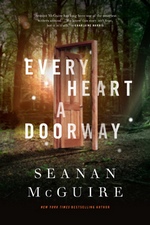
Every Heart a Doorway (Audiobook) by Seanan McGuire, Cynthia Hopkins

Every Heart a Doorway (Audiobook) Every Heart a Doorway

by Seanan McGuire, Cynthia Hopkins (Narrator)
Series: Wayward Children, #1

Unabridged Audiobook, 4 hrs., 44 min.
2016, Macmillan Audio

Read: November 17 – 18, 2016


When I get to considering my favorites of 2016, there’s no way that Every Heart a Doorway doesn’t make the Top 10 (see my initial post), so when I saw it available on the library’s audiobook site when I needed something to end the week with, I grabbed it, certain I was going to have a lot of fun.

Wow, was that a mistake. The story was just as good, the characters as rich, the world(s) just as fascinating — the writing, the wordplay, the language . . . it was just as good as I remembered. But man, the narration just didn’t work for me at all. The book is creepy, funny, spooky, beautiful — and remains so despite the narration. The jokes don’t land, most of the characters seem to lack affect. Actually, I have a list of problems, but I don’t want to get nasty, so I’ll just leave it at that.

I did pick up a bit of a William Ernest Henley’s “Invictus”-vibe towards the end this time that I hadn’t picked up the first time — but I still like it, regardless. I noticed more details, and appreciated the examination of the ideas of what’s home and what’s real maybe a little more this time, so it wasn’t a wasted effort. But it was a disappointing one.

I do want to make it clear that I don’t think Hopkins couldn’t turn in a good performance — I don’t have enough information to say that. I do think that she was wrong for this project, didn’t understand it, or had an off day. I’m not sure. But a novella as exceptionally good as Every Heart a Doorway deserves the best, and this wasn’t it. So for this audiobook (not the text version), I’ve gotta go with 4 stars (and even that feels a little generous).

—–

4 Stars

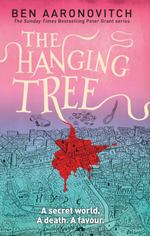
The Hanging Tree by Ben Aaronovitch

I really hadn’t intended to make this a Rivers of London day, but I had notes and partial drafts for those other two, so I figured I might as well as a way to lead up to this. Which, sadly, is going up later than I wanted, but Dadding before blogging, right?

The Hanging TreeThe Hanging Tree

by Ben Aaronovitch
Series: The Rivers of London, #6

eARC, 336 pg.
DAW, 207

Read: November 11 – 15, 2016

I lost track of how many times a certain retailer let me know that my pre-order for this had been rescheduled, but now a little more than 2 years after The Rivers of London most recently flowed through these books, The Hanging Tree is out (in parts of the world, anyway). I’m firmly in the camp of those willing to let authors take their time to get the book right, but I’m just as firmly in the camp wanting authors of my favorite series to hurry up. Thankfully, whatever delayed this publication gave Aaronovitch the time he needed to deliver his best yet.

Peter’s pushed into investigating a drug-related death, which soon shows itself to actually need a man of his particular skills when one of the parties involved (perhaps very involved) is the daughter of Lady Tyburn herself. Mostly anonymous teens up to illegal things, an overbearing mother to a suspect/witness, and the natural teenage disinclination to telling the police anything and you’ve got yourself a mess — particularly when the overbearing mother isn’t your biggest fan, and is a deity of sorts.

Poor Peter.

Along the way, Peter and Nightingale find the trail of a lost Newton masterpiece, a couple of interesting allies, and the return of some familiar, but not recently seen, foes. Some of what happens with returning adversaries will surprise, please, and frustrate long-time readers.

For series like this, more important than the plot are the characters — and Aaronovitch did everything right on this front. A few notes on this Peter’s more confident — professionally and personally. He’s coming along pretty well with his magic — yay! At the same time, you can see the way that he’s bringing change to the Folly little mannerisms and activities with Nightingale and Molly that you know they weren’t going to be up to until Peter moved in. I liked how Bev was used — even if she wasn’t around as much as usual — and the way their relationship is developing; her sister Lady Tyburn is probably used better here than ever before. There’s a new assistant for Dr. Walid, Dr. Jennifer Vaughan — we don’t get a lot of her, but there’s promise (and I like the fact that this universe is expanding). Lastly, I need to talk about Guleed — I know she’s been around awhile, but I didn’t really click with her until this book (as much as I enjoyed her in Body Work) — I like the way she works with Peter, the flavor she brings to things — I hope we see a lot more of her.

Oh yeah, I almost forgot, there’s a brief appearance by an author of note early on in the book — I’d love for him to show up again in some context where Peter doesn’t have to be so diplomatic with him. I chuckled a lot, and would love to hear Aaronovitch talk about this character and any real-life models he drew upon.

Not only do we get the typical Aaronovich-level stories and action, we get a big expansion in the number, types, and nationalities of magic users in this book. Not only are there the official practitioners of magic that The Folly is aware of, there are those they’re not tracking (but probably should start). Just this shift alone in the universe makes this book a winner — adding it to the rest is just frosting.

I’m really glad, incidentally, that I recently listened to the first audiobook in the series — there’s some significant call-backs to it throughout this book. I’d probably have been okay relying on memory, but the connections worked better for me with everything fresh in my head. Ditto for the number of references to Body Work – I’d have been fine not understanding the references made to it, they’re not integral to anything, but it was fun knowing what Peter was talking about.

This took me too long to read — which isn’t Aaronovitch’s fault, it’s just been one of those weeks, every time I started to really get into this book, I was interrupted by something — and it drove me crazy. Do what you can — kill the phone, lock the door, grab some snacks and a beverage of your choice and settle in for Aaronovich’s best yet, you won’t want to put it down. I can’t say enough good things about this.

Disclaimer: I received this eARC from DAW via NetGalley in exchange for this post — thanks to both for this.

—–

4 1/2 Stars

Midnight Riot (Audiobook) by Ben Aaronovitch, Kobna Holdbrook-Smith

Midnight Riot (Audiobook) Midnight Riot

by Ben Aaronovitch, Kobna Holdbrook-Smith (Narrator)
Series: The Rivers of London, #1

Unabridged Audiobook, 9 hrs., 57 min.
Tantor Media, 2012
Read: October 11 – 14, 2016


The best part about listening to this was being reminded just how good this novel was — sure, I remember liking it a lot (if for no other reason than I’ve read five more plus a collection of comics), but I didn’t remember it being this good.

Briefly — in this we’re introduced to a probationary constable named Peter Grant who’s approached by an odd witness to an odder (and disturbing) murder. What makes the witness odd? Well, he’s been dead for a couple of centuries. Soon thereafter, Peter’s meets a Chief Inspector who happens to be the last wizard in England. Peter’s transferred to his unit (doubling the size), taken on as an apprentice and thrust into a type of policing he wouldn’t have believed existed a week ago.

The investigation into this murder turns into an investigation for several murders — and a few other assorted crimes. Which, of course, involves diving into the history of London and brokering peace between competing river deities. That old yarn. It’s a great mix of magic and police work, basic Latin and advanced bureaucracy.

Holdbrook-Smith did a fine job with the narration, very engaging, often compelling — capturing the feel of the novel in just the way that everyone wants in an audiobook. I’d be more than happy to hear more from him.

It’s dark, it’s funny, it’s pretty complex — and, in retrospect, — does a much better job laying the foundation for the series than I’d remembered. A good amount of wonder and action combined.

—–

4 Stars

The Last Star by Rick Yancey

The Last StarThe Last Star

by Rick Yancey
Series: The 5th Wave, #3

Hardcover, 338 pg.
G.P. Putnam’s Sons Books for Young Readers, 2016

Read: November 3 – 5, 2016

Since the Arrival, I’ve been beset by more cravings than a women pregnant with triplets, and always for things I’ll never taste again. Chocolate ice cream cones. Frozen pizza. Whipped cream in a can. Those cinnamon rolls Mom made every Saturday morning. McDonald’s french fries. Bacon. No, bacon was still a possibility. I would just have to find a hog, slaughter it, butcher it, cure the meat, then fry it up. Thinking about the bacon — the potential of bacon — gives me hope. Not all is lost if bacon isn’t.

Seriously.

And there’s the best that this series can do — when there’s no reason for hope, no reason to keep going — Yancey’s characters find a reason (other than inertia) to keep struggling, to keep walking, to keep surviving, to keep hoping.

Sadly, I pretty much needed that same kind (not extent, kind) of perseverance. I thought The 5th Wave rocked, and I enjoyed The Infinite Sea, but not as much — but the wheels really came off this time. It’s not an Allegiant-level disappointment, but it was closer than anyone should want.

The writing was skillful — I liked a lot of what the book had to say about humanity, enlightenment, and teddy bears (no, really). Yancey nailed the character beats, moments, observations — but he utilized this great writing and surrounded these strong elements with a story that just wasn’t worth telling. Somehow in the end, the whole was <iLless than the sum of its parts (anyone know the German for that?).

I’m going to skip the plot summary because it’s just the next stage in the series, leading up to the final confrontation between the survivors we’re following and Humanity’s foes. That’s really all you need to know — and everyone who’s been reading the series knew that already.

This is the 10th book I’ve read by Yancey, and it’s so clearly the weakest link. I’d still recommend this book for those who’ve read the first two — but on the whole, I’d tell those who hadn’t started the series to skip it. I’m more than ready to give whatever Yancey does next a chance, if for no other reason than to get the taste of this out of my mouth.

—–

3 Stars

The Lost Child of Lychford by Paul Cornell

The Lost Child of LychfordThe Lost Child of Lychford

by Paul Cornell
Series: Witches of Lychford, #2

Kindle Edition, 144 pg.
Tor.com, 2016

Read: November 2 – 3, 2016


It’s been a few months since Reverend Lizzie Blackmore, Judith (the elderly witch), and Autumn (now her apprentice and her employer) fought off the supernaturally corrupt megastore (and probably mundanely corrupt, too, come to think of it) and life has moved on in a relatively normal way. The three have forged some sort of alliance — easy for Autumn and Lizzie, already close, but learning new things about each other; not so easy for Judith to be accepted and to accept them, I don’t think. Autumn’s learning from Judith, while getting some help in her shop (which seems like a small town version of Atticus O’Sullivan’s and Alex Verus’ shops combined). Judith’s got something to do, a way to pass on her knowledge, and Lizzie is super-busy with pre-Christmas activities in the church.

But given everything we learned about Lychford, it’s not terribly surprising that things won’t stay that way, it’s just a question of what kind of other-worldly strangeness will come calling first.

In this case, it’s a ghost — or ghost-like apparition — that came to Lizzie at church. A small child looking frightened and worse for wear, with a simple request of: “No hurting.” Now, our trio can’t all agree on what the apparition is, but they can all get behind the idea of “No hurting.” They just have to figure out if that’s something they can stop — and then they’ll worry about the how. Neither piece of that plan works the way that it’s supposed to, but it seems these three are pretty good at improvising. Autumn, in particular, seems particularly adept at that.

I appreciated the fact that each of these women make one significant mistake (and probably some smaller ones) — two that come from inexperience, one that proves that experience doesn’t equal infallibility. They’re all believable, they do more than just advance the plot, they are honest with the characters and situation. Too often in novels you’re left wondering why a protagonist would be so stupid as to do X — when really it comes down to they have to do X or the really cool Y thing can’t happen at the end. That doesn’t happen here — sure, the attentive reader might be able to see the blunder coming around the corner, but there’s no reason to think that our protagonists should until it’s too late. Because while these three are fictional characters, Cornell imbues them with a genuineness, a substantial-ness that’s fitting for a real person (sadly, not always present with them, however).

Man, I had to use DuckDuckGo a lot to get all the cultural details in these pages — I know next to nothing about Anglican Christmas festivities, and less about British Christmas Pop Music. I’m not sure how much I’ll benefit long-term from this research, but it was interesting. I might have been better off not knowing anything about Greg Lake and his song, though.

If there was such a thing as magic, it wouldn’t look like anything from Harry Potter, Harry Dresden or some other fantasy series starring a Harry. It’d look like this, I wager. Quiet; shadowy; right out in the open, yet somehow unseen. All substance, no flash. Oh, yeah, and creepy — can’t forget creepy and inexplicable. Which is pretty much everything that happened in this book — up to and including most of the things the trio does to prevent things from getting really out of hand. It’s hard to talk about realism in a fantasy novel, but Cornell’s one of those that make you do that.

The Witches of Lychford was thoroughly entertaining and did a great job of establishing this world. This novella took full advantage of that to tell a more compelling story. I don’t think it’s absolutely necessary to read Witches first, but it’d help a lot. “I Believe in Father Christmas,” notwithstanding, I thought The Lost Child of Lychford lived up to its predecessor and left me eager to return to this little village.

—–

4 Stars

The Operator by Kim Harrison

The OperatorThe Operator

by Kim Harrison
Series: The Peri Reed Chronicles, #2

ARC, 468 pg.
Pocket Book, 2016

Read: October 17 – 20, 2016


I loved Peri Reed’s debut in The Drafter last year — it was one of my 10 favorites of 2015, so to say I was eager to read this is somewhat of an understatement. Sure, I was a little apprehensive, too — could Harrison pull it off again? Thankfully, yes she could. You may be able to jump in to the series with this point, but I really wouldn’t recommend it at all. Go read The Drafter.

The Operator picks up with Peri in a much better place (mentally, at least) than we left her in — she’s living out of the business, she runs a coffee shop that’s marketed towards the elite of Detroit — the moneyed, those wanting the most secure networks while sipping their morning caffeine fix, and those willing to spend an exorbitant amount on coffee.

She’s working really hard to convince herself that this is the life she wants when her past catches up with her. And before she knows it, she’s got the remnants of Opti trying to bring her back in — and the government’s version of a “clean” Opti doing their best to recruit her (and honestly, they’re taking more of a “stick” approach than a “carrot” approach).

Faces from her past — those she trusts, but not enough; those she trusts, but doesn’t want to; and those she’ll never trust — compete (on both sides) with people she doesn’t know and doesn’t trust. And, as always, Peri doesn’t even know if she can trust herself — but she’s very clear on what she wants: out. Out of the life, out of the spy business, out of everything that defines her. To get there, she’s going to have to rely on everything that she’s trying to get away from, but that’s a price she’s willing to pay. It may be Quixotic, but it’s all she’s got (other than her cat).

It is difficult to talk about the plot without giving too much away, so that’s as specific as I can get.

If there was a problem with The Drafter was that it was sometimes as confusing for the reader as it was for Peri to know what was going on (I’m not saying, it was poorly written — but as things were filtered through Peri’s perception, which were pretty in flux . . .). In The Operator, we don’t have that problem — Peri’s sometimes not sure what she’s doing, or that she’s doing it for the reasons she thinks that she is — but she’s very clear about what’s going on. Actually, sometimes, I think she’s the only one who sees the whole board and understands what’s going on. Which makes everything much easier for the reader to follow.

She had a clear objective, clear obstacles to overcome, and the gumption and skills to get the jobs done. The only question is: can she accomplish all she’s set out to accomplish before she’s killed or has her mind wiped?

Characters — again, this is tough. I’d like to say X at first seemed like a good antagonist — if not enemy — but then Y happens and X does Z and reveals that they can be a trusted ally and possible friend. But if I’m going to do that, I might as well reveal half the plot. There are some great new character, I’ll say instead, and every one that Peri ends the book trusting/befriending, I’d like to spend a lot more time with. A couple of decent new enemies/antagonists — I think we get enough of them. The people who survived The Drafter and made it to these pages, we learn more about them and pretty much cement our appraisals of from last time out. As always, Harrison gets almost every character note right, I think I’d have an easier time noting where she fumbles on that front.

If for whatever (very wrong) reason you ignore the story, this book is worth reading just for on a tiny little details that Harrison has filled this with to make a slightly futuristic future in this world. You can recognize it as our world, but it’s future-enough to be a totally new world so you don’t recognize everything. I’m not sure those sentences make sense, but you probably get my gist. I could do a post just on the future tech, culture, economics, etc. I’m not going to do that — just not enough time on my hands — but I could, because the world Harrison has surrounded Peri with is just that developed and detailed. And almost none of the details like that have any bearing on the plot beyond grounding the characters. I love that.

This may not be as well executed as its predecessor, but Harrison spent so much of The Drafter setting up the world while telling the story — where this time, she just gets to play in the world and tell the story. I think I enjoyed this one more, while I didn’t admire it as much. I have a few ideas what Peri and the rest will be up to in The Agent, but I’m more than prepared for Harrison to do something better than those. All I know for sure is that it’s too long before it’s released. The Operator is a slick, sleek, SF adventure novel that’s sure to satisfy on several levels.

Disclaimer: I received an ARC of this book from Pocket Books, and I thank them very much.

—–

4 1/2 Stars

Pub Day Repost: Curse on the Land by Faith Hunter

Curse on the LandCurse on the Land

by Faith Hunter
Series: Soulwood, #2eARC, 352 pg.
Roc, 2016
Read: October 13 – 15, 2016

Weeks after the events of Blood of the Earth, newly-minted PsyLED agent Nell Ingram comes back from the training center, “Spook School,” ready to dive into her new role. It seems she comes back just in time for a case that’s right up her alley — strange and magical things are up, and seem to be tied to land. Something big, something powerful and something no one’s really seen before — which sounds a lot like Nell. So instead of doing the grunt work, the Probie work, she’s in the front of this investigation.

The presence of Brother Ephriam in the Soulwood she lives is also still around and doing something that also seems to be involving the tree on her former Church’s compound. She needs to address this, she knows, but the threats to the general public and local wildlife take priority. She also seems reticent to deal with this problem and confront the actions that led to his presence in the wood, so she’s glad for the distraction posed by her job.

For all the regulations and devices that PsyLED brings to the investigation of magical goings-on, I appreciate how often those things fail to do anything to solve the problem. They’re helpful in guiding the agents, in informing their actions, decisions and conclusions — but it’s not the be all and end all. Throughout the novel, there’s this interesting intermingling of magic and technology that’s done in a way I’ve not really seen before (although, I think it’s what Ben Aaronovitch’s Peter Grant wants, but he’s a long way from getting it).

Nell’s continued obsession with foods that cannot be found at a Farmer’s Market and her growing familiarity with pop culture (particularly movies) continue to be fun — they ground the character as well as provide much-needed comic relief.

I think Nell could be the best new character I’ve read this year. She’s not your typical kick-ass heroine, nor is she the (possibly more) typical damaged-yet-kick-ass heroine. She’s a strong woman, determined, and stubborn. Her strength doesn’t come from her magic powers, her job, or anything else. She’s always been strong, but the circumstances of her life have slowly revealed to both herself and those around her, just how strong she is (from what I gather, the stubbornness and determination have been evident all her life). Which is not to say she’s all strength — she’s a nurturer (not just of her plants), she’s caring, and she’s nowhere near invulnerable (physically or emotionally). She’s also pretty clever and as her education moves beyond the solely autodidactic, we’ll see that demonstrated more and more.

While this series (at least so far) is ultimately about Nell, the characters she’s surrounded by shouldn’t be ignored. In Blood of the Earth, Nell’s embraced by her PsyLED team as part of a family, an intact and nurturing alternative to her blood-relatives. It almost seemed like an idealized replacement, but the events of this novel make it clear that it’s nowhere near ideal. Several members of the team are effected by the events here in ways that will not be able to be glossed over — both as a result of their work on the case and from arcs that carry over from the Jane Yellowrock series. The latter, I found particularly satisfying, while the former intrigue me and I’m eager to see how they play out.

We can’t forget Nell’s literal dysfunctional family, either. However strange and foreign they may seem to us (odd that these humans seem less familiar than the nonhumans in the books), the efforts on their part to restore and repair their relationships with Nell — while she does the same — are encouraging and heartwarming. Her brother, in particular, is fast becoming a favorite. Their new openness to the culture around them and the . . . lack of overt hostility and aggression to the magic and magical beings in Nell’s life is great to see, while they retain much of their religious/cultic faith. I hope there are a few bumps along the path, just to make it more realistic, however.

I almost forgot to talk about Hunter’s writing — it’s as great as ever. I think her use of magic — particularly large-scale workings — in these two books works better than it does in the Yellowrock books. Her characters, settings, dialogue, and other writerly demonstrations make this world rich and real. She’s among the best and most consistent in the UF field these days and I’m eager to get my hands on whatever she’s got coming out next.

I left Blood of the Earth wondering how Hunter could make this into a series –and I’m still wondering how this works long-term, there are only so many things you can do to the earth/plants/trees in an area, right? Can Nell function hundreds of miles (or more) from Soulwood? Is she much use in a skirmish between rival Vampire clans or the like? Sure, she was able to do some damage to the creatures in the first book, but at what cost? While I don’t see how it’d work for a full novel (this is where Hunter proves me wrong), it’d good to see Nell acting in a more supportive role on the team — getting coffee, filing reports, etc. — while the weres take down some monsters, or something. I do see how these books function as a series when it comes to the characters, however — it’s just how to keep the stories/cases interesting that I don’t see long-term, but I’m looking forward to Hunter educating me.

Disclaimer: I received this eARC from Roc via NetGalley in exchange for this post — thanks to both for this. And would’ve received it from Let’s Talk! Promotions, too, if I hadn’t already downloaded it. So I guess I should thank them, too.

—–

4 1/2 Stars

Coming Attractions: The Operator by Kim Harrison

The OperatorThe Operator

by Kim Harrison
Series: The Peri Reed Chronicles, #2

All this week, I’ve been planning on posting my thoughts about Kim Harrison’s The Operator, the sequel to The Drafter, right now. But as I sat down to write it, I realized I was just too tired. Sure, I could get something finished, but it wouldn’t be good enough. This is a book that deserves something good.

I loved The Drafter — I’ve been saying for a year now that it’s the best thing she’s written. In many ways, I enjoyed this book more — but I’m not sure it’s as well-executed (still thinking about it). Anyway, I wanted to say a little something about it — The Operator comes out just before Thanksgiving, order it now so you have something to do while your family watches football.

Page 82 of 123

Powered by WordPress & Theme by Anders Norén