Category: Authors Page 94 of 124

Review Catch Up: Walking the Perfect Square; The Drop; and A Bitter Feast

Time for another catch-up post because: A. I should’ve had these taken care of months ago, and B. because I’m having a really hard time writing up Butcher’s The Aeronaut’s Windlass

Walking the Perfect SquareWalking the Perfect Square

by Reed Farrel Coleman
Series: Moe Prager, #1

Hardcover, 264 pg.
Permanent Press, 2002
Read: April 19 – 23, 2014

Moe Prager is waiting to call his daughter on her birthday, but before he can do that he answers a phone call that may lead him to solving an old missing persons case. It’s a case that he investigated twenty years previously, shortly after an injury forced his retirement from the NYPD. We spend most of the novel in the 70’s, with brief looks at Prager’s present, tracing his work on the case.

As a mystery novel, it’s okay. Nothing special, but it kept my attention, kept me guessing, and was entertaining enough. Which is a decent start for a series. By the end, I’d really started to enjoy Prager and wanted to see where he goes from here — either the 70’s or 90’s (although I’m pretty sure the series sticks with the latter).

Stylistically, this was pretty cool. Though published in the early 2000’s, the flashback segments feel like they could’ve been written in the 1970’s/80’s. The present day material felt like it was written in the late 1990’s, and yet they were definitely of a piece. I’m very impressed that he pulled that off.

The last few paragraphs turned this from a decent mystery novel into a really good one — and if my mood had been a bit different at the time, they could’ve earned it a 4-start rating. The ending really does elevate the whole — while it sends you reeling from a serious gut punch.

I really should’ve gotten back to this series, but I didn’t want to color my take on him as he started his tenure with Jesse Stone — but that’s passed now, time to get busy.
3 Stars

The DropThe Drop

by Dennis Lehane

Paperback, Large Print, 229 pg.
HarperLuxe, 2014
Read: September 30 – October 01, 2014

For Lehane, this was light and breezy. Bob Saginowski is a bartender in his cousin Marv’s bar (well, it’s not really Marv’s anymore — the Chechen mafia owns it now, Marv just runs it). Bob’s down-on-his luck, living in his deceased mother’s house, going to her Church, and trying to get by. A couple of days after Christmas, he finds a dog in a trash can. He takes the dog home and finds himself a reason to keep going — it doesn’t hurt that there’s a woman tangentially involved, but he’d be a devoted dog owner regardless. There’s a possibility for romance on the horizon, but there are a few obstacles.

Said Chechen mafia, for one. Marv’s dreams for getting one over on them. A couple of armed robbers. A Boston PD detective that attends the same Masses as Bob. The guy who disposed of the dog and seems to be having second thoughts. And Bob’s own mysterious past — and penance can’t seem to erase it for him.

But if Bob can manage all that, he just might find himself a little slice of happiness.

It’s not a typical Lehane story, but it works. Lines like these help:

Happiness made Marv anxious because he knew it didn’t last. But happiness destroyed was worth wrapping your arms around because it always hugged you back.

and

The traffic had thinned considerably as they drove past Harvard Stadium, first football stadium in the country and yet one more building that seemed to mock Marv, one more place he’d have been laughed out of if he’d ever tried to walk in. That’s what this city did — it placed its history in your face at every turn so you could feel less significant in its shadow.

(the movie based on this novel — adapted by Lehane — ain’t too shabby, either.)
4 Stars

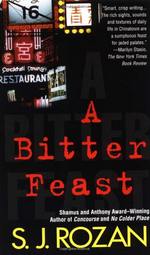
TitleA Bitter Feast

by S. J. Rozan
Series: Lydia Chin & Bill Smith, #5

Hardcover, 309 pg.
Minotaur Books, 1998
Read: December 11 – 13, 2014

Throughout this book — but especially in the first chapter — if you don’t feel the foreign-ness, the other-ness, of Lydia’s Chinatown, you aren’t reading it right. Which doesn’t really make it different from the other books in this series that are from Lydia’s POV, it just seemed particularly strong in this one.

There’s more than a clash of cultures with this case — there’s a clash of generations. Between those who think like transplanted Chinese, and those who think like American Born Chinese. Some restaurant workers are trying to unionize, and some owners (who may or may not have less-legitimate other businesses) aren’t too keen on it. There are some bullets and some bombs involved — which is pretty much where Lydia comes in. If she can identify, once and for all, who is taking this clash and making it violent, it can be stopped (and, well, the other side will probably end up carrying the day).

I’m not really certain that I need a case — or a plot — I could read a short novel-length work of Lydia and Bill just chatting over tea and espresso. Outside of Wolfe and Archie — or maybe early Spenser and Hawk — I can’t think of two characters I enjoy “listening” to more conversing with each other.

Narrative-wise and character-wise there’s nothing particularly interesting here, instead it’s just what you expect from a Lydia Chin book. Good, solid entertainment from a very reliable author.
3 Stars

Indexing: Reflections, Episode 5: Sleeping Beauty by Seanan McGuire

Indexing: ReflectionsIndexing: Reflections, Episode Five: Sleeping Beauty

by Seanan McGuire
Series: Indexing, #2.5

Kindle
47North, 2015
Read: October 7, 2015

Henrietta Marchen was a perfect exemplar of her kind. Her skin was white as snow, and never tanned or freckled; the best she’d ever been able to accomplish was a violent burn that turned her entire body as red as her lips, which were the color of fresh-drawn blood. Once, in the third grade, she had gotten in a fight with another student who insisted on calling her a clown. She had blackened both his eyes, and he had mashed her red lips back against her white teeth, until real blood appeared to make the contrast in her coloration even more glaring. She had smiled, bloody toothed and feral, until he started crying for his mommy, and he’d never called her clown again, and her classmates had stopped looking her in the eye.

Thanks to the events of the last episode, Henry’s not available to narrate this one. Which is frustrating because we readers want to know what’s going on with her, but is ever so cool and rewarding because we get this episode narrated by Sloane instead.

A first-person narrator change can be annoying, no doubt, but sometimes it’s just the breath of fresh air that a work needs (or can find useful). In this case, we get passages like this:

I lifted the apple, turned it to the side without tooth marks, and took a bite. It was firm and crisp and a little too floral for my taste. I’ve never understood the way Snow Whites yearn for apples, but then, they’ve never understood the way I long to kill them all, so I figure it balances out in the end.

Which absolutely makes this change worth it.

So we’re treated to some more of Sloane’s backstory than we’ve gotten before, we learn a bit more about the AFI’s Deputy Director, we get the return of the HR shrink from Episode 1 (we all knew we weren’t done with Ciara). We also see the team through Sloane’s eyes, as well as her unmediated take on Elise and Birdie.

There was nothing not to like about this Episode, it moved the story along well, was entertaining as all get out and shook up the status quo in a way that served the story and characters rather than being change for change’s shake.

If you’re reading this serially, or will read it when the whole is complete, I can assure you, this is going to be a favorite installment.

—–

4 Stars

The Devil Wins by Reed Farrel Coleman

The Devil WinsRobert B. Parker’s The Devil Wins

by Reed Farrel Coleman
Series: Jesse Stone, #14
Hardcover, 342 pg.

G.P. Putnam’s Sons, 2015

Read: September 11, 2015


There’s no good reason for me to have difficulty writing about Coleman’s Jesse Stone, but I twice in a row now, I have. It looks like it’ll take me less than a month to get this up, so that’s something I guess (but it should’ve taken me less than a day!) But man, I love these books!

In this one, on page 3 there was a line I wanted to read to my wife, on page 4 I was grinning. It was so good to be back in Paradise, MA. Chapter 2 served as a a reminder this wasn’t Parker’s Stone, this was Coleman’s. Which is not necessarily better or worse, just different — it’s still the same world, populated with the same people, it’s just told differently. The Devil Wins started strong and stayed that way.

One of the things that distinguished this series from the Spenser series (and later, Randall — which felt like Spenser) was the atmosphere — this was a gray world (so well captured in the movies). Not just morally (and that could be argued, I think), but weather, mood, outlook on life of the characters — economy of the community, even. Later, Parker seemed to pull back on that — either deliberately, or for the same reason that Spenser’s backstory changed. Coleman has returned to the gray, and amped it up a bit, his style brings that into focus. His dialogue might not be as snappy (and it’s not), but it’s thoughtful, as is the narrative and his descriptions. You can almost feel this world as much as see it.

Every town has its dark secrets, the events people don’t like to remember, or discuss, or admit they happened. Paradise has a few of those, I’d wager — one of them was that about twenty-five years ago, two high school girls disappeared without a trace. While most presumed (maybe hoped) that they’d been killed, there were no suspects, no motive, no evidence. Eventually, time moved on and the town collectively repressed the events. A fresh homicide investigation leads to the discovery of two much older bodies — everyone assumes (and it’s quickly confirmed) that it’s these two girls. Now Jesse has to deal with two investigations — one fairly low-priority, and one that is bringing back ghosts for everyone in Paradise (and is attracting plenty of attention from the rest of the world).

After putting his own mark on Jesse in Blind Spot, Coleman moves on to Suitcase Simpson and Molly. Don’t get me wrong, this is still Jesse’s book, and his presence dominates the narrative. But it’s in these pages that Coleman plants his flag on Suit and Molly. Suit is possibly at his most self-aware here, almost dying can do that to a person (making Coleman’s tweak totally justified), we don’t get as much time with him as we do with Molly, but what we do is golden. More importantly, Jesse has to be honest with himself about Suit — and that clarity will drive their relationship going forward. If Coleman hadn’t delivered with the rest of the book, but had with this? It’d have been worth it.

Parker, Coleman (and Brandman) hadn’t given us too many details about Molly outside of her outstanding work as Jesse’s conscience, aide, and friend. We got the little fling with Crow, and some references to her family, and that’s it. Which is exactly the way that Officer Crane wants it. But sometimes, you can’t keep that wall between your personal and professional as high as you want to — sometimes the past comes back to haunt you — and it does in spades for poor Molly. In the end, we don’t learn that much about her that we didn’t know, but it’s easy to see how what Coleman shows us helped shape her into the woman she is. (Minor spoiler ahead, skip to the next paragraph if you want) One of the two girls was Molly’s best friend, and by all rights, she should’ve been with her the night they disappeared. The discovery of the bodies, what they learn during the investigation, shake the seemingly unflappable Officer Crane to her core.

One more reason for her boss to take care of business. Not that he really needs it. Especially when more bodies start to show up.

Best part of this book for me? There’s no Gino Fish. There’s no deus ex mafia providing the solution for Jesse. It’s procedure, dogged determination and criminal stupidity — plus a little dumb luck that helps Jesse conclude what happened twenty-five years ago and today.

In addition to the great character work with our old friends, we get to focus on three new friends of Jesse’s in this book — two of whom are long-time residents of Paradise that we haven’t encountered yet, one is new to town. Jesse enlists the assistance of the editor of Paradise’s newspaper with the historical elements of his case (the police files were not up to snuff) in exchange for exclusives on a story starting to get some national attention. An insurance agent/city councilman who has been Jesse’s biggest supporter in Paradise’s government encourages him to keep on track and solve the crimes in a hurry (and when that fails, turns to threats). There’s a new Medical Examiner in the area (whose departure from NYC is similar to a certain LAPD detective’s) who befriends Jesse — she’s smart, attractive, and interested in more — but for now they decide on friendship.

I guess I should quickly mention the other women in Jesse’s life, having talked about Tamara Elkins. She’s talked about a couple of times, but we don’t get to see the new character from the Blind Spot, Diana Evans, which is a shame. I hope that changes soon, Coleman certainly leaves the door open for it, although Coleman’s going to have to start using surnames that don’t sound so similar. I thought Jen was around juuuuuust enough for my taste (I also appreciated the talk about Sunny Randall).

I find it amusing how many people I’ve seen complain about Jesse’s drinking being talked about so much. His battle with the bottle was a focus from Day 1 — sometimes more successful, sometimes less so — but always, always a presence, often discussed no matter if he was drinking or not. It’s there, it’s looming, Stone battles it as he does the rest of his demons (the “it could have been” of baseball, and Jen) — while doing what he can for these girls and the community.

Once again, Coleman strikes the right atmosphere and mood, captures the essence of the characters — while not keeping them frozen in amber, tells a very Parker-esque story in his own manner, and makes me seriously consider moving to a fictional Massachusetts town, despite the troubling homicide rate. It wasn’t as good as his first foray into this world, but I’m not sure it could’ve been, and it was close enough to justify reading it a few times anyway. Please, sir, I want some more.

—–

4 1/2 Stars

Make Me by Lee Child

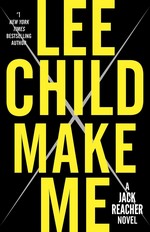
Make MeMake Me

by Lee Child
Series: Jack Reacher, #20
Hardcover, 402 pg.

Delacorte Press, 2015

Read: September 22 – 23, 2015

“We should get a cup of coffee.”
Chang said, “I don’t understand how you drink so much coffee.”
“Law of gravity,” Reacher said. “If you tip it up, it comes right out. You can’t help but drink it.”
“Your heart must be thumping all the time.”
“Better than the alternative.”

I’ve got to get that embroidered on a pillow or something…

I’ve said it before, I’ll very likely say it again — it’s really hard to write about Jack Reacher books after a certain point. What can you say? Reacher comes into a town/city/locale, finds himself in the middle of a mess (or sees a mess and puts himself in the middle of it), beats some people up, probably shoots some others, makes sure the bad guys are punished (in one way or another), tries to save as many of the good guys as possible, probably has a brief affair, and then moves on. Same ol’, same ol’ — told in a tight, fast-paced, almost always exciting way. Lather, Rinse, Repeat as needed.

Every now and then you get something a little different — he’s hired to right a wrong/prevent a wrong, we get a flashback to his time in the military, or whatever. But by and large the books follow that pattern. And for the first 200+ pages, that’s exactly what Make Me gave us.

Curious about the name of the town, Mother’s Rest, and full of theories, Reacher rides in on a train to poke around for a couple of days and indulge his curiosity. It’s not like he has anything else to do. He’s briefly mistaken for a retired FBI agent turned private investigator, Keever, who has gone missing. A colleague, Michelle Chang, is also in Mother’s Rest looking for Keever (who she’s never seen in person, obviously). Now Reacher’s curious about a couple of things, and he starts working with Chang to find Keever. The locals don’t like this and threaten violence (naturally, they need to do so en masse for it to work). Par for the course, right?

But then when they start to learn what prompted Keever to be in Mother’s Rest, things get darker than usual. Don’t get me wrong — there’s a lot of real evil to be found in your typical Lee Child villain. But on the whole, they’re nothing that you can’t find in many mystery/thriller novels/tv shows/etc. Every now and then, however, you get something worse. While it takes a really long time to find out what’s worse about the villains in this novel, once the pieces start to come together — scratch that, when you start to see the pieces, you can tell there’s something twisted and vile going on here. That hunch gets more and more intense each chapter. Until all is revealed and you start to wonder if you left Lee Child behind and wandered into a Thomas Harris or Val McDermid novel.

There will be extended descriptions in a Reacher novel that are this strange mix of repugnant and fascinating — whether he’s describing the mechanism of a particular gun firing, the way a certain punch will affect both the puncher and the punchee, how a particular bone will break, or what have you. But the symposium on suicide methods and Internet culture around them just might have set a new high (or is it low?). Riveting and horrifying.

This book also contains something I’ve never seen in a Reacher novel before. I can’t get into it, but that Child would put Reacher in a situation like this impressed me almost as much as it surprised me.

I’m not 100% convinced this is a 5-star book, but if any Reacher novel is worth it, it’s this one. There are so many of the typical Reacher elements that are tweaked, played with, or broken here — all while telling a heckuva tale, remaining consistent with the character and world. Long time fans will really enjoy this. New readers will want to get their hands on as many of the rest as they can. And all of us will get really frustrated that we have to wait 12 or so months for Jack Reacher #21.

—–

5 Stars

Hexomancy by Michael R. Underwood

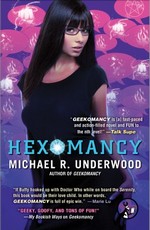
Hexomancy Hexomancy

by Michael R. Underwood
Series: Ree Reyes, #3

eBook, 258 pg.

Pocket Star, 2015

Read: September 25, 2015


So, here we are with the third Ree Reyes novel, the 4th adventure for her, and the end of her first character arc (although the only way really know this now is that Underwood keeps saying it — I doubt I’d have been confident enough to say that until the beginning of her next novel/novella), and what a ride we’ve been on so far. Geekomancy was just ridiculously fun — the style, the voice, the magic system pushed just about every one of my buttons. In retrospect, it wasn’t a great novel, but it was so fun that all the weaknesses can be easily overlooked. Celebromancy was a better novel — as far as construction, character, etc. goes, but wasn’t nearly as fun and entertaining. Attack the Geek was action-packed, pretty fun, but (as it was designed to be) not much else. Hexomancy combines all the pluses from the first three, and smashes them together into the best novel Underwood’s given us so far.

In retaliation for the defeat of their sister in Attack, and the resulting consequences that begin this novel — three Strega are coming to town to get their vengeance on. Their target is primarily Eastwood, who is mentor, unnecessary father-figure, and foil (depending on the day) to our new UF hero, but since Ree was integral to Lucretia’s defeat, she’s not exactly safe either. They’ll be coming to town at regular intervals, each one more powerful and deadlier than the last. Like bosses at the end of levels on a video game. You can argue that this part is either hokey, or perfectly fitting to this world, but that’s the way it’s set up (the latter is the correct answer).

And, these Strega are no joke — nasty, powerful and brutal. Eastwood, Drake and Ree (and the occasional other ally) are pushed to their limits when they take them on — physical, creative and moral — like their videogame counterparts (as I understand it, mostly from watching my sons).

Between these boss battles, Ree and the rest recover, level up, and whatnot (I can only pay so much attention to what my sons do, can’t keep the metaphor going). Ree spends time with her friends, in the rebuilt Grognard’s, and in a little romance.

Drake is one of those characters that I think deserves his own post, if I could only find the time. Better yet, he deserves his own stories — either prequels off in his own world, or some running concurrently to this series. His humor, his bravery, his nobility, his heart — not to mention his cool steampunk tools and weapons, — basically he’s the whole package. Really, most people would consider building a series around him, not have him as a sidekick. But he works well in the role.

We didn’t get nearly enough of Ree’s dad this time — her chats with him were a highlight of the last two novels (although, to be honest, when she did talk to him I had one of those “Oh, right, she does this” moments).

Ree and her friends have to be about the most healthy and well-adjusted groups of fictional characters I’ve ever encountered — people like this may exist in Real Life, but not in fiction. It’s like they’ve spent years in group therapy before this. Which is not a bad thing — in fact, it’s pretty refreshing. But that doesn’t keep it from being weird when they react in mature, reasonable manners to various and sundry challenges presented in this novel. If I wasn’t afraid it’d make me seem like a cad, I’d say the magic is easier to believe than they are.*

What about Ree herself? She’s grown into her roll protecting her city, scratching by, keeping her sanity intact (mostly). She’s grown plenty over these four adventures and you can see the results everywhere — thankfully, she’s still as full of snark and verve now as she was when we first meet her. Just a bit wiser, packing a few more XP, and more sure of herself. She barely references her writing now, which is a shame — but hey, her plate’s pretty full.

In his Acknowledgments, Underwood states, “If you keep reading them, I’ll keep writing them”. Sounds like a good deal. I’m in. Keep ’em coming, Mike!


* And I’d say that if it was a group of 4 guys, too, for the record.

—–

4 Stars

As the Crow Flies by Craig Johnson

As the Crow FliesAs the Crow Flies

by Craig Johnson
Series: Walt Longmire, #8
Hardcover, 308 pg.
Viking Adult, 2012
Read: September 26, 2012

…trying to remember when I’d last prayed for anything. My mind went back to the spring before last, and a time in Philadelphia when I’d sat in a hospital at my daughter’s side. I’d prayed then-like a theological car salesman, I’d made deals, counterdeals, and threatened the very heavens themselves if they didn’t release my daughter from the swollen solitary confinement to which a terrible accident had sentenced her.

After the high of Hell is Empty, it makes sense that this would be a little bit of a step down. And it was — at least as far as intensity, depth, and so on. It was just as entertaining, just as engaging…just not as ambitious.

Walt and Henry are out doing some last minute arranging for Cady’s pending nuptials when they witness a woman falling/jumping/being pushed to her death in a very scenic location on the Reservation. Which leads, naturally to Walt getting involved in the investigation — this time, he’s also shepherding an inexperienced Rez Police Chief (Lola Long) through dealing with police procedure, community relations and dealing with Federal bureaucracies. Lola reminds Walt (and most readers, I’d wager) of Vic — who is conveniently out of state for most of this book — and he does what he can to steer Lola away from some of her more destructive habits into something that’ll make a good police officer.

There’s a lot of ugliness involved in this investigation — there’s abuse, PTSD and other fallouts of military service, drug dealing, welfare fraud, and so on. Not to mention history — family history, personal history, familial squabbles (intra- and inter-).

One of the highlights for me is the hate-hate relationship we see between Walt and Henry’s ancient truck, Rezdawg. I seriously now want a short story – if not a series of them – featuring the adventures of Rezdawg confounding and infuriating Walt. I promise to buy every single one of them, if Mr. Johnson would only write them.

Walt as mentor to Chief Long was good, too. Demanding, yet understanding. Lola responded well to him, too — once she let herself. I hope we see her from time to time in the future. Same goes for all the non-murderers on the Rez that we ran into in these pages.

Naturally, the emotional beats around Cady and her wedding, whether she’s in the scene or if this just Walt thinking about what her marriage means for his role in her life, her future, and so on — just perfect. The book is about the murder of this woman, who did it and why — but Cady’s wedding is in the background of it all.

As the Crow Flies features a good mix of humor and mystery — a pleasant change after Hell is Empty. There’s no real danger to any of our friends from Wyoming, just good procedure, banter, and character moments — the stuff that keeps mystery series readers coming back. This one did it’s job.

—–

3.5 Stars

The Scam by Janet Evanovich and Lee Goldberg

The ScamThe Scam

by Janet Evanovich and Lee Goldberg
Series: Fox and O’Hare, #4
Hardcover, 286 pg.

Bantam, 2015

Read: September 24 – 24, 2015

“You can never have too many weapons,” Jake said.
“Does that mean you brought your rocket launcher?”
“It’s in the trunk of my car in case of a roadside emergency.”
“What kind of roadside emergency would require a rocket launcher?” she asked.
“You don’t want to find out and not have one hand,” Jake said. “It’s also why you should always have a paper clip in your pocket. You can do just about anything with a paper clip.”

I was prepared — even half-way expected — for this to underwhelm me. There wasn’t anything driving me to that expectation, maybe it was just my mood. Thankfully, this surpassed my expectations/fears — not for one second. This was another breezy, fun, adventure for Nick, Kate and the crew.

From page 1, The Scam was firing on all cylinders. The main mission was a lot of fun, with a believable target, just dangerous enough. The side missions were interesting and did a good job pushing the plot forward, not just being B stories.

There was even some tie-ins to previous cases — up to and including a recurring character that’s not part of the team.

Boyd is pretty much the most annoying character in the series, but this time, they struck the right one with him. He was insufferable as always, but he didn’t get on my nerves at all. Which means the book probably deserves a bonus 1/2 star rating just for that. The rest of the team was used only minimally — just little tastes of them all. I don’t think I’d want that all the time, but it worked here. Kate and Nick were…well, Kate and Nick. I think Kate was a bit more honest with herself about her motivations — both professional and personal — than we’re used to seeing her. Maybe the same could be said for Nick, too.

The ending (always the trickiest part of a con story) worked — Kate’s improvised weaponry was just great. Even if we didn’t get to see either the roadside emergency rocket launcher or pocket paper clip (which doesn’t mean it wasn’t a great line), sorry Chekhov.

There were a couple of things in the closing pages that floored me. I didn’t think Evanovich would do either of them, just doesn’t seem her style. I like the fact that she can surprise me (maybe it’s Goldberg’s influence — maybe not, but I like the guy, let’s give him the credit). Anyway, there were things in these pages I never expected that I’d get out of Fox and O’Hare. Bravo.

Book five needs to arrive soon. I realize my saying so isn’t going to make it happen. But just in case I’m wrong about that, I should get it on the record.

—–

4 Stars

Indexing: Reflections, Episode 4: Split Ends by Seanan McGuire

Indexing: ReflectionsIndexing: Reflections, Episode Four: Split Ends

by Seanan McGuire
Series: Indexing, #2.4
Kindle Edition
47North, 2015
Read: September 23, 2015

This is one is hard to think about as an individual episode. There’s some plot advancement, yes. But mostly this is about the team getting some new intel, evaluating it, and then coming up with a plan to get more information — there are some unorthodox moves required to obtain this more, but if they’re going to get anywhere towards capturing Elise before more lives are lost, they’re going to have to make them.

The new information they are given is huge. It’s not unexpected for the reader, and you could make the case that Henry should’ve been expecting it. But it’s more than believable that she wouldn’t have.

Yes, this installment is mostly about investigation, and not busting heads, or messing with narrative incursions, or anything. So it’s hard to discuss — but it is really well executed, what the reader and Henry learn is interesting and thought-provoking. Not only about the case they’re working on, but we get a better understanding (or at least the beginning of a better understanding) of how the whole Fairy Tale narrative functions.

There’s suspense, there’s Sloane being Sloane, there’s a cliffhanger ending. Not easy to write about, but easy enough to read and start waiting on the next chapter — maybe more urgently than I’m used to.

—–

3 Stars

The Drafter by Kim Harrison

The DrafterThe Drafter

by Kim Harrison
Series: The Peri Reed Chronicles, #1
Hardcover, 422 pg.

Gallery Books, 2015

Read: September 17 – 21, 2015

Okay, I haven’t read the second or third Madison Avery book, and I haven’t found the time to read the last Rachel Morgan book (don’t ask, I can’t explain it either), so I might have to revise this a bit later — but I’m betting I won’t — this is the best book Kim Harrison has written to date. Hands down.

So Peri Reed is a Drafter. A covert agent for the U. S. Government in the near future (future enough that there’s all sorts of gear and tech that we have to imagine, near enough that we can relate). She (and 1 in 100,000 or so others) have this handy ability, when things go wrong, she can rewind time a bit and try it again. This is especially handy when mortally wounded. The downside? Doing that erases part of her memory — weeks’ or even months’ worth of it at a time. So each Drafter works with an Anchor. An expert in the Drafter’s personal history to help them put the pieces back together in a manner the Drafter can understand and move forward from.

Things are going well enough, when in the midst of her normal duties Peri finds some evidence that she’s been doing things she shouldn’t be, that she’s a renegade, a corrupt agent. This doesn’t sit easy with her, so she starts to investigate what’s really going on — and as long as she can remember what she’s doing and why, what she finds may shake up more than just her life.

It is almost impossible to track the plotlines of this book — you can experience it, but retell it? No — not without copious notes. One fellow blogger is demanding diagrams just to keep track of everything. And he’s not wrong. Peri keeps getting her memory re-written — memories that the reader is aware of, and others. There’s a mare’s nest of factions, agents, double agents, and possible triple agents; crosses, double crosses, triple and — I lost count of how many crosses a couple of characters were involved in. Plus time resetting itself. Mix in years of backstory that Harrison doles out in drips and drops. The result is that the reader is as disoriented as Peri — when she’s tripped up, we generally are. When she’s surprised by X doing something, we’re not sure what’s going on in X’s mind, either.

It’s hard to render an opinion on most of the characters. Because what we think we know about them may be Peri’s perception, may be reality, may be a cover, or . . . you get the idea? Peri at one point assures one woman that she remembers she likes her — doesn’t know anything about her, but remembers emotions. Which is pretty much all we have to go with as well. There’s a couple of people I know I like — a couple I know I don’t (even if some of them are supposed to be “good” guys) — but as far as how well drawn the characters are, it’s tough to say. Even Peri’s such a work in progress, it’s hard to get a good handle on her as a character.

Nevertheless, this is a book I highly recommend. It starts slow — very slow (I seem to be saying that a lot lately, I’m not sure when I became so impatient), but once all the dominoes are set (somewhere around the 100 page mark), Harrison starts the falling, and wow. It’ll suck you in, it’ll get you wrapped up in the web of deceit and efforts to unravel the deceit. More than anything, it’ll leave you wanting more.

—–

5 Stars

Time Salvager by Wesley Chu

Time SalvagerTime Salvager

by Wesley Chu
Series: Time Salvager, #1
Hardcover, 380 pg.

Tor Books, 2015

Read: September 12 – 15, 2015


Guess I should start with this: there’s nothing in these pages that’ll remind you of Chu’s Tao books. They could be written by completely different authors. Which is a combination of good news and bad news. The good news is that the reader doesn’t get a deja vu feeling reading, Chu’s ability as a writer and worldbuilder is displayed, and we get to see that he’s not a one-trick pony. The bad news is, the Tao books were better.

Not that this is bad, it’s just not Tao.

Chu is really smart about the way that he introduces us to the world, to the concept of Time Laws, and ChronoCom and all the rest of the things that you can read about in the jacket copy (or at the link above). Maybe it shows that I read too much bad SF as a kid, but I’m still really impressed by SF writers who are able to blend things into dialogue and story rather than just resorting to info dumps.

This is a Time Travel story where the Time Travel’s not really all that important. It’s just a tool. Like a cell phone — something that people use, but don’t really understand. No one (well, one person) here understands how it works, but they can use it. Ditto for all the nifty future-gadgets. So it makes it easy for us to not worry about it, too, and just go with the flow.

When you clear away all the bells and whistles this is a pretty straight-forward story about corporate greed, ecological/societal collapse, and a few people trying to do the right thing with the cards stacked against them (even if that pits them against each other). The bells and whistles turn this into a SF/Time Travel/Dystopian Love Story.

Not the best thing I’ve ever read by Chu, but interesting enough to make me glad I read it, and I’ll be back for #2. Maybe with is he can do something to make the series something I can get excited about.

—–

3 Stars

Page 94 of 124

Powered by WordPress & Theme by Anders Norén