Category: 2018 First Reads Challenge Page 4 of 11

Her Last Move by John Marrs: This Thriller Left Me Feeling Gobsmacked and Awestruck

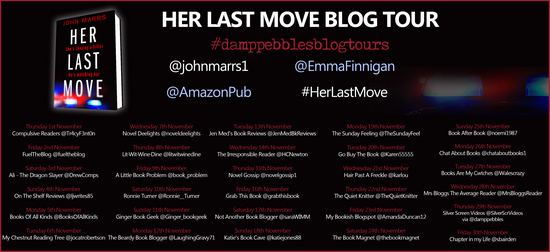
(that’s too tiny to read, sorry, click here to embiggen. There are a lot of great writers here — you’re going to want to check out those other posts.)
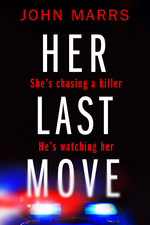
Her Last MoveHer Last Move

by John Marrs

eARC, 352 pg.
Thomas & Mercer, 2018
Read: November 8 – 12, 2018

           The very fact people were talking about him and taking him seriously was proof he was on the right path. But branding him a serial killer was lazy. Serial killers and psychopaths murder out of compulsion, he reminded himself. They do it because they have no choice. He killed with purpose. And eventually, everyone would understand why.

This is one of those books that I’m not going to do justice to. I know that now, and if not for the deadline of posting in a few hours, I’d probably walk away now and come back daily for until next Tuesday and post something I don’t like. But I do have that deadline, so I have to post something I’m not satisfied with in a few hours. I just like this one so much; and have so much that I want to say, but won’t because it would ruin your experience, that I know I’ll want a couple of mulligans to this post.

This starts off with one of those chapters we’ve all read too many times — a budding serial killer is preparing to make his first kill and is indulging in some interior monologue beforehand. This is where we start to get an understanding of the character, why he thinks he needs to be killing, why he’s so wonderful/special/different. But this chapter isn’t quite that — and by the time you realize this isn’t following the standard template, Marrs has his hooks in you — and this book is off to a startling and bloody start.

DS Becca Vincent is a young detective just trying to get somewhere in her career — it seems that her superiors, including (infuriatingly enough) women, are holding her back because of her devotion to her daughter. Not that her mother considers her that devoted as she’s doing most of the hands-on care while Becca is at work. She’s in the crowd when the first killing happens and is the first police presence at the scene. She also is the first to tie that victim to another murder victim. She leverages this into a spot on the investigation team, where she hopes she can make enough of a difference to lead to more responsibility in the future.

The first thing she’s assigned to do is to go over the CCTV tapes with a “super-recogniser.” I don’t know if this is a real thing or not, and don’t care. It works really well in this book — these are a select team of people with near-eidetic memories for faces who spend every shift pouring through security footage for faces — either to track down suspects or identify people who are near too many crime scenes to chalk up to coincidence. We meet DS Joe Russell as he recognizes a suspect on the street while riding a bus and chases him down. Becca meets him in less exciting circumstances — a dirty squadroom in a less-than-impressive looking building. She doesn’t buy the concept originally, but Joe wins her over pretty quickly.

The investigation doesn’t move quickly, there’s a lot of manpower put into it (more and more all the time), but progress is slow. A friendship develops (not without a few bumps) between Joe and Becca much more quickly, and they clearly work together well.

The killer’s spree does move quickly on the other hand. He has a plan, he’s been developing it, nurturing it, and getting it ready to carry out for a very long time. He’s spent years setting up these dominoes and when he knocks the first over, the rest fall quickly. As we watch him do that, we learn what shaped him throughout his life into the monster he’s become. Nothing that happens to him justifies what he’s doing — nothing could — but it helps the reader understand him, and empathize with him to a degree (until he gets to a certain point and you can’t empathize with him anymore).

The book is full of sincere and devoted professionals trying to get the job done in the best way to protect lives and stop the killer — we focus on a couple of them, but they’re clearly all over the place. Unlike the people on TV, these professionals have family, friends, medical issues, children, pasts, problems and joys outside the job who will distract from and inform their performance on the job. Watching Becca and Joe unsuccessfully balance these parts of their life (particularly given the pressures as the number of bodies rises) is just one of the things that Marrs does right. Come to think of it, you can say the same thing about our killer (for most of the book anyway). I’m really impressed at how much genuine tension and drama Marrs is able to mine from this.

Each death is increasingly horrific — seriously, these are some of the most gruesome murders I’ve read. Each reveals more about the killer and what’s driving him. The reader (as we have more information than the police) will put the pieces together before the Becca and Joe do. But when things start to click for the police, they’re able to figure things out quickly. It’s a very satisfying moment — the question is, do they figure things out in time to save anyone on the killer’s list?

I’ve never read Marrs before — but I will again. There’s not a wasted word in these 352 pages, not a throwaway line, useless exchange. My notes are filled with “Is he going somewhere with ____?” and “There’d better be a pay off to ___” Every time, without fail, I could’ve gone back and added the page/line that demonstrated he was going somewhere with that idea or paid off that observation. Even in my favorite reads of 2018, there are moments we probably don’t need — most of which I’m happy to have — lines, ideas, scenes that could be cut without hurting things. That’s not the case here — anything you read here is important, even if (maybe especially if) it doesn’t seem so.

I’m not sure how this would hold up to repeated reading — a lot of thrillers don’t. And I haven’t had time to try this one, but I think it’d hold up pretty well, if you’re not distracted by wondering what Marrs (or his characters) are up to, or what’s going to happen next, etc. you can focus on all the subtle little things he’s doing to create the anticipation and tension, and appreciate the skill involved in grabbing the reader and putting them through the paces.

This will suck you in, keep you entertained through the paces of the investigation, and lull you into thinking you know how things are going just long enough for you to get complacent so he can drop the floor out from underneath you. Marrs makes bold choices and will catch you off-guard at least once — I can practically guarantee that. This is one of those books that will lead you to shirk responsibilities at home and work; postpone things like eating and sleeping; and momentarily resent your family for interacting with you — particularly the last thirty percent or so (although you might have to might have to take a quick break to absorb what you just read or catch your breath). One of the best I’ve read this year — I hope you give this a shot and I bet you’ll agree.

—–

5 Stars

My thanks to damppebbles blog tours for the invitation to participate in this tour and the materials they provided — as well as Thomas & Mercer and the fine folks at Netgalley for the eARC.

The Place You’re Supposed to Laugh by Jenn Stroud Rossmann: A Great Read about the Less-Glamorous, Less-Successful Side of Silicon Valley

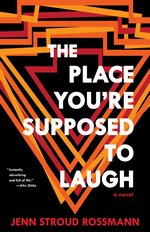
The Place You're Supposed to LaughThe Place You’re Supposed to Laugh

by Jenn Stroud Rossmann

eARC, 330 pg.
7.13 Books, 2018

Read: November 5 – 7, 2018

Those inclined to irony might find it in the Palo Alto Farmers Market assembled on asphalt, where there had once been an apricot orchard. Each weekend from May through December, the workweek parking lot filled with vendor stands and umbrellas protecting bins of trucked-in garlic cloves, avocados, tomatillos, et al. The University down the street was known as “The Farm,” though it hadn’t been one since the Stanfords donated their country estate and chartered a college in the 1880s. Stanford grads and especially its dropouts had been transforming the Valley ever since; the fruit came from further and further away.

It’s really hard to grab a representative quotation from this novel — but this comes close. There’s a hint of the humor, the capturing of a moment in time, societal observation, a hint of wistfulness, and even a modicum of critique.

It’s 2002, in many parts of the country the shadow of 9/11 looms large. It’s present in Palo Alto, but not to the degree it is other places — what looms larger is the bursting of the dot-com bubble, everyone around them has been impacted in some way by it — most people have been impacted in significant ways, although the ripples are still going out from them and affecting the lives of everyone in their community in some way.

Our focus in this novel is on the life of Chad Loudermilk and those who are near him. Chad’s 14 and is enduring his first year in high school. His best friend since . . . well, forever, Walter Chen attended there briefly, but was pulled out by his parents to attend the Roman Catholic academy nearby — for a greater focus on academics, and fewer active shooter drills. Life’s hard without Walter around. Chad’s mother works with “at risk” youth, on making wise decisions, while she’s still reeling from her mother’s death a few months earlier. Chad’s father, Ray, is dealing with ripples of the burst — the advertising agency he’s part of his dealing with a shift in clientele. There’s Scot, Chad’s next-door neighbor, the creator of Latte (wink, wink) — the Macromedia tool — a big brother figure, dispensing non-parental advice and playing video games (his wife really doesn’t have any time for Chad). There’s a new girl in school that Chad can’t stop talking about, and a couple of guys from the proverbial other side of the tracks that he met at a record store and is spending time with. The major focus of the plot is following Chad’s interactions with them over the course of a few months — we get chapters focusing on his parents and what’s going on in their lives, but on the whole, the rest of the characters are seen filtered through Chad’s experience.

The other major thread follows Chad’s maternal aunt, Diana, a physics professor we meet as she registers for a conference in Barcelona. She’s trying to re-establish her career after pressing pause on things to have a child with her best friend. It’s not easy for her to get back into the swing of things, but she’s close. As Chad’s aunt, there’s a lot of opportunity for the plotlines to intersect and overlap — but the sisters aren’t that close, so it’s not as frequent as it could’ve been. By the end of the novel, events have transpired enough that Diana’s as large a fixture in Chad’s life as Scot (maybe larger), so it’s easy to intermingle the story lines. But for the first 1/2-2/3 or so, there a clear distinction between the two — and it’s not clear why we’re getting both stories.

Another thing that’s not clear is what exactly is Chad’s story. This is close to a Bildungsroman, but we only really see the beginning of Chad’s development — it’s like the first Act of Chad’s Bildungsroman. Which isn’t to say that it’s an incomplete story, it’s not. It’s just about Chad starting adolescence. You don’t want to get the details from me, you want to get them from the book, but a lot of stuff happens. Nothing major like a school shooting, a terrorist attack, or anything. Just life, the ebbs and flows of people’s lives. I could actually sum up the major events of the novel in 2 sentences. One of them might be long-ish, but just two sentences.

Don’t get me wrong — there’s a plot to this book. But really, you don’t see it (well, I didn’t see it) until toward the end — maybe even after the end. This is not a bad thing, it just means you have to think about things a lot. My notes are filled with comments along the lines of “I really don’t see where this is going” or “I’m not sure what the point of all this is” — and they’re always followed with, “Don’t care, great stuff.” I really didn’t care where Rossmann was going, I was too busy enjoying the ride — the voice, the characters, the atmosphere, the little bits like the Farmers Market (above), were enough to keep me engaged, entertained and turning the pages.

I’m not going to drill down and talk about the various characters — or even just one. I could do a post just about Ray, or Scot, or a long one on Chad or Diane — I think I’d have to do a series on Chad’s mom. Instead I’ll talk about them as a collective whole — they’re people. There are things to like about them all, there’s plenty to dislike about them all (particularly the adults). A lot of what they do seem inconsistent with the characters as Rossmann has presented them, but that just makes them more human. There’s not one character in this book that isn’t a human — no one larger than life (Scot kind of is, but he’s larger than life in the way that we all know someone who seems to be that way). Any person in this book could easily be the person next to you in the bagel shop, sipping on their caffeinated beverage of choice. They’re delightful in that perceived realism, also in the way that Rossmann talks about them. Without approval of anything, you get the feeling that she has affection for every character in the book.

The clergymen who appeared — however briefly — in this book were a couple of the least objectionable depictions of clergy I can remember seeing lately. Not hypocritical, they actually seemed to believe in what they were saying, and were actually trying to help those they encountered. It’s not often you get to see that anymore, and it should be acknowledged when you see it.

I’ve been struggling for a few days — and I’m not sure I’m succeeding at the moment — to put into words the experience that is The Place You’re Supposed to Laugh. I think I was hooked by the end of chapter 1 — definitely by some point in the third chapter. I liked the book, I liked the characters, I liked the writing. It’s a pleasant, thoughtful experience. It’s what reading a book should be like — skillful writing, wonderfully drawn characters and prose you enjoy immersing yourself in.

The novel talks about a lot of things — one of the biggest themes is forgiveness. I don’t think I’ve ever seen the topic discussed in quite the same way in any format. I won’t suggest that Rossmann exhausted the idea, obviously, but she talked about it, depicted it, and had her characters think about it in ways I found refreshing and encouraging.

I’m not sure what else to say — The Place You’re Supposed to Laugh is a great read. It’s a strong novel that will make you think, will make you feel, and will leave you satisfied. Rossman writes with sensitivity, wit and skill. What else are you looking for?

Disclaimer: I was provided with a copy of this novel by the author in exchange for my honest opinion, which is seen above.

—–

4 1/2 Stars

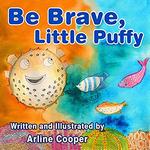
Be Brave, Little Puffy by Arline Cooper: A Cute Fish Tale

Be Brave, Little PuffyBe Brave, Little Puffy: Promoting Positive Body-Image and Self-Esteem

by Arline Cooper

Kindle Edition, 28 pg.
Ofek, 2018
Read: November 8, 2018

Puffy is a puffer fish with a little problem — he’s not terribly fond of his spines, if for no other reason than he’s frequently poking his friends with them. He leaves his fellow puffer fish to go on a journey to find other friends — maybe fish he won’t bother as much. Puffy encounters many other fish of various species in his effort to find a new group of friends he can live with. Eventually, naturally, he finds a way to win back his friends, and learn to accept his spines.

Each encounter is captured in a colorful drawing depicting the new species — attractive, fairly accurate and eye-catching.

It was a little wordier than most books for 4-8 year olds tend to be. Which isn’t a bad thing — just something I noticed. The thing that bothered me the most about this book was the pictures. I want to stress that this might just be a Kindle Version thing, and that other formats may not have the issue. But the pictures about each episode follow the encounter with the fish — so the visual aid comes too late. So you have to flip to the next screen before starting to read so you can see or show the fish in question, and then flip back to pick up the narration. Is this a problem? No, but it’s a pain — especially if your child/audience is impatient.

The pictures are also a little on the small side (yes, I know that can be changed for each picture as you go along, But it’d be nice if you didn’t have to do anything) — and they deserve a closer look than is easily possible.

Arline Cooper has the goods — story and pictures bother — to produce quality picture books, hopefully we see more. Quibbles aside, this is a fun book, a book I can see parents reading frequently — and kids demanding frequently. Nicely told, attractively illustrated, with a positive message — that’s a good combination.

Disclaimer: I received a copy of this book from the author in exchange for my honest opinion, as seen above.

—–

3 Stars

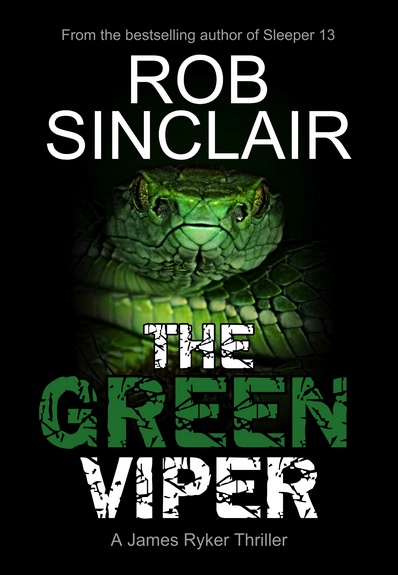
The Green Viper by Rob Sinclair: A strong, twisty thriller that will satisfy

I’ve fixed the html on this post a dozen times, and each time I hit “Update,” things get screwy again. I don’t understand what’s happening, but I can’t fight it anymore. If it looks messy, sorry about that, just move on to the body, and I’ll try again after work today.

The Green ViperThe Green Viper

by Rob Sinclair
Series: James Ryker, #4

Kindle Edition, 326 pg.
Bloodhound Books, 2018

Read: November 2 – 3, 2018

This is the fourth James Ryker novel, but the first I’ve read. This leaves me at somewhat of a disadvantage — but not an insurmountable one. Someone from his past reaches out to him — in an unconventional manner — for some help. Janet Campbell, the widow of the man who trained Ryker, who molded him into the intelligence agent/assassin he’d become is worried about their son and wants Ryker to step in for his sake.

Now, I don’t know if the series has featured Campbell or Charles McCabe (her husband) before — it’s not unheard of for a thriller to introduce an old, dear friend mid-series just to get the protagonist involved in something. I’m sure if they were around early on, returning readers were invested right away. But if this was their first appearance in the series, Sinclair introduced Campbell in such a way that it worked for me as a hook — I was invested because of Campbell more than because of Ryker.

Scott Campbell really never connected with his father, and his life has gone in a very different direction. He was an accountant at a prestigious London firm until recently, leaving under a cloud. He and his girlfriend, Kate Green, left England to get away from that cloud and moved to New York City for a fresh start. Well, mostly fresh. Kate’s father, Henry Green, is a fairly notorious criminal and nightclub owner. To make a little money, Scott does a few odd jobs for Henry (while Kate dreads Scott’s participation in her father’s business). Those odd jobs grow more serious as Green begins to trust him more.

Which is precisely the thing that Janet Campbell is worried about. So, enter James Ryker — a former intelligence officer between gigs. Once he arrives in NYC, he spends some time surveilling Scott and Kate to see what exactly is going on, and then he goes all-i to try to extricate them from the dangerous position that Scott has put them in. Which is a lot more dangerous than Ryker knows, as another drug dealer tries to move in on Green’s turf, and the FBI are preparing to make a few arrests.

What follows is exciting, tense, fast-paced and full of more surprises than I expected. Okay, that sounds like a tautology — with a book like this, you expect a few things to occur that you don’t expect (whatever that might end up being). The Green Viper gave me more of those things that I didn’t expect. A couple of them were pretty big surprises, too — so more and of greater magnitude than I expected.

The characters were well-drawn, but they all could’ve been a bit more three-dimensional. No one that we spent much time with at all was exactly two-dimensional (thankfully, I’ve had too much of that lately), but they all could’ve had a little more. By and large, for a thriller with this many moving pieces the characters were either as well-drawn as you might assume to meet, or a little better. Still, I want more. Characters are what hook me more than anything else in a book, and these were good enough, but I wanted more. Particularly Ryker — he’s the title character, and I really don’t think I know much more about him than I do any of the other characters (I might know Scott the best), and that doesn’t seem right.

The other thing I would’ve liked more of was the actual work done by Ryker. Not just him showing up where Scott doesn’t expect him — but how he got there, why he decides to show himself to Scott then. For example. From Finder to Child to Sharp and beyond, it’s the mechanics of their intelligence work that draws me in as much as the fight scenes or whatever. Sinclair is good at delivering the big moments — gun fights, chase scenes, and the like. But he could do better with the smaller moments — trailing someone, deciding to follow this line of investigation or reasoning. I guess you could say the story’s strong, it just feels like he has to many ellipses in it — let me see more of the connections between the moments.

Basically, I’m saying that I enjoyed the book — but I thought Sinclair could’ve given his readers a little more of everything. It was a good novel, but with a little more it could’ve been really good. The pacing is good, you get drawn in and the story really doesn’t let you go. I technically spent 2 days reading this, but about 80 percent of that was in one sitting — If I’d put off starting by a day, it would’ve been a one-sitting kind of book — start it, get sucked in and ignore the world until the bullets stop flying and the smoke clears. A very satisfying way to spend a couple of hours.

I enjoyed this book, the characters and the world Sinclair has created. Might I have had more appreciation for some of this if it weren’t my first Ryker novel? Sure. Am I curious enough about what I read to come back in book 5 (or go back to books 1-3)? Yeah, I think so — Sinclair’s a capable author and he’s got himself a fun world to play in. You should give this one a try — or one of the earlier books — and I’m willing to bet that you’ll end up agreeing with me, Rob Sinclair’s James Ryker is an action hero worth your time.

—–

3 Stars

My thanks to damppebbles blog tours for the invitation to participate in this tour and the materials they provided.

BOOK SPOTLIGHT: The Green Viper by Rob Sinclair

Today I welcome the Book Tour for the action packed The Green Viper by Rob Sinclair. Along with this spotlight post, I’ll be giving my take on the novel here in a bit.

Book Details:

Book Title: The Green Viper by Rob Sinclair
Publisher: Bloodhound Books
Release date: November 5, 2018
Format: Paperback/ebook
Length: 326 pages

Book Blurb:

I need your help. Call me.

Ex-intelligence agent James Ryker receives a coded message through a secret drop point, a means of communication known only to him and one other person. The problem is, that person is his ex-boss, Mackie… and he’s already dead.

But the cry for help is real, and it’s a request Ryker can’t refuse.

Travelling to New York alone and without official sanction, Ryker has a single goal in mind, yet even he couldn’t have bargained for the violent world he’s soon embroiled in. Caught in the middle of a spiraling chaos, with the FBI on one side and warring underworld bosses on the other, Ryker must put all of his skills to the test in order to come out on top and keep his word.

In a world full of lies and deceit, loyalty is everything, and it’s time for James Ryker to pay his dues.

About Rob Sinclair:

Rob SinclairRob is the author of the critically acclaimed and bestselling Enemy series and James Ryker series of espionage thrillers. His books have sold over half a million copies to date with many reviewers and readers having likened Rob’s work to authors at the very top of the genre, including Lee Child and Vince Flynn.

Rob began writing in 2009 following a promise to his wife, an avid reader, that he could pen a ‘can’t put down’ thriller. He worked for nearly 13 years for a global accounting firm after graduating from The University of Nottingham in 2002, specialising in forensic fraud investigations at both national and international levels. Rob now writes full time.

Originally from the North East of England, Rob has lived and worked in a number of fast paced cities, including New York, and is now settled in the West Midlands with his wife and young sons.

Rob Sinclair’s Social Media:

Website ~ Facebook ~ Twitter ~ Goodreads ~ Amazon US ~ Amazon UK


My thanks to damppebbles blog tours for the invitation to participate in this tour and the materials they provided.

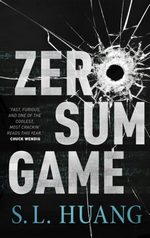
Zero Sum Game by S.L. Huang: A Healthy Dose of SF Peanut Butter in this Thriller’s Chocolate Results in a Very Tasty Book

Zero Sum GameZero Sum Game

by S.L. Huang
Series: Cas Russell, #1

Hardcover, 334 pg.
Tor Books, 2018
Read: October 22 – 26, 2018

           “I’m really good at math,” I said. Too good. “That’s all.”

I’m not sure how many times I stopped reading this book to ask, “What did I just read?” Not because I’m too dense to comprehend the words on the pages, but Huang’s work was so audacious, so confident, so imaginative that i couldn’t believe it.

Cas Russell retrieves things — all sorts of things. We don’t get details, but it’s safe to say that things like legalities, procedures and technicalities don’t enter into her Cas’ thinking. When this book opens, she’s retrieving a person — which is not typical for her, nor that easy. But Cas does it, but before she returns that person to her family, she goes the extra mile to keep the retrieved person safe (she doesn’t want to have to get her again).

This ends up plunging Cas into a world of deceit, conspiracies, secret organizations, and some of the most mind-bending situations I can remember reading.

Here’s what separates Cas from most of the action/suspense heroes we have today — that line above about being good at math. She’s some sort of genius — maybe beyond that — at math. She looks at a situation — say, getting punched in the face — and while the fist is coming at her, calculates things (velocity, force, angles) rapidly enough to know how to adjust herself to lessen the blow and the injury to herself minimal and how best to counter the attack in such a way to put down her opponent. The same goes for shooting someone, using a knife, jumping into a building, etc., etc. The math is everywhere — but Huang deals with it in such a way that even an English major like myself can see it, appreciate it, and not get put off by it.

I’m not sure that makes sense. Let me try this — I don’t know if you watched the recent Luc Besson movie, Lucy, where Scarlett Johansson plays some sort of hyper-intelligent woman who is a near-unstoppable one-woman army, it’s kind of like that — but more successful. Or maybe think Bradley Cooper in Limitless, but without the pills.

Throw that kind of thing into a gritty, twisty world of damaged PI’s, hackers, dubious government agencies and drug cartels — and you’ve got an idea about what this book holds. It’s a little SF, it’s a lot of Thriller — an action-packed winner. I don’t want to talk more about it — the characters other than Cas are fascinating. I’d be more than happy to spend more time with all of them — there’s a very mysterious figure named Rio that I really want to know a whole lot more about, but I think I prefer not knowing — he works so well wrapped in mystery. This would’ve been a fantastic stand-alone, but I’m excited to see that this is listed as the first in a series. Sign me up for a handful of these right now.

I thoroughly enjoyed this book — it all worked wonderfully. There was one thing I cracked up at (it was funny, character revealing and oh-so-original) and when I made a note about it, I noticed that I was on page 69. I’ve never tried the Page 69 Challenge, where you decide whether to read a new book based on reading that page first, because that just seems annoying. But if I’d tried it with Zero Sum Game, it’d have worked for me.

For a first-time novelist (especially one with a math degree), Huang delivers a fantastic, assured read that’s almost sure to please. Give it a shot and you’ll see why I struggled to explain why you want to read this, while thinking that you really should.

—–

4 Stars

2018 Library Love Challenge

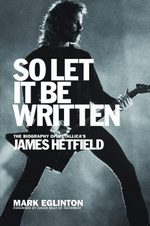
So Let It Be Written by Mark Eglinton: A Disappointingly Delivered Account of a Rock Star’s Career

So Let It Be WrittenSo Let It Be Written: The Biography of Metallica’s James Hetfield

by Mark Eglinton

Paperback, 219 pg.
Lesser Gods, 2017
Read: October 29 – 30, 2018
Here’s the Publisher’s synopsis:

           The first and only biography of one of the best front men of the modern era.

With James Hetfield at the helm, Metallica went from being thrash pioneers to heavy metal gods. He overcame adolescent upheaval and personal demons—including his parents’ divorce, his mother’s untimely death and severe alcoholism—to become metal’s biggest star.

So Let It Be Written does justice to the many hats Hetfield has worn, with his strong leadership, signature vocal style, powerful guitar-playing and masterful songwriting. Author Mark Eglinton uses exclusive, firsthand interviews—with prominent rock stars and key figures in Hetfield’s life—to construct the definitive account of Hetfield.

There are many problems with this book. If it is a definitive account of Hetfield, it’s because there’s not a lot of competition. The firsthand interviews seem to be with people who knew Hetfield in school or shortly thereafter — or friends of former bandmates. For insights from people closer to him, Eglinton seems to rely on interviews published in magazines or done on TV or in a documentary. I could be wrong about that — there might be more original research performed by him, but given the utter lack of citation, it’s hard to say for sure.

This book is primarily about Hetfield’s professional life, following the account of Hetfield’s mother’s death, we maybe get two full paragraphs (scattered over chapters) about Hetfield’s family (but repeated statements that family is the most important thing to Hetfield), and his friendships outside the band aren’t given much more space.

Rather than a biography of James Hetfield, this comes across as the story of Metallica with a focus on the input, influence, and antics of Hetfield. With a special emphasis on glorying in the music and lyrics of the albums leading up to Metallica/The Black Album, and in denigrating everything from Load through the build-up for the release of Hardwired… to Self-Destruct, which wasn’t released in time for him to come up with a strong opinion about (with some okay words directed to the documentaries and films produced in that time).

It’s clear that Eglinton was a fan of early Metallica, and has a wide appreciation for and knowledge of the metal scene. He has the knowledge base and the passion to produce a strong book about the band — but he seems to lack the ability to focus on the life of one man. Somehow, the author wrote a similar looking book, James Hetfield: The Wolf at Metallica’s Door, seven years earlier than this — and it was longer. I’m not sure how he pulled that off — my guess is more analysis of the contents of albums and/or his estimation of their worth. I’m curious about the differences between the two, but not enough to put up with reading it to compare.

James Hetfield is a deeply flawed, incredibly talented, and interesting figure. A biography of him should be intrinsically and automatically fascinating, and it takes a certain kind of author to take that potential and turn it into a disappointment. Sadly, Eglinton is just that kind of author.

Don’t bother.

—–

2 Stars
2018 Library Love Challenge

✔ Read a memoir or biography of a musician you like.

The Golden Orphans by Gary Raymond: An Artist, A Mysterious Russian and an Enigmatic Island

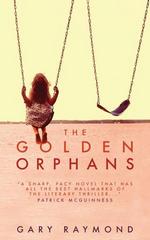
The Golden OrphansThe Golden Orphans

by Gary Raymond

Kindle Edition, 280 pg.
Parthian Books, 2018
Read: October 23 – 28, 2018

I thought for a moment. “I think I am about to do something stupid.”

“In Cyprus you only need ask yourself one question,” Tara said, deadly serious. “Is it out of desperation?”

I keep running into artists in the novels I read — like in Tom Rachman’s The Italian Teacher, Russo’s Bridge of Sighs, or even Hawley’s Before the Fall — there are other examples, I’m sure — but they’re not coming to me right now. I’ve never understood the appeal, really, but I hold out hope that one day I’ll get it. And I shouldn’t be running out of opportunity anytime soon — it’s a vocation that draws authors like flies to honey.

Gary Raymond’s artist protagonist is a little different than the typical depiction. He’s a successful artist — to some extent, anyway — but not a genius (misunderstood or not), he’s not a superstar. In fact, his best days are probably behind him, and he knows it. But he’s still plugging away at it, while pursuing an otherwise self-destructive lifestyle. He’s invited to a funeral in Cyprus at just the right time — his finances are in shambles and his relationship is in a similar state, the largest question being which will fall apart first.

Not only is he invited, but his trip is paid for — so he can go. Francis Benthem is the deceased, and at one point in time he was a teacher, a mentor for the narrator (I should say that Raymond didn’t name him, I’m not being negligent) — he was like a father to him, really. So he goes to the funeral, and for most of it, is the only one present besides the priest. Eventually, Mr. Prostakov (Benthem’s employer, who paid for everything) and a few other people show up and leave quickly. Their appearance both confuses and intrigues the narrator.

Actually, that describes just about everything about Cyprus — it confuses and intrigues him. So he spends time getting to know the island, the people on it and, when given the opportunity, Mr. Prostakov. Illie Prostakov is an enigma wrapped in a riddle, wrapped in a hint of a stereotypical wealthy Russian with a murky past and revenue stream. He presents the narrator with a business proposition — take up residence in his home and replace Benthem. He’s a little vague as to the artistic duties required, so I will be, too. But the money’s good enough to take care of problems back home, so the narrator takes the job — not realizing the trouble and mystery that he’s put himself in the way of.

Unlike Bentham, the narrator won’t just take things at face value — he asks questions, and when he doesn’t get answers, he tries to find them (he might not be great at it, but he tries). Who is Prostakov? What’s he doing? Who are the people he surrounds himself with? Asking these questions isn’t the safest thing he could do — getting answers is probably worse.

The island of Cyprus isn’t just the setting of the novel, it’s practically a character. While the narrator is trying to understand his employer and his employer’s aims, most people are more concerned with getting him to understand Cyprus. Everyone’s description (I don’t have a hard count, but I’d guess at least a dozen are given) is different, but combined you begin to get an idea what life on the island is like. In the end, I think we get a fuller understanding of Cyprus than we do anything that the narrator is looking into.

Which is not to say that he doesn’t get any answers. He does, as does the reader. Raymond doesn’t leave you frustrated like that.

There’s a feel to this book that makes you think it’ll be one thing, but it’s not. The characters seem to be certain types, and most are — but they don’t act the way you think they will. The conclusion seems surely to be headed in one direction, but it ends up giving you a different ending. Everywhere you look, Raymond doesn’t do what you expect — which is both refreshing and annoying (you’d like to be right occasionally).

I’m not that convinced this is really a thriller — but it’s being marketed as one. As a thriller, I think it’s missing a sense of urgency, of real danger. But I think things moved too quickly, and without the depth called for in a literary book. A little more time after the narrator took the job and trying to accomplish it before the plot moves forward, more time spent on the painting (and talking about the process) would’ve helped. A greater sense of hazard, of peril from Viktor or Illie would’ve helped a lot on the thriller front. In the end, the book wasn’t quite sure it knew what it wanted to be — and a mix of the two genres would’ve worked, but it needed to be a bit more of one of them (or both) to really be effective. It was just always lukewarm.

That said — it never, not for a minute, failed to hold my interest. I may not have been very invested in the outcome or characters, but I was glued to it. Frankly, I think the narrator was the same way — he wasn’t invested in his relationship back in London, his career (really), or anything that was happening around him on Cyprus — but he couldn’t stop himself from sticking a toe in here and there, from involving himself just a little bit in everything. As he was confused — so was I. As he was intrigued — so was I. Raymond did a very effective job in getting the reader (or at least this reader) to see things from his protagonist’s eyes.

Raymond’s given us something unique here. I’ve talked before about books that I can respect and admire more than enjoy. This is one of those — the writing and approach of this novel exceeds any affection or excitement I might have for it. It’s not the kind of thriller you can finish and move on from easily — I’m going to be thinking about this for a while. The characters will linger in my imagination, but the reality he depicts will stay around longer. This isn’t a novel that lends itself to a rating any more than it lends itself to a genre-classification, so take it with a grain of salt.

—–

3.5 Stars

My thanks to damppebbles blog tours for the invitation to participate in this tour and the materials they provided, including a copy of this book — which didn’t influence the above post, beyond giving me something to post about.

She Rides Shotgun by Jordan Harper: A Gripping Thriller, A Touching Father-Daughter Story, a Special Kind of Crime Novel

She Rides ShotgunShe Rides Shotgun

by Jordan Harper

Hardcover, 257 pg.
Ecco, 2017
Read: August 7 – 8, 2018

This is one of those books where you want to sit and talk about it for a couple of hours — recapping and dissecting the events, analyzing, and speculating about what happens after the book ends; or you don’t want to say anything beyond “just read it, I don’t want to ruin anything for you.” I could absolutely relish the former, but I’m going to hew closer to the latter. Harper’s better to read on this than me, anyway.

So, here’s the official blurb to keep me from slipping:

           Eleven-year-old Polly McClusky is shy, too old for the teddy bear she carries with her everywhere, when she is unexpectedly reunited with her father, Nate, fresh out of jail and driving a stolen car. He takes her from the front of her school into a world of robbery, violence, and the constant threat of death. And he does it to save her life.

Nate made dangerous enemies in prison—a gang called Aryan Steel has put out a bounty on his head, counting on its members on the outside to finish him off. They’ve already murdered his ex-wife, Polly’s mother. And Polly is their next target.

Nate and Polly’s lives soon become a series of narrow misses, of evading the bad guys and the police, of sleepless nights in motels. Out on the lam, Polly is forced to grow up early: with barely any time to mourn her mother, she must learn how to take a punch and pull off a drug-house heist. She finds herself transforming from a shy little girl into a true fighter. Nate, in turn, learns what it’s like to love fiercely and unconditionally—a love he’s never quite felt before. But can their powerful bond transcend the dangerous existence he’s carved out for them? Will they ever be able to live an honest life, free of fear?

She Rides Shotgun is a gripping and emotionally wrenching novel that upends even our most long-held expectations about heroes, villains, and victims. Nate takes Polly to save her life, but in the end it may very well be Polly who saves him.

The thing to remember about Nate — he might be trying to be a good father, he may want to be a good father and act a certain way for Polly. But he’s not a good guy. He’s not a paragon of virtue, he’s not a reputable citizen. He’s a criminal — and not an entirely successful criminal, with almost zero parenting skills. But man, he wants to try. Expect some heroics, but remember he’s no Nick Mason, Jack Reacher or the like.

Polly? I don’t know what to say about her. If you can read a few chapters of this and not fall in love with this little girl, want to adopt her and protect her from all this madness? Something’s broken in you. She’ll win your affections, you’ll root for her, you’ll pity her, you’ll hope she survives this all intact.

There were a couple of other stand-out characters — I’d get into them, but it doesn’t matter. Your appreciation for this book comes down to this: what do you think about Nate and Polly and what they go through?

This is a tense thriller, with more than your typical emotional moments for the genre. Harper delivers both with equal skill and aplomb. As horrible as so much of this plot was — this was a real pleasure to read, from cover to cover.

I first heard about this novel — and author, come to think of it — on Episode 33 of Two Crime Writers And A Microphone, you might want to check it out.

—–

4 Stars

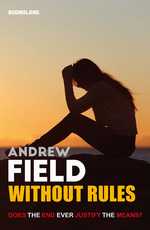
Without Rules by Andrew Field: A dark tale where many means are justified


Without RulesWithout Rules

by Andrew Field

Kindle Edition, 215 pg.
Boomstang, 2018

Read: October 9 – 11, 2018


Last week, in the many tributes to Elmore Leonard that I saw floating around on what would’ve been his birthday, I came across this quotation: “I don’t judge in my books. I don’t have to have the antagonist get shot or the protagonist win. It’s just how it comes out. I’m just telling a story.” Which seemed awfully appropriate as I was in the closing chapters of Without Rules at the time. I’m not suggesting that there’s anything Leonard-esque to Field’s novel*, but they definitely were working from the same ethos.

This book starts off showing you that it’s about as far as you can get from a cozy — a hit man and his accomplice on the run after a disastrous (yet successful) job take shelter in something between a brothel and a porn studio while waiting for extraction. Their unwilling hostess supplies them with booze, a laundry machine, and some meaningless sex in the meantime. When the opportunity presents, she tries to convince the hitman to rescue both herself and her daughter from their situation — being forced by her father to live and work in this place since she was about her daughter’s age. Naturally, it’s this same father who hired the hitman to take out one of his clients before he could be flipped by the police.

Things get messier from there — no, really. Soon, we’re plunged into a mare’s nest of police cover-ups, police investigations, evidence tampering, evidence planting, blackmail, murder, pedophilia rings, international drug dealers, and real estate fraud. This particular night ends in betrayals, deaths, lives and careers being ruined, missing people and near-death escapes. The book will then lurch ahead a couple of years to witness the chaos and destruction left by that night and how it’s altered, prospered and ruined lives — and attempts will be made by several to rectify that situation. The novel will then jump ahead as the events of part two have left even more trouble and chaos in their wake for the survivors to try to deal with the aftermath.

There’s a fine line between complex and convoluted — this novel doesn’t tip-toe down that line, it dances on it. When it falters, it typically lands on the convoluted side before resuming its jig. There are arguably too many characters running around — and few of them are fully rounded-out. But, largely, I’m okay with that — because the more I get to know just about any of these characters the less I wanted to know them at all. These are ugly people in the midst of ugly businesses.

With one or two climactic exceptions, the action is believable, the evil is all too real — there’s no criminal mastermind stroking his cat while the world burns. Instead we have several depraved individuals scraping to make their fortunes greater — or just to survive. There’s one well-timed Diabolus ex Machina that was hard to swallow that was necessary to set up the book’s conclusion, but otherwise the action stayed within the bounds of credulity.

In a capricious world, it’s odd to find so many characters talking about justice — generally how it’s impossible to find — but just about every one of these characters has a lot to say about it. There is an irony there for the careful reader to appreciate.

Minor spoiler: There’s no happily ever afters here. No redemption arcs. No one wears a white hat. A couple of characters do ride off into the sunset, but not in any real sense of victory or joy. The cynical among us — many would prefer to be called realists — would say that this is an accurate reflection of life. No justice, no just desserts, bad things happen to bad people, those who intend to be heroes become villains, a villain or two will find themselves doing something heroic, and everyone’s out for themselves and a profit. In a very noir world, Andrew Field offers us a very noir novel.


* That’s not a ding on Field, there’s pretty much no one who can write something Leonard-esque. And it’s generally embarrassing when they try.

Page 4 of 11

Powered by WordPress & Theme by Anders Norén