Category: Literary Locals Page 6 of 8

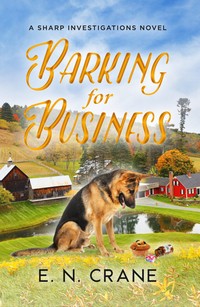
Barking for Business by E.N. Crane: Move Over Plum, It’s Time for Cynthia Sharp and Winnie

Barking for BusinessBarking for Business

by E. N. Crane

DETAILS:
Series: Sharp Investigations, #1
Publisher: Perry Dog Publishing
Publication Date: June 1, 2021
Format: Paperback
Length: 307 pg.
Read Date: July 26-27, 2023
Buy from Bookshop.org Support Indie Bookstores


I apologize in advance for all the references to Stephanie Plum that follow. This is sort of like all the people who mention Adams or Pratchett when talking about humor in Science Fiction or Fantasy, even if the styles don’t match. It’s just hard to talk about a character like this and a book like this without mentioning Stephanie.

Also, Crane did that herself when I met her. So she stuck it in my head.

What’s Barking for Business About?

After the latest in a series of successful investigations that double as calamities (you’ll have to read the first couple of chapters to see), Specialist Cynthia Sharp, MP, and her partner, Sgt. Pupperson, are discharged from the Army and return to Cyn’s hometown of Sweet Pea, OH—a very small town that should provide some peace and quiet while they decide their next move.

Before they can even enter the Sharp residence, a neighbor approaches Cyn with a job—someone has been taking money from the church bingo funds and she wants Cyn to put an end to it. Mostly because she can’t say no to this older woman—and because she has nothing else to do—she agrees.

This puts Cyn on a collision course with a military crime, a murderer, some serious gangsters, identity thieves, and more. She also has to deal with a love (lust?) triangle and reuniting with a best friend whose fantastic baked goods could probably prove dangerous to anyone with a weakness for sweets.

Sgt. Winnifred Pupperson

Winnie, as she prefers to be called, is a Belgian Malinois dog that found her match in her K-9 handler. She’s reckless enough to make Chet the Jet look disciplined, is very food motivated (sure, she’s a dog, so that’s a given—but as most dog people know, there are levels—she can sniff out junk food faster than Brenda Leigh Johnson, and is the perfect combination of canine athleticism, furry chaos, and unintentional hilarity.

My only complaint is that there’s not quite enough of her. Cyn leaves her at home too often. Probably a realistic amount—but too much for my taste. Hopefully, in time the people of Sweet Pea accept her presence in places they shouldn’t so she can be in on more of the action.

And You Think Stephanie Plum is Hard on Cars?

Hopefully, this isn’t too much of a spoiler, but it’s so good I have to talk about it.

Early on, Cyn breaks her arm in an understandable mishap. And over the next 240 or so pages, has to keep replacing the cast after catastrophe after catastrophe befalls it.

Somehow, every time, the reaction of the medical staff and the predicament she finds herself in makes me laugh. Every time. I cannot believe how well this recurring joke worked for me (that’s not a slight on Crane—it’s about my sense of humor/patience). You think she’s done with it—and she’s not. In fact, you find yourself wondering how it’ll happen again and looking forward to it.

The Fun Twist of Character

Yes, she’s clumsy. Sure, she’s easily distracted. Her dog handling skills are, um, sub-par. But I tell you what…when it’s crunch time? When things matter? Cyn is sharp.* She is more competent than you expect—piecing together clues, dealing with dangerous situations, and saving the day like the seasoned pro you’d expect from someone just out of the MPs. When that aspect started to really show itself I was impressed. This isn’t about someone flailing about and somehow stumbling on to the truth of the matter (like a certain NJ bond enforcement officer or Inspector Gadget)—it’s about an accident-prone woman who can shine when given the opportunity.

* I know. I know. I’m sorry.

So, what did I think about Barking for Business?

This was just ridiculously fun. It’s hard to come up with more to say than that (obviously, I’ve found a way, but the temptation to just write that sentence and move on was strong).

There’s a little too much peril and action for this to technically be a cozy, I think. But I could be wrong about that. Regardless, it’s in that same zip code. The focus is never really on that—it’s about the puzzle, it’s about the antics of Cyn and Winnie. Cozy fans should feel very at home with it. More than anything, Barking for Business is a comedy—there are few pages that go by without something—a little slapstick, a nice bit of humor in the narration, Cyn saying something she’ll regret, or worse, learning something about her parents that she’ll regret.

Do I worry that the town is too small to keep things happening? Sure. But when their first case starts with money missing from the church’s bingo earnings, it’s obvious that Crane can make much from little. Do I worry that the schtick of the series will get old by book 5 or 6? A little. But I worry that about the premise of several series, and it means that I have at least 4 or 5 more books to enjoy before that happens. For now? I’m just going to shut my pie hole and enjoy the ride.

This is a fast, breezy read that’s full of excitement and humor. It’s the perfect book for people who fondly remember the first few Stephanie Plum books or have ever wondered what it would be like if Miranda Hart or Mindy Kaling wrote crime fiction (possibly co-writing it). I’ve got the second novel on my shelf already and am trying to figure out how to get it read quickly.


3 Stars

This post contains an affiliate link. If you purchase from it, I will get a small commission at no additional cost to you. As always, the opinions expressed are my own.

LITERARY LOCALS: A Q&A About Writing in Idaho with Justin Reed

Literary Locals logo
I met Justin Reed at the Treasure Valley Indie Book Fair back in March and am really glad we’ve finally gotten our ducks in a row to be able to bring you this Q&A. By a strange stroke of coincidence, I should be starting his book today. So you’ll be hearing more about him soon. But for now, let’s introduce him.


Before we get into things, why don’t you give the reader a brief introduction to you and your work.
My name is Justin Reed. I live in Boise, and I am an author, publisher, consultant, software engineer, and investor. I have published one novel—However Long the Day—a historical adventure set in 1918 NYC about two young men who switch places for a day and nothing goes to plan (think The Prince and the Pauper meets A Tree Grows in Brooklyn). People can find me at justinreedwrites.com, and on Instagram (@justinreedwrites), Facebook (@JustinReedWritesNovels), and LinkedIn (@justinreedwrites). People can buy a hardcover copy of However Long the Day at Rediscovered Books in Boise and/or Caldwell; from my website (in which case I’ll personalize the inscription); and at online book retails (bookshop.org, B&N, and The Great Smiling Beast). You can also borrow a copy from most of the libraries in the Treasure Valley (though they share a few copies, so you might have to put a hold on it). The ebook is available here, and can also be borrowed from Treasure Valley libraries (any of the Lynx libraries, I believe). And you can listen to the audiobook on Audible, Apple Books, B&N, libro.fm, and on Overdrive (if you have a local library card).

Are you a native Idahoan? What is it about Idaho that keeps you here?
I am a native Idahoan, born and raised in Boise. I went to Capital High School, and graduated from Boise State University with a Computer Science degree. Beauty, freedom, and family keep my Idaho.

Are you tied into some sort of local author/bookish group/culture? If so, tell us about it and how it helps you as an author.
I run a writers workshop of sorts at the Lake Hazel branch of the Ada Community Library. I call it Group Therapy for Writers, and it gives us attendees an opportunity to support each other in our writing goals. It’s nice to talk about the writing process with others who care about the process of turning thoughts into words on the page, and words on the page into something compelling to read.

First, that’s a great name. Have others in your group gone down the publishing road yet, and have they been able to help you through it—or are you the group’s guinea pig?
It’s a great group. We’re a mix of folks who have published and those who haven’t. Everyone in the group is experimenting with their style, genre, etc., hence the need for outside perspective. We’re taking a break for the summer but plan to start back up in September.

What kind of events in the area do you attend—either to sell/promote your books or to network with authors? Are there any outside of this area that you hit regularly and wish we had something like it here?
I’ve attended the Indie Book Faire at the Nampa Public Library, and I’ve attended several events at both the Boise and Caldwell Rediscovered Books locations. I would enjoy attending more events like these, as well as other author get-togethers.

What’s the breakdown of your audience—do you have a strong local base, or are your readers from other parts of the world?
However Long the Day is my debut, so I’m still in the audience building phase. My focus is older teens and adults of all ages. Most of my readers are here in Idaho.

Do you have a plan on expanding that audience? Or are you in more of a “see what works” phase of life?
I am definitely more in the see what works phase in which I try a bunch of ways to grow my audience. As you might expect, most of these come to a deadend, but I’m certainly learning a lot in the process.

Do you think there are particular challenges or advantages to being a writer in the Treasure Valley? (possibly both)
Boise is geographically isolated, which is both a blessing and a curse. I would love to more easily visit other metros and talk books (including mine), but that isn’t as easy in the Treasure Valley as it is in other places. However, the isolation is part of what makes our town—and the rest of Idaho—such a great place to live. I’m not very connected to the writing culture here in the Treasure Valley, but I suspect that is more because of my introverted nature than anything. I suppose we all have the chance to build the writing community if we take it.

Do you bring Idaho (or some sort of Idaho-sensibility, assuming one exists) to your work? Whether or not anyone else sees it, can you look at some aspect of your writing and think “That’s Idaho” or “I would do ____ differently if I was a Kentuckian or from Illinois?”
The first novel was set in Idaho during the earliest part of our existence as a US territory (1864 gold rush era), so in that regard I bring Idaho into my work. Unfortunately, that novel hasn’t been published yet because I just can’t get it right. Even so, I bring my Idaho sensibilities into all my writing, both published and unpublished. I try to mute my voice as much as possible and let my characters speak for themselves, but complete silence is an impossible objective.

Thanks for your time and participation! Hope you enjoyed it!


Literary Locals logo

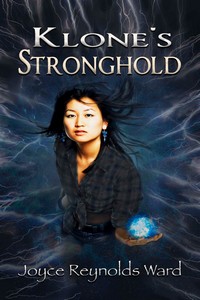
Klone’s Stronghold by Joyce Reynolds-Ward: Nothing—I mean Nothing—Is What It Seems In This Fantasy

That’s the best of a dozen headlines for this post. Which tells you something about the other eleven.
Joyce Reynolds-Ward participated in a Q&A with me about Writing Near Southwest Idaho earlier this year, and I’ve finally found the time to read one of her novels. She’ll be back this afternoon for a Q&A about this book, but first, allow me to ramble on a bit about it.


Klone's StrongholdKlone’s Stronghold

by Joyce Reynolds-Ward

DETAILS:
Publication Date: June 19, 2018
Format: eBook
Length: 226 pg.
Read Date: July 24-25, 2023
Buy from Bookshop.org Support Indie Bookstores

What’s Klone’s Stronghold About?

A year ago, Reeni escaped her abusive marriage—her ex-husband has turned into a stalker, he’s apparently a man of some status in the community and was able to get her fired from her job as a Special Ed teacher and Reeni’s on the verge of having to move a long way away just to find a new position. To add insult to injury, her family keeps trying to get her to reconcile with her ex.

Two dear friends convince her to attend a music festival with them—they love this band (she enjoys them, but isn’t going to be following them around like Deadheads). It’s a few days away from home, there’s no way that Karl is going to show up here. She needs some time in safety and peace to think about life. And if she happens to have a little fun? All the better.

Of course, it doesn’t work out. Karl shows up with some friends (or henchmen, your call). The band’s security takes care of them while Reeni finds a safe place to hide out. Before Karl had arrived, Reeni had struck up a friendship (or the beginning of one) with one of the security team—a supernatural of some kind. He comes to her with a proposal—he knows a guy who is working with a small group of supernatural people who are socially and educationally delayed, and are in need of a teacher to work on both areas. Due to the nature of their work and abilities, Karl won’t be able to approach her there; and she’ll get paid a very tidy sum if she commits for a few months in this out-of-the-way spot in the Eastern Oregon mountains.

Intrigued by the job—and desperate to get refuge—she agrees.

Because I’m struggling to finish this section, I’m just going to borrow from the official Description:

But things are not as they seem at the Stronghold, from the older proprietors of a nearby store and the Stronghold’s leader Alexander Reed Klone, to Reeni herself. She discovers it’s not just Karl who seeks to control who and what she is, but forces from her past that threaten her present. Can she learn the truth about herself and do what is needed in time to defend the Stronghold?

The Cozy That Could’ve Been

Sure, when Reynolds-Ward wrote this, cozy fantasy wasn’t really a thing (I’m sure it existed, but it was so far under the radar…), so it might not have crossed her mind to do this, but…

If she had abandoned the last 46% or so of the book and had just stuck with Reeni’s work in the classroom for a few months, letting us watch the progress she makes with her charges? I’d have been utterly charmed with it and would’ve likely enjoyed the novel more.

I’m not actually criticizing the last 46% of the book (most of it, anyway)—this is just a rabbit trail of a thought I had while reading this. That 46% results in a perfectly satisfying that I’m recommending, I’m just saying.

Now to try to turn this from an inadvertent criticism to something positive. I was interested in Reeni and her story and I was enjoying trying to figure out what was going on. But it was the moment that Reeni first started working with her students, connecting with them in a way that her employer didn’t see was possible that I got invested in this novel. I started caring about Reeni and her students then. Yes, the rest of the book was exciting, had magic flying about, secrets were revealed, and Big Things happened, etc. But the whole time, the back of my mind was asking—but what about the next week of lessons? When do we get back to that?

So, what did I think about Klone’s Stronghold?

I really could’ve focused on so many things here, Klone’s Stronghold is a target-rich environment for someone looking for things to write about. There’s Reeni’s attempts to escape her bad marriage, and worse husband. There’s her family’s reactions to her divorce (it’s eventually explained, but it makes it worse). There’s a twisting of religion. There’s something to explore with her great friends—new and old. You could go on and on about the supernatural species (or whatever you want to call them). But for various and sundry reasons I have to move on. Also, this could end up being 40 pages long if I let myself. You want a novel to inspire all kinds of rabbit trails for you to follow while reading? Look no further.

There are a couple of moments in the latter half of the book that I’m not sure we needed. Or at least we didn’t need all that Reynolds-Ward gave us. It’s tricky to talk about without spoiling—but it’s in the parts where Reeni is helped to understand what she learns about her background and family. Most of this section is really well done—and it’s all interesting. But parts of this take up a whole lot more space than I think they needed to—it dragged the story down, and didn’t illuminate much. With some trimming I wouldn’t have said anything at all.

Other than that, I found the pacing really well done—there’s a lot that Reeni goes through here—and the rate at which she experienced it and had to figure out how to deal with all she goes through was really well done—not just for Reeni, but for the reader.

There are so many scenes that make you stop and bask in them. Reynolds-Ward puts you in this world, and even when you’re trying to figure out exactly what’s happening because (for example) you haven’t worked out all the various kinds of supernatural beings there are—you can see and understand enough that it doesn’t matter.

I know that this wasn’t intended to be a series (or at least it didn’t become one)—and I don’t want to complain about a stand-alone (phew! Plotlines I don’t have to remember for books on end! I’m not signing up for a multi-year commitment!). But boy howdy, do I wish I could spend more time in this world. The general store (or whatever it should be called) and its owners along with the Stronghold and those that live there have all the makings of a setting you want to return to—even the band would be great to spend more time with.

That said, this was a very satisfying story that absolutely doesn’t end anywhere near where you think it will after the first couple of chapters. (which, incidentally makes it really hard to talk about).

I recommend this for people who want a very atypical fantasy (that brushes against SF, but not really) in a contemporary setting. Readers of Bledsoe’s Tufa novels might resonate with this. It’s a nice breath of fresh air. This is my first novel by Reynolds-Ward, but it won’t be my last (I’ve already got the next one picked out…and probably the one after that, too).


3.5 Stars

This post contains an affiliate link. If you purchase from it, I will get a small commission at no additional cost to you. As always, the opinions expressed are my own.
20 Books of Summer
Literary Locals logo

The Inside Scoop—A Q&A with Rebecca Carey Lyles About Self-Publishing

Inside Scoop logo
In our brief acquaintance, Rebecca Carey Lyles has participated in a Literary Locals Q&A with me, recommended others for that project, had me on her podcast, and has now subjected herself to this series (and we have at least one more Q&A to come once I catch up on some reading). I cannot thank her enough for all this. Lyles as some great experience—and therefore has plenty of advice to provide.


Before we get into things, why don’t you give the reader a brief introduction to you and your work.
Thanks so much for asking, H.C. I’m a wife, mom and grandma as well as an author and an editor. Although I’ve written for a variety of publications, fiction became my passion when I moved to Idaho and joined a wonderful Treasure Valley writing group. Since then, I’ve written two fiction series plus the first book in a third series.

My tagline for my novels is Contemporary Romance Set in the West and Salted with Suspense. But some have suggested the books are suspense salted with romance due to the subject matter and action/adventure aspect. Although I tackle difficult subjects like human trafficking, coercive cults, and contemporary polygamy, I always promise happy endings—because I like happy endings. 😊

Here are some links for you to peruse:
Website: http://www.beckylyles.com

Amazon Author Page: https://Lyles.gy/t54xp

Facebook Author Page: Rebecca Carey Lyles

Twitter: @BeckyLyles

What are some of the biggest misconceptions you find that readers have about self-published books?
From what I’ve observed, readers don’t look to see who published a book. They choose a book based on the cover and the blurb, a recommendation from a friend, or good reviews. They might even read the first two or three pages online or at a bookstore to see if the story interests them. Therefore, I assume most readers don’t have misconceptions about self-published books, but I could be wrong…
The shoe is on the other foot, eh? I’ve got misconceptions about readers? I buy that 😉

What kind of costs are associated with self-publishing a book? Do you hire one or more editors, or one editor for a couple of passes? Cover artist? Anyone to help with layout, design, etc.? Beta readers? Or do you take it all on yourself? Are you actually making any money at this, or are you still focused on breaking-even while building an audience?
I’m an editor, but I’ve also paid for book edits. I’ve designed book covers for a couple people who requested that I do so, but I always hire graphic artists to design my covers. In the early days, I hired someone to do interior design and then realized I could do it myself. And I always enlist the help of beta readers and proofreaders. Their input is crucial to the final product’s quality. About sales, I’ve found the only way to sell more than a handful of books is to advertise, which is not how most authors like to spend their time and money. But it’s a necessary evil of the writing game these days.

I think we’ve talked about this already, but this is a new context—what kinds of advertising has proved the most effective for you? Least effective? From talking to other writers, do their experiences match up, or does it vary a bit from person-to-person/genre-to-genre?
Facebook ads do the best for me, but they require a huge learning curve and can get pricey. I’ve taken courses re. how to advertise books and continue to follow several experts.

These links may be helpful.
https://davidgaughran.com/ [crazy hair, fun accent, and a great sense of humor!] Here’s his list of book promotion sites: https://davidgaughran.com/best-promo-sites-books/
https://learn.selfpublishingformula.com/p/adsforauthors [Mark Dawson also has a fun accent and an excellent podcast: https://selfpublishingformula.com/spf-podcast/]

https://kindlepreneur.com/book-marketing/ [Dave Chesson has plenty to offer, including a zany sense of humor!]

Do you do your own cover design, or have you found people to help with that? It seems almost as difficult as writing the novel itself—talk about the process a bit.
A quality book cover is crucial because the old adage is true, we do judge books by their covers. For that reason, I hire professional graphic artists to create my covers. I’ve worked with local artists and online artists. I’m always thrilled when a designer can take the vague ideas I suggest, hone in on one, make it “come alive,” and produce the perfect cover for a book, whether fiction or nonfiction. The designers I’ve used have all been well-qualified and reasonably priced as well as patient and willing to make the (many) changes I request. 😊

How do you go about finding these artists—online or local? What’s the process of vetting them and then getting the cover to start requesting changes on? (cover design is one of those topics I can’t get enough of—I don’t know why)
I found my first cover artist at the library. Actually, I heard an author speak there whose cover had been designed by a local graphic artist. She put me in touch with him, and he designed several covers for me. Another local recommendation came through a writer friend. My latest cover was designed by 100 Covers [https://100covers.com/], and I was quite pleased. After I explained my vision, each artist threw out an initial concept (or two), and we went from there. As I said, everyone has been patient with my multiple changes. Several other reputable sites offer expert cover creation or programs to create covers.

Are there tools, mentors, websites you’ve found to help you through this process? Or did you stumble through blindly on your own?
Through Idahope Christian Writers (ICW), a local faith-based writers’ group, I’ve met lots of Treasure Valley authors; plus, I attend their workshops and conferences. (ICW’s new website should become active soon: https://idahopechristianwriters.org/) Not only is the wisdom, knowledge, encouragement and camaraderie of likeminded friends valuable, smaller critique groups have formed from the main group. My crit partners are super helpful. They provide a fresh perspective and ideas I hadn’t thought of, suggestions to improve my writing, insights re: story direction, and so much more. Even better, we’ve become good friends and prayer partners.

Three podcasts I find helpful –
https://www.thestoryblender.com/

https://selfpublishingformula.com/spf-podcast/

https://www.thecreativepenn.com/podcasts/

What made you decide that self-publishing was the direction you wanted to go? How often do you question that choice? How do you get through the self-doubt?
I worked with a partner publisher for my first nonfiction book and a second partner publisher for my first fiction book. Both experiences were good but taught me I could do everything they did except create the cover. For a brief time, I had an agent who sent out a mass query to ten or so traditional publishers. After informing me none of them showed interest, I didn’t hear from him again. When I finally contacted him, I discovered he’d forgotten about me. Rather than search out another agent and extend the process even longer, I decided to go the indie route and haven’t regretted it. I’d love for someone else to do the marketing for me, but I hear traditional publishers expect their writers to market their books just like we indie authors must do.

Self-publishing tends to have less external deadlines keeping one accountable. How do you maintain your work process or work ethic?
For me, I think it’s an ingrained from childhood finish what you start ethic plus the nagging need to get a story out of my head and into the computer/onto paper.

What was your process for learning how to take care of all the facets that go into self-publishing? (editing, book cover and design, ISBN, finding places to sell/distribute, etc.)?
Workshops, seminars and conferences for writers, how-to-write books and magazines, online research, webinars, podcasts—and lots and lots of trial and error.

Would you be willing to share a trial or two that resulted in errors you learned from?
Wow, you’re stretching my memory. Way back, when online book sales weren’t nearly as challenging as they are today, my books sold fairly easily with minimal advertising. But then my daughter got married (silly girl!) and I focused on the wedding and reception and a houseful of company and lost momentum just when authors began to flood the internet with books. And thus, to diminish the opportunities for a book to be noticed.

I’ve done something similar lately. After months of pushing hard with Facebook ads and then Amazon ads, I became weary of the time and expenditure marketing books demands. And stopped all ads. Funny thing, sales have dropped in tandem with lack of marketing. Must get back to it! I’m pretty sure any business person would tell me/us that marketing must be consistent and ongoing.

Also back in the day, every ebook sales site demanded a different format—Kobo, Amazon, Barnes & Noble, Apple, etc. The trial and error was figuring out each of their complicated formats. Today, thank God, we have Draft2Digital, a wonderful aggregator that provides distribution services for authors whose books aren’t exclusive to Amazon. https://www.draft2digital.com/

Thanks for your time and participation! Hope you enjoyed it! And do know that there are many of us out here who appreciate and applaud what you do (and our number is growing)!

Lyles has quite the variety of books to look into, be sure to look into them!


Self-Published Authors Appreciation Week Footer

Clker-Free-Vector-Images from Pixabay
The 2023 Self-Published Authors Appreciation Week Logo was made by Witty and Sarcastic Book Club

The Inside Scoop—A Q&A with e rathke About Self-Publishing

Inside Scoop logo
e rathke is one of those authors that came my way thanks to JCM Berne–I’d never encountered them or their work before, but there’s plenty of good looking material out there to dive into.

In particular, I’d like to point you to Iron Wolf, which is released today. The description of it is:

The giantess Lady Agova leads Virgil and Vera home to Avalon. All they have to do is get through the gate. But that gate throws them into an interdimensional labyrinth full of nightmares. Iron Wolf
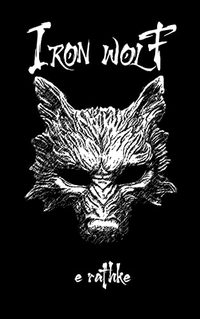
Set in a desolate postapocalyptic world where science and magic blend and reality itself twists and bends, where some attempt to grow a new world while others delve through the detritus of a shattered civilization, Iron Wolf continues the monster hunting journey began in Howl.


Before we get into things, why don’t you give the reader a brief introduction to you and your work.
I write weekly essays about games and books at my substack. All my essays are free and available to anyone. I’ve begun serializing a steampunked mix of Harry Potter and Gundam over there as well. On top of that, I’m now releasing weekly short stories. Paying subscribers get the ebook versions of my novels included in their subscription and they receive those a month before publication.

Along with all that, I also publish novels. The Howling Earth is a lofi cyberpunk mashing together of Vampire Hunter D and Gene Wolfe’s Book of the New Sun, though I’ve also received a fair amount of Dark Souls comparisons as well. The first novel came out December 2022 with the second novel out this week, and a third coming in November. 2024 will have four more.

With Kyle Muntz, I cowrite The Shattered Stars series. Imagine Star Trek: The Next Generation where the crew is straight out of Firefly and you get The Shattered Stars. Though it’s an ongoing serial, each “episode” is meant to stand alone and be enjoyed even for those who just want to dip in and out of the series. The first episode came out in March, with the second out in June. The third and fourth are coming September and December, and we have the entire second season completed and ready to publish quarterly through 2024.

But, yeah, lots going on! I’m also narrating a children’s serial about a pirate named Carrot. This began as a daily bedtime story for my son, but I began recording it as well so that he can return to the story whenever he wants. Because I had the audio already done, I began a podcast to release new episodes weekly.

(I love the idea behind the podcast, will be adding it to my rotation)

Do you do your own cover design, or have you found people to help with that? It seems almost as difficult as writing the novel itself–talk about the process a bit.
Most of my covers are done by Christopher Olson. I wish he had a website because he’s a great artist. Very talented and capable of just about any style I want.

I’ve toyed with the idea of doing covers myself, since I go through a lot of them each year, but that really just isn’t my skillset. Christopher is a friend and we work well together. I usually tell him what I want for the cover and try to lead him towards a style that I’m looking for. Then he does his magic and I’m always surprised by what he shows me.

Ultimately, the book cover is your face to potential audiences, so it’s worth it to take the time and find the people who will give you what you want and how you want it. Covers can be expensive, too, which is probably the biggest barrier for some. For that reason, they’ll decide to do their own covers. Which is great! But it’s really not what I’m good at.

It’s great to have a friend like that! The graphics on my site are the same way—if they look homemade, that’s me (frequently, it’s me defacing the work of a talented cartoonist/illustrator). If they look decent, that’s the work of a friend of mine who does graphic design.
Ha, I wish I even had the talent to make bad art. It would save me a lot of time! It would also allow me to do my own illustrations for my books, which I’d love to have.

What made you decide that self-publishing was the direction you wanted to go? How often do you question that choice? How do you get through the self-doubt?
During the 2010s, I was pretty involved in small independent publishing. I worked with a handful of publishers in various ways, and I had three novels come out on independent presses.

Many have a good experience this way, but I mostly did not. I think the truth of small independent publishing is that many people just want their name in print and are less concerned with getting readers. This is especially true for the kind of publishing I was involved with, where many of the authors were MFA professors, aspiring MFA professors, MFA students, or aspiring MFA students.

The publication was more important for their CV than it was for anything else.

I don’t have an academic background. I wasn’t in an MFA or getting into one, and so I had very different goals with my own publishing. My bad experiences with these publishers—all of which no longer exist—led me to abandon publishing for about eight years.

I turned to self-publishing because of the freedom it allowed me. And so I don’t question the choice. I much prefer it to what I previously experienced through a more traditional route. To me, self-publishing is just fun. It also gives me control over my career and the flexibility to do what I want, how I want.

I publish a lot of books each year. If I were on a traditional press, they’d want me to have at most one or two books per year. In 2023, I’m publishing eight books. In 2024, I’ll be releasing 12.

There are downsides to this rapid pace, but I’m writing for fun and for those people who are ready and willing to ride along with me. When someone discovers one of my books, I want them to google me and find a dozen other books waiting for them.

As a reader, I always found that experience thrilling.

Having a backlist to dive into as a reader is always great, I agree. And more than one self-published author I’ve talked to has mentioned getting things out regularly. Eight books in a year is pretty impressive! How do you find the time for this? Sure, you multitask by podcasting your bedtime stories—but even that’s an investment of time after your son’s asleep.
Recording audio takes me quite a lot of time! I’m sure many people can do this in a fraction of the time it takes me but I would say it takes me about an hour to get ten minutes of audio. And even that audio could probably be improved tenfold by just a bit more technical know-how.(I was kidding about that, I hope that came through. I’ve listened to two episodes so far and those hours spent are evident!)

As for finding the time – I write a lot and I write relatively quickly. I’ve written a bit about my process in the past, but there is no trick to it beyond volume of hours sitting in front of your computer.

The one advantage I have over other people is that I have 20 or more novels and novellas sitting unpublished on my computer, so I could publish ten books a year for two years without even writing something new. That being said, only one novel coming out this year is taken from that store of novel(la)s. Though cowriting four per year also helps alleviate some of the load.

Also, length is an important driver. For better or worse, I’m primarily publishing novellas in the 20,000 word to 35,000 word range. I want people to be able to pick these up and read them in about the time it takes to watch a movie (sometimes a long movie). This may prove to be a mistake because people may want those big beefy novels. I have those written, too, but I guess I’m saving them.

Most countries have a thriving novella market, except the US. But I think we could have that and I think people want short books along with the big doorstoppers. With everyone else writing the huge books, I feel there’s a real space left open for people who want to pick up a book they can burn through in an evening.

Have you thought about trying to get a deal with major (or indie) publishers for upcoming works, or are you planning on sticking with self-publishing?
I do submit novels to major publishers. I’d be more than happy to get on a traditional press, though I think my goals are different than other hopeful writers.

The barrier to any writers—traditional or indie or self-published—is discoverability. You can be the best writer in the world, but if no one hears your name, they’ll probably never find your books. And so much of marketing for any book is a simple process of getting your name out there enough times for people to finally take notice.

For me, the benefit of a major press is that they make the first step easier. If I had a book come out on Tor or Harper or wherever else, thousands of people who had never heard of me would now hear or see my name for the first time.

That’s what I want. I mean, I’d be happy to have a successful book on a major publisher, but even if my book technically failed, by traditional publishing terms (fewer than 5,000 books sold), that would still be a success for me and where I’m at right now.
And so the benefit to me about major publishing is that it would broaden my potential fanbase immensely overnight.

Even so, it’s important to understand what major publishers are offering. Major publishers once gave every author a marketing budget and they’d have professionals handle this stuff. Now, they rely on individual authors to do their own marketing, line up their own book tours and interviews, and so on.

Which is the exact same thing self-published authors are already doing.

Because of this, the benefits that they offer are becoming fewer and fewer every year.

What is your favorite and least favorite thing about being self published?
My favorite thing is the flexibility and control.

My least favorite part is everything else!

I love writing. I would write all day, every day if I could. It’s what I want to do and it’s what I like doing. My ideal situation would be finishing a novel and handing it off to someone else to handle all the marketing, publicity, and so on.

Unfortunately, there’s just me. And so I’m not only the author. I’m also the business manager, the marketing department, the publicist, the accountant, the editor, and on and on.

It’s quite a lot!

In an ideal world, I wouldn’t have to do anything to get my name out there. I wouldn’t be on social media or pitching myself to podcasts or trying to track down reviewers and interviewers, and all the other thousand little things that get books into reader’s hands.

But instead I’m in this world, wearing a dozen hats and swapping between them dozens of times per week.

But that’s the game. And it is a game. Writing is fun and it’s work, but it’s the fun kind of work that makes it feel like play. The marketing is the work I’d rather not do, but it’s arguably just as important—if not more so—than the writing itself.

You’ve mentioned the word “flexibility” a few times—is that flexibility in schedule, genre, format, etc.? Or is it more than that?
All of the above, honestly. I love a lot of different kinds of books and though it goes against any career or marketing advice anyone will give you, I intend to keep writing across genres. Too, most would probably encourage me not to publish 6+ books a year because it can dilute or overwhelm your audience. Much as I’d like people to pick up a new book from me every month, the simple truth is that most people only read a handful of books each year. Expecting them to read a new book by me each month is a big ask! But there are other people out there who will be excited by this as well.

And so flexibility may be a double-edged sword for me, in that it gives me the freedom to make too many mistakes at the same time. And much of what I’m doing now may be foolish. Short books published at a rapid pace may be the exact opposite of what I should be doing, but I’ll learn. If need be, I’ll publish fewer books, but longer books.

But it’s this flexibility and this wild west nature of my publishing adventure that keeps it fun and exciting. I just hope people are willing to come along for the ride.

Thanks for your time and participation! Hope you enjoyed it! And do know that there are many of us out here who appreciate and applaud what you do (and our number is growing)!

Readers, e rathke has a good number of novellas, essays, and other things out there. Be sure to check out them out here or the other links above!

Self-Published Authors Appreciation Week Footer

Clker-Free-Vector-Images from Pixabay
The 2023 Self-Published Authors Appreciation Week Logo was made by Witty and Sarcastic Book Club


The Inside Scoop—A Q&A with Jeremy Billups About Self-Publishing

Inside Scoop logo
I met Jeremy Billups a few years ago at a local Comic Con and was instantly drawn to his art—it helped that he’s a super-nice guy, too. Since then, I’ve talked about all of his books and he’s been very generous with his time and participated in several things around here. Those of you who’ve seen the cartoon pilcrow I use here and on Social Media know a little of his work, too. Let’s hear a little about self-publishing for the Picture Book/Children’s Market.


Before we get into things, why don’t you give the reader a brief introduction to you and your work.
Thanks so much H.C. for the opportunity to chat! My name is Jeremy Billups and I make attempts at writing and illustrating children’s books. I’ve self-published three so far. Bearded, Bearded Too, and Sea This and Sea That. I’m very close to wrapping up the manuscript for the third Bearded book. I’m also chipping away at a Christmas book and a book about being a dad.

I’ve also been working on some comics, Squirrel E. Jones and Tales of the Incredible. Both comics are very different from each other and the children’s books, but good creative outlets for me.

If so inclined, you can find all my books, comics, and other fun things at caffeinatedbeverages.com.

What kind of costs are associated with self-publishing a book? Do you hire one or more editors, or one editor for a couple of passes? Cover artist? Anyone to help with layout, design, etc.? Beta readers? Or do you take it all on yourself? Are you actually making any money at this, or are you still focused on breaking-even while building an audience?
The self-publishing money talk, huh? I actually think these are good questions to bring up. We could have a whole discussion on this alone.

I’m very thankful to have enough design experience from my day job that I’m able to handle the design and artwork for my projects. In fact, that was a big reason why I chose to go with self-publishing. Having the skills and knowledge with the design side of things gives me a lot more control over my projects and saves me a lot of money.

The biggest cost for me is printing. It took a while, but I was finally able to find a U.S.-based printer that does print-on-demand at a cost that works for me. I’m now able to put out new books without nearly as much financial risk. Saying this though, it makes me realize that I need to take advantage and put out more books!

I do work with one editor. With each project we go back and forth with each manuscript until I think it’s ready. I’m fortunate here as well because my word count is so low that she only charges me a very reasonable flat rate.

Though, nothing to live on yet, I am making money at this. It’s just enough to keep me motivated to continue growing my catalog and audience. I would love for this to be all that I do one day.

Your comment about word count will tie-in very well with what a Fantasy author says about that (and how he’s considered other genres because of it)
Yeah, I’m very thankful that word count is something I don’t have to take into consideration while telling my stories.

How do you promote your book—what things have worked best for you? What kind of lessons have you learned for things not to do (at least for you)? Do you do any in-person marketing, or are you all on-line (I assume predominately online)
So I started out on Amazon and only produced a digital version of my book, Bearded. Seemed like a good way to see if anyone would be interested. I was all in on Kindle Direct Publishing. At the time, it was exactly what I was looking for. I did all the things they recommended, took advantage of their promotional offers and saw some traction. The big download numbers always came when I offered the book for free. So I decided to lean into that and make the digital version of Bearded permanently free. And, then I offered a second book, Bearded Too as a paid follow up to the free book. With the change of Bearded to “perma-free” I saw significant downloads and good ratings for the free book, but those downloads never really translated to people buying the second book.

I have a few theories as to why I didn’t see the sales I was hoping for, but it doesn’t matter anymore. I decided to change things up and focus on in-person. There are a few local events that I participate in every year and it’s been so much better. I’ve made some great connections, sold some books, and get to see repeat customers face-to-face each year.

I didn’t give up on the internet entirely. I’ve recently updated my website with a shop so that I can keep selling online and I’m currently exploring Etsy as a option to sell online as well.

I don’t know that I’d have thought about Etsy for self-published books—but it make sense—what got you thinking in this direction? Have you considered other non-Amazon options?
I decided to give Etsy a try after noticing that a lot of the artists/creators that I follow on social media were using it to sell their creations. After exploring the site and buying some super cool things, I thought it would be worth trying out. At the very least, I think it’s a good way to expand the reach of my products beyond what I’m currently doing with my website.

As for other non-Amazon options, I haven’t really considered anything other than Etsy. But, I am a little curious about selling directly through Instagram and/or Twitter. If Etsy doesn’t work very well, that may be what I try next.

What made you decide that self-publishing was the direction you wanted to go? How often do you question that choice? How do you get through the self-doubt?
It really came down to my lack of patience, and a bit of naivety. I didn’t want to sit around waiting for approval to tell my stories. I just wanted to tell them. Self-publishing gave me that capability immediately and so I dove right in. I definitely questioned the decision early on. But now, after all that I’ve learned and experienced, I know it was the right decision, and I’m excited and proud to continue telling my stories this way.

The self-doubt comes in on whether or not to go all in or not. Today I have a day job that pays the bills and supports my family. When to take a leap of faith and devote my career to more books, I’m just not sure about yet.

Have you thought about trying to get a deal with major (or indie) publishers for upcoming works, or are you planning on sticking with self-publishing?
I have thought about this. Especially since it may be the quickest path to getting to do this full-time. If it was a partnership that worked well for both parties then I’d definitely be open to it. There is a bit of self-doubt here too. Am I good enough? Can I meet their deadlines? Can I continue to produce as much as I think I can?

At the very least, I’m open to entertaining the idea if someone were to reach out.

Thanks for your time and participation! Hope you enjoyed it! And do know that there are many of us out here who appreciate and applaud what you do (and our number is growing)!
Thank you for the opportunity to meet with you and all the great questions! I enjoyed the discussion and look forward to the next one. I also appreciate all that you do and the love and attention you give self-publishers like me. It really means a lot!

Your kids/grandkids/nieces/nephews/etc. are going to love Billups’ work! Be sure to check out all of it!


Self-Published Authors Appreciation Week Footer

Clker-Free-Vector-Images from Pixabay
The 2023 Self-Published Authors Appreciation Week Logo was made by Witty and Sarcastic Book Club
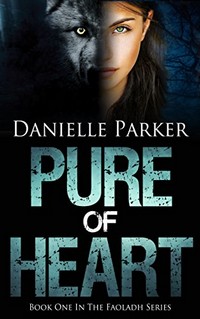
Pure of Heart by Danielle Parker: She’s Not Your Typical Werewolf and This Isn’t Your Typical UF

Too many months ago, Parker participated in a Q&A about writing in Idaho with me, now I have a chance to talk about her debut book!


Pure of HeartPure of Heart

by Danielle Parker

DETAILS:
Series: The Faoladh Series, Book One
Publication Date: September 27, 2015
Format: Paperback
Length: 328 pg.
Read Date: June 29-July 3, 2023

What’s Pure of Heart About?

In this world, werewolves are born, not made, and apparently begin changing around adolescence. In Harper’s case, this is dangerous—her parents died before they told her anything about lycanthropy and she had to learn about it along with the uncle who took her in and raised her from the age of eight. Grady knew his sister got furry every full moon, so it wasn’t a total surprise—but that’s about all he knew about werewolves.

She’s in her twenties now and pretty much all she knows is that chains can’t hold her down and that her wolf will kill and eat people if given the chance. Harper’s taken it upon herself to make sure that doesn’t happen again. Her uncle and friend/veterinarian regularly hunt her down and shoot her with tranquilizers when her wolf gets out of the house.

Harper’s entire life seems to revolve around not letting the wolf get out of control. Which seems like a lonely existence—and it pretty much is.

Until a new woman moves to the small Colorado town to take over her late grandparents’ bookstore. Something about Emerson affects the wolf part of her—Harper can’t even come close to understanding it. But her wolf immediately acts strangely (and we’re talking strangely for a werewolf, so it’s really strange) as soon as Harper meets Emerson.

Harper’s got to figure out what’s going on with the wolf before something happens to Emerson.

Parker’s Werewolves

I guess I should say “Faoladh” instead—but whatever. Keeping in line with her tumblr page’s title, Parker’s “Werewolves Don’t Sparkle.” Harper’s wolf is dangerous to everyone and everything (particularly doors/walls/fences). There’s little tame about her. We’re reminded of that constantly (bordering on too often).

This shows up in Harper, too—her wolf is always below the surface and keeps her from being too likable to many people. That’s a nice little touch and as (if?) Harper and her wolf start getting along better as the series continues, it’ll be good to see how that changes her.

The way she describes the change (particularly from human to wolf) is really good. Over the years of reading werewolf UF, it’s become one of those things that jump out at me to differentiate the authors’ take on lycanthropes and Parker’s strikes me as one of the better versions of that.

Harper and her family know incredibly little about her, um, condition. And it’s almost wholly from trial and error (mostly error). Because he didn’t manifest the werewolf heritage, Grady’s parents and sister didn’t bother to tell him much about it. I find that difficult to swallow, but I’m willing to do that for the sake of the story. I do appreciate that her cousin isn’t going to have this issue, he knows almost as much as the reader does. Harper stumbling through all of this practically blind makes it very easy for the reader to jump in with her and learn alongside her.

We are told a couple of times that there’s a difference between Faoladh and what we think of werewolves thanks to books and movies. But we have no reason to believe that yet—I really want to see us have that reason as well as see how that actually works out. I’m not saying that because I’m skeptical, but because I think both will refreshing and stimulating.

On a semi-related note, people in this town are quick to take a couple of clues and jump to the conclusion that “this woman must be a member of a species that I thought was the stuff of folklore and horror movies until right this second.” A little more self-doubt would’ve been nice, but it’d have slowed the book down too much.

So, what did I think about Pure of Heart?

I’m honestly not sure what I was expecting from this book—but it wasn’t what Pure of Heart ended up being. It’s a compelling read, for sure, just not for the reasons I’m used to in typical UF/werewolf novels, which is a pleasant change. For starters, there’s no big supernatural foe (unless you count Harper’s war within herself). It’s human drama, just with a massive side helping of the supernatural on board. Actually, I’ll just stop with that, too, so I don’t end up saying too much.

It’s also a great pastiche for Disney’s Beauty and The Beast—and once you start seeing that, it’s everywhere, adding a level of entertainment.

I don’t have a major problem with the romance arc that the book ended up focusing on, but it looked for a minute or two that we’d be swimming in strong and interesting platonic friendships, and those intrigue me more lately. So that was a minor disappointment, but just a minor one. I’m a little worried about the level of consent involved given the supernatural angle—see also, my qualms with Jolly’s BaIT—but Parker seems so focused on it, that I’m trusting her. Also, there’s reason to suspect that everyone involved is going to come to a greater understanding of Faoladh abilities soon, and that’ll give her a chance to assuage any feelings of creepiness.

Is it a wholly successful novel? Not quite—but it’s close enough to make getting (and reading) the second book a priority. The writing was compelling and engaging—Parker can tell a story and keep the reader curious and entertained the whole way. A lot of snark and love flows between her characters, Harper’s family/friends are a tight bunch and it’s hard to resist that feeling. Her characters brim with life. I think with another book or two under her belt, Parker could turn into a favorite author.

Check this one out, for sure.

3.5 Stars

20 Books of Summer
Literary Locals logo

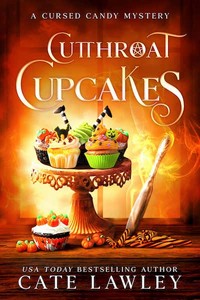
Cutthroat Cupcakes by Cate Lawley: This Cozy and Witchy Mystery Drips with Appeal

It’s been too long since I posted a Literary Locals book, so I’m glad to get a chance to do that again. I had a quick Q&A with Lawley a few months ago about writing in Idaho, if you’re curious.


Cutthroat CupcakesCutthroat Cupcakes

by Cake Lawley

DETAILS:
Series: Cursed Candy Mysteries, #1
Publication Date: July 21, 2020
Format: eBook
Length: 262 pgs.
Read Date: June 22, 2023

“How do you kill a person with a cupcake topper?”

“When it’s drenched with as much raw magic as yours are, so many different ways.” Sabrina ticked off options on her fingers. “As a potion additive, as part of a ritual, ingested by the magic-user to add to their own power. Yeah, those are probably the top three.”

“Yours was used to create a potion which was then added to a beverage the victim drank, from what we can tell,” Miles added helpfully.

I really didn’t feel so good.

What’s Cutthroat Cupcakes About?

Lina’s having a slow day in her store—a year-round custom-made candy store with a Halloween theme—when everything she knows about her family, herself, and the world as a whole changes.

Lina discovers that magic is real and that she’s a witch in one of the worst ways imaginable to learn these things—by being arrested by a supernatural cop for killing someone with an item you cursed.

This cop is a wizard with the International Criminal Witch Police who has a certain amount of leeway in his jurisdiction—since he’s easily convinced that Lina has no idea how she may have cursed the candies in her shop, he offers to cut a deal with her—if she helps to track down the person who used her unintentionally cursed items, he won’t pursue charges (ignorance of the law yada yada yada could still get her a few years as an Accessory). Apparently, once you know what you’re looking for it’s easier to find traces of your own magic than it is to find someone else’s, so it makes sense to recruit Lina into this investigation, even if she doesn’t know anything about the magical side of things.

Lina’s curious about this whole witch thing, desperate to not be convicted of a crime—and fairly attracted to this detective, truth be told. So she puts her store in the hands of a new (witch) acquaintance for a few days and takes the offer.

The Boise-ness of It All

“The three of you are it? For the entire city of Boise?”

Bastian huffed. “City? Town.”

“Hey, now. No smack-talking Boise.” I’d only lived here five years, but that was long enough to recognize that the place definitely had its charms.

“I’m not talking smack. I’m stating a fact. It’s a town, not a city. But to answer your question, the three of us cover the greater Boise area.” His lips pulled into a grimace. “Insomuch as there is a greater metro area.”

You know right away that this is some sort of fantasy—there’s no way that a homemade candy shop—particularly a Halloween-themed candy shop—survives in downtown Boise for as long as Lina’s has. Yes, the idea is appealing, but it’s easier to buy the idea of the magic, to be frank.

Outside of that, putting this series in Boise helps ground it—Lawley has some good fixed locations for things and is able to use that geography to her advantage. But no one who is unfamiliar with Idaho’s capital is going to suffer for it—it’s a nice bonus for those of us who make the same drive as Lina does to know how long it takes so we know how long the uncomfortable silence (or whatever) will be. But that’s about it.

The Cozy Factor

I drank my exceptional espresso with exactly the right amount of cream and tried to keep my annoyance at recent events to a minimum. Nothing like a rotten mood to ruin good caffeine.

This is pretty “cozy” on two fronts—the magic and the mystery. We only get very broad brushstrokes about magic, how it works, what it can/can’t do, the society of witches/warlocks/wizards, and so on. Lawley gives us enough details to keep the story moving. We do get to see some magic at work, and get a sense that some ritual and effort is necessary—but Lawley’s not coming at this like Butcher, Rowling, or Harrison.

The mystery part of the book is solidly in the cozy area as well—we’ve got a candy store owner, a detective who works out of a coffee shop, and a whole lot of generally nice people (even a suspect or two are pretty nice when you get to know them).

The effect of both of these is to make you as comfortable as if you’re relaxing with one of the some of the drinks and treats described while the world passes by.

So, what did I think about Cutthroat Cupcakes?

Maybe I should have dithered, asked for more information, heck, even asked for the questions first. But this was the guy who’d cured my headache. Despite having locked us in my store earlier and disabling my phones, he seemed a stand-up sort of guy. Maybe he wasn’t warm and fuzzy, but…I trusted him. And that’s saying a lot given the fact he arrested me.

I initially thought this seemed like a charming idea for a cozy mystery series, but I wasn’t prepared for the extent of its charms. I devoured* this in one sitting and if I owned it, I’d have likely rolled right into the sequel (I will be rectifying this situation soon). I want to use words like cute and adorable, but those both feel condescending, so I’m sticking with charming for now. Enchanting might work there, too. But that’s a little too something given all the witchiness of the book.

Lawley’s not afraid to have a little fun with the premise—the first (aware) witch we meet is named Sabrina, for crying out loud.

*Pun intended, naturally.

The characters are all great (I thought about spending some time talking about them, but why ruin your fun?). The candies are tantalizing—even for someone who abstains from sugar. The coffee shop owned by the detective (there’s not enough supernatural crime to be a full-time job in this area—and he needs a cover story for the non-magical folks) will cause cravings for sure.

Basically, this is a light-hearted, sweet, appealing, and charming book. I encourage you to grab a snack, pick up Cutthroat Cupcakes, and get lost in the world for a little while. You’ll feel better for it.


3.5 Stars

20 Books of Summer
Literary Locals logo

LITERARY LOCALS: A Q&A About Writing in Idaho with Amy Maren Rice

Literary Locals logo
A couple of months ago, my daughter and I met a handful of local authors at the Nampa Library’s Treasure Valley Indie Book Fair, and while there I talked a few of them into participating in this series. I remember having a fun chat with Amy Maren Rice while there, and was very happy she agreed to do this. Life and whatnot has delayed her appearance here, but I can finally bring you this fun Q&A with a newer author to the local area. Hopefully this isn’t her last appearance on this blog.

A personal highlight was the way she describes my daughter—which drove my daughter into a laughing fit so long that it almost started an asthmatic episode (she loves it and finds it ridiculous at the same time). I can’t tell you how often we’ve quoted that in the week or so since I received these answers.


Before we get into things, why don’t you give the reader a brief introduction to you and your work.
Oh gosh, all about me, hu? This is always a bit nerve-wracking. It reminds me of the first day of school which was always terror invoking.

Here goes. My name is Amy Maren Rice. I’m an American author of pre-teen fantasy and I was born in and am currently living in Idaho. I’ve always loved books and have had a desire to write since my teen years. While I’m, ahem, a bit past those years, the desire is still there and I finally took the dive. My first book was published in the fall of 2022, Fuzzwiggs the Switcheroo. It’s geared toward pre-teens, the age group my boys were when I dreamed up the story. We always had a hard time finding fun, interesting books that were at a high enough reading level so, I wrote one. It entertains but challenges their vocabulary and is good clean fun. As a parent this is what I was always on the lookout for. I didn’t anticipate where the book would take me, however, and found myself writing about Fuzzwiggs with fart powers. Growing up I wasn’t even allowed to say the word fart! Sorry Mom!

I have several links where you can find Fuzzwiggs The Switcheroo. Through Covenant Books who I worked with to publish, of course on Amazon.com, and I was really excited to see it online at Target, Walmart.com and Barnes & Noble. You can also find me on Facebook and Instagram.

Are you a native Idahoan? What is it about Idaho that keeps you here?
Yes! I was born and raised in Eastern Idaho and moved to the Western side shortly after I graduated from Idaho State University. There’s no place like home!

Are you tied into some sort of local author/bookish group/culture? If so, tell us about it and how it helps you as an author. If you’re not, is there a reason for it?
Nope … anxiety!!! I’m working on it! Ask me about it sometime and I’ll tell you about my rollercoaster of emotions and involuntary physical quirks. I’m always discovering new ones! It’s actually been a big journey for me to allow people to even read my book.

I hear that—so what was the final push to get you to put the book out in the world?
My desire to be an example to my children. I realized that they were struggling with some of the same social anxieties that I was and they needed me to be their example. I needed to show them that I was brave enough to do the things I was asking them to do and, if I failed, they needed to see that too because I could show them how to be resilient in the face of disappointment.

What kind of events in the area do you attend—either to sell/promote your books or to network with authors? Are there any outside of this area that you hit regularly and wish we had something like it here?
I’ve been to a few library-held events. My first one was where I met you! At one point, you mentioned that you get nervous approaching people about your blog and, well, while we were talking, I was secretly having a heart attack! I tend to say all the words at once and several on repeat. You seemed so cool with your blog and intimidatingly cool daughter and all the while I was hoping you wouldn’t see through my facade of claiming to be a real author. I’m still waiting for someone to find me out.

I definitely wish we had more venues to connect with readers and other local writers. It was the biggest thrill when an eight-year-old saw me at another event after she had bought my book and came to meet me. I mean, just wow!

What a rush that must’ve been. I’m assuming most of your feedback has been pretty positive at this point—anything else stand out to you? Do you have plans to look into other avenues (craft/art fairs, bazaars, etc.?) Or are you just dipping a toe in the water until your anxieties quiet down a little bit?
Yes, it was! I really enjoy talking with kids. Adults are a bit harder.

People who attend literary events tend to be kind because they’re there for the books. They have the same love for them as you do, so yes, I’ve had mostly a positive experience so far. Fingers crossed, eyes closed and breath held – a nod to Jasper’s good luck charm in Fuzzwiggs the Switcheroo.

Toes are being dipped, but I’m open to other events if I feel it’s a good fit.

What’s the breakdown of your audience—do you have a strong local base, or are your readers from other parts of the world?
Oh gosh, I’m just grateful to have readers! Fuzzwiggs the Switcheroo came out last fall and I have had a ton of support locally, both here and in Eastern Idaho. It’s written for kids in that mid-range of 8-13 but I have a lot of adult readers too. They tell me it’s not just for kids!

I’ve seen my book listed in all sorts of places all over the world like Australia, Austria, Poland, Romania, The UK, Germany and China. What a rush! I became a stalker of Google listings for Fuzzwiggs last year and took a screen shot of every single one I found for the dopamine!

Have you had any interaction via social media or anything with any out-of-country readers? Or for now is your foreign dopamine coming from the listings?
I have foreign sales but haven’t interacted with any readers outside the US. That would be a rush though. Talk about dopamine!

Do you bring Idaho (or some sort of Idaho-sensibility, assuming one exists) to your work? Whether or not anyone else sees it, can you look at some aspect of your writing and think “That’s Idaho” or “I would do ____ differently if I was a Kentuckian or from Illinois?”
I do bring my version of Idaho to the book and a few of my experiences growing up here. It takes place in an Idaho mountain setting where my two main characters, young brothers, are new to the area and I get to explain some unique Idaho things through their eyes.

Hmm, Idaho-sensibility. What’s interesting about Idaho is that we all do seem to have a collective Idaho-ness about us but you see a range of different lifestyles here. I grew up growing a garden that was essential for our family’s food source. If we needed it, we grew it, made it or built it. My father built the house I grew up in. My husband grew up on a golf course, my friend grew up on a cattle farm, another in a double-wide trailer they could barely afford the rent on and another in the largest home in the whole town with luxury cars, boats and vacation homes. But we all had commonalities in the way we acted and how families were at the center of everything we did. A feeling goodness permeated my childhood. For the most part, that’s something I feel is prevalent in Idaho. I hope you feel that in my writing. I wanted to bring that goodness to my characters. They go through their journey and have their faults, but eventually they show their true colors as good, kind kids. Throw in a little magic and a plethora of farts and you have my very first book Fuzzwigg the Switcheroo!

Thanks for your time and participation! Hope you enjoyed it!
Thank you for inviting me to participate. Another notch on my “learning to try new things” belt! I had a great time.


Literary Locals logo

Grandpappy’s Corner: George the Bannana: Book One by Elliott Linker: The Origin of a Superhero (and his Writer!)

Be sure to come back this afternoon for a Q&A with the writer!


Grandpappy's Corner Logo

George the Bannana: Book One

by Elliott Linker

DETAILS:
Series: George the Bannana, #1
Publication Date: January 13, 2023
Format: Paperback
Length: 25 pgs.
Read Date: March 18, 2023

What’s George the Bannana: Book One About?

Here’s the back of the book description:

Elliott’s best friend, George, suddenly turns into a banana! Elliott is scared of what people will think and inadvertently hurts George’s feelings. Trying to save his friendship with George, Elliott helps turn George into a super hero! Together they embark on a wild adventure.

I can’t think of a better way to put it or anything to add.

Let’s Talk about the Art for a Minute

The art looks like the product of an elementary school artist, so it’s rough, a little haphazard, and lacking in detail. Granted. It’s also dynamic, consistent (even the anonymous bad guys look the same from panel to panel), and engaging.

The coloring and shading are really well done, and elevate the work. The action scenes really work well—and Linker makes the wise move to take a break for the occasional cloud full of “Bam” “Kick Kick” “Punch Punch” “Kapow”—leaving it to the reader’s imagination (and saving him a lot of work).

Best of all, the art fits the story.

So, what did I think about George the Bannana: Book One?

This made me so happy to read—it’s clearly the product of an imaginative youth expressing himself. The story is ridiculous in the way that only a child can let one be—feeling both out of control with random elements, yet somehow sticking to an outline. Linker knows what the arc of a superhero story should be and executes it—he may not quite understand how to get from Point A to Point B, but he gets there through sheer determination and will (and this is the most enjoyable part for me).

Linker was 8 when he created this work—9 when he published it, which is just great. It also makes me want to focus on something in the description—Elliott isn’t the superhero, he’s the side-kick (who will need to be rescued). He’s also the guy who was a jerk to his best friend. Big choices that say a lot about the author.

I’ve got to say, I don’t know how many kids would take a moment to have George confront Elliott with how he made him feel when George became a banana (I’m certain I wouldn’t have at his age). That one moment made this a winner in my book—but so did many of the others.

The bonus of including a preview of Book Two in black and white for the reader to color? Very clever and very fun.

The entire time I read this, the back of my mind kept saying “He must have had such a blast writing and drawing this.” That joy was infectious so I had a blast reading it, and I can’t imagine any adult having a similar reaction. One of Linker’s contemporaries probably would, too—and maybe find the inspiration to tell their own story, too.


3 Stars

Grandpappy IconLiterary Locals logo

Page 6 of 8

Powered by WordPress & Theme by Anders Norén