Category: Blog Series Page 105 of 230

WWW Wednesday, November 23, 2022

Here on the Eve of Gluttony Day (or whatever we’re calling it this year), I’m going to take a moment and see to this week’s WWW Wednesday.

This meme was formerly hosted by MizB at A Daily Rhythm and revived on Taking on a World of Words—and shown to me by Aurore-Anne-Chehoke at Diary-of-a-black-city-girl.

The Three Ws are:

What are you currently reading?
What did you recently finish reading?
What do you think you’ll read next?

Easy enough, right?

What are you currently reading?

I’m reading Dead Lions by Mick Herron (and spending a good deal of time berating myself for putting this off for so long) and am listening to The Mutual Friend by Carter Bays, George Newbern (Narrator) on audiobook (and am wondering if it’s worth the time).

Dead LionsBlank SpaceThe Mututal Friend

What did you recently finish reading?

I just finished Darynda Jones’ A Hard Day for a Hangover—which is as fun as its predecessors—and Druid Vices and a Vodka by Annette Marie, Cris Dukehart (Narrator) on audio—and that ending really surprised me.

A Hard Day for a HangoverBlank SpaceDruid Vices and a Vodka

What do you think you’ll read next?

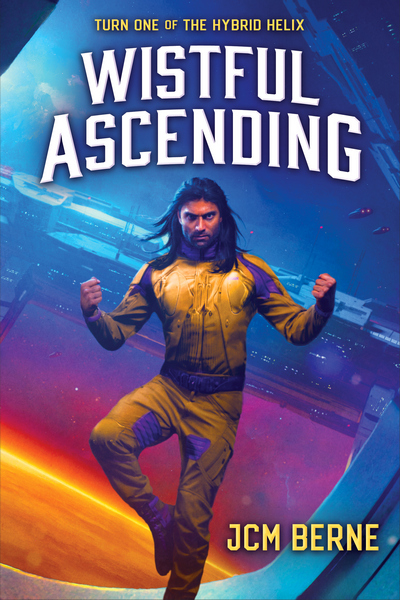
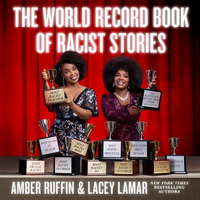
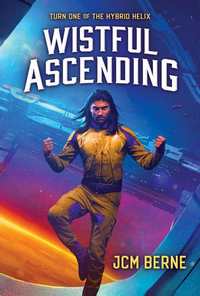
My next book should be Wistful Ascending by JCM Berne for a tour next week and my next audiobook should be The World Record Book of Racist Stories by Amber Ruffin & Lacey Lamar to raise my blood pressure (and give me a few chuckles).

Wistful AscendingBlank SpaceThe World Record Book of Racist Stories

Are you especially thankful for any reads this week? (or are you suffering through a turkey?)

A Few Quick Questions with…Marshall Karp

Marshall KarpWe’ve reached the end of my little Marshall Karp Appreciation Day posts—I talked a little about how I fanboy-ed on him earlier, I’ve posted about his New Release, NYPD Red 7: The Murder Sorority, I posted about his summer release, Snowstorm in August, and now I get to pick his brain a little about his career and books. It’s probably clear from the questions, but my focus was on Snowstorm in August, not today’s new release, but it’s still good to hear from the author regardless, and some of this fits with that series, anyway. I hope you enjoyed this 1/10th as much as I did.


Let’s start by introducing yourself to the readers by sketching out your path to publication (bonus points for working in a pitch for the Lomax & Biggs books)
My path? That’s like saying to a lab rat who finally got to the center of the maze, tell us about your Path to Cheese. I just started running. Every time I hit a wall I’d get up, and run the other way. Did I follow a path? No. But I could always smell the cheese.

I was born a writer. It’s something you realize at an early age, like if you’re born a natural athlete, or a singer, or a conjoined twin. But I didn’t think of writing as a career. In my senior year of high school, I decided I’d become a dentist, but happily, my plans crashed and burned when I flunked biology in college. I also started working on the school newspaper, and I realized how much I loved — no, wait — needed to write.

After college I got a job as an advertising copywriter. I was good at it. But the punishment for being an award-winning writer is to put you in charge of a large creative department and pay you not to write. It was fun for a while, and then I had my first midlife crisis. I’m a writer. Am I going to spend the rest of my life not writing?

So that summer, I sat down and wrote a play, Squabbles. Some people in TV noticed it, and suddenly I was the flavor of the month. So off I went to Hollywood. Dozens of TV shows and a feature film later, I came back to New York, caught the dotcom wave, opened up an Internet ad agency, did well, sold the company, and finally sat down to write that book.

I figured it would take six months. I was wrong, and for the next five years I slogged along. That so-called path was filled with rookie mistakes, paralyzing self-doubt, and crushing rejections. And then one day, I got the call. Someone wanted to publish my first novel, The Rabbit Factory. I’ve made it, I thought. I can cross “write book, get it published” off my bucket list. But apparently, Mike Lomax and Terry Biggs, my two LAPD detectives, caught on. People wanted more. Fourteen books into my career, I’m still at it. What can I say? I like the cheese.

I can’t imagine that I’m going to get to ask this question a lot, but what was the process like getting the co-writing gig with James Patterson? I don’t imagine it’s like most writing collaborations. And once you got the job, was it more exciting or intimidating? (or after your years in TV and Film, are you at the point where a job is a job?)
I had worked with Jim in advertising. e had given me some brilliant storytelling advice when I sat down to write my first book. But the day he called to ask if I’d write a book with him was mind-jarring. After four Lomax and Biggs books that fell into the Critically-Acclaimed-but-Not-Gonna-Pay-The-Rent category, I was being offered the opportunity to collaborate on a book that I knew had a shot at the #1 slot on the New York Times bestseller list.

The process was simple. Jim came up with the outline. I fleshed it out and started sending him chapters. The book, Kill Me If You Can, hit #1. And then I did something most writers never do. I pitched an idea to James Patterson. A hand-picked squad of NYPD cops who answer the call whenever a crime is committed against New York City’s rich and famous. An elite task force called NYPD RED.

He loved it. We produced six bestselling NYPD RED books together, and then it happened: James Patterson announced, “I’m thrilled to have Marshall Karp take on the NYPD RED series.” It doesn’t get any headier (or scarier) than that. It was both exciting and intimidating. Exhilarating and petrifying. And for me, writing — writing anything — is never a job. It’s a joy.

Moving on to Snowstorm in August—how do you possibly research these things (I’m thinking particularly of the Central Park attack) without landing yourself on a few dozen watchlists? (that’s mostly a joke, but I’m serious—how do you go about researching all these things?)
I Google weird shit dozens of times a day. In the first chapter of my first book, The Rabbit Factory, I killed a pedophile. I researched their behavior, their backgrounds, and their modi operandi, so I’m pretty sure I made the Big Brother watchlists early on.

A word about research — sometimes accuracy is critical. When I was trying to have a character shove a toaster oven down an incinerator chute in a New York City apartment building, I called the company in Florida that makes the chutes and talked to one of their technicians. His first question — “Why would anyone want to shove a toaster oven down an incinerator chute?” I said, “Because there’s a bomb in the toaster oven, and the guy is a cop. Now … can he get it in, and what happens to the chute when the bomb goes off in the basement?” We talked for an hour. Another upstanding citizen sucked into my life of crime.

But sometimes accuracy is impossible. When I was writing Snowstorm In August, I remember asking Google, “How many tons of cocaine would it take to blanket Central Park?” All I got in return were drug laws, street prices, and a link to join the Central Park Conservancy. So I asked Siri, and she responded with, “There are seven drug rehabilitation clinics near you.” Eventually, my friend, retired NYPD homicide detective Danny Corcoran, helped me come up with an answer: four tons. It may be right; it may be wrong. Who’s gonna argue?

The idea of a (at least somewhat) benevolent shadowy cabal of billionaires seems fairly novel. Where does an idea like this come from—was it a product of “I need a funding source for this team” or a “what if I had this group of billionaires wanting to do some good, what could I do with that?”
Definitely the former. I had a Mission Impossible-style team. They needed an unlimited budget. Enter the Baltic Avenue Group, four billionaires who are willing to secretly fund the team. Not because they’re do-gooders, but because they are well aware that the September 11 terrorist attacks cost New York City three billion dollars. And since their individual wealth is directly tied to the financial and political stability of the city, they are willing to spend millions to safeguard their billions.

I haven’t read that many people who’ve done this (maybe only you), so I have to ask—is there a difference between writing LAPD detectives and NYPD detectives? Or is it the characters or what the book/series calls for that makes the difference?
That’s a great question. I think the best way to answer is to come back at you with a few questions of my own. Is there a difference between New York and LA? Is there a difference between Los Angelinos and New Yorkers? Having lived in LA for two years I can answer those questions in one word. Duh! The NYPD RED books are steeped in the lore, the culture, and the attitude of New York. My Lomax and Biggs books are so Hollywood-centric, you can practically smell the bullshit in the world they live in. But here’s a fine point. Mike Lomax was born in LA. He has that casual Southern California way of winning people over. His partner Terry Biggs is much more of an in-your-face cop. That’s because Terry is a transplant. He was born and raised on the tough streets of New York and that “you talkin’ to me?” charm oozes from every pore.

Before we wrap things up, I have to give you a chance to talk about Vitamin Angels. Please tell us about it—and how readers can help.
On September 11, 2001 my daughter Sarah had just arrived at the World Trade Center when American Airlines flight 11 crashed into the North Tower. An eternity would pass before I knew she survived, and the agony of watching the towers collapse until I got the joyful news was unbearable.

Thirty-six hours later I finally got to see Sarah, and that first embrace has forever been enshrined in our Father-Daughter chronicles as The Best Hug Ever. As I held her in my arms, I made a vow. Do something. Pay the universe back for sparing my child.

I searched the Internet until I stumbled on Vitamin Angels. One man, Howard Schiffer, made it his mission to find companies willing to donate vitamins, and then he’d distribute them through local relief groups in 20 countries.

I asked him what was the biggest global problem that vitamins could solve? “Five hundred thousand children around the world go blind from Vitamin A deficiency,” he said. “We know the solution — a high dose of Vitamin A administered every six months. It would only cost 25 cents a year to save one child’s life. But we don’t have the money.”

“Corporations have money,” I said. So I went to Johnson and Johnson and asked if they would be the first to sponsor a program to eradicate Vitamin A deficiency childhood blindness on the planet by the year 2020. They agreed. That first year we reached 200,000 children. Two years later it was a million.

Today, Vitamin Angels is bringing life-saving nutrition to 70 million children and nursing mothers around the world. And all it costs is 25 cents to save one child’s life.

Your readers can donate through my website or directly to Vitamin Angels.

You’ve got the next NYPD Red book coming soon, and presumably more of them to come, what else should readers expect to come from Marshall Karp?
NYPD RED 7: THE MURDER SORORITY will be released on Nov 22. Publishers Weekly gave it a coveted starred review and called it “the best yet in the series.” Pretty heady, since it’s the first one I’ve written since Patterson turned the reins over to me. Your readers — even if they haven’t read any of the previous NYPD RED books — can read this one first. Like episodes of Law & Order, each book stands on its own.

I’m not sure what I will be writing next, but I would be thrilled if you told them about Lomax and Biggs. I’ve just reissued all five books on Amazon in paperback and Kindle. You can also find them as e-books on Smashwords. Start with The Rabbit Factory. (It’s where my life of crime began.)

Thanks for your time, and I hope you have a lot of success with Snowstorm in August, I had a great time with it.


A Few Quick Questions with…James Brayken

Earlier today, I posted about James Brayken’s debut, The Veiled Edge of Contact (please give it a look if you haven’t seen it yet). Now I get to ask the author a few questions. I really appreciated his answers and time. Hope you enjoy this!


Why don’t we start off with you telling us a little about yourself, what got you into writing/your path to publication, and so on.
Ever since I was a teenager I wanted to write novels, but for a long time I didn’t seriously pursue that goal because whenever I sat down to write, I found I didn’t really know how to effectively express the ideas in my head. So, I would stop before giving my ideas much of a chance. Not until I took up drawing as a hobby did I fully appreciate that you need to work through the initial difficulty when you first put pencil to paper and what comes out isn’t what you intended. Rather than stop in disappointment, I realized I needed to keep drawing and redrawing, and the improvement was visually obvious. They say that writing is mostly rewriting, and once I fully digested that, everything changed.

How much of James Brayken is there in Okon (or another character from the book)?
Ha, hopefully Okon and I don’t share too many characteristics. But admittedly, I would imagine there is a bit of me in all of the book’s characters. Some of these shared characteristics I’m aware of and some, I’m sure, I’m completely oblivious to. That said, I think who we are is many-sided and fluctuating, i.e., I think we all have the capacity to be a bit Okon-like from time to time.

Clearly (well, it seems clear to me), the stories told here aren’t something you arrive at all at once, can you describe the genesis of the idea?
In the early stages, I naturally turned to the things that were of interest to me. In fact, I have a rule that I only write about what I’m personally interested in rather than what I think others might like. I’ve always been fascinated by the existence of uncontacted tribes (although they are growing fewer in number, there are still at least a hundred uncontacted tribes out there according to estimates), and I’ve always been captivated by the idea of extraterrestrial contact and what the outcome of this might be. I think the genesis point came when I began exploring how different levels and types of “first contact” might be overlaid in the same story, and this theme formed the foundation of the narrative for The Veiled Edge of Contact.

All authors have more ideas running around in their head than they can possibly develop—what was it about this idea that made you commit to it?
I do recall being acutely aware that I could forever flit between entirely different ideas and never develop any of them to any substantial degree. And so, I made another rule (I like giving myself rules) that I would stick with my uncontacted tribe/alien contact premise because I was personally excited by the potential scenarios that might unfold. I kept playing with that premise until (after many many iterations of ideas and drafts) I had a fully fledged story that I was happy with.

Not to pick a fight here, but you’ve described the book as “genre-breaking.” I’m not sure that I buy that. In your mind, what do you mean by that phrase and how does your novel do that?
I use the term “genre-breaking” as shorthand communication to potential readers that this science fiction novel breaks a number of first contact sci fi conventions. It’s tricky to be too specific about this without giving spoilers, but I want readers to know up front that this book is going to be different from what they might typically expect of a first contact story, and feedback from readers seems to agree that this book is “different”, “surprising”, “unusual”, “refreshing”, etc.

Just to add, I have no issue with conventions. I love them, in fact. They are integral to how we communicate through narrative, and The Veiled Edge of Contact certainly contains conventions including those that place the book firmly within the genre of sci fi (advanced tech, extraterrestrials, etc.). But the story also contains a number of atypical elements and atypical turns. This is what I want potential readers to be aware of so they can make an informed decision as to whether the book is something they might like.

It’s hard to pick just one or two things to focus on to ask about that don’t involve spoiling the whole book…but I want to talk about Ratu for a minute. I don’t know precisely what to ask—just tell the reader something you want to know about him.
I really enjoyed developing the character of Ratu and in particular his interactions with Okon. I have a theory that “outsiders” tend to be drawn to each other, perhaps sometimes by necessity, even if they have nothing in common except the fact that they don’t fit in very well elsewhere. That in itself can be a bond. I view Okon and Ratu in this way. They squabble like siblings but are initially bonded by their outsider-like status. Another reason I enjoyed developing Ratu’s character is that he annoys the other characters and through doing so we get to learn more about not just Ratu but also those he has annoyed—usually Okon. Not that Ratu is the only tribe member to rub others the wrong way. Far from it. I was very keen for the Wuchumbu to be a living, breathing collection of individuals, each with their own set of idiosyncrasies and opinions. And the result is they bicker a lot.

What was the harder thing to develop and write about—the SF future tech and culture or the culture and practices of the Wuchumbu?
I’d say I found the culture of the Wuchumbu to be less difficult to develop and write about than the SF future tech. Perhaps I felt this way simply because I so much enjoyed bringing the Wuchumbu to life—establishing their values and cultural practices, defining what it is that unites them and makes them Wuchumbu and what it is that separates them from their fellow tribe members. In my view, the tribe are the lifeblood of the novel, and, ultimately, it’s the characters that cause us to invest in a story, right? Well, for me that’s the case.

Who are some of your major influences? (whether or not you think those influences can be seen in your work—you know they’re there)
If we are talking about artists, writers, and filmmakers then my thoughts initially turn to the cyberpunk genre. Although The Veiled Edge of Contact isn’t cyberpunk, I am a big fan of the genre and I’m sure it has influenced me and will continue to do so. The classics of cyberpunk (including proto-cyberpunk) have probably influenced me most, such as Neuromancer (William Gibson), Do Androids Dream of Electric Sheep? (Philip K. Dick), both Blade Runner movies (Ridley Scott and Denis Villeneuve), and the original Ghost in the Shell manga (Masamune Shirow). I imagine the cyberpunk influence will become more apparent the more work I produce. I’m also a fan of horror and so there will be some influences creeping in from there too.

I wouldn’t have guessed cyberpunk to be in that spot (there’s a reason I say “you know they’re there”), but I have to say after reading that answer that I can see that in the background of the novel (deep background, maybe—it’s in the DNA).
Let’s play “Online Bookstore Algorithm.” What are 3-5 books whose readers may like The Veiled Edge of Contact?
Okay. I promise I won’t cheat by looking at the Goodreads “Readers Also Enjoyed” section. So, I think if you like sci fi stories (or any story really) that involve unusual scenarios with some humor and darkness thrown in the mix, then you may well like The Veiled Edge of Contact. With that in mind, I’ll include Annihilation by Jeff VanderMeer in my answer for its unusual scenario and darkness. Annihilation is a very different type of book than mine, but there are some similarities in subject. I’d also include Oryx and Crake by Margaret Atwood for its eccentricity and humor. And finally, The Gone World by Tom Sweterlitsch for its dark tone—a tone that sometimes surfaces in The Veiled Edge of Contact.

Disclaimer: I find it difficult to predict what people will like. It seems to me that taste is a complex beast.

What’s next for James Brayken, author?
I’m presently developing the idea for my second novel, which will also be science fiction, and I intend to publish it some time in the second half of 2023. Well, actually, I’m developing two ideas concurrently as I’ve been unable to decide which one to go with next. Hopefully I’ll be able make that decision soon. I’ll probably need to make another rule for myself!

Thanks for your time—and thanks for The Veiled Edge of Contact, I was swept up in it and I hope you have plenty of success with it.
Thank you, H.C. Newton. It’s been a pleasure.


Saturday Miscellany—11/19/22

It’s been a quiet week on the blog, I know. I’m going through one of those spells where I just have no energy and fall asleep at my keyboard while writing. I managed to get 1/3 of my planned posts for the week up. So now I have no energy and a paralyzing anxiety about things that pretty much only I care about. It’s a fun combination, I highly recommend avoiding it🙂 I trust that I’ll shake it off (I always have before), but in the meantime, expect things to be slim around here.

Meanwhile, I’m hoping that the people who keep Twitter going are able to stabilize that ship, because despite all the helpful posts about going to Mastadon, I just don’t feel smart enough to figure it out (and yes, I’m this close to hiring one of my kids to do set it up for me…I can’t believe I’m at the age where I’m relying on my kids to do this for me). I hope I don’t lose track of all of you in the seemingly-immanent collapse.

But for now, here’s a quick miscellany to wrap up the week!

Odds ‘n ends about books and reading that caught my eye this week. You’ve probably seen some/most/all of them, but just in case:
bullet 125 Most Borrowed Books—In honor of its 125th Anniversary, the Brooklyn Public Library posted a list of its 125 most-borrowed books. It’s a fun list and one that gives a pretty clear view of their primary borrowing demographic.
bullet Author Sarah Maclean shared a handy-dandy thread on how to keep up with favorite authors in a post-Twitter world
bullet Behind the Blue Wall: How my time in the LAPD Academy helped Shape My Series—Aaron Philip Clark gives some background for his series
bullet Damppebbles’s annual recommendation-fest, #R3COMM3ND3D keeps chugging along and the hits keep coming—some great-looking reads this week (as per usual).
bullet …with #BookBlogger Carol
bullet …with #BookBlogger HC Newton (what does he know, anyway? Guy can’t even handle social media platforms)
bullet …with #Author Joy Kluver
bullet …with #BookBlogger J – LoveBooksReadBooks
bullet …with #Bookstagrammer Zoebeesbooks
bullet …with #Bookstagrammer Lynda Checkley
bullet …with #BookBlogger Namrata Ganti
bullet ’Tis the Season to Buy Books … for Other People—a guide to giving books as gifts. Not just for the upcoming season, these suggestions apply year-round.
bullet Christmas gift ideas for book lovers – edition 2022-2023—even for those of us not big on certain seasonal observances, I enjoy looking at this kind of posts (and really like #3)
bullet The Six Stages of Having Too Many Books—I can relate to this—also, I think it’s amusing enough to justify putting up with The New Yorker trying to sell a subscription.
bullet Is listening to an audiobook, reading?—Are we all fed up with this question yet? Delany makes his position clear early on.
bullet In Defence of Nasty Reviews—preach it! That line from Joanna Russ is one I’m going to employ at every opportunity.

A Book-ish Related Podcast episode (or two) you might want to give a listen to:
bullet Page Break with Brian McClellan Ep 55 – Nicholas Eames – Epic Fantasy Author—a fun chat, and a little glimpse at the next book in the trilogy

This Week’s New Releases that I’m Excited About and/or You’ll Probably See Here Soon:
bullet title by Cherie Priest—everyone’s favorite Travel Agent/rookie psychic is back in this strong follow-up. I opined about it a couple of weeks ago (back when I seemed to be able to write things).
bullet Have I Told You This Already?: Stories I Don’t Want to Forget to Remember by Lauren Graham—I find Graham’s writing as least as charming as her acting, so I can’t wait to dive into this jog down memory lane. (Also, it’ll check off one of the last book challenge items I have this year.)
bullet The Twist of a Knife by Anthony Horowitz—Horowitz himself (well, the fictional one) is the prime suspect in this book’s murder—will Hawthorne be able to help him? More importantly, will he want to?
bullet Welcome to the Game by Craig Henderson—I can’t resist a good high-speed car scene in print or in film, this one looks like it should have a few (and probably some other gripping material).
bullet How to Survive Everything by Ewan Morrison—An estranged father kidnaps his teenaged children to help them survive an impending pandemic that he’s certain is around the corner (even if no one else is).

Lastly, I’d like to say hi and extend a warm welcome to yvonnembee, who followed the blog this week. I hope you enjoy the content and keep coming back.

The Friday 56 for 11/18/22: Theft of Swords by Michael J. Sullivan

The Friday 56This is a weekly bloghop hosted by Freda’s Voice.

RULES:
The Friday 56 Grab a book, any book.
The Friday 56 Turn to Page 56 or 56% on your ereader. If you have to improvise, that is okay.
The Friday 56 Find a snippet, short and sweet.
The Friday 56 Post it.

from Page 56 of:
Theft of Swords

Theft of Swords by Michael J. Sullivan

The room was unused.

Hadrian remained silent near the window as Royce moved across the room to the door. He watched as the thief’s feet tested the surface of the floor before committing his weight. Royce mentioned once how he had been in an attic on a job when he hit a weak board and fell through the bedroom ceiling. This floor was stone, but even stones sometimes had loose mortar or contained hidden traps or alarms. Royce made it to the door, where he crouched and paused to listen. He motioned a sign for walking with his hand and then began counting on his fingers for Hadrian to see. There was a pause, and then he repeated the signal. Hadrian crossed the room to join his friend and the two sat waiting for several minutes in silence.

Eventually Royce lifted the latch with gloved hands but did not open the door. Outside they could hear the heavy footfalls of hard boots on stone, first one set, and then a second. As the steps faded, Royce opened the door slightly and peered out. The hall was empty.

Book Blogger Hop: Are You a Voracious Reader or a Book Nerd?

Book Blogger Hop


This prompt was submitted by Billy @ Coffee Addicted Writer:

Which do you prefer to be known as: a voracious reader or a book nerd?

If I’m going to limit myself to those choices, I guess I’d probably go with “voracious reader”. I like the term book nerd, though, and would answer to it unthinkingly. But voracious seems to fit me better (although it also feels like an understatement…from my first reading to today, I saw myself in Scout Finch’s “Until I feared I would lose it, I never loved to read. One does not love breathing.”).

However, if I’m not limiting myself to those options, I have a few other ideas:
bullet The ubiquitous Book Wyrm/Book Dragon label
bullet A Book Shark (à la “I always read. You know how sharks have to keep swimming or they die? I’m like that. If I stop reading, I die.” as Patrick Rothfuss has said)
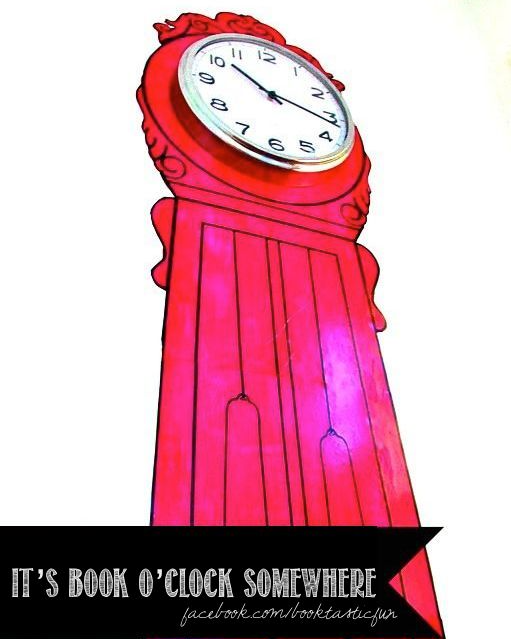
bullet An Irresponsible Reader (see this comic, and, well…the banner above)
bullet A Bookish Weirdo (thanks, Fahrenheit Press merch!)
bullet But I think my favorite description is something I stumbled onto via a Kevin Hearne tweet: “ink drinker” (buveur d’encre) (see this post from bluesyemre for other nifty international terms).

How do you self-identify as readers?

WWW Wednesday, November 16, 2022

We’ve reached the midway point for the week, and it’s about time that I actually produce something. Let’s start with this week’s WWW Wednesday and see if I can manage anything else.

This meme was formerly hosted by MizB at A Daily Rhythm and revived on Taking on a World of Words—and shown to me by Aurore-Anne-Chehoke at Diary-of-a-black-city-girl.

The Three Ws are:

What are you currently reading?
What did you recently finish reading?
What do you think you’ll read next?

Easy enough, right?

What are you currently reading?

I’m having a blast with Theft of Swords by Michael J. Sullivan and I’m listening to Missing Pieces by Peter Grainger, Gildart Jackson (Narrator) on audiobook. I’m a little worried about what I’m going to do now that I’m a couple of hours short of being totally caught up on this series. I guess it’s about time to start it again.

Theft of SwordsBlank SpaceMissing Pieces

What did you recently finish reading?

I just finished Michael Connelly’s Desert Star (hopefully you’ll read my take on it later today) and All These Worlds by Dennis E. Taylor, Ray Porter (Narrator) on audio—this series keeps getting better..

Desert StarBlank SpaceAll These Worlds

What do you think you’ll read next?

My next book should be A Hard Day for a Hangover by Darynda Jones and my next audiobook should be Druid Vices and a Vodka by Annette Marie, Cris Dukehart (Narrator).

A Hard Day for a HangoverBlank SpaceDruid Vices and a Vodka

What about you?

Saturday Miscellany—11/12/22

Between Twitter collapsing and insert-your-own-description of Election Day, I didn’t see a lot of bookish things to read this week (could be me being distracted by the books I was working on more than the other items, honestly). So this is going to be another skimpy entry. By all means, point me at things you think I missed. We’ve also got the holiday season commencing, so that typical results in a plethora of things to read or a real desert.

Odds ‘n ends about books and reading that caught my eye this week. You’ve probably seen some/most/all of them, but just in case:
bullet Today in AWWWW: Reading out loud to dogs improves literacy in kids.—Along these lines, my daughter’s work has taken her to a few events at a local library where kids can read to therapy-dogs-in-training, as a way to help both participants. Which is about the most wholesome thing I can think of.
bullet 5 Helpful Ways to Overcome Reader’s Block—I’m pretty sure almost every piece on Blocks/Slumps I share has these tips, but who knows… (I just can’t help myself)
bullet Carlisle author MW Craven’s detective Washington Poe gives boost to Cumbria—a nice side effect to being the home of one of the greats
bullet Damppebbles’s annual recommendation-fest, #R3COMM3ND3D, is in full swing—be sure to drop by for all the temptation and maybe a new favorite or twelve:
bullet …with BookBlogger Joanne
bullet …with BookBlogger Kate
bullet …with BookBlogger Anita
bullet …with BookBlogger Emily Quinn
bullet …with Blogger, Reviewer and CrimeFictionCommentator Ayo Onatade
bullet …with Author Pernille Hughes
bullet …with Bookstagrammer Charlotte Bonner
bullet The Anxiety of the TBR Shelf—co-sign
bullet 23 of the Most Iconic Young Adult Books of All Time—I don’t consider myself much of a YA reader (not opposed to it, but, you know), but I’ve read a larger number of these than I’d expected to
bullet 5 Millennial-Approved Young Adult Book Series That Are Still Going Strong

A Book-ish Related Podcast episode (or two) you might want to give a listen to:
bullet The Thriller Zone Episode 105: Robert Crais, author of Racing The Light—a short and snappy chat with the great

This Week’s New Releases that I’m Excited About and/or You’ll Probably See Here Soon:
bullet Desert Star by Michael Connelly—Ballard gives Bosch one last shot at his White Whale—the killer of a family of four who has gotten away with it for far too long. Expect a very positive post from me next week.
bullet Now Is Not the Time to Panic by Kevin Wilson—like most Wilson books, this seems to defy summarizing in a line or two. Click the link for a description.
bullet Blue Like Me by Aaron Philip Clark—this sequel to Under Color of Law puts the LAPD detective-turned-PI on the hunt for a cop-killer.

The Friday 56 for 11/11/22: Less by Andrew by Sean Greer

The Friday 56This is a weekly bloghop hosted by Freda’s Voice.

RULES:
The Friday 56 Grab a book, any book.
The Friday 56 Turn to Page 56 or 56% on your ereader. If you have to improvise, that is okay.
The Friday 56 Find a snippet, short and sweet.
The Friday 56 Post it.

from Page 56 of:
Less

Less by Andrew by Sean Greer

“Do you think of yourself as a genius, Arthur?”

“What? Me?”

Apparently the Head takes that as a no. “You and me. we’ve met geniuses. And we know we’re not like them, don’t we? What is it like to go on, knowing you are not a genius, knowing you are a mediocrity? I think it’s the worst kind of hell.”

“Well,” Less said. “I think there’s something between genius and mediocrity—”

“That’s what Virgil never showed Dante. He showed him Plato and Aristotle in a pagan paradise. But what about the lesser minds? Are we consigned to the flames?”

“No, I guess,” Less offers, “just to conferences like this one.”

Book Blogger Hop: Which Came First, the Book or the Movie?

Book Blogger Hop


This prompt was submitted by Billy @ Coffee Addicted Writer:

Do you watch film adaptations of books before reading them?

Almost always I read the book first. I want my imagination to be the dominant vision in my head. For example, I don’t want to put up with Gary Oldman as Jackson Lamb in my head when I read a Herron novel, as fantastic as he was (or as Dracula, or as Sirius Black). Having my mental image and the character’s voice firmly established, I can watch Slow Horses and enjoy Oldman’s take on the character.

This has backfired on me a few times, mostly when the adaptations are so divorced from the source material that it hurts the experience. take The Water Horse. I read that to/with my kids before the movie came out because we all wanted that experience. And boy howdy, could that movie have been more different from the book? I think it was perfectly nice and we’d have probably enjoyed it more had we not known the book.

Sometimes, I don’t care enough about the book based on what I’ve heard/adaptation trailer I’ve seen to care, and will watch the show/movie first. Occasionally, actually seeing the adaptation will make me reconsider and grab the book (I can’t come up with an example at the moment to use here, which is a shame).

Rarely, I think an adaptation looks so good that I don’t want to know what the novel is like. For example, Game of Thrones. You knew that the writers/producers were going to have to make changes from the novels for that, and I didn’t want to be one of those guys sitting there watching saying things like, “Well, actually Khal Drogo should have bells in his hair and…” After having seen season one, I could read the books and keep the two worlds separate in my mind. Sure, that seems to be the opposite of what I said in that first paragraph. It’s rare that an adaptation looks that good to me.

There’s always the stuff that I end up watching for one reason or another and don’t know it’s an adaptation until I’m watching/have watched. That usually inspires me to read it afterward, just to see.

So basically, the book first, but it’s not a hard and fast rule. I didn’t realize I had so many exceptions to the rule, though. Guess you learn something every day.

What about you, readers?

Page 105 of 230

Powered by WordPress & Theme by Anders Norén