Category: Blog Series Page 109 of 230

Book Blogger Hop: Do You Reread Books?

Book Blogger Hop


This prompt was submitted by Billy @ Coffee Addicted Writer:

Have you ever reread a book? If so, why did you decide to reread it?

Have I ever? There’ve been times in my life when re-reading was the majority of my reading. Thankfully, a better library, a larger budget, and the occasional book in exchange for a review have prevented that from being the case lately.

Sometimes, I re-read because I have nothing else on hand to read (it’s been ages since this has been an issue). Sometimes it’s because I need to refresh my memory before a new installment of a series comes out and I want to get the last book or two in my mind as a refresher. Sometimes it’s because I didn’t understand something the first time—or I need to review the material in general (I’m thinking primarily of non-fiction books here). But the primary reason I re-read is that I liked the book and want to experience it again.

A lot of it is the comfort of returning to a world and characters that I liked—when I get sick, for example, a quick visit to the Brownstone on West 35th Street* does as much good as chicken noodle soup. Or it’s the writing—the wordplay of Ellen Raskin or Gregory Mcdonald always makes me smile. Or just to relive the story—I could give too many examples here.

* That’d be Rex Stout’s Nero Wolfe/Archie Goodwin books.

Sadly, I really don’t have that much time anymore to re-read and I miss it. I feel a little guilty that I’m not reading something I can blog about when I do that (sure, sometimes I do talk about re-reads, but it’s not often)—and even without the guilt, I just don’t have the time. Largely, that’s what I use audiobooks for now.

Are you a one-and-done type of reader, or do you keep circling back?

WWW Wednesday, September 28, 2022

It seems like my library has decided to bring me every book I’ve put on hold in the last three months at once. I’m drowning in books to read–and don’t get me started on books I pre-ordered months ago that are gathering dust. On top of that, it feels like I’m getting interrupted and distracted every time I sit down to read or blog. Basically, “I feel thin, sort of stretched, like butter scraped over too much bread” (a few days too late for Hobbit Day). Humbug.

On the other hand, it’s been so long since I read/listened to a dud, that I don’t remember what it was, and am having a great time with these books.

Anyway, here’s this week’s WWW Wednesday, as I chronicle my attempt to tread water in the middle of this flood.

This meme was formerly hosted by MizB at A Daily Rhythm and revived on Taking on a World of Words—and shown to me by Aurore-Anne-Chehoke at Diary-of-a-black-city-girl.

The Three Ws are:

What are you currently reading?
What did you recently finish reading?
What do you think you’ll read next?

Easy enough, right?

What are you currently reading?

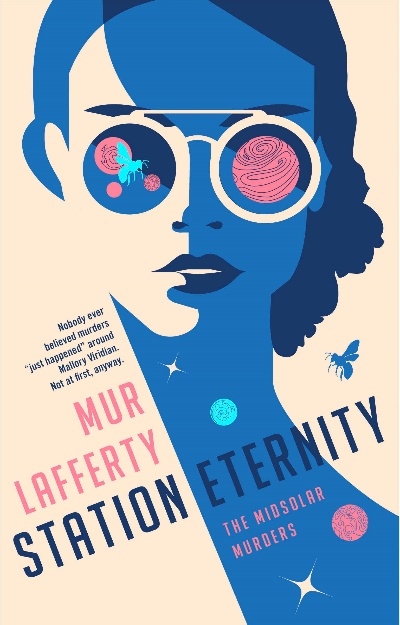
I’m really enjoying, but making slug-like progress in, Station Eternity by Mur Lafferty and am digging into For We Are Many by Dennis E. Taylor, Ray Porter (Narrator) on audiobook. And boy howdy, is that title correct, I’m having trouble keeping track of the “many” POVs.

Station EternityBlank SpaceFor We Are Many

What did you recently finish reading?

I was apparently in a subtitle mood last week with a couple of fun and informative books celebrating some of my favorite books/shows: Danielle Higley’s The Stories Behind the Stories: The Remarkable True Tales Behind Your Favorite Kid’s Books and Directed by James Burrows: Five Decades of Stories from the Legendary Director of Taxi, Cheers, Frasier, Friends, Will & Grace, and More by James Burrows with Eddy Friedfeld and Read by James Burrows and Danny Campbell on audio.

The Stories Behind the StoriesBlank SpaceDirected by James Burrows

What do you think you’ll read next?

My next book should be the ARC for Santa’s Little Yelpers by David Rosenfelt (moved up the list to make sure I hit the publication date) and my next audiobook should be Heads in Beds: A Reckless Memoir of Hotels, Hustles, and So-Called Hospitality by Jacob Tomsky, Jacob Tomsky (Narrator), something I stumbled onto at the library that caught my eye.

Santa's Little YelpersBlank SpaceHeads in Beds

How are you closing out this ninth month?

Saturday Miscellany—9/24/22

Odds ‘n ends about books and reading that caught my eye this week. You’ve probably seen some/most/all of them, but just in case:
bullet EveryLibrary Poll Finds Book Bans Are Broadly Unpopular With Voters
bullet The Enduring Allure of Choose Your Own Adventure Books—a tribute to and look at the origin of the series
bullet S. A. Cosby: Interview and Cover Reveal—a nice (but quick) interview with Cosby and a look at the fantastic cover of his upcoming book.
bullet How to Get Books For Free – Legally—a quick, but potentially valuable, list
bullet Misconceptions People May Have About Book Blogging
bullet CANON: It’s Not What You Think It Is—quibbles with some of the details in the first paragraph of “Definitions” aside, I appreciated these thoughts on Canon in SF. (Hat Tip to Peat Long for this one)

This Week’s New Releases that I’m Excited About and/or You’ll Probably See Here Soon:
bullet The Bullet That Missed by Richard Osman—It’s the third Thursday Murder Club book, I really don’t think more needs to be said.
bullet Wealth Management by Edward Zuckerman—Financial shenanigans, international crime, and terrorism mix in this thriller. I talked a bit about it.

Lastly, I’d like to say hi and extend a warm welcome to ominousthespirit, who followed the blog this week. I hope you enjoy the content and keep coming back.
Mencken's definition of bibliobibuli

The Friday 56 for 9/23/22: Hell and Back by Craig Johnson

The Friday 56This is a weekly bloghop hosted by Freda’s Voice.

RULES:
The Friday 56 Grab a book, any book.
The Friday 56 Turn to Page 56 or 56% on your ereader. If you have to improvise, that is okay.
The Friday 56 Find a snippet, short and sweet.
The Friday 56 Post it.

from Page 56 of:
Hell and Back

Hell and Back by Craig Johnson

We slowly drove through town. I could see the lights were still on in the library, and I felt a twinge of guilt about not having been able to lock it up. “I made a pass at your librarian.”

“He kept his eyes on the road. “You what?”

“Well, not the librarian exactly, but the one from the café that re-shelves books, Martha?”

He nodded. “Who else have you had contact with since “you’ve been in town?”

“What, you think I’m contagious?”

“I’m just curious as to what a fellow does after finding himself lying out there in the road during a blizzard.”

WWW Wednesday, September 21, 2022

I knew I’d been distracted lately, but I just saw how many comments I haven’t approved/replied to over the last couple of weeks. I guess I’ve been really distracted, I’d better work on that tonight (assuming I get the chance). In the meantime, it’s time for WWW Wednesday!

This meme was formerly hosted by MizB at A Daily Rhythm and revived on Taking on a World of Words—and shown to me by Aurore-Anne-Chehoke at Diary-of-a-black-city-girl.

The Three Ws are:

What are you currently reading?
What did you recently finish reading?
What do you think you’ll read next?

Easy enough, right?

What are you currently reading?

I just started Hell and Back by Craig Johnson—it looks like Walt’s off on another supernatural adventure. I’m about to finish listening to the return of DC Smith in  The Truth by Peter Grainger, Gildart Jackson (Narrator) on audiobook.

Hell and BackBlank SpaceThe Truth

What did you recently finish reading?

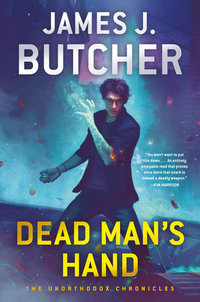
I just finished James J. Butcher’s Dead Man’s Hand—which was as good as I’d hoped—and Big Red Tequila by Rick Riordan, Tom Stechschulte (Narrator) on audio—it was nice to remember what pre-Percy Jackson Riordan was like.

Dead Man's HandBlank SpaceBig Red Tequila

What do you think you’ll read next?

My next book should be the SF/Mystery hybrid, Station Eternity by Mur Lafferty, and my next audiobook should be the essay collection Movies (And Other Things) by Shea Serrano, Mario Toscano (Narrator).

Station EternityBlank SpaceMovies (And Other Things)

While I work on catching up on comments, feel free to drop your Ws.

Saturday Miscellany—9/17/22

How does being a parent of adult children take so much time? I’m not complaining about (actually enjoyed and would welcome more of) the interruptions they brought this week, but I had pages to read and posts to write, fer cryin’ out loud! It was far easier to claim my own time and send them to bed when bed wasn’t in a differnt building 7 miles away.

Still, I did manage to get a bit done, and even find a few things for this collection. Hope you enjoy.

Odds ‘n ends about books and reading that caught my eye this week. You’ve probably seen some/most/all of them, but just in case:
bullet Was It Ever Possible For One Person To Read Every Book Ever Written (in English)?—Randal Munroe tackles this ever-so pressing (or not) question
bullet You Can Procrastinate Anything If You Have Enough Books—Well, yeah…
bullet The Books That Made Me – The First Law by John Palladino—another fun installment of this series from Before We Go Blog (although it could use a quick fact check in the first paragraph).
bullet An Ode to Reading—a nice (and fairly relatable) memoir of a reader/introduction to a blog
bullet Have You Ever Suffered from Book Blogger Imposter Syndrome?
bullet The Best Way to Track Your Reading: 18 Bullet Journal Spread Ideas for Readers—I’ve tried Bullet Journaling a couple of times over the last few years, and it really seems like a good idea and I wish I could stick to it. Although I seem to enjoy reading about it more than actually doing it.
bullet Some Research to Ponder about Book Piracy—some good stuff on this regrettably evergreen topic

This Week’s New Releases that I’m Excited About and/or You’ll Probably See Here Soon (after last weeks handful, only finding one this week makes me think I missed several—fill me in!):
bullet A Death in Door County by Annelise Ryan—a bookstore owner/cryptozoologist looks into a series of deaths that might indicate there’s an actual lake monster living nearby.

Definition of Bibliotaph

The Friday 56 for 9/16/22: Snowstorm in August by Marshall Karp

The Friday 56This is a weekly bloghop hosted by Freda’s Voice.

RULES:
The Friday 56 Grab a book, any book.
The Friday 56 Turn to Page 56 or 56% on your ereader. If you have to improvise, that is okay.
The Friday 56 Find a snippet, short and sweet.
The Friday 56 Post it.

from Page 56 of:
Snowstorm in August

Snowstorm in August by Marshall Karp

“How did you know what I…”

“I have eyes everywhere—human and electronic,” Quintana said. “I saw you kill him. What I don’t understand is why you gave him a fighting chance. You could have slit his throat in his sleep.”

“No, sir. He had to know it was me. So I waited until I was strong enough to go against him mano a mano. Also, today is my birthday. Five years ago, my father was murdered on this day. Now we are both at peace.”

Quintana took another puff on his cigar. “Are you done wreaking vengeance, or should I be concerned that more of my men will end up with their head on a stake?”

“No, sir. Justice has been done. Whatever you do to me, please tell my mother that my father’s death has been avenged.”

“Tell her yourself. And come back tonight.”

Joaquin looked puzzled. “Señor?”

“Suffering is bitter, but its fruits can be sweet. The stupidity of one of my men has caused you great pain, But that pain has helped you find a new life.”

Opening Lines: Confess, Fletch by Gregory Mcdonald

Head & Shoulders used to tell us that, “You never get a second chance to make a first impression.” That’s true for wearing dark shirts, and it’s especially true for books. Sometimes the characters will hook the reader, sometimes the premise, sometimes it’s just knowing the author—but nothing beats a great opening for getting a reader to commit. This is one of my all-time favorite openings (and boy howdy, I had a hard time deciding when to stop). The movie adaptation releases this week, so it’s been on my mind.

Fletch snapped on the light and looked into the den.

Except for the long windows and the area over the desk, the walls were lined with books. There were two red leather wing chairs in the room, a small divan, and a coffee table.

On the little desk was a black telephone.

Fletch dialed “O.”

“Get me the police, please.”

“Is this an emergency?”

“Not at the moment.”

The painting over the desk was a Ford Madox Brown—a country couple wrapped against the wind.

“Then please dial ‘555-7523/”.

“Thank you.”

He did so.

“Sergeant McAuliffe speaking.”

“Sergeant, this is Mister Fletcher, 152 Beacon Street, apartment 6B.”

“Yes, sir.”

“There’s a murdered girl in my living room.”

“A what girl?”

“Murdered.”

Naked, her breasts and hips full, her stomach lean, she lay on her back between the coffee table and the divan. Her head was on the hardwood floor in the space between the carpet and the fireplace, Her face, whiter than the areas kept from the sun by her bikini, eyes staring, looked as if she were about to complain of some minor discomfort, such as, “Move your arm, wil] you?” or “Your watchband is scratching me.”

“Murdered,” Fletch repeated.

There was a raw spot behind the girl’s left ear. It had had time to neither swell nor bleed. There was just a gully with slim blood streaks running along it. Her hair streamed away from it as if to escape.

“This is the Police Business phone.”

“Isn’t murder police business?”

“You’re supposed to call Emergency with a murder.”

“J think the emergency is over.”

“I mean, I don’t even have a tape recorder on this phone.”

“So talk to your boss. Make a recommendation.”

“Is this some kinda joke?”

“No. It isn’t.”

“No one’s ever called Police Business phone to report a murder. Who is this?”

“Look, would you take a message? 152 Beacon Street, apartment 6B, murder, the name is Fletcher. Would you write that down?”

“156 Beacon Street?”

“152 Beacon Street, 6B.” Through the den doof, Fletch’s eyes passed over his empty suitcases standing in the hall. “Apartment is in the name of Connors.”

“Your name is Fletcher?”

“With an ‘F.’ Let Homicide know, will you? They’ll be interested.”

from Confess, Fletch by Gregory Mcdonald
Confess, Fletch

Opening Lines Logo

WWW Wednesday, September 14, 2022

It’s time for WWW Wednesday. I started an introduction to this earlier, which I thought was going to be amusing, but ended up a few miles from there. So, eh…let’s just go with: Hey, it’s Wednesday, let’s do the regular check-in!

This meme was formerly hosted by MizB at A Daily Rhythm and revived on Taking on a World of Words—and shown to me by Aurore-Anne-Chehoke at Diary-of-a-black-city-girl.

The Three Ws are:

What are you currently reading?
What did you recently finish reading?
What do you think you’ll read next?

Easy enough, right?

What are you currently reading?

I’m reading the financial thriller (words that totally go together), Wealth Management by Edward Zuckerman, and am listening to The Man Who Died Twice by Richard Osman, Lesley Manville (Narrator) on audiobook, because.

Wealth ManagementBlank SpaceThe Man Who Died Twice

What did you recently finish reading?

I just finished Marshall Karp’s Snowstorm in August and Adequate Yearly Progress by Roxanna Elden, Roxana Ortega (Narrator) on audio.

Snowstorm in AugustBlank SpaceAdequate Yearly Progress

What do you think you’ll read next?

My next book should be the UF debut Dead Man’s Hand by James J. Butcher (I’m going to try not to compare him to that other UF author named Butcher) and my next audiobook should be the latest Stonebridge Mystery, All at Sea by Chris McDonald, Stephen Armstrong (Narrator).

Dead Man's HandBlank SpaceAll at Sea

Hit me with your Three W’s!

A Few Quick Questions with…Susan Grossey

I talked about the first of Susan Grossey’s Sam Plank mysteries, Fatal Forgery earlier today. Grossey was kind enough to take part in a Q&A with me, too. I really enjoyed these responses and hope you do to, and hopefully they make you inclined to check out the book.


Your website talks a little about your background and how you got into focusing on financial crime professionally—how did you get from writing Non-Fiction about it to writing Fiction about it?
Like most bookish people—and those who study English at university—I had always harbored dreams of writing a story book. In my professional life I wrote many technical books on the subject of money laundering and financial crime, and one day I came across a short account of a banker who had stolen all the money from his own bank and then inexplicably confessed to it quite readily. I started writing a straight biography of him, but then decided that fictionalizing it would be more fun—and that became, after many false starts and different iterations, “Fatal Forgery”. And once I’d written one fiction book, I found I couldn’t stop! It’s the temptation of hiding from the world in a fictional environment that I can control…

I don’t want to ask “where do you get your ideas?” But out of all the ideas floating around in your head, how did you latch on to Regency-era Financial Crimes? Can you talk a little about the decision to make this a series instead of just one novel?
Once I had come across the story of Henry Fauntleroy, I started to research his era more closely. And I found that the late Regency—the 1820s specifically—was a time of great upheaval in two arenas that fascinate me: finance and policing. In finance, paper money had just been introduced, and much as we today are having to come to terms with cryptocurrencies, people in the 1820s had to learn to trust paper money instead of weighty coins, where you had value in the actual metal. And stories of rogue bankers didn’t help! And in London—a growing city with escalating rates of crime—thoughts were turning to improving policing. Everyone has heard of the Bow Street Runners (founded in 1749) and their work tackling crime, but having men who are paid bounties according to who they arrest brings certain problems. In 1829, the world’s first organized police force—the Metropolitan Police—was created in London. Between the two, London had a system of “magistrates’ constables”—and Sam Plank, the narrator of my series, is one of these. As far as I have found, there are no other novels with a magistrates’ constable as the hero!

As for the series decision, it was actually Sam’s idea. When I first wrote “Fatal Forgery” I wrote it from the point of view of the banker, but it didn’t really come alive. As an experiment I tried a couple of chapters with the arresting constable telling the story, and it just leapt off the page. And I am afraid that by the time I finished I was hopelessly in love with Sam and couldn’t face saying goodbye. Just one more Sam book, I thought—as the first one was set in 1824, I’ll do one for 1825. And then Sam suggested that it would be logical to see what he would make of the arrival of the Met Police in 1829, and so I needed to write a book for each intervening year…

I have zero previous knowledge of the criminal justice system in this era of English history, but I really never felt too lost during this case. How did you approach weaving just enough information into the book to keep it authentic (or at least relatively authentic) without turning this into an information dump?
I am a research addict—I would happily spend the rest of my life in archives and libraries! But I once read a review of a book (sadly, now forgotten) which said, “The author wears his research lightly”. And this is what I strive for. I try to drop in just enough information for the reader to feel oriented, but not so much that it’s like reading a history book. I like to think that I hold all the information in the background, so that if a reader said to me, ah that’s interesting, but what would have happened in this instance, or where did that street actually go to, I would have the answer. I like the reader to feel that they can trust that I have done the research on their behalf and am sharing with them only the bits they actually need. And you should see my research files—they are ENORMOUS!

Who are some of your major influences? (whether or not you think those influences can be seen in your work—you know they’re there)
At the formative age of about twelve, I discovered that the “Poldark” stories I had loved on television were in fact books – and lots of them! I read them at a gulp, and I think my preference for historical series (rather than standalone books) started there, with author Winston Grahame and his dashing Cap’n Ross. In more mature years, I admire the historical writing skills of Antonia Fraser and CJ Sansom. And for sheer volume and sticking at it, there are few to beat Agatha Christie, Catherine Cookson and Barbara Cartland—all women, as it happens. When I am feeling lazy, I gee myself up with thoughts of their astonishing output: 66 novels for Agatha, 104 for Catherine and an unbelievable 723 for Barbara!

Is there a genre that you particularly enjoy reading, but could never write? Or are you primarily a mystery/suspense/thriller reader when you’re not doing Financial Research?
For relaxation, I enjoy what are sometimes disparagingly called “Aga sagas”—slice of life family dramas by authors like Joanna Trollope and Maeve Binchy. I could never write them myself, as I am childfree and know very little about that sort of family life, but perhaps that’s why I enjoy learning about it. I actually read very little in the crime/thriller genre as I am rather squeamish and frankly have had enough of nasty things being done to women, which seems to be a trope these days. I do like more gentle whodunnits, but have no interest at all in gore, torture or psychological horrors.

I’ve often heard that writers, or artists in general, will forget hundreds of positive reviews but always remember the negative—what’s the worst thing that someone’s said about one of your books, and has it altered your approach to future books?
I don’t know whether I’m lucky or mercifully forgetful, but I honestly can’t remember a poor review. Someone once gave me one star on Amazon because “Amazon always asks for reviews too soon and I haven’t even started this book”, which was rather annoying – but it was no reflection on the book. After about book two in the Sam Plank series, a couple of readers asked for “more Martha” (she’s Sam’s wife) and so the later books have given them just that, albeit within what would have been realistic for a working class, uneducated woman in the 1820s.

This year you released the seventh and final book in this series. What’s next for your fiction?
I am already knee-deep in research for my new series, and have written about six chapters. I just can’t leave the 1820s so we’re still there, but this time we’re in Cambridge (my hometown) and our narrator is a university constable called Gregory Hardiman. There will be five books, each—again—with financial crime at its heart. It’s interesting knowing from the outset that this will be a series, as I’m allowing myself to wallow in the research (it will pay dividends down the line) and also I’m choosing my characters carefully as I know I’ll have to live with them for a long time! So far, Gregory’s friends include a coroner and an innkeeper, so we’ll see both life and death in action. I’m hoping that “Gregory 1” (with a much better title) will be out in spring 2023.

Thanks for your time—and thanks for Fatal Forgery and for introducing me to Sam Plank!


Page 109 of 230

Powered by WordPress & Theme by Anders Norén