Category: Blog Series Page 203 of 232

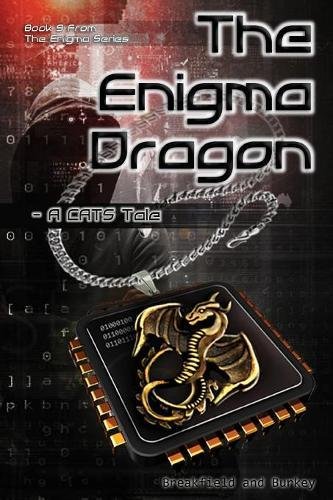
SPOTLIGHT: The Enigma Dragon: A CATS Tale by Charles V Breakfield and Roxanne E Burkey

Today we’re welcoming a Book Tour for The Enigma Dragon: A CATS Tale by Charles V Breakfield and Roxanne E Burkey with this Spotlight and Giveaway. Shortly, there’ll be an interview with the authors showing up. Check these posts out and then go look into the book (and the series)!
—
Book Details:

Book Title: The Enigma Dragon: A CATS Tale (The Enigma Series Book 9)
Authors: Charles V Breakfield and Roxanne E Burkey
Category: Adult Fiction, 360 pages
Genre: Thriller, TechnoThriller
Publisher: ICABOD Press
Release date: Oct 5, 2017
Tour dates: May 28 to June 22, 2018
Content Rating: PG-13 + M (There are some descriptive sex scenes but not throughout)

Book Description:

Do the vast amounts of information and technology available hold humans hostage? Does analog communication create a vulnerability?

The political climate in the world is unnerving. North Korea is running missile tests, but where are they getting their deadly supplies? Meanwhile, terrorists are hiding in plain sight, using American technology that is out on display in libraries and museums for the world to see, but are using analog methods to gather and assemble their information. No internet searches equal no red flags which lets the bad guys believe they are operating undetected. But the Cyber Assassin Technology Services (CATS) team is on the job. As Juan and Julie Rodríguez send their operatives out across the globe to track down these foot soldiers also known as Analog Information Mules, they’ll discover the horrible potential treats, and learn about each other along the way.

Mike and Marge control ePETRO, an oil shipping business with offices in London and New York, but they don’t have the same business goals in mind. Marge intends to sell the North Koreans uranium in addition to oil obtained illegally from the government-sanctioned Middle East. But Mike may have other plans, mainly, keeping the profits of these sales for himself. Then there is the mysterious Steven Christopher, who oversees the AIMs, and is working several angles behind the scenes. Steven is the only one trusted by both Marge and Mike, but why?

The CATs team has feet on the ground, with Ernesto and Tyler following two women through Washington, D.C. as they visit the Smithsonian looking for nuclear fusion processes and down the Texas coast where a dangerous package makes its way onto a ship bound for Asia. Jamie, an Irish man with a heartbreaking past, joins the team in Texas and finds not only a new job, but acceptance. George and Summit travel across Asia following the oil and some suspiciously mislabeled furniture. After a rocky start at being paired up, Mercedes and Brayson head to Panama and are watching a previously known Dark Net data center, but Mercedes is soon extracted to help out in D.C. She quickly becomes embroiled in Steven Christopher’s world. Brayson is left behind alone in Panama and, still recovering from a lost love, learns that he can’t truly be a part of the team until he has forgiven himself.

While Juan stays with Quip and his supercomputer ICABOD, tracking his team members and relaying constantly updated information at the team’s nerve center, Julie heads to London. Julie finds herself in the center of all the trouble as she goes undercover in the ePETRO offices. When Julie disappears, Juan drops everything to find her. Quip loops his wife EZ, a Unified Communications expert, to help monitor and control the CATS team movements so that operatives can find the culprits in their different theaters of operation.

Award-winning authors, Breakfield and Burkey, take readers on a new techno-thriller adventure with their 9th book in The Enigma Series. The Enigma Dragon is a chilling journey across four continents, and twelve cities that uncovers terrifying possibilities of what is to become of our world if the CATS team cannot defeat our enemies.

To follow the tour, please visit Breakfield & Burkey’s page on iRead Book Tours.
​

Buy the Book:


Watch the book trailer:
Meet the Authors:

Charles Breakfield
Charles holds a master’s degree and works for a high-tech manufacturer as a solution architect, functioning in hybrid data/telecom environments. A long-time technology geek, Charles enjoys writing, studying World War II history, travel, and cultural exchanges. He’s also a fan of wine-tastings, riding his Harley, and continues developing his woodworking skills. Now included in people on the move in Dallas Business Journal.



Roxanne Burkey
Roxanne has two passions – working with technology and writing. She enjoys working to drive optimized customer experiences with technology in her role with a high-tech manufacturer. Texas is home for her and her family. When time permits Rox likes gardening, hiking, sewing, refinishing antiques, exploring, wine-tasting, and traveling. She loves to listen to people which often results in odd treasures that come to life in her stories. Now included in people on the move in Dallas Business Journal.

Connect with the authors: Website ~ Twitter ~ Facebook ~ Pinterest ~ Instagram


Enter the Giveaway!

Prize: Win an ebook copy of The Enigma Dragon plus a $5 Amazon.com gift card (open to USA and CAN – 5 winners)
(ends June 30, 2018)
a Rafflecopter giveaway

https://widget-prime.rafflecopter.com/launch.js

The War Outside My Window: The Civil War Diary of LeRoy Wiley Gresham, 1860-1865 edited by Janet E. Croon: A sick and dying teen witnesses history

There’s so much more I want to say, but I ran out of time — and went on pretty long already. It’s really bugging me all the things I wanted to talk about, but didn’t. There may be a follow-up. I updated this slightly after posting thanks to a comment from the publisher.
—

 The War Outside My Window The War Outside My Window: The Civil War Diary of LeRoy Wiley Gresham, 1860-1865

by Janet E. Croon, ed.

Hardcover, 480 pg. (includes an 8-page photo insert)
Savas Beatie, 2018
Read: May 1 – 28, 2018

When he was twelve, LeRoy Wiley Gresham, of Macon, Georgia starts keeping a daily journal (well, as close to it as anyone really ever does). The year is 1860 and he and his father are headed to Philadelphia to consult with leading doctors about LeRoy’s medical condition, which local physicians have been unsuccessful in dealing with — the book contains a medical foreword and afterword that will explain these circumstances better than LeRoy ever does (partially because he doesn’t have the whole story). From Philadelphia they return home and to talk of succession — it’s not long before the Confederacy is born and Fort Sumter is fired upon. This is the setting for these journals — published for the first time this year.

LeRoy was born to be a Southern Gentleman and was raised as such — and between the War, his age and disease, he never really had an opportunity to examine his upbringing. As such, he is incredibly partisan, shows nothing but contempt for the Union, Lincoln, the Union Army, etc. The language and attitudes he uses toward his family’s slaves (and pretty much everyone’s slaves) is par for the course during the Civil War, readers need to remember this going on. He is also a pretty astute observer and realist — when the tide begins to turn for the Confederacy, he’s aware and his upfront about it (there are even traces of “I told you so” to his writing when it comes to certain strategies).

Meanwhile, life continues — people go to school, crops are grown and harvested, babies are born, people die and are married, kids get pets. LeRoy’s family were staunch Presbyterians, his father a leader in the local church — presbytery and synod meetings are also reported on.

For LeRoy, the years after his return from Philadelphia (and those leading up to it, really) are also years of deteriorating health, bouts of pain, and ineffective treatments. Those who put this book together have determined (and it seems only likely) that there are two major health problems going on here — a horrific leg injury sustained when he was 8 and tuberculosis. Neither did him any favors — his life wasn’t going to be easy just with the injury, but TB made it short. Tracing the worsening of each is tragic — and LeRoy dies not long after the end of the War.

All of these topics are detailed and recorded — almost every day — in a few brief sentences. Sometimes it can be jarring the way he’ll go from casualty numbers, to talk about his coughing, to a comment on peach harvests and the book he’s reading in a paragraph a little briefer than some of the longer ones in this post. But that’s just what was on his mind that day. Sometimes there are strange doodles or other things recorded, lists of Bible questions, practice trials of his own developing signature and other things like that (often with photos included).

The War reporting is going to get the bulk of each reader’s attention. Which is completely understandable — and it gets about half of the space of the book, the other topics compete for the other half of the space. His information (as the wonderful footnotes demonstrate) is frequently mistaken — and he knows his, and will often speculate about as he reports what the newspapers say. We’re used to news stories developing over minutes and hours, LeRoy had to be content with learning about something days after the event, and then still learning details weeks later. His frustration about that is seen occasionally — especially as te War grinds on and it’s harder for newspapers to be printed and delivered (paper itself becomes scarce). At one point there’s such an outbreak of smallpox that there’s no one available to bring his family their newspaper, so they have to send someone to retrieve it — LeRoy’s utter disgust at that is both hard to believe and completely human. “Fascinating” doesn’t come close to reading his perceptions and understanding the events that are history to us – talking about famous battles as they’re happening and news is getting out. His account of Sherman’s March is incredible – and adds so much perspective to the contemporary reader’s own understanding.

Normally, this writing would be something I’d pan and complain about. But this was never intended for publication — that’s clear — it’s a young man’s private journal and reads like it. You see a growth in his style, his way of thinking — and reading. But it isn’t an easy read with a strong narrative pulling you along. It’s repetitive, full of details that mean only something to him, stupid humor written for an audience of one (which isn’t to say that I don’t appreciate his wit). Don’t expect to enjoy this read, to find a style that will grab you (or really, any style at all). It’s authentic — and not authentic in a “so well researched and told that it might as well be the real thing” way, but in a this is what this person thought and recorded about others’ thoughts in the 1860s to himself — it’s completely honest (well, there might be some self-deception/self-aggrandizement at work, but not much).

I grew to really like LeRoy — his attitude, his quiet faith, his patience, his stupid jokes, his intelligence. You watch someone’s life day-to-day for a few years and you almost can’t help it. His death — which I knew was coming before I opened the book, and knew was nigh given the date (and lack of pages left in the book) — struck me hard. I couldn’t believe it, really, but I got emotional in the last couple of entries.

His last entries are followed by the text of his obituary from the Macon Telegraph and a letter that his mother sent to her sister which filled in some details about his last days and condition. That letter is a great touch and helps you see that a lot of what you had learned about LeRoy from his writing was also seen by his family — it wasn’t just LeRoy’s self-image. You also see that LeRoy’s critical gaze, which is displayed frequently, was a family trait (but pretty understandable in the context)

The effort putting this book together — transcribing, deciphering, tracing the family members and friends — the medical research to diagnose LeRoy all these years later) — I can’t fathom. Croon deserves so much more reward than she’ll likely ever receive for this. Really, I’m in awe of her work. The Publisher’s Preface, Introduction, and Postscript (and aforementioned Medical Foreword/Afterword) are must-reads and will help the reader appreciate LeRoy’s own writing and Croon’s efforts.

Every so often, reading my email can be surreal — getting a request to read and post about this book was one of those times. The same form has led me to read a book about a P.I. with a talking (and sentient!) arm, a crime solving frog, and a werewolf rock star — and now, this literally unique book?* I’ve rarely felt so inadequate to the task. What do I know from historic diaries? Here’s what I can say — you have never read anything like this — it will appeal to the armchair historian in you (particularly if you’ve ever dabbled in being a Civil War buff); it’ll appeal to want an idea what everyday life was like 150 years ago; there’s a medical case study, too — this combination of themes is impossible to find anywhere else. This won’t be the easiest read you come across this year (whatever year it is that you come across it), but it’ll be one of the most compelling.

It feels stupid putting a star rating on this — but, hey, that’s the convention, so…no doubt about it:

—–

5 Stars

Disclaimer: I received an ARC of this book from the publisher in exchange for this post and my honest opinions.

—
* Which is not to say that there weren’t merit to these books or that there weren’t others — of comparable quality to this. I could provide lists.

✔ Read a book about a historical event you’re interested in (fiction or non).

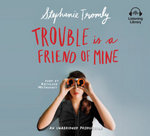
Trouble is a Friend of Mine (Audiobook) by Stephanie Tromly, Kathleen McInerney: The most enjoyable mystery I’ve come across in months!

Trouble is a Friend of MineTrouble is a Friend of Mine

by Stephanie Tromly, Kathleen McInerney (Narrator)
Series: Trouble, #1

Unabridged Audiobook, 8 hrs., 49 min.
Listening Library, 2015
Read: May 16 – 17, 2018

Preparing to survive a typical day of being Digby’s friend wasn’t that different from preparing to survive the apocalypse.

I don’t remember exactly what I was reading, but I came across a reference to this book filling the Veronica Mars dialogue hole for the writer (or something like that — I stupidly closed the tab and moved on so I can’t get the quotation right, or credit the source…). That sounded good enough to try, and boy, oh boy, am I glad I did. I doubted it’d come close to Veronica Mars, because none of the things I’ve read compared to it have ever come close (not that I haven’t enjoyed many of those things, even in their non-Mars-ness), but that was wrong of me — there’s a strong Mars-like vibe here.

Actually, that’ll work for a very reductionistic and not very accurate summary of this book: It’s Veronica Mars, gender-flipped, narrated by the Wallace figure.

I should’ve paid more attention to the piece I skimmed, I didn’t realize until I’d started that this was a YA mystery, but it works okay for older readers. There’s a soupçon of romance — and only that. I just want to throw that out before some of you decide to bow out of this one from the start.

So, post-bitter divorce, Zoe and her mother move to a small town from NYC. Mom’s an English professor at a community college and Zoe’s trying to fit in — temporarily. Her plan is to blow this popsicle-stand and move on to a Private School, make her mark there and step on to Princeton. She just needs to nail this semester.

Enter Digby. This odd boy who always wears a suit and refuses to fit in. First, ropes her into working on an insane independent study project (which he shows no signs of ever working on), showing up in the least convenient places, and leading her into all sorts of trouble — despite her best intentions.

Digby has a dark past, the events of which shape his every move (that’s obvious, I know — but he’s self-conscious about it) and the way that everyone in town sees his every move. It’d be very easy for this past to turn Digby into some sort of Bruce Wayne-y do-gooder crusader; or angry, rebellious young man — neither ends up being the case. He’s a brilliant kid with little regard for societal norms (not that he’s not very aware of them and how to use them for his own benefit). I’m doing a horrible job describing him — while there’s all that going on, Digby is observant, quick-witted, a creative thinker, resourceful, with a sharp-tongue, an odd-sense of humor and the teenaged-boyest teenage-boy appetite.

Zoe is strong-willed (except when it comes to Digby or her father), smart, careful, cautious, determined and focused. But she wants to be more — she wants to be adventurous, popular. I just don’t think she can admit that to herself. She’s a great character with a voice that makes you just like her.

Speaking of voice, I’ve gotta give kudos to Kathleen McInerney. She narrates this tale with life, verve, and humor. This is good material and she makes it live.

In addition to Zoe and Digby, we’ve got Henry — an old friend of Digby’s, the clean-cut quarterback — and many other mainstays of high school fiction (the meangirl, the computer geek, the bully athletes). Zoe’s mother is a better-than-average adult character for YA fiction, she’s not perfect, but she’s a committed and caring mother. Her father, on the other hand, is a little more typical — over-bearing and focused on his goals for his daughter (that’s typical for a character, not a father, I want to stress). The characters and the relationships between them feel grounded and believable — which makes it easy to want to see them succeed and to buy into the outlandish situations that Digby introduces Zoe and Henry to.

I’ve gone on a lot without talking about the plot — what kind of situations are there for Digby to involve his friends in? Let’s start with the cult with a headquarters across the street from Zoe’s house, and the very creepy guys who live there. There’s drug dealing, a missing high schooler, some dumpster arson, a gynecologist who definitely needs to review the Hippocratic oath, a case the police have given up on, and high school drama. It’s actually very difficult to say the plot is about X, because Digby has an agenda that he really doesn’t fill people in on until the last minute. And he seemingly hops around from caper to caper in an ADHD-manner. Minor spoiler: it’s not the case, he as some kind of a plan.

I’ve done a lousy job selling you on this book, some of that is because it’s such a quirky, oddball of a story — and the rest is due to a sloppy job on part, so let me sum up before I make things worse. The book moves swiftly and smoothly, making you smile frequently — impressed with Digby’s dogged determination and enjoying (even while rolling your eyes at his antics). The dialogue is snappy, the characters are likeable, you’ll find yourself invested in this crazy story — even if you’re a couple of decades past the target audience. Tromly has given us a great gift in Zoe and Digby, give this a shot, you’ll have a great time.

—–

4 Stars

2018 Library Love Challenge

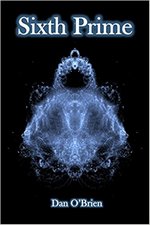
Sixth Prime by Dan O’Brien: The beginning of a sweeping epic that came up snake eyes for me.

Sixth PrimeSixth Prime

by Dan O’Brien
Series: The Prime Saga, Book 1

Kindle Edition, 240 pg.
2016
Read: May 23 – 24, 2018
There’s a danger that most readers have familiarity with — a novelist oversharing the details of their worldbuilding so much so that it drags down the story and characters. The opposite danger isn’t seen as often — the writer withholding the details so much that you spend half your time figuring out what’s happening, rather than paying attention to characters and plot. It’s a tricky balance, no doubt — and sometimes a novel can overcome an author falling into either ditch. Sixth Prime was not one of those success stories — for whatever reason, to be careful, to be coy, because he didn’t notice — this book fell into the “not enough information” ditch, and couldn’t find its way out of it.

There are a few storylines, somewhat connected — it becomes somewhat clearer later how they are — there’s a murder investigation conducted by a corporation that supersedes the local authorities’ own investigation; a high-ranking military official on trial (and the strange aftermath of that); a jail-break leading to another jail-break on its way to an assassination; a scientific exploration goes awry; and a couple of competing treasure hunters hunt for an artifact. Somehow these all connect to an interstellar war and forces as old as creation itself.

The characters were lifeless, little more than names and job titles — with just a couple of exceptions. The characters in the murder investigation had promise — and if this book had just focused on that storyline, this’d be a much different post. At least one of the characters in the treasure hunting story have promise (but the more villainous one was so over-the top that literal mustache twirling wouldn’t have seemed out of place).

This entire novel seemed to be a set-up for the coming series — not a novel that’s part of a series. The various stories didn’t have endings, there wasn’t an overall arc to the novel that I could see — the stories stopped, or “resolved” by authorial fiat, nothing organic. This is a problem — I can accept not tying up everything in a tidy little bow, but there needs to be some sort of closure to a novel, some sort of point to that one thing. I’m not sure I’m being entirely fair here — 1 or two of the stories might actually have had a decent resolution, but by that point, I was out of patience with the entire endeavor. A dynamite ending, or compelling hook could’ve saved it (I think), but they were nowhere to be found.

Nothing about this really worked for me — one storyline came close — but being surrounded by the rest, it never stood much of a chance. A little more restraint, a little more discipline — maybe a longer book — I don’t know. There’s something missing, I’m not sure what it was, really.

Disclaimer: I received this novel from the author in exchange for my honest opinion as reflected above. Sorry about that, Mr. O’Brien, but thanks anyway.

—–

2 Stars

Fleshmarket Alley by Ian Rankin: Rebus finds himself in his most tangled case yet

Fleshmarket AlleyFleshmarket Alley / Fleshmarket Close

by Ian RankinSeries: John Rebus, #15

Hardcover, 420 pg.
Little, Brown and Company, 2005
Read: May 18 – 23, 2018

           Rebus had never seen children in a mortuary before, and the sight of« fended him. This was a place for professionals, for adults, for the widowed. It was a place for unwelcome truths about the human body. It was the antithesis of childhood.

Then again, what was childhood to the Yurgii children but confusion and desperation?

Which didn’t stop Rebus pinning one of the guards to the wall. physically, of course, not using his hands. But by dint of placing himself: an intimidating proximity to the man and then inching forward, until the guard had his back to the wall of the waiting area.

“You brought kids here?” Rebus spat.

This — even by Rebus’ standards — is a dark book, but we keep finding Rebus pushing back against it. It actually almost seems against his character — the cynicism and pessimism that is so definitive of him seems frequently absent. That’s not a bad thing — it’s just a little strange when you stop and think about it. Of course, there’s an easy line to draw between idealism and cynicism, and Rebus has always been an absolutist about justice — and doesn’t let much stand in his way to pursue it. This time there’s a lot more injustice that he seems to be targeting. Something about this murder that has gotten under his skin.

Maybe it’s because he knows it could be one of the last cases he’s involved in — St. Leonard’s has been reorganized and no longer has a CID, so the detectives have been reassigned throughout the city. He and Clarke were sent somewhere that reminds them on a regular basis that they’re not welcome — Rebus doesn’t even get a desk. The message is clear: he should retire. Fat chance of that happening while he can say anything about it.

Which leads to Rebus jumping in to help some old friends investigate the what appears to be a race-based murder, which ends up opening up a tangled web of crimes in so many circles it’s difficult to summarize (I deleted a couple of attempts to do that because they ended up undreadable) while staying spoiler-free. Just know that pretty much everywhere Rebus goes, he’s going to find something else that’s very, very wrong. The more Rebus learns about the victim — and his life — the less likely the fact that he’s Kurdish seems to play in his killing, but it’s inescapable — the press, other police, and every one he talks to about the case won’t stop bringing it up. It’s easier for everyone when first impressions are right, but when you can’t make the facts fit the narrative, you’d better have a detective like John Rebus around to actually get somewhere.

Siobhan meanwhile, gets involved in a couple of things that aren’t really cases but end up dragging her into one. First, she starts doing a favor for a couple she knew years ago when their daughter was raped and later committed suicide. Now their younger daughter has gone missing and they fear the worst. Also, there’s a couple of skeletons uncovered in Fleshmarket Alley that have an interesting story to tell. One thing leads to another and Siobhan becomes involved in a murder investigation that while not connected to Rebus’ keeps the two of them brushing into one another at interesting points.

We also get to see Big Ger for a few minutes, and isn’t that always fun?

There’s some odd tension between Rebus and Siobhan in these pages — something that feels natural, organic. They’re not as static as Spenser and Hawk (for one bad example), with differing goals, aspirations, etc. It’s good to see this dimension to their relationship, really. It makes be believe in them more.

Dark, tangled, well-paced, oddly timely for something written over a decade ago, and so wonderfully constructed that you really can’t believe it when all the pieces start to fall in place. Fleshmarket Alley/Close is just one more bit of evidence that Ian Rankin is a master of his craft.

—–

4 Stars
2018 Library Love Challenge

BOOK BLITZ: The Unity Game by Leonora Meriel

About the Book:

WHAT IF THE EARTH YOU KNEW WAS JUST THE BEGINNING?


A New York banker is descending into madness. 


A being from an advanced civilization is racing to stay alive. 


A dead man must unlock the secrets of an unknown dimension to save his loved ones. 


From the visions of Socrates in ancient Athens, to the birth of free will aboard a spaceship headed to Earth, The Unity Game tells a story of hope and redemption in a universe more ingenious and surprising than you ever thought possible. 


Metaphysical thriller and interstellar mystery, this is a ‘complex, ambitious and thought-provoking novel’ from an exciting and original new voice in fiction.


Book Links:

 
Meet the Characters:
 
The Setting: EarthNew York City. The 1990s. One of the world’s leading investment banks.


The Setting: Space


A distant planet. A dry surface orbited by three red moons and circling a distant sun. An advanced civilization living in underground chambers.


The Setting: Death


An open door. A library. A room of knowledge. A garden of dazzling color. The answers to every question that has ever been asked on Earth.


Meet David


A brilliant scientist and wildly ambitious, David abandoned an academic path to follow the glow of Wall Street money. From a small town in Canada, he is now determined to make the riches he has given up his scientific talents for. He is always on edge, he must prove he is better than the other bankers, he has to win the best deals. However, he is easy pickings for the multi-million dollar bosses who see how they can use a greedy, naïve young man for their own purposes. David falls further into risk, mistakes and desperation, clutching at anything around him as his dreams and world falls apart.


Meet Noe-bouk


Dry dust. Three red moons. A member of one of the most advanced civilizations in the universe, taught to believe that all the answers come naturally from the incontrovertible logic of the greatest good. Now, facing death, Noe-bouk decides to find out if there is something more than what he has been taught. Accepting a place on a space ship, the further he gets from the moons of Home Planet the more he understands that he knows nothing at all…


Meet Alisdair


A respected lawyer. An adoring grandfather. Alisdair collapses outside his law offices in London and finds himself standing beside his unmoving corpse. He feels wonderful! He spots some wide open doors and bounds through them to discover a library, a garden, and his dead wife. All his life he has burned with the questions of the universe: what is the purpose of existence? What is good and evil? How far does the infinite stretch? With an afterworld guide and his wife at his side, his only limits now are to come up with new questions as all of his horizons expand beyond imagination…


Meet Elspeth


Beautiful, young, angry. Apart from her beloved grandfather Alisdair, Elspeth has been let down by everyone in her life. She’s rejected her parents and their easy choices, she sees no meaning in the structures of society. She has always felt lost, and now the death of her grandfather is forcing her to make choices. With some money he has left her, she decides to follow a feeling and go on an adventure.


Meet Socrates


Legendary philosopher, pion of bravery and morality, a figure so strong his ideas and presence pervade the centuries and the dimensions of time and space. Who else would Alisdair call upon in the afterworld to help his granddaughter Elspeth, than the man he has revered his entire life, and whose teachings guided him? Yes, Elspeth can be helped, but she must be brought together with another soul – one who has truly lost their path. 

Reviews for The Unity Game
 
 “A complex, ambitious and thought-provoking novel.” ~ Kirkus Reviews


“Elegantly written, expertly crafted and a moving message. I found this book very hard to put down. Moving and poignant.” ~ Lilly, Amazon US reviewer“An engrossing, unique, and totally bizarre tale! I could not stop reading it once I started. Such a beautiful take on the afterlife, and its connection to those still living. A unity game, indeed!”~ Brenna, Goodreads reviewer

 
About the Author:
Leonora Meriel grew up in London and studied literature at the University of Edinburgh in Scotland and Queen’s University in Canada. She worked at the United Nations in New York, and then for a multinational law firm.
In 2003 she moved from New York to Kyiv, where she founded and managed Ukraine’s largest Internet company. She studied at Kyiv Mohyla Business School and earned an MBA, which included a study trip around China and Taiwan, and climbing to the top of Hoverla, Ukraine’s highest peak and part of the Carpathian Mountains. She also served as President of the International Women’s Club of Kyiv, a major local charity.
During her years in Ukraine, she learned to speak Ukrainian and Russian, witnessed two revolutions and got to know an extraordinary country at a key period of its development.
In 2008, she decided to return to her dream of being a writer, and to dedicate her career to literature. In 2011, she completed The Woman Behind the Waterfall, set in a village in western Ukraine. While her first novel was with a London agent, Leonora completed her second novel The Unity Game, set in New York City and on a distant planet.
Leonora currently lives in Barcelona and London and has two children. She is working on her third novel.
Contact the Author:


BOOK BLITZ: Castles in the Air by Sangeet Sharma

About the Book:

Publisher: Rumour Book India
Edition: First edition (2017)
ISBN: 978-1945563850
Genre: Fiction
Format: Paperback
Pages: 234
Price: 299/-

Laughter is said to be the best elixir and the book is a satire on architecture written by one who knows the bricks and concrete of the profession by heart.

The author, an architect himself, delves into the journey of a professional practice. The book is witty with acerbic humor.

Word by word, sentence by sentence, page by page, every scene unfolds like a screenplay, leaving the reader amazed with the brutalities of life in architecture, and life itself.
Book Links:
Reviews for the Book:


About the Author:
Sangeet Sharma is a practicing architect in Chandigarh. He is a partner in SD Sharma & Associates, a well-known firm of the region founded by his father Ar. SD Sharma, an eminent Architect. Widely acknowledged and awarded Ar. Sangeet Sharma commands an undisputed international reputation in profession. Carrying forward the legacy and vocabulary established by his father he is fascinated by geometrical forms.
By looking at every drawn line as built spaces he follows a certain rationale to his reflective practice. His buildings are based on sustainable applications.
He is a multifaceted personality. He is a poet, Architectural critic, writer, artist and author. He has authored Architecture, Life and Me, published by Rupa and Co., a memoir that takes an all-round view of the profession.
Contact the Author:

BOOK BLITZ: Robert’s Rules by J.F. Riordan

Literary Fiction
North of the Tension Line, Book Three
Date Published:  May 23, 2018
 photo add-to-goodreads-button_zpsc7b3c634.png
As the new Chairman of the Town Board, Fiona Campbell finds that life has become a series of petty squabbles, dull meetings, and papers everywhere, all complicated by her guardianship of the as yet unidentified screaming goat. In desperation, she hires an unknown newcomer, the compulsively orderly Oliver Robert, to run her office and keep her organized.
Roger’s fame as an idiosyncratic yoga practitioner continues to spread, and he and Elisabeth are looking for a new location to accommodate the growing crowds at their tiny coffee shop. Ferry Captain and poet Pali has an offer to leave the Island, and wonders whether it is time to introduce his son, Ben, to the larger world. Meanwhile, the Fire Chief is threatening to quit, and Fiona finds herself faced with an Island controversy and an unwanted set of new responsibilities.
As Pete Landry prepares to leave for one of his regular journeys, Fiona begins to suspect that his life may be more than it seems. His secrecy raises doubts in her mind about whether he can be trusted, and their breakup plunges her into grief.  The reliable Jim, always nearby, is all too ready to offer comfort.
Robert’s Rules is Book Three in the award-winning North of the Tension Line series, set on a remote island in the Great Lakes. Called a modern-day Jane Austen, author J.F. Riordan creates wry, engaging tales and vivid characters that celebrate the well-lived life of the ordinary man and woman.
 
Other Books in the North of the Tension Line Series:
North of the Tension Line
Published: May 2016
Fiona Campbell is a newcomer to tiny Ephraim, Wisconsin. Populated with artists and summer tourists, Ephraim has just enough going on to satisfy her city tastes. But she is fascinated and repelled by the furthest tip of Door County peninsula, Washington Island, utterly removed from the hubbub of modern life. Fiona’s visits there leave her refreshed in spirit, but convinced that only lunatics and hermits could survive a winter in its frigid isolation.
In a moment of weakness, Fiona is goaded into accepting a dare that she cannot survive the winter on the island in a decrepit, old house. Armed with some very fine single malt scotch and a copy of Meditations by Marcus Aurelius, Fiona sets out to win the dare, and discovers that small town life is not nearly as dull as she had foreseen. Abandoning the things she has always thought important, she encounters the vicious politics of small town life, a ruthless neighbor, persistent animals, a haunted ferry captain, and the peculiar spiritual renewal of life north of the tension line.
North of the Tension Line, Book Two
Release Date: May 23, 2018
Publisher: Beaufort Books
All is not well north of the tension line. A series of unsettling nighttime incidents have left the islanders uncertain whether to be nervous or annoyed. Are they victims of an elaborate teenage prank, or is there a malevolent stranger lurking on the island? Meanwhile, out-of-state owners of a new goat farm seem to consider themselves the self-proclaimed leaders of the island; Pali, the ferry captain, is troubled by his own unique version of writer’s block; and Ben, the captain’s ten year-old son, appears to be hiding something. But it is only when the imperturbable Lars Olafsen announces his retirement, and Stella declares her candidacy for office, that the islanders realize trouble is brewing. Fiona must decide whether it is time to leave the island for good, or to make another reckless gamble.
Book two in the award-winning North of the Tension Line series, The Audacity of Goats is the continuing tale of Fiona Campbell, and her reluctant adventures among the pleasures, mysteries, and exasperations of small town life
 Excerpt
Pete looked over at Fiona. “That stop sign…I’m sure it was only a suggestion.”
“Never mind,” said Fiona blithely. “There was no one around.”
“I’m here,” said Pete.
She glanced at him briefly and returned her eyes to the road.
Pete sighed pointedly, but continued the conversation.
“It’s never occurred to me that books should match,” he said.
“That’s because you read. Well, also probably because you’re male,” Fiona conceded. “But serious people. I mean, people who care about ideas, and about actually reading, don’t have matching books. If anything, their books are a haphazard reflection of the search for knowledge, reflecting the wanderings of a person’s curiosity. There’s nothing matching about that.”
“I don’t think I’ve ever been to a house with matching books.”
“How about a house with just one set of encyclopedias and not one other book? Have you been to one of those?
“Encyclopedias? Who has encyclopedias anymore?”
“Well, you know what I mean.”
“You have thought a great deal about this.”
Fiona looked sheepish. “Yes. Because it’s a form of pretention, and I detest pretention.” She pulled into a parking space that had been more or less invented between the cedar trees and pulled on the brake, continuing the conversation without turning off the engine.
“It’s showing off that you have books, even while it’s clear that the books are only props. And, also,” she confessed, “it bothers me because their houses are so beautiful, and mine is full of haphazardly unmatching books.”
“And stacked everywhere, by the way. We need to get you some more bookcases. But if it’s clear that the books are props,” he said, returning to the main point, “isn’t it also clear that the person doesn’t actually read them? In which case, I would argue that it’s not pretension, it’s actually the opposite: no pretense whatsoever, just, perhaps, shallowness. Now, if an unserious person were to have lots of unmatching books that he had never read and were trying to make people believe that he’s read them, that would be pretentious. So, you should shift the focus of your wrath to owners of never-read, unmatching books. Leave the poor matching people alone. They don’t know what they’re missing.”
Laughing, Fiona looked at him and shook her head. “Stop looking so pleased with yourself.”
“I am pleased, though. I have unmatching books, and I read them. Q.E.D. I feel smug.”
“If you were the kind of person who felt smug, I wouldn’t like you.”
Pete smiled. “I feel smug about that, too.”
Laughing and shaking her head, Fiona turned off the engine. They gathered their things from the trunk of the car and headed off toward the water and its rocky beach. “How would you even find the book you wanted if they were all wrapped in matching paper?” asked Pete, slinging the straps of the beach chair bags over his shoulder.
“Exactly,” said Fiona.
About the Author

J.F. Riordan was born in New Jersey and first moved to Michigan, then Wisconsin as a child. At the age of 14 she decided to become an opera singer, and was fortunate in the aftermath to have been able to sing. At 16, after two years of high school, she went to the University of New Mexico to study voice, continued her music studies in Chicago and Milwaukee, and ultimately became a professional singer. Homesick after years of travel, she came home to the Midwest, finished her college degree, and became certified to teach high school. She taught for three years in the inner city before taking a position as a program officer for a foundation. She lives in exile from Washington Island with her husband and two dogs. North of the Tension Line is her first novel.
Contact Links
Purchase Links
RABT Book Tours & PR

BOOK BLITZ: Daughter of the Sun by Zoe Kalo

Daughter of the Sun
~ Cult of the Cat Series Book 1 ~
About the Book:

Title: Daughter of the Sun
Series: Cult of the Cat Series, Book 1
Author: Zoe Kalo
Genre: YA Contemporary Fantasy / Paranormal
Word Count: 93,000 words
No. of Pages: 330

Mystery, adventure, a hint of romance, and the delicious sweep of magic…
Sixteen-year-old Trinity was born during a solar eclipse and left at the doorsteps of a convent along with a torn piece of papyrus covered with ancient symbols. Raised by nuns in the English countryside, she leads a quiet life until she’s whisked away to the Island of Cats and a grandmother she never knew. 
But before they can get to know each other, her grandmother dies. All that Trinity has left is a mysterious eye-shaped ring. And a thousand grieving cats. As Trinity tries to solve the enigma of the torn papyrus, she discovers a world of bloody sacrifices and evil curses, and a prophecy that points to her and her new feline abilities. 
Unwilling to believe that any of the Egyptian gods could still be alive, Trinity turns to eighteen-year-old Seth and is instantly pulled into a vortex of sensations that forces her to confront her true self—and a horrifying destiny.
Get Your Copy of this Book. Available for FREE for a LIMITED TIME ONLY! 


About the Author:

Storyteller at heart…


A certified bookworm and ailurophile, Zoe Kalo has always been obsessed with books and reading. The pleasure of writing and sharing her fantasy worlds has remained. Today, Zoe passes her stories to you with lots of mystery, adventure, a hint of romance, and the delicious sweep of magic.

Currently, she balances writing with spending time with her family, taking care of her clowder of cats, and searching for the perfect bottle of pinot noir.

Contact the Author:
Website * Facebook * Twitter

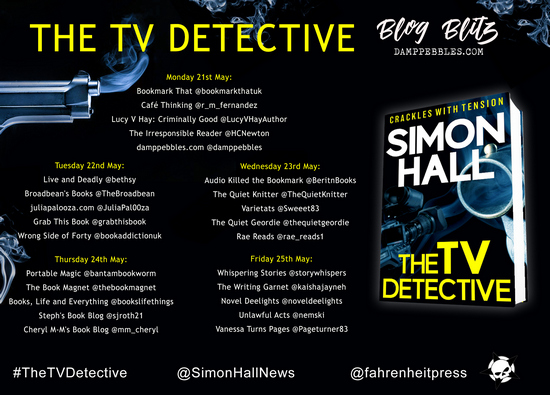
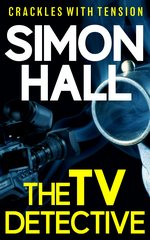
The TV Detective by Simon Hall: A Murder. A Reporter. A Police Detective. Maybe the beginning of a beautiful friendship

The TV DetectiveThe TV Detective

by Simon Hall
Series: The TV Detective, #1Kindle Edition, 290 pg.
Fahrenheit Press, 2018
Read: May 16 – 17, 2018

The first interview with a witness.

Or, as Breen had put it, ‘Initially a witness, anyway.’

‘Meaning?’ Dan asked, as they walked down the stairs from the MIR.

‘It’s remarkable how quickly a witness can become a suspect in this business.’

All it needed was a musical sting to emphasise the drama of the detective’s words. Dan was beginning to suspect his new colleague was a frustrated actor. He certainly enjoyed a little theatre.

Dan deposited the thought safely in his mental bank. It might just be useful.

Carter Ross, I. M. Fletcher, Annie Seymour, and Jack McEvoy are my favorite reporters who happen to find themselves in the middle of criminal investigations (“find themselves” is typically code for throw themselves into, slip past the all the blockades surrounding, etc.) — I think Dan Groves has added himself to the list. But I’m getting ahead of myself.

Dan Groves is a TV Reporter for Wessex Tonight, covering environmental news. With the Christmas holiday rapidly approaching, he’s forced to help cover the latest in a string of attacks on prostitutes. He and his cameraman/friend Nigel are found taking a less-than by-the-book approach to getting a colleague of the latest victim on camera (really, Nigel didn’t do anything — but he didn’t stop Dan, either). The story they aired was good, but their tactics were reported — between his editor’s need, his skill, and his editor’s fresh material for leverage — Dan’s taken off the Environment beat and made the program’s new crime reporter.

The problem is, he knows nothing about reporting on Crimes. And demonstrates it with a facepalm-worthy performance at his first crime scene (a murder, of course) after getting this assignment. So he pitches this idea to his editor, who in turn runs it by the local police. The police haven’t been looking good to the (and in the) press lately, Dan needs a crash course in detective work — so why doesn’t he shadow the investigation, giving the police some good coverage and PR while he learns on the job from the best around. DCI Breen — and (the underused) DS Suzanne Stewart — aren’t crazy about this idea, but they aren’t really in a position to argue with the brass, so they bring him on. Tolerating his presence largely at the beginning, but gradually finding ways to use him.

This is one of those cases that the police would probably be okay with not solving — at least most of the police. Edward Bray was in Real Estate — he owned many buildings, treated his tenants horribly and evicted them when he could find a way to make more money off of the land/building. He was heartless, notorious, and had an enemies list worthy of a, well, an unscrupulous land-owner. Yet, he also gave generously to a local hospice — so generously that many people had a reflexive notion to commend him while they suffered cognitive dissonance between his perceived nature as a shark, and his obvious and selfless good work with the hospice center. The list of suspects is long — former tenants, an employee, competitors he profited from and ruined, his own father — and the head of the hospice center who chafed under his authoritative hand.

So there’s the setup — a pretty good hook, I have to say. It’s an interesting pairing — Castle-ish, but not as goofy. I could totally buy this without suspending a whole lot of disbelief. The reactions of the other police officers help ground this. So who are the investigators?

First is Dan Groves — he seems to be a decent reporter, we’re told repeatedly that he has a history of looking out for the little guy in his news stories. He’s into the outdoors, hiking and whatnot. He’s very single and has been for some time — there’s a hint of something significant in his past that put him there, but we don’t get into that in this book. I’ve never read about a reporter not wanting the crime beat — it’s the most interesting, right? I just didn’t get his rationale for quite a while. But by the time we’ve heard about a few of his past stories, I guess I could see it (and have to admit that Environmental News sounds pretty dull, but wouldn’t have to be in the right hands). Lastly, Dan has a German Shepherd named Rutherford, who seems like a great dog. This speaks volumes for him.

DCI Adam Breen is your typical driven detective — stern, unbending (at first, anyway), not that crazy about the unusual staffing on his inquiry. He has a flair for the dramatic (as noted above — but it’s worse), seems to spend more time and money on clothing than most (somewhere, Jerry Edgar is fist pumping the idea that he’s not alone). We eventually get to know a little about him outside the job — and it seems to go well with the character we’ve met. He seems like the kind of detective most police departments could use more of. Breen will warm to Groves (and vice versa) and will find ways to use his strengths, as Groves finds ways to flex them.

DS Suzanne Stewart, on the other hand, is little more than a name and a presence. Hall needs to find a way to use her character in the future or drop her. This character is the biggest problem with the book. Not an insurmountable one, or one that greatly detracts from the book, but still. I get that Hall’s priority was establishing the relationship between Groves and Breen — and he nailed that. But he could’ve given us more of Stewart along the way. We could also use a little more development with Nigel and Dan’s editor, Lizzie — but I honestly didn’t notice how underused they were. Stewart stuck out to me.

Hall does a really good job of balancing the murder inquiry and dealing with the characters outside of the case — Breen off-duty, Dan’s blossoming personal life, another story or two that Dan works on. The suspects are well-developed and interesting — and there are times that you could totally buy all of them (well, maybe all but one) as the actual perpetrator. That’s really hard to pull off, many writers will start off with a long list of suspects and really only have one or two that you can believe being the killer after one conversation. They all have similar but individualized reasons to want Bray dead. Most of them also have strong alibis, because you don’t want this to be easy. The solution to the case is clever — and better yet, the way that Groves and Breen have to work together to get the solution proven is well executed.

Hall’s writing is confident and well-paced. He knows how to use characters and plot to strengthen each other. There are occasional turns of phrase that will really make the day of readers. I have a lot of “oh, that’s nice” notes throughout the book. This is a solid start to a series — the kind that makes me want to read more. I’m looking forward to finding out a little more about Dan’s history as well as seeing the relationship between he and DCI Breen grow and change (and be challenged, I assume). Good stuff.

—–

4 Stars

Page 203 of 232

Powered by WordPress & Theme by Anders Norén