Category: Blog Series Page 33 of 220

Book Blogger Hop: How Do You Read Book Series?


Book Blogger Hop


This prompt was submitted by Idea-ist @ Get Lost in Literature:

Do you prefer to read series one book after another, or can you read other books in between?

Once upon a time, I used to binge-read series. One after another after another like Lays potato chips. But I don’t let myself do that anymore–there are two reasons for this,

  1. I kept losing track of which novel was which, they just ran together into one huge book. Which doesn’t sound all that bad, but it took away from appreciating each novel as its own thing. (some TV critics have said the same thing about releasing/watching an entire season of a show at once instead of the week-by-week approach).
  2. Burnout. Part of this is spill-over from the one-giant novel effect. But really, just too much of a series voice at once just cuts the effectiveness of it.

If we’re talking series with several volumes released, I typically like to do one book a month or so. Enough time to soak in the details, ruminate on each book (hopefully write a post on it), and then get into the next book.

Huh. I thought I had more to say on this than that.

What about you, are you a binger or do you stretch things out?

Opening Lines: The Greatest Nobodies of History by Adrian Bliss

Head & Shoulders used to tell us that, “You never get a second chance to make a first impression.” That’s true for wearing dark shirts, and it’s especially true for books. Sometimes the characters will hook the reader, sometimes the premise, sometimes it’s just knowing the author—but nothing beats a great opening for getting a reader to commit.

I think it was Julius Caesar’s barber who once said, “Everyone remembers the heroes, but it is the nobodies who make history,” which was just so like him. He was right, of course. If Genghis Khan’s childhood nanny had been a touch more attentive, and if Alexander the Great’s friends hadn’t suggested a group trip to Persia, everything would’ve been different. Neither you nor I would be here and this book would never have been published. Thankfully, in this timeline, everyone did their bit, from Michelangelo’s marble dealer to Cleopatra’s hairstylist and as such, we are all here, and so is this book.

from The Greatest Nobodies of History: Minor Characters from Major Moments By Adrian Bliss
Cover of The Greatest Nobodies of History by Adrian Bliss

Opening Lines Logo

Saturday Miscellany—2/8/25

Odds ‘n ends about books and reading that caught my eye this week. You’ve probably seen some/most/all of them, but just in case:
bullet US Authors Guild to certify books from ‘human intellect’ rather than AI—Good idea. Sad that it’s necessary, but glad to see it. Click here to see the Guild’s site.
bullet
Book publishers, authors, Donnelly Public Library sue Idaho officials over library materials law—’tis a stupid law, and I wish this suit success.
bullet Local bookstores, dealt another blow by L.A. fires, become ‘community touchstones’
bullet Children’s Editors on the Worst Places They Were Ever Pitched—at least one of these will make you snicker
bullet My First Thriller: Lee Goldberg—a good look at Goldberg’s roots
bullet A Literary Crossword for Book People—a little fun for the day
bullet Domestication Interview with Author Shannon Knight—looking forward to watching this
bullet I must be in a certain frame of mind this morning, here’s another quick grin-inducer from @writesofnovember (November J. Brown) on Threads
bullet Will 2025 Be the Return of the Classic?—one might be tempted to ask where they went, but I know I shouldn’t.

To help talk about backlist titles (and just for fun), What Was I Talking About 10 Years Ago Week?
Nothing, really. It was a very slow month for me on the blog-front. I believe there was a lot of traveling, preparation for traveling, and recovering from traveling going on. However,
bullet I did post a Saturday Miscellany, and noted the release of Funny Girl by Nick Hornby; The Way Into Darkness by Harry Connolly; and Covenant’s End by Ari Marmelltitle.

This Week’s New Releases that I’m Excited About and/or You’ll Probably See Here Soon:
bullet Little Aiden: A Big Kid Book for Toddlers by Albert and Anna Choi, Bettina Braskó (Illustrator)—A cute book for toddlers that happens to be free until midnight PST. Grandpappy’s Corner featured it yesterday.
bullet Food for Thought: Essays and Ruminations by Alton Brown—Brown “shares exactly what’s on his mind, mixing compelling anecdotes from his personal and professional life with in-depth observations on the culinary world, film, personal style, defining meals of his lifetime, and much more.” You pretty much have to get this in audio, right? You’re going to hear his voice in your head when you read it anyway, cut out the middle-man (i.e., your brain) to make it easier.
bullet Dead in the Frame by Stephen Spotswood—after the cliff-hanger Spotswood left us on, I have no need to read a blurb. I just need resolution!
bullet The Complete Critical Companion to Better Call Saul by Alan Sepinwall—Sepinwall’s book on Breaking Bad was fantastic. Surely this will be the same.

An old-looking, multistory set of packed bookshelves with a quotation superimposed. 'You think your pain and your heartbreak are unprecedented in the history of the world, but then you read.' James Baldwin, author

Grandpappy’s Corner: Little Aiden: A Big Kid Book for Toddlers by Albert and Anna Choi, Bettina Braskó (Illustrator): Aiden’s a “Big Kid” Now (well, bigger)

A quick note before I dive in—from 2/6-2/8 (11:59 PST), this book is available for free for Kindle. Now’s as good a time as any to pick it up!


Grandpappy's Corner Logo with the Cover of Little Aiden: A Big Kid Book for Toddlers by Albert and Anna Choi, Bettina Braskó

Little Aiden: A Big Kid Book for Toddlers

by Albert and Anna Choi, Bettina Braskó (Illustrator)

DETAILS:
Series: Little Aiden 
Publisher: Mytogo Publishing
Publication Date: January 7, 2025
Format: eBook
Length: 45 pg.
Read Date: January 6, 2025

What’s Little Aiden About?

Aiden’s grown up a bit since we last saw him, and he’s working out how to be independent. Sometimes with great results, sometimes with unfortunate ones (and some of those are cute from the perspective of the reader, while frustrating for the Chois in the moment, I’m sure).

There’s a lot for the young reader/read-to person to identify with—perhaps a mildly mischievous inspiration, too (not that most toddlers need it).

Let’s Talk about the Art for a Minute

Braskó’s work is the star of the show. Particularly in the depiction of Aiden’s Teddy. I don’t know if that’s all Braskó or if the Chois give direction for Teddy—even if they split credit for it, it’s Braskó’s execution that sells it. I think that Teddy’s background antics are going to be the main appeal of this book/series (aside from the all-important bonding with the young reader/read-to).

As for the main action? Aiden’s as cute as you want, the illustrations are bright and whimsical—the affection between the family is clear. I have a pretty good idea what this little moppet is like from this book alone.

How is it to Read Aloud?

It’s full of short, declarative sentences. No flair, no goofy words or rhymes—it’s a piece of cake on that front. I think the text serves well as a launching pad for discussions about the scene depicted and how it’s like their life.

It’d also be good for early readers to use to read to a younger sibling (I think).

What did the Little Critter think of It?

N/A—my phone screen is the only reader I have at the moment that can handle the color, and it’s too small for us to use. But it’s the kind of thing he’d dig for sure.

So, what did I think about Little Aiden?

It reminded me of I Am a Big Brother by Caroline Jayne Church, in that it’s not so much a story or a book to teach about something/render a lesson. It’s just a look at the life of someone going through something the reader can identify with—having a younger sibling in Church’s book, going through this stage of life in this case. I think seeing that commonality with others is an important thing. It’s also good to see that bigger people care enough about this stage of life to make books about it—it’s not all about big kids/adults or creatures having adventures or all about the cute baby stuff.

And there are some younger types who need to see early on that people who may have different ethnic backgrounds have similar experiences.

That’s probably a little deeper than people need to think about a picture book, though (or is it?). So let’s go with this—it’s a cute read with fun pictures. At the end of the day, that’s enough for the audience.

Like the other two books in this series, I recommend it.

Grandpappy Icon

The Pilgrim’s Regress by C.S. Lewis: Everyone Has to Start Somewhere

Further Up and Further In A Year with C.S.Lewis

Cover of The Pilgrim's Regress by C.S. LewisThe Pilgrim’s Regress

by C. S. Lewis

DETAILS:
Publisher: William B. Eerdmans Publishing Company
Publication Date: October 22, 2014
Format: Paperback
Length: 230 pg.
Read Date: January 1-3, 2025
Buy from Bookshop.org Support Indie Bookstores

A Bit of Personal History (feel free to skip)

Back in ’91 or ’92, I saw a copy of The Pilgrim’s Regress on a bookstore shelf. I was in a “read everything by Lewis you can get your hands on phase,” so I instantly picked it up. But the back of the book talked about it as the modern equivalent of Bunyan’s The Pilgrim’s Progress in a way that I figured I should read Bunyan before it.

It took me a little while to track down the Bunyan (the toilsome times before online bookshops), and by the time I worked my way through it, the bookstore didn’t have that copy any more and I was distracted by other things.

I’ve often thought about trying this book since then—but it wasn’t until I started thinking about this project that I finally combined ambition with general curiosity.

What’s The Pilgrim’s Regress About?

This modern-retelling of The Pilgrim’s Progressis an allegory about a man named John on his journey from childhood exposure to religion in Puritania to an Island of pleasure. Along the way, he has to deal with several physical, spiritiual and itellectual challenges to take him away from his journey (pretty much like Bunyan’s Christian).

This was the first thing that Lewis wrote after his conversion, and it’s considered to be an intellectual biography of that journey.

Basically, think Bunyan for the early 20th Century and you’ve got it.

A Couple of Things That Helped Me

Early on, John encounters a “brown girl” who distracts him from his interest in—or at least pursuing that interest. They begin a sexual relationship, which goes awry and causes some serious problems for John (actually, that entire relationship from her introduction on is a serious problem.) I was pretty sure that Lewis wasn’t making any kind of ethnic characterization or anything, but it’s hard to shake the feeling. Thankfully, reading this blog post by a Lewis expert made me feel so much better (and shows I was on the right path in general with it). I’d explain it, but Dr. Hurd does it better.

The other thing that helped was the afterword that Lewis wrote for the Third Edition, ten years after the original publication. He points to some flaws, or at least things he could’ve done better. I agreed with most of his self-diagnosis, and at least one point, his explanation made me understand an aspect of the book (and, yes, he was right to critique himself).

So, while I’m glad for the additional things that helped me appreciate the book, I trust that with very little effort, I could find more. I shouldn’t have to look to these kinds of things to appreciate a book. To gain a better understanding, sure. But to move me from “meh” to “okay, that wasn’t that bad/objectional” should come from the text itself—not from others.

So, what did I think about The Pilgrim’s Regress?

It’s been almost a century since this was first published, and I cannot decide if it’s a good thing or not that so many of the characters and ideas John encounters are still relevant and identifiable (although some details may have altered a bit). The reader can see that these intellectual movements are nothing new—sadly, many of them haven’t been forgotten. One of the best things about reading theological works written generations before me is wondering exactly what the author is targeting (or why they’re bothering)—but the ideas that Lewis wants to confront are still in his readers’ lives. Probably even more than they were for him.

The beginning of the book seemed promising with an uncaring and cold clergy, parents who were off the mark, and so on—I thought John’s journey would lead us to a correction of or confrontation with these things. But no, we get the brown girl and then things go far from where I thought we were going. Naturally, I don’t mind that—but I would’ve appreciated something more definitive. That’s personal taste, though.

Like many allegories, particularly Bunyan’s, there is nothing subtle about The Pilgrim’s Regress. That doesn’t mean it’s not good, or that it’s so clear always that there’s no thinking involved, but, wow—it does tend to feel like it’s hitting you with a brick when John encounters a new person/idea.

Am I glad that I read this? Yes. So I can see Lewis’ development as a writer, to satisfy a certain curiosity in general, and to cross off a decades-old item from my “To Read List.” For people who don’t have at least two of those motivations to pick this up, I can’t really recommend it. I’m not sure I really can for those who do have those motivations—but it satisfies those particular itches.

Is this bad? By no means. It’s not good either. I did particularly enjoy certain lines, scenes, or encounters. I thought some of the ways that Lewis framed the better alternatives to be refreshing and helpful. But overall this really did nothing for me.


3 Stars

This post contains an affiliate link. If you purchase from it, I will get a small commission at no additional cost to you. As always, the opinions expressed are my own.
Irresponsible Reader Pilcrow Icon

WWW Wednesday—February 5, 2025

This was supposed to be the second post of the day. Pretty sure the other one won’t be finished today after all. It’s more difficult than it should be to talk about a book you didn’t enjoy, didn’t think was well-executed, but has some good points. But anyway…let’s focus on the WWW Wednesday.

Also, let me remind you that you can Donate to my American Cancer Society fundraiser here.

WWW Wednesdays Logo

This meme was formerly hosted by MizB at A Daily Rhythm and revived on Taking on a World of Words—and shown to me by Aurore-Anne-Chehoke at Diary-of-a-black-city-girl.

The Three Ws are:
What are you currently reading?
What did you recently finish reading?
What do you think you’ll read next?

Seems easy enough, right? Let’s take a peek at this week’s answers:

What are you currently reading?

Cover of Promise by Christi Nogle Cover of How to Think by Alan Jacobs Cover of Aftermarket Afterlife by Seanan McGuire
Promise
by Christi Nogle
How to Think: A Survival Guide for a World at Odds
by Alan Jacobs
Aftermarket Afterlife
by Seanan McGuire, read by Emily Bauer

Nogle doesn’t stray too far from her Horror-norm in a lot of these short stories (at least those at the beginning of the collection), but at the halfway point, there hasn’t been a dud in this batch of creepy SF shorts.

Jacobs’ book is one of those that were I king for the day, I’d make everyone read. (which probably violates some of what the book is trying to convey).

And Aftermarket Afterlife is just as hard to take the second time, which is why I haven’t written about it yet. The wounds are still fresh. (that’s all a compliment, btw)

What did you recently finish reading?

Cover of The Space Trilogy by C.S. Lewis Cover of The Teller of Small Fortunes by Julie Leong
Out of the Silent Planet
by C.S. Lewis
The Teller of Small Fortunes
by Julie Leong, read by Phyllis Ho

Lewis’ second novel is outrageously laughable if you think of it as SF, if you don’t, it’s a pretty good time.

I expected Leong’s book to be light entertainment—and it was. But it was more that that, too. One of my favorites in months.

What do you think you’ll read next?


Cover of Anxious People by Fredrik Backman Cover of Everyone in My Family Has Killed Someone by Benjamin Stevenson
Anxious People
by Fredrik Backman
Everyone in My Family Has Killed Someone
by Benjamin Stevenson, read by Barton Welch

My fourth foray into “Read everything Backman writes ASAP” since 2016. Clearly, I’m not so good at the ASAP part. But, whatever.

I want to dip my toe back into Stevenson’s brilliantly creative take on murder mysteries before I try the second in this series.

How are you kicking off February?

BOOK SPOTLIGHT: The Nameless by Stuart White

I’m very pleased today to welcome The Write Reads Blog Tour for Stuart White’s YA debut, The Nameless! If you take a look at the feed for https://twitter.com/WriteReadsTours over the next few days, you’ll see a lot of bloggers who did find the time to write interesting things about it. The Nameless was the 16th Place Finalist for the 2024 Book Blogger’s Novel of the Year Award, so you know there’s a lot of good to be said about it–but before getting to this Spotlight, let’s start with a word about BBNYA.

BBNYA:

BBNYA is a yearly competition where book bloggers from all over the world read and score books written by indie authors, ending with 15 finalists (16 in 2024) and one overall winner.

BBNYA Finalist Badge 2024

If you want some more information about BBNYA, check out the BBNYA Website https://www.bbnya.com/ or take a peek over on Twitter @BBNYA_Official. BBNYA is brought to you in association with the @Foliosociety (if you love beautiful books, you NEED to check out their website!) and the book blogger support group @The_WriteReads.

The Nameless Tour Banner

Book Details:

Title: The Nameless
Genre: Science Fiction, Fantasy, Dystopian
Age Category: Young Adult
Format: Hardcover/Paperback/Ebook
Length: 334 pages
Publication Date: August 3, 2023
The Nameless Cover

About the Book:

For dystopian fans of THE LAST OF US, THE MAZE RUNNER, and THE HUNGER GAMES.

The YA debut from award-winning author, Stuart White.

IN A NAMELESS WORLD, ONE HERO RISES BY DISCOVERING THEIR IDENTITY.

In a dystopian world dominated by genetic perfection and numbered gene pools, sixteen-year-old E820927, known as Seven, yearns for an identity beyond his assigned number.

To escape a life as a Nameless Exile, and become a citizen of the Realm, he must pass a loyalty test to prove his allegiance to the totalitarian Autokratōr.

But as the truth unfolds, Seven faces a difficult choice between revenge, love and discovering his identity.

Book Links:

Amazon Canada ~ Amazon US ~ Amazon UK ~ Goodreads ~ The Story Graph

About the Author:

Stuart WhiteStuart is an award-winning author and secondary school teacher. He has a Masters Degree in Creative Writing and founded, and now runs, WriteMentor. In 2020 and 2022 he was placed on the SCWBI Undiscovered Voices longlist and named as an Hononary Mention for his novels ‘Ghosts of Mars’ and ‘Astra FireStar and the Ripples of Time’. In 2023, he won the WriteBlend award for his middle grade debut, Ghosts of Mars.

Stuart was included in The Bookseller’s 2021 list of Rising Stars in the publishing industry.

My thanks to The Write Reads for the invitation to participate in this tour and the materials they provided.

The Problem of Pain by C.S. Lewis: His First Apologetic Work is a Mixed Bag

Further Up and Further In A Year with C.S.Lewis

Cover of The Problem of Pain by C.S. LewisThe Problem of Pain

by C. S. Lewis

DETAILS:
Publisher: HarperOne
Publication Date: April 28, 2015
Format: Paperback
Length: 159 pg.
Read Date: January 5-12, 2025
Buy from Bookshop.org Support Indie Bookstores

His Omnipotence means power to do all that is intrinsically possible, not to do the intrinsically impossible. You may attribute miracles to Him, but not nonsense. This is no limit to His power. If you choose to say ‘God can give a creature free will and at the same time withhold free will from it’, you have not succeeded in saying anything about God: meaningless combinations of words do not suddenly acquire meaning simply because we prefix to them the two other words ‘God can’. It remains true that all things are possible with God: the intrinsic impossibilities are not things but nonentities. It is no more possible for God than for the weakest of His creatures to carry out both of two mutually exclusive alternatives; not because His power meets an obstacle, but because nonsense remains nonsense even when we talk it about God.

What’s The Problem of Pain About?

This book is an attempt to answer the question, “Why do Bad Thing Happen to Good People?” as well as “Why do Bad Things Happen to Not-Good People, or Animals, or Pretty Much at All?” Why is there suffering among those beings and creatures that God created?

Lewis approaches these questions with a mix of Biblical wisdom, careful thought, compassion, and understanding. And the ability to not go too far (frequently) with his own insight, but to stop and say, “I don’t know.”

This is an honest, if imperfect, attempt to wrestle with these questions, put them in the right context, and assure the world and the Church that there are answers.

Some Weaknesses

This is the work of someone who is still relatively new to the Faith as he wrote it, and that shows. There’s a lot of vaguely Christian speculation. But not quite enough dealing with the text of Scripture to base this speculation on.

Chapter 5, “The Fall of Man,” is a great example of this. It contains a lot of nonsense—and by the end of the chapter, he’d lost me completely (not that I didn’t understand him, I just couldn’t stay with him). Still, I liked most of it, and given the presuppositions he started with and stated (as much as I’d want to tweak them), I could ride along with his argument and enjoy it. The last paragraph of the chapter was okay and went a good way to getting me to stick with the book.

A Few Good Points

I don’t know that I have the patience to work through these ideas—and this would post would end up going in a direction I try to avoid if I did. But I rather enjoyed these quotations and like thinking through these ideas, so let me just paste them here as an example of the highs that this book can hit—and the thoughts it can provoke.

From Chapter 3, “Divine Goodness.”

We want, in fact, not so much a Father in Heaven as a grandfather in heaven—a senile benevolence who, as they say, ‘liked to see young people enjoying themselves’, and whose plan for the universe was simply that it might be truly said at the end of each day, ‘a good time was had by all’. Not many people, I admit, would formulate a theology in precisely those terms: but a conception not very different lurks at the back of Many minds. I do not claim to be an exception: I should very much like to live in a universe which was governed on such lines, But since it is abundantly clear that I don’t, and since I have reason to believe, nevertheless, that God is Love, I conclude that my conception of love needs correction.

From Chapter 6, “Human Pain”:

Confessors as well as martyrs are saved, and some old people whose state of grace we can hardly doubt seem to have got through their seventy years surprisingly easily. The sacrifice of Christ is repeated, or re-echoed, among His followers in very varying degrees, from the cruelest martyrdom down to a self-submission of intention whose outward signs have nothing to distinguish them from the ordinary fruits of temperance and “sweet reasonableness’. The causes of this distribution I do not know; but from our present point of view it ought to be clear that the real problem is not why some humble, pious, believing people suffer, but why some do not. Our Lord Himself, it will be remembered, explained the salvation of those who are fortunate in this world only by referring to the unsearchable omnipotence of God.

From Chapter 7, “Human Pain Continued” (which might be my favorite chapter, although the preceding one is close)

But if suffering is good, ought it not to be pursued rather than avoided? I answer that suffering is not good in itself. What is good in any painful experience is, for the sufferer, his submission to the will of God, and, for the spectators, the compassion aroused and the acts of mercy to which it leads.

So, what did I think about The Problem of Pain?

If any real theologian reads these pages he will very easily see that they are the work of a layman and an amateur. Except in the last two chapters, parts of which are admittedly speculative, I have believed myself to be restating ancient and orthodox doctrines. If any parts of the book are ‘original’, in the sense of being novel or unorthodox, they are so against my will and as a result of my ignorance. I write, of course, as a layman of the Church of England: but I have tried to assume nothing that is not professed by all baptised and communicating Christians.

As this is not a work of erudition I have taken little pains to trace ideas or quotations to their sources when they were not easily recoverable. Any theologian will see easily enough what, and how little, I have read.

Despite many good things Lewis wrote in this work, these two paragraphs that close the Preface might be the truest. Lewis makes some serious errors here, misreading Scripture and showing an ignorance of theology (what he says about Total Depravity is the easiest illustration of this). He’s a layman, he’s allowed (many who read this will be quick to point the same is true of me—and I assure you, I’m just as aware as Lewis was). There’s a part of me that wishes he’d continued in his efforts to not write this.

Still, he did. And I do appreciate him wrestling with so many important ideas here—if nothing else, the way he framed the questions and thought through his answers demonstrates that “The Problem of Pain” can be responded to, can be shown to not be an insurmountable problem. Best of all, Lewis demonstrates that a thoughtful believer can have questions, can struggle, can find things difficult, and yet continue to believe.

Lewis has greater works ahead (I know because I’ve read some of these), and while I ultimately find his work here to be wanting—I respect the effort. I find a lot worthy of chewing on—but sadly, there’s a lot of it that must be ignored.

I do recommend it as a tool to make yourself consider some difficult ideas, and to find some good ways to think about them.


3 Stars

This post contains an affiliate link. If you purchase from it, I will get a small commission at no additional cost to you. As always, the opinions expressed are my own.
Irresponsible Reader Pilcrow Icon

Saturday Miscellany—2/1/25

Yeah, this is on the late side. Sorry about that. It’s been one of those days full of fun busy-ness.

BTW, I don’t think I officially mentioned it (I did hint at it inGrandpappy’s Corner: I Am a Big Brother by Caroline Jayne Church: A Sweet Instructional/Motivational Guide ), but as of Tuesday, I have a new Grandcritter crittering around. It’s just as great the second time (for anyone who wondered).

Odds ‘n ends about books and reading that caught my eye this week. You’ve probably seen some/most/all of them, but just in case:
bullet Read Ebooks. Support Local Bookstores.—Bookshop.org is selling ebooks! It’s not quite at the stage most of us want, but it’s a start!
bullet Urgent Messages from Eternity—an exhibit of Kafka’s postcards, letters, and manuscript pages. I won’t be able to drop by myself (thanks, Geography). But I wish I could.
bullet Why children’s books?—I’ve read many similar pieces over the years, this might be the best. Also, I love the Coleridge quotation it starts with.
bullet Reading Writing About Reading and Writing—Molly Templeton’s latest
bullet A Place for All My Books—”A cozy board game about collecting good books & the joy of organizing them.” A Kickstarter campaign you may be interested in
bullet Setting Realistic Reading Goals for 2025—”Realistic Goals”??? I didn’t know that was an option.
bullet Rediscovering the Joy of Reading
bullet How to Cultivate a Reading Habit and Read More Books
bullet Does anyone care about book blogging anymore?—Did many (outside of ourselves and a few friends) ever care?
bullet Raven’s January- Read Like Nobody’s Watching… —Raven’s off to a good start
bullet 5 Tips for Writing a Book Review That Readers Will Enjoy—Now’s as good a time for me to start as any
bullet Captivating Character of January—a new feature/link party from Carol at Reading Ladies.
bullet Audiobooks and Reading Are/Not the Same—Dulin tries to work some nuance into this discussion. Silly man…nuance on the Internet in 2025?
bullet Spotlighting Beatrix Potter! Why I LOVE Peter Rabbit and Co
bullet Books I’ve Read With Protagonists Aged 50+
bullet Book Shopping Alternatives to Amazon—a handy resource

To help talk about backlist titles (and just for fun), What Was I Talking About 10 Years Ago Week?
bullet Agatha H. and the Voice of the Castle by Phil & Kaja Foglio
bullet The Shoulders of Giants by Jim Cliff
bullet Near Enemy by Adam Sternbergh
bullet Gemini Cell by Myke Cole; Fairest by Marissa Meyer; and Jacaranda by Cherie Priest

This Week’s New Releases that I’m Excited About and/or You’ll Probably See Here Soon:
bullet Dead Money by Jakob Kerr—A lawyer/problem solver (not a fixer gets pulled into a murder investigation in Silicon Valley.
bullet Beast of the North Woods by Annelise Ryan—Everyone’s favorite cryptozoologist/bookstore owner is on the hunt for a hodag (a thing that I’ve absolutely heard of before)
bullet We Are Watching by Alison Gaylin—So I know what Gaylin can do with Parker’s characters, am curious about what she does with her own.

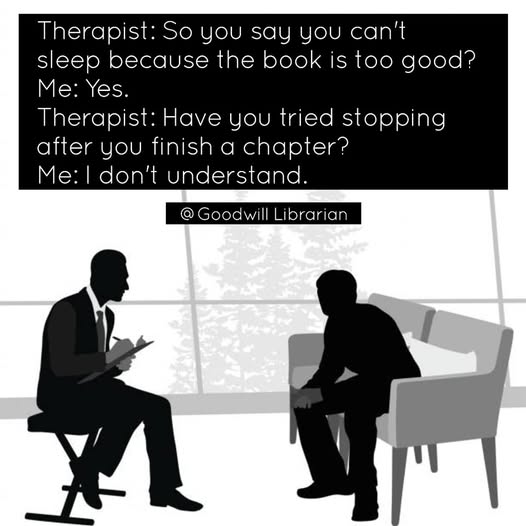
@kierstenwhite Ugh, people in public spaces have gotten SO inconsiderate. IF YOU ARE READING, HOLD YOUR BOOK AT AN ANGLE WHERE I CAN SEE THE COVER WITHOUT ANY WEIRD, CREEPY MANEUVERING. It's just common decency!

WWW Wednesday—January 29, 2025

It’s entirely possible that by the time this posts, every bit of this will be out of date–but the way this week is going, I can also see me repeating this entire post next week. This grandpappy isn’t complaining at all, but books are being shoved to the side more often than I’m used to. Still, for the sake of argument, let’s go with this…

WWW Wednesdays Logo

This meme was formerly hosted by MizB at A Daily Rhythm and revived on Taking on a World of Words—and shown to me by Aurore-Anne-Chehoke at Diary-of-a-black-city-girl.

The Three Ws are:
What are you currently reading?
What did you recently finish reading?
What do you think you’ll read next?

Seems easy enough, right? Let’s take a peek at this week’s answers:

What are you currently reading?

Cover of Hit The Ground Running by Kate Ashwin Cover of The Innocent Sleep by Seanan McGuire
Hit The Ground Running
by Kate Ashwin
The Innocent Sleep
by Seanan McGuire, read by: Raphael Corkhill

Ashwin’s first novel is so fun and self-assured that I’m expecting that I’ll be keeping my eyes peeled for the sequel (with 23% to go, I assume there’ll be at least one sequel) and probably am going to have to hunt down some of her comics, too.

Last week, I said, “It is going to be so weird hearing the voices Toby, Tybalt, et. al. in a voice that doesn’t belong to Mary Robinette Kowal.” I underestimated just how strange it would be. I’m able to put that aside (mostly) and enjoy this.

What did you recently finish reading?


Cover of I Cheerfully Refuse by Leif Enger Cover of Subculture Vulture by Moshe Kasher
I Cheerfully Refuse
by Leif Enger
Subculture Vulture: A Memoir in Six Scenes
by Moshe Kasher

Enger’s novel is one of the most engaging and hopeful dystopian novels I can remember reading. There’s no plucky young woman in a love triangle coming to save the world–but there might something better going on.

There are so many things that could be said about Kasher’s book that I don’t know where to start–but since this isn’t a full post about it, I can let myself off with a “it’s entertaining, educational, and will make you laugh.”

What do you think you’ll read next?

Cover of Don't Tell Me How to Die by Marshall Karp Cover of The Teller of Small Fortunes by Julie Leong
Don’t Tell Me How to Die
by Marshall Karp
The Teller of Small Fortunes
by Julie Leong, read by Phyllis Ho

This Karp ARC looks like a return to his roots–dark comedy and thrillers. This is exactly what I want to see out of him (even if the premise is a bit…odd).

A cozy-looking fantasy about a found family and a search for a lost child. It looks charming, and worth a shot.

How are you closing out January?

Page 33 of 220

Powered by WordPress & Theme by Anders Norén