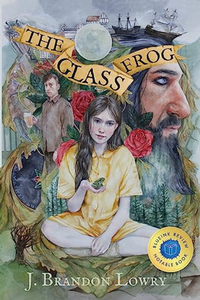
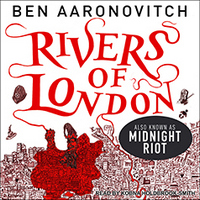
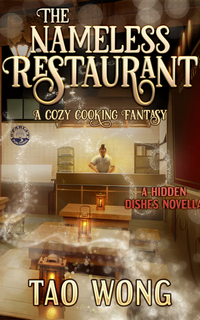
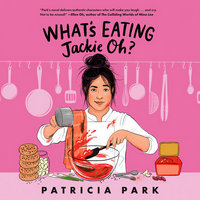
Category: Blog Series Page 54 of 220

WWW Wednesday, April 3, 2024

So…this is has been a week. (as you might have noticed from the lack of new material from me) I’ve managed to make some good progress on my current read, but that’s about it. I’m not sure I have high hopes for the rest of the week when it comes to the blog, but you never know. I might surprise myself.

This meme was formerly hosted by MizB at A Daily Rhythm and revived on Taking on a World of Words—and shown to me by Aurore-Anne-Chehoke at Diary-of-a-black-city-girl.

The Three Ws are:
What are you currently reading?
What did you recently finish reading?
What do you think you’ll read next?

Seems easy enough, right? Let’s take a peek at this week’s answers:

What are you currently reading?

I’m reading the beyond-gripping Smoke Kings by Jahmal Mayfield (with big thank you to Raven Crime Reads, otherwise I might have let this one slip by), and am listening to Finlay Donovan Rolls the Dice by Elle Cosimano, read by Angela Dawe on audiobook–sillier, funnier, and more madcap than the previous books.

Smoke KingsBlank SpaceFinlay Donovan Rolls the Dice

What did you recently finish reading?

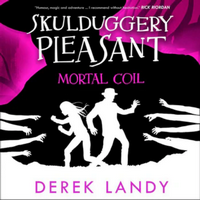
I just finished Deena Mohamed’s Shubeik Lubeik and Skulduggery Pleasant: The Faceless Ones Trilogy by Derek Landy, read by Rupert Degas on audio.

Shubeik LubeikBlank SpaceThe Faceless Ones

What do you think you’ll read next?

My next book should be for Namaste Mart Confidential by Andrew Miller and my next audiobook should be The Best Way to Bury Your Husband by Alexia Casale, read by Ambreen Razia, Ayesha Antoine, Bea Holland and Imogen Church.

Namaste Mart ConfidentialBlank SpaceThe Best Way to Bury Your Husband

What are you into this week?

COVER REVEAL: Cosmic Widow by Jonathan Nevair

I’m very pleased to welcome the Cover Reveal for Jonathan Nevair’s Cosmic Widow to The Irresponsible Reader this morning! This novel is the third in this series of stand-alone SF adventures. Incidentally, the other two books in the series, To Spy a Star and Stellar Instinct are on sale .99c on April 2nd for the Cover Reveal. Before we get to revealing the cover, let’s learn a little bit about the book and author, shall we? It’ll just take a moment, and then we can all feast on the cover.

Book Details:

Book Title: Cosmic Widow by Jonathan Nevair
Series: Agent Renault Adventures, Book 3
Genre: Adult Science Fiction
Publisher: Cantinool Books
Release date: November 19, 2024
Preorder Date: September 1, 2024

About the Book

A deadly race to recover a priceless portrait.

When the legendary Cosmic Widow vanishes from the galaxy’s premiere art museum, Agent Lilline Renault delves into a shadowy underworld to hunt down the missing masterpiece.

Her only clue: the thief’s enigmatic calling card. Following a scant trail of evidence, Lilline crosses paths with shady art dealers, eccentric university professors, and elusive forgers in a tangled search for the stolen work of art.

But the robber’s end game is more sinister than mere theft. Sleeping secrets stir inside the Cosmic Widow… If they wake, an arcane mystery locked away for ages could spell disaster across the stars.

About the Author

Jonathan NevairJonathan Nevair is a science fiction writer and educator originally from Long Island, NY. After two decades in the classroom, he finally got up the nerve to write fiction. His character-driven space operas and spy-fi thrillers have been nominated for multiple awards, including the National Fantasy Fan Federation Laureate Award (Stellar Instinct) and the Indie Ink Awards (Wind Tide and Stellar Instinct). Jati’s Wager was a 2022 Indie Ink Awards finalist and runner-up for the category, Writing the Future We Need: Nonbinary Representation. His short fiction is published in sci-fi journals, including Simultaneous Times.

Jonathan lives in southeastern PA with his wife and rambunctious mountain feist, Cricket. When not writing and teaching, he spends his time chasing his dog through the woods and stargazing with dreams of walking in space.

Website ~ Instagram ~ Twitter ~ Facebook ~ Amazon Author Page ~ Goodreads ~ Indie Story Geek ~ Bookbub

and now…

The Cover

Cosmic Widow Cover

This eye-catching cover is the handiwork of Cover Artist/Designer: MIBLart.

Be sure to preorder this in September—and get the first books in the series, To Spy a Star and Stellar Instinct on sale .99c on April 2nd

Irresponsible Reader Pilcrow Icon

A Few Quick Questions With…M.D. Presley

Today is Publication Day for Rites of Passage the first book in the Inner Circle Urban Fantasy series. Here’s a quick description:

Rites of Passage CoverCorbin James has never been so lost. Able to dowse since a kid, he’s adept at finding missing things. But after weeks on the run from the FBI, the teen’s luck has finally run dry.

Enter the enigmatic Mister with a tempting offer: find an enchanter who has disappeared inside the mysterious Harmon House. Recruited into a reluctant crew of motley magicians, Corbin only has days to navigate their shifting loyalties to earn his freedom by entering the Inner Circle.

Lucky for him he’s got his trusty dowsing rod, a defaced 50-cent piece, and enchanted iPod.

I’m really looking forward to reading this. In honor of Publication Day, I have a quick Q&A with the author, M.D. Presley. I had to come up with these questions before starting the book, which I’ve only done once before. I think it came out not-terribly-awkward. Either way, I enjoyed reading the answers and hope you will, too.


Why don’t you take a moment to introduce yourself to the readers, and tell us about your books in general, before hitting us with an elevator pitch for Rites of Passage?
Greetings, mortals. I am Matt, and I write as M. D. Presley. I’m a screenwriter by training, with a few shows and movies released in China, although I don’t speak a lick of Mandarin. Publishing is my outlet for the stories that I actually want to tell, which are not constrained by such paltry things as budgets or directors. Or censors.

Rites of Passage is an urban fantasy mystical murder mystery that’s miraculously not in the Dresden or Anita Blake molds. It’s a whodunnit involving a young dowser who’s pressed into finding an enchanter that’s gone missing in his own home. It harkens back to the non-noir mysteries from yesteryear, in that you could almost call it cozy if you only went by body count. But it’s got a little too much cosmic and body horror for that.

It’s my love letter to 90s Vertigo comics, where the urban fantasy is always just around the corner or hiding in the shadows, but is wonderous if you have the right set of eyes to see it. But it’s also strange and a little bit frightening.

Looking over your website, worldbuilding is something you’ve spent a lot of time thinking about it—not only implementing it in two pretty distinct fictional worlds—but you’ve got some books about it geared for writers. Hopefully, I’m not asking you to say anything that makes buying one of those books moot here. But what are the big things that an author should think about before trying to create a fictional world—what are a couple of the big mistakes people tend to make as they learn the hard way how to do this?
I’ve spent a few hundred pages and many YouTube hours trying to sum up the idea of purposeful worldbuilding, so I’ll give one half-useful conceptual answer and one practical one.

Conceptually, practice the old Bruce Lee adage of use what works and discard the rest. I stand by a “tools not rules” approach, which means you should be open to learning everyone’s theories and techniques, and then distill the ones that work for you without ignoring what you’ve learned from the discarded bits. I’m personally a big top-down designer and cannot write by a bottom-up, discovery approach. However, I’ve studied those approaches and use them when they’re appropriate in my own writing.

Basically, worldbuilding is always a process in progress.

Practically, my biggest word of advice is to keep a bible of your world, characters, and plot. It doesn’t have to be terribly in-depth, but it’s good to have it all in one place. And if you do keep one with characters JOT DOWN THEIR PHYSICAL DESCRIPTIONS. Nothing is worse than combing through hundreds of pages of your own writing just to determine if your own creation is brown-haired or left-handed. Doing so is probably the fastest way to turn something you love into homework.

For you, at the end of the day—creating believable characters, worldbuilding, or the story—what’s harder? What’s more rewarding? What do your readers tend to react to the most?
It’s trite, but I’ve learned how characters, plot, and worldbuilding all need to balance and feed into one another. I was a big plot-proponent in my early days, and took a long time to understand I needed to spend equal time on the characters so the audience would actually want to know what happens to them in the plot. Worldbuilding is the same way in that it can be enchanting in terms of its details and scale, but it’s just window dressing without vibrant characters populating it. Mark JP Wolf points out that worlds can exist without stories, but stories cannot exist without worlds, which just underscores the symbiotic nature of the three of them.

At this stage in my career, I feel I have a pretty good balance on the three of them. Which means I should probably start focusing my attention on my wooden prose.

No matter how many books you have under your belt, as I understand, each novel/series tends to be a different experience than the one(s) before. What was the part what was the biggest surprise about the process of writing Rites of Passage? Either, “I can’t believe X is so easy!” or “If I had known Y was going to be so hard, I’d have skipped this and watched more TV”?
This sounds dumb after just saying I’m a top-down designer who focuses on plot, but Rites of Passages reiterated how much I need to know what happens in the story before I sit down to write it. Especially when it’s a mystery. Traditional plotting methods may tell you what needs to happen in the story for that beat to function, but I learned the hard way that I really need to design the villain’s plans and motivation ahead of time. If the villain’s plans don’t make sense from their perspective, then the story’s logic will eventually break down, no matter how well the plot holds together from the hero’s perspective.

I’ve taken this hard-won lesson to heart as I plot out the villains first in the sequel, and the process has sped up considerably.

Is there a particular supporting character that ended up becoming a favorite of yours? Do you ever start to wonder if a supporting character should’ve been the protagonist? Talk about them a little bit and how the reaction is different. What’s the key, for you, in writing a great supporting character, and how did that (if you can manage this without an essay) work with this particular character?
In screenwriting it’s understood that supporting characters are more fun to write because they can be over the top, since they’re not carrying the show. They can be outlandish and weird because not nearly as much is riding on them, which is why they have the freedom to become fan favorites. And I have a feeling that in Rites of Passage Kirin will be this character for me.

She’s a bit of a manic pixie dream girl in the first book, but that portrayal is also because we’re encountering her through the eyes of a young man. But she’s going to show up in many more of the books, and her character will get to show more facets throughout, both because she gets more screen time, and because the protagonist’s understanding of the world matures. In fact, I think she probably has a bigger arc than even the protagonist.

What’s next for M.D. Presley, author? Does that depend on the reaction to Rites of Passage or are you already neck deep in your next project or five?
I have material for about eight more books in this series, The Inner Circle, and am already at work on the second one. I’m juggling some screenwriting gigs with it, which is annoying since you never know when or if they’ll pop up to derail my writing momentum. On the worldbuilding front, I’m hoping to put together a free book detailing my method for understanding fantasy magic systems, which is currently scattered around on my website.

Thanks for your time and participation! I’m looking forward to seeing what Rites of Passage has to offer!


Hopefully by now, reader, you’re thinking you’d like to look into Presley’s work. Go check out his website, and show him the Release Day love and order Rites of Passage!
A Few Quick Questions

Opening Lines: Miracles by C.S. Lewis

from Miracles by C.S. Lewis:

In all my life I have met only one person who claims to have seen a ghost. And the interesting thing about the story is that that person disbelieved in the immortal soul before she saw the ghost and still disbelieves after seeing it. She says that what she saw must have been an illusion or a trick of the nerves, And obviously she may be right. Seeing is not believing.

For this reason, the question whether miracles occur can never be answered simply by experience. Every event which might claim to be a miracle is, in the last resort, something presented to our senses, something seen, heard, touched, smelled, or tasted. And our senses are not infallible. If anything extraordinary seems to have happened, we can always say that we have been the victims of an illusion. If we hold a philosophy which excludes the supernatural, this is what we always shall say. What we learn from experience depends on the kind of philosophy we bring to experience. It is therefore useless to appeal to experience before we have settled, as well as we can, the philosophical question.

If immediate experience cannot prove or disprove the miraculous, still less can history do so. Many people think one can decide whether a miracle occurred in the past by examining the evidence “according to the ordinary rules of historical inquiry.” But the ordinary rules cannot be worked until we have decided whether miracles are possible, and if so, how probable they are. For if they are impossible, then no amount of historical evidence will convince us. If they are possible but immensely improbable, then only mathematically demonstrative evidence will convince us: and since history never provides that degree of evidence for any event, history can never convince us that a miracle occurred. If, on the other hand, miracles are not intrinsically improbable, then the existing evidence will be sufficient to convince us that quite a number of miracles have occurred, The result of our historical enquiries thus depends on the philosophical views which we have been holding before we even began to look at the evidence, The philosophical question must therefore come first.

Here is an example of the sort of thing that happens if we omit the preliminary philosophical task, and rush on to the historical. In a popular commentary on the Bible you will find a discussion of the date at which the Fourth Gospel was written. The author says it must have been written after the execution of St. Peter, because, in the Fourth Gospel, Christ is represented as predicting the execution of St. Peter. “A book,” thinks the author, “cannot be written before events which it refers to.” Of course it cannot—unless real predictions ever occur. If they do, then this argument for the date is in ruins, And the author has not discussed at all whether real predictions are possible. He takes it for granted (perhaps unconsciously) that they are not. Perhaps he is right: but if he is, he has not discovered this principle by historical inquiry. He has brought his disbelief in predictions to his historical work, so to speak, ready made. Unless he had done so his historical conclusion about the date of the Fourth Gospel could not have been reached at all. His work is therefore quite useless to a person who wants to know whether predictions occur, The author gets to work only after he has already answered that question in the negative, and on grounds which he never communicates to us.

This book is intended as a preliminary to historical inquiry. I am not a trained historian and I shall not examine the historical evidence for the Christian miracles, My effort is to put my readers in a position to do so. It is no use going to the texts until we have some idea about the possibility or probability of the miraculous, Those who assume that miracles cannot happen are merely wasting their time by looking into the texts we know in advance what results they will find for they have begun by begging the question.

Opening Lines Logo

Saturday Miscellany—3/30/24

Odds ‘n ends about books and reading that caught my eye this week. You’ve probably seen some/most/all of them, but just in case:
bullet Laurent de Brunhoff, author of Babar children’s books, dies at 98—”Babar author Laurent de Brunhoff, who revived his father’s popular picture-book series about an elephant-king and presided over its rise to a global multimedia franchise, has died at the age of 98.
bullet For Book Recommendations, People Are Always Better Than Algorithms: Maris Kreizman Reveals Some Tricks of the Trade for the Semi-Professional Book Recommender—good post, and some great recommendations, too.
bullet With Melville in Pittsfield—an interesting piece about a reader, Melville, and somehow Frank Castle/The Punisher is involved, too.
bullet How Comic Book Fans Mistakenly Claimed the Term ‘Trade Paperback’ as Theirs: Unfamiliarity with book terms led comic book fans to adopt a standard book term, “trade paperback,” as a comic book term—huh. Kinda always wondered about this.
bullet On Letting Go of the Idea of “Keeping Up”: “So, what have you read lately?” It sounds like an innocent question, but it came with a pile of expectations.—Molly Templeton’s being her regular thought-provoking self, and ends up sounding pretty healthy
bullet Behold The Music—among the many, many good things I read on Tolkien Reading Day (which I once again forgot about until the day), was this guest post from Pages Unbound
bullet How much does it cost to start a book blog in 2024? || 3 months of blogging—Laure’s looking at what she’s learned in 3 months of book blogging and asks some questions I should probably think about myself.
bullet Why I Love Buying Books!—I think we all can relate
bullet My Problem with “The Problem with Classics”
bullet Tanis Half-Elven was a deeper character than I thought (warning: SA, CA discussion)—excellent points. (although I’m a bit biased, always thought Tanis deserved more fan attention)
bullet Thinking About Stories: Appreciation Bottlenecks—Pete’s being insightful again…and I’m stealing/appropriating the term “Appreciation Bottleneck”
bullet Nerd Church – Should We Judge Older Books By Modern Standards? —good stuff
bullet March 2024 Book Blog Wrap-Up—Celeste’s monthly recap of the best posts you’ve missed
bullet The Best Books I Have Read Published in Each Year of My Life—Fantastic idea.

A Book-ish Related Podcast episode (or two) you might want to give a listen to:
bullet The Conversation with Nadine Matheson 2.60 Neil Lancaster: True Detective and New Chapters
bullet Libro.fm Podcast EP 27 Interview with S.A. Cosby (Author of All the Sinners Bleed & Razorblade Tears)—another good Cosby interview

Things I learned from reading this week (that I can’t imagine finding a use for):
bullet Grated cheese predates The Republic—Plato talks about it—and it apparently was used to treat injuries? (an idea Plato did not endorse, I hasten to add). I don’t know why I assumed grating it was only a few hundred years old, but it seems I did. Source: Great Minds on Small Things by Matthew Qvortrup
bullet Speaking of Plato, I think I’d encountered the fact that he’d been a wrestler in his youth (a successful competitor in the Isthmian Games), but I didn’t know that his actual name was Aristocles—and that Plato might be a nickname from the Greek for “the broad-shouldered one.” Sure, Macho Man or The Rock are catchier, but that’s a pretty good (and on the nose) wrestling name. Source: Great Minds on Small Things by Matthew Qvortrup

This Week’s New Releases that I’m Excited About and/or You’ll Probably See Here Soon:
bullet Rhythm and Clues by Olivia Blacke—the third, and best to date (as I recently opined), Record Shop Mystery. Junie doesn’t find the body this time, but she’s looking for the killer, for sure.
bullet The Devil You Know by Neil Lancaster—the 5th Max Craigie book finds the team working with Davie Hardie of all people to close a cold case. This is also a reminder that I should write about book 4.
bullet Poetry Comics by Grant Snider—”These poems explore everything you never thought to write a poem about, and they’re so fun to read you’ll want to write one yourself. Not to worry, there’s a poem for that, too!”
bullet You’d Look Better as a Ghost by Joanna Wallace—this is a black comedy about a part-time serial killer dealing with the grief over her father’s death and a blackmailer.
bullet How to Solve Your Own Murder by Kristen Perrin—”about a woman who spends her entire life trying to prevent her foretold murder only to be proven right sixty years later, when she is found dead in her sprawling country estate…. Now it’s up to her great-niece to catch the killer.”
bullet One in the Chamber by Robin Peguero—a political satire/thriller about Senate aids working with/against each other during the confirmation hearings for the first Black chief justice.
bullet Bunyan and Henry; Or, the Beautiful Destiny by Mark Cecil—a dark re-imagining of the folk heroes.

Woman sitting atop a ladder in front of a full bookshelf while reading with the text 'Too much of anything is bad, but too many books is barely enough.'

A Few Quick Questions With…J.M. Gulmire

Back in September (about the time I should have been sending him my part of this Q&A), J.M. Gulmire stopped by with a Guest Post, “Shaping Smiles with Kay-9 The Robot Dog,” giving a little BTS about the book I posted about this morning. Last week, I finally got around to sending the questions that have been rattling around in my brain since then–and he was gracious enough to get the answers back right away, so I can talk about this charming book a little bit and bring you this post. I hope you enjoy.


Why don’t you take a moment to introduce yourself to the readers, and tell us about your path to publication?
Sure sure. Well, I’ve been a storyteller for about 300 years now, it feels like. About a dozen years ago I started querying agents. I submitted mountains of work as I kept writing during this period, and got some great responses praising my work but no takers. I usually received comments about how great my stories are but that they’re not what agents are looking for.

I fell in the “too different” category. That tends to happen when you live with elves and have conversations with your dog.

So last year, the elves and my dog demanded to read my books in book format and that drove me to test out self-publishing.

My first title, “A Vacuum for my Birthday” hit #1 in its genre on amazon and since then I’ve released two other books that have all become Amazon bestsellers.

In addition to writing, your other big artistic endeavor is claymation. What kinds of things have you learned from claymation that have helped your writing—and vice versa?
I love swimming in clay. When I decided to self-publish a little birdie told me that marketing is super tough and that I’d have to do something different so I decided to practice making shorts so I could create my own book trailers. I grew up on Will Vinton and always had a strange obsession with claymation and stop motion work.

Claymation is super tough. The elves lent me some play-doh and I started writing scripts. Script writing helps get right to the action. It keeps things moving and filming reminds writers that timing matters. Thankfully I’m now actually working with clay, which doesn’t dry out as fast!

On the opposite end, writing has helped me realize my characters and bring them to life onscreen. The shorts I created for my “Kay-9 the Robot Dog” trailer were so fun to make, even when the clay took on a mind of its own.
So every book I’ve read for the MG audience about a kid who creates a robot/super-computer/etc. focuses on the end result—and the creation (or most of it) happens “off screen” or in the literary equivalent of a montage. But you don’t take that approach—the book is almost all about the creation-stage. Was that a conscious choice on your part to depart from the norm, or was that just the way it came about?
That was a pure choice. I’m so glad you enjoyed it!

One of my elves asked me to get them a robot dog book, but I couldn’t find one. Worst of all, most of the robot books were all about the robot’s experiences instead of its creation.

I was overly aware of this while writing “Kay-9.” Thankfully the subject was so fun and my dog offered a few suggestions because I love finding untold stories. That old saying, “every story has already been told” or something like that was created to be proven wrong. I think Mark Twain or some old timey author started that rumor just so people would work harder to make something new.

There’s a recurring theme (at least I think there was) about what makes a good parent running throughout the book. Frequently it’s Ryan’s mother telling/reminding him something like “I’m your mom, of course I’m going to ____.” Was that something you set out to layer in or did it just come up organically and you decided to run with it?
I’m so glad that came through. Yes. Raising a house full of elves and critters, I know how often little ones need to be reminded that they are supported by their family, especially their parents.

I also hoped that the children who read “Kay-9” would feel more connected to their parents through Ryan’s relationship with his mom, and how important his connection with his dad was even though he was gone.

What was the part what was the biggest surprise about the process of writing Kay-9? Either, “I can’t believe X is so easy!” or “If I had known Y was going to be so hard, I’d have skipped this and watched more TV”?
I found myself spellbound at how desperately the book seemed to want to be written. I would sit down and write and it poured out so well and so fast that I had to slow down and stretch my fingers to keep from losing my head. I didn’t want to rush it but knew that I was on to something.

This is typically where I ask about what’s next for an author, but your next is already here—tell us a little about Monster Camping Trip.
Yay. Thank you! “Monster Camping Trip” is my third best selling Amazon new release.

This one didn’t exactly know what it wanted to be called. The original title was, “Too Many Kids” because it’s about the ups and downs of being part of a big family, but it’s also about how families support each other even if they’re a little crazy at times.

This one sets Ava on a search for a mysterious cryptid that lives in Wisconsin. She learns about the legend of the hodag and ends up going on an adventure with her twin brother in search of it on their family camping trip.

And there’s no end to writing with me. I plan to release my fourth book, “Keku’s Mission,” in September. It’s my Lord of the Rings, but with all animals and a lot less wandering through the forest because the animals are small and can’t go as far. Imagine Frodo as a girl toad who is on a mission to find a plant that will heal her friend who is sick.

All of my books are about overcoming the odds and the importance of supporting others and being supported. They all have jokes and silly situations in them as well, because I don’t like cough medicine but laughter (and pineapple juice) are the best cure for everything.

Thanks for your time and participation! Thanks also for introducing me to Ryan and his friends/neighbors!
THANK YOU so much!! I love writing and am always happy to spend time giving my manuscripts time to cool off. LOL


Readers, go check out all of Gulmire’s books at Amazon!
A Few Quick Questions

WWW Wednesday, March 27, 2024

We’ve all seen the Strange Planet comic strip about reading, right? Well, that’s where I am at the moment, thanks Seanan McGuire. I’d say more, but then I wouldn’t shut up for 600 words or so.

The Being is Fictional. My Anger is Real.

This meme was formerly hosted by MizB at A Daily Rhythm and revived on Taking on a World of Words—and shown to me by Aurore-Anne-Chehoke at Diary-of-a-black-city-girl.

The Three Ws are:
What are you currently reading?
What did you recently finish reading?
What do you think you’ll read next?

Seems easy enough, right? Let’s take a peek at this week’s answers:

What are you currently reading?

I’m reading Aftermarket Afterlife by Seanan McGuire and Minds on Small Things: The Philosophers’ Guide to Everyday Life by Matthew Qvortrup. I’m also listening to Little Ghost by Chris McDonald, read by Robert G. Slade on audiobook.

Aftermarket AfterlifeBlank SpaceGreat Minds on Small ThingsBlank SpaceLittle Ghost

What did you recently finish reading?

I just finished Carrie Vaughn’s Bannerless—an intense read—and Supercommunicators: How to Unlock the Secret Language of Connection by Charles Duhigg on audio. It wasn’t Duhigg’s most interesting book, but probably the easiest to apply.

BannerlessBlank SpaceSupercommunicators

What do you think you’ll read next?

My next book should be Cooked Goose by Laura Jenski, if only because it seems light, and boy howdy, do I need that. My next audiobook should be Skulduggery Pleasant: The Faceless Ones Trilogy by Derek Landy, read by Rupert Degas—I started the series ages ago (both in print and then in audio)—it’s going to stick this time. Probably.

Cooked GooseBlank SpaceThe Faceless Ones

What do you have cooking?

Saturday Miscellany—3/23/24

Odds ‘n ends about books and reading that caught my eye this week. You’ve probably seen some/most/all of them, but just in case:
bullet Why Ban Books When You Can Ban Book Awards?: Suburban Illinois District Cancels Caudill Awards—The Caudill Awards of all things?
bullet A Letter to the Editors of Literary Magazines—I’ve seen variations of this idea before, it never fails to make me smile. Here, a writer offers some critiques of the rejection letters she’s received.
bullet Reimagining Nonfiction—a local library here will be closed for two days (shudder) to reorganize their Adult Nonfiction section, getting rid of Dewey Decimal. On the one hand, I like the concept. But it feels sacrilegious to monkey with Dewey Decimals, right?
bullet Speaking of the Nampa Public Library, their Treasure Valley Book Fair is just around the corner! There are some familiar names on their list, but many that aren’t. I’m looking forward to meeting some new people—and hopefully featuring some of them soon.
bullet The Weirdness of Ambrose Bierce: From “Owl Creek Bridge” to Horror and Satire—I’m always happy to read about Ambrose Bierce, and this is a good piece on him. It’s also a good reminder that I should open the new copy of The Devil’s Dictionary that I recently picked up.
bullet P.L.’s TOP 25 INDIE SFF AUTHORS—P.L. Stuart, who knows a thing or two about Indie SFF, lists his top 25.
bullet Books I’ve Read With Animals In The Title—a good list (and a good list idea for those who need one)
bullet Tough Questions with A Literary Escape—W&S Bookclub puts a favorite under the harsh lights.
bullet My Wife Reacts to My Favorite Books—author Dave Lawson gives his wife’s impressions of some covers. Fun idea.

A Book-ish Related Podcast episode (or two) you might want to give a listen to:
bullet Fiction Fans Interview: Translations with Nevena Andrić—questions I’ve always wanted to ask a translator

To help talk about backlist titles (and just for fun), What Was I Talking About 10 Years Ago Week?
None. It was an entirely dead week here except for a Monday Miscellany because my schedule was just that messed up. I did note the release of Night Broken by Patricia Briggs, and a couple of news-y or silly items that are pretty much dead links now. Fun week around here, eh?

This Week’s New Releases that I’m Excited About and/or You’ll Probably See Here Soon:
bullet The Girl in the Dark by Zoë Sharp—Blake & Bryon team up again to look into the murder of someone who saved Blake’s life.
bullet A Midnight Puzzle by Gigi Pandian—this release snuck up on me, I should’ve been waiting for it instead of hearing about it days later. Tempest Raj suspects that her family’s business is being framed, and it’s up to her to beat the killer at their own game.
bullet The Best Way to Bury Your Husband by Alexia Casale—based on the title, this is a book I will obviously keep from my wife. Based on the description, this sounds like a dark comedy with a lot of heart.
bullet Kill For Me, Kill For You by Steve Cavanagh—Swapping murders for revenge, in a straight-out-of-Hitchcock move, but with a Cavanagh twist. I’m far behind on my Cavanagh reading, this looks like it might be enough to force me to catch up.
bullet The Blues Brothers: An Epic Friendship, the Rise of Improv, and the Making of an American Film Classic by Daniel de Visé—a look at the Ackroyd and Belushi from childhood, to SNL, to the creation of the band and then the beloved movie. How can I resist this? Why would I try?

Lastly, I’d like to say hi and extend a warm welcome to Laure, who subscribed to the blog this week. I hope you enjoy the content and keep coming back.
the text 'The buying of more books than one can read is nothing less than the soul reaching toward infinity...' - Israel Regardie above a picture of Regardie

WWW Wednesday, March 20, 2024

It’s still, Wednesday, right? Well…it is here, anyway.

This meme was formerly hosted by MizB at A Daily Rhythm and revived on Taking on a World of Words—and shown to me by Aurore-Anne-Chehoke at Diary-of-a-black-city-girl.

The Three Ws are:
What are you currently reading?
What did you recently finish reading?
What do you think you’ll read next?

Seems easy enough, right? Let’s take a peek at this week’s answers:

What are you currently reading?

I’m reading Bannerless by Carrie Vaughn, (I cannot believe I waited 6 years to open this!) and am listening to Heaven’s River by Dennis E. Taylor, read by Ray Porter on audiobook. It’s been too long since I listened to Book 3, love getting back to this world.

BannerlessBlank SpaceHeaven's River

What did you recently finish reading?

I just finished the rather fun The Tenacious Tale of Tanna the Tendersword by Dewey Conway & Bill Adams and Soul Taken by Patricia Briggs, read by Lorelei King on audio.

The Tenacious Tale of Tanna the TenderswordBlank SpaceSoul Taken

What do you think you’ll read next?

My next book should be Aftermarket Afterlife by Seanan McGuire and my next audiobook should be Supercommunicators: How to Unlock the Secret Language of Connection by Charles Duhigg. I really enjoy the way Duhigg tells a story, and hopefully, I can learn from this one.

Aftermarket AfterlifeBlank SpaceSupercommunicators

What’re you up to this week?

Saturday Miscellany—3/16/24

Odds ‘n ends about books and reading that caught my eye this week. You’ve probably seen some/most/all of them, but just in case:
bullet Is It A Betrayal To Publish Dead Writers’ Books?: Inside the ethically thorny world of posthumous publishing.
bullet I didn’t get the credit for my bestselling book: the secret life of the celebrity ghost writer—Liam Pieper describes the reality that’s close to what I expected, but is nice to see confirmed.
bullet Not Just Covers, But Every Page: Why Writers Should Talk About Book Design Early On: Debbie Berne on the Intricacies of Literary Interior Design
bullet Why Are These 90s Young Adult Books So Irresistible?—For readers of a certain age, this is a fun collection of posts/articles from Pocket.
bullet Famous Works of Irish Literature as Limericks—what better way to note St. Patrick’s Day than with Amanda Lehr’s latest post to McSweeny’s?
bullet Bookish Death Cleaning: On What We Keep, and What It Means
bullet Page Turners vs. Screen Scribes: The Endless Debate of Physical Books vs. Ebooks—nothing revolutionary here, but that’s not neccesarily a bad thing.
bullet Breaking into the indie market with the Break-Ins! —Over at Before We Go Blog, The Fictional Escapist has a great interview about a great idea.
bullet Bookmark Chat: Guess Who’s Back…—The McBooknerd is back!
bullet A Voracious Reader was under the pressure of handling Witty & Sarcastic Bookclub’s Tough Questions this week (I really need to get on my answers)
bullet Thoughts From A Grumpy Year Of Reading—2024 isn’t treating our pal Peat too well…

A Book-ish Related Podcast episode (or two) you might want to give a listen to:
bullet The Conversation with Nadine Matheson 2.58 S.A. Cosby: We Tell Lies To Tell The Truth

To help talk about backlist titles (and just for fun), What Was I Talking About 10 Years Ago Week?
bullet Red Rising by Pierce Brown—the beginning of a beautiful book friendship for me…
bullet And on the other end of the tonal spectrum…Notorious Nineteen by Janet Evanovich

This Week’s New Releases that I’m Excited About and/or You’ll Probably See Here Soon:
bullet The Ballad of Sprikit The Bard (And Company) by Sean O’Boyle—I’ve seen this described as “A ‘Discworld’ meets ‘Lies of Locke Lamora’ Adventure.” Which is enough for me. Hearing a lot of good about it, too.
bullet Say Hello to My Little Friend by Jennine Capó Crucet—a “darkly comic” book about a Pitbull imitator (the rapper, not a canine) teaming up with a magical orca to become a real-life Tony Montana with shades of Moby Dick. The novel sounds so strange that it just might work.
bullet Black Wolf by Juan Gómez-Jurado—This thriller looks so good that I’m getting the first in the series from the Library today. Click the link, I’m not going to try to summarize it.

Man Sitting at his desk, 1784, Jan Ekels with a speech bubble reading 'If you finish a task early at work, you should be allowed to have silent reading time like we used to do in school.'

Page 54 of 220

Powered by WordPress & Theme by Anders Norén