Category: Blog Series Page 6 of 222

Saturday Miscellany—3/7/26

I’ve been sick most of this week, and spent so little time with my eyes open it’s a wonder they still function (reading online posts really didn’t happen–nor did reading anything longer). Somehow I’m getting this post up, and I might be able to get some things up next week, too.

Odds ‘n ends about books and reading that caught my eye this week. You’ve probably seen some/most/all of them, but just in case:
bullet Ageless Literature (@agelessliterature) posted some provocative slides “What happens when a society stops reading”
bullet I get that almost none of you can take advantage of this program at a local bookstore, but it’s such a good idea, you should give it a look. Shared Stories is starting a Junior Booksellers series in March—where you casn “Meet neighborhood kiddos who are passionate about reading & hear all about their favorite books so you can love them too!” Like Hans today.
bullet Can the Dictionary Keep Up?—an in-depth look at Stefan Fatsis’ Unabridged: The Thrill of (and Threat To) the Modern Dictionary
bullet What We Lose When We Gamify Reading: Marissa Levien Makes the Case for Slowing Down—It may seem like hypocrisy for someone like me to like this kind of thing. But honestly, this is how I think–I just think like this while reading a lot. Both can be true (because the number is really never my goal, it’s just a game).

To help talk about backlist titles (and just for fun), What Was I Talking About 10 Years Ago This Week?
bullet No Problem, Mr. Walt by Walt Hackman—still up there as one of my favorites.
bullet Morning Star by Pierce Brown—remember back in our innocence when we thought that Brown was going to have mercy on us and end it as a trilogy? Good times–harrowing times, but good times. (we all know I’m not complaining here, I’m just saying)
bullet I noted the releases of: The Passenger by Lisa Lutz; Chaos Choreography by Seanan McGuire; Borderline by Mishell Baker; East Of The City by Grant Sutherland; Who Wants To Be The Prince Of Darkness? by Michael Boatman; The Courier by Gerald Brandt; and Arkwright by Allen Steele

This Week’s New Releases that I’m Excited About and/or You’ll Probably See Here Soon:
bullet The Politician by Tim Sullivan—The fourth DC George Cross mystery had it’s American re-release this week. I’m assuming the victim was a politician of some sort. I’m resisting the urge to read the description until I catch up.
bullet We Interrupt This Program by Randee Dawn—”Welcome to Seaview Haven. A delightful village of charming humans, quaint homes – and cozy mysteries! Fortunately, there’s silver-haired author-turned-sleuth Winnie Arrowmaker on hand to solve them all.

But things aren’t exactly as they seem. Seaview Haven is one of the Seelie Court Network’s many invented TROPE towns, and the “mysteries” are scripted and streamed for the entertainment of enchanted creatures across the Veil. Or, rather, they were…”
bullet Flour & Forge by Herman Steuernagel—”A weary warrior. A restless baker. A magical side quest neither of them asked for, but both might need…perfect for anyone who believes that while pastry might not save the world, it can help make it a world worth saving.”

Think before you speak. Read before you think. ― Fran Lebowitz  @weareteachers

Book Blogger Hop: What Will Happen to Your Books?

Hemingway talked about writing drunk and editing sober. I wrote and edited this sober, and then revised and added to it feverish and sleep-deprived. I think Hemingway’s strategy was better. I hope this is coherent.

Book Blogger Hop


This prompt was submitted by Billy @ Coffee Addicted Writer:

If you had to, would you pass your book collection on to someone special? If not, what would you prefer your family or friends do with your books after you’re gone?

So I had this drafted last week, and then the minister at church reminded us all during the sermon that we are going to die. And it felt a little strange to have this scheduled to go given the tone of this post and that reminder. Humans have a tendency to form outsized attachments to possessions. I am fully aware that my books are just ink, paper, and glue (with a little stitching and leather thrown in for good measure). Yes, I can admit that my attachments to them are frequently outsized–and I (almost) as frequently realize that.

Still, I can have some fun with it.

I’ve ended up getting many books from family members after they’re gone (mostly before that happened). For example, I received many Nero Wolfe books from the aunt who’d introduced them to me in Middle School. Sure, most were duplicates of books I got for myself–but a lot of these were the first copies I read, and that’s kind of special. So I get the impulse behind that passing them on–and appreciate it.

There are individual books that I’d like to pass on to friends/family. I can’t imagine anyone would like them all. I wish they would. I mean, I like to think my children picked up on my impeccable taste, but sadly, they insist on possessing their own (potentially peccable) taste. Still, Son #2 will likely get my Adams collection. My daughter and Son #1 will get parts of my graphic novels/manga collections, and so on. Most likely only ones that I think they’d appreciate having (but I might sneak some posthumous recommendations/nagging in, too–I’m not giving away my last shot).

Assuming she survives me, I’ll leave the bulk of my library to my beloved spouse—with the strict instruction that she is not to dispose of them in a manner I’d find untoward. Primarily by finding them a loving home. I’m not entirely sure she’ll follow that instruction—I know she’s not into library maintenance. But I (have to) assume what she’ll do with them is right.

Maybe she can send them to a farm upstate, where they’ll have room to run around and have fun with other beloved books…

At the same time…I can’t help but think of this meme I saw at the Goodwill Librarian’s page:
A man sitting up in a coffin, looking at someone or something with the caption: 'When you're dead but your family starts talking about selling your books'

or this bit of gold from Jonathan Edward Durham (although I’m not sure what you’re supposed to do with that reading/lending paperback in his scenario…maybe that’s the one that my wife had to deal with)
Jonathan Edward Durham @thisone0verhere I recommend no fewer than 4 copies of any beloved book. A paperback for traveling and lending to friends, an eBook for reading with greasy snack fingers, an audiobook so you know how the characters' names are actually pronounced, and a pristine hardcover to be buried with you like a pharaoh.

Have you started making plans?

REPOST (and a note): The Long Way to a Small, Angry Planet by Becky Chambers: A charming, earnest and frequently delightful space opera that pretty much matches the hype.

We talked about this at Book Club last night, so I thought I’d dust this off and run it again. I think I get what I was going for in the 8th/ante-penultimate paragraph back in ’18, but I wouldn’t write it today, or anything like it, really. I’m also pretty sure that I’d rate it higher, if I were still rating things with stars–at the very least, I wouldn’t dither about it like I did. Still, this is close enough to what I’d say now that I don’t feel like redoing it.

The Long Way to a Small, Angry PlanetThe Long Way to a Small, Angry Planet

by Becky Chambers
Series: Wayfarers, #1Paperback, 443 pg.
Harper Voyager, 2018
Read: July 18 – 20, 2018

We are all made from chromosomes and DNA, which themselves are made from a select handful of key elements. We all require a steady intake of water and oxygen to survive (though in varying quantities). We all need food. We all buckle under atmospheres too thick or gravitational fields too strong. We all die in freezing cold or burning heat. We all die, full stop.

Ohhhh boy. One of yesterday’s posts was easy — I state the premise, say the book lived up to the premise, and there ya go. A finished post. Today? I’m not sure I could succinctly lay out the premise in 6 paragraphs, much less say anything else about the book. It’s deep, it’s sprawling, it’s fun and full of heart. What isn’t it? Easy to talk about briefly.

So I’m going to cut some corners, and not give it the depth of discussion that I’d like to.

So you know how The Hitchhiker’s Guide to the Galaxy starts off with the Vogon Constructor Fleet constructing a hyperspace bypass right through our Solar System? Well, if the Vogons were the megacorp doing that, the crew of the Wayfarer is your mom & pop-level company doing the same kind of work. But there are no Vogons, and it’s not a hyperspace bypass they’re constructing, but the metaphor works — the Wayfarer is building/cutting/creating ways for spaceships to make it from point A to point B faster — I’ll leave the detailed explanation to Sissix or Kizzy to explain when you read it (I think it was Kizzy, but I could be wrong — my copy is in another state, so it’s hard for me to check things like that).

The Wayfarer is made up of a mix of species — including human (some of which were raised on a planet, others not), the others? Well, they’d fit right in with the customers in the Mos Eisley Cantina (with names like Sissix or Kizzy) — too difficult to explain, but they’re all radically different from pretty much anything you’ve seen or read before. Chambers’ imagination when it comes to their physiology, culture, mannerisms, beliefs is just astounding. Really it’s fantastic. And the crew is a family — when a new crew member joins, they’re greeted with “welcome home.” And that’s just what they mean.

This new crew member is Rosemary Harper, our entry point into this world, too. She’s never been off-planet before, doesn’t understand the science behind the work they do, really only has textbook knowledge of most of the species they run into. As she learns, so does the reader. Phew. Essentially, the plot is this: the captain of Wayfarer gets a chance to make history and make more money than he’s used to — he jumps at it, but his crew has to take a freakishly long trip to get to the (for lack of a better term) construction site (see the title). This long trip is filled with dangers, encounters with family members no one has seen in ages and old friends. And pirates. Even when they get to the construction site, the challenges are just beginning and everyone on board is going to be put through the wringer just to survive.

In the midst of all this is laughter, love, joy, pain, sorrow, and learning. Rosemary becomes part of the family — by the actions of the crew bringing her in, and through her own reciprocal actions. Now, many parts of this book seem slow — but never laboriously slow — it’s the way that Chambers has to construct it so that we get the emotional bonds between the characters — and between the characters and the reader — firmly established, so that when the trials come, we’re invested. I was surprised how much I cared about the outcomes of certain characters at the end — it’s all because Chambers did just a good job building the relationships, nice and slow. The book frequently feels light — and is called that a lot by readers — but don’t mistake light for breezy.

I want to stress, it’s not laboriously slow, it’s not boring. It’s careful, it’s well-thought out. It’s your favorite chili made in the slow cooker all day, rather than dumping the ingredients in a pot an hour or so before dinner. It occasionally bugged me while reading, but by that time, I was invested and had a certain degree of trust for Chambers — and by the time I got to the end, I understood what she was doing in the slow periods and reverse my opinion of them.

I frequently felt preached at while reading this book. There were agendas all around and these characters did what they could to advance them. Most of the speechifying and preaching worked in the Wayfarer Universe, but not in ours. When I read it, I had no problem with it — but the more I think about it, the less I agree and the more annoyed I get. The opening quotation was one of the themes pushed, another had to do with family and/or brothers — but the best lines about those involve spoilers or need the context to be really effective, so go read them yourselves. I don’t want to get into a debate with the various characters in the book, so I’ll bypass the problems I have with just the note that I have them. But in the moment and in the context of the novel, the writing behind the characters’ points/values, the emotions behind them are moving, compelling and convincing — and that’s what you want, right?

It is super, super-easy to see why this won buckets of awards — and probably deserved most (if not all) of those awards. This is one of the better space operas I’ve read in the last few . . . ever, really. It’s easy to see why it got the hype and acclaim it did, and while I might not be as over-the-moon as many readers are with it, I understand their love. I heartily enjoyed it, and can see myself returning to this universe again soon.

As far as the star rating goes? I’ve vacillated between 3-5 a lot over the last week or so (including while writing this post), usually leaning high — so take this one with a grain of salt, it’s how I feel at the moment. (that’s all it ever is, really, but I’m usually more consistent)

—–

4 Stars

Fantasy with Friends: Do You Enjoy Books with Schools of Magic?

Fantasy with Friends A Discussion Meme Hosted by Pages Unbound

Fantasy with Friends is a weekly meme hosted by the good people over at Pages Unbound. Fantasy with Friends poses questions each Monday about fantasy, either as a genre as a whole or individual works.

This week’s prompt is:

Do you enjoy books about schools of magic, or do you think they are overdone? Do you have any favorite magical schools or magical school books?

On the one hand, I feel like I’ve read a million of these, but I’m having trouble coming up with actual names:

  • There’s Hogwarts, of course, that’s going to be pretty much everyone’s first thought, right? (as much as many of us don’t want it to be, for variety of reasons)
  • Of course, you’ve got Brakebills University for Magical Pedagogy, which is both cooler, and freakier than that.
  • I remember liking The Osthorne Academy of Young Mages from Sarah Gailey’s Magic for Liars, but don’t ask me anything about it.
  • I’ve never gotten around to reading about Novik’s Scholomance (I don’t even know the full name), but I’ve heard a lot of good, bad, and meh about it. So I don’t know if I actually will get around to it.
  • I’ve also never gotten around to reading Rowell’s books about the Watford School of Magicks (and I really only skimmed the bits from Fanboy about it, too).
  • Annnd…that’s it. That’s all I can remember.

This suggests that I haven’t read as many as I think I have, or that my memory is garbage. I’m ready to believe either.

The Summer Program at the Bureau of Supernatural Affairs kind of counts, but not really. Ditto for Camp Half-Blood or Camp Jupiter. Drew Hayes’ Trestlevend University comes close, too. But all of these are really for parahuman/supernatural beings, not quite magic schools.

So, do I think they’re overdone? Maybe, but I clearly haven’t over-read from them. But also, anything can be “overdone” until it’s not. It’s all about the execution, not the elements that make it up. Sure, many things could scream “Hogwarts Knockoff,” but it could be written in such a distinct, clever, and engrossing way that we’ll all start saying that “Hogwarts walked so [insert name] could run.” Any trope, theme, setting, or character type can be overdone, tired, or used enough to be a cliche. But if the right author comes along and deals with them in their own particular way, we just won’t care.

Do I enjoy these? Sure–if everything else is compelling. That’s kind of the core, really–I liked the silly escapism of Hogwarts, and the almost complete lack of silliness to Brakebills. I can’t tell you why I enjoyed Osthorne, but I think it was just a step or two away from a typical American High School depiction, just with that magic flair. It’s really not the school–it’s the depiction of it and the world it’s in.

Basically, if you throw a bunch of mages (or whatever you want to call them) of various skill levels in a building together, and insert some sort of outside complication or inside conflict, something entertaining is bound to happen. Kids with adults, rookie adults with experienced adults? Doctorates and grad students mixing together? Whatever. All of those can be a source of whimsy, comedy, horror, drama, trauma, adventure, and so many other things. So yeah, bring ’em on.

I’m sure some of the other posts in response to this prompt will be more thoughtful. I’m looking forward to reading them. Do you have responses to this? (either for the comment section below or from your own post)

Saturday Miscellany—2/28/26

Odds ‘n ends about books and reading that caught my eye this week. You’ve probably seen some/most/all of them, but just in case:
bullet Libro.fm has a neat deal–donate $15 to a library, and get a free audiobook—this campaign ends today, but there’s still time! Also, apparently today is the end of National Library Week, which is totally a thing I knew about before now.
bullet New book collects the weirdest forgotten stories of printing history—Okay, this article is just a thinly-disguised advertisement for a Kickstarter, but it’s still a fun read
bullet My New Take on Whether We Should Remove “Old” Books from School Classrooms
bullet Monthly Manga Mania Featuring Firsty Duelist Blue Exorcist by Kazue Kato—It’s the time of the month for Firsty Duelist to educate people like me about Manga
bullet It’s also time for the Captivating Characters of the Month Linkup
bullet A couple of month-end link wrap-ups to check out are: 10 Interesting Posts from the Book Blogosphere You May Have Missed in Feb. 2026 from Pages Unbound and February 2026 Book Blog Wrap-Up from A Literary Escape

A Book-ish Related Podcast episode (or two) you might want to give a listen to:
bullet Crime Time FM‘s NADINE MATHESON In Person With Paul—was a lot of fun to listen to

My favorite sentence/passage/phrase (or two) that I read this week:
“The questions we have for the dead haunt us like unfinished dreams.”
Head Fake by Scott Gordon

To help talk about backlist titles (and just for fun), What Was I Talking About 10 Years Ago This Week?
bullet The Story of Lucius Cane: Book One by Vanya Ferreira—(I’d completely forgotten about the existence of this book)
bullet Steal the Sky by Megan E. O’Keefe
bullet Freedom’s Child by Jax Miller—that was 10 years ago??
bullet I mentioned the releases of: The Absconded Ambassador by Michael R. Underwood; Out of the Blues by Trudy Nan Boyce; The Drowned Detective by Neil Jordan; The Forbidden Wish by Jessica Khoury; Kill the Boy Band by Goldy Moldavsky

This Week’s New Releases that I’m Excited About and/or You’ll Probably See Here Soon (and one I forgot last week):
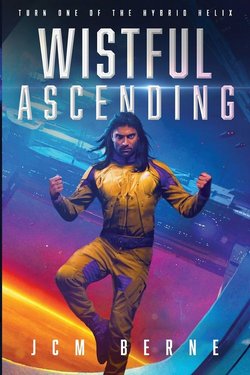
bullet Prey of Angels by JCM Berne—the latest in The Hybrid Helix looks great!
bullet The Book of Spores—the ebook for this anthology is available now, “Collecting fungal tales from across countless universes, this FanFiAddict anthology spotlights the best of fantasy, science fiction, and horror.”
bullet After the Fall by Edward Ashton—”Part alien invasion story, part buddy comedy, and part workplace satire, After The Fall… asks an important question: would humans really make great pets?”
bullet Amari and the Metalwork Menace by B. B. Alston—huh. I thought this was a trilogy, but the publication of the fourth book reminds me to not assume so often.

The Little Engine Who Was So Preoccupied with Whether or Not He Could, He Didn't Stop to Think if He Should by Watty Piper (full credit to @jasonroygaston)

WWW Wednesday—February 25, 2026

Today has gotten away from me, so this is 1. the only post I’m getting up today (obviously), and 2. it’s really late. But, it’s the thought that counts, right?

(yeah, not really)

WWW Wednesdays Logo

This meme was formerly hosted by MizB at A Daily Rhythm and revived on Taking on a World of Words—and shown to me by Aurore-Anne-Chehoke at Diary-of-a-black-city-girl.

The Three Ws are:
What are you currently reading?
What did you recently finish reading?
What do you think you’ll read next?

Seems easy enough, right? Let’s take a peek at this week’s answers:

What are you currently reading?

Cover of Fairest Hunter by M. K. Felix Cover of All Accounts Settled by Drew Hayes
Fairest Hunter
by M. K. Felix
All Accounts Settled
by Drew Hayes, read by Kirby Heyborne

I haven’t made it very far in Felix’s gender-swapped Robin Hood/Snow White mashup. But it’s entertaining so far.

While Fred the Vampire Accountant hasn’t been my favorite series, it’s been a reliable pleasure. I’m going to miss it, I just hope (and trust) that Hayes lands the finale in a satisfying way.

What did you recently finish reading?

Cover of Butterfly Effects by Seanan McGuire Cover of by Nina McConigley
Butterfly Effects
by AUTHOR
How to Commit a Postcolonial Murder
by Nina McConigley, read by Reena Dutt

I’m lamenting that no one in any of my circles–online or offline–reads McGuire’s InCryptid series, because I really want to talk to someone about the new book (which will be getting a very positive write-up here as soon as I can find the time).

I’m pretty ambivalent about Nina McConigley’s 1980s-set murder story, to be honest. I’d like to hear what others have to say.

What do you think you’ll read next?

Cover of The Long Way to a Small, Angry Planet by Becky Chambers Cover of Head Fake by Scott Gordon
The Long Way to a Small, Angry Planet
by Becky Chambers
Head Fake
by Scott Gordon, read by Nick Mondelli

As I said at the beginning of the month, I read this back in 2018 (and liked it better than I recalled), and it’s the next title for the Science Fiction Book Club. Time to freshen my memory. I trust 2018-me, and should have some fun.

I can’t remember what it was that made me put Head Fake on a list to get, but looking at the blurb, I think I’ll enjoy it.

What are you reading as the month closes?

Top Ten Tuesday: Top Ten Quotes About Books and Reading


The topic for this week’s Top Ten Tuesdays is “Quotes From/About Books (Share book quotes you love, quotes about being a reader, etc.)”

Once upon a time, I had a really good list of these going–and I have no idea what happened to that (it was before this blog). But I do have a decent collection of quotations that I’ve used once or twice over the years in my Saturday Miscellany posts, so I picked the ten best of those.

Top Ten Quotes About Books and Reading

(alphabetically by author)

10 'The best moments in reading are when you come across something – a thought, a feeling, a way of looking at things – which you had thought special and particular to you. Now here it is, set down by someone else, a person you have never met, someone even who is long dead. And it is as if a hand has come out and taken yours.' Alan Bennett

“The best moments in reading are when you come across something – a thought, a feeling, a way of looking at things – which you had thought special and particular to you. Now here it is, set down by someone else, a person you have never met, someone even who is long dead. And it is as if a hand has come out and taken yours.” Alan Bennett

(Source)

9 I love people who read. I think it screams humility. When someone reads, they are essentially admitting they want more, that the world is not enough for them. They want more knowledge, more experience. Whatever this life is, they want more of it. - Nicholas Browne

I love people who read. I think it screams humility. When someone reads, they are essentially admitting they want more, that the world is not enough for them. They want more knowledge, more experience. Whatever this life is, they want more of it. – Nicholas Browne

(Source)

8 I couldn’t decide which one of these to keep; they’re variations of the same idea, so I’m sticking with them both.

An image of a woman searching through shelves of books over the words 'The person who doesn’t read lives only one life. The reader lives 5,000. Reading is immortality backwards. - Umberto Eco'

The person who doesn’t read lives only one life. The reader lives 5,000. Reading is immortality backwards. – Umberto Eco

(Source)

The text 'I do not read for I have renounced life, I read because one life is just not enough for me. - Abbas Al-Akkad' written over a picture of an open book

I do not read for I have renounced life, I read because one life is just not enough for me. – Abbas Al-Akkad

(Source)

7 'Do not read, as children do, to amuse yourself, or like the ambitious, for the purpose of instruction. No, read in order to live.' — Gustave Flaubert

Do not read, as children do, to amuse yourself, or like the ambitious, for the purpose of instruction. No, read in order to live. — Gustave Flaubert

(I don’t remember where I got this image)

6 'Books are delightful society. If you go into a room and find it full of books—even without taking them from the shelves they seem to speak to you, to bid you welcome' The Right Hon. William E. Gladstone Prime Minister. UK, 1809-1898

“Books are delightful society. If you go into a room and find it full of books—even without taking them from the shelves they seem to speak to you, to bid you welcome” The Right Hon. William E. Gladstone Prime Minister. UK, 1809-1898

(Source)

5 At one magical instant in your early childhood, the page of a book - that string of confused, alien ciphers - shivered into meaning. Words spoke to you, gave up their secrets; at that moment, whole universes opened. You became, irrevocably, a reader. - Alberto Manguel'

At one magical instant in your early childhood, the page of a book—that string of confused, alien ciphers—shivered into meaning. Words spoke to you, gave up their secrets; at that moment, whole universes opened. You became, irrevocably, a reader.” ― Alberto Manguel

(Source)

4 When I think of all the books still left for me to read, I am certain of further happiness. Jules Renard

When I think of all the books still left for me to read, I am certain of further happiness.  Jules Renard

(Source)

3 Reading books is the most glorious pastime that humankind has yet devised. - Wislawa Szymorska

Reading books is the most glorious pastime that humankind has yet devised.  Wislawa Szymorska

(Source)

2 I cannot remember a time when I was not in love with them--with the books themselves, cover and binding and the paper they were printed on, with their smell and their weight and with their possession in my arms, captured and carried off to myself.' ― Eudora Welty

“I cannot remember a time when I was not in love with them–with the books themselves, cover and binding and the paper they were printed on, with their smell and their weight and with their possession in my arms, captured and carried off to myself.” ― Eudora Welty

(Source)

1 Books are everywhere; and always the same sense of adventure fills us. Second-hand books are wild books, homeless books; they have come together in vast flocks of variegated feather, and have a charm which the domesticated volumes of the library lack. Besides, in this random miscellaneous company we may rub against some complete stranger who will, with luck, turn into the best friend we have in the world.― Virginia Woolf

Books are everywhere; and always the same sense of adventure fills us. Second-hand books are wild books, homeless books; they have come together in vast flocks of variegated feather, and have a charm which the domesticated volumes of the library lack. Besides, in this random miscellaneous company we may rub against some complete stranger who will, with luck, turn into the best friend we have in the world.― Virginia Woolf

(Source)

Saturday Miscellany—2/21/26

Odds ‘n ends about books and reading that caught my eye this week. You’ve probably seen some/most/all of them, but just in case:
bullet Books and screens: Your inability to focus isn’t a failing. It’s a design problem, and the answer isn’t getting rid of our screen time—This’ll provoke some thinking (also, I want to be whereever that picture was taken)
bullet “The guy you buy”: The Michael Clayton of it all.—a great piece on Corporate Thrillers
bullet Read this: Generative AI is doing a number on the romance novel market—in case your blood pressure could use a boost (or your despair is running a little low)
bullet From Atoms to AI: The Futile Search for a “Perfect” Language
bullet Five Cosy Activities For Audiobook Listening—all of them sound better than my typical audiobook listening activities: driving, work, cleaning
bullet “The Victim has to be a Believable Person”: An Interview with First Do No Harm’s S.J. Rozan
bullet What Do You Want to Know About a Book Before You Read It?—a question I think about a lot

My favorite sentence/passage/phrase (or two) that I read this week:
“Goblin tea resembles a nice cup of Earl Grey in much the same way that a catfish resembles the common tabby. They share a name, but one is a nice thing to curl up with on a rainy afternoon, and the other is found in the muck at the bottom of polluted rivers and has bits of debris sticking to it.”—Nine Goblins by T. Kingfisher

To help talk about backlist titles (and just for fun), What Was I Talking About 10 Years Ago This Week?
bullet Thing Explainer by Randall Munroe—Nunc hoc in marmore non est incisum
bullet Talking to the Dead by Harry Bingham—featuring a protagonist that belongs on one of my personal Mt. Rushmores
bullet Some Assembly Required by Kevin Smith, Phil Hester and Jonathan Lau
bullet The Restaurant at the End of the Universe by Douglas Adams
bullet The Relic Master by Christopher Buckley—yeah, I DNFed it, but I talked about it.
bullet Lastly, I talked about the releases of Switcheroo by Aaron J. Elkins and Calamity by Brandon Sanderson

This Week’s New Releases that I’m Excited About and/or You’ll Probably See Here Soon:
bullet Agnes Aubert’s Mystical Cat Shelter by Heather Fawcett—”A woman who runs a cat rescue in 1920s Montréal turns to a grouchy but charming magician to help save her shelter.” (“turns to” and “grouchy” aren’t necessarily the words I’d use, but…whatever). I opined about it a couple of weeks ago. Lots of fun.
bullet Time for a Change by Questlove, S. A. Cosby—I was a little worried that we weren’t going to get a sequel, but: “On the heels of their thrilling appearance in Rhythm of Time, best friends Rahim and Kasia are back traveling through time in Time for a Change. Last time around, they were on their own—now they are working with Aevum, a mysterious organization from the future that tasks them with averting disaster and safeguarding the flow of history.”
bullet Worse than a Lie by soandso—”a lawyer drawn into a case that begins with a violent traffic stop and spirals into a fight over truth, power, and freedom inside the criminal legal system.” (for more, read the link there or this feature from the Westside Gazette, which is where I lifted that quotation from)

I don't hoard books. I stockpile alternate realities. Leylah Attar

WWW Wednesday—February 18, 2026

WWW Wednesdays Logo

This meme was formerly hosted by MizB at A Daily Rhythm and revived on Taking on a World of Words—and shown to me by Aurore-Anne-Chehoke at Diary-of-a-black-city-girl.

The Three Ws are:
What are you currently reading?
What did you recently finish reading?
What do you think you’ll read next?

Seems easy enough, right? Let’s take a peek at this week’s answers:

What are you currently reading?

Cover of Banners of Wrath by Michael Michel Cover of A History of the World in 6 Glasses by Tom Standage
Banners of Wrath
by Michael Michel
A History of the World in 6 Glasses
by Tom Standage, read by Sean Runnette

I had to take a break to make sure I finished Hive on time (see below), but I’m back to Michel’s latest. There are just so many things going wrong for these characters…and I’m loving it.

Standage’s history came up in conversation with a friend when I was telling him about reading The Mountains Shall Drip Sweet Wine. This is a very different take on potent potables (and some others), but they also do a good job of complimenting each other.

What did you recently finish reading?

Cover of Jump by DL Orton
Jump
by DL Orton
Cover of Operation Bounce House by Matt Dinniman Cover of The Greatest Sentence Ever Written by Walter Isaacson
Operation Bounce House
by Matt Dinniman, read by Travis Baldree & Jeff Hays
The Greatest Sentence Ever Written
by Walter Isaacson, read by Walter Isaacson & Holter Graham

I’ve talked about Jump a lot today, I’m not sure what else to say.

Read Matt Dinniman, they said. He’s hilarious, they said. Well, this was a different book for Dinniman–it’s harrowing, somewhat hopeful and affirming, but also…the mirror it holds up about humanity’s cruelty to humanity (for fun and profit!), just ain’t pretty. I should stress that this is an endorsement.

Okay, technically, the last book I listened to was Isaacson’s celebration/examination of the second sentence in the Declaration of Independence (you know, “We hold these truths to be self-evident…”). But it’s a 60 minute book (including the appendices), so it doesn’t really feel like a book.

What do you think you’ll read next?

Cover of First Do No Harm by S. J. Rozan Cover of City of Others by Jared Poon
First Do No Harm
by S. J. Rozan
City of Others
by Jared Poon, read by David Lee Huynh

It’s been too long since I read a good PI novel, might as well read about two at the same time, right? The good part is pretty much granted with Rozan behind the wheel.

I was just browsing at the Library’s site when I saw this Urban Fantasy set in Singapore. Which is such an unusual combination of words that I have to try it.

Tell me about your recent reads (I may be bad at replying, but I read every comment)

Jump by D. L. Orton: Second Verse, Same as the First (which is not a knock)

I’m tempted here to take 90% of post about Hive from last May, switch out the titles and say, “good enough.” Because…it really would be. I won’t, because that feels like cheating. But…if things sound eerily similar, there’s probably a reason. I plagiarize myself all the time in real life, I might as well do it here, too.
Jump Tour Banner

Cover of Jump by D. L. OrtonJump

by D. L. Orton

DETAILS:
Series: Madders of Time, Book Two
Publisher: Rocky Mountain Press
Publication Date: November 4, 2025
Format: Hardcover
Length: 406 pg.
Read Date: February 14-16, 2026
Buy from Bookshop.org Support Indie Bookstores

What’s Jump About?

This picks right up from the end of Hive, but we get to see a more global scale—it’s not just around the Denver area that things are bad all over the world. And getting worse. There are a handful of efforts to save the world—more efforts to save portions of humanity (read: powerful and rich, with a few smart ones to keep things running)—and, of course, our rag-tag group of scientists and dimension-travelers.

And, I really don’t know what to say without getting way too complicated (it ain’t easy recapping multiverse stories and all their varying apocalypses). What’s Jump about? It’s about what happens after Hive, and before Dome (coming soon from D.L. Orton). While the world races past dystopia toward chaos, mass starvation, and general devastation—some people try to save it. Or at least another universe from falling into the same hole.

Why did I pick this up? Why did I keep reading?

I picked this up because I was curious about where Orton was going to go with things.

Why did I keep reading? That’s simple—once you read a few pages, you can’t help keep going—I could probably come up with a list of things I could fault Orton’s writing for if I wanted to (I don’t want to, see no need to, etc…I’m just saying I could). But getting the reader to keep turning the pages as fast as they can wouldn’t show up anywhere near that list. Her writing is like that old Pringles slogan, “Once you pop, you just can’t stop.”

What does this book tell us about humanity?

Nothing good, sadly. Well…let me take that back. Before I get too far with the thing that has really captured my mind over the last day, something I thought about while reading is just how immutable certain things in the multiverse may be: Diego and Isabel (in whatever variants of spelling/language/nicknames they may be known by) are gaga over themselves. Have the same interests and pursuits—and name their kids the same thing (although they don’t all have them, they plan on using the same ones). Dave is an evil, manipulative, scumbag everywhere (with some minor variation of degree possible). Matthew is basically Matthew wherever.

Compare that to the multiverses in Fringe for example—some parts of Olivia are the same on both sides, but not nearly as much. The Walters are freakishly different. And so on. Or even the variations in the Spider-Mans in the last movie—differences in powers, Mary Janes, villains, life experiences (only one has been to space!).

Whatever minor variations Orton does show, they are so small as to be negligible. I just think that’s strange.

Now back to the nothing good—there are essentially three groups of people we see in this book (more than Hive).

First, you have the overwhelming mass of humanity—they’re starving (and it’ll get worse), their access to electricity, heat, medicine, is severely limited. It’s a barbaric existence for them—and it’s about to get so much worse. It’s all about survival from one day to the next for them.

Then you have the “Elite”—they’re rich, they’re powerful, they use government resources (and then pretty much ignore all the governments that are helping them) to “save humanity.” As long as that humanity helps them get richer (because that’s important), can give them access to the disappearing resources of Earth, and/or can keep things running. They couldn’t care less about the people outside of the Domes, and will do horrific things to preserve said Domes.

Even our “good guys” who are—to be the one to travel. Period. End of discussion. So what does he do? He takes off on a risky mission for the sake of the woman he loves—and (no offense, Isabel) she really doesn’t seem to have a role to play in the “saving the world” bit. I’m not saying let her die, or anything—but we’re talking about the fate of humanities, here. Also—the princess can save her self, thank you very much.

You still like them, you’re still rooting for them, you still smile at their jokes—but, when the book is done and you can breathe and reflect? They may end up saving multiple realities (or even just one!), but I’m not sure they’re heroic. Which is not necessarily a bad thing, you just prefer them to be a bit more so.

So, what did I think about Jump?

It’s exactly the kind of escapist read that helps you unwind after a long day.

It moves, it’s fun—yes, it’s full of existential despair, but it keeps the focus on the non-despair inducing/horrific things—the characters and situations are compelling. And there’s part of you (well, part of me, and hopefully I’m not alone in this) that keeps thinking “if I just stick with it, I’ll actually understand all the various multiverse strands.” That part isn’t quite as important, but if I tried to diagram it all, it wouldn’t be pretty. It’d also be pretty inaccurate.

I’d love for Orton to show us all how she kept everything straight.

The tech is very cool—particularly the “baby” version of the old AI we meet in Hive. Orton gives you enough to understand how it all works and to visualize it clearly without bogging down the pace with paragraphs and paragraphs of details. The plausibility of it all? Eh, it’s SF, it’s plausible enough if you come with a standard level of suspension of disbelief needed for time travel/multiverse travel.

Because of the pacing, Orton’s able to get away with a few things that maybe she couldn’t in a slower-moving book. The depth of the characters that could be brought out are merely nodded to, or you have to assume them. You have to assume there’s something about the tech elites that got them where they are, despite being horrible people who can miss a whole lot of things their underlings are doing—and to keep working together despite the clear animosity.

I thought this last time, and I’m more certain of it now, most of my problems can be laid at the feet of the pacing—to keep things moving, she can’t develop these things with much more than a nod. I’m not necessarily wild about how things work out because of that, but I understand the reasoning, and can sit back and enjoy it.

I want to stress, however, in the moment, you don’t think about this (and if you do, you brush it off because you don’t want to step out of the movement). Everything works, everything clicks while you’re reading and speeding off to the next twist/revelation. It’s only after you get to the ending that leaves you holding onto the cliff’s edge with your fingers that this might occur to you if you stop and think about it. Mostly, you’re going to be thinking about how long it will be until you can get your hands on the next book, Dome.

It’s easily enjoyable, engrossing, and entertaining. You should give it a try.

This post contains an affiliate link. If you purchase from it, I will get a small commission at no additional cost to you. As always, the opinions expressed are my own.
Irresponsible Reader Pilcrow Icon

Page 6 of 222

Powered by WordPress & Theme by Anders Norén