Category: Blog Series Page 82 of 232

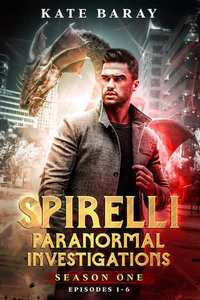
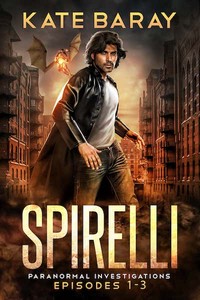
The Friday 56 for 8/11/23: Spirelli Paranormal Investigations: Season One by Kate Baray

The Friday 56This is a weekly bloghop hosted by Freda’s Voice.

RULES:
The Friday 56 Grab a book, any book.
The Friday 56 Turn to Page 56 or 56% on your ereader. If you have to improvise, that is okay.
The Friday 56 Find a snippet, short and sweet.
The Friday 56 Post it.

from Page 56% of:
>Spirelli Paranormal Investigations Season One” border=”0″ /></p>
<p style=

Spirelli Paranormal Investigations: Season One by Kate Baray

“We need a name for this thing,” Jack said. “‘Unnamed nasty thing in the charity shop attic’ just makes him seem creepier. And it’s too long.”

Without hesitation, Marin said, “Joshua.”

“Joshua? Any particular reason?”

Marin glanced at him, a smile tugging at the corner of her lips. “Does Joshua strike terror in the hearts of his enemies?”

Jack choked back a laugh. “Sold.”

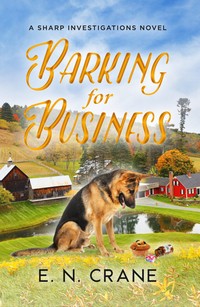
Barking for Business by E.N. Crane: Move Over Plum, It’s Time for Cynthia Sharp and Winnie

Barking for BusinessBarking for Business

by E. N. Crane

DETAILS:
Series: Sharp Investigations, #1
Publisher: Perry Dog Publishing
Publication Date: June 1, 2021
Format: Paperback
Length: 307 pg.
Read Date: July 26-27, 2023
Buy from Bookshop.org Support Indie Bookstores


I apologize in advance for all the references to Stephanie Plum that follow. This is sort of like all the people who mention Adams or Pratchett when talking about humor in Science Fiction or Fantasy, even if the styles don’t match. It’s just hard to talk about a character like this and a book like this without mentioning Stephanie.

Also, Crane did that herself when I met her. So she stuck it in my head.

What’s Barking for Business About?

After the latest in a series of successful investigations that double as calamities (you’ll have to read the first couple of chapters to see), Specialist Cynthia Sharp, MP, and her partner, Sgt. Pupperson, are discharged from the Army and return to Cyn’s hometown of Sweet Pea, OH—a very small town that should provide some peace and quiet while they decide their next move.

Before they can even enter the Sharp residence, a neighbor approaches Cyn with a job—someone has been taking money from the church bingo funds and she wants Cyn to put an end to it. Mostly because she can’t say no to this older woman—and because she has nothing else to do—she agrees.

This puts Cyn on a collision course with a military crime, a murderer, some serious gangsters, identity thieves, and more. She also has to deal with a love (lust?) triangle and reuniting with a best friend whose fantastic baked goods could probably prove dangerous to anyone with a weakness for sweets.

Sgt. Winnifred Pupperson

Winnie, as she prefers to be called, is a Belgian Malinois dog that found her match in her K-9 handler. She’s reckless enough to make Chet the Jet look disciplined, is very food motivated (sure, she’s a dog, so that’s a given—but as most dog people know, there are levels—she can sniff out junk food faster than Brenda Leigh Johnson, and is the perfect combination of canine athleticism, furry chaos, and unintentional hilarity.

My only complaint is that there’s not quite enough of her. Cyn leaves her at home too often. Probably a realistic amount—but too much for my taste. Hopefully, in time the people of Sweet Pea accept her presence in places they shouldn’t so she can be in on more of the action.

And You Think Stephanie Plum is Hard on Cars?

Hopefully, this isn’t too much of a spoiler, but it’s so good I have to talk about it.

Early on, Cyn breaks her arm in an understandable mishap. And over the next 240 or so pages, has to keep replacing the cast after catastrophe after catastrophe befalls it.

Somehow, every time, the reaction of the medical staff and the predicament she finds herself in makes me laugh. Every time. I cannot believe how well this recurring joke worked for me (that’s not a slight on Crane—it’s about my sense of humor/patience). You think she’s done with it—and she’s not. In fact, you find yourself wondering how it’ll happen again and looking forward to it.

The Fun Twist of Character

Yes, she’s clumsy. Sure, she’s easily distracted. Her dog handling skills are, um, sub-par. But I tell you what…when it’s crunch time? When things matter? Cyn is sharp.* She is more competent than you expect—piecing together clues, dealing with dangerous situations, and saving the day like the seasoned pro you’d expect from someone just out of the MPs. When that aspect started to really show itself I was impressed. This isn’t about someone flailing about and somehow stumbling on to the truth of the matter (like a certain NJ bond enforcement officer or Inspector Gadget)—it’s about an accident-prone woman who can shine when given the opportunity.

* I know. I know. I’m sorry.

So, what did I think about Barking for Business?

This was just ridiculously fun. It’s hard to come up with more to say than that (obviously, I’ve found a way, but the temptation to just write that sentence and move on was strong).

There’s a little too much peril and action for this to technically be a cozy, I think. But I could be wrong about that. Regardless, it’s in that same zip code. The focus is never really on that—it’s about the puzzle, it’s about the antics of Cyn and Winnie. Cozy fans should feel very at home with it. More than anything, Barking for Business is a comedy—there are few pages that go by without something—a little slapstick, a nice bit of humor in the narration, Cyn saying something she’ll regret, or worse, learning something about her parents that she’ll regret.

Do I worry that the town is too small to keep things happening? Sure. But when their first case starts with money missing from the church’s bingo earnings, it’s obvious that Crane can make much from little. Do I worry that the schtick of the series will get old by book 5 or 6? A little. But I worry that about the premise of several series, and it means that I have at least 4 or 5 more books to enjoy before that happens. For now? I’m just going to shut my pie hole and enjoy the ride.

This is a fast, breezy read that’s full of excitement and humor. It’s the perfect book for people who fondly remember the first few Stephanie Plum books or have ever wondered what it would be like if Miranda Hart or Mindy Kaling wrote crime fiction (possibly co-writing it). I’ve got the second novel on my shelf already and am trying to figure out how to get it read quickly.


3 Stars

This post contains an affiliate link. If you purchase from it, I will get a small commission at no additional cost to you. As always, the opinions expressed are my own.

Even More Quick Questions With…Matthew Hanover

Matthew Hanover’s newest book, Not Prepared, really wowed me and I’m so excited to share this Q&A about it today. Hanover’s no stranger to people who’ve read this site for any amount of time. I’ve blogged about all of his books and this is the fourth Q&A he’s participated in about his writing—plus a Q&A about Self-Publishing.

Here’s the latest with him—and the latest in my campaign to earn him some new readers.


In the past, your protagonists have been in roughly similar places in their lives/careers/emotional development. With Not Prepared, you’ve moved to an older, more mature character well-established in his career. Is this because of where you are in life? You just needed a change of pace, or something else?
After three books with 20-somethings as protagonists, I was more than ready to explore a story with a character at a different stage of life, closer to where I am. It may reflect my age or my growth as a writer, or just the fact that Neil had to be the age he is to make the story work. I started working on Not Prepared before I’d even finished Not Awkward because I’d come up with the idea and stuff just started pouring out.

Are you sticking with men at this stage of life or are you going to bounce around some more? (or have you even thought that far ahead?)
Writing for younger characters is increasingly difficult for me, but I won’t say I won’t ever write about 20-somethings again.

For Not Prepared, the story really dictated what the characters had to be. Chloe’s age came first because she had to have a certain level of maturity and resourcefulness, but also be right for coming-of-age story elements that would make their living situation ripe for comedy. Once Chloe’s age was established, that really helped establish what age Neil had to be. He couldn’t be in his twenties because he had to be a father figure, not someone who could have been her brother.

That makes a whole lot of sense—I focused on Neil because he’s the protagonist, but yeah, you need to start with Chloe and do the math from there for everything to work.
Exactly. Neil may be the protagonist, but Chloe is very much the main character of the story. She’s the one who drives the story forward. Neil’s romance with Jenna is incredibly important, obviously, but the most important relationship is between Neil and Chloe.

Speaking of careers for your protagonists (and/or other characters in the books), do you spend a lot of time thinking about those and what they say about your characters?
Sometimes, a character’s profession is based on what is most helpful for the story. In Not Famous, Nick was a self-employed web designer because his schedule needed to be flexible to make the story work. In Not Dressed, which is half a workplace comedy, I really had to find a profession that people think is really awesome, but isn’t so great in reality, so Jake became an architect. In Not Awkward, Scott’s profession was less important because was unemployed for the main action of the story because it enabled him to participate in the main arc.

What kind of research—if any—do you do to depict them? Let’s use Neil’s wedding photography biz as a case study, but feel free to use anyone else, too.
The most research I did was for Not Dressed because so much of the story took place at Jake’s place of work. I had to get insight from people who are or were in the field to get some of the technical details right. For Not Prepared I had to research a lot of professions to figure out what would be best for Neil, and a wedding photographer worked out great because it meant he could be home a lot during the week with Chloe, because of the awkwardness of their living together is really what drives the story. It took a lot of research to understand how these photographers work, what they charge, how they can make a living for a job that is generally occurring on weekends, how they keep money flowing in, what they do when they’re not actually shooting a wedding, etc.

Do you remember any professions that you considered for him and decided against?
I came up with the wedding photographer idea quite early, and once I thought of it, I knew that was the answer and stopped considering other ideas. Perhaps what I liked most about it, is how ironic the job is for him because he’s a guy who’s essentially resigned himself to being single, yet he’s constantly documenting weddings.

Neil and Jenna both have pretty serious anxiety issues, I think it’s safe to say. At what point did you decide that their anxieties were going to be a significant part of this book, or did that just come up as you write? What kind of thought/research did you have to put into them to make sure you depicted them right and/or they were good for the story? Did you start (with either of them) having a different kind of anxiety and have to backtrack and rework?
Neil’s hypochondria was perhaps one of the first ideas I had for the story. One of the things about writing an older character is that they are not only in different places professionally, but also have different attitudes about their own well-being. As you get older, you start getting screened for various diseases, and you’re more tired and prone to aches and pains. Giving Neil health anxiety was just the perfect way to exaggerate that.

As for Jenna, at some point, it made sense to me that what would make her and Neil a great couple is that they both have neuroses that have made them unlucky in love before, but allowed each of them to see beyond those issues and make their relationship work. Figuring out the right anxiety for Jenna took a lot of research. I wanted her to exude all the qualities of a strong, confident, professional woman, but to have a phobia that was not only real but something that most people would consider completely irrational.

My mother has a strong (very strong) preference along the lines of Jenna’s, so that’s the way I was raised (although my father tried his best to negate that influence). So I’ve got to say I get where she’s coming from, my feelings aren’t as strong as hers, but I sympathize with her. I can see where a full-blown anxiety like Jenna’s would be a real hindrance to a new relationship (friendship/romantic) with some people.
For sure. It was a fun thing to research because I really had to get an understanding of the phobia and research how people who have it get around it. It really made her character so much more interesting.

You’ve never shied away from some serious things in the pasts of your characters, but Chloe’s backstory and the events that brought her to Neil’s door are a few degrees “darker” (for lack of a better term) than you typically go. Was this a deliberate thing for you, “I need/want to start going deeper/darker,” or was it just what was needed for Chloe?
Chloe’s backstory was something I struggled with, and changed a few times during the writing process. Believe it or not, it was actually darker than the final version, but it never felt right for a comedy. I really wanted to focus on the struggles of her imposing on Neil’s bachelor life while dealing with the awkward challenges of growing up. To me that allowed for a lot of funny moments that were also realistic.

Dark-but-not-too-dark is a great way to think about it. Because, yeah, if you’d taken a step or two in either direction it would’ve been inappropriate for a comedy, or too light for it to seem real.
Exactly. And it worked out well. At first, it appears that Chloe is quite resilient and seems generally unaffected by the abandonment, but as time passes, it’s clear that it has had an impact on her. Had she endured more than mere neglect and abandonment, I doubt she’d have been as socially functional or emotionally stable to make the story work.

Let’s step away from Not Prepared for a bit before I end up asking you to break things down chapter by chapter (and don’t think that’s not a danger). Have you been reading anything lately that’s got you excited? Or do you have anything on your radar you can’t wait to get to?
I find it very difficult to read when I’m writing because I don’t like to feel too influenced by other work. So, I have a rather large pile of books to read that I gotta get cracking on. That said, Brian David Floyd has just finished the first draft of his next novel, and I’m looking forward to that. There’s more coming from Ian Shane and Wesley Parker that I plan to get into when they’re out as well.

My upcoming list looks similar—I’m waiting for an ARC for that Shane book to arrive soon—and cannot wait for that new Parker (it hurt me to decline a beta copy due to time). I’m off to look into Brian David Floyd as soon as I schedule this post…

But that brings up another question—when you’re writing, how do you spend your non-writing/not-work downtime? How does Matthew Hanover relax?
Well, right now I’m trying to enjoy the summer the best way I can. But, my best downtime is just chilling out at night binging my favorite shows from my youth.

When we talked about your previous book, you said that you’d written a bit of book 5—is that what you’re working on now, or have you changed to something else? Can you say anything about it and your timeline for releasing it?
I actually have two more books in various stages of development right now. One is the next book in the Wallflowers series, and another more experimental novel that will be set in the universe, but not part of the series. I’m not sure which will get finished or published first at this point.

That could easily lead to another batch of questions…but I’ll save those for later. 🙂
Thanks for taking the time to answer these—and for Not Prepared—I loved it, and hope others find it soon.


A Few Quick Questions

WWW Wednesday, August 9, 2023

Happy National Book Lover’s Day (at least here in the U.S.—I guess the rest of you have to be apathetic about books or something). I hope you’re reading something good—here’s today’s WWW to look the books I’ve been spending time with this week.

This meme was formerly hosted by MizB at A Daily Rhythm and revived on Taking on a World of Words—and shown to me by Aurore-Anne-Chehoke at Diary-of-a-black-city-girl.

The Three Ws are:

What are you currently reading?
What did you recently finish reading?
What do you think you’ll read next?

Easy enough, right?

What are you currently reading?

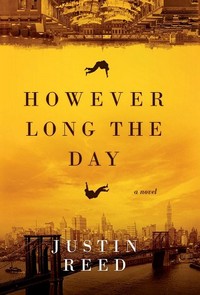
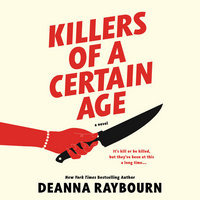
I’m reading However Long the Day by Justin Reed (which I won’t describe because he did yesterday) and am wrapping up the audiobook Killers of a Certain Age by Deanna Raybourn, narrated by: Jane Oppenheimer & Christina Delaine—we’ve had a plethora of senior sleuths lately, it’s about time for the other side.

However Long the DayBlank SpaceKillers of a Certain Age

What did you recently finish reading?

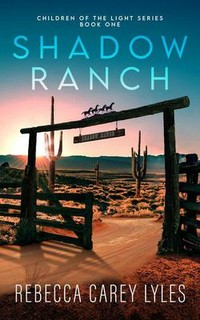
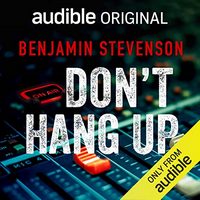
I just finished Rebecca Carey Lyle’s Shadow Rancy and since I took a few days off from audiobooks last week, the last audiobook I finished was Don’t Hang Up by Benjamin Stevenson, narrated by: Luke Arnold, Sibylla Budd.

Shadow RancyBlank SpaceDon't Hang Up

What do you think you’ll read next?

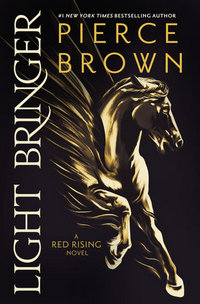
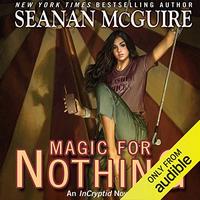
My next book should be the (I’m guessing) tragic and death-filled, yet (I’m hoping) hopeful, Light Bringer by Pierce Brown. My next audiobook should be the next in my InCryptid revisit, Magic for Nothing by Seanan McGuire, Emily Bauer (Narrator).

Light BringerBlank SpaceMagic for Nothing

How’re you spending this Book Lover’s Day?

LITERARY LOCALS: A Q&A About Writing in Idaho with Justin Reed

Literary Locals logo
I met Justin Reed at the Treasure Valley Indie Book Fair back in March and am really glad we’ve finally gotten our ducks in a row to be able to bring you this Q&A. By a strange stroke of coincidence, I should be starting his book today. So you’ll be hearing more about him soon. But for now, let’s introduce him.


Before we get into things, why don’t you give the reader a brief introduction to you and your work.
My name is Justin Reed. I live in Boise, and I am an author, publisher, consultant, software engineer, and investor. I have published one novel—However Long the Day—a historical adventure set in 1918 NYC about two young men who switch places for a day and nothing goes to plan (think The Prince and the Pauper meets A Tree Grows in Brooklyn). People can find me at justinreedwrites.com, and on Instagram (@justinreedwrites), Facebook (@JustinReedWritesNovels), and LinkedIn (@justinreedwrites). People can buy a hardcover copy of However Long the Day at Rediscovered Books in Boise and/or Caldwell; from my website (in which case I’ll personalize the inscription); and at online book retails (bookshop.org, B&N, and The Great Smiling Beast). You can also borrow a copy from most of the libraries in the Treasure Valley (though they share a few copies, so you might have to put a hold on it). The ebook is available here, and can also be borrowed from Treasure Valley libraries (any of the Lynx libraries, I believe). And you can listen to the audiobook on Audible, Apple Books, B&N, libro.fm, and on Overdrive (if you have a local library card).

Are you a native Idahoan? What is it about Idaho that keeps you here?
I am a native Idahoan, born and raised in Boise. I went to Capital High School, and graduated from Boise State University with a Computer Science degree. Beauty, freedom, and family keep my Idaho.

Are you tied into some sort of local author/bookish group/culture? If so, tell us about it and how it helps you as an author.
I run a writers workshop of sorts at the Lake Hazel branch of the Ada Community Library. I call it Group Therapy for Writers, and it gives us attendees an opportunity to support each other in our writing goals. It’s nice to talk about the writing process with others who care about the process of turning thoughts into words on the page, and words on the page into something compelling to read.

First, that’s a great name. Have others in your group gone down the publishing road yet, and have they been able to help you through it—or are you the group’s guinea pig?
It’s a great group. We’re a mix of folks who have published and those who haven’t. Everyone in the group is experimenting with their style, genre, etc., hence the need for outside perspective. We’re taking a break for the summer but plan to start back up in September.

What kind of events in the area do you attend—either to sell/promote your books or to network with authors? Are there any outside of this area that you hit regularly and wish we had something like it here?
I’ve attended the Indie Book Faire at the Nampa Public Library, and I’ve attended several events at both the Boise and Caldwell Rediscovered Books locations. I would enjoy attending more events like these, as well as other author get-togethers.

What’s the breakdown of your audience—do you have a strong local base, or are your readers from other parts of the world?
However Long the Day is my debut, so I’m still in the audience building phase. My focus is older teens and adults of all ages. Most of my readers are here in Idaho.

Do you have a plan on expanding that audience? Or are you in more of a “see what works” phase of life?
I am definitely more in the see what works phase in which I try a bunch of ways to grow my audience. As you might expect, most of these come to a deadend, but I’m certainly learning a lot in the process.

Do you think there are particular challenges or advantages to being a writer in the Treasure Valley? (possibly both)
Boise is geographically isolated, which is both a blessing and a curse. I would love to more easily visit other metros and talk books (including mine), but that isn’t as easy in the Treasure Valley as it is in other places. However, the isolation is part of what makes our town—and the rest of Idaho—such a great place to live. I’m not very connected to the writing culture here in the Treasure Valley, but I suspect that is more because of my introverted nature than anything. I suppose we all have the chance to build the writing community if we take it.

Do you bring Idaho (or some sort of Idaho-sensibility, assuming one exists) to your work? Whether or not anyone else sees it, can you look at some aspect of your writing and think “That’s Idaho” or “I would do ____ differently if I was a Kentuckian or from Illinois?”
The first novel was set in Idaho during the earliest part of our existence as a US territory (1864 gold rush era), so in that regard I bring Idaho into my work. Unfortunately, that novel hasn’t been published yet because I just can’t get it right. Even so, I bring my Idaho sensibilities into all my writing, both published and unpublished. I try to mute my voice as much as possible and let my characters speak for themselves, but complete silence is an impossible objective.

Thanks for your time and participation! Hope you enjoyed it!


Literary Locals logo

Some Questions About Cover Art With…Elizabeth Peiró and Shannon Knight

After Shannon Knight sent in that great Guest Post about the cover of her book Grave Cold, she asked if I’d be interested in doing a Q&A with her and one of her cover artists. The next thing I knew, I was in the middle of a conversation (or whatever you call it when you’re all interacting on a Google Doc) with Shannon and Elizabeth Peiró.

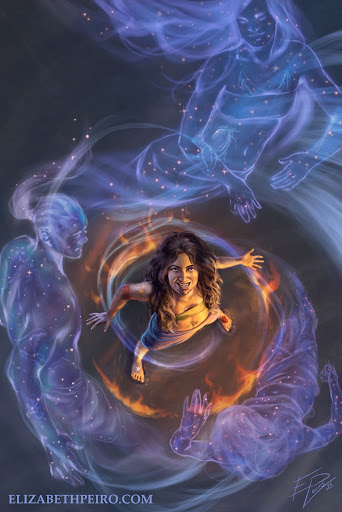
We end up talking about being a cover artist, hiring and working with one, AI, and more—with an eye to the snazzy cover to Wish Givers, the cover that Eli provided for Shannon’s upcoming re-release.

I typically call these posts “A Few Quick Questions”—but we leave “Few” and “Quick” in the rearview mirror. So I’m going with “Some” (because that’s as creative as I am today).
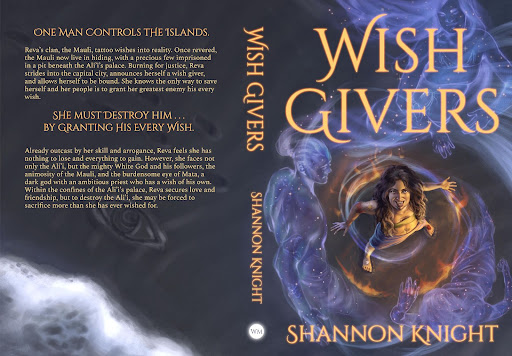

Wish Givers Wrap Around Cover
Shannon’s introduced herself to my readers already, so Eli, why don’t you give my readers a quick introduction to you and your work—including whatever titles, websites, links, etc. you’re in the mood to share
Hello, everyone! My name is Elizabeth, but I go by Eli for short. I’m a freelance artist from Spain working for different sorts of clients, from publishing to card games, tabletop RPGs, and briefly video games. I would describe my work as realistic fantasy, as it is the genre I mostly gravitate towards, and the things I like to focus on are storytelling with bold colors and light. You can check out my portfolio on my web page, Elizabethpeiro.com, and on Instagram and Twitter as @Elizabethpeiro. All my contact info is easy to find in any of those places.

Eli, how does someone get into the freelance cover design business (obviously that’s vague, so speak of your own experience—but if you can comment on what others have done, feel free)? I don’t imagine you just hang your shingle out there (virtual or otherwise) and start getting clients.
Getting in, at least to the point where it is sustainable, economically speaking, is hard, I’m not going to lie. It is not only about the skill level in terms of technique or speed (which is quite important; the faster you are, the better pay per hour you get), but also building a client list that keeps you busy all year long. I’ve only been working full-time as a freelancer since 2021. Before that, I had a non-art-related part-time job. That gave me a stable income while I kept improving and working for both private clients and publishers. When I saw things were going pretty well with art, I gave it a try at working as an artist full time and took a year off. Luckily, I haven’t stopped since. In my personal case, some years ago I painted a fan art of Vin, the main character from Brandon Sanderson’s trilogy Mistborn. That caught the attention of some small publishers and authors because it was highly shared in the fantasy literature community. My following grew, and, with time, more people found my work through that piece (and some others). So, many of my clients have found me, not the other way around. Like a lot of things in life, it is about being in the right place at the right time. You can’t have control over that, but you can keep sharing your work and improving to be prepared when the opportunity happens. As a freelancer, having a social media presence is important, but the numbers are not everything; getting to the right people is. Using hashtags, knowing your potential clients, and promoting your work in their circles—like in some subreddits, where you can find a different audience who might need an artist and don’t know where to look for one, or pages to offer your services like Reedsy. There are illustration agencies, cold emailing to publishers… Looking for work is a job in itself! There is a lot of rejection and ghosting, so you have to build a tough skin, but clients eventually show up if you are persistent.

Shannon, how did you set out to find an artist, and how did you come across Eli? Can you remember what it was about her work that made you interested?
I admired and followed Eli’s art long before I was in a position to choose my own cover artist. As a lifestyle choice, I enjoy following artists on social media.

In search of cover artists, I ramped up my art searches on Twitter. Artists share their own work and each others’ work there a lot, so it’s easy to dive into a lot of genre artwork.

Maybe years ago–I don’t remember when–the first work I saw by Eli was a piece called Strength of Ten, which depicts a woman hauling a Viking ship through ice and snow. I love so much about that painting: the colors, the lighting, the angles, the storytelling, the expression. Women in fantasy art have a long history of being depicted as sex objects. The woman in this painting is powerful and distinctive. She’s performing an amazing feat, straining her body. So many choices in this painting are commercially brave and interesting to me. I’ve watched Eli as an artist ever since I first saw that painting. [I just went to check out Strength of Ten, I can absolutely see why that would grab your attention]

For my Wish Givers cover, I needed an artist who painted skin tones that were not just white people. I’ve noticed many artists have a limited number of body types or skin tones they work with. Eli’s portfolio showed her skill there. I also wanted color, such as two different light sources with different colors, and Eli does that so well. Finally, I wanted a bold expression on my protagonist’s face rather than a neutral one. I know that’s hard, but once again, Eli’s portfolio proves her skills there.

The next step was to check her interest, availability, and prices to learn if we might be able to work together.

Eli, do you have any advice for those looking for an artist that Shannon didn’t mention? Obviously, the short answer is hiring you. But let’s pretend you can’t take on a client, what should they do?
Each project has different needs, and because of all the reasons Shannon listed, I was the right fit for her cover. She already knew what she wanted when she contacted me, so my advice to anyone who’s looking for an artist is to spend time thinking about what it is that they need their cover to convey, what style fits their story, and what will catch their audience’s attention the most. It’s not about your knowledge of art; you are hiring someone who’s a professional, who will bring your ideas to life, and who will help you make up your mind about what route you could take. But before any of that can happen, you need to be sure you are contacting someone who can do the kind of work you need. Also, having an idea of the timeframe and budget you have is ideal when you start your search. As for WHERE to start looking, places like ArtStation, Twitter, Instagram (well, any social media – Tumblr, LinkedIn, Reedsy…) or through hashtags- #Portfolioday, #Visiblewomen #DrawingWhileBlack… also Mari Naomi’s databases for POC, Queer or Disabled artists (to name one, there must be more out there). Those are also great places to find not only someone with the style you are looking for, but also people with sensibilities or knowledge about what you want.

Shannon, you’ve talked before to me about “standard fantasy cover expectations” and YA characteristics. how do you describe that kind of thing to Eli (or anyone) to make sure you’re on the same page?
You know, that’s an interesting question, H.C. It never even occurred to me to explain that to my cover artists. I assumed they would be even more deeply aware of conventions than I am. Also, I chose artists whose usual style matches the conventions I’m seeking.

Regarding expectations with Eli, I included a long description of what I had in mind for the cover, accompanied by reference images for each component. At the end of all that, I gave her a numbered list of my priorities for the artwork. Let me dig through my emails. Here it is:

My cover image priorities:
1) eye-catching image that makes a prospective reader stop and look
2) immediately identifiable as adult fantasy fiction
3) dark fantasy mood
4) Polynesian looking character
5) your specialties: color, light, character expression

Eli, any follow-ups to that? Any additional advice?
It’s pretty much what I said in the previous question: know what you want and analyze if that artist’s portfolio shows what you need.

Communication is so important from the beginning; artists know how to handle clients, how to turn ideas into images, and we know what we are doing. But for the process to be smooth, both parties need to be on the same page. If you are not sure about something, just ask (either if you are the artist or the client).

Shannon made her points very clear. She even had the references and made a rough sketch of her idea (which is not a must, but the more you provide to help the artist understand what you need, the better). On my side, I always want to be transparent from the beginning about the way I work, the process (I shared with Shannon the process of other cover pieces I’d done in the past), my schedule (because I work on various projects at the same time).

When pitching ideas, do you literally show existing covers by others and say “like this one, but without X” or “something that feels like/has the same vibe as this”? Or do you leave other peoples’ work out of the conversation?
Shannon: For Wish Givers, my cover design depended on the artist. When I considered different artists, I was considering different cover designs that matched their special skills. For Eli, I also had the mistaken expectation that I needed to arrive with a design, which I sketched (poorly) and accompanied with clarifying photos for each of the design elements.

Eli has been out-of-this-world from day one. She has continually offered and done more than I’ve expected on every level. Regarding design, she accepted my design and returned it to me in her style along with two other designs that matched the scene described. I got to look at three sketches by Eli and choose between them.

However, I do have a link to what you were asking about. The cover of Wish Givers includes ghosts. I didn’t know how to best handle them. When I was describing my ideas and possibilities, I included some existing paintings. One was a book cover from the 90s by Keith Parkinson for The Scions of Shannara [I remember that cover from when it came out in High School]. It has a stream of ghostly figures. Another was an ancestor painting by a Hawaiian artist called LeoHone with ghosts alongside their descendants. She’s painted a whole series of these, which are really cool–check them out! I also included a photo of an actor playing Maui standing in a dense mist. I wanted Eli to understand that I really didn’t have a set image in mind for how to handle this aspect of the painting, but I also felt I should share my general ideas. Then she could take it from there.

Eli: I always offer at least two options, even if, like in this case, Shannon already had a strong idea of what she wanted. It is a good way to see if that’s really the way to go, or to refine that initial concept with bits from the others. Each client and project is different; sometimes you have a lot of freedom, and sometimes there’s not so much room to explore. Neither is good nor bad, but it is always a team effort.

Shannon has talked about the ghosts, and they were the tricky point. The cover had to say “fantasy,” not “horror”. The character was the center point, but there were these big, human-size shapes above her, surrounding her, taking up a lot of space. So it was really challenging to make it all work out, and I thank Shannon for her patience with all the changes I made to them.

Something to have in mind as an artist as well is to keep it all under budget; that’s why the ghosts are more similar to The Scions of Shannara cover than to the LeoHone ones. Keeping them simple makes the cover work equally well (and even helps to keep the focus on Reva, the main character), and the price stays within her budget.

Shannon: Yes, when I shared the example paintings with Eli, I mentioned that as beautiful as the LeoHone style was, I didn’t think it would be within my budget for Eli to paint the cover in that style. I really appreciate being able to be transparent with ideas and also with my price range so that we could find a style that fit both.

Eli: As a professional, I find it important to be transparent about all that stuff, explain everything well, and try to find a middle ground that works for both me and the client.
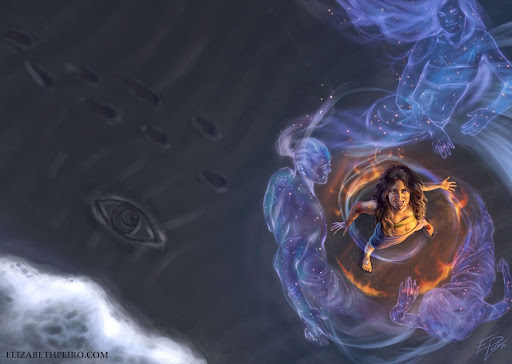
Wish Givers Wrap Around Cover Image
Eli, are there genres that you won’t do/don’t think you can do at this stage of your career? Or are you at an “I’ll do anything” stage? Are there genres that you haven’t done a cover for that you’d like to try?
More than the genre, it is the subject that would make me say no to a project. For example, I’m not known for painting sci-fi, but last year I painted a few illustrations of the genre, and I really enjoyed them! But if you make me paint a cover where the only element is a starship, I would say no. There are plenty of people who would do a way better job than me, and I simply wouldn’t enjoy it. The same would happen if someone asked me to paint a fantasy illustration but with a really complicated composition and lots of characters. It is not my forte, so I should have all the details about what they need and think about whether it is something that I can really pull off. I’m lucky to be in a position in my career where I can choose (to an extent), and people usually approach me to paint things similar to what I show in my portfolio.

As for interesting projects, maybe something horror-related or with a pulp novel vibe would be fun to work on. But as I said, it is usually a matter of having an interesting concept to work with that fits my skills.
That makes a whole lot of sense–I’m used to thinking in terms of genre when talking to writers/readers or just thinking about books. But when it comes to great cover art, who cares about the genre of the book?

Are there examples of cover art/design recently that have made you stop and say, “I’d love to try something like that one day”
Shannon: I see all sorts of captivating covers. So many artists are doing amazing work. There are covers in styles I’ve long favored, and there are covers I see in new, distinctive styles that catch my eye. But mostly, my mind is on prospective stories rather than prospective covers.

I’ll do some name-dropping, though. Eleonor Piteir is a Portuguese artist I also considered for Wish Givers. Her style is really interesting. Carissa Susilo is a Canadian artist whose mixed media work is gorgeous.

Eli: I know Eleonor and she’s an amazing artist (and a great person too!). I love her style; it is one of those that makes me want to experiment and get out of my comfort zone. Carissa’s work is also really beautiful and inspiring to me.

There is beauty in variety, and I don’t prefer one style over another. (Well, I’ll be honest, I’m not a fan of big publishers doing those covers with a small stock photo on one side and a Helvetica Bold title on the other. Give me something! Haha!) 8-D

Shannon and HC: Haha!

Eli: Different stories and audiences connect better with certain things, and as an artist, I find inspiration everywhere.

Shannon: Yes, that’s true!

Eli: When reading the question, a cover that came to mind was the one for the illustrated edition of The Last Wish, the first book of the Geralt of Rivia saga, published by Tor Books. It is by Tommy Arnold, and the bold, red color in the background in contrast with the silhouette of the character, the dark and limited values… It is a mesmerizing piece, not only because I find it eye-catching, but also because it is magnificent from a technical perspective as well. [Assuming I just linked to the correct cover, that is an awesome cover, and I could spend too much time on Arnold’s website]

Shannon: Oh, Tommy Arnold! I loved his covers for Gideon the Ninth and Harrow the Ninth by Tamsyn Muir!

Eli: Same! He’s one of those artists who always end up in my reference boards.

Eli, could you walk us through the typical process (assuming there is one) of designing a cover? I wanted to break this down part by part, but I don’t think I know enough to try that. So I’m going to go with a broad question.
Things start with the typical approach of “I need an artist, here is what I want, are you interested?”

Ideally, the first contact email should contain enough information for me to be able to decide with that one email if I’m able to say yes or no. The main points are:
• Timeframe
• Budget
• Format/s (only front cover, full wrap, printed, e-book, etc.)
• Concept and elements of the cover

After the negotiation point and signing the contract, I usually ask for as many references as they can provide me, either quick sketches they can make, photos, other artworks, excerpts of the story… The more, the better. That way, I can make sure I understand their vision.

Then I would proceed to start drawing and send the sketches. Here, it varies from project to project, but I make at least a couple of sketches—sometimes black and white, sometimes in color, and once they pick one, I offer different color and light schemes. For Wish Givers, I sent Shannon three ideas in color, as the background and lighting were already discussed at the beginning.

Once one of them is approved, I start rendering. When things are taking shape, I send a WIP to the client to make sure I’m on the right track and apply changes if necessary. This can happen once, twice… It varies. The changes within the original budget are minor adjustments, if something major is needed, there’s an extra fee depending on the complexity. But that wasn’t the case here.

Once I find the work is done, I show it to the client, they approve it, and I send the final files.

For the payment, I usually ask for at least half in advance, that way, I make sure people won’t disappear halfway. But I’ve always had good experiences with clients and never had trouble with that.

Eli, obviously, the hot-button topic of the moment is the use of AI in art. For you, is it a blanket “no AI at all in my material”? Or is there a place for some limited use of it? How would you describe that use?
It is a complex topic because there are different kinds of AI and different uses for them.

One example of a good use is from the Into the Spider-verse film. It’s not my area of expertise, and I won’t use the right wording for sure, so here is a clip showing it: https://youtube.com/shorts/bskSiIdtjr0?feature=share
This helps artists with tedious work, and it is “trained” with material from the studio, not to steal but as a tool. That’s the point: for it to be a TOOL.

The kind of AI we are encountering on the internet that is gaining more and more notoriety is the “bad” one. The one that’s non-consensually trained with every dataset they find on the internet, and it is used as a way to create quick images (or texts, or whatever). Our society, our culture, is nourished by human experiences. This is how we evolve, in some ways. Literature, art, entertainment, etc. are mirrors and products of the time and place in which they are produced. If we let every mainstream piece of art be a regurgitated mix of already existing and stolen ideas, what value are we giving to our culture?

And besides all the jobs that will be potentially lost to this unless there’s regulation, there are so many terrible applications for that. Now, AI-generated images are (usually) easy to spot. But it is only a matter of time before it becomes hyper-photorealistic. Using people’s likeness to create fake photos, fake news supported by AI-generated images…

I don’t want to sound dramatic with all of this, but it is starting, and there should be laws regarding its use and how it is trained before it is too late.

I really appreciate the emphasis on AI as a tool. That’s the difference, really, isn’t it? Using it to aid and assist the human creative vs. using it instead of the human.

Shannon, do you have any follow-up thoughts on your side? Would you consider any kind of AI art on your books?
Generative AI is built on the theft of other people’s work, which is then reassembled according to the most common denominator. Consider all of the sentences used in a story inputted and selected based on which word combinations are most expected to be seen. Even with the magical thinking that systems built on theft would suddenly only contain work that has been ethically, in some dream manner, sifted through–that’s not quality. That’s not what art is about at all. I find it absolutely abhorrent on every level. Why would I ever want to produce something built of the averages of other people’s stolen work? I want no part of it.

Some writers have talked about using AI that has only been trained on their own work–a bit like the animation example Eli was sharing. But for writing, I don’t like that either. Each time I write, I aim to create something new. I also feel like I AM new. I’m not who I used to be–that’s how life works. Each story I write is made of something new that comes from inside of me.

Eli, there’s been a big backlash to AI art recently—but we know it’s already been used. After the initial fervor dies down, do you think AI is going to become an accepted element of covers? Are the ‘bots going to come along and take your job?
We live in a world where we are “disposable” as workers. The bigger the benefit, the better. I know there will always be people like Shannon, who appreciate human-made art. And I haven’t asked every person I know, but I highly doubt any of my acquaintances want to read or watch things written by an AI.

I want to think otherwise and not sound (or think) too depressing. I hope this is only a phase, and we will reach a point where this will be forgotten and used in ways that will really help people, such as applications outside of writing or painting.

Come to think of it, Shannon, that’s a fair question for you, too.
Generative AI is not the replacement for human creatives that some people imagine it to be. Capitalism presents the cheapest option of anything as the best. Misinformation, theft, and mediocrity are fine for capitalism. Biases are fed into the system and outputted even larger with the mind game that automation could only produce neutral content, so racism, sexism, etc. all get faux stamps of approval, and the status quo, with wealthy white guys on top, is further promoted. However, we are experiencing a major workers’ rights movement across many industries. It’s not a coincidence that these events are happening alongside a continuing pandemic and rising climate crisis. People are being crunched from all sides, with minorities and the poor facing the worst of it. All of us need to choose to take a stand together to protect each other and allow people to live in dignity. The alternative is not just a financial crisis and a rise in homelessness, but a deficit for all of us in the art that continues to be produced. Generative AI penalizes creatives in such a way that many fewer would commit to continuing to create in this hostile environment. Young people will be advised against building their skills and pursuing artistic careers. It’s not really a matter of replacing us. Generative AI as it currently stands does not even touch our skill levels. But already many writing and editing jobs are being presented as fixing the slop created by AI, paying hourly rates lower than those offered to work at my favorite grocery store. Corporations are refusing conservative pay raises for existing staff while offering hefty wages to AI specialists; these businesses would rather invest in problematic, experimental technology than their existing workforce. Meanwhile, students are submitting AI-generated homework. Why bother to learn how to think or write when discernment and critical thinking are not valued? Let’s not teach children that plagiarism is the path to the future. Undervaluing each other so that we can climb up each other’s backs is not the future we want. Pandora’s Box has been opened. Unless wide-ranging legal action is taken to inhibit generative AI, it will continue to be a criminal obstacle that artists must navigate so that wealthy tech bros can get richer off of stolen labor.

Eli: Shannon made excellent points here, I don’t think I have anything else to add. This is bigger than just “a computer making an image” or “writing a text”.

Absolutely. I think you two nailed it here…I’ve got nothing to add.

Thank you both so much for this. Hopefully, the readers like this as much as I did!
Wish Givers Front Cover Image


Elizabeth Peiró:

Eli PeiróMi nombre es Elizabeth Peiró, Eli para acortar, y soy una artista especializada en fantasía de Barcelona, España. Mis obras tienen como sujeto central los personajes y la narrative.

La mayor parte de mi aprendizaje ha sido de manera autodidacta, con libros o múltiples blogs, videos y recursos varios disponibles en internet, además de haber realizado una mentoría con el artista Donato Giancola. Tras ella me empecé a dedicar al arte a tiempo completo, trabajando mayormente para juegos de rol, cartas y el sector editorial, colaborando tanto con autores autoeditados, como Shannon Knight, como con grandes editoriales como Macmillan Publishers.

(in English) My name is Elizabeth Peiró, Eli for short, and I’m a fantasy artist from Barcelona, Spain. The main subjects in my work are characters with a focus on narrative.

Most of my learning process has been self-taught, through reading books, blogs, videos, and multiple resources I found on the Internet, on top of attending a mentorship with artist Donato Giancola, after which I started my full-time career as an illustrator. I’ve been working mostly for ttrpg, card games, and publishing, with clients such as self-published authors, like Shannon Knight, or bigger publishers, like Macmillan Publishers.

Shannon Knight:
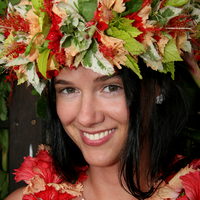
Shannon KnightShannon Knight lives in the Pacific Northwest with her faithful feline, the best cat on this planet. Their adventurous lives include coffee, reading, ribbon games, and K-dramas. Prior to settling in the PNW, Shannon traveled to islands, living briefly on some and sailing from Java to Christmas Island on a small ketch. Much later, Shannon fell ill with the novel COVID-19 virus and became primarily bedbound for about two and a half years. The first thing she did upon regaining the ability to sit up all day was complete the publication of Wish Givers, Insiders, and Grave Cold.

Wish Givers can be purchased here.
A Few Quick Questions

Saturday Miscellany—8/5/23

Odds ‘n ends about books and reading that caught my eye this week. You’ve probably seen some/most/all of them, but just in case:
bullet The Gamification of Reading Is Changing How We Approach Books—”Since its inception in 2007, Goodreads has been a place where people can come together and rate their favorite books, find new authors, and more. This writer juggles the greater implications of the site with our current reading culture.”
bullet Online book clubs are exploding. Let’s find the right one for you.
bullet The Wrath of Goodreads: Authors are at the mercy of people who don’t bother reading their work.
bullet Hyperion Avenue to Debut New Marvel Crime Series—I initially rolled my eyes at this idea, the last thing i really need is more Marvel content. But then I read “S.A. Cosby…will tackle Luke Cage.” Also mentioned were Lisa Jewell (Jessica Jones) and Alex Segura (Daredevil). So I stopped the rolling and started waiting in anticipation. (Seanan McGuire and Mike Chen being tapped for the What If… series is also ensuring my interest).
bullet ‘Things started getting weird’: why my novel caused a storm in my small town—this literally sounds like the plot to a novel or three that I’ve read. And suddenly those seem a lot more plausible now🙂
bullet How Hardboiled Whodunits Have Given Way to the Psychological Thriller: Chris Narozny on trauma as mystery and the evolution of the genre.—hmmm.
bullet A brief cultural history of crying while reading.
bullet 21 Thoughts (Not Rules) About Reading Habits—even if you don’t agree with all of these, you’ll find yourself nodding with most of this list.
bullet To wrap up Self-Published Authors Appreciation Week (probably the last time I mention it this year),
bullet Witty and Sarcastic Book Club penned a nice A Letter to Self-Published Authors that I’d like to co-sign
bullet A Weird West Author Turns 54—Jonathan Fesmire looks back at his last year of writing
bullet Women Who Kill : links to reviews of twenty novels by thirteen authors—if you’re in the mood to read about a female killer, you’d do well to start browsing Mike Finn’s list
bullet If you like the idea of a young person who has caught the reading bug and is starting to blog about books be sure to check out Little Reader’s Favourite Books
bullet Your Paper Quest: a New Sort of Book Subscription Box—this is a great idea!

A Book-ish Related Podcast episode (or two) you might want to give a listen to:
bullet Person Behind the Pages JCM Berne Interview – Hopepunk, Optimstism, & Sawing in half a literary giant’s desk

Nice library. Is one of these a Trick book? How so? Like you pull it off the shelf and a hidden door opens. Oh. Yeah, all of them.

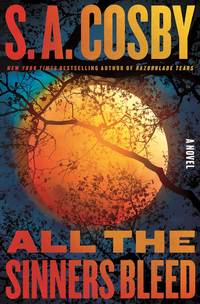
The Friday 56 for 8/4/23: All the Sinners Bleed by S. A. Cosby

Had to take a break last week due to posting toooooo many things. But I’m back to my typical trickle 🙂

The Friday 56This is a weekly bloghop hosted by Freda’s Voice.

RULES:
The Friday 56 Grab a book, any book.
The Friday 56 Turn to Page 56 or 56% on your ereader. If you have to improvise, that is okay.
The Friday 56 Find a snippet, short and sweet.
The Friday 56 Post it.

from Page (55 and) 56 of:
All the Sinners Bleed

All the Sinners Bleed by S. A. Cosby

He’d put the phone back in the evidence bag after fighting the urge to put it under his front tire and roll over it five or six times, then set it on fire. Titus had seen his share of horrific things in his twelve years as an FBI agent. The ability of one human to visit depravity upon another was as boundless as the sea and as varied as there were grains of sand on a beach.

The images on [redacted]’s phone were the worst he’d ever seen.

He kept thinking about purification by immolation. It seemed like that was the only thing that could remove the stain of those images from his mind, his heart, his soul. Burn the phone. Scald his eyes with hot oil. Put [redacted] and [redacted] on a pyre and reduce them both to ashes, then scatter those ashes to the four winds. Erase all proof of their existence and the things they had done. But the children in those pictures deserved to have their story told. They deserved justice. Whatever that was these days.

WWW Wednesday, August 2, 2023

I’m spending a few hours in a hospital waiting room today (nothing to worry about, just one of those things), so I’ve got a lot of good, uninterrupted reading time ahead of me and a Kindle with a full battery (and probably more books downloaded than I need to get me through the day). Let’s get on with the WWW and here’s hoping you all have a less interesting day.

This meme was formerly hosted by MizB at A Daily Rhythm and revived on Taking on a World of Words—and shown to me by Aurore-Anne-Chehoke at Diary-of-a-black-city-girl.

The Three Ws are:

What are you currently reading?
What did you recently finish reading?
What do you think you’ll read next?

Easy enough, right?

What are you currently reading?

I’m reading Spirelli Paranormal Investigations: Episodes 1-3 by Kate Baray (a Literary Local). I’m taking a couple of days off from work, so I don’t have an audiobook going.

Spirelli Paranormal Investigations: Episodes 1-3

What did you recently finish reading?

I just finished S. A. Cosby’s All the Sinners Bleed and will hopefully be able to say something coherent about it soon. Or maybe I’ll just post a few dozen exclamation points with a link to the Bookshop page. I also just finished Don’t Hang Up by Benjamin Stevenson, narrated by: Luke Arnold, Sibylla Budd on audio. I’ll get into it soon (hopefully), but basically–you want to listen to this, but don’t start it unless you have a window long enough to listen to it all–you will not want to push “pause.”

All the Sinners BleedBlank SpaceDon't Hang Up

What do you think you’ll read next?

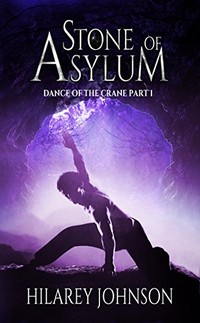
My next book should be Stone of Asylum by Hilarey Johnson (another Literary Local who you will be hearing from soon!) and my next audiobook should be Killers of a Certain Age by Deanna Raybourn, narrated by: Jane Oppenheimer & Christina Delaine.

Stone of AsylumBlank SpaceKillers of a Certain Age

How are you kicking off August?

A Few Quick Questions With…Joyce Reynolds-Ward

Back in January, Joyce Reynolds-Ward was one of the first to participate in my Literary Locals Q&As, and I really enjoyed that. This morning I posted my take on her novel, Klone’s Stronghold (5 months after I’d hoped to). I’m pleased to welcome her back to this space to talk about her writing in particular. I focused on Klone’s Stronghold, but encouraged her to talk about her writing as a whole.

We’ve gone over your writer’s bio before, but I wanted to follow up on a couple of things. First, could you talk about your path to publication and what sparked your desire to write? Also, your bio mentions that your “work includes…(whenever possible) horses,” [in much the same way that mine would say (whenever possible) My first memory of writing was when I was about eight or nine years old, typing a fanfiction about Mighty Mouse. I don’t remember anything else about it, but a couple of years later, I started MY version of the Black Stallion story, featuring a girl and her palomino Thoroughbred mare. I’ve always told myself stories, whether they were about something I read or saw on TV, then, later, my own stories.

Horses? Well, I’m a person who has loved horses my entire life. My maternal grandfather was a chicken farmer who was a workhorse trainer on the side, specializing in rehabs and wild horses. Because he focused on workhorses, I don’t have the fancy backstory that some current horse trainers and show people do—or the connections. My old mare Mocha has been with me for eighteen years now, and I’ve learned a lot from her.

There’s also not a lot of adult-oriented stories that involve horses (Klone’s Stronghold is the rarity of my work that doesn’t have one wandering through it). The ones that do either have inaccuracies that make me want to throw the book across the room, or they focus on high-visibility equestrian sport that isn’t Western-oriented. Very little out there features normal, everyday people who ride horses and horses that are just normal, everyday horses. In the SFF realm, the only horses I’ve seen that really resemble actual equines I’ve known are either written by Judith Tarr or C.J. Cherryh (the Riders duology is absolutely perfect at tagging the twisted equine sense of humor).

Authors have dozens of ideas percolating at once (if not more), what was it about the idea that became Klone’s Stronghold that made you decide it was the one you wanted to focus on for a few months? Can you remember what nugget started that book?
Oh, this one is easy. Going over the Oregon Blue Mountains on Highway 204, there’s a little gravel road that’s labeled “Klone Lane.” I kept poking and poking at the notion of an isolated scientist doing genetic experiments in the backwoods of Northeastern Oregon, because it really did seem like an ideal location for a contemporary version of Frankenstein, The Island of Dr. Moreau, or other books of that ilk. It’s also a location for a LOT of Sasquatch sightings.

A second piece was attending multi-day outdoor music festivals at several venues in the Willamette Valley, along with the Oregon Country Fair.

Finally, I think Stronghold was intended to be my Zenna Henderson book. I really love how she folded her teaching experience into her stories and I tried to channel that mode when writing Stronghold.

Maybe this falls into the “are you a pantser or a plotter” discussion that everyone asks about, but given the elaborate—or at least widely varied—supernatural species (for lack of a better term) you have here, did you just sort of wing it and introduce ideas/races/abilities as you went along, defining them as you needed at the time—or did you work it all out in detail before hand?
I totally pantsed these supernatural species. That meant I needed to spend more time in rewrites trying to make it all fit, but it was my attempt to come up with something that wasn’t the same-old, same-old European supernatural beings transferred to the New World. It’s part and parcel with something that I’ve struggled with over the years. I don’t want to appropriate Native American beliefs even though they are more appropriate for the area where I write—they aren’t mine, I haven’t been brought up in those cultures, and coming from the settler background that I do, I believe that I need to be mindful of these things. That’s why you won’t see me writing about sknwlkrs or wndg. The cultures that those beings come from have asked that people not from their cultures avoid writing about those beings, including using their full names (therefore why I’ve disemvoweled them) so I’m trying to be respectful.

It worked in Stronghold. But I’m still wrestling with the idea in other worlds. One problem with making it all up myself is that I—have to make it all up myself. That can be daunting sometimes, especially when writing paranormal contemporary stories.

Who are some of your major influences? (whether or not you think those influences can be seen in your work—you know they’re there)
I read widely and I think that shows up in my work. I’m influenced by a lot of contemporary Western writers whose writing integrates the Western landscape into their stories. Steinbeck. Ivan Doig. Laura Pritchett (I have workshopped with her). Luis Alberto Urrea. Norman Maclean. Jamie Ford (another person I’ve workshopped with). But also, within genre—Ursula K. LeGuin. C.J. Cherryh. Aliette de Bodard. Phyllis Irene Radford. Patricia Briggs. Laura Anne Gilman. Zenna Henderson. And many others.

In our correspondence, you described Klone’s Stronghold as one of your “lesser books.” Is there anything in particular that makes you say that? Is that a verdict that you come up with later, or while writing are you thinking “this isn’t going to be my best, but let’s see how it goes anyway”?
I don’t issue that verdict in the beginning, but after I’ve put a book out. It also somewhat reflects a change in my attitude about the stories I tell, as well as how they started to become an idea.

Klone’s Stronghold is a standalone book that doesn’t seem to want to become a series. Oh, I have ideas, and notions, but nothing that coalesces sufficiently to become a story. That’s why I call it a “lesser book.” I’ve tried to make it the best book that it could be, but it doesn’t want to be anything more than that. Nothing like my Martiniere interrelated series, or the Goddess’s Honor series, or the Netwalk Sequence series. All of the first books in those series were clearly bigger than the one book, and those characters had more to say. Reeni—has pretty much said what she wants to say. She’s done with telling her story, even though there are more things that could be written about in that world. It’s also a nice little book, but it doesn’t break any new ground in storytelling. It’s not a big breakout book. It’s a story I wanted to tell.

I have another one of that ilk that’s simmering in development. Dragons of the Raven Alliance is a retelling of the colonization of North America, only with dragons as human allies. It’s one of those worlds that maybe could become a series in the hands of another writer, but for me—it’s a one-shot book that will tell a nice little story. But again, nothing big, not a breakout book. However, there’s room for the nice little stories both in my writing schedule and amongst the general public readership. Another one is my cli-fi novel, Beating the Apocalypse. Like Stronghold, it started around setting and moods, then developed into characters.

That might be the major difference. What I consider to be my big books started with characters, not setting or moods. They fit the mold of “breakout books” or “upmarket fiction” more than these books do. Because the big books are character-based, they end up becoming longer, bigger stories over several books. The setting and mood books don’t usually have sufficient impulsion within their story arc to tell anything more than the one book.

Your site lists a lot of titles—you’ve been pretty productive. What is it about storytelling/writing that keeps it fresh for you? Is this a compulsion to keep going, or is it more pleasure? Along those lines, are there genres you are still hoping to try, or are you sticking in the lanes you’ve picked? Are there genres you don’t see ever trying?
It’s pretty simple. I just like telling stories. That said, most of those books are tied into series, particularly the Martiniere books. Those characters keep coming up with more elements and pieces to tell about their world (technically, worlds, since those books are set in a multiverse).

I keep trying to venture into steampunk and Weird West. I would dearly love to write more Weird West. But. I keep running into roadblocks because I am a settler descendant and I am rabidly self-conscious about what that means and avoiding problematic stereotypes. I’m putting more romantic elements into my work, though I doubt I’d write a straightforward romance. The Martiniere books are probably the closest I’ll come to upmarket or literary fiction, though who knows? Possibilities always exist, and I do have a historical political novel simmering based on past experiences.

What you aren’t likely to see from me is a police procedural or mystery. I used to love reading that genre, but it doesn’t hold any appeal for me as either a reader or a writer these days. A non-cross-genre literary or upmarket book isn’t likely to happen. I’ve thought about writing memoirs, but they just don’t appeal. Or humor. I’m not very good at it, and I know too many people who are really, really good at humor to even give it a whirl. Or splatterpunkish stuff (now I’m dating myself!).

What’s next for Joyce Reynolds-Ward, author?
Right now I’m developing a Martiniere subseries called The Cost of Power, with book titles of Prodigal’s Return, Prodigal’s Trial, and Prodigal’s Redemption. Return is complete. Originally, it was just going to be one book but it became much more than that. Besides the usual Martiniere science fiction western with corporate soap opera, family discord, multiverse and mind control elements, I’m also adding in a fantasy element based on the legend of Melusine of Lusignan, hearkening back to events that happened during the fur trapping era of the Pacific Northwest as well as the French Wars of Religion involving Catherine di Medici. I’m hoping to release it next spring in one-month intervals—at least that’s the plan. However it turns out, it’s not going to be the Marvel Cinematic Universe, for sure!

Along with that, I’m also developing the series sequel to my first fantasy series, Goddess’s Honor, called Goddess’s Vision. The Vision series will focus on the deconstruction of the failing Darani Empire and the need for the nations of that world to unite to battle the Outcast God and the Divine Confederation. This is roughly set in a Pacific Northwest-type world—all of it, not just the wet side! And yes, it has magical horses, a breed called daranvelii.

As far as releases are concerned, my first short story collection, Fabulist and Fantastical Worlds, will be released on August 15th. Fourteen of the seventeen short stories have been previously published; the remaining three have not. I have enough published material to create several other short story collections, though some will need additions to fill them out. Those will be forthcoming.

A far future political space opera, Federation Cowboy, is now with readers and will probably come out in October. Cowboy may or may not have sequels. Like Stronghold and Apocalypse, it’s been sitting around the hard drive in one form or another for several years. I have several other ideas like that which are just waiting to take form.

Beyond that? Who knows? I might take the time to put out a collection of the ski blogs I wrote years ago. Or something further than that.

We’ll see what happens.

Thanks for your time—and thanks for Klone’s Stronghold, I loved that world and characters.
Thank you so much for your time, and I appreciate that you loved that world and characters! It did not get a great reception in the Self-Published Fantasy Blog-Off competition and really did not benefit from its entry, alas. But even though I call it one of my lesser books, I still am fond of Reeni and Strug and the kids, and I really, really like its cover. That interior needs work, so at some point I’ll reissue it, and that might be enough to stir the ol’ backbrain to whip up another story in that world. Or not. Nonetheless, it is a story I like.


Page 82 of 232

Powered by WordPress & Theme by Anders Norén