Category: Blog Series Page 88 of 230

WWW Wednesday, June 14, 2023

I’m not sure that I have anything to ramble on about before the main event today, so let’s just dive into the triple Ws.

This meme was formerly hosted by MizB at A Daily Rhythm and revived on Taking on a World of Words—and shown to me by Aurore-Anne-Chehoke at Diary-of-a-black-city-girl.

The Three Ws are:

What are you currently reading?
What did you recently finish reading?
What do you think you’ll read next?

Easy enough, right?

What are you currently reading?

I’m reading the new Sunny Randall book from the new Sunny Randall author: Robert B. Parker’s Bad Influence by Alison Gaylin and am listening to the intriguing If I Understood You, Would I Have This Look on My Face?: My Adventures in the Art and Science of Relating and Communicating by Alan Alda (Narrator) on audiobook.

Robert B. Parker's Bad InfluenceBlank SpaceIf I Understood You, Would I Have This Look on My Face?

What did you recently finish reading?

The most recent books I’ve finished are David Rosenfelt’s Flop Dead Gorgeous and It’s Great to Suck at Something by Karen Rinaldi on audio.

Flop Dead GorgeousBlank SpaceIt's Great to Suck at SomethingE

What do you think you’ll read next?

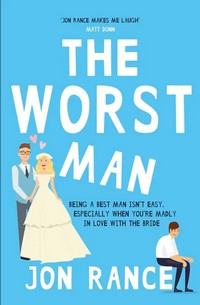
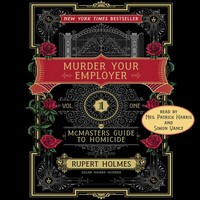
My next book should be The Worst Man by Jon Rance because I forgot that it’s what I put here last week. Oops. And my next audiobook should be Murder Your Employer: The McMasters Guide to Homicide by Rupert Holmes (yeah, it turns out, that one), Narrated by Neil Patrick Harris and Simon Vance.

The Worst ManBlank SpaceMurder Your Employer

Tell me about what you’re reading!

Grandpappy’s Corner: Little Aiden – A Love Book for Toddlers by Albert and Anna Choi, Bettina Braskó (Illustrator): Will Make You Say, “Awwww.”

I’m posting about the two books (so far) in the Little Aiden series today, which is turning into a bigger challenge than I expected. The two books are pretty similar in terms of style, quality, etc. So, yeah, the second post might sound a lot like the first—occasionally I’m just going to copy and paste. Sorry about that. But they should be different enough to justify your time as well as mine.


Little Aiden - A Love Book for Toddlers

Little Aiden – A Love Book for Toddlers

by Albert and Anna Choi, Bettina Braskó (Illustrator)

DETAILS:
Series: Little Aiden 
Publisher: Mytogo Publishing
Publication Date: May 22, 2023
Format: eBook
Length: 41 pg.
Read Date: June 10, 2023

What’s Little Aiden – A Love Book for Toddlers About?

This book is basically someone* narrating a day in Aiden’s life (or a bunch of activities over a few days), assuring him of their love in all the things he’s up to—when he’s being brave, when he’s being calm, when he’s sad, anxious, scared, and so on. All throughout the day and with a promise that this love will continue.

*Presumably his mother, given the art—although you could make the case that it’s from the point of view of the dad seeing both of them. It really doesn’t matter.

Let’s Talk about the Art for a Minute

The art is as adorable and eye-catching here as it was in the other Little Aiden book. Fantastic expressions, great background illustrations, etc. These are going to be very fun for a toddler—and whoever is reading with the toddler—to stop and talk about.

Braskó’s use of Aiden’s teddy bear is fantastic, once I saw what she did on the “Brave” illustration I had to go back through the whole book just looking for what was going on with the bear. (adding the rest of the toys to the mix on the “Confident” page was great, too)

I like her use of the first Little Aiden book here—that was such a nice touch. I wonder how many toddlers will notice?

Be sure to check out some of the samples on Braskó’s website.

How is it to Read Aloud?

I don’t mean this in a bad way—but this isn’t going to do much for the adult reader. It’s a simple and repetitive text. You don’t get to do any fun rhymes, tongue twisters, silly voices, or goofy noises (well, maybe a couple). And it’s okay, because it’s not that kind of book.

It’s the kind of book that’s intentionally repetitive—this is how you can help the child learn. It’s written simply for the same reason. Short and clear sentences that make it easy to grasp the point.

It’s also the kind of book that’s easy to stop reading to discuss—what Aiden is doing, the art, what his Teddy Bear is doing (alongside or in contrast to Aiden), or whatever. And that’s where the engagement for the adult reader is going to come in.

And, hey, some of the pages serve as a good reminder to the adult that it’s okay for the toddler to be frustrated and angry—because it’s really easy for parents/caretakers to forget that sometimes. It’s good for us to vocalize that.

So, what did I think about Little Aiden – A Love Book for Toddlers?

This is just so sweet. There’s some fun to be had (primarily from Braskó’s art, because the text is earnest), but it’s largely warm and sweet reminders of a parent’s affections.

It just made me melt, it’ll likely do the same for you.

It’ll be a great springboard for a parent/grandparent/caregiver to use to talk about all the different ways and times they love the toddler they’re reading with—and who can’t use something like that?

Another heartily recommended book from this series.


4 Stars

Grandpappy Icon

Grandpappy’s Corner: Little Aiden – A Feelings Book for Toddlers by Albert and Anna Choi, Bettina Braskó (Illustrator): Nothing Less than Feelings

I’m posting about the two books (so far) in the Little Aiden series today, which is turning into a bigger challenge than I expected. The two books are pretty similar in terms of style, quality, etc. So, yeah, the second post might sound a lot like the first—occasionally I’m just going to copy and paste. Sorry about that. But they should be different enough to justify your time as well as mine.


Little Aiden - A Feelings Book for Toddlers

Little Aiden – A Feelings Book for Toddlers

by Albert and Anna Choi, Bettina Braskó (Illustrator)

DETAILS:
Series: Little Aiden 
Publisher: Mytogo Publishing
Publication Date: December 17, 2022
Format: eBook
Length: 41 pg.
Read Date: June 10, 2023

What’s Little Aiden – A Feelings Book for Toddlers About?

There’s one simple point to this book:

It is okay to have feelings.

It’s the first sentence and that sentiment is repeated fourteen times over the book as we follow Aiden through a bunch of scenarios where he’s feeling things that kids can identify with. Scared, tired, happy, playful, silly, helpless, and more.

Let’s Talk about the Art for a Minute

Little Aiden’s expressions are clearit’s a piece of cake to tell what he’s feeling, even for a little one just trying to put words to facial expressions.

But I think Braskó’s real strength is in the rest of the illustrationswhat’s Aiden’s body doing with the feeling? What’s going on around him? Is there a mess? Does he have toys? How’s he interacting with his environment? Those really help fill out the ideas of the book.

These are going to be very fun for a toddlerand whoever is reading with the toddlerto stop and talk about. “He’s sure a messy eater, isn’t he? What’s that on the floor there next to his sippy cup? What’s that on his face?”

The illustration that goes with embarrassed is probably my favorite (and that probably says something about my maturity level).

Be sure to check out some of the samples on Braskó’s website.

How is it to Read Aloud?

I don’t mean this in a bad waybut this isn’t going to do much for the adult reader. It’s a simple and repetitive text. You don’t get to do any fun rhymes, tongue twisters, silly voices, or goofy noises (well, maybe a couple). And that’s okay, because it’s not that kind of book.

It’s the kind of book that’s intentionally repetitivethis is how you can help the child learn. It’s written simply for the same reason. Short and clear sentences that make it easy to grasp the point.

It’s also the kind of book that’s easy to stop reading to discussthe feeling in question, the art, or whatever. And that’s where the engagement for the adult reader is going to come in.

And, hey, some of the pages serve as a good reminder to the adult that it’s okay for the toddler to be frustrated and angrybecause it’s really easy for parents/caretakers to forget that sometimes. It’s good for us to vocalize that.

So, what did I think about Little Aiden – A Feelings Book for Toddlers?

Feelings can be scarysometimes a toddler isn’t sure why they’re having the emotional reaction they are, sometimes a toddler can see the adults around them reacting to the toddler’s emotions in a way that can be frightening or off-putting, sometimes a toddler doesn’t like the way an emotion makes them feel. It doesn’t do much good to assure the toddler that it doesn’t get much better sometimes as an adult.

But what you can assure them of is that it’s okay to feel things. The Chois have given toddlers a handy and helpful book to tell them this. As they read and re-read it with someone they trust they can examine these feelings and get the reminderor get the lessonthat it’s okay to feel emotions.

How to react to those emotions is a talk for a different timebut for now, it’s about being okay with having and feeling them.

I heartily recommend this book.


4 Stars

Grandpappy Icon

Saturday Miscellany—6/10/23

If anyone sees this today and then sees me at the event I’m at this afternoon. The image at the bottom is totally coincidental and is in no way a commentary on what I think this afternoon will be like.

(but, yeah, I will be).

Also, because I seem to be in that kind of mood: For the record, I only picked up one link here from Peat Long’s Friday Five–the others in common we found independently from one another. He doesn’t do all my research.

Enough of that…here’s the miscellany:

Odds ‘n ends about books and reading that caught my eye this week. You’ve probably seen some/most/all of them, but just in case:
bullet Every Country’s Highest-Rated Book by a Local Author—an impressive bit of data analysis.
bullet The Battle of the Book Cover: Britain vs America—The folks at Electric Lit rank a few recent US and UK covers of the same books.
bullet The release S.A. Cosby’s much-anticipated new book this week brings with it a couple of great interviews. This one with Friend of the Blog, Nick Kowlakowski, and this one with Maris Kreizman.
bullet M.W. CRAVEN on his new thriller FEARLESS—Craven talks about the origins of his new novel, Fearless (coming soon!), and the series it launches.
bullet Lit Hub has several Summer Reading lists for those of you still considering yours, among them are: The Ultimate Summer 2023 Reading List Or, the Count of Melty Crispo and The 28 Novels You Need to Read This Summer: The Lit Hub Staff Recommends Books for Beaches, Benches, Backyards, and BBQs
bullet Or, if you’re trying to help out a younger reader build their list Library Reads: Summer Reading Recommendations for Middle Grade & Teen Readers—(if you happen to be a younger reader yourself reading this Miscellany, let me know, I’m glad to know you exist)
bullet 63 Best Historical Fiction Books Ever Written
bullet Do You Ever Stop and Think About Paragraphs?—Yes. Ever since a professor wrote about worrying about my “anemic little paragraphs” blowing away in the wind on a paper. (think I still got a B on it) But I like seeing other people stop and do it, too.
bullet Author Interview: JCM Berne, author of “Wistful Ascending”—Eclectic Theist has a good Q&A with Berne.
bullet Does Everyone Need to Have a Love of Reading?—No, and Pages Unbound does a good job answering why. Just don’t tell my kids or grandkid that I said that 🙂
bullet Having Read vs Reading—I may have to adopt this myself.
bullet Why Do I Give Books 4 Stars Instead of 5 Stars?—a great job trying to explain what can feel like a slippery difference.
bullet Witty and Sarcastic Bookclub Presents: The Hero’s Journey and Modern Fantasy—Beth Tabler from Before We Go Blog, David (Book Meanderings) from FanFi Addict, Peatlong from Peat Long’s blog, and Filip Magnus from The Grimoire Reliquary join Jodie for a discussion. Earlier in the week I called this “the only blog post you need to read this week.” Here at the end of the week, I agree with myself.

A Book-ish Related Podcast episode (or two) you might want to give a listen to:
bullet Fiction Fans Author Interview: Death in Fine Condition by Andrew Cartmel—Cartmel talks about his new series for a bit, and convinces me that I should move it up on the TBR pile

This Week’s New Releases that I’m Excited About and/or You’ll Probably See Here Soon:
bullet All the Sinners Bleed by S. A. Cosby—”The first Black sheriff in a small Southern town faces a questionable shooting, a Confederate pride march, and a serial killer.” That’s good enough for me. I was sure I’d ordered this, but I seem to have forgotten to. I’ll have to wait until next week to have it sitting neglected on my shelf. But man, it looks so good.
bullet Charm City Rocks: A Love Story by Matthew Norman—”When a single dad meets the former rock-star crush of his youth, everything they thought they knew about happiness and love is thrown into chaos in this hopeful, heartwarming romantic comedy.”
bullet Death in Fine Condition by Andrew Cartmel—the first in a new series, The Paperback Sleuth. Cordelia is a rare paperback collector/dealer who burgles an elusive set from one of the most dangerous men in London. Things ensue.

Just in case things get boring, I'm bringing a book.

The Friday 56 for 6/9/23: Chain-Gang All-Stars by Nana Kwame Adjei-Brenyah

The Friday 56This is a weekly bloghop hosted by Freda’s Voice.

RULES:
The Friday 56 Grab a book, any book.
The Friday 56 Turn to Page 56 or 56% on your ereader. If you have to improvise, that is okay.
The Friday 56 Find a snippet, short and sweet.
The Friday 56 Post it.

from Page (55 and) 56 of:
Chain-Gang All-Stars

Chain-Gang All-Stars by Nana Kwame Adjei-Brenyah

We work. My work is my life. I pray for work. I hate my work. I need my work. I pull/push meat for the buzzing saws.

I halve the body.

The saw eats gladly.

Two halves a body.

I have a body.

I halve a body.

I do the same. I do the same.

The saw goes like God told it not to stop. All us on the line work like this. The saw is strong and hot.

Do the job. Do it right.

A Few More Quick Questions With…D.I. Jolly

I talked about D.I. Jolly’s BaIT earlier this afternoon, and now I’m pleased to bring you this Q&A with him. I’m particularly grateful to him for this because I sent them the questions under the mistaken impression that we’d previously discussed doing a Q&A. He graciously replied quickly anyway.

Could you take a moment or two to introduce yourself to my readers? What set you on the path to writing, describe your path to publication, genre choices, and so on?
My name is D.I. Jolly, I’m a South African author living in Germany. I first wanted to be a writer when I was about seven years old and played a video game called Gabriel Knight, where the titular character was an author and just the coolest person I could imagine, so I decided I would be him when I grew up.

I currently have seven published books, five novels and two short story collections. When I moved to Germany is started a writing group called Poetry Club, and in the last seven years I’ve written over 270 short stories for this event, and all the ones that aren’t in the published collections are uploaded onto my website. So, if anyone is interested in dipping a toe into my writing you can read over a hundred short stories for free on my site.

When it comes to genre, my aim is always to use it as a story telling element. Rather than a setting. So, with Mostly Human, I used the elements of lycanthropy to display mental health and bipolar disorder. With Counting Sheep, the sci-fi elements are there to create an exaggerated environment of capitalism and consumerism, the two key themes of that novel. With Bait, I wanted to have what is seen now as a cliched paranormal romance novel, but focus on themes of consent rather than lust.

What was the genesis of Bait—both the story and the themes (assuming they didn’t pop up together in your mind)?
As I said, the main theme for me in Bait is consent. I had often joked that I could just write a romance novel and publish it on the Inkitt platform and get thousands of reads no problem. And I joked about it so much that I was challenge to put my money where my mouth was. So, I did, and in researching what was the current focus and trends in romance, I noticed something I really didn’t like. Something called ‘soft consent’. For those who don’t know, soft consent is when a book is written in the first person and the reader is in their head, so even though a character is saying “no, no, no, get off me.” The reader knows that in their head the character is thinking, “actually yes I want you.”

Now, I’m not here to shame anybody, your fantasies are yours, enjoy them. But what bothered me was that a lot of the audience for these kinds of books on those kinds of platforms are younger teenagers. And I saw a pattern of the snake eating its own tail, in that, an adult with experience and understand would write a soft consent novel to live out their fantasy. Absolutely fine. That would then get read by a teenager who learns something about themselves and expresses it in their own book. But now you’ve lost the experience and some of the understanding behind that kind of story. That then gets read by another teenager who does the same thing, and now it’s just focused on the sex and lacking consent but being displayed as, ‘this is what love looks like’.

And I wanted to throw a wrench into that spiral. So, I wrote Bait and made sure to show that consent was vital and very important, that consent could still be very sexy, and that consent taken away was traumatic. Both sexually and in the case of not listening to your partner while they’re in crisis.

And low and behold it got hundreds of thousands of reads on Inkitt, and was so popular that the digital rights were licensed by Inkitt and published on their pay to read app Galatea, and the publishing company TinPot acquired the print rights and put it out into the world.

I picked up a nod or two to your Mostly Human books—does this take place in the same world? If so—these werewolves seem different from Alex and the rest. Am I wrong about that? Or do you have multiple species wandering around the world (which is kind of cool), and do you plan on having them intersect?
They are different worlds in my head, but I did just want to put Easter Eggs to my other books in the story. Mostly for my own entertainment but also just to have a little nod to people who maybe go from Bait to reading some of my other books. I like the idea of someone who loved Bait diving into Mostly Human and going. “Ooooooooooohh!”

Jessica is a big personality. I know people like her and they can (fully unintentionally) take over a room/conversation in a moment—was it a challenge to keep her as a secondary character and/or keep her from taking over most scenes she’s in?
Because Bait is written in the first person and Jessica is always preserved not given her own perspective it actually made it very easy to have her be a big personally but not stealing the story. Having the boundary walls of not getting her own point of view, made it safer in a way to let her steal the scenes she was in, and to really be herself. It was also a lot of fun to write.

You’ve got a few books now under your belt—I’ve often heard that writers, or artists in general, will forget hundreds of positive reviews but always remember the negative. What’s the worst thing that someone’s said about one of your books, and has it altered your approach to future books?
There is a two-star review of my first book A Guy A Girl and A Voodoo Monkey Hand that is about 2 pages long, that point by point breaks down everything I apparently did wrong.

There is also a review of Mostly Human with the line. “…and the author didn’t really know what Thai Chi was.” Which always makes me think. “I don’t think you know what a joke is.” But hey. It’s still a four-star review. But these are the comments that live rent free in my head.

Is there a genre that you particularly enjoy reading, but could never write? Is there one you’re dying to try?
I read a lot of classics, Russian and Japanese literature. Which goes from brutal to psychedelic realism. Which I really enjoy reading but really don’t think I could write in that way. The way I think and tell stories doesn’t lend itself to that sort of world building and descriptions.

here’s a game we play around here, called “Online Bookstore Algorithm”. What are 3-5 books whose readers may like BaIt?
I’ve been told that if you enjoyed the Twilight series, you’d really like Bait. There is a very popular book on the Galatea app called Millennium Wolves, and those readers would also get behind Bait I believe. Otherwise, I don’t know, Vampire Academy? Or the Sookie Stackhouse books.

What’s next for D.I. Jolly, author?
I wrote a dark psychological thriller called Blurred Lines that I’m currently shopping around. I’m also working on a new novel Milton (working title) which is a family comedy drama. That I’m really enjoying working on. I’m waiting for a video game to be announced that I can finally tell people which game I wrote the story for, which is exciting. Poetry Club is still on going, the last Monday of every month, so there will be some new short stories going live on my website the next day. Yeah, lots of things going on, and they’re all writing.

Thanks for your time—and thanks for Bait, and hope you have plenty of success with it.
Thank you, me too.


Book Blogger Hop: What Would the Title of Your Autobiography Be?

Book Blogger Hop


This prompt was submitted by Billy @ Coffee Addicted Writer:

What would the title of your autobiography be?

This is a tough one, beyond thinking that I’d ever write an autobiography. Still, I enjoyed trying to come up with something fitting. Here are a few scattered ideas that I’ve gathered over the last few days:

bullet The Irresponsible Reader—hey, I’ve got a brand (of sorts), lean into it, right?
bullet …That Reminds Me of Something I Read—I’ve started noticing how often I can derail a conversation into being about something I read, something I remember my conversation partner mentioning reading lately, some book I’ve seen on a blog somewhere that the conversation reminds me of. If I were to write an autobiography, it’d end up being filled with these kinds of things. It’s probably the best title I can think of.
bullet A Life In Books—it feels a bit pretentious and would be better for a librarian, bookseller, or prolific writer.
bullet Pax, Amor, et Lepos in Iocando—this is a reference to one of my favorite children’s books, the name of my little-used personal blog, and what I hope I focus on
bullet I Can’t Imagine Anyone Wants to Read this, But… —self-deprecation may be the kiss of death in an Autobiography title, but it’s honest.

What would you call your life story?

WWW Wednesday, June 7, 2023

Here we are on the 159th day of 2023 and I’m still trying to catch up on my plans for February. This is not so much a complaint on my part as an observation about how bad I am at planning. A true sign that I either need to do less of it, or a whole lot more of it to improve with practice.

It’s also a Wednesday, so that makes it time for WWW Wednesday, so let’s get on with that.

This meme was formerly hosted by MizB at A Daily Rhythm and revived on Taking on a World of Words—and shown to me by Aurore-Anne-Chehoke at Diary-of-a-black-city-girl.

The Three Ws are:

What are you currently reading?
What did you recently finish reading?
What do you think you’ll read next?

Easy enough, right?

What are you currently reading?

I’m reading The Ink Black Heart by Robert Galbraith and I feel like I’m going to be reading it for the rest of the summer. I’m listening to The Storied Life of A. J. Fikry by Gabrielle Zevin, Scott Brick (Narrator) on audiobook, which is both considerably shorter and a charming little novel that I can’t believe Scott Brick is narrating (it’s working, but he’s about the last guy I’d have thought of).

The Ink Black HeartBlank SpaceThe Storied Life of A. J. Fikry

What did you recently finish reading?

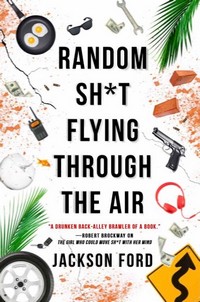
I just finished Adam Holcombe’s A Necromancer Called Gam Gam and The Girl Who Could Move Sh*t with Her Mind by Jackson Ford, narrated by Lauren Patten and Graham Halstead.

A Necromancer Called Gam GamBlank SpaceThe Girl Who Could Move Sh*t with Her Mind

What do you think you’ll read next?

My next book should be the comedic The Worst Man by Jon Rance, Rance is an author I’d been wanting to return to—now’s as good a time as any, right? My next audiobook should be Strong Female Character by Fern Brady, I just stumbled across it yesterday and it struck me as interesting.

The Worst ManBlank SpaceStrong Female Character

Have you been reading anything good, or at least interesting, lately?

COVER REVEAL: Sea of Souls by N. C. Scrimgeour

Sea of Souls Cover Reveal Banner

I’m very pleased to welcome the Escapist Book Tour’s Cover Reveal for N. C. Scrimgeour’s Sea of Souls to The Irresponsible Reader this morning! Before we get to revealing the cover, let’s learn a little bit about the book and author, shall we? It’ll just take a moment, and then we can all feast on the cover.

Book Details:

Book Title: Sea of Souls by N. C. Scrimgeour
Series: Sea of Souls Saga
Genre: Dark/Folklore Fantasy
Intended Age Group: Adult
Length: TBC/approx. 125k words
Release date: August 4, 2023
Publisher: Alcruix Press (Self Published)

About the Book

Dark be the water, and darker still the creatures that lurk within…

Free-spirited Isla Blackwood has never accepted the shackles of her family’s nobility. Instead, she sails the open waters, searching for belonging on the waves.

But when tragedy calls Isla home, she realizes she can no longer escape the duty she’s been running from. Selkie raiders have been terrorizing the island’s coasts, and when they strike at Blackwood Estate, Isla is forced to flee with her hot-headed brother and brooding swordmaster.

To avenge her family and reclaim her home, Isla will have to set aside old grudges and join forces with an exiled selkie searching for a lost pelt. The heirloom might be the key to stopping the bloody conflict—but only if they can steal it from the island’s most notorious selkie hunter, the Grand Admiral himself.

Caught between a promise to the brother she once left behind and an unlikely friendship with the selkie who should have been her enemy, Isla soon realizes the open seas aren’t the only treacherous waters she’ll need to navigate.

As enemies close in on all sides, she must decide once and for all where her loyalties lie if she wants to save what’s left of her family—and find the belonging she’s been searching for.

Content/Trigger Warnings:

  • Alcohol/alcoholism

  • Amputation

  • Animal
    death (fictional/in-world creatures)

  • Assault

  • Attempted
    murder

  • Blood

  • Bodies/corpses

  • Body horror

  • Bones

  • Child death
    (off-page, mentioned only)

  • Classism

  • Death

  • Decapitation

  • Emotional
    abuse

  • Forced
    captivity

  • Gore

  • Gun
    violence

  • Hallucinations

  • Hunting

  • Injury

  • Murder

  • Physical
    abuse

  • Poisoning

  • Pregnancy

  • Prejudice
    (fictional/in-world)

  • Profanity

  • Self-harm
    (ritualistic)

  • Skeletons/skulls

  • Violence

See Also:

A Compass that Doesn’t Point North • Under the Sea •
How Dangerous Can a Seal Really Be, Anyway?

Book Links

Universal Amazon Link

About the Author

N.C. ScrimgeourN. C. Scrimgeour is a science fiction and fantasy author whose books focus on character-driven stories in vibrant worlds, from folklore fantasy to space opera.

After completing her Masters in English Literature, she went on to work in journalism and marketing and communications while pursuing her passion in writing.

When she’s not writing, she enjoys playing story-driven RPGs, watching and reading all things science fiction and fantasy, and getting outdoors with the dog for a good walk

Website ~ Twitter ~ Instagram ~ Facebook ~ TikTok ~ Goodreads

and now…

The Cover

Sea of Souls Cover

I love that cover. Arresting design.


My thanks to Escapist Book Tours for the invitation to participate in this tour and the materials they provided. The opinions expressed by me are honest and my own.

Escapist Book Tours

A Few Quick Questions With…Tony Ganzer

Earlier today, I posted my two cents about Ganzer’s book, Kneading Journalism, and now I have the opportunity to share this Q&A with the author. The note at the beginning was just something I included for him, but I enjoyed his response enough that I thought I’d throw it in.

There’s an intimidation factor I hadn’t anticipated in asking questions to 1. a journalist and 2. a journalist about a book on journalism. Hopefully this is worth your time 🙂
I really appreciate you taking the time to read these essays and wanting to engage in dialogue. Hopefully the feelings of intimidation and hunger subside with some bread and good chatting!

Could you take a moment or two to introduce yourself to my readers? What set you on the path to writing this book, describe your path to publication, and so on?
For most of my career I have been a public media broadcaster, working for NPR stations in the US, and was previously a correspondent for an English-language service of the Swiss Broadcasting Corporation. I’ve been fortunate to have covered everything from tracing the Ricola production cycle from Alpine herb farm to cough drop, to the realities of Swiss gun culture. From the earliest experiences of “real world” journalism, though, I’ve been confronted with the juxtaposition of reality versus ideal. I wanted to tell sound-rich, character-filled stories all the time, but modern journalism is still very much a “feed the beast” apparatus all too often chasing minutiae and scandal. So more than 15 years ago I started writing short essays on my craft, and posting them on my website. I’d reflect on whether Glenn Beck being interviewed by Anderson Cooper on Glenn Beck’s show about Glenn Beck’s book was appropriate. Or I’d reflect on whether journalism as a craft is being practiced by other industries as a kind of “outsourcing” of journalism. These essays were part journal, part industry critique, and part lodestar to anchor me in my beliefs about what is good or bad about the industry. Journalists tend to be—and I’m speaking anecdotally and personally—a fairly cynical bunch, and in recent years I haven’t seen enough to salve that cynicism. The COVID period was strange on its own, but it goes well beyond that. Amid ever nastier political rhetoric about “the media,” amid disinformation campaigns, amid the continued deterioration of the journalism labor market, and amid personal and professional soul-searching, I looked for a way to more deeply preserve that “lodestar.” Given how important bread baking had become in my life—for food and mental health—I thought I had a unique enough idea, and after being hit by a car in March 2020 (a story for another Q&A!) I was even more determined to see it all the way to the end. I thought about the traditional publishing route, but decided to remain an independent publisher to make exactly the kind of essay collection I wanted, and to build publishing skills. I hired a talented illustrator, Nicole Falatic, and a newspaper editor friend, Brian Beesley, to keep me sharp. It just so happened that this project was wrapping up at the same time I decided to step away from daily news. I finished my MBA and found a job outside of journalism, and began a detox from push alerts. The book acts as a kind of a love letter to the brand of journalism I wanted to practice and I think we need especially now.

I think I missed your time at the UI’s Argonaut by a semester or two, but I enjoyed knowing there was a common-bond there. Something I’ve often wondered—does working on a student newspaper prepare you in any way for “real world” journalism?
To a degree, yes, if you have a well-structured program, and good advisers (which the UI does). The student newspaper, radio, and television could be seen as journalism with training wheels. You need to learn how to talk to people and to listen. You face ethical questions of what to report and how to frame stories. And something else people may not think about is how often nowadays student media are a first line of accountability and challenge to university administrations. Information can travel quickly on campus, and student reporters may be clued into big and small stories before they break into non-student press. One of my beats (areas of focus) while at the student paper was administration, which might sound boring, but it gave me a chance to build sources and explore budget issues. And sometimes big stories break on campus, even at the UI, requiring students to mature in their practice of the craft. After the FBI descended on campus, a colleague and I explored whether students’ rights were violated by interrogations. My experience in student media positioned me to be able to help tell that story then, and build experience that I applied once in the “real world.”

I thought the idea behind the “combination of baking and thoughts on the craft of journalism” was a stroke of brilliance—did that idea come to you fully-formed, or did you have to work your way to it?
Thank you for that—I know it’s definitely a niche combination! I had been tossing around the idea of combining my bread baking with my journalism for a while, but I didn’t know what it could be. I had been an assistant baker at a food co-op for a few months after college, but didn’t begin re-upping my bread skills seriously until 2018 as a stress reliever, and I thought maybe I could do a vlog following my progress. Being a radio guy, I’ve always felt weaker in video production and I like to learn through doing. So a vlog could help me improve in video (and early episodes show I needed practice!) while improving with bread as well. Now this is a bit of a random turn, but I had a chance online encounter with members of a passionate fandom for Korean megagroup BTS, which led to literally thousands of social media messages to me explaining the culture, philanthropy, and support network of their fandom. Long story short: for a time, I became a go-to resource for some people’s questions about journalism and the framing of stories. Usually this came after a writer was seen as misinterpreting the motivations or beliefs of this fandom. I asked whether some of these people would like me to try to demystify journalism and maybe throw in some bread baking, and there seemed to be some interest. So I began making vlogs showing my very amateur bread skills while I tried to explain something about journalism. Looking back at those breads…well, not all of them are pretty, but the project was more about personal progress (even through failure) and dialogue—if it’s not fully formed yet, well that’s part of it. Over time my breads improved, and I further refined my thinking about journalism. Eventually, I got to a point where I thought I could really elevate the concept with research and memoir, and the book was born.

You’ve traveled a lot as journalist—how would you say that journalists/journalism is regarded in other parts of the world? Either the work of foreign journalists or their fellow-citizens?
This is a tough question because I don’t want to generalize. There are nuances in every country to the relationship with the press. Most of my experience has been in the “West,” namely Europe and the US, in which there is more or less the understanding that quality journalism is valuable and that journalists should be serving the public. I say “more or less” because recent years have seen our common language and perceptions about journalism splinter into an unrecognizable battleground of semantic and ad hominem attacks. Even when speaking with people who are hostile toward “the media” I tended to be able to find space to dialogue with them on a person-to-person level. The desire to be heard and understood is the same in rural Ohio or Idaho as it was in a tea bar in Zurich with members of the Palestinian diaspora. But here are two observations: I will say that Germans, in my experience, were much better about news literacy than the US—that’s to say Germans typically knew about the top stories, and had read enough to form a fairly nuanced opinion about a range of issues. When living in Berlin I would often be on a morning train next to workers just getting off the night shift. These working-class guys would be drinking a beer at 7 or 8 in the morning, looking through the paper and having a great conversation on fiscal policy or foreign affairs. Maybe it was just my train, but that image stuck with me. Germany has faced populism and tabloid frenzies as other countries have, but I still considered their general news literacy very high. Second observation: it seems no matter where you are, people with power are generally accommodating to the press so long as they are not the target of a report. If a story can be used to further their goals—either noble or self-serving—they’ll be very helpful. It makes sense that someone would want their narrative to get the widest amplification possible, but when they actively obscure information, manipulate facts, or just lie, then the end product is at best incomplete and at worst propaganda. Even with journalists no longer playing the role of “gatekeepers” of information as in the past, the skills they should have are meant to help filter and counteract such manipulation…assuming they are truly independent of political favor or ideology.

You talk about the effect of having public officials calling the press an “enemy of the people.” Have things improved in the last year or two, or do you think it’s continuing?
Have things truly improved? No, I don’t think so. What’s happened—and this is just my opinion, of course—is we’ve entered a kind of ideological Cold War with our media. For the most part, the country has gone beyond just media echo chambers which reinforce perspectives or preconceptions. Increasingly we are living in parallel societies based on political, religious, cultural, or social identities in which we mostly hear information as being from “friend” or “foe.” These ideological ecosystems then work to defend the “friends” and defame the “foes,” reality be darned. Occasionally there are skirmishes and proxy wars fought on individual issues, or judicial or government nominees, or federal debt limits, but these events are just grist for the ideological mill working to perpetuate divisions. There are “neutral” players in the ecosystem. For news outlets, these may be the straight shooters just trying to document our times (a wire service like Reuters, for example) but they are often only paid attention to when they can fit the “friend” or “foe” role. The COVID pandemic showed the extent of the divisions, not just in discussions about state and federal response and economic aid (and potential misuse and/or fraud) but also in vaccines and medical advice. Many people died, it wasn’t clear how long the worst of the pandemic would last, and we needed an adult conversation about what we should do to protect ourselves and our posterity. Instead, the parallel societies did what they did best: partitioned reality and perception to accept information that was seen as coming from “friends” or “foes.”

To extend the Cold War analogy, what happens in the end? The opposing sides remain existential threats to a healthy democracy so long as dialogue is seen as a dirty word. It’s not about friends or foes, it’s about fellow citizens with their own perspectives which would add to a nuanced conversation. Is it easy? No. It is necessary? Yes. I try very hard to make personal connections with people when I speak to them for an interview or just in life. I’m not an idealogue, I’m not pushing a narrative—I’m just a guy investing time and energy in this interaction. Think of it as creating the Cold War “red phone” hotline to deescalate tensions. At the other end of the line wasn’t an ideology, it was a person.

Would you say you’re fairly optimistic or pessimistic about the next, say, 50 years of American journalism?
Wow, 50 years!? You think back 50 years from now, and we’re in the midst of the Watergate scandal, which many people see as the dawn of a new era for modern journalism. In the ultimate check on power at the highest levels, journalists proved their worth. A generation or two of journalists looked to emulate that check on power, even as the economics and tools of the trade vastly transformed journalism. Projecting 50 years beyond this point, I think there are a few things that are likely to happen:

  1. The ideological separations of our media will continue. The democratization of technology has allowed bloggers, podcasters, activists, malcontents, and everyone else to flood the world with niche perspectives, just as corporate and political media operations continue to further the “friend” and “foe” partitioning. We’re coming full circle to the partisan beginnings of the American press, and I don’t think it’s a good thing.
  2. Meanwhile, what we understand as “modern journalism”—well reported, nuanced, ethical—will continue to face financial pressures. Philanthropy will fund some operations for a time, as will corporations, but the net effect will be a smaller and smaller field of professionalized journalists. Work may be found behind subscriptions or paywalls or media bundles, meaning there will be further proliferation of free media of varying quality and perspectives, while the best stuff will be consumed by a shrinking number of citizens willing to pay for it.
  3. Because AI is all the rage right now, I do want to mention the potential for further evolution of robot writers. AI been used for years to create journalistic work, notably with financial news. If quarterly results stories are formatted the same way, every time, except for the numbers, then journalists can be freed up while the computers fill in news story mad libs, right? Further, AI could continue to scrape sentences and media from other websites to create for every user a personalized news report, with increasingly complex multimedia elements which may or may not be credible. I think AI-generated content will likely increase in an assistive capacity, for data crawling, visualizations, and perhaps even some basic writing. I think this technology has the potential to flood the mediascape with more and more questionable material, making it harder and harder for people to sniff out quality information. I’ve already pulled way back on my social media use (save for posting bread pictures) as a way to protect myself from “fake news.” This struggle will continue.

I hope we’ll see a renaissance of journalism, but the craft is on the backfoot.

We have to talk bread a bit—and frankly, as hungry as the book made me, I think I could go on for a while. Did you have to cut any recipients for space (or because you couldn’t think of an essay to pair them with)? What kind of feedback are you getting on including them? What’s your favorite to eat? Bake? (whether it’s in the book or not)
There’s a recipe for Swiss braided Zopf bread I came across years ago and I would’ve loved to include that because it’s an impressive bread (looks like a Challah) that makes a good gift. I also have a recipe for hot dog buns that I made into pull-apart dinner rolls that can be baked with Camembert. This may be controversial, but: bread recipes are pretty ubiquitous. The ingredients themselves have been more or less the same through the course of all bread history, so it’s the description and execution of the process which adds a personalized flavor. Those are two breads I left out because I didn’t want to force the concept too much—am I writing an essay because I think it should be written, or just because I have another bread to include? I also wanted the breads to be as accessible as possible. I’m not a bread sommelier, just a guy sharing what I’ve learned so far!

I think most of the response I’ve gotten so far has been about the bread, and not the essays! And that’s fine by me, because it means people took some time to at least try something new. But this concept of mixing bread and journalism has generally been well-received. It’s unusual, but taken seriously. And I do feel like I’ve been able to build a small community of bakers both new and experienced.

It’s tough to decide on a favorite bread. I think I like the Rosemary Asiago bread because it’s hard to screw up—cheese tends to be very forgiving on bread! I sometimes will make this bread into rose buns (sometimes called flower buns) which is a nice treat for the kids.

I’ve also just started exploring pain d’épices, which is just honey-based spice bread. I’ve not tweaked the recipe enough to consider it enough of my own, but it’s a good addition to the dessert arsenal alongside my Irish Gingerbread.

There’s a game we play around here, called “Online Bookstore Algorithm”. What are 3-5 books whose readers may like Kneading Journalism?
Oh—what a challenge!

Maybe Outliers by Malcolm Gladwell, since I take a unique track into the topic!

A Cook’s Tour: Global Adventures in Extreme Cuisines by Anthony Bourdain, even though it’s a different vibe, maybe someone would like a less-than-conventional take on food and stories.

And a recent book: maybe The Best Strangers in the World: Stories from a Life Spent Listening by Ari Shapiro. This memoir by NPR host Shapiro is a different kind of book, but still uses the lens of journalism to explore the world, as I tried to do.

What’s next for Anthony Ganzer, author? Do you have other books in you?
I would like to think I do. I’m not sure it will be the same kind of book (Kneading More Journalism? Kneading Journalism Harder?!) I’ve traveled so much in my life, and have talked to so many kinds of people, I feel like there is something to be said about lessons I’ve learned about myself through sometimes very personal moments with interviewees. I have a podcast where I use narrative journalism to explore issues of faith, and I thought they might eventually weave themselves into a book-appropriate format. Journalism tends to be a fairly non-religious industry, or at least that’s how it seems, so it could be a powerful lens to examine my reporting and my personal faith journey. It’s an idea at least!

Thanks for your time—and thanks for Kneading Journalism. I really enjoyed it, and hope it finds an audience.


Page 88 of 230

Powered by WordPress & Theme by Anders Norén