Category: Dogs Page 3 of 11

Grandpappy’s Corner: Noodle Conquers Comfy Mountain by Jonathan Graziano, Dan Tavis (Illustrator): A Little Pug Faces a Cozy Challenge

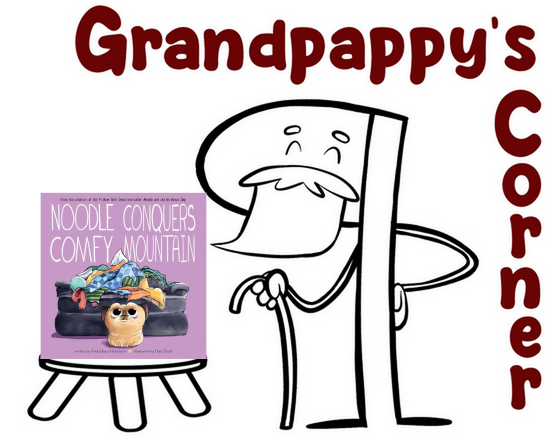
Grandpappy's Corner Logo

Noodle Conquers Comfy Mountain

by Jonathan Graziano, Dan Tavis (Illustrator)

DETAILS:
Series: Noodle and Jonathan
Publisher: Margaret K. McElderry Books
Publication Date: November 7, 2023
Format: Hardcover
Length: 32 pg.
Read Date: November 9, 2023

Buy from Bookshop.org Support Indie Bookstores

What’s Noodle Conquers Comfy Mountain About?

This is a story about poor Noodle needing to find a place to get comfortable for the day—he needs to be able to smell nice smells, see his Jonathan, watch for a snacking opportunity (or several), but most importantly feel comfy.

After some searching, he finds the perfect place on the top of the couch! But how can a little pug get up to something so tall?

Let’s Talk about the Art for a Minute

I wish I had some samples to show (you can click on the artist’s name above and see his portfolio, which doesn’t have any pages from this, but you can see his skill). So let me say this instead—before I had a chance to read the book, I gave it to my wife and daughter to look at while I went upstairs. Their collective “Ohhhh!!”s and “Awwwwwwwww!!”s were so loud I had to pause my audiobook until they finished.

It is just adorable. I don’t have another word to describe the art—it’s so cute that it’s hard to put into words. Also, there’s one picture that you can practically see the tail wagging. I’m not sure how a cartoonish art style is able to convey that so effectively, but it did.

Consider me a fan of Tavis.

How is it to Read Aloud?

It’s fine—there’s not a lot of wordplay, there’s no rhyming, or anything like that. It’s simple phrasing that you can put whatever kind of emphasis on and read without difficulty.

If you’ve watched enough of Graziano’s videos, you can borrow his style to read it; it works really well. If you haven’t? No big deal, just read it naturally and it’ll be fine.

What did the Little Critter think of It?

He’s still a bit too young to be giving opinions. But he liked the sound it made when he slapped it.

So, what did I think about Noodle Conquers Comfy Mountain?

Like when I was describing the art, I don’t know what else to say but it’s hard-to-describe just how cute this is.

It’s a nice little story that most readers can relate to in some way—I think particularly if they’re on the small side and need assistance getting up to a place to sit, as young children tend to be. The story is a little stronger than the previous book’s–which was primarily about the feeling of a No Bones day, and I appreciate that (without criticizing the first book! I’m not heartless.)

There’s a little life lesson about asking for help that we can all use—no matter our age or size—included. Which is a nice bonus.

Do I recommend this adorable read? Yes. Obviously. Get your hands/eyes/ears (as applicable) on anything about Noodle, it’ll make your day brighter.


4 Stars

This post contains an affiliate link. If you purchase from it, I will get a small commission at no additional cost to you. As always, the opinions expressed are my own.
Grandpappy Icon

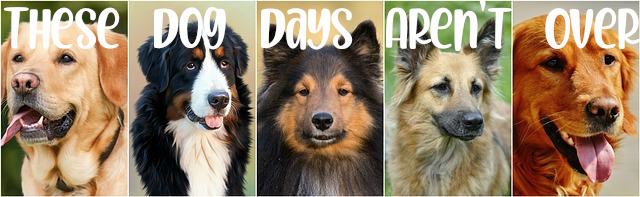
These Dog Days Aren’t Over

(Updated and Revised 8/26/23)

It’s National Dog Day, the annual celebration of “all dogs, mixed breed and pure. Our mission is to help galvanize the public to recognize the number of dogs that need to be rescued each year and acknowledges family dogs and dogs that work selflessly each day to save lives, keep us safe and bring comfort.” So it seemed like a good day to post another version of this.

These Dog Days Aren't OverThis was a hard post to come up with a name for‡, essentially this post came from a comment not too long ago about being hesitant to read books about animals if the reader doesn’t know if they survive the book. I get that, I absolutely do. I still bear the scars of Where the Red Fern Grows and Marley and Me (sure, that wasn’t that long ago, but the wound still stings). So, for readers like my correspondent, here are some perfectly safe books prominently featuring dogs!

I plan on updating this regularly, so by all means, chime in with comments about Dogs I’ve forgotten about/haven’t encountered yet!

Non-Fiction

bullet The Particulars of Peter by Kelly Conaboy—this is a collection of humorous essays giving Conaboy the opportunity to rave about her dog, Peter. In her eyes, Peter is a perfect dog, and as you read this, you’ll be tempted to agree. (my post about it)
bullet Olive, Mabel & Me by Andrew Cotter—Cotter’s charming book describes his life with the two dogs that rocketed to international stardom (and brought him along). (my post about it)
bullet My Life as a Dog by L. A. Davenport—Davenport’s short little book about the relationship between the author and his dog, Kevin, a black and tan, pure-bred dachshund. It focuses on what the two of them did over two days and then a weekend selected from the years they spent together. (my post about it)
bullet Dogtology: Live. Bark. Believe. by Jeff Lazarus—Humans are so obsessed with their dogs, we’ve devoted so much time, energy, and work into them that it’s become a religion, with humans essentially worshipping their pets. This book is a look at that devotion and the rituals and beliefs that accompany it. It’s technically humor, but a lot of it seems pretty on-target. (my post about it)
bullet What the Dog Knows: The Science and Wonder of Working Dogs by Cat Warren—Warren basically covers three topics: there’s the science and history of using working dogs (of all sorts of breeds, not to mention pigs(!), birds, and even cats) to find cadavers, drugs, bombs, etc.; there’s the memoir of her involvement with cadaver dogs via her German Shepherd, Solo; and anecdotes of other cadaver dogs and trainers that she’s encountered/learned from/watched in action. (my post about it)
bullet What the Dog Knows Young Readers Edition by Cat Warren, Patricia J. Wynne—The above book adjusted for younger readers, with some great illustrations. It’s not dumbed-down, just adjusted. (my post about it)

Fiction

bullet Mace Reid K-9 Mystery series by Jeffrey B. Burton—A Dog Trainer/Cadaver Dog Handler and his dogs get involved in serial killer cases. Warning: Like many heroes in action novels, most of Mace’s dogs get beat up/injured. Some pretty badly. (my posts about them)
bullet Suspect by Robert Crais—One of my all-favorite books, a cop with PTSD gets assigned to the K-9 Unit and works with a dog fresh from Afghanistan combat. (my post about it) The pair also plays a major role in The Promise.
bullet Pug Actually by Matt Dunn—Doug, a loyal pug, plays cupid for his owner. This is a cute rom-com with a charming canine narrator. (my post about it)
bullet Stepdog by Nicole Galland—A love story where the major impediment to happily ever after is her dog (a gift from her ex). (my post about it)
bullet Noodle and the No Bones Day by Jonathan Graziano, Dan Tavis (Illustrator)—This picture book relates the origin of the Internet Craze and the wonderful, photogenic pug behind it. (my post about it)
bullet Oberon’s Meaty Mysteries by Kevin Hearne (Audiobooks narrated by Luke Daniels)—Oberon, the scene-stealing Irish Wolfhound from The Iron Druid Chronicles narrates this series of novellas (my posts about them).
bullet Neah Bay series by Owen Laukkanen—Lucy is a dog who is trained by prisoner Mason Burke, who has to track her down when he gets out. She’s a service dog for Marine Vet Jess Winslow. Lucy connects the two humans in her life and helps to keep them safe when a corrupt deputy comes after Jess. (my post about them)
bullet I Thought You Were Dead by Pete Nelson—I’m not sure how to sum this one up in a sentence. It’s a pretty typical novel about a troubled writer with a romantic life and family in shambles. But his dog is the thing that makes all the difference. (my post about it)
bullet Chet and Bernie books by Spencer Quinn—Bernie Little is a PI in Phoenix. Chet’s his four-legged partner and the series narrator. It’s too much fun to miss. (my posts about them)
bullet The Right Side by Spencer Quinn—”a deeply damaged female soldier home from the war in Afghanistan becomes obsessed with finding a missing girl, gains an unlikely ally in a stray dog, and encounters new perils beyond the combat zone.” (my post about it)
bullet Woof by Spencer Quinn—The beginning of an MG series about a with a penchant for trouble and her dog. (my post about it)
bullet Andy Carpenter books by David Rosenfelt—Andy Carpenter is New Jersey’s best defense lawyer and a devoted dog owner. He helps run a rescue shelter, too—and almost every client he takes as some sort of connection with a dog. These books aren’t dog-centric like the others on this list, but they’re dog-heavy. (my posts about them)
bullet The K-Team books by David Rosenfelt—a spin-off from the Andy Carpenter series. This features a PI team made up of Andy’s wife/investigator, Laurie; the near super-heroic Marcus; and Corey Douglas, a freshly-retired K-9 officer. His canine partner, Simon Garfunkel, comes along, too. Simon Garfunkel doesn’t play a giant role in the books, but he gets at least one good action scene per book. (my posts about them)
bullet Sharp Investigations by E.N. Crane—A series of comic investigations about an Ex-MP and her K-9 partner in Ohio. Both are pretty skilled and are walking disasters at the same time. (my posts about them)
bullet Voyage of the Dogs by Greg van Eekhout—SF for all ages about a team of dogs on a long-distance space flight. (my post about it)

Supportive Roles

These dogs aren’t as significant a presence in their books as the prior group, but they’re important enough to mention.
bullet Mouse from The Dresden Files by Jim Butcher. (my posts about them)
bullet The Midnight Plan of the Repo Man by W. Bruce Cameron and the sequel Repo Madness by W. Bruce Cameron(my posts about them)
bullet Edgar from the Washington Poe books by M. W. Craven. (my posts about them)
bullet Rutherford from The TV Detective series by Simon Hall (my posts about them)
bullet Oberon from the Iron Druid Chronicles by Kevin Hearne. (my post about them)
bullet Ruffin from the I. Q. series by Joe Ide. (my posts about them)
bullet Dog from the Walt Longmire books by Craig Johnson (my posts about them)
bullet Purvis (and Beau) from The Good Kill by John McMahon (my post about it)
bullet Trogdor from The Golden Arrow Mysteries by Meghan Scott Molin (my post about them)
bullet Mingus from The Drifter by Nicholas Petrie (my post about it)
bullet Herbert and Daisy from Adult Assembly Required by Abbi Waxman (my post about it)

Books with paws on both sides of the line

Some books that belong on this list, but might be a bit too close to not fitting on it for some readers
bullet Lessons From Lucy by Dave Barry—there’s a strong “my beloved dog is old and will die soon-vibe throughout this (it’s the whole point), so some may want to avoid it. But the focus is on what Barry is learning from his aging but still full-of-life dog. (my post about it)
bullet Dead is … series by Jo Perry—the canine protagonist in these mystery novels is a ghost, so there’s a dog death involved. But we meet her as a ghost, so she won’t die (again) in the series. (my posts about them)
bullet Dogtripping: 25 Rescues, 11 Volunteers, and 3 RVs on Our Canine Cross-Country Adventure by David Rosenfelt—For various and sundry reasons, the Rosenfelts decide to move their home and dog shelter from California to Maine. As anyone who’s had to get a dog (or a toddler) into their vehicle for a drive across town can imagine—getting 25 dogs moved across the country is a logistical nightmare. In Rosenfelt’s capable hands, if “tragedy plus time equals comedy,” “nightmarish logistics plus time” does, too. The shelter specializes in senior dogs, so not every dog mentioned or featured lives, but that’s not the focus of the book. (my post about it)
bullet E. B. White on Dogs—if this isn’t every short piece or letter White wrote mentioning dogs, it’s so close as not to matter. Some are witty, some are touching, some are somewhere in between. There are even a few written from the point of view of his dog! Sadly, this does include a eulogy for one dog, a few other mentions of canine mortality, so it can’t make the main list. (my post about it)
bullet Lessons from Tara by David Rosenfelt—a sort-of-sequel to the above. Inspired by the death of their dog, Tara, the Rosenfelts now operate a no-kill shelter for senior dogs. This is the story about the origins and day-to-day of that life. There’s discussion of Tara’s death, and he has to cover the end of days for dogs, but it’s not the focus of the book. It’s one some will want to avoid, but you probably shouldn’t. (my post about it)
bullet Max Boucher Mysteries by Troy Lambert—Max used to be with the Seattle Police, but became a P.I. after the deaths of his wife and daughter. Because of the events of the first novel, Max gains a reputation as an animal detective. Particularly specializing in missing/kidnapped dogs. Most of the dogs in the series get out okay, but some are injured or worse. (my posts about them)
bullet Stray Ally by Troy Lambert—this is an action novel featuring heroics from several dogs working alongside a special ops soldier to try to stop a white supremacist group from launching a terrorist action. Some dogs are hurt, and a few die along the way. (my post about it)


‡ I brainstormed this a bit with my family, and wanted to share some of those titles that didn’t make the cut, just because I enjoyed their creativity:
bullet These Dogs Didn’t Go To Heaven/Not All Dogs Go to Heaven implies these dogs aren’t wonderful creatures, and that’s a solid loser
bullet No Kleenex Required too vague, and not necessarily true, they’re just not required because of a death
bullet The Best Bois
bullet Books Where the Author isn’t A Heartless Bastard (Looking at You, Marley and Me) too long, and boy howdy, does it seem my son has bigger issues with the book than I did
bullet Books that Even PETA Would Be Okay With
bullet Books for the Vegan in You suggests the dog books I don’t mention are in favor of eating them…
bullet Paw Patrol I’m almost confident my daughter’s boyfriend suggested as a joke, for his sake I’m assuming it was
bullet Pawfect Dog Stories I refuse to resort to that kind of joke

(Images by S K from Pixabay and josmo from Pixabay

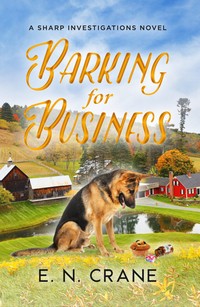
Barking for Business by E.N. Crane: Move Over Plum, It’s Time for Cynthia Sharp and Winnie

Barking for BusinessBarking for Business

by E. N. Crane

DETAILS:
Series: Sharp Investigations, #1
Publisher: Perry Dog Publishing
Publication Date: June 1, 2021
Format: Paperback
Length: 307 pg.
Read Date: July 26-27, 2023
Buy from Bookshop.org Support Indie Bookstores


I apologize in advance for all the references to Stephanie Plum that follow. This is sort of like all the people who mention Adams or Pratchett when talking about humor in Science Fiction or Fantasy, even if the styles don’t match. It’s just hard to talk about a character like this and a book like this without mentioning Stephanie.

Also, Crane did that herself when I met her. So she stuck it in my head.

What’s Barking for Business About?

After the latest in a series of successful investigations that double as calamities (you’ll have to read the first couple of chapters to see), Specialist Cynthia Sharp, MP, and her partner, Sgt. Pupperson, are discharged from the Army and return to Cyn’s hometown of Sweet Pea, OH—a very small town that should provide some peace and quiet while they decide their next move.

Before they can even enter the Sharp residence, a neighbor approaches Cyn with a job—someone has been taking money from the church bingo funds and she wants Cyn to put an end to it. Mostly because she can’t say no to this older woman—and because she has nothing else to do—she agrees.

This puts Cyn on a collision course with a military crime, a murderer, some serious gangsters, identity thieves, and more. She also has to deal with a love (lust?) triangle and reuniting with a best friend whose fantastic baked goods could probably prove dangerous to anyone with a weakness for sweets.

Sgt. Winnifred Pupperson

Winnie, as she prefers to be called, is a Belgian Malinois dog that found her match in her K-9 handler. She’s reckless enough to make Chet the Jet look disciplined, is very food motivated (sure, she’s a dog, so that’s a given—but as most dog people know, there are levels—she can sniff out junk food faster than Brenda Leigh Johnson, and is the perfect combination of canine athleticism, furry chaos, and unintentional hilarity.

My only complaint is that there’s not quite enough of her. Cyn leaves her at home too often. Probably a realistic amount—but too much for my taste. Hopefully, in time the people of Sweet Pea accept her presence in places they shouldn’t so she can be in on more of the action.

And You Think Stephanie Plum is Hard on Cars?

Hopefully, this isn’t too much of a spoiler, but it’s so good I have to talk about it.

Early on, Cyn breaks her arm in an understandable mishap. And over the next 240 or so pages, has to keep replacing the cast after catastrophe after catastrophe befalls it.

Somehow, every time, the reaction of the medical staff and the predicament she finds herself in makes me laugh. Every time. I cannot believe how well this recurring joke worked for me (that’s not a slight on Crane—it’s about my sense of humor/patience). You think she’s done with it—and she’s not. In fact, you find yourself wondering how it’ll happen again and looking forward to it.

The Fun Twist of Character

Yes, she’s clumsy. Sure, she’s easily distracted. Her dog handling skills are, um, sub-par. But I tell you what…when it’s crunch time? When things matter? Cyn is sharp.* She is more competent than you expect—piecing together clues, dealing with dangerous situations, and saving the day like the seasoned pro you’d expect from someone just out of the MPs. When that aspect started to really show itself I was impressed. This isn’t about someone flailing about and somehow stumbling on to the truth of the matter (like a certain NJ bond enforcement officer or Inspector Gadget)—it’s about an accident-prone woman who can shine when given the opportunity.

* I know. I know. I’m sorry.

So, what did I think about Barking for Business?

This was just ridiculously fun. It’s hard to come up with more to say than that (obviously, I’ve found a way, but the temptation to just write that sentence and move on was strong).

There’s a little too much peril and action for this to technically be a cozy, I think. But I could be wrong about that. Regardless, it’s in that same zip code. The focus is never really on that—it’s about the puzzle, it’s about the antics of Cyn and Winnie. Cozy fans should feel very at home with it. More than anything, Barking for Business is a comedy—there are few pages that go by without something—a little slapstick, a nice bit of humor in the narration, Cyn saying something she’ll regret, or worse, learning something about her parents that she’ll regret.

Do I worry that the town is too small to keep things happening? Sure. But when their first case starts with money missing from the church’s bingo earnings, it’s obvious that Crane can make much from little. Do I worry that the schtick of the series will get old by book 5 or 6? A little. But I worry that about the premise of several series, and it means that I have at least 4 or 5 more books to enjoy before that happens. For now? I’m just going to shut my pie hole and enjoy the ride.

This is a fast, breezy read that’s full of excitement and humor. It’s the perfect book for people who fondly remember the first few Stephanie Plum books or have ever wondered what it would be like if Miranda Hart or Mindy Kaling wrote crime fiction (possibly co-writing it). I’ve got the second novel on my shelf already and am trying to figure out how to get it read quickly.


3 Stars

This post contains an affiliate link. If you purchase from it, I will get a small commission at no additional cost to you. As always, the opinions expressed are my own.

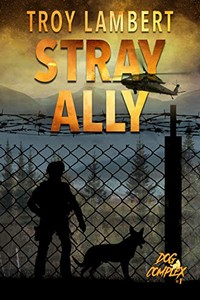
Stray Ally by Troy Lambert: Hang On To Your Hat During This Breakneck Thriller

This is part of my Literary Locals series. Be sure to check out this Q&A with the author about his thoughts on writing in Idaho.


Stray AllyStray Ally

by Troy Lambert

DETAILS:
Series: Dog Complex, #2
Publisher: Unbound Media
Publication Date: September 6, 2019
Format: Paperback
Length: 206 pg.
Read Date: July 7, 2023
Buy from Bookshop.org Support Indie Bookstores

What’s Stray Ally About?

Ex-Special Ops soldier, Todd Clarke, is on his way to an interview for a job he doesn’t need, but can’t turn down–to act as part of the security for the new governor of Idaho at a special event–when a tragedy on the freeway stops him. Next thing he knows, he’s being framed for murder.

Clarke escapes from custody and sets out to hide from the authorities while his wife’s high-priced attorneys do their job. But then a Colonel that Clarke had investigated for Aryan activities (and other malodorous actions) sets U.S. troops out to hunt him down and the gloves have to come off.

Accompanied only by a dog that befriended Clarke after the death of his former owner, he evades capture for a while. Then he realizes what’s going on and has to risk capture–and probably his life–to stop that Colonel and his allies.

The Unanswered Question

At some point, it starts to click with the reader that not only is Sparky a fantastically behaved dog–better than training alone could explain, but it’s fiction–roll with it. But every other dog behaves strangely, too. I’m not going to say more than that.

We are never given an explanation for that. I have a handful of theories–all half-baked and probably wrong. But Lambert really doesn’t even hint at an explanation.

And it works. All sorts of characters–white hats as well as black hats–recognize the behavior, and some even wonder about it. But they all just accept it as something that’s happening. This really helps the reader to roll with it, too. But more than that–the pacing of this book doesn’t really encourage reflection or consideration of plausibility. You’re just trying to hang on to the ride and not get thrown out at the next turn.

In most circumstances, I’d get annoyed and ask for a little more to be given to the reader. But Lambert’s adventure is one of the exceptions. I’d like to be told that one of my hare-brained notions was right–or to be definitively told I was wrong. But honestly? I don’t care. Dog Complex #2 doesn’t need to bother with explaining things–just give me another story like this.

The Most Unbelievable Thing

I’m very tempted to classify this book as a Fantasy novel more than anything else. Sure, there’s the very strange, nigh-unbelievable, and unexplained dog behavior (see above)–but you know what? It’s easy to suspend disbelief and roll with that.

But an African American being elected governor of Idaho in a contemporary story? Come on, Lambert…pull the other one. Add to that a large, multi-ethnic, progressive Christian group gathering to celebrate that election? In Boise? Next to that, it’s time to start talking about the gritty realism of a Terry Pratchett or Douglas Adams book.

Set this in 2070, and I could go with it. Although that’d still be hard to swallow. Set in a 2020-ish world? Forget it. I’m not saying that I’m against that kind of thing happening–I just can’t see it. Sorry.

So, what did I think about Stray Ally?

This was a fast and furious action thrill-ride. A protagonist with a murky past that you know is doing the morally right thing (even if you wonder about some of his methods) up against an obviously evil plan with the odds stacked against him by men on both sides of the law.

You can’t help but root for this guy and love every second of vigilante action.

Large parts of this book felt like a contemporary First Blood–the ex-special ops soldier taking on all-comers and finding a way to win. But then it shifts into just pure action-hero kind of area and is just fun.

Grab a bucket of popcorn and buckle in for a wild ride with Stray Ally.


3 Stars

This post contains an affiliate link. If you purchase from it, I will get a small commission at no additional cost to you. As always, the opinions expressed are my own.
Literary Locals logo

A Few Quick Questions with…Troy Lambert

A couple of hours ago, I posted about Lambert’s novel, Harvested, the first of a series I know I’m coming back to soon. Now, I have the chance to get some more information about him and the book in this Q&A. He’ll be back in a couple of weeks for a Q&A about writing in Idaho as part of the Literary Locals series—be sure you come back for that.


All authors have more ideas running around in their head than they can possibly develop—what was it about this idea that made you commit to writing it? Also, what was the starting point for this book? Was it the story about the missing dogs or the ongoing story (I’m being deliberately vague here) that required you to invent Max, or did you have Max and need to figure out some stories to put him in? Or is that kind of answer impossible—and you got the whole ball of wax at once?
So the idea of Max as a character came first, although the idea for the plot came shortly after. The idea of missing dogs appealed to me in a lot of ways, and I saw the twist in my head after only a little research, and it kinda all came together after that.

The same was true for Teaching Moments, although in that case the idea for the killer came to me first, and then I worked it into the Max series. The next book in that series is much the same, although I think the main villain in that case is even worse. That one will be out late this year or early next.

Multiple authors have talked about the unbreakable rule even in Crime Fiction is “you don’t kill the dog (or other pets).” But you not only kill some, but threaten several more. Did you think much about the danger inherent in this plot? What compelled you to go forward with it? Or was that danger what drew you into it?
So that is often a “rule” but I think it is all in how you handle it. The dogs for me are just like people in this book: they are valuable characters, and they are even heroic at times (no spoilers, of course)

And the story of dogs continues in Teaching Moments as one of them becomes Max’s partner throughout. Of course, a lot of my other work features dogs as well, and that is because I love them, and can’t help myself when it comes to casting them in books.

Supporting characters really make or break a book for me more than the protagonist does. Dr. Gamble is a great example of that—she was such a fun character. When she was introduced, I really didn’t expect much of her, she seemed like a typical “generic subject matter expert to help the PI get to the next step” that we’re all used to seeing, but you really fleshed her out and made her a big part of the story. Was that the idea all along, or did you just enjoy her so much that you changed her role?
So I liked her from the start. She was a favorite character who came to me pretty fleshed out. I think supporting characters are key to a good story: they produce conflict, tension, but also from time to time just some pleasant relief to that tension. I think she serves all those roles in this story, and she may play additional roles in the series going forward, even becoming more of a key character in Book 5, but that is down the road a bit.

Who are some of your major influences? (whether or not you think those influences can be seen in your work—you know they’re there)
There are several. I would say that Stephen King and Dean Koontz top the list, at least for writing style and in some cases subject matter. They’re also both inspiring on a personal level. But there are certainly others: Lee Child, Vincent Zandri (a good friend now) and others.

Let’s play “Online Bookstore Algorithm” (a game I made up for these Q&As). What are 3-5 books whose readers may like Harvested?
Ha! A fun game. L.T. Ryan readers, stories like Unmasked and that series, Brad Lee, A Team of One, anything in the Chase Baker series by Vincent Zandri, and the Finding Reacher series by Diane Capri.

Your Amazon Author Page lists a lot of titles—you’ve been a busy man for the last decade or so. What is it about storytelling/writing that keeps it fresh for you? Is this a compulsion to keep going, or is it more pleasure?
That’s a two part answer: it is a compulsion, yes, in some ways. But it is also pleasure. I love telling stories, and plan to do it until I just can’t any more. I hope that day is a long way in the future. I don’t ever plan to retire, and there are so many more titles coming out even just this year. I can’t wait to see what I come up with next.

In somewhat of a related question, what’s next for Troy Lambert, author? Also, are there more Max Boucher books to come, or is it a duology? (I largely ask for myself, so I’m in the right frame of mind before I start the next)
So there is another book in the Capital City Murders, and one that signals a major change in the series story, coming in April. Right now there are at least three more Max books planned along with a novella that will be out this year as well, and a new series coming sometime either later this year or the first part of next.

There will be a couple of anthologies and story collections coming, and even a book of poetry at some point. So stay tuned!

Thanks for your time—and thanks for Max Boucher, he’s the kind of PI that the Northwest needs more of (at least in fiction).
You bet. Thanks for having me.


Literary Locals logo

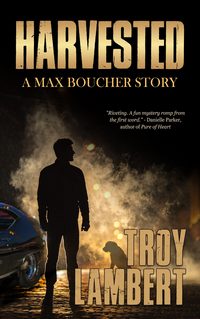
Harvested by Troy Lambert: A Man Bites Dog P.I. Novel

This is part of my Literary Locals series. Be sure to come back this afternoon for a Q&A with the author about this book—and in a couple of weeks to see his thoughts on writing in Idaho.


HarvestedHarvested

by Troy Lambert

DETAILS:
Series: Max Boucher Mysteries, #1
Publisher: Unbound Media
Publication Date: March 15, 2019
Format: Paperback
Length: 247 pg.
Read Date: January 2-3, 2023
Support Independent Bookstores - Visit IndieBound.org

What’s Harvested About?

Max Boucher is a P.I. in Seattle. Like a good (fictional) P.I., he spends a lot of time drinking. He spends most of the rest of his time working just to make ends meet. He really wants to devote his time to looking for whoever murdered his daughter, killed his dog, and either kidnapped or murdered his wife. He—and his former colleagues in the Seattle PD—have followed every lead they have, but he’d spend all of his life going back over the evidence time and time again if he could.

Now, he’s taken on a case—he takes on every case that comes his way—that takes him back to his old neighborhood. The dog park that he and his family used to go to, in fact. There’s a rash of dognappings in the area, and owners have come together to hire him to find their canine friends. The police can/will only do so much, but Max can devote more time to it.

It doesn’t take long for things to get hairy—there’s a connection to a Korean mob boss. Some of the dogs start reappearing—with strange injuries. And it turns out that this has been happening all over Seattle for some time. Max isn’t sure what he’s gotten himself into, but it’s about a lot more than missing poodles.

Supporting Characters

Obviously, you’ve got to have a compelling P.I. in a book like this—and a good hook for the story. That’s what the reader comes for, and the writer had better deliver. A plausible villain, is important, too—but the others can overcome an iffy one. But what will really make a P.I. novel work is the supporting characters—the cop buddies/frenemies/rival (depending on the series), the client, the witnesses, and so on.

Lambert nails this throughout the book. I like Boucher and want to see more of him, but I enjoyed some of the side characters more than him. There’s a friendly and helpful veterinarian who could probably carry a cozy mystery series on her own—and I would buy six of those tomorrow if they existed.

There’s a guy who details Max’s car (he’s got an older car that’s his pride and joy)—which is something definitely called upon when your case involves carrying injured dogs (and injured detectives) around. If Eddie shows up for a scene or two in every book in the series, you can color me pleased. I’m not even sure why—I also don’t care much, I just liked him.

I’m not going to say I enjoyed the Korean mob boss* in the same way I did those two. But the scenes with him are some of the most intense in the novel.

* Ahem. Suspected boss, of a mob that may not even exist.

I could go on for a few more—I don’t remember exactly my point when I started this section, other than to rave about Dr. Gamble and Eddie. But I guess that I just want to stress that Lambert gives us more than a solid P.I. He knows how to give the reader characters to invest in and care about—even if only for a page or two.

Beware of (Hurt) Dogs

* (yeah, that’s a lame section title—but it’s better than “It’s a Dog Eat Dog Book” with the implied cannibalism)

I know I have readers who will be antsy about this book—we’re talking about kidnapped and injured dogs here (there’s a reason I have a recurring post about books about dogs who live). And for those who cannot take violence toward animals, this is a book to avoid.

I will say, however, almost all of the violence happens “off-screen”—you see very little of it on the page. And what you see on the page isn’t that bad (up until the climactic bit at the end, but the violence there is spread amongst characters with two and four legs (and the two-legged ones get the worst of it).

The point of this book is Boucher investigating the kidnappings, stopping them by getting to the bottom of things and rescuing as many dogs as he can. So if you’re on the fence, you can hold on to that.

So, what did I think about Harvested?

This was a good read. Lambert delivered in every way I wanted a book like this to—solid plot, unique case, great character work, and a pace that keeps you turning the pages long past the time you should put the book down for sleep or chores. I’d recommend this just for the (relative) novelty of a Seattle P.I.—mid-sized US cities need to be the setting of more P.I. novels. The book delivers on everything it promises and gives you an open (and welcome) invitation to come back for another. I know I’m accepting that invitation.

Oh—minor spoiler—by the end, one of the kidnapped dogs can’t be matched with an owner and ends up staying with Max. So you know I have to come back, just for more of him.

I’d have come back anyway—I want to see how Max moves on from this point in general. I’m quite curious about the clues he discovered regarding his wife’s case, too. I’m assuming (and really don’t want to know the truth until I’m into the next book) that book 2 will advance the investigation into his wife’s kidnapping while Max and his new partner dive into another stand-alone case—and we’ll continue that way for a while. That sounds like a great time to me. Grab this one—the second book is out now, you might as well grab it, too. You’ll have fun.


3.5 Stars

This post contains an affiliate link. If you purchase from it, I will get a small commission at no additional cost to you. As always, the opinions expressed are my own.
Literary Locals logo

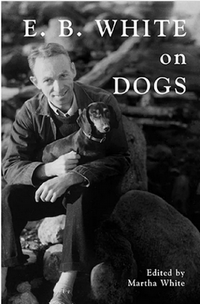
E.B. White on Dogs edited by Martha White: A Great Collection of Short Pieces

E.B. White on DogsE. B. White on Dogs

edited by Martha White

DETAILS:
Publisher: Tilbury House Publishers
Publication Date: March 7, 2016
Format: Paperback
Length: 177 pg.
Read Date: December 28-31, 2022
Support Independent Bookstores - Visit IndieBound.org

Next year, when Dog Show time comes round, we would like to see a wholly new brand of showmanship introduced into the Garden… A dog should be made to work for his ribbon, each breed in his own wise. Pointers should have to point, Shepherds should be required to herd a band of sheep from the east goal to the west goal. Poodles should be required to jump through a paper hoop, not just follow Mrs. Sherman Hoyt around the ring. English bull terriers should be made to count up to ten, retrievers retrieve rubber ducks, Scotties chew up old shoes. Greyhounds should be put over the high hurdles. St. Bernards carry brandy to anyone in the audience who feels weak, preferably us. Beagles would jolly well have to bealge, or shut up. How about it, dogs—are you dogs or mice?

What’s E. B. White on Dogs About?

This is a collection of essays, articles, letters, and other brief notes written by E.B. White about dogs. In other words, it’s what the title says. Most of the entries are very short—1-2 pages, some are a paragraph long—but (especially toward the end), we get some longer letters and essays.

Most are about White’s dogs—particularly Fred, a beloved dachshund. But there are pieces about dog shows and other dogs, too.

A Few Highlights

This is going to be tough, there are just too many options. Something about Dog Shows brought out the best and/or snarkiest in White, and are possibly my favorite moments.

There’s a point where he describes how a dachshund climbs up and down stairs and the optimum height for said stairs. I don’t know about the height, but he described perfectly how our pug uses the stairs and it’s something I’m going to borrow. He had, over the course of his life, multiple dachshunds and his affection for the breed is evident. But you can tell that Fred had a big impact on White—both during and after his death. The piece White wrote after his death is possibly the highlight of the book.

There’s a long (for this book, anyway) piece about taking a dog on its first coon hunting trip—it’s just wonderful. It’s tonally different from most of the book, which probably helps it stand out—but it didn’t need much help.

Some Non-Dog Moments

Not everything in this book is focused on dogs but involves them tangentially. The best of these pieces are about contemporary politics—I knew some of the names, but not all of them, but that didn’t change things really.

There’s an essay from The New Yorker that I’d probably have paid half the purchase price of the book for—it’s called “Khrushchev and I (A Study in Similarities).” Some newspaper published a feature on the Soviet premier, and from what I can tell, it was the puffiest puff piece around. White takes some parts of that feature to show how much he and Khrushchev are alike—they’re devoted to their families, like walking in the woods, and so on. The last paragraph points out some important differences, too—size, amount of hair left on their heads, the fact that White has never threatened to bury America…the usual differences. And just as he has you chuckling in a different way than he has for a few pages, the last line or two are somber and sober. Fantastic stuff.

So, what did I think about E. B. White on Dogs?

Overall, this was a great collection. It does feel like Martha White hit “Ctrl-F” on an electronic version of everything her grandfather had written and pasted the entire contents of that search into this book. Some of the letters contain one sentence about a dog—not always that cleverly written or interesting—and I had to wonder why she bothered, outside of a drive for thoroughness.

I don’t recommend reading too much of this at once—but maybe that’s just me, my attention waned after too many entries. But if you’re familiar with White’s non-children’s writing, or have the desire to be, and enjoy reading about dogs (and a couple of cats, and a squirrel or two)—you’ll enjoy this.

Speaking of his non-children’s writing—in her note to the reader describing the impetus for the book, and their approach to editing, keeping the pieces “largely as they appeared originally, not attempting to mesh the inconsistencies.” (including some phrasing I don’t think you’d get away with today). Martha White says,

The letters…are more casual in style and my Tillbury House editor was surprised to find that the co-author of The Elements of Style did not always get his that and which correct, especially in the early years. Our hands-off policy nearly killed her.

I feel for that editor and can’t help but chuckle about E.B. White’s divergence from his own book.

All in all, this book delivers what the title promises, and if that’s up your alley, you’ll enjoy it. I sure did.


4 Stars
This post contains an affiliate link. If you purchase from it, I will get a small commission at no additional cost to you. As always, the opinions expressed are my own.

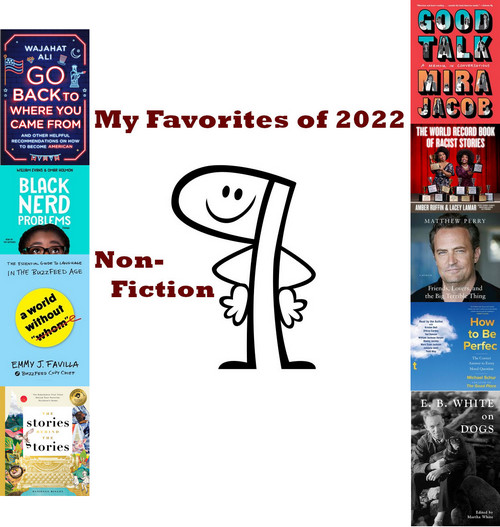
My Favorite Non-Fiction Books of 2022

Favorite Non-Fiction 2022
My 2022 Wrap up continues and now we’re on to the Non-Fiction list. While I liked a number of works that didn’t make this list, I felt strange calling them a “favorite.” So, we have 9 instead of the nigh-obligatory 10 for the second year in a row. These are the ones that stuck with me through the year; the ones I cited in conversation; that I thought about when reading something else or watching something on TV. Yeah, there’s some overlap between this list and the audiobook list from yesterday—lately, most Non-Fiction books I work through are in audiobook format. So it makes sense, even if it makes this post seem like an echo.

As always, I only put books that I’ve read for the first time on this list. I don’t typically return to NF books (outside of looking up things for one or three points), but occasionally I do—for example, The Pleasures of Reading in an Age of Distraction by Alan Jacobs would get a permanent spot on this list, were it not for this rule.

(in alphabetical order by author)

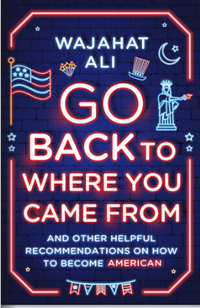
Go Back to Where You Came FromGo Back to Where You Came From: And Other Helpful Recommendations on How to Become American

by Wajahat Ali

My original post
I’m just going to remix some of what I said originally, this book was a great mix of memoir, social commentary, and satire—with a little sprinkling of a more general humor thrown in. The way he shifted between the genres was fairly seamless and quite effective—his own story (and that of his parents) were good illustrations of the societal ills he wanted to point to. Ali’s story is the kind that Americans love to tell and hear about success—even if his telling points to many of the flaws in our society. Through grit, determination, perseverance, and endurance, Ali pushes through all sorts of cultural, societal, legal, medical, and circumstantial challenges to arrive where he is. Because he believes in what we can be as a people, based on our (incredibly inconsistently applied and demonstrated) ideals and aspirations. It’s the kind of story we need to see, hear, and read more of.

4 Stars

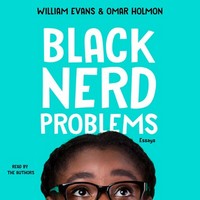
Black Nerd ProblemsBlack Nerd Problems:
Essays

by William Evans & Omar Holmon

My original post
There are several strengths to this book—the first is the wide scope of the genres and ages of the pop culture they nerd out about. The second is the variety of the ways they express their appreciation (or lack thereof) for these cultural artifacts. Some of these essays are just silly, some are humorous, some touching, some sober—no two are alike in most ways. I wish I could write like this.

4 Stars

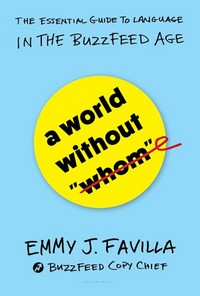
A World Without A World Without “Whom”: The Essential Guide to Language in the BuzzFeed Age

by Emmy J. Favilla

My original post
Sure, I disagreed with some of her takes—I’m less enamored with the idea of language as a ruleless entity than she is. But I found it impossible not to enjoy this—even when I thought Favilla was wrong about some particular note of grammar, I appreciated the way she thought about the idea and presented it. Mostly, I enjoyed reading about the process involved in creating and maintaining a style sheet for an entity as big and particular as Buzzfeed. The lists are the kind of thing I could read on a daily basis. As I wrote, “If you’re the kind of person who gets worked up about getting your phrasing juuuuuust right or are bothered when someone doesn’t. If you think reading tributes to commas and em dashes is a good time. Or if you’re curious about why someone would want to eliminate whom or is fine with letting the English subjunctive mood die…this is the book for you.”

(and, yes, I’m still planning on the tattoo inspired by the book)

3.5 Stars

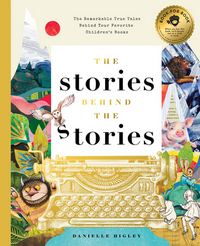
The Stories Behind the StoriesThe Stories Behind the Stories: The Remarkable True Tales Behind Your Favorite Kid’s Books

by Danielle Higley, David Miles (Illustrator)

My original post
I don’t know if I read a better-designed book last year (or the year before). It’s a treat for the eyes. But more importantly, the content is as good—if not better. I can see the book appealing to (and being understood) younger readers curious about some of the books they’ve read or seen at a library. It also was entertaining and edifying for a, um, more seasoned reader familiar with almost all of the books. I was surprised by some of what I read, learned something about all but one of the 20+ books covered and walked away with a hankering to go back and read some of these.

4 Stars

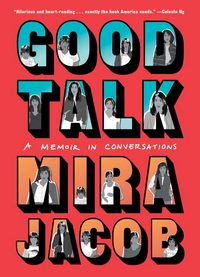
Good TalkGood Talk: A Memoir in Conversations

by Mira Jacob

My original post
Okay, this was pretty well designed, too. This graphic memoir really hit me on several levels. The art is simple, but very effective. The story of Jacob’s life is one that needs to be told—for the sake of those who can relate to remember they’re not alone, and for the sake of those who can’t relate at all to help build some empathy. The framing device of trying to explain race in the U.S. to a biracial child trying to understand the world around him is much-needed, and probably more so all the time. This was more powerful than I expected (and had some great moments of lightness, too!)

4 Stars

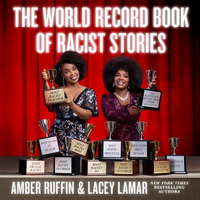
The World Record Book of Racist StoriesThe World Record Book
of Racist Stories

by Amber Ruffin & Lacey Lamar

My original post
Back at race again…this time looking at subtle and not-so-subtle, clueless and intentional, probably well-meaning and just mean, ways that one family has to deal with racism on a day-to-day basis. There’s enough silliness to make this book endurable because there are some anecdotes here that are stunningly awful. A strong follow-up to last year’s book.

4 Stars

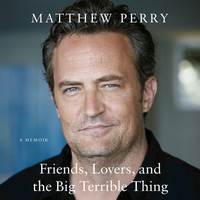
Friends, Lovers, and the Big Terrible ThingFriends, Lovers, and the Big Terrible Thing

by Matthew Perry

I haven’t found time to write about this book yet, so I’m having trouble boiling things down into a concise paragraph. I’ve been a huge fan of Perry’s since episode 2 of Friends (and was a decently-sized fan based on the pilot), so I was drawn to this right away, but really wanted a break from celebrity memoirs and put off getting it until I read that the book focused so much on the “Big Terrible Thing.” There’s some stuff about his acting career—highs and lows, the usual behind-the-scenes, stuff. But this book is primarily about his mental health problems, his addictions, and the many, many ways he’s hurting himself and those around him. I wouldn’t call this a “warts and all” kind of portrayal of Perry, more of a “warts (and some other things)” look at him. There’s some hope and optimism, too, but it’s tempered.

4 Stars

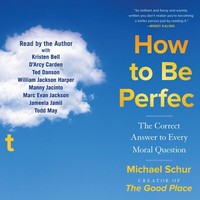
How to Be PerfectHow to Be Perfect:
The Correct Answer to
Every Moral Question

by Michael Schur (Writer, Narrator)
with: Michael Schur, Kristen Bell, D’Arcy Carden, Ted Danson, William Jackson Harper, Manny Jacinto, Marc Evan Jackson, Jameela Jamil, and Todd May

My original post
This is a solid introduction to ethics and some of the major schools of thought behind contemporary approaches (with historical precedents). The kind of thing you might get in a 100-level course in college. But told in a very approachable way that will no doubt bring a smile to the reader’s/listener’s face occasionally. It’s not perfect, but it’s good. It’s thoughtful, but accessible. And it can—should?—act as a launching pad for further reading and study for those who want to dig in.

4 Stars

E.B. White on DogsE. B. White on Dogs

edited by Martha White

This is another one I haven’t had time to write about yet. I went in assuming this would be a good read—and got that. This is a collection of essays, shorter pieces, and letters written by White about (or mentioning) dogs. There are some solid gems here—honest laughs, amusing thoughts, and devotion to these animals that humans are so strongly drawn to. Readers of this blog know that I love good writing about dogs, and that’s exactly what we get here. There are a handful of things I’m not sure were worthy of including in this book other than for the sake of completeness, but I’m not going to complain.

4 Stars

Bunnicula: The Graphic Novel by James Howe, Andrew Donkin, Stephen Gilpin: The Children’s Classic Brought to Life in a New Format

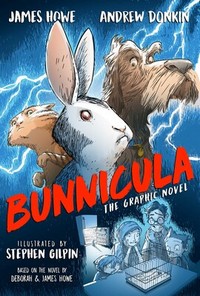
Bunnicula: The Graphic NovelBunnicula: The Graphic Novel

by James Howe, Andrew Donkin, Stephen Gilpin (Illustrator)

DETAILS:
Publisher: Atheneum Books for Young Readers
Publication Date: August 29, 2022
Format: Paperback
Length: 128 pg.
Read Date: October 22, 2022
Support Independent Bookstores - Visit IndieBound.org

What’s Bunnicula: The Graphic Novel About?

This is easy—it’s a graphic novel adaptation of the modern classic, Bunnicula: A Rabbit-Tale of Mystery by James and Deborah Howe.

For those who missed this when they were kids, briefly, it’s the story about a dog (Harold) and a cat (Chester) reacting to a rabbit that their family brings home after finding him in a movie theater. The rabbit has some distinctive patterns on his fur that remind the kids (and Chester) of a classic Dracula-type vampire, so they name him Bunnicula.

Chester’s a literary type, with a taste for classic horror. Between his look, Bunnicula’s nocturnal habits, and the fact that every vegetable in the house starts being drained of its juices, Chester becomes convinced that the new pet is a vampire and tries his best to warn the family and destroy the intruder before he harms the family. Harold’s around as the voice of reason and tries to mitigate Chester’s shenanigans before his new little buddy gets hurt. Hilarity and shenanigans ensue.

Stephen Gilpin’s Work and the Look of the Book Overall

When I saw this on the bookstore shelf, I was intrigued because the original novel was such a favorite of mine—and then my kids, too. I had no real intentions of buying it because I could always just grab the novel again to revisit, but I picked it up to give it a quick glance and the art blew me away, and I had to buy it. Chester looked good, I clicked immediately with the character design for the Monroes (particularly the boys), Bunnicula was spot-on…

But the clincher for me was Harold. He might as well have been a werewolf drinking a piña colada at Trader Vic’s, because his hair (and everything else) was perfect. Sure, now it’s expected that the dog will be my favorite character in a book—but that wasn’t my default when I first encountered the book. But it took little time for him to be my favorite character in the series*. So when Gilpin knocked that character out of the park, he won my affection. Sure, it’s based on the illustrations from the original book, but he owned it and brought the look to life.

* It’s very likely that Harold laid the groundwork for my appreciation of canine protagonists, like Chet and Oberon.

Sometimes, I wonder what the point is behind doing a graphic novel adaptation of a written work—does it really add anything? This one did—there are some nice updates (Harold uses a computer, etc.) and some visual jokes and flourishes that could only be made in this format. Gilpin clearly made the most out of what Howe and Donkin gave him.

So, what did I think about Bunnicula: The Graphic Novel?

It’d be hard (but not impossible) to make something faithful to the letter (as much as space allows) and the spirit of the novel that didn’t make me happy. But this one wowed me—it brought me back to the day I first discovered this great band of people and critters decades ago, recapturing and repackaging the magic.

I’m not sure that it’ll have that impact on everyone—I don’t know if an 8-10 year-old picking it up in 2022 is going to get hooked on the series, for example. I can’t imagine how one doesn’t, but I don’t know if they will.

I wasn’t sure how to rate this, how much of my reaction to it was based on memory and nostalgia and how much was this new work. But I know how I felt while reading it and I saw how my (now adult) children’s eyes lit up when I showed them this version of the book, and I had to go with the full five stars.

Adult fans who remember the book—grab this, you’ll have a blast. It’ll probably work its charms on younger readers, too—and hopefully will work to bring them to the original series.


5 Stars

This post contains an affiliate link. If you purchase from it, I will get a small commission at no additional cost to you. As always, the opinions expressed are my own.

These Dog Days Aren’t Over

(Updated and Revised 8/26/22)

It’s National Dog Day, the annual celebration of “all dogs, mixed breed and pure. Our mission is to help galvanize the public to recognize the number of dogs that need to be rescued each year and acknowledges family dogs and dogs that work selflessly each day to save lives, keep us safe and bring comfort.” So it seemed like a good day to post another version of this.

These Dog Days Aren't OverThis was a hard post to come up with a name for‡, essentially this post came from a comment not too long ago about being hesitant to read books about animals if the reader doesn’t know if they survive the book. I get that, I absolutely do. I still bear the scars of Where the Red Fern Grows and Marley and Me (sure, that wasn’t that long ago, but the wound still stings). So, for readers like my correspondent, here are some perfectly safe books prominently featuring dogs!

I plan on updating this when I can remember to, so by all means, chime in with comments about Dogs I’ve forgotten about/haven’t yet!

Non-Fiction

bullet The Particulars of Peter by Kelly Conaboy—this is a collection of humorous essays giving Conaboy the opportunity to rave about her dog, Peter. In her eyes, Peter is a perfect dog, and as you read this, you’ll be tempted to agree. (my post about it)
bullet Olive, Mabel & Me by Andrew Cotter—Cotter’s charming book describes his life with the two dogs that rocketed to international stardom (and brought him along). (my post about it)
bullet My Life as a Dog by L. A. Davenport—Davenport’s short little book about the relationship between the author and his dog, Kevin, a black and tan, pure-bred dachshund. It focuses on what the two of them did over two days and then a weekend selected from the years they spent together. (my post about it)
bullet Dogtology: Live. Bark. Believe. by Jeff Lazarus—Humans are so obsessed with their dogs, we’ve devoted so much time, energy, and work into them that it’s become a religion, with humans essentially worshipping their pets. This book is a look at that devotion and the rituals and beliefs that accompany it. It’s technically humor, but a lot of it seems pretty on-target. (my post about it)
bullet What the Dog Knows: The Science and Wonder of Working Dogs by Cat Warren—Warren basically covers three topics: there’s the science and history of using working dogs (of all sorts of breeds, not to mention pigs(!), birds, and even cats) to find cadavers, drugs, bombs, etc.; there’s the memoir of her involvement with cadaver dogs via her German Shepherd, Solo; and anecdotes of other cadaver dogs and trainers that she’s encountered/learned from/watched in action. (my post about it)
bullet What the Dog Knows Young Readers Edition by Cat Warren, Patricia J. Wynne—The above book adjusted for younger readers, with some great illustrations. It’s not dumbed-down, just adjusted. (my post about it)

Fiction

bullet Mace Reid K-9 Mystery series by Jeffrey B. Burton—A Dog Trainer/Cadaver Dog Handler and his dogs get involved in serial killer cases. Warning: Like many heroes in action novels, most of Mace’s dogs get beat up/injured. Some pretty badly. (my posts about them)
bullet Suspect by Robert Crais—One of my all-favorite books, a cop with PTSD gets assigned to the K-9 Unit and works with a dog fresh from Afghanistan combat. (my post about it) The pair also plays a major role in The Promise.
bullet Pug Actually by Matt Dunn—Doug, a loyal pug, plays cupid for his owner. This is a cute rom-com with a charming canine narrator. (my post about it)
bullet Stepdog by Nicole Galland—A love story where the major impediment to happily ever after is her dog (a gift from her ex). (my post about it)
bullet Noodle and the No Bones Day by Jonathan Graziano, Dan Tavis (Illustrator)—This picture book relates the origin of the Internet Craze and the wonderful, photogenic pug behind it. (my post about it)
bullet Oberon’s Meaty Mysteries by Kevin Hearne (Audiobooks narrated by Luke Daniels)—Oberon, the scene-stealing Irish Wolfhound from The Iron Druid Chronicles narrates this series of novellas (my posts about them).
bullet Neah Bay series by Owen Laukkanen—Lucy is a dog who is trained by prisoner Mason Burke, who has to track her down when he gets out. She’s a service dog for Marine Vet Jess Winslow. Lucy connects the two humans in her life and helps to keep them safe when a corrupt deputy comes after Jess. (my post about them)
bullet I Thought You Were Dead by Pete Nelson—I’m not sure how to sum this one up in a sentence. It’s a pretty typical novel about a troubled writer with a romantic life and family in shambles. But his dog is the thing that makes all the difference. (my post about it)
bullet Chet and Bernie books by Spencer Quinn—Bernie Little is a PI in Phoenix. Chet’s his four-legged partner and the series narrator. It’s too fun to miss. (my posts about them)
bullet The Right Side by Spencer Quinn—”a deeply damaged female soldier home from the war in Afghanistan becomes obsessed with finding a missing girl, gains an unlikely ally in a stray dog, and encounters new perils beyond the combat zone.” (my post about it)
bullet Woof by Spencer Quinn—The beginning of an MG series about a with a penchant for trouble and her dog. (my post about it)
bullet Andy Carpenter books by David Rosenfelt—Andy Carpenter is New Jersey’s best defense lawyer and a devoted dog owner. He helps run a rescue shelter, too—and almost every client he takes as some sort of connection with a dog. These books aren’t dog-centric like the others on this list, but they’re dog-heavy. (my posts about them)
bullet The K-Team books by David Rosenfelt—a spin-off from the Andy Carpenter series. This features a PI team made up of Andy’s wife/investigator, Laurie; the near super-heroic Marcus; and Corey Douglas, a freshly-retired K-9 officer. His canine partner, Simon Garfunkel, comes along, too. Simon Garfunkel doesn’t play a giant role in the books, but he gets at least one good action scene per book. (my posts about them)
bullet Voyage of the Dogs by Greg van Eekhout—SF for all ages about a team of dogs on a long-distance space flight. (my post about it)

Supportive Roles

These dogs aren’t as significant a presence in their books as the prior group, but they’re important enough to mention.
bullet Mouse from The Dresden Files by Jim Butcher. (my posts about them)
bullet The Midnight Plan of the Repo Man by W. Bruce Cameron and the sequel Repo Madness by W. Bruce Cameron(my posts about them)
bullet Edgar from the Washington Poe books by M. W. Craven. (my posts about them)
bullet Rutherford from The TV Detective series by Simon Hall (my posts about them)
bullet Oberon from the Iron Druid Chronicles by Kevin Hearne. (my post about them)
bullet Ruffin from the I. Q. series by Joe Ide. (my posts about them)
bullet Dog from the Walt Longmire books by Craig Johnson (my posts about them)
bullet Purvis (and Beau) from The Good Kill by John McMahon (my post about it)
bullet Trogdor from The Golden Arrow Mysteries by Meghan Scott Molin (my post about them)
bullet Mingus from The Drifter by Nicholas Petrie (my post about it)
bullet Herbert and Daisy from Adult Assembly Required by Abbi Waxman (my post about it)

Books with paws on both sides of the line

Some books that belong on this list, but might be a bit too close to not fitting on it for some readers
bullet Lessons From Lucy by Dave Barry—there’s a strong “my beloved dog is old and will die soon-vibe throughout this (it’s the whole point), so some may want to avoid it. But the focus is on what Barry is learning from his aging but still full-of-life dog. (my post about it)
bullet Dead is … series by Jo Perry—the canine protagonist in these mystery novels is a ghost, so there’s a dog death involved. But we meet her as a ghost, so she won’t die (again) in the series. (my posts about them)
bullet Dogtripping: 25 Rescues, 11 Volunteers, and 3 RVs on Our Canine Cross-Country Adventure by David Rosenfelt—For various and sundry reasons, the Rosenfelts decide to move their home and dog shelter from California to Maine. As anyone who’s had to get a dog (or a toddler) into their vehicle for a drive across town can imagine—getting 25 dogs moved across the country is a logistical nightmare. In Rosenfelt’s capable hands, if “tragedy plus time equals comedy,” “nightmarish logistics plus time” does, too. The shelter specializes in senior dogs, so not every dog mentioned or featured lives, but that’s not the focus of the book. (my post about it)
bullet Lessons from Tara by David Rosenfelt—a sort-of-sequel to the above. Inspired by the death of their dog, Tara, the Rosenfelt’s now operate a no-kill shelter for senior dogs. This is the story about the origins and day-to-day of that life. There’s discussion of Tara’s death, and he has to cover the end of days for dogs, but it’s not the focus of the book. One some will want to avoid, but you probably shouldn’t. (my post about it)


‡ I brainstormed this a bit with my family, and wanted to share some of those titles that didn’t make the cut, just because I enjoyed their creativity:
bullet These Dogs Didn’t Go To Heaven/Not All Dogs Go to Heaven implies these dogs aren’t wonderful creatures, and that’s a solid loser
bullet No Kleenex Required too vague, and not necessarily true, they’re just not required because of a death
bullet The Best Bois
bullet Books Where the Author isn’t A Heartless Bastard (Looking at You, Marley and Me) too long, and boy howdy, does it seem my son has bigger issues with the book than I did
bullet Books that Even PETA Would Be Okay With
bullet Books for the Vegan in You suggests the dog books I don’t mention are in favor of eating them…
bullet Paw Patrol I’m almost confident my daughter’s boyfriend suggested as a joke, for his sake I’m assuming it was
bullet Pawfect Dog Stories I refuse to resort to that kind of joke

(Images by S K from Pixabay and josmo from Pixabay

Page 3 of 11

Powered by WordPress & Theme by Anders Norén