Category: General Fiction/Literature Page 1 of 52

The Lost Daughter of Sparta by Felicia Day, Rowan MacColl: The Unknown Sister

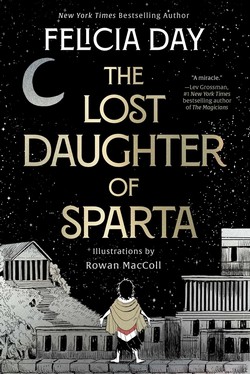
Cover of The Lost Daughter of Sparta by Felicia DayThe Lost Daughter of Sparta

by Felicia Day, illustrated by Rowan MacColl

DETAILS:
Publisher: Gallery Books
Publication Date: March 17, 2026
Format: Hardcover
Length: 193 pg.
Read Date: March 21, 2026
Buy from Bookshop.org Support Indie Bookstores

The Origin of the Book

Day explains this better in the book, but I bring this up because it’s kind of a key to thinking about this book. Day came across a reference to a curse that was imposed on Helen of Troy and her sisters—which led to her rethinking Helen. As she looks into that some more, she reads about Helen’s sister Philonoe being made immortal by Artemis. And that’s it. No details provided.

Which gets her imagination percolating and us getting this graphic novel.

What’s The Lost Daughter of Sparta About?

Whereas big sister Helen was a legendary beauty (literally), Philonoe was born with a birthmark denoting her as ugly—think Gorbachev’s scalp birthmark but covering about half her face. She’s sent to live with goatherds for most of her life, but is brought back by her parents following the Trojan War to get married.

Her future husband is a prince of Gla. If he has a redeeming quality to him, Day didn’t do a great job of making sure we saw it. Her mother reveals to her the nature of the curse that Aphrodite had put upon her and her sisters.

Philonoe goes to Aphrodite’s to ask for help with this curse and is sent on a quest to retrieve three items. Due to a previous sacrifice to Artemis, that goddess is paying attention to her, too. Artemis plays Ghosts of Sister Present with her, letting her see how things are going for them in a way to help her learn about the world.

What did I think about the art?

I’m of two minds when it comes to the art. It’s not the cleanest, most attractive, or most consistent art you’ve come across. But there’s a charm to it—the more I read, the more I enjoyed it.

I know MacColl is capable of cleaner work—I’ve checked out their website and have seen it. So what I’m trying to talk about has to be intentional. There’s part of me that sees some similarities between the art and figures on Grecian Urns I’ve seen in books.

So, what did I think about The Lost Daughter of Sparta?

There’s just nothing subtle about the storytelling, or the dispensing of the moral(s) of the story. It might have been a bit more effective if it were.

Still, it’s hard to fault the moral(s) she’s dispensing—particularly if her daughter is the primary target audience.

This isn’t a feminist re-imagining of a classic character, like so many we’ve seen. Philonoe is a blank slate as far as history and literature are concerned, so Day has the freedom to draw whatever she wants on it—and she’s taken advantage of it. There’ve been so many interpretations of Aphrodite and Artemis over the centuries that one more isn’t notable (and Day likely echoes as many as she diverges from)—the two of them are rather amusing together.

It’s a classic hero’s journey that is full of commentary on Greek heroes and how they are used by the Olympians. I’d have liked to see a bit more of that, really. But what Day gave us was pretty effective.

It’s a fast read with some fun turns—it’s not perfect, but what is? Is Day capable of better? Yes. Can you feel her investment in the project on every page? Yeah, pretty much.

I’m glad that I read The Lost Daughter of Sparta, and I assume anyone the premise appeals to will be, too. I’d suggest checking it out.

This post contains an affiliate link. If you purchase from it, I will get a small commission at no additional cost to you. As always, the opinions expressed are my own.
Irresponsible Reader Pilcrow Icon

Head Fake (Audiobook) by Scott Gordon, read by Nick Mondelli: Hoop Dreams and Sometimes Crushing Reality

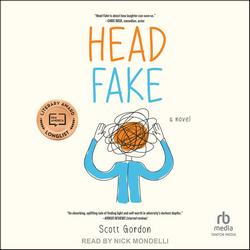
Cover of Head Fake by Scott GordonHead Fake

by Scott Gordon, read by Nick Mondelli

DETAILS:
Publisher: Tantor Media, Inc.
Publication Date: April 29, 2025
Format: Unabridged Audiobook
Length: 9 hrs., 43 min.
Read Date: February 27-March 2, 2026
Buy from Bookshop.org Support Indie Bookstores

What’s Head Fake About?

Mikey has been unhoused a lot recently, but is currently staying with his father to recover from a sickness. If he can keep a job for a while, he can stay with him. His dad has a connection that can get Mikey a job at a school for high-risk offenders with mental illnesses as a bus driver.

It’s not much, but it’s something.

Then, due to a fun set of circumstances, he’s put in the job of coaching the team’s small basketball team.

Oh, I should probably mention that Mikey’s dad is a couple of months away from becoming the winningest High School basketball coach in the U.S., and despite the tortured relationship between the two, Mikey learned a lot from him.

Mikey needs to get the trust of his team (and the school’s administration), fight through his own mental illness struggles, and keep his father from tossing him out. That should be no problem at all, right?

What did I think about the Narration?

I have no notes. Mondelli got everything from Mikey’s attitude, the students, his father, and everyone else just right.

Why did I pick this up? Why did I keep reading?

I honestly don’t remember how I came across this book. But I put it on a list at some point, and eventually got around to picking it up.

I stuck with it because I liked Mikey—his voice and him as a person. He got his hooks in me right away and wouldn’t let go. I really just had to find out what happened to him—the more I got to know the students, the more I got invested. (just the way a reader is supposed to)

What does this book tell us about humanity?

This is a book about broken people helping other broken people (and, in some cases, hurting broken people). While there are some similarities in the problems each character has faced and is facing, it’s not the commonalities that connect them—it’s that they’ve faced a problem and are still trying, however weakly.

Also, a love for basketball.

So, what did I think about Head Fake?

While set in a high school, this is not a YA book. But it is YA-friendly.

This book is really a mash-up of two sure-fire feel-good stories. First, you’ve got an underdog sports team battling just to be taken seriously—and it ends up winning a lot. Gordon nails this part. Granted, it’s hard to mess that kind of story up—but there’s something so satisfying when it’s done right.

The other part of the mash-up is the outsider connecting with students in an inspirational way. Think Lean on Me or Sister Act 2 (more of the latter than the former). Granted, a bus driver isn’t much of an authority figure—but that’s where the coach part comes in.

You combine the two with some strong character growth from one of the underest underdog characters I can think of, some dumb humor, and a metric ton of earnest goodwill, and you’ve got yourself a wholly pleasant book that I can’t imagine a reader/listener wouldn’t be charmed by.

This post contains an affiliate link. If you purchase from it, I will get a small commission at no additional cost to you. As always, the opinions expressed are my own.
Irresponsible Reader Pilcrow Icon

The Land of Sweet Forever by Harper Lee: Short Works by an American Master

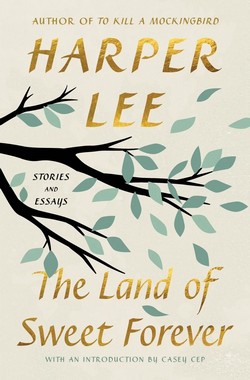
Cover of The Land of Sweet Forever by Harper LeeThe Land of Sweet Forever: Stories and Essays

by Harper Lee

DETAILS:
Publisher: Harper
Publication Date: October 21, 2025
Format: Hardcover
Length: 224 pg.
Read Date: January 28-30, 2026
Buy from Bookshop.org Support Indie Bookstores

What’s The Land of Sweet Forever?

The short version is that this is a collection of eight short stories and eight short non-fiction pieces by Harper Lee.

That seems a bit lacking, so here’s what the Publisher says:

Harper Lee remains a landmark figure in the American canon – thanks to Scout, Jem, Atticus, and the other indelible characters in her Pulitzer-winning debut, To Kill a Mockingbird; as well as for the darker, late-’50s version of small-town Alabama that emerged in Go Set a Watchman, her only other novel, published in 2015 after its rediscovery. Less remembered, until now, however, is Harper Lee the dogged young writer, who crafted stories in hopes of magazine publication; Lee the lively New Yorker, Alabamian, and friend to Truman Capote; and the Lee who peppered the pages of McCall’s and Vogue with thoughtful essays in the latter part of the twentieth century.

The Land of Sweet Forever combines Lee’s early short fiction and later nonfiction in a volume offering an unprecedented look at the development of her inimitable voice. Covering territory from the Alabama schoolyards of Lee’s youth to the luncheonettes and movie houses of midcentury Manhattan, The Land of Sweet Forever invites still-vital conversations about politics, equality, travel, love, fiction, art, the American South, and what it means to lead an engaged and creative life.

There are three pieces that I want to focus on: two short stories and one essay.

“The Cat’s Meow”

This story takes place in Maycomb—our favorite fictional community. Our narrator (a thinly disguised Harper Lee) returns home for a visit from New York City, and stays with her sister (a thinly disguised version of her sister, Alice). In this story, Alice has a “Yankee Negro” gardener with a criminal past. His actions, life, and interactions with people in the community are the focus of the story.

The narrator is clearly not comfortable with the way that the gardener is treated—but lacks the courage to follow through beyond a comment or two lest she do something to cause an irreparable rift.

It’s easy to judge the narrator (as the editor seems to in her introduction), but it’s also really easy to empathize and root for her quiet push-back and hope for something bigger around the corner. Anyone who’s been in a dicey conversation in the last few years with a relative on the other side of a political/social divide will be able to relate to this.

The characters are fully human and flawed. Everything is incredibly relatable, and you can’t help but feel for the gardener (even when he makes some huge errors in judgement)

“The Land of Sweet Forever”

This story right here is worth the purchase price of the book. It showed up in Go Set a Watchman, but don’t hold that against it.

There’s something about the characters and conversations in this story that just worked for me—the storyline itself is almost non-existent, but the scenes that make it up are so good that it doesn’t matter.

I can’t put my finger on what about this that clicked with me, and I really don’t know how to discuss it. It’s a simple little story that made my heart swell.

“Love—in Other Words”

I wasn’t sure what to expect from the non-fiction portion of the book, but when I finished it, I put in my notes, “If this is what these essays are going to be like, I’m very happy.” Sadly, this was the best of the batch—by a lot.

It’s really a basic essay about love—Lee invokes historical figures, general sentiment, literature, and the Bible, and comes up with something that just strikes you as true. Practically timeless. Yeah, it’s basic, but it doesn’t need to be more.

So, what did I think about The Land of Sweet Forever?

A lot of the stories/pieces were just fine or underwhelming—the collection as a whole isn’t that great. The high points were high (and I didn’t discuss them all), and the low points were forgettable.

But this is definitely a case of the whole being greater than the sum of its parts. We get to see a lot of different aspects of Lee here—ways she developed as a writer. The way she can lift bits of her older writing and incorporate them into her novels. Her personality. This is a great way to understand her.

I’ve heard and read the story so many times about her friends giving her a place to live for a year so she can focus on To Kill a Mockingbird. We all know how close she was to Capote, or how much she admired Gregory Peck. Reading those things in her own words just makes those things we all know resonate so much more clearly.

I don’t know how often I’ll read this entire collection again (certainly before I re-read Go Set a Watchman), but I can dip back into it here and there. But I’m so glad we have it. I think if you have more than a passing interest in Lee, you will, too.

This post contains an affiliate link. If you purchase from it, I will get a small commission at no additional cost to you. As always, the opinions expressed are my own.
Irresponsible Reader Pilcrow Icon

PUB DAY REPOST: Black Bag by Luke Kennard: Funny and Surreal

I tried to come up with a punny post title about the novel carrying a lot, like a bag. Just didn’t work.


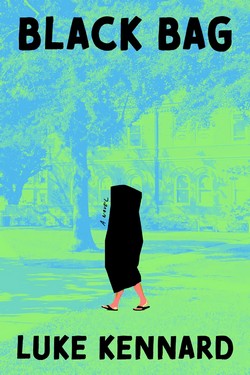
Cover of Black Bag by Luke KennardBlack Bag

by Luke Kennard

DETAILS: 
Publisher: Zando
Publication Date: March 17, 2026
Format: eARC
Length: 352 pg.
Read Date: March 7-11, 2026
Buy from Bookshop.org Support Indie Bookstores

What’s Black Bag About?

A struggling character actor (who seems to primarily pay the bills with dinner theater gigs) receives an unusual offer—a local university professor wants to hire him as part of an experiment. He is to attend three class sessions a week wearing a large black satchel—only his lower legs and feet are to be visible. He is to not interact with anyone—no speaking, no gesturing, no reacting to anything while on campus.

In exchange, Black Bag gets a roll of cash each week.

Easy enough, right? But it’s harder to not interact with other people than our actor realizes. And while this inspires him to look for other atypical roles, they’re not that easy to get (and he’s not that sure he wants them). His childhood friend—a game streamer—starts to see ways to monetize Black Bag (I’m not saying his friend’s hallucinogen use inspires these ideas, but I’m not saying they don’t). Also, another professor starts to take an interest in Black Bag for their own purposes.

So, what did I think about Black Bag?

Let me start by saying that the opening paragraphs to this are among my favorite in the last year or so—the rest of the book is worth the time, too.

Beyond that…I’m finding it difficult to really talk about what the novel seems to want to talk about without talking about events and things said in the last 10-20% of the book. I’m not sure how important it is to avoid plot points when discussing this particular novel, because the plot seems tertiary (at best) for Black Bag, but I have an aversion to doing that.

I’m not entirely convinced that Kennard has an agenda that he’s trying to push—and if he does, he’s certainly not leading anyone by horns to it—but he wants the reader to think about certain ideas/themes. Some prominent ones (I won’t try to be exhaustive here, I’d fail) are: the place of art in society and how it should try to shape discourse; the intensity of online communities—and how fragile they are; sex without emotional attachment; monetization of personal details online; post-humanism; academic politics; contemporary expressions of masculinity—and the various movements cropping up to address the “crisis” of it; the need for attachment to others.

If the plot is tertiary, the themes and issues in focus are definitely primary. I think the characters are, too. At times—and even now—I’m tempted to see the characters as flat, merely placeholders for Kennard to attach arguments/points of view on. Arguably, this is a valid reading. But each of the characters is more than that—they’re all fairly well-drawn, and the depth of each one is seen in the way they react to and interact with Black Bag. Just as Dr. Blend intended.

Do they project their desire for a get-rich-quick scheme onto it? Or perhaps they see it as a tool for sexual pleasure. One student sees the bag as a solid point to discuss the class with (at?) in place of the erratic professor. And then there’s the narrator himself, at times in danger of becoming more than Black Bag—detached from humanity, his career, his reality—losing himself to fantasy during the lectures, observing those around him, doing little more than noting their reactions to him. The more we consider how the characters respond to Black Bag, the more we see about them. And, breaking the fourth wall (the narrator does this himself, inviting the reader to do the same), the way the reader reacts to Black Bag at various points of the novel reveals something about ourselves, too.

The narration itself is deceptively breezy and light. It is possible to lose yourself in the pacing and ease of the narrator’s conversational address to the reader and gloss over details—inherently, this is a strength. It would be very easy for this book to fall over under the weight of its own pretensions, but Kennard protects it from that. It keeps the reader engaged and entertained—Black Bag is frequently funny, both in how he bumbles through life and how he describes that to the reader.

I also find myself asking at this point, how would I react to the novel on a re-read? Knowing where all of this is happening, what meaning that Black Bag finds (for example) in the experiment, how would I react to him at the beginning, and in his early sessions. As a thought experiment, I’m getting nowhere—but I can’t stop wondering.

Surreal and absurd in the best way, full of challenging ideas, and brought to life through a very oddball collection of characters, Black Bag is a novel you won’t soon forget (nor will you want to).

Disclaimer: I received this eARC from Zando Projects via NetGalley in exchange for this post which contains my honest opinion—thanks to both for this.

This post contains an affiliate link. If you purchase from it, I will get a small commission at no additional cost to you. As always, the opinions expressed are my own.
Irresponsible Reader Pilcrow Icon

Black Bag by Luke Kennard: Funny and Surreal

I tried to come up with a punny post title about the novel carrying a lot, like a bag. Just didn’t work.


Cover of Black Bag by Luke KennardBlack Bag

by Luke Kennard

DETAILS: 
Publisher: Zando
Publication Date: March 17, 2026
Format: eARC
Length: 352 pg.
Read Date: March 7-11, 2026
Buy from Bookshop.org Support Indie Bookstores

What’s Black Bag About?

A struggling character actor (who seems to primarily pay the bills with dinner theater gigs) receives an unusual offer—a local university professor wants to hire him as part of an experiment. He is to attend three class sessions a week wearing a large black satchel—only his lower legs and feet are to be visible. He is to not interact with anyone—no speaking, no gesturing, no reacting to anything while on campus.

In exchange, Black Bag gets a roll of cash each week.

Easy enough, right? But it’s harder to not interact with other people than our actor realizes. And while this inspires him to look for other atypical roles, they’re not that easy to get (and he’s not that sure he wants them). His childhood friend—a game streamer—starts to see ways to monetize Black Bag (I’m not saying his friend’s hallucinogen use inspires these ideas, but I’m not saying they don’t). Also, another professor starts to take an interest in Black Bag for their own purposes.

So, what did I think about Black Bag?

Let me start by saying that the opening paragraphs to this are among my favorite in the last year or so—the rest of the book is worth the time, too.

Beyond that…I’m finding it difficult to really talk about what the novel seems to want to talk about without talking about events and things said in the last 10-20% of the book. I’m not sure how important it is to avoid plot points when discussing this particular novel, because the plot seems tertiary (at best) for Black Bag, but I have an aversion to doing that.

I’m not entirely convinced that Kennard has an agenda that he’s trying to push—and if he does, he’s certainly not leading anyone by horns to it—but he wants the reader to think about certain ideas/themes. Some prominent ones (I won’t try to be exhaustive here, I’d fail) are: the place of art in society and how it should try to shape discourse; the intensity of online communities—and how fragile they are; sex without emotional attachment; monetization of personal details online; post-humanism; academic politics; contemporary expressions of masculinity—and the various movements cropping up to address the “crisis” of it; the need for attachment to others.

If the plot is tertiary, the themes and issues in focus are definitely primary. I think the characters are, too. At times—and even now—I’m tempted to see the characters as flat, merely placeholders for Kennard to attach arguments/points of view on. Arguably, this is a valid reading. But each of the characters is more than that—they’re all fairly well-drawn, and the depth of each one is seen in the way they react to and interact with Black Bag. Just as Dr. Blend intended.

Do they project their desire for a get-rich-quick scheme onto it? Or perhaps they see it as a tool for sexual pleasure. One student sees the bag as a solid point to discuss the class with (at?) in place of the erratic professor. And then there’s the narrator himself, at times in danger of becoming more than Black Bag—detached from humanity, his career, his reality—losing himself to fantasy during the lectures, observing those around him, doing little more than noting their reactions to him. The more we consider how the characters respond to Black Bag, the more we see about them. And, breaking the fourth wall (the narrator does this himself, inviting the reader to do the same), the way the reader reacts to Black Bag at various points of the novel reveals something about ourselves, too.

The narration itself is deceptively breezy and light. It is possible to lose yourself in the pacing and ease of the narrator’s conversational address to the reader and gloss over details—inherently, this is a strength. It would be very easy for this book to fall over under the weight of its own pretensions, but Kennard protects it from that. It keeps the reader engaged and entertained—Black Bag is frequently funny, both in how he bumbles through life and how he describes that to the reader.

I also find myself asking at this point, how would I react to the novel on a re-read? Knowing where all of this is happening, what meaning that Black Bag finds (for example) in the experiment, how would I react to him at the beginning, and in his early sessions. As a thought experiment, I’m getting nowhere—but I can’t stop wondering.

Surreal and absurd in the best way, full of challenging ideas, and brought to life through a very oddball collection of characters, Black Bag is a novel you won’t soon forget (nor will you want to).

Disclaimer: I received this eARC from Zando Projects via NetGalley in exchange for this post which contains my honest opinion—thanks to both for this.

This post contains an affiliate link. If you purchase from it, I will get a small commission at no additional cost to you. As always, the opinions expressed are my own.
Irresponsible Reader Pilcrow Icon

Quick-Take Catchups: The Leftovers from January

In an effort to keep my “To Write About” pile from getting out of control (I’ve got another post coming up in the first week in January…or maybe later in the year about the older stuff), I’ve set a requirement to myself to write a catch-up post at the end of the following month (e.g., At the end of February, write about January books; at the end of June, write about the May books I haven’t gotten to yet; etc.). As always, the point of these quick-takes is to emphasize pithiness, not thoroughness.


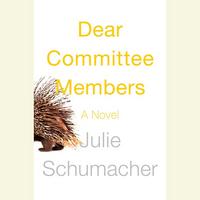
Cover of Dear Committee Members by Julie SchumacherDear Committee Members

by Julie Schumacher, read by Roberston Dean

DETAILS:
Series: Jason Fitger, #1
Publisher: Penguin Random House Audio Publishing Group
Publication Date: August 19, 2014
Format: Unabridged Audiobooks
Length: 3 hrs., 55 min. 
Read Date: January 3-5, 2026

Buy from Bookshop.org Support Indie Bookstores

Professor Jason Fitger is a delightful character (in fiction, please don’t sit next to him at a dinner or stand near him at a party. Or maybe don’t be in the same room with him). He’s full of himself, a little self-deluded, put-upon, and (probably) past his prime with a career going nowhere (but hey, tenure!).

We learn about him through a series of letters of recommendation he’s sending to various businesses, schools, programs, and scholarships for his students; interdepartmental emails; emails to old friends/ex-lovers/ex-wife; and maybe one or two others. I like a good epistolary novel, and this is one of them. We learn about Fitger, and a couple of his students, the moves his University is making to gut itself of the liberal arts, and more, in a way that feels incredibly authentic and very entertaining.

Still, I don’t think I could take it if the book was much longer, and I don’t know that I want to read the rest of the trilogy (but I kind of do).

Pilcrow page divider

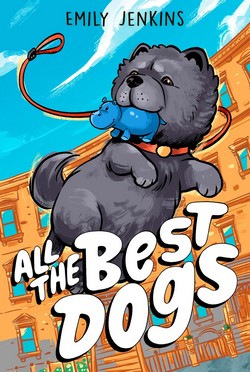
Cover of All the Best Dogs by Emily JenkinsAll the Best Dogs

by Emily Jenkins

DETAILS:
Publisher: Yearling
Publication Date: November 4, 2025
Format: Hardcover
Length: 208 pg.
Read Date: January 5, 2026
Buy from Bookshop.org Support Indie Bookstores

This middle-grade novel about a bunch of kids (and a few adults) who bring their dogs to a neighborhood dog park is just delightful. Not just because the dogs are as cute and silly and loving as you want them to be. But the kids and their situations are, too. Even the ones that start off in conflict or sadness get a good dose of resolution and hope by the end (generally tied to one of these dogs). It was cute, heartwarming, and filled with good dogs—the best dogs, actually. What more do you want?

Pilcrow page divider

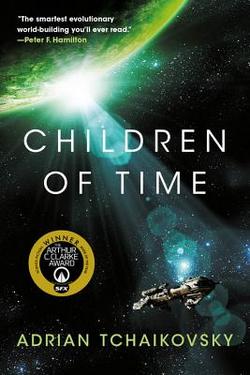
Cover of Children of Time by Adrian TchaikovskyChildren of Time

by Adrian Tchaikovsky

DETAILS:
Publisher: Orbit
Publication Date: December 11, 2018
Format: Paperback
Length: 416 pg.
Read Date: January 14-19, 2026
Buy from Bookshop.org Support Indie Bookstores

I didn’t write a full post on this because I can’t write a sentence about what I think about it without writing one contradicting it. And then one defending the first sentence. And then one defending the second. And then…

I love the concept of this book. Think the execution was wonderful. There’s so, so, so many cool things and ideas packed in here. But it’s also slow and plodding. It could be argued that 80% of the book is setup and only the last 20% is the story. That 20% (an estimate, I didn’t really do the math) is pretty cool and almost makes up for the rest.

Pilcrow page divider

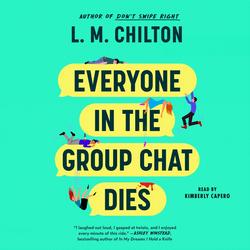
Cover of Everyone in the Group Chat Dies by L.M. ChiltonEveryone in the Group Chat Dies

by L.M. Chilton, Kimberley Capero

DETAILS:
Publisher: Simon & Schuster Audio
Publication Date: December 9, 2025
Format: Unabridged Audiobook
Length: 9 hrs., 36 min. 
Read Date: January 15-16, 2026
Buy from Bookshop.org Support Indie Bookstores

I enjoyed (and apparently didn’t write about) Chilton’s Swiped a couple of years ago. Almost none of the charm or zaniness of that book made its way here. I’m not saying I expected a carbon copy, obviously, but this could almost have been written by someone else.

A lot of the framing of this story was well done—and the way it was ordered was, too. But I could practically see that all of the heart and character were sacrificed for the sake of clever plotting and telling. And if I have to go on without one of those pairs, I know which one it should be.

I’m not saying that I’m done with Chilton, but I won’t be in a rush for whatever’s next.

Pilcrow page divider

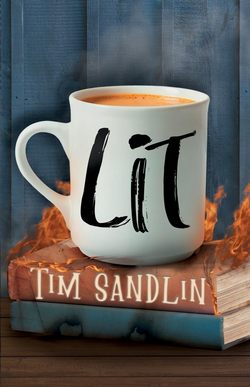
Cover of Lit by Tim SandlinLit

by Tim Sandlin

DETAILS:
Publisher: Brash Books
Publication Date: October 22, 2025
Format: eBook
Length: 254 pg.
Read Date: January 20, 2026
Buy from Bookshop.org Support Indie Bookstores

This is quotable, clever, and filled with interesting characters. It’s also a little too convoluted; it’s hard to believe some of the interpersonal relationships with the characters, and the solution is a bit of a letdown.

That said, from the first page to the last I was hooked and couldn’t stop reading it. Most of it worked in the moment, or was something I could shrug off while reading it. But when I was done and started thinking about it, I the doubts and quibbles kept growing.

Maybe Sandlin couldn’t really figure out the book he was trying to write—tone, characters, and/or outcome—he wouldn’t be the first author to do that. As much as a lot of the passages sang—the book, in retrospect, was just good enough. Read this one to enjoy the journey, not necessarily the destination.

Pilcrow page divider

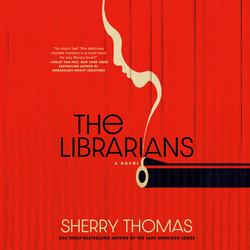
Cover of The Librarians by Sherry ThomasThe Librarians

by Sherry Thomas, read by Louisa Zhu

DETAILS:
Publisher: Penguin Random House Audio Publishing Group
Publication Date: September 30, 2025
Format: Unabridged Audiobook
Length: 13 hrs., 45 min. 
Read Date: January 21-26, 2026
Buy from Bookshop.org Support Indie Bookstores

Individually, these characters were just fantastic—plenty of quirk, plenty of heart, plenty of “I just want to live a quiet life with books and nice people” kind of energy. Sign me up for that! The murder mysteries were intriguing enough, too. But combining the characters and the murders—with too many amateur detectives running around—it all felt very soapy. Very melodramatic.

I flitted back and forth between “Oh, I really like Character X and want to see what happens to them” and “Oh, please, shut up and return to reality! Cut the melodrama!” so often I got whiplash.

I’d recommend it with several caveats and a stress on low-expectations. Then again, I could name worse.

Pilcrow page divider

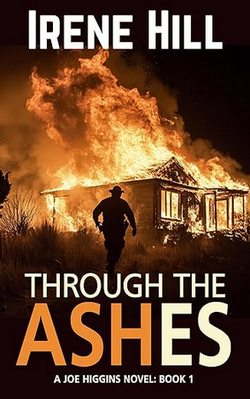
Cover of Through the Ashes by Irene HillThrough the Ashes

by Irene Hill

DETAILS:
Series: Joe Higgins, #1
Publication Date: April 18, 2025
Format: Paperback
Length: 239 pg.
Read Date: January 24-26, 2026

This is a solid series premiere and debut novel about a former deputy who used to serve on his area’s search-and-rescue team. Years after personal tragedy struck, he’s called on to leave his drunken stupor behind and find a missing boy. Naturally, it’s not long before this search becomes so much more.

This is Hill’s debut, and it’s not that hard to tell (particularly as she introduces characters early on). But she can tell a good story, and the characters are winners.

It’s a little on the rough side, but this is a good read, and I’m ready for the second book (and probably the third and fourth).

Pilcrow page divider

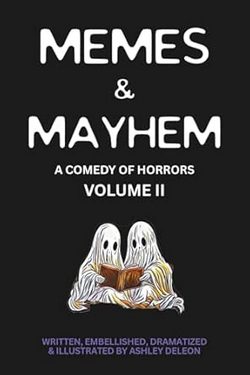
Cover of Memes & Mayhem Volume II by Ashley DeLeonMemes & Mayhem II: A Comedy of Horrors

by Ashley DeLeon

DETAILS:
Series: Memes & Mayhem, #2
Publication Date: September 11, 2025
Format: Paperback
Length: 249 pg.
Read Date: January 24, 2026

Before I get into this, I thought I had posted about the first book, and I’m more than a little annoyed to find out that I didn’t. I did chat with the author briefly a couple of years ago. (I’m really bothered, I remember working on it) Anyway, this is exactly like the first book—just done a little better and is a little funnier. Experience is a good thing.

DeLeon has picked some great creepy ghost stories and tells them well—even better, she does it with a good (and oftentimes silly) sense of humor.

This is well worth your time (so is its predecessor). I had a blast with this and will do so again.

Pilcrow page divider

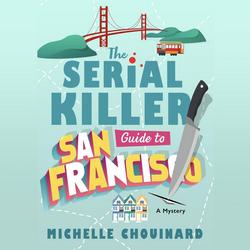
Cover of The Serial Killer Guide to San Francisco by Michelle ChouinardThe Serial Killer Guide to San Francisco

by Michelle Chouinard, read by Stephanie Németh-Parker

DETAILS:
Series: The Serial Killer Guide to San Francisco, #1
Publisher: Macmillan Audio
Publication Date: September 24, 2024
Format: Unabridged Audiobook
Length: 9 hrs., 51 min.
Read Date: January 26-28, 2026
Buy from Bookshop.org Support Indie Bookstores

This really fits in the Finley Donovan demographic. It’s a little more grounded, a little slower on the romance burn (okay, a lot slower), a little less zanier. But the same overall feel. I didn’t get as into all of the plotlines as I was supposed to—and I’d figured out the whodunit, with a pretty good (but growing) confidence in the whydunit early on. But watching our semi-intrepid investigator, Capri Sanzio, wind her way through the investigation was entertaining enough.

I didn’t buy her podcast recording at all (and it would’ve been good to see her do something other than record episodes). But the rest was okay.

It was as entertaining as you’d want this to be—not an inch more. But good enough.

Pilcrow page divider

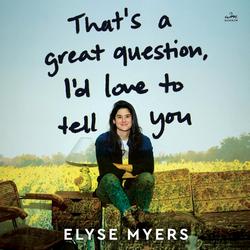
Cover of That's a Great Question, I'd Love to Tell You by Elyse MyersThat’s a Great Question, I’d Love to Tell You

by Elyse Myers

DETAILS:
Publisher: William Morrow
Publication Date: October 28, 2025
Format: Unabridged Audiobook
Length: 5 hrs., 32 min. 
Read Date: January 28-30, 2026
Buy from Bookshop.org Support Indie Bookstores

This is such a strange, comforting, hilarious, and relatable collection of short pieces. Some are memoirs, some are humorous pieces, some are hard to define. All are absolutely worth your time. They will warm your heart, bring a smile to your face, and make you feel all sorts of things.

I think this would work well on the page—but do yourself a favor and get it on audio. Myers’ delivery is so good (as anyone who’s watched her videos knows), hearing her words in her voice really captures the intangibles of the book in a way that I don’t think that the page is fully capable of.

This post contains affiliate links. If you purchase from any of them, I will get a small commission at no additional cost to you. As always, opinions are my own.


She Who Became the Sun by Shelley Parker-Chan: Historic China with a Hint of Fantasy

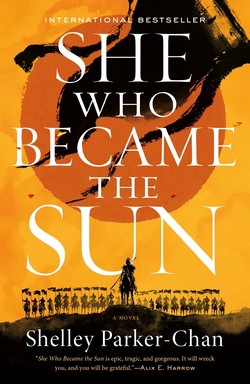
Cover of She Who Became the Sun by Shelley Parker-ChanShe Who Became the Sun

by Shelley Parker-Chan

DETAILS:
Series: The Radiant Emperor, #1
Publisher: Tor Books
Publication Date: June 28, 2022
Format: Paperback
Length: 411 pg. 
Read Date: January 8-10, 2026
Buy from Bookshop.org Support Indie Bookstores

What’s She Who Became the Sun About?

This is an epic saga about a China-that-Could-Have-Been back in the 1340s. We follow (well, several people, but let’s focus on a couple of primaries) a young girl who assumes her dead brother’s identity and becomes a monk. This brother had been predicted to rise to greatness (as he was practically starving due to drought and famine, this was quite the fortune to receive). Zhu eventually becomes involved with the rebellion against Mongol rule, and begins to find her way to a new life—one of greatness and power.

On the other hand, we follow General Ouyang, one of the main leaders of the forces set to put down the rebellion. Ouyang is the one member of his family who survived the Khan’s wrath—as a eunuch. He is trusted by some in power, while many others consider him defective and untrustworthy, despite his victories and viciousness.

When these two meet on opposing sides of the conflict—both their lives are set in new directions, and the fate of a nation may be, too.

A Question of Genre

At a couple of points along the line—the last time was about the 2/3 point, I put in my notes, “Where’s the Fantasy?” (I wrote that larger than usual that last time). The elements are just not there—at least not as much as you’d expect in something shelved in that part of a store. In talking with a friend about it, I started calling it the La Croix of Fantasy novels.

It’s there, if you can really focus on it and hope. I have been assured that the Fantasy elements are stronger in the second part of the duology—but not much.

If this had been sold as General Fiction, or Alternate History or something—no one would’ve objected. And I wouldn’t have been distracted by wondering when magic or a dragon or something would come up.

As a fictionalized 14th-century China with a couple of tweaks—this is a great world, and the setting (place and time) is great.

What does this book tell us about humanity?

I’m not entirely sure that this book has much to say about people in general. It has something to say about particular characters—and that can be applied to some, but not all.

Zhu starts off wanting to survive—with the thought that she could claim her brother’s fortune. It’s debatable, but I do think she has some sort of genuine Buddhist convictions—if only because that’s what she’s supposed to believe. Before ordination, she’s given some permission to not be that devout. And her convictions turn to herself—there may be some vague faith about things in general, but ultimately she’s convinced of her own abilities (and if she has to pay for that in lifetimes to come, she’s ready to accept it).

At one point, Zhu—in the midst of trying to encourage someone else—gives sort of her personal mission statement.

“But you know what’s worse than suffering? Not suffering, because you’re not even alive to feel it… Learn to want something for yourself, Ma Xiuying. Not what someone says you should want. Not what you think you should want. Don’t go through life thinking only of duty. When all we have are these brief spans between our nonexistences, why not make the most of the life you’re living now? The price is worth it.”

Without getting into the rightness or wrongness of her choices throughout the book (and she has plenty of both). I’ve come to think of Zhu as a Walter White character. She starts off as clever and resourceful, looking to do the “right thing.” But at a certain point, she realizes how clever and resourceful she is—and what kind of success can come from that, and her pride (warranted or not)—pride that can (should?) be seen as arrogance—starts to fuel her.

On the other hand, we have Ouyang. He is trapped by Fate. Or his idea of it—expectations of honor, family obligation, and therefore Destiny. He comes close to rebelling—or at least pushing against it—but is it close enough? He exercises agency and free will throughout—but it almost seems like he doesn’t think he can. Early on, he seems more lawless, more independent (for lack of a better word)—but by the end, he seems more constrained. Sort of the flipside.

In the book club meeting, the question was asked, “Does greatness necessitate cruelty in this world?” I’ve been chewing on that a lot. I don’t think so—I think there are a couple of examples of greatness (those perceived to be great, anyway) without cruelty. But by and large, the answer in this particular world is a resounding, “yes.” Or at least just about everyone thinks it’s the case. No one looking for greatness, or who happens to be in a position of greatness here can make it without cruelty. It is the epitome of a dog-eat-dog world, and as Norm Peterson would say, everyone is wearing Milkbone underwear.

Why did I pick this up? Why did I keep reading?

I picked this up because it was the month’s pick for the Fantasy Book Club. And for quite a while, that was what kept me going. There were moments that made me think, “Oh, now we’re getting somewhere,” but that didn’t last for long. But curiosity and investment in a couple of secondary characters set in.

Also, I had to answer the question, “Where is the Fantasy?”

So, what did I think about She Who Became the Sun?

I’m really not sure. There was so much that worked here—but I’m not sure how satisfied I was with it in the end.

Parker-Chen can write some glorious lines—they can do more with one sentence of description than many authors can do in paragraphs. And getting to read them do more of that (if I get around to the sequel or wait until a new work) would be a treat.

For a book about war, it’s a relatively bloodless novel. Battles that take out thousands—conquer cities can take less than a page. If you want combat, you’re going to need some one-on-one situations—and there aren’t many. Battle, warfare, is the context of these events—it’s not the focus. Which is a pretty cool thing to see.

As much as I found the characters to be rich and complex (and I spared us all my bloviating about more of them—including the two or three that I like a lot more than those I talked about)—I’m not sure they’re enough to get excited about, alone. But this is a novel about more than the characters and the plot. There’s a lot going on about the nature of fate/destiny, gender, sexuality, morality, ancestry/ethnicity…

Is this a good read? Yes. Could it be better? Oh, yes. But a lot of that has to do with my expectations (magic, creatures, etc.). I just wanted a little more out of the book. If you go into this with the right expectations, you’ll probably get a lot more out of it and appreciate it more than I did. It’s worth the effort.

This post contains an affiliate link. If you purchase from it, I will get a small commission at no additional cost to you. As always, the opinions expressed are my own.
Irresponsible Reader Pilcrow Icon

My Favorite Non-Crime Fiction of 2025

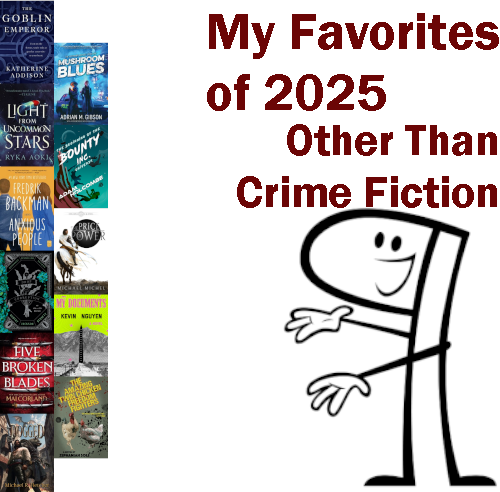
Covers of The Goblin Emperor, Light from Uncommon Stars, Anxious People, A Drop of Corruption, Five Broken Blades, Dogged, Mushroom Blues, Bounty Inc., The Price of Power, My Documents, and The Amazing Twin Chicken Freedom Fighters, next to an image of an anthropomorphized Pilcrow and the words 'My Favorites of 2025 Other Than Crime-Fiction'
Back when I started this site, I knew the content would be largely “genre”-oriented. I’d have wagered the content would be roughly 1/3 Mystery/Detective fiction, 1/3 Urban Fantasy, and slightly less than 1/3 SFF, with “non-genre” fiction, humor, and non-fiction being enough to make my one-thirds just an approximation (honestly, if you asked me what I read regularly, that’s pretty much how I’d describe it today). Actual numbers show that’s wrong—it’s typically almost 40% Crime/Thriller Fiction, the rest of fiction is around 30% combined. This is just a long-winded way to get to these two points: because Crime Fiction takes such a big chunk of my reading, it gets its own “Favorite” list, but none of the others really garner enough numbers for their own. This year, however, the numbers are a bit more even gross-genres, but…the practice has been set. We’ll see what next year brings.

When it comes to this particular list of favorites this year, I just couldn’t get lower than 11 (I’m thankful I made it lower than 24). But as this is a catch-all, I figure I can be a little loose with the numbers. So here’s my list of 11 favorite non-Crime Fiction Novels of 2024. Hopefully, you will find something here to tempt you.

As always, re-reads don’t count—only the works that were new to me.

(in alphabetical order by author)

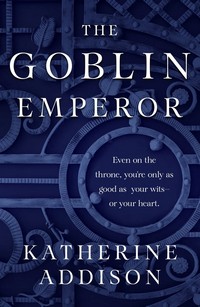
Cover of The Goblin Emperor by Katherine AddisonThe Goblin Emporer

by Katherine Addison

To say I was daunted by the incredibly detailed pronunciation guide and information about names before the novel is to put it mildly, but that went away almost immediately. This is a wonderful work–such an intricate web of courtly manners and rules (written and unwritten), a murder plot, a coup or two, and some geeky engineers. Okay, that’s a bad way to try to describe this. I read this a couple of months ago, and already want to re-read it. Once I got into this novel I didn’t want to leave.


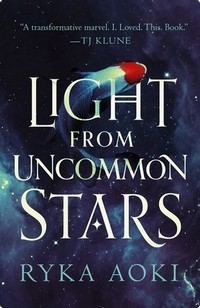
Cover of Light From Uncommon Stars by Ryka AokiLight from Uncommon Stars

by Ryka Aoki

Words fail me as I try to talk about this contemporary Fantasy about a woman whose way out of a Faustian bargain depends on her damning others. And it turns out that I really liked this woman, and hoped she’d get that last soul. Just not the one she’s decided to use to fulfill the bargain, because this one should be protected and nurtured. Oh, and there’s a bunch of aliens on the run from an intergalactic conflict.

This book made me happy–it delighted me in the description of music, in fact. It broke my heart. It made me tense. It filled me with hope. There might be books on the lists this week that are better technically, but I’m not sure any of them worked on my heart the way that this one did.


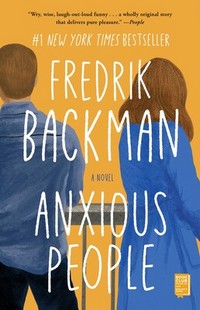
Cover of Anxious People by Fredrik BackmanAnxious People

by Fredrik Backman

Of this books that made me laugh this year, this is probably in the top 3. It’s also the book that probably made me think of fatherhood more than any other. And marriage. And all the ways we can let each other down, and the hope that exists for the next time when we don’t.

It’s Backman, so you know he’ll be funny. You know he’ll tug at your heartstrings. You know he’ll make you think. He does that, and more–because he throws in some small town cops, a bank robbery that went wrong, and a bunch of hostages. If I stopped reading after this one in February, I’d have called 2025 a good year for reading (although I’d have been so bored for the remaining 10 months, it’s good I didn’t).


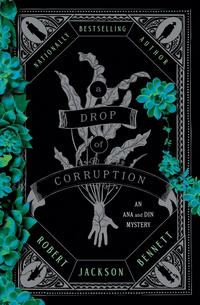
Cover of A Drop of Corruption by Robert Jackson Bennett A Drop of Corruption

by Robert Jackson Bennett

My original post
This is simply a perfect follow-up to The Tainted Cup–new strangeness to explore in this world, new depravities to be seen, new political machinations to watch, new opportunities for Ana Dolabra’s brilliance (and strange way of seeing the world) to shine–yet entirely of a piece with the first book. A Drop of Corruption is another fantastic mystery/fantasy hybrid. Like so many of the others on this list, superlatives fail me.


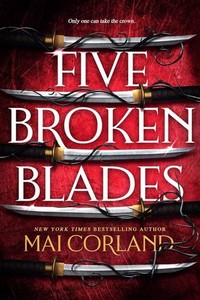
Cover of Five Broken Blades by Mai CorlandFive Broken Blades

by Mai Corland

I love the set-up to this book–a bunch of killers of varying in strengths and modus operandi are brought together for one joint-job. And one of them is a traitor. And the reader doesn’t know (but we can guess, and will) who the traitor is, why they’re doing it and more.

I liked this one so much that I bought the hardcovers for the rest of the trilogy right after finishing. I never do that.

I’ve seen some criticisms of the work–and some of them have merit. But while I was reading it? I was so taken in that I didn’t notice any of them. And now? I don’t care about any of the criticism, I had so much fun with this book that you could tell me that I’m the only one in the world who likes it and I’d be fine with it. (I’d also know you were lying, but that’s okay)


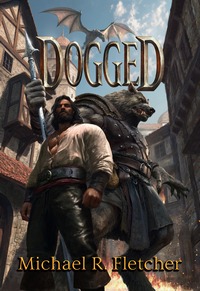
Cover of Dogged by Michael R. FletcherDogged

by Michael R. Fletcher

This is a violent, grisly novel about an empire on the brink of ruin–and the devastation this wreaks on the populace. It is also one of the most heartwarming tales I’ve read this year about loyalty, determination, and doing what’s right for those important to you.

The central character just might be the character of the year for me–she embodies so much of what I love in a noble warrior character.

This book made my month in December–and I read a lot of books that I really enjoyed. But while I was reading this one, almost everything I’d read last year paled in comparison (including every other item on this list).

It sucks you in, it tells a perfect story in an almost perfect way–and makes you want more. I don’t want a sequel, it’s a wonderful stand-alone. I just want a half-dozen books just like it.


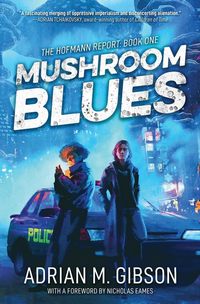
Cover of Mushroom Blues by Adrian M. GibsonMushroom Blues

by Adrian M. Gibson

My original post
A Police Procedural set in a world with Earth-like technology and laws. However, it’s inhabited with humans and a sapient, humanoid, fungal species. Basically, humanoid Mushrooms. It’s hard to explain.

The mystery/police procedural part of this was great. The alternate world was outstanding. The worldbuilding is top-notch. The primary and secondary characters were drawn so wonderfully. The motives for the crimes (and the crime fighting) were complex and messy—and almost entirely understandable. The genre-hybrid of this feels entirely natural to an extent that you can almost wonder why anyone hasn’t been approaching these genres in a similar fashion for decades.

Gibson’s scheduled to get a sequel out this year. I’m going to be at the front of the line for it.


Cover of Bounty Inc. by Adam HolcombeBounty Inc.

by Adam Holcombe

My original post
This book is a space opera/SF adventure. With intrigue, action, strangeness, betrayal, and more. It’s what you expect from this kind of book—and it delivers that well. But I can also describe it as a wholesome, found family, cozy-ish, feel-good novel at its core. With an earnest spirit that reaches every corner of the book.

Is the big romantic arc entirely predictable? Yes. Is it effective, sweet, and wholly satisfying? Yup. Will you get gut-punched by what happens to some of these characters? Yup. (I didn’t say it was cozy, I said it had that heart, bad things happen). Will you cheer at parts of the action? Yes. Will you be dismayed by some of the twists? Yup. Will you want this pretty long book to be longer? YUP.

Satisfying on several levels. Fantastic action. Strange alien species. And entertaining on every page.


Cover of The Price of Power by Michael MichelThe Price of Power

by Michael Michel

My original post
I read four books this year that I might have described as “one of my favorite fantasy novels” at one point. It’s a hotly competitive rank apparently. This is one of those. And that thumbnail review is still true.

This is a gritty, intense read following four primary characters (and a couple of others nearby each of them). The world it sets up and introduces us to is teetering on the brink of civic upheaval and all-out war. And something tells me those’ll be the easier problems to deal with. Book three releases in a couple of weeks not and my anticipation level is high.


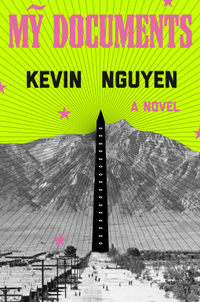
Cover of My Documents by Kevin NguyenMy Documents

by Kevin Nguyen

My original post
This is a timely work about the complete internment of Vietnamese-Americans following some terrorist strikes. It is chilling. It’s occasionally joyful (usually as a precursor something utterly absent of joy, but also as a reminder of its importance).

This is a powerful, haunting, (purposefully) uncomfortable read that will also charm you. It’s been residing in a corner of my mind since I read it, and I keep almost making references to it when talking to others about current events as if it’s something in our shared cultural moment. It’s impact is going to last a while in my mind–and I’d recommend you let it impact yours, too.


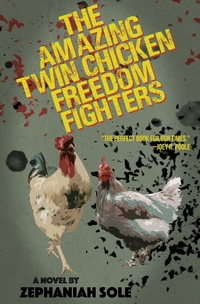
Cover of The Amazing Twin Chicken Freedom Fighters by Zephaniah SoleThe Amazing Twin Chicken Freedom Fighters

by Zephaniah Sole

My original post
This is either brilliant or the ravings of a madman. Possibly both.

It is absurd in every way. It’s hilarious on several levels–from very low-brow to philosophical riffs. Sole plays with narrative, meaning, reality…and I don’t know what all, really. If I was pursuing some sort of English degree right now, I’d be using this (and the promised sequel) as the foundation for a few papers.

It can also be read as twisted fun–you’d be missing a lot, but you’d have a great time.


A few books that almost made this list and I want to be sure to mention:
Parable of the Sower by Octavia E Butler, The Bright Sword by Lev Grossman, Bones & Betrayals: Silence of the Dead by Andi Ewington & Erica Marks, Grace and Henry’s Holiday Movie Marathon by Mathew Norman, Futuristic Violence and Fancy Suits by Jason Pargin, and How to Become the Dark Lord and Die Trying by Django Wexler.

BBNYA SEMI-FINALIST SPOTLIGHT: Another Kind of Thing by A P Pullan

I’m very pleased today to welcome The BBNYA Semi-Finalist Spotlight Tour for A P Pullan’s Another Kind of Thing! This book has made it to the semi-finals, so you know there’s something good going on–but before getting to this Spotlight, let’s start with a word about BBNYA.

BBNYA:

BBNYA is a yearly competition where book bloggers from all over the world read and score books written by indie authors, ending with 15 (17 in 2025) finalists and one overall winner.

The Book Bloggers’ Novel of the Year Award 2025 badge

If you want some more information about BBNYA, check out the BBNYA Website https://www.bbnya.com/ or take a peek over on Twitter @BBNYA_Official.

Pilcrow

Book Details:

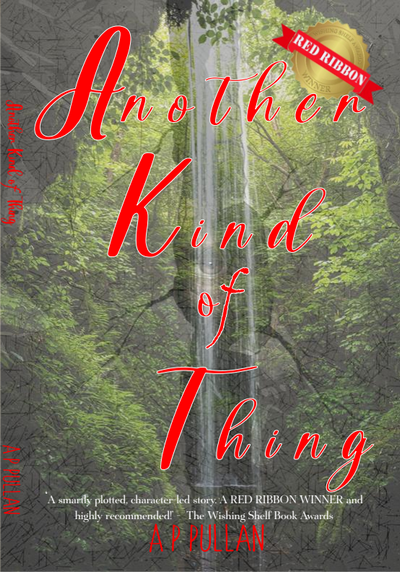
Title: Another Kind of Thing by A P Pullan
Genre: Contemporary Fiction, Mystery
Age Category: Middle Grade
Format: Paperback/Ebook
Length: 216 Pages
Publication Date: November 28, 2024
Cover of Another Kind of Thing by A P Pullan

About the Book:

Eleven-year-old, Aidan North, is new to the little village of Kirklinn in Scotland.

Being new is not easy as Aidan does not seem to fit in.

Why do people call him a “weirdo?” Why do people not understand his love of fossils? And why more name-calling because he finds maths so easy?

Izzy seems the only one who at least is willing to try and understand him.

Then there is the word, “autistic,” that the school want to give him. Does that mean he really is weird and so different from everyone else?

Yet the discovery of someone Aidan claims to live in a cave only seems to alienate him further.

Will his discovery lead to the truth of a secret held for over 20 years?

This is a story about a young boy trying to find his way in this complicated world.

So will uncovering the secret, help him on his journey to be accepted by others and, as importantly, himself?

Book Links:

Amazon Canada ~ Amazon US ~ Amazon UK ~ Goodreads ~ The Story Graph

About the Author:

Hi I am A P Pullan and I have been writing for quite some time now. I have taught primary aged pupils for over 25 years. Aidan is my main character in Another Kind of thing, my latest book. He is based on some of the children I have worked with over the years. Nothing motivates me more than doing creative writing or talking about books with children of all ages. I love visiting schools and if you visit my website you will see info and pictures about my visits @ https://theweepencil.wordpress.com/.

Am I writer? Well, I think I am more someone who just enjoys writing.

Website ~ Bluesky


My thanks to The Book Bloggers’ Novel of the Year Award for the invitation to participate in this tour and the materials they provided.

The Book Bloggers’ Novel of the Year Award 2025 Semi-Finalist badge

BBNYA SEMI-FINALIST SPOTLIGHT: Ariel: Dancing on TV by Ailish Sinclair

I’m very pleased today to welcome The BBNYA Semi-Finalist Spotlight Tour for Ailish Sinclair’s Ariel: Dancing on TV! This book has made it to the semi-finals, so you know there’s something good going on–but before getting to this Spotlight, let’s start with a word about BBNYA.

BBNYA:

BBNYA is a yearly competition where book bloggers from all over the world read and score books written by indie authors, ending with 15 (17 in 2025) finalists and one overall winner.

The Book Bloggers’ Novel of the Year Award 2025 badge

If you want some more information about BBNYA, check out the BBNYA Website https://www.bbnya.com/ or take a peek over on Twitter @BBNYA_Official.

Pilcrow

Book Details:

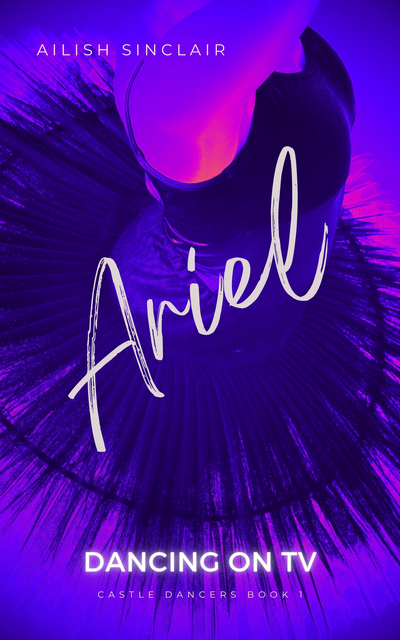
Title: Ariel: Dancing on TV by Ailish Sinclair
Genre: Contemporary Fiction, Romance
Age Category: Young Adult
Format: Paperback/Ebook
Length: 266 Pages
Publication Date: January 1, 2025
Cover of Ariel: Dancing on TV by Ailish Sinclair

About the Book:

The night before Ariel, a sixteen-year-old girl with a deformed hand, starts at the most prestigious dance school in Scotland, her mother tries to kill her.

Torn from a life where she never fitted in, Ariel quickly becomes the focus of a reality TV show. In the castle school, she forms deep friendships and meets Alexander, the best looking boy she’s ever seen. Together, they unravel the mysteries of the castle’s shadows and confront the demons of Ariel’s past.

Can she rise above a lifetime of pain and embrace the possibilities of fame and love that beckon to her?

‘Ariel: Dancing on TV’ is a mesmerising tale of resilience and the pursuit of a brighter future against all odds.

Book Links:

Amazon Canada ~ Amazon US ~ Amazon UK ~ Goodreads ~ The Story Graph

About the Authors:

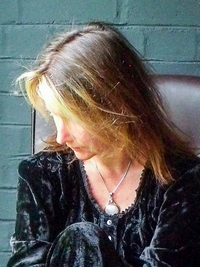
Ailish Sinclair JAilish Sinclair trained as a dancer and taught dance for many years, before working in schools to help children with special needs. A short stint as a housekeeper in a castle fired her already keen interest in untold stories of the past and she sat down to research and write.

She now lives beside a loch with her husband and two children where she writes and dances (yes still, chronic medical conditions allowing, pah!) and eats rather too much chocolate.

Website ~ Twitter ~ Instagram ~ TikTok ~ Facebook ~ Bluesky


My thanks to The Book Bloggers’ Novel of the Year Award for the invitation to participate in this tour and the materials they provided.

The Book Bloggers’ Novel of the Year Award 2025 Semi-Finalist badge

Page 1 of 52

Powered by WordPress & Theme by Anders Norén